How to Build a Poly Stock Tank Pool That Actually Looks Good
I bought a stock tank pool last summer for $400. Set it up in my backyard and it looked like exactly what it was – a giant metal trough for farm animals.
My wife hated it. Neighbors made jokes about our “cow pool.” Kids loved swimming in it but yeah, it was pretty ugly sitting there.
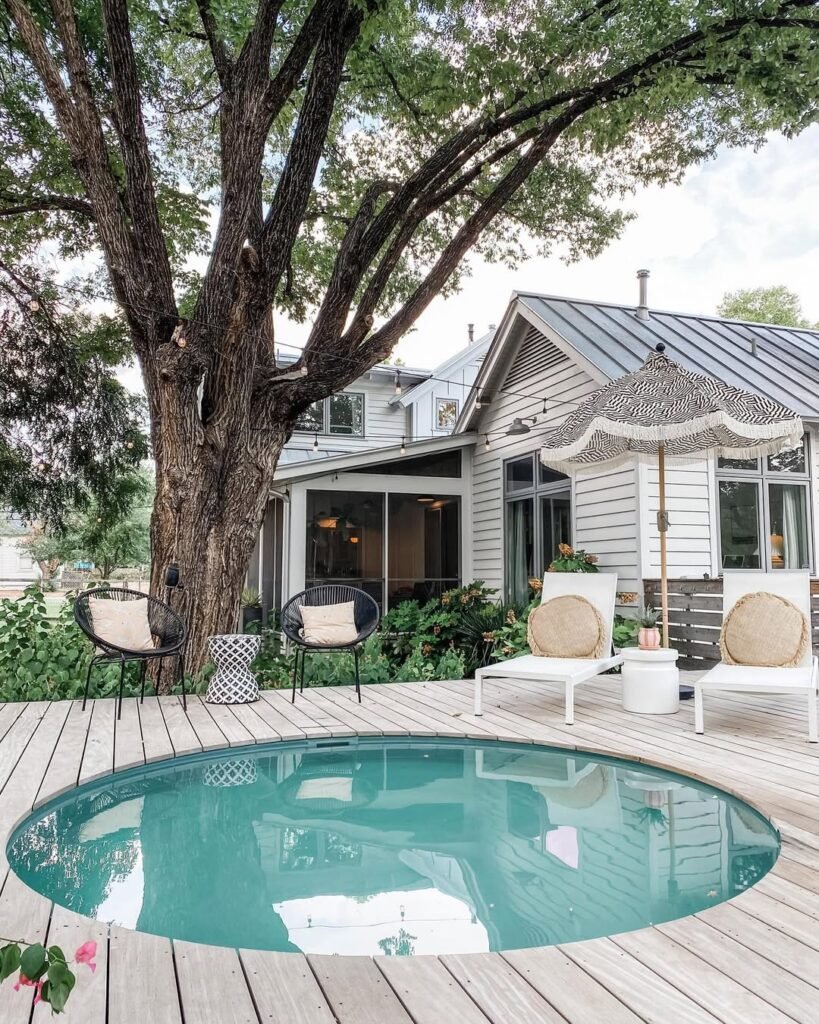
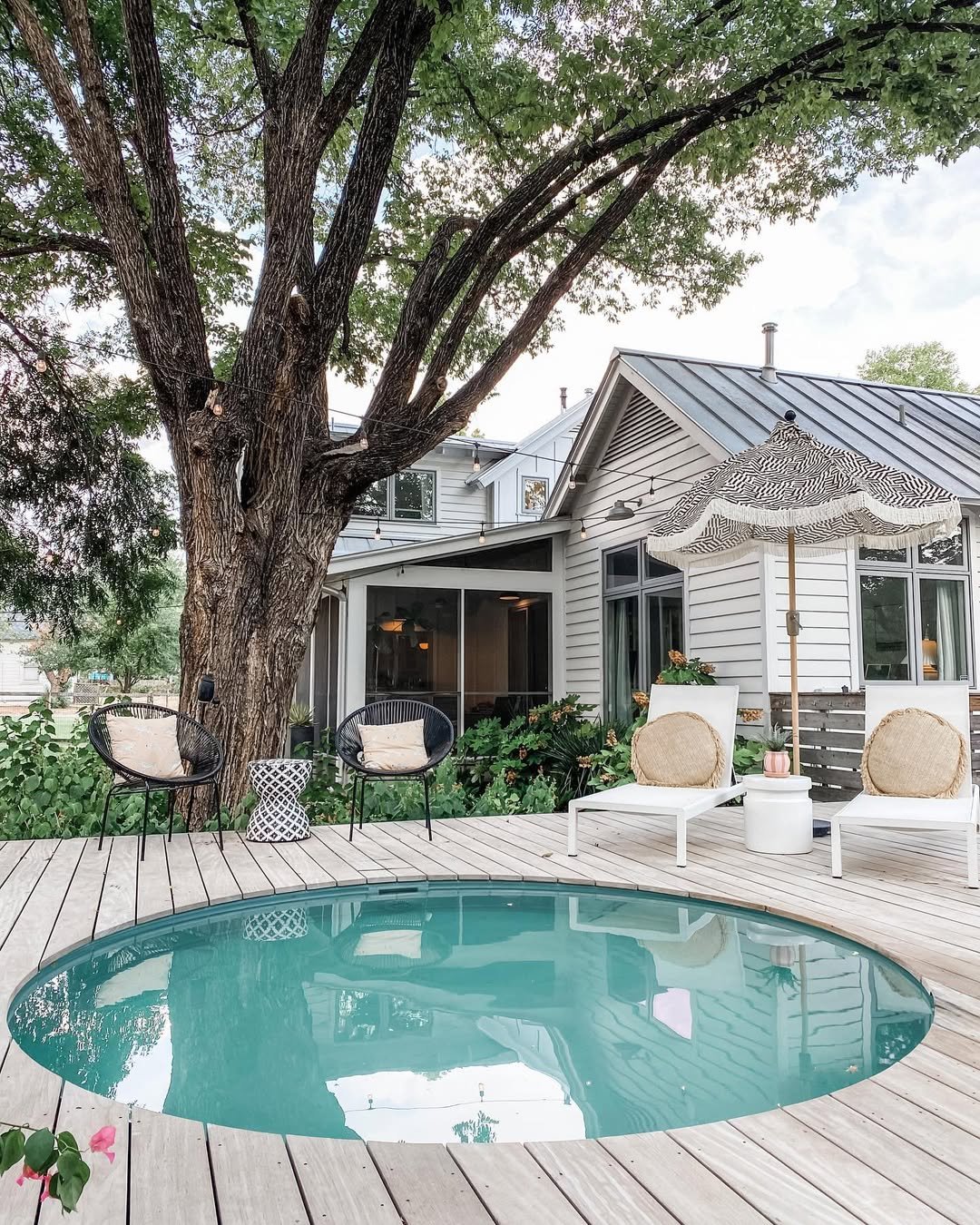
Then I spent one weekend making it look intentional instead of trashy. Now it looks like a designed water feature and people actually compliment it.
Let me show you how to build a stock tank pool that doesn’t scream “I’m cheap” to everyone who sees it.
Why I Bought a Stock Tank Instead of Real Pool
Real inground pools cost $30,000-60,000. I don’t have that kind of money and my yard is tiny anyway.
Above-ground pools look terrible and still cost $3,000-5,000 for anything decent. Plus they fall apart in a few years.
Stock tank pools cost $300-600 depending on size. They’re basically indestructible galvanized steel or poly plastic. Last forever with minimal care.
Size comparison:
| Pool Type | Cost | Installation | Lifespan |
| Inground | $30,000+ | Professional required | 20+ years |
| Above-ground kit | $3,000-5,000 | DIY, takes days | 5-10 years |
| Stock tank | $300-600 | DIY, takes hours | 15+ years |
I can cool off in 100°F Texas heat for $400 total investment. The best money I spent on my house.
Galvanized vs Poly Tanks (Choose Wisely)
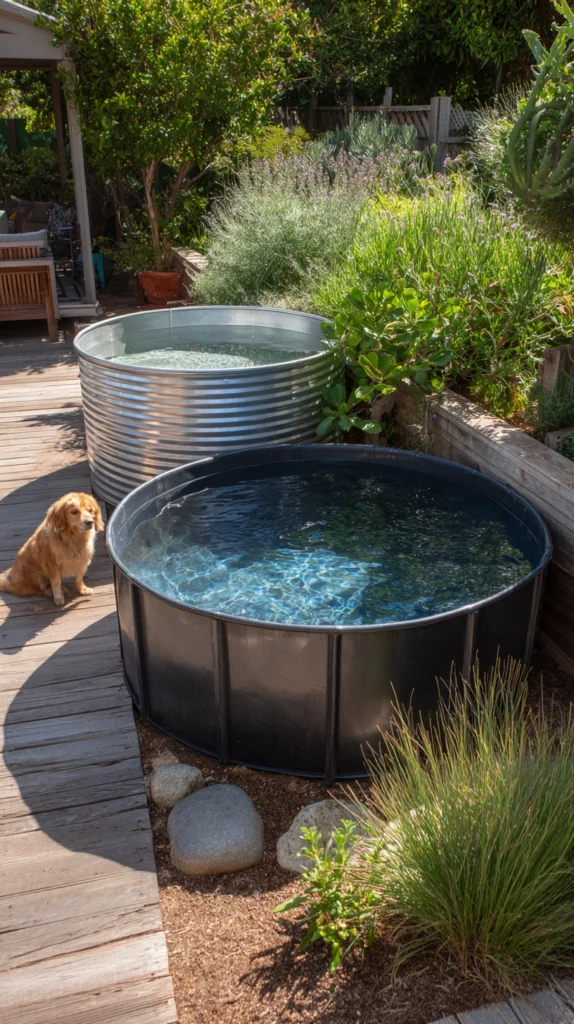
I bought galvanized steel first, then switched to poly. Here’s why:
Galvanized Steel Tanks
Pros:
- Look more “designed” (industrial farmhouse vibe)
- Extremely durable
- Hold up to anything
Cons:
- Get hot in direct sun (burns your legs getting in)
- Need special liner or paint to prevent zinc leeching
- Rust eventually in humid climates
- Heavier (hard to move)
My experience: The metal tank got so hot in the afternoon sun I couldn’t touch it. The water stayed warm even at night.
Poly (Plastic) Tanks
Pros:
- Don’t heat up in sun (stays relatively cool)
- Never rust or corrode
- No chemicals leech into water
- Lighter weight (easier to position)
Cons:
- Look more “plastic-y” without decoration
- Can fade in sun over years
- Slightly less durable (but still last 15+ years)
I switched to poly and it’s way better for Texas heat. Water stays cooler, tank doesn’t burn your skin.
Choosing the Right Size
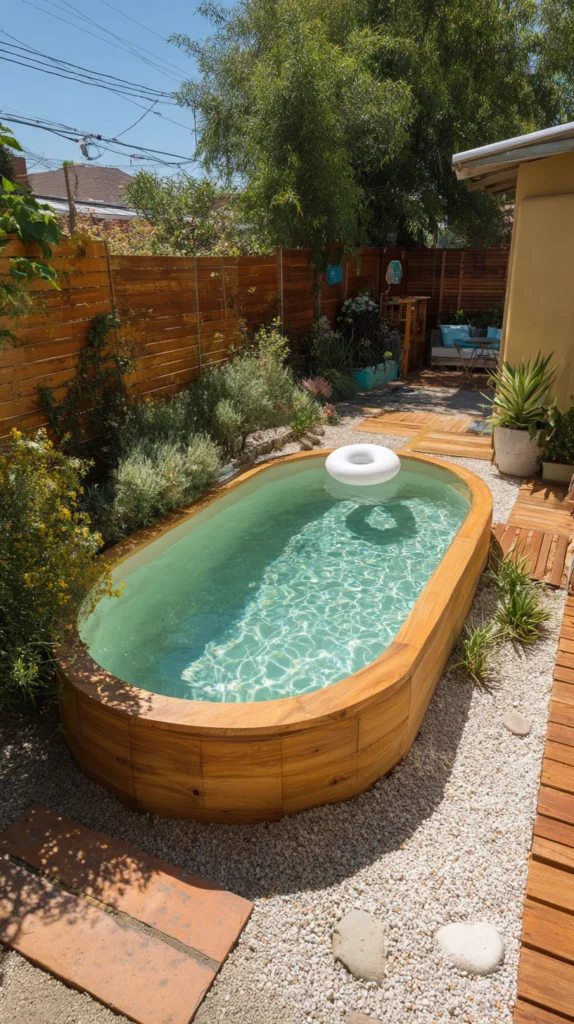
Stock tanks come in standard sizes. Bigger is better if you have space and budget.
Common sizes:
| Size | Dimensions | Capacity | Best For | Price |
| 2×2×2 feet | Oval | 100 gallons | 1-2 kids | $200 |
| 6×2×2 feet | Oval | 300 gallons | 2-3 people | $400 |
| 8×2×2 feet | Oval | 400 gallons | 3-4 people | $600 |
| 10×2×2 feet | Round | 700 gallons | 4-6 people | $800 |
I have an 8-foot oval. Perfect for two adults and two kids. You can actually move around and float, not just stand there.
Can You Actually Swim?
No. These are plunge pools, not lap pools. You can:
- Cool off and lounge
- Float on a raft
- Kids can splash and play
- Sit on the edge with legs in
You cannot:
- Do laps
- Actually swim lengths
- Dive (only 2 feet deep)
Think of it as a giant bathtub for your yard, not a swimming pool.
Where to Actually Buy Stock Tanks
Tractor Supply or local farm stores – This is where I got mine. Can see it in person before buying.
Stock tank suppliers online – Ship anywhere but shipping costs $100-200 for large tanks
Home Depot/Lowe’s – Sometimes carry them seasonally, limited selection
Facebook Marketplace/Craigslist – Used tanks, inspect carefully for leaks
Cost breakdown I paid:
- 8-foot poly tank: $429
- Delivery from Tractor Supply: $50
- Total: $479
Some farm stores will deliver free if you’re close. Ask about delivery before buying – these things are huge.
Setting Up the Base (Critical Step)
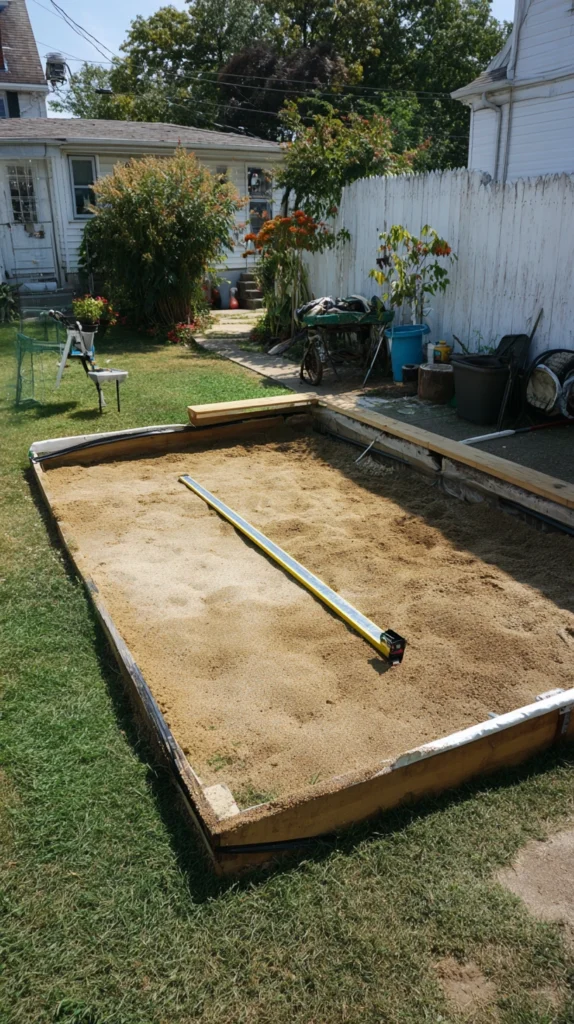
Don’t just plop it on the ground. I did this first and the tank settled unevenly within a week. One side was 3 inches lower than the other.
Leveling the Ground
This is the most important step. Unlevel tank = structural stress = leaks eventually.
My leveling process:
- Choose location (flat area, full sun or partial shade)
- Mark 9×3 foot rectangle (bigger than tank)
- Remove grass and dig down 2 inches
- Add 2 inches of sand
- Level sand with a long board
- Compact with hand tamper
- Check level in multiple directions
I used a 4-foot level and checked it obsessively. Within 1/4 inch is good enough. Perfectly level is impossible.
Base Material Options
What goes under the tank:
Sand (what I used):
- Easy to level
- Conforms to tank shape
- Cheap ($20 for 10 bags)
- Drains well
Paver base:
- More stable
- More expensive
- Harder to level perfectly
Concrete pavers:
- Most stable
- Can be perfectly level
- Expensive and permanent
- Harder to adjust if settling happens
Gravel:
- Don’t use – too uneven
- Pokes through poly tanks
- Impossible to level
I went with a sand base and it’s been perfect for 18 months. No settling, no issues.
Filling and Treating the Water
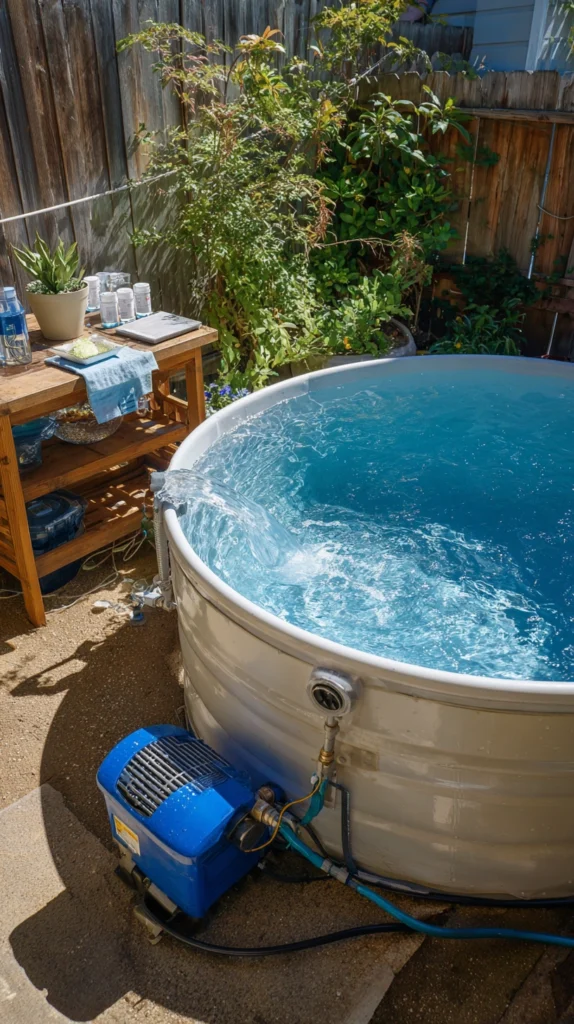
I filled mine with a garden hose. It took about 4 hours to fill 400 gallons. Watch your water bill that month!
Initial Water Treatment
Stock tanks aren’t designed to hold clean water. You need to treat it like a pool or it’ll turn into a swamp.
What I use:
- Pool chlorine tablets (1-2 tablets for 400 gallons)
- Pool test strips (test weekly)
- Algaecide (add monthly in summer)
My treatment schedule:
| Task | Frequency | Cost |
| Test water | Weekly | Pennies per test |
| Add chlorine tablet | Weekly | $0.50 per tablet |
| Algaecide | Monthly | $3 per month |
| Shock treatment | Every 2 weeks | $2 per treatment |
Total chemical cost: About $20 per month to keep it clean and safe.
Do You Need a Filter?
Technically no, but it helps a lot.
Without filter:
- Change water every 2-3 weeks
- Use more chemicals
- Water gets cloudy faster
- More maintenance
With filter:
- Change water every 2-3 months
- Use fewer chemicals
- Water stays clear
- Less work
I bought a small sand filter pump for $200. Runs 4 hours per day. Totally worth it for not having to refill constantly.
Making It Look Good (The Important Part)
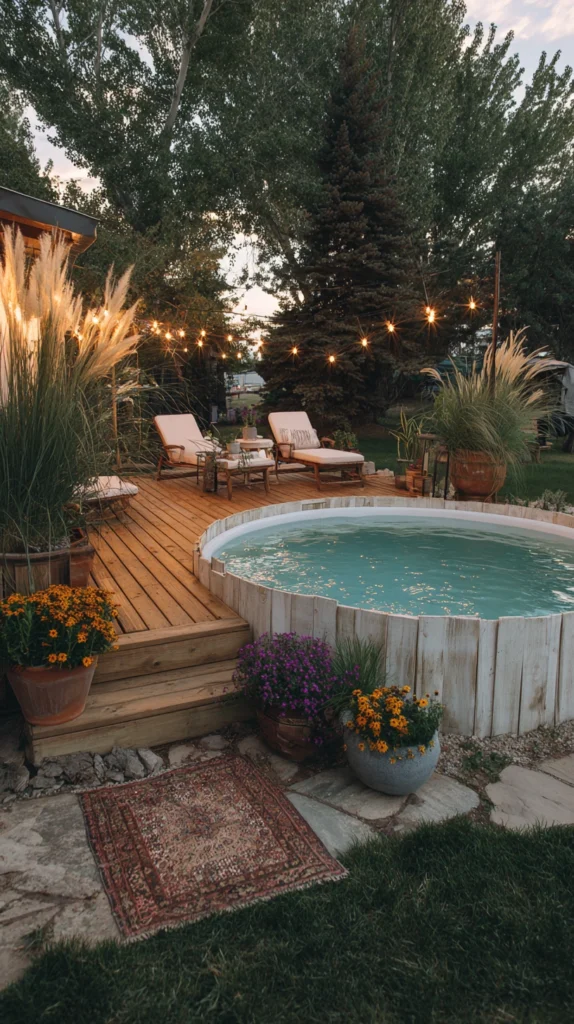
Here’s how I transformed it from farm trough to backyard oasis:
1. Build a Deck Around It
This was the game-changer. A simple wooden deck makes it look intentional and fancy.
My deck specs:
- 12×6 feet (wraps around one side)
- Pressure-treated 2×6 boards
- 18 inches off ground (matches tank height)
- Steps on one end
Cost: $380 in lumber (pre-pandemic prices, probably $600 now)
Time: One weekend with a friend helping
The deck gives you:
- Place to sit and dangle feet
- Entry/exit point
- Storage underneath for chemicals
- Makes it look designed, not random
2. Surround With Plants
Strategic planting hides the tank edges and makes it look like a water feature.
What I planted:
- Tall grasses around back side (hides tank from neighbor view)
- Flowering plants on front corners (softens edges)
- Small palm trees on sides (adds tropical vibe)
- Creeping ground cover around base
Plant choices for poolside:
- Ornamental grasses (tall, hides tank)
- Lantana (colorful, heat-tolerant)
- Hibiscus (tropical look)
- Agave and succulents (low-maintenance)
Total plant cost: $120 at local nursery
Within 2 months, plants filled in and the tank looked integrated into landscaping instead of plopped randomly in the yard.
3. Add Lighting
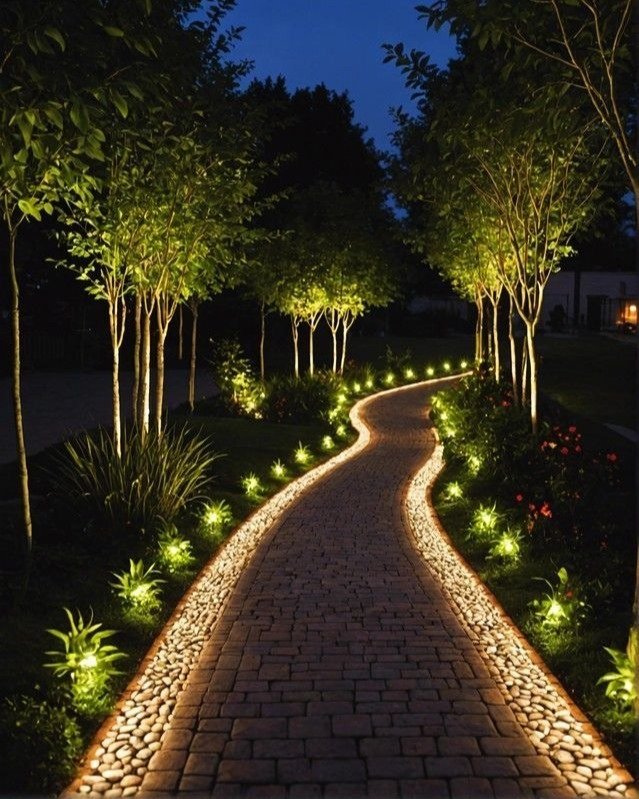
String lights completely change the vibe from daytime farm tank to evening ambiance.
My lighting setup:
- LED string lights across deck posts ($25)
- Solar stake lights around plants ($30)
- Floating LED light in water ($15)
Runs on timer. Comes on at dusk automatically. Makes the whole area usable at night and looks amazing.
Neighbors can see the glow and it looks like a designed water feature, not a stock tank.
4. Paint or Stain the Tank
Galvanized tanks can be painted. Poly tanks should be stained or wrapped.
For galvanized:
- Clean with vinegar solution
- Prime with metal primer
- Paint with exterior paint
- Popular colors: black, dark blue, dark green
For poly:
- Can’t paint (won’t stick)
- Wrap with wood slats
- Use vinyl wrap
- Add decorative screening
I have poly so I built a wood slat screen on the visible sides. Hides the plastic, adds texture, looks custom.
Wood screen cost: $60 for cedar fence boards
5. Create a Seating Area
Added weatherproof furniture nearby:
- Two lounge chairs ($80 each on sale)
- Small side table ($40)
- Outdoor rug ($50)
- Umbrella for shade ($60)
This makes it a destination in the yard, not just a tank sitting there.
People actually want to hang out near it now instead of avoiding that corner of the yard.
Installing a Pump and Filter System
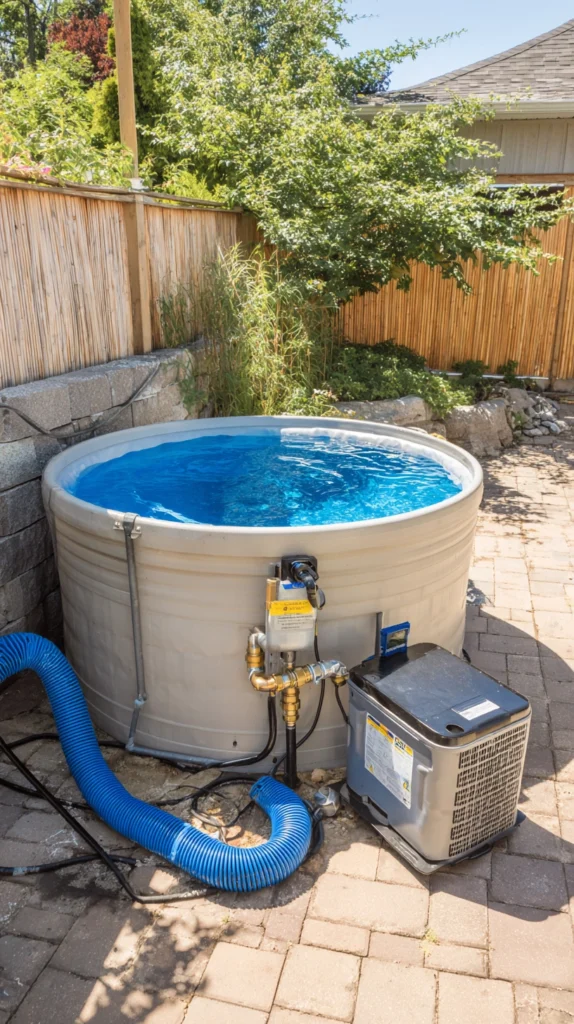
You don’t need a pump, but it makes life easier.
My Filter Setup
Equipment:
- Intex sand filter pump ($200)
- 1.5-inch pool hose (came with pump)
- Two bulkhead fittings for tank ($30)
- Timer for pump ($15)
Installation:
- Drilled two holes in tank (scary but necessary)
- Installed bulkhead fittings with rubber gaskets
- Connected pump intake and return
- Runs 4-6 hours daily on timer
Total cost: $245
Result: Water stays crystal clear, less chemical use, only drain and refill 2-3 times per summer instead of weekly.
Drilling Holes Without Leaks
This is intimidating but straightforward:
- Mark hole locations (one low for intake, one high for return)
- Use proper size hole saw (match bulkhead size)
- Drill slowly to avoid cracking
- Clean edges
- Install bulkhead with thick rubber gaskets
- Tighten firmly (not over-tight)
- Test for leaks before filling completely
I watched three YouTube videos before drilling. Took 20 minutes, zero leaks in 18 months.
Heating Options for Cooler Climates
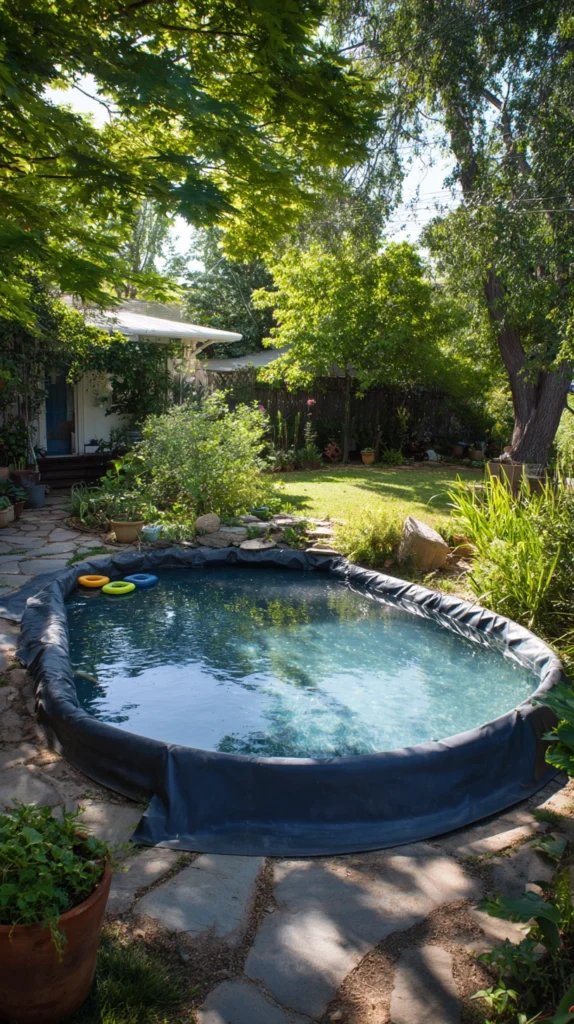
Stock tanks are small enough to heat affordably, unlike real pools.
Heating methods:
Solar cover ($40):
- Passive heating from sun
- Gains 5-10°F
- Also reduces evaporation
- What I use
Solar rings ($60 for pack):
- Float on surface
- Heat water during day
- Easier to remove than full cover
Electric heat pump ($800-1,200):
- Active heating
- Extends season significantly
- Expensive upfront
- High electric bills
Propane heater ($300-500):
- Fast heating
- Ongoing propane cost
- Good for occasional use
I just use a solar cover. In Texas, water gets warm enough naturally. The cover keeps it from cooling too much overnight.
Winter Maintenance (If You Live Where It Freezes)
I’m in Texas so this doesn’t apply to me, but here’s what cold-climate owners do:
Option 1: Drain and store
- Empty tank completely
- Clean and dry
- Store upside down or covered
- Easiest but means no winter use
Option 2: Winterize and leave filled
- Lower water level below return fittings
- Add winterizing chemicals
- Remove pump/filter, store inside
- Cover tank
- Prevents freeze damage
Option 3: Keep it running (if you’re crazy)
- Heat it
- Run pump constantly
- Use it year-round
- Very expensive
Most people in cold climates drain it in October, refill in May.
What It Actually Costs to Maintain
My real expenses over 18 months:
One-time costs:
- Tank: $429
- Delivery: $50
- Sand base: $20
- Pump/filter: $245
- Deck lumber: $380
- Plants: $120
- Lighting: $70
- Furniture: $260
- Total startup: $1,574
Monthly costs:
- Chemicals: $20
- Electricity (pump): $8
- Water (minimal, only refills): $5
- Total monthly: $33
Annual cost: About $400 to maintain
Compare to community pool membership ($600/year) or gym with pool ($800/year). This is cheaper and in my own yard.
Problems I’ve Had and How I Fixed Them
Algae Bloom in Hot Weather
Green water within 3 days during a heat wave.
Fix:
- Shocked with double chlorine
- Ran filter 8 hours instead of 4
- Added algaecide
- Vacuumed bottom
- Clear in 24 hours
Prevention: Test and treat water more often in extreme heat.
Small Leak at Bulkhead
Slow drip from return fitting after 6 months.
Fix:
- Drained tank
- Removed bulkhead
- Added extra rubber gasket
- Applied silicone sealant
- Tightened and refilled
- No leak since
Tank Settled on One Side
One corner sunk 2 inches after heavy rain saturated ground.
Fix:
- Drained tank
- Added more sand to low area
- Re-leveled carefully
- Let sand settle for week
- Refilled tank
- Stable for 12 months now
Making It Kid and Pet Safe
Safety additions I made:
Deck railing:
- Prevents kids from running straight off deck into water
- $120 for simple rail system
Motion sensor alarm ($50):
- Alerts if something breaks water surface
- Like pool alarms for real pools
- Peace of mind with young kids
Pool fence (considered but didn’t install):
- Temporary fence around deck area
- Required by law in some places
- Check local codes
Rules we enforce:
- No swimming alone
- Adult must be outside when kids are in
- Life jackets for non-swimmers
- No running on deck
Our kids are 8 and 11 and good swimmers. With toddlers, I’d add a fence and more barriers.
Does It Actually Stay Cool in Summer?
Poly tanks stay cooler than metal, but water still gets warm.
My water temps in summer:
- Morning (after cool night): 78-82°F
- Afternoon (full sun): 85-90°F
- Evening: 82-86°F
It’s not freezing cold but cooler than 100°F air temperature. Refreshing enough to cool off.
Ways to keep water cooler:
- Partial shade (I added a shade sail)
- Fountain or waterfall (aeration cools)
- Ice blocks (temporary, melts fast)
- Drain and refill with cold hose water
I added a shade sail over half the tank ($80). Dropped water temp by 5-8 degrees.
Decorating Ideas That Actually Work
What makes mine look good instead of trashy:
Deck surrounding one side:
- Biggest visual improvement
- Makes it look intentional
- Cost: $380
Wood slat screening:
- Hides poly sides
- Adds texture
- Cost: $60
Strategic plants:
- Tall grasses hide back
- Flowering plants soften edges
- Cost: $120
String lights:
- Evening ambiance
- Makes it feel designed
- Cost: $25
Color coordination:
- Deck stain, furniture, and plants all in warm tones
- Cohesive look
- No extra cost, just planning
Total spent on appearance: About $600
Result: Looks like a $5,000 water feature instead of a $400 cow trough.
Best Add-Ons and Accessories
What I actually use:
Cup holders mounted to deck ($12):
- Essential for keeping drinks off deck
- Suction or screw-mount types
Floating drink holder ($8):
- Keeps drink in pool with you
- Kids love it
Pool noodles ($5):
- Float around, use as headrest
- Cheap entertainment for kids
Floating thermometer ($10):
- Know water temp at glance
- Helps decide if heater needed
Pool cover ($40):
- Solar heating
- Keeps debris out
- Reduces chemical use
Ladder or steps ($80):
- Easier entry than climbing over side
- Especially helpful for older people
What I didn’t buy but some people like:
- Waterfall fountain
- LED color-changing lights
- Pool vacuum
- Skimmer net
Legal and HOA Considerations
Check before buying:
City codes:
- Some cities require permits for pools over certain size
- May need fence if over 18 inches deep
- Call city building department
HOA rules:
- Some HOAs ban stock tank pools
- Others allow with restrictions
- Check before purchasing
Homeowner’s insurance:
- Call your insurance company
- May affect rates or coverage
- Some require additional liability coverage
I’m not in an HOA and my city doesn’t regulate pools under 1,000 gallons. Lucky.
My insurance didn’t care about the stock tank specifically but I added umbrella liability policy just in case someone gets hurt.
Is It Worth It?
For me, absolutely yes.
What I love:
- Cool off anytime without leaving home
- Kids use it daily all summer
- Backyard is now a destination
- Cost 1/20th of real pool
- Looks way better than I expected
What I don’t love:
- Still maintenance (chemicals, filter cleaning)
- Not big enough for actual swimming
- Water gets warm in extreme heat
- Have to refill occasionally
Would I do it again? Yes, without hesitation.
Best for:
- Small yards
- Hot climates
- Families with kids
- People who want pool without huge cost
- DIY enthusiasts
Not ideal for:
- People wanting actual lap swimming
- Those without yard space
- Strict HOAs
- People who hate maintenance
Building Your Own This Weekend
Here’s the actual process:
Friday Evening
Prep and buy materials:
- Order tank (may need to pick up)
- Buy sand, lumber if building deck
- Clear yard area
- Mark location
Saturday
Setup and fill:
- Level ground
- Add sand base
- Position tank
- Check level obsessively
- Start filling with hose
- Install filter if using
Sunday
Treat and decorate:
- Add chemicals once filled
- Build or position deck/steps
- Plant around edges
- Add lighting
- Set up furniture
By Sunday evening: Functional pool ready to use
Following weekend: Continue decorating, tweaking position, adding accessories
Total DIY time: 12-16 hours spread over two weekends
Getting Started Today
Step 1: Measure your yard space (need 9×9 feet minimum for 8-foot tank plus deck)
Step 2: Check city codes and HOA rules
Step 3: Decide on tank size and material (poly vs galvanized)
Step 4: Budget for tank plus upgrades ($800-2,000 total realistic)
Step 5: Order tank or visit farm store
The sooner you start, the sooner you’re cooling off in your own backyard instead of driving to crowded public pools.
I waited two years thinking about it. Should’ve done it way sooner. Best backyard upgrade I’ve made.
Now go find a stock tank and start planning your setup. Summer heat won’t wait!
Quick Summary:
Best choices:
- Poly tank over galvanized (stays cooler, no rust)
- 8-foot oval (big enough for 3-4 people)
- Sand filter pump (keeps water clean)
- Build a deck (makes it look designed)
Essential steps:
- Level ground perfectly (most important)
- 2-inch sand base
- Drill for pump fittings carefully
- Treat water like a pool
- Surround with plants and lighting
Realistic costs:
- Tank: $400-600
- Filter system: $200-300
- Deck/surrounds: $400-600
- Decorations: $200-300
- Total: $1,200-1,800
- Monthly maintenance: $30-40
What makes it look good:
- Deck or platform around tank
- Wood screening on visible sides
- Strategic plants hiding edges
- String lights for ambiance
- Cohesive color scheme
- Proper landscaping integration
Maintenance reality:
- Test water weekly
- Add chlorine weekly
- Run filter 4-6 hours daily
- Drain and refill 2-3 times per summer
- Clean filter monthly
- 15 minutes weekly, not bad