16 Creative Raised Garden Bed Layout Ideas for Your Dream Backyard
My first raised beds were four random rectangles scattered across the yard. No plan, no cohesion, just boxes of dirt.
It looked terrible. Like I’d dropped garden beds wherever there was empty grass.
Then I learned that layout matters as much as the beds themselves. Same beds, better arrangement, completely different aesthetic.
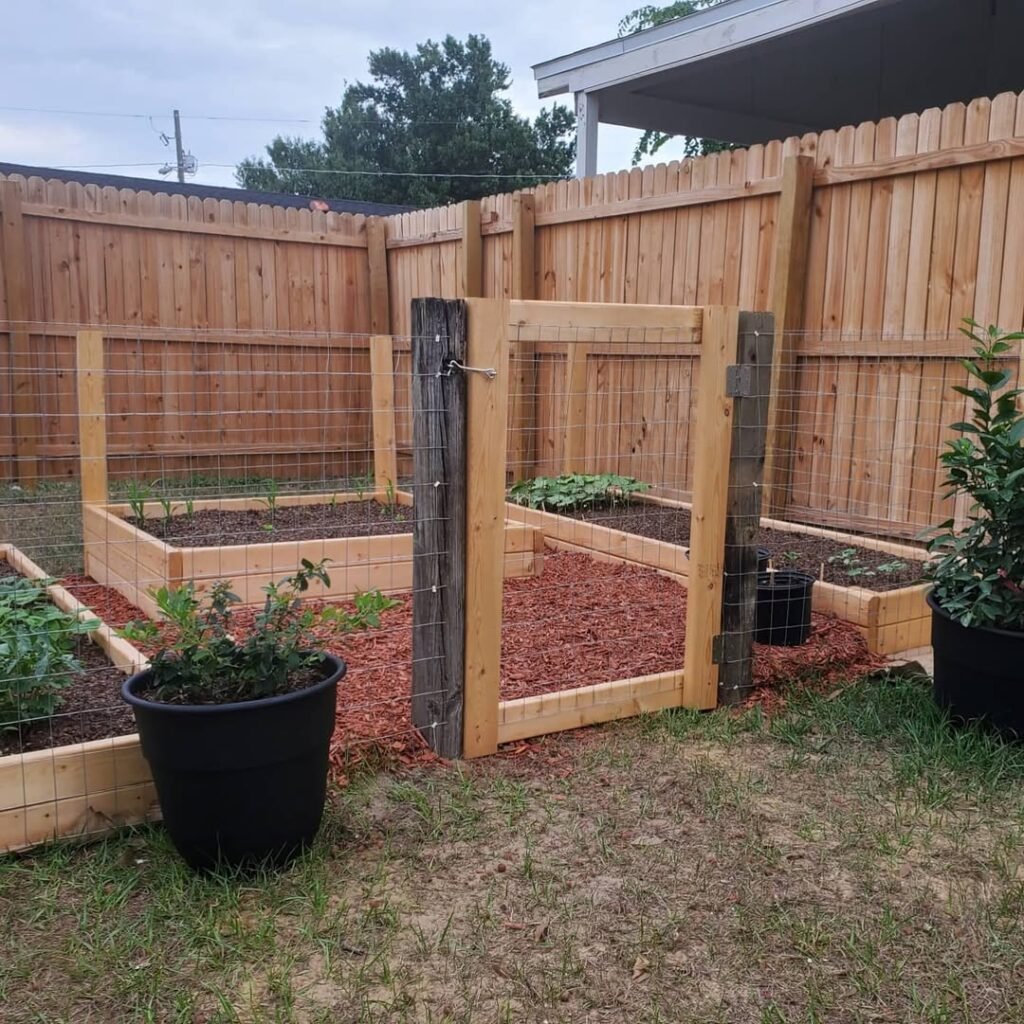
Now my backyard looks designed and intentional instead of like a construction zone.
Let me show you 16 creative layouts that transform yards into beautiful, productive spaces.
Why Random Bed Placement Looks Amateur
My original backyard disaster:
- 4 raised beds (4×8 feet each)
- Placed wherever it was convenient
- No relationship to each other
- Random paths between
- Looked like afterthought
Guest comment: “You really like gardening, huh?” (Translation: This looks messy)
The beds were fine. The layout was chaotic.
After redesigning with intention:
- Same 4 beds
- Organized pattern
- Proper paths
- Visual flow
- Cohesive appearance
Guest comment: “Wow, this is beautiful!” (Actual compliment)
Layout Principles That Transform Spaces
What I learned:
Symmetry creates calm:
- Matching bed placement
- Balanced arrangements
- Orderly appearance
Paths matter as much as beds:
- Define the space
- Create flow
- Should be intentional
Visual anchors needed:
- Focal point beds
- Corner treatments
- Eye-catching elements
Repeating patterns work:
- Same bed sizes
- Consistent spacing
- Predictable rhythm
These principles changed everything for my backyard design.
1. The Classic Grid (Formal and Organized)
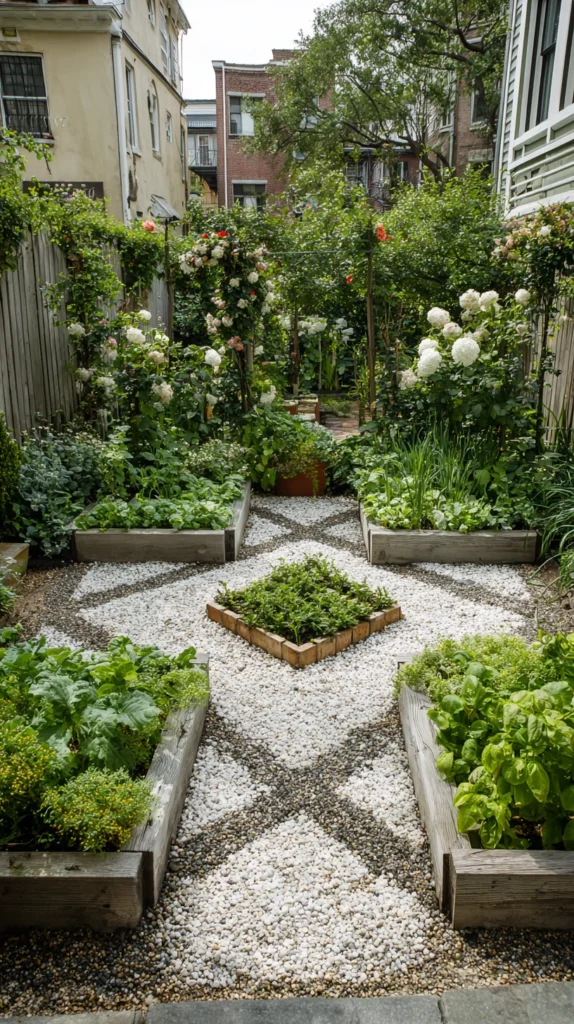
Four beds in perfect rectangle with cross paths.
My grid layout:
Four 4×8 beds:
- Arranged as the corners of a rectangle
- 3-foot paths between all beds
- Creates + shape in center
- Symmetrical and balanced
Path configuration:
Main path (north-south): 3 feet wide
- Wheelbarrow accessible
- Comfortable walking
Cross path (east-west): 3 feet wide
- Divides space evenly
- Easy access to all beds
Center intersection:
- Perfect spot for a bench or a focal point
- I added a small fountain
- Creates a gathering space
Why this works:
- Easy to navigate
- All beds accessible
- Professional appearance
- Expandable (add more beds maintaining pattern)
Total space: 20×20 feet (including paths) Growing space: 128 square feet (just beds) Path space: 272 square feet
Ratio seems wasteful but paths are essential for access.
Grid Layout Benefits
Advantages:
- Crop rotation easy (beds labeled A, B, C, D)
- Symmetric watering (same distance to all beds)
- Clean visual lines
- Traditional garden aesthetic
My crop rotation:
- Year 1: Bed A tomatoes, B peppers, C roots, D greens
- Year 2: Rotate clockwise
- Prevents soil depletion
Best for: Traditional gardeners who like organization.
2. The Mandala Garden (Circular Beauty)
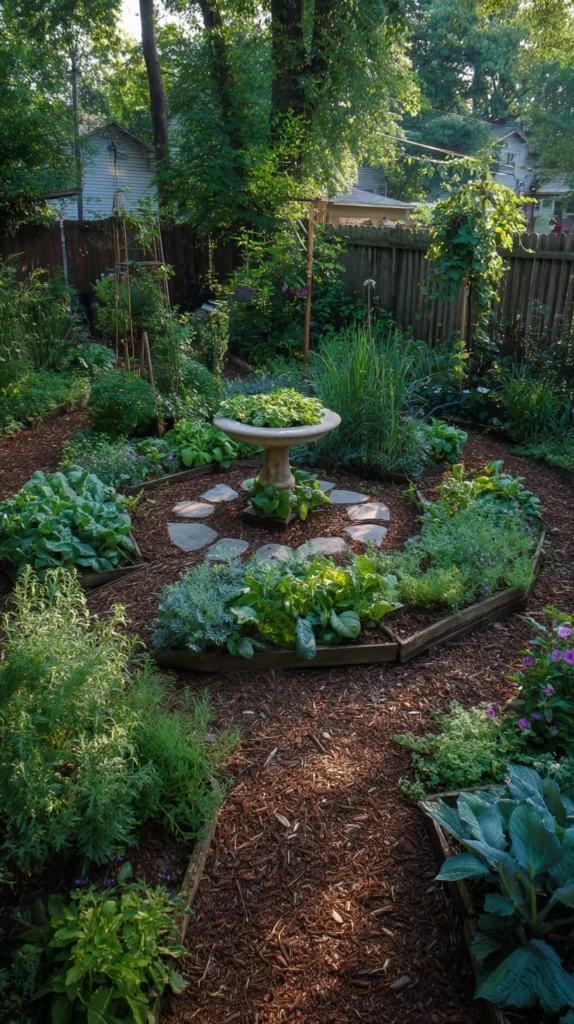
Beds arranged in circle around central focal point.
My friend’s mandala design:
Six 4×4 beds:
- Arranged in circle (12-foot diameter)
- Pie-slice shaped beds radiating from center
- Paths between like wheel spokes
Center feature:
- Bird bath
- Pollinator plants
- Visual anchor
Why circles work:
- Visually striking
- No harsh corners
- Feels organic
- Creates gathering space in center
Materials needed:
- Flexible edging for curved beds
- Or cut straight boards at angles
- More complex than rectangles
Looks stunning but harder to build than rectangular beds.
Building Curved Beds
Two approaches:
Option 1: Flexible plastic edging
- Bends to shape
- $30 per bed
- Less durable
Option 2: Short straight sections angled
- Creates polygon approximating circle
- More stable
- Easier with wood
My friend used: 16-inch straight sections, creating 16-sided “circle”
- Looks round from distance
- Easier to build
- Cost same as rectangular
3. The Horseshoe Layout (Easy Access Design)
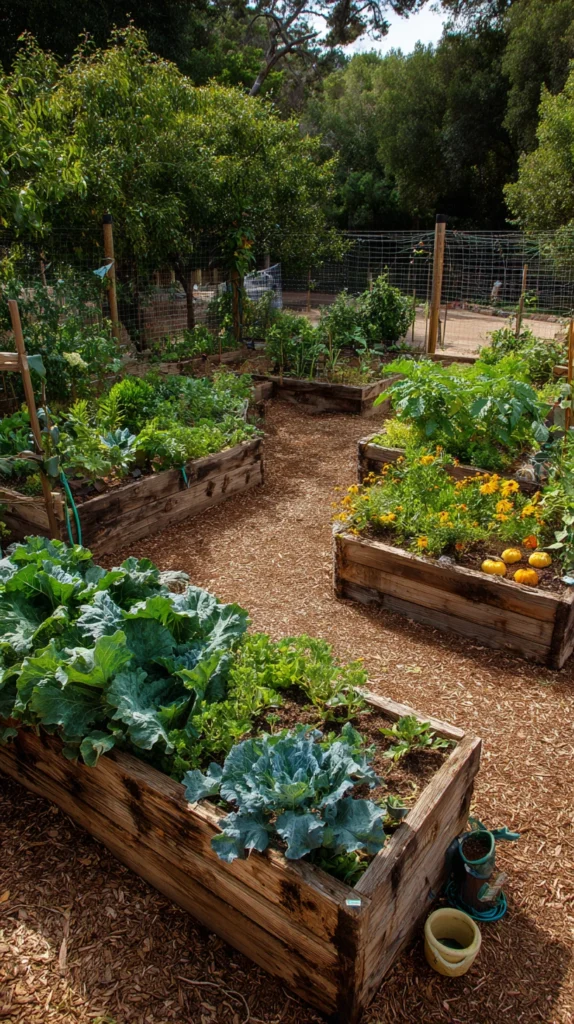
U-shaped arrangement with open front for easy entry.
My setup:
Three beds forming U:
Back bed: 8 feet long Side beds: 6 feet long each Opening: 4 feet wide (front)
Creates semi-enclosed garden:
- Protected feeling
- Easy access from one side
- Good for corner locations
Path system:
- Main path into U (4 feet wide)
- Path around back of back bed (2 feet)
- Can reach everything easily
What I plant:
Back bed (tallest plants):
- Tomatoes on trellis
- Won’t shade others
Side beds (medium plants):
- Peppers, beans
- Good sun access
Center area (no bed):
- Composting station
- Tool storage
- Work table
Functional and attractive.
Horseshoe Advantages
Why this layout works:
- Protects plants (wind reduction)
- Creates microclimate (warmer in U)
- Efficient use of corner space
- One-sided access (against fence works great)
Best for: Corner lots, small yards, accessibility needs
My grandmother uses this – can reach everything from wheelchair without navigating complex paths.
4. The Potager Design (Ornamental Kitchen Garden)
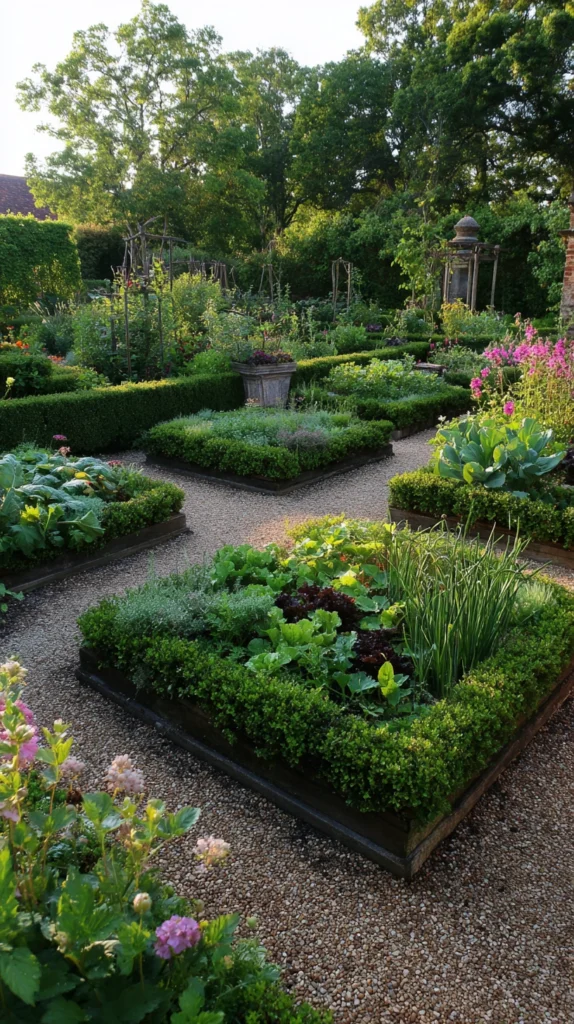
French-style decorative vegetable garden with geometric beds and paths.
My front yard potager:
Nine small beds (3×3 each):
- Arranged in 3×3 grid
- Creates formal pattern
- Mix vegetables and flowers
Path pattern:
- 2-foot paths creating grid
- Gravel surface (elegant)
- Defines space clearly
Planting scheme:
Corner beds (4 total): Flowers
- Marigolds
- Nasturtiums
- Edible and beautiful
Edge beds (4 total): Herbs
- Basil, parsley
- Neat borders
- Fragrant
Center bed: Featured vegetable
- Changes seasonally
- Rainbow chard currently
- Dramatic focal point
Total space: 15×15 feet Growing space: 81 square feet Looks like landscaping not vegetable garden
Potager Philosophy
The goal: Beauty equals priority to production
My approach:
- Choose colorful vegetables
- Neat edges mandatory
- Flowers integrated throughout
- Harvest doesn’t ruin appearance
Works in front yards where HOAs might complain about vegetables.
My HOA approved it as “ornamental garden.”
5. The L-Shaped Layout (Corner Maximizer)
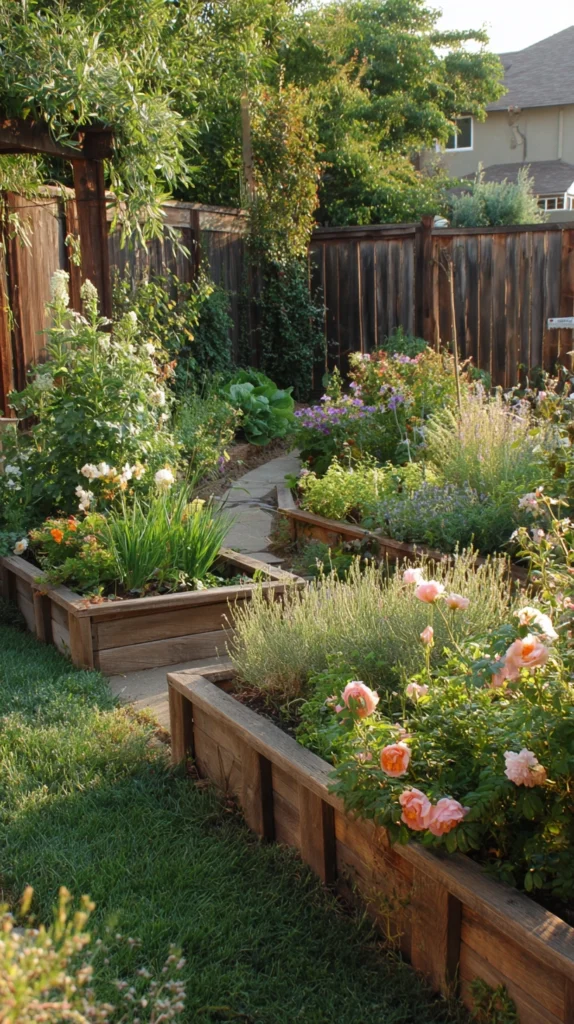
Two bed sections forming L fills corner perfectly.
My side yard:
Long section: 16 feet (4 beds at 4×4) Short section: 12 feet (3 beds at 4×4) Corner connection: Seamless transition
Creates:
- Defined garden space
- Uses corner efficiently
- Room for paths
- Expandable along fence lines
Path configuration:
- Inside L: 3-foot path
- Outside L: Against fence (minimal)
- Efficient space use
Bed numbering for rotation:
- Start at corner, number clockwise
- Easy crop rotation pattern
My annual rotation:
- Heavy feeders → light feeders → soil builders
- Track in garden journal
L-Layout Versatility
Why I love it:
- Fits many yard shapes
- Expandable (add more beds to either leg)
- Creates room boundaries
- Protects from wind (perpendicular beds)
Variations:
- Short L (6×6 feet each leg)
- Long L (20 feet one way, 8 feet other)
- Symmetrical L (both legs equal)
My L evolved – started with 3 beds, now 7 beds following fence line.
6. The Keyhole Garden (Circular with Central Access)
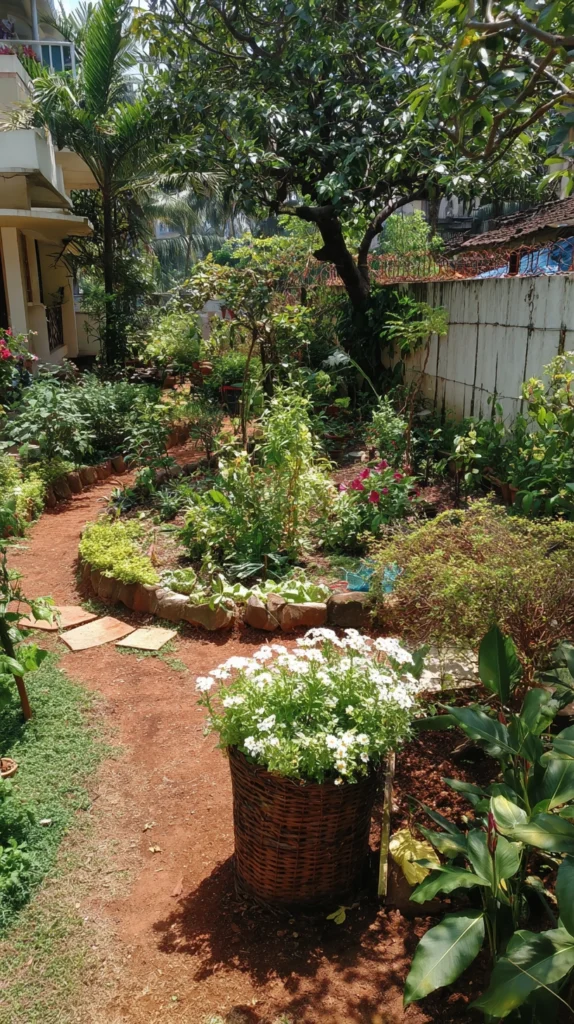
Round bed with wedge-shaped path to center.
Single keyhole bed specs:
Outer diameter: 6 feet Wall height: 3 feet tall Path width: 2 feet Center: Compost basket
How it works:
- Circular growing area
- Path cuts to center (keyhole shape)
- Compost basket in middle
- Plant around center
- Harvest from path
Planting zones:
Near compost (nutrient-rich):
- Heavy feeders (tomatoes, squash)
Middle zone:
- Moderate feeders (peppers, beans)
Outer edge:
- Light feeders (lettuce, herbs)
Footprint: 28 square feet Growing area: 24 square feet (minus path) Height makes it accessible – no bending
Keyhole Construction
I built one keyhole:
Materials:
- Stacked stone for walls
- Wire mesh compost basket
- Quality soil to fill
Cost: $180 (stone was expensive)
Time: One weekend
Benefits:
- Self-fertilizing (compost leaches nutrients)
- Water-efficient (holds moisture)
- Accessible (waist-height)
- Unique focal point
Drawback: Complex to build compared to rectangular.
7. The Tiered Terrace (Slope Solution)
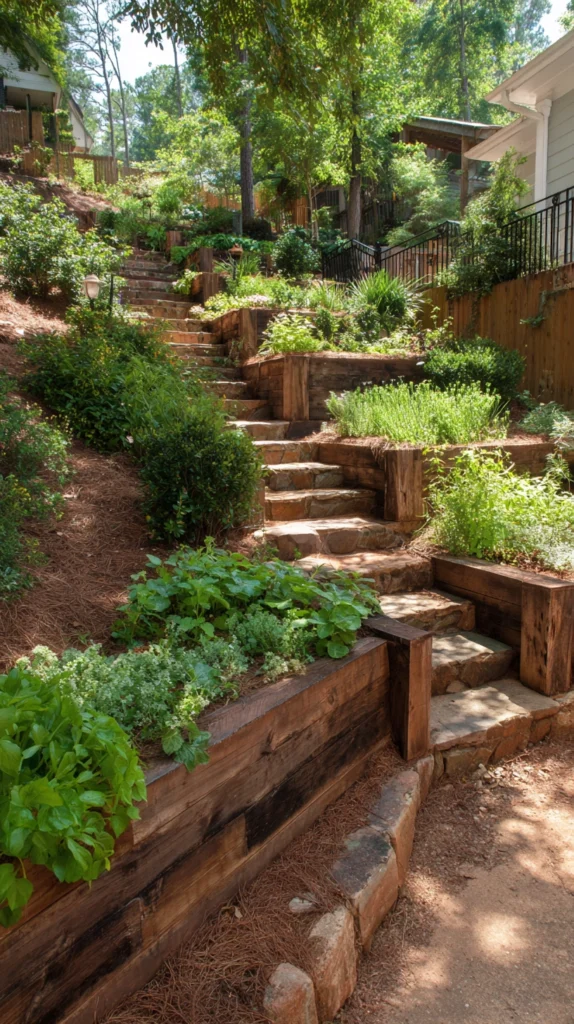
Stepped beds on slope create level growing areas.
My sloped backyard:
Three terraces stepping down:
Top terrace: 8×4 feet
- 3 feet tall retaining wall
- Hottest/driest spot
Middle terrace: 8×4 feet
- 2.5 feet tall wall
- Moderate conditions
Bottom terrace: 8×4 feet
- 2 feet tall wall
- Coolest/moistest spot
Creates stair-step effect down 10-foot slope.
Planting by microclimate:
Top (hot/dry): Tomatoes, peppers, herbs Middle: Beans, squash, chard Bottom: Lettuce, greens, cilantro
Natural water flow – top waters middle, middle waters bottom.
Terrace Benefits
Why terracing works:
- Uses unusable slope
- Creates flat planting areas
- Natural irrigation
- Prevents erosion
- Visually dramatic
My slope was ugly erosion mess. Now it’s productive terraced garden.
Cost: $600 for retaining walls (need professional for safety)
8. The Wagon Wheel (Radial Design)
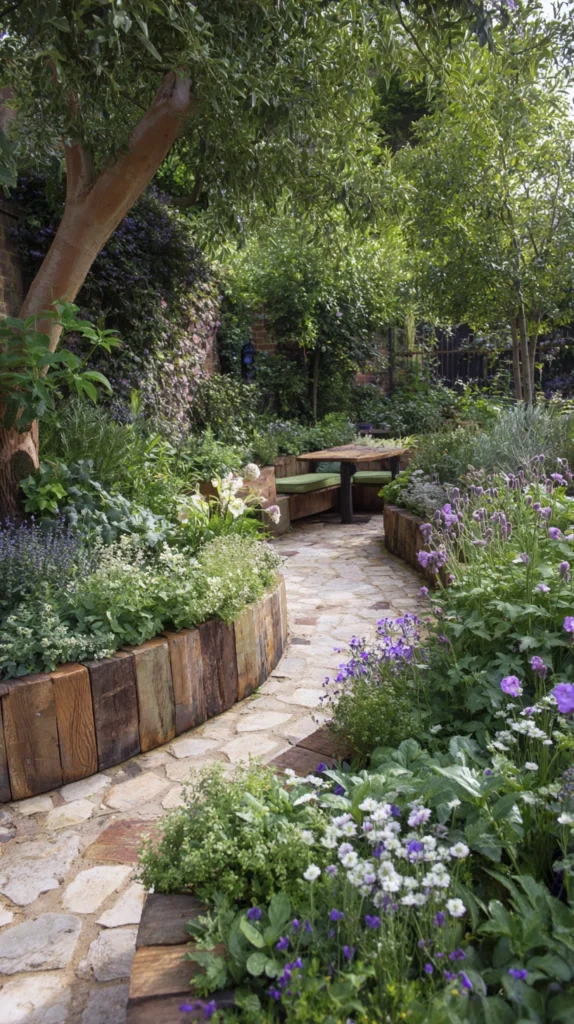
Beds radiating from center point like wheel spokes.
My neighbor’s design:
Six beds radiating from center:
- Each bed 2 feet wide, 6 feet long
- Arranged like bicycle wheel spokes
- Paths between like wheel gaps
Center hub:
- 3-foot circle
- Sitting area with small bench
- Or birdbath/fountain
Creates:
- Dramatic overhead view
- Easy access (walk between spokes)
- Unique conversation piece
- Good for round/square spaces
Total diameter: 12 feet Growing space: 72 square feet Visual impact: Maximum
Wagon Wheel Construction
Complexity: High
Requires:
- Precise angle cuts
- Center point establishment
- Radial symmetry
Easier method:
- Use six separate rectangular beds
- Arrange in spoke pattern
- Don’t connect at center
My neighbor hired carpenter for precise angles ($200 labor).
Result: Most photographed garden in neighborhood.
9. The Raised Bed Island (Central Focal Point)
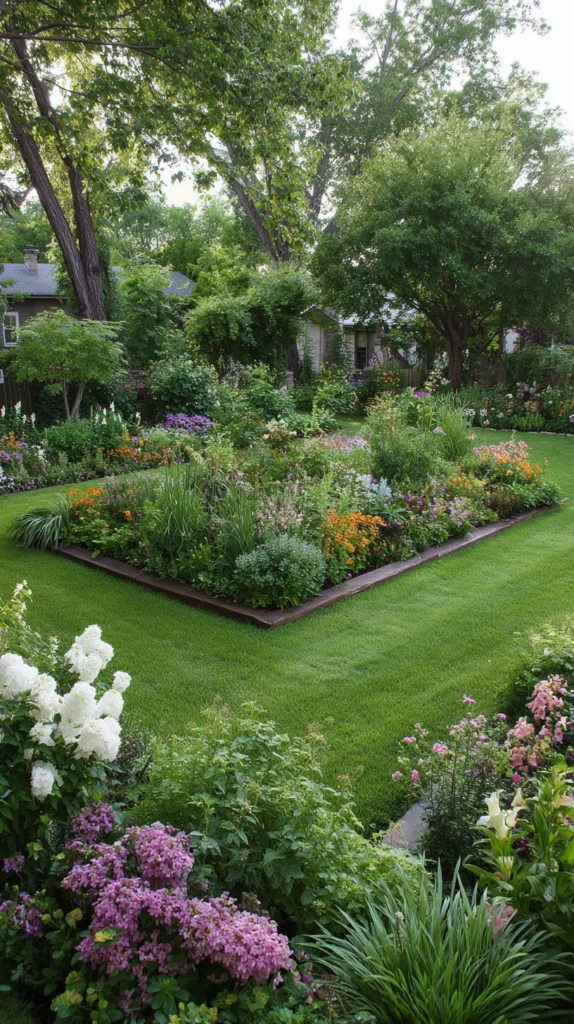
Large bed in middle of lawn creates island garden.
My central island:
Single large bed:
- 8×12 feet
- In center of backyard
- Visible from all sides
- Accessible from all directions
Path around entire bed:
- 3-foot grass path
- Can mow around
- Access from every angle
Planting design:
Center (tallest): Sunflowers, corn Ring 2: Tomatoes, trellised beans Outer ring: Low crops (lettuce, herbs)
Graduated height so visible from all sides.
Creates:
- Backyard focal point
- Room division (creates zones)
- Conversation piece
- Functional centerpiece
Island Garden Tips
What works:
- Sunny location (middle of yard usually sunniest)
- Decorative edging (visible from all sides)
- Neat maintenance (people see all angles)
What I learned:
- Make it big (small island looks odd)
- Plant for 360° viewing
- Keep edges immaculate (very visible)
My island bed defines my entire backyard layout. Everything else relates to it.
10. The Spiral Herb Garden (Vertical Growing)
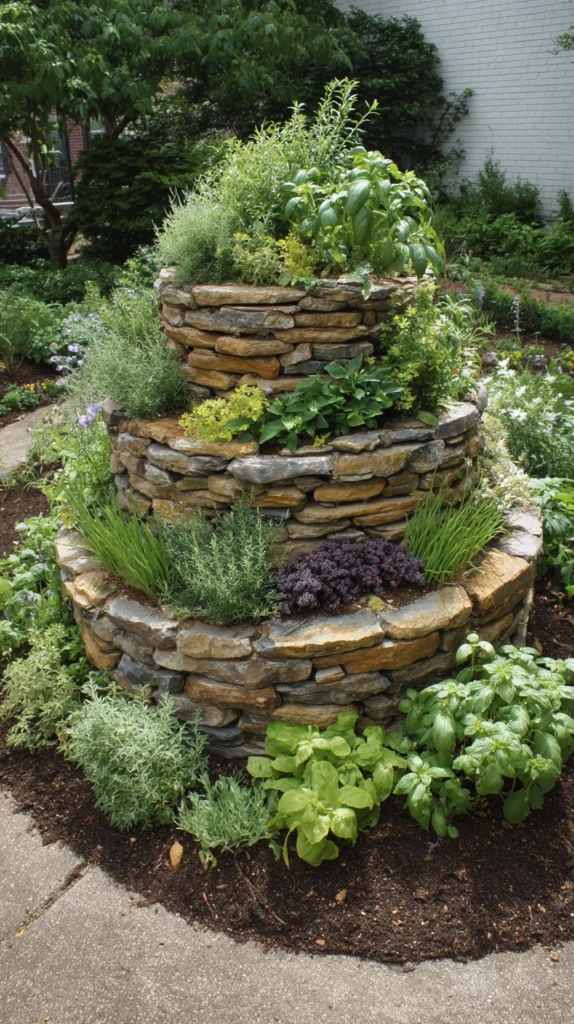
Raised bed built as spiral creates multiple planting heights.
Spiral bed specs:
Base: 6-foot diameter circle Height: 3 feet at center peak Spiral wall: Gradually descends to ground Creates: Natural terraces
Microclimate zones:
Top/center (hot, dry):
- Rosemary, thyme, oregano
- Mediterranean herbs
Middle spiral (moderate):
- Basil, parsley
- Most common herbs
Bottom edge (cool, moist):
- Cilantro, mint, chives
- Moisture-loving herbs
One bed, multiple growing zones.
Spiral Construction
I hired landscaper for this ($450).
DIY is possible:
- Mark 6-foot circle
- Build spiraling wall (stone or blocks)
- Start 3 feet tall at center
- Gradually decrease to ground at outer edge
Benefits:
- Beautiful focal point
- Space-efficient (30+ herbs in small footprint)
- Perfect microclimate for each herb
- Dramatic appearance
Worth the investment if you love cooking with fresh herbs.
11. The Courtyard Garden (Enclosed Retreat)
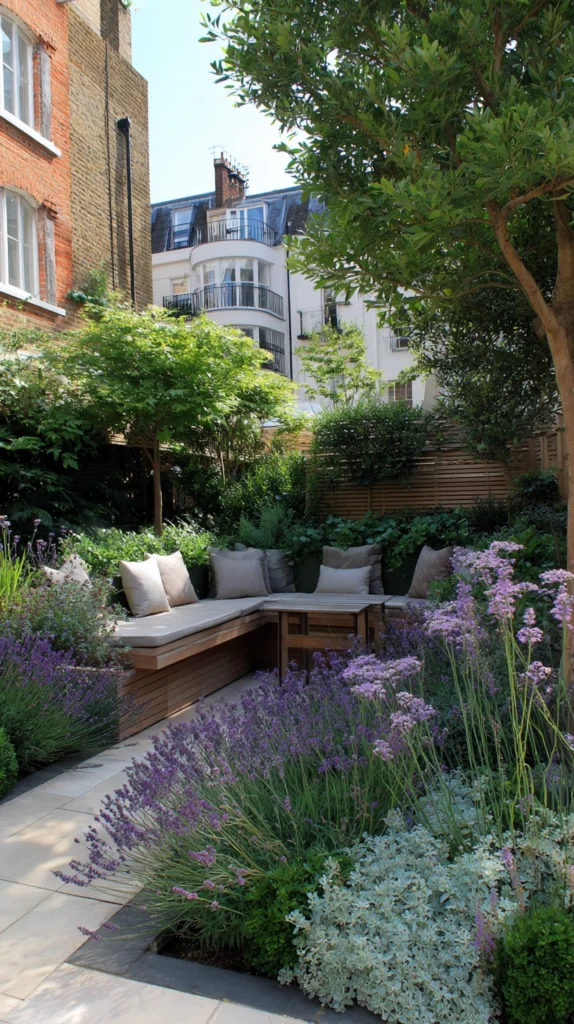
Beds surrounding central patio create outdoor room.
My courtyard design:
Four beds forming square:
- Each bed 3×8 feet
- Surrounding 10×10 patio
- Creates enclosed feeling
Patio center:
- Gravel surface
- Small table and chairs
- Surrounded by abundance
Bed heights:
- 18 inches tall (sitting height)
- Can sit on edge
- Doubles as seating
Creates outdoor room:
- Protected feeling
- Private retreat
- Garden surrounds you
- Peaceful atmosphere
Courtyard Benefits
Why this layout excels:
- Creates destination (not just garden)
- Multi-functional space
- Beautiful from sitting position
- Eat what you grow steps away
My favorite place in entire yard. Morning coffee surrounded by vegetables.
Cost:
- 4 beds: $300
- Gravel patio: $200
- Furniture: $150
- Total: $650
ROI: Priceless. Use it daily.
12. The Parallel Rows (Traditional with Twist)
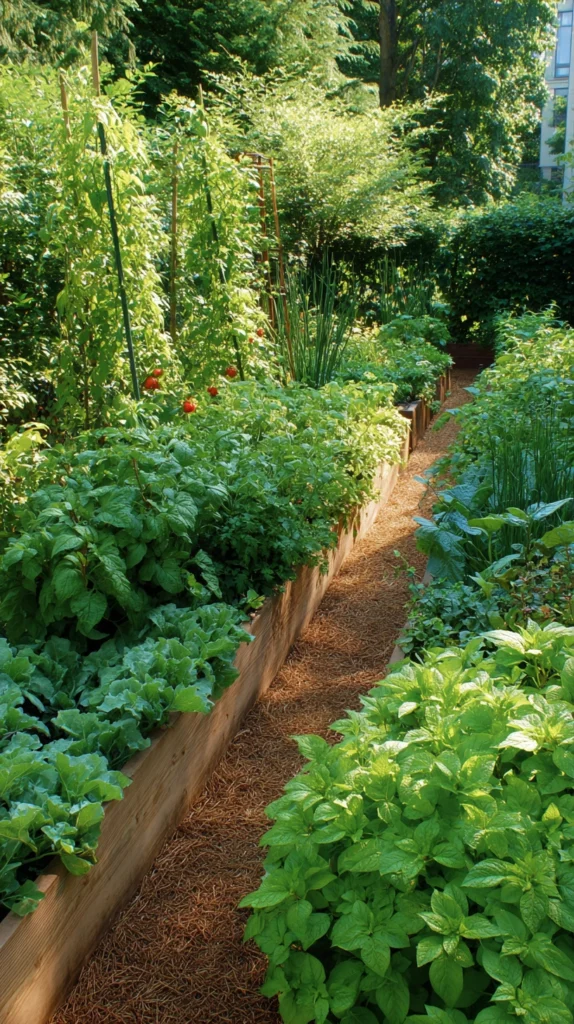
Two long beds parallel with wide path between.
My side yard setup:
Two beds:
- Each 20 feet long, 4 feet wide
- 5 feet apart
- Parallel to fence
Wide center path:
- Grass
- Room for wheelbarrow
- Kids play area
End treatments:
- North end: Tool shed
- South end: Compost bins
- Bookends the design
Why parallel works:
- Simple and clean
- Maximum growing space
- Easy maintenance
- Traditional aesthetic
Planting strategy:
West bed (more sun): Heat lovers East bed (some shade): Greens, cool crops
Scaling Parallel Layout
My evolution:
Year 1: Two 10-foot beds Year 2: Extended to 15 feet Year 3: Extended to 20 feet
Expandable design – just add length.
Best for: Long narrow spaces, side yards, urban lots.
13. The Octagon Garden (Geometric Interest)
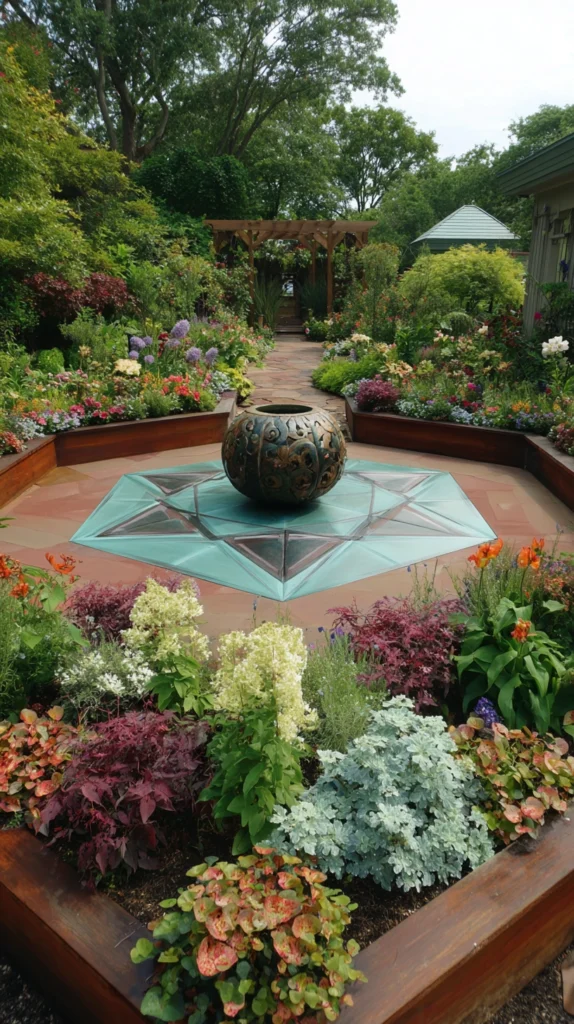
Eight triangular beds forming octagon shape.
My friend’s geometric garden:
Eight wedge-shaped beds:
- Each 4 feet long (from center)
- 2 feet wide at outer edge
- Point toward center
- Creates octagon
Center:
- 3-foot circular space
- Sundial or sculpture
- Visual anchor
Paths:
- Between each wedge
- Radiate from center
- Like wheel spokes
Creates:
- Geometric perfection
- Unique design
- Mathematical beauty
- Conversation starter
Total diameter: 10 feet Growing space: 64 square feet
Octagon Complexity
Building difficulty: High
Requires:
- Precise angles (45° for eight sides)
- Careful measurement
- Mathematical planning
Alternative: Buy octagon-shaped bed kit ($300-400)
Worth it for: Geometry lovers, unique designs, small spaces needing wow factor.
14. The Double Keyhole (Symmetrical Access)
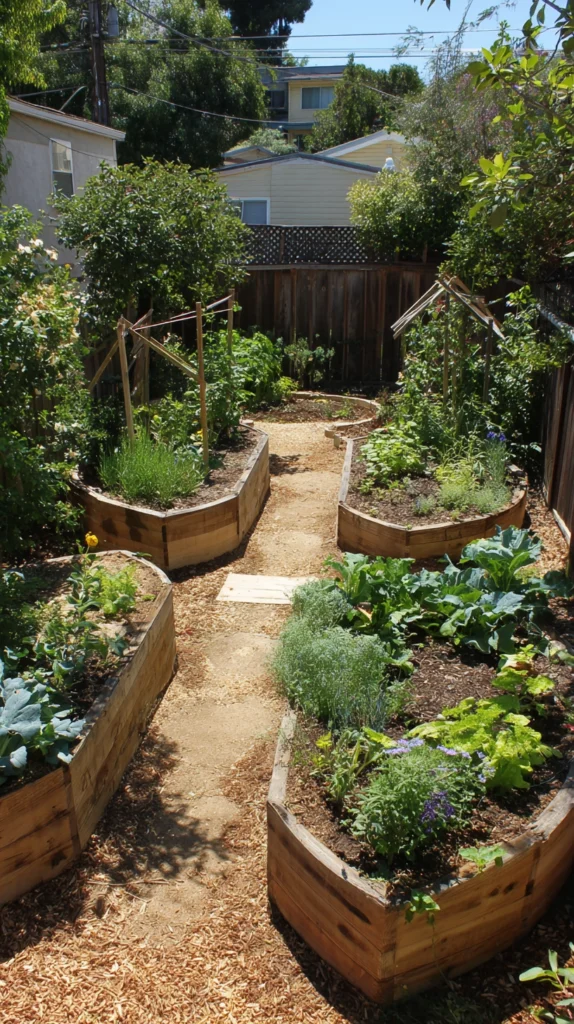
Two keyhole beds mirror image creates balanced design.
My layout:
Two keyhole beds:
- Each 6 feet diameter
- Facing each other
- 6 feet apart
- Symmetrical placement
Creates alleyway between beds with access to both centers.
Path system:
- Main path between (6 feet)
- Keyhole paths into each
- Everything accessible
Why double keyhole works:
- Twice the production
- Maintains symmetry
- Efficient use of space
- Professional appearance
Each bed:
- Central compost basket
- Self-fertilizing
- Easy harvest access
Total footprint: 12×18 feet Growing space: 48 square feet Very productive for the space.
Double Keyhole Benefits
Advantages:
- Two composting systems
- Backup if one fails
- Symmetric beauty
- Double productivity
My friend grows 90% of her vegetables for family of 4 in these two beds.
15. The Mixed-Height Terraces (Stairway Garden)
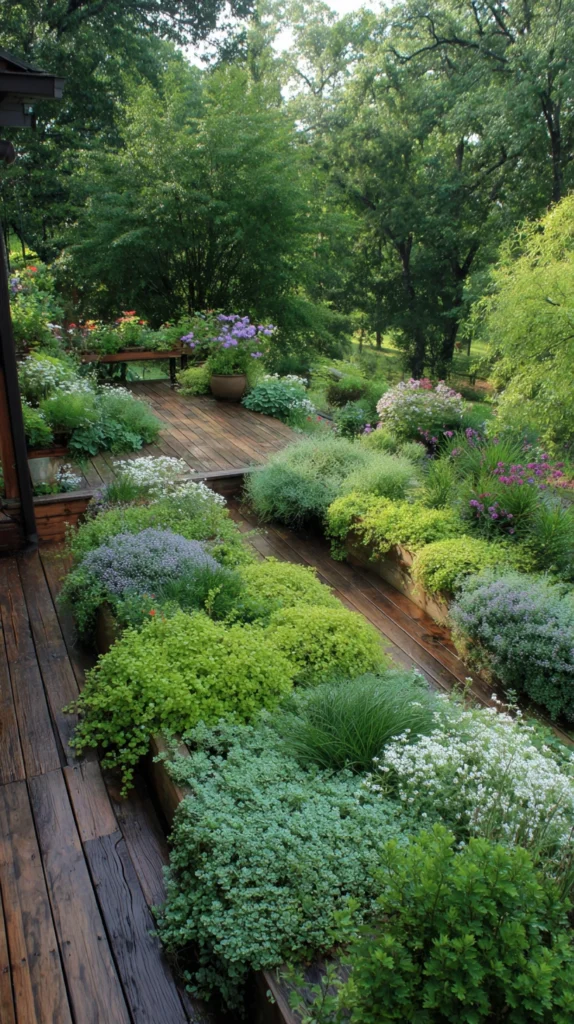
Beds at different heights create visual interest.
My deck area:
Four beds at graduated heights:
Tallest (30 inches): Against deck rail
- Eye level when seated on deck
- Herbs for easy snipping
Medium-high (24 inches): In front of tall
- Lettuce and greens
- Easy viewing from deck
Medium (18 inches): Further out
- Tomatoes, peppers
- Standard height
Ground level (12 inches): Front edge
- Strawberries, sprawling plants
- Transitions to lawn
Creates cascade effect when viewed from deck.
Stepped Height Benefits
Why different heights work:
- Visual interest (not flat plane)
- Accessibility (reach different levels)
- Better viewing (see everything)
- Defines space (creates depth)
My deck garden looks intentionally designed because of height variation.
Cost: Same materials, just different wall heights.
16. The Victory Garden Grid (Maximum Production)
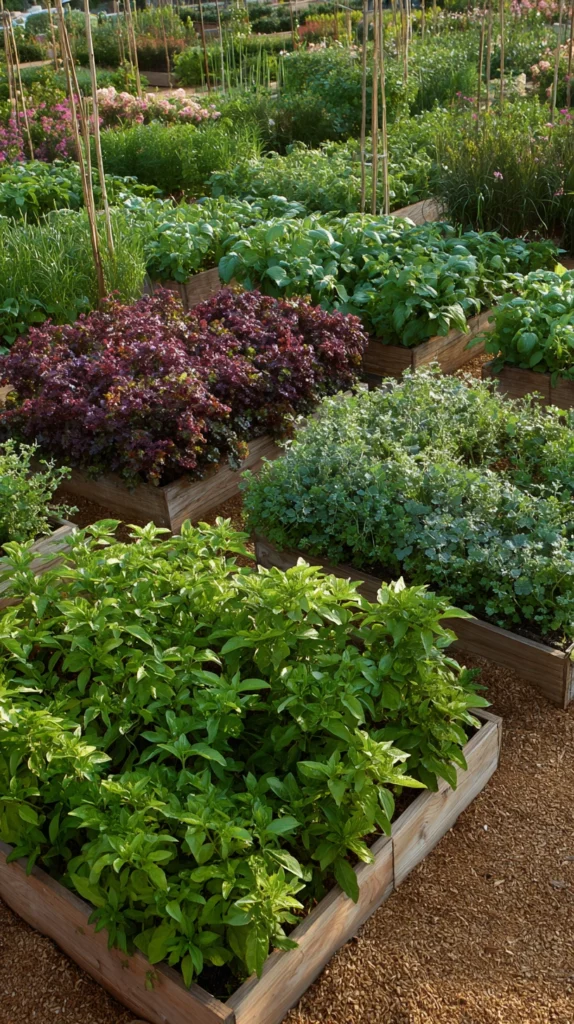
Dense grid of small beds for intensive production.
My production garden:
Twelve 3×3 beds:
- Arranged 3 rows of 4 beds
- 2-foot paths between all
- Highly organized
- Maximum productivity
Grid pattern:
Bed arrangement (3×4):
[1] [2] [3] [4]
[5] [6] [7] [8]
[9][10][11][12]
Crop rotation by number:
- Group 1-4: Family 1 (tomatoes)
- Group 5-8: Family 2 (beans)
- Group 9-12: Family 3 (greens)
Rotate groups yearly.
Total space: 24×15 feet Growing space: 108 square feet Path space: 252 square feet
Maximum production from organized system.
Victory Garden Strategy
Why this works:
- Small beds manageable
- Intensive planting possible
- Crop rotation easy
- Succession planting organized
- Record keeping simple
I number each bed with permanent markers.
Garden journal tracks:
- What planted where
- Harvest amounts
- Problems/successes
- Next year’s rotation plan
Most productive layout I’ve tried. Feeds family of 4 with surplus.
Choosing Layout for Your Space
Match design to yard:
Small Yards (under 500 sq ft)
Best layouts:
- Keyhole garden (space-efficient)
- Potager (9 small beds, beautiful)
- Single large island bed
- L-shaped corner design
Medium Yards (500-2000 sq ft)
Best layouts:
- Classic grid (expandable)
- Horseshoe (versatile)
- Parallel rows (traditional)
- Courtyard garden (creates room)
Large Yards (2000+ sq ft)
Best layouts:
- Victory garden grid (production)
- Multiple design areas (zones)
- Wagon wheel + secondary beds
- Terraced slopes
Sloped Yards
Only options:
- Tiered terraces (essential)
- Keyhole on flat area
- Contoured beds following slope
Path Material Considerations
Paths matter as much as bed layout.
My path materials:
Grass Paths
Pros:
- Soft to walk on
- Looks natural
- Free
Cons:
- Need mowing
- Muddy when wet
- Requires maintenance
I use: Between widely-spaced beds
Gravel Paths
Pros:
- Neat appearance
- Good drainage
- Weed suppression
Cons:
- Initial cost ($200 for my courtyard)
- Can migrate into beds
- Hard underfoot
I use: Formal gardens (potager)
Wood Chip Paths
Pros:
- Free or cheap
- Composts over time
- Soft walking
- Natural look
Cons:
- Needs replenishing yearly
- Can harbor slugs
- Informal appearance
I use: Production gardens (victory grid)
Paver/Brick Paths
Pros:
- Permanent
- Very neat
- All-weather
Cons:
- Expensive ($400+ for my setup)
- Installation labor
- Formal look only
I use: High-visibility areas (front yard potager)
Combining Multiple Layouts
I use different layouts in different yard areas.
My backyard zones:
Zone 1 (by deck): Mixed-height terraces
- Visible from deck
- Decorative priority
- Easy harvest while grilling
Zone 2 (side yard): Victory garden grid
- Hidden from main view
- Production priority
- Intensive growing
Zone 3 (front yard): Potager design
- Curb appeal
- Ornamental vegetables
- HOA-friendly
Zone 4 (slope): Tiered terraces
- Erosion control
- Bonus growing space
- Problem-solving
Each zone different layout but visually connected through:
- Same bed height (18 inches)
- Same materials (cedar)
- Same path treatment (wood chips)
Sizing Beds for Your Layout
Not all beds need to be same size.
My approach:
Primary Beds (workhorses)
Size: 4×8 feet
- Most versatile
- Standard lumber fits
- Manageable scale
I have: 6 of these
Accent Beds (specialty)
Size: 3×3 feet or 2×6 feet
- Focal points
- Herbs or specific crops
- Visual interest
I have: 4 of these
Feature Beds (statement pieces)
Size: Keyhole (6-foot diameter), spiral (6-foot diameter)
- Conversation starters
- Unique designs
- Garden anchors
I have: 2 of these
Mix of sizes creates more interesting layout than all identical beds.
Budget Reality by Layout
What each layout actually costs:
| Layout | Materials | Labor | Difficulty | Visual Impact | Space Efficiency |
| Classic Grid | $400 | DIY | Easy | Medium | High |
| Mandala | $500 | DIY | Hard | High | Medium |
| Horseshoe | $300 | DIY | Easy | Medium | High |
| Potager | $600 | DIY | Medium | Very High | Medium |
| L-Shaped | $350 | DIY | Easy | Medium | High |
| Keyhole | $200 | DIY | Hard | High | Very High |
| Terraced | $800 | Pro | Hard | High | Medium |
| Wagon Wheel | $450 | DIY/Pro | Hard | Very High | Medium |
| Island Bed | $150 | DIY | Easy | High | Medium |
| Spiral | $450 | Pro | Hard | Very High | High |
| Courtyard | $650 | DIY | Medium | Very High | Medium |
| Parallel Rows | $250 | DIY | Easy | Low | Very High |
| Octagon | $400 | Hard | Very Hard | Very High | Medium |
| Double Keyhole | $400 | DIY | Hard | High | Very High |
| Mixed Heights | $500 | DIY | Medium | High | High |
| Victory Grid | $900 | DIY | Easy | Medium | Very High |
Best value: Classic grid or parallel rows Most impressive: Spiral or wagon wheel Highest production: Victory grid or double keyhole
Making Your Layout Last
Design for longevity:
Future-Proof Considerations
I wish I’d planned for:
Expansion room:
- Left space to add beds
- Maintained pattern capability
- Now boxed in
Utility access:
- Water spigot placement
- Electric for lights
- Hose routing
Shade patterns:
- Trees grow
- New structures appear
- Sun exposure changes
My advice: Design for 5 years ahead, not just now.
Permanent vs Flexible
Permanent layouts:
- Terraced slopes
- Courtyard gardens
- Embedded paths
Flexible layouts:
- Grid systems
- Freestanding beds
- Moveable designs
I chose mostly permanent. Committed to this house long-term.
If renting or uncertain: Choose moveable designs.
Common Layout Mistakes
I made these errors:
Mistake 1: Paths Too Narrow
Made 18-inch paths. Can’t fit wheelbarrow, constantly brushing against plants.
Fix: Minimum 2 feet, 3 feet better for main paths.
Mistake 2: No Focal Point
All beds are of equal importance. Nothing draws eye, looks flat.
Fix: Create hierarchy – one feature bed, supporting beds.
Mistake 3: Ignored Existing Features
Placed beds without considering:
- Outdoor faucet location (now can’t access)
- Electrical outlet (beds blocking)
- Basement window (beds too close)
Fix: Map all utilities first, design around them.
Mistake 4: Didn’t Consider Views
Designed from overhead view (like drawing on paper).
Forgot: I experience garden from ground level, deck, windows.
Fix: Consider all viewpoints – where you’ll actually see it.
Mistake 5: No Room to Work
Beds too close together. Can’t get between with tools, can’t weed comfortably.
Fix: 3 feet minimum between beds for work space.
My Recommended Starter Layout
For first-time raised bed gardener:
Classic grid (2×2 beds):
- Four 4×8 beds
- 3-foot paths
- Simple and expandable
- Cost: $400
Why this first:
- Easy to build
- Familiar pattern
- Room to expand
- Learn before committing to complex design
After one year, evaluate:
- Do you need more space? (add beds to grid)
- Want something prettier? (convert to potager)
- Need accessibility? (build keyhole)
My path: Started with 2-bed grid, now have 12 beds in multiple layouts after 5 years.
Start simple, evolve based on experience.
Now go measure your yard and start planning your dream raised bed layout!
Quick Summary:
Easiest layouts to build:
- Classic grid (rectangular beds, simple)
- Parallel rows (two long beds)
- L-shaped (corner space)
- Island bed (single focal point)
Most visually impressive:
- Spiral herb garden (dramatic height)
- Wagon wheel (geometric beauty)
- Mandala circular (organic curves)
- Potager (French formal)
Best for small spaces:
- Keyhole garden (space-efficient)
- Horseshoe (corner maximizer)
- Potager 9-bed (small but formal)
- Mixed-height terraces (vertical interest)
Maximum production:
- Victory garden grid (intensive)
- Double keyhole (self-fertilizing)
- Parallel rows (long season crops)
- Terraced slope (uses unused space)
Layout selection guide:
Flat yard, plenty of space: Classic grid or victory garden
Corner lot: Horseshoe or L-shaped
Sloped yard: Terraced beds (only option)
Small yard: Keyhole or single island
Front yard (visible): Potager or mandala
Deck/patio area: Courtyard or mixed heights
Side yard (narrow): Parallel rows
Critical planning factors:
Path widths:
- Main paths: 3 feet (wheelbarrow access)
- Secondary paths: 2 feet (walking only)
- Avoid: 18 inches or less (too narrow)
Bed accessibility:
- 4 feet wide maximum (reach middle)
- Can be any length
- Height: 12-30 inches (personal preference)
Spacing between beds:
- Minimum: 2 feet (tight but workable)
- Ideal: 3 feet (comfortable working)
- Consider: Equipment you’ll use
Visual hierarchy:
- One focal point bed (keyhole, spiral, central island)
- Supporting beds (regular rectangular)
- Accent beds (small specialty)
Budget ranges:
Minimal: $150-300 (simple 2-bed layout) Standard: $400-600 (4-bed grid or horseshoe) Elaborate: $800-1,200 (specialty shapes, professional help)
Materials cost by bed:
- 4×8 basic cedar bed: $80-120
- 3×3 decorative bed: $60-80
- Keyhole/specialty: $200-450
- Paths: $50-400 depending on material
Timeline expectations:
Weekend warrior:
- Plan: 1 weekend
- Build beds: 2-3 weekends
- Fill and plant: 1 weekend
- Total: 1 month
Hired help:
- Design consultation: 2 hours
- Installation: 1-2 days
- Planting: 1 day
Expansion planning:
Design for future growth:
- Leave expansion space
- Maintain pattern capability
- Plan utilities access
- Consider mature tree shade
Common expansion paths:
- Start 2 beds → add 2 more (4-bed grid)
- Start horseshoe → extend legs
- Start single island → add secondary beds
- Start L-shape → extend along fences
Maintenance by layout:
Low maintenance:
- Classic grid (straightforward)
- Parallel rows (simple)
- Island bed (one focal point)
Medium maintenance:
- Potager (more detailed)
- Terraced (watering challenges)
- Horseshoe (corner cleaning)
High maintenance:
- Victory grid (12 beds to manage)
- Mixed heights (complex watering)
- Specialty shapes (detailed care)
ROI by layout type:
Production focus: Victory grid, parallel rows Aesthetic focus: Potager, mandala, spiral Balance both: Classic grid, courtyard, keyhole
Quick decision tree:
Want maximum vegetables? → Victory grid Want beautiful design? → Potager or mandala Have sloped yard? → Terraced beds Limited mobility? → Keyhole or raised terraces Renting/temporary? → Freestanding grid First time gardener? → Classic 4-bed grid