How to Grow Strawberries: A Simple Guide
I planted strawberries three times before getting a single berry. First year: nothing. Second year: 4 berries total. Third year: plants died.
I was doing everything wrong and didn’t know it.
Then I learned strawberries need specific care most beginners miss. Fourth attempt with proper knowledge: 5 pounds of berries from 10 plants.
Let me show you what actually works so you don’t waste three years like I did.
Why My First Strawberry Plants Failed
Three years of mistakes:
Year 1 problem: Planted in spring, expected berries immediately
- Got zero berries
- Didn’t understand first-year growth
Year 2 problem: Let runners take over
- Plants everywhere but tiny harvest
- Energy went to runners not fruit
Year 3 problem: Wrong variety for my climate
- Plants struggled all season
- Died over winter
What I learned: Strawberries are perennial but need specific first-year care.
The First-Year Reality
Here’s what nobody tells beginners:
Most varieties won’t produce much year 1:
- Plants focus on establishing roots
- Making runners and daughter plants
- Building strength for year 2
Year 2 is the real harvest:
- Established root systems
- Full berry production
- Worth the wait
I gave up after year 1 thinking I’d failed. Actually, I just needed patience.
Choosing the Right Strawberry Type
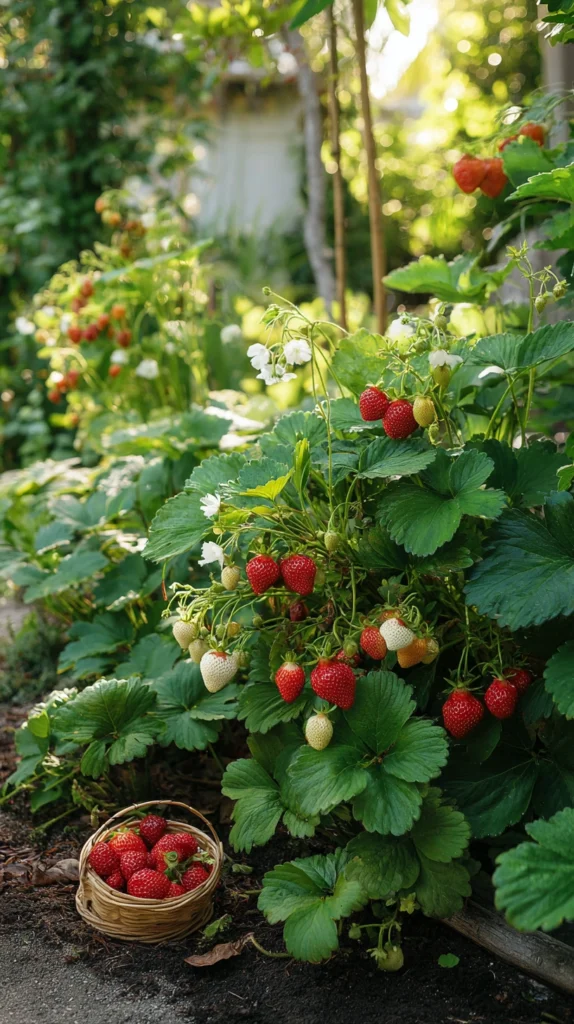
Three types exist – picking the wrong one dooms you.
My trial and error:
June-Bearing (What I Grow Now)
Characteristics:
- One big harvest in June (2-3 weeks)
- Largest berries
- Best for preserving
- Winter hardy
My harvest: 5 pounds from 10 plants in 3 weeks
Best for:
- Jam making
- Freezing
- One big harvest acceptable
- Cold climates
Everbearing (Misleading Name)
Characteristics:
- Two harvests (spring and fall)
- Smaller berries than June-bearing
- Less total production
- Good for extending season
I tried these year 2:
- Spring harvest: decent
- Fall harvest: disappointing (5 berries)
- Total production lower than June-bearing
Day-Neutral (True Continuous)
Characteristics:
- Produce all season (May-October)
- Smallest berries
- Constant small harvests
- Need more care
My experience:
- Picked few berries constantly
- Never enough for jam
- Good for daily snacking
- More maintenance
I switched back to June-bearing – prefer one big harvest over constant small picking.
Picking Varieties for Your Climate
This is where I failed year 3.
Cold climates (Zones 3-5):
- Jewel
- Sparkle
- Honeoye
- Need winter hardy varieties
Moderate climates (Zones 6-7, where I am):
- Chandler
- Earliglow
- Allstar
- Most varieties work
Warm climates (Zones 8-10):
- Camarosa
- Seascape
- Festival
- Need heat-tolerant types
I planted ‘Seascape’ in Zone 7:
- Bred for California
- Struggled in my humid summers
- Died first winter
Switched to ‘Earliglow’:
- Zone appropriate
- Thrives in my conditions
- Survives winters easily
Check the variety of cold hardiness before buying. Saved me a year of wasted effort.
Starting from Plants vs Seeds
Seeds are a trap for beginners.
Why I don’t recommend seeds:
- Take 2-3 years to produce
- Germination difficult
- Don’t grow true from hybrid varieties
- Waste of time
Start with bare-root plants or potted:
Bare-root plants (my choice):
- Dormant plants, no soil
- Shipped early spring
- $8-12 for 10 plants
- Plant immediately when they arrive
Potted plants:
- Growing in containers
- Plant anytime spring-fall
- $4-6 per plant
- More expensive but easier
I use bare-root – cheaper and established just as well with proper care.
Best Planting Location
Wrong location = poor harvest.
My site requirements:
Full sun mandatory:
- 6-8 hours minimum
- More sun = more berries
- Shade = few berries and disease
I planted in partial shade year 1:
- Got maybe 10% of potential harvest
- Plants leggy and weak
- Moved to full sun, production exploded
Well-draining soil essential:
- Strawberries hate wet feet
- Root rot in soggy soil
- Raised beds ideal
I lost plants to wet soil in the low spot of the garden. Moved to raised bed, problem solved.
Avoid these spots:
- Low areas (water collects)
- Under trees (shade and root competition)
- Where tomatoes/peppers grew recently (disease risk)
Soil Preparation That Actually Matters
Good soil prep = difference between failure and success.
What I do now:
pH requirements:
- 5.5-6.5 ideal
- Test soil ($10 kit)
- Adjust if needed
I didn’t test first three years:
- Soil was 7.2 (too alkaline)
- Plants yellowed (iron deficiency)
- Added sulfur to lower pH
- Plants recovered
Soil amendments:
- Add 2-3 inches compost
- Mix into top 6 inches
- Improves drainage and fertility
- Do this before planting
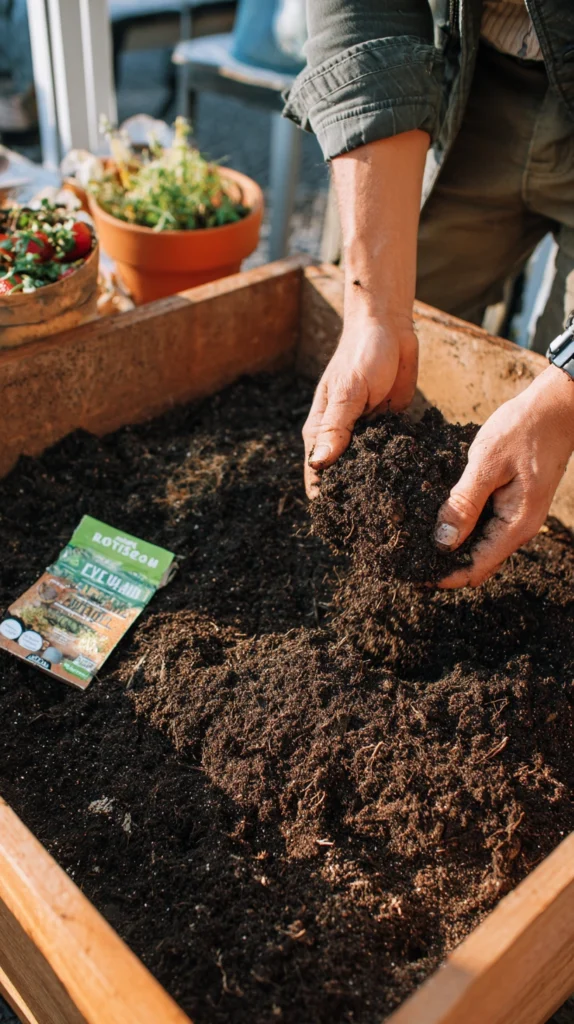
Raised bed mix I use:
- 50% quality topsoil
- 30% compost
- 20% peat moss or coconut coir
- Perfect drainage and nutrition
Cost: $40 for 4×4 bed soil
Planting Bare-Root Strawberries
Critical to get this right.
My planting method:
Timing:
- Early spring (as soon as soil workable)
- 4-6 weeks before last frost
- Cool weather helps establishment
Planting depth (CRITICAL):
- Crown exactly at soil surface
- Too deep = crown rot
- Too shallow = roots dry out
How to check depth:
- Crown is where leaves emerge
- Roots below, leaves above
- Crown right at soil line
I planted too deep year 1:
- Crowns buried 1 inch
- Half my plants rotted
- Expensive mistake ($40 wasted)
My planting steps:
- Soak bare roots 1 hour before planting
- Dig hole deep and wide enough
- Make small mound in center
- Spread roots over mound
- Fill soil, crown at surface
- Water thoroughly
- Check depth settled correctly
Spacing Plants Correctly
Too close = disease. Too far = wasted space.
My spacing system:
Matted row system (what I use):
- Plants 18 inches apart in rows
- Rows 3-4 feet apart
- Let some runners fill in
- Creates berry “mat”
Hill system (higher maintenance):
- Plants 12 inches apart all directions
- Remove ALL runners
- Larger berries
- More work
I tried hill system year 2:
- Removing runners constantly (every week)
- Better berry size
- Too much work for me
- Switched to matted row
My current setup:
- 10 plants in two rows
- 18 inches between plants
- 3 feet between rows
- Manages itself mostly
First Year Care (Why I Got Nothing)
This is where most beginners fail.
What to do year 1:
Remove all flowers:
- Pinch off every flower that appears
- Seems wrong but critical
- Lets plant establish roots
- Ensures big year 2 harvest
I didn’t remove flowers year 1:
- Let plant make 4 berries
- Weakened plant severely
- Year 2 harvest suffered
Now I’m ruthless – every flower gets pinched May-July year 1.
Managing runners year 1:
My approach:
- Let 2-3 runners per plant
- Remove rest
- Creates full bed for year 2
- But not overcrowded
If you let all runners:
- Bed becomes jungle
- Plants compete for nutrients
- Berries tiny
- Disease problems
Mark calendar “PINCH FLOWERS” for the entire first season. Hard to do but essential.
Watering Strawberries Right
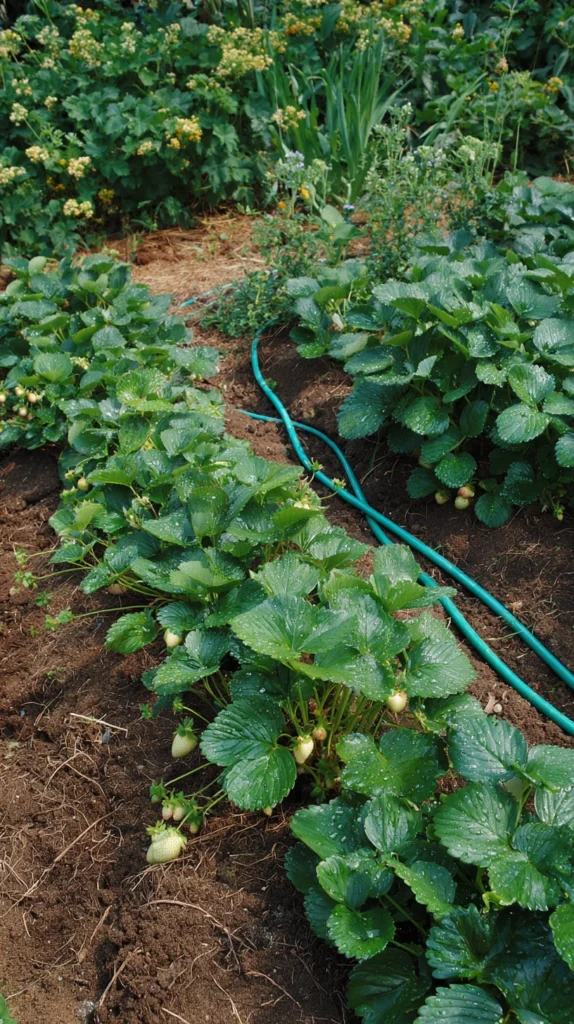
Wrong watering kills more plants than anything.
My watering schedule:
Newly planted (first month):
- Water every 2-3 days
- Keep soil moist not soggy
- Critical for establishment
Established plants:
- 1 inch water weekly
- Soaker hose or drip irrigation
- Avoid overhead watering (disease)
Flowering/fruiting:
- Consistent moisture critical
- Irregular watering = misshapen berries
- I water 3× weekly during harvest
Mistakes I made:
Overhead watering:
- Wet leaves = disease
- Fungus problems exploded
- Switched to drip lines
Inconsistent watering:
- Let dry completely, then soaked
- Berries cracked and split
- Ruined harvest
My drip system:
- $45 for soaker hoses
- Timer controls watering
- Plants never stressed
- Best investment I made
Fertilizing for Maximum Berries
Too much or too little both cause problems.
My fertilizing schedule:
At planting:
- Balanced fertilizer (10-10-10)
- 2 tablespoons per plant
- Mix into soil
After harvest (June):
- 10-10-10 again
- Feeds plant for next year
- Most important feeding
Early spring (March):
- Light feeding before flowering
- Don’t overdo it
I over-fertilized year 2:
- Used high nitrogen (20-10-10)
- Plants huge and leafy
- Few berries
- Too much nitrogen = leaves not fruit
Now I use balanced fertilizer:
- Equal NPK numbers
- Better berry production
- Less vegetative growth
Mulching (Essential Step)
Mulch serves multiple purposes.
What I use:
Straw mulch (not hay):
- 2-3 inches around plants
- Keeps berries off soil (prevents rot)
- Suppresses weeds
- Retains moisture
Applied after planting:
- Helps establishment
- Reduces watering needs
- Keeps soil cool
Winter mulch (Zone 6 and colder):
- 4-6 inches straw after hard freeze
- Protects crowns
- Remove in early spring
Mistakes:
Used hay instead of straw:
- Hay has seeds
- Weeds everywhere
- Use STRAW only
Applied too thick:
- 6 inches in summer
- Slugs loved it
- Kept 2-3 inches now
Cost: $8 for bale covering 50 square feet
Dealing with Runners
Runner management = difference between good and poor harvest.
What runners are:
- Long stems from mother plant
- Produce daughter plants at end
- Spread strawberries naturally
My runner strategy:
Year 1:
- Allow 2-3 runners per plant
- Direct them to fill empty spaces
- Pin to soil with wire
- Remove extras weekly
Year 2 onward:
- Remove most runners
- Keep bed from overcrowding
- More energy to berries
- Better production
If you ignore runners:
- Bed becomes overcrowded
- Plants compete
- Berries shrink
- Harvest drops
I check weekly during the growing season, snipping extra runners with scissors.
Each runner removed = more energy for berries.
Harvesting Your Strawberries
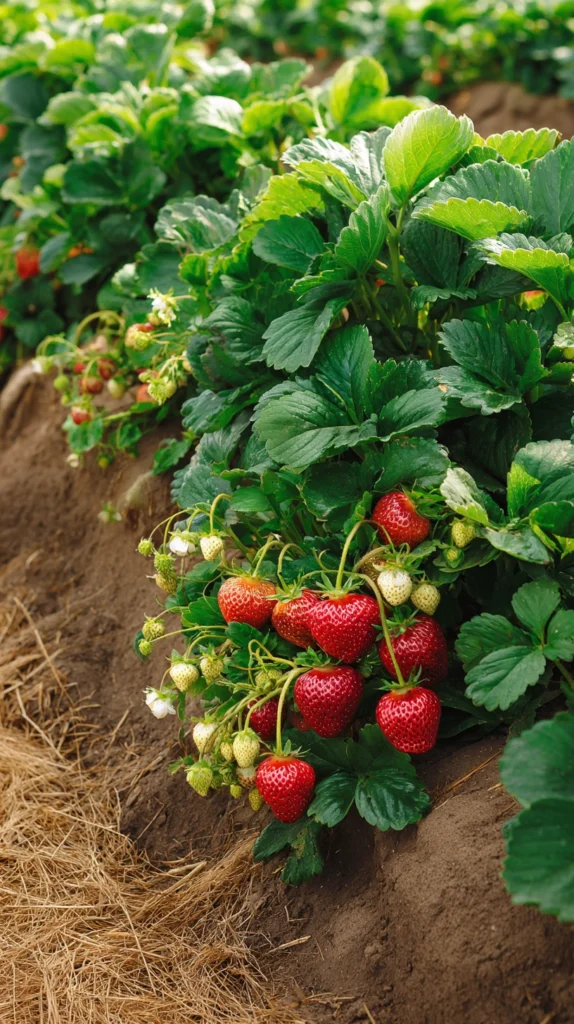
Pick at the right time for the best flavor.
When to harvest:
Fully red:
- No white or green tips
- Berries don’t ripen after picking
- Wait for complete color
Morning picking:
- After dew dries
- Before heat of day
- Best flavor and storage
How to pick:
- Pinch stem, don’t pull berry
- Leave cap attached
- Handle gently (bruise easily)
- Check daily during peak
My harvest window:
- June-bearing: 2-3 weeks in June
- Pick every 2-3 days
- Can’t keep up at peak!
Peak production:
- 10 plants produce 5 pounds
- Over 2-3 week harvest
- About 1-2 pounds per picking
Common Problems and Solutions
I’ve dealt with all these:
Slugs (Biggest Pest)
Signs: Holes in berries, slime trails
My solutions:
- Beer traps (works but messy)
- Diatomaceous earth around plants
- Straw mulch (keeps berries off soil)
- Hand-pick at night
I lost 30% of the harvest to slugs before getting serious about control.
Birds Eating Berries
They take one bite and ruin the berry.
My fix:
- Bird netting over plants
- $15 for 7×20 feet
- Draped over simple frame
- Saved my harvest
Without netting:
- Birds took 50%+ of crop
- Frustrating waste
Gray Mold (Botrytis)
Fuzzy gray mold on berries.
Causes:
- Overhead watering
- Poor air circulation
- Wet conditions
Prevention:
- Drip irrigation only
- Proper spacing
- Remove infected berries immediately
I had bad outbreak year 2:
- Lost 20% of harvest
- From overhead watering
- Switched to drip, problem mostly solved
Small Berries
Causes:
- Overcrowding
- Poor nutrition
- Inconsistent water
- Too many runners
I had this problem:
- Let runners take over
- Berries shrank each year
- Thinned plants, berries got bigger
Renovating After Harvest
Do this for long-term productivity.
My post-harvest care:
Mow or cut back leaves:
- After harvest complete
- Cut to 1 inch above crown
- Removes disease
- Stimulates new growth
I was scared to do this the first time – seemed extreme.
Results:
- Healthy new growth
- Disease-free plants
- Better year 3 production
Thin plants:
- Remove weak/old plants
- Thin to 4-6 inches apart
- Better air circulation
- Bigger berries next year
Fertilize:
- After renovation
- Feeds new growth
- Builds strength for next year
When to Replace Plants
Strawberries don’t last forever.
Production timeline:
Year 1: Little to no berries (if you pinched flowers) Year 2: Peak production Year 3: Good production Year 4: Declining production Year 5+: Replace plants
My replacement schedule:
- Replace 1/3 of plants yearly
- After year 3
- Keeps bed productive
- Stagger ages
Signs to replace:
- Declining berry size
- Fewer berries
- Disease problems
- Weak growth
I kept plants 6 years:
- Production dropped to almost nothing
- Replaced entire bed
- Wish I’d done it sooner
Growing in Containers
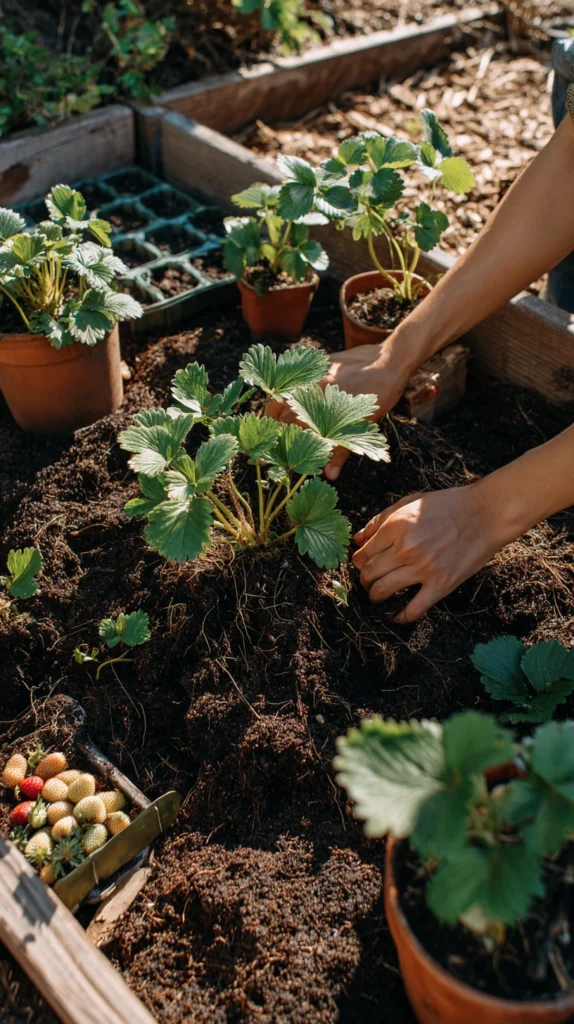
Perfect for small spaces or patios.
My container setup:
Container requirements:
- 10-12 inches deep minimum
- 12-16 inches wide
- Drainage holes mandatory
- Bigger = better
I tried small pots (6 inches):
- Dried out daily
- Tiny harvest
- Not worth it
Soil for containers:
- Potting mix (not garden soil)
- Add compost
- Good drainage essential
Watering:
- Daily in summer (containers dry fast)
- Self-watering containers worth it
- Check moisture frequently
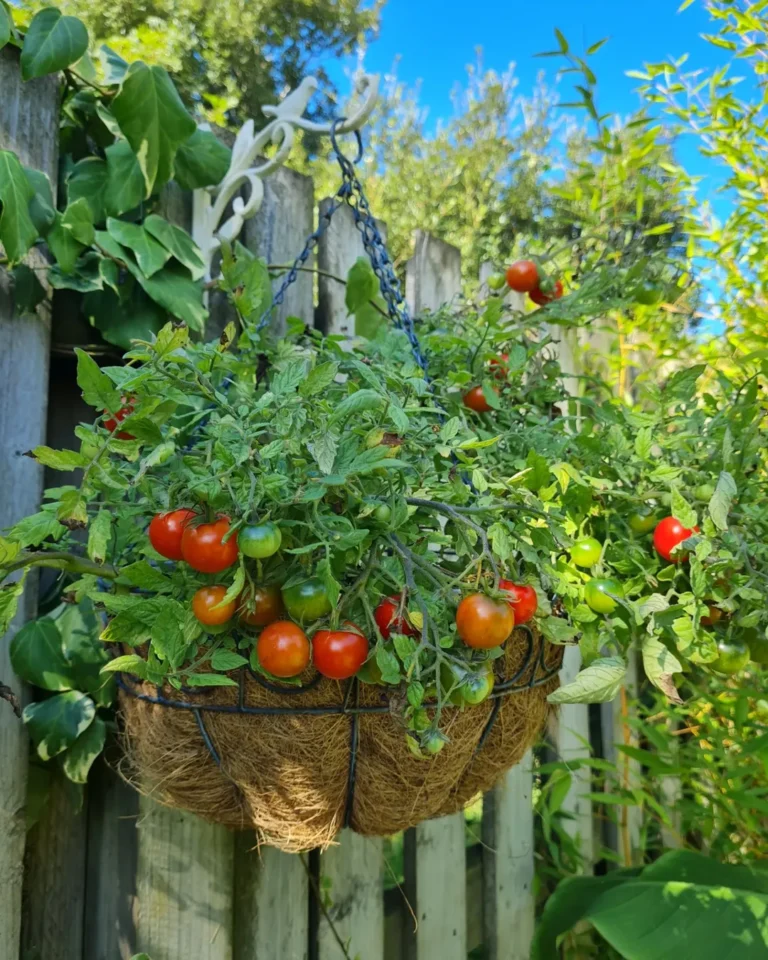
My hanging basket:
- 3 day-neutral strawberries
- Trailing over edges
- Pretty and productive
- Pick berries while relaxing
Container harvest:
- Less than ground
- But fresh berries on patio
- Worth it for convenience
Overwintering Strawberries
Protect plants for next year.
My winter care (Zone 7):
After hard freeze:
- Apply 3-4 inches straw mulch
- Covers crowns completely
- Protects from freeze/thaw cycles
Early spring:
- Remove mulch gradually
- As new growth appears
- Don’t smother new leaves
Colder climates (Zone 5 and below):
- 6 inches straw minimum
- Maybe row cover too
- Critical for survival
I lost plants first winter:
- Didn’t mulch
- Freeze/thaw killed crowns
- Expensive lesson
Container overwintering:
- Move to unheated garage
- Or bury pots in ground
- Protect from extreme cold
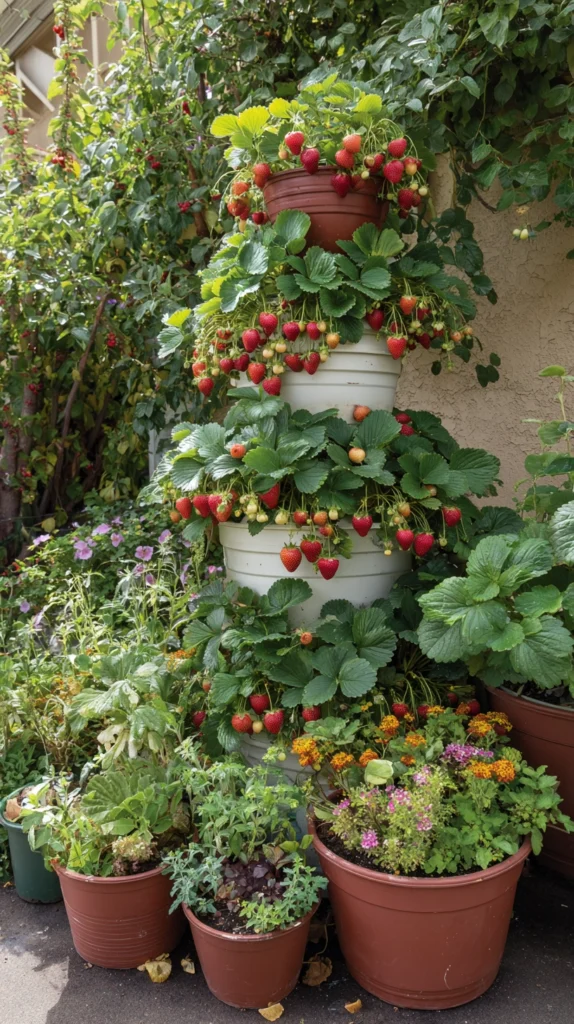
Vertical Growing (Space Saver)
Grow strawberries in towers or pyramids.
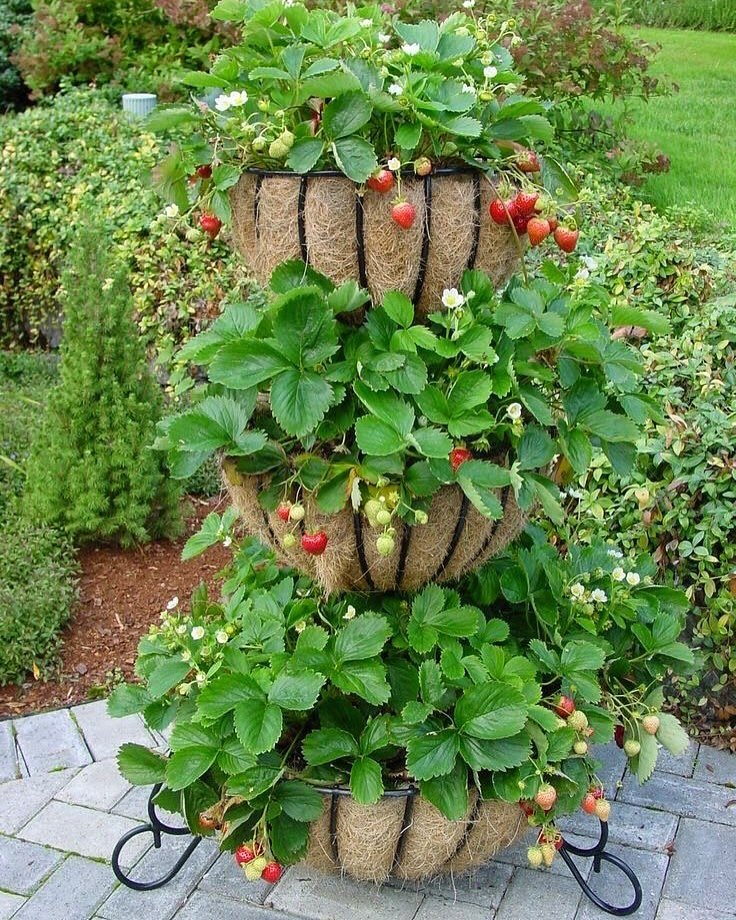
My pyramid setup:
Three-tier pyramid:
- Bottom: 4×4 feet
- Middle: 3×3 feet
- Top: 2×2 feet
- 20 plants in 16 square feet
Benefits:
- Space-efficient
- Easy harvest (higher levels)
- Decorative
- Good drainage
Challenges:
- Upper tiers dry faster
- Need frequent watering
- More expensive to build
My tower garden:
- Stacked pots (5 tiers)
- 12 plants vertical
- 2 square feet footprint
- Daily watering essential
Production vs ground:
- Slightly less per plant
- But way more per square foot
- Worth it for small spaces
Companion Planting
Some plants help strawberries.
Good companions I use:
Borage:
- Attracts pollinators
- Deters pests
- I plant around edges
Thyme:
- Ground cover between plants
- Smells great
- Minimal competition
Avoid planting with:
- Brassicas (cabbage family)
- Tomatoes (disease risk)
- Verticillium-susceptible plants
My bed edges:
- Borage on corners
- Chives along one side
- Marigolds for pest deterrence
Works well together.
Extending the Harvest Season
Get berries longer than 2-3 weeks.
My strategies:
Plant multiple varieties:
- Early season (Earliglow)
- Mid-season (Jewel)
- Late season (Sparkle)
- Extends harvest 4-6 weeks
Use row covers:
- Early spring
- Protects from frost
- Earlier harvest (2 weeks)
- $20 for row cover
My three varieties:
- Spread harvest May-July
- Always fresh berries
- Better than single variety
Common Questions I Had
Can you grow strawberries from grocery store berries?
Technically yes, practically no.
- Seeds won’t grow true
- Takes 2-3 years
- Results disappointing
- Buy actual plants
How long until I get berries?
Depends on variety and planting:
- June-bearing: Year 2 (if you pinch year 1 flowers)
- Everbearing: Small harvest year 1, better year 2
- Day-neutral: Year 1 if planted early spring
Patience required.
Do strawberries spread?
Yes, aggressively through runners.
- Can take over bed
- Manage by removing excess runners
- Good for filling space initially
- Problem if ignored
Are strawberries perennial?
Yes, but production declines.
- Live 5+ years
- Replace after 3-4 for best production
- Cold hardy in most zones
My Current Setup (What Works)
After 6 years of learning:
Location: 4×12 raised bed, full sun
Variety: Earliglow (June-bearing)
Plants: 20 mature plants
Spacing: Matted row, 18 inches apart
Mulch: 3 inches straw year-round
Watering: Drip irrigation on timer
Fertilizer: Twice yearly (spring and after harvest)
Pest control: Bird netting, slug traps
Annual harvest: 12-15 pounds
Maintenance: 1 hour weekly during season
This system works – consistent production, minimal problems, delicious berries.
Is Growing Strawberries Worth It?
My honest assessment:
Pros:
- Fresh berries taste amazing
- Perennial (plant once)
- Relatively easy once established
- Kids love picking
- Makes great jam
Cons:
- Need patience (year 1 minimal harvest)
- Runner management tedious
- Pests (slugs, birds)
- Replace plants every 3-4 years
- Takes dedicated space
Would I do it again? Absolutely.
Best for:
- People with patience
- Those who love strawberries
- Jam makers
- Families with kids
Skip if:
- Want immediate harvest
- Impatient
- Limited space (grow in containers instead)
- Don’t like maintenance
My strawberries bring joy every June. Fresh berries still warm from sun beat anything from stores.
Now go plant some strawberries and enjoy fresh berries next summer!
Quick Summary:
Choose right type:
- June-bearing: One big harvest, largest berries
- Everbearing: Two smaller harvests
- Day-neutral: Continuous small harvests
First year critical care:
- Remove all flowers (builds strong plants)
- Allow 2-3 runners per plant
- Water consistently
- Be patient (no harvest year 1)
Planting essentials:
- Full sun (6-8 hours minimum)
- Well-draining soil
- Crown exactly at soil surface (critical!)
- 18 inches apart for matted row
Ongoing care:
- Water 1 inch weekly (more during fruiting)
- Mulch with straw (keeps berries clean)
- Remove excess runners weekly
- Fertilize twice yearly
Harvest expectations:
- Year 1: None (if you pinch flowers correctly)
- Year 2: Peak production (5+ pounds per 10 plants)
- Years 3-4: Good production
- Year 5+: Replace plants
Common mistakes to avoid:
- Planting crown too deep (causes rot)
- Not removing first-year flowers (weakens plants)
- Letting runners take over (reduces berry size)
- Overhead watering (causes disease)
- Wrong variety for climate (poor survival)
Pest management:
- Slugs: Beer traps, diatomaceous earth
- Birds: Netting (only solution that works)
- Gray mold: Drip irrigation, good spacing
Container growing:
- 12-inch deep pots minimum
- Daily watering required
- Lower yields but convenient
- Day-neutral varieties best
Space requirements:
- 10 plants: 4×8 bed (matted row)
- 20 plants: 4×12 bed
- Containers: 1 plant per 12-inch pot
- Vertical: 12-20 plants in pyramid
Budget expectations:
- 10 bare-root plants: $10-15
- Soil amendments: $20-30
- Straw mulch: $8
- Drip irrigation: $40-50
- Bird netting: $15
- Total startup: $100-150
Timeline:
- Plant: Early spring
- First year: Pinch flowers, manage runners
- Year 2: First harvest (June for June-bearing)
- Replace: After 3-4 years
Best varieties by climate:
- Cold (Zones 3-5): Jewel, Sparkle, Honeoye
- Moderate (Zones 6-7): Earliglow, Chandler, Allstar
- Warm (Zones 8-10): Camarosa, Seascape, Festival
Success checklist:
- ☑ Full sun location
- ☑ Well-draining soil (pH 5.5-6.5)
- ☑ Climate-appropriate variety
- ☑ Proper planting depth (crown at surface)
- ☑ Drip irrigation setup
- ☑ Straw mulch applied
- ☑ Calendar reminder to pinch year-1 flowers
- ☑ Bird netting ready for harvest
Realistic expectations:
- Time to harvest: 1 year (if planted spring year 1, harvest June year 2)
- Annual yield: 0.5 pounds per plant mature production
- Maintenance: 1 hour weekly during growing season
- Lifespan: 3-4 years peak production
- Space needed: 1.5 square feet per plant