15 Greenhouse Shelves Ideas for a Functional and Beautiful Space
My first greenhouse was an empty glass box with plants on the floor. Wasted 70% of the vertical space and could only fit maybe 30 plants.
It looked disorganized and felt inefficient. I’d spent $800 on the greenhouse but barely used it.
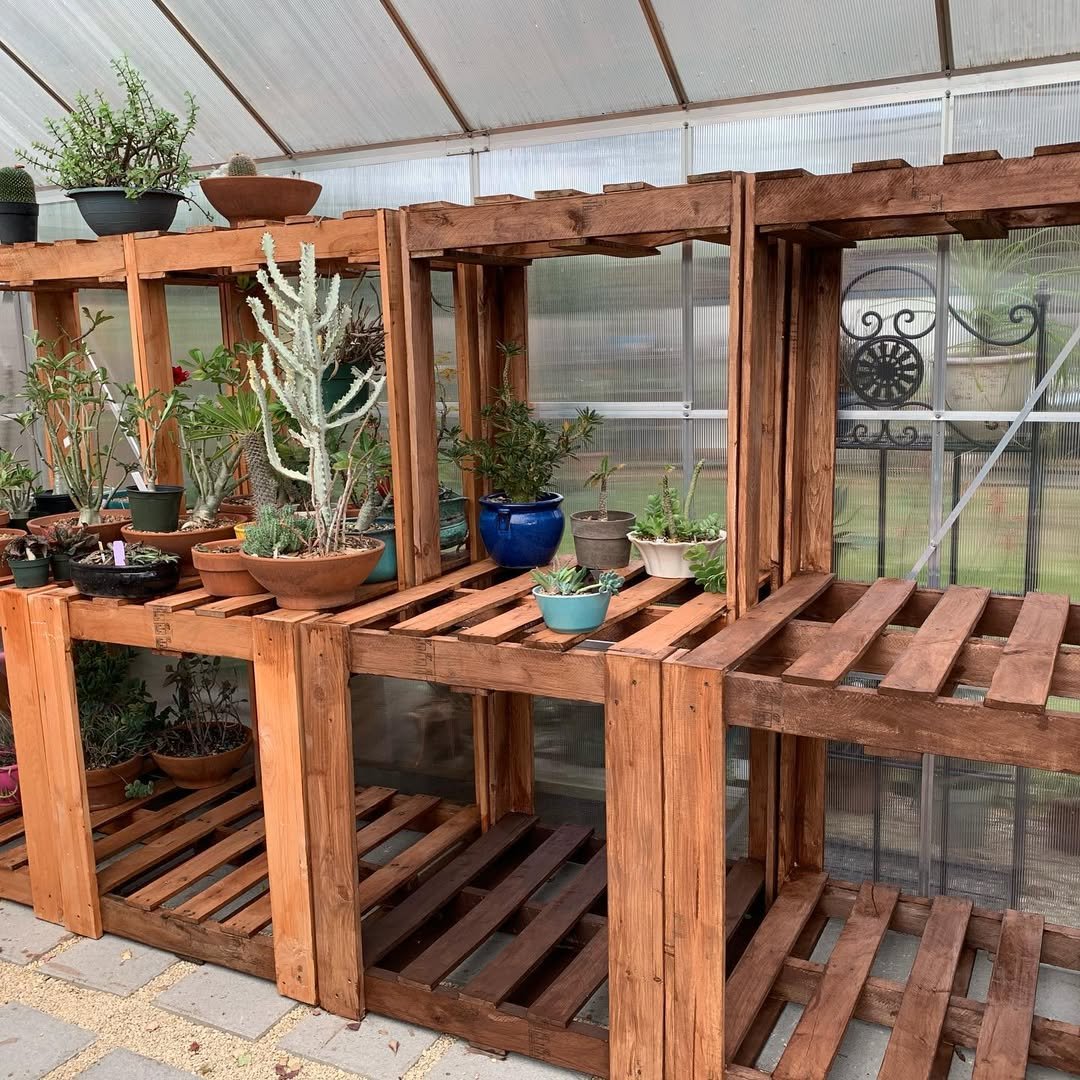
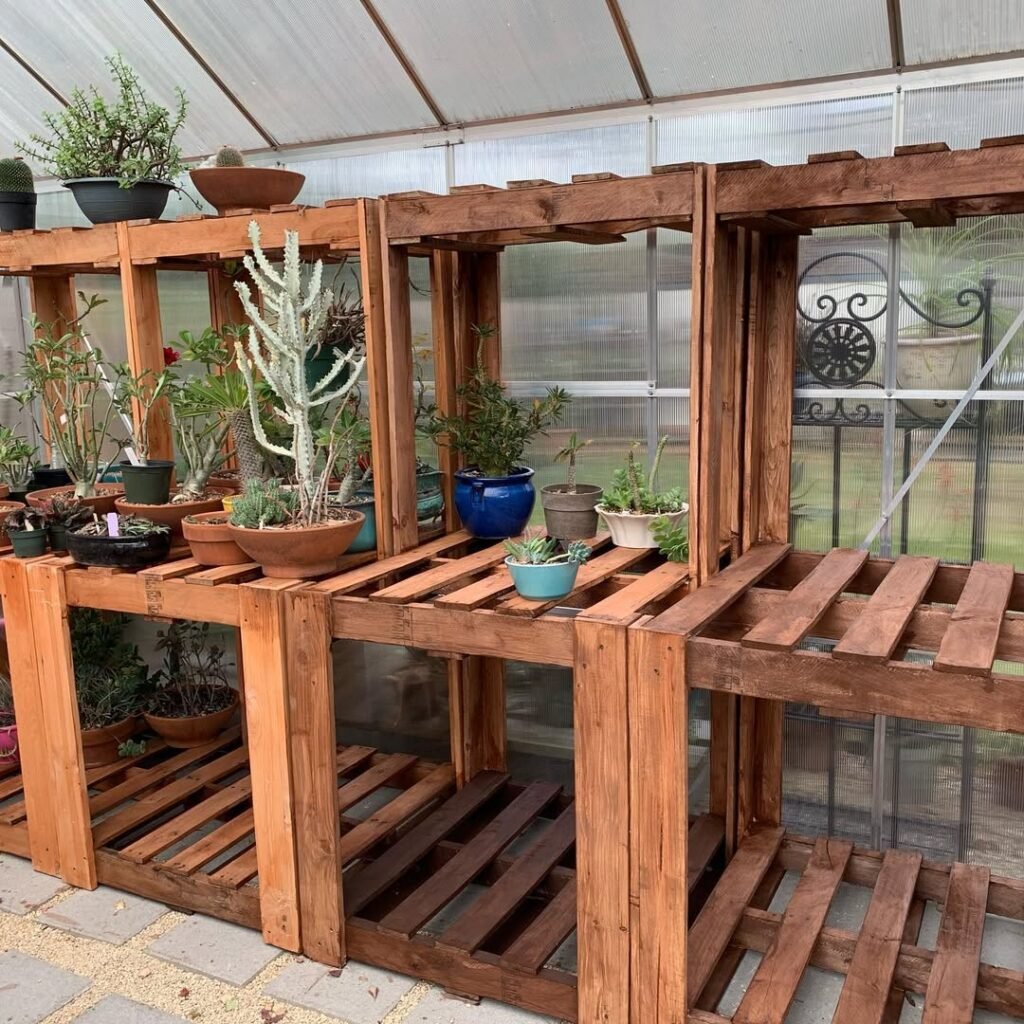
Then I added shelving. The same 8×10 greenhouse now holds 150+ plants, looks organized, and actually functions well.
Let me show you 15 shelving ideas that transform greenhouses from empty boxes to productive spaces.
Why Empty Greenhouses Waste Space
My greenhouse mistakes:
Year 1 problems:
- All plants on ground level
- Could only fit 2-3 rows
- Tops empty (8 feet of unused height)
- Pathetic plant capacity
- Looked like storage shed
Space analysis:
- Floor space: 80 square feet
- Used space: 80 square feet (just floor)
- Wasted vertical: 560 square feet (walls and height)
- Efficiency: 12%
After adding shelves:
- Floor space: Still 80 square feet
- Used space: 350+ square feet (floor + shelves)
- Wasted space: Minimal
- Efficiency: 85%
Simple shelving multiplied capacity 5× in the same footprint.
Vertical Space Reality
Standard greenhouse height: 8 feet
Without shelves:
- Plants 0-2 feet: Used
- Space 2-8 feet: Empty
- Total waste: 75% of structure
With shelves:
- Ground: 0-2 feet
- Lower shelves: 2-4 feet
- Upper shelves: 4-6 feet
- Hanging: 6-8 feet
- Everything utilized
I was literally heating and cooling 600 cubic feet to use 200. Stupid.
1. Wire Rack Shelving (My Current System)
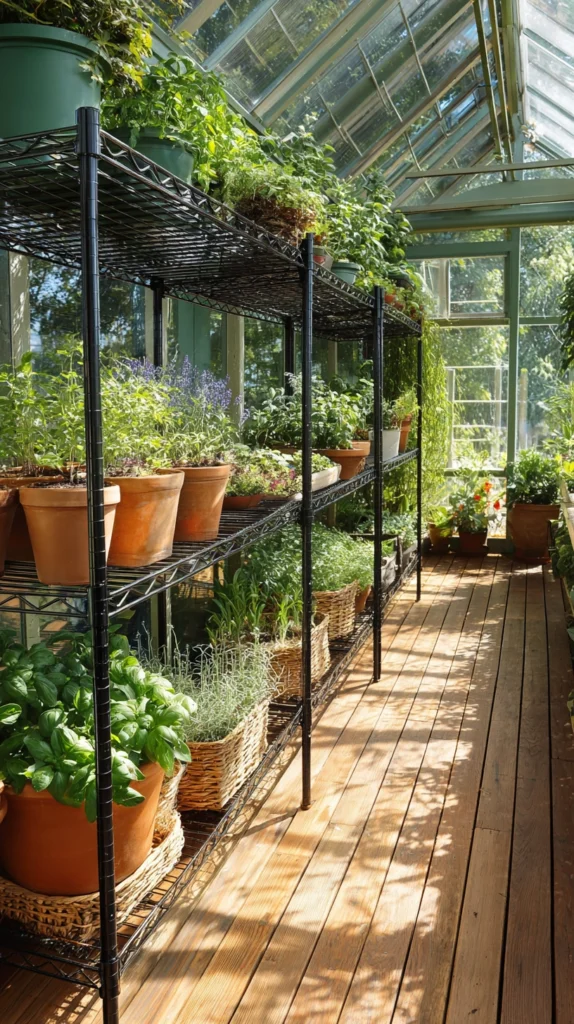
Commercial wire shelving units – adjustable and affordable.
What I use:
Two 6-shelf units:
- Each 6 feet tall × 4 feet wide × 18 inches deep
- Wire construction (light penetration)
- Adjustable shelves
- Weight capacity: 200 pounds per shelf
Placement:
- Both along north wall
- Keeps south side open for floor plants
- Maximizes light to shelved plants
- Easy access
Current capacity:
- 12 shelves total (2 units × 6 shelves)
- 15-20 plants per shelf
- 180-240 plant capacity
- From 30 plants on floor
Cost: $85 per unit = $170 total
Best value of any shelving I’ve tried.
Wire Shelving Benefits
Why wire works best:
Light penetration:
- Sunlight through shelves
- Plants below still get light
- Critical in greenhouse
- Solid shelves block too much
Air circulation:
- Airflow through wire
- Reduces disease
- Better than solid surfaces
- Prevents stagnant air pockets
Adjustable:
- Move shelves for tall plants
- Customize spacing
- Adapt as needs change
- Maximum flexibility
Drainage:
- Water drips through
- No standing water on shelves
- Healthier plants
- Less maintenance
I started with solid wood shelves – blocked light, plants below died. Switched to wire, problem solved.
2. Tiered Bench System (Traditional Greenhouse Style)
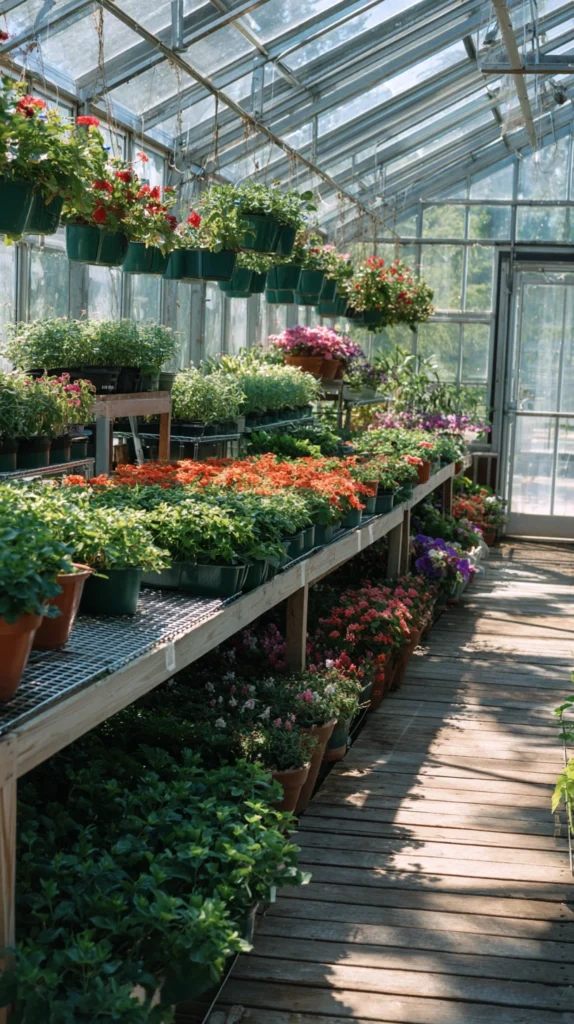
Stepped benches at different heights create stadium seating for plants.
My friend’s setup:
Three tiers:
- Bottom: 18 inches high, 3 feet deep
- Middle: 30 inches high, 2 feet deep
- Top: 42 inches high, 1 foot deep
Creates:
- Each plant visible
- All get light
- Professional appearance
- Easy access
Materials used:
- Pressure-treated 2×4s
- Wire mesh top surfaces
- Galvanized screws
- Total cost: $200 for 8-foot run
Capacity:
- 60+ plants in tiered section
- Everything accessible
- Looks organized
Best for: Display, seedling starts, showcasing plants
3. Hanging Basket Shelves (Overhead Growing)
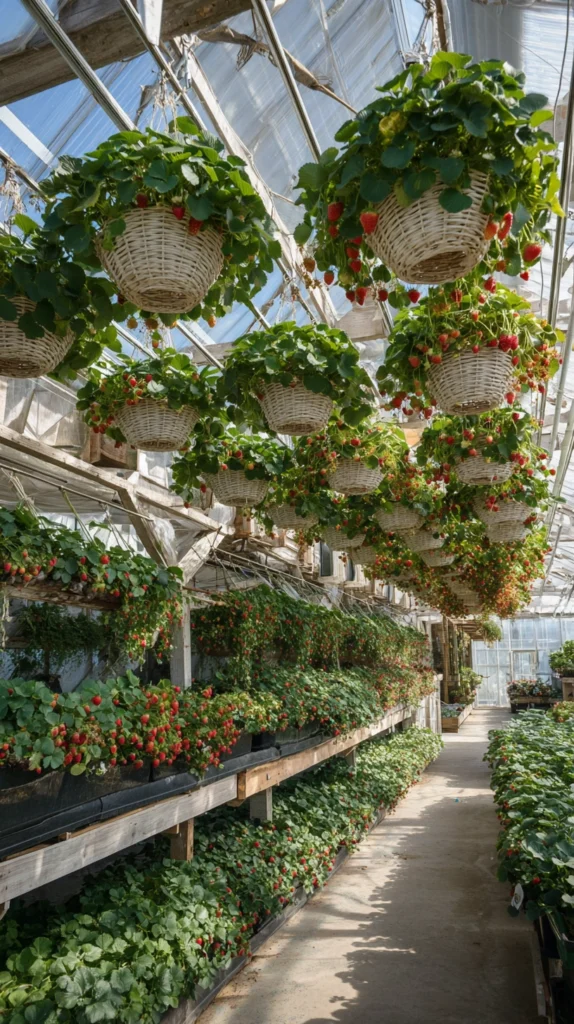
Utilize ceiling space with hanging shelf system.
My overhead setup:
Installation:
- Aluminum channels on ceiling frame
- S-hooks slide in channels
- Wire baskets hang from hooks
- Adjustable height
What I grow overhead:
- Trailing plants (strawberries)
- Herbs needing less water
- Seedlings in early stages
- Smaller pots
Configuration:
- 3 rows across greenhouse
- 8 baskets per row
- 24 additional growing spots
- Zero floor/wall space used
Benefits:
- Uses otherwise empty space
- Easy to water (drips down)
- Good air circulation
- Adds 30+ plant capacity
Cost: $60 for channels and hooks
Hanging System Tips
What works:
- Lightweight baskets only
- Secure ceiling attachment (greenhouse frame)
- Easy-access height (not too high)
- Drip-safe plants (or collection trays)
I learned:
- Don’t hang heavy pots (sagging)
- Position where you won’t hit head
- Water carefully (drips on plants below)
4. Corner Ladder Shelves (Dead Space Solution)
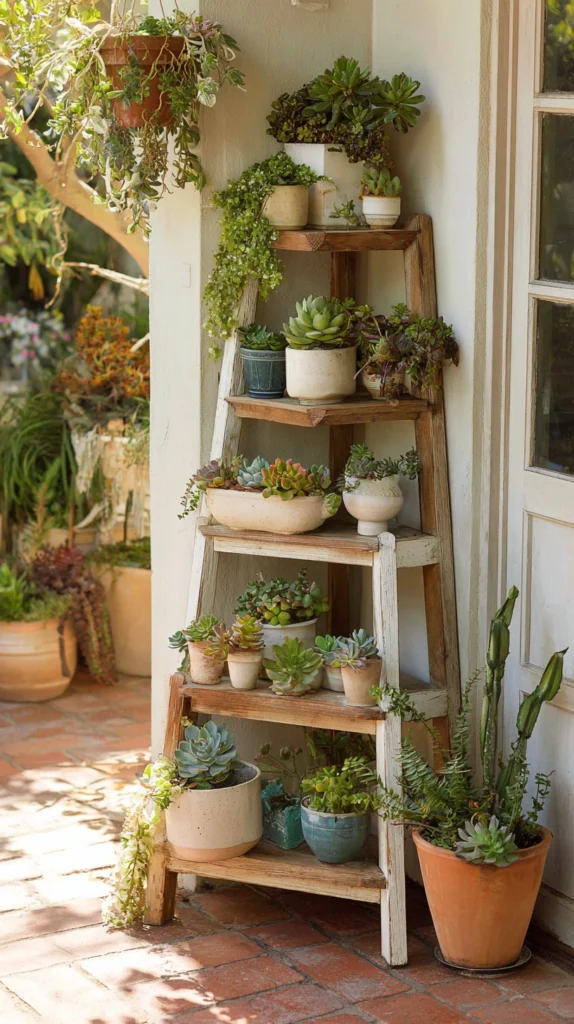
Utilize corner space with triangular or ladder shelving.
My corner installation:
A-frame ladder in corner:
- 5 feet tall
- 5 shelves
- Each shelf smaller going up
- Fits perfect in corner
What it holds:
- Small succulents on top shelves
- Medium pots on middle
- Larger pots on bottom
- 30+ plants in 4 square feet
Advantages:
- Uses dead corner space
- Attractive display
- Easy to build or buy
- Moveable
I built mine:
- Two old ladders hinged together
- Scrap boards for shelves
- Paint and waterproof seal
- DIY cost: $25
Alternative: Buy premade corner shelves ($40-80)
5. Rolling Benches (Flexibility Champion)
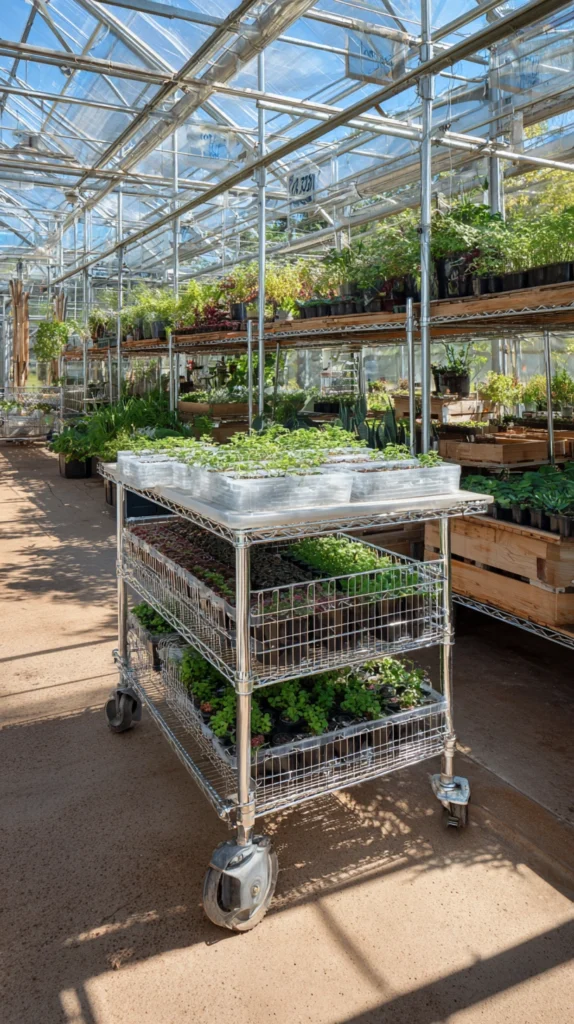
Benches on wheels create moveable growing stations.
My propagation bench:
4×2 foot bench:
- Heavy-duty casters (lockable)
- Wire mesh top
- Heat mat underneath
- Mobile seedling station
Why rolling works:
Seasonal flexibility:
- Move to best light
- Adjust for sun angles
- Optimize space usage
- Adapt to needs
Cleaning ease:
- Roll out for sweeping
- Access all sides
- Deep cleaning possible
- Maintenance simplified
My usage:
- Spring: Seedling starts (south side)
- Summer: Shade plants (north side)
- Fall: Overwintering prep (center)
- Winter: Protected spot (against north wall)
Cost: $45 for materials, built myself
6. Wall-Mounted Fold-Down Shelves (Space Saver)
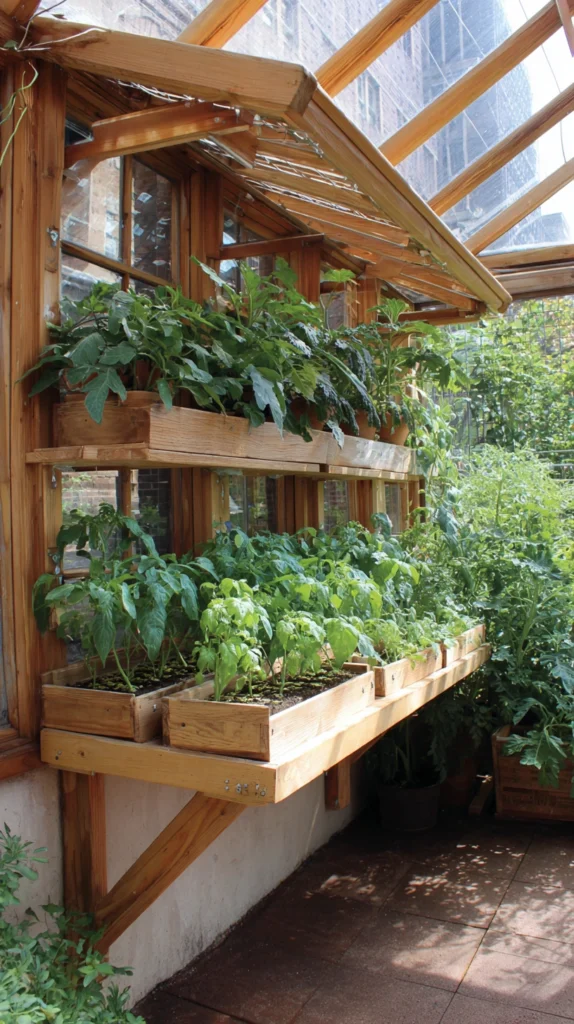
Hinged shelves fold against wall when not needed.
My spring setup:
Two fold-down benches:
- 3 feet wide each
- Fold flat against wall
- Lock in place when down
- Free up space when up
Usage pattern:
Spring (down):
- Covered with seedling trays
- Maximum capacity
- Need every inch of space
Summer (up):
- Fold against wall
- Floor space for large plants
- Tomatoes, peppers need room
- Shelves not needed
Installation:
- Heavy-duty hinges
- Wall studs required
- Bracket support when down
- Lock mechanism when up
Perfect for: Seasonal growers, variable needs
7. Tiered Plant Stand (Small Greenhouse Solution)
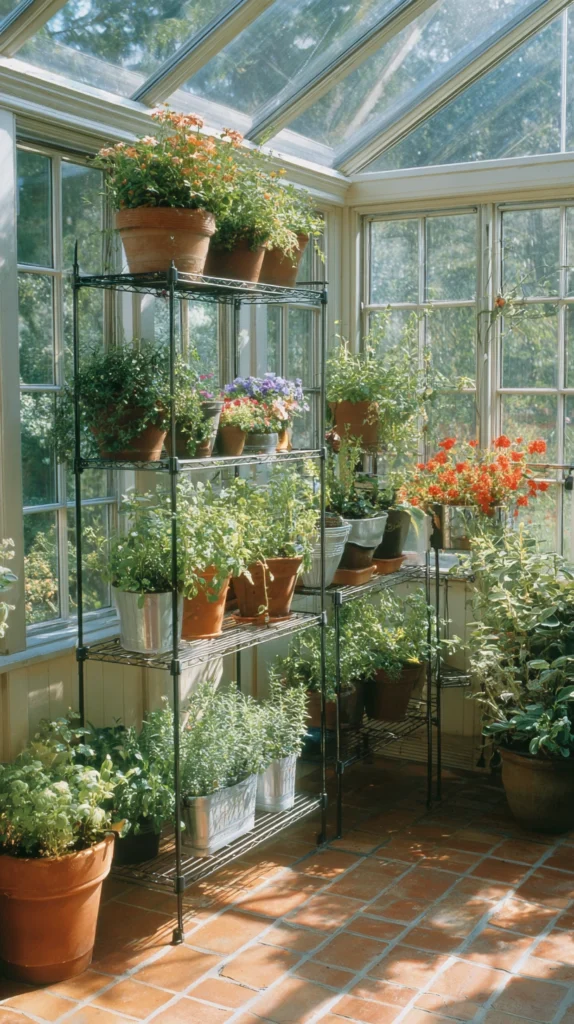
Multiple standalone plant stands in compact greenhouse.
My 6×8 greenhouse:
Four tiered stands:
- Each 3-4 shelves
- 12×12 inch footprint each
- Scattered throughout
- Maximum vertical use
Arrangement:
- One in each corner
- Creates organized zones
- Easy to access all plants
- Modular system
Why stands work in small spaces:
- No permanent installation
- Rearrange as needed
- Take out if not needed
- Affordable ($20-40 each)
Capacity:
- 4 stands × 3 shelves = 12 shelves
- 6-8 plants per shelf
- 72-96 plants total
- In 6×8 greenhouse
I bought mine at HomeGoods for $15-25 each.
8. Gutter Growing System (Vertical Salad Garden)
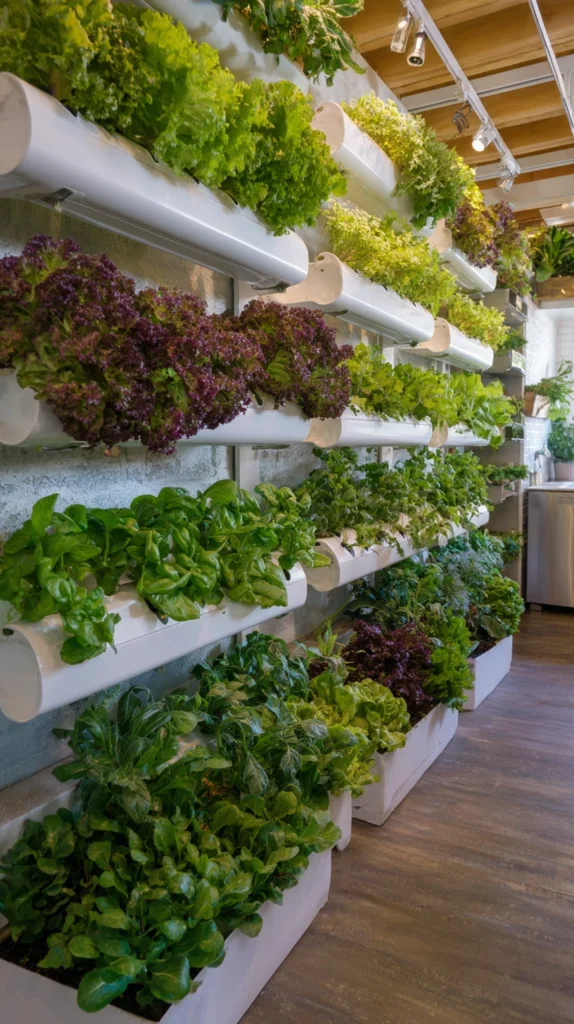
Rain gutters mounted as shelves grow lettuce and herbs.
My vertical system:
Setup:
- 6 gutters mounted on wall
- Each 8 feet long
- Spaced 10 inches apart vertically
- Drilled drainage holes
What I grow:
- Lettuce (cut and come again)
- Herbs (basil, cilantro, parsley)
- Strawberries
- Shallow-root crops
Benefits:
Space efficiency:
- 48 linear feet of growing (6 gutters × 8 feet)
- 2 feet of wall space used
- Massive production in minimal footprint
Easy harvesting:
- Everything at eye level
- Quick access
- See everything clearly
Cost: $60 for gutters, end caps, brackets
Gutter System Setup
Installation:
- Level each gutter (critical!)
- Slight slope for drainage (1/4 inch per 8 feet)
- End cap on one end
- Drainage hole on lower end
- Filled with lightweight potting mix
Watering:
- Top gutter waters slowly
- Drips to next level
- Efficient water use
- Bottom catches excess
Harvest:
- 15-20 lettuce heads weekly
- Continuous production
- From 16 square feet of wall
9. Staging Benches (Professional Style)
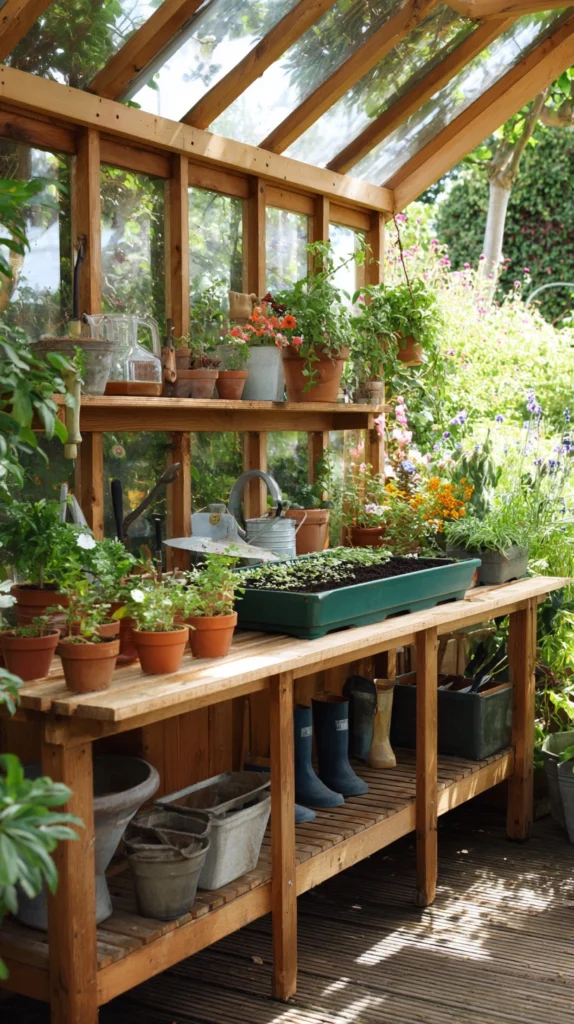
Slatted wood benches at waist height for working.
My potting area:
Central bench:
- 6 feet long × 3 feet wide
- 36 inches tall (comfortable working)
- Slatted cedar top (drainage)
- Storage shelf below
Usage:
- Potting plants
- Seedling flats
- Tool storage below
- Work surface
Why staging benches work:
- Comfortable height (no bending)
- Drainage through slats
- Dual purpose (work and growing)
- Professional appearance
I built mine:
- Cedar fence boards for slats
- 2×4 frame
- Shelf below for pots/soil
- Cost: $95
Alternative: Buy premade ($150-300)
10. Magnetic Strips (Vertical Tool Storage)
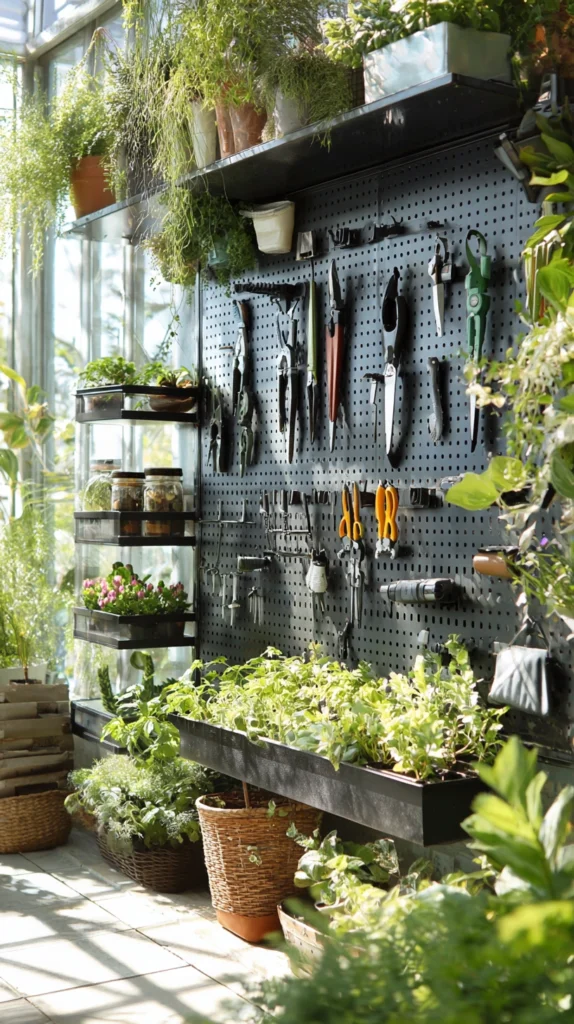
Magnetic knife strips organize small tools on walls.
My tool wall:
Three magnetic strips:
- Mounted on end wall
- Hold scissors, snips, trowels
- Tools visible and accessible
- Frees up shelf space
What sticks to magnets:
- Pruning shears
- Garden scissors
- Small hand tools
- Metal plant labels
Benefits:
- Tools easy to find
- Wall space utilized
- No drawer/box needed
- Quick access while working
This isn’t a shelf but frees shelf space by moving tools to walls.
Cost: $12 for 3 magnetic strips
11. Adjustable Shelving Track System (Maximum Flexibility)
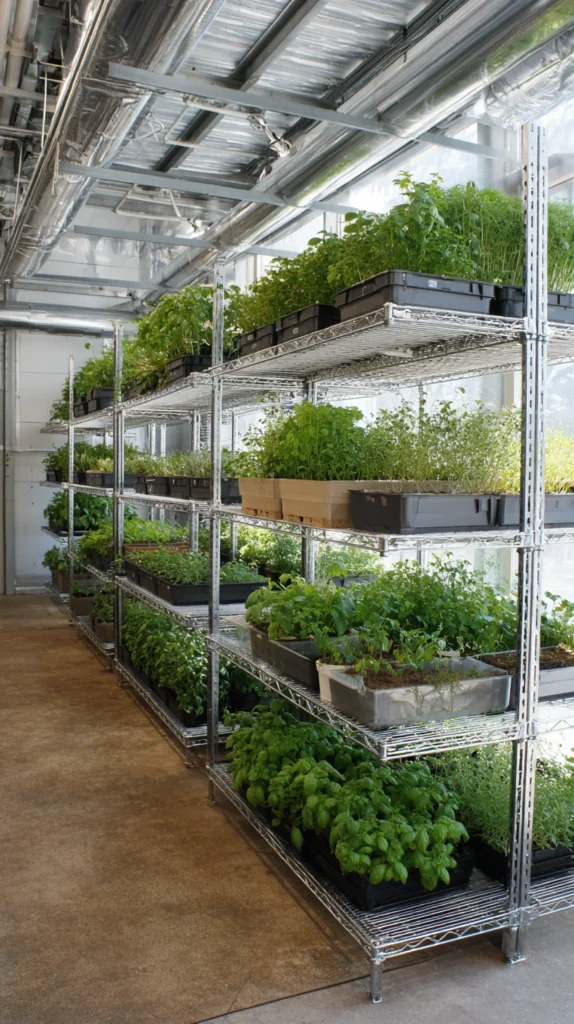
Wall track with moveable brackets creates custom shelving.
My north wall setup:
Shelving track system:
- 8-foot vertical tracks
- Moveable brackets
- Wood or wire shelves rest on brackets
- Infinite adjustment
Why I love it:
Seasonal adjustment:
- Spring: Shelves close together (small seedlings)
- Summer: Shelves spread out (larger plants)
- Fall: Reconfigure for overwintering
- Adapt constantly
Mixed plant heights:
- Move one shelf for tall plant
- Others stay close for small plants
- Custom spacing
- No wasted space
Installation:
- Tracks screwed to wall studs
- Brackets clip into tracks
- Shelves rest on brackets
- Rearrange anytime
Cost:
- Tracks: $30
- Brackets: $20
- Shelves: $40
- Total: $90
12. Over-the-Path Shelving (Air Space Use)
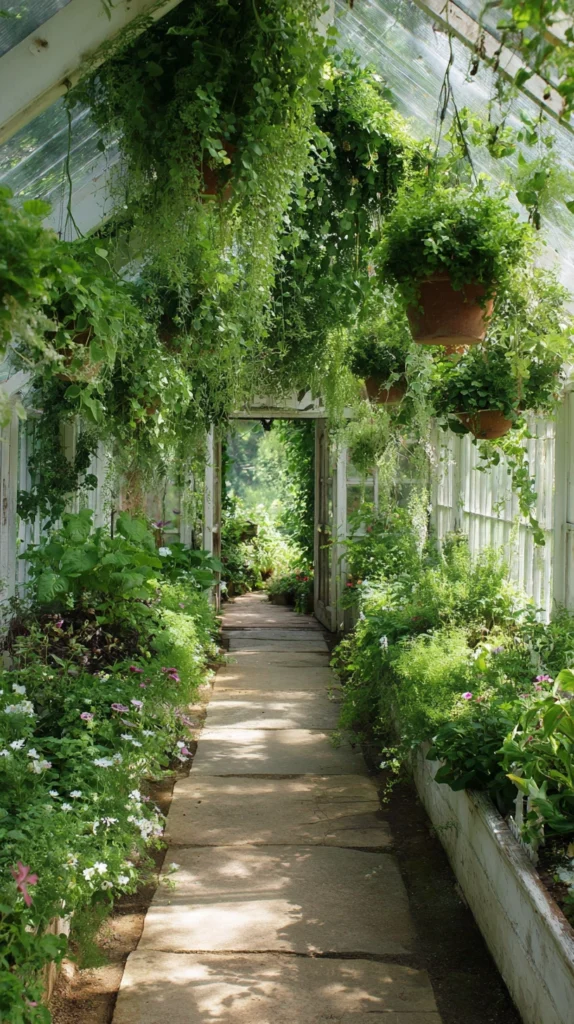
Shelves spanning pathway use overhead space.
My center path solution:
Overhead shelf:
- Spans 2-foot path
- 6 feet long
- 6 feet high (head clearance)
- Hung from ceiling frame
What goes overhead:
- Lightweight plants
- Hanging baskets
- Trailing plants
- Heat-tolerant (warm air rises)
Creates:
- Tunnel effect (appealing)
- Uses dead air space
- Additional 12 square feet growing
- Shades path (cooler walking)
Safety:
- Must allow head clearance
- Secure attachment critical
- Don’t overload
- Check stability regularly
I use this for:
- Herbs in summer (hang and harvest)
- Trailing strawberries
- Air plants
- Decorative plants
13. Windowsill Shelves (Maximize Glass Edge)
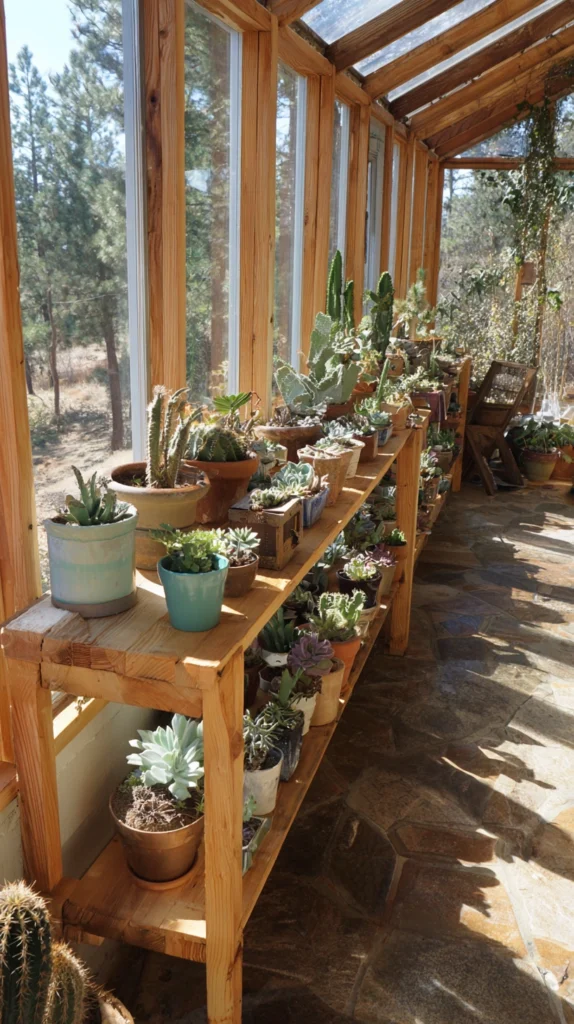
Narrow shelves along greenhouse perimeter use glass edge.
My perimeter system:
6-inch deep shelves:
- All along greenhouse edges
- Just inside glass
- Eye-level height
- Maximum light exposure
Benefits:
Best light location:
- Right against glass
- Maximum sun exposure
- Perfect for light-lovers
- Sun-sensitive plants thrive
Edge space utilized:
- Otherwise wasted
- 40 linear feet of shelving (my 8×10)
- Hundreds of small pots
- Massive capacity
What I grow there:
- Succulents (love direct light)
- Cacti
- Seedlings getting hardened off
- Sun-loving herbs
Installation:
- L-brackets every 2 feet
- 1×6 boards
- Waterproof seal
- Cost: $80 for all edges
14. Repurposed Furniture Shelving (Character Pieces)
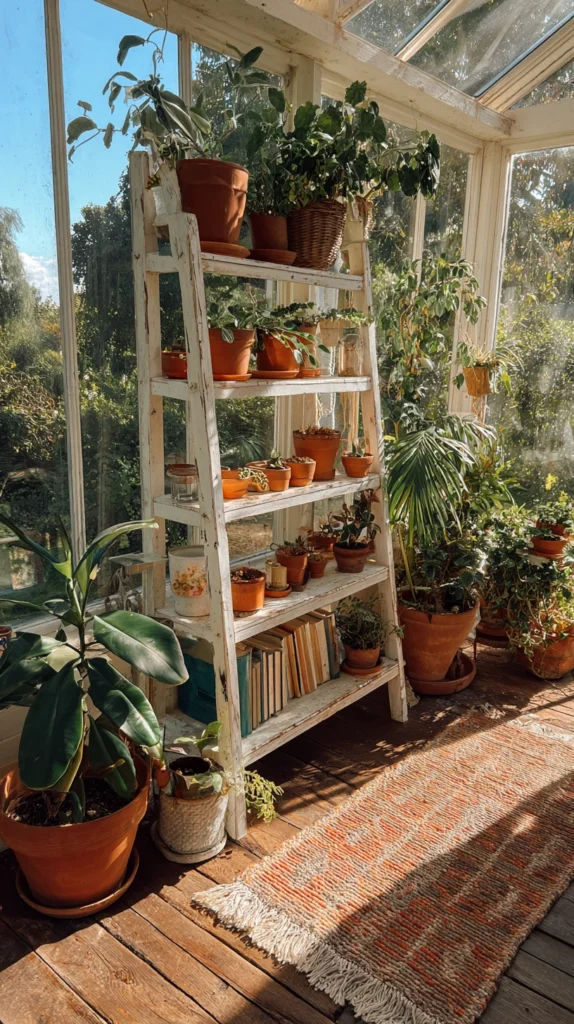
Old furniture becomes greenhouse shelving with personality.
What I’ve used:
Old Bookshelf
Library bookshelf from thrift store:
- $20 purchase
- 5 shelves
- Painted white
- Waterproof sealed
Perfect for:
- Displaying houseplants
- Overwintering tender plants
- Organized storage
- Looks intentional, not industrial
Vintage Ladder
Wooden ladder from barn:
- Free (found)
- Leaned against wall
- Boards across rungs create shelves
- Rustic character
Holds:
- Terracotta pots
- Vintage aesthetic
- 15-20 plants
- Conversation piece
Metal Baker’s Rack
Kitchen baker’s rack repurposed:
- $35 at yard sale
- 4 shelves
- Already waterproof
- Perfect greenhouse fit
These add character regular shelving lacks.
15. Heated Propagation Shelves (Specialized Growing)
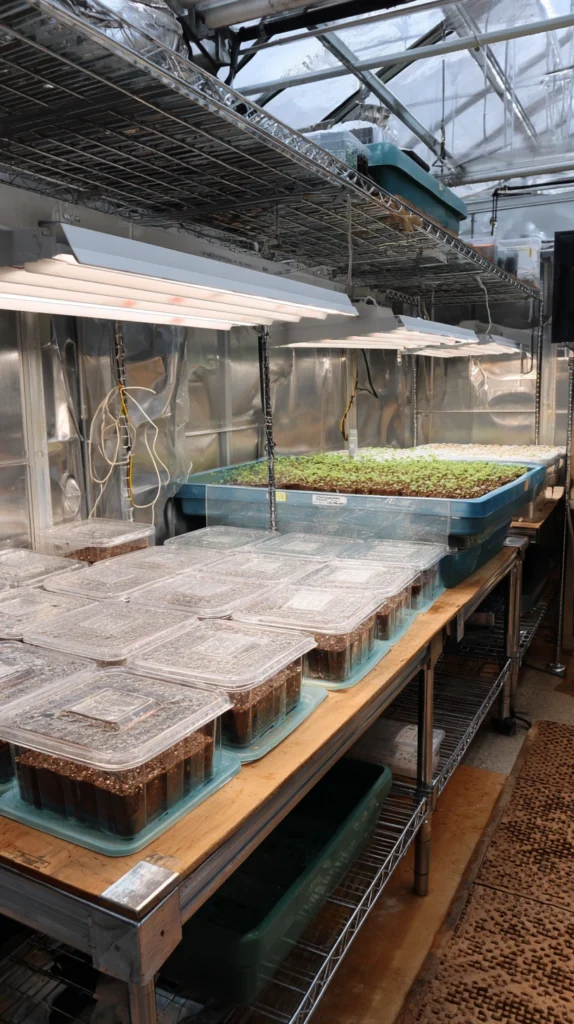
Temperature-controlled shelves for seedlings and cuttings.
My propagation setup:
Dedicated seedling shelf:
- 4×2 feet wire shelf
- Heat mat underneath
- Humidity dome on top
- Grow light overhead
Temperature control:
- Mat provides bottom heat
- Dome traps humidity
- Light provides warmth
- Thermostat maintains 70-75°F
Capacity:
- 8-10 seed trays
- 200+ seedlings at once
- Controlled environment
- Professional results
Cost:
- Shelf: $25
- Heat mat: $35
- Dome: $20
- Grow light: $45
- Thermostat: $25
- Total: $150
Worth it for:
- Serious seed starting
- Propagating cuttings
- Temperature-sensitive plants
- Year-round growing
Propagation Shelf Benefits
Why dedicated space works:
- Consistent temperature
- Humidity control
- Supplemental light
- Isolated from other plants (disease prevention)
My germination success went from 60% to 95% with this setup.
Choosing Shelving for Your Greenhouse
Match shelving to greenhouse type:
Small Greenhouses (6×8 or smaller)
Best options:
- Tiered plant stands (moveable)
- Corner ladder shelves
- Wall-mounted narrow shelves
- Hanging baskets
Avoid:
- Large rolling benches (too much space)
- Multiple wire racks (overcrowding)
Medium Greenhouses (8×10 to 10×12)
Best options:
- Wire rack shelving (my choice)
- Staging benches
- Adjustable track systems
- Combination approaches
Large Greenhouses (12×16+)
Best options:
- Rolling benches (flexibility)
- Tiered bench systems
- Multiple zones with different shelving
- Professional staging
Material Considerations
Different materials for different needs:
Wood Shelving
Pros:
- Natural appearance
- Easy to build/customize
- Warm aesthetic
- Strong
Cons:
- Rots in humidity
- Needs sealing/paint
- Heavier
- More maintenance
I use cedar when building wood shelves – naturally rot-resistant.
Metal Wire Shelving
Pros:
- Light penetration
- Excellent drainage
- Strong
- Affordable
Cons:
- Industrial look
- Can rust (use powder-coated)
- Small pots fall through (need mesh)
My favorite overall for function.
Plastic Shelving
Pros:
- Waterproof
- Lightweight
- Affordable
- Won’t rust/rot
Cons:
- Less durable
- Can warp in heat
- Looks cheap
- Lower weight capacity
I avoid plastic – warped in summer heat.
Metal Staging
Pros:
- Professional appearance
- Very durable
- Holds heavy weight
- Long-lasting
Cons:
- Expensive
- Heavy to move
- Cold (metal conducts)
Worth it for: Permanent professional setups.
Spacing Shelves Correctly
Wrong spacing wastes space.
My spacing strategy:
Bottom shelf:
- 18-24 inches from floor
- Room for tall plants below
- Storage underneath
Middle shelves:
- 12-18 inches apart
- Most versatile spacing
- Fits standard pots
Top shelves:
- 8-12 inches apart
- Smaller plants only
- Maximize upper space
Between shelving units:
- 2-3 feet paths minimum
- Wheelbarrow access
- Comfortable working space
I made paths too narrow initially (18 inches) – couldn’t move easily. Widened to 30 inches, much better.
Weight Capacity Reality
Shelves can fail if overloaded.
Weight calculations:
Wire shelving rated 200 pounds:
- Sounds like a lot
- 20 plants in 1-gallon pots = 180 pounds (when wet)
- Barely under capacity
- Easy to exceed
I collapsed a shelf:
- Overloaded with wet flats
- Sagging, then failure
- Lost plants and shelf
- Now I calculate weight
Safe practices:
- Heaviest items on bottom shelves
- Know weight ratings
- Account for water weight
- Leave margin
Math example:
- 15 plants × 8 pounds (wet) = 120 pounds
- On 200-pound shelf = safe
- On 100-pound shelf = risky
Organizing Shelves by Function
My shelf organization system:
Seedling Shelves (Spring)
Dedicated to starting seeds:
- Heat mats
- Good light
- Easy monitoring
- Temporary use
Growing-On Shelves
For maturing plants:
- Standard spacing
- General growing
- Most of greenhouse
- Year-round use
Display Shelves
Show off pretty plants:
- Near entrance
- Eye-level
- Attractive arrangements
- Make impression
Overwintering Shelves
Protect tender plants:
- Against north wall (warmest)
- Lower light acceptable
- Dormant plants
- Seasonal use
Labeling helps – I tag shelves by purpose.
Lighting Considerations with Shelves
Shelves block light – plan accordingly.
My approach:
South wall:
- No shelving (blocks light)
- Floor plants only
- Maximum sun penetration
North wall:
- Full shelving (least light impact)
- Already shadier side
- Shade-tolerant plants here
East/West walls:
- Partial shelving
- Wire shelves (light through)
- Strategic placement
Supplemental lighting:
- Grow lights under top shelves
- For lower shelf plants
- Extends usable shelf space
I added LED shop lights under top shelves ($25 each) – lower plants thrive now.
Watering Strategies for Shelved Plants
Watering shelves is trickier than floor.
My Watering System
Drip irrigation:
- Tubing along shelves
- Emitter for each pot
- Timer controlled
- Game changer
Cost: $120 for whole greenhouse
Before drip:
- Hand watered each shelf
- 45 minutes daily
- Back pain
- Inconsistent
After drip:
- Turn on timer
- 15 minutes twice daily
- Consistent moisture
- No effort
Worth every penny.
Overflow Management
Upper shelf watering drips on lower plants:
Solutions I use:
- Saucers under all pots
- Drainage designed into system
- Water-tolerant plants on lower shelves
- Or embrace it (natural watering)
I let overflow water lower shelves – reduces work.
Seasonal Shelf Adjustments
My greenhouse changes with seasons:
Spring (Maximum Capacity)
Configuration:
- Every shelf full
- Seedling flats everywhere
- Tight spacing
- Overflow to floor
Summer (Reduced Inside)
Configuration:
- Plants moved outside
- Shelves 50% full
- Some fold up
- Open and airy
Fall (Reorganizing)
Configuration:
- Bringing plants in
- Rearranging for winter
- Overwintering setup
- Compact arrangement
Winter (Minimal)
Configuration:
- Only hardy plants
- Heat conservation
- Shelves near heater
- Everything close together
Flexibility in shelving design makes seasonal changes easier.
Common Shelving Mistakes
I made these errors:
Mistake 1: Solid Shelves
Blocked light to plants below.
Fix: Switched to wire or slatted.
Mistake 2: Too Many Shelves
Overcrowded, couldn’t access plants.
Fix: Removed 30%, better access.
Mistake 3: Wrong Spacing
All shelves 12 inches apart – couldn’t fit taller plants.
Fix: Variable spacing based on plant needs.
Mistake 4: Poor Weight Distribution
All heavy pots on top shelves.
Fix: Heavy on bottom, light on top. Safer and more stable.
Mistake 5: No Path Space
Shelves too close together.
Fix: Widened paths from 18″ to 30″. Can actually move around.
Budget Shelving Solutions
You don’t need expensive systems.
What I’ve done cheap:
Cinder Blocks and Boards
Simple staging:
- Cinder blocks as supports
- 2×10 boards as shelves
- Adjustable (add/remove blocks)
- Cost: $45 for 8-foot run
Repurposed Pallets
Free shelving:
- Stand pallet on end
- Slats create shelves
- Paint or leave natural
- Cost: $0
PVC Pipe Shelving
Lightweight stands:
- PVC frame
- Wire mesh shelves
- Easy to build
- Cost: $30 per unit
I started with cinder blocks before buying wire racks. Worked fine, just not pretty.
My Current Greenhouse Layout
After 4 years of refinement:
North wall:
- Two 6-shelf wire units
- 180 plant capacity
- Year-round use
East wall:
- Adjustable track shelving
- Seasonal configuration
- Variable plant sizes
West wall:
- Windowsill shelves (6 inches deep)
- Cacti and succulents
- Maximum light
South wall:
- Open (no shelving)
- Floor plants only
- Tall tomatoes in summer
Overhead:
- 24 hanging baskets
- Herbs and trailing plants
- Uses air space
Center:
- One rolling propagation bench
- Moves seasonally
- Flexible use
Total capacity:
- 300+ plants
- In 8×10 greenhouse
- From 30 plants before shelving
Shelving investment: ~$500 over 4 years
Value: Priceless. Actually use the space now.
Getting Started This Weekend
Don’t build everything at once.
Weekend project:
Saturday:
- Assess current space
- Measure available wall space
- Choose one shelving type
- Buy materials
Sunday:
- Install shelving
- Arrange plants
- Assess improvement
- Plan next addition
My recommendation:
Start with one wire rack unit ($85):
- Immediate capacity increase
- See if you like it
- Expand from there
- Low commitment
After using it, you’ll know what else you need.
Now go multiply your greenhouse capacity with smart shelving!
Quick Summary:
Best overall shelving:
- Wire rack units (light penetration, adjustable, affordable)
- Tiered benches (professional, organized)
- Hanging baskets (uses overhead space)
- Track systems (maximum flexibility)
By greenhouse size:
Small (6×8): Tiered stands, corner ladders, hanging baskets
Medium (8×10): Wire racks, staging benches, wall shelving
Large (12×16+): Rolling benches, multiple zones, professional staging
Budget options:
- Cinder blocks + boards ($45)
- Repurposed pallets (free)
- Used wire racks ($30-50)
- DIY PVC stands ($30)
Material comparison:
Wire: Best light penetration, drainage Wood: Natural look, needs sealing Metal: Durable, professional Plastic: Avoid (warps in heat)
Spacing guidelines:
Bottom shelf: 18-24″ from floor Middle shelves: 12-18″ apart Top shelves: 8-12″ apart Paths between: 24-36″ minimum
Essential features:
Must have:
- Adjustability (plant heights vary)
- Drainage (wire/slats, not solid)
- Stability (proper weight rating)
- Access (don’t overcrowd)
Nice to have:
- Wheels (moveable)
- Fold-down (flexibility)
- Integrated lighting
- Heat mats
Organization strategy:
By function:
- Seedling area (heat, light)
- Growing area (general use)
- Display area (attractive plants)
- Overwintering (protected spot)
By light needs:
- North wall: Full shelving (shadier)
- South wall: Minimal/none (max light)
- East/West: Partial (balanced)
Weight capacity:
Calculate before loading:
- 1-gallon pot wet: ~8 pounds
- 20 pots = 160 pounds
- Check shelf rating
- Heavy items on bottom
Common mistakes:
- Solid shelves (block light)
- Too many shelves (overcrowding)
- Wrong spacing (inflexible)
- Narrow paths (can’t access)
- Overloading (collapse risk)
Space multiplication:
Before shelving:
- Floor only: 80 sq ft
- 30 plants capacity
After shelving:
- Floor + shelves: 350+ sq ft
- 150+ plants capacity
- 5× increase
Investment ranges:
Basic: $50-150 (wire racks, DIY) Standard: $200-400 (multiple systems) Premium: $500-1,000 (professional staging)
Quick wins:
- Add wire rack unit (instant capacity)
- Install hanging baskets (overhead space)
- Build windowsill shelves (edge space)
- Use corners (dead space)
Watering solutions:
Hand watering: Tedious, 30-45 min daily Drip system: Automated, $100-150 investment Overhead spray: Quick but disease risk
Seasonal flexibility:
Spring: Maximum capacity (seedlings) Summer: Reduced (plants outside) Fall: Reorganizing (bringing in) Winter: Compact (heat conservation)
ROI timeline:
Without shelves:
- 30 plants in $800 greenhouse
- $27 per plant capacity
With shelves ($500 investment):
- 150+ plants in same greenhouse
- $8.60 per plant capacity
- Pays for itself in efficiency
Success indicators:
- Can access all plants easily
- Light reaches most areas
- Paths comfortable to walk
- Weight distributed safely
- Everything organized and visible
Start simple:
- One shelving unit first
- Learn what works
- Expand gradually
- Adapt to your needs