15 Mini Food Forest Ideas for Small Yards and Urban Spaces
I thought food forests required acres of land. My tiny 0.1-acre suburban lot seemed too small for anything productive.
Then I learned about mini food forests. Same principles, scaled down – now my small yard produces 60+ pounds of food yearly.
You don’t need farmland to grow a food forest. A 10×10 space works if you design it right.
Let me show you 15 mini food forest ideas that actually fit in small spaces.
Why Small Spaces Can Be Food Forests
My backyard revelation:
Total lot size: 0.1 acres (about 4,000 square feet) House footprint: 1,500 square feet Driveway/paths: 800 square feet Usable yard: 1,700 square feet
I thought this was nothing.
Then I saw what fit:
- 4 dwarf fruit trees
- 8 berry bushes
- 20+ perennial herbs
- Ground covers
- Annual vegetables underneath
Annual harvest: 60-80 pounds of fruit, herbs, and vegetables
From 400 square feet of actual food forest area.
Food Forest Principles at Small Scale
What makes it a food forest (not just a garden):
Multiple layers:
- Trees (even dwarf)
- Shrubs (berries)
- Herbaceous (perennials)
- Ground cover (strawberries)
- Vertical (vining plants)
Perennial focus:
- Plant once, harvest for years
- Self-maintaining mostly
- Works with nature
- Minimal inputs
Companion relationships:
- Plants supporting each other
- Nitrogen fixers feeding others
- Shade plants under taller ones
- Ecosystem approach
My 10×10 mini forest has all these elements in compact form.
1. The 10×10 Backyard Food Forest (My Main Design)
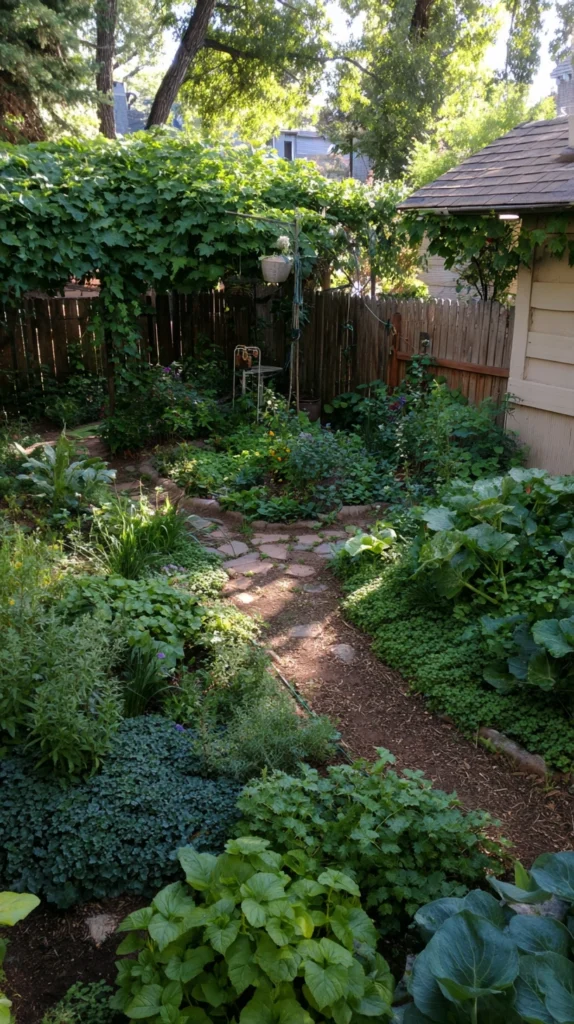
Quarter of my yard is dense productive forest.
Layout:
Canopy layer (dwarf trees):
- 1 dwarf apple (center-back)
- 1 dwarf cherry (side)
- 8 feet apart
- Provide structure
Shrub layer:
- 3 blueberry bushes (partial shade)
- 2 raspberry canes (sunny edge)
- Circle around trees
Herbaceous layer:
- Asparagus (spring)
- Rhubarb (early summer)
- Walking onions (year-round)
- Perennial herbs scattered
Ground cover:
- Strawberries between everything
- White clover in paths
- Creeping thyme on edges
Vertical:
- Grape vine on north fence
- Pole beans in summer
Footprint: 10×10 feet (100 square feet) Annual yield: 30 pounds fruit, vegetables, herbs
Year-Round Production
My harvest calendar:
Spring:
- Asparagus (April-May)
- Strawberries (May-June)
- Herbs starting
Summer:
- Cherries (June)
- Raspberries (July)
- Blueberries (July-August)
- Herbs constantly
- Grapes (late August)
Fall:
- Apples (September)
- Late raspberries (everbearing)
- Herbs continue
Winter:
- Planning next year
- Some hardy herbs
- Mostly dormant
Something producing 8 months of the year.
2. Patio Container Food Forest (Balcony-Friendly)
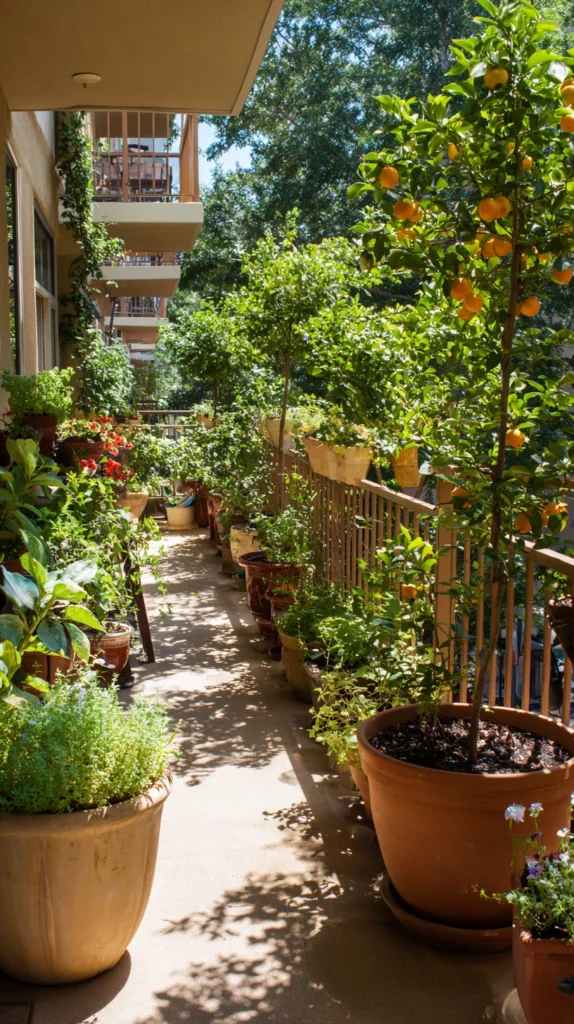
No ground space? Containers work.
My friend’s balcony (6×10 feet):
Large containers creating layers:
“Canopy”:
- Dwarf Meyer lemon (5-gallon pot)
- Dwarf fig (7-gallon pot)
- Provide height and fruit
“Shrub” layer:
- 3 blueberries (3-gallon pots each)
- Compact berry production
Herbaceous:
- 6 pots of herbs (basil, oregano, thyme, parsley)
- Perennial and annual mix
Ground cover:
- Strawberries in hanging baskets
- Trail over edges
Vertical:
- Pole beans in 5-gallon bucket
- Trellis against railing
Total: 15 containers Harvest: 20+ pounds annually Space: 60 square feet balcony
Container Forest Challenges
What’s different from ground:
Watering:
- Daily in summer
- Twice daily during heat
- Drip system essential
Fertilizing:
- More frequent (nutrients leach)
- Every 2 weeks growing season
- Organic liquid fertilizer
Winter protection:
- Move tender plants inside
- Or cluster and wrap
- Zone considerations
My friend uses drip system ($45) – timer waters everything automatically.
3. Edible Front Yard Forest (HOA-Approved)
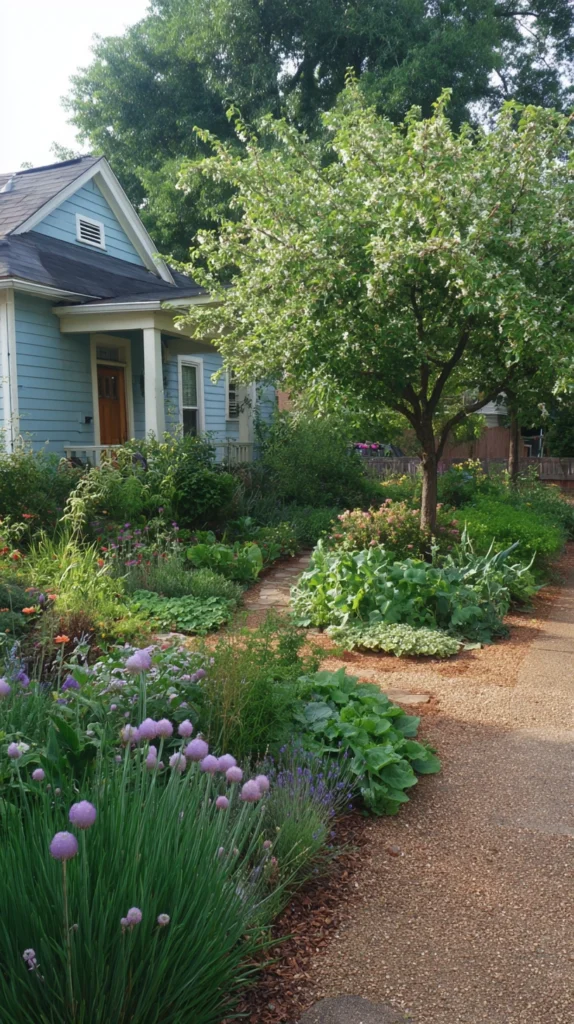
Make vegetables look like landscaping.
My 15×15 front yard design:
Ornamental AND edible:
“Trees”:
- Serviceberry (beautiful flowers, edible berries)
- Crabapple (ornamental, fruit makes jelly)
“Shrubs”:
- Blueberries (look like azaleas, produce food)
- Elderberry (dramatic foliage, immune-boosting berries)
“Perennials”:
- Rhubarb (architectural leaves)
- Asparagus (ferny foliage)
- Daylilies (flowers and tubers edible)
“Ground cover”:
- Creeping thyme (walkable, fragrant)
- Strawberries (green and tidy)
Edging:
- Chives (purple flowers)
- Society garlic (pink blooms)
Neighbors think it’s decorative landscaping. I harvest food constantly.
HOA approved it as an “ornamental garden.”
Sneaky Edible Landscaping
Plants that fool people:
Look ornamental:
- Blueberries (gorgeous fall color)
- Scarlet runner beans (red flowers)
- Rainbow chard (colorful stems)
- Purple basil (deep foliage color)
- Nasturtiums (bright flowers, all parts edible)
My strategy:
- Beautiful first, edible second
- No obvious vegetable rows
- Mixed with flowers
- Neat edges mandatory
4. Shaded Food Forest (North-Side Solution)
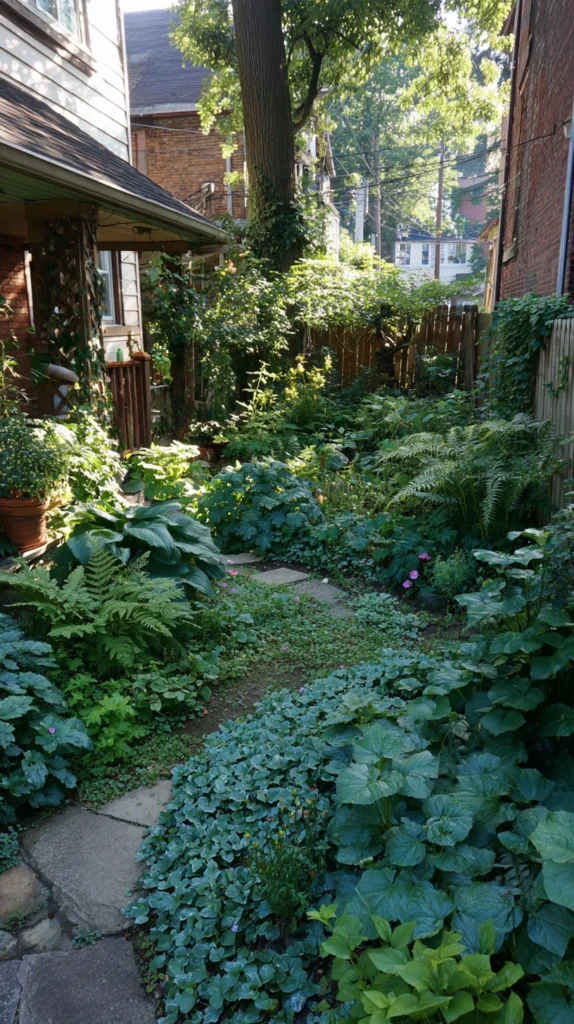
My north-facing side yard gets 3-4 hours sun maximum.
Shade-tolerant mini forest:
Understory trees:
- 2 pawpaw trees (native, shade-loving)
- American persimmon (tolerates shade)
Shrubs:
- Red currants (shade tolerant)
- Gooseberries (partial shade fine)
- Serviceberry
Herbaceous:
- Ramps (wild leeks, spring)
- Ostrich fern (fiddleheads edible)
- Mints (prefer some shade)
- Hostas (young shoots edible)
Ground cover:
- Wild strawberries (tiny but abundant)
- Violets (leaves and flowers edible)
- Wood sorrel
Production:
- Not as high as sunny areas
- But 20+ pounds yearly
- From unusable space
Shade food forests produce – just different crops.
5. Vertical Food Forest (Wall-Mounted)
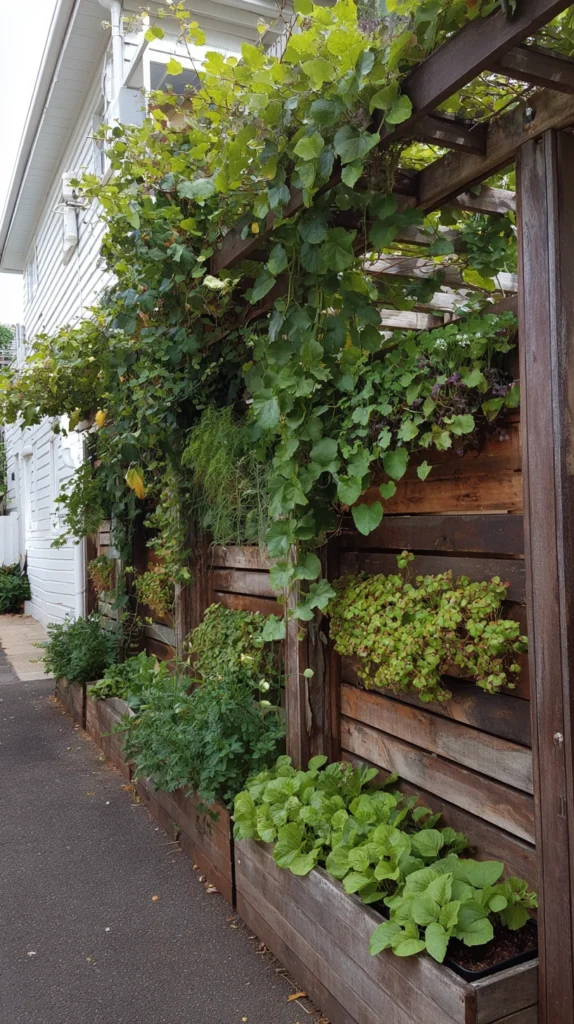
Against south-facing fence – maximum vertical growing.
My 8×2 foot vertical system:
Structure:
- Trellis mounted to fence (8 feet tall)
- Containers at base
- Plants climb up
What grows vertically:
Perennial vines:
- Hardy kiwi (vigorous, edible fruit)
- Grape (table variety)
Annual vines:
- Pole beans (summer protein)
- Vining squash (compact varieties)
Wall-mounted planters:
- Herbs at various heights
- Strawberries trailing down
Ground level:
- Shade-tolerant greens
- Under the canopy of vines
Footprint: 16 square feet floor Growing area: 64+ square feet vertical Space multiplier: 4×
6. Spiral Food Forest (3D Growing)
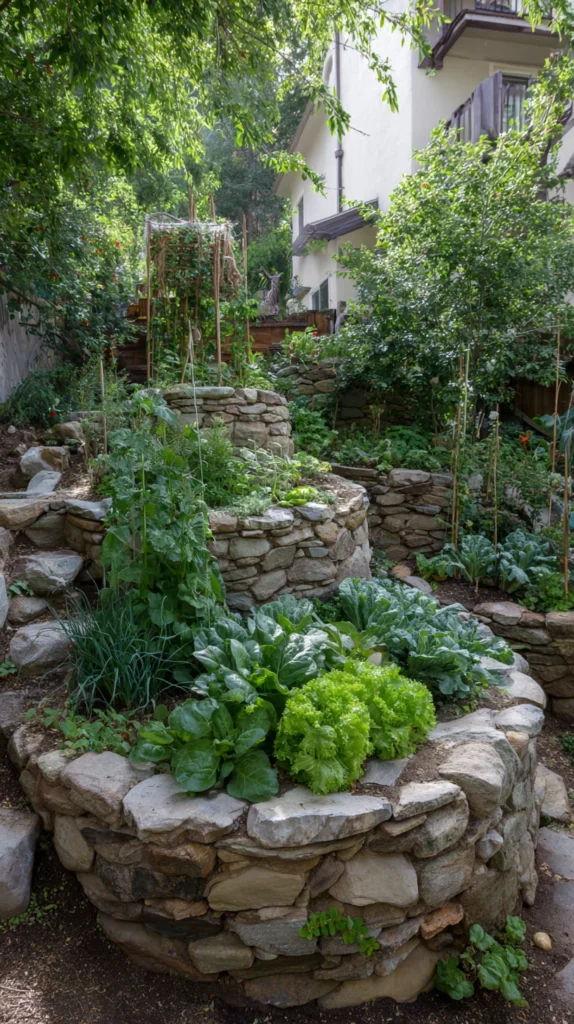
Raised spiral bed creates multiple microclimates.
My 6-foot diameter spiral:
Construction:
- Stone spiral wall
- Rises from 6 inches to 3 feet
- Creates natural terraces
- Dramatic focal point
Planting by height/moisture:
Top (hot and dry):
- Rosemary, thyme, oregano
- Mediterranean herbs
- Drought lovers
Middle spiral:
- Strawberries
- Chives
- Moderate needs
Bottom (cool and moist):
- Lettuce, spinach
- Cilantro, parsley
- Moisture lovers
Includes small dwarf fruit tree in adjacent pot for height layer.
Space: 28 square feet footprint Microclimates: 5+ different zones Production: 15+ pounds herbs and vegetables
7. Keyhole Garden Food Forest (Efficient Circle)
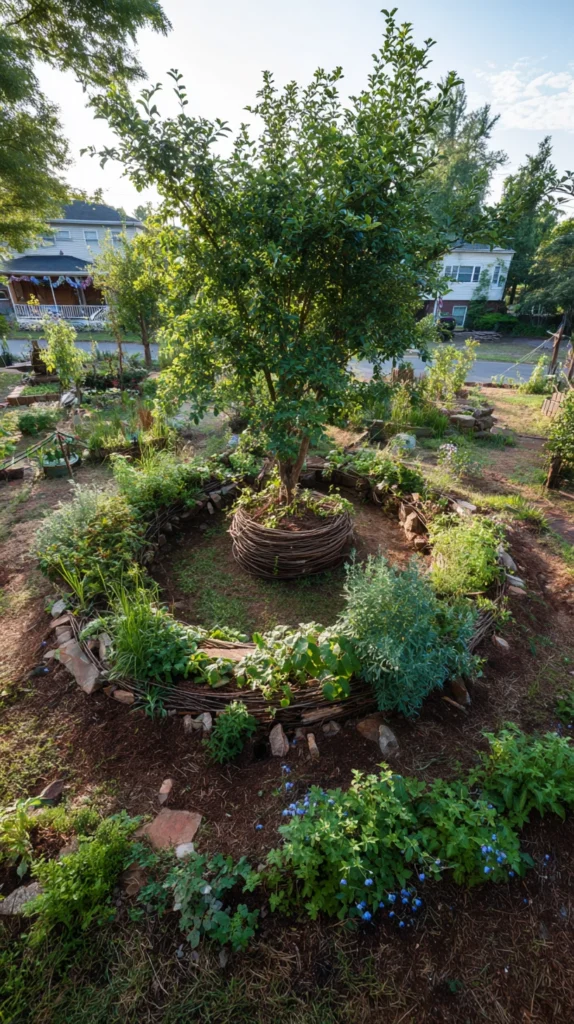
Circular raised bed with central compost – self-fertilizing system.
My keyhole design:
6-foot diameter bed:
- 3 feet tall walls
- Wedge path to center
- Wire compost basket in middle
Layers planted:
Inner ring (near compost):
- Dwarf peach tree (heavy feeder)
- Tomatoes in summer
Middle ring:
- Blueberry bushes
- Herbs
Outer edge:
- Strawberries
- Lettuce
- Light feeders
Path:
- Access to center
- Reach all plants
- Harvest compost
Benefits:
- Self-fertilizing (compost leaches nutrients)
- Water-efficient
- All plants accessible
- Productive year-round
My favorite small-space design.
8. Corner Food Forest Triangle (Dead Space Use)
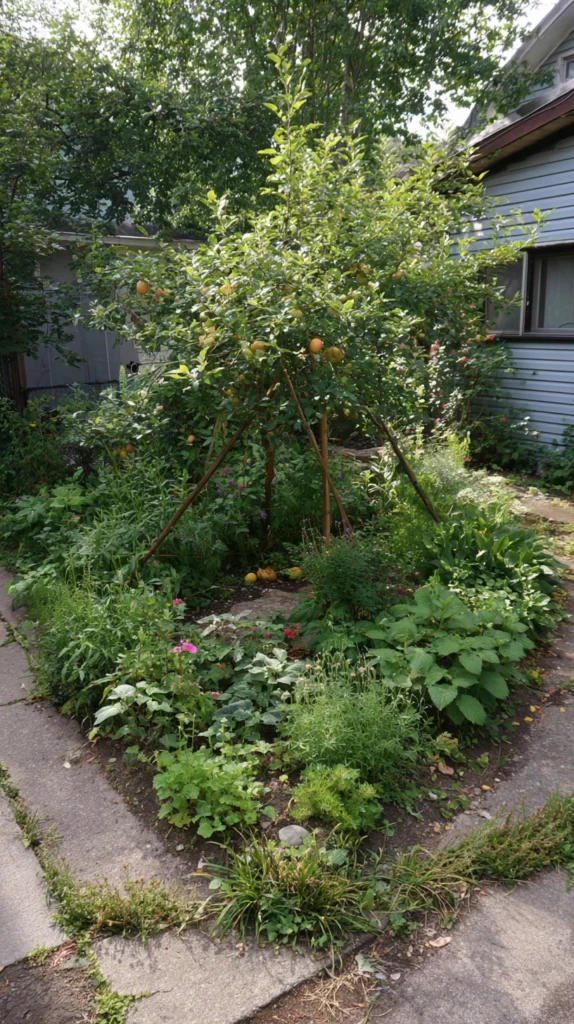
Transform boring yard corner into productive triangle.
My 8×8 corner triangle:
Back corner placement:
Tallest (corner point):
- Dwarf apple tree
- 6-8 feet tall
- Against fence
Medium height (sides):
- Gooseberry bushes
- Raspberry canes
- 4-5 feet tall
Front edge (shortest):
- Herbs and strawberries
- 6-12 inches
- Easy access
Ground layer:
- White clover
- Creeping thyme
- Fills gaps
Creates graduated height – visible from all angles, nothing hidden.
Corner I couldn’t mow anyway now produces 25 pounds food yearly.
9. Guild-Based Mini Forest (Plant Communities)
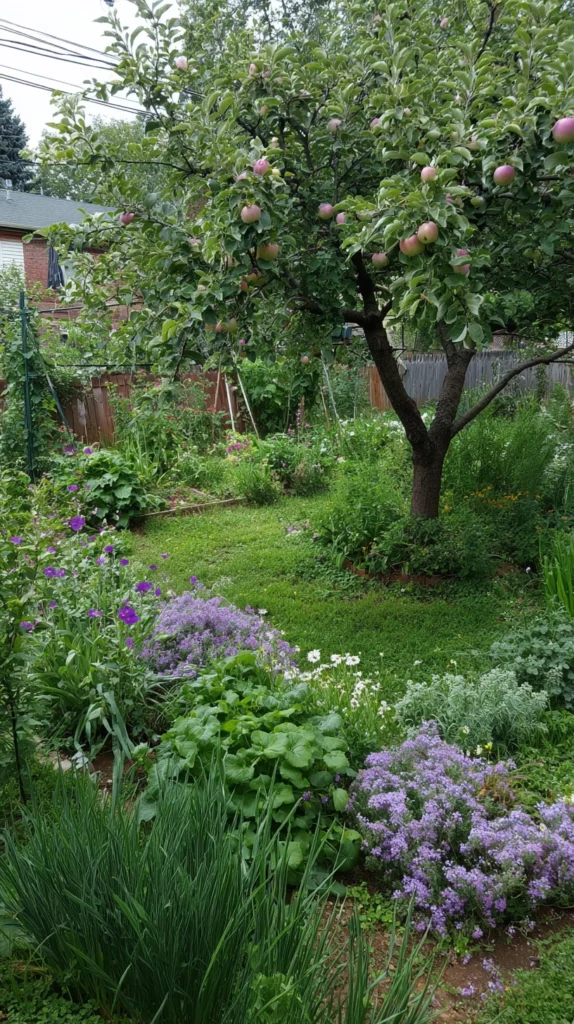
Design around companion relationships – plants helping each other.
My apple tree guild (10-foot circle):
Central tree:
- Dwarf apple (main crop)
Nitrogen fixers (feed tree):
- 3 comfrey plants (deep roots, nutrient accumulator)
- White clover (ground cover, nitrogen)
Pest deterrents:
- Chives (repel aphids)
- Catmint (beneficial insects)
- Tansy (pest confusion)
Pollinator attractors:
- Yarrow (flowers)
- Bee balm (hummingbirds and bees)
Dynamic accumulators:
- Comfrey (brings up minerals)
- Dandelions (yes, intentional)
Ground cover/food:
- Strawberries (edible ground cover)
Everything supports the apple tree – ecosystem approach.
Maintenance: Cut comfrey 3× yearly, drop as mulch. That’s it.
10. Stacked Pot Food Forest (Tiered Container)
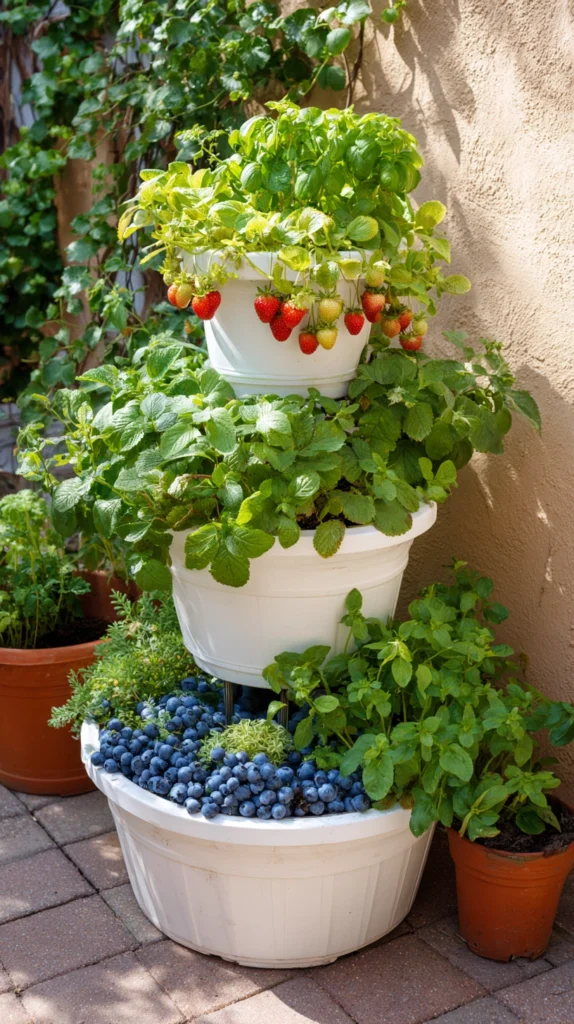
Stacked containers create vertical layers in small footprint.
My patio tower:
Bottom tier (largest):
- 18-inch pot
- Dwarf blueberry
Middle tier:
- 14-inch pot stacked on first
- Strawberries
Top tier:
- 10-inch pot
- Herbs (thyme, oregano)
Sides (pockets):
- Additional strawberries
- Trailing nasturtiums (edible)
Total height: 3 feet Footprint: 18-inch circle (2 square feet) Plants: 12+ in tiny space Harvest: 8+ pounds annually
Perfect for: Patios, balconies, decks
11. Hugelkultur Mini Mound (Wood-Core Bed)
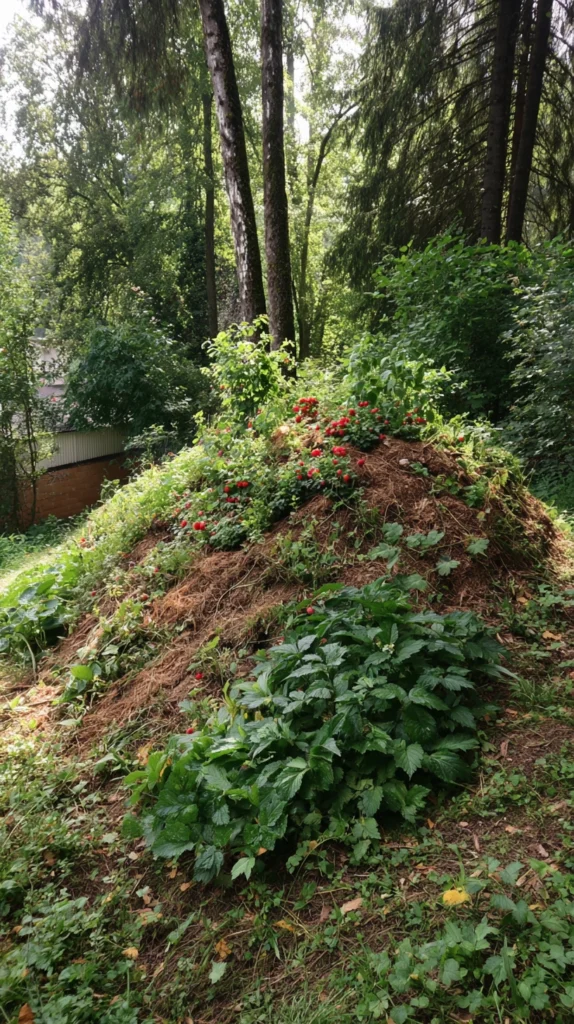
Buried wood creates long-term fertility – low-maintenance forest.
My 6×3 mound:
Construction:
- Buried logs in trench
- Covered with branches, leaves
- Topped with soil
- Raised mound shape
Planted layers:
Top of mound:
- Tomatoes, peppers (summer annuals)
- Warmest, driest spot
Sides:
- Strawberries
- Herbs
- Moderate moisture
Base:
- Lettuce, greens
- Coolest, moistest area
Shrubs nearby:
- Blueberries benefit from mound proximity
Benefits:
- Wood decomposes, feeds plants for years
- Holds moisture (less watering)
- Warms faster in spring
- Creates microclimates
I built this 3 years ago – still productive, never fertilized.
12. Three Sisters Food Forest (Native Design)
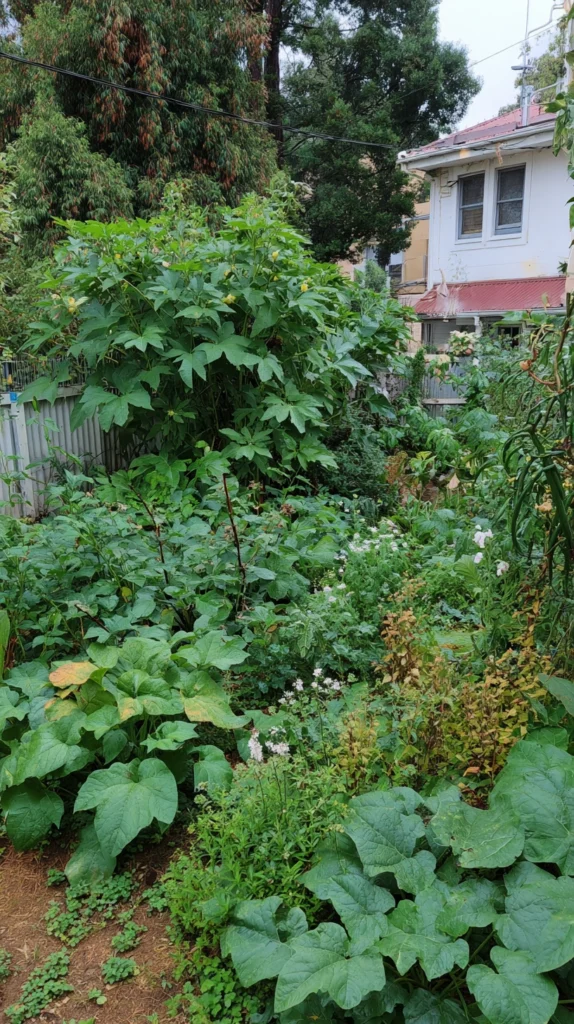
Traditional companion planting adapted as perennial forest.
My 10×10 three sisters area:
Instead of annual corn:
- Jerusalem artichokes (perennial, 6+ feet tall)
- Provides climbing structure
Instead of annual beans:
- Scarlet runner beans (perennial in warm zones)
- Or groundnut (native perennial)
Squash layer:
- Annual winter squash
- Or perennial ground covers
Additional layers added:
- Berry bushes around edges
- Perennial herbs scattered
- Makes it more forest-like
Harvest:
- 30+ pounds Jerusalem artichoke tubers
- 5-10 pounds beans
- 20+ pounds squash
- Herbs constantly
Native American wisdom adapted for permanent forest.
13. Espalier Food Forest (Flat Growing)
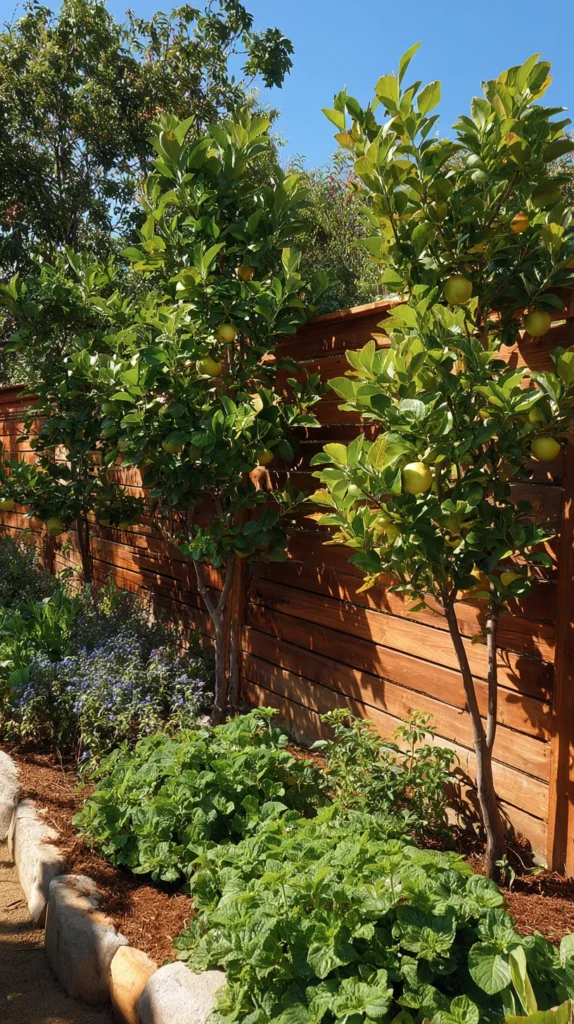
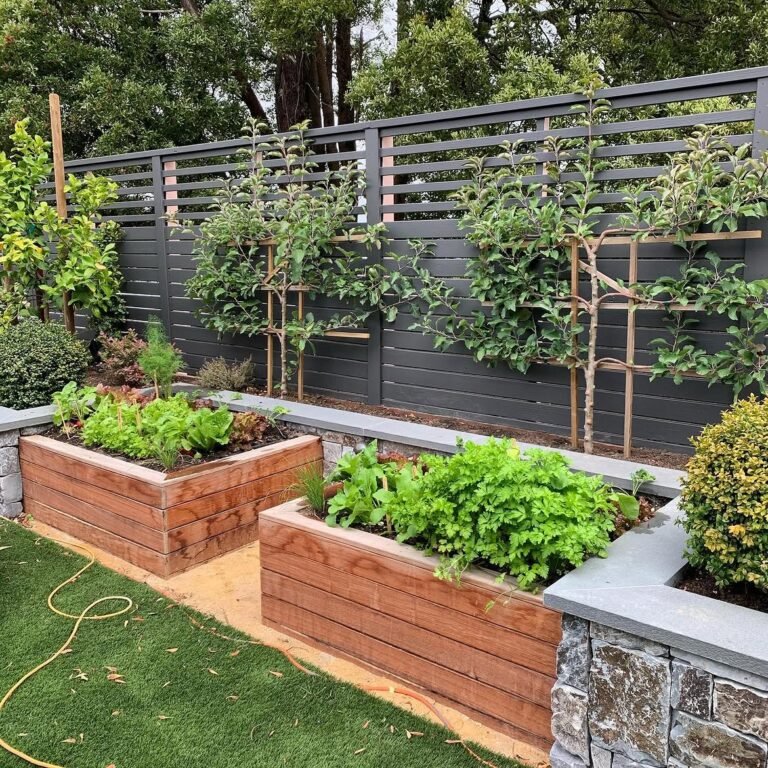
Train fruit trees flat against fence – saves massive space.
My 12-foot fence section:
Two espalier trees:
- Dwarf apple
- Dwarf pear
- Trained horizontally along fence
- Each 6 feet wide, 18 inches deep
Space comparison:
- Standard tree: 10×10 feet (100 sq ft)
- Espalier: 6×1.5 feet (9 sq ft)
- Space saved: 91%
Planted in front:
- Blueberry bushes (4 feet from fence)
- Strawberries (ground level)
- Herbs (edges)
Creates mini forest:
- Against fence (background)
- Medium layer (bushes)
- Low layer (berries, herbs)
- Just 12×4 feet total
Harvest:
- 40+ apples
- 30+ pears
- 10+ pounds blueberries
- From 48 square feet
14. Window Box Food Forest (Tiniest Version)
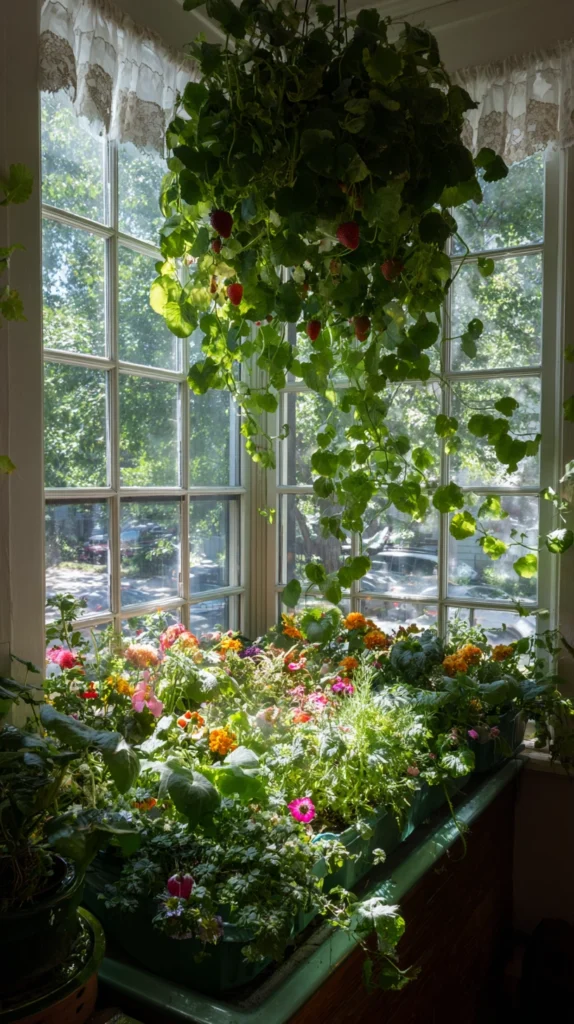
Outside kitchen window – herbs and edibles within reach.
My three window boxes (3 feet each):
Box 1 – Perennial herbs:
- Thyme, oregano, sage
- Year-round access
- Never die back completely
Box 2 – Annual herbs:
- Basil, cilantro, parsley
- Replant seasonally
- Heavy use items
Box 3 – Edible flowers/greens:
- Nasturtiums (all parts edible)
- Lettuce (cut-and-come-again)
- Pansies (edible flowers)
Strawberries in hanging basket above boxes – trailing down.
Total space: 9 linear feet of windowsill Harvest: Fresh herbs daily, some fruit
Not technically a forest but uses forest principles – stacking, diversity, perennials.
15. Suburban Parking Strip Forest (Free Public Space)
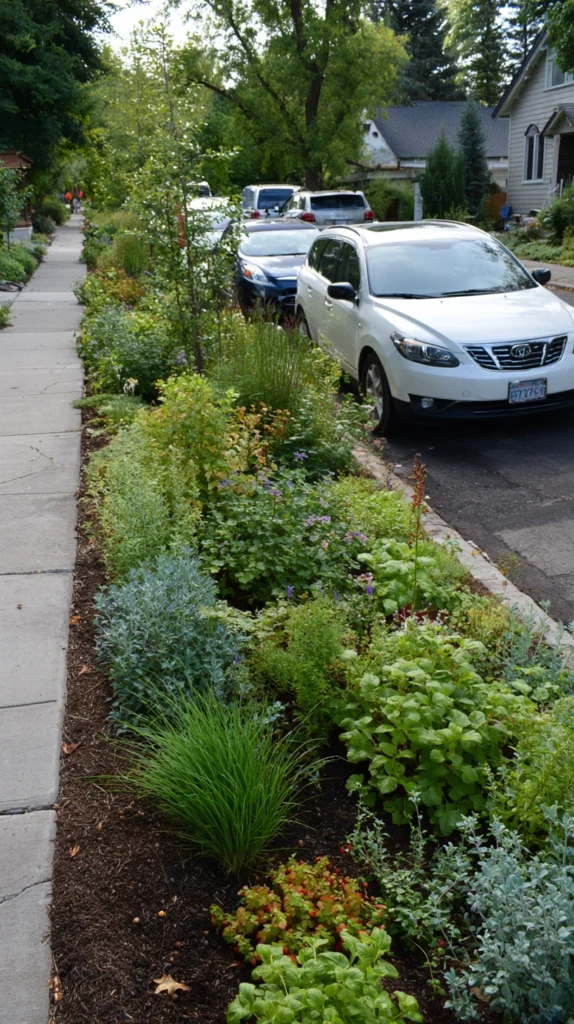
Between sidewalk and street – often unused space.
My 4×20 foot hellstrip transformation:
What I planted:
Small trees (street-approved):
- 2 serviceberries (edible fruit, approved by city)
- Ornamental but productive
Shrubs:
- Dwarf blueberries
- Look like landscape plants
- Produce food
Ground cover:
- Creeping thyme (walkable)
- Strawberries
- Low-maintenance
Edging:
- Chives
- Society garlic
- Neat appearance
Benefits:
- Free unused space
- Shares food with neighbors
- Beautifies neighborhood
- No lawn to mow
I checked city rules first – allowed with approved plant list.
Harvest: 30+ pounds berries, shared with neighbors
Parking Strip Considerations
Before planting:
- Check local laws (some cities regulate)
- Verify utility lines (call before you dig)
- Choose drought-tolerant (may not be able to water)
- Plant tough varieties (salt, compaction, abuse)
My serviceberries handle road salt, compacted soil, and occasional trampling.
Layering Plants in Small Spaces
Key to mini food forests – using all dimensions.
Vertical layers possible in 10×10:
8 feet high: Dwarf fruit tree canopy 6 feet: Taller shrubs, small trees 4 feet: Berry bushes 2 feet: Perennial vegetables, herbs Ground: Strawberries, ground covers Below ground: Root vegetables (limited)
Plus vertical: Vining plants on trellis (to 8+ feet)
Total growing area: 100 sq ft floor × multiple layers = 300+ effective square feet
That’s 3× the capacity of single-layer gardening.
Maintenance Reality of Mini Forests
My actual time spent:
Weekly (growing season):
- Harvest: 30 minutes
- Weeding: 15 minutes (decreases as forest matures)
- Watering: 10 minutes (drip system mostly)
- Total: 1 hour weekly
Monthly:
- Pruning: 30 minutes
- Mulching: 30 minutes
- Fertilizing: 15 minutes
- Total: 1.5 hours monthly
Seasonally:
- Spring setup: 3 hours
- Fall cleanup: 2 hours
- Total: 5 hours quarterly
Annual total: About 80 hours yearly for 400 square feet producing 60+ pounds food.
Compare to vegetable garden same size: 150+ hours yearly
Mini forests need less work as they mature.
Starting Your Mini Food Forest
Don’t plant everything year one.
My 3-year timeline:
Year 1: Trees and Shrubs
Plant woody perennials first:
- 2 dwarf fruit trees
- 3 berry bushes
- Take longest to produce
- Establish root systems
Cost: $120 Harvest: Minimal (maybe berries)
Year 2: Herbaceous Layer
Add perennial vegetables and herbs:
- Asparagus crowns
- Rhubarb
- Perennial herbs (oregano, thyme, chives)
- Strawberries
Cost: $60 Harvest: Some herbs, strawberries
Year 3: Filling In
Complete the layers:
- Ground covers
- Annual vegetables in gaps
- Vining plants on trellis
- Final touches
Cost: $40 Harvest: Full production begins
Total investment: $220 over 3 years Mature harvest: 60+ pounds annually (year 4+)
Choosing Plants for Your Climate
Mini forests must match your zone.
My Zone 7 selections:
Trees: Dwarf apple, cherry, peach, fig Berries: Blueberry, raspberry, blackberry Perennials: Asparagus, rhubarb, herbs Ground covers: Strawberries, thyme
Cold climates (Zones 3-5):
- Hardy apples, pears
- Honeyberries
- Currants, gooseberries
- Hardy herbs
Warm climates (Zones 8-10):
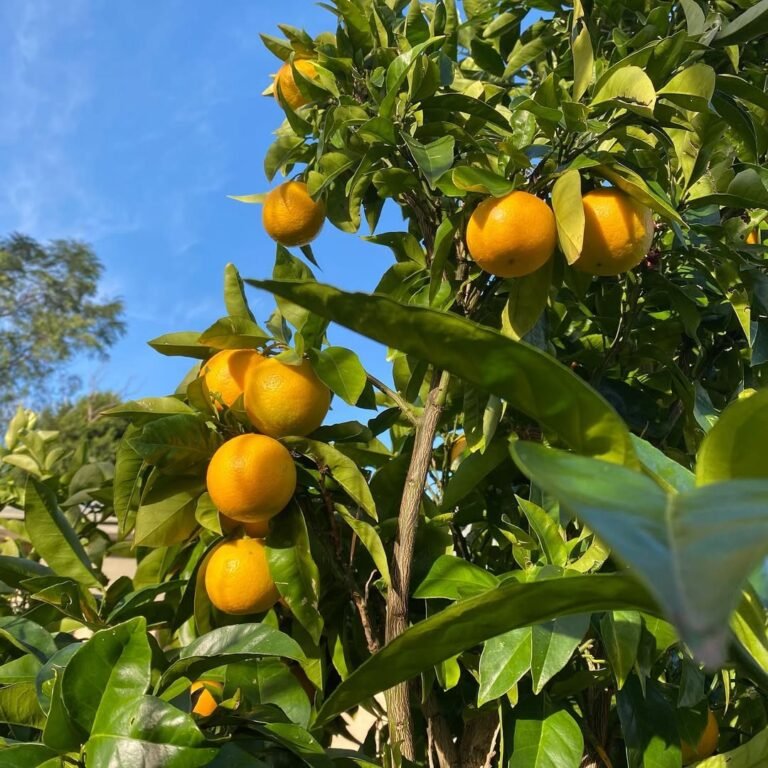
- Citrus (dwarf varieties)
- Figs
- Evergreen berries
- Tropical perennials
I made mistake planting zone-inappropriate fig variety year 1 – died first winter. Check hardiness ratings.
Integrating Annual Vegetables
Mini food forests can include annuals in gaps while perennials establish.
My approach:
Year 1-2 (lots of gaps):
- Tomatoes between young trees
- Lettuce under establishing shrubs
- Squash on edges
- Full sun areas still available
Year 3-4 (filling in):
- Shade-tolerant annuals only
- Lettuce under fruit trees
- Herbs in dappled shade
- Less annual space
Year 5+ (mature):
- Minimal annual space
- Mostly perennial production
- Some leafy greens in shade
Annuals provide food while waiting for perennials to mature.
Companion Planting in Mini Forests
Strategic plant relationships maximize small spaces.
Combinations that work:
Fruit trees + nitrogen fixers:
- Apple with white clover below
- Clover feeds tree naturally
Berries + herbs:
- Blueberries with thyme
- Similar water/soil needs
Tall + short:
- Tomatoes (tall) with lettuce (shade-tolerant) below
- Uses vertical space
Pest confusers:
- Herbs scattered throughout
- Strong scents deter pests
- Attracts beneficials
My guilds are intentional – every plant has purpose beyond production.
Watering Mini Food Forests
Small spaces = easier irrigation.
My drip system ($120 total):
Components:
- Timer on outdoor faucet
- Main line around perimeter
- Drip emitters to each plant
- Runs twice daily in summer
Before drip:
- Hand watering 30 minutes daily
- Inconsistent (forgot sometimes)
- Plants stressed
After drip:
- Set and forget
- Perfect moisture
- Healthier plants
Best investment I made in mini forest.
Soil Building in Small Spaces
Limited space needs excellent soil.
My soil strategy:
Initial prep:
- Removed grass
- Added 3 inches compost
- Mixed into top 6 inches
- Tested pH (adjusted if needed)
Ongoing maintenance:
- Mulch heavily (wood chips)
- Chop-and-drop prunings
- Add compost annually
- Never till (disturbs soil life)
After 4 years:
- Soil dark and rich
- Earthworms everywhere
- Holds moisture better
- Minimal fertilizer needed
Good soil = productive forest in limited space.
My Favorite Mini Forest Design
After trying all these:
10×10 backyard food forest (Design #1) wins for:
- Most productive
- Easiest maintenance
- Best variety
- Looks intentional
- Fits typical yard
Current production:
- Dwarf apple: 30 pounds
- Dwarf cherry: 15 pounds
- Blueberries: 8 pounds
- Raspberries: 5 pounds
- Strawberries: 3 pounds
- Herbs: 2 pounds
- Vegetables: 10 pounds
- Total: 73 pounds
From 100 square feet producing for 20+ years from one planting.
Investment:
- Year 1: $150
- Year 2: $40
- Year 3: $30
- Total: $220
ROI: Year 4+ = $150+ value annually, forever
Now go plan your mini food forest and transform your small space!
Quick Summary:
Minimum space needed:
- 10×10 feet: Full mini forest (all layers)
- 6×6 feet: Simplified forest (fewer layers)
- Containers: Even balconies work
- Linear: 4×20 feet along fence/strip
Essential layers for mini forest:
Trees: Dwarf varieties only (6-8 feet tall) Shrubs: Berry bushes (3-5 feet) Herbaceous: Perennial vegetables, herbs Ground cover: Strawberries, clover Vertical: Vining plants on trellis
Best dwarf fruit trees:
- Apple (genetic dwarf, 6-8 feet)
- Cherry (compact varieties)
- Peach (dwarf, 5-6 feet)
- Fig (naturally compact)
- Citrus (warm zones, container-friendly)
Space-saving techniques:
Espalier: Flat against fence (90% space savings) Vertical trellising: Uses height (3-4× multiplier) Containers: Stacked/tiered (no ground needed) Spiral/keyhole: 3D growing (multiple microclimates)
Timeline expectations:
Year 1: Plant trees/shrubs (minimal harvest) Year 2: Add layers, first berries Year 3: Full layers, increasing production Year 4+: Mature production (60+ pounds annually)
Budget ranges:
Minimal: $100-150 (basic trees and shrubs) Standard: $200-300 (complete layers) Premium: $400-500 (specialty varieties, infrastructure)
Annual maintenance:
Weekly: 1 hour (harvest, water, weed) Monthly: 1.5 hours (prune, mulch, fertilize) Seasonal: 5 hours (setup/cleanup) Total: 80 hours yearly (decreases as forest matures)
Production expectations:
100 sq ft mini forest mature production:
- Fruit: 40-50 pounds
- Berries: 10-15 pounds
- Vegetables/herbs: 10-15 pounds
- Total: 60-80 pounds annually
Best designs by space:
10×10 backyard: Full layered forest Corner triangle: Dead space utilization Against fence: Espalier + layers Containers: Balcony/patio forest Parking strip: Public space transformation Front yard: Ornamental edible
Companion relationships:
Nitrogen fixers: Clover, comfrey (feed trees) Pest deterrents: Herbs, alliums (protect food) Pollinators: Flowers, diverse bloom times Ground covers: Strawberries, thyme (living mulch)
Common mistakes:
- Planting full-size trees (overwhelm space)
- Ignoring sun patterns (wrong plants wrong spots)
- No irrigation plan (plants stress)
- Too much too fast (overwhelmed maintenance)
- Wrong zone plants (winter kill)
Seasonal production:
Spring: Asparagus, strawberries, early herbs Summer: Berries, fruit, herbs, vegetables Fall: Apples, late berries, root crops Winter: Planning, some hardy herbs
Urban-friendly options:
HOA approval: Ornamental edibles (serviceberry, blueberry) Balcony: Container forest (15+ pots) Shaded: Pawpaw, currants, shade herbs Parking strip: Approved street trees + ground cover
Watering solutions:
Hand water: 30 min daily (labor-intensive) Drip system: $100-150 (automated, best) Soaker hoses: $30-50 (budget option)
Soil preparation:
Initial: Remove grass, add compost (3 inches), mix Ongoing: Mulch heavily, chop-and-drop, annual compost pH: Test and adjust (most fruit 6.0-6.5)
Layering in 10×10 space:
8 feet: Tree canopy (1-2 dwarf trees) 6 feet: Tall shrubs 4 feet: Berry bushes (3-5 plants) 2 feet: Herbs, vegetables (20+ plants) Ground: Strawberries, clover (fills gaps) Vertical: Vines to 8+ feet (uses height)
Quick start plan:
This year: Plant 2 dwarf trees, 3 berry bushes Next year: Add herbs, strawberries, ground cover Year 3: Fill gaps, add annuals, complete layers Year 4: Enjoy full production
ROI calculation:
Investment: $220 over 3 years Annual harvest value: $150+ (grocery equivalent) Payback: Year 2-3 Lifetime value: 20+ years production = $3,000+
Success indicators:
- Multiple layers established
- Plants healthy and growing
- Harvest increasing yearly
- Low maintenance (self-sustaining)
- Ecosystem developing (pollinators, beneficial insects)