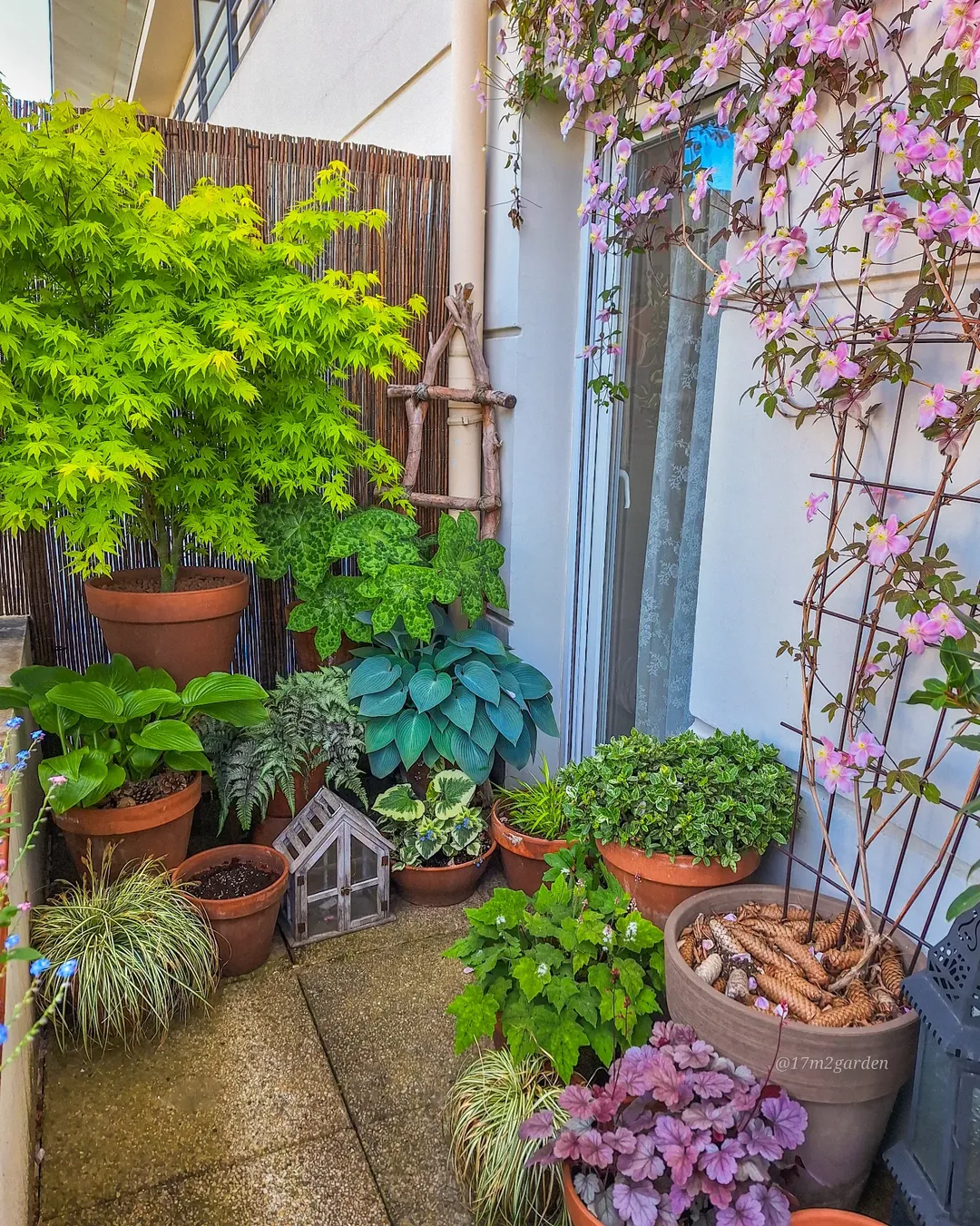
13 Brilliant Balcony Gardens: Transform Your Tiny Space into a Secret Jungle
My first balcony had two sad plants in cheap plastic pots. Looked empty, felt wasted, produced nothing.
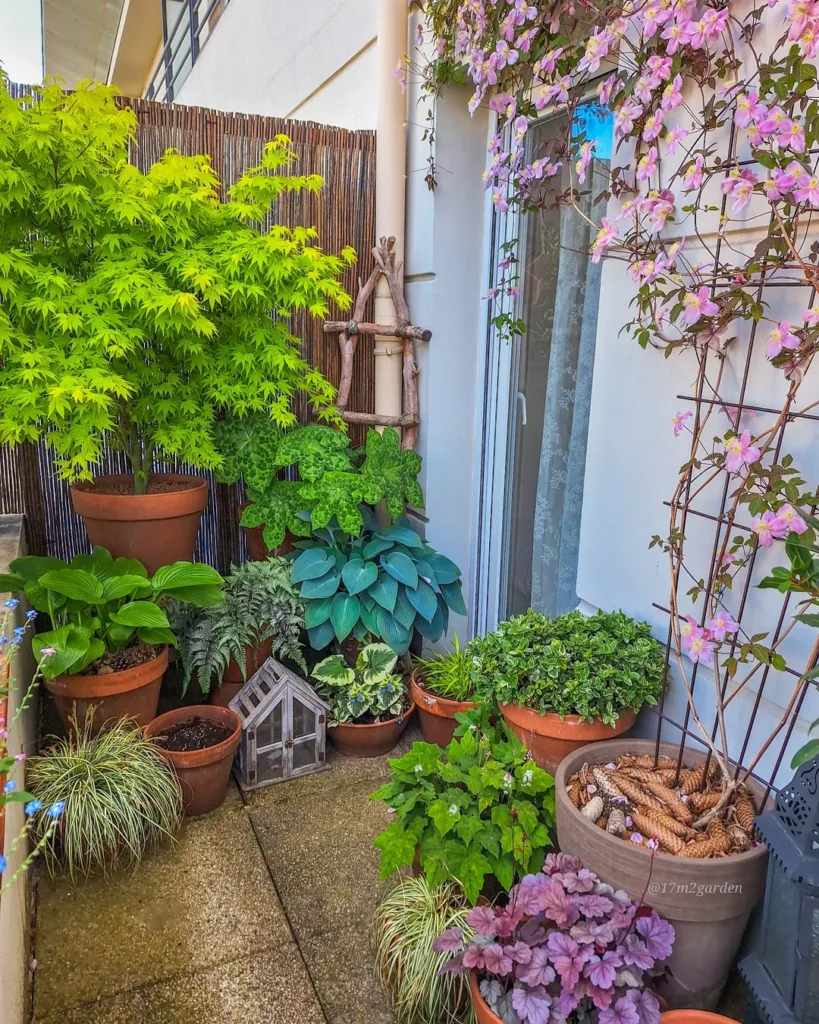
6×10 feet of outdoor space I barely used.
Then I learned vertical growing and container design. The same 60 square feet now holds 80+ plants, produces 40 pounds of food yearly, and feels like a jungle oasis.
Let me show you 14 ways to transform tiny balconies into productive, beautiful spaces.
Why Most Balconies Stay Empty
My apartment balcony problems:
Year 1 mistakes:
- Two plants on floor (wasted vertical space)
- Random mismatched pots (looked messy)
- No plan or design (chaotic)
- Barely sat out there (uninviting)
Space analysis:
- Floor: 60 square feet
- Walls: 160 square feet (two walls, 6 feet tall)
- Ceiling: 60 square feet (overhead)
- Total potential: 280 square feet
- Used: 4 square feet (just those two pots)
- Efficiency: 1.4%
After transformation:
- Floor: Plants on every surface
- Walls: Vertical gardens, hanging baskets
- Ceiling: Hanging plants overhead
- Used: 200+ square feet
- Efficiency: 71%
Simple vertical thinking multiplied capacity 50×.
1. Vertical Tower Garden (Maximum Density)
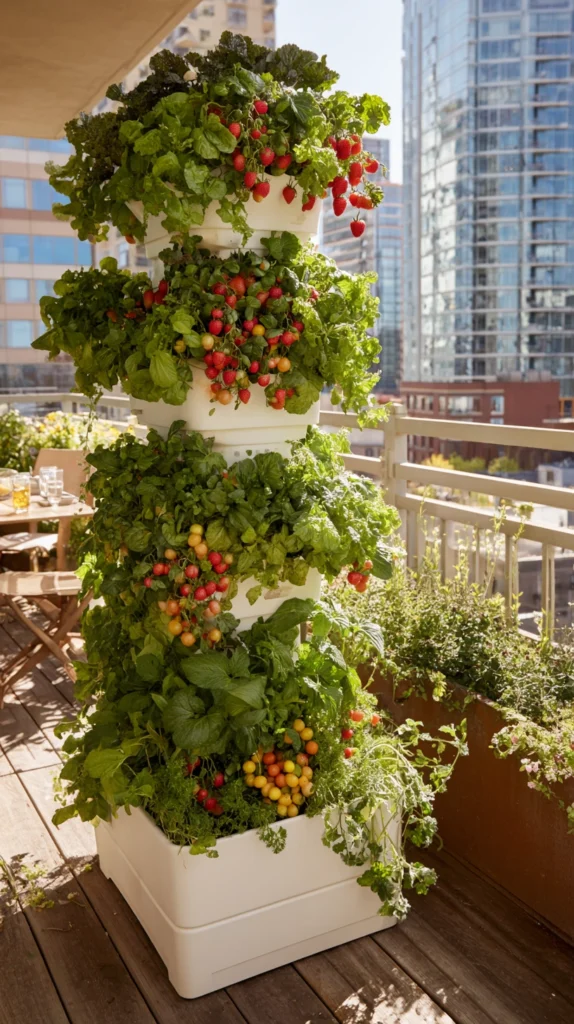
Stacked planters create column of plants in tiny footprint.
My 5-tier tower:
Setup:
- Five containers stacked vertically
- Sizes: 18″, 16″, 14″, 12″, 10″ diameter
- Each 8 inches tall
- Central pole for stability
What I grow (bottom to top):
Tier 1 (largest, bottom): 3 tomato plants (cherry variety) Tier 2: 4 pepper plants (compact variety) Tier 3: 6 lettuce heads Tier 4: 8 herb plants (basil, parsley, cilantro) Tier 5 (top): Trailing strawberries (cascade down sides)
Footprint: 2.5 square feet (18-inch circle) Plants: 20+ Annual harvest: 15 pounds vegetables, herbs constantly
Cost: $65 (5 pots, pole, soil)
Tower Watering System
Challenge: Water runs through quickly
My solution:
- Water slowly from top
- Drips down to lower tiers
- Bottom tier has saucer
- Efficient use of water
I water top tier only – gravity does the rest.
2. Railing Planter System (Edge Maximization)
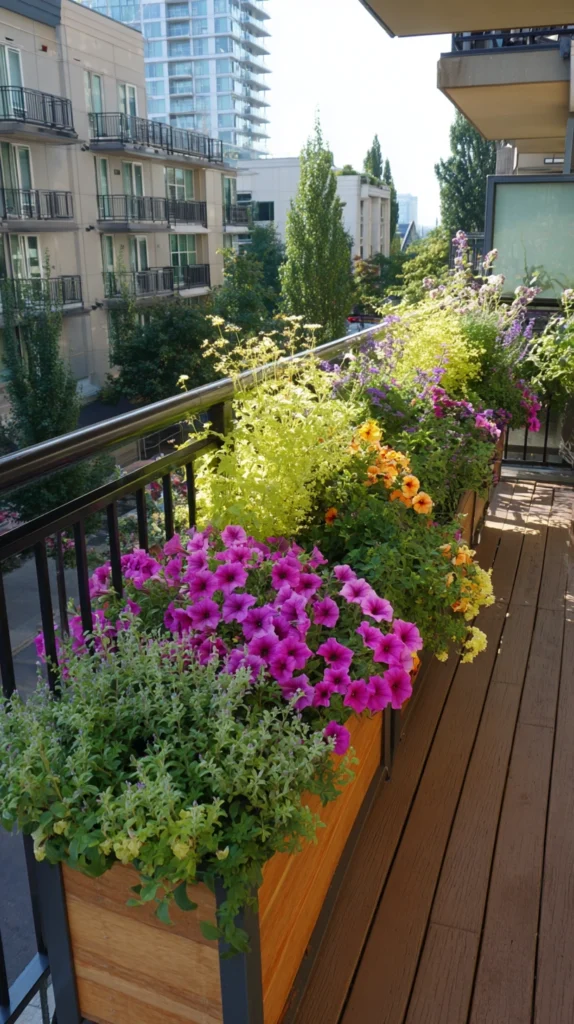
Planters hanging on railing use otherwise empty edge.
My 20-foot railing:
Setup:
- 10 railing planters (each 2 feet long)
- Hook over railing edge
- Both inside and outside facing
- Covers entire perimeter
What I plant:
Inside-facing (easy access):
- Herbs (basil, thyme, oregano, parsley)
- Lettuce (cut-and-come-again)
- Edible flowers (nasturtiums)
Outside-facing (decorative from street):
- Trailing plants (petunias, lobelia)
- Cascading cherry tomatoes
- Strawberries
Benefits:
- Zero floor space used
- 20 linear feet of growing
- Both functional and beautiful
- Easy harvest at standing height
Annual production: 10 pounds herbs, 8 pounds vegetables
Cost: $120 (10 planters at $12 each)
3. Living Wall Garden (Vertical Jungle)
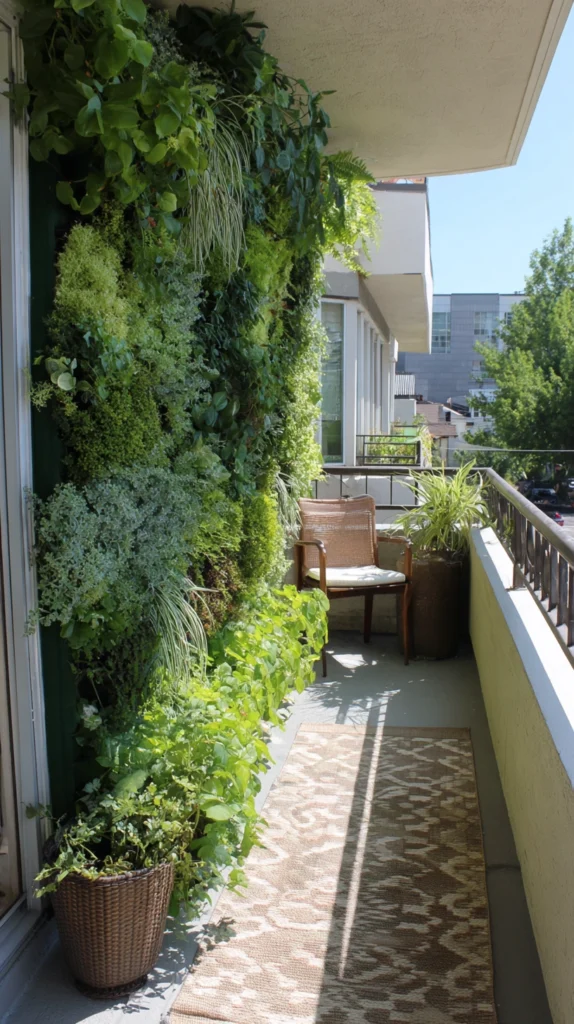
Pocket planter on wall creates dense vertical garden.
My 6×8 wall system:
Installation:
- Fabric pocket planter (48 pockets)
- Mounted on balcony wall
- Drip irrigation line at top
- Water trickles down pockets
What fills 48 pockets:
- 24 pockets: Lettuce and salad greens
- 12 pockets: Herbs (variety)
- 8 pockets: Strawberries (trailing)
- 4 pockets: Edible flowers
Space used:
- Wall area: 48 square feet
- Floor depth: 6 inches (negligible)
- Growing capacity: Equivalent to 60+ square feet ground garden
Weekly harvest: 2-3 large salads from just this wall
Cost: $200 (pocket system + drip irrigation)
Living Wall Maintenance
Critical needs:
Daily watering: Pockets dry fast (drip system essential) Weekly fertilizing: Nutrients leach quickly Monthly rotation: Move struggling plants to better pockets
I run drip system twice daily (timer controlled) – plants thrive.
4. Hanging Basket Canopy (Overhead Growing)
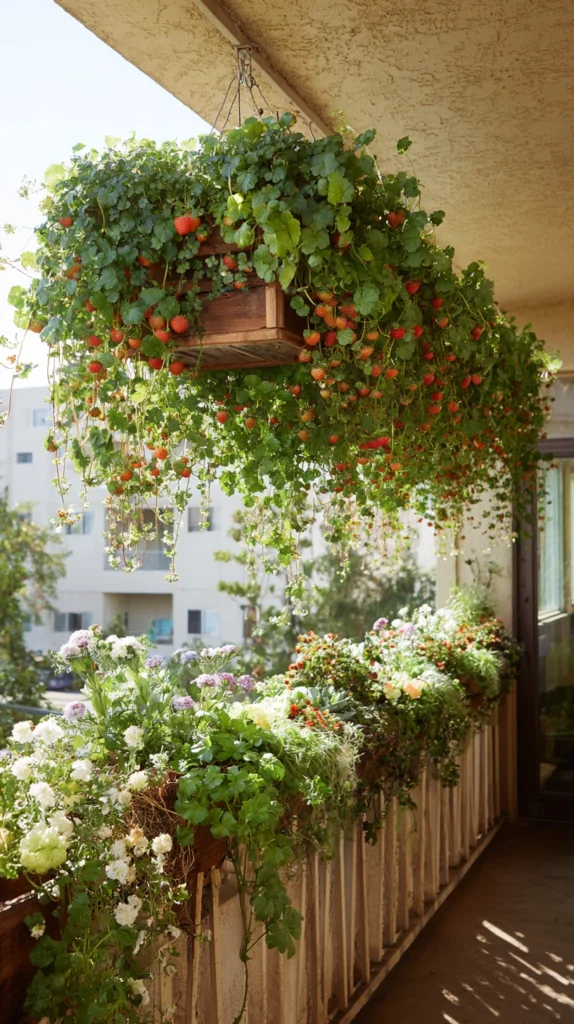
Multiple baskets at different heights create layered jungle.
My ceiling setup:
8 hanging baskets:
- Hung from ceiling hooks
- Staggered heights (4-7 feet)
- Creates cascade effect
- Uses air space
Height arrangement:
High (7 feet): Cherry tomatoes (don’t need daily access) Medium (5-6 feet): Herbs (harvest weekly) Low (4 feet): Strawberries, lettuce (harvest frequently)
Basket contents:
- 2 baskets: Cherry tomatoes
- 3 baskets: Mixed herbs
- 2 baskets: Strawberries
- 1 basket: Trailing flowers
Benefits:
- Zero floor/wall space
- Harvest at multiple heights
- Beautiful from below
- Creates privacy (ceiling of green)
I use self-watering baskets ($15 each) – reduce daily watering to weekly filling.
5. Corner Ladder Garden (Dead Space Use)
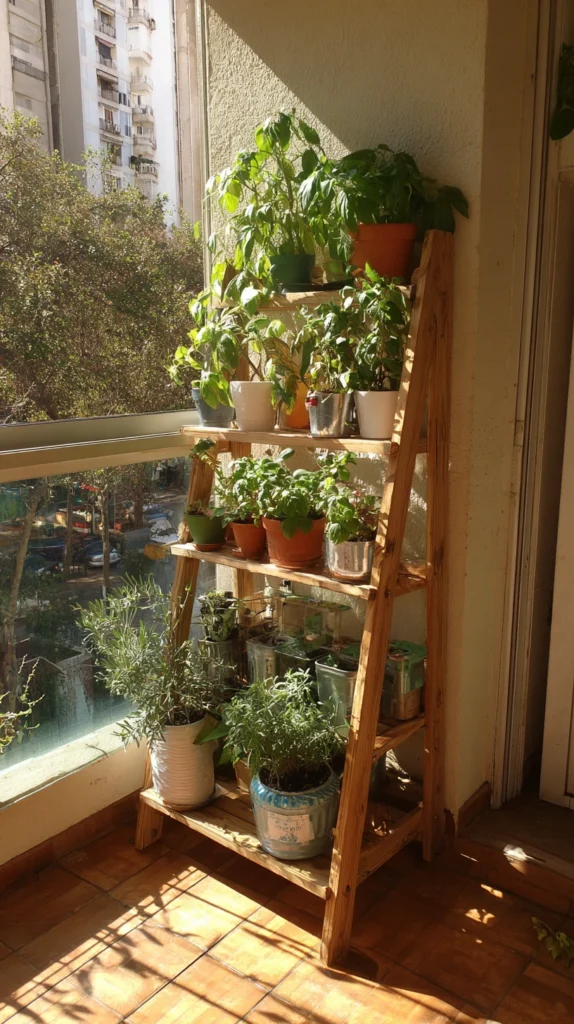
A-frame ladder in corner uses vertical space efficiently.
My corner installation:
5-shelf ladder:
- 6 feet tall
- Fits in 3×3 corner
- Each shelf different size plants
- Stable and attractive
Shelf arrangement (top to bottom):
Top shelf (narrow): Small herbs, succulents Shelf 2: Medium pots (peppers, small tomatoes) Shelf 3: Larger pots (eggplant, chard) Shelf 4: Wide shallow pots (lettuce) Bottom shelf: Large pots (tomatoes in cages)
Capacity:
- 15-20 plants
- In 9 square feet floor space
- 6 feet of vertical growing
Cost: $45 for ladder, used existing pots
6. Trellis Wall Garden (Climbing Vegetables)
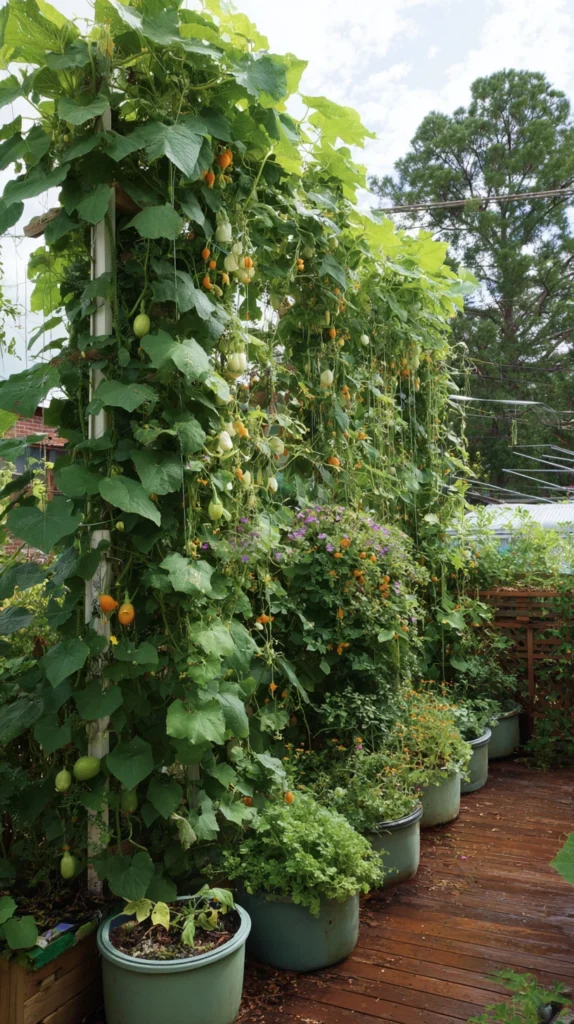
Floor-to-ceiling trellis with containers at base.
My full-wall setup:
Structure:
- Cattle panel (6×8 feet)
- Attached to wall with brackets
- 6 large containers at base
- Vines climb trellis
What climbs:
- 2 cucumber plants
- 2 pole bean plants
- 1 compact squash
- 1 passionflower (edible fruit in warm zones)
Space efficiency:
- Floor: 12 square feet (containers)
- Growing area: 48 square feet (trellis surface)
- 4× multiplier
Annual harvest: 30 pounds cucumbers, 15 pounds beans, 10 pounds squash
This is my highest-producing balcony section.
7. Multi-Level Shelf Garden (Stadium Seating)
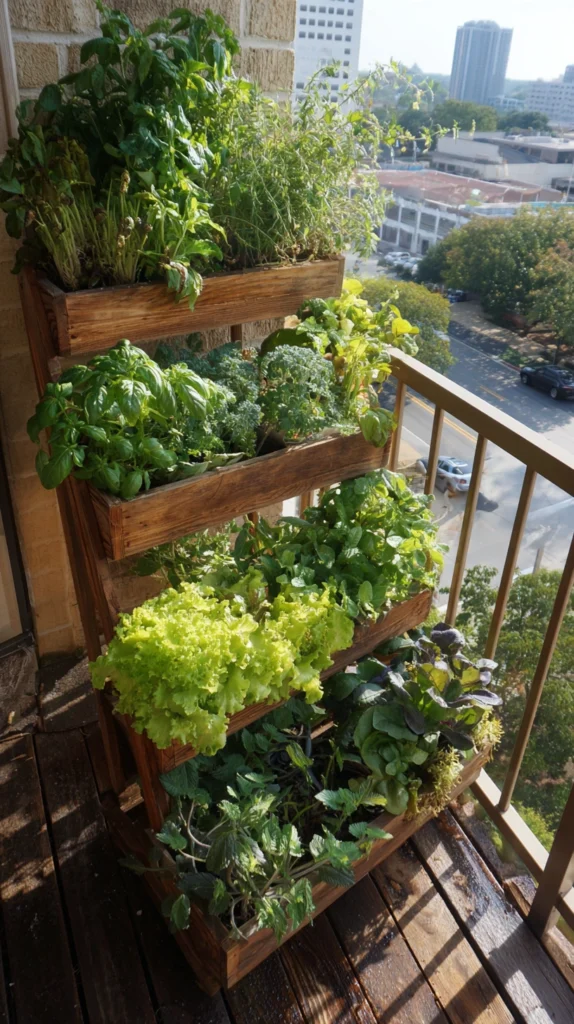
Tiered shelving gives every plant light access.
My 6-foot tall shelving:
4 tiers stepping backward:
- Each tier 12 inches wide
- Steps back 10 inches each level
- Creates stadium effect
- All plants get light
Planting by tier:
Bottom (ground): Shade-tolerant (lettuce, spinach) Tier 2: Moderate light (herbs, peppers) Tier 3: Sun-loving (tomatoes, cucumbers) Top tier: Maximum sun (basil, flowers)
Why stepping matters:
- Top doesn’t shade bottom
- Each level gets direct sun
- Maximum photosynthesis
- Better production
My unsteppd shelves blocked light to lower plants – they died. Stepped design solved it.
8. Mobile Cart Garden (Flexibility)
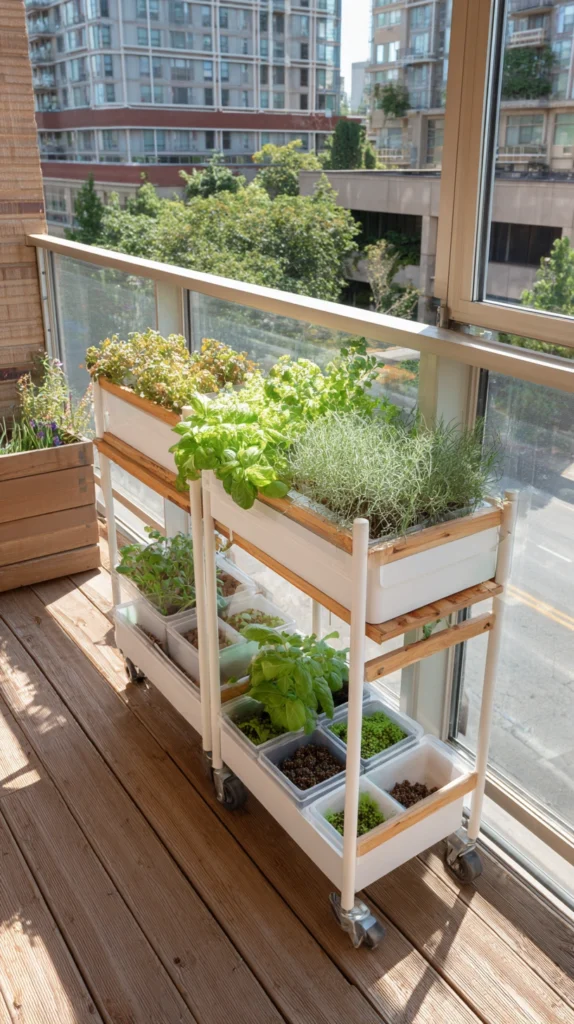
Rolling carts let me chase the sun.
My two bar carts repurposed:
Cart 1 (3 tiers):
- Herbs on all three levels
- Roll to sunny side in morning
- Move to shade in afternoon heat
- Follow optimal light
Cart 2 (2 tiers):
- Seedling propagation (spring)
- Microgreens (year-round)
- Moves to protected spot in storms
Benefits:
- Optimize sun exposure
- Protect from extreme weather
- Rearrange for entertaining
- Easy to clean behind
I roll them around daily – takes 2 minutes, extends growing season.
9. Espaliered Fruit Trees (Flat Growing)
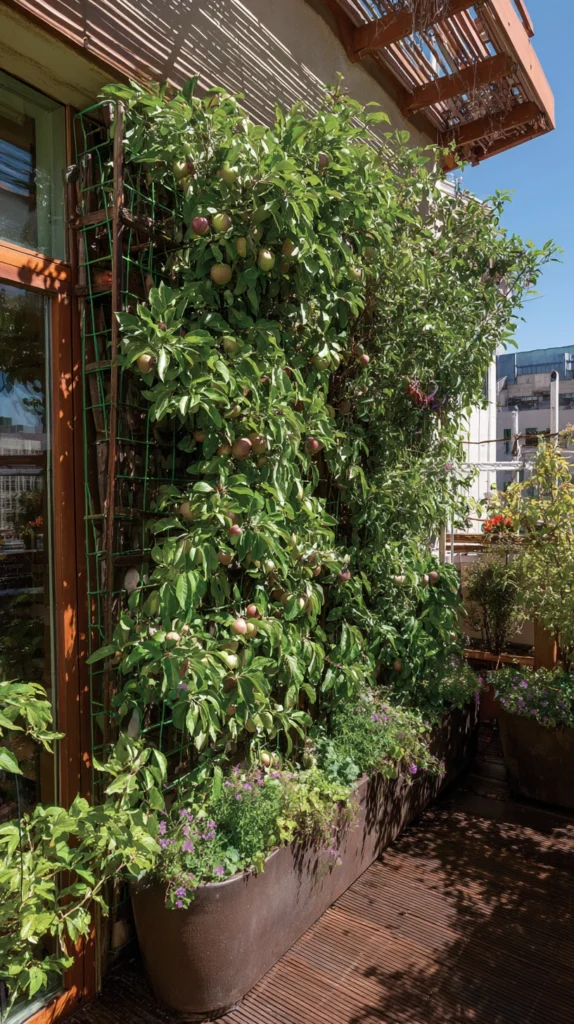
Dwarf fruit trees trained flat against wall.
My two container trees:
Setup:
- 2 dwarf fruit trees (apple, peach)
- 20-gallon containers
- Trained flat against wall
- Horizontal branch support wires
Space savings:
Standard container tree: 4×4 feet (16 sq ft) Espalier container: 6×1 feet (6 sq ft) Space saved: 10 square feet per tree
Production:
- Dwarf apple: 30-40 apples annually
- Dwarf peach: 20-30 peaches
- From just 12 square feet
Takes 3-4 years training but worth it for fresh fruit on balcony.
10. Herb Spiral in Container (Vertical Microclimates)
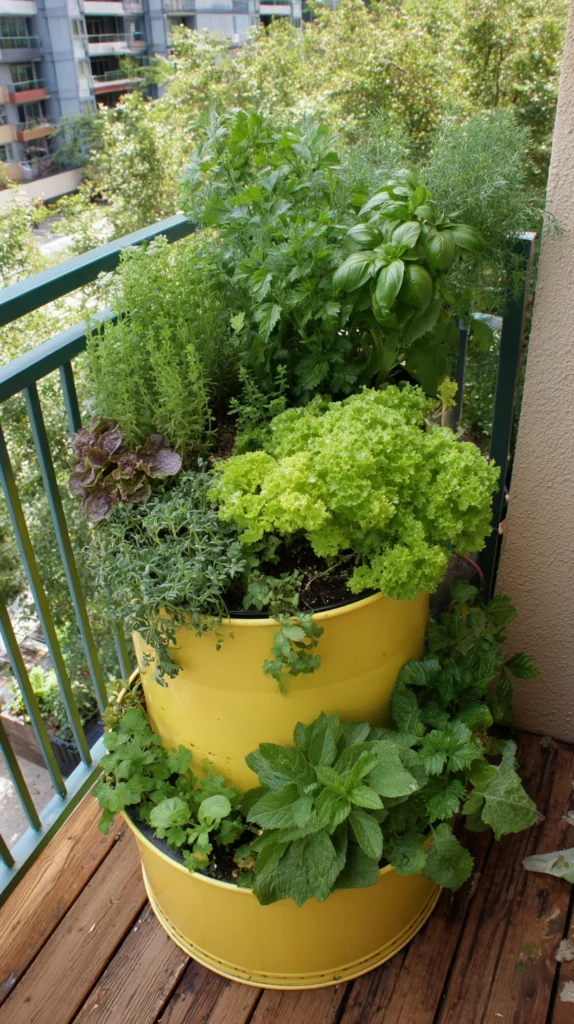
Spiral design in large container creates multiple growing zones.
My 30-inch container spiral:
Construction:
- Large half-barrel planter
- Soil piled in spiral shape
- Rises from edge to 18 inches at center
- Creates natural terraces
Herbs by elevation:
Top center (dry): Rosemary, thyme Middle spiral: Oregano, sage Outer edge (moist): Parsley, cilantro, chives Base (wettest): Mint (contained!)
One container, 10+ herb varieties in different ideal conditions.
Footprint: 7 square feet Herb production: More than I can use
11. Strawberry Tower (Vertical Berries)
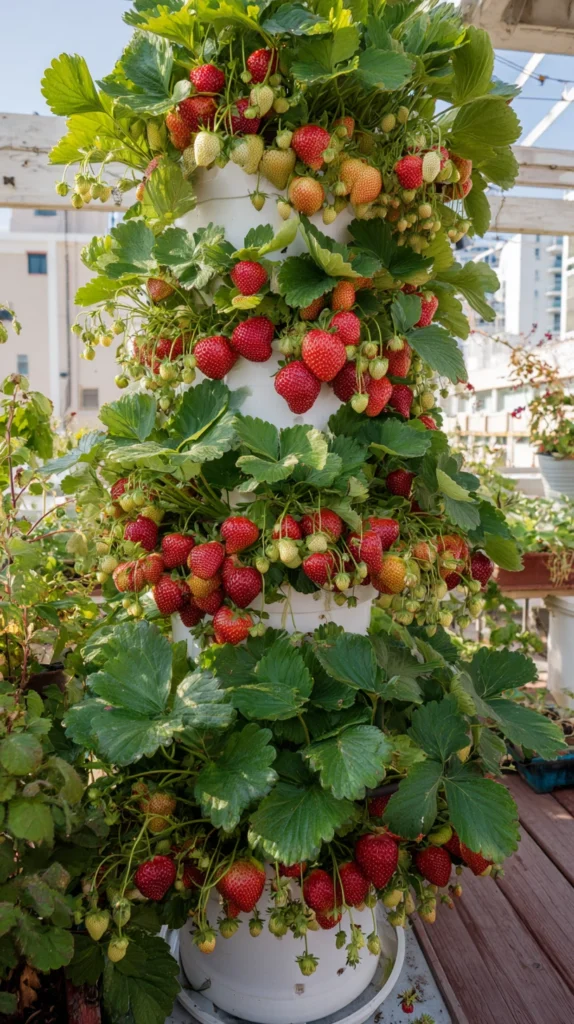
Specialized tower for maximum strawberry production.
My PVC tower:
DIY construction:
- 4-inch PVC pipe (6 feet tall)
- Holes every 6 inches (staggered)
- Filled with potting mix
- 30 planting pockets
- Drip irrigation down center
Strawberry production:
- 25 plants in 1 square foot
- Berries hang outward (clean harvest)
- Produces May-October (day-neutral varieties)
- 15-20 pounds strawberries annually
Build cost: $35 Production: Equivalent to 25 square feet of ground bed
Kids love this – picking strawberries at eye level.
12. Vertical Gutter Garden (Space-Efficient Greens)
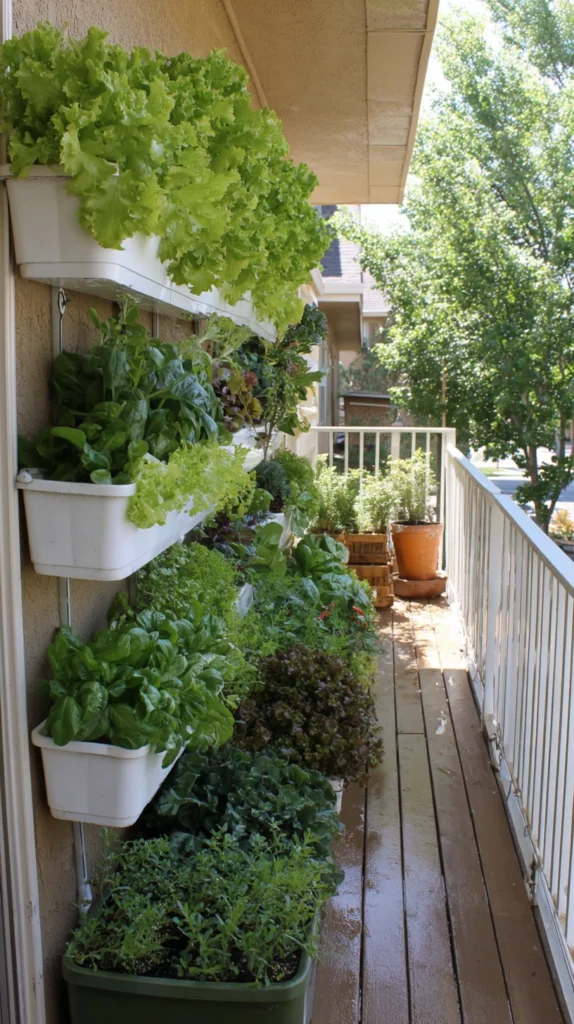
Rain gutters mounted vertically grow lettuces and herbs.
My wall installation:
Setup:
- 6 rain gutters (8 feet long each)
- Mounted horizontally on wall
- Spaced 10 inches apart vertically
- Drilled drainage holes
- End caps sealed
What grows in gutters:
- Lettuce (cut-and-come-again)
- Spinach
- Arugula
- Shallow-root herbs
Space efficiency:
- 48 linear feet of growing
- 2×6 feet wall space
- Massive leaf production
- Weekly salad harvest
Cost: $60 (gutters, brackets, end caps)
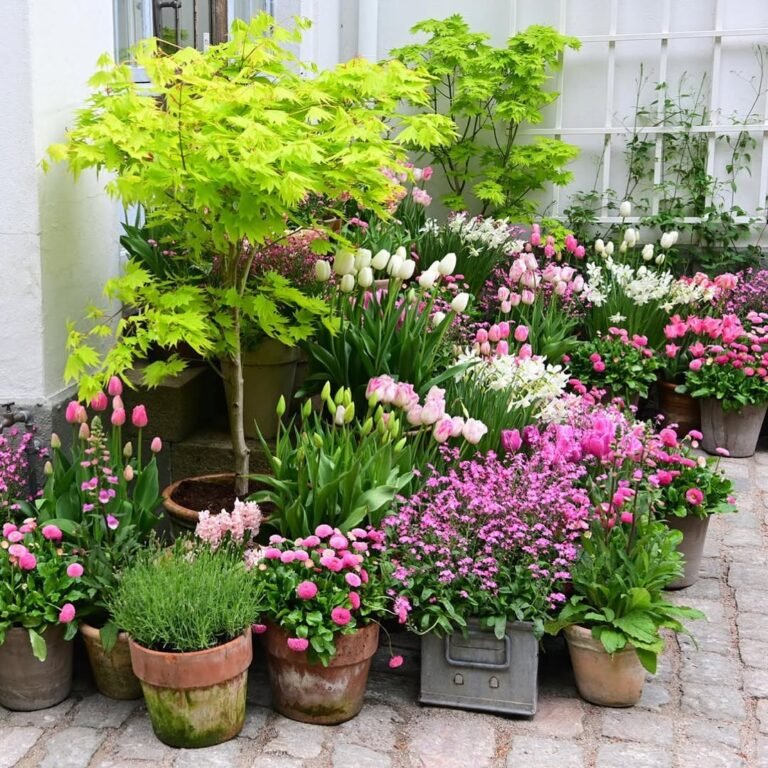
13. Themed Container Groupings (Designed Jungle)
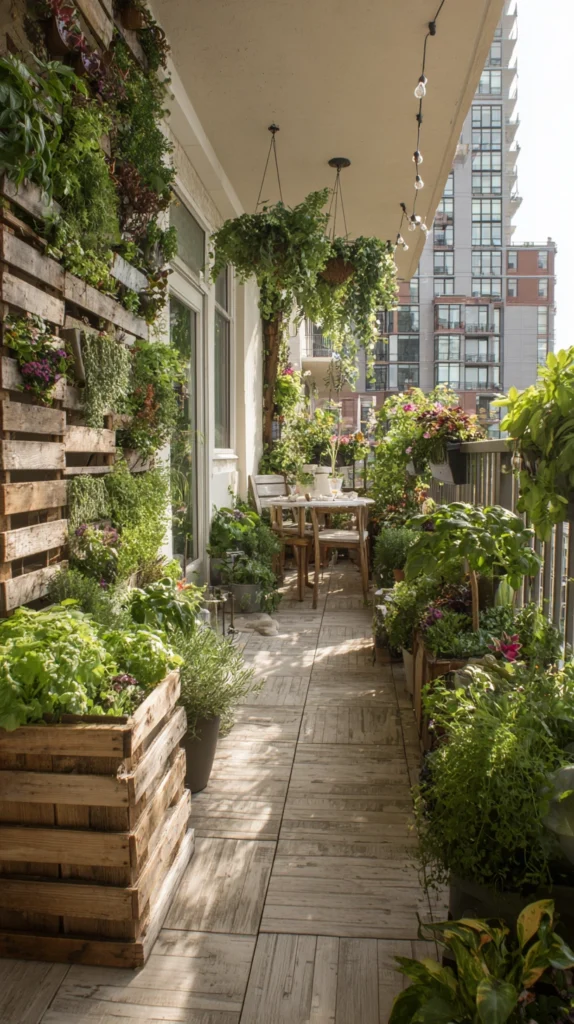
Strategic container arrangement creates intentional design.
My balcony zones:
Zone 1: Pizza Garden Corner
Containers grouped:
- 3 tomato plants (different varieties)
- 2 basil pots (multiple types)
- 1 oregano
- 1 pot of peppers
- Everything for homemade pizza
Zone 2: Tea Garden Section
Containers with:
- Mint (multiple varieties, separate pots)
- Chamomile
- Lemon balm
- Lavender
- Fresh tea ingredients
Zone 3: Salad Bar Wall
Railing planters containing:
- 4 types lettuce
- Arugula
- Spinach
- Edible flowers
- Daily salad harvest
Why themed groupings work:
- Visual cohesion
- Functional organization
- Easy harvesting (everything together)
- Story element
Choosing Plants for Balcony Conditions
Balconies have unique challenges.
Sun Exposure Assessment
My balcony orientation: Southeast
What I get:
- Morning sun: 4-5 hours (gentle)
- Afternoon: Bright indirect
- Total: 6-7 hours light
What grows well:
- Tomatoes (need 6+ hours)
- Herbs (most need 4+ hours)
- Leafy greens (tolerate less)
- Peppers (love the heat)
North-facing balcony (friend’s):
- Lettuces thrive
- Herbs moderate
- No tomatoes/peppers
- Focus on greens
Match plants to your actual light – not what you wish you had.
Wind Consideration
Balconies can be windy.
My solutions:
Windbreak plants:
- Tall ornamental grasses
- Dense shrubs in large pots
- Creates shelter for vegetables
Staking everything:
- Tomatoes double-staked
- Tall plants tied to railing
- Heavy pots (less tip risk)
I lost 3 plants to wind first year. Now everything secured.
Weight Limits
Critical safety issue.
My balcony research:
- Called building management
- Weight limit: 50 pounds per square foot
- Calculated my setup weight
- Stayed safely under limit
Weight calculation:
One large container:
- Pot: 5 pounds
- Soil: 40 pounds (when wet)
- Plant: 5 pounds
- Total: 50 pounds in 2 square feet = 25 lb/sq ft
My total balcony:
- Estimated: 40 lb/sq ft average
- Under 50 lb/sq ft limit
- Safe margin
Don’t guess – check with building before loading balcony.
Irrigation Solutions for Balconies
Daily hand watering gets old fast.
My evolution:
Year 1: Hand Watering
Reality:
- 30-45 minutes daily
- Easy to forget
- Inconsistent moisture
- Plants stressed
Year 2: Drip System Installation
Setup:
- Main line from outdoor faucet
- Drip emitters to each pot
- Timer controls watering
- Runs 15 minutes twice daily (summer)
Cost: $120 for whole balcony
Result:
- Zero daily effort
- Perfect moisture
- Healthier plants
- Time saved: 200+ hours yearly
Best investment I made.
Self-Watering Containers
For plants I can’t connect to drip:
- Self-watering inserts
- Reservoir lasts 3-7 days
- Fill weekly vs daily
- Great for herbs
Cost: $3-8 per insert
Vertical Growing Techniques
The secret to balcony abundance.
My vertical strategies:
Floor level (0-2 feet):
- Large container plants
- Shade-tolerant crops
- 20 square feet used
Lower wall (2-4 feet):
- Railing planters
- Small trellises
- 30 square feet used
Mid-wall (4-6 feet):
- Living wall pockets
- Hanging baskets (low)
- 40 square feet used
Upper wall (6-8 feet):
- High hanging baskets
- Top of trellis
- 30 square feet used
Ceiling (overhead):
- Hanging plants
- Trailing varieties
- 20 square feet used
Total effective growing area: 140 square feet From 60 square foot balcony
2.3× space multiplier just from using vertical dimension.
Seasonal Balcony Transitions
My year-round approach:
Spring (March-May)
Focus: Cool-season crops
- Lettuce, spinach, peas
- Start tomato/pepper seedlings indoors
- Transition outside mid-May
Summer (June-August)
Peak production:
- Tomatoes, peppers, cucumbers
- Herbs explode
- Daily harvesting
- Maximum watering needs
Fall (September-November)
Second season:
- Plant lettuce, greens again
- Tomatoes producing until frost
- Herbs slow down
- Reduce watering
Winter (December-February)
Hardy plants only:
- Some herbs survive (rosemary, thyme)
- Kale tolerates light frost
- Planning next season
- Minimal maintenance
My year-round production: 8-9 months with food, 3-4 months dormant/planning.
Dealing with Balcony Challenges
Problems I solved:
Privacy Screening
Issue: Neighbors see everything
Solution:
- Tall plants on railing (bamboo in pots)
- Trellis with vining plants
- Created green wall
- Now feels private
Drainage Management
Issue: Water dripping to balcony below
Solution:
- Saucers under every pot (mandatory)
- Double-saucer system for large pots
- Check before watering
- Good neighbor relations
Heat Reflection
Issue: Concrete/walls radiate heat
Solution:
- Afternoon shade cloth (summer)
- Heat-loving plants against hot wall
- Cool-season crops away from reflected heat
- Watering adjustments
Limited Storage
Issue: Nowhere for tools, soil, supplies
Solution:
- Slim storage bench (doubles as seating)
- Vertical tool organizer on wall
- Soil stored in decorative bins
- Multi-functional furniture
Container Selection Strategy
What actually works:
Size Guidelines
Tomatoes: 5-gallon minimum (bigger = better) Peppers: 3-5 gallons Lettuce: 6-8 inches deep, any width Herbs: 8-12 inch pots Strawberries: 10-12 inches deep
I used too-small pots year 1 – plants root-bound and stressed. Bigger is always better.
Material Choices
Plastic:
- Lightweight (important for balconies)
- Retains moisture
- Cheap
- I use mostly these
Terracotta:
- Looks nice
- Heavy when wet
- Dries fast (more watering)
- Use sparingly
Fabric grow bags:
- Excellent drainage
- Lightweight
- Affordable
- Ugly (I hide behind prettier pots)
Self-watering:
- Worth extra cost
- Reduces watering frequency
- Great for forgetful people
Color Coordination
Visual cohesion matters.
My approach:
- 70% white/cream pots (uniform look)
- 20% terracotta (warmth)
- 10% decorative/colorful (accent)
Before coordinating: Chaotic, messy appearance After: Intentional, designed look
Soil and Fertilizing for Containers
Container growing needs different approach.
Soil Mix
I use:
- Quality potting mix (not garden soil)
- Add perlite (20%) for drainage
- Mix in compost (20%)
- Lightweight and well-draining
Cost: $40 for balcony’s worth (lasts 2-3 years with top-ups)
Fertilizing Schedule
Containers need more feeding:
My routine:
- Liquid fertilizer every 2 weeks (growing season)
- Half-strength (full strength burns)
- Slow-release granules at planting
- Compost tea monthly (I make it)
Plants in containers leach nutrients faster than ground – consistent feeding essential.
Pest Management in Small Spaces
Fewer pests than ground gardens but some issues.
What I deal with:
Aphids
Solution:
- Spray with water (knocks off)
- Dish soap spray (1 tsp per quart water)
- Release ladybugs (25 for $10)
Spider Mites
Solution:
- Increase humidity (hate it)
- Neem oil spray
- Remove affected leaves
Fungus Gnats
Solution:
- Let soil surface dry between watering
- Yellow sticky traps
- Reduce overwatering
Advantage of balconies: Isolated from ground soil pests, easier to control.
Budget Breakdown
My complete balcony transformation cost:
Initial Investment (Year 1):
- Containers (30 various): $250
- Drip irrigation system: $120
- Soil and amendments: $40
- Seeds and plants: $60
- Trellis materials: $50
- Shelving/structures: $100
- Total Year 1: $620
Ongoing (Yearly):
- Seeds: $30
- Fertilizer: $20
- Soil top-ups: $15
- Replacement plants: $25
- Total Annual: $90
Production Value:
- 40 pounds vegetables: $120+ grocery equivalent
- Fresh herbs constantly: $50+ value
- Annual harvest value: $170+
Payback: Year 4 (considering ongoing costs) Lifetime value: Priceless (food security, mental health, joy)
My Current Balcony Layout
What actually fits in 6×10 feet:
Floor level:
- 2 tower gardens (5 tiers each)
- 3 large containers (tomatoes, peppers)
- 2 self-watering planters (lettuce)
- Small shelf unit (4 tiers)
Walls:
- Living wall (48 pockets)
- 10 railing planters
- Full trellis (one wall)
- Vertical gutter system
Ceiling:
- 8 hanging baskets (various heights)
Total plants: 80-90 Annual harvest: 40+ pounds vegetables, herbs constantly Time investment: 3-5 hours weekly (mostly harvesting and enjoying)
My balcony produces more food than my parents’ 200 square foot ground garden.
Getting Started This Weekend
Don’t buy everything at once.
Weekend plan:
Saturday:
- Assess your balcony (sun, weight limit, orientation)
- Choose ONE vertical method to start
- Buy 5-10 containers and soil
- Select easy plants (herbs, lettuce, cherry tomatoes)
Sunday:
- Set up chosen system
- Plant containers
- Water thoroughly
- Enjoy your new garden
My recommendation for beginners:
Start with railing planters:
- 3-5 planters ($36-60)
- Plant herbs and lettuce
- Immediate results
- Build from there
After one season, you’ll know what you want to expand.
Now go transform that empty balcony into your secret jungle!
Quick Summary:
Best balcony garden systems:
Highest production: Living wall (48+ plants, minimal space) Easiest start: Railing planters (no installation, instant) Most versatile: Tower gardens (20+ plants, 2.5 sq ft) Best ROI: Drip irrigation ($120, saves 200 hours yearly)
Space maximization strategies:
Vertical layers:
- Floor: 0-2 feet
- Lower wall: 2-4 feet
- Mid-wall: 4-6 feet
- Upper wall: 6-8 feet
- Ceiling: Overhead
Space multipliers:
- Towers: 10× (20 plants in 2.5 sq ft)
- Living walls: 12× (48 plants in 6 inches depth)
- Trellises: 4× (vertical climbing)
- Hanging: Infinite (uses air space)
Plant capacity (6×10 balcony):
Before optimization: 5-10 plants After optimization: 80-100 plants Production increase: 10-20×
Best plants for balconies:
High producers:
- Cherry tomatoes (15 pounds per plant)
- Lettuce (continuous harvest)
- Herbs (constant use)
- Peppers (prolific)
Space-efficient:
- Compact varieties (bred for containers)
- Vertical climbers (cucumbers, beans)
- Trailing (strawberries)
- Multi-harvest (cut-and-come-again greens)
Container size requirements:
Minimum:
- Tomatoes: 5 gallons
- Peppers: 3 gallons
- Lettuce: 6″ deep
- Herbs: 8-12″ pots
- Strawberries: 10-12″ deep
Weight considerations:
Check building limits: Usually 50 lb/sq ft Calculate before loading: Pot + wet soil + plant Stay under limit: Leave safety margin Distribute evenly: Don’t cluster in one spot
Irrigation options:
Hand watering: Free, 30-45 min daily Drip system: $120, automated, best choice Self-watering pots: $15-30 each, reduces frequency Combo approach: Drip + self-watering for full coverage
Budget ranges:
Starter: $100-200 (5-10 containers, basic setup) Standard: $400-600 (full vertical systems) Premium: $800-1,200 (drip system, specialty containers)
Timeline expectations:
Setup: One weekend First harvest: 4-6 weeks (lettuce, herbs) Peak production: 8-10 weeks (tomatoes, peppers) Season length: 6-8 months (with succession planting)
Maintenance requirements:
With drip system:
- Daily: Check plants (5 min)
- Weekly: Harvest, fertilize (30 min)
- Monthly: Prune, train (1 hour)
- Total: 3-5 hours weekly
Without drip:
- Daily: Water (30-45 min)
- Weekly: Same as above
- Total: 8-10 hours weekly
Production expectations (60 sq ft balcony):
Conservative: 25-30 pounds annually Optimized: 40-50 pounds annually Intensive: 60+ pounds (with aquaponics or advanced systems)
Common mistakes to avoid:
- Too-small containers (root-bound plants)
- Ignoring weight limits (safety hazard)
- No drainage plan (angry downstairs neighbors)
- Wrong plants for light (poor production)
- Hand watering only (burnout)
Seasonal transitions:
Spring: Cool crops, start seedlings Summer: Peak production, daily harvest Fall: Second planting, extend season Winter: Hardy herbs only, planning
Quick wins:
This weekend: Railing planters with herbs This month: Add tower garden This season: Install drip system This year: Full vertical optimization
ROI timeline:
Initial investment: $400-600 Annual value: $170+ (food equivalent) Payback: 3-4 years Intangibles: Mental health, food security, joy (priceless)
Success indicators:
- Plants healthy and producing
- Watering system reliable
- Harvest exceeding consumption
- Space feels inviting (you use it)
- Neighbors jealous/curious
Remember: Start small, optimize vertically, automate watering, and scale up based on success. Even tiny balconies can become productive jungles.