15 Antique Container Garden Ideas That Add Vintage Charm
My containers were all matching plastic pots from the garden center for years. Functional but soulless – looked like every other garden.
Then I planted herbs in an old metal washtub I found at a yard sale. Instant character – guests noticed immediately.
Now my garden has 20+ antique containers creating a collected-over-time aesthetic. Same plants, completely different vibe.
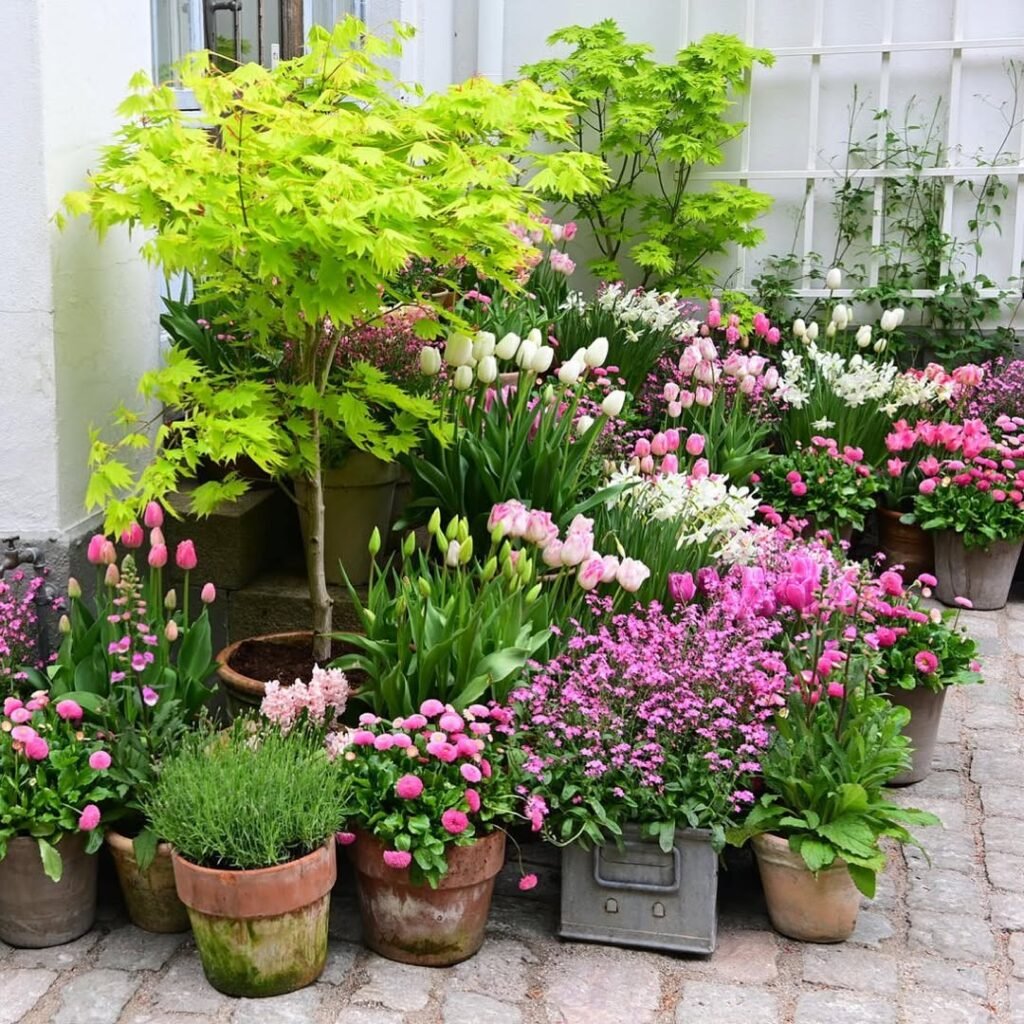
Let me show you 15 antique container ideas that add personality and charm to gardens.
Why Antique Containers Transform Gardens
My plastic pot problem:
15 identical terracotta-colored plastic pots:
- Bought at big box store
- All same size and shape
- Uniform and boring
- Zero personality
Visual impact: Generic, could be anyone’s garden, forgettable
After switching to vintage containers:
20+ mismatched antique pieces:
- Each with history and patina
- Varied sizes, shapes, materials
- Collected over 3 years
- Stories behind each one
Visual impact: Curated, intentional, unique, Instagram-worthy
Same plants look completely different in containers with character.
Antique Container Benefits
Why vintage works:
Instant patina:
- Aged appearance
- Can’t buy this look new
- Rust, weathering, character
- Gets better with time
Sustainability:
- Reusing existing items
- Nothing to landfill
- Eco-friendly approach
- Anti-consumerism
Uniqueness:
- No two gardens identical
- Personal collection
- Reflects your taste
- Conversation starters
Cost:
- Often cheaper than new
- Thrift stores, yard sales
- Sometimes free (curbside finds)
- Better value
My most expensive antique container: $15 (vintage metal bucket) Equivalent new decorative pot: $40+
1. Galvanized Washtub Garden (My Gateway Container)
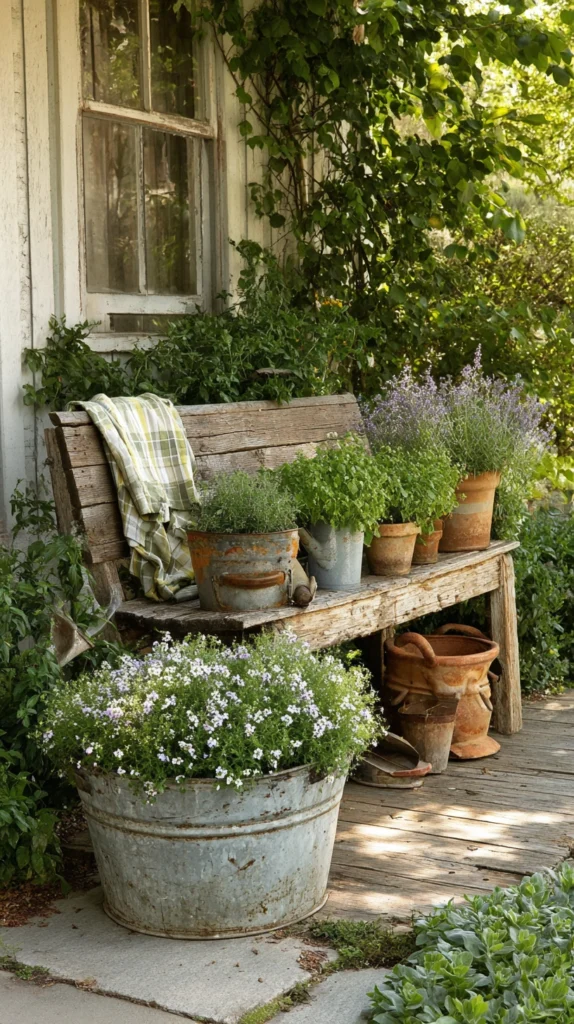
Old metal washtub – the one that started my collection.
My first vintage container:
Found: Yard sale, $5 Size: 24 inches diameter, 12 inches deep Condition: Rusty bottom, dented sides, perfect patina
What I did:
Drainage:
- Drilled 5 holes in bottom (metal drill bit)
- Added rocks for drainage layer
- Critical for metal containers
Planting:
- Mixed herb garden
- Basil, parsley, thyme, oregano
- All culinary herbs together
- Kitchen garden aesthetic
Placement:
- On porch near kitchen door
- Easy harvest while cooking
- Focal point
- Gets compliments constantly
Why this works:
Perfect beginner vintage container:
- Washtubs abundant (every thrift store)
- Cheap ($3-10)
- Large enough for impact
- Classic farmhouse look
Four years later: Still my favorite container, rust getting better with age.
Finding Washtubs
Where I see them:
- Flea markets ($5-15)
- Thrift stores ($3-8)
- Yard sales ($2-5)
- Antique malls ($10-25, overpriced)
What to look for:
- Drainage holes already exist: Bonus!
- No holes: Easily drillable
- Rust: Adds character (not structural problem)
- Dents: Charming, reduce price
2. Vintage Enamelware Planters (Colorful Charm)
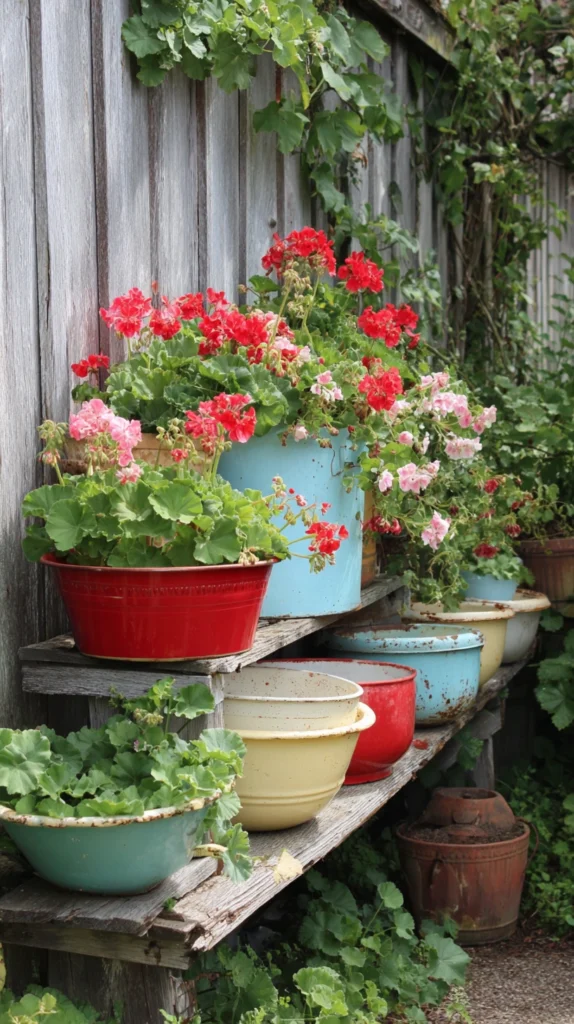
Old enamel pots, basins, colanders – bright vintage color.
My collection:
White enamel basin (1940s):
- Red rim detail
- Chips show black metal underneath
- 18 inches wide
- Planted with red geraniums (color echo)
Blue speckled enamel pot:
- Classic camping ware look
- 10 inches diameter
- Trailing nasturtiums
- Hangs from shepherd’s hook
Enamel colander:
- Built-in drainage (no drilling!)
- Cream colored
- Strawberries cascade through holes
- Functional and decorative
Benefits:
Bright colors:
- Faded vintage hues
- Not harsh new colors
- Instant charm
- Weathered perfectly
Lightweight:
- Easy to move
- Hang on hooks
- Rearrange seasonally
- No back strain
My enamelware cost: $2-8 per piece at thrift stores
3. Old Wooden Crates and Boxes (Rustic Appeal)
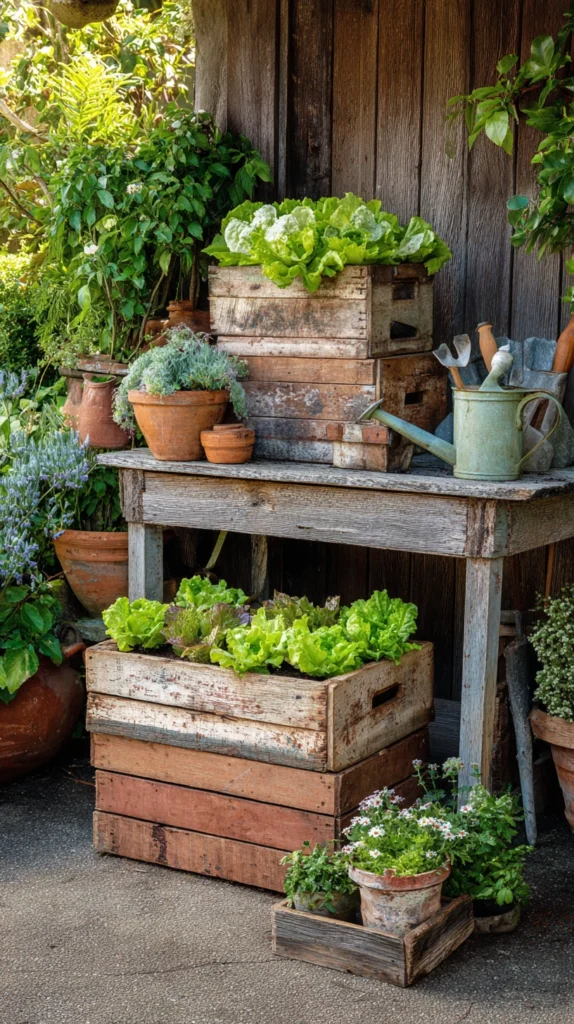
Vintage wood crates create rustic container gardens.
My crate collection:
1950s Coca-Cola crate:
- Wood slats with logo
- 12×18 inches
- Lined with plastic (hidden)
- Planted with herbs
Antique apple crate:
- Weathered pine
- Stamped orchard name
- 16×16 inches
- Mixed lettuce varieties
Old toolbox:
- Carpenter’s wooden box
- Handle and compartments
- 24 inches long
- Trailing flowers
Making them work:
Drainage solution:
- Drill holes in bottom
- Or line with landscape fabric
- Or use as cachepot (pot inside)
- Prevent wood rot
Preservation:
- I don’t seal mine (like aged look)
- Or use food-safe linseed oil
- Accept 3-5 year lifespan
- Part of charm is decay
My oldest crate: 6 years old, beautifully weathered, still functional.
4. Vintage Metal Buckets (Farmhouse Classic)
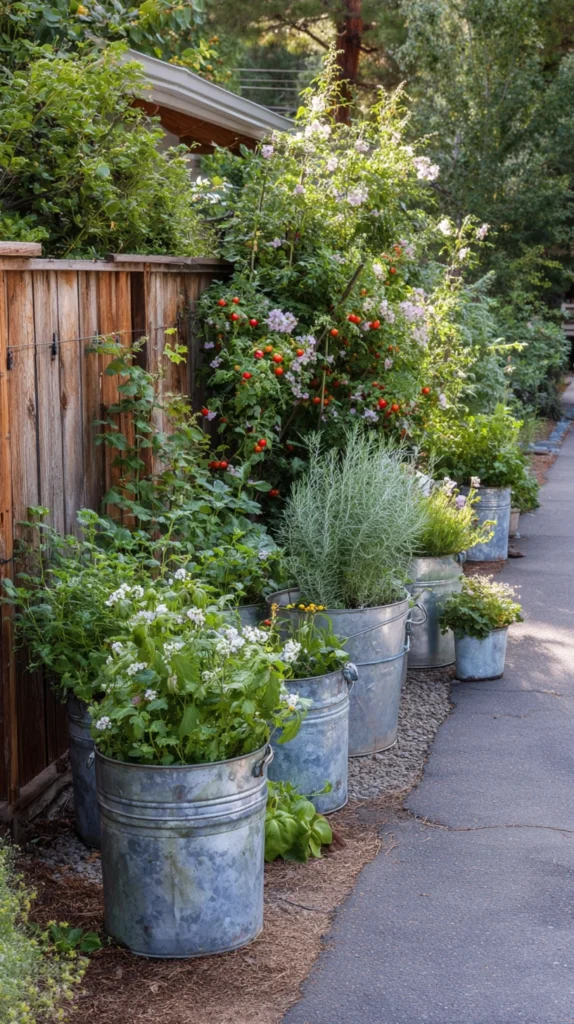
Old galvanized buckets – quintessential farmhouse container.
My bucket garden:
Large dairy bucket:
- 5-gallon size
- Original dairy logo
- $8 at flea market
- Tomato plant (cherry variety)
Small maple syrup buckets:
- Set of 3
- 6 inches tall
- Clustered together
- Succulents in each
Coal bucket:
- Black metal with handle
- Decorative stamping
- 12 inches tall
- Mixed annual flowers
Why buckets work:
Abundant and cheap:
- Every flea market has them
- $3-12 typical price
- Often free curbside
- Easy to find
Versatile sizes:
- Tiny to huge
- Group small ones
- Large ones standalone
- Mix and match
Built-in handles:
- Easy to move
- Decorative element
- Can hang
- Functional feature
I have 8 buckets in various sizes – foundation of my vintage collection.
5. Antique Wheelbarrows (Statement Pieces)
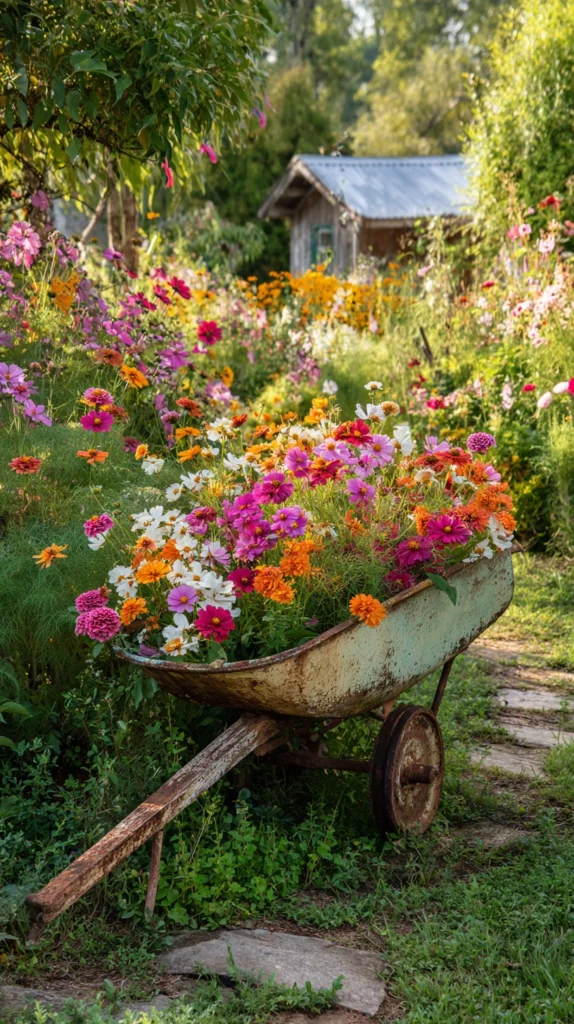
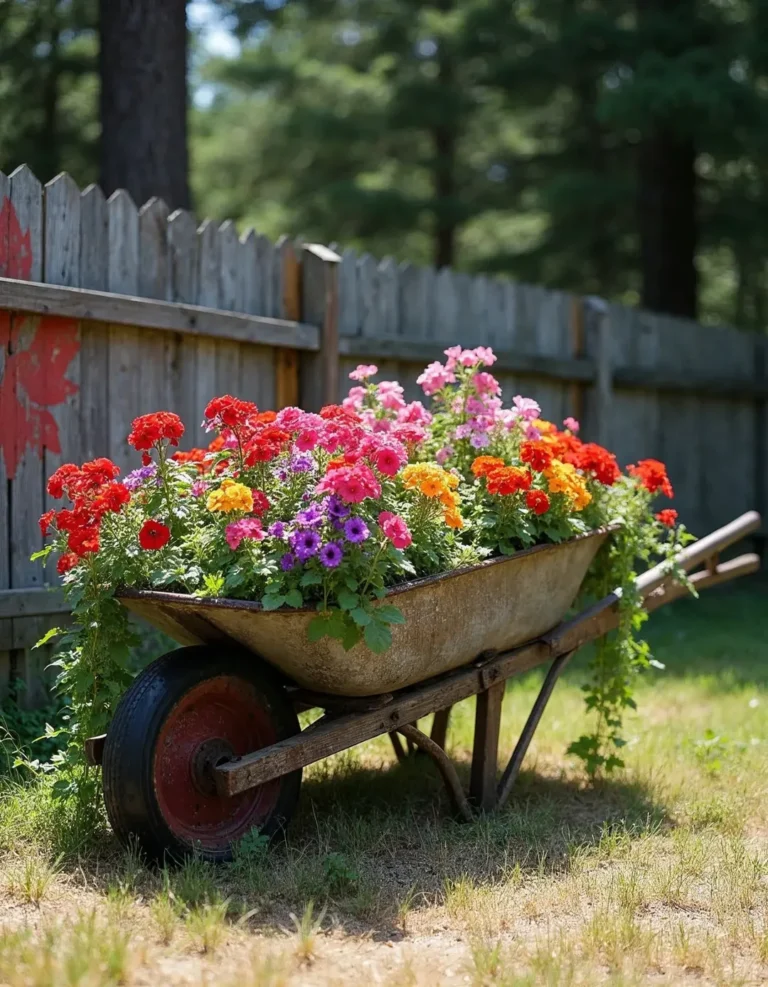
Old wheelbarrows become mobile garden beds.
My vintage wheelbarrow:
Found: Neighbor’s trash pile (free!) Age: 1960s based on style Condition: Rusty, one wheel wobbly, no handle grips
What I planted:
- Mixed cutting garden
- Zinnias, cosmos, marigolds
- Overflowing abundance
- Cottage garden style
Benefits:
Large capacity:
- Holds 2-3 cubic feet soil
- Plant 12+ annuals
- Significant impact
- Garden focal point
Mobile:
- Roll to different spots
- Chase sun seasonally
- Move for events
- Rearrange design
Vertical element:
- Raised planting height
- Easier to see/harvest
- Architectural interest
- Three-dimensional
My wheelbarrow is: Most-photographed container, centerpiece of garden
Wheelbarrow Tips
Making it work:
Drainage: Already has gaps in wood bed Stability: Set on level ground (wheel brake if available) Planting: Line with landscape fabric, fill with quality soil
Where to find:
- Farm auctions ($20-50)
- Flea markets ($30-75)
- Curbside (free, check weekly)
- Craigslist free section
6. Vintage Ceramic Crocks (Timeless Beauty)
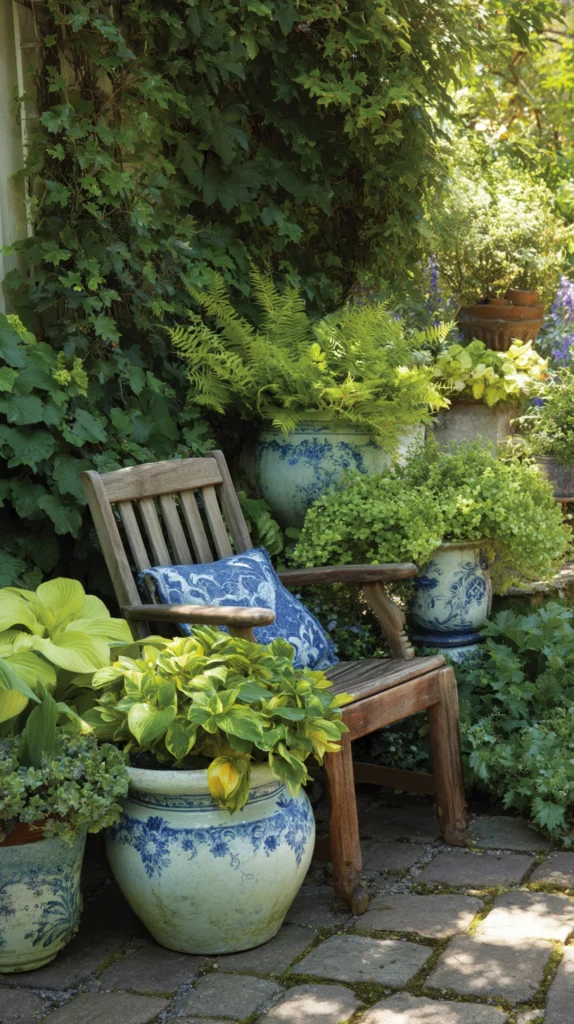
Antique stoneware crocks – classic container shape.
My crock collection:
Large pickle crock (5 gallon):
- Salt-glazed stoneware
- Blue stenciling
- $25 at antique store
- Dwarf lemon tree
Butter crock (2 gallon):
- Cream colored
- Chip on rim (price reduced)
- Hostas (shade container)
- Beautiful patina
Small bean pot:
- Brown glazed
- 8 inches tall
- Single succulent
- Windowsill display
Why crocks excel:
Drainage challenge:
- Can’t drill ceramic (cracks)
- Use as cachepot (pot inside)
- Or expert with diamond drill bit
- I use cachepot method
Timeless aesthetic:
- Never look dated
- Traditional gardens
- Farmhouse style
- Heirloom quality
Investment pieces:
- More expensive ($15-50)
- But last forever
- Increase in value
- Hand down to kids
7. Old Tin Containers (Vintage Graphics)
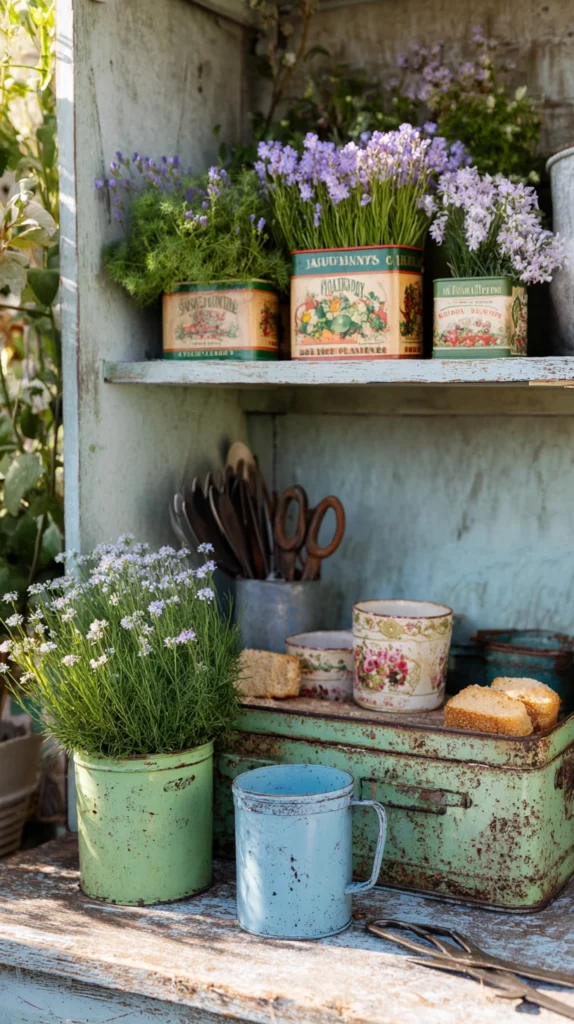
Antique tins with advertising – graphic appeal.
My tin collection:
Vintage coffee tin:
- 1950s graphics
- Red and white
- 12 inches tall
- Herbs (basil, parsley)
Old tea tin:
- Floral design
- 8 inches square
- Succulents
- Kitchen windowsill
Advertising tin (motor oil):
- Rusty patina
- Cool vintage logo
- 6 inches diameter
- Single flowering plant
Benefits:
Graphic interest:
- Vintage typography
- Retro colors
- Advertising art
- Design element
Small sizes:
- Perfect for herbs
- Windowsills
- Clustered displays
- Table centerpieces
Affordable:
- $2-8 typical
- Abundant at thrift stores
- Collect over time
- Build themed collection
My tins are: Mostly kitchen herbs, displayed on outdoor shelf.
8. Repurposed Dresser Drawers (Upcycled Charm)
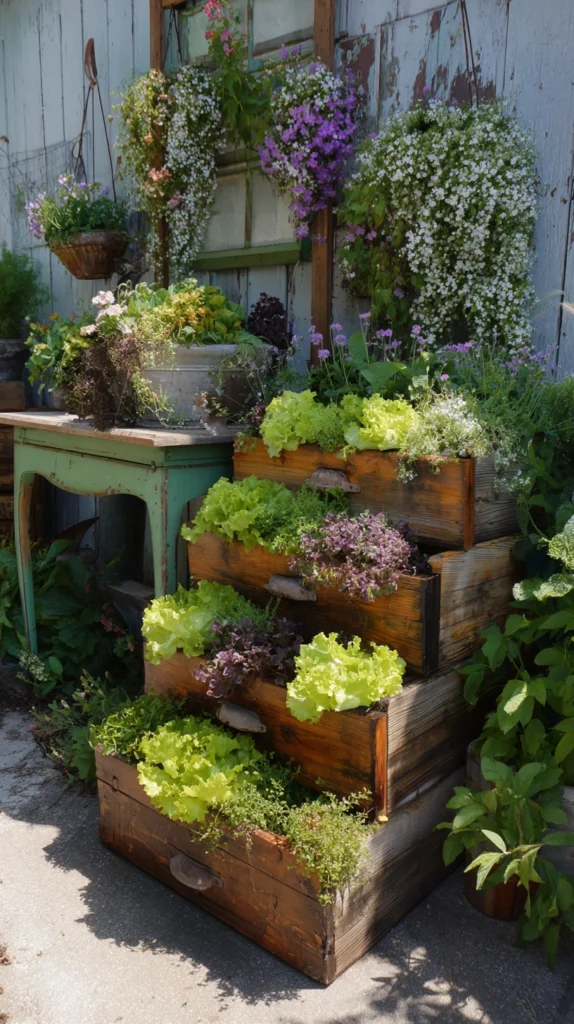
Old wooden dresser drawers become unique planters.
My drawer containers:
Set of three graduated drawers:
- From 1940s dresser (curbside find)
- Stacked on outdoor shelf
- Each different plant
- Creates tiered display
Single large drawer:
- 30 inches wide
- Original hardware and label holder
- Mixed lettuce garden
- Functional and beautiful
Making them work:
Drainage:
- Drill multiple holes in bottom
- Critical for wood preservation
- Elevate on pot feet
- Air circulation underneath
Liner option:
- Landscape fabric inside
- Protects wood
- Or embrace decay
- I skip liner (like weathering)
Handles remain:
- Decorative element
- Easy to carry
- Part of charm
- Keep original hardware
Cost: Free (curbside finds), maybe $5-10 at thrift stores
9. Vintage Wire Baskets (Rustic Texture)
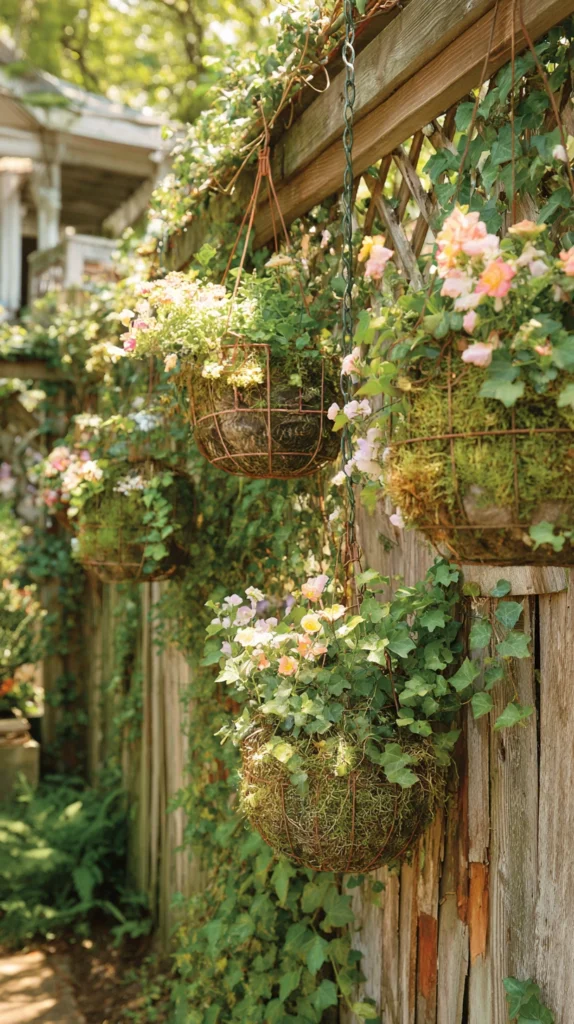
Old wire egg or harvest baskets – airy and textured.
My wire basket collection:
Egg gathering basket:
- Rusty wire
- 12 inches diameter
- Lined with moss
- Trailing ivy and flowers
Harvest basket:
- Rectangular wire
- 18×12 inches
- Coco fiber liner
- Mixed herbs
French wire salad basket:
- Decorative twisted wire
- 10 inches
- Succulents in sphagnum moss
- Hangs from hook
What makes them special:
See-through design:
- Shows moss liner
- Textural interest
- Delicate appearance
- Lightweight feel
Hanging options:
- Most have handles
- Shepherd’s hooks
- Porch ceiling
- Tree branches
Liner required:
- Sphagnum moss (natural, my choice)
- Coco fiber (longer-lasting)
- Burlap (rustic)
- Landscape fabric (practical)
My wire baskets: Hang at various heights creating vertical garden.
10. Old Chimney Flue Tiles (Architectural Elements)
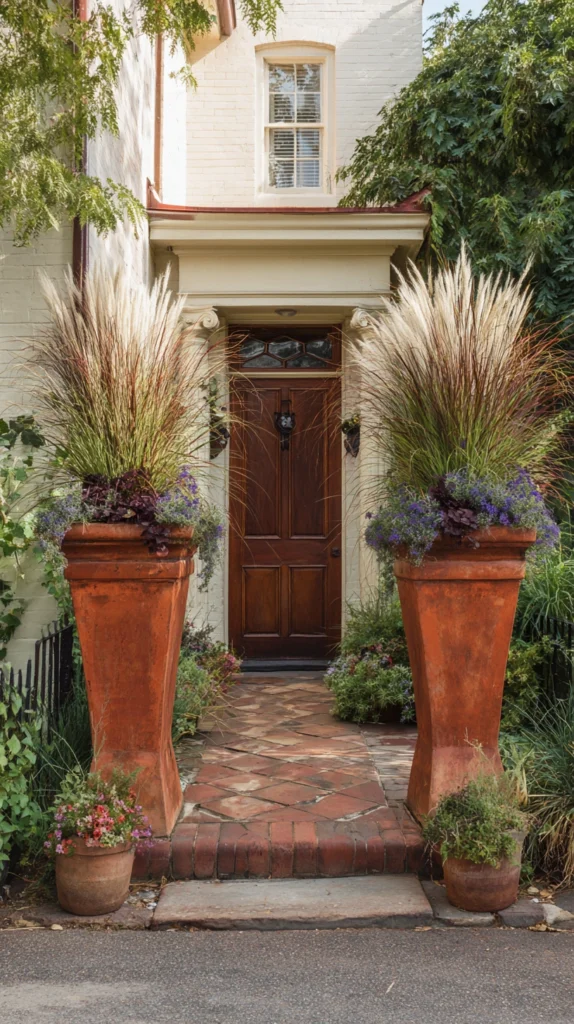
Terracotta chimney flues – unique shape and texture.
My flue tile planters:
Two vintage flues:
- 24 inches tall each
- 8×8 inch square opening
- Terracotta color
- $5 each at salvage yard
Placement:
- Flanking front door
- Symmetrical arrangement
- Architectural statement
- Formal appearance
What I plant:
- Tall ornamental grasses
- Adds height
- Vertical accent
- Movement in wind
Benefits:
Unique shape:
- Not typical planter form
- Tall and narrow
- Architectural salvage
- Conversation piece
Drainage:
- Already has opening at bottom
- Perfect drainage
- Stack on gravel bed
- Elevates slightly
My flue tiles: Most unique containers I own, always get comments.
11. Antique Copper Boiler (Showpiece Container)
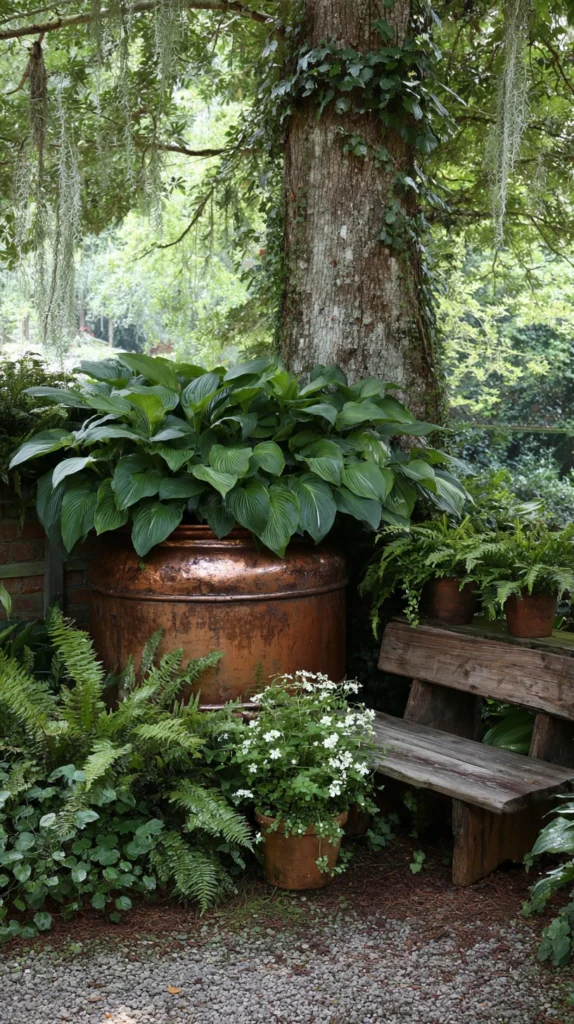
Old copper wash boiler – develops beautiful patina.
My copper boiler:
Found: Estate sale, $30 Age: Early 1900s Condition: Verdigris patina developing Size: 18×24 inches oval
What I planted:
- Mixed shade container
- Hostas, ferns, coral bells
- Under tree on north side
- Glows in shade
Why copper is special:
Patina development:
- Starts shiny copper
- Develops green verdigris
- Blue-green aged color
- Gets better yearly
Reflects light:
- Even with patina
- Brightens shady spots
- Metallic shimmer
- Catches eye
Investment piece:
- Higher cost ($25-75)
- But heirloom quality
- Increases in value
- Special container
My copper boiler is: Most expensive container but absolutely worth it.
12. Vintage Sap Buckets (Rustic Grouping)
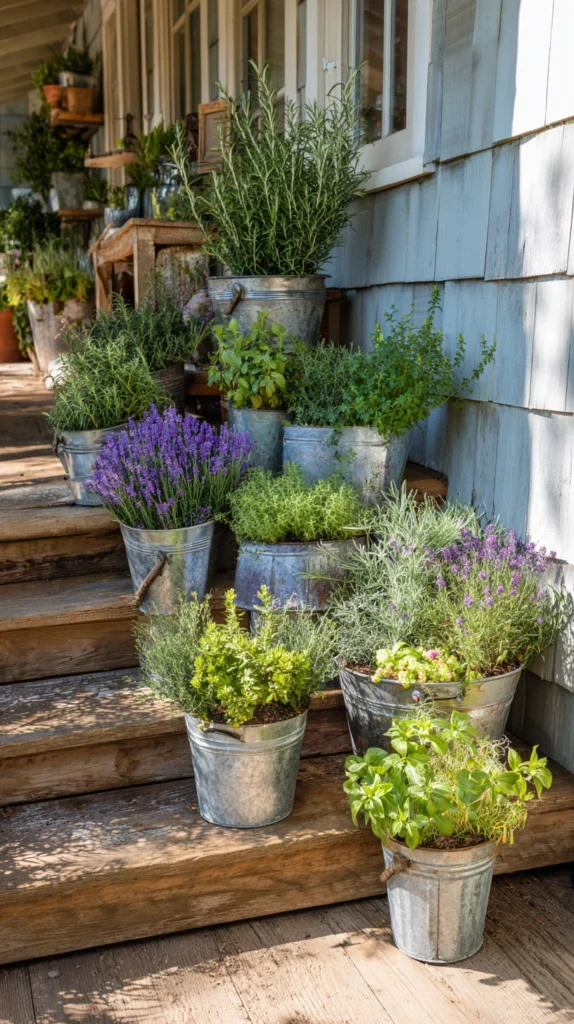
Old maple syrup collection buckets – cluster for impact.
My sap bucket collection:
Set of 5 buckets:
- Galvanized metal
- Various dents and rust
- 10 inches tall
- $3 each at flea market
Display:
- Grouped on outdoor steps
- Staggered heights
- Each different plant
- Creates vignette
Plants:
- All herbs (thyme, oregano, sage, rosemary, lavender)
- Kitchen herb collection
- Near back door
- Harvest constantly
Why grouping works:
Small impact alone:
- Individual bucket = cute
- Group of 5 = statement
- Collected look
- More interesting
Flexible arrangement:
- Rearrange seasonally
- Add or remove buckets
- Change plants easily
- Casual design
I rearrange mine monthly – keeps display fresh, fun to style.
13. Old Metal Lanterns (Delicate Display)
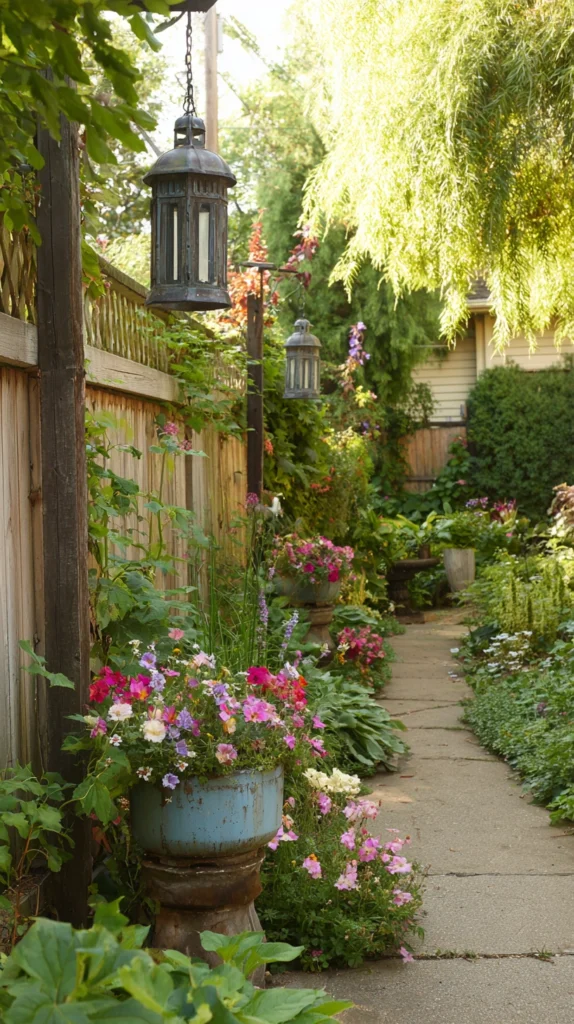
Vintage lanterns become hanging planters.
My lantern collection:
Railroad lantern:
- Red glass removed
- Planted with succulents
- Hangs from shepherd’s hook
- Industrial charm
Barn lantern:
- Clear glass intact (shows soil layers)
- Small terrarium plants
- Decorative not functional
- Conversation piece
Making lanterns work:
Drainage:
- Small holes in bottom (drill carefully)
- Or use as terrarium (no drainage)
- Depends on plant choice
- I do both methods
Access:
- Remove glass to plant
- Replace after planting
- Or leave glass off
- Creates cage effect
Unique containers – unexpected plant vessels guests notice.
14. Vintage Milk Cans (Tall Statements)
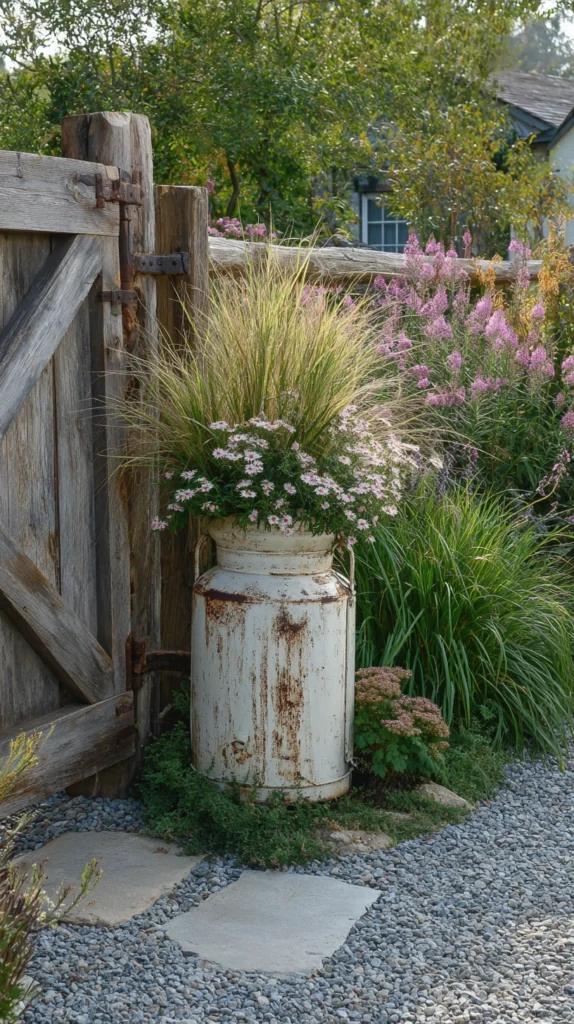
Old dairy milk cans – vertical accent containers.
My milk can:
Found: Farm auction, $20 Height: 24 inches tall Condition: Dented, rusty, authentic patina Opening: 8 inches diameter at top
Planting:
- Tall ornamental grass
- Overflows from top
- Creates fountain effect
- Elegant and simple
Benefits:
Height:
- Tall container (24+ inches)
- Vertical interest
- Eye-catching
- Good proportions for large plants
Narrow footprint:
- Small floor space
- Fits in tight spots
- Path flanking
- Corner solutions
Where to find:
- Farm auctions ($15-40)
- Antique stores ($30-75, overpriced)
- Craigslist ($20-35)
- Rural flea markets ($10-25)
My milk can: Flanks garden gate with second one (pair = impact).
15. Collection of Vintage Watering Cans (Functional Art)
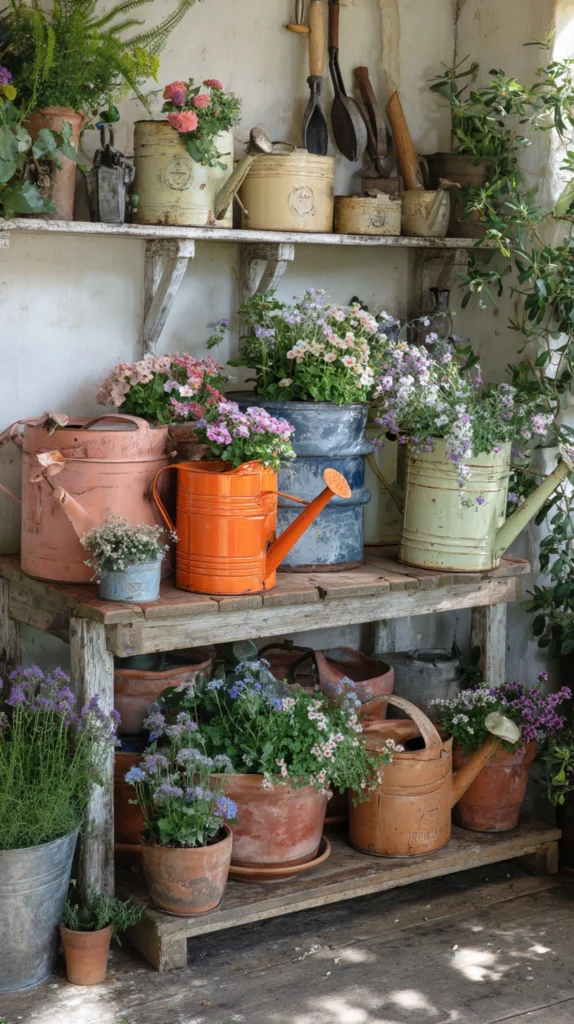
Old watering cans – use AND display.
My watering can garden:
Five vintage cans:
- Various sizes (1 quart to 2 gallon)
- Different colors (galvanized, green, red)
- Some with sprinkler heads, some without
- Collected over 2 years
Dual purpose:
Functional:
- Actually water with 2 of them
- Others decorative only (leaky)
- Displayed when not in use
- Working tools
Planted:
- Small trailing plants in 3 cans
- Drainage holes in bottom
- Creates vignette
- Whimsical display
Display ideas:
Arranged on shelf:
- Outdoor potting bench
- Various heights
- Some planted, some empty
- Layered composition
Hanging:
- Some hooked on fence
- Functional and decorative
- Easy access for watering
- Vertical storage
My watering cans: Favorite collection, always hunting for more.
Finding Antique Containers
Where I source vintage pieces:
Thrift Stores (My #1 Source)
What I find:
- Metal buckets ($3-8)
- Enamelware ($2-10)
- Baskets ($3-12)
- Tins ($2-5)
Strategy:
- Visit weekly (new stock constantly)
- Know the sale days (50% off Wednesdays)
- Dig through everything
- Ask if they have more in back
My best finds: Copper boiler ($12 on half-price day), vintage crate ($2)
Yard Sales and Estate Sales
Weekend hunting:
- Estate sales best (older items)
- Yard sales hit-or-miss
- Offer less (they often accept)
- Go early for selection
My approach:
- Drive nice neighborhoods Friday/Saturday mornings
- Look for farm/rural sales
- “Everything must go” sales (best prices)
- End-of-day discounts
Flea Markets
Pros:
- Huge selection
- Can negotiate
- Many vendors
- Fun outing
Cons:
- Higher prices than thrift stores
- Vendor knows what things are worth
- But still reasonable
My strategy:
- Go toward closing time
- Make bulk offers (“$20 for all three?”)
- Build relationship with favorite vendors
- They call when they get good stuff
Curbside Finds (Free!)
Best containers I’ve found free:
- Wheelbarrow (trash day)
- Three dresser drawers (neighbor remodel)
- Metal bucket (rusty, they didn’t want)
- Wooden crate (moving day)
My Monday routine:
- Drive around neighborhood on trash day
- Look for bulk trash piles
- Not embarrassed anymore
- Found $200+ in containers free
Making Antique Containers Garden-Ready
Prep work before planting:
Drainage Solutions
Metal containers:
- Drill holes (5-7 holes minimum)
- Use metal drill bit
- Wear safety glasses
- Bottom and slightly up sides
Ceramic/stoneware:
- Use as cachepot (pot inside)
- Or hire professional to drill
- Diamond drill bit required
- Risky (can crack)
Wood:
- Drill large holes (1/2 inch)
- Multiple holes (water escape)
- Elevate on pot feet
- Extend lifespan
Wire baskets:
- Line with moss or coco fiber
- Natural materials
- Replace liner yearly
- No drilling needed
Cleaning
My process:
- Scrub with brush and water (no soap)
- Remove loose rust/dirt
- Leave patina (don’t over-clean)
- Dry completely before planting
Don’t over-clean:
- Patina is the point
- Over-scrubbing removes character
- Accept imperfections
- Weathered = better
Preservation
For wood:
- Linseed oil (food-safe, I use this)
- Or leave untreated (accept decay)
- No chemical sealers (plant health)
- Reapply oil yearly
For metal:
- I don’t seal (like rust development)
- Or clear enamel spray
- Accept aging process
- Rust is beautiful
Planting Strategy for Antique Containers
What works in vintage pieces:
Match Plant to Container
My pairings:
Formal containers (crocks, copper):
- Structured plants
- Topiaries, single specimens
- Elegant appearance
- Complement formality
Rustic containers (buckets, crates):
- Loose abundant planting
- Cottage garden style
- Overflowing casual
- Enhance rusticity
Small containers (tins, pots):
- Single plant or herb
- Succulents perfect
- Don’t overcrowd
- Simple is better
Soil Considerations
Quality matters more in containers:
My mix:
- 50% potting soil
- 30% compost
- 20% perlite (drainage)
- Lightweight and well-draining
Why good soil critical:
- Vintage containers often poor drainage
- Quality soil compensates
- Better water management
- Healthier plants
Watering Challenges
Metal containers:
- Heat up in sun
- Dry out faster
- Water more frequently
- Monitor closely
Wood containers:
- Wick moisture from soil
- Dry out fast
- Water daily in summer
- Expect this
My solution:
- Self-watering globes in some
- Drip system to others
- Hand-water daily what remains
- Accept higher water needs
Displaying Vintage Container Collections
Arrangement matters:
Grouping Principles
Odd numbers:
- Groups of 3, 5, or 7
- More pleasing than even
- Natural arrangement
- Professional look
Vary heights:
- Tall, medium, low
- Create levels
- Use stands/boxes
- Three-dimensional
Repeat elements:
- Same plants in different containers
- Or same container type with different plants
- Creates cohesion
- Ties collection together
My main display:
- 5 containers on outdoor shelf
- Various heights
- All metal (material unity)
- Different sizes and shapes
Creating Vignettes
Elements to include:
Containers: 3-5 vintage planters Props: Watering can, tools, gloves Height: Stack crates, use plant stands Backdrop: Against fence, wall, or shed
My porch vignette:
- Galvanized bucket (large, floor)
- Enamel basin on crate (medium height)
- Three small tins on shelf (high)
- Vintage watering can as prop
- Creates scene
Seasonal Container Transitions
Change plantings, keep containers:
Spring
My spring containers:
- Cool-season flowers (pansies, violas)
- Lettuce and greens
- Spring bulbs
- Fresh bright colors
Summer
Peak season:
- Heat-loving annuals
- Tomatoes and herbs
- Bold colors
- Maximum growth
Fall
Autumn display:
- Mums and asters
- Ornamental kale
- Late-season herbs
- Warm colors
Winter
Cold season:
- Evergreen branches
- Holly berries
- Empty but beautiful (containers themselves)
- Or bring indoors
Containers stay outside year-round – they’re the permanent feature, plants rotate.
Budget Reality
My collection cost over 3 years:
Year 1 (10 containers):
- Thrift store finds: $45
- Yard sales: $30
- Curbside: Free
- Total: $75
Year 2 (8 containers):
- Flea market: $60
- Estate sale: $35
- Free finds: $0
- Total: $95
Year 3 (7 containers):
- Various sources: $80
- Copper boiler (splurge): $30
- Total: $110
25 containers total investment: $280 (average $11.20 each)
Equivalent new decorative containers: $30-60 each = $750-1,500
Saved: $470-1,220 while getting better-looking containers with character
Common Mistakes with Antique Containers
I made these errors:
Mistake 1: Bought Too Expensive
Paid $40 for milk can at antique mall – saw identical one at farm auction for $15 next week.
Fix: Shop around, know prices, don’t impulse buy at antique stores.
Mistake 2: No Drainage Plan
Planted directly in ceramic crock – plant died, roots rotted.
Fix: Always solve drainage first, before purchasing if possible.
Mistake 3: Over-Restored
Scrubbed all patina off washtub – looked too new, lost character.
Fix: Light cleaning only, embrace weathering and age.
Mistake 4: Wrong Plant Choice
Planted heavy feeder in tiny tin – plant starved, looked terrible.
Fix: Match plant size/needs to container capacity.
Mistake 5: No Display Plan
Bought container I loved – doesn’t fit my garden style, sits unused.
Fix: Have a vision before purchasing, know where it will go.
My Favorite Vintage Container Find
The one I’m most proud of:
Vintage wheelbarrow – found curbside on trash day
Condition: Rusty, wobbly wheel, no handle grips, perfect patina Cost: Free Value: $75+ at antique stores Use: Overflowing cutting garden, centerpiece of yard
Why I love it:
- Free find (best price!)
- Instant focal point
- Mobile (roll for photos)
- Every flaw adds character
- Produces 50+ bouquets summer
This wheelbarrow proves: Best containers have stories, character beats perfection, vintage beats new every time.
Getting Started with Antique Containers
Don’t buy everything at once.
This weekend:
- Visit one thrift store
- Look in garden section AND kitchen/household
- Buy 1-3 containers under $10 each
- Take home and prep (drainage, cleaning)
Next weekend:
- Plant containers
- Display in garden
- See how you like the look
- Decide if you want more
My recommendation for first vintage container:
Galvanized bucket or washtub:
- $5-10 at any thrift store
- Easy to drill drainage
- Versatile size
- Classic farmhouse look
- Can’t go wrong
Start with one or two, get hooked, build collection over time like I did.
Now go hunt for vintage treasures and add soul to your container garden!
Quick Summary:
Easiest antique containers to start:
- Galvanized buckets ($3-10, everywhere, easy drainage)
- Metal washtubs ($5-15, large impact, simple)
- Enamelware ($2-8, colorful, lightweight)
Best value finds:
- Thrift stores (cheapest, $2-10 typical)
- Yard sales (negotiable, $3-15)
- Curbside (free!)
- Flea markets (selection but pricier, $10-30)
By container type:
Metal:
- Buckets, washtubs, tins, lanterns
- Drill drainage easily
- Develop beautiful rust patina
- Most affordable ($2-15)
Wood:
- Crates, drawers, boxes
- Need multiple drainage holes
- Weathering is charm
- Limited lifespan (3-5 years)
Ceramic/Stoneware:
- Crocks, pots, pitchers
- Use as cachepots (pot inside)
- Formal appearance
- Higher investment ($15-50)
Wire:
- Baskets (egg, harvest, salad)
- Line with moss/coco fiber
- Hanging options
- Textural interest ($5-15)
Drainage solutions:
Metal: Drill 5-7 holes with metal bit Wood: Drill large holes (1/2″), elevate on feet Ceramic: Cachepot method (pot inside) Wire: Line with moss, built-in drainage
Best plants for antique containers:
Small containers (under 10″):
- Succulents
- Single herbs
- Small flowers
- Don’t overcrowd
Medium containers (10-18″):
- Mixed herbs
- Annual flowers
- Small vegetables
- Clustered bulbs
Large containers (18″+):
- Tomatoes
- Dwarf trees
- Mixed plantings
- Statement plants
Cleaning guidelines:
Do:
- Scrub with water and brush
- Remove loose dirt/debris
- Dry completely before planting
Don’t:
- Over-clean (removes patina)
- Use harsh chemicals
- Remove all rust/weathering
- Restore to “like new”
Preservation tips:
Wood: Linseed oil yearly (optional) Metal: Leave untreated (rust is beautiful) Ceramic: No treatment needed General: Accept aging as improvement
Display strategies:
Grouping: Odd numbers (3, 5, 7) Heights: Vary with stands/shelves Repetition: Echo plants or containers Vignettes: Create scenes with props
Budget breakdown:
Starter collection (5 containers):
- Thrift stores: $25-40
- Yard sales: $15-30
- Total: $40-70
Established collection (20+ containers):
- Over 2-3 years: $200-300
- vs new decorative pots: $600-1,200
- Savings: $300-900
Common mistakes:
- Overpaying at antique malls (shop around)
- No drainage plan (solve before buying)
- Over-restoring (patina is the point)
- Wrong plant/container match (scale matters)
- Impulse buying (have a vision)
Where to find free:
- Curbside trash day (Monday mornings)
- Moving sale leftovers (end of day)
- Neighbor cleanouts (ask!)
- Construction site refuse (permission)
- Family attics/barns (inherited)
Seasonal transitions:
Spring: Cool flowers, greens Summer: Heat-lovers, vegetables Fall: Mums, kale, warm tones Winter: Evergreens or empty (container is feature)
Container lifespan:
Metal: 10-20+ years (rust adds character) Wood: 3-5 years (biodegrades beautifully) Ceramic: Indefinite (heirloom quality) Wire: 5-10 years (rust eventually fails)
Best hunting strategy:
Weekly: Thrift store visits (new stock) Weekends: Yard/estate sales (spring/fall best) Monthly: Flea markets (end-of-day deals) Always: Watch curbsides (free finds)
Quick start plan:
Week 1: Visit thrift store, buy 2-3 containers Week 2: Prep containers (drainage, cleaning) Week 3: Plant and display Month 2: Add 2-3 more if you love it
Success indicators:
- Guests comment on containers specifically
- You’re always hunting for more
- Plants look better in vintage vs new
- Garden has personality/character
- Neighbors asking where you found things
Remember: Patina and imperfection are assets not flaws, start small and build collection over time, hunt becomes half the fun, character beats perfection every time.