15 Edible Hedge Garden Ideas: Transform Borders into Food Production
My property line had a boring private hedge for eight years. Trimmed it monthly, got zero food from 60 feet of hedge.
Then the private died. I replaced it with blueberries.
Same space, same maintenance, now produces 40+ pounds of berries yearly plus privacy screening.
Let me show you 15 edible hedge ideas that work as boundaries AND food sources.
Why Traditional Hedges Waste Space
My old privet hedge:
Length: 60 feet Height: 5 feet tall Width: 3 feet deep Total space: 180 square feet Food production: Zero Maintenance: Trimming monthly (3 hours yearly)
After replacing with edible hedge:
Same dimensions: 60×5×3 feet Food production: 40 pounds blueberries Maintenance: Annual pruning (2 hours yearly) Bonus: Beautiful flowers, fall color
Same work, actual harvest.
Edible Hedge Benefits
Why they work:
Dual purpose:
- Privacy screening
- Food production
- Space efficiency maximized
Perennial investment:
- Plant once, harvest 15-20 years
- Low maintenance after establishment
- Self-sustaining mostly
Property line solution:
- Defines boundaries
- Better than fence (doesn’t rot)
- Increases property value
- Neighborly sharing opportunity
I give neighbors berries – they love the hedge, no complaints.
1. Blueberry Hedge (My Top Pick)
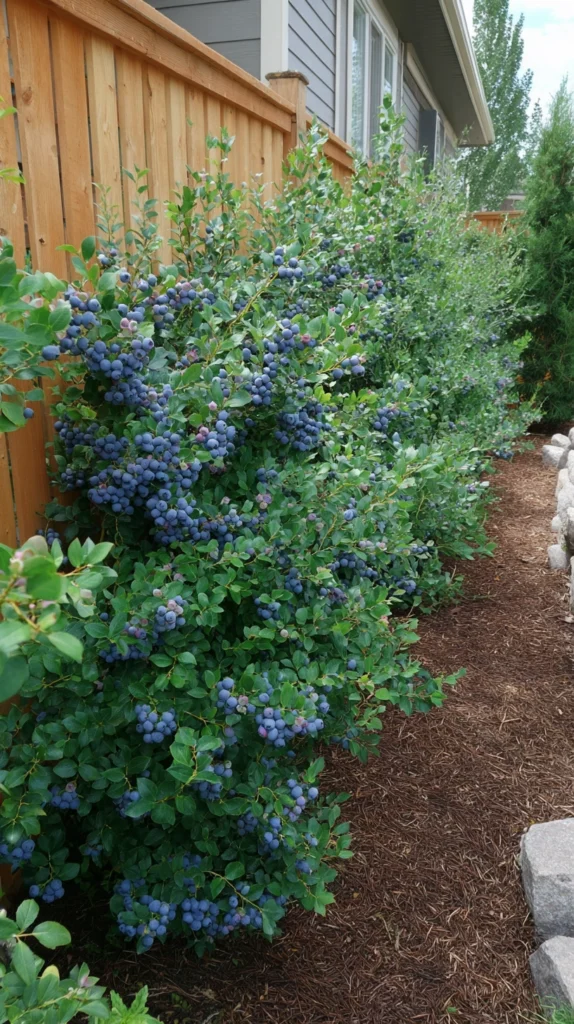
High-bush blueberries create a formal-looking edible hedge.
My 40-foot property line:
Planting:
- 12 blueberry bushes
- Mixed varieties (early, mid, late season)
- 3 feet apart
- Grows together into continuous hedge
Varieties I use:
- 4 Duke (early season, June)
- 4 Bluecrop (mid-season, July)
- 4 Elliott (late season, August)
Benefits:
Privacy: 4-6 feet tall, dense foliage Production: 30-40 pounds berries (3-4 pounds per bush) Appearance: White spring flowers, red fall color Maintenance: Minimal – annual pruning only
Why blueberries excel:
- Look like ornamental azaleas
- HOA-friendly appearance
- Never invasive
- Long-lived (20+ years)
Cost: $180 for 12 plants (bare root)
Blueberry Hedge Care
My maintenance:
Soil prep (one-time):
- Acidic soil required (pH 4.5-5.5)
- I added sulfur to lower pH
- Mixed in peat moss
- Mulched with pine needles
Ongoing care:
- Water first year
- Annual mulch refresh
- Prune dead wood (winter)
- Fertilize with acid fertilizer (spring)
Time investment: 2 hours yearly after establishment
2. Mixed Berry Hedge (Extended Harvest)
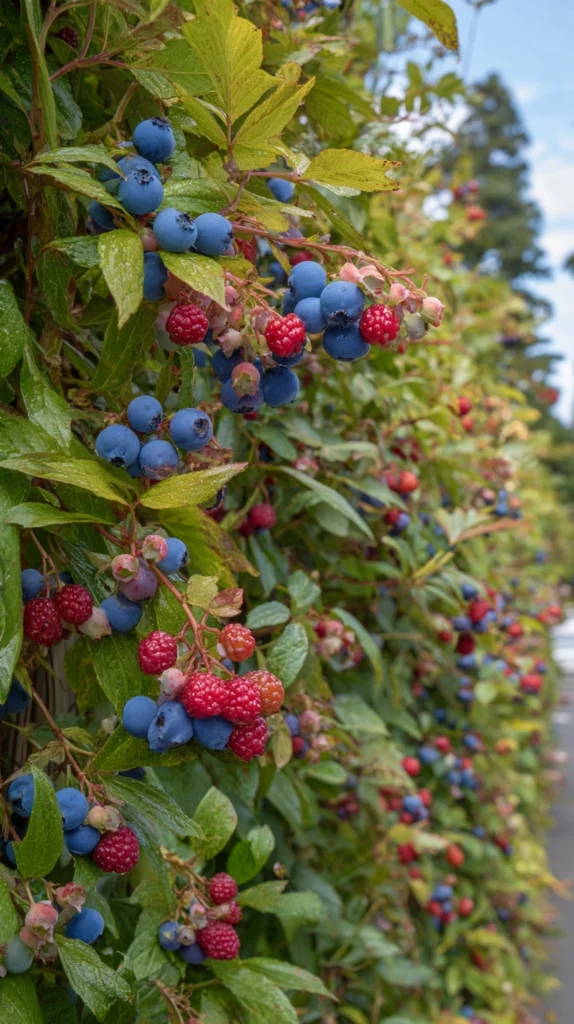
Combine different berries for continuous production.
My friend’s 30-foot hedge:
Plant selection (repeating pattern):
- Blueberry, raspberry, blackberry, blueberry, repeat
- 10 plants total
- 3 feet apart
- Creates varied texture
Harvest timeline:
June: Blueberries start July: Raspberries and more blueberries August: Blackberries peak September: Fall raspberries (everbearing variety)
Production:
- Blueberries: 12 pounds
- Raspberries: 10 pounds
- Blackberries: 15 pounds
- Total: 37 pounds from 30 feet
Visual interest:
- Different leaf shapes
- Varied heights (4-6 feet)
- Continuous blooms
- Dynamic appearance
3. Hazelnut Hedge (Nut Production)
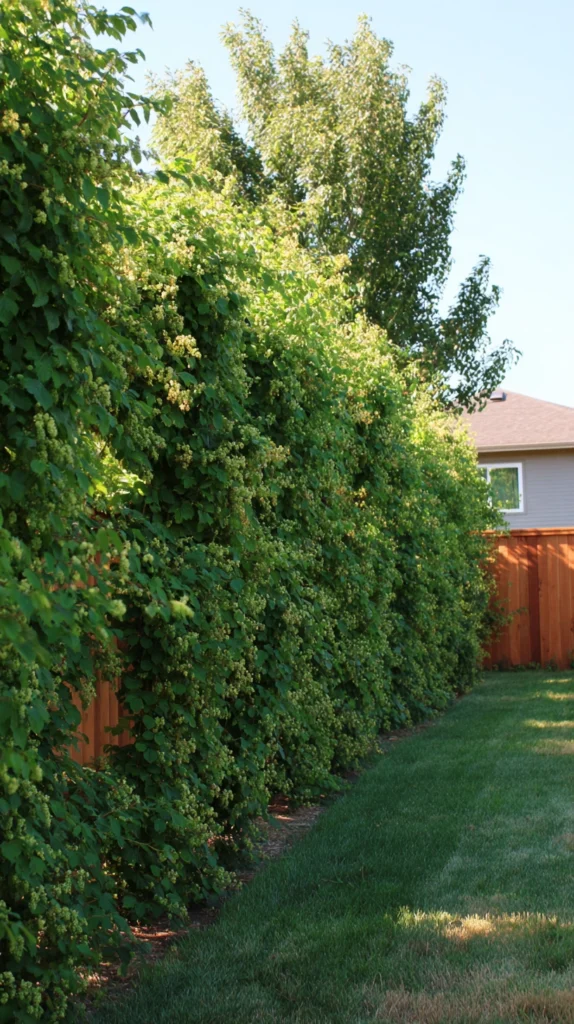
Hazelnuts grow as large shrubs – perfect hedge material.
My neighbor’s property line:
Setup:
- 8 hazelnut plants
- American hazelnut variety (native, hardy)
- 4 feet apart
- Forms dense 8-10 foot hedge
Why hazelnuts work:
Privacy: Tall and dense Food: 20-30 pounds nuts yearly Wildlife: Squirrels and birds love it (plant extra) Native: Supports ecosystem Low maintenance: Essentially wild
Harvest:
- September-October
- Gather from ground
- Dry and store
- Lasts all winter
Challenge: Squirrels take 50%+ Solution: Plant enough for sharing
My neighbor planted 8 trees – squirrels get half, he still gets 10+ pounds.
4. Elderberry Hedge (Medicinal and Edible)
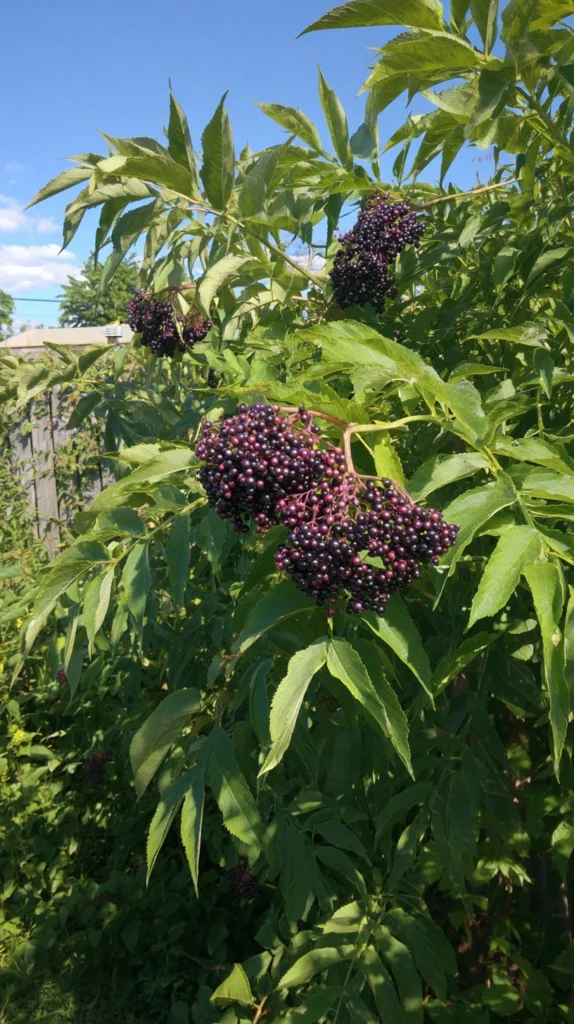
Elderberries grow fast and create productive hedge.
My side yard (20 feet):
Planting:
- 4 elderberry bushes
- 5 feet apart (they spread)
- Native variety (Sambucus canadensis)
- 8-12 feet tall
Production:
Flowers (June):
- Make elderflower cordial
- Elderflower fritters
- Medicinal tea
Berries (August-September):
- 15-20 pounds total
- Make elderberry syrup (immune support)
- Wine, jam, juice
Growth rate:
- Year 1: 3-4 feet
- Year 2: 6-8 feet
- Year 3: Full hedge (8-10 feet)
- Very fast establishment
Maintenance:
- Prune out old canes (3+ years)
- Can get leggy without pruning
- Spreads via suckers (control if needed)
5. Serviceberry Hedge (Four Season Interest)
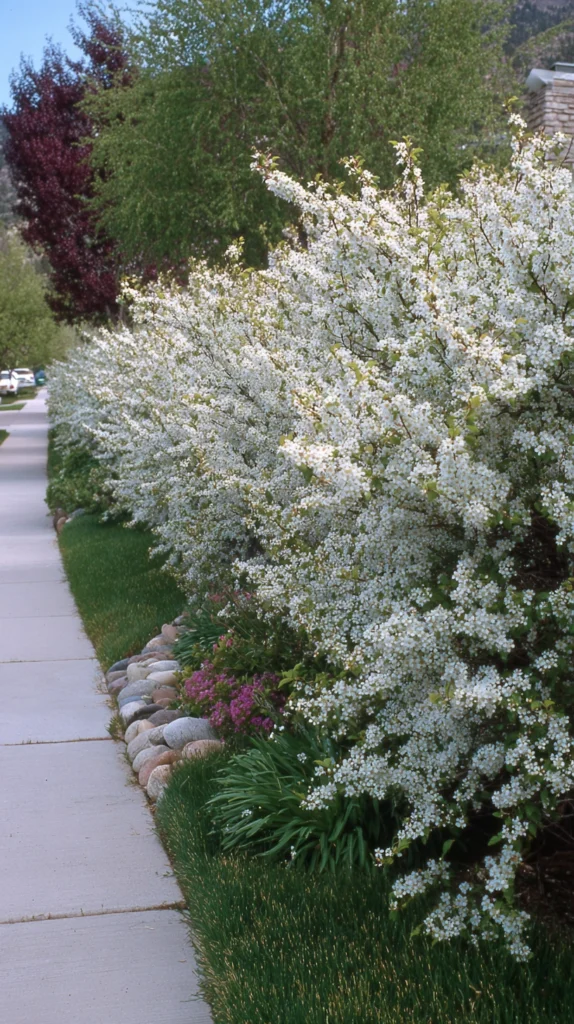
Serviceberry (Juneberry) works as ornamental and productive.
My front yard hedge (25 feet):
Planting:
- 5 serviceberry shrubs
- Multi-stemmed varieties
- 5 feet apart
- 15-20 feet tall mature
Four-season appeal:
Spring: White flowers (stunning) Summer: Berries ripen (June, hence “Juneberry”) Fall: Orange-red foliage Winter: Attractive bark
Production:
- 8-10 pounds berries
- Taste like blueberries
- Birds compete for harvest
- Net if you want them all
HOA approved mine as “ornamental landscape” – they don’t know I eat berries.
Serviceberry Benefits
Why I love them:
- Native plant (supports ecosystem)
- Beautiful year-round
- Fruit edible raw or cooked
- Birds love them (wildlife value)
- Never invasive
- Disease resistant
Perfect for: Front yard, visible areas, formal appearance needed
6. Currant and Gooseberry Hedge (Shade Tolerant)
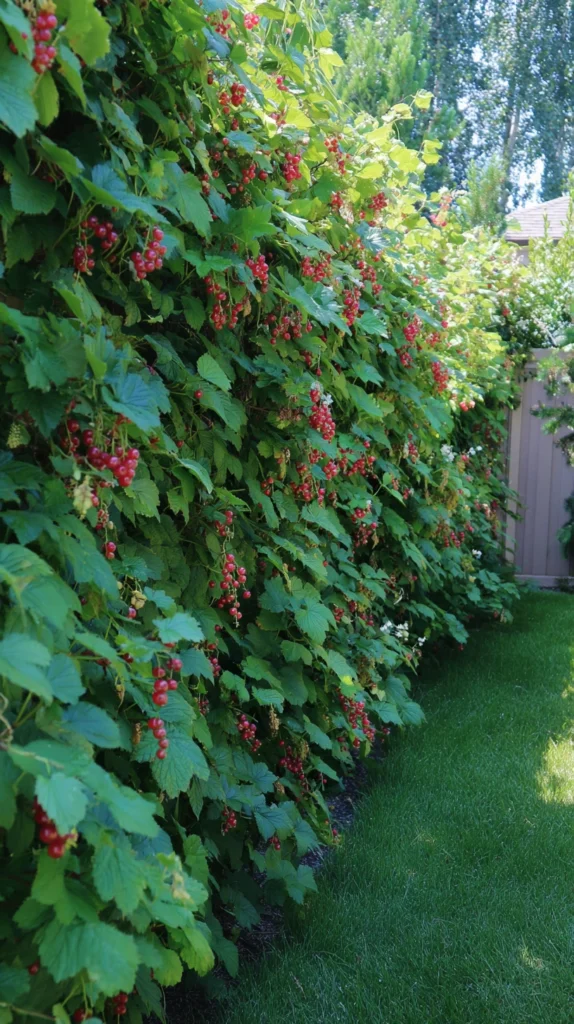
Ribes species work in partial shade where other berries fail.
My north-side hedge (30 feet):
Planting:
- 6 red currant bushes
- 4 gooseberry bushes
- Alternating pattern
- 3 feet apart
Why for shade:
- Tolerate 4-6 hours sun (vs 8+ for most berries)
- Produce in partial shade
- Good for north-facing areas
- Underutilized berries
Production:
- Currants: 12 pounds
- Gooseberries: 10 pounds
- Tart berries (better for jam/jelly)
Note: Check local regulations – some states ban Ribes (white pine blister rust host). Legal in my state.
7. Rose Hip Hedge (Rugosa Roses)
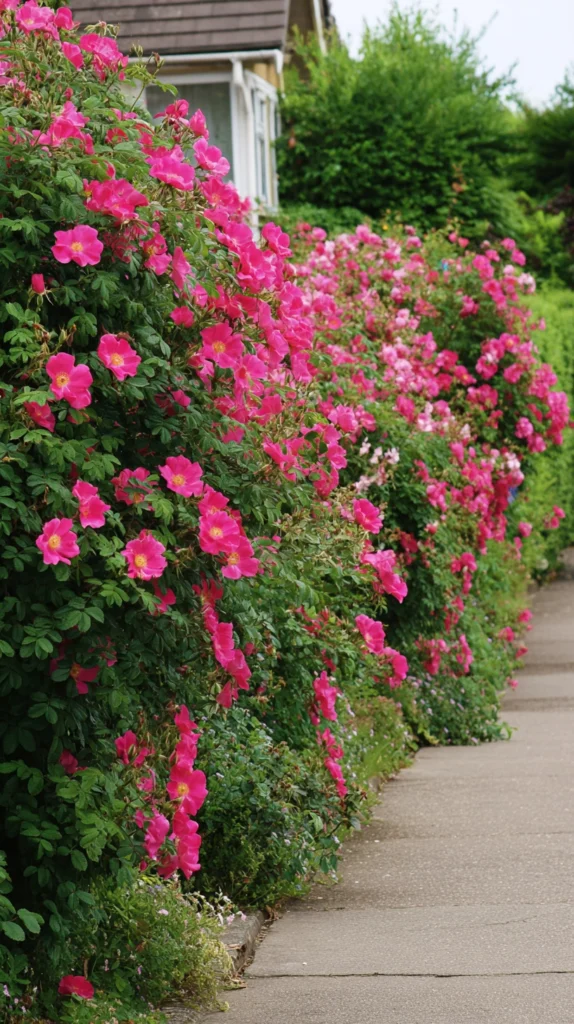
Rugosa roses create thorny barrier plus edible hips.
My friend’s design:
Planting:
- Rosa rugosa (beach rose)
- 8 plants, 3 feet apart
- 4-6 feet tall
- Very thorny (security hedge)
Production:
Flowers (summer):
- Fragrant pink/white blooms
- Edible petals (salads, tea)
Rose hips (fall):
- High vitamin C
- Make tea, syrup, jam
- 5-10 pounds hips
Benefits:
- Extremely hardy (to Zone 2)
- Salt tolerant (roadside)
- Disease resistant
- Barrier hedge (thorns deter)
Maintenance: Minimal – just remove dead canes
8. Bamboo Hedge (Clumping Varieties Only)
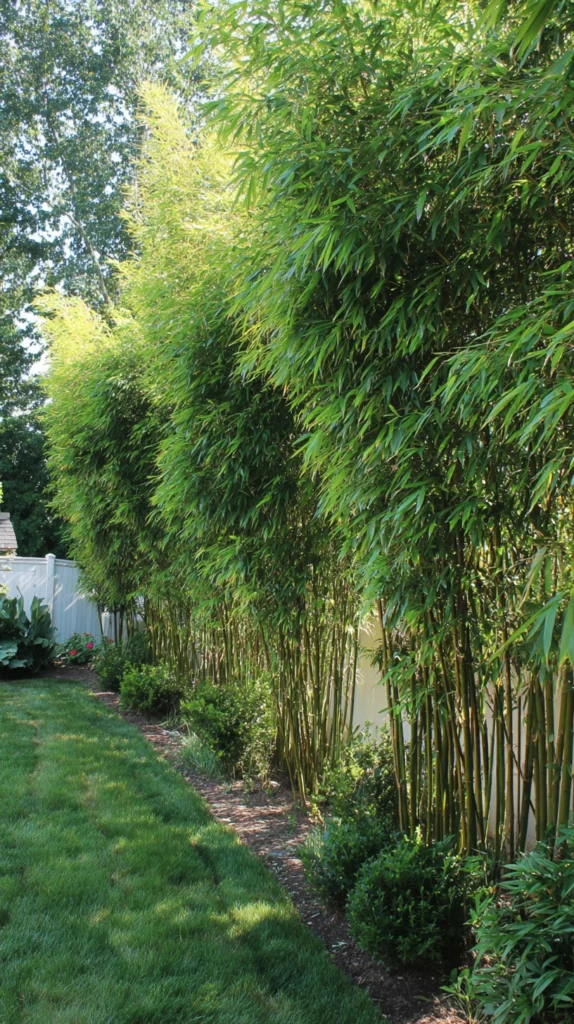
WARNING: Only clumping bamboo, never running!
My bamboo screen (12 feet):
Critical selection:
- Fargesia robusta (clumping type)
- NON-invasive
- Stays in place
- Edible shoots in spring
Why it works:
Privacy: Dense, 10-12 feet tall Screening: Year-round evergreen Food: Spring shoots (harvest young) Materials: Canes for garden stakes
Spring harvest:
- 20+ edible shoots
- Cut when 6-8 inches tall
- Peel outer layers
- Use like asparagus
I cannot stress enough: ONLY CLUMPING VARIETIES.
Running bamboo is nightmare – invasive, unstoppable, illegal in some areas.
9. Fig Hedge (Warm Climate)
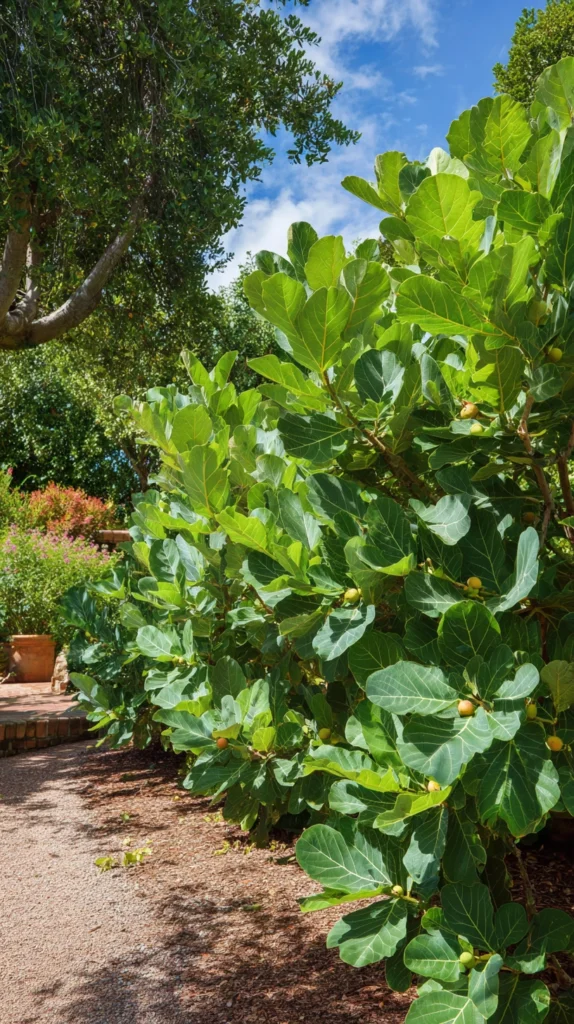
Figs grown as multi-stem shrubs (zones 7-10).
My zone 7 setup (southern exposure):
Planting:
- 4 Chicago Hardy figs
- 6 feet apart
- Grow as bushes (not trees)
- 8-10 feet tall
Why hedge form:
- Multiple stems from ground
- Bushier appearance
- Better cold protection (dies to ground, grows back)
- More fruit production
Production:
- 30-40 figs per plant
- 120-160 total figs
- Two crops (June, August)
Winter protection:
- Wrap bases in burlap (Zone 7)
- May die back but regrows
- Warmer zones: no protection needed
10. Goji Berry Hedge (Superfood Screening)
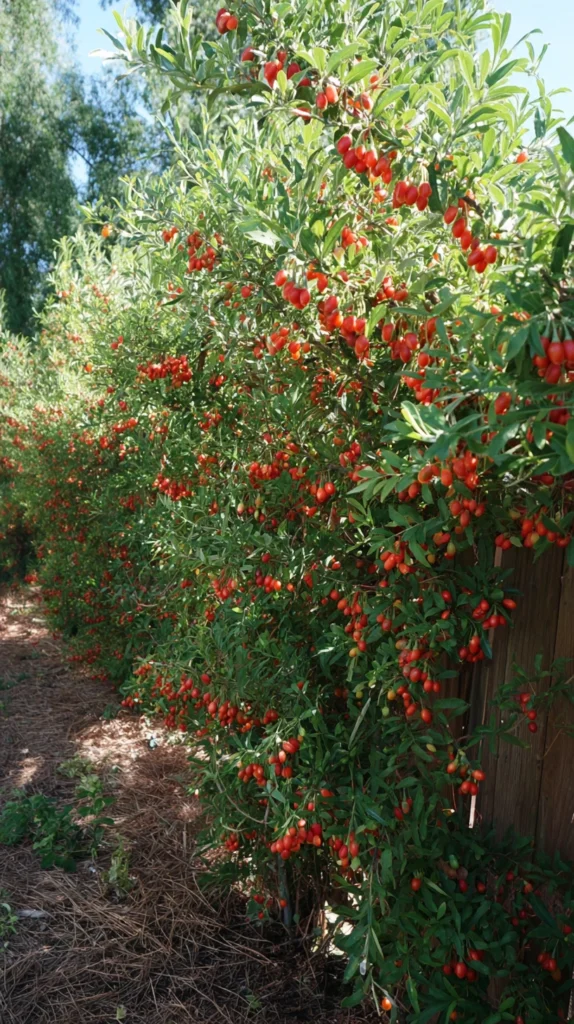
Goji berries create productive hedge with health benefits.
My trial section (15 feet):
Planting:
- 5 goji berry plants
- 3 feet apart
- 6-8 feet tall
- Arching branches
Production:
- Berries August-October
- Small red berries
- 5-8 pounds total
- Dry for storage
Challenges:
Spreads via runners:
- Not invasive but spreads
- Need to control suckers
- Or plant where spreading okay
Thorny branches:
- Small thorns
- Harvest carefully
- Good barrier hedge
Health claims: High antioxidants – I can’t verify but berries are productive.
11. Aronia Berry Hedge (Low Maintenance)
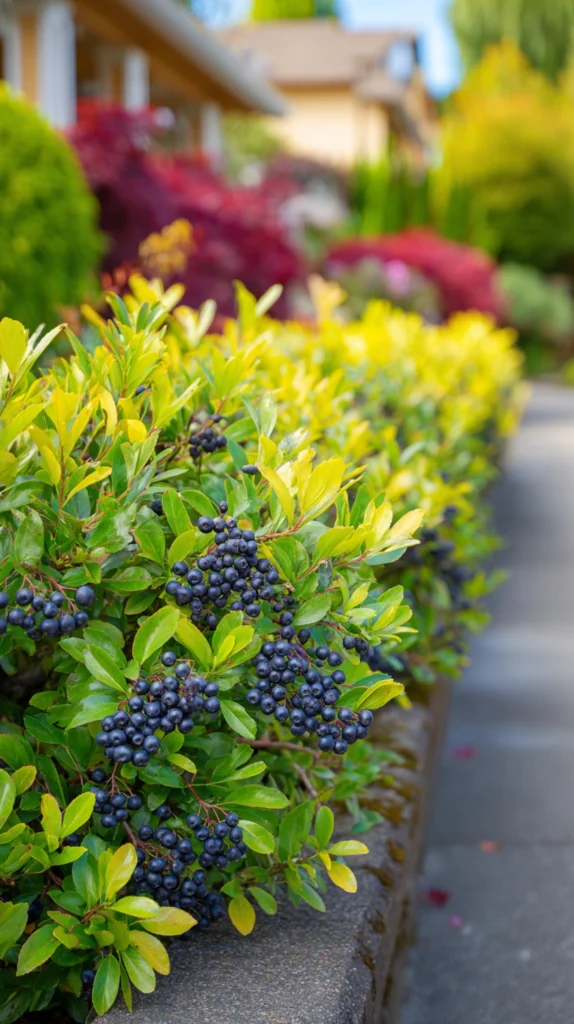
Aronia (chokeberry) – native, indestructible hedge.
My parking strip (20 feet):
Planting:
- 7 aronia bushes
- 3 feet apart
- 6-8 feet tall
- Native variety
Why aronia excels:
Indestructible:
- Tolerates any soil
- Drought tolerant after year 1
- No pests or diseases (ever)
- Survives total neglect
Production:
- 15-20 pounds berries
- Very tart (not for fresh eating)
- Make juice, jam, wine
- High antioxidants
Appearance:
- White spring flowers
- Glossy leaves
- Red-purple fall color
- Professional looking
I literally do nothing – plant produces yearly with zero care.
12. Autumn Olive Hedge (Nitrogen-Fixing)
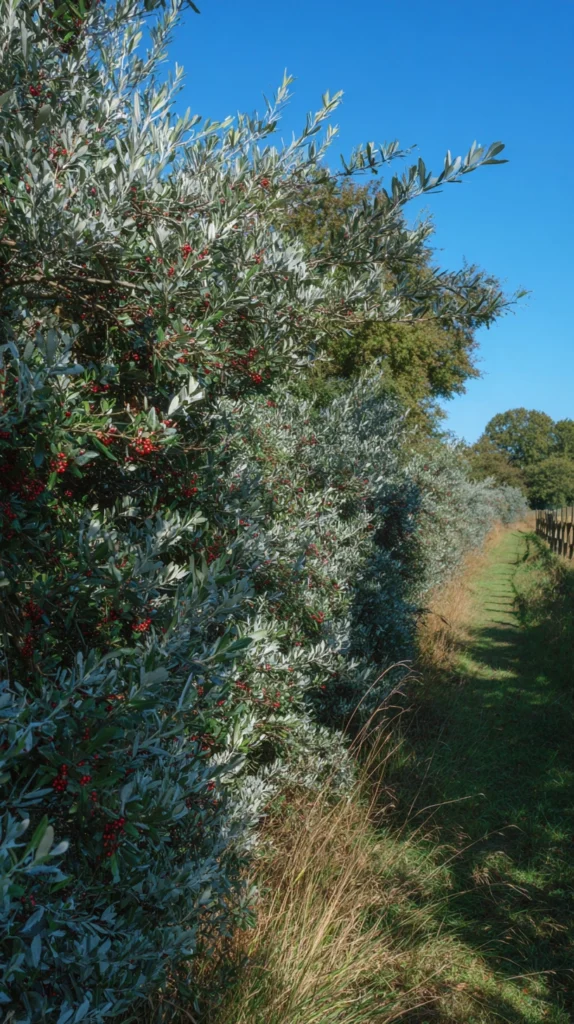
Autumn olive fixes nitrogen while producing fruit.
Neighbor’s windbreak (40 feet):
Benefits:
Nitrogen fixing:
- Feeds itself and nearby plants
- Improves soil
- No fertilizer needed
Fast growing:
- 6 feet first year
- 12+ feet by year 3
- Quick hedge establishment
Production:
- Small red berries (September)
- 30+ pounds
- High lycopene
- Tart but edible
WARNING: Invasive in some regions. Check before planting. Illegal in some states.
Where legal and controlled: Very productive and beneficial.
13. Shrubby Plum Hedge (American Plum)
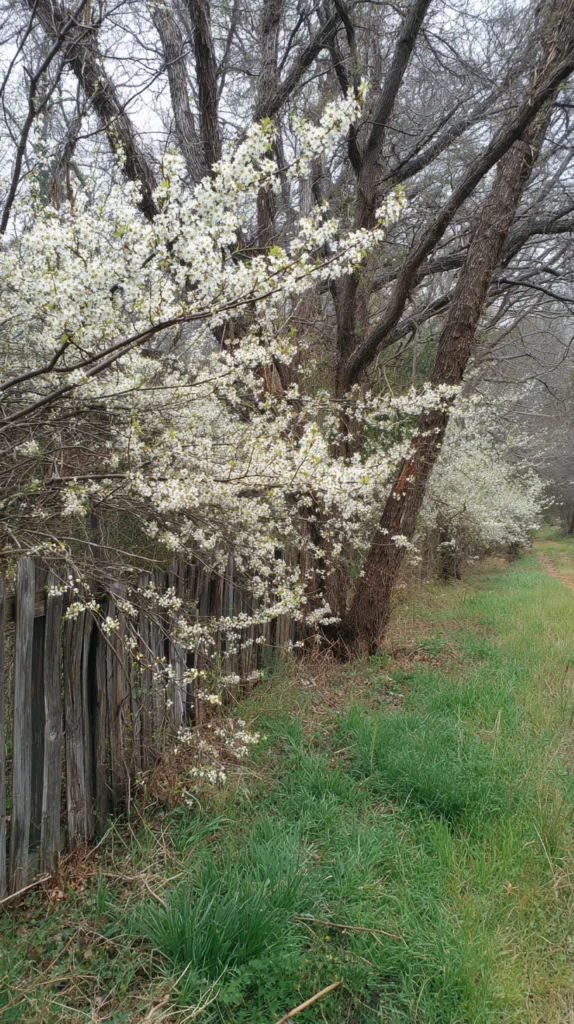
Native American plum grows as thicket-forming hedge.
My windbreak planting:
Setup:
- American plum (Prunus americana)
- 6 plants, 4 feet apart
- Spreads via suckers (forms thicket)
- 12-15 feet tall
Production:
- Small plums (1-1.5 inches)
- 20-30 pounds
- August harvest
- Excellent for jam, jelly
Thicket formation:
- Suckers create dense barrier
- Impenetrable hedge over time
- Great wildlife habitat
- Allows spreading in designated area
Spring flowers: Beautiful white blooms
Best for: Rural areas, wildlife corridors, windbreaks
14. Natal Plum Hedge (Tropical/Subtropical)
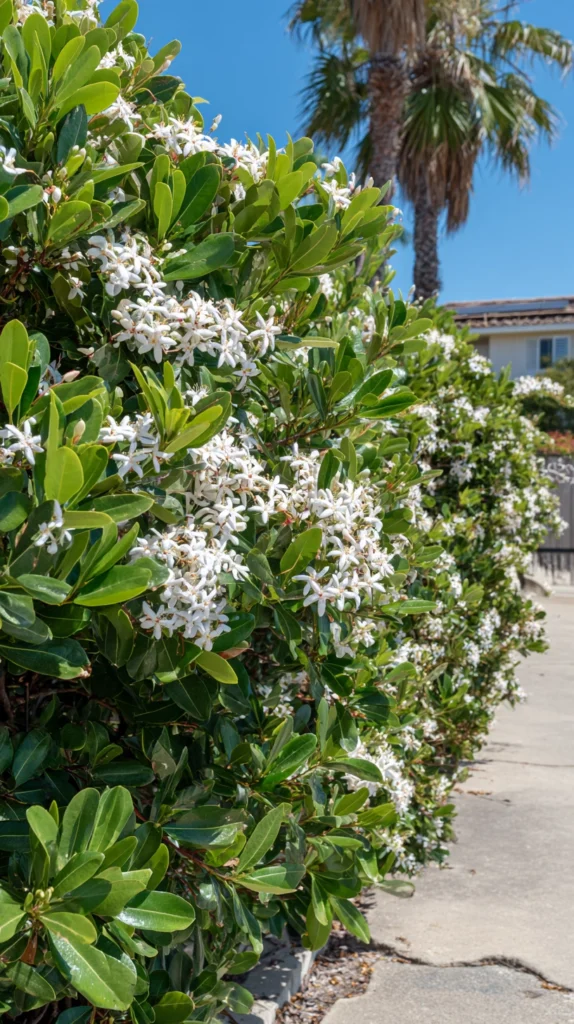
Carissa macrocarpa (zones 9-11 only).
Florida friend’s hedge:
Setup:
- Evergreen shrub
- 6-8 feet tall
- Thorny (security hedge)
- Salt tolerant (coastal)
Production:
- Plum-flavored berries
- Year-round flowering and fruiting
- Continuous harvest
- Beautiful white flowers
Tropical only: Not hardy where I am (Zone 7)
Perfect for: Coastal gardens, warm climates, edible privacy
15. Mixed Edible/Ornamental Hedge (Best of Both)
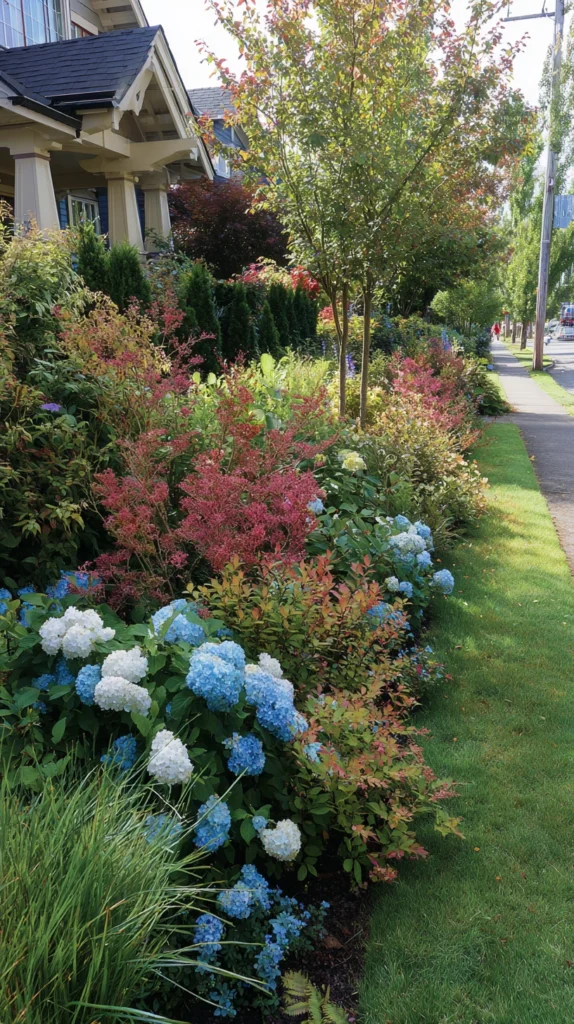
Combine edibles with ornamentals for maximum beauty.
My front yard hedge (30 feet):
Pattern (repeating):
- Blueberry
- Ornamental (spirea)
- Serviceberry
- Ornamental (hydrangea – non-edible but beautiful)
- Elderberry
- Repeat
Why mix:
Beauty:
- Continuous blooms (spring-fall)
- Varied textures and colors
- Professional appearance
- HOA-friendly
Production:
- Blueberries, serviceberries, elderberries
- 25+ pounds total
- Ornamentals provide cover
Neighbors think: Pretty ornamental hedge Reality: Productive food garden
Spacing Edible Hedges Correctly
Too close = competition. Too far = gaps.
My spacing guide:
Tight hedge (formal):
- Blueberries: 3 feet apart
- Currants: 3 feet apart
- Smaller shrubs: 2.5-3 feet
Natural hedge (informal):
- Large shrubs (elderberry, hazelnut): 5-6 feet
- Medium shrubs (aronia): 4 feet
- Let natural form develop
Security hedge (barrier):
- Thorny plants: 3 feet apart
- Creates impenetrable barrier
- Roses, gooseberries, goji
I planted blueberries 3 feet apart – took 3 years to fill in completely.
Soil Preparation for Hedges
Do it right once, benefits last 20 years.
My hedge bed prep:
Width:
- Prepare 4-5 foot wide bed
- Not just holes for each plant
- Continuous prepared soil
- Better root development
Process:
- Remove sod from entire bed area
- Add 3 inches compost
- Mix into top 12 inches
- Test and adjust pH (blueberries need acidic)
- Mulch heavily after planting
Cost for 40 feet: $120 (compost, soil amendments, mulch)
This upfront work makes maintenance minimal forever.
Maintenance by Hedge Type
Different hedges need different care:
Low Maintenance (My Favorites)
Blueberries:
- Annual pruning: 30 minutes
- Mulch refresh: 20 minutes
- Total: 50 minutes yearly
Aronia:
- Essentially zero maintenance
- Optional pruning
- Total: 0-30 minutes yearly
Medium Maintenance
Mixed berry hedge:
- Raspberry pruning: 1 hour
- Blueberry pruning: 30 minutes
- Blackberry training: 30 minutes
- Total: 2 hours yearly
Higher Maintenance
Goji berries:
- Control runners: 1 hour
- Pruning: 30 minutes
- Training: 30 minutes
- Total: 2 hours yearly
Bamboo:
- Remove unwanted shoots: 30 minutes spring
- Thin old canes: 30 minutes
- Total: 1 hour yearly
Irrigation Needs
First year is critical – after that, most survive on rainfall.
My drip system:
Setup:
- Drip line along hedge base
- Emitters every 2 feet
- Timer-controlled
- Waters 20 minutes twice daily (summer)
Cost: $60 for 40 feet of hedge
Year 1: Run system consistently Year 2+: Only during drought Year 3+: Rarely need it (established)
Hand watering alternative: 30 minutes every 2-3 days first summer
Harvest Timeline by Hedge Type
Stagger production with variety selection:
Early season (May-June):
- Serviceberries (June)
- Gooseberries (June)
- Early blueberries (late June)
Mid-season (July-August):
- Main blueberry harvest
- Raspberries
- Currants
- Elderberries
Late season (September-October):
- Late blueberries
- Blackberries
- Aronia
- Rose hips
- Goji berries
- Hazelnuts
My mixed hedge produces something May through October.
Privacy Timeline Expectations
How fast do hedges fill in?
Fast (1-2 years):
- Elderberry (grows 6+ feet first year)
- Bamboo (clumping types)
- Autumn olive (where legal)
Medium (2-3 years):
- Blueberries
- Aronia
- Currants/gooseberries
Slow (3-5 years):
- Hazelnut
- Serviceberry
- Shrubby plums
My blueberry hedge:
- Year 1: Individual bushes, gaps visible
- Year 2: Growing together, some gaps
- Year 3: Solid hedge, complete privacy
- Year 4+: Dense and mature
Patience required but worth it.
Neighbor Relations with Edible Hedges
How to handle neighbors:
My approach:
Before planting:
- Talked to neighbors
- Explained what I was planting
- Offered to share harvest
During establishment:
- Kept it neat and trimmed
- Mulched cleanly
- Professional appearance
After production:
- Share berries generously
- They love it
- Zero complaints
One neighbor now wants same hedge – I gave her cuttings.
HOA and Municipal Compliance
Check before planting.
What I did:
HOA rules:
- Reviewed landscape guidelines
- Blueberries approved (look ornamental)
- Submitted plan for approval
- Got written permission
Municipal codes:
- Height restrictions (mine: 6 feet max in front yard)
- Setback requirements (3 feet from sidewalk)
- Approved species list (checked)
My hedge complies with all rules because I checked first.
Cost Comparison: Edible vs Traditional
My 40-foot hedge cost analysis:
Traditional privet hedge:
- Plants: $120 (12 plants)
- Installation: $200 (professional)
- Annual trimming: $150 yearly (professional) or 3 hours DIY
- 10-year cost: $1,820 (DIY trimming)
- Food produced: Zero
Edible blueberry hedge:
- Plants: $180 (12 bare root)
- Installation: DIY (one weekend)
- Annual pruning: 1 hour DIY
- 10-year cost: $180
- Food produced: 400+ pounds ($800+ value)
Net difference: $2,600+ in favor of edible hedge
My Favorite Hedge Design
After growing all these:
Blueberry hedge (Design #1) wins for:
- Easiest maintenance (1 hour yearly)
- Reliable production (40 pounds annually)
- Beautiful appearance (four seasons)
- Long-lived (20+ years)
- Never invasive
- HOA-friendly
My 40-foot property line:
- 12 blueberry bushes
- Planted 6 years ago
- Produces consistently
- Looks professional
- Neighbors approved
- Zero problems
Total investment: $180 Annual harvest: 40 pounds ($80+ grocery value) Payback: Year 3 Maintenance: Minimal
Getting Started This Month
Don’t plant entire property at once.
This weekend:
Saturday:
- Choose one hedge section (15-20 feet)
- Select appropriate plants for your climate
- Buy 5-7 plants
- Gather soil amendments
Sunday:
- Prep bed (remove sod, amend soil)
- Plant hedge
- Mulch heavily
- Water thoroughly
Start with: 15-20 feet of hedge Plants needed: 5-7 (depending on spacing) Cost: $60-100 Time: One weekend
My recommendation for beginners:
Blueberry hedge:
- 5-7 plants
- 3 feet apart
- Easy care
- Guaranteed success
After one season, you’ll know if you want to expand.
Now go transform your property line into a productive edible hedge!
Quick Summary:
Best edible hedge options:
Easiest: Blueberry (minimal care, reliable) Most productive: Mixed berry (continuous harvest) Fastest growing: Elderberry (privacy year 2-3) Best appearance: Serviceberry (four season beauty) Most reliable: Aronia (indestructible, zero care)
By purpose:
Privacy focus: Bamboo (clumping), elderberry, hazelnut Production focus: Blueberry, mixed berry, currants Ornamental: Serviceberry, mixed edible/ornamental Barrier/security: Rose hips (thorny), goji berry
Spacing guidelines:
Formal hedge: 3 feet apart (tight, uniform) Natural hedge: 4-5 feet apart (informal) Large shrubs: 5-6 feet apart (hazelnuts, elderberry)
Soil requirements:
Acidic (pH 4.5-5.5): Blueberries only Neutral (pH 6.0-7.0): Most other berries Any soil: Aronia, serviceberry (very adaptable)
Production timeline:
Year 1: Minimal (establishment) Year 2: Light production (10-20% potential) Year 3: Moderate (50% potential) Year 4+: Full production (100%)
Annual harvest (40-foot hedge):
Blueberries: 30-40 pounds Mixed berries: 35-45 pounds Hazelnuts: 20-30 pounds Elderberries: 15-25 pounds Aronia: 15-20 pounds
Investment ranges:
Budget: $60-100 (5-7 plants, 15-20 feet) Standard: $150-250 (12-15 plants, 40 feet) Premium: $300-500 (specialty varieties, larger plants)
Maintenance requirements:
Low (under 1 hour yearly): Blueberry, aronia, serviceberry Medium (1-2 hours yearly): Mixed berries, currants Higher (2-3 hours yearly): Goji, bamboo, elderberry
Privacy timeline:
Fast (1-2 years): Elderberry, bamboo Medium (2-3 years): Blueberry, aronia Slow (3-5 years): Hazelnut, serviceberry
Climate considerations:
Cold hardy (Zones 3-5): Aronia, serviceberry, currants, hazelnuts Moderate (Zones 6-8): Blueberries, elderberry, all berries Warm only (Zones 9-10): Natal plum, figs (no winter protection)
Irrigation needs:
Year 1: Essential (daily or drip system) Year 2: During dry spells only Year 3+: Rainfall sufficient (except drought)
Common mistakes:
- Planting running bamboo (invasive nightmare)
- Wrong spacing (too close or too far)
- Poor soil prep (limits production)
- Impatient (harvest takes 2-3 years)
- Wrong zone plants (winter kill)
HOA compliance:
Usually approved: Blueberry, serviceberry (look ornamental) May need permission: Mixed berries, elderberry Check first: Any food-producing plants in visible areas
Best combinations:
Privacy + production: Blueberry hedge (dense, productive) Beauty + food: Mixed edible/ornamental (gorgeous, functional) Fast + productive: Elderberry (quick privacy, good harvest) Zero maintenance: Aronia (literally no care needed)
Harvest season extension:
Early varieties: Serviceberry (June), early blueberries Mid-season: Main blueberry, raspberries, elderberry Late season: Aronia, rose hips, hazelnuts, goji
ROI analysis (40-foot hedge):
Traditional hedge 10 years: $1,800+ (trimming costs) Edible hedge 10 years: $180 initial investment Harvest value: $800+ over 10 years Net benefit: $2,600+ vs traditional
Quick start plan:
This month: Choose 15-20 feet section, buy 5-7 plants This weekend: Prep soil, plant, mulch First year: Water consistently, minimal care Year 2-3: Light harvest, continued establishment Year 4+: Full production, minimal maintenance
Success indicators:
- Healthy vigorous growth
- Gaps filling in steadily
- First berries/nuts appearing
- Dense foliage developing
- Neighbors complimenting appearance