15 Beautiful Small Corner Rock Garden Ideas
My yard had three awkward corners that were impossible to mow. Grass died there, weeds thrived, and looked terrible year-round.
I spent 30 minutes weekly trimming around these dead spots just trying to keep them presentable.
Then I turned them into rock gardens. Same difficult corners, now beautiful low-maintenance features I actually enjoy.
Zero weekly upkeep, constant compliments, problem areas transformed into garden highlights.
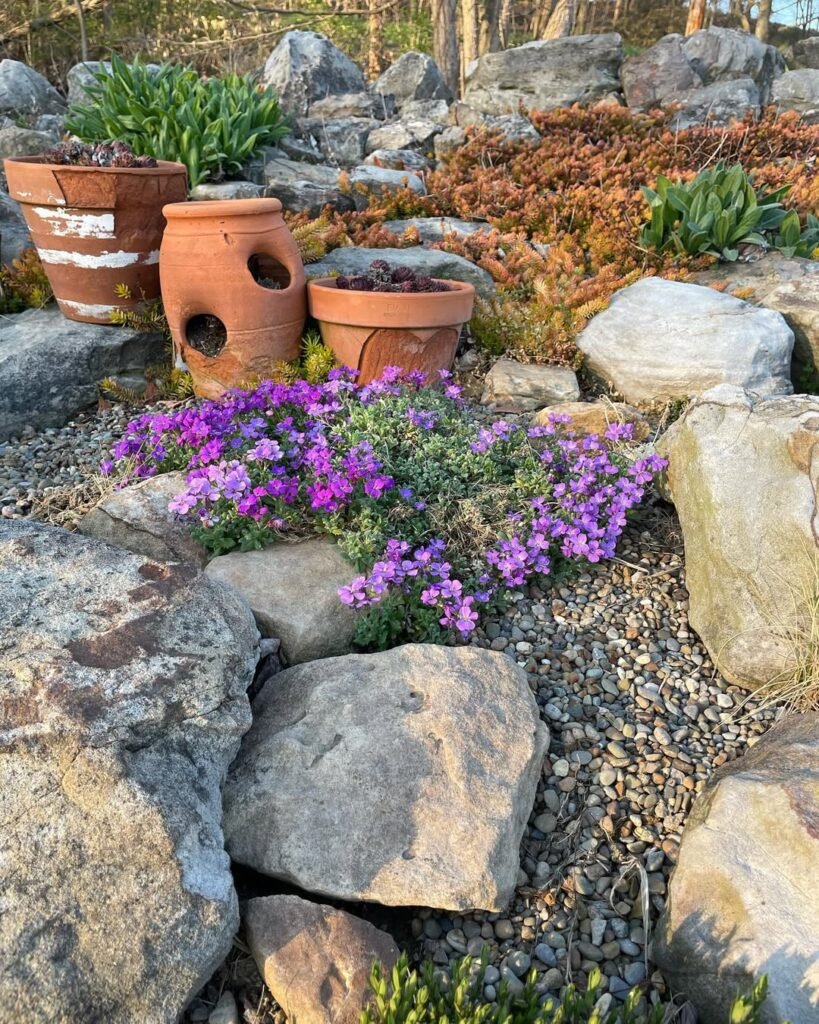
Let me show you 15 corner rock garden ideas that work in small spaces.
Why Corners Are Perfect for Rock Gardens
My three problem corners:
Corner 1: Between fence and shed (5×5 feet)
- Grass wouldn’t grow (too shady)
- Collected leaves
- Always messy
- Eyesore
Corner 2: Property line intersection (4×4 feet)
- Tree roots everywhere
- Impossible to mow
- Compacted soil
- Weedy
Corner 3: Patio and fence meet (3×3 feet)
- Hot reflected heat
- Terrible drainage
- Plants died
- Bare dirt
After rock garden transformations:
- All three corners now attractive
- Zero maintenance
- Strategic plantings thrive
- Garden assets instead of liabilities
Corner Garden Advantages
Why corners work:
Dead space activated:
- Awkward areas become features
- Visual interest in forgotten spots
- Small footprint, big impact
- Turn negatives into positives
Low maintenance:
- Rock gardens need minimal care
- Drought-tolerant plants
- No mowing/trimming
- Set and forget
Microclimate solutions:
- Dry corners: Rock garden perfect
- Shady corners: Shade-loving rock plants exist
- Hot corners: Heat-lovers thrive
- Poor soil: Doesn’t matter
I transformed problem areas into my favorite garden spots.
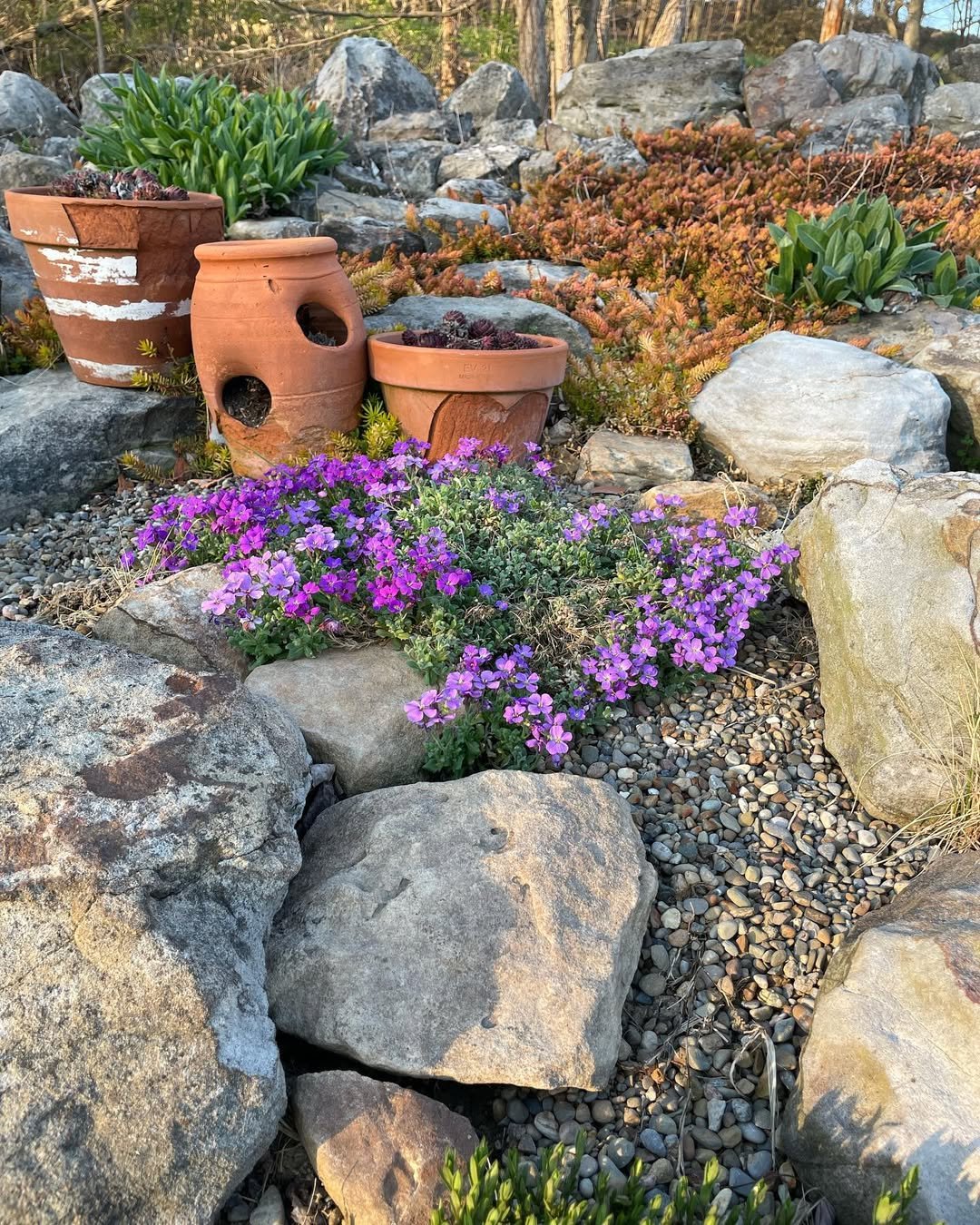
1. Alpine Corner Garden (My Main Design)
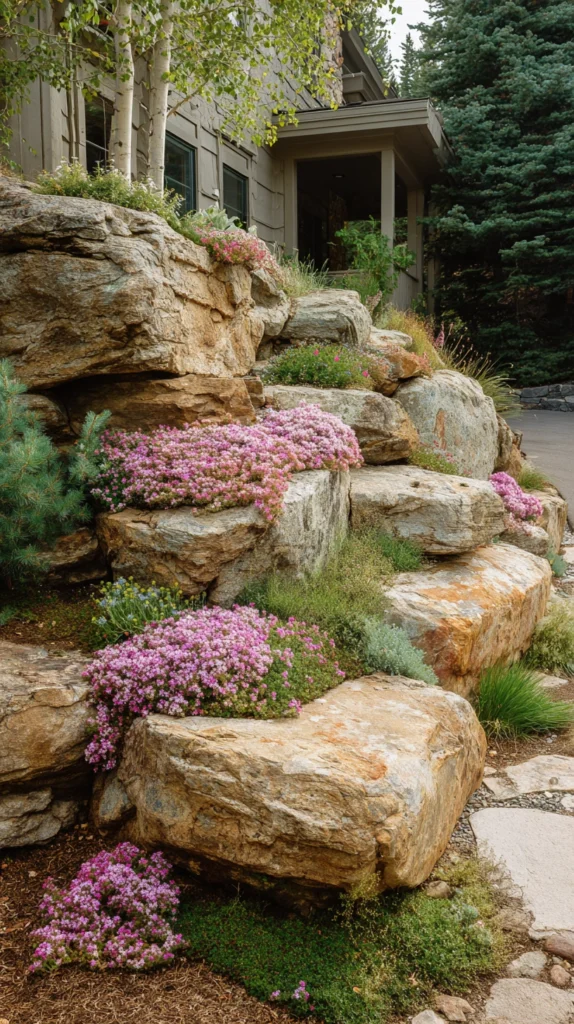
Tiered rocks with alpine plants – mountain meadow in miniature.
My 5×5 corner between fence and shed:
Rock arrangement:
- Large boulders as anchors (3 rocks, ~50 lbs each)
- Medium rocks creating tiers
- Small rocks filling gaps
- Natural stratification
Plant selection:
Sedums (top tier):
- Sedum spurium ‘Dragon’s Blood’ (red)
- Sedum ‘Autumn Joy’ (pink)
- Drought-tolerant
- Spreads slowly
Creeping thyme (middle tier):
- Pink flowers May-June
- Fragrant when stepped on
- Fills between rocks
- Evergreen
Creeping phlox (lower tier):
- Purple spring blooms
- Cascades over rocks
- Low mat-forming
- Evergreen
Accent plants:
- 2 dwarf conifers (vertical interest)
- Hens and chicks in crevices
- 1 small ornamental grass
Cost: $120 (rocks free from construction site, plants $100, mulch $20)
Alpine Garden Benefits
Why this works:
Year-round interest:
- Spring: Phlox blooms purple
- Summer: Sedums green, thyme blooms
- Fall: Sedum flowers pink
- Winter: Evergreens provide structure
Minimal care:
- Water first year only
- No fertilizing
- Trim dead growth once in spring
- 30 minutes yearly maintenance
My favorite corner now – was my worst, now gets most compliments.
2. Desert Corner Garden (Xeriscape Style)
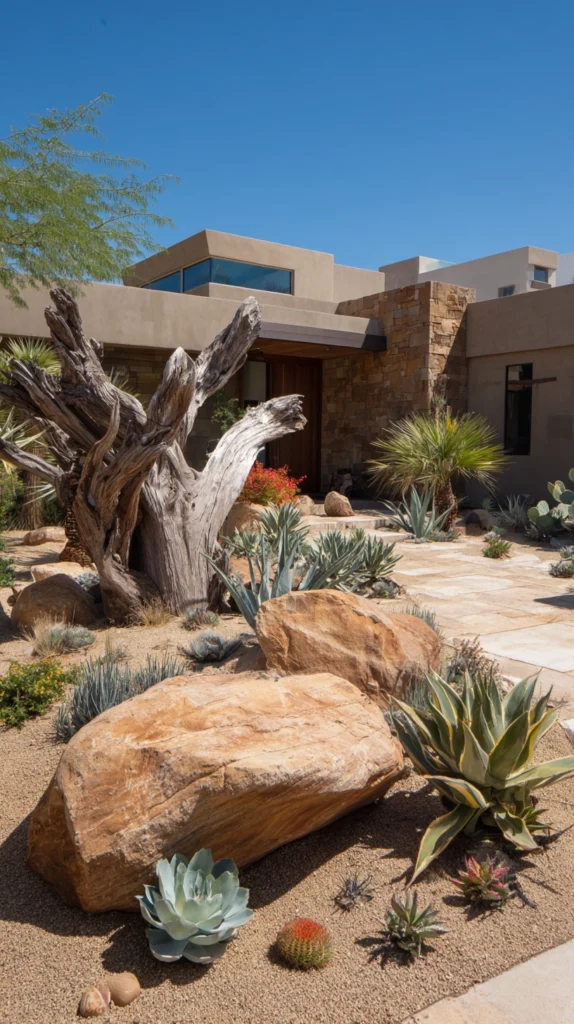
Southwestern aesthetic with cacti and succulents.
My friend’s hot sunny corner (4×4 feet):
Hardscape:
- Decomposed granite base
- Large desert rocks (sandstone)
- Driftwood piece
- Terra cotta pot accent
Plants:
- Hardy prickly pear cactus (2 plants)
- Agave (Zone 7 hardy variety)
- Yucca (vertical accent)
- Sedums filling spaces
Color scheme:
- Warm earth tones
- Terra cotta, tan, rust
- Green plants contrast
- Desert palette
Works in hot dry corners:
- Full sun lovers
- Reflected heat = bonus
- Poor soil fine
- Zero watering after establishment
My friend waters this zero times – self-sufficient after year one.
3. Woodland Shade Corner (Ferns and Moss)
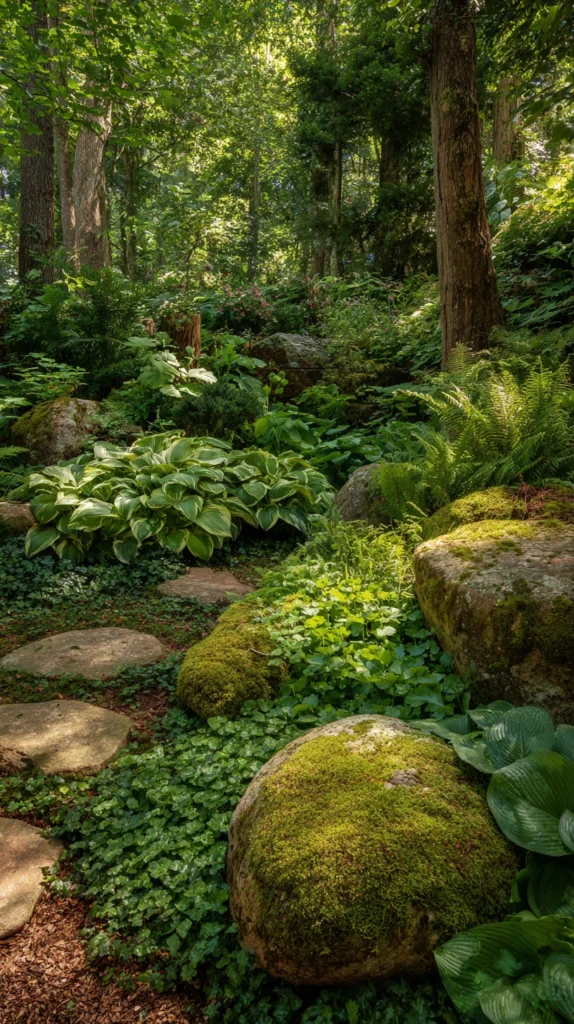
Forest floor aesthetic for shady problem corners.
My north-facing corner (3×5 feet):
Rocks:
- Moss-covered boulders (aged look)
- Flat stepping stones
- Natural river rocks
- Shaded woodland feel
Shade plants:
- Autumn ferns (evergreen)
- Japanese painted ferns (silver-gray)
- Hostas (small varieties)
- Astilbe (pink summer blooms)
Ground cover:
- Natural moss (encouraged to spread)
- Violets (self-seeded)
- Creeping Jenny (bright chartreuse)
Additional elements:
- Small decorative lantern
- Bird bath
- Shade-loving bulbs (spring)
This corner gets 2 hours sun maximum – plants thrive in shade.
Maintenance: Pull occasional weed, that’s it. 15 minutes yearly.
4. Miniature Japanese Garden Corner
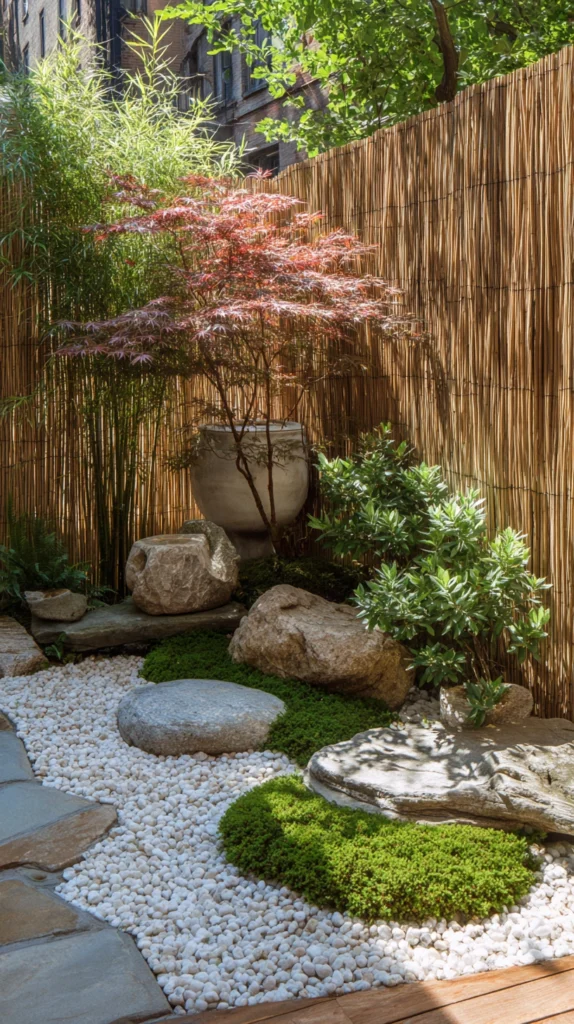
Zen aesthetic with carefully placed elements.
My meditation corner (4×4 feet):
Key elements:
Three rocks (asymmetrical):
- Large vertical stone (18 inches tall)
- Medium flat stone
- Small accent stone
- Represents mountain, water, earth
Raked gravel:
- Pea gravel (1 inch deep)
- Raked in patterns weekly
- Meditative practice
- Represents water flow
Minimal planting:
- 1 dwarf Japanese maple
- Mondo grass border
- Single moss mound
- Restraint is key
Bamboo fence section:
- Backdrop against existing fence
- Creates enclosure
- Adds authenticity
I rake patterns every Sunday – 10 minutes of meditation, resets my week.
5. Vertical Corner Rock Garden (Wall Feature)
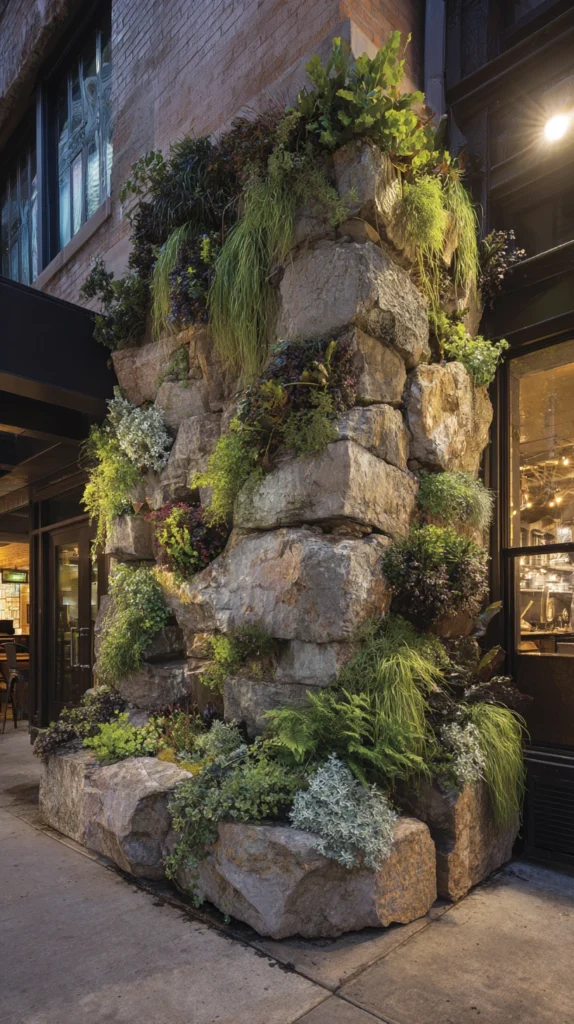
Stacked stone wall with planting pockets.
My corner where fences meet (3×3 feet):
Construction:
- Dry-stacked flat stones
- Rising 3 feet tall
- Soil pockets between stones
- Vertical growing surface
Planting pockets:
- Succulents tucked in crevices
- Creeping plants cascade down
- Alpine strawberries (edible!)
- Hens and chicks cluster
Benefits:
Vertical interest:
- Uses height in small space
- Eye-catching
- Architectural feature
- Maximizes limited footprint
Living sculpture:
- Changes with seasons
- Plants grow and spread
- Dynamic feature
- Always evolving
I planted 20+ plants in 9 square feet of floor space using vertical dimension.
6. Herb Spiral Rock Garden (Functional Beauty)
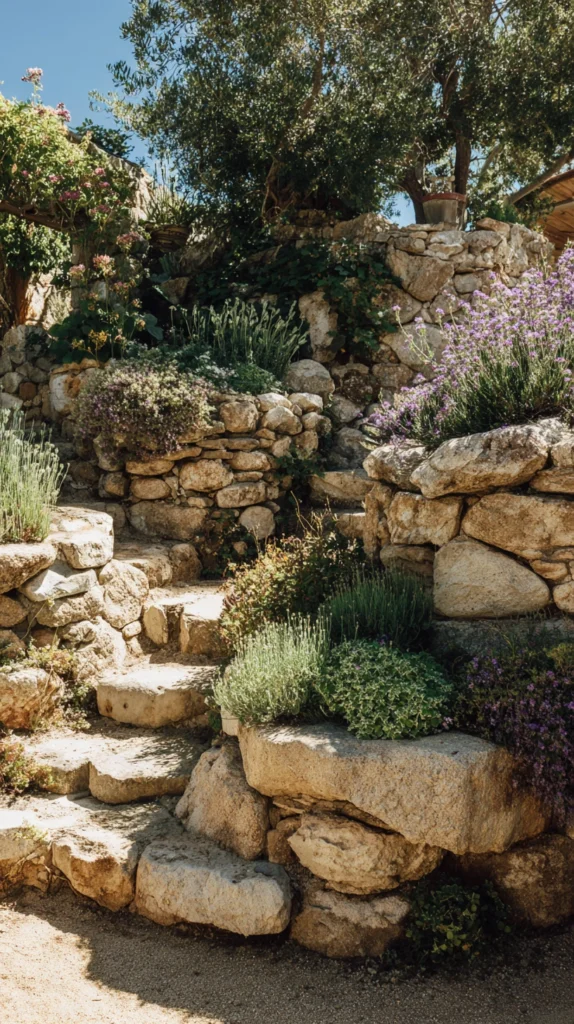
Spiral design creates microclimates for different herbs.
My corner herb garden (5×5 feet):
Spiral construction:
- Rocks spiral upward
- Rises from 6 inches to 2.5 feet at center
- Creates terraces
- Multiple growing zones
Herbs by elevation:
Top (hot, dry):
- Rosemary, thyme, oregano
- Mediterranean herbs
- Minimum water
Middle spiral:
- Basil, sage
- Moderate needs
- Regular harvest
Bottom (cool, moist):
- Parsley, chives, cilantro
- More water
- Partial shade from spiral height
Production:
- Fresh herbs 8 months yearly
- From 25 square feet
- Beautiful and functional
- Corner does double duty
I harvest from this daily when cooking – steps from kitchen door.
7. Succulent Corner Garden (Low Water Beauty)
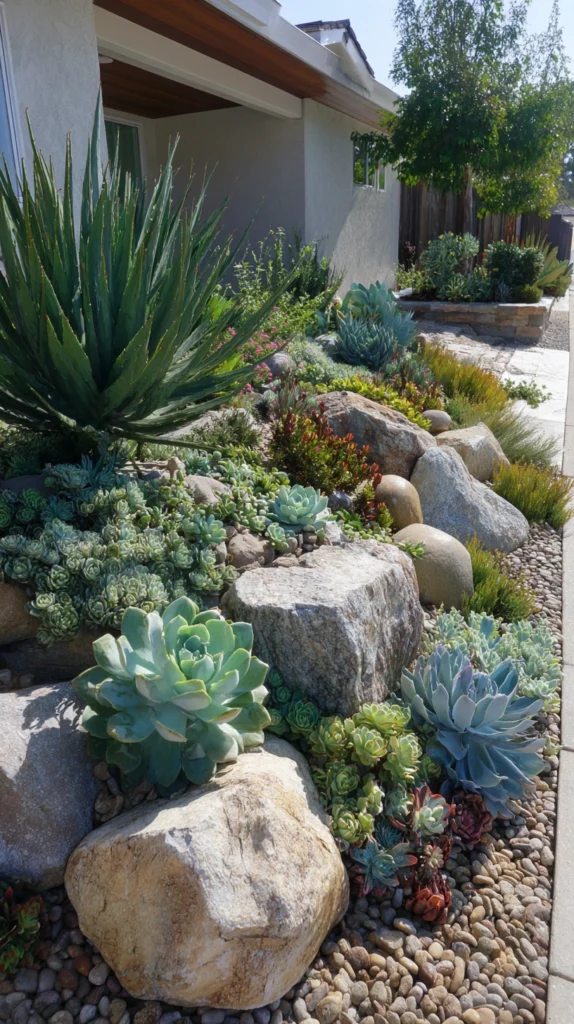
Dense succulent planting between rocks.
My drought-prone corner (4×4 feet):
Rock base:
- Gravel 3 inches deep (drainage)
- Larger rocks as accent
- Sandy soil mix
- Perfect drainage critical
Succulent selection:
- 15+ varieties hens and chicks
- 5 types sedum
- 2 hardy ice plants
- Mixed colors and textures
Color palette:
- Greens, blues, purples, reds
- Changes with seasons
- Flowers in summer
- Year-round interest
Benefits:
Extreme low maintenance:
- Water 2-3 times summer only
- Never fertilize
- Spreads on its own
- Divides provide free plants
Drought-proof:
- Survived 6-week drought
- No supplemental water
- Still looked perfect
- Ultimate low-water garden
Cost: $60 for initial plants, now worth $200+ (multiplied themselves).
8. Spring Bulb Rock Garden (Seasonal Explosion)
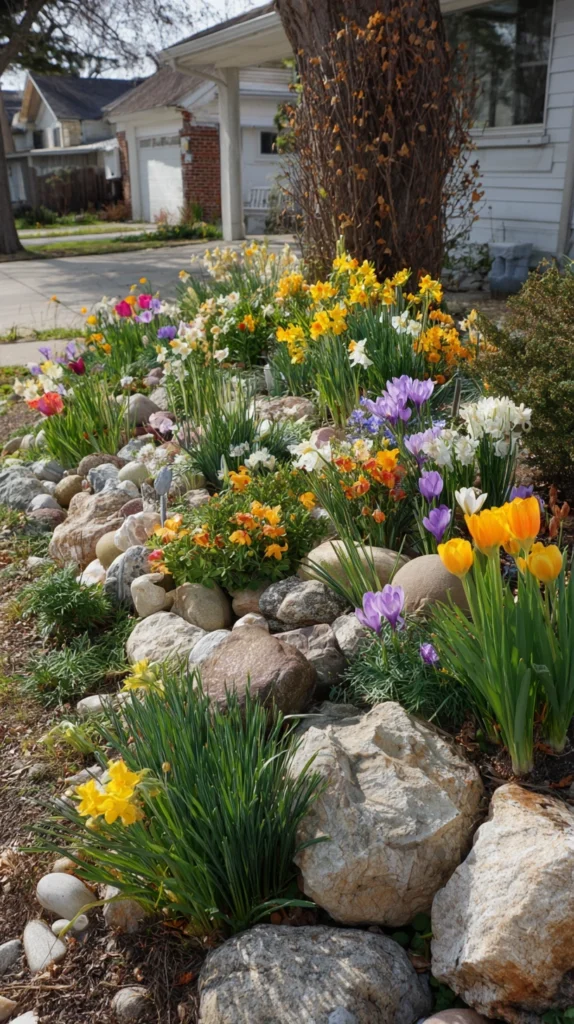
**Rock garden with hundreds of small bulbs – spring spectacular.
My sunny corner (5×5 feet):
Fall planting (one-time effort):
- 200 small bulbs planted between rocks
- Crocus (early March)
- Miniature daffodils (April)
- Species tulips (May)
- Allium (late May)
Rock arrangement:
- Provides backdrop for blooms
- Protects emerging shoots
- Natural stone mulch
- Holds moisture spring
Succession blooming:
- March: Crocus carpet (purple, white, yellow)
- April: Mini daffodils (cheerful yellow)
- May: Tulips and allium (pink, purple)
- June: Foliage dies back gracefully
After bloom:
- Sedums emerge covering dying bulb foliage
- Summer/fall: Sedum garden
- Bulbs dormant underground
- Cycle repeats yearly
Spring show is stunning – neighbors stop to photograph.
9. Waterfall Corner Feature (Sound and Movement)
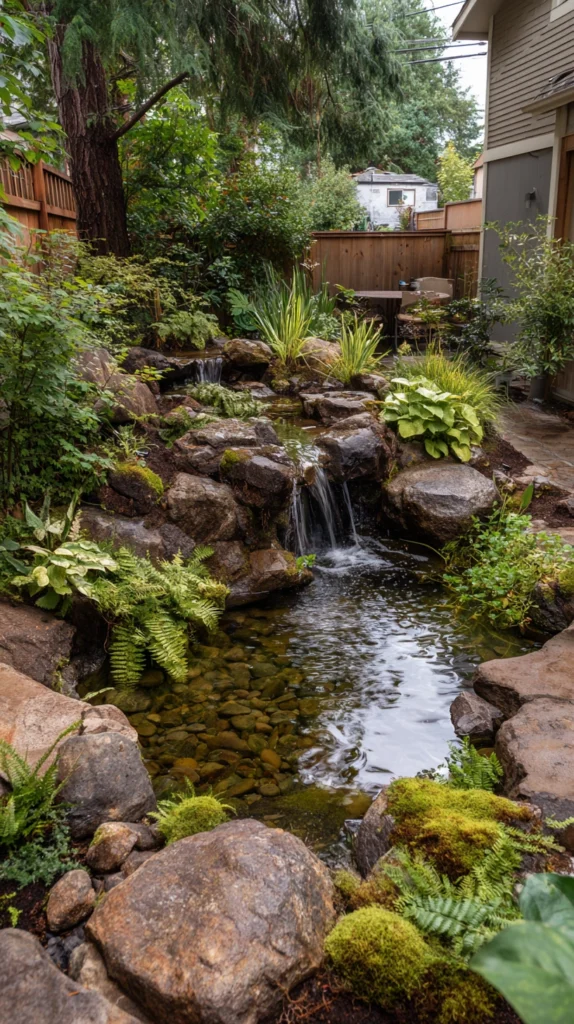
Small recirculating fountain integrated into rock garden.
My patio corner (4×6 feet):
Water feature:
- Small submersible pump ($40)
- Reservoir hidden under rocks
- Water cascades over stones
- Recirculates constantly
Rock placement:
- Arranged to guide water flow
- Natural-looking watercourse
- Pool at bottom (reservoir)
- Pump hidden completely
Plants around water:
- Moisture-lovers near bottom
- Dry-lovers higher up
- Ferns, mosses, sedges
- Lush appearance
Benefits:
Sound:
- Trickling water relaxes
- Masks traffic noise
- Attracts birds
- Creates ambiance
Movement:
- Living feature
- Water sparkles
- Draws attention
- Meditation focus
Electrical: Solar-powered pump option ($60) – no wiring needed.
I sit by this every evening – instant stress relief.
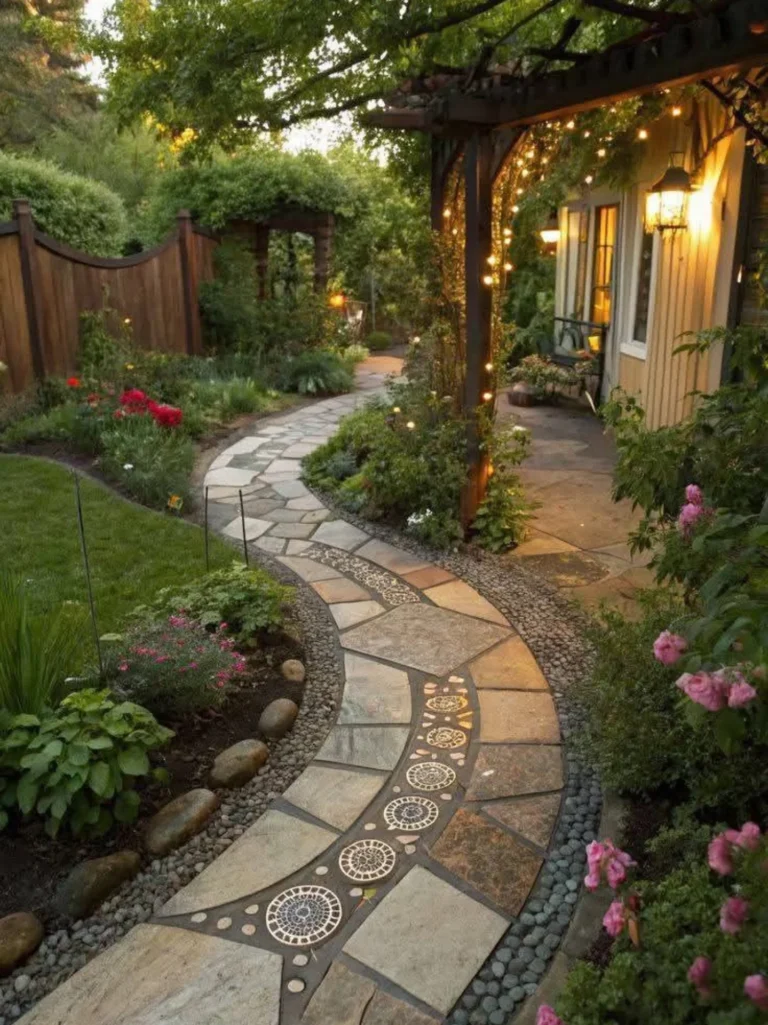
10. Stepping Stone Corner Path (Functional Design)
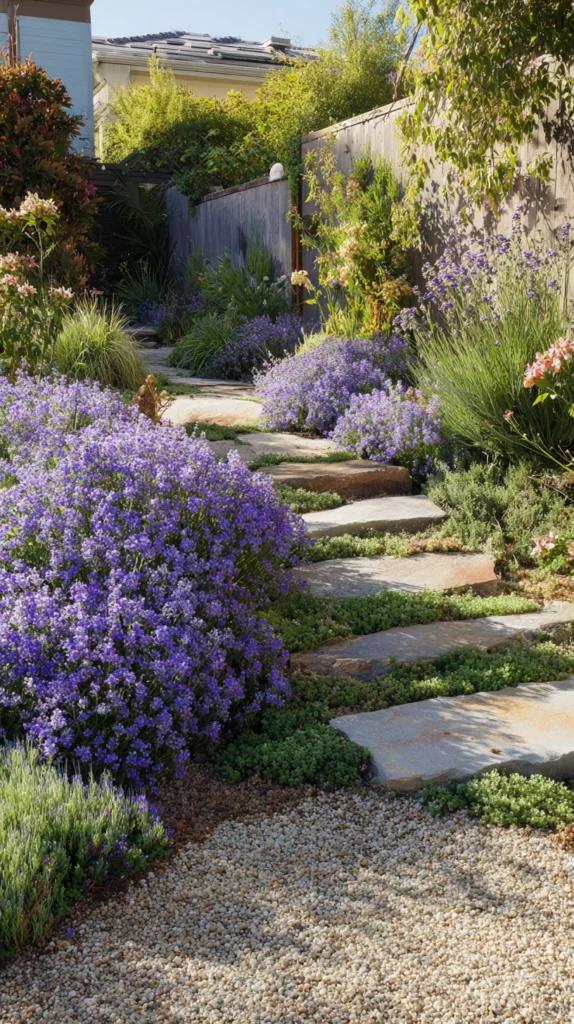
Rocks as path through corner with plantings between.
My corner shortcut (3×5 feet):
Stepping stones:
- 6 flat stones
- Spaced for walking
- Path from gate to patio
- Functional and decorative
Between stones:
- Low creeping thyme
- Can be stepped on
- Releases fragrance
- Soft green carpet
Edges:
- Larger decorative rocks
- Taller plants (lavender, catmint)
- Defines path
- Corner integration
Dual purpose:
- Practical walkway
- Beautiful rock garden
- Solves bare corner
- Gets used daily
Kids take shortcut through here – planted tough ground covers that handle foot traffic.
11. Tiered Corner Garden (Three Levels)
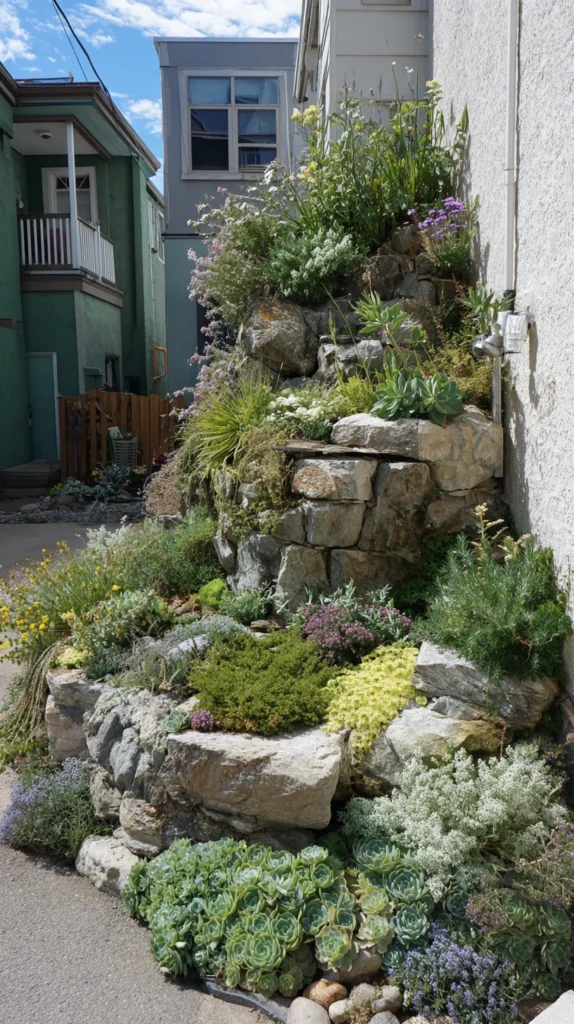
Three distinct levels create depth in small space.
My 5×5 corner:
Level 1 (bottom, 18 inches tall):
- Large foundation rocks
- Shade-tolerant plants
- Hostas, ferns
- Coolest/moistest zone
Level 2 (middle, 30 inches tall):
- Medium rocks
- Moderate sun plants
- Coral bells, smaller hostas
- Transitional zone
Level 3 (top, 42 inches tall):
- Smaller rocks
- Sun-loving alpines
- Sedums, hens and chicks
- Warmest/driest zone
Creates:
- Three microclimates
- Visual height interest
- More planting area
- Mini mountain landscape
From flat boring corner to three-dimensional feature.
12. Monochrome Corner Garden (Single Color Palette)
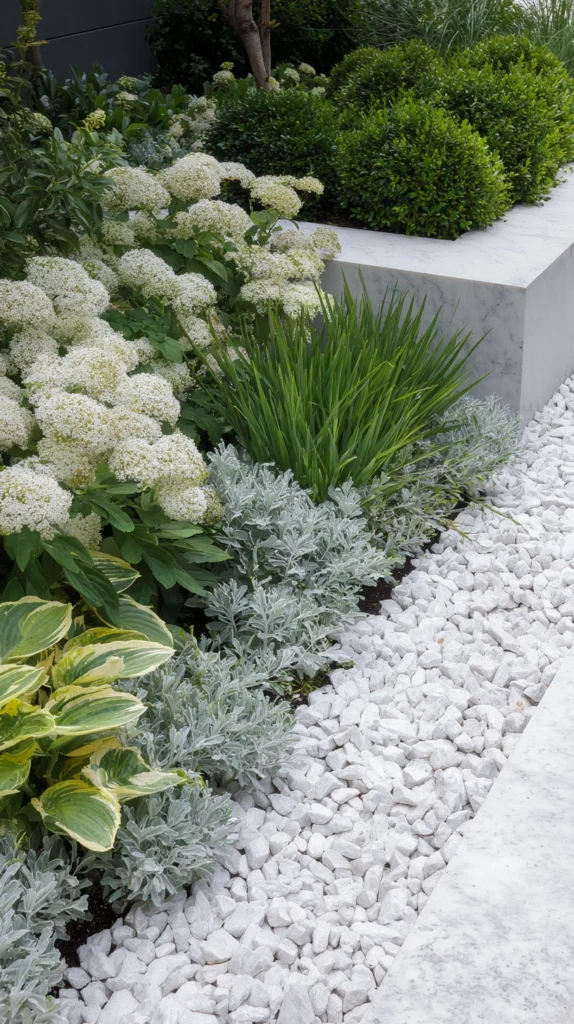
All white and silver – elegant and cohesive.
My formal garden corner (4×4 feet):
White rocks:
- White marble chips (1-2 inch)
- Larger white stones as accents
- Clean modern look
- Bright appearance
Silver/white plants:
- Lamb’s ear (silver foliage)
- Dusty miller (silver-gray)
- White creeping phlox
- White-variegated hostas (shade side)
- Snow-in-summer (white flowers)
Aesthetic:
- Elegant and refined
- Glows at dusk
- Formal appearance
- Cohesive design
Works well:
- Modern landscapes
- Formal gardens
- Moon gardens
- Sophisticated look
Higher maintenance than mixed – must remove any colored volunteers.
13. Edible Corner Rock Garden (Beauty and Function)
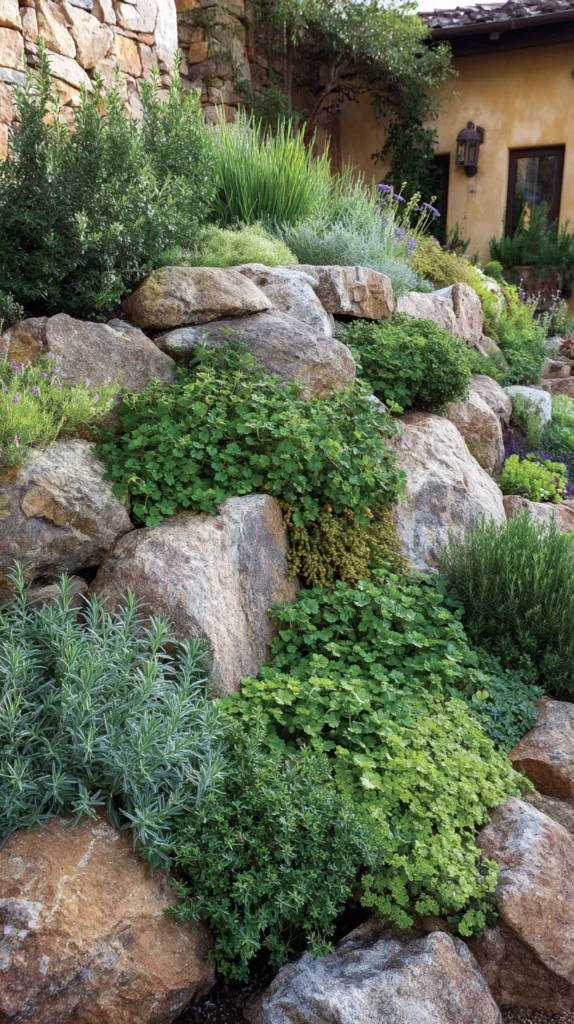
Food-producing plants in rock garden design.
My kitchen garden corner (5×5 feet):
Edible plants:
- Alpine strawberries (perennial, sweet)
- Creeping thyme (culinary herb)
- Oregano cascading over rocks
- Chives in crevices
- Rosemary (warm zones)
- Society garlic (edible flowers)
Rocks:
- Absorb heat (helps Mediterranean herbs)
- Provide drainage
- Define planting areas
- Create tiers for access
Production:
- Fresh herbs daily
- Strawberries June-October
- Edible flowers for salads
- From decorative corner
I harvest from this corner 3-4 times weekly when cooking.
Beautiful AND productive – guests don’t realize it’s food garden.
14. Miniature Conifer Corner (Year-Round Evergreen)
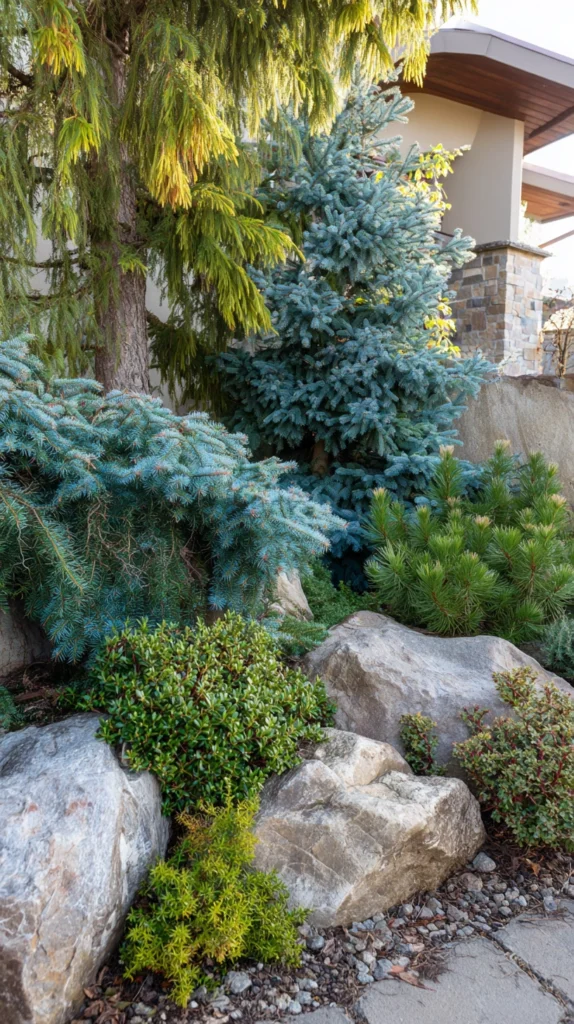
Dwarf conifers provide four-season structure.
My winter-interest corner (4×4 feet):
Dwarf conifers:
- Dwarf Alberta spruce (cone shape, 3 feet)
- Blue star juniper (spreading, silver-blue)
- Gold thread false cypress (bright yellow)
- Weeping Norway spruce (cascading form)
Rocks:
- Enhance evergreen colors
- Provide mulch (suppress weeds)
- Contrast with foliage
- Natural mountain setting
Why I love this:
Year-round interest:
- Summer: Varied greens, blues, yellows
- Fall: Some bronzing
- Winter: Only color in garden
- Spring: New growth bright
Low maintenance:
- Evergreens require nothing
- No deadheading
- Minimal pruning
- Constant appearance
This corner looks good 12 months – insurance against winter blahs.
15. Cottage-Style Corner (Romantic Abundance)
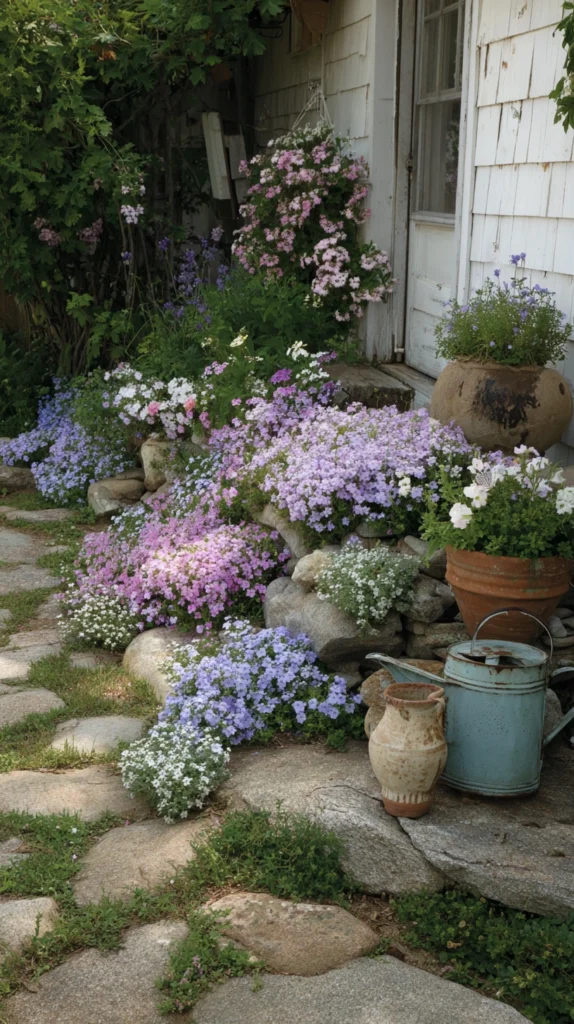
Overflowing with flowers – controlled chaos.
My front yard corner (4×5 feet):
Rock base:
- Irregular fieldstones
- Informal placement
- Rustic character
- Cottage aesthetic
Abundant planting:
- Creeping phlox (purple, pink, white)
- Basket-of-gold (bright yellow)
- Dianthus (pink, fragrant)
- Catmint (purple spikes)
- Lamb’s ear (silver foliage)
- Self-seeding annuals (alyssum, bachelor buttons)
Cottage elements:
- Vintage watering can
- Broken pottery tucked in
- Climbing rose nearby
- Relaxed feel
Benefits:
Romantic appearance:
- Overflowing blooms
- Soft colors
- Informal design
- Welcoming feel
Self-seeding:
- Annuals reseed
- Changes yearly
- Surprises each season
- Low effort abundance
My most-photographed corner – peak bloom May-June is spectacular.
Choosing Rocks for Corner Gardens
Rock selection matters.
Rock Types I Use
River rock (smooth):
- Rounded edges
- Various sizes (2-8 inches)
- Natural looking
- $40 per ton
Fieldstone (irregular):
- Angular natural stone
- Larger pieces (6-24 inches)
- Rustic appearance
- $60 per ton
Boulders (statement pieces):
- 50-200 pounds each
- Anchor design
- Focal points
- $80-200 each
Gravel (base layer):
- Pea gravel or decomposed granite
- 1-3 inches deep
- Weed suppression
- $30 per cubic yard
How Much Rock Needed
My 5×5 corner:
- Base gravel: 1 cubic yard ($30)
- Medium rocks: 0.5 ton ($20)
- 3 boulders: $150
- Total: $200
Smaller 3×3 corner:
- Base gravel: 0.5 cubic yard ($15)
- Medium rocks: 0.25 ton ($10)
- 1-2 boulders: $50
- Total: $75
Finding Free Rocks
I’ve sourced rocks free:
- Construction sites (ask permission)
- Craigslist “free” section
- Road construction (state allows collecting)
- Creek beds (where legal)
- Farmers clearing fields
My alpine corner rocks: 100% free from construction site.
Plant Selection for Rock Gardens
Right plants = success.
Sun-Loving Rock Garden Plants
My reliable performers:
Sedums:
- 20+ varieties
- Drought-tolerant
- Many colors
- Spreads slowly
Hens and chicks:
- Infinite varieties
- No water needed
- Multiplies freely
- Fills crevices
Creeping phlox:
- Spring blooms (purple, pink, white)
- Evergreen mat
- Cascades beautifully
- Fragrant
Dianthus:
- Pink flowers
- Spicy fragrance
- Silver foliage
- Repeat bloomer
Creeping thyme:
- Purple/pink/white flowers
- Fragrant foliage
- Walkable
- Evergreen
Shade Rock Garden Plants
For shady corners:
Ferns:
- Autumn fern (evergreen)
- Japanese painted fern (silver)
- Maidenhair fern (delicate)
- Low maintenance
Hostas:
- Miniature varieties only
- Varied foliage
- Shade-loving
- Easy care
Coral bells:
- Colorful foliage
- Delicate flowers
- Shade-tolerant
- Year-round interest
Moss:
- Encourages spreading naturally
- Carpet effect
- Very low
- Ancient feel
Installation Step-by-Step
My corner garden process:
Weekend 1: Preparation
Saturday:
- Mark corner area
- Remove existing grass/weeds
- Dig out 3 inches deep
- Level base
Sunday: 5. Add landscape fabric (optional, I skip it) 6. Spread gravel base (1-2 inches) 7. Compact lightly
Time: 4-6 hours total
Weekend 2: Rock Placement
Saturday:
- Position largest boulders first
- Create natural-looking arrangement
- Bury bottom third of boulders
- Check from multiple angles
Sunday: 5. Add medium rocks 6. Fill gaps with smaller rocks 7. Create planting pockets 8. Final adjustments
Time: 4-6 hours total
Weekend 3: Planting
Saturday:
- Mix planting soil (existing + compost)
- Plant largest plants first
- Work from back to front
- Leave space for spreading
Sunday: 5. Fill in with smaller plants 6. Tuck plants in crevices 7. Water thoroughly 8. Add finishing touches
Time: 3-4 hours total
Total time investment: 12-16 hours over 3 weekends
Maintenance Reality
Rock gardens are LOW maintenance.
My actual yearly care:
Spring (30 minutes)
- Pull handful of weeds
- Trim dead growth
- Divide overcrowded plants
- Refresh mulch if needed
Summer (monthly, 10 minutes)
- Water only during extreme drought (rarely)
- Spot-weed (minimal)
- Deadhead if feeling ambitious (optional)
- Enjoy
Fall (20 minutes)
- Cut back dead stems
- Plant spring bulbs (if desired)
- Check rock stability
- That’s it
Winter
- Nothing
- Zero maintenance
- Evergreens provide interest
- Rest
Total annual maintenance: 2-3 hours
Compare to lawn in same space: 26+ hours yearly (weekly mowing)
I saved 23+ hours yearly per corner converted to rock garden.
Common Rock Garden Mistakes
I made these errors:
Mistake 1: Too Much Mulch
Buried rocks under 3 inches mulch – looked weird, defeated purpose.
Fix: Rocks ARE the mulch. Use minimal soil/mulch.
Mistake 2: Wrong Plant Choices
Planted moisture-lovers in rock garden – they died.
Fix: Choose drought-tolerant, alpine, or appropriate plants.
Mistake 3: Flat Arrangement
All rocks same height – boring and two-dimensional.
Fix: Create tiers, vary heights, bury boulders partially.
Mistake 4: Overcrowding
Planted too densely – couldn’t see rocks, looked messy.
Fix: Space plants, let rocks show, embrace restraint.
Mistake 5: Poor Drainage
Clay soil corner – plants rotted.
Fix: Amend soil, add gravel base, ensure water drains.
Design Principles That Work
What makes rock gardens beautiful:
Odd Numbers
Use 3, 5, or 7 of things:
- Rock clusters
- Plant groupings
- Boulder arrangements
- More natural than even numbers
My corners have 3 main boulders each – focal triangle.
Varied Heights
Create layers:
- Tall rocks/plants (back or center)
- Medium (middle)
- Low/creeping (front/edges)
- Three-dimensional interest
Repetition
Repeat elements:
- Same rock type throughout
- Plant varieties repeated
- Color echoes
- Cohesive design
My sedums appear 3-5 times in each corner – ties it together.
Negative Space
Leave breathing room:
- Not every inch filled
- Rocks visible
- Gravel showing
- Restraint is beautiful
I learned this hard way – less is more in rock gardens.
Budget Breakdown
My three corners transformed:
Corner 1 (alpine, 5×5):
- Rocks: Free (construction site)
- Plants: $100 (15 plants)
- Gravel: $30
- Total: $130
Corner 2 (succulent, 4×4):
- Rocks: $40 (purchased)
- Plants: $60 (20+ small succulents)
- Gravel: $20
- Total: $120
Corner 3 (woodland, 3×5):
- Rocks: Free (creek collection)
- Plants: $80 (shade plants)
- Soil amendments: $15
- Total: $95
Three corners total: $345
Previous annual lawn maintenance cost (same areas): $0 materials but 60+ hours yearly
New annual maintenance: 6 hours total
Time saved: 54 hours yearly
My time worth $20/hour: Saves $1,080 in value yearly
ROI achieved: First year (in time saved)
My Favorite Corner Transformation
The one I’m most proud of:
Before: Fence corner with dead grass, collected leaves, eyesore
After: Alpine rock garden with tiered boulders, blooming creeping phlox, sedums, dwarf conifers
Investment: $130 Time: 16 hours over 3 weekends Maintenance: 2 hours yearly Compliments: Countless
This corner is now: My favorite spot to photograph, where I show visitors first, the inspiration for my other corners.
Transformed my least-favorite space into garden highlight.
Getting Started This Month
Don’t tackle all corners at once.
This weekend:
- Choose ONE corner
- Assess conditions (sun, soil, drainage)
- Sketch basic plan
- List materials needed
Next weekend:
- Source rocks (free or purchase)
- Buy plants appropriate for conditions
- Prepare site
- Start installation
My recommendation:
Start with easiest corner first:
- Full sun = alpine or succulent garden
- Partial shade = woodland garden
- Choose what appeals to you
Budget $100-150 for the first corner including plants and materials.
After success with one, tackle others with confidence.
Now go transform those awkward corners into beautiful low-maintenance gardens!
Quick Summary:
Best corner rock garden styles:
Easiest: Alpine garden (sedums, creeping phlox, low care) Lowest maintenance: Succulent (water 2-3× summer only) Best for shade: Woodland (ferns, hostas, moss) Most functional: Herb spiral (beautiful + productive) Year-round interest: Miniature conifers (evergreen structure)
By sun exposure:
Full sun: Alpine, desert, succulent, herb spiral Partial shade: Cottage style, spring bulbs, tiered Full shade: Woodland, ferns, moss garden
Typical corner sizes:
Small: 3×3 feet (9 sq ft) Medium: 4×4 to 5×5 feet (16-25 sq ft) Large: 5×5+ feet (25+ sq ft)
Rock requirements:
Small corner (3×3):
- Base gravel: 0.5 cubic yard ($15)
- Rocks: 0.25 ton ($10-20)
- 1-2 boulders: $50
- Total: $75-85
Medium corner (5×5):
- Base gravel: 1 cubic yard ($30)
- Rocks: 0.5 ton ($20-40)
- 3 boulders: $150
- Total: $200
Plant quantities:
Small corner: 6-10 plants Medium corner: 12-18 plants Large corner: 20-30 plants
Budget ranges:
Budget: $75-100 (free rocks, basic plants) Standard: $120-150 (purchased rocks, quality plants) Premium: $200-300 (large boulders, specialty plants)
Best low-maintenance plants:
Sun:
- Sedums (20+ varieties, zero care)
- Hens and chicks (multiply freely)
- Creeping thyme (fragrant, evergreen)
- Creeping phlox (spring blooms)
Shade:
- Ferns (set and forget)
- Hostas (mini varieties)
- Moss (natural spread)
- Coral bells (colorful foliage)
Construction timeline:
Weekend 1: Site prep (4-6 hours) Weekend 2: Rock placement (4-6 hours) Weekend 3: Planting (3-4 hours) Total: 12-16 hours over 3 weekends
Annual maintenance:
Spring: 30 min (cleanup, trim) Summer: 10 min monthly (spot weeding) Fall: 20 min (cut back) Winter: Nothing Total: 2-3 hours yearly
vs. lawn maintenance same space:
- Mowing: 30 min weekly × 26 weeks = 13 hours
- Trimming: 15 min weekly × 26 weeks = 6.5 hours
- Fertilizing: 2 hours
- Total: 21.5+ hours yearly
Time saved: 18-19 hours yearly
Design principles:
Odd numbers: 3, 5, or 7 (rocks, plants, groupings) Varied heights: Tall, medium, low layers Repetition: Echo plants/rocks throughout Negative space: Let rocks show, don’t overfill
Common mistakes:
- Too much mulch (buries rocks)
- Wrong plants (moisture-lovers in dry rock garden)
- Flat design (no height variation)
- Overcrowding (can’t see rocks)
- Poor drainage (plants rot)
Free rock sources:
- Construction sites (ask permission)
- Craigslist free section
- Road construction areas
- Creek beds (where legal)
- Farmers clearing fields
Drainage essentials:
Must have:
- Gravel base layer (1-2 inches)
- Amended soil (add perlite/sand if clay)
- Slope away from structures
- Check after rain (shouldn’t puddle)
Rock placement tips:
Bury bottom third: Makes boulders look natural Cluster odd numbers: Groups of 3 or 5 Vary sizes: Large, medium, small together Create tiers: Use height for interest
Plant spacing:
Creeping plants: 12-18 inches apart Clumping plants: 8-12 inches apart Sedums: 6-10 inches (spread quickly) Allow for growth: 2-3 year mature size
Seasonal interest:
Spring: Creeping phlox, bulbs, new growth Summer: Sedums, thyme blooms, lush greens Fall: Sedum flowers, foliage colors Winter: Evergreens, rock structure, conifers
ROI timeline:
Initial investment: $100-200 typical Annual savings: Time (20+ hours) + reduced water Payback: Year 1 (in labor saved) Property value: Increased curb appeal
Quick start plan:
This weekend: Choose corner, assess conditions Next weekend: Source rocks, buy plants Third weekend: Install base, place rocks Fourth weekend: Plant, finish details
Success indicators:
- Plants thriving in conditions
- Drainage working (no standing water)
- Low maintenance achieved
- Corner transformed from liability to asset
- Neighbors asking how you did it
Remember: Start with one corner, choose plants for actual conditions (not wishful thinking), use rocks as the feature (not buried in plants), embrace low-maintenance mindset.