13 DIY Garden Arches Ideas To Frame Your Beautiful Backyard
My garden paths had no personality for years. Just flat walkways with plants on either side – boring and forgettable.
Then I built my first arch over the main path. Immediate transformation – suddenly my garden had structure, focal points, and romance.
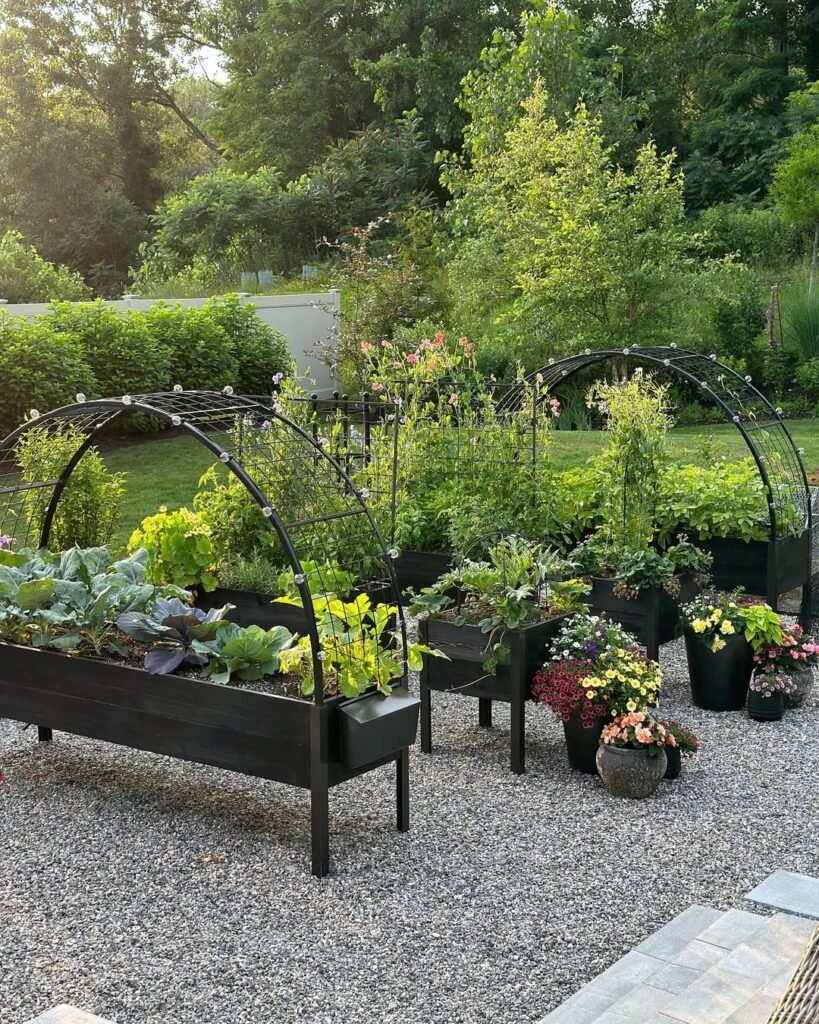
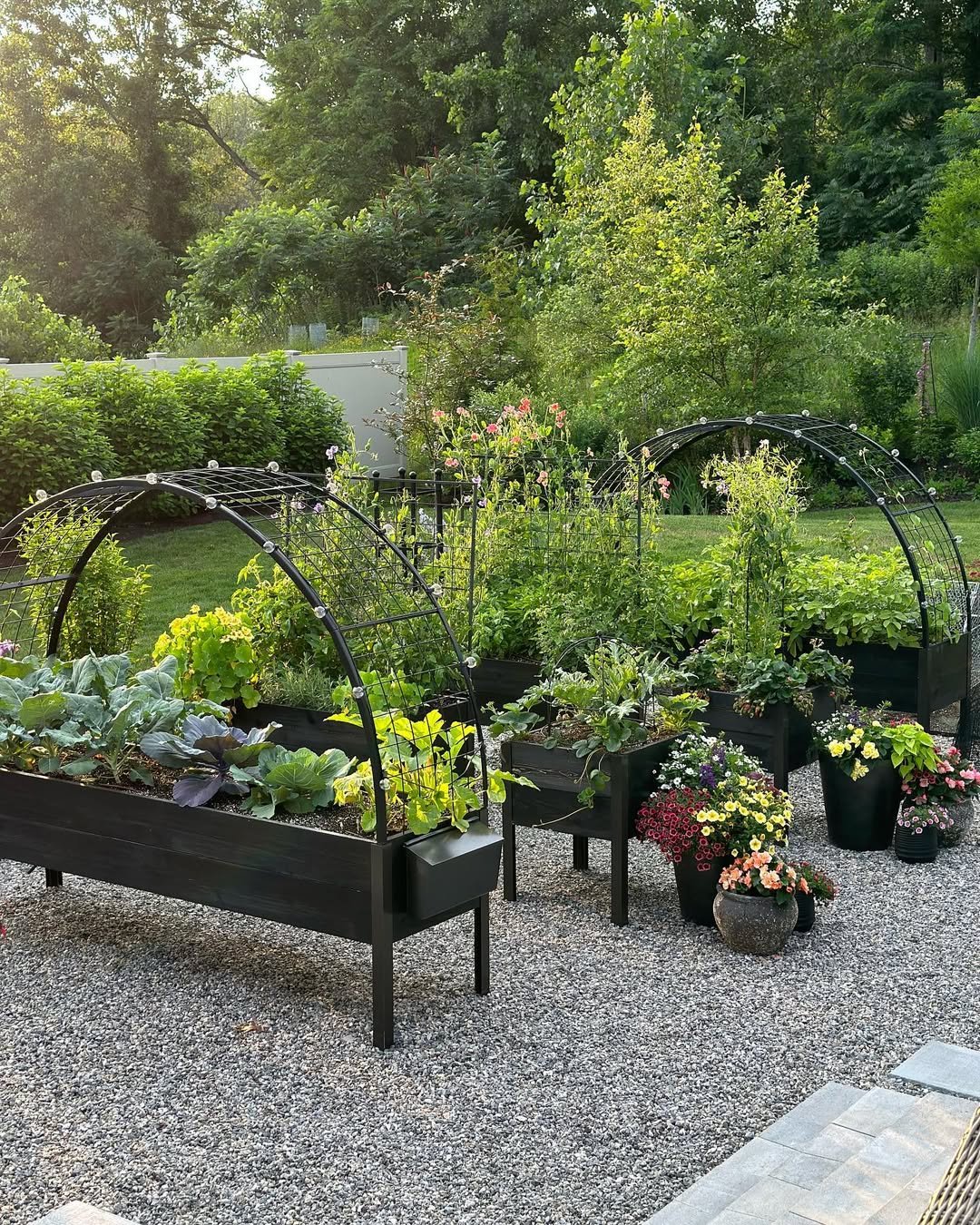
Now I have 4 different arches creating garden rooms and framing views. Same yard, completely different feel.
Let me show you 13 DIY arch ideas that add drama and beauty to any garden.
Why Garden Arches Change Everything
My garden before arches:
Three paths through yard:
- Front to back: Functional, plain
- Side garden: Just mulch
- Vegetable area: Utilitarian rows
Visual impact: Flat, one-dimensional, no focal points
After adding arches:
Same three paths:
- Main path: Rose arch entrance (romantic)
- Side garden: Arbor tunnel (mysterious)
- Vegetable area: Productive cucumber arch (functional + beautiful)
Visual impact: Three-dimensional, garden rooms created, Instagram-worthy
Arches added vertical interest my flat garden desperately needed.
What Arches Do for Gardens
Functional benefits:
Define spaces:
- Create garden “rooms”
- Mark transitions
- Frame views
- Direct movement
Support plants:
- Climbing roses
- Vines and vegetables
- Vertical growing
- Living sculpture
Aesthetic impact:
Immediate structure:
- Vertical elements
- Focal points
- Architectural interest
- Professional appearance
Romance factor:
- Walking under blooms
- Framed views
- Sense of mystery
- Enchanted garden feel
My favorite comment from guests: “It feels like walking into a secret garden.”
1. Cattle Panel Arch (My Go-To Design)
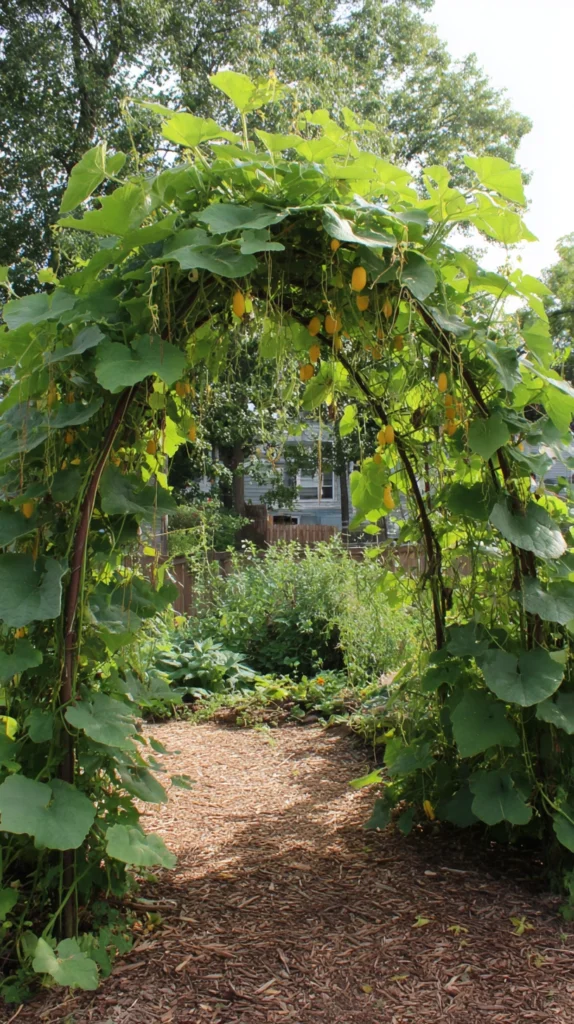
Single cattle panel bent into arch – simple and bulletproof.
My main vegetable garden arch:
Materials:
- One 16-foot cattle panel ($25)
- Two T-posts or rebar pieces ($16)
- Wire ties ($3)
- Total: $44
Construction (45 minutes):
- Drive posts 8 feet apart, 2 feet deep
- Bend cattle panel into arch (need 2 people)
- Wire panel to posts at multiple points
- Creates 6-foot tall walking tunnel
What I grow on it:
- 4 cucumber plants (both sides)
- Produces 60+ pounds cucumbers
- Harvest walking through arch
- Functional and beautiful
Why I love this design:
Incredibly strong:
- Holds heavy crops without sagging
- Wind-resistant
- No maintenance needed
- 5 years old, still perfect
Easy construction:
- 45 minutes start to finish
- Basic tools only
- One panel does it all
- Foolproof design
Versatile:
- Vegetables or flowers
- Any climbing plant
- Year-round structure
- Reusable annually
Best value arch I’ve built – $44 for permanent structure.
Cattle Panel Tips
Bending technique:
Two-person method:
- One person each end
- Lift and bend slowly
- Creates natural arch shape
- Don’t force (steel is strong)
I tried alone first – impossible. Get help for this step.
Securing method:
- Wire at multiple points (not just top)
- Every 2 feet down each side
- Prevents shifting in wind
- Check ties annually
2. PVC Pipe Arbor (Budget Friendly)
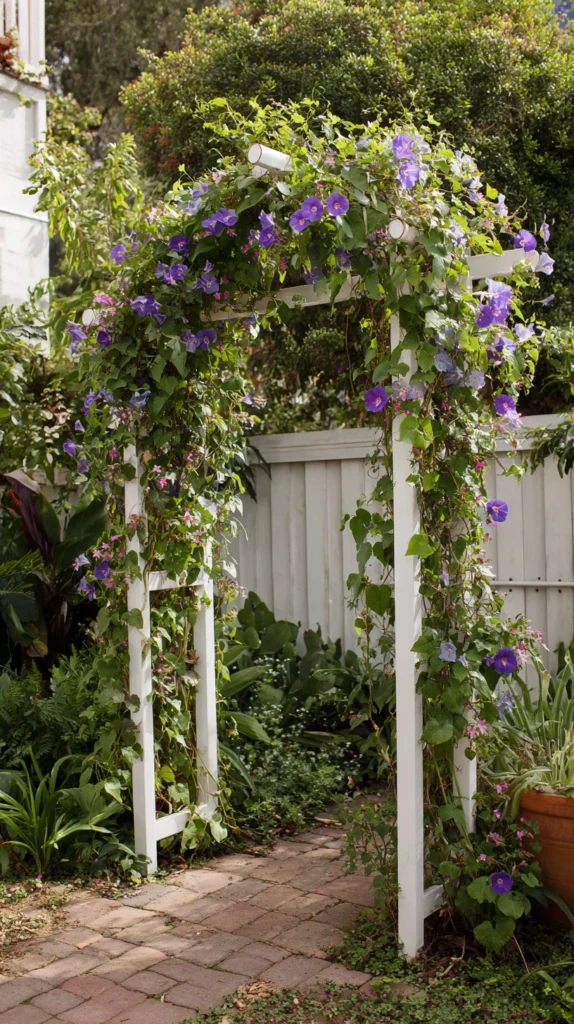
PVC plumbing pipe creates lightweight decorative arch.
My daughter’s fairy garden entrance:
Materials:
- Four 10-foot PVC pipes (1-inch diameter, $20)
- Four elbow joints ($8)
- Four T-joints ($10)
- PVC cement ($5)
- Total: $43
Design:
- Two vertical sides connected by curved top
- Cemented joints (permanent)
- Painted green (spray paint, $8)
- Lightweight vines only
What grows on it:
- Morning glories (annual)
- Sweet peas (spring)
- Lightweight flowers
- Decorative only (not food weight)
Benefits:
Customizable:
- Cut to any size
- Paint any color
- Easy modifications
- Personalized design
Lightweight:
- Easy to move
- Reposition seasonally
- One person carries it
- No heavy equipment
Limitations:
- Not strong (flowers only)
- Looks plastic without paint
- Degrades in sun over 3-5 years
- Replace eventually
Perfect for: Decorative areas, kids’ gardens, annual flowers
3. Wooden Arbor (Classic Design)
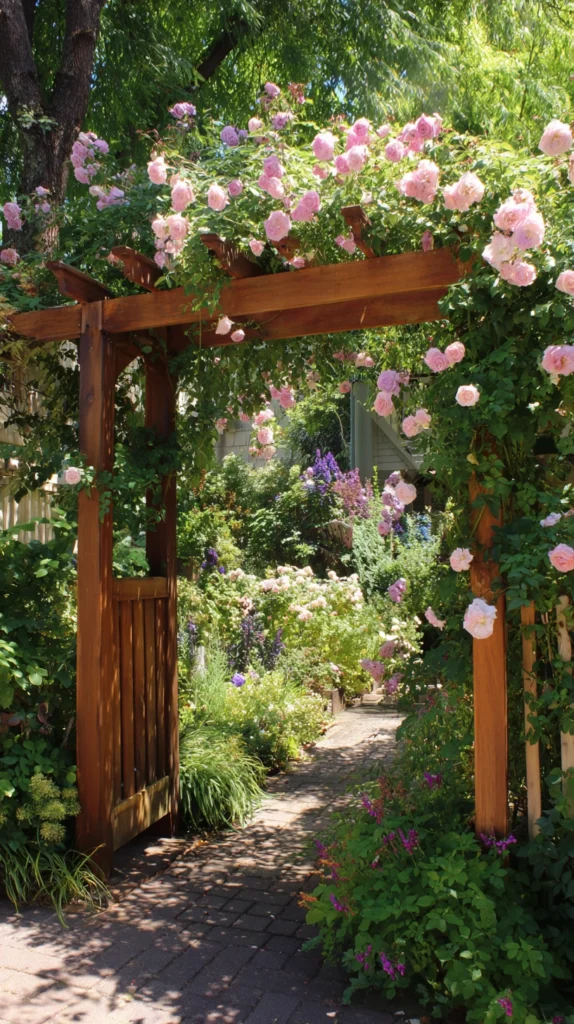
Traditional lumber construction – timeless garden feature.
My main garden entrance:
Materials:
- Four 4×4 posts (8 feet, $40)
- Two 2×6 top beams (8 feet, $30)
- Two 2×4 crossbeams ($15)
- Decorative brackets ($25)
- Concrete ($10)
- Stain and sealer ($20)
- Total: $140
Construction (one weekend):
Saturday:
- Dig post holes (2 feet deep)
- Set posts in concrete
- Let cure overnight
Sunday:
- Attach top beams
- Add crossbeams and decorative elements
- Stain/seal all wood
Dimensions:
- 8 feet tall
- 6 feet wide
- 2 feet deep
- Human-scale entrance
What climbs it:
- Climbing rose ‘New Dawn’ (both sides)
- Clematis interplanted
- Year 3 now – completely covered
- Blooms May-October
This is my showpiece arch – most photographed spot in garden.
Wooden Arbor Benefits
Why wood works:
Natural appearance:
- Blends with garden
- Ages beautifully
- Can stain any color
- Traditional aesthetic
Very sturdy:
- Supports heavy roses
- Wind-resistant when properly built
- Posts in concrete = permanent
- 10-15 year lifespan
Customizable:
- Any size possible
- Add bench beneath
- Lattice sides
- Personal design
Higher cost but: Makes statement, lasts decade+, increases property value
4. Rebar and Wire Arch (Industrial Strength)
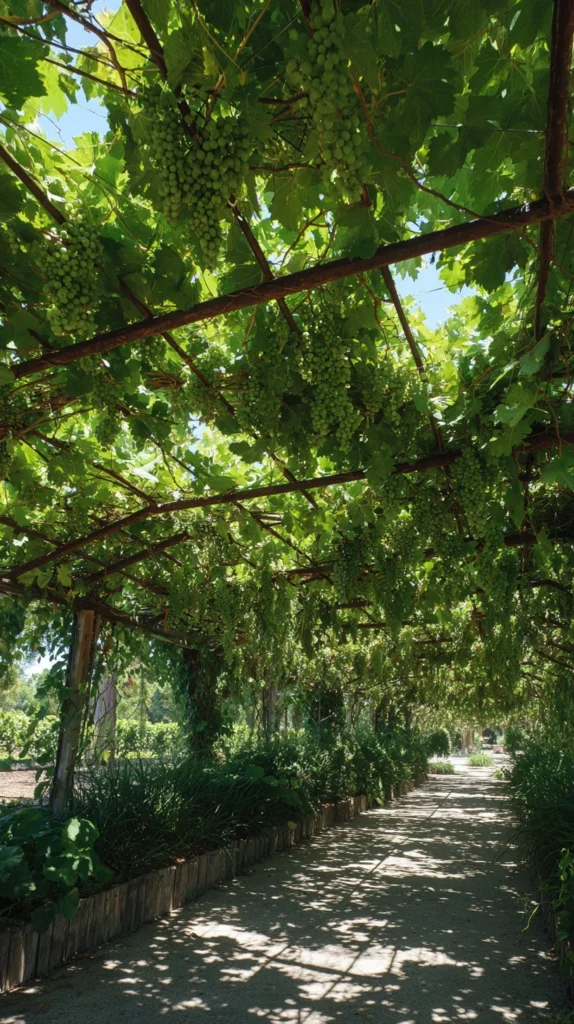
Metal rebar framework with wire mesh – super durable.
My grape arbor:
Materials:
- Eight 10-foot rebar pieces (1/2 inch, $24)
- One cattle panel section ($15)
- Heavy wire ties ($5)
- Total: $44
Construction:
- Drive 4 rebar posts each side (6 feet apart)
- Bend cattle panel over top
- Wire panel to rebar at every intersection
- Creates 6-foot wide tunnel
Why rebar:
Strongest option:
- Holds grape vines (heavy!)
- Wind-proof
- Zero maintenance
- Outlasts me probably
Permanent installation:
- Won’t move ever
- Concrete not needed (driven deep)
- Set it and forget it
- 20+ year solution
What I grow:
- 2 grape vines (Concord)
- Full coverage year 3
- Creates shaded tunnel
- 40 pounds grapes annually
This arch doubles as: Walking path and productive growing structure
5. Bamboo Arch (Natural and Renewable)
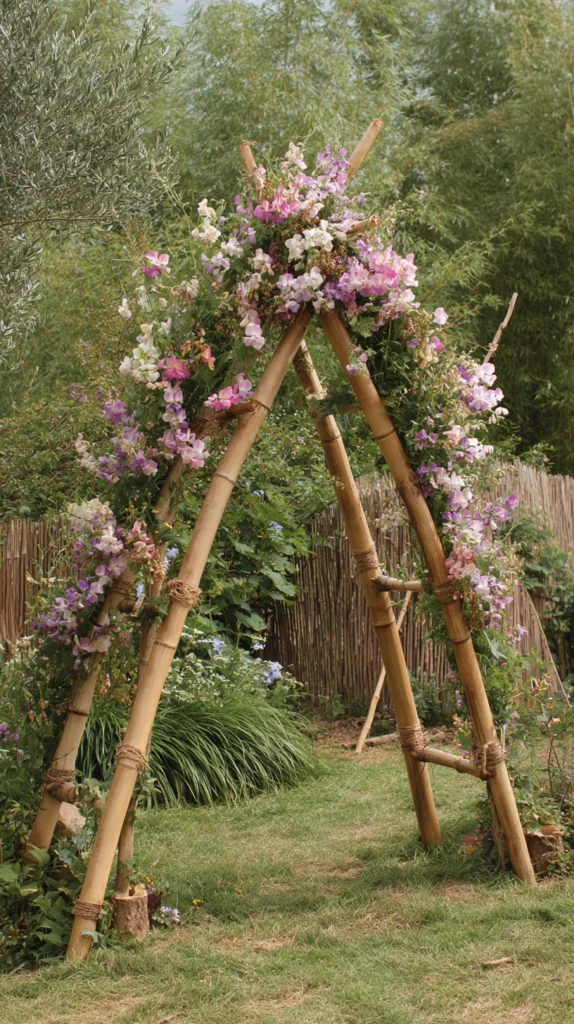
Bamboo poles lashed together – eco-friendly design.
My cottage garden arch:
Materials:
- Ten 8-foot bamboo poles ($20)
- Natural twine ($3)
- Total: $23
Construction (2 hours):
- Push 4 poles in ground each side (2 feet spacing)
- Lash tops together forming arch
- Add horizontal crosspieces for strength
- Creates rustic tunnel
Aesthetic:
- Natural materials
- Cottage garden style
- Organic appearance
- Charming and rustic
Lifespan:
- 2-3 years before replacing
- Bamboo biodegrades naturally
- Compost old arch
- Rebuild with fresh poles
What grows on it:
- Annual sweet peas (spring)
- Nasturtiums (summer)
- Changes yearly
- Always romantic
I rebuild every 2 years – part of spring ritual, embracing impermanence.
6. Livestock Panel Gothic Arch (Cathedral Style)
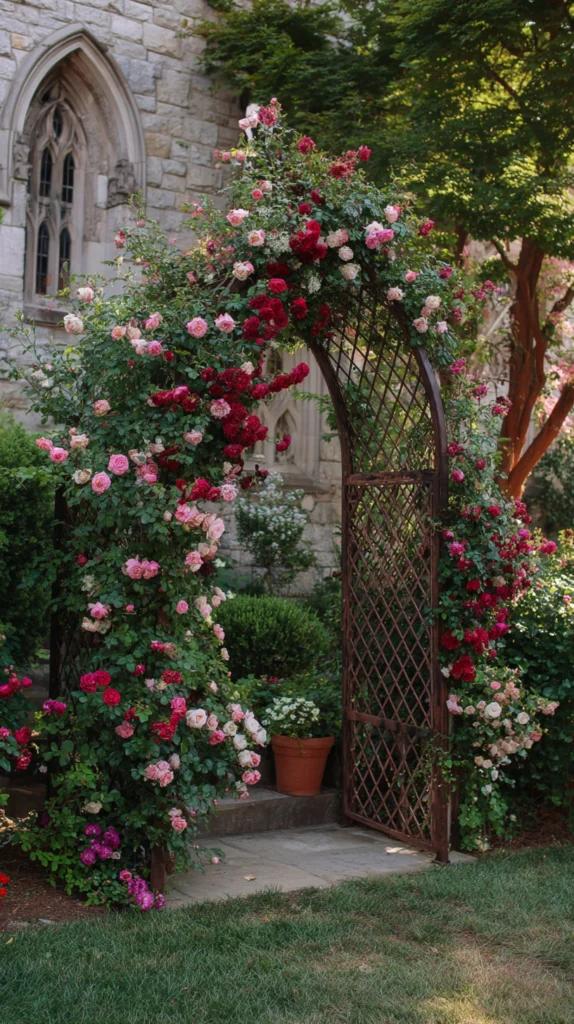
Two cattle panels create pointed arch – dramatic statement.
My formal garden entrance:
Materials:
- Two 16-foot cattle panels ($50)
- Four T-posts ($32)
- Wire ties ($5)
- Total: $87
Construction:
- Set T-posts 6 feet apart (two sets)
- Bend panels from opposite sides
- Wire together at peak (creates point)
- Gothic cathedral arch shape
Visual impact:
- Taller than single arch (8 feet)
- Pointed top (dramatic)
- Cathedral feeling
- Grand entrance
What I grow:
- Climbing roses up both sides
- Meet at pointed top
- Very romantic
- Wedding photo backdrop (neighbors ask)
This is my most dramatic arch – worth the extra materials.
7. Branch and Twig Arbor (Foraged Materials)
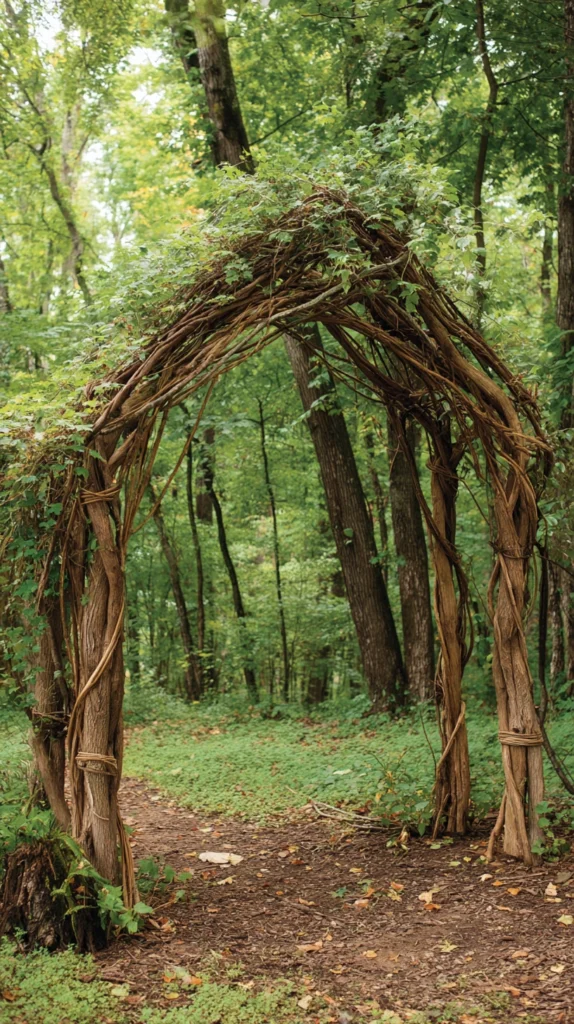
Natural branches woven together – free and rustic.
My woodland garden arch:
Materials:
- Thick branches for posts (free, found)
- Flexible willow branches for top (free)
- Twine ($2)
- Total: $2
Construction (3 hours):
- Select 4 thick branches for posts (4-6 inches diameter)
- Bury 2 feet deep
- Weave flexible branches over top
- Lash with twine at intersections
- Rustic artistic structure
Best for:
Natural gardens:
- Woodland settings
- Cottage style
- Wild gardens
- Rustic aesthetic
Temporary structure:
- Lasts 1-2 years
- Biodegrades naturally
- Replace with new foraged materials
- Always unique
I forage after winter storms – free materials everywhere.
Charm factor: Looks intentionally artistic, not homemade.
8. Metal Livestock Gate Arch (Instant Structure)
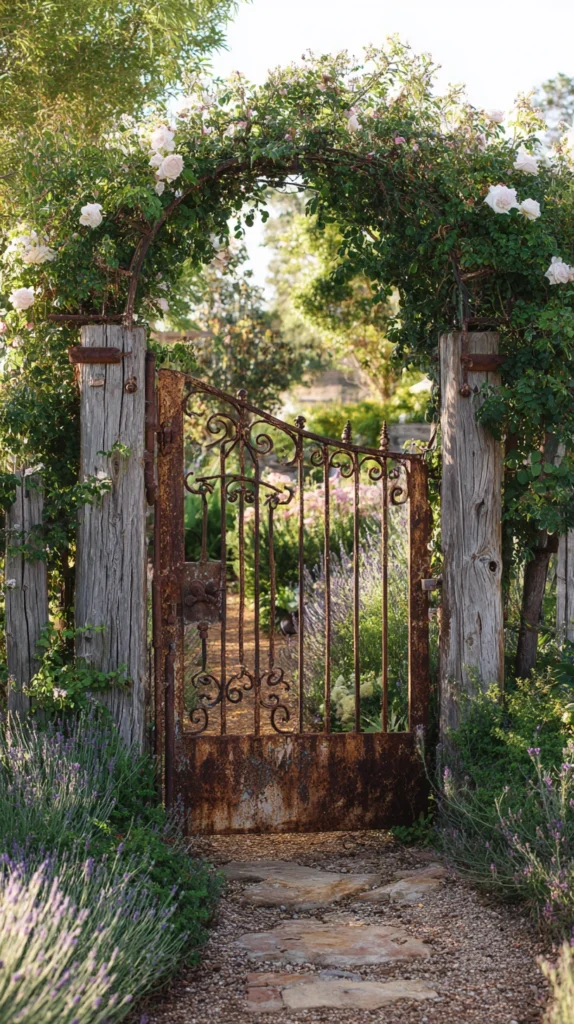
Repurposed farm gate becomes garden arch.
My side garden entrance:
Materials:
- Used farm gate (10 feet wide, $30 at farm auction)
- Two posts to hang it ($10)
- Gate hardware ($8)
- Total: $48
Installation:
- Set posts concrete (gate width apart)
- Hang gate on hinges
- Can swing open/close or stay open
- Functional and decorative
Dual purpose:
When open:
- Garden arch
- Vines climb it
- Beautiful feature
When closed:
- Actually closes path
- Keeps dogs in/out
- Working gate
What I like:
Instant structure:
- Already built
- Just hang it
- Character immediately
- Aged patina
Functional:
- Real gate if needed
- Or permanent arch
- Flexibility
I found mine at farm auction – $30 for beautiful old gate.
9. Repurposed Window Frame Arch (Architectural Salvage)
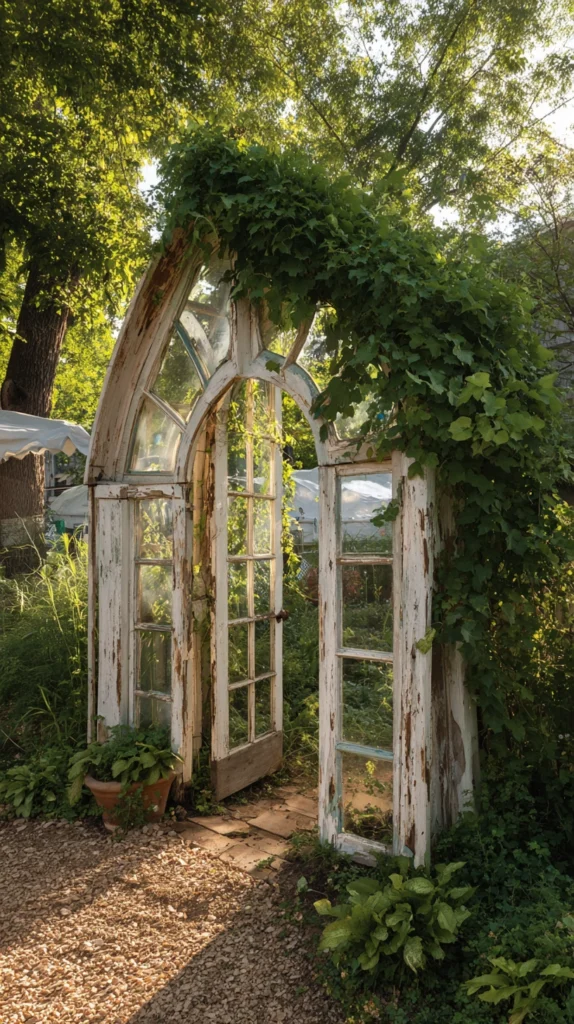
Old windows arranged as arch – unique garden art.
My friend’s garden:
Materials:
- Four matching old windows ($20 at salvage store)
- Wood frame to hold them ($15)
- Weather sealant ($8)
- Total: $43
Design:
- Build wooden frame in arch shape
- Attach windows to frame
- Creates tunnel of glass
- See-through arch
Visual effect:
- Light catches glass
- Frames views through windows
- Architectural element
- Conversation piece
Best for:
- Decorative areas
- Not load-bearing (fragile)
- Garden art focus
- Unique statement
Plants don’t climb this – it’s pure art piece.
10. Hoop House Arch (Dual Season Use)
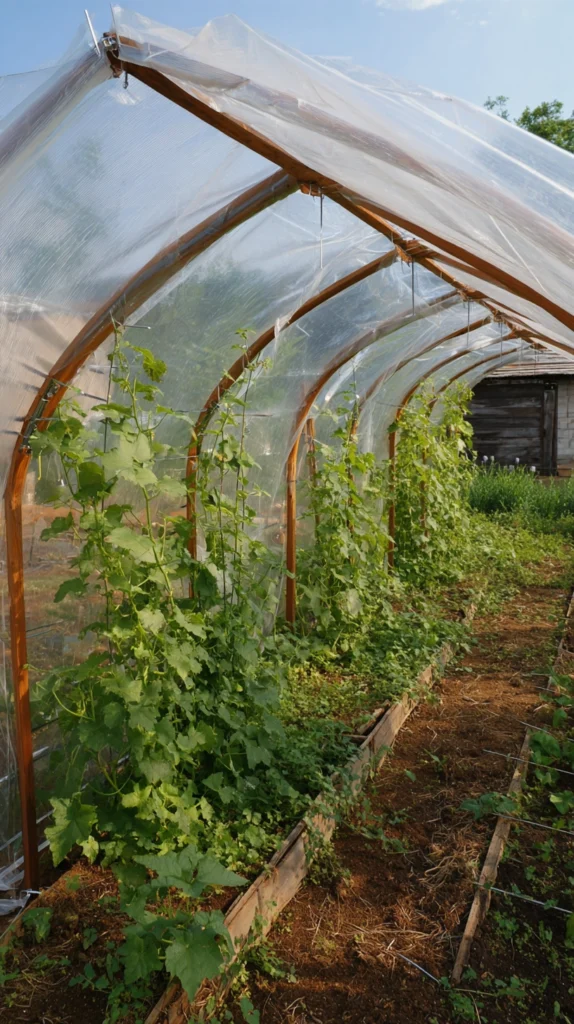
Cattle panel arch with removable plastic – spring extends season, summer grows vines.
My season-extending design:
Materials:
- One cattle panel ($25)
- Two T-posts ($16)
- Plastic sheeting (removable, $20)
- Clips to attach plastic ($10)
- Total: $71
Spring use (March-May):
- Cover with plastic
- Mini hoop house
- Protects early crops
- Extends season 4-6 weeks
Summer use (June-September):
- Remove plastic
- Cucumbers climb arch
- Standard garden arch
- Productive growing
Fall use (October-November):
- Replace plastic
- Protect fall crops
- Extend into winter
- Year-round utility
Dual purpose maximizes value – one structure, two uses.
11. Pergola-Style Flat Top Arch (Modern Look)
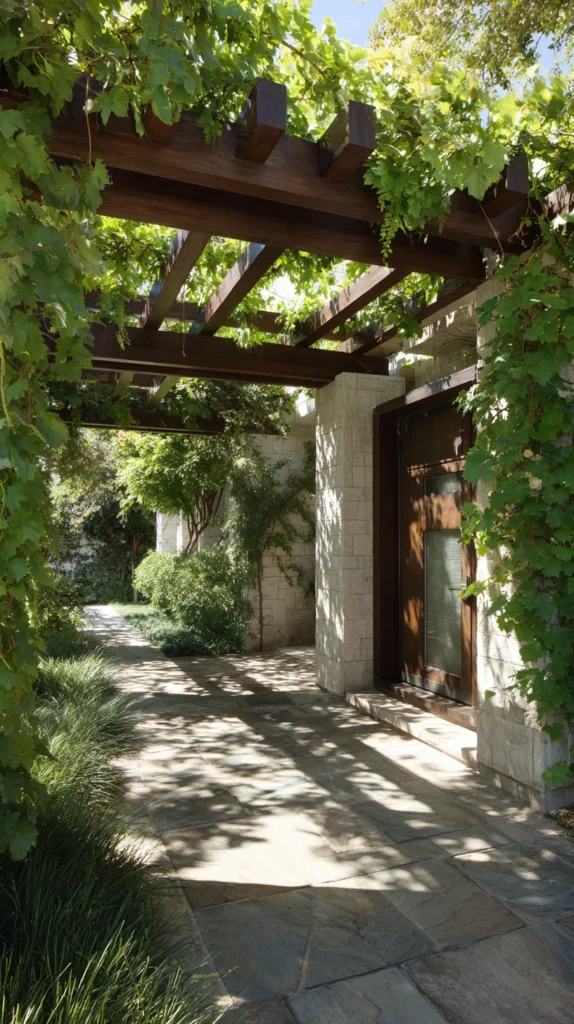
Flat roof instead of curved – contemporary design.
My patio entrance:
Materials:
- Four 4×4 posts ($40)
- Four 2×6 beams for flat top ($30)
- Ten 2×2 crossbeams ($20)
- Concrete ($10)
- Total: $100
Design:
- Posts 6 feet apart (square)
- Flat beams across top
- Crossbeams create shade lines
- Modern clean look
Benefits:
Shade creation:
- Flat top = more shade
- Grapevines over top
- Dappled light below
- Seating area underneath
Modern aesthetic:
- Clean lines
- Not traditional arch
- Contemporary gardens
- Architectural statement
What grows on it:
- Grape vines (table grapes)
- Wisteria option (haven’t tried yet)
- Creates living roof
This isn’t technically an arch but functions similarly – transition structure.
12. Copper Pipe Arch (Elegant and Aging)
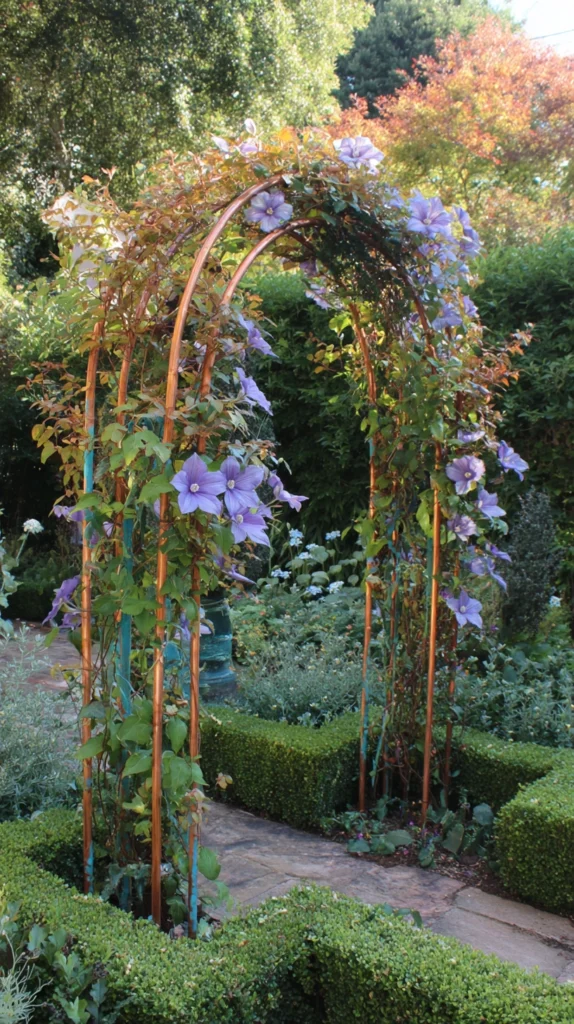
Copper plumbing pipe develops beautiful patina.
My formal herb garden:
Materials:
- Copper pipe (1/2 inch, 60 feet total, $90)
- Copper elbows and joints ($30)
- Copper cement ($8)
- Total: $128
Construction:
- Cut pipes to length
- Cement joints (permanent)
- Creates elegant arch frame
- Develops green patina over time
Why copper:
Beautiful aging:
- Starts shiny copper
- Develops verdigris patina (1-2 years)
- Green-blue color
- Gets better with age
Lightweight vines only:
- Not strong (decorative)
- Roses too heavy
- Clematis perfect
- Delicate climbers
Expensive but: Heirloom quality, lasts 50+ years, stunning appearance
This is my “fancy” arch – front garden showpiece.
13. Living Willow Arch (Grows Itself)
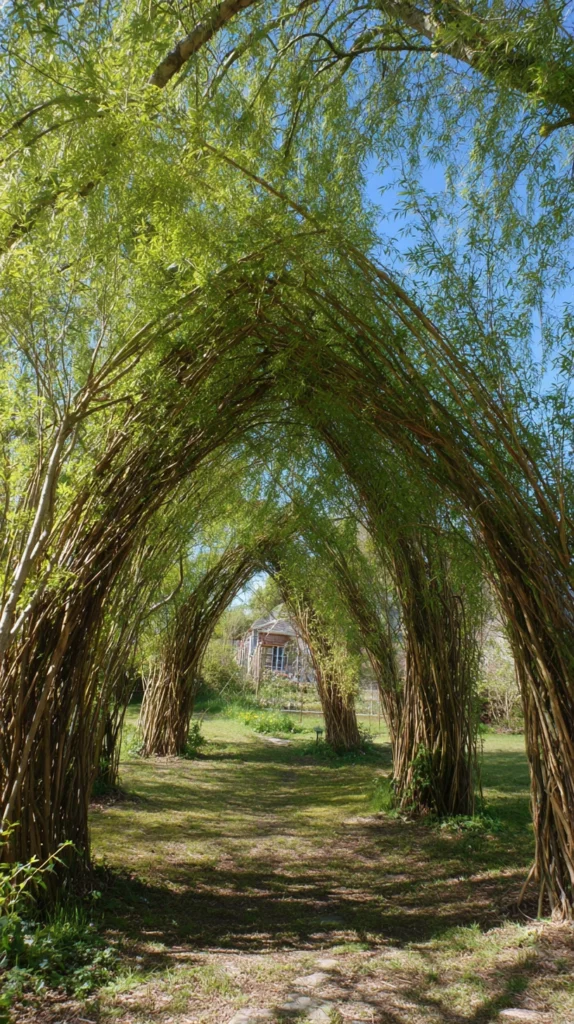
Plant living willow – arch grows from planted poles.
My experimental project:
Materials:
- 20 willow cuttings (free, from friend’s tree)
- Twine ($2)
- Total: $2
Planting (early spring):
- Push willow cuttings into ground (alternate sides)
- Bend tops together forming arch
- Lash with twine where they cross
- Water regularly first month
Growing process:
Year 1: Cuttings root, leaves appear, flexible stems Year 2: Thickening, more growth, weave new stems Year 3: Solid arch, fully leafed, self-supporting
Unique features:
Living structure:
- Actually grows
- Produces leaves
- Self-repairing
- Changes seasonally
Maintenance:
- Prune/weave annually
- Coppice old growth
- Continuous shaping
- Living sculpture
Best for: Patient gardeners, cottage gardens, permaculture
Mine is year 2 – getting there, very cool watching it grow.
Choosing Arch Style for Your Garden
Match arch to garden aesthetic.
By Garden Style
Cottage garden:
- Bamboo arch (natural)
- Branch and twig (rustic)
- Living willow (organic)
- Wooden arbor (traditional)
Modern/contemporary:
- Copper pipe (elegant)
- PVC painted sleek (geometric)
- Pergola flat-top (clean lines)
- Metal industrial (minimal)
Productive/vegetable:
- Cattle panel (functional)
- Rebar and wire (durable)
- Hoop house dual-use (practical)
Formal:
- Wooden arbor (classic)
- Gothic arch (dramatic)
- Copper pipe (refined)
By Purpose
Support heavy crops:
- Cattle panel
- Rebar and wire
- Wooden arbor (if built strong)
Decorative only:
- PVC pipe
- Copper pipe
- Window frame
- Branch and twig
Dual function:
- Hoop house (season extension + arch)
- Gate arch (entrance + barrier)
- Pergola (shade + structure)
By Budget
Under $25:
- Branch and twig ($2)
- Living willow ($2)
- PVC pipe ($23, if no paint)
$25-$50:
- Cattle panel ($44)
- Bamboo ($23 plus embellishments)
- Rebar and wire ($44)
- Gate arch ($48)
$50-$100:
- Gothic arch ($87)
- Hoop house ($71)
- Pergola ($100)
$100+:
- Wooden arbor ($140)
- Copper pipe ($128)
- Custom designs
Sizing Garden Arches
Bigger is better than too small.
My standard dimensions:
Width
Minimum: 4 feet (tight squeeze) Comfortable: 5-6 feet (walk freely) Generous: 7-8 feet (two people side-by-side)
I built one 4 feet wide – regret it. Feels cramped with plants. All others 6 feet minimum.
Height
Minimum: 7 feet (6-foot person + clearance) Comfortable: 8 feet (no ducking) Generous: 9+ feet (grand entrance)
Account for plants:
- Roses add 6-12 inches thickness
- Vines droop slightly
- Build taller than needed
- Better too tall than too short
Depth
Shallow (2 feet): Just an arch Standard (3-4 feet): Small tunnel feeling Deep (5+ feet): True tunnel/arbor
My main arch is 8 feet deep (two panels) – creates real tunnel experience.
Installation Best Practices
What I learned from 13 arches:
Location Matters
Path placement:
Over existing path: Natural, directs traffic Creates new path: Defines circulation Entrance points: Marks transitions Between garden rooms: Separates spaces
My arches are all on paths – people naturally walk through them.
Secure Foundation
Post installation:
Permanent arches:
- Posts 2 feet deep minimum
- Concrete recommended
- Check level
- Set square
Temporary arches:
- 18 inches deep okay
- Gravel around posts
- Check stability
- Guy wires if needed
I had arch blow over in storm – posts only 12 inches deep. Now minimum 24 inches.
Orientation
Sun considerations:
East-west arch:
- Morning sun one side
- Afternoon sun other
- Good for roses
- Balanced light
North-south arch:
- One side shadier
- Other side full sun
- Plant accordingly
- Consider this
My main rose arch faces east-west – roses bloom on both sides evenly.
Planting for Arches
What actually works.
Climbing Roses (My Favorite)
Best varieties I grow:
‘New Dawn’:
- Pale pink
- Fragrant
- Disease-resistant
- Continuous bloom
‘Zephirine Drouhin’:
- Deep pink
- Thornless (great for arches!)
- Very fragrant
- Shade-tolerant
Planting:
- One plant each side
- 18 inches from arch base
- Mulch heavily
- Water year one
Training:
- Tie horizontally first year (more blooms)
- Guide up arch sides
- Weave through if possible
- Prune annually
Annual Vines
For quick coverage:
Morning glories: Self-seeding, covers fast, blue flowers Sweet peas: Fragrant, spring bloom, my favorite Nasturtiums: Edible, bright colors, easy Black-eyed Susan vine: Orange/yellow, all summer
I plant annuals while perennials establish – immediate beauty.
Productive Vines
Food production:
Cucumbers: 60 pounds per arch, favorite Pole beans: 25 pounds per arch, reliable Small squash: Compact varieties only Grapes: Permanent, beautiful, productive
My vegetable garden arches produce 150+ pounds food annually.
Clematis
Companions to roses:
‘Jackmanii’: Purple, classic, vigorous ‘Henryi’: White, large flowers, elegant Sweet Autumn: Fragrant, fall bloom, aggressive
Plant with roses – clematis climbs through rose, both bloom together.
Maintenance Schedule
Keeping arches beautiful.
Spring
March-April tasks:
- Inspect structure
- Tighten loose wires
- Repair damage
- Fresh stain/paint if needed
- Prune roses
- Tie in new growth
Time: 2-3 hours per arch
Summer
Monthly checks:
- Guide growth
- Tie wayward stems
- Check for pests
- Deadhead roses
- Harvest vegetables
Time: 30 minutes per arch monthly
Fall
October-November:
- Remove dead annuals
- Light rose pruning
- Clean up debris
- Check structure before winter
Time: 1 hour per arch
Winter
Dormant season:
- Major pruning (roses)
- Structural repairs
- Plan next year
- Order new plants
Time: Variable, planning is fun
Common Arch Mistakes
I made all of these:
Mistake 1: Built Too Small
My first arch: 4 feet wide, 6 feet tall
Problems:
- Felt cramped
- Roses made it narrower
- Had to duck
- Not grand enough
Fix: Rebuilt 6 feet wide, 8 feet tall – perfect now
Mistake 2: Weak Construction
PVC arch for heavy roses – sagged badly.
Fix: Match structure strength to plant weight.
Mistake 3: Wrong Location
Put an arch in the middle of the lawn – no path, looked random.
Fix: Moved to path entrance – made sense suddenly.
Mistake 4: Impatient Planting
Expected full coverage year 1 – looked bare and sad.
Fix: Plant annuals for immediate coverage while perennials establish.
Mistake 5: No Foundation
Posts straight in ground – leaned after one year.
Fix: Concrete or deeper setting for permanent arches.
My Garden Arch Evolution
How my arches developed:
Year 1:
- Built one cattle panel arch (vegetables)
- $44 investment
- Learned construction basics
Year 2:
- Added wooden arbor (roses)
- $140 investment
- Main entrance now defined
Year 3:
- Built Gothic arch (dramatic entrance)
- Built bamboo arch (cottage garden)
- $110 combined
- Garden rooms forming
Year 4:
- Added grape arbor (rebar/wire)
- Added PVC arch (kids’ garden)
- $87 combined
- Every major path has arch now
Total investment: ~$400 over 4 years Visual impact: Completely transformed garden Neighbor comments: “Looks professional,” “Like English garden,” “Can I hire you?”
Best money spent in garden – arches define the space.
Budget Arch Building Plan
Start small, expand annually.
Year 1 ($50):
- Build one cattle panel arch
- Plant cucumbers or beans
- See immediate benefit
- Learn construction
Year 2 ($150):
- Build wooden arbor for main entrance
- Plant roses
- Major impact
- Garden feels designed
Year 3 ($50-100):
- Add second productive arch
- Or decorative arch for specific area
- System developing
Year 4+ ($50 yearly):
- Maintain existing
- Add arches as desired
- Replace temporary structures
- Garden fully defined
My actual path – spread cost over time, each arch justified itself.
Getting Started This Weekend
Don’t build all arches at once.
This Saturday:
- Choose one arch design
- Buy materials
- Gather tools
This Sunday:
- Build arch (3-6 hours)
- Set firmly in place
- Plant vines or mark for spring
My recommendation for first arch:
Cattle panel arch over main path:
- $44 total
- 45 minutes to build
- Immediate structure
- Plant cucumbers or roses
Start there, see how you like it, expand next year.
Now go add vertical drama to your garden with beautiful arches!
Quick Summary:
Best overall arch:
- Cattle panel arch ($44, strongest, versatile, 10+ years)
Most beautiful:
- Wooden arbor ($140, classic, supports roses, showpiece)
Budget options:
- Branch and twig ($2)
- Living willow ($2)
- Bamboo ($23)
Strongest structures:
- Rebar and wire (permanent)
- Gothic arch (cathedral style)
- Wooden arbor (properly built)
By purpose:
Vegetable production:
- Cattle panel (cucumbers, beans)
- Rebar/wire (grapes, squash)
- Hoop house (dual season use)
Rose support:
- Wooden arbor (traditional)
- Gothic arch (dramatic)
- Metal livestock gate (rustic)
Decorative:
- Copper pipe (elegant)
- Window frame (artistic)
- Branch and twig (rustic)
Standard dimensions:
Width: 6 feet minimum (comfortable passage) Height: 8 feet minimum (clearance with plants) Depth: 2-8 feet (shallow arch to deep tunnel)
Construction time:
Quick (under 1 hour): Cattle panel, bamboo Medium (2-4 hours): Branch/twig, PVC, rebar Long (weekend): Wooden arbor, pergola
Material lifespans:
Permanent (10-20+ years): Metal, treated wood Medium (3-5 years): PVC, untreated bamboo Temporary (1-2 years): Branch/twig, living willow
Best climbing plants:
Roses:
- New Dawn (pink, fragrant, reliable)
- Zephirine Drouhin (thornless, shade-tolerant)
Vegetables:
- Cucumbers (60 lb per arch)
- Pole beans (25 lb per arch)
- Grapes (40 lb, perennial)
Annual vines:
- Sweet peas (spring, fragrant)
- Morning glories (summer, easy)
- Nasturtiums (edible, colorful)
Installation essentials:
Post depth: 2 feet minimum Foundation: Concrete for permanent Spacing: Level and square Stability: Test before planting
Common mistakes:
- Too small (4 feet feels cramped)
- Weak for plant weight
- No path underneath (looks random)
- Posts too shallow (topples over)
- Impatient for coverage (takes 2-3 years)
Maintenance schedule:
Spring: Inspect, repair, prune, tie growth Summer: Monthly guidance, deadhead Fall: Clean up, remove annuals Winter: Major pruning, repairs
Garden styles:
Cottage: Bamboo, branch/twig, wooden Modern: Copper pipe, PVC, pergola Productive: Cattle panel, rebar, dual-use Formal: Wooden arbor, Gothic, copper
Budget ranges:
Under $25: DIY natural materials $25-$50: Cattle panel, bamboo, gates $50-$100: Gothic, pergola, hoop house $100+: Wooden arbor, copper, custom
Space impact:
Visual: Creates 3D structure, vertical interest Functional: Defines rooms, supports plants Romantic: Walking under blooms, framed views
ROI considerations:
Initial cost: $25-150 typical Lifespan: 2-20+ years depending Value added: Property value increase Joy factor: Priceless (transforms garden experience)
Quick start plan:
This weekend: Build one arch (6 hours max) This month: Plant climbing vines This year: Enjoy structure, plan next Next year: Add second arch, establish system
Success indicators:
- Structure stable through seasons
- Plants climbing successfully
- Creates focal point/room definition
- You walk through it daily (enjoying it)
- Neighbors asking about it
Remember: Start with one arch on main path, make it bigger than you think (6×8 feet minimum), plant both roses and annuals for quick coverage, expand based on success.