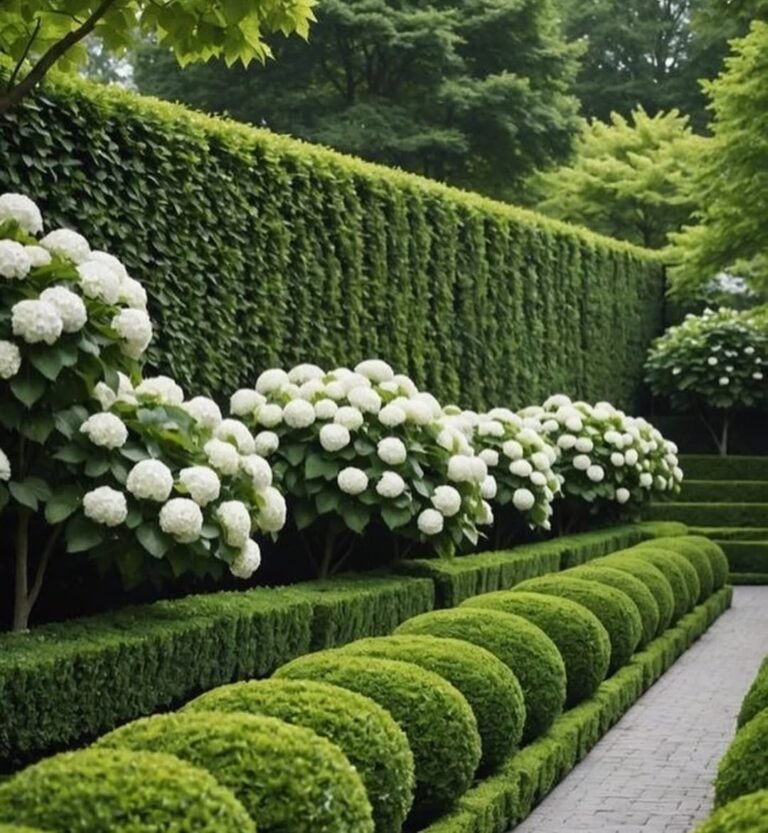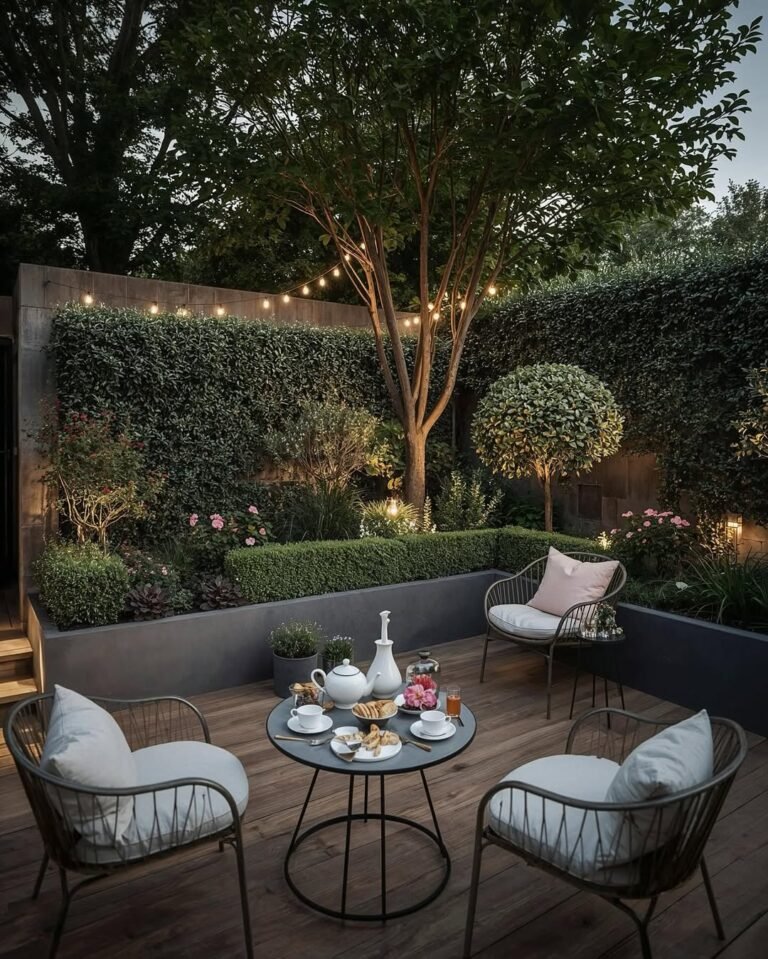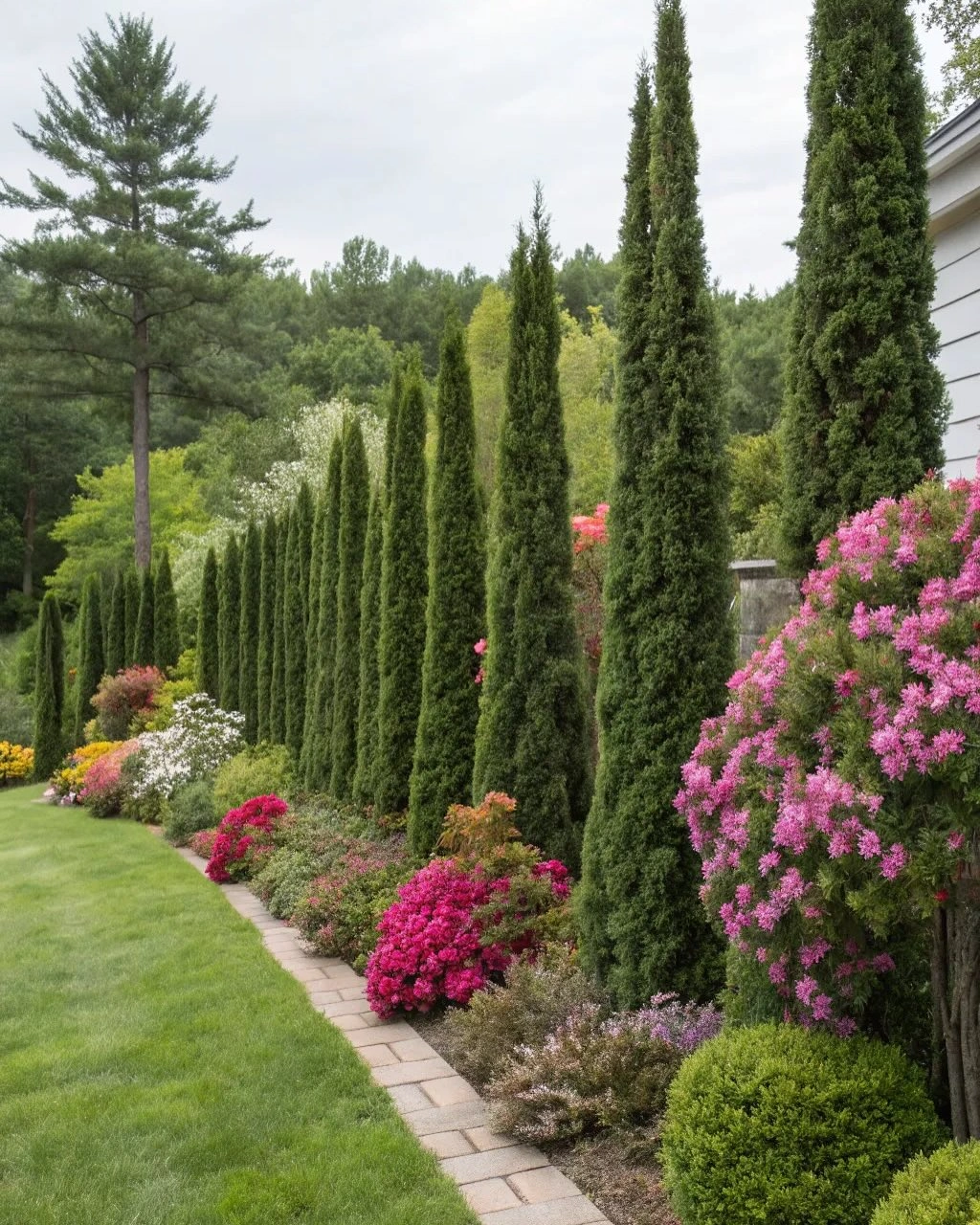
16 Fast-Growing Privacy Shrubs for Your Home Garden
My neighbor could see right into my bedroom window. Every morning, I’d wake u,p and there he was, having coffee on his deck, staring straight at me.
I needed privacy fast. Like, yesterday fast. I didn’t want to wait 10 years for some slow-growing hedge to finally get tall.
So I planted fast-growing shrubs along my fence. Within 2 years, I had a solid green wall. My neighbor can’t see anything now, and my yard looks amazing.
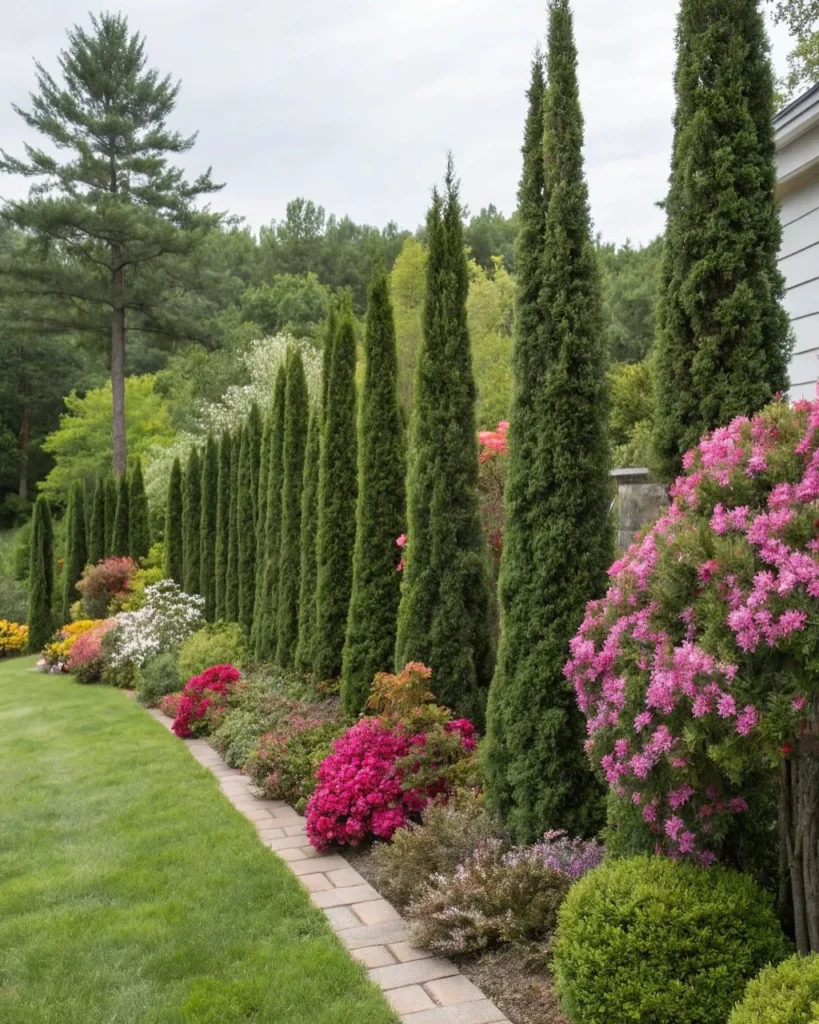
Let me show you the shrubs that actually work for quick privacy. These are the ones that grow like crazy and don’t die on you.
Why I Needed Privacy Shrubs Yesterday
I moved into my house three years ago. The yard was completely open with a short fence. Everyone walking by could see everything I was doing.
My kids couldn’t play outside without feeling like they were in a fishbowl. I couldn’t even sit on my patio in my pajamas without the whole neighborhood watching.
Fences are expensive. Like $5,000 expensive for my yard size. I didn’t have that kind of money sitting around.
Shrubs cost way less, and they look better than a plain wooden fence. Plus, they attract birds and butterflies. So I went with plants instead.
What Makes a Shrub “Fast Growing” Anyway?
Most shrubs grow maybe 6-12 inches per year. That’s painfully slow when you need privacy now. You’d be waiting forever.
Fast-growing shrubs grow 2-4 feet per year. Some even grow more than that in the right conditions. Now we’re talking!
Within 2-3 years, these shrubs can be 8-12 feet tall. That’s enough to block most views and give you real privacy. Way better than waiting a decade.
I picked shrubs that grow at least 2 feet per year. Anything slower wasn’t worth my time or money.
My Biggest Mistake (Learn From This)
I planted 10 shrubs all the same kind. All arborvitae because someone told me they were the best for privacy.
Big mistake. A disease hit them two years later, and half of them died. I had big, ugly gaps in my privacy screen.
Now I mix different types of shrubs. If one type gets sick, the others keep growing strong. My privacy screen stays solid.
Don’t put all your eggs in one basket. Mix it up, and you’ll thank me later.
1. Leyland Cypress (My Personal Favorite)
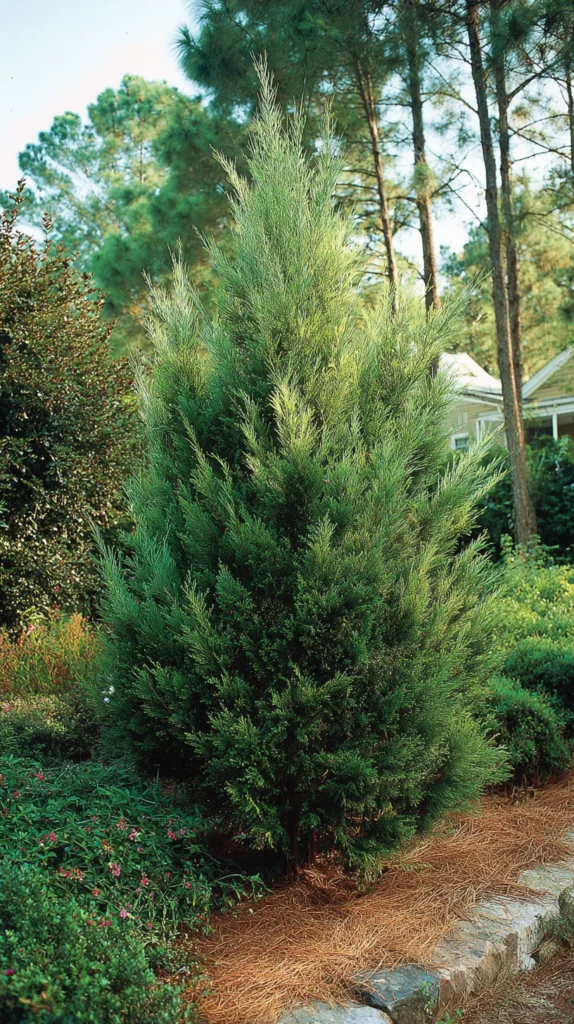
This thing grows like it’s on steroids. I’m talking 3-4 feet per year when it’s happy. It’s insane how fast it shoots up.
I planted mine at 3 feet tall. Two years later, they were over 10 feet. They completely blocked my neighbor’s view by the second summer.
Leyland cypress stays green all year, even in winter. No ugly brown dead-looking plants in January. They look good 365 days a year.
What you need to know:
- Grows 3-4 feet per year
- Gets 40-60 feet tall eventually (you can trim shorter)
- Stays green all winter
- Likes the sun but handles some shade
- Plant them 5-8 feet apart
The only downside is that they need trimming once a year, or they get messy-looking. I spend maybe 2 hours trimming mine each spring. Totally worth it for the privacy.
2. Green Giant Arborvitae (The Tough One)
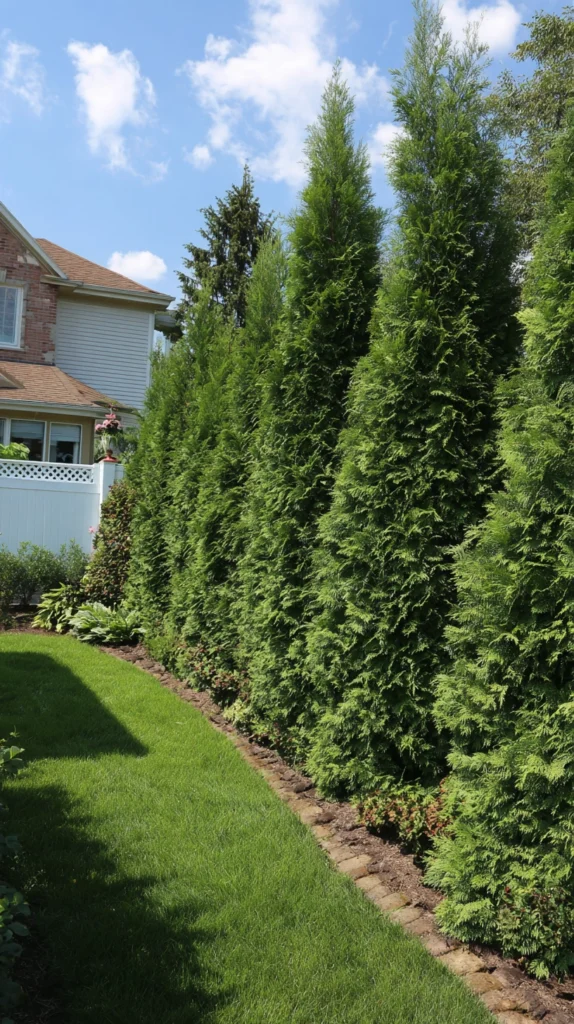
These are nearly impossible to kill. I know people who ignore them completely, and they still grow like crazy. Super forgiving for beginners.
They grow about 3 feet per year in my yard. They make a thic,k dense wall that you can’t see through at all. Perfect for blocking nosy neighbors.
Green Giants handle cold winters way better than Leyland cypress. If you live somewhere that gets really cold, pick these instead. They don’t care about snow and ice.
Key facts:
- Grows 2-3 feet per year
- Gets 30-40 feet tall (trim to keep shorter)
- Super cold-hardy
- Needs full sun
- Plant 5 feet apart for thick privacy
I have five of these mixed in with my other shrubs. They’ve never given me a single problem in three years. Just plant them and forget about them.
3. Thuja Green Giant (Basically the Same as Green Giant Arborvitae)
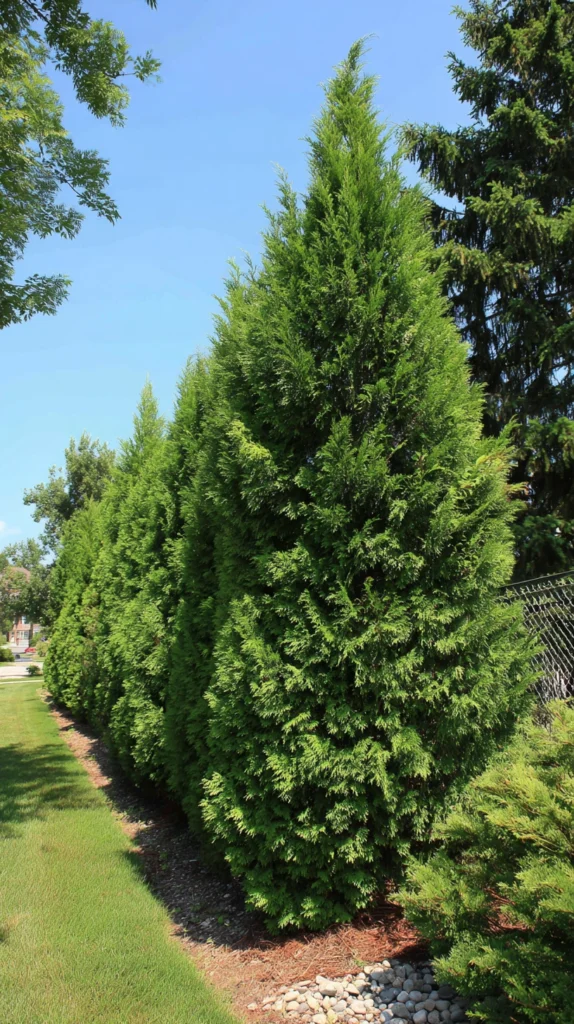
This is actually the same plant as Green Giant Arborvitae. Garden centers sometimes call it different names to confuse everyone. Don’t ask me why.
If someone tries to sell you both separately, they’re either confused or trying to scam you. They’re the same shrub. Same growth rate, same everything.
I’m listing it here anyway because you might see it labeled this way at stores. Now you know it’s the same plant.
4. Skip Laurel (Great for Shade)
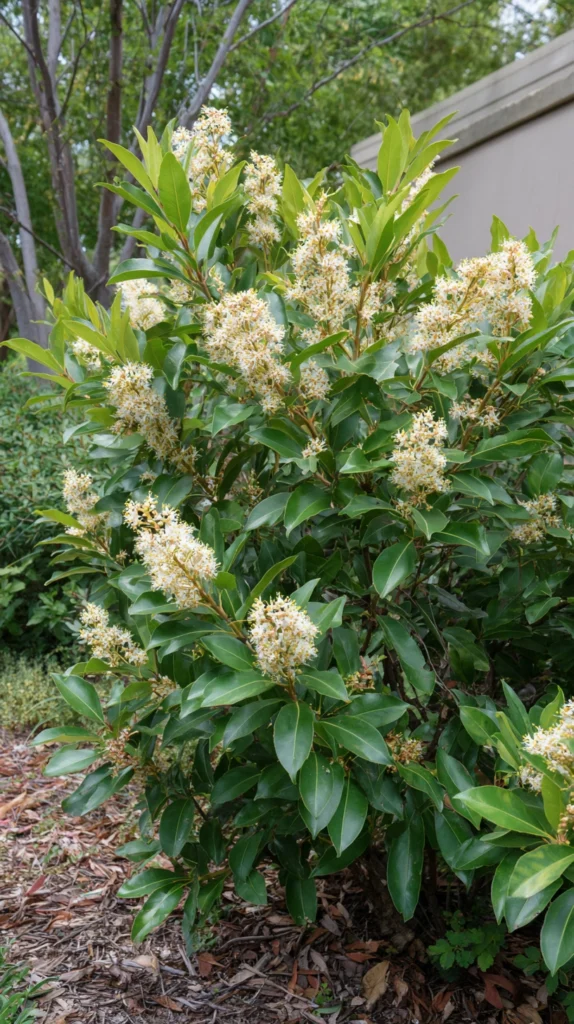
Most fast-growing shrubs need full sun to grow fast. Skip Laurel actually does fine in shade. This is rare and super useful.
I planted three along the shady side of my house where nothing else would grow. They’re doing great and growing about 2 feet per year, even with limited sun.
The leaves are glossy and bright green. They look fancier than most privacy shrubs. Guests always compliment them and ask what they are.
Important details:
- Grows 2 feet per year
- Gets 10-18 feet tall
- Works in shade or sun
- Stays green all year
- Plant 4-5 feet apart
Skip Laurel costs more than other shrubs on this list. But if you have shade, it’s worth the extra $10-15 per plant. Not many other options work in shade.
5. Privet (The Cheap Option)
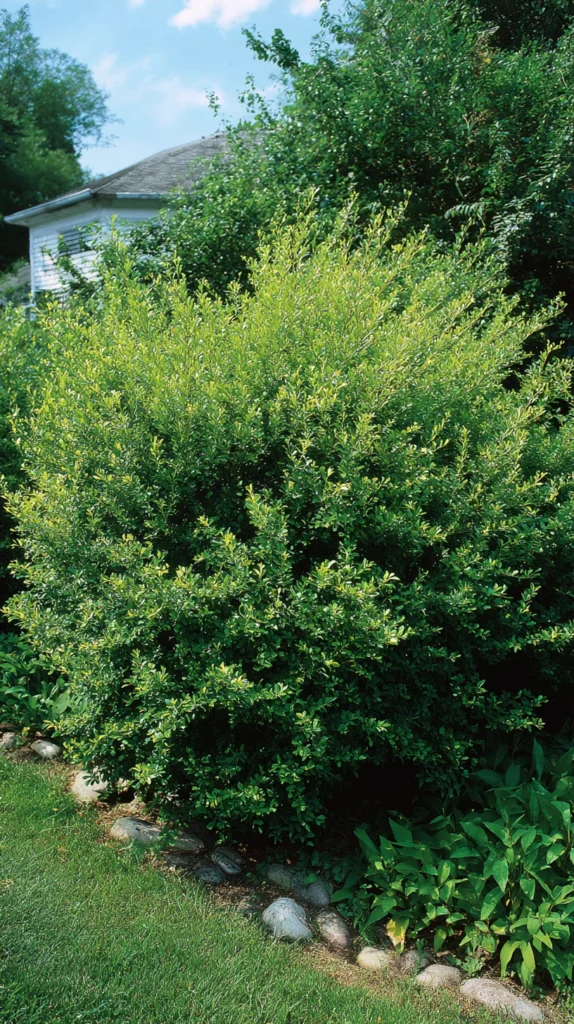
Privet is dirt cheap compared to other privacy shrubs. I got mine for $8 each, while other shrubs were $30-40. Great for people on a tight budget.
Don’t let the low price fool you. These things grow super fast – about 3 feet per year in my experience. They get thick and bushy quickly.
The downside is that they lose their leaves in winter in cold areas. You’ll have bare branches from November to March. Not great if you need winter privacy too.
What to expect:
- Grows 2-3 feet per year
- Gets 10-15 feet tall
- Loses leaves in winter (in cold climates)
- Handles any soil type
- Plant 3-4 feet apart
I use privet as a temporary privacy solution. It grows so fast that it fills in gaps while my slower evergreen shrubs catch up. Then I eventually remove it.
6. Bamboo (Fast But Be Careful!)
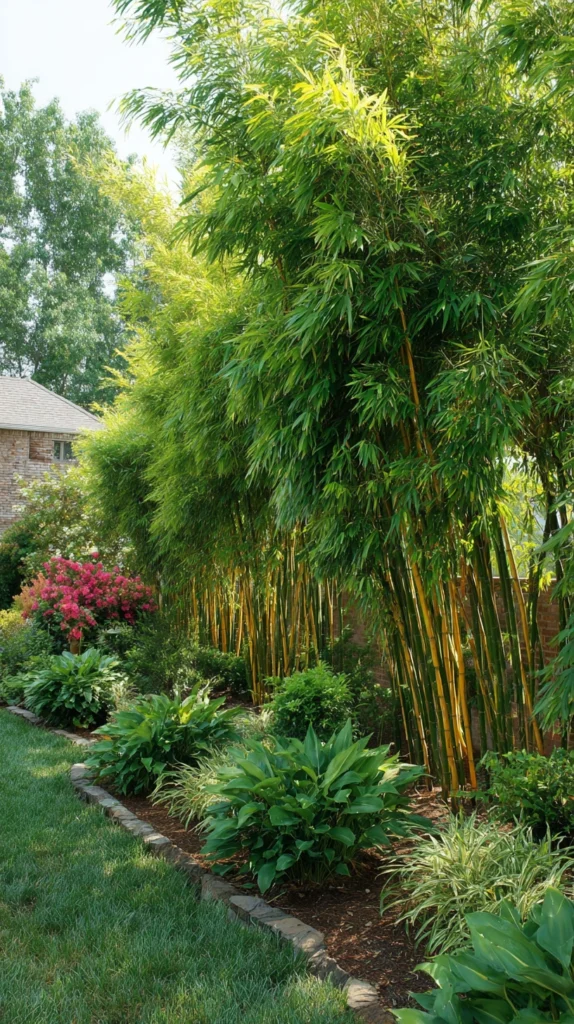
Bamboo grows faster than anything else on this list. Some types grow 3-5 feet per year. One type grew almost 2 feet in a single month in my yard!
Here’s the problem: bamboo spreads like crazy. It sends runners underground that pop up 20 feet away from where you planted it. It can take over your whole yard.
My neighbor planted running bamboo without a barrier. Now it’s in my yard, the other neighbor’s yard, and coming up on the sidewalk. He regrets it big time.
Bamboo basics:
- Grows 3-5 feet per year (some even more)
- Gets 10-30 feet tall depending on type
- Stays green year-round
- Spreads aggressively (major problem)
- MUST use clumping bamboo or install barriers
Only plant clumping bamboo, not running bamboo. Clumping types stay where you put them. Or install thick plastic barriers 3 feet deep around running types.
I personally won’t plant bamboo again after dealing with my neighbor’s mess. But if you do it right with barriers, it gives privacy super fast.
7. Photinia (Red Tip) (Pretty New Growth)
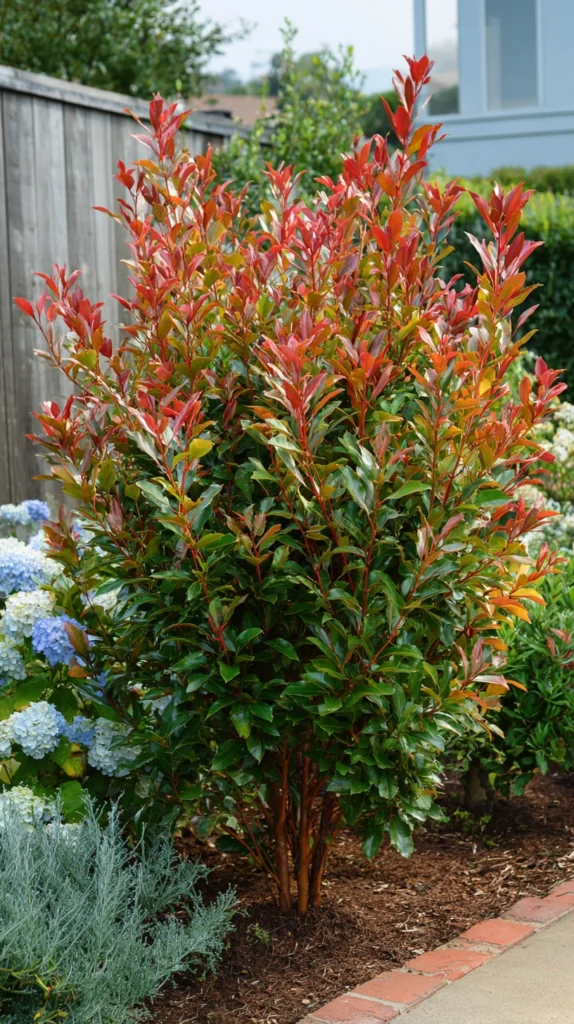
The new leaves on this shrub come in bright red. Then they turn green as they mature. It’s actually really pretty and different from boring all-green shrubs.
It grows about 2-3 feet per year in my area. Not the absolute fastest, but still plenty quick for privacy needs. You’ll have a good screen in 2-3 years.
Photinia likes warmer climates better. If you live somewhere with harsh winters below 0°F, skip this one. It might die or get damaged in extreme cold.
Quick facts:
- Grows 2-3 feet per year
- Gets 10-15 feet tall
- Red new growth is beautiful
- Best in warmer climates
- Plant 4-5 feet apart
I have three of these mixed with my green shrubs. The red tips add nice color variation instead of just a solid green wall. Makes the yard look more interesting.
8. Forsythia (Yellow Flowers in Spring)
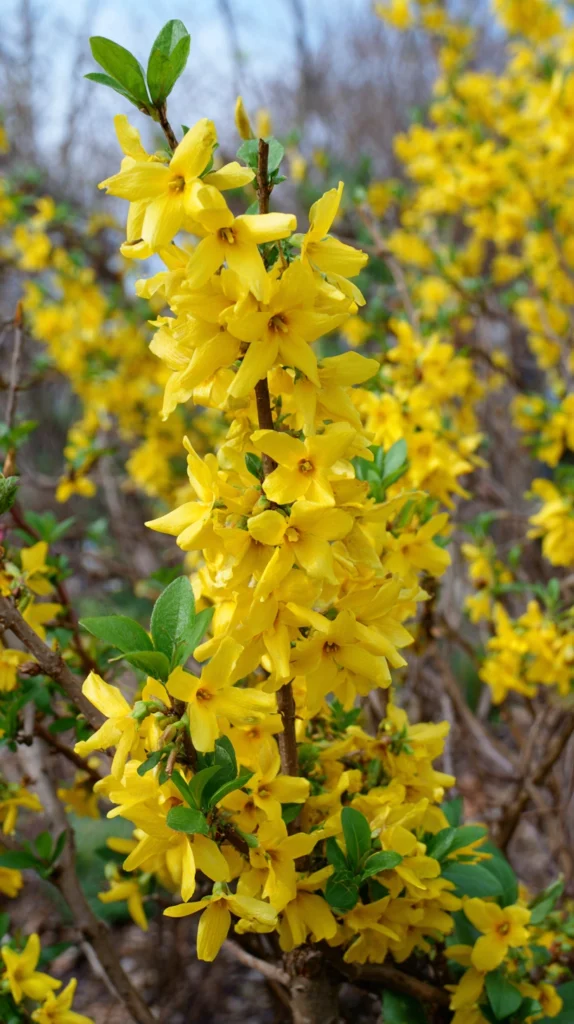
Every spring, forsythia explodes with bright yellow flowers before any leaves appear. It’s like someone spray-painted the whole shrub bright yellow. People stop and stare.
After flowering, it gets thick with green leaves all summer. It grows about 2 feet per year and makes a dense privacy screen by its second season.
The bad news is that it loses all its leaves in winter. So zero privacy from November through March in cold areas. Only plant this if winter privacy doesn’t matter to you.
Growing information:
- Grows 2 feet per year
- Gets 8-10 feet tall
- Amazing yellow flowers in spring
- Loses leaves in winter
- Plant 4-5 feet apart
I use forsythia at the front of my yard where I don’t care about winter privacy. The spring flower show is worth dealing with bare branches in winter. It’s absolutely stunning.
9. Wax Myrtle (Good for Wet Areas)
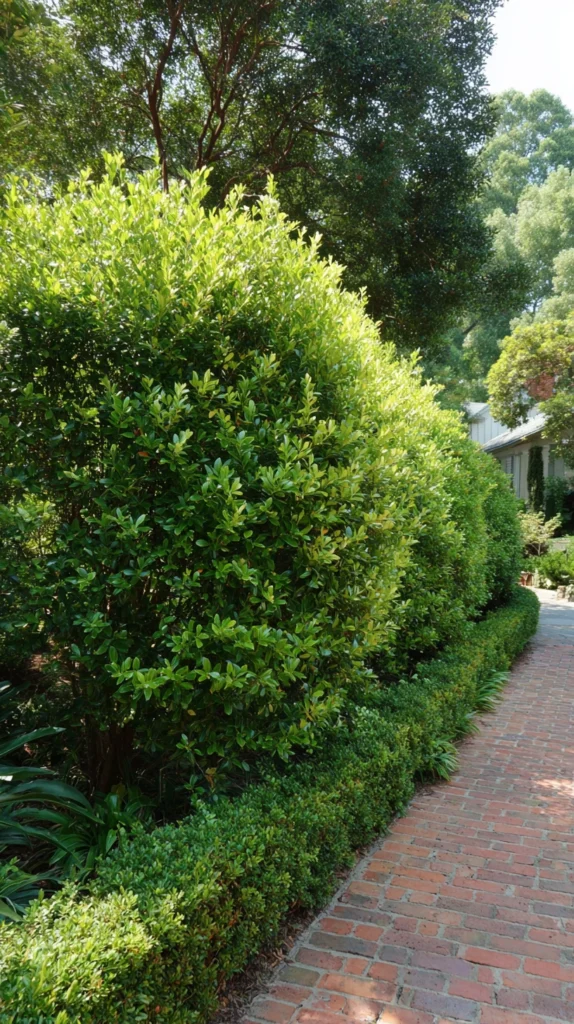
My yard has a low spot that stays wet after rain. Most shrubs hate wet feet and die in soggy soil. Wax Myrtle actually likes it.
This shrub grows about 2-3 feet per year, even in wet conditions. It’s one of the few fast-growing shrubs that handles poor drainage without complaining.
The leaves smell nice when you brush against them. Kind of spicy and fresh. My kids like rubbing the leaves just to smell them.
Key details:
- Grows 2-3 feet per year
- Gets 15-20 feet tall
- Loves wet soil
- Stays green year-round
- Plant 5-6 feet apart
Wax Myrtle only works in warmer climates. It dies in harsh winters. If you’re in zone 7 or warmer, this is a great choice for wet areas.
10. Eastern Red Cedar (Native and Tough)
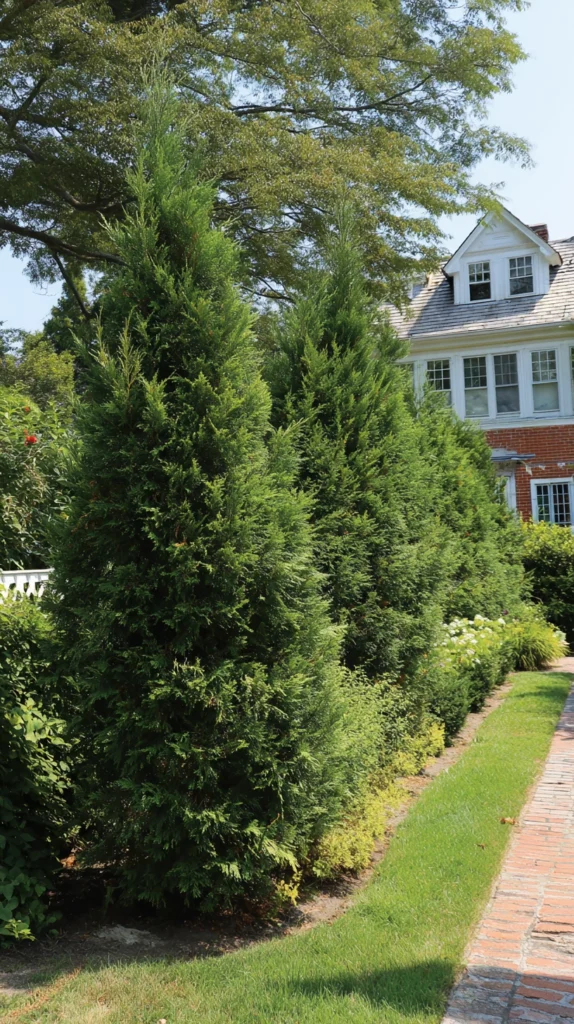
This is native to most of the US. That means it’s already adapted to local weather and bugs. Way easier to grow than exotic plants from other countries.
It grows 2 feet per year without any special care. I literally never water mine after the first year. It handles drought, heat, and cold with zero complaints.
The foliage is more blue-green than bright green. Some people love this color, others think it looks dull. I like the variety it adds to my mixed shrub border.
What you should know:
- Grows 2 feet per year
- Gets 30-40 feet tall eventually
- Native plant (super easy)
- Blue-green color
- Plant 5-6 feet apart
Cedar attracts lots of birds because they nest in it and eat the berries. I see more cardinals and robins in my yard now. Nice bonus beyond just privacy.
11. Holly (Prickly But Effective)
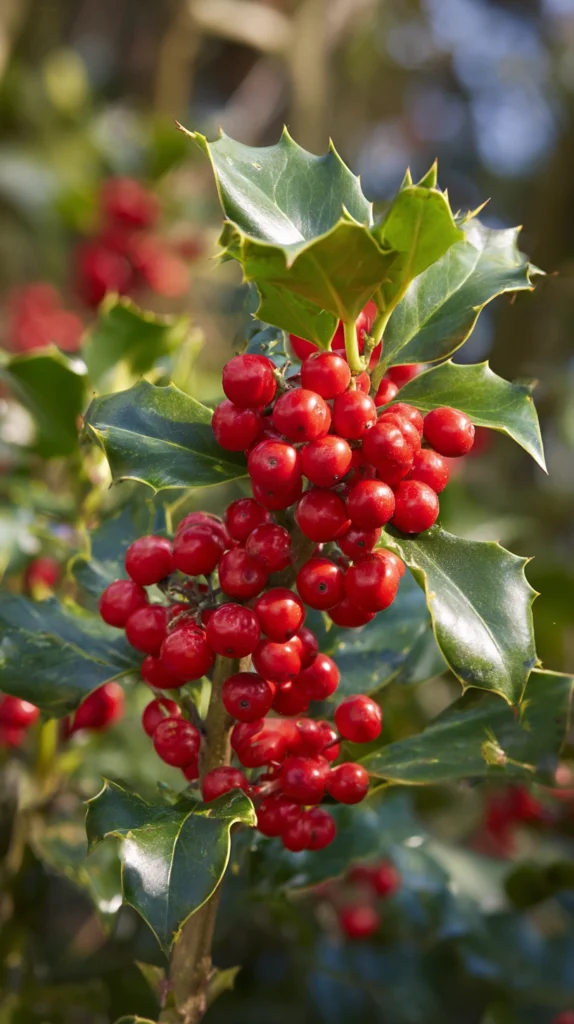
Holly has sharp, spiky leaves that hurt when you touch them. This actually makes it perfect for security along property lines. Nobody’s climbing through a holly hedge!
It grows about 1-2 feet per year. Not the fastest on this list, but still decent. The thick spiky growth makes it feel more private even at shorter heights.
Holly has red berries in winter that look festive. My kids love picking branches for Christmas decorations. Birds eat the berries, too, which attracts wildlife.
Important info:
- Grows 1-2 feet per year
- Gets 10-15 feet tall
- Sharp leaves deter intruders
- Red berries in winter
- Plant 4-5 feet apart
You need both male and female holly plants to get berries. The garden center can tell you which is which. One male can pollinate several females.
12. Nellie Stevens Holly (Faster Holly Option)
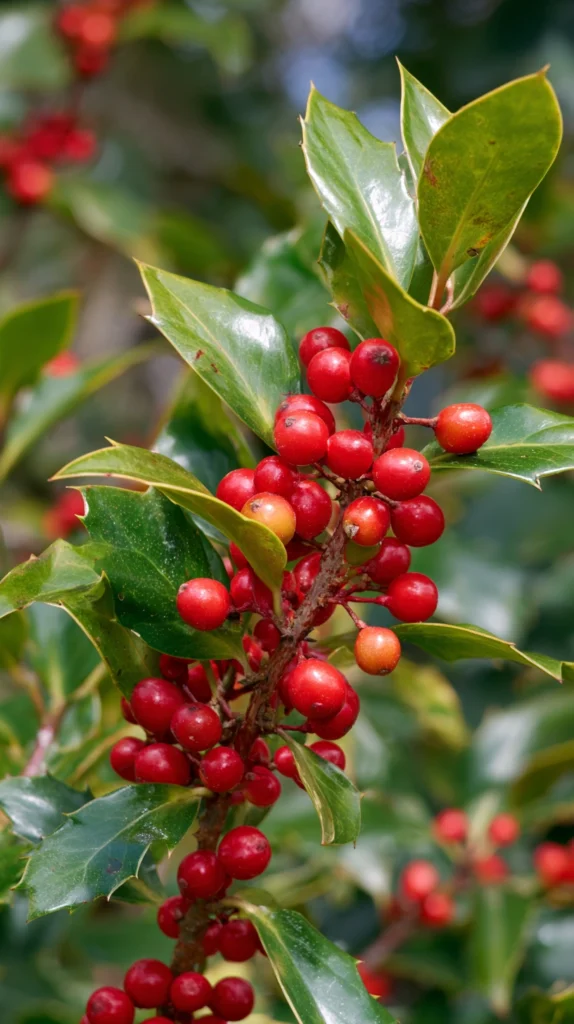
This holly grows faster than regular holly types. About 2-3 feet per year in my yard. It’s one of the quickest hollies available.
The leaves are less prickly than other hollies but still spiky enough to deter animals and people. Good middle ground between protection and not constantly scratching yourself.
Nellie Stevens produces tons of bright red berries every winter without needing a male plant nearby. This makes it way easier since you don’t need multiple types.
Quick reference:
- Grows 2-3 feet per year
- Gets 15-25 feet tall
- Less prickly than other hollies
- Produces berries without male plant
- Plant 5-6 feet apart
I planted five of these along my back fence. They’re doing great and look full and thick already after just 2 years. Great choice for fast privacy with winter interest.
13. Viburnum (Flowers and Berries)
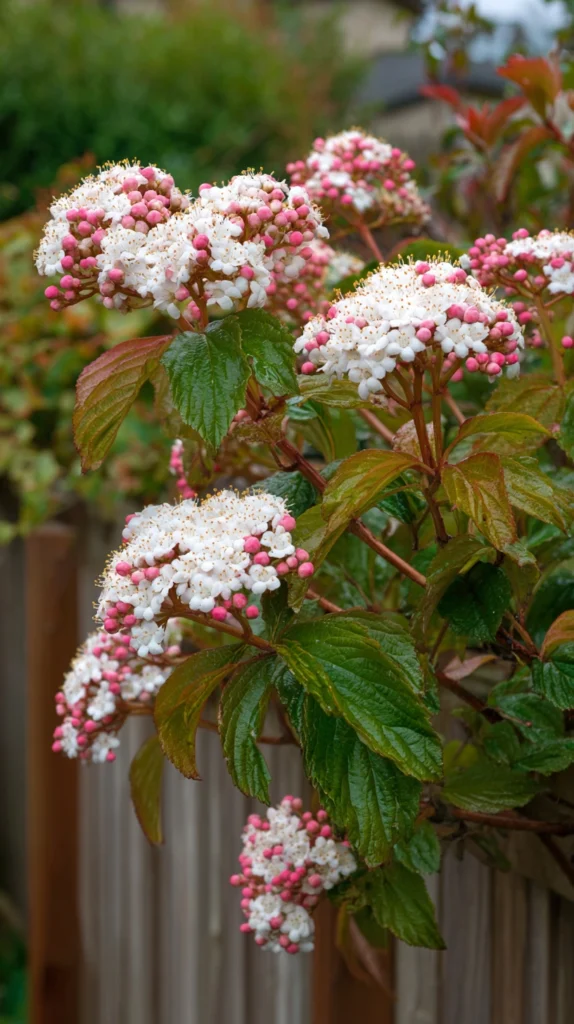
Viburnum shrubs have white flowers in spring that smell amazing. Like, seriously amazing. I can smell them from 20 feet away when they bloom.
After the flowers, you get berries that birds absolutely love. I’ve counted 15 different bird species eating from my viburnum bushes. It’s like a bird buffet.
It grows about 2 feet per year and makes a dense screen. Not the fastest, but the flowers and berries make up for slightly slower growth in my opinion.
Growing details:
- Grows 2 feet per year
- Gets 8-12 feet tall
- Fragrant white flowers
- Berries attract birds
- Plant 4-5 feet apart
Some viburnum types lose leaves in winter, others stay evergreen. Ask at the garden center which type you’re buying. I prefer the evergreen ones for year-round privacy.
14. Boxwood (Classic Hedge Look)
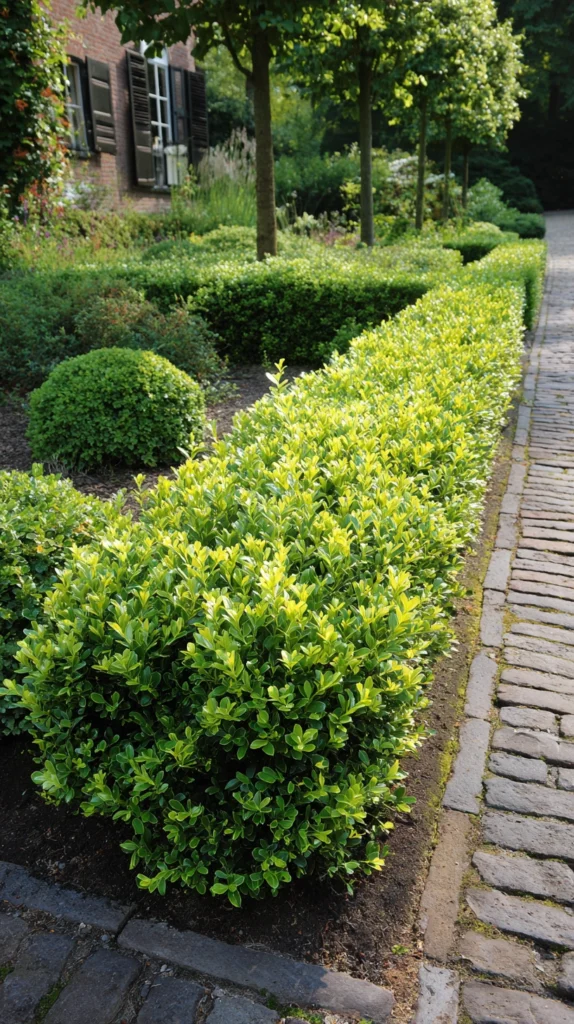
Boxwood is what you see at fancy estates with perfectly trimmed hedges. It’s the classic formal hedge shrub. Very traditional looking and neat.
It only grows about 6-12 inches per year. That’s slow compared to others on this list. But I’m including it because people ask about it constantly.
If you want fast privacy, boxwood isn’t your best choice. But if you want that formal hedge look and don’t mind waiting, it works great for shorter hedges.
Basic facts:
- Grows 6-12 inches per year (slow!)
- Gets 4-8 feet tall
- Perfect for formal hedges
- Stays green all winter
- Plant 2-3 feet apart
I have boxwood along my front walkway, where I want a neat, tidy look. But for my privacy screen out back, I used faster shrubs. Use boxwood for looks, not for quick privacy.
15. Arborvitae (Not Green Giant Type)
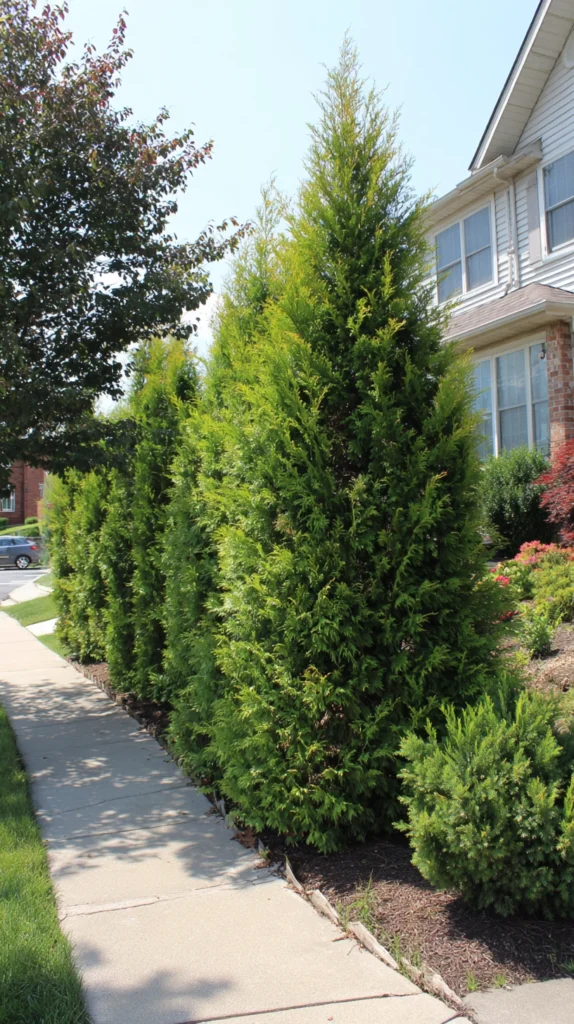
There are lots of arborvitae types besides Green Giant. Most grow about 1-2 feet per year. That’s slower than Green Giant but still decent.
The regular arborvitae types are usually cheaper than Green Giant. About $10-15 less per plant. If you’re on a budget, these save money.
They’re slightly more prone to disease and damage than Green Giant in my experience. I lost three to some kind of blight while my Green Giants stayed perfectly healthy.
Key information:
- Grows 1-2 feet per year
- Gets 20-30 feet tall
- Cheaper than Green Giant
- More disease-prone
- Plant 4-5 feet apart
If you’re choosing between regular arborvitae and Green Giant, spend the extra money on Green Giant. It grows faster and has way fewer problems. Worth every penny.
16. Miscanthus Grass (Not a Shrub But Works Great)
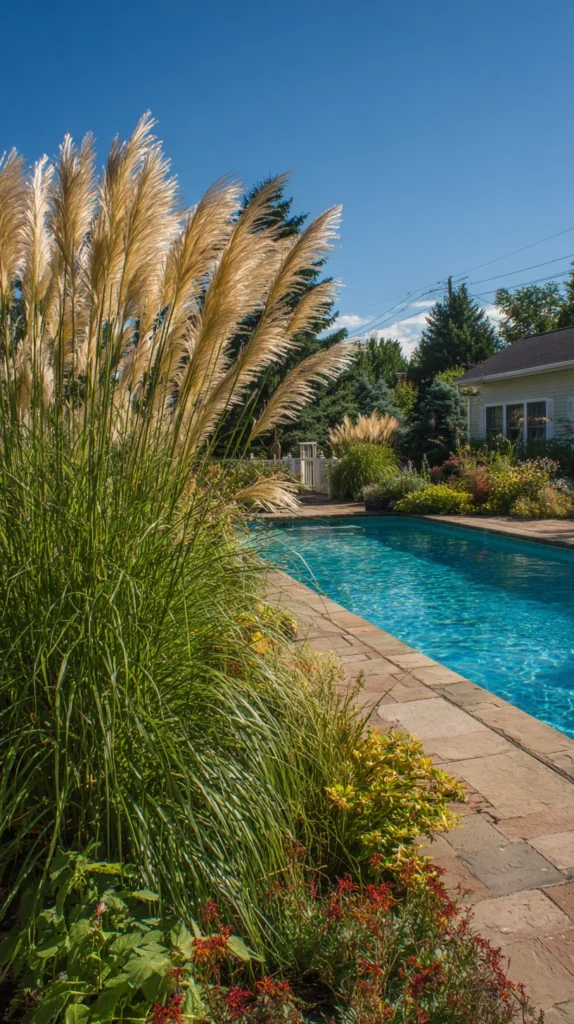
Okay, this is technically an ornamental grass, not a shrub. But it works so well for privacy that I’m including it anyway. Don’t be mad.
Miscanthus shoots up 6-8 feet tall in a single growing season. That’s insanely fast. You plant it in spring and have privacy by summer. No other plant on this list is that quick.
It dies back to the ground in winter, though. So you have zero privacy from November to April. Only works if you need summer privacy for a pool or patio.
Growing basics:
- Grows 6-8 feet in one season
- Dies back in winter
- Beautiful feathery plumes
- Loves full sun
- Plant 3-4 feet apart
I planted miscanthus around my pool area. Perfect for blocking views from neighbors during swimming season. In winter, we don’t use the pool anyway, so bare ground is fine.
How Far Apart Should You Plant Them?
This depends on how patient you are. Closer spacing gives you privacy faster, but costs more money because you need more plants.
I plant mine at the minimum spacing recommended for each type. Sometimes, even a foot closer if I really want quick privacy. They fill in faster, but you spend more upfront.
For most shrubs, 4-6 feet apart works well. They’ll touch and make a solid wall within 2-3 years. Closer than 3 feet is usually a waste of money because they crowd each other.
Spacing guide:
| How Patient You Are | How Far Apart | How Long to Fill In |
| Need privacy NOW | 3-4 feet apart | 1-2 years |
| Can wait a bit | 5-6 feet apart | 2-3 years |
| Not in a hurry | 7-8 feet apart | 3-4 years |
Remember that shrubs keep growing forever. If you plant too close, you’ll be trimming constantly to keep them from taking over. Leave some breathing room.
Mixing Different Types (What I Actually Did)
I didn’t plant all one type of shrub. I mixed five different types along my fence line. This looks way more natural and interesting.
Plus, if the disease hits one type, the others keep growing. I don’t end up with big dead gaps in my privacy screen. Insurance against plant problems.
My mix: 3 Leyland Cypress, 4 Green Giant Arborvitae, 3 Skip Laurel, 2 Nellie Stevens Holly, and 3 Photinia. Total of 15 shrubs along 80 feet of fence.
The variety makes my yard look like an actual garden instead of just a boring green wall. Guests compliment how nice it looks all the time.
Watering Your New Shrubs (Don’t Skip This)
New shrubs need water every 2-3 days for the first month. This is not optional unless you want dead plants. Their roots haven’t spread out yet.
I killed three expensive shrubs in my first year by not watering enough. Just assumed rain would handle it. Rain wasn’t enough, and they died. Cost me $90 to replace them.
After the first month, water weekly for the rest of the first year. Deep watering is better than shallow watering every day. You want roots to grow deep.
After one full year in the ground, most shrubs can handle themselves. I barely water mine now, except during extreme drought. They’re established and tough.
Fertilizing for Faster Growth
I feed my shrubs twice a year – once in early spring and once in mid-summer. This helps them grow as fast as possible. They need food to make all that new growth.
I use basic shrub fertilizer from Home Depot. The $12 bag. Nothing fancy or expensive. It works great for pushing fast growth during the growing season.
Don’t fertilize in fall or winter. This encourages new soft growth that gets killed by cold weather. Only feed during the active growing season in spring and summer.
My feeding schedule:
| When | What I Use | Why |
| Early April | Slow-release shrub food | Jump starts spring growth |
| Mid-June | Liquid fertilizer | Boosts summer growth spurt |
| September | Nothing | Let them harden for winter |
Too much fertilizer burns roots and kills plants. Follow package directions or use half strength if unsure. More is not better with plant food.
Trimming to Keep Them Dense
If you want thick privacy shrubs instead of tall skinny ones, you have to trim them. Cutting the tops makes them grow bushier on the sides instead of just shooting straight up.
I trim mine once a year in late spring after the first big growth spurt. I cut off about 6 inches from the top and shaped the sides a bit.
This forces new growth lower down on the plant. Instead of one tall skinny trunk, you get a thick bushy wall of leaves. Way better for privacy.
Don’t cut more than one-third of the plant at once. This stresses them too much and can kill younger shrubs. Light trimming is better than one huge haircut.
Common Mistakes People Make
Planting too close to fences or buildings. Shrubs need room to grow. Leave at least 3 feet between the fence and where you plant. I planted mine too close, and now they’re pushing my fence over.
Not checking mature size. That cute 2-foot shrub grows to 40 feet tall. Now it’s blocking your power lines, and you have to remove it. Always check the tag for mature height before buying.
Buying the cheapest plants possible. I bought clearance shrubs that looked half-dead. They never recovered, and I wasted money. Healthy plants cost more but actually grow. Dead plants are expensive at any price.
Forgetting about utility lines. I almost planted right over buried cable lines. That would’ve been a nightmare when they needed to dig them up. Call 811 before you dig anywhere.
What I’d Do Differently Next Time
I wish I’d planted twice as many shrubs from the start. I was cheap and planted them 8 feet apart. Took forever to fill in, and I had to buy more shrubs later anyway.
I should’ve installed a drip irrigation system right away. Hand watering 15 shrubs every few days got old really fast. Automatic watering would’ve saved me hours.
I’d skip the arborvitae completely and only plant Leyland Cypress and Green Giant. Those two performed way better than everything else. Sometimes, simple is better than variety.
But overall, I’m super happy with my privacy screen. My bedroom isn’t a fishbowl anymore. My kids play outside without an audience. Best home improvement project I ever done.
How Much Will This Cost You?
Here’s what I spent on my 80-foot privacy screen with 15 shrubs:
Plants: $400 (mixed types at $20-35 each) Soil amendments: $50 (compost and fertilizer) Mulch: $40 (2 bags of shredded bark) Tools: $0 (already owned a shovel)
Total: $490 for complete privacy
Compare that to $5,000 for a fence. I saved over $4,000 by using shrubs instead. Plus, my yard looks way nicer than a plain wooden fence.
You can do it cheaper with privet or more expensive with all premium shrubs. My cost was middle-of-the-road pricing. Budget at least $25 per plant, including soil and mulch.
Ready to Plant Your Privacy Screen?
Growing a living privacy fence is way easier than I thought it would be. I worried I’d kill everything because I’m not a real gardener. But these shrubs are pretty forgiving.
Pick fast-growing types that work in your climate. Plant them close enough to fill in quickly. Water them the first year and then forget about them, mostly.
In 2-3 years, you’ll have real privacy without spending thousands on a fence. Your neighbors won’t be able to see every move you make anymore.
I’m sitting on my patio in my pajamas right now. My neighbor has no idea. That’s privacy worth waiting for.
Quick Summary:
- Fastest growers: Leyland Cypress, bamboo, Green Giant Arborvitae (3+ feet/year)
- Best for shade: Skip Laurel
- Cheapest option: Privet
- Best for wet soil: Wax Myrtle
- Most cold-hardy: Green Giant Arborvitae, Eastern Red Cedar
- Best security: Holly (prickly leaves)
- Mix different types for natural look and disease protection
- Plant 4-6 feet apart for 2-3 year privacy
- Water religiously first year, then rarely
- Trim once yearly for thick bushy growth