16 Compact Vertical Vegetable Garden Designs for Small Spaces
My first apartment garden was pathetic. I tried growing tomatoes in two pots on my 4×6 balcony. Harvest: 3 tomatoes total.
I thought small spaces meant tiny harvests. I was completely wrong.
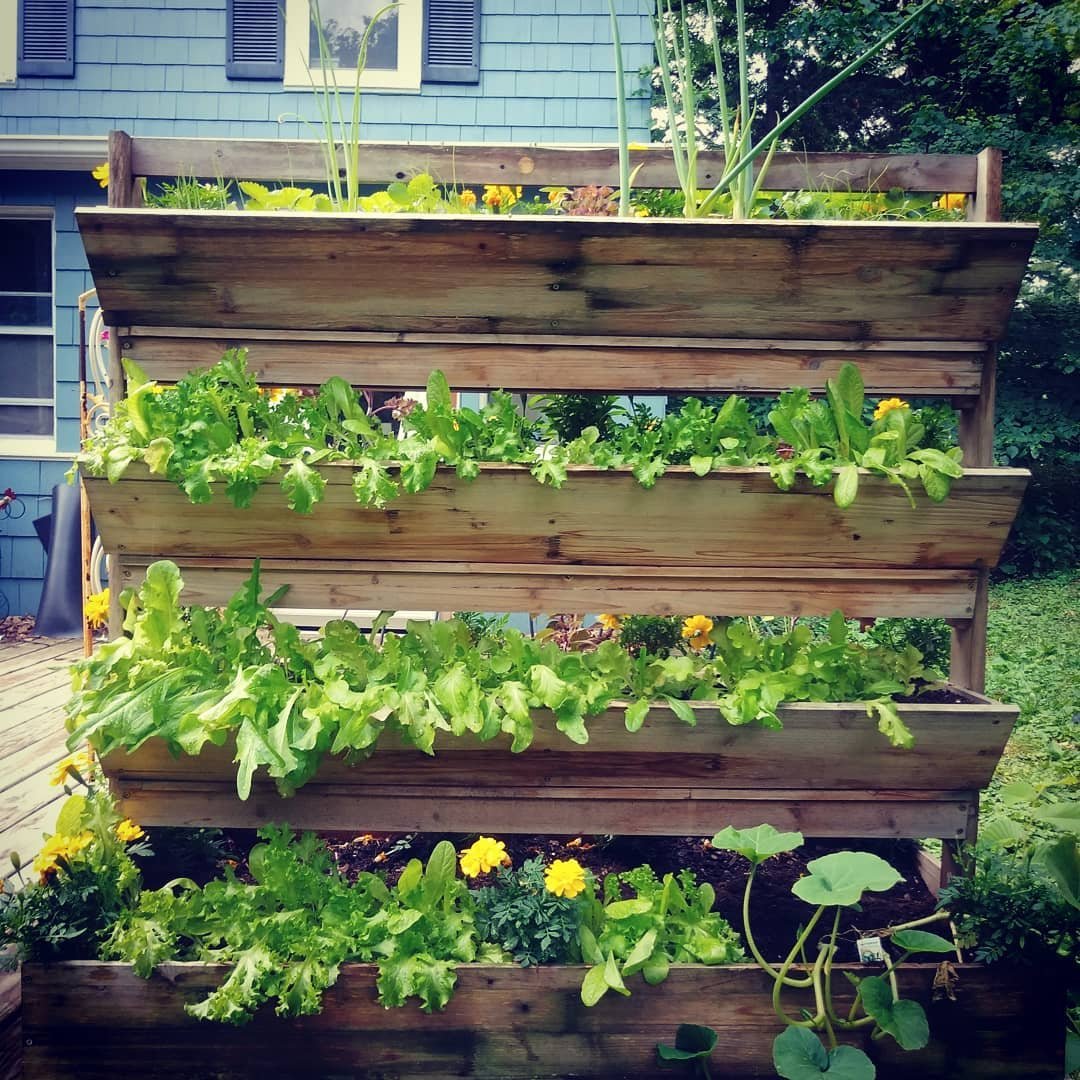
Now I grow 30+ plants on the same balcony using vertical designs. Last summer’s harvest: 40 pounds of vegetables from 24 square feet.
Let me show you 16 vertical designs that actually work in tiny spaces.
Why Horizontal Gardening Fails in Small Spaces
My first balcony attempt:
- 2 tomato plants in floor pots
- Ground space used: 8 square feet
- Could barely walk on the balcony
- Harvest: Maybe 10 tomatoes
- Felt like wasted effort
The problem: I was thinking horizontally in a vertical world.
Balconies are tall spaces (8+ feet ceiling height) with small footprints. Using only ground level wastes 90% of available space.
The Vertical Revelation
After redesigning vertically:
- Same balcony (4×6 feet = 24 sq ft footprint)
- Used vertical space up to 7 feet high
- Grew 30+ plants
- Could still walk and sit comfortably
- Harvest: 40+ pounds vegetables
How? By stacking growing layers from floor to ceiling.
Available growing area:
- Floor level: 24 square feet
- Added vertical: 60+ square feet
- Total effective space: 84 square feet
- From a 24 square foot footprint
That’s 3.5× more growing space using the same floor area.
1. Tower Garden System (My Current Setup)
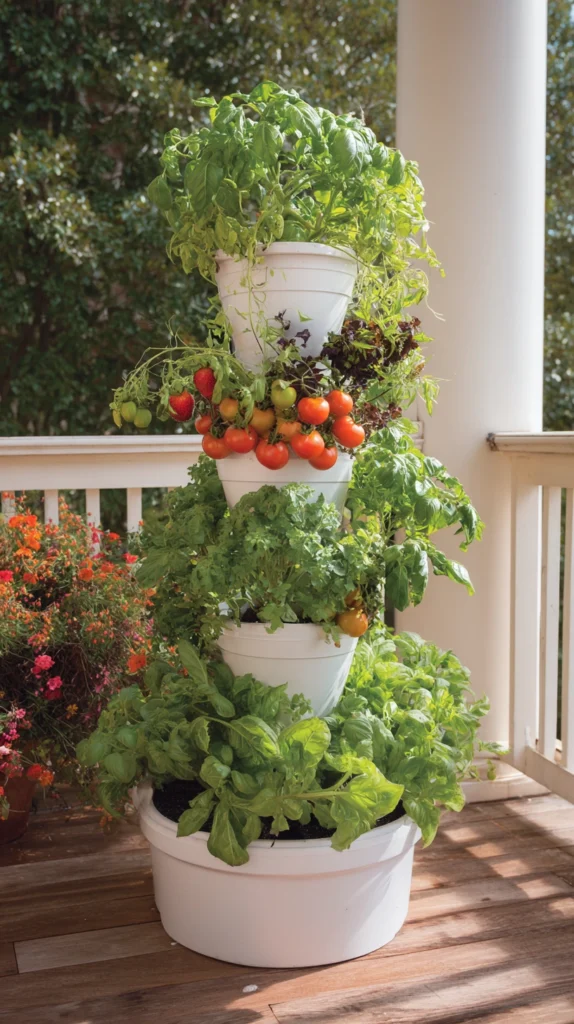
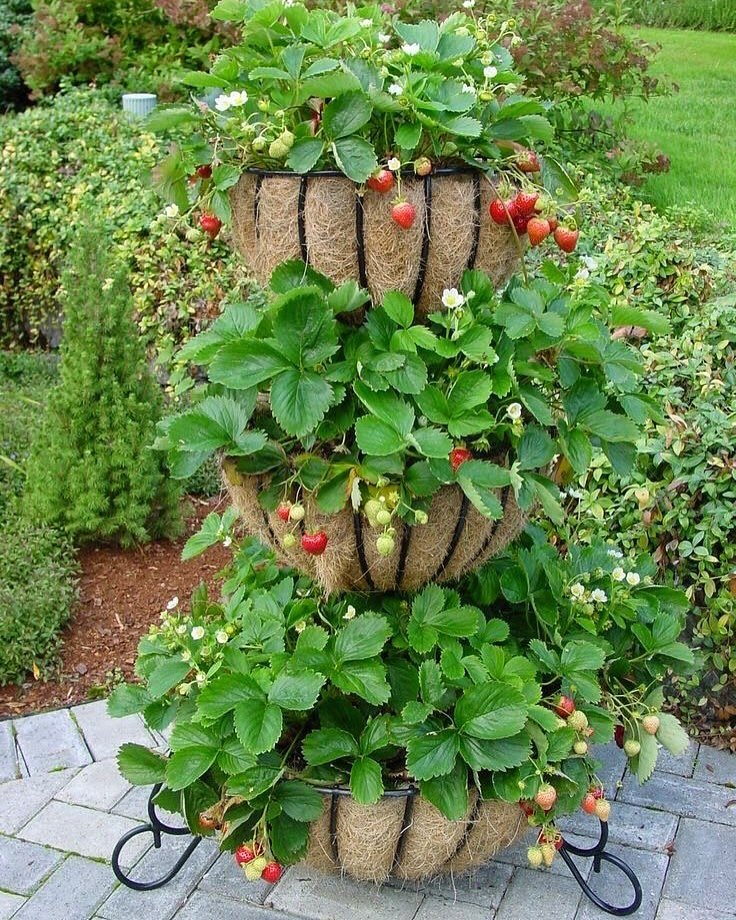
Stacked containers create a vertical column of plants.
My 5-tier tower specs:
Each tier:
- 16-inch diameter pot
- 8 inches tall
- Staggered rotation for light access
Plants per tier:
- Bottom (largest): 3 tomato plants
- Second: 4 pepper plants
- Third: 6 lettuce heads
- Fourth: 8 herbs
- Top: Trailing strawberries
Total footprint: 2 square feet (16-inch circle). Total plants: 20+. Height: 4 feet tall
Why it works:
- Each tier gets sunlight
- Easy watering from the top (trickles down)
- Harvest at eye level
- Stable (wide base)
Building a Tower Garden
Materials I used:
| Item | Cost | Where |
| 5 plastic pots (varying sizes) | $35 | Garden center |
| Potting soil | $25 | Hardware store |
| Dowel rod (for stability) | $5 | Hardware store |
| Total | $65 |
Construction (1 hour):
- Drill a hole in the center of each pot
- Thread the dowel through all pots
- Fill the largest with soil, plant
- Stack next size, fill, plant
- Repeat to top
- Secure dowel at top
Result: Growing 20+ plants in 2 square feet.
My balcony has 3 towers = 60+ plants in 6 square feet of floor space.
2. Pallet Garden Wall (Vertical Planter)
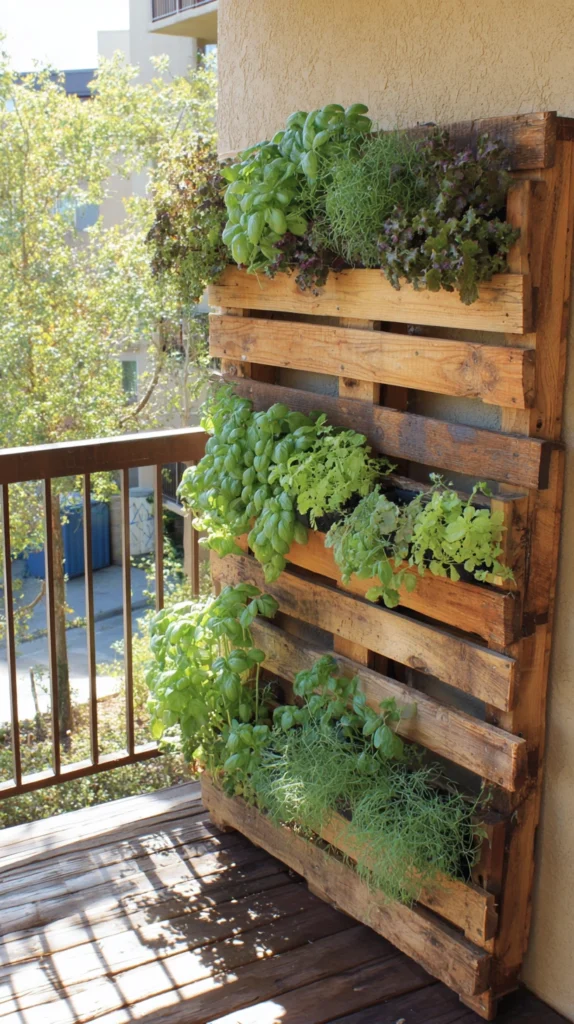
Free shipping pallet becomes vertical garden.
I mounted 3 pallets on my fence. Growing 45 lettuce and herb plants on what was empty wall space.
Setup:
Each pallet (4×4 feet):
- Lean against wall or fence
- Landscape fabric stapled on back
- Soil packed in slats
- 15-20 plants per pallet
What grows well:
- Lettuce (shallow roots)
- Herbs (compact)
- Strawberries (trailing)
- Spinach (quick growing)
- Radishes (small)
My three pallets:
- Pallet 1: Lettuce varieties
- Pallet 2: Herbs (basil, parsley, cilantro)
- Pallet 3: Mixed greens and strawberries
Wall space used: 12×4 feet Floor space used: 1 foot depth Plants grown: 45-60
Pallet Garden Construction
Step-by-step:
- Find pallet (free behind stores, ask first)
- Sand rough edges (avoid splinters)
- Staple landscape fabric on back and bottom
- Lay flat, fill slats with soil
- Plant in gaps between boards
- Let establish flat for 2 weeks
- Stand upright against support
Cost: $15 (just fabric and staples, pallet free) Time: 2 hours per pallet
Maintenance: Water daily (dries fast vertically)
My pallets produce more greens than I can eat. Give away bags weekly.
3. Hanging Basket Cascade (Overhead Growing)
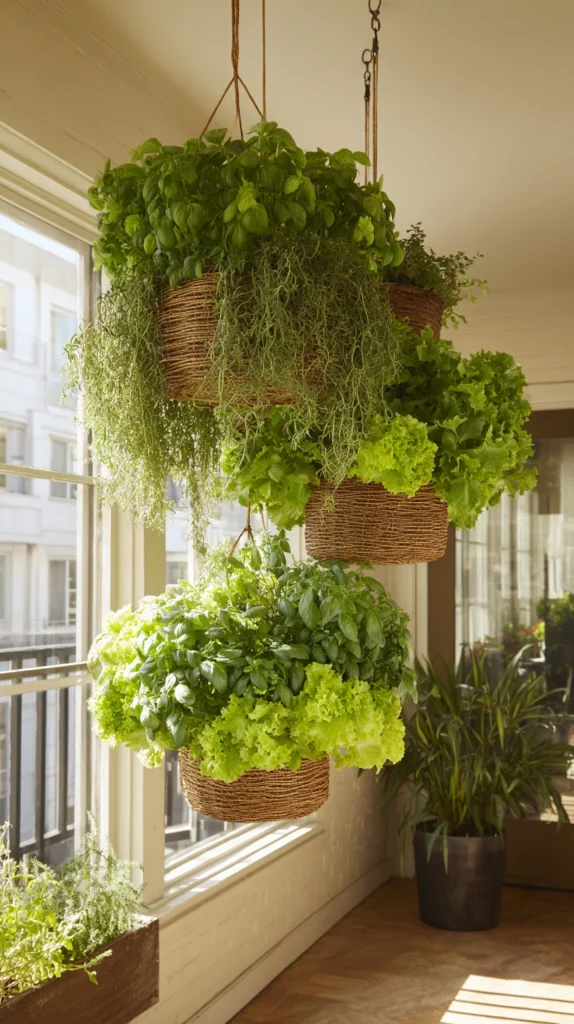
Utilize air space above head with hanging baskets at different heights.
My balcony overhead:
8 hanging baskets:
- Hung from ceiling hooks
- Staggered heights (creates cascade effect)
- Different depths for different plants
Basket assignments:
High baskets (7 feet):
- Cherry tomatoes (2 baskets)
- Don’t need to reach often
Medium baskets (5-6 feet):
- Herbs (4 baskets)
- Easy harvest height
Low baskets (4 feet):
- Lettuce (2 baskets)
- Harvest frequently
Floor space used: Zero Overhead space used: 8 square feet Plants: 20+
Best Plants for Hanging
What works:
- Cherry tomatoes (determinates or compact)
- Herbs (most types)
- Strawberries (trail beautifully)
- Lettuce (cut-and-come-again)
- Trailing cucumbers (compact varieties)
What doesn’t work:
- Large beefsteak tomatoes (too heavy)
- Full-size peppers (weight breaks branches)
- Root vegetables (need depth)
I use self-watering baskets ($15 each) with drip lines connected. Timer waters twice daily.
Worth the investment – maintenance is minimal.
4. A-Frame Trellis Garden (Freestanding Structure)
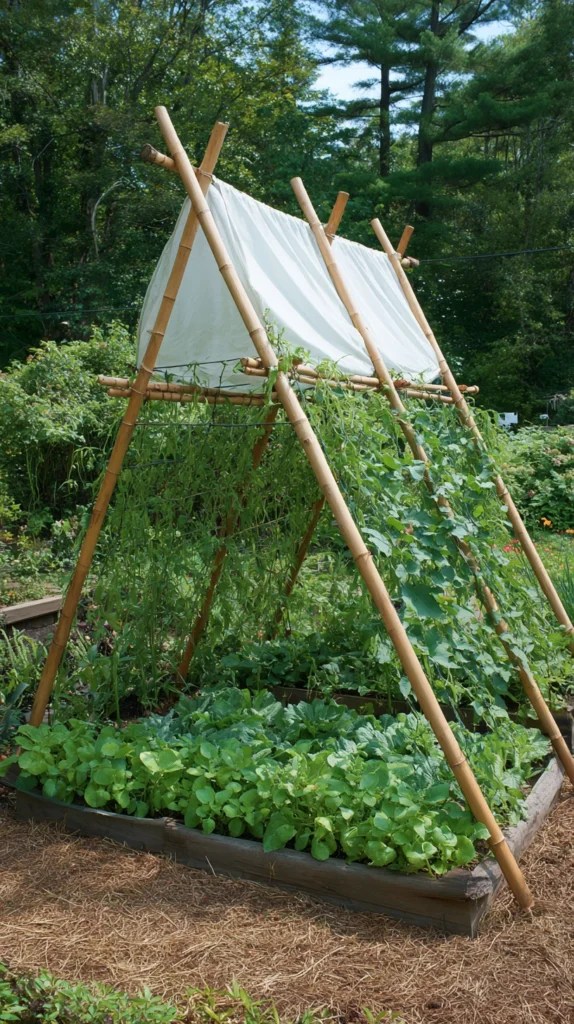
Two trellis panels create A-frame you can grow on both sides.
My A-frame specs:
Size: 6 feet tall, 3 feet wide at base
Structure:
- Two cattle panel sections
- Hinged at top
- Creates tent shape
- Stable freestanding
Planted both sides:
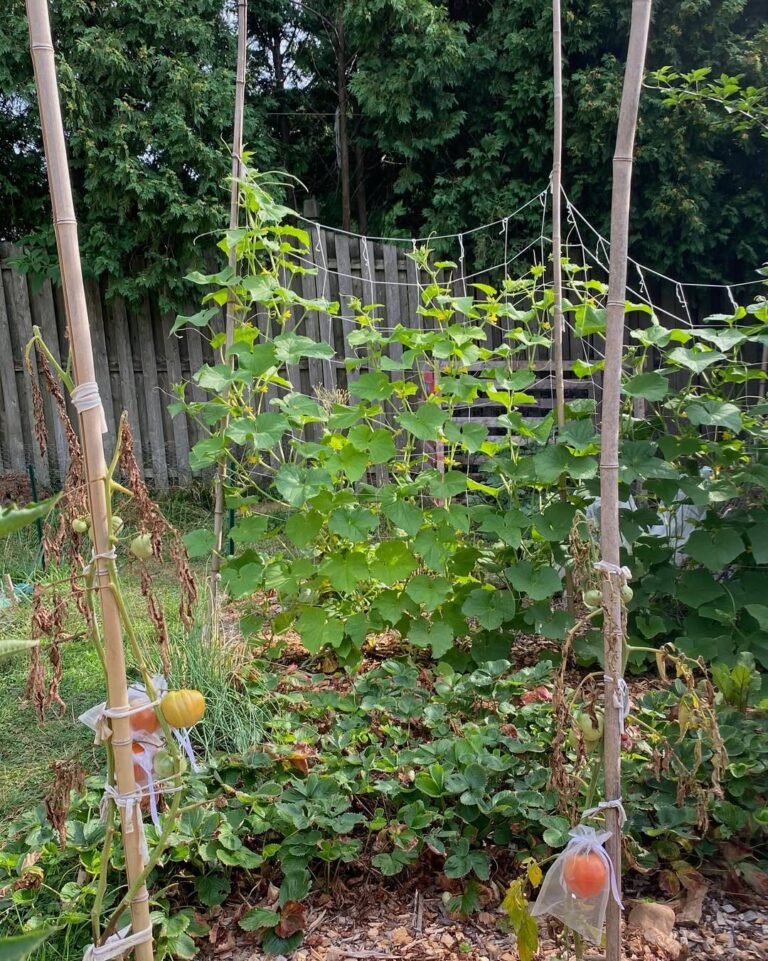
South side (full sun):
- 4 cucumber plants
- Climb up the trellis
- Harvest from outside
North side (partial shade):
- Lettuce planted at base
- Shade from cucumbers keeps cool
- Extended season
Footprint: 3×3 feet (9 square feet) Growing area: Both sides = 36 square feet Space multiplier: 4×
A-Frame Benefits
Why I love it:
- Freestanding (no wall needed)
- Double-sided planting
- Creates shade underneath
- Easy access both sides
- Moveable
What I grow:
- Cucumbers (love to climb)
- Pole beans (produce all summer)
- Peas (spring crop)
- Vining squash (compact varieties)
Construction:
- Two 3×6 cattle panels ($25 each)
- Wire hinges at top
- Spread 3 feet at base
- Anchor with stakes
Total cost: $60 Lifespan: 15+ years
My A-frame has produced 50+ pounds of cucumbers yearly for 3 years.
5. Window Box Garden (Exterior Growing)
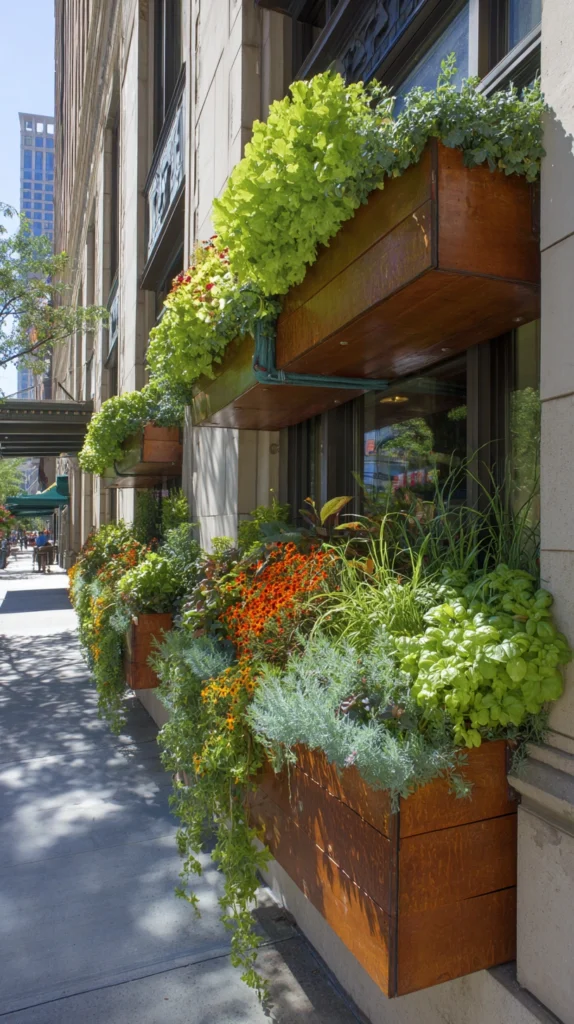
Mounted outside windows on my apartment building (with landlord permission).
My 6 window boxes:
Each box (3 feet long):
- 10 inches wide
- 8 inches deep
- Mounted on brackets
- Security cable attached
What I grow:
Box 1-2: Lettuce (cut-and-come-again) Box 3-4: Herbs (basil, parsley, cilantro) Box 5: Cherry tomatoes (compact variety) Box 6: Edible flowers (nasturtiums, pansies)
Total footprint: 18 linear feet of windowsill Floor space used: Zero Fresh greens: Daily harvest
Window Box Installation
Critical steps:
- Get landlord permission (in writing)
- Use proper brackets (rated for weight)
- Add security cables (safety)
- Drill into studs (not just siding)
My brackets: Heavy-duty steel, rated 50 pounds ($12 each)
Safety is critical – falling window box could hurt someone.
I added cables connecting boxes to window frame as backup.
6. Vertical Pocket Planter (Felt Wall Garden)
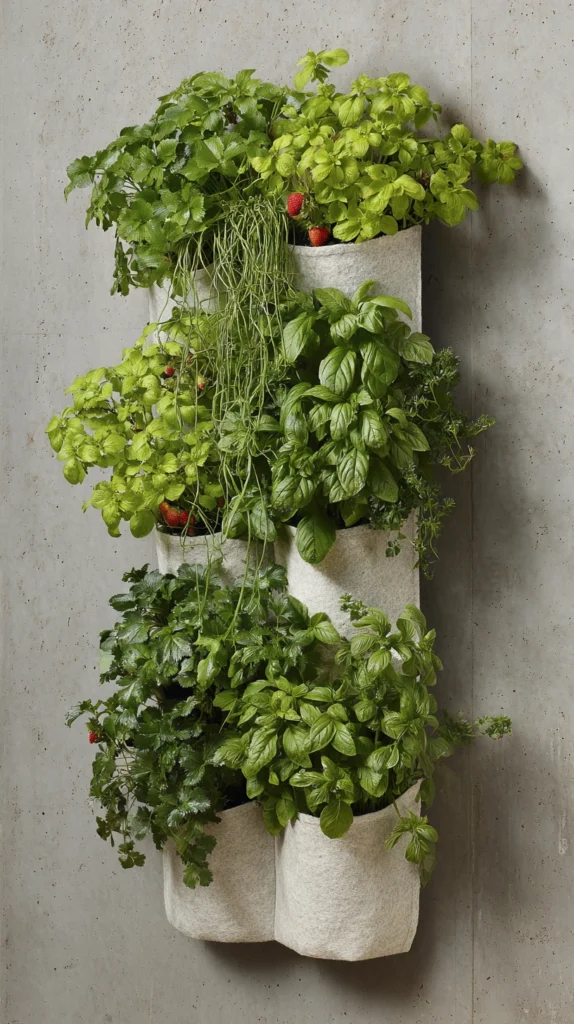
Fabric wall organizer with pockets for plants.
My setup:
6×8 foot felt planter:
- 48 pockets total
- Mounted on balcony wall
- Irrigation line at top
- Water trickles down through pockets
Pocket contents:
- 30 pockets: Lettuce and greens
- 12 pockets: Herbs
- 6 pockets: Strawberries (trailing)
Space used:
- Wall space: 48 square feet
- Floor space: 6 inches depth
- Effectively: 4 square feet footprint
Growing area: 48 pockets = equivalent to 60+ square feet of garden bed
Felt Planter Pros and Cons
Advantages:
- Maximum density
- Looks clean and organized
- Easy to customize planting
- Lightweight
Disadvantages:
- Dries out quickly (needs irrigation)
- Initial cost higher ($150-200)
- Some pockets drain onto lower ones
My solution: Built drip irrigation system ($40 in parts) on timer.
Now it’s hands-off except harvesting.
Production: 2-3 salads daily from 48 pockets.
7. Staircase Planter (Tiered Design)
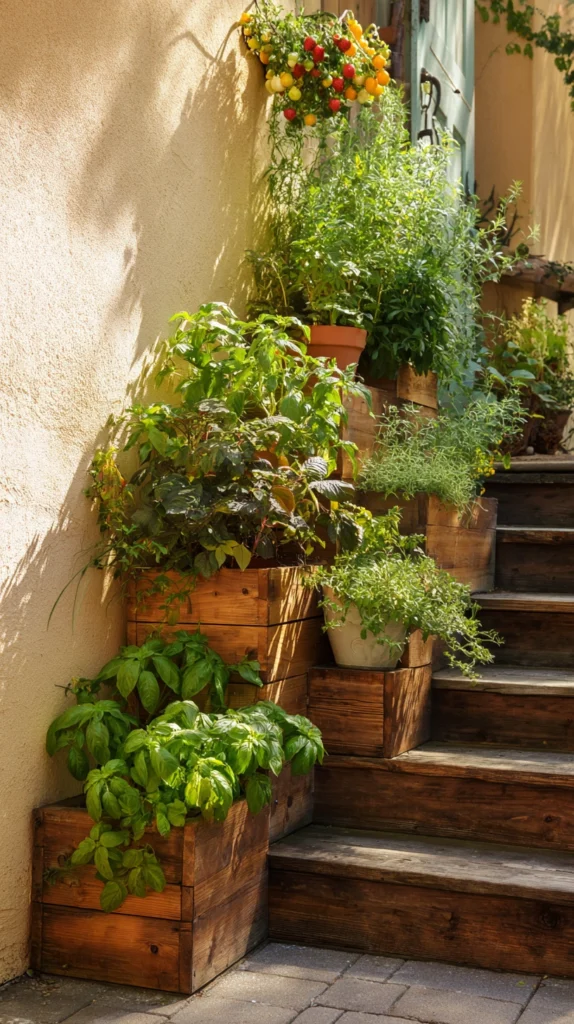
Step design creates tiered growing with each level accessible.
My staircase garden:
5 steps against wall:
Bottom step (largest): 4 feet wide × 18 inches deep
- Tomatoes and peppers
- Tallest plants
Steps 2-4: Each 8 inches higher, 8 inches narrower
- Beans, lettuce, herbs
- Progressive height
Top step (smallest): 18 inches wide
- Trailing strawberries
- Cascade down front
Total footprint: 4×2 feet (8 square feet) Total planting area: 25+ square feet Visual impact: Stunning
Building Stairs
I used cedar boards:
Materials:
- 2×6 cedar boards
- Screws
- Landscape fabric
Cost: $85 in lumber
Construction (one weekend):
- Build largest box (bottom)
- Set on ground
- Build next size
- Set on top and back 8 inches
- Repeat to top
Each tier is independent – can move if needed.
Alternative: Buy premade tiered planters ($60-120 depending on size).
8. Gutter Garden System (Long and Narrow)
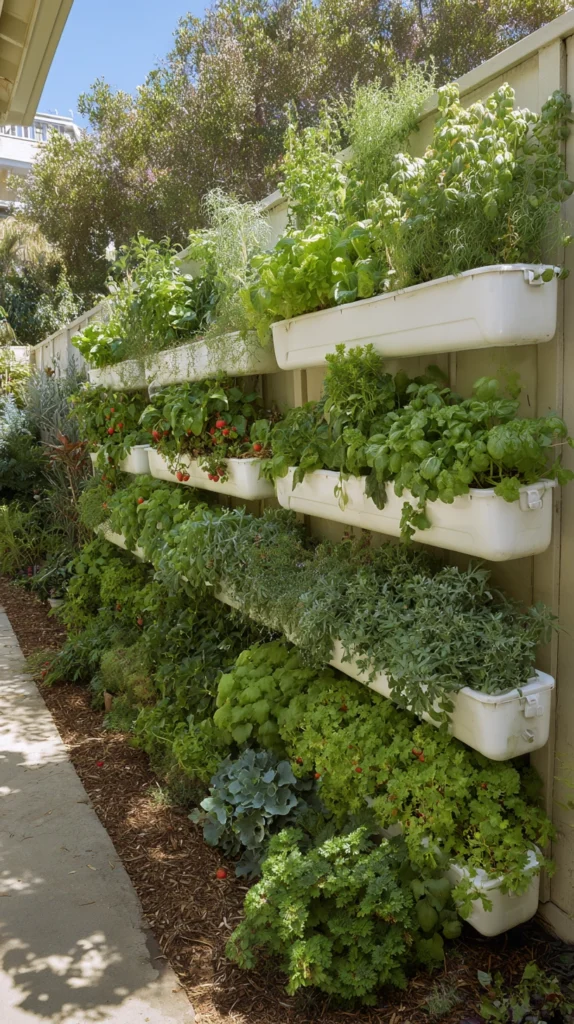
Rain gutters repurposed as planters mounted vertically.
My setup on blank wall:
6 gutters stacked vertically:
- Each 6 feet long
- Mounted 10 inches apart
- End caps sealed
- Drainage holes drilled
Spacing from bottom up:
Gutter 1 (lowest): 2 feet from ground Gutters 2-6: Each 10 inches higher
What I plant:
- Lettuce (shallow roots perfect)
- Herbs (thrive in narrow space)
- Strawberries (trail over edges)
- Radishes (quick harvest)
Total:
- Wall space: 6 feet tall × 6 feet wide
- 36 linear feet of growing space
- 70+ plants
Gutter Garden Installation
Materials:
| Item | Cost |
| 6 vinyl gutters (10 feet each, cut in half) | $30 |
| End caps | $12 |
| Mounting brackets | $25 |
| Potting soil | $20 |
| Total | $87 |
Installation:
- Mount brackets to wall (studs)
- Set gutters level
- Drill drainage holes every 6 inches
- Add end caps with silicone
- Fill with lightweight potting mix
- Plant
Key: Make sure level or water pools at one end.
My gutters produce salad greens 8 months yearly.
9. Trellis Wall Garden (Climbing Vegetables)
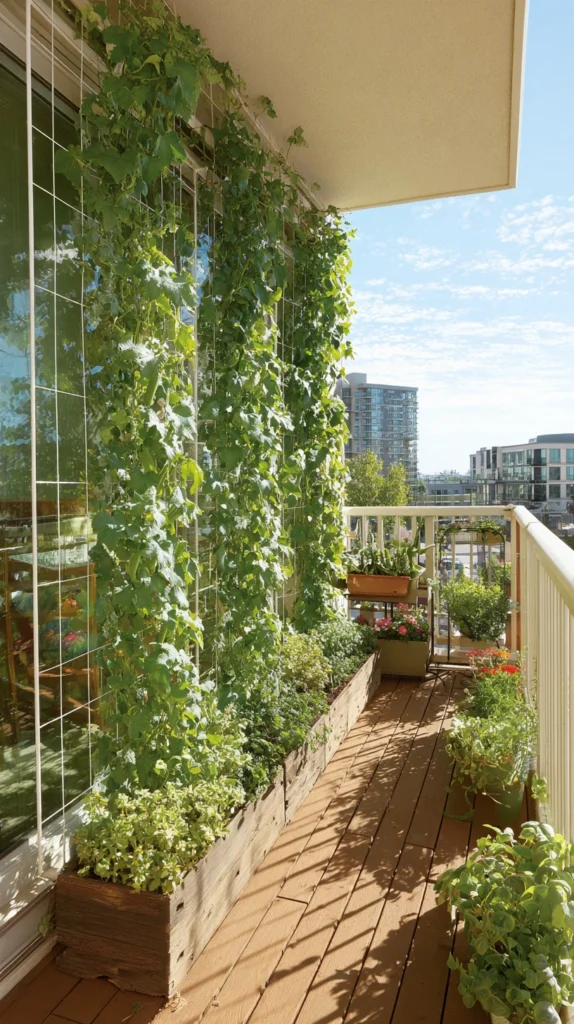
Floor-to-ceiling trellis with containers at base.
My full-wall trellis:
Structure:
- Mounted to balcony ceiling and floor
- 8 feet tall × 6 feet wide
- Wire cattle panel material
- Stable and strong
Planted at base:
- 6 large containers (5 gallon)
- Each has climbing plant
- Vines grow up trellis
What climbs:
- 2 cucumber plants
- 2 pole bean plants
- 1 pea plant (spring)
- 1 compact squash
Footprint: 6×2 feet containers (12 square feet) Growing area: 6×8 trellis (48 square feet) Space efficiency: 4× multiplier
Trellis Mounting
Critical for renters:
I used tension rods (like shower curtain rods) top and bottom:
- No drilling in ceiling
- Removable when moving
- Strong enough for vegetables
Cost: $40 for 2 heavy-duty tension rods
Attached cattle panel with zip ties.
This produces: 40+ pounds vegetables yearly from 12 square feet of floor space.
10. Vertical Garden Tower (Commercial System)
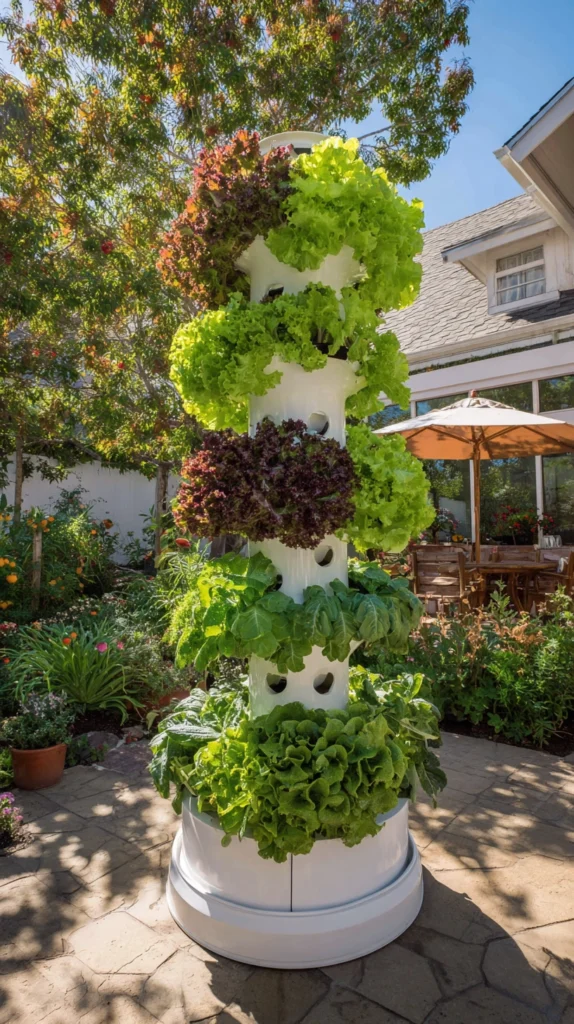
Bought premade aeroponic tower – expensive but productive.
Tower Garden specs:
- 5 feet tall
- 28 plant sites
- Aeroponic (water-based, no soil)
- Built-in pump and timer
What I grow:
- Lettuce (14 sites)
- Herbs (8 sites)
- Tomatoes (4 sites)
- Peppers (2 sites)
Footprint: 2.5 square feet Harvest: Weekly salads for family of 4
Cost: $500 (ouch)
Worth it? For me yes, because:
- Maximum production
- Professional appearance
- Easy maintenance
- High success rate
Not for everyone – expensive upfront.
DIY alternative: Build your own with PVC pipe ($50) – works almost as well.
11. Magnetic Container Garden (Metal Surface Growing)
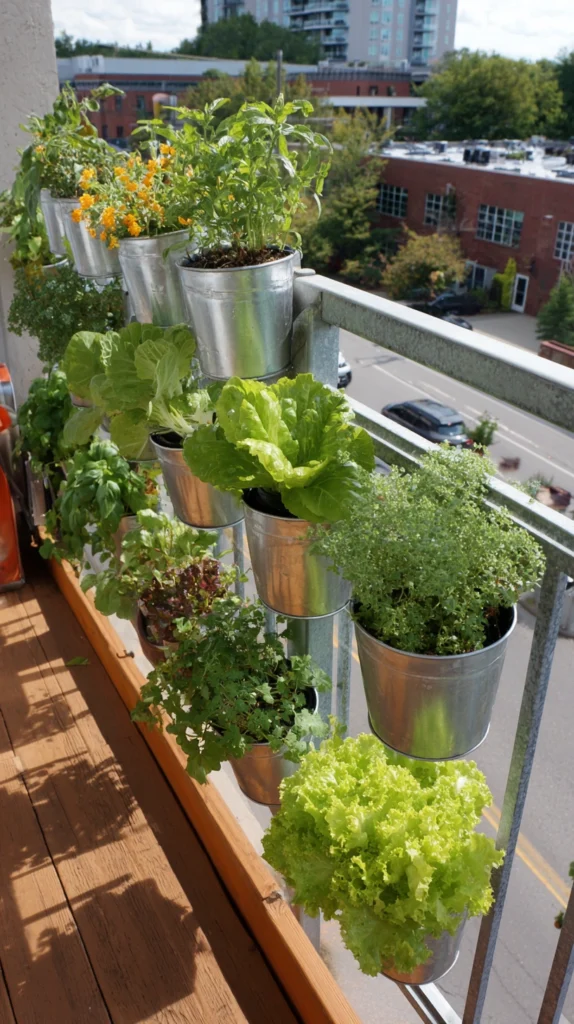
Magnetic pots on metal surfaces (railings, shed, posts).
My balcony railing:
12 magnetic pots:
- Attached to metal railing
- 6-inch diameter each
- No floor space used
- Easy to rearrange
What works in small magnetic pots:
- Herbs (perfect size)
- Lettuce (individual heads)
- Strawberries (1-2 plants)
- Small flowers (edible nasturtiums)
Railing coverage:
- 12 feet of railing
- 12 pots
- Zero floor space
Cost: $8 per magnetic pot = $96 total
Harvest: Fresh herbs constantly
Magnetic Pot Tips
Choose strong magnets:
- Cheap ones fall off
- I learned this losing a basil plant (fell 3 stories)
- Now only buy rated for 5+ pounds
Weight considerations:
- Soil + water + plant = heavy
- Don’t overload single magnets
- Use multiple magnets per pot
My pots have 3 magnets each – very secure.
12. Vertical Hydroponic Wall (Soil-Free System)
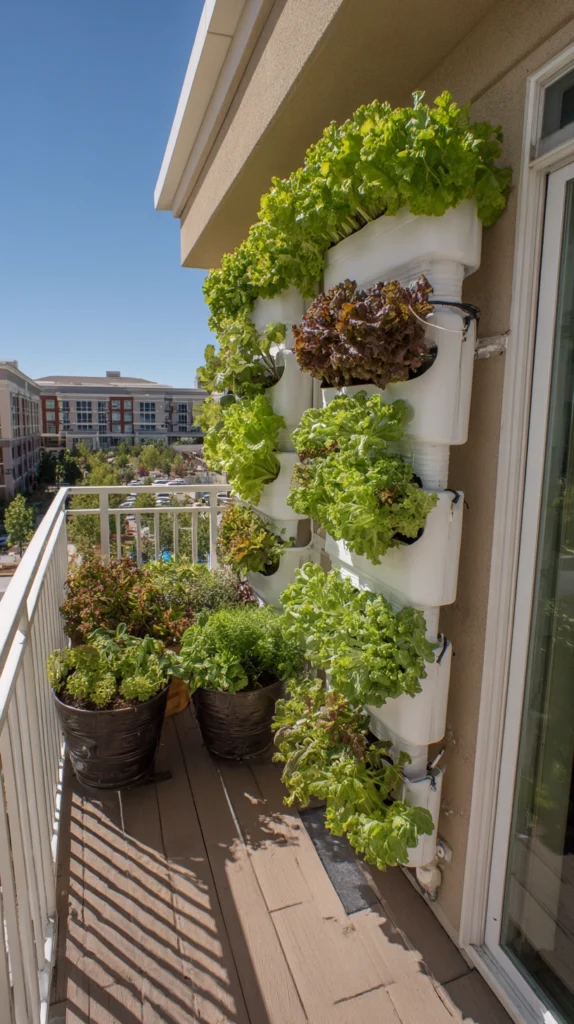
No soil, just water and nutrients in vertical channels.
My hydroponic wall:
4 vertical channels:
- 6 feet tall each
- Mounted to wall
- Nutrient water pumped to top
- Trickles down through plants
- Recirculates
Plants grown:
- 24 lettuce heads (replace as harvested)
- 8 herbs
- 4 cherry tomato plants
Footprint: 4 feet wide × 6 inches deep (2 square feet) Growing area: 24 square feet Space multiplier: 12×
Hydroponic Pros and Cons
Advantages:
- Faster growth than soil
- Higher yields
- Less mess
- Fewer pests
Disadvantages:
- Higher setup cost ($200-300)
- Need electricity (pump)
- Learning curve
- System dependence
I killed plants twice before figuring out nutrient balance.
Now it runs smoothly and produces like crazy.
Worth it if: You like technology and maximum production.
Skip if: You want simple and forgiving.
13. Corner Pyramid Garden (Space-Saving Design)
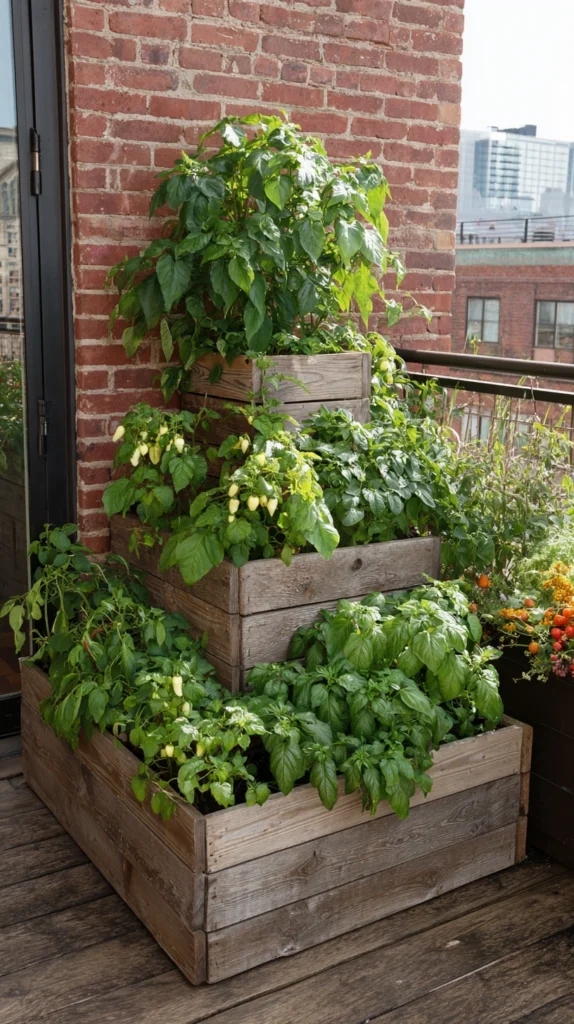
Pyramid structure in corner uses dead space efficiently.
My corner pyramid:
4 tiers forming pyramid:
Bottom tier: 4×4 feet square Tier 2: 3×3 feet Tier 3: 2×2 feet Top tier: 1×1 feet
Total footprint: 16 square feet (one corner) Planting area: 30 square feet Plants: 40+
What I plant by tier:
Bottom: Tomatoes, peppers (tall plants) Tier 2: Beans, cucumbers (vining) Tier 3: Lettuce, herbs Top: Trailing strawberries (cascade down)
Pyramid Construction
Built from cedar fence boards:
Process:
- Build largest square frame
- Fill with soil
- Build next size
- Center on tier below
- Repeat to top
Cost: $65 in lumber
Alternative: Stack large containers in pyramid shape (easier, less permanent).
My pyramid is showpiece of my garden – everyone asks about it.
14. Vertical String Garden (Bean Tower)
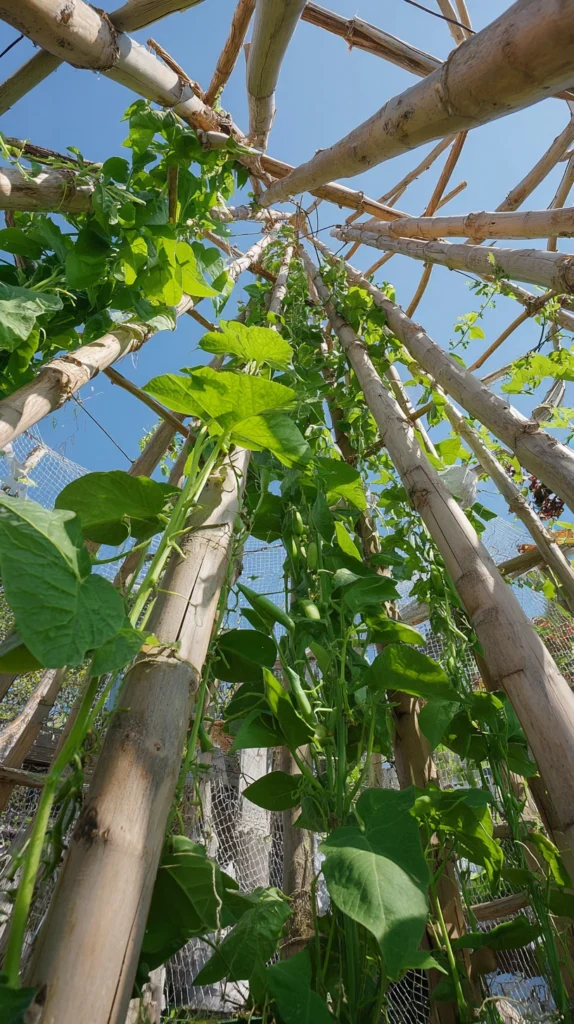
Teepee of strings creates vertical growing structure.
My string tower:
Materials:
- 6-foot bamboo poles (6 poles)
- Garden twine
- Large pot at base
Assembly:
- Arrange poles in circle (3 feet diameter)
- Tie tops together (teepee shape)
- String twine from top to bottom
- Plant beans/peas at base of each string
What grows:
- 12 pole bean plants
- Climb strings to top
- Harvest from outside
Footprint: 3×3 feet (9 square feet) Production: 20+ pounds beans per season
Bonus: Kids love playing inside the bean teepee.
String Tower Tips
Use thick twine – thin string cuts into hands when harvesting.
Plant on outside – harvesting from inside is awkward.
Rotate varieties:
- Spring: Sugar snap peas
- Summer: Pole beans
- Fall: Peas again
Three crops yearly from same structure.
15. Wall-Mounted Grid System (Modular Design)
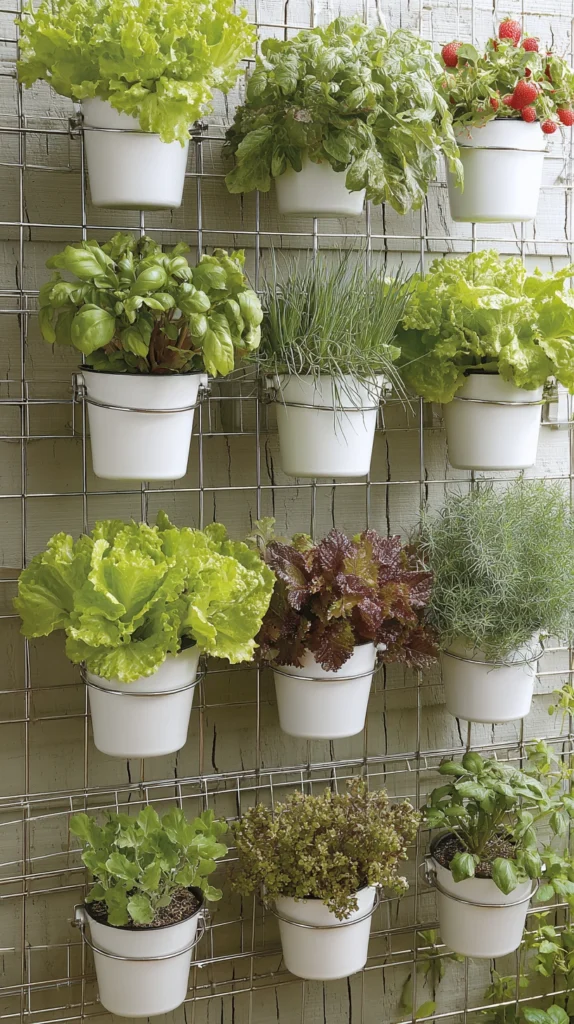
Metal grid on wall with hanging containers.
My grid setup:
6×8 foot metal grid panel:
- Mounted to brick wall
- S-hooks attach containers
- Completely modular
- Rearrange anytime
Current configuration:
- 12 small pots (herbs)
- 6 medium pots (lettuce)
- 4 large pots (tomatoes)
- 3 hanging planters (strawberries)
Total plants: 35+ Wall space: 48 square feet Floor space: Zero (wall-mounted)
Grid System Advantages
Flexibility:
- Move containers around
- Adjust for sun exposure
- Swap out plants easily
- Change design seasonally
I rearrange quarterly:
- Spring: More lettuce (cooler weather)
- Summer: More tomatoes (heat lovers)
- Fall: Back to greens
- Winter: Herbs only
Cost:
- Metal grid panel: $40
- S-hooks: $15
- Containers: $60
- Total: $115
16. Stackable Crate Garden (Rustic Vertical)
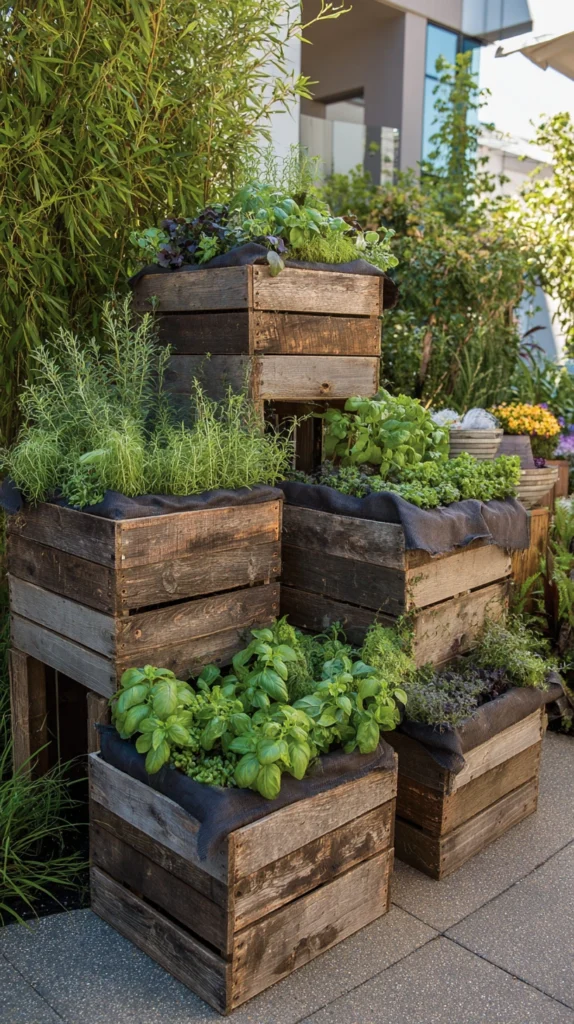
Wooden crates stacked vertically create casual garden aesthetic.
My crate tower:
6 wooden crates:
- Stacked in offset pattern
- Each 12×12 inches
- Lined with landscape fabric
- Filled with soil
Stacking pattern:
Bottom: 2 crates side-by-side Middle: 2 crates offset 6 inches Top: 2 crates offset 6 inches opposite direction
Creates stable zigzag tower:
- 5 feet tall
- 2 feet footprint
- 6 planting spaces
What I grow:
- Herbs in all crates
- Different variety each crate
- Harvest constantly
Look: Rustic, casual, artistic
Finding Crates
Free sources:
- Behind grocery stores (produce crates)
- Farmers markets
- Craft stores (decorative, pricier)
- Facebook Marketplace
I paid $5 each at antique shop. Worth it for weathered look.
Treat wood with linseed oil to extend life (otherwise rot in 2-3 years).
Combining Multiple Designs
I don’t use just one design. My balcony combines several.
My 4×6 balcony setup:
Floor level:
- 3 tower gardens (6 sq ft footprint)
Wall level:
- 2 pallet gardens (wall mounted)
- 1 grid system (wall mounted)
Overhead:
- 8 hanging baskets
Railing:
- 12 magnetic pots
Total footprint: 6 square feet Total plants: 80+ Annual harvest: 50+ pounds
Can still:
- Walk comfortably
- Sit in chair
- Enjoy the space
That’s the goal – productive AND usable.
Watering Vertical Gardens
Biggest challenge: Water runs down and out quickly.
My solutions:
Drip Irrigation
What I installed:
- 50 feet drip line ($25)
- Timer ($30)
- Connects to outdoor spigot
- Waters everything automatically
Runs twice daily:
- 6am: 15 minutes
- 6pm: 15 minutes
Solved my biggest problem. Before this, I watered by hand 30+ minutes daily.
Self-Watering Containers
For individual pots:
- Self-watering inserts
- Reservoir lasts 3-7 days
- Fill once weekly
I use these for:
- Hanging baskets
- Tower tiers
- Window boxes
Cost: $3-8 per insert depending on size
Water-Saving Tips
Add water-retaining crystals to soil:
- Absorb water when wet
- Release when dry
- Extend time between watering
I mix into potting soil before planting. Helps a lot.
Choosing Right Plants for Vertical Growing
Not all vegetables work vertically.
Best for Vertical
Vining/climbing:
- Cucumbers
- Pole beans
- Peas
- Small squash varieties
- Tomatoes (with support)
Shallow root:
- Lettuce
- Herbs
- Strawberries
- Radishes
- Spinach
Compact varieties:
- Cherry tomatoes
- Mini peppers
- Bush beans (short)
- Patio vegetables
Skip These
Won’t work vertically:
- Full-size tomatoes (too heavy)
- Large squash (weight breaks structures)
- Root vegetables needing depth (carrots, potatoes)
- Corn (too tall, unstable)
- Large melons (weight issue)
I learned this by killing plants. Large beefsteak tomato broke my trellis when fruits got heavy.
Structural Safety Considerations
Vertical gardens can be heavy.
Weight calculations:
My tower garden:
- 5 pots soil: 150 pounds
- Water: 30 pounds
- Plants: 20 pounds
- Total: 200 pounds
In 2 square feet – that’s 100 pounds per square foot.
Safety Checklist
Before building:
☑ Check weight limits (balconies, railings, walls) ☑ Mount to studs not just drywall ☑ Use proper anchors rated for weight ☑ Add safety cables for overhead items ☑ Test stability when windy ☑ Get landlord approval if renting
I had balcony weight limit checked by building inspector ($75). Needed to know it was safe.
My balcony limit: 50 pounds per square foot
My garden weight: Calculated at 45 pounds per square foot
Safe margin gives me peace of mind.
Cost Analysis by Design
What each design actually costs:
| Design | Materials | Time | Difficulty | Lifespan | Space Efficiency |
| Tower Garden DIY | $65 | 1 hour | Easy | 5+ years | 10× |
| Pallet Wall | $15 | 2 hours | Easy | 3-5 years | 15× |
| Hanging Baskets | $120 | 1 hour | Easy | 5 years | Infinite |
| A-Frame Trellis | $60 | 2 hours | Medium | 15+ years | 4× |
| Window Boxes | $100 | 3 hours | Medium | 10 years | Infinite |
| Felt Planter | $200 | 4 hours | Easy | 5-10 years | 12× |
| Staircase | $85 | 1 weekend | Medium | 10 years | 3× |
| Gutter Garden | $87 | 3 hours | Medium | 10+ years | 6× |
| Wall Trellis | $40 | 2 hours | Easy | 5 years | 4× |
| Commercial Tower | $500 | 2 hours | Easy | 10+ years | 14× |
| Magnetic Pots | $96 | 30 min | Easy | 5+ years | Infinite |
| Hydroponic Wall | $250 | 1 day | Hard | 10 years | 12× |
| Pyramid | $65 | 1 weekend | Medium | 10 years | 2× |
| String Tower | $25 | 1 hour | Easy | 1 year | 10× |
| Grid System | $115 | 2 hours | Easy | 10+ years | Infinite |
| Crate Tower | $30 | 1 hour | Easy | 2-3 years | 5× |
Best value: Pallet wall ($15, high efficiency) Easiest start: Hanging baskets or string tower Maximum production: Commercial tower or hydroponic wall Most attractive: Staircase or pyramid
My Recommended Starter Setup
For complete beginner with balcony:
Weekend 1 ($200 budget):
Buy:
- 3 large pots for tower ($35)
- 6 hanging baskets ($90)
- Potting soil ($30)
- Seeds/seedlings ($45)
Build:
- Simple 3-tier tower (Saturday)
- Hang 6 baskets (Sunday)
Result:
- 25+ plants
- 4 square feet footprint
- Mix of vegetables
Weekend 2 (optional expansion):
- Add pallet wall ($15)
- Build string tower ($25)
- Another 30+ plants
Maintenance Reality
My actual time spent:
Daily (5 minutes):
- Check automatic watering
- Quick harvest
Weekly (30 minutes):
- Harvest vegetables
- Check for issues
- Pull any weeds
- Adjust support ties
Monthly (1 hour):
- Fertilize
- Prune overgrowth
- Replant harvested sections
Total: 3-4 hours monthly for 80+ plants
Compare to traditional garden: Would need 50+ square feet of ground space and similar maintenance time.
Vertical is more efficient for small spaces.
Common Vertical Garden Mistakes
Learn from my failures:
Mistake 1: Overloading Structures
I hung too many heavy baskets on one hook. Hook pulled out of ceiling, crashed 6 baskets.
Lost: All plants, made mess, learned expensive lesson
Fix: Distribute weight, use proper anchors
Mistake 2: Poor Drainage
Built tower without drainage holes. Bottom plants drowned from water collecting.
Fix: Drill drainage in every container, every tier
Mistake 3: Ignoring Sun Patterns
Planted sun-lovers on north-facing wall. They struggled all season.
Fix: Observe sun before building, match plants to light
Mistake 4: Cheap Materials
Bought flimsy pallet. Fell apart mid-season, lost all plants.
Fix: Invest in quality materials, especially for anything mounted
Mistake 5: No Support for Heavy Plants
Grew full-size tomatoes without support. Plants flopped over, broke stems.
Fix: Cage or stake all tomatoes, even in vertical systems
Harvesting from Vertical Gardens
Different challenges than ground gardens.
Advantages:
- Most plants at eye level
- No bending over
- Easy to see everything
- Quick access
Challenges:
- Top tiers hard to reach (need step stool)
- Overhead baskets drip when watering
- Some angles awkward
My solutions:
Keep step stool nearby for high baskets
Water overhead in morning so drips dry before I use space
Plant most-harvested items at easiest heights (lettuce and herbs at chest height)
Position rarely harvested items higher (tomatoes harvest weekly vs herbs daily)
Year-Round Vertical Growing
I grow 10 months yearly on my balcony (Zone 7).
Seasonal rotation:
Spring (March-May):
- Lettuce, spinach, peas
- Cool-season crops
- Start tomatoes indoors
Summer (June-August):
- Tomatoes, peppers, cucumbers
- Beans, herbs
- Peak production
Fall (September-November):
- Lettuce again
- Kale, chard
- Cool crops return
Winter (December-February):
- Mostly dormant
- Hardy herbs survive
- Plan next year
With protection (cold frame, row covers):
- Extend to 12 months
- Grow greens through winter
- Harder but possible
Comparing Vertical to Traditional
My experience with both:
Traditional garden bed (4×8 = 32 sq ft):
- 30-40 plants maximum
- All at ground level
- Maintenance: 2 hours weekly
- Harvest: 40 pounds yearly
Vertical garden (4×6 = 24 sq ft footprint):
- 80+ plants
- Multi-level
- Maintenance: 2 hours weekly
- Harvest: 50+ pounds yearly
Vertical wins for:
- Small spaces
- Accessibility (less bending)
- Space efficiency
- Visual interest
Traditional wins for:
- Large spaces
- Root vegetables
- Simplicity
- Lower initial cost
For small spaces, vertical is clear winner.
Getting Started This Weekend
Saturday morning:
- Choose 1-2 designs from this list
- Buy materials
- Prep space
Saturday afternoon:
- Build structure
- Fill with soil
- Initial planting
Sunday:
- Finish planting
- Set up watering
- Add labels
Following week:
- Monitor daily
- Adjust as needed
- Enjoy watching grow
My recommendation for first project:
Build simple tower garden:
- 3-5 stacked pots
- Cost: $65
- Time: 1 hour
- Plants: 15-20
Add hanging baskets if budget allows:
- 4-6 baskets
- Cost: $60-90
- Time: 30 minutes
- Plants: 15-20
Total: 30-40 plants, under $200, one weekend
That’s more than most people grow in traditional gardens and uses maybe 10 square feet of floor space.
Now go measure your space and start planning your vertical garden!
Quick Summary:
Best designs for beginners:
- Tower garden (stacked pots, easy)
- Hanging baskets (instant, no building)
- Pallet wall (cheap, productive)
- String tower (simplest structure)
Maximum space efficiency:
- Felt pocket planter (12×)
- Commercial tower (14×)
- Hydroponic wall (12×)
- Pallet wall (15×)
Budget options under $50:
- Pallet wall ($15)
- String tower ($25)
- Crate tower ($30)
- DIY tower ($35)
Best for specific spaces:
Balconies: Tower gardens, hanging baskets Patios: A-frame trellis, pyramid Walls: Grid system, gutter gardens, felt planters Railings: Magnetic pots, window boxes
Key success factors:
- Proper drainage (drill holes everywhere)
- Strong mounting (use studs, proper anchors)
- Automatic watering (drip system saves time)
- Right plants (shallow roots, compact varieties)
- Weight distribution (don’t overload)
Space multipliers:
- Vertical designs use 4-15× less floor space
- 80+ plants in 24 sq ft footprint possible
- Equivalent to 300+ sq ft traditional garden
Maintenance expectations:
- Daily: 5 minutes (check water)
- Weekly: 30 minutes (harvest, inspect)
- Monthly: 1 hour (fertilize, prune)
- Total: 3-4 hours monthly
Cost range:
- Minimal: $15-50 (pallet, string tower)
- Standard: $65-150 (DIY towers, grids)
- Premium: $200-500 (commercial systems)
Best vegetables for vertical:
- Lettuce and greens (shallow roots)
- Herbs (compact)
- Cherry tomatoes (support needed)
- Cucumbers (climbing)
- Pole beans (climbing)
- Strawberries (trailing)
Avoid vertically:
- Large tomatoes (too heavy)
- Root crops (need depth)
- Big squash (weight breaks structures)
- Melons (same issue)
Safety checklist:
- Check weight limits
- Mount to studs
- Use proper anchors
- Add safety cables
- Get landlord permission
ROI timeline:
- Setup: One weekend
- First harvest: 30-60 days
- Peak production: 60-90 days
- Pays for itself: One season
Realistic harvest from 24 sq ft:
- 40-60 pounds vegetables yearly
- Daily fresh greens
- Weekly tomatoes/peppers
- Constant herbs