14 Edible Fence Ideas: Turn Boundaries into Productive Gardens
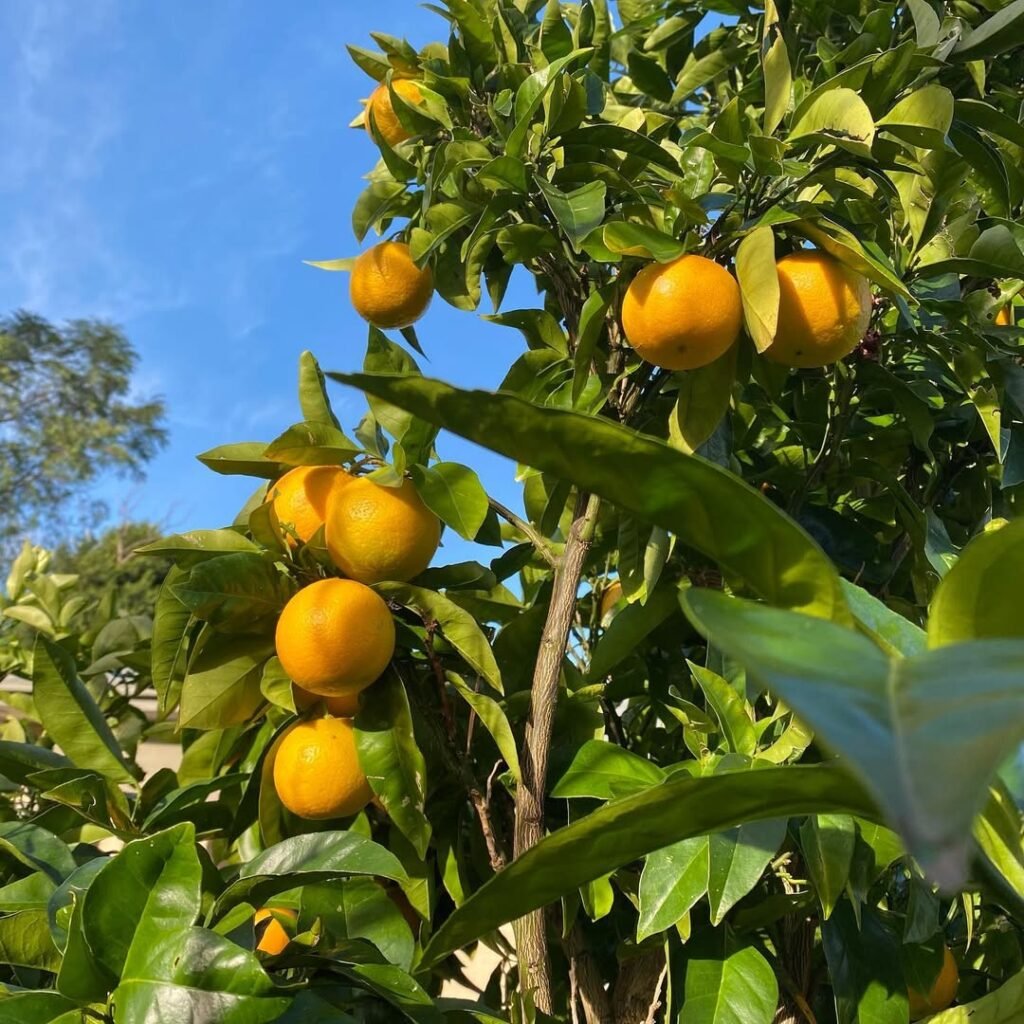
My fence was just a boring wooden barrier for six years. Wasted 120 linear feet of prime growing space in my small yard.
Then I realized fences are vertical real estate. Same footprint, way more food when you plant edibles along and on them.
Now my fence produces 80+ pounds of fruit and vegetables yearly from space that was doing nothing.
Let me show you 14 ways to transform fences into productive food gardens.
Why Fences Are Wasted Growing Space
My backyard reality:
Fence perimeter: 120 linear feet Height: 6 feet tall Total surface area: 720 square feet What I was growing: Nothing
Just a bare fence and grass strip against it.
After planting fence line:
- Grapes climbing fence
- Berry bushes at base
- Herbs along bottom
- Vertical vegetables on trellis
Same space now produces:
- 40 pounds grapes
- 25 pounds berries
- 15 pounds vegetables
- Fresh herbs constantly
From space that was wasted.
Fence Growing Advantages
Why fences work for food:
Structure already exists:
- Don’t need to build supports
- Sturdy for climbing plants
- Height for vertical growing
- Free trellis system
Microclimate benefits:
- South fence: Hot and sunny
- North fence: Cool and shaded
- East/West: Balanced conditions
- Protection from wind
Space efficiency:
- Vertical growing (uses height)
- Narrow footprint (1-2 feet deep)
- Doesn’t take yard space
- Turns boundary into garden
I was heating my yard with reflected sunlight off the fence. Now that heat grows food.
1. Grape Arbor Fence (My South Fence)
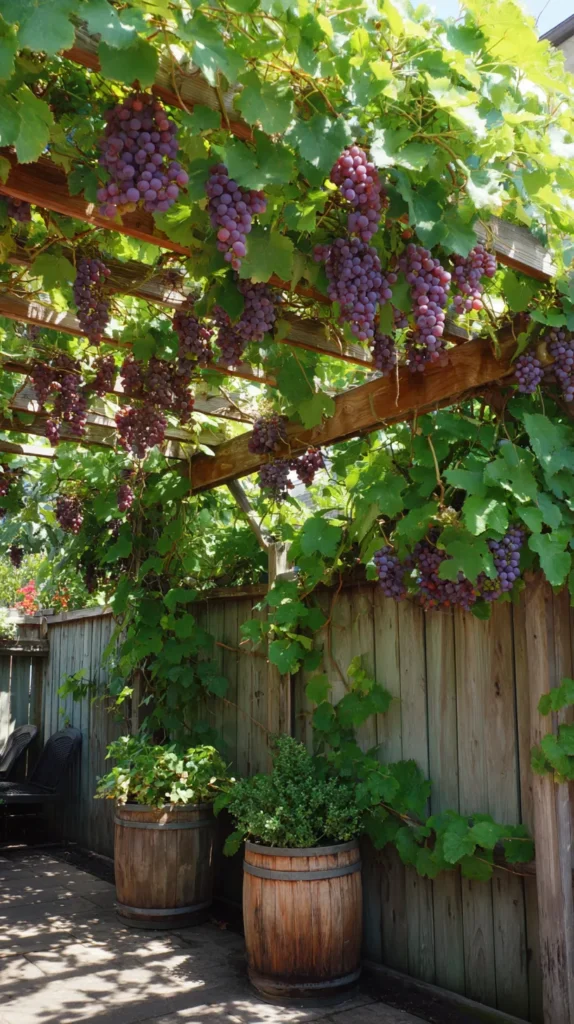
Hardy grapes trained along fences to create edible arbor.
My 30-foot south fence section:
Installation:
- Heavy wire every 3 feet horizontally
- Attached to fence at 5, 6, and 7 feet high
- Creates horizontal supports
- Grapes grow along wires
Grape selection:
- 3 table grape vines (Concord)
- Planted 10 feet apart
- Trained along wires
- Cover entire fence section
Training method:
- First year: Establish roots, minimal growth
- Second year: Train main trunk up, two arms sideways
- Third year: Fruiting spurs develop
- Year 4+: Full production
Current state (Year 5):
- Complete fence coverage
- Leafy canopy summer
- 40 pounds grapes annually
- Shades patio area
Bonus: Creates privacy screen, beautiful in fall.
Grape Growing Tips
What I learned:
Pruning is critical:
- Cut back 90% each winter (scary but necessary)
- Encourages fruit production
- Without pruning: leaves but no grapes
Support strength matters:
- Grapes get HEAVY
- I reinforced twice
- Use heavy-gauge wire (12-14 gauge)
My first wire sagged under grape weight. Replaced with heavier – problem solved.
2. Berry Hedge Along Fence Line (Productive Privacy)
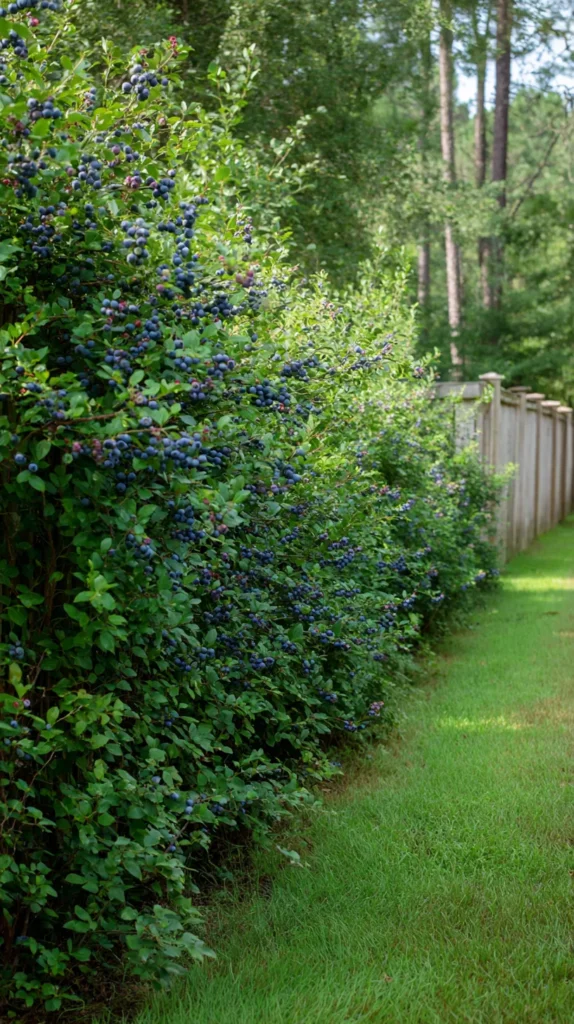
Mixed berry bushes create edible privacy screens.
My 40-foot north fence:
Berry selection:
- 8 blueberry bushes (4 feet tall, partial shade tolerant)
- 6 raspberry canes (6 feet tall, fill gaps)
- 4 blackberry bushes (6 feet tall, thornless variety)
Planting pattern:
- Alternating types
- 3 feet apart
- Grows together into hedge
- Blocks neighbor view
Benefits:
Privacy screen:
- Dense foliage
- Blocks sightlines
- Attractive barrier
- Better than fence alone
Production:
- Blueberries: 15 pounds (July-August)
- Raspberries: 8 pounds (July and September – everbearing)
- Blackberries: 12 pounds (August)
- Total: 35 pounds berries
Maintenance:
- Annual pruning (winter)
- Mulch with wood chips
- Water first year only
- Minimal care
Cost: $120 for 18 plants (bare root)
3. Espalier Fruit Trees (Flat Growing)
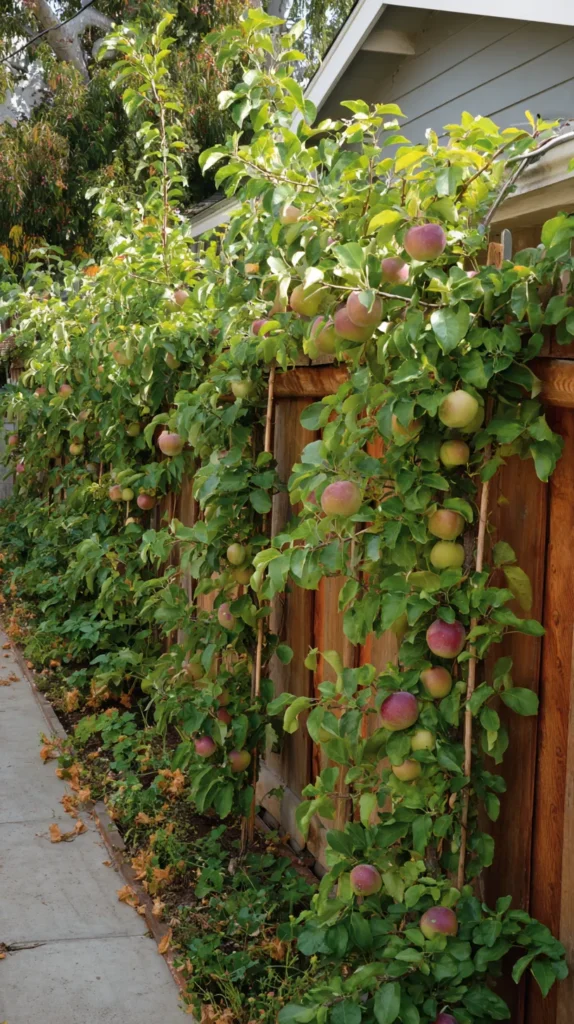
Train fruit trees flat against the fence – maximum space efficiency.
My 24-foot east fence section:
Four dwarf fruit trees:
- 2 apple (different varieties)
- 1 pear
- 1 peach
- Each 6 feet wide, 18 inches from fence
Espalier training:
- Trees pruned to horizontal branches
- Main trunk vertical
- Arms trained sideways along fence
- Creates living fence artwork
Space savings:
Standard dwarf tree: 10×10 feet (100 sq ft) Espalier tree: 6×1.5 feet (9 sq ft) Space saved: 91 square feet per tree
Production:
- Apples: 30 pounds (two trees)
- Pear: 20 pounds
- Peach: 15 pounds
- Total: 65 pounds
From 54 square feet vs 400 for standard trees.
Espalier Training Process
My 5-year journey:
Year 1: Plant young trees, establish central leader Year 2: Select first tier branches, remove others Year 3: Train second tier, tie to fence wires Year 4: Final shape, first small harvest Year 5+: Mature production, maintain shape
This takes patience but results are stunning and productive.
4. Vertical Vegetable Garden (Annual Production)
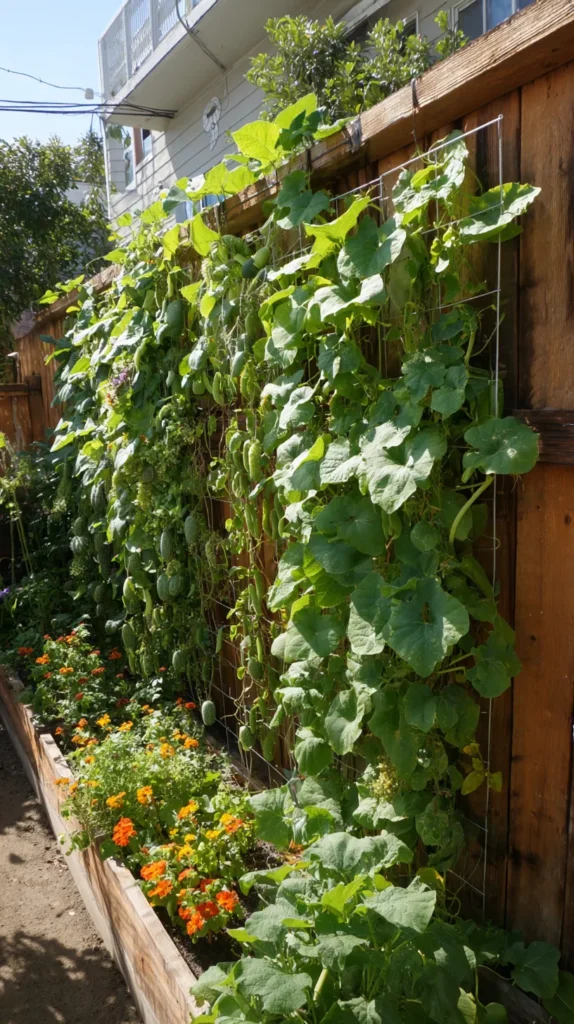
Trellis attached to fences grow climbing vegetables.
My 12-foot west fence section:
Setup:
- Cattle panel attached to fence
- 6 feet tall
- Permanent installation
- Sturdy support
What I grow annually:
Spring:
- Sugar snap peas (4 plants)
- Climbing spinach (New Zealand)
Summer:
- Pole beans (6 plants)
- Cucumbers (3 plants)
- Small vining squash (2 plants)
Fall:
- Peas again (succession crop)
Harvest:
- Peas: 10 pounds (spring and fall)
- Beans: 15 pounds
- Cucumbers: 20 pounds
- Squash: 15 pounds
- Total: 60 pounds vegetables
From 24 square feet (12 feet × 2 feet deep).
5. Hardy Kiwi Vine (Vigorous Climber)
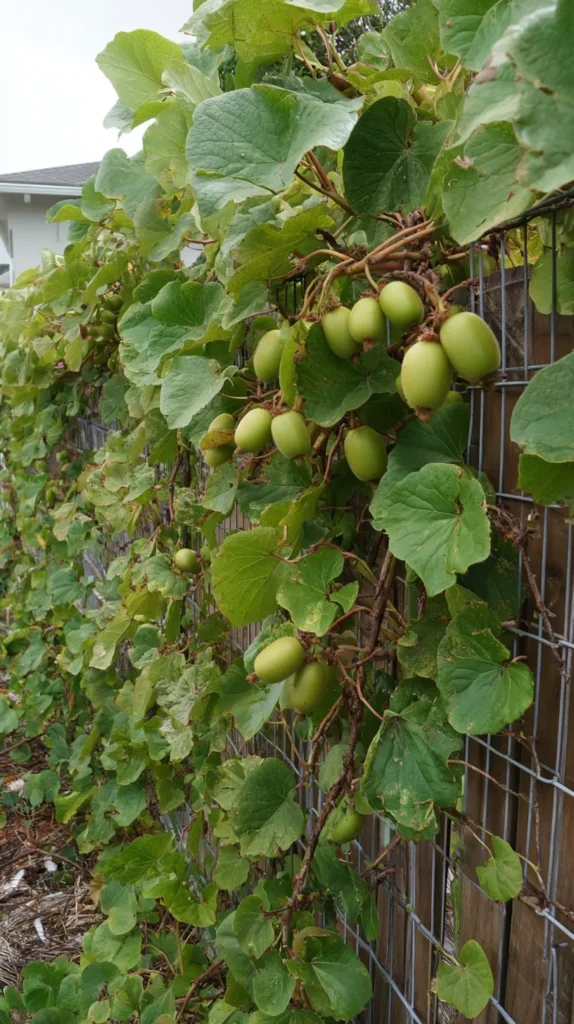
Hardy kiwi covers the fence fast – aggressive but productive.
My friend’s 20-foot fence:
Installation:
- 2 hardy kiwi plants (male and female for pollination)
- 10 feet apart
- Heavy wire support system
- Covers fence in 3 years
Growth rate:
- Year 1: Slow establishment
- Year 2: 6 feet growth
- Year 3: 15 feet growth
- Year 4+: Contains whole fence
Production:
- Starts year 4-5
- 50+ pounds fruit (small smooth-skinned kiwis)
- Harvest September-October
- Stores 2-3 months
Warning: Very vigorous. Prune heavily or take over the yard.
My friend prunes 3× yearly to control. Without it, it invades trees, gardens, everything.
6. Passionfruit Wall (Warm Climate)
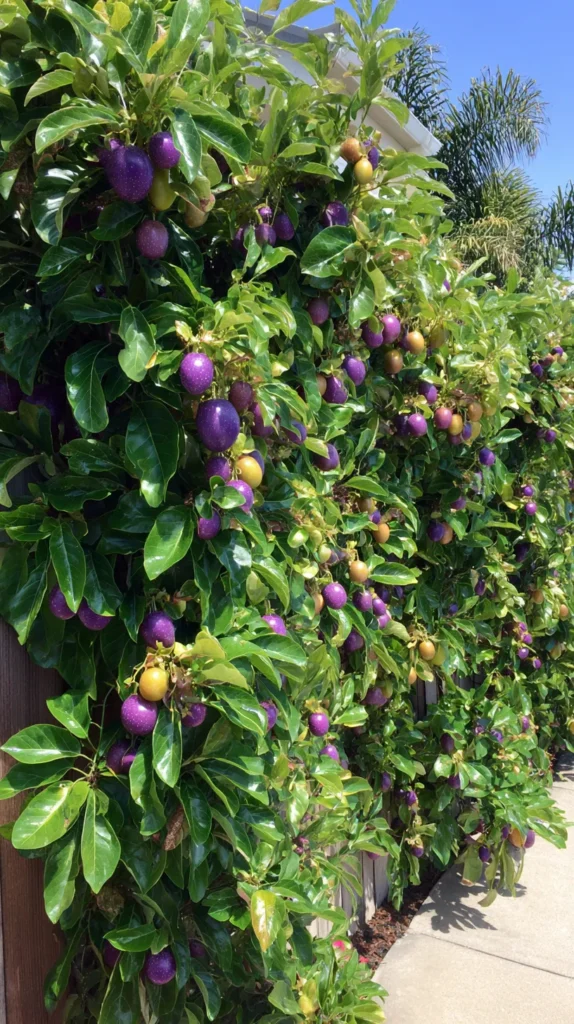
Passionfruit vines (zones 8-10) create tropical fences.
My zone 9 friend’s setup:
South-facing fence:
- Full sun exposure
- Protected from wind
- Reflects heat
Vines:
- 3 passionfruit plants
- Purple variety (hardiest)
- Covers 30 feet fence
- Evergreen in warm zones
Production:
- 100+ fruits annually
- Harvest when wrinkled
- Eat fresh or juice
- Amazing flavor
Care:
- Water regularly
- Fertilize monthly
- Prune after harvest
- Protect if frost threatens
Not hardy where I am (Zone 7) but incredible in warm climates.
7. Thornless Blackberry Trellis (Easy Harvest)
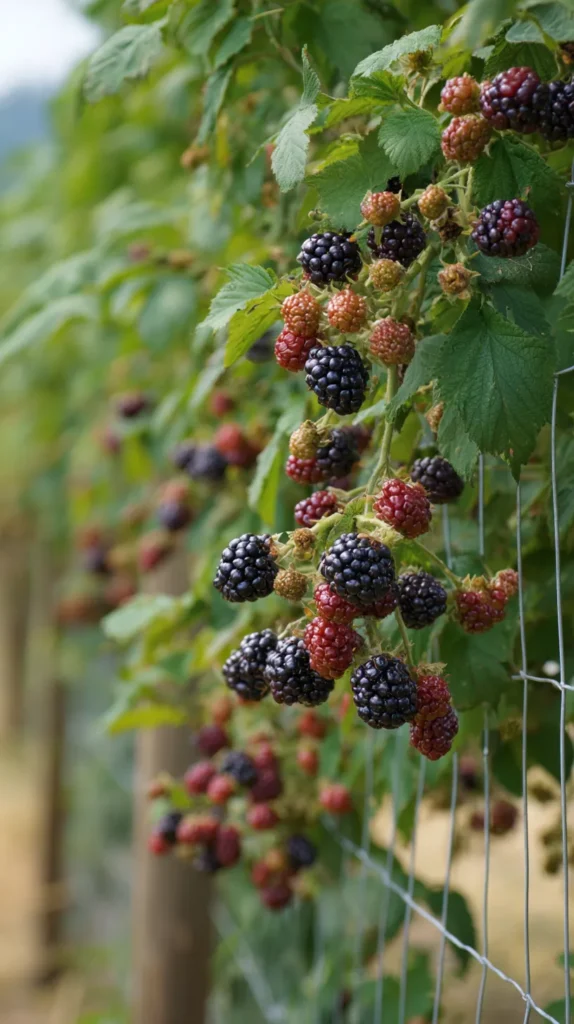
Thornless varieties make fence growing pleasant.
My 16-foot south fence:
Blackberry selection:
- Thornless varieties only (Triple Crown, Apache)
- 4 plants, 4 feet apart
- Trained to fence-mounted wires
Wire system:
- Horizontal wires at 3, 4, 5, 6 feet high
- Canes tied to wires
- Creates fan pattern
- Easy to harvest
Benefits of thornless:
- No scratches while harvesting
- Easy to prune and tie
- Kids can help pick
- More enjoyable
I grew thorny blackberries first – hated harvesting, always bloody. Switched to thornless, life improved.
Production: 20 pounds berries from 4 plants
8. Herb Spiral Against Fence (Microclimate Use)
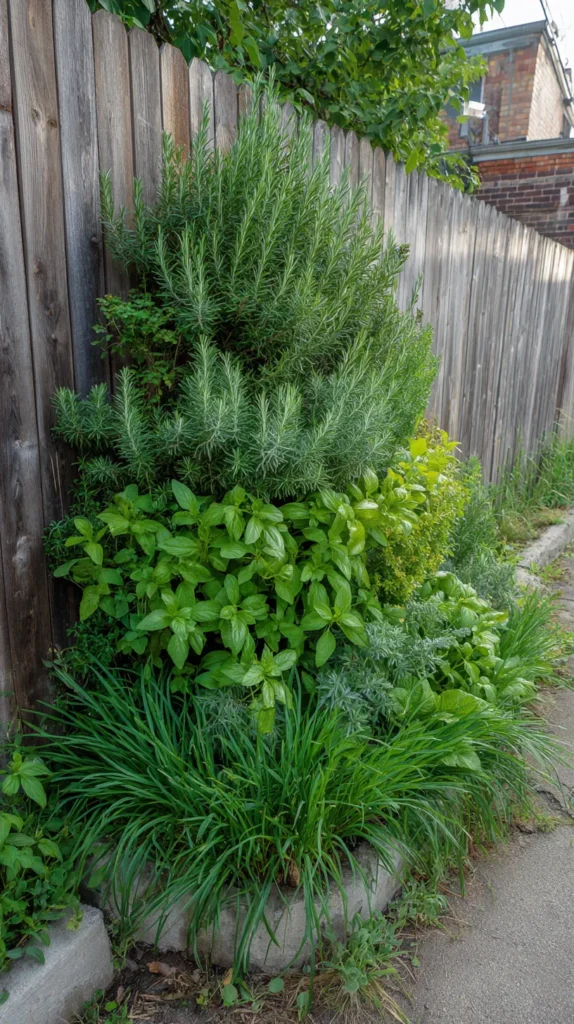
The vertical herb spiral leans against the fence.
My corner installation:
Spiral design:
- Built against fence
- 4 feet tall
- Creates multiple growing zones
- Uses fence as back support
Planting by height/needs:
Top (dry, hot):
- Rosemary, thyme, oregano
- Mediterranean herbs
Middle:
- Basil, parsley
- Moderate needs
Bottom:
- Cilantro, chives, mint
- Moisture lovers
Fence benefit:
- Heat reflection helps herbs
- Support for spiral structure
- Saves building materials
- Integrates with fence
From 6 square feet (spiral base against fence): Fresh herbs 8 months yearly.
9. Fig Trees Along South Wall (Heat Lovers)
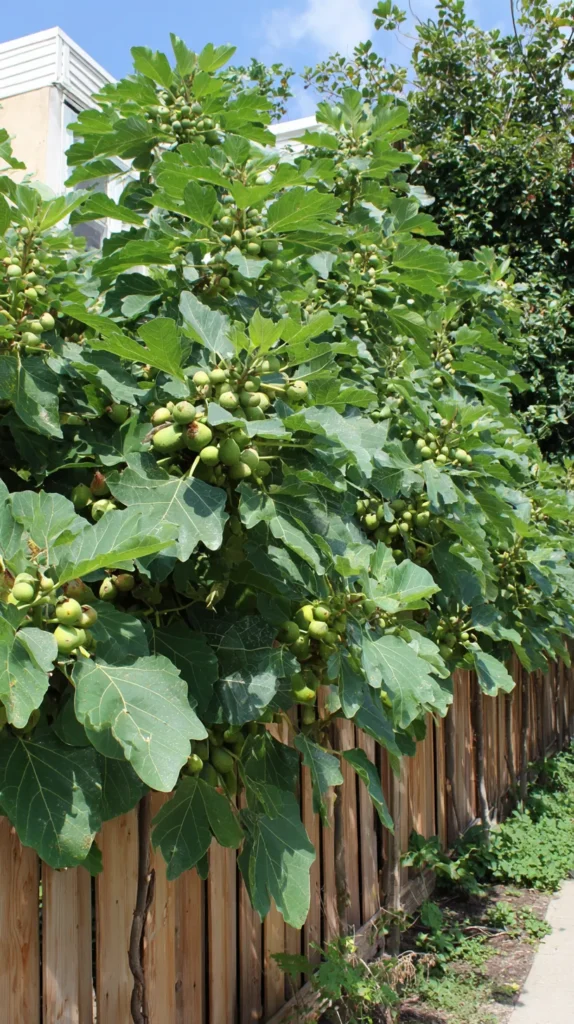
Figs need heat – south fence perfect.
My 18-foot south fence:
Fig arrangement:
- 3 fig trees (Chicago Hardy in Zone 7)
- 6 feet apart
- Grown as large bushes against fence
- Protected from north wind
Why south fence works:
- Maximum sun exposure
- Heat reflection from fence
- Warmest microclimate in yard
- Earlier ripening
Production:
- 30-40 figs per tree
- 90-120 total figs
- Two crops (June and August)
- From fence line I couldn’t use before
Winter protection:
- I wrap bases in burlap
- Fence blocks cold north wind
- Survives Zone 7 winters
- Grows back from roots if dies
10. Hop Vines (For Homebrewers)
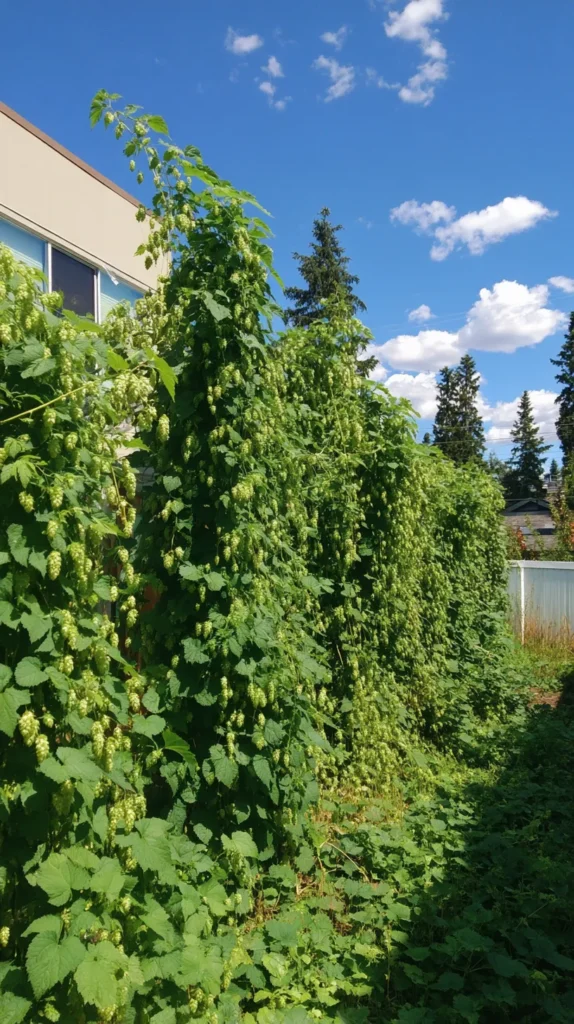
Hops climb vigorously – cover fence fast.
My friend’s brewing garden:
Setup:
- 3 hop varieties (Cascade, Centennial, Nugget)
- Along 20-foot fence
- Twine attached to fence top
- Vines climb twine
Growth:
- Dies back each winter
- Grows 15-20 feet each summer
- Covers fence June-September
- Harvest August-September
Production:
- 2-4 pounds dried hops
- Enough for 10+ batches beer
- Fresh hop brewing
- Beautiful cone flowers
Bonus: Attractive foliage, interesting conversation piece.
Note: Only worthwhile if you brew. Otherwise decorative only.
11. Multi-Fruit Fence (Diversity Approach)
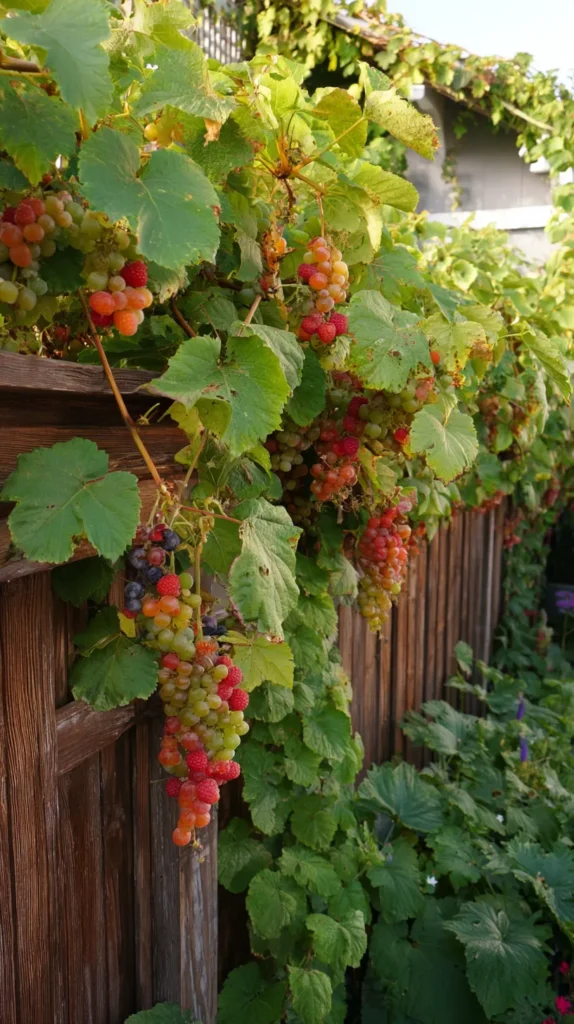
Mix different plants for extended harvest season.
My varied 40-foot fence:
Section 1 (10 feet): Grapes Section 2 (10 feet): Raspberries Section 3 (10 feet): Pole beans on trellis (annual) Section 4 (10 feet): Blueberries
Harvest timeline:
June: Pole beans start July: Raspberries, blueberries, beans continue August: Grapes ripen, fall raspberries September: Late grapes, fall beans
Benefits:
- Something producing always
- Variety in diet
- Risk spread (one fails, others succeed)
- Visual interest
This is my actual fence – I learned not to put all eggs in one basket.
12. Chicken Wire Trellis Garden (Budget Option)
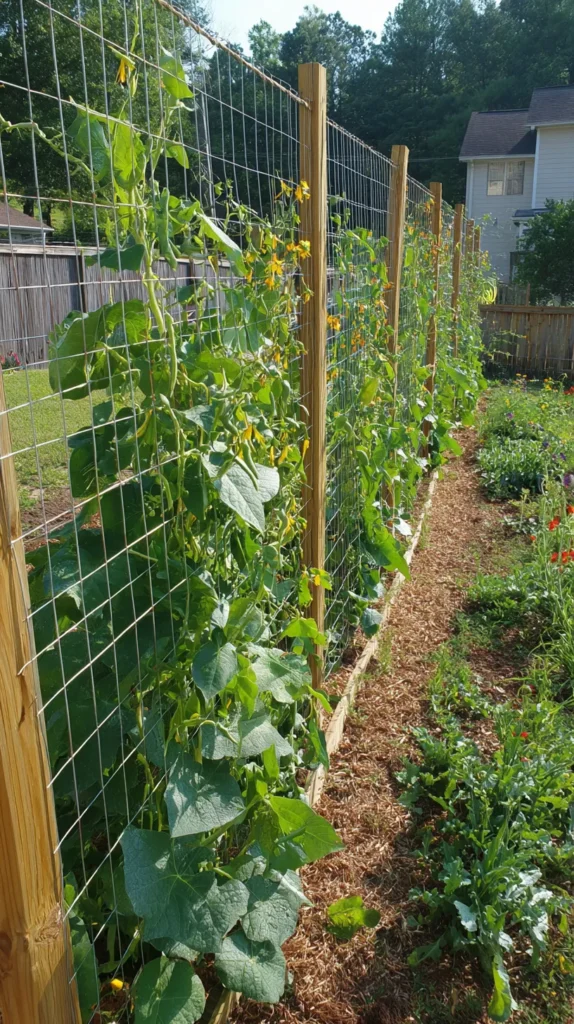
Cheap chicken wire becomes a productive trellis.
My starter fence garden:
Materials:
- 50 feet chicken wire ($25)
- Stapled to fence
- Creates climbing surface
- Temporary but effective
What grows on it:
- Peas (spring)
- Beans (summer)
- Cucumbers
- Annual vines only
Advantages:
- Very cheap
- Easy installation
- Removable if needed
- Works for annuals
Disadvantages:
- Not strong enough for perennials
- Rusts over time
- Less attractive
- Replace every 3-5 years
I used this year 1 before investing in permanent systems. Worked fine for learning.
13. Living Fence (Edible Hedge)
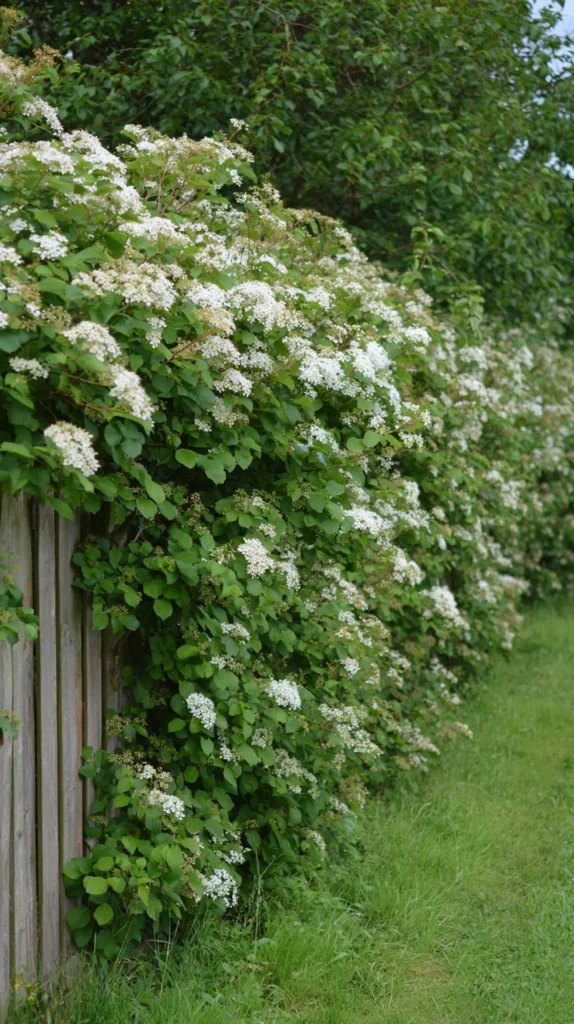
Replace fence entirely with edible hedge.
My property line (replaced old broken fence):
Hedge plants:
- Elderberry (6 plants, 8 feet tall)
- Hazelnut (4 plants, 10 feet tall)
- Serviceberry (3 plants, 12 feet tall)
Spacing:
- 3-4 feet apart
- Grows together
- Creates dense barrier
- Produces food
Benefits:
Privacy: Better than fence once mature Food: Berries, nuts, fruit Wildlife: Birds love it Beauty: Flowers in spring No maintenance: No painting/replacing fence
Downsides:
- Takes 3-5 years to fill in
- Not solid barrier immediately
- Some neighbors prefer fences
I did this in the side yard where the old fence was failing. Now it’s a productive hedge.
14. Vertical Strawberry Pocket System (Maximum Density)
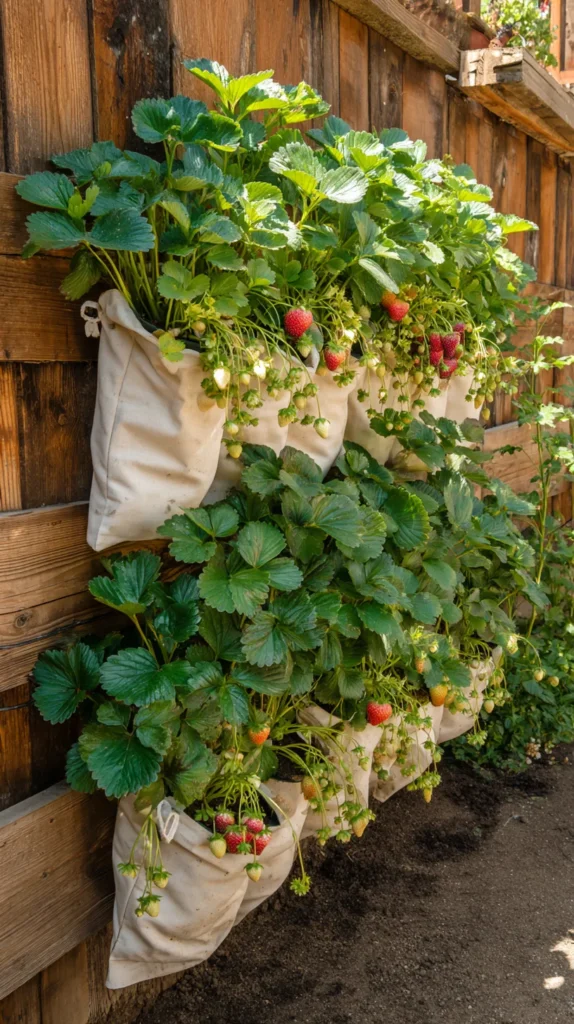
Hanging pockets on fence grow strawberries vertically.
My 8-foot fence section:
Setup:
- Fabric pocket planter (12 pockets)
- Hung on fence
- Drip irrigation line at top
- Strawberries in each pocket
Planting:
- 12 strawberry plants
- Day-neutral varieties (produce all summer)
- 2 square feet fence space
- Vertical growing
Production:
- 8-12 pounds strawberries
- June through October
- From tiny footprint
- Easy picking height
Watering:
- Critical (dries fast)
- Drip line essential
- Daily in summer
- Self-watering alternative
Cost: $40 for pocket planter, $20 for drip line
Choosing Plants for Fence Aspect
Sun exposure determines what grows.
South-Facing Fence (My Most Productive)
Full sun, hot:
- Grapes (love heat)
- Figs (need warmth)
- Peaches, nectarines
- Tomatoes (annual)
- Heat-loving herbs
My south fence gets 10+ hours sun – perfect for sun lovers.
North-Facing Fence (Challenging)
Shade, cool:
- Currants, gooseberries (shade tolerant)
- Raspberries (partial shade okay)
- Leafy greens (annual)
- Shade herbs (mint, parsley)
My north fence: Blueberries and raspberries thrive.
East-Facing Fence
Morning sun, afternoon shade:
- Apple, pear (moderate sun)
- Blueberries
- Beans, peas
- Most herbs
Good balanced conditions – easiest to grow.
West-Facing Fence
Afternoon sun, morning shade:
- Similar to east
- Slightly hotter afternoon
- Most fruit/vegetables work
I grow cucumbers here – afternoon sun doesn’t overheat them with morning shade.
Irrigation for Fence Gardens
Watering fence line is critical.
My drip system:
Installation:
- Main line along fence base
- Drip emitters every 2 feet
- Timer on outdoor faucet
- Runs twice daily summer
Cost: $80 for 120 feet of fence line
Before drip:
- Hand watered
- 45 minutes daily
- Inconsistent
- Plants stressed
After drip:
- Automated
- Perfect moisture
- Healthier plants
- Time saved
Best investment for fence garden.
Soil Preparation for Fence Lines
My fence line prep:
Initial work:
- Removed grass 2-3 feet from fence
- Added 3 inches compost
- Mixed into top 6 inches
- Mulched heavily
Ongoing:
- Annual compost addition
- Wood chip mulch (4 inches)
- No tilling (preserves soil life)
After 4 years:
- Soil dark and rich
- Earthworms abundant
- Minimal fertilizing needed
- Self-sustaining mostly
Good soil is foundation for productive fence garden.
Maintenance Reality
My actual time:
Weekly (growing season):
- Harvest: 30 minutes
- Guide growth, tie vines: 15 minutes
- Check irrigation: 5 minutes
- Spot weeding: 10 minutes
- Total: 1 hour
Monthly:
- Fertilize: 15 minutes
- Major pruning/training: 30 minutes
- Deep weeding: 20 minutes
- Total: 1 hour
Seasonally:
- Winter pruning: 3 hours
- Spring setup: 2 hours
- Fall cleanup: 2 hours
Annual total: About 90 hours for 120 feet producing 150+ pounds food.
Less work than equivalent vegetable garden.
Common Fence Garden Mistakes
I made these errors:
Mistake 1: Planted Too Close to Fence
Trees touching fence rotted wood.
Fix: Plant 18-24 inches away minimum.
Mistake 2: Wrong Aspect Plants
Shade-loving blueberries on hot south fence – struggled.
Fix: Match plants to sun exposure.
Mistake 3: Weak Support System
Grapes pulled down wire first year.
Fix: Heavy-duty supports from start.
Mistake 4: Ignored Root Space
Planted in compacted soil by fence.
Fix: Amend soil properly, roots need room.
Mistake 5: Overplanted
Too many plants competing.
Fix: Proper spacing (3-4 feet minimum).
Privacy vs Production Balance
Fence gardens can do both.
My approach:
Maximum privacy areas (neighbor-facing):
- Dense berry hedge
- Evergreen plants mixed in
- Year-round screening
Production focus areas (less visible):
- Espalier (allows fence visibility)
- Annual vegetables (dies back winter)
- Deciduous vines (seasonal screen)
I planted evergreen blueberries on neighbor side – privacy year-round plus food.
Rental Property Considerations
I’m a renter – all my fence gardens are removable.
Removable options:
Container plants along fence:
- Large pots (no ground planting)
- Moveable if I leave
- Still productive
Temporary trellis:
- Lean-to style (not attached)
- Take with me
- Annual vegetables only
What I avoid:
- Permanent fence mounting
- Ground planting perennials
- Structural changes
Got landlord permission for berry bushes – agreed I’d remove them if moving.
My Favorite Fence Design
After trying all these:
Mixed berry hedge (Design #2) wins for:
- Easiest to maintain
- Consistent production
- Beautiful appearance
- Dual purpose (privacy + food)
- Low-maintenance
My 40-foot north fence:
- 18 berry plants
- 35 pounds berries annually
- Privacy screen
- Minimal care
- Productive for 15+ years
Investment:
- Plants: $120
- Soil prep: $40
- Mulch: $30
- Total: $190
Annual value: $70+ in berries (grocery equivalent)
Paid for itself by year 3.
Getting Started This Weekend
Don’t plant entire fence at once.
Weekend plan:
Saturday:
- Choose one fence section (12-20 feet)
- Assess sun exposure
- Select appropriate plants
- Buy materials
Sunday:
- Prep soil
- Install support if needed
- Plant
- Mulch heavily
- Water well
Start small:
- One fence section
- 3-5 plants
- Simple system
- Learn and expand
My recommendation:
Berry hedge along 12 feet:
- 4-6 plants
- $40-60 investment
- Easy care
- Great results
After one season, you’ll know what to do with the rest of the fence.
Now go transform your fence from barrier to productive garden!
Quick Summary:
Best edible fence options:
Easiest: Berry hedge (blueberries, raspberries) Most productive: Grapes or espalier fruit trees Fastest coverage: Hardy kiwi (aggressive) Best privacy: Mixed berry hedge (year-round) Budget-friendly: Pole beans on chicken wire
By fence aspect:
South (full sun): Grapes, figs, peaches, tomatoes North (shade): Berries, currants, leafy greens East (morning sun): Apples, pears, beans, herbs West (afternoon sun): Cucumbers, most vegetables
Space requirements:
Minimum: 1-2 feet deep from fence Ideal: 2-3 feet deep Vertical height: Use full 6-8 feet fence height Spacing between plants: 3-4 feet minimum
Production expectations:
20-foot fence section mature harvest:
- Grapes: 30-40 pounds
- Berries: 20-30 pounds
- Espalier trees: 40-60 pounds
- Annual vegetables: 30-50 pounds
Investment ranges:
Budget: $50-100 (chicken wire + annual vegetables) Standard: $150-300 (berry hedge or basic vines) Premium: $400-600 (espalier trees, permanent systems)
Timeline to production:
Year 1: Annuals produce, perennials establish Year 2: Berries start, trees minimal Year 3: Increasing production Year 4+: Full mature harvest
Best combinations:
Privacy + production: Berry hedge (dense screen + food) Maximum yield: Espalier trees (space-efficient) Extended season: Mixed plants (succession harvest) Low maintenance: Grapes or hardy perennials
Support systems needed:
Grapes: Heavy wire (12-14 gauge), every 3 feet Berries: Minimal (maybe stakes for raspberries) Espalier: Horizontal wires 12-18 inches apart Annual vegetables: Cattle panel or trellis netting
Watering requirements:
Essential: Drip irrigation ($50-100 for 20 feet) Hand watering: 30-45 min daily (labor-intensive) Rainfall only: Possible after establishment year
Maintenance time:
Weekly: 1 hour (harvest, guide growth) Monthly: 1 hour (prune, fertilize) Seasonal: 5-7 hours (major pruning, setup/cleanup) Annual total: 80-100 hours for full fence line
Common mistakes to avoid:
- Planting too close to fence (rot issues)
- Wrong plants for sun exposure (poor growth)
- Weak supports (collapse under weight)
- No irrigation plan (plant stress)
- Overplanting (competition, crowding)
Soil preparation:
Initial: Remove grass, add 3″ compost, mix in Ongoing: Annual compost, 4″ wood chip mulch pH: Test and adjust (most fruit 6.0-6.5)
Rental-friendly options:
Removable: Container plants along fence Temporary: Lean-to trellis (not attached) Annuals only: Vegetables (not permanent) Get permission: For berry bushes
Dual-purpose benefits:
Privacy screening: Dense hedge blocks views Wind protection: Reduces garden wind stress Aesthetics: Beautiful productive landscaping Property value: Increases curb appeal Wildlife habitat: Birds, pollinators benefit
Quick start options:
This spring: Plant berry bushes ($40-60 for 4-6 plants) Immediate: Annual vegetables on trellis ($30) Long-term: Espalier fruit trees ($100-150)
ROI timeline:
Berry hedge investment: $190 Annual harvest value: $70+ Payback: 2-3 years Lifespan: 15-20 years Lifetime value: $1,000+
Space efficiency gains:
Standard tree: 100 sq ft footprint Espalier tree: 9 sq ft footprint Space saved: 91 sq ft per tree Fence line depth: 2-3 feet vs 10 feet
Success indicators:
- Healthy vigorous growth
- Increasing harvest yearly
- Good coverage/privacy
- Minimal pest/disease
- Self-sustaining ecosystem developing