15 Food Forest Ideas to Create an Edible Ecosystem
I tried planting a traditional garden for three years. Constant weeding, watering, and replanting every season. I spent 10+ hours weekly maintaining it.
Then I learned about food forests. Plant once, harvest for decades with minimal maintenance. Nature does most of the work.
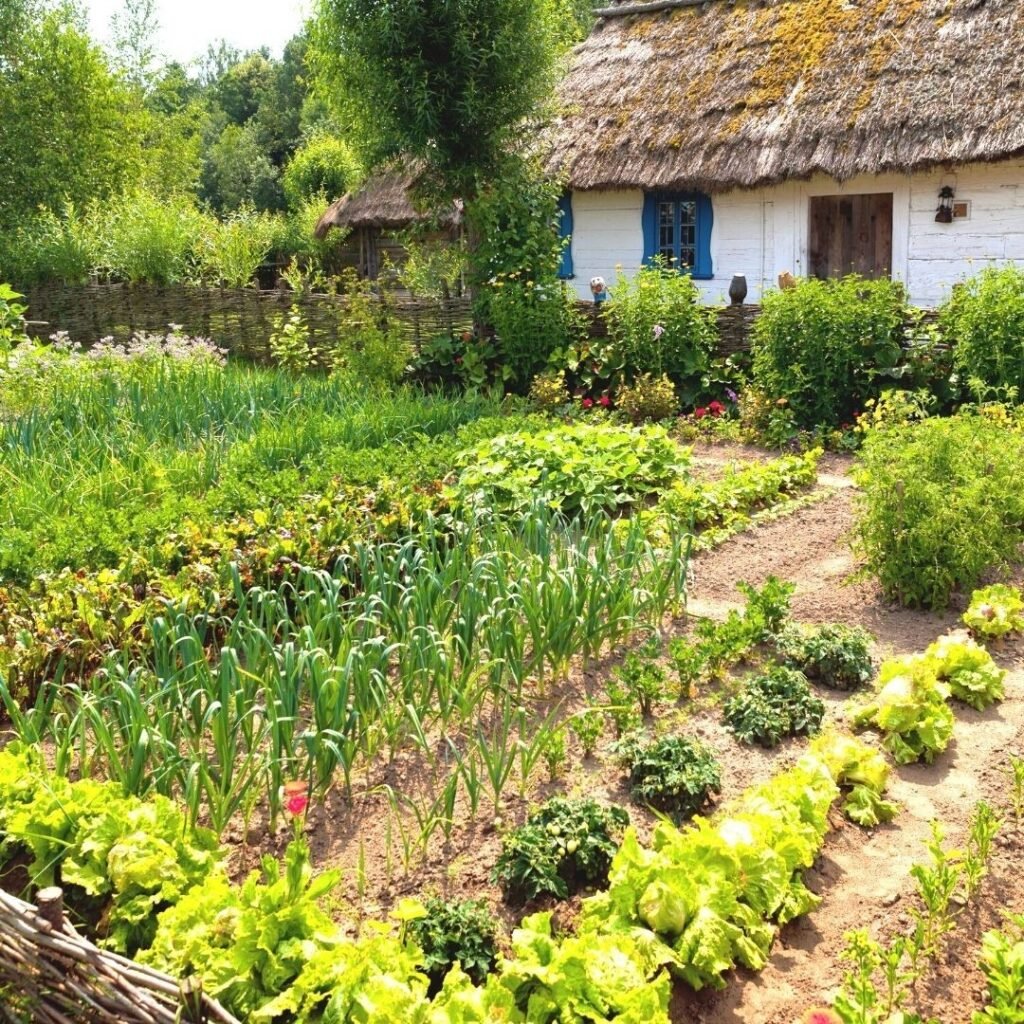
Now my backyard produces food year-round with maybe 2 hours of work monthly. Birds, bees, and beneficial insects handle pest control. The system runs itself.
Let me show you 15 food forest ideas you can actually implement.
What a Food Forest Actually Is
It’s not just random fruit trees. A food forest mimics natural forest ecosystems but with edible plants.
Traditional garden:
- Annual crops (replant yearly)
- High maintenance
- Constant work
- Fights nature
Food forest:
- Perennial plants (plant once)
- Self-maintaining
- Works with nature
- Productive for 20+ years
My transformation:
Before (traditional garden):
- Replanted tomatoes, peppers, and lettuce yearly
- Weeded 3× weekly
- Watered daily
- Pest problems constantly
After (food forest):
- Planted once 4 years ago
- Weed occasionally
- Rain handles watering
- Few pest issues
Same space, 90% less work, more diverse harvest.
Seven Layers of Food Forest
Nature stacks plants vertically:
Layer 1 – Canopy: Tall fruit/nut trees (20-40 feet) Layer 2 – Understory: Dwarf fruit trees (8-15 feet) Layer 3 – Shrub: Berry bushes (4-8 feet) Layer 4 – Herbaceous: Perennial vegetables and herbs (1-3 feet) Layer 5 – Ground cover: Edible ground covers (under 1 foot) Layer 6 – Rhizosphere: Root crops Layer 7 – Vertical: Climbing vines
Not every forest needs all seven layers. My small yard uses five layers effectively.
1. Backyard Food Forest (Quarter-Acre Design)
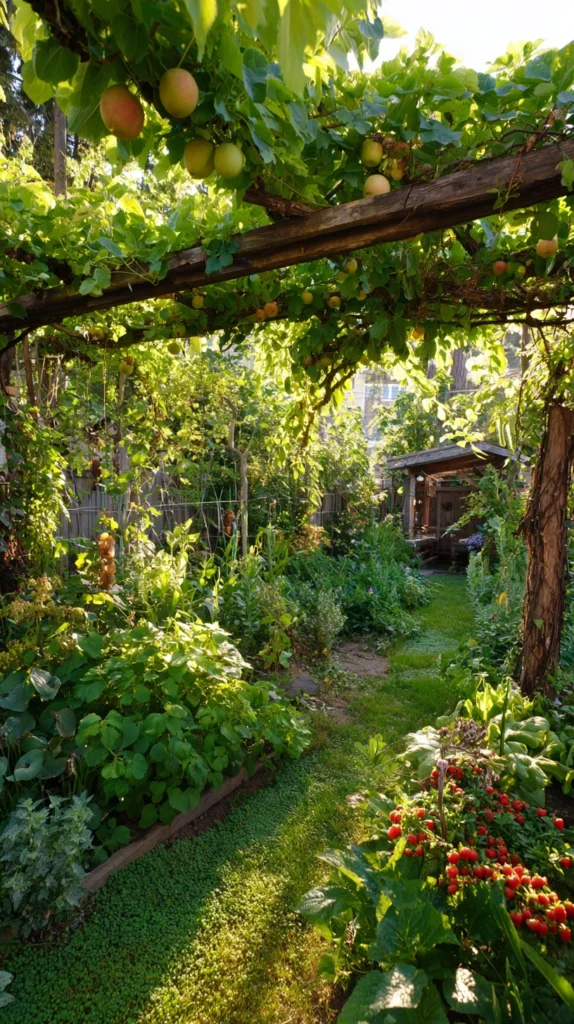
My actual layout is 0.25 acres (about 10,000 square feet).
Canopy layer (north side):
- 2 apple trees (planted 4 years ago)
- 1 peach tree
- 1 pear tree
- Spaced 15 feet apart
Understory (between big trees):
- 3 dwarf cherry trees
- 2 persimmon trees
- Partial shade from canopy
Shrub layer (south side, full sun):
- 6 blueberry bushes
- 4 raspberry canes
- 2 blackberry bushes
- Currants and gooseberries
Herbaceous layer (paths and edges):
- Strawberries
- Asparagus bed
- Perennial herbs (oregano, thyme, sage)
- Walking onions
Ground cover:
- Creeping thyme in paths
- White clover between trees
- Self-seeding lettuce
Vertical:
- Grape vines on south fence
- Hardy kiwi on arbor
Annual harvest:
- 100+ pounds of fruit
- Fresh berries May-October
- Herbs year-round
- Asparagus in spring
Getting Started Timeline
I didn’t plant everything at once.
Year 1:
- 4 canopy trees (apples, pear, peach)
- Marked future shrub locations
- Planted ground cover in paths
- Cost: $200
Year 2:
- Added dwarf cherries
- Planted blueberry bushes
- Started herb layer
- Cost: $180
Year 3:
- Raspberries and blackberries
- Asparagus crowns
- Grape vines
- Cost: $120
Year 4:
- Filled in gaps
- Added more herbs
- Let things establish
- Cost: $50
Total investment over 4 years: $550
Current value of annual harvest: Easily $800+ per year
2. Shade Food Forest (North-Facing or Under Trees)
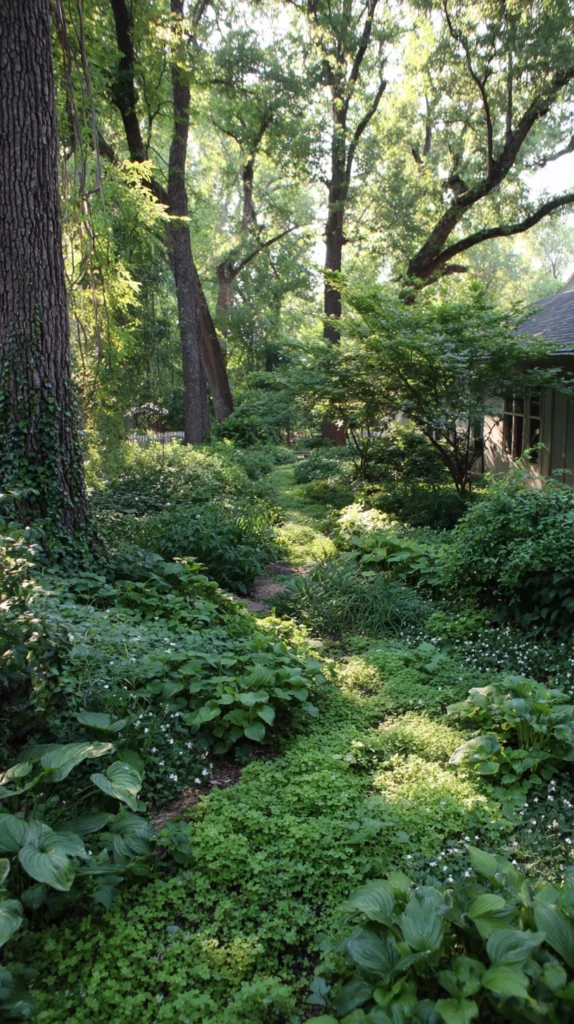
My north-facing slope gets 3-4 hours sun maximum. Most vegetables won’t grow.
What thrives in shade:
Canopy (existing trees):
- Mature oaks (already there)
- Provide natural shade structure
Understory:
- Pawpaw trees (native fruit, shade-loving)
- Serviceberry
- American persimmon
Shrub layer:
- Currants (red and black)
- Gooseberries
- Elderberries
- Shade-tolerant berries
Herbaceous:
- Ramps (wild leeks)
- Ostrich ferns (fiddleheads edible)
- Wild ginger (ground spice)
- Hostas (young shoots edible)
Ground cover:
- Wild strawberries
- Violets (edible flowers and leaves)
- Wood sorrel
This shaded area produces:
- Spring greens (ramps, fiddleheads)
- Summer berries
- Fall persimmons
- Year-round herbs
Maintenance: Almost zero. Nature handles everything.
Pawpaw Trees (America’s Forgotten Fruit)
My three pawpaw trees are the stars of shade forest.
Why pawpaws rock:
- Tolerate full shade
- Native to North America
- Fruit tastes like banana-mango custard
- Zero pest problems
- Deer resistant
Challenges:
- Need two trees for pollination
- Fruit doesn’t ship well (why stores don’t sell them)
- Takes 4-5 years to fruit
My harvest: 30-40 pawpaws annually from three trees. We eat them fresh or freeze for smoothies.
3. Guild Planting Design (Companion Clusters)
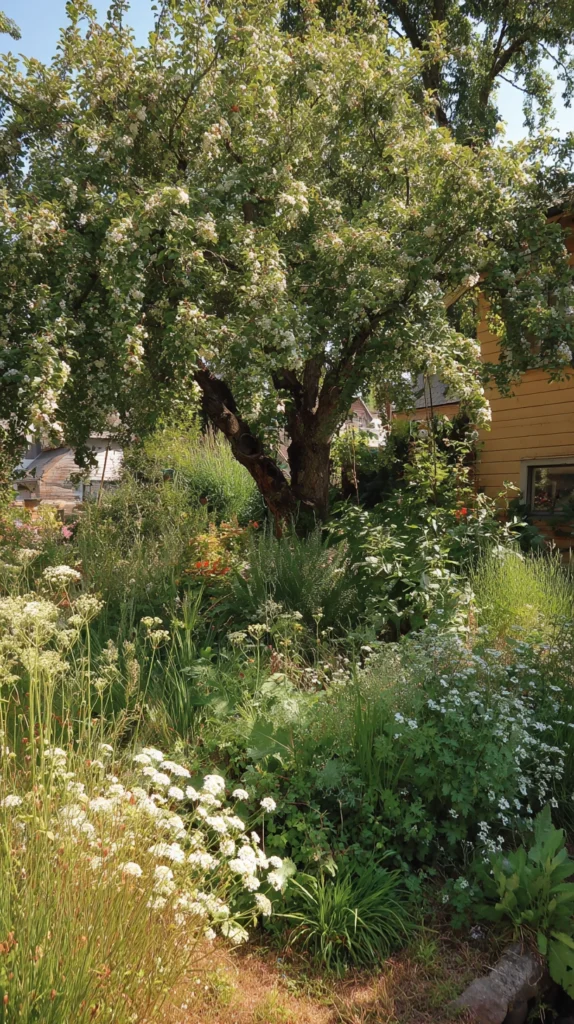
Guild = group of plants that support each other.
My apple tree guild:
Center: Apple tree (main crop)
Nitrogen fixers around base:
- Comfrey (3 plants)
- White clover (ground cover)
- Fixes nitrogen, feeds tree
Pest deterrents:
- Chives (repels aphids)
- Tansy (deters ants)
- Catmint (attracts beneficial insects)
Nutrient accumulators:
- Comfrey (deep roots bring up nutrients)
- Dandelions (yes, intentionally)
Pollinator attractors:
- Yarrow
- Bee balm
- Native wildflowers
Ground cover:
- Strawberries (edible ground cover)
- White clover (nitrogen fixer)
This guild provides:
- Apples (main harvest)
- Strawberries (bonus crop)
- Herbs (comfrey, chives, yarrow)
- Soil improvement
- Pest control
- Pollinator habitat
Maintenance: Basically zero. Plant it once, harvest forever.
Building Your Own Guild
Formula for any fruit tree:
- Main tree (apple, peach, cherry, etc.)
- 3 nitrogen fixers (clover, comfrey, lupine)
- 2 pollinator plants (anything with flowers)
- 1 pest deterrent (strong-scented herb)
- Ground cover (edible or nitrogen-fixing)
Plant in layers radiating from tree:
- Tall plants 3 feet from trunk
- Medium plants 2 feet out
- Ground covers fill gaps
I have 6 guilds around different fruit trees. Each one is a complete ecosystem.
4. Berry Hedge Food Forest (Edible Privacy)
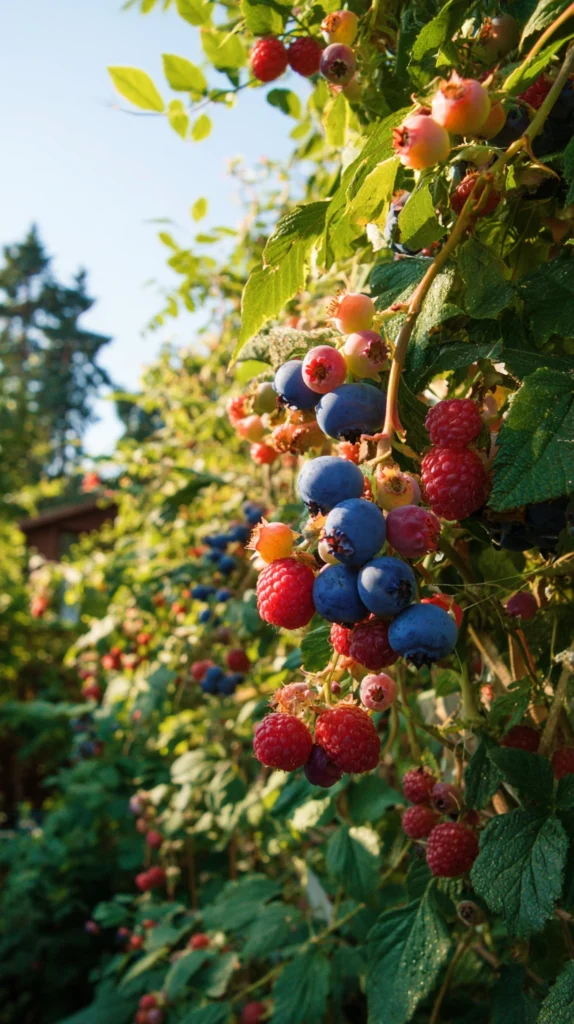
Instead of boring hedges, plant edible berries for privacy and food.
My 40-foot berry hedge:
Layout (repeating pattern):
- Blueberry, blackberry, raspberry, blueberry, repeat
- Planted 3 feet apart
- Grows together into solid hedge
Height variation:
- Blackberries tallest (6-7 feet)
- Blueberries medium (4-5 feet)
- Raspberries fill middle
Benefits:
- Privacy screen from neighbors
- Fresh berries May-September
- Pollinator habitat
- Beautiful in all seasons
Annual harvest: 50+ pounds of mixed berries
Maintenance:
- Prune once yearly (winter)
- Mulch with wood chips
- Water first year only
- 30 minutes monthly
Berry Selection by Climate
Cold climates (Zone 3-5):
- Honeyberries (earliest berries)
- Saskatoon berries
- Hardy raspberries
- High-bush blueberries
Moderate climates (Zone 6-7):
- Blackberries
- Raspberries
- Blueberries
- Currants
Warm climates (Zone 8-10):
- Low-chill blueberries
- Thornless blackberries
- Goji berries
- Hardy passionfruit
My Zone 7 hedge: Blackberries, raspberries, blueberries. Perfect combination for production and appearance.
5. Edible Lawn Replacement (No-Mow Food Forest)
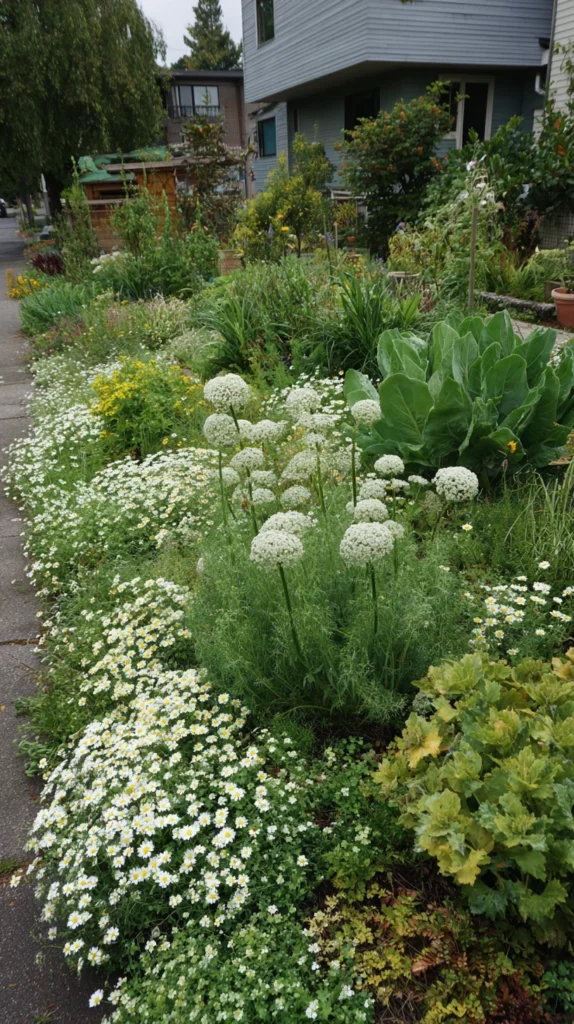
I killed half my lawn and planted perennial food plants instead.
What replaced grass:
Ground layer:
- White clover (nitrogen-fixing, walkable)
- Creeping thyme (aromatic, walkable)
- Chamomile (tea, walkable)
- Strawberries (fruit, ground cover)
Taller layer (mow-free zones):
- Asparagus bed (perennial vegetable)
- Rhubarb (perennial, dramatic leaves)
- Artichoke (perennial in warm zones)
- Walking onions (perennial, self-spreading)
Scattered throughout:
- Dwarf fruit trees (5-6 feet tall)
- Berry bushes
- Perennial herbs
Results:
Lawn area before: 2,000 square feet Lawn area now: 500 square feet (just paths) Mowing time saved: 90% reduction Food production: From zero to 100+ pounds annually
Converting Lawn to Food Forest
I did it gradually:
Method 1 – Sheet mulching (what I used):
- Stop mowing section
- Lay cardboard over grass
- Cover with 6 inches wood chips
- Wait 2-3 months
- Plant through mulch
- Grass is dead, soil improved
Cost: $40 in cardboard and chips for 200 square feet
Method 2 – Solarization:
- Cover grass with clear plastic
- Leave 6-8 weeks in summer
- Heat kills everything
- Remove plastic and plant
I converted 1,500 square feet over 3 years. Doing it gradually prevented overwhelm.
6. Three Sisters Food Forest (Native American Design)
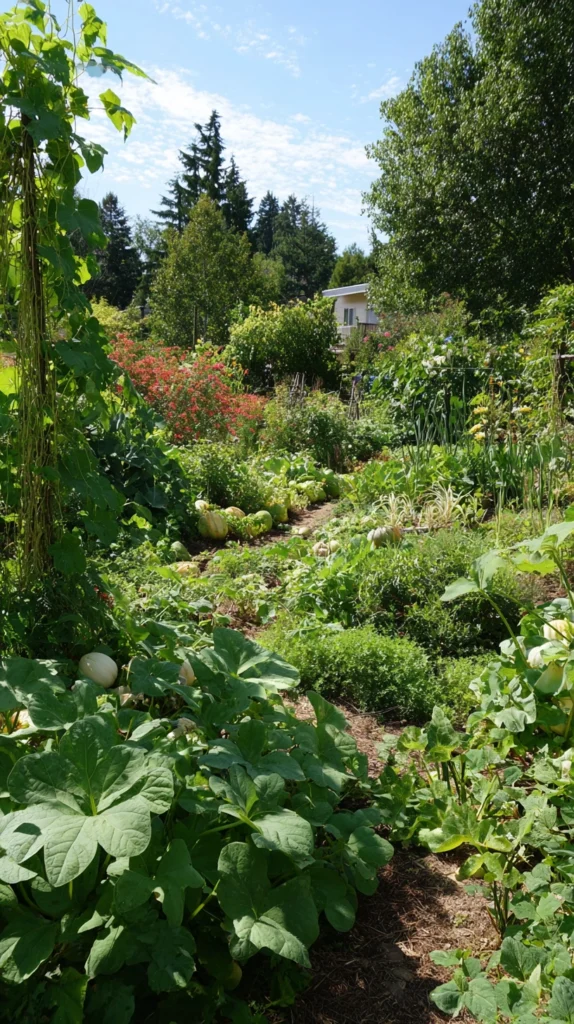
Traditional corn-beans-squash combo adapted for perennial food forest.
My perennial version:
Instead of annual corn: Jerusalem artichokes (perennial, similar height)
Instead of annual beans: Scarlet runner beans (perennial in zones 7+) or groundnut (perennial native)
Instead of annual squash: Perennial pumpkin varieties or winter squash with perennial cover crops
How it works:
- Tall plants provide climbing structure
- Beans fix nitrogen
- Large leaves shade soil
- Self-mulching system
My setup (40 square feet):
- 12 Jerusalem artichokes
- 6 scarlet runner beans
- 3 winter squash
- White clover ground cover
Annual harvest:
- 30+ pounds Jerusalem artichoke tubers
- 10+ pounds beans
- 40+ pounds squash
Maintenance: Minimal. Harvest and enjoy.
Jerusalem Artichoke Warning
These spread aggressively. Plant them where spreading is okay or in buried barriers.
I planted in a corner area where spreading doesn’t matter. Now I have unlimited tubers and dig as needed.
They taste like: Nutty, slightly sweet, potato-like. Great roast.
7. Container Food Forest (Apartment/Patio Design)
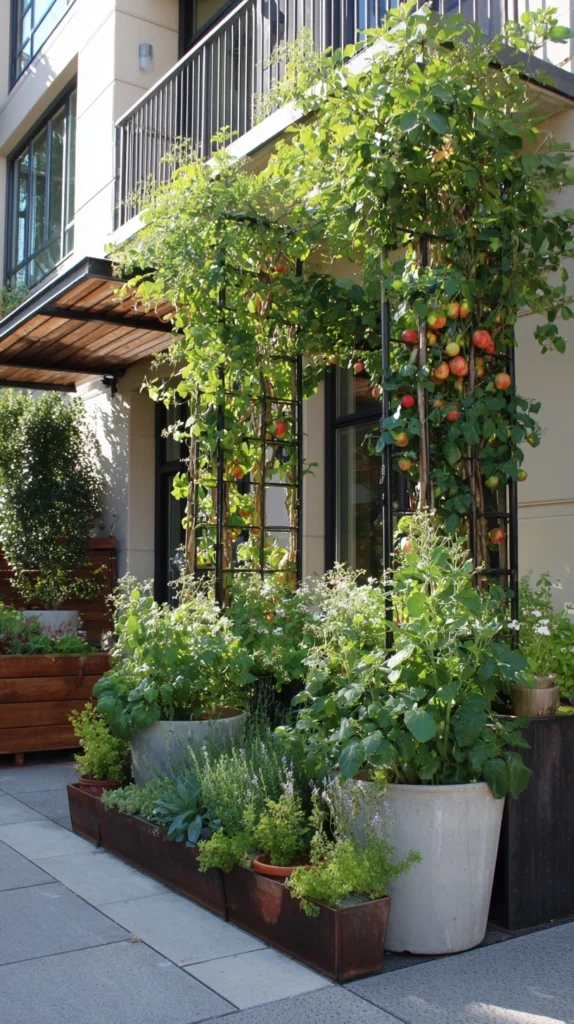
You don’t need land for a mini food forest.
My friend’s patio setup (10×10 feet):
Large containers (canopy layer):
- 2 dwarf fruit trees in 25-gallon pots
- Provide height and structure
Medium containers (shrub layer):
- 4 blueberry bushes in 15-gallon pots
- Berry production
Small containers (herbaceous):
- Strawberries in 10-gallon pots
- Herbs in various sizes
Vertical (vines):
- Grape vine in 20-gallon pot with trellis
- Climbing nasturtiums (edible)
Ground level:
- Containers grouped close together
- Creates microclimate
- Shade and protection
This produces:
- Fresh fruit from trees
- Berries all summer
- Herbs year-round
- Small grape harvest
Key to success:
- Large enough containers
- Quality potting mix
- Consistent watering (drip system)
- Regular fertilizing
8. Permaculture Swale Food Forest (Water Management)
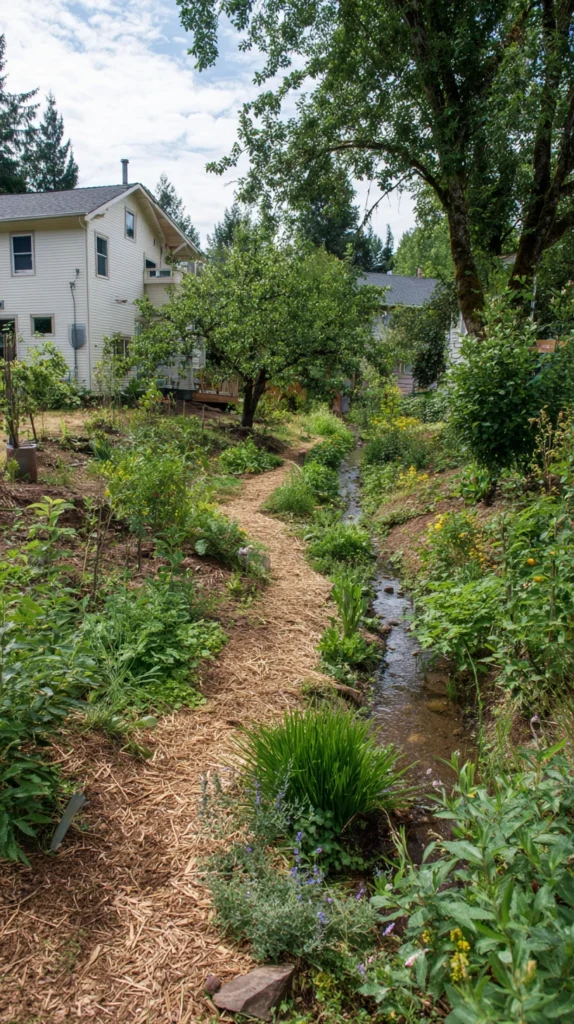
Swales capture and hold rainwater for trees planted on the downhill side.
My slope setup:
Two swales across slope:
- Each swale 30 feet long
- Dug on contour (perfectly level)
- Berm on downhill side
- Trees planted in berm
Swale 1 (upper):
- Apple trees
- Plums
- Service berry
Swale 2 (lower):
- Peaches
- Pears
- Mulberries
How it works:
- Rain collects in swale
- Water soaks into berm
- Trees access water below
- Drought resistant system
Benefits:
- No irrigation needed
- Better tree growth
- Prevents erosion
- Water conservation
I haven’t watered these trees in 3 years. Swales provide all moisture needed.
Building Swales
I hired someone to dig them ($400). Getting the level exactly right is critical.
DIY method:
- Mark contour line with water level tool
- Dig shallow trench 2 feet wide, 1 foot deep
- Pile dirt on downhill side (berm)
- Plant trees in berm
- Mulch heavily
Swales work best on slopes. On flat land, use different water management.
9. Nut Tree Food Forest (Long-Term Thinking)
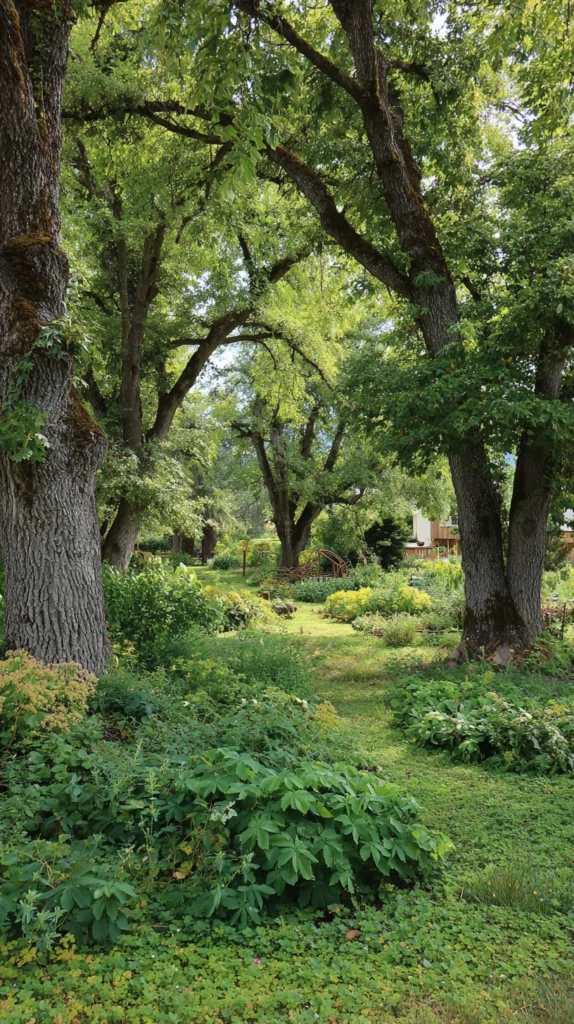
Nut trees are ultimate food forest crops – high calorie, store well, minimal work.
My nut grove (planted 5 years ago):
Tall canopy:
- 2 chestnut trees (hybrid blight-resistant)
- 2 pecan trees
- 1 black walnut (far from everything else)
Why nuts are perfect:
- Calorie dense (unlike fruit)
- Store for months
- High protein
- Once established, zero work
Challenges:
- Take 5-7 years to produce
- Need space (30+ feet between trees)
- Some need pollination partners
My harvest (year 5):
- First small harvest this year
- 10 pounds chestnuts
- 5 pounds pecans
- Expected to 10× over next 5 years
Nut Tree Selection
Best for food forests:
Chestnuts:
- Blight-resistant hybrids available
- Produce in 3-5 years
- Easier to shell than most nuts
Hazelnuts:
- Shrub-sized (8-12 feet)
- Great for small spaces
- Produce in 3-4 years
Pecans:
- Need long growing season
- Massive production
- 7-10 years to significant harvest
Walnuts:
- Black walnuts native
- Hard to shell but worth it
- Toxins affect some plants (plant far from others)
I focused on chestnuts because they produce the fastest and are easiest to use.
10. Mushroom Food Forest (Fungal Layer)
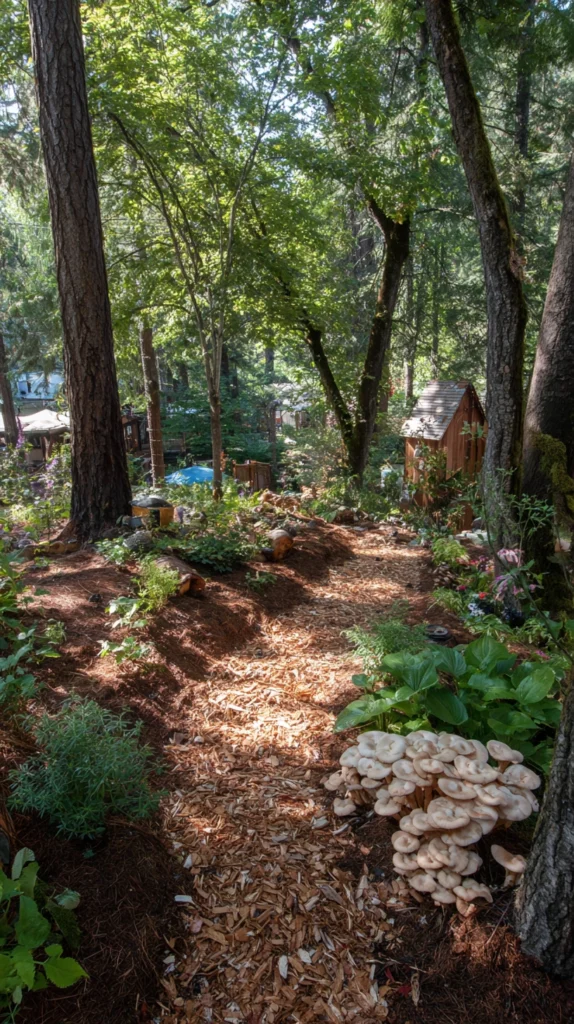
Adding mushrooms to the food forest utilizes decomposing wood.
My mushroom integration:
Shiitake logs:
- 8 oak logs inoculated 3 years ago
- Leaned against trees
- Produce 2 flushes yearly
- 10+ pounds per year
Oyster mushrooms:
- Growing on wood chip mulch
- Self-spreading
- Harvest spring and fall
Wine cap mushrooms:
- In wood chip paths
- Low maintenance
- Edible and productive
Benefits:
- Extra food source
- Decomposes wood chips into soil
- Adds fungal diversity
- Cool forest element
Starting Mushroom Production
Easiest method – inoculated logs:
What I did:
- Cut fresh oak logs (spring)
- Drilled holes 6 inches apart
- Inserted shiitake spawn plugs
- Sealed with wax
- Stacked in shady spot
- First harvest: 10 months later
Cost: $30 for spawn and wax Time: 2 hours Production: Years of mushrooms
Wine caps are even easier:
- Buy wine cap spawn ($20)
- Spread on wood chip mulch
- Wait 6-8 months
- Mushrooms appear after rain
11. Nitrogen-Fixing Food Forest (Self-Fertilizing)
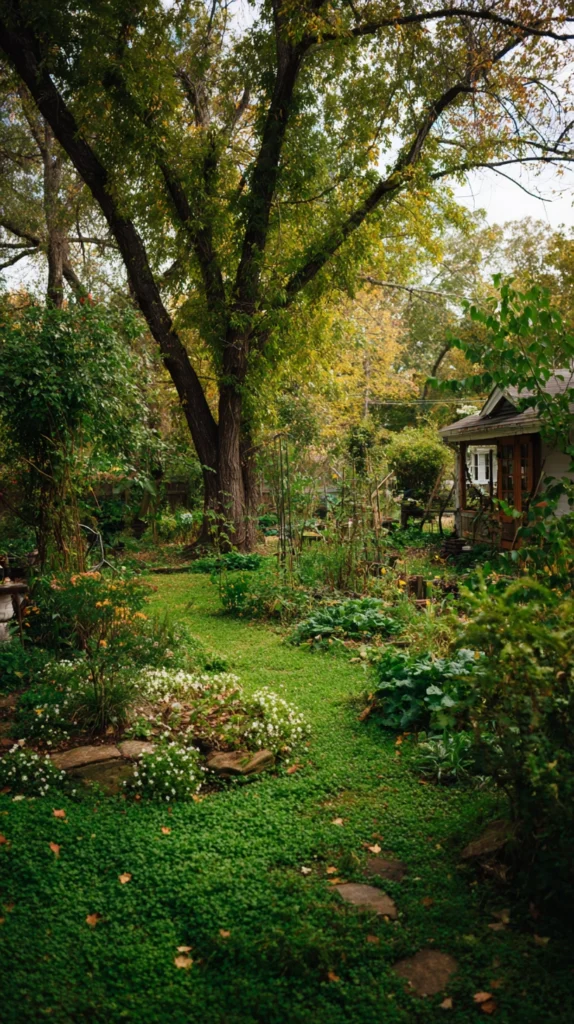
Plant nitrogen fixers throughout to feed other plants naturally.
My nitrogen-fixing plants:
Trees:
- 2 autumn olive (fruit + nitrogen)
- 1 black locust (lumber + nitrogen)
- Siberian pea shrub
Shrubs:
- Goumi berry (fruit + nitrogen)
- Sea buckthorn (fruit + nitrogen)
Herbaceous:
- Comfrey (everywhere)
- White clover (ground cover)
- Red clover (paths)
How it works:
- These plants pull nitrogen from air
- Store it in root nodules
- Release when roots die/pruned
- Feed nearby plants naturally
Benefits:
- Never bought fertilizer in 4 years
- Fruit trees grow vigorously
- Better harvests
- Free fertility
Chop and Drop Technique
I prune nitrogen fixers several times yearly:
- Cut branches back
- Drop them where they fall (don’t remove)
- Decompose in place
- Feed nearby plants
- Repeat
Comfrey especially: Grows fast, chop it back, instant mulch and fertilizer.
This technique eliminated: Need for commercial fertilizer, trips to buy mulch, bagging yard waste.
12. Medicinal Food Forest (Herbs and Healing)
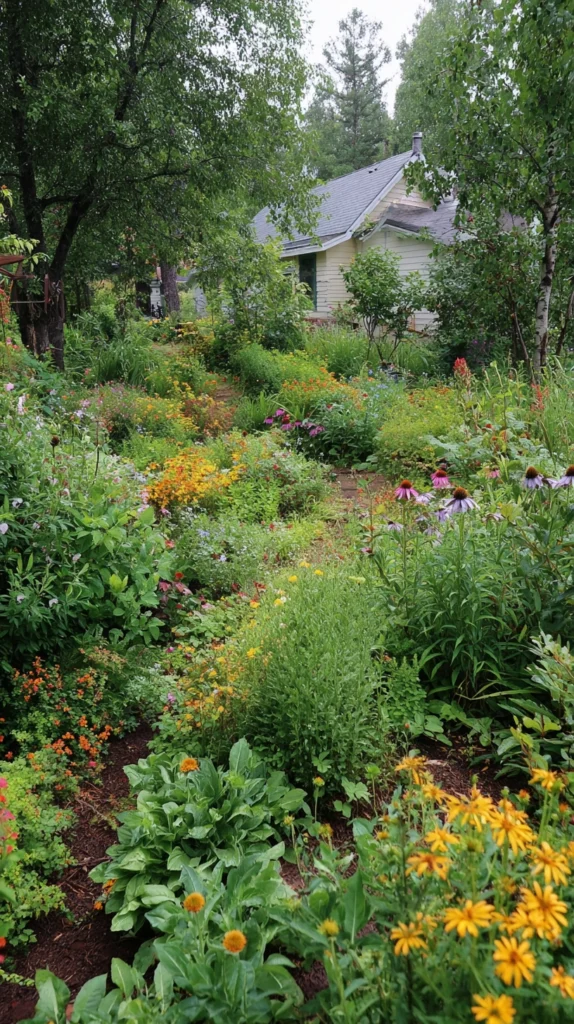
Many food forest plants have medicinal properties.
My medicinal integration:
Trees:
- Elderberry (immune support)
- Ginkgo (memory, circulation)
- Linden (tea from flowers)
Shrubs:
- Elderberry bushes (syrup, immune)
- Rose hips (vitamin C)
Herbaceous:
- Echinacea (immune support)
- Calendula (skin healing)
- Bee balm (tea, antiseptic)
- Yarrow (wound healing)
Ground cover:
- Chamomile (calming tea)
- Wild ginger (digestive)
- Violets (respiratory)
What I harvest:
- Elderberry syrup (immune season)
- Herbal teas year-round
- Medicinal tinctures
- Dried herbs for winter
Not replacing doctors but having home remedies available is empowering.
Elderberry Syrup Recipe
My annual ritual:
- Harvest elderberries in fall
- Simmer with water and spices
- Strain and add honey
- Store in fridge
- Use daily during cold/flu season
One bush provides: Enough berries for 5+ quarts of syrup.
13. Bamboo Food Forest (Unique Addition)
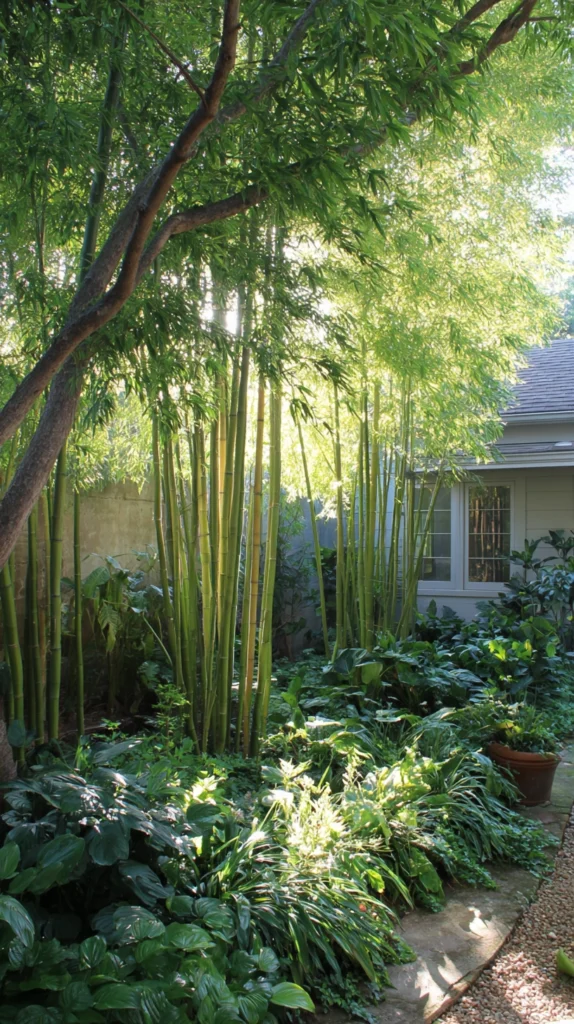
Clumping bamboo (not running type!) adds a unique element.
My bamboo grove:
Type: Fargesia (clumping, non-invasive)
Uses:
- Young shoots edible in spring
- Canes for trellises and stakes
- Privacy screen
- Windbreak
- Mulch from leaves
Location: North side where most plants struggle
Harvest:
- 20+ edible shoots each spring
- Unlimited building material
- Leaves self-mulch
Warning: Only plant clumping bamboo. Running bamboo is an invasive nightmare.
Varieties I use:
- Fargesia rufa (cold hardy)
- Fargesia robusta (larger shoots)
Both stay contained, won’t take over the yard.
Bamboo Shoot Harvest
Spring harvest window: 3-4 weeks when shoots emerge
How to harvest:
- Wait until shoots 6-8 inches tall
- Bend to side until it snaps
- Peel outer layers
- Use like asparagus
Taste: Mild, slightly sweet, crunchy. Great stir-fried.
14. Front Yard Food Forest (Curb Appeal Version)
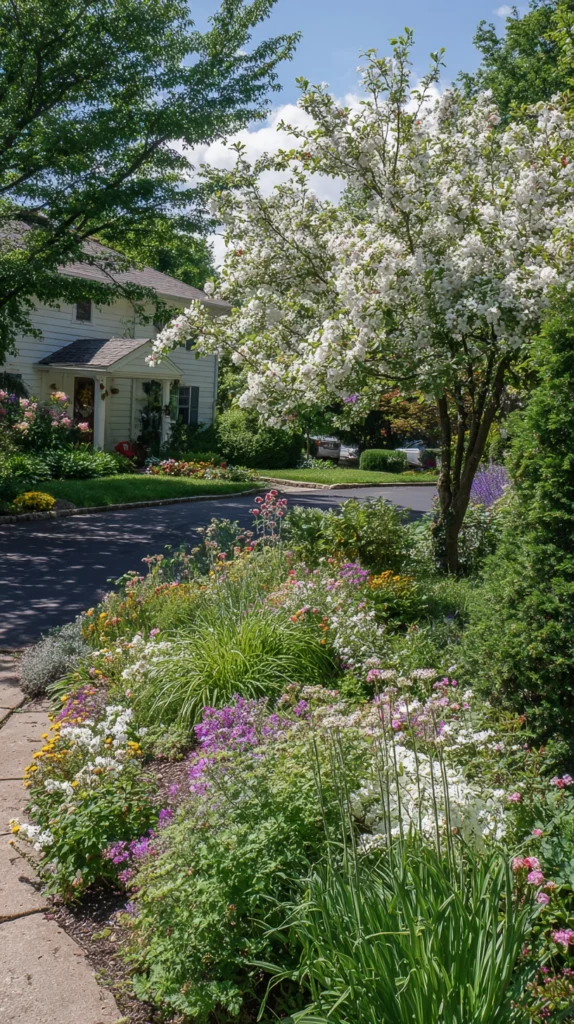
Making food production beautiful for HOA-friendly neighborhoods.
My design principles:
Looks like landscaping, not farm:
- Ornamental appearance
- Neat edges
- Attractive combinations
- Seasonal color
Actual front yard layout:
Canopy: Flowering crabapple (beautiful + edible)
Understory: Serviceberry (white flowers, berries)
Shrubs: Blueberries (looks like azaleas, produces food)
Herbaceous: Daylilies (flowers edible, tubers edible)
Ground cover: Creeping thyme and strawberries
Edging: Chives and society garlic (purple flowers)
Result:
- Neighbors think it’s decorative landscaping
- Actually produces 50+ pounds of food
- Lower maintenance than lawn
- Compliments from everyone
Sneaky Edible Ornamentals
Plants that look decorative:
- Blueberry bushes: Gorgeous red fall color
- Serviceberry: Beautiful white flowers
- Elderberry: Dramatic foliage and flowers
- Scarlet runner beans: Red flowers, edible beans
- Nasturtiums: Bright flowers, all parts edible
- Society garlic: Purple flowers, edible leaves
HOA can’t complain because it looks better than most landscaping.
15. Polyculture Orchard (Mixed Fruit Forest)
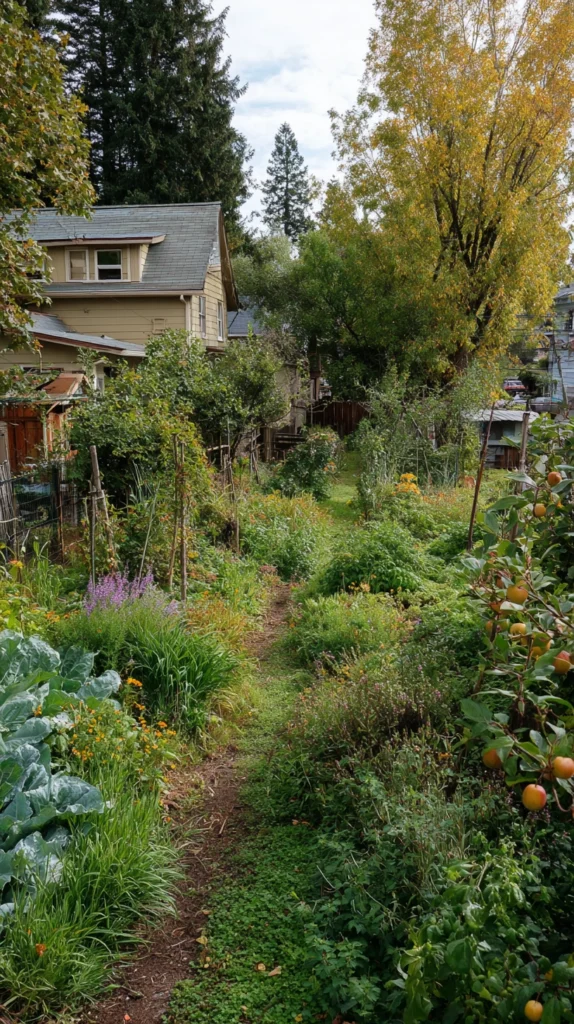
Instead of orderly fruit tree rows, create a diverse mixed orchard.
My 1/4 acre orchard:
Mix of 15 trees:
- 4 apples (different varieties)
- 2 pears
- 2 peaches
- 2 plums
- 2 cherries
- 3 persimmons
Planted 12-15 feet apart (closer than traditional)
Between trees:
- Berry bushes
- Perennial vegetables
- Nitrogen fixers
- Ground covers
Benefits:
- Disease resistance: Diversity prevents spread
- Extended harvest: Different ripening times
- Pollination: More variety = better pollination
- Aesthetics: More interesting than rows
- Wildlife: Greater habitat diversity
My harvest calendar:
- June: Cherries, early berries
- July: Peaches, blueberries
- August: Pears, blackberries
- September: Apples, grapes
- October: Late apples, persimmons
- November: Persimmons, stored apples
Fresh fruit 6 months straight from one quarter-acre space.
Succession Planting Fruit
I specifically chose varieties that ripen at different times:
Apples:
- Early: Pristine (August)
- Mid: Liberty (September)
- Late: Enterprise (October)
- Storage: GoldRush (November, stores months)
This prevents: 100 pounds of apples ripe in one week, ability to actually use harvest.
Starting Your Food Forest This Year
Don’t try to do everything at once.
Year 1 priorities:
Plant canopy trees first:
- They take longest to mature
- Establish the structure
- Provide future shade
- Cost: $100-200 for 3-4 trees
Add ground covers:
- Quick establishment
- Prevent weeds
- Build soil
- Cost: $20-40
Mark future plantings:
- Where shrubs will go
- Future guilds
- Path locations
- Plan ahead
Year 2:
- Add shrub layer (berries)
- Plant herbs
- Establish mulch paths
Year 3:
- Fill in gaps
- Add specialty items
- Fine-tune spacing
My actual investment:
Year 1: $180 Year 2: $150 Year 3: $100 Year 4: $50 Total over 4 years: $480
Current annual harvest value: $800-1,000
Return on investment: Paid off in year 3, profit from year 4 onward.
Maintenance Reality Check
Food forests aren’t zero work, just way less than traditional gardens.
My monthly maintenance:
Spring (2-3 hours/month):
- Prune fruit trees
- Add mulch
- Plant any new additions
Summer (1-2 hours/month):
- Harvest berries/fruit
- Occasional weeding
- Check for issues
Fall (2 hours/month):
- Major harvest
- Clean up fallen fruit
- Prepare for winter
Winter (minimal):
- Planning next year
- Occasional pruning
- Mostly dormant
Average yearly: 20-30 hours total
Compare to traditional garden: 200+ hours yearly
90% less work for equivalent harvest.
Common Food Forest Mistakes
Learn from my errors:
Mistake 1: Planting Too Close
I planted trees 8 feet apart. Now they’re crowded at year 5, competing for light.
Fix: 12-15 feet minimum for fruit trees, 20+ for nut trees.
Mistake 2: Wrong Plants for Climate
I planted figs (zone 7 borderline). They die back every winter, barely producing.
Fix: Choose plants reliably hardy for your zone. Don’t push limits.
Mistake 3: Ignoring Soil
I assumed any soil would work. Heavy clay killed several trees in the first year.
Fix: Amend soil at planting, especially for fruit trees. Drainage is critical.
Mistake 4: No Pollination Plan
Planted one apple tree. No fruit for 3 years because there is no pollinator.
Fix: Plant pairs of fruit trees or choose self-fertile varieties.
Mistake 5: Impatience
Expected significant harvest year 2. Most trees need 3-5 years minimum.
Fix: Adjust expectations. Plant annuals for food while perennials establish.
Food Forest Resources
Where I learned:
Books:
- “Gaia’s Garden” by Toby Hemenway (best starting point)
- “Edible Forest Gardens” by Dave Jacke (comprehensive)
Online:
- Permaculture forums
- YouTube channels (watch multiple sources)
- Local permaculture groups
In-person:
- Permaculture design courses
- Local garden clubs
- Botanical gardens (many have food forests now)
I took a weekend permaculture course ($200). Worth every penny for foundational knowledge.
Is a Food Forest Worth It?
My honest assessment after 4 years:
Pros:
- 90% less work than traditional garden
- Produces for 20+ years from one planting
- More diverse harvest
- Better for environment
- Actually beautiful
- System gets better over time
Cons:
- Slow start (3-5 years to significant production)
- Requires space (though smaller versions work)
- Initial learning curve
- Upfront cost ($500+ for quality setup)
- Requires patience
Would I do it again? Absolutely. I wish I’d started 10 years earlier.
Best for: People with long-term thinking, permanent homes, desire for low-maintenance food production.
Not ideal for: Renters, people moving soon, those wanting immediate results.
My food forest transformed my yard from a high-maintenance lawn to a productive edible ecosystem.
Now go plant some trees and start your food forest journey!
Quick Summary:
Best beginner food forests:
- Backyard mixed orchard (fruit trees + berries)
- Berry hedge (edible privacy)
- Guild planting around existing trees
- Container food forest (apartments)
Essential layers to include:
- Canopy: Fruit/nut trees
- Shrub: Berry bushes
- Herbaceous: Perennial vegetables and herbs
- Ground cover: Edible ground covers
- Vertical: Climbing vines
Timeline expectations:
- Year 1-2: Establishment, minimal harvest
- Year 3-4: First significant production
- Year 5+: Full production, system self-maintaining
Space requirements:
- Minimum: 500 sq ft (container or small guild)
- Ideal: 2,000+ sq ft (full layered forest)
- Small yard: Focus on vertical layers
Critical success factors:
- Choose climate-appropriate plants
- Plant trees first (longest to mature)
- Include nitrogen fixers
- Mulch heavily (6+ inches)
- Patience (takes 3-5 years)
Budget expectations:
- Minimal: $100-200 (few trees, ground covers)
- Standard: $500-800 (diverse layers)
- Extensive: $1,000-2,000 (complete ecosystem)
Maintenance after establishment:
- Traditional garden: 200+ hours/year
- Food forest: 20-30 hours/year
- 90% reduction in work
Best plants for beginners:
- Fruit trees: Apples, pears, peaches
- Berries: Blueberries, raspberries, blackberries
- Herbs: Comfrey, chives, oregano
- Ground cover: White clover, strawberries
Common combinations:
- Apple tree + blueberries + strawberries
- Peach tree + raspberries + herbs
- Nut trees + berry hedge + mushrooms
Mistakes to avoid:
- Planting too close together
- Expecting quick results (takes years)
- Ignoring climate zones
- No pollination planning
- Poor soil preparation
Return on investment:
- Initial cost: $500-800
- Annual harvest value: $800-1,000
- Pays off: Year 3-4
- Profitable: Year 5+ forever
Start this weekend:
- Research plants for your zone
- Buy 2-3 fruit trees
- Plant with comfrey/clover
- Mulch heavily
- Wait and watch it grow