15 Stunning Garden Trellis Ideas You’ll Love
My climbing plants used to sprawl on the ground taking up half my garden. Cucumbers rotted in mud, beans tangled into knots, tomatoes flopped everywhere.
Wasted space, poor harvest, constant mess.
Then I built my first trellis. Same plants, vertical growing, triple the harvest in one-quarter the space.
Now my garden has 8 different trellis designs producing 150+ pounds of vegetables from minimal footprint.
Let me show you 15 trellis ideas that transform gardens from chaotic to productive.
Why Trellises Change Everything
My ground-growing disaster:
4 cucumber plants sprawling:
- Took up 32 square feet (8×4 area)
- Found rotten cucumbers under vines
- Harvested maybe 20 cucumbers
- Disease from soil contact
Same 4 plants on trellis:
- Take up 8 square feet (8×1 footprint)
- Every cucumber visible
- Harvested 60+ cucumbers
- Clean fruit, no disease
Space saved: 75% Harvest increased: 3×
Vertical Growing Benefits
What changed:
Space efficiency:
- Ground: Horizontal sprawl
- Vertical: Uses height
- Same footprint, more plants
Better plant health:
- Air circulation (prevents disease)
- Sunlight on all leaves
- No soil contact (less rot)
- Easier pest spotting
Easier harvesting:
- Everything visible
- Pick at eye level
- No bending over
- No searching under leaves
I spend 5 minutes harvesting vs 20 minutes searching before trellises.
1. Cattle Panel Arch Trellis (My Favorite)
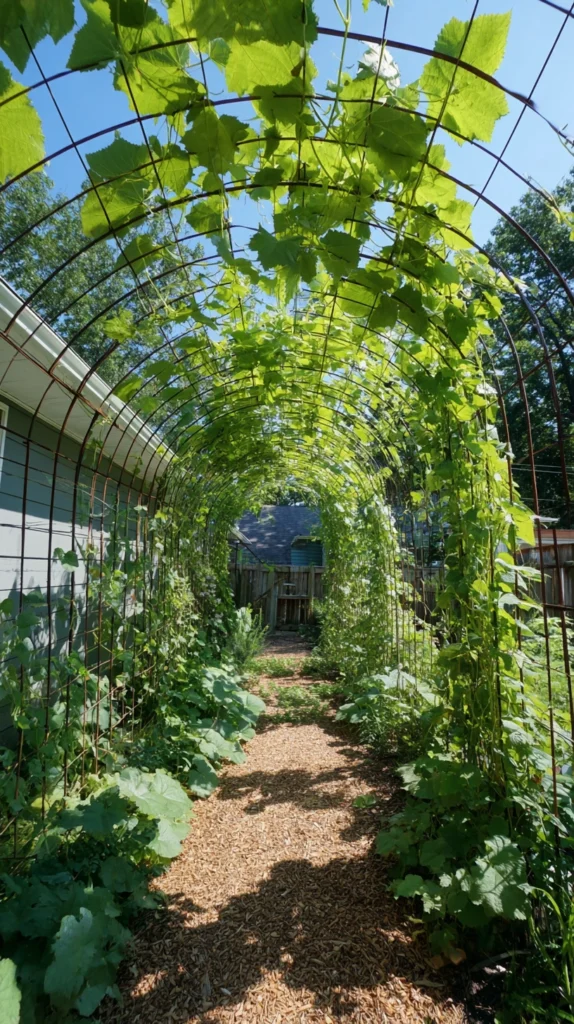
Arched cattle panel creates tunnel effect.
My main garden trellis:
Materials:
- One 16-foot cattle panel ($25)
- Two T-posts ($16)
- Wire ties ($3)
- Total: $44
Construction (30 minutes):
- Drive T-posts 8 feet apart
- Bend cattle panel into arch
- Wire panel to posts
- Creates 6-foot tall tunnel
What I grow on it:
- 4 cucumber plants (one side)
- 4 pole bean plants (other side)
- Produces May-October
Benefits:
Sturdy: Holds heavy crops without sagging Long-lasting: Mine is 5 years old, still perfect Large squares: Easy to harvest through Reusable: Same trellis every year
Annual harvest from one arch:
- Cucumbers: 60+ pounds
- Beans: 25+ pounds
- From 16 square feet of space
Best value trellis I’ve ever built.
Cattle Panel Tips
What I learned:
Cutting panels:
- Bolt cutters work
- Cut in store parking lot (doesn’t fit in car full-length)
- One panel makes two 8-foot sections
Bending technique:
- Get help (two people)
- Bend slowly and evenly
- Creates natural arch shape
- Very strong once installed
2. Bamboo Teepee Trellis (Classic and Cheap)
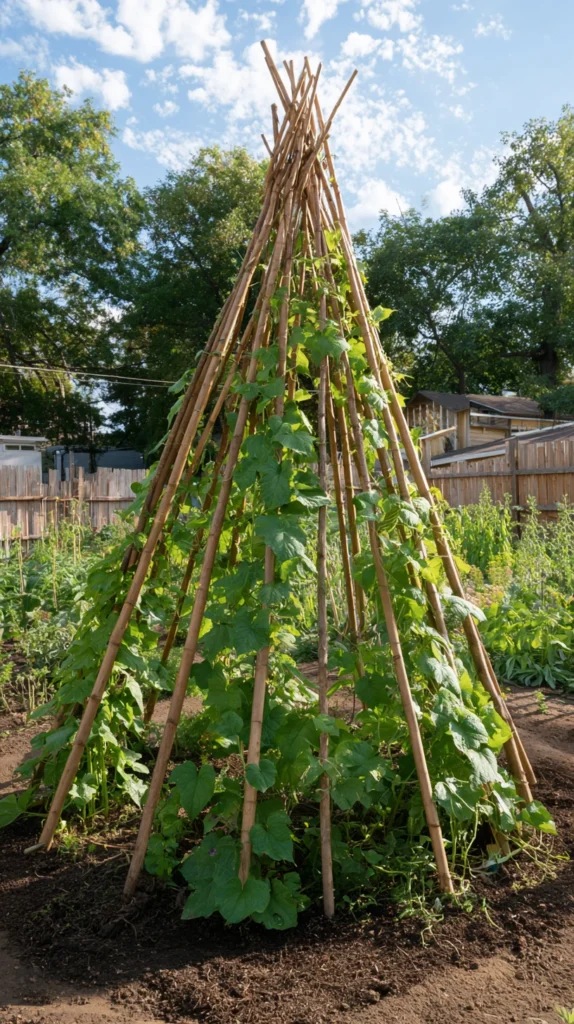
Six bamboo poles form cone shape.
My bean teepee:
Materials:
- 6 bamboo poles (8 feet long, $12)
- Twine to tie top ($2)
- Total: $14
Construction (15 minutes):
- Push poles into ground in 4-foot diameter circle
- Lean tops together
- Tie securely at top
- Plant at base of each pole
What grows well:
- Pole beans (my main use)
- Peas in spring
- Morning glories (decorative)
- Scarlet runner beans
Kids love it:
- Hideout inside
- “Bean fort”
- They help harvest from inside
- Educational
Production: 15 pounds beans from one teepee
Lasts 2-3 seasons before bamboo degrades.
3. A-Frame Trellis (Double-Sided Growing)
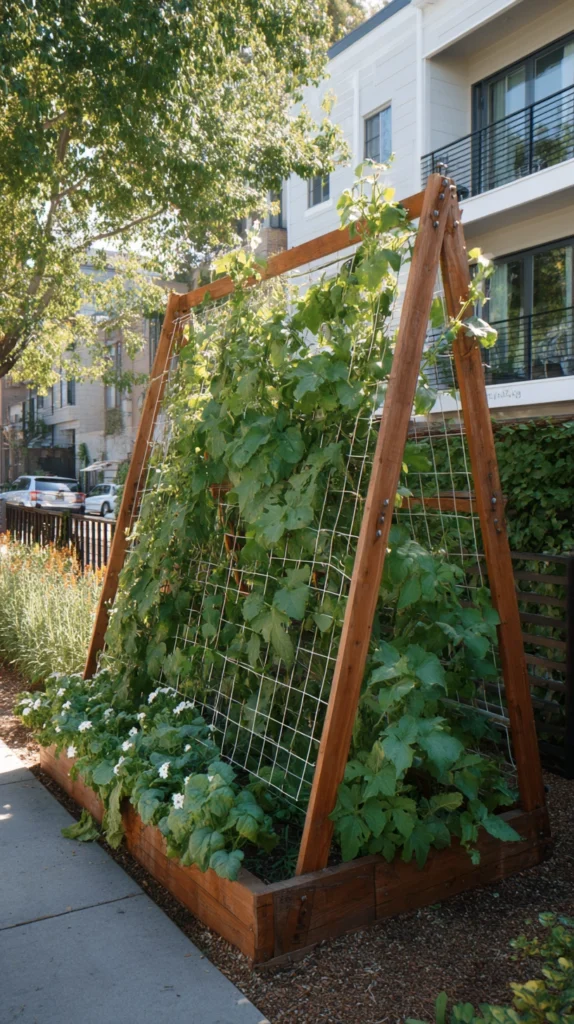
Two panels leaned together creates freestanding structure.
My cucumber A-frame:
Materials:
- Two 4×6 cattle panel sections ($25 each)
- Wire to connect ($3)
- Total: $53
Setup:
- Stand panels vertically
- Lean tops together (A-frame shape)
- Wire together at peak
- Spread bottoms 3-4 feet apart
Planting both sides:
- North side: Cucumbers (4 plants)
- South side: Lettuce underneath (shade from cucumbers)
- Dual-purpose structure
Advantages:
Freestanding: No posts needed Stable: Very sturdy design Both sides usable: Plant different crops Portable: Can move if needed
My A-frame produces:
- 50 pounds cucumbers (sunny side)
- Fresh lettuce May-June (shaded side)
4. String Trellis (Budget Option)
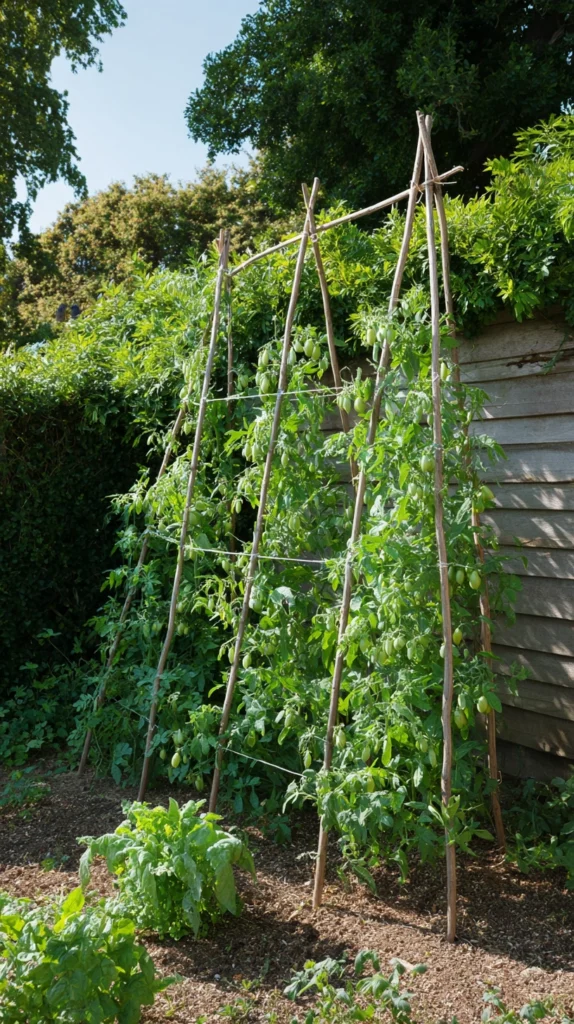
Simple stakes and twine – cheapest effective trellis.
My tomato string system:
Materials:
- Two 8-foot stakes ($4)
- Ball of garden twine ($3)
- Total: $7
Installation:
- Drive stakes 6 feet apart
- Run horizontal twines every 12 inches
- Creates ladder effect
- Plant at base
What it supports:
- Tomatoes (indeterminate)
- Peas
- Lightweight vines only
Limitations:
- Not strong (lightweight only)
- Replace twine yearly
- Looks basic
But for $7 – it works fine for starting out.
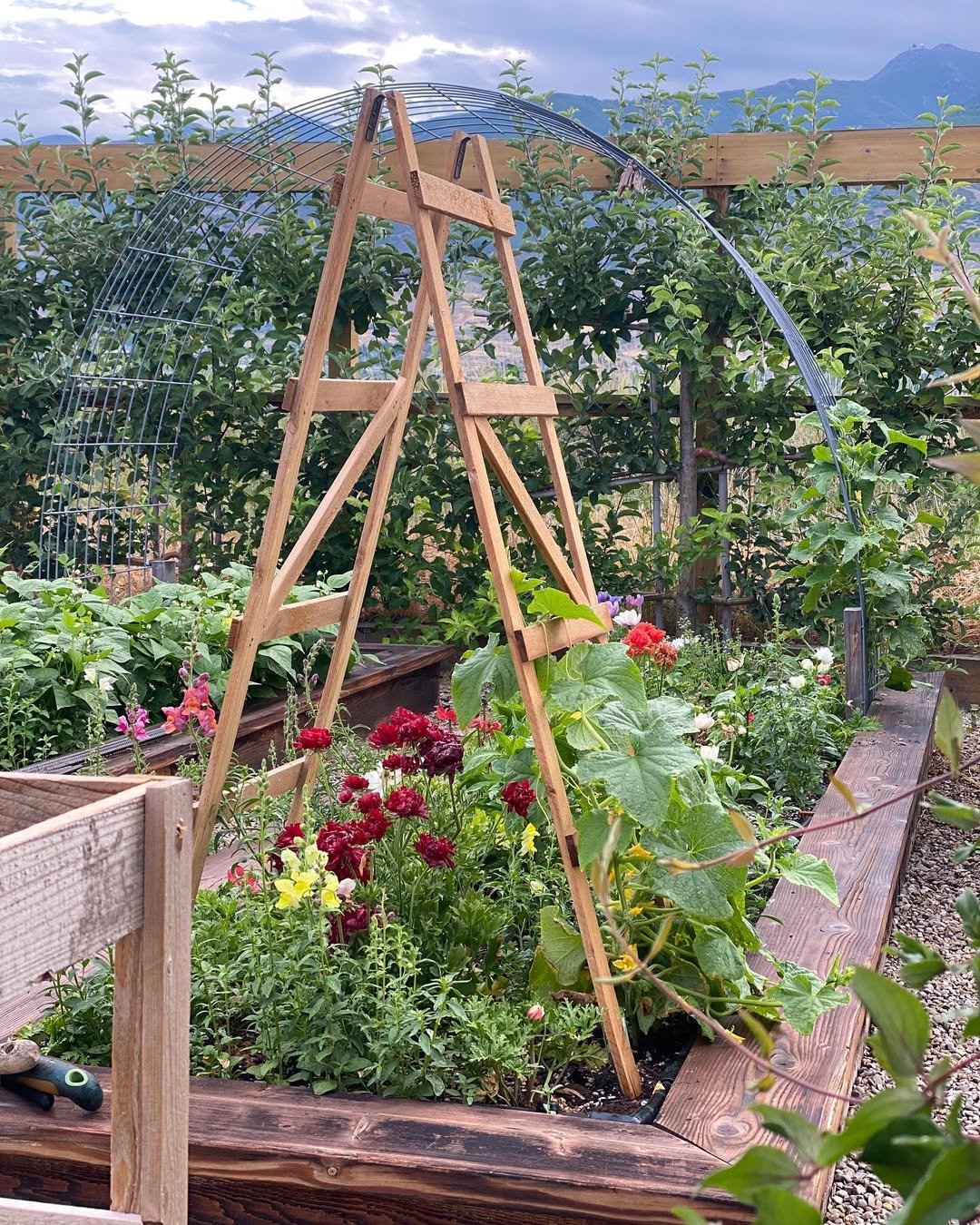
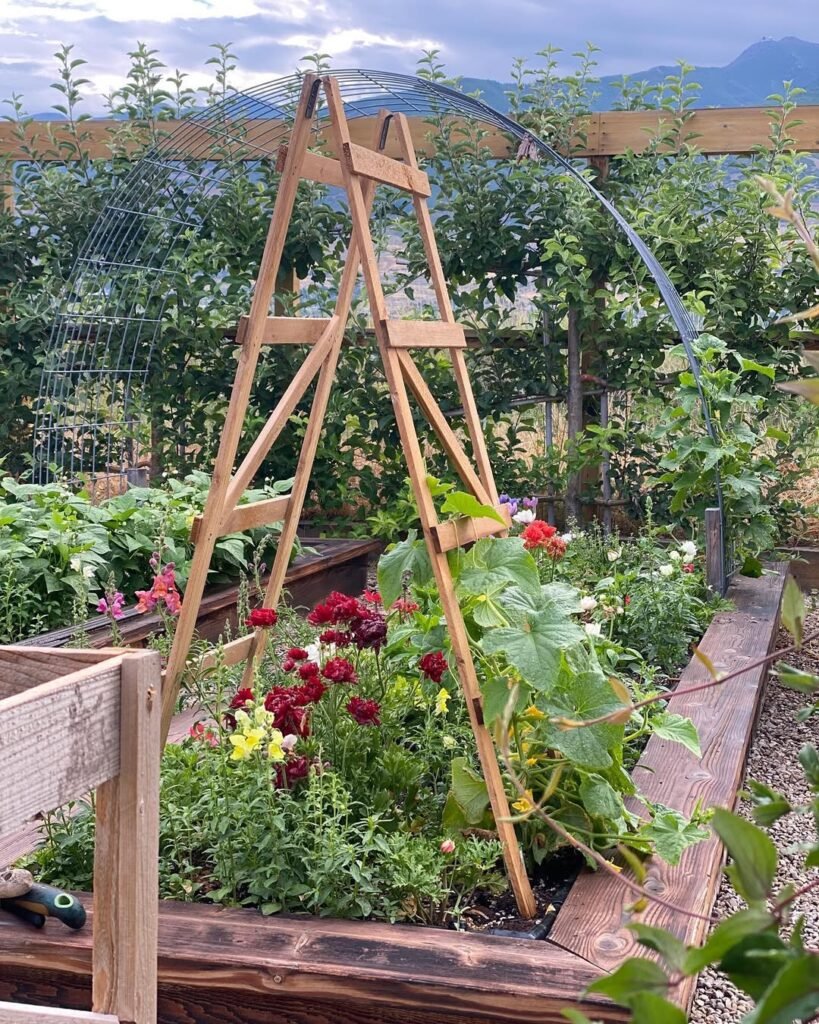
5. Repurposed Ladder Trellis (Rustic Charm)
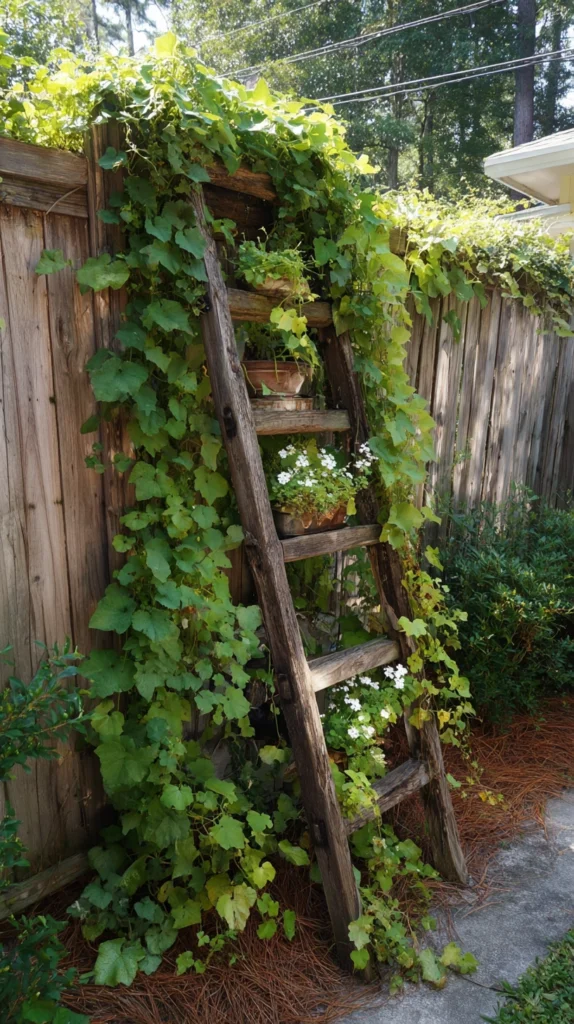
Old wooden ladder becomes instant trellis.
My vintage ladder setup:
Found: Old 6-foot ladder at yard sale ($5)
Placement:
- Leaned against fence
- Secured with wire ties
- Plants grow up rungs
What climbs it:
- Cucumbers (weave through rungs)
- Trailing flowers (mixed planting)
- Decorative and productive
Visual appeal:
- Rustic farmhouse look
- Character piece
- Better than new trellis
- Conversation starter
I’ve seen ladders at thrift stores for $3-10. Perfect trellis material.
6. Welded Wire Panel Trellis (Professional Look)
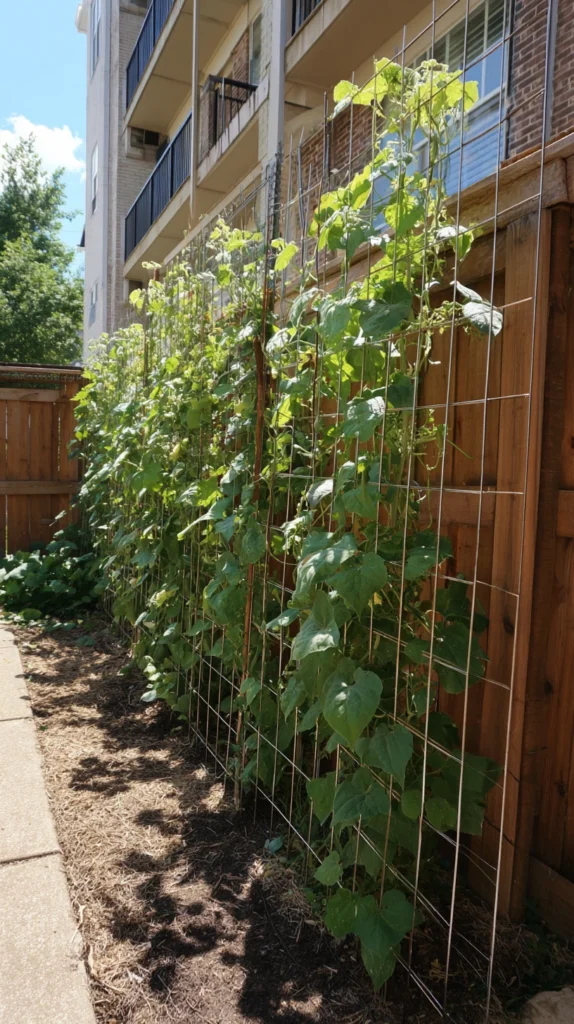
Metal wire panels create clean modern trellis.
My fence-mounted system:
Materials:
- 4×8 welded wire panel ($15)
- Brackets for fence mounting ($10)
- Total: $25
Installation:
- Mounted to fence with brackets
- 8 feet wide, 6 feet tall
- Permanent installation
- Clean appearance
Growing on it:
- Pole beans (8 plants)
- Clean straight rows
- Easy to pick
- Professional look
Wire spacing (4-inch squares):
- Perfect for hand harvesting
- Vines grab easily
- Strong support
Lasts 10+ years with powder-coated wire.
7. Branch and Twig Trellis (Natural and Free)
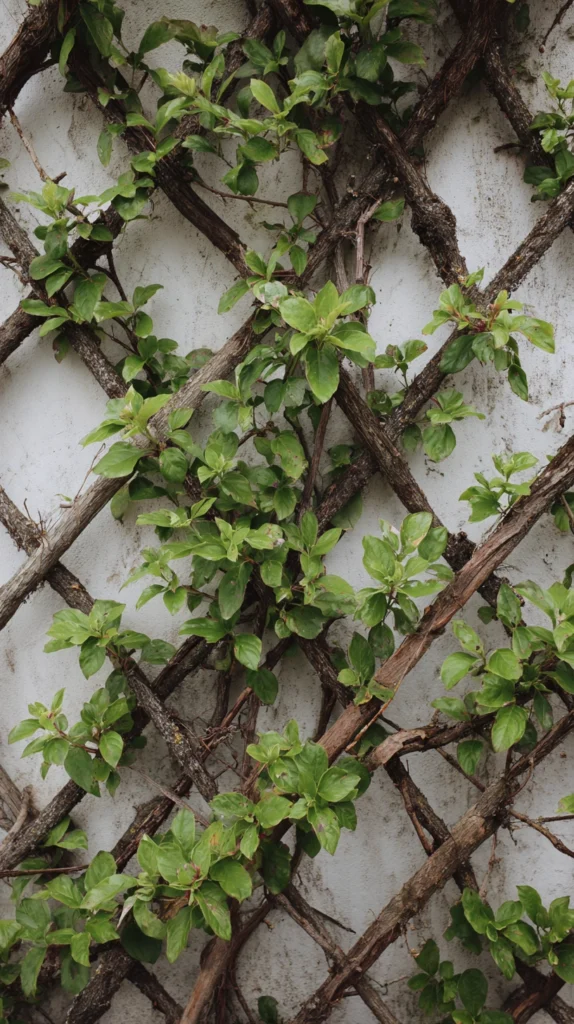
Pruned branches woven into rustic trellis.
My natural trellis:
Materials:
- Branches from tree trimming (free)
- Twine to secure ($2)
- Total: $2
Construction:
- Select long straight branches
- Push thick ends into ground
- Weave horizontal branches through
- Tie at intersections
- Creates rustic lattice
Best for:
- Cottage gardens
- Natural aesthetic
- Peas (lightweight)
- Annual use (doesn’t last long)
Charm factor:
- Looks intentionally rustic
- Free materials
- Unique each time
- Biodegradable (no storage)
I rebuild each spring with fresh prunings – part of garden ritual.
8. Obelisk Tower Trellis (Decorative Accent)
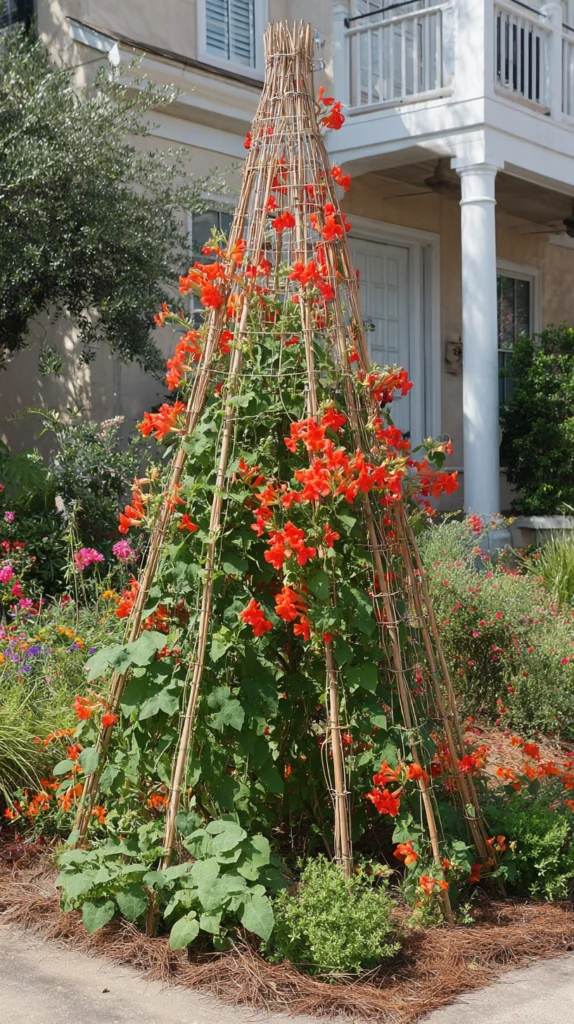
Four poles tapering to point creates garden sculpture.
My decorative obelisk:
Materials:
- Four 8-foot bamboo poles ($8)
- Wire mesh wrap ($10)
- Wire ties ($2)
- Total: $20
Construction:
- Arrange four poles in 2-foot square at base
- Tie tops together (pyramid shape)
- Wrap with wire mesh
- Creates ornamental tower
What I grow:
- Scarlet runner beans (red flowers)
- Beautiful and edible
- Garden focal point
- 10 pounds beans plus beauty
Placement:
- Center of circular bed
- Creates vertical interest
- Architectural element
- Productive sculpture
Guests always comment – doesn’t look like utilitarian trellis.
9. Fan Trellis (Wall-Mounted Design)
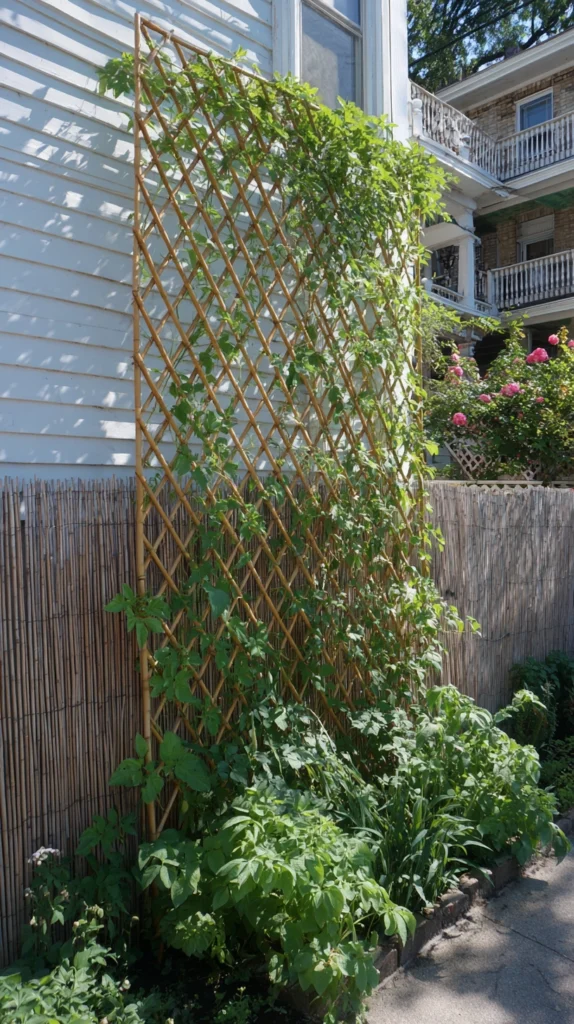
Radiating pattern for espalier or decorative growing.
My wall fan trellis:
Materials:
- Seven 6-foot bamboo poles ($14)
- Wire to secure ($2)
- Fence brackets ($5)
- Total: $21
Design:
- All poles meet at bottom
- Fan out to top
- Mounted on fence/wall
- Creates peacock tail effect
Best uses:
- Decorative vines
- Espalier vegetables (tomatoes)
- Small cucumbers
- Ornamental and productive
Visual impact:
- Looks designed/intentional
- Better than standard grid
- European garden feel
- Elegant appearance
10. Hog Panel Arch (Heavy-Duty Version)
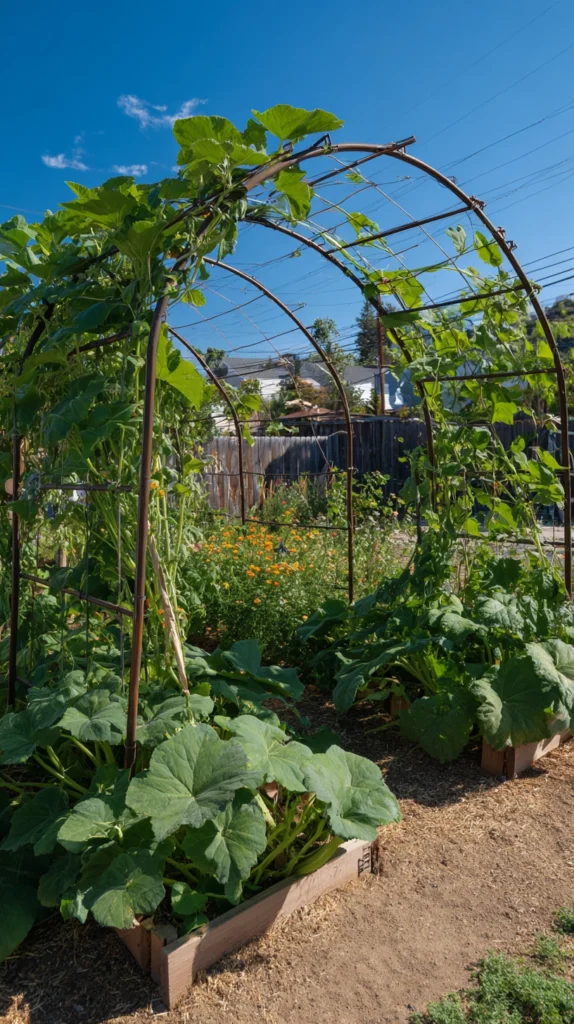
Thicker wire than cattle panel for maximum support.
My squash arch:
Materials:
- Hog panel (16 feet, heavier gauge, $35)
- Two T-posts ($16)
- Total: $51
Why heavy-duty:
- Supporting squash (heavy fruit)
- Thicker wire = stronger
- Lasts 15+ years
- Doesn’t sag under weight
Growing heavy crops:
- Winter squash (small varieties)
- Melons (with slings for support)
- Heavy cucumbers
I added fabric slings under large squash to prevent vine breakage.
Production: 40 pounds squash from one arch
11. Pallet Trellis (Upcycled Design)
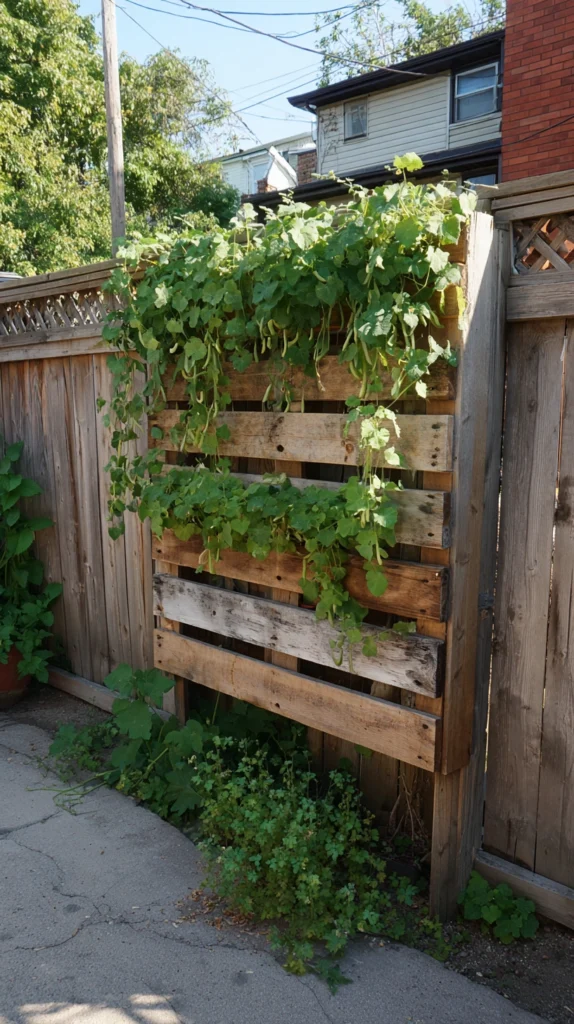
Free shipping pallet becomes instant trellis.
My pallet garden wall:
Materials:
- Wooden pallet (free, found)
- Fence brackets ($5)
- Total: $5
Setup:
- Stand pallet upright
- Secure to fence or posts
- Plants grow through slats
- Rustic appearance
What grows through:
- Peas (weave through)
- Small cucumbers
- Herbs in pockets
- Flowers mixed in
Advantages:
- Free material
- Instant trellis
- Multiple planting levels
- Shabby chic aesthetic
Disadvantage: Breaks down after 2-3 years
12. Rebar and Wire Trellis (Industrial Strength)
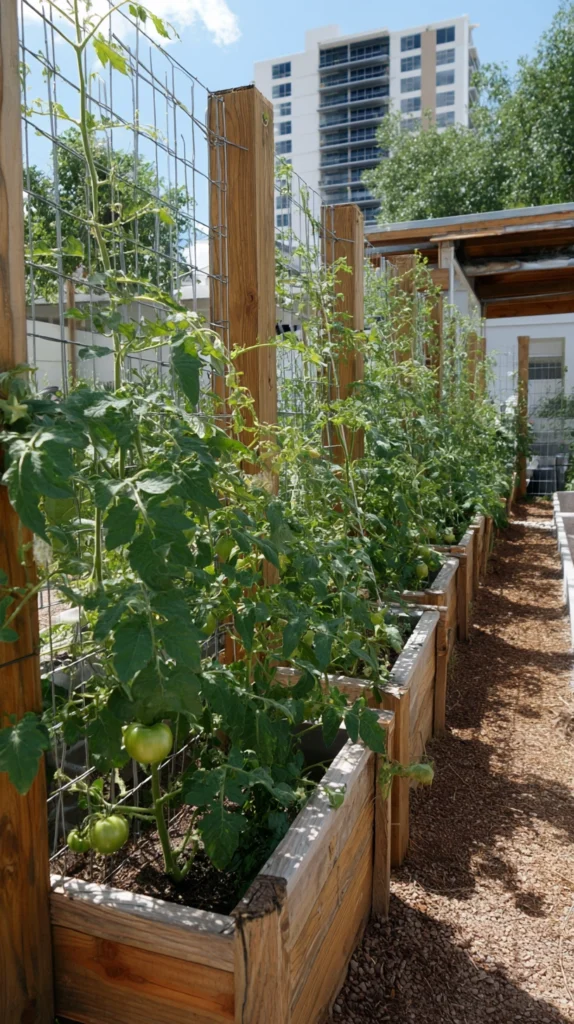
Metal rebar frame with wire mesh – permanent solution.
My permanent trellis:
Materials:
- 10 rebar pieces (10 feet long, $30)
- Cattle panel section ($15)
- Wire ties ($3)
- Total: $48
Construction:
- Drive 5 rebar posts in ground (2 feet deep)
- Space 4 feet apart
- Wire cattle panel to rebar
- Creates 20-foot long trellis wall
Why I love it:
Permanent: Never moves or fails Strong: Supports anything Professional: Looks intentional Durable: Will outlast me
My 20-foot trellis supports:
- 12 tomato plants
- Produces 200+ pounds tomatoes annually
- Zero maintenance beyond plant care
This is my main production trellis.
13. Copper Pipe Trellis (Modern Aesthetic)
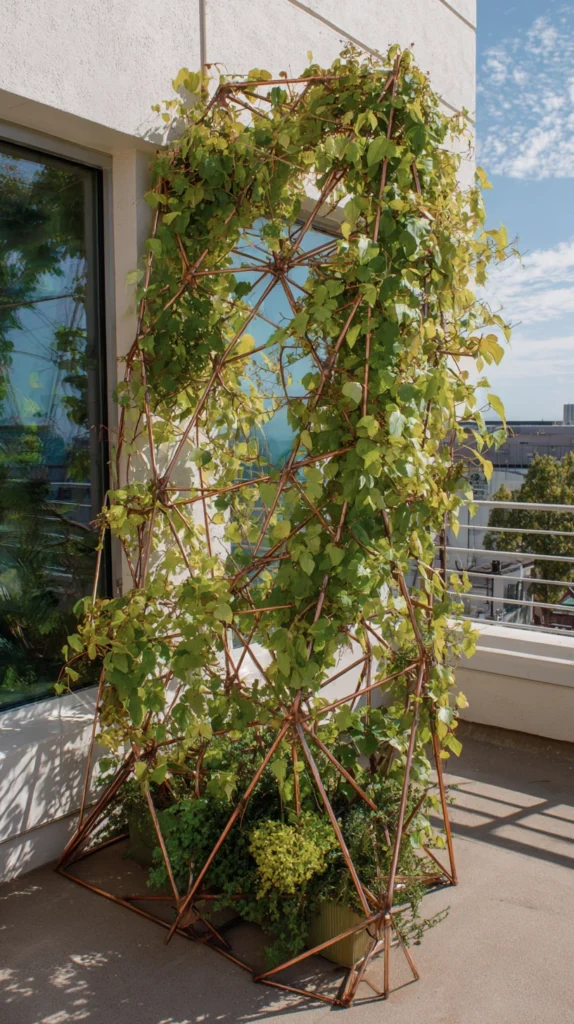
Copper plumbing pipe creates elegant structure.
My decorative trellis:
Materials:
- Copper pipe (1/2 inch, 40 feet total, $60)
- Elbow joints ($20)
- Total: $80
Design:
- Modern geometric pattern
- Grid or triangle design
- Develops green patina over time
- Art piece that’s functional
Best for:
- Decorative areas
- Lightweight vines
- Modern garden style
- Show gardens
Honestly expensive compared to other options, but stunning.
I use this in front yard where aesthetics matter most.
14. T-Post and Wire Grid (Farming Style)
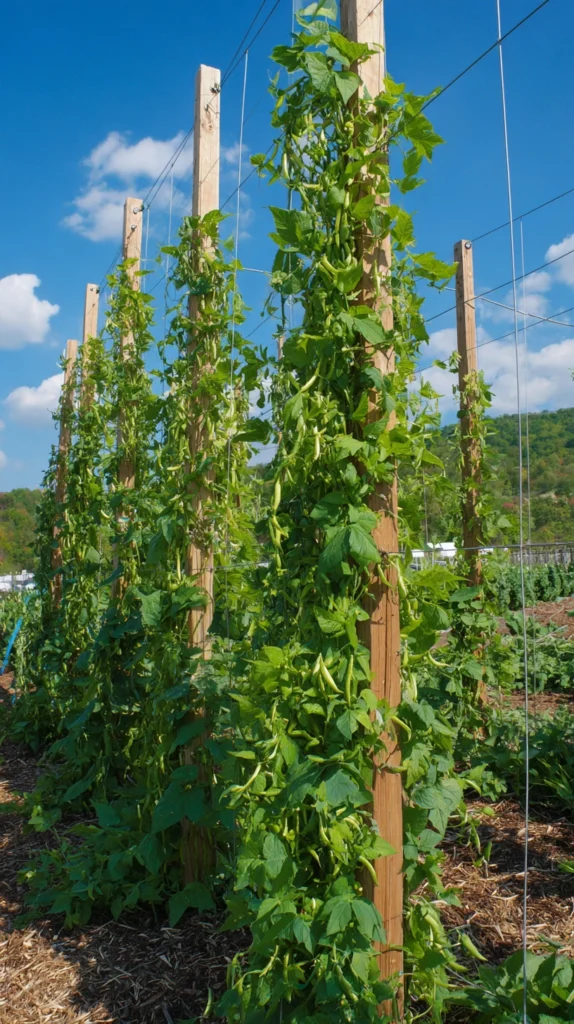
Simple posts with horizontal wires – traditional method.
My bean rows:
Materials:
- 10 T-posts (6 feet, $80)
- High-tensile wire ($15)
- Total: $95 for 40-foot run
Setup:
- Drive T-posts 4 feet apart
- String wire horizontally at 1, 2, 3, 4, 5 feet high
- Creates ladder for climbing
- Industrial strength
Commercial-scale solution:
- Supports hundreds of pounds
- 40 feet of growing space
- Rows of beans or peas
- Maximum production
My bean rows produce:
- 100+ pounds beans
- From 40×2 feet (80 sq ft)
- Commercial-style efficiency
This is scaled-up farming approach – overkill for small gardens but I like beans.
15. Recycled Bicycle Wheel Trellis (Quirky and Functional)
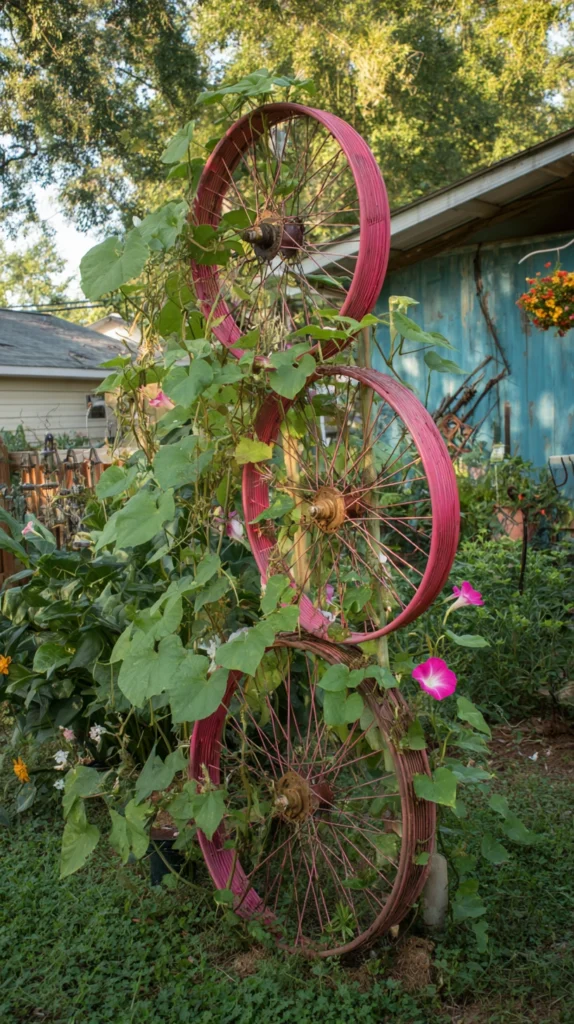
Old bike wheels create circular trellis.
My whimsical design:
Materials:
- 3 old bicycle wheels (free, trash day finds)
- Wooden post (6 feet, $4)
- Wire to attach ($2)
- Total: $6
Construction:
- Attach wheels to post at different heights
- Spokes create radial trellis
- Plants climb through spokes
- Unique garden art
What grows on it:
- Morning glories (decorative)
- Small beans
- Lightweight vines
- Conversation piece
Pure fun – not maximum production, but joy factor high.
Neighborhood kids love it – “the bicycle wheel garden.”
Choosing Right Trellis for Your Needs
Match trellis to purpose.
By Plant Type
Heavy crops (squash, melons):
- Hog panel arch (strongest)
- Rebar and wire (permanent strength)
- Cattle panel (good strength)
Medium crops (tomatoes, cucumbers):
- Cattle panel (my go-to)
- A-frame (freestanding)
- Welded wire panel
Lightweight (peas, beans):
- Bamboo teepee (cheap, works great)
- String trellis (budget option)
- Branch and twig (natural look)
Decorative:
- Obelisk (sculptural)
- Copper pipe (modern)
- Bicycle wheel (quirky)
By Budget
Under $10:
- String trellis ($7)
- Branch trellis ($2)
- Pallet trellis ($5)
$10-$30:
- Bamboo teepee ($14)
- Fan trellis ($21)
- Welded wire panel ($25)
$30-$60:
- Cattle panel arch ($44)
- Hog panel arch ($51)
- A-frame ($53)
$60+:
- Copper pipe ($80)
- Rebar system ($95+)
- Professional structures
By Aesthetic
Rustic/cottage:
- Branch and twig
- Bamboo teepee
- Pallet trellis
- Ladder trellis
Modern/clean:
- Copper pipe
- Welded wire panels
- Rebar systems
Whimsical:
- Bicycle wheels
- Painted obelisks
- Decorated teepees
Professional/productive:
- Cattle panel arches
- T-post and wire
- A-frames
Installation Tips That Work
What I’ve learned from building 15+ trellises:
Stability is Critical
My first trellis fell over:
- Top-heavy with vines
- Posts not deep enough
- Disaster mid-season
Now I always:
- Drive posts 2 feet deep minimum
- Use concrete for permanent structures
- Secure to fence when possible
- Test stability before planting
Orientation Matters
North-south vs east-west:
I run mine north-south:
- Both sides get sun
- Morning sun east side
- Afternoon sun west side
- Maximizes light to all plants
East-west orientation:
- South side gets full sun
- North side shaded
- Good for shade-tolerant crops underneath
Height Considerations
Taller isn’t always better:
I learned this hard way:
- Built 8-foot trellis
- Couldn’t reach top
- Upper beans rotted unpicked
My optimal heights:
- 6 feet: Maximum I can reach easily
- 7 feet: Need step stool (worth it for tomatoes)
- 8 feet: Only if I can walk both sides
Maintenance and Longevity
Different materials age differently.
Material Lifespan
My experience:
Metal (cattle panel, rebar):
- 10-20+ years
- Some rust (doesn’t affect function)
- Permanent installations
- Best long-term value
Treated bamboo:
- 2-3 years
- Biodegrades
- Cheap to replace
- Good for annual rotation
Wood (ladder, branches):
- 1-3 years untreated
- 5-10 years treated
- Adds character as it ages
- Eventually composts
Copper:
- 50+ years
- Develops patina (beautiful)
- Expensive but forever
- Heirloom quality
Seasonal Care
What I do:
Spring:
- Inspect for damage
- Repair weak points
- Repaint if needed
- Set up before planting
Summer:
- Monitor for sag
- Add support if needed
- Tie in new growth
Fall:
- Remove dead vines
- Clean off debris
- Store removable structures
Winter:
- Leave permanent trellises in place
- Store bamboo/temporary structures
- Plan next year’s arrangement
Training Plants on Trellises
Plants don’t automatically climb.
Initial Training
First 2-3 weeks:
I guide growth:
- Gently weave vines through trellis
- Secure with plant velcro (reusable)
- Check every 2-3 days
- Remove from ground (prevent rooting)
After establishment:
- Plants climb naturally
- Tendrils grab trellis
- Minimal intervention needed
Support for Heavy Fruit
Large fruits need help:
I use fabric slings for:
- Melons (too heavy for vines)
- Large squash
- Big cucumbers
DIY slings:
- Old t-shirts cut into strips
- Tied to trellis above fruit
- Cradles fruit weight
- Prevents vine breakage
I lost 3 melons before learning this – vine snapped under weight.
My Trellis Garden Layout
What’s actually in my garden:
Main production area (40×20 feet):
North side:
- 20-foot rebar and wire trellis (tomatoes)
- Permanent structure
- 12 plants, 200 pounds annually
Center:
- 3 cattle panel arches (cucumbers, beans)
- Rotate crops yearly
- 180 pounds combined production
South side:
- 2 A-frames (various climbing vegetables)
- Easy to move if needed
- 100 pounds production
Decorative areas:
- Bamboo teepees in kids’ garden (beans, hideout)
- Copper pipe trellis in front yard (flowers)
- Ladder trellis (cottage garden area)
Total investment: ~$400 in trellises over 5 years Annual production: 500+ pounds climbing vegetables Space used: Maybe 100 square feet footprint Space saved: 300+ square feet (vs ground growing)
Trellises tripled my garden capacity without expanding size.
Common Trellis Mistakes
I made all of these:
Mistake 1: Too Flimsy
My bamboo teepee for tomatoes collapsed under weight.
Fix: Use stronger materials for heavy crops.
Mistake 2: Wrong Spacing
Planted too close to trellis – plants couldn’t climb properly.
Fix: Plant 6-12 inches away from trellis base.
Mistake 3: Not Securing Properly
Wind blew over unsecured panel with cucumbers attached.
Fix: Wire/bolt everything securely.
Mistake 4: Inaccessible Height
8-foot trellis, couldn’t reach top half.
Fix: Build to YOUR height, not maximum theoretical height.
Mistake 5: Ignored Aesthetics
Ugly industrial trellis in front yard – neighbors complained.
Fix: Consider appearance in visible areas.
Budget Trellis Building Plan
Start cheap, expand as you see what works.
Year 1 ($30):
- 2 bamboo teepees ($28)
- Wire ties ($2)
- Learn what you’re doing
Year 2 ($50):
- Add cattle panel arch ($44)
- Reuse teepees ($0)
- Your main producers now established
Year 3 ($50):
- Another arch or A-frame
- Building on success
- Production ramping up
Year 4+ ($20-40 yearly):
- Replace worn materials
- Expand as desired
- System running smoothly
My actual spending: $400 over 5 years, now produces $300+ value food annually.
ROI achieved by year 3.
Getting Started This Weekend
Don’t build everything at once.
This Saturday:
- Choose ONE trellis design
- Buy materials
- Gather tools
This Sunday:
- Build trellis (2-3 hours)
- Plant climbing vegetables
- Water and watch grow
My recommendation for first trellis:
Cattle panel arch:
- $44 total cost
- 30-minute build
- Lasts 10+ years
- Supports any climbing crop
- Proven reliable
Or if budget’s tight:
Bamboo teepee:
- $14 total cost
- 15-minute build
- Perfect for beans
- Great first project
Start simple, build confidence, expand from there.
Now go build a trellis and reclaim your garden space!
Quick Summary:
Best overall trellis:
- Cattle panel arch ($44, 10+ years, any crop)
- Strongest value combination
Easiest first trellis:
- Bamboo teepee ($14, 15 minutes, beans/peas)
- Perfect beginner project
Most decorative:
- Obelisk tower ($20, sculptural, flowers/beans)
- Copper pipe ($80, modern, lightweight vines)
Budget options under $10:
- String trellis ($7)
- Branch trellis ($2)
- Pallet trellis ($5)
By plant type:
Heavy crops (squash, melons):
- Hog panel arch (strongest)
- Rebar and wire (permanent)
Medium crops (tomatoes, cucumbers):
- Cattle panel (versatile)
- A-frame (freestanding)
- Welded wire panel
Lightweight (peas, beans):
- Bamboo teepee (cheap, effective)
- String trellis (budget)
- Branch and twig (natural)
Space savings:
Ground growing: 100% horizontal space With trellis: 25% horizontal, 75% vertical Space saved: 60-75% average
Production increase:
My cucumbers: 3× harvest with trellis My beans: 2× harvest vertical vs sprawl My tomatoes: Cleaner fruit, easier picking
Material lifespans:
Metal (cattle panel, rebar): 10-20+ years Bamboo: 2-3 years Wood: 1-10 years (depending on treatment) Copper: 50+ years
Construction time:
Quick (under 30 min): Teepee, string, pallet Medium (1-2 hours): Arches, A-frames, panels Longer (3+ hours): Rebar systems, custom builds
Installation tips:
Depth: Posts 2 feet deep minimum Stability: Test before planting Orientation: North-south for balanced sun Height: Build to YOUR comfortable reach
Common mistakes:
- Too flimsy for crop weight
- Posts not deep enough (falls over)
- Too tall to harvest top
- Plants too close to base
- No maintenance plan
Training plants:
Weeks 1-3: Guide vines, secure with ties Week 4+: Plants climb naturally Heavy fruit: Add slings for support
Crop-specific recommendations:
Tomatoes: Rebar/wire, cattle panel, string Cucumbers: Cattle panel arch, A-frame Beans: Bamboo teepee, any vertical Peas: String, branch trellis, teepee Squash: Hog panel (heavy-duty only)
Aesthetic considerations:
Front yard: Copper, obelisk, decorative Production area: Cattle panel, rebar, functional Kids’ garden: Teepee (hideout), painted structures Cottage style: Branch/twig, ladder, rustic
Investment ranges:
Starter garden: $30-50 (one arch or 2-3 teepees) Medium garden: $100-200 (multiple systems) Extensive garden: $400+ (full coverage)
ROI timeline:
Initial cost: $30-100 typical Space saved: 60-75% footprint Production increase: 2-3× average Payback: 1-2 seasons (in space and harvest)
Maintenance schedule:
Spring: Inspect, repair, set up Summer: Monitor, add support as needed Fall: Clean, remove dead vines Winter: Store removable types, plan next year
Quick start plan:
This weekend: Build one arch or teepee This month: Plant climbing vegetables This season: Harvest and learn Next year: Expand based on success
Success indicators:
- Plants climbing successfully
- Harvest easier than ground growing
- Space noticeably saved
- Structure stable through season
- You want to build more