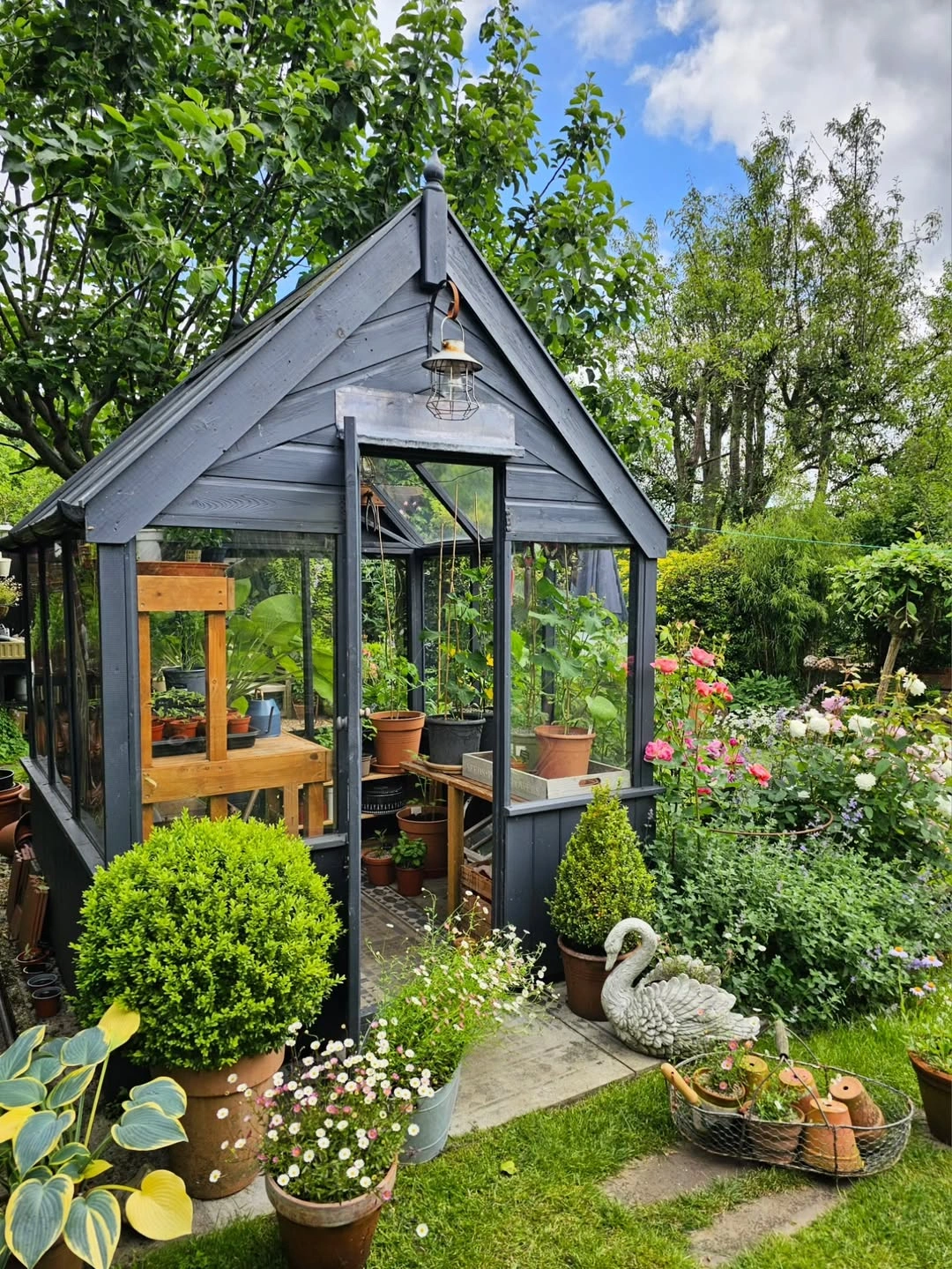
15 Greenhouse Interior Design Ideas for a Beautiful and Functional Space
I built a greenhouse in my backyard two years ago. Spent $800 on the structure and thought I was done. Then I realized it was just an empty glass box with nowhere to put anything.
My plants sat on the ground in random piles. Tools were scattered everywhere. I couldn’t find my watering can half the time and kept tripping over pots.
Then I actually designed the inside properly. Now my greenhouse looks amazing, and I can actually find stuff. It’s like a tiny garden paradise instead of a messy shed.
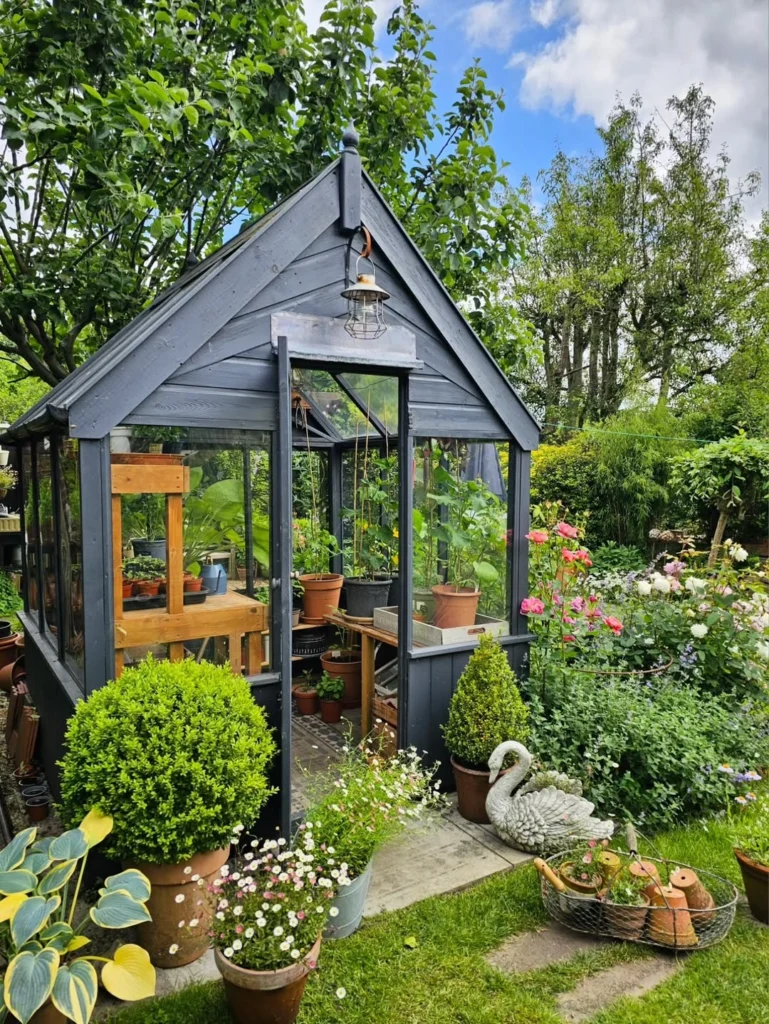
Let me show you what actually works for making a greenhouse that’s both pretty and useful.
Why I Almost Gave Up on My Greenhouse
The first summer was a disaster. I had plants everywhere with no real plan or organization. It looked like a tornado hit a garden center.
I couldn’t walk through without knocking something over. Watering took forever because I had to move plants around just to reach other plants. So frustrating.
My wife wouldn’t even go inside because she said it looked like a junk pile. That hurt, but she wasn’t wrong. It was embarrassing.
I almost tore the whole thing down. Then I watched some YouTube videos about greenhouse design and realized I needed actual furniture and a real layout. Changed everything.
1. Tiered Shelving (Game Changer for Me)
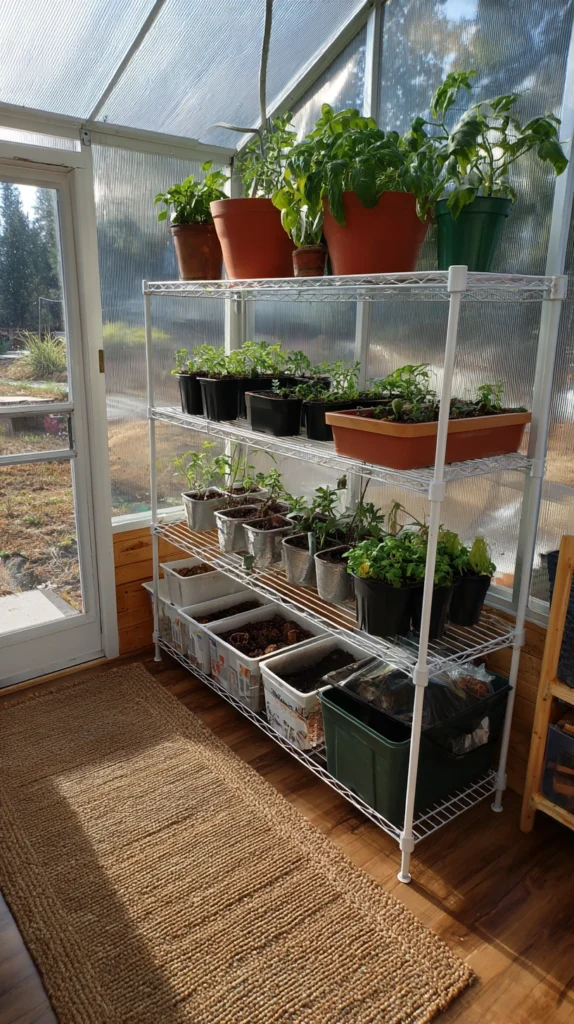
I installed metal shelving units along both side walls. Three shelves high on each side. This tripled my growing space immediately without making the greenhouse bigger.
Before shelving, I could fit maybe 30 plants total. After adding shelves, I can fit over 100 plants easily. Same greenhouse, way more space.
I used wire shelving instead of solid shelves. This lets water drain through, and air circulate better. Solid shelves would trap moisture and cause mold problems.
What worked for me:
- Wire shelving from Home Depot ($60 per unit)
- Three shelves high (18 inches between each shelf)
- Attached to the frame for stability
- Can hold about 35 plants per shelving unit
Make sure shelves are adjustable in height. My seedlings need different spacing than my full-grown tomatoes. Being able to move shelves up and down is super helpful.
2. A Real Work Bench (Not Just a Table)
I brought an old folding table into my greenhouse as a work surface. It wobbled and collapsed after two months. Potting soil everywhere and broken pots.
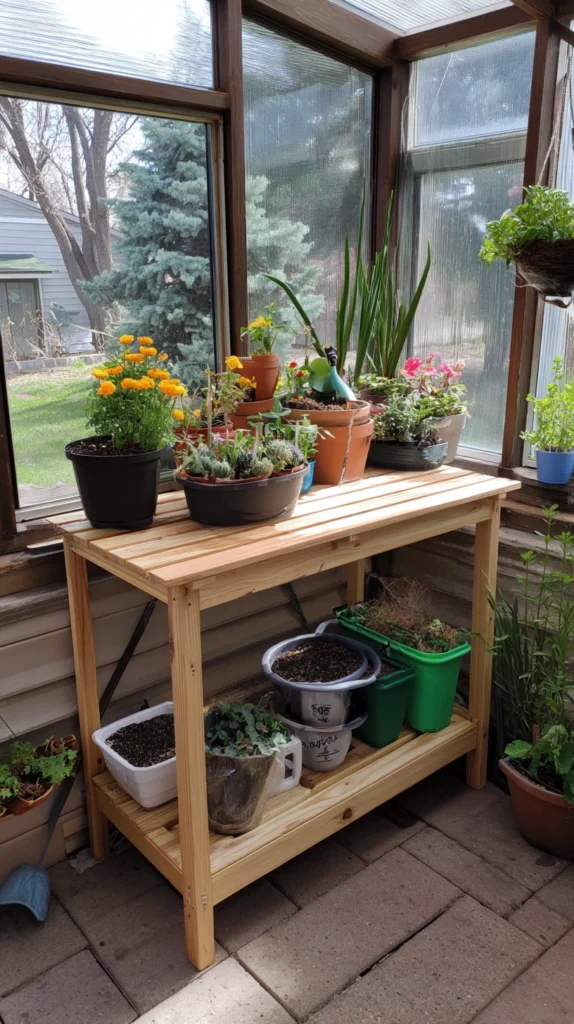
Now I have a proper sturdy workbench made from 2x4s. It’s rock solid and holds all my supplies underneath. Best $40 I spent on lumber.
The bench is 6 feet long and 2 feet deep. This gives me plenty of room for potting up plants, starting seeds, and mixing soil. No more working hunched over on the ground.
I mounted a pegboard on the wall above the bench. Now all my small tools hang there instead of getting lost. I can actually see what I have and grab what I need.
My work bench setup:
| Feature | Why It Matters |
| Height 36 inches | Don’t have to bend over |
| Solid wood top | Handles water and soil |
| Shelf underneath | Storage for pots and bags |
| Pegboard above | Tools always within reach |
Put your work bench near the door if possible. Makes it easier to haul bags of soil in and out without dragging them through the whole greenhouse.
3. Hanging Baskets From the Roof (Use Vertical Space)
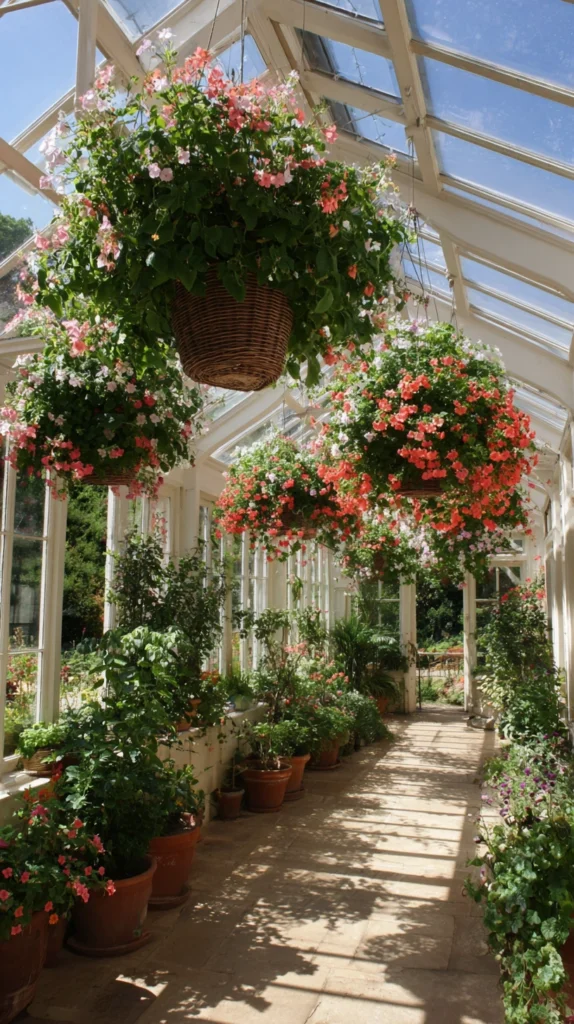
I had all this space above my head going to waste. The roof was just sitting there doing nothing while my floor was packed solid with plants.
I installed hooks in the roof frame and hung 8 wire baskets. Instantly added growing space for trailing plants like strawberries and ferns. No floor space used at all.
Hanging baskets get the most light since they’re closest to the glass roof. My strawberry plants in hanging baskets produce way more fruit than the ones on shelves below.
Water drips through hanging baskets onto plants below. This is actually helpful because lower plants get a little bonus watering. Just don’t hang them over seedlings that need drier conditions.
Hanging basket tips:
- Use hooks rated for at least 10 pounds each
- Screw into the frame structure, not just the panels
- Leave 2 feet between baskets for air flow
- Hang them where you won’t hit your head
I smacked my head on a hanging basket three times before I learned to duck. Hang them high enough or put them on the sides where you don’t walk.
4. Gravel Floor Instead of Dirt (Way Less Messy)
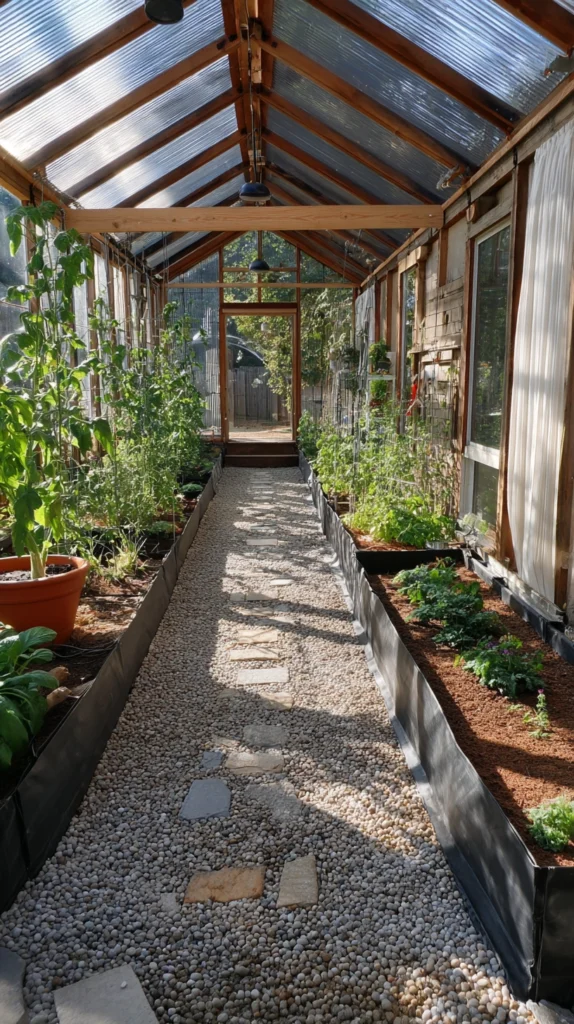
My greenhouse originally had a dirt floor. Every time I watered, it turned into mud. My shoes were always filthy and I tracked mud into my house constantly.
I laid down landscape fabric and covered it with 3 inches of pea gravel. Cost about $80 for gravel. Changed my whole life in that greenhouse.
Now water drains right through instead of making puddles. My feet stay dry and clean. Plus, the gravel helps with humidity because water evaporates up from below.
The white gravel reflects light onto the bottom of my plants. They grow more evenly instead of being all leggy, reaching for light from above. Unexpected bonus benefit.
Floor options I considered:
| Floor Type | Cost | Pros | Cons |
| Dirt | Free | Natural drainage | Muddy mess |
| Gravel | $80 | Clean, drains well | Can’t sweep easily |
| Pavers | $200 | Very clean | Expensive, tricky drainage |
| Wood pallets | Free | Easy to find | Rot in moisture |
Some people do concrete, but that’s like $500+ for a small greenhouse. Gravel works great for way less money. Plus, you can change your layout more easily later.
5. Paint the Back Wall White (More Light for Plants)
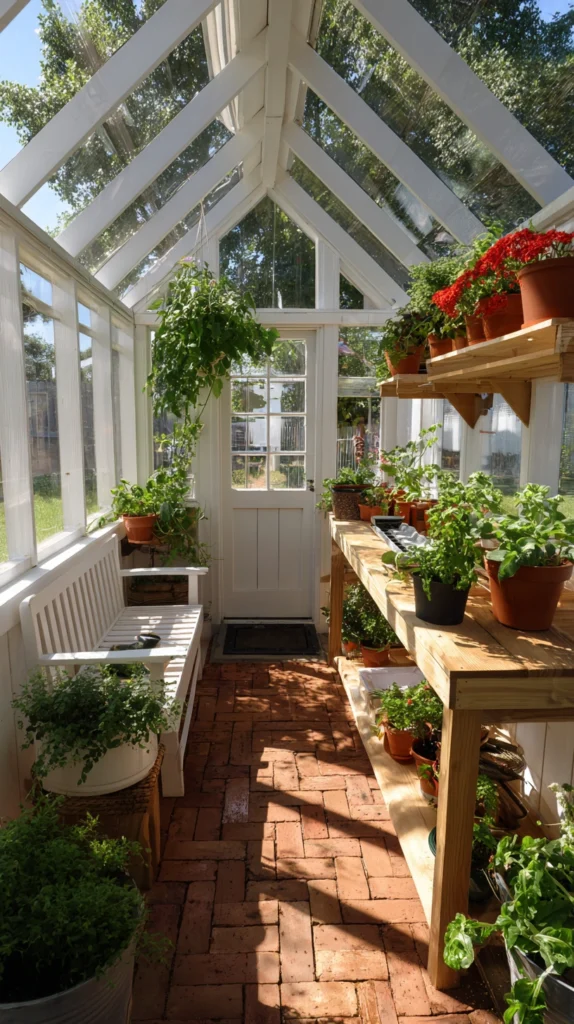
The back wall of my greenhouse faces north and gets no direct sun. It was just dark green metal that absorbed all the light. Plants near that wall grew really slowly.
I painted the whole back wall bright white with exterior paint. Now it reflects light onto my plants instead of absorbing it. Such a simple fix.
The difference is huge. Plants on the north side grow almost as well as plants on the south side now. I can use my whole greenhouse instead of just the sunny side.
White paint also makes the whole space feel bigger and brighter inside. It looks cleaner and more professional somehow. My wife actually wants to hang out in there now.
I used regular exterior house paint. One gallon covered the whole wall with two coats. About $30 total. Took me one afternoon to paint.
6. A Rainwater Collection Barrel (Free Water Forever)
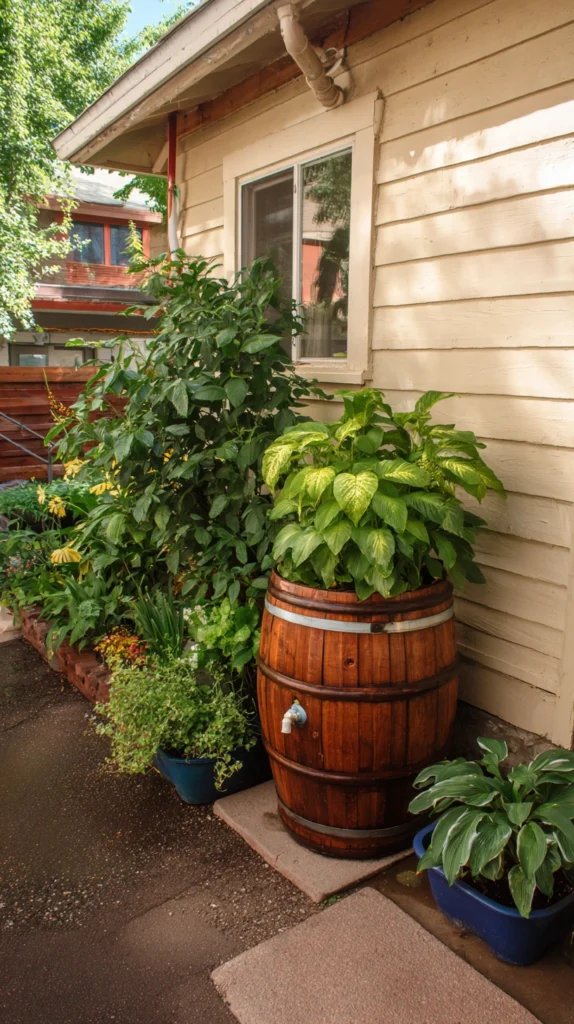
I was dragging a hose from my house to the greenhouse every single day. Then my water bill showed up, and I’d used 1,000 extra gallons that month. Yikes.
I installed a rain barrel at the downspout corner of my greenhouse. Now I collect free rainwater every time it rains. My plants actually prefer rainwater over tap water anyway.
The barrel holds 55 gallons, which lasts me about 2 weeks in summer. I fill watering cans directly from the spigot on the barrel. So much easier than dealing with hoses.
Rain barrel setup:
- 55-gallon food-grade barrel ($40 on Facebook Marketplace)
- Spigot near the bottom for easy filling ($8 at hardware store)
- Screen on top to keep mosquitoes out (old window screen)
- Sitting on cinder blocks for better water pressure
In winter, I disconnect it and store it empty. Frozen water would crack the barrel. I learned this the hard way with my first barrel that split down the side.
7. String Lights for Evening Ambience (Not Just for Plants)
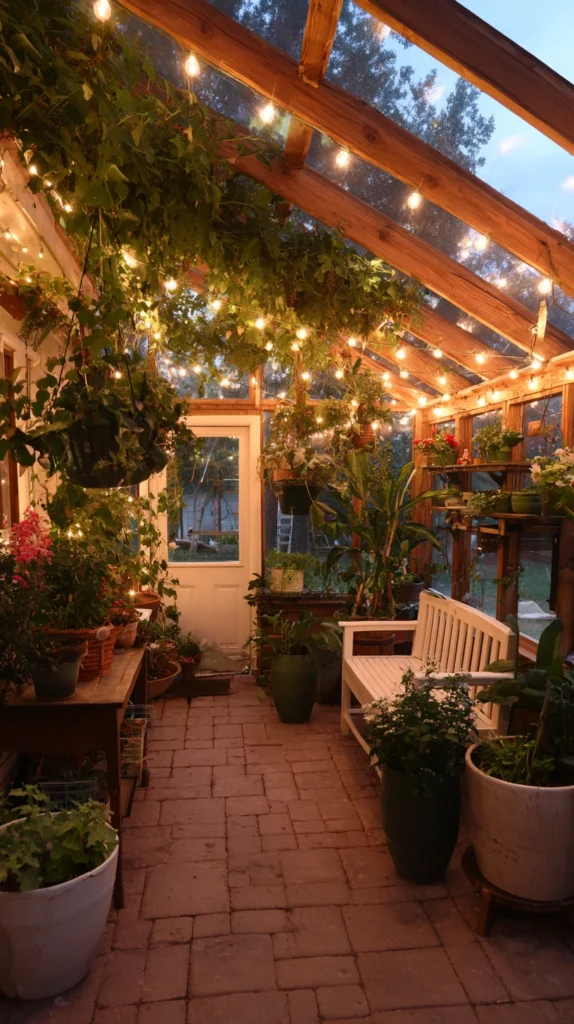
I added two strings of warm white LED lights across the ceiling. Not grow lights, just regular pretty string lights. They make the space feel magical at night.
Now I actually want to be in my greenhouse after dark. I’ll go out there with a cup of tea and just sit among my plants. Super relaxing and peaceful.
The lights don’t add much for plant growth, but they make the space actually usable in the evening. I can water, check plants, and putter around after the sun goes down.
My kids love it too. They call it the “fairy garden house” and ask to have snacks in there. Way better than them just playing video games inside the real house.
Lighting I use:
- Two 25-foot LED string lights ($15 each)
- Outdoor rated (moisture resistant)
- Warm white, not bright white (softer look)
- Plugged into a timer so they auto-turn on at dusk
Regular incandescent lights would get too hot and waste electricity. LED strings stay cool and use barely any power. They’ve been running for 8 months with no problems.
8. A Small Seating Area (Yes, Really)
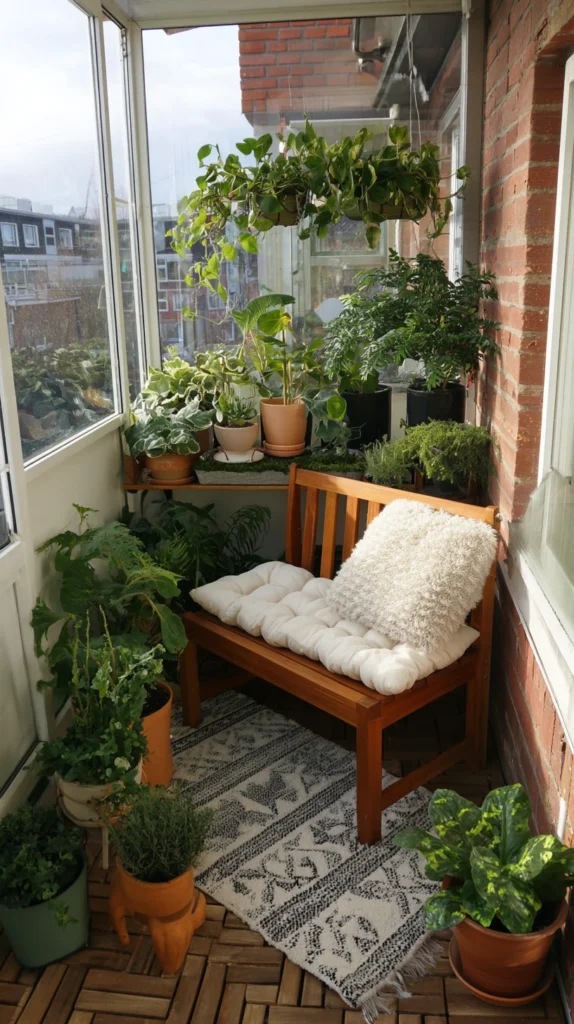
I put a little bench in the corner of my greenhouse. My wife thought I was crazy wasting growing space on furniture. Now she sits there every weekend with her coffee.
Having a place to sit completely changed how I use the space. It’s not just for plants anymore. It’s a retreat where I actually relax instead of always working.
I face the bench toward my prettiest plants and hanging baskets. It’s like having a tiny private garden room. Peaceful and quiet and green everywhere you look.
The bench is just a simple wooden one from Target that was on clearance for $25. Nothing fancy. I put a waterproof cushion on it so it’s actually comfortable.
9. Vertical Trellises for Climbing Plants (Save Floor Space)
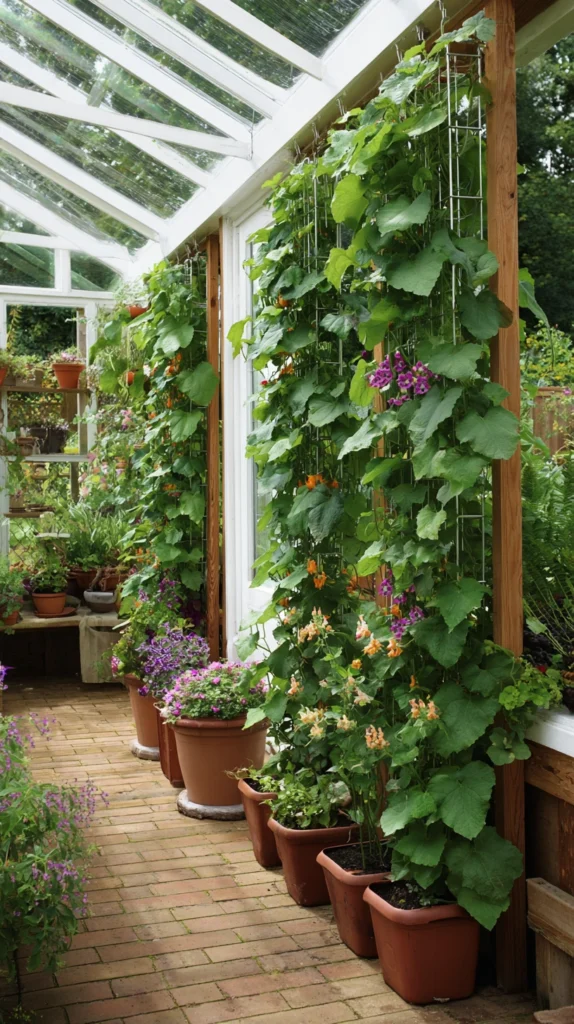
I grow cucumbers, beans, and tomatoes in my greenhouse. They all climb and take up tons of space if left on the ground. Space I don’t have.
I installed three 6-foot-tall trellises made from cattle panel fencing. Cost $20 per panel at the farm store. Now my vining plants grow up instead of sprawling everywhere.
One trellis holds 4 cucumber plants that would normally need 16 square feet of floor space. Growing vertically, they only use 4 square feet. That’s 12 extra square feet I got back!
Plus, it’s easier to harvest when everything hangs at eye level. No more crawling around on the ground searching for hidden cucumbers. They’re all right in front of my face.
Trellis options:
| Type | Cost | Best For | How Sturdy |
| Cattle panel | $20 | Heavy plants | Very strong |
| Bamboo stakes | $10 | Light vines | Okay for beans |
| String trellis | $5 | Peas, light beans | Works but floppy |
| Tomato cages | $5 each | Tomatoes only | Good enough |
Attach trellises to your greenhouse frame if possible. Free-standing ones tip over when plants get heavy with fruit. I learned this when my cucumber trellis crashed down at 2am and scared me half to death.
10. Rolling Plant Carts (Move Heavy Pots Easily)
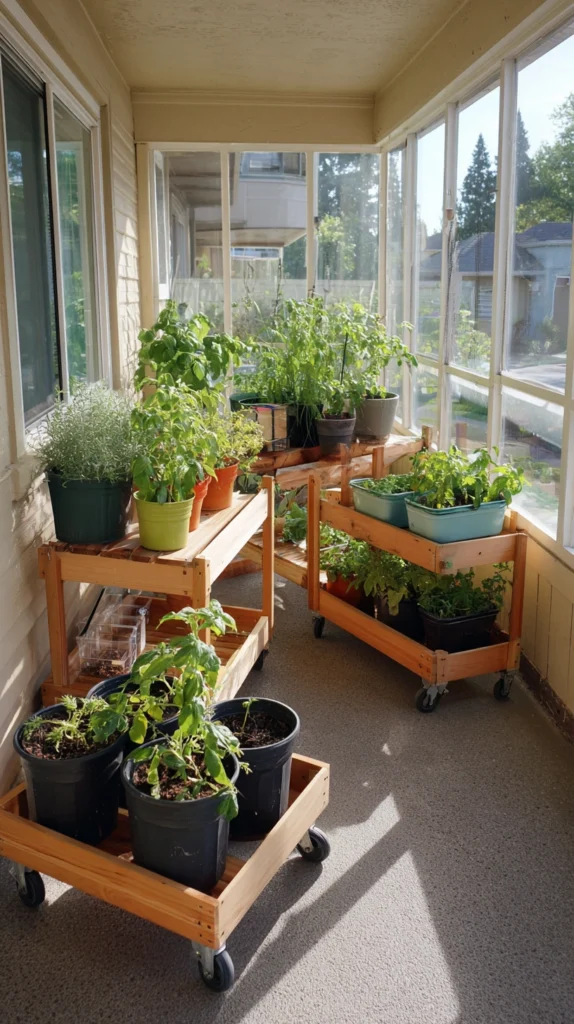
I have some really big pots with fruit trees and large tropical plants. They weigh like 50+ pounds each when the soil is wet. Impossible to move around.
I put the heavy pots on plant caddies with wheels. Now I can roll them anywhere easily. I move them around to follow the sun or make room when I’m working.
This also lets me roll them outside on super nice days for some natural rain and wind. Then roll them back in at night. Way easier than lifting and carrying.
Plant caddies cost $8-12 each, depending on size. I bought 6 of them and use them under all my biggest pots. Saved my back from so much strain and injury.
11. Label Everything (Or You’ll Forget)
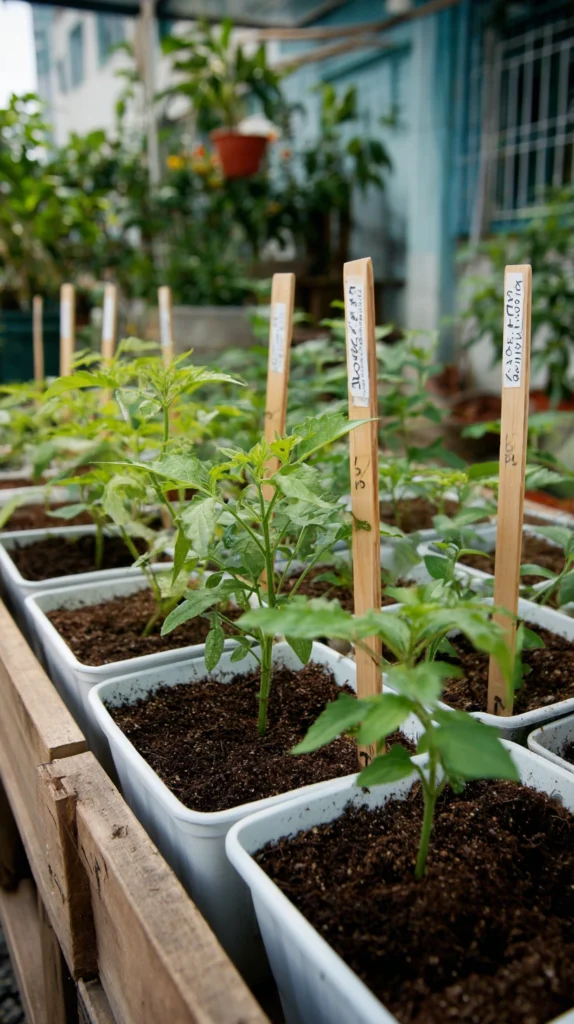
I planted 15 different tomato varieties last year. I was sure I’d remember which was which. I did not remember which was which by harvest time.
Now I label every single plant with its name and planting date. I use white plastic plant markers and a permanent marker. Takes 30 seconds and saves so much confusion.
I also keep a notebook in the greenhouse on my workbench. I write down when I planted things, when they sprouted, problems I noticed, and harvest dates. Super helpful for next year.
What I track:
- Plant name and variety
- Date planted or transplanted
- Date of first flowers
- Date of first harvest
- Any problems or notes
This system helped me figure out which tomato variety actually produces best in my greenhouse. Turns out it’s not the fancy expensive seeds but the cheap ones from Walmart.
12. Shade Cloth for Hot Summer Days (Don’t Cook Your Plants)
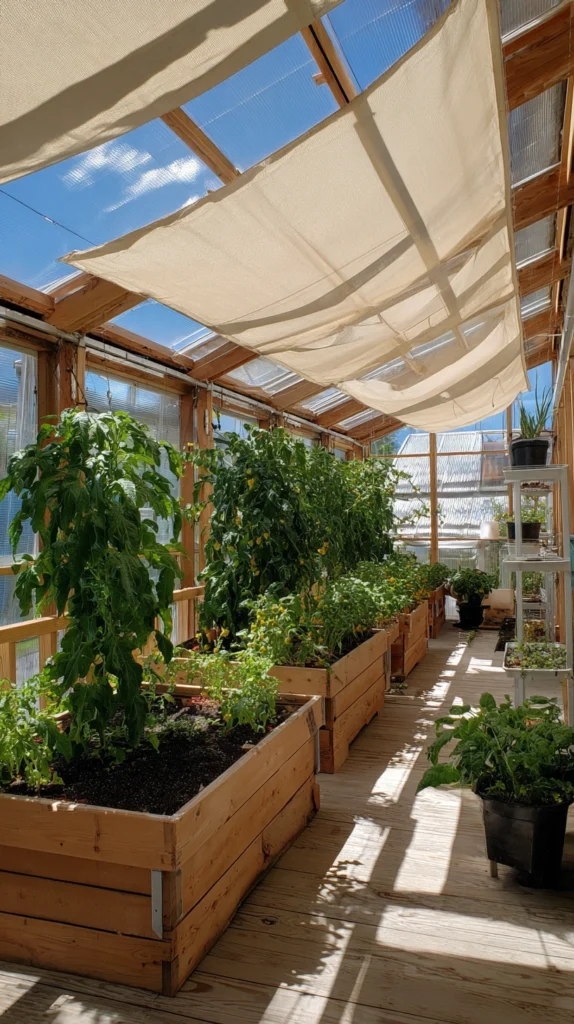
My first summer, the greenhouse hit 115°F inside on hot days. I lost so many plants to heat stress. They literally cooked even with vents open.
I installed shade cloth that rolls down from the ceiling when it gets too hot. It blocks 50% of the sun and drops the temperature by 15-20 degrees. Saved my summer crops.
The shade cloth is attached to the roof frame with clips. I can roll it up and tie it when I want full sun. Roll it down when the temperature gets above 85°F outside.
You can buy shade cloth at any garden center. I got a 10×12-foot piece for $25. Cut it to size and attach it with binder clips. Super simple installation.
Temperature management:
| Outside Temp | What I Do | Inside Temp Result |
| Below 75°F | Shade up, vents closed | Perfect 70-75°F |
| 75-85°F | Shade up, vents open | Okay at 80-85°F |
| Above 85°F | Shade down, vents open | Tolerable at 85-90°F |
| Above 95°F | Shade down, door open, fan on | Barely okay at 95°F |
I also run a small fan when it gets really hot. The moving air helps plants handle heat better. The fan was $20 from Walmart and plugs into a regular outlet.
13. A Potting Soil Storage System (Keep It Dry and Handy)
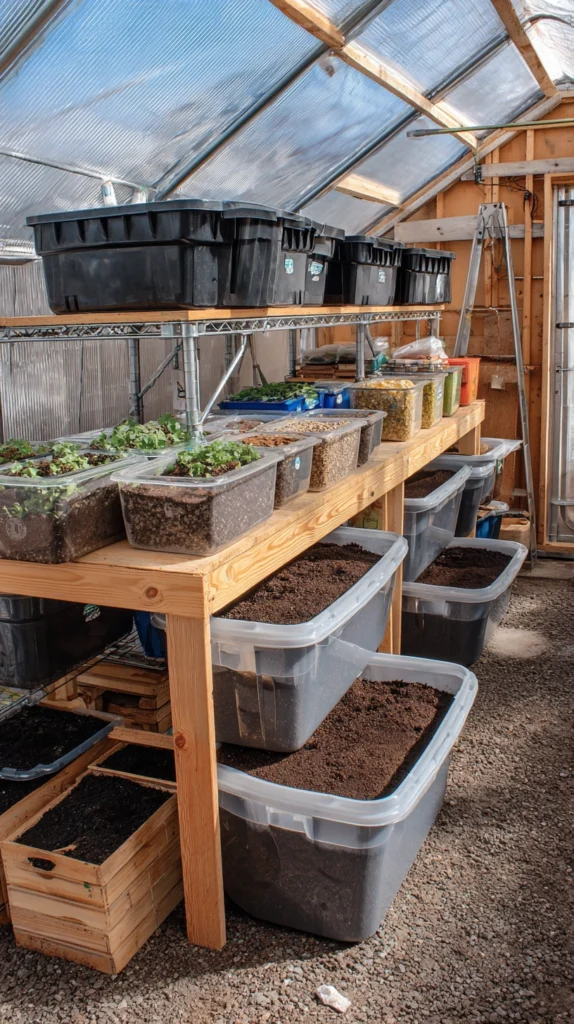
I used to keep bags of potting soil stacked in the corner. They got wet from humidity and condensation. The soil got moldy and clumpy, and gross.
Now I store my potting soil in a big plastic bin with a lid. Keeps it dry, and I can scoop it out easily when potting plants. Way more convenient.
I also have smaller bins for perlite, vermiculite, and compost. Each one is labeled clearly. When I need to mix soil, everything is right there, organized and ready.
The bins stack on top of each other under my workbench. Uses vertical space and keeps the floor clear for walking. Plus, they look neat instead of messy bags everywhere.
14. Hooks and Hangers Everywhere (Organize Your Tools)
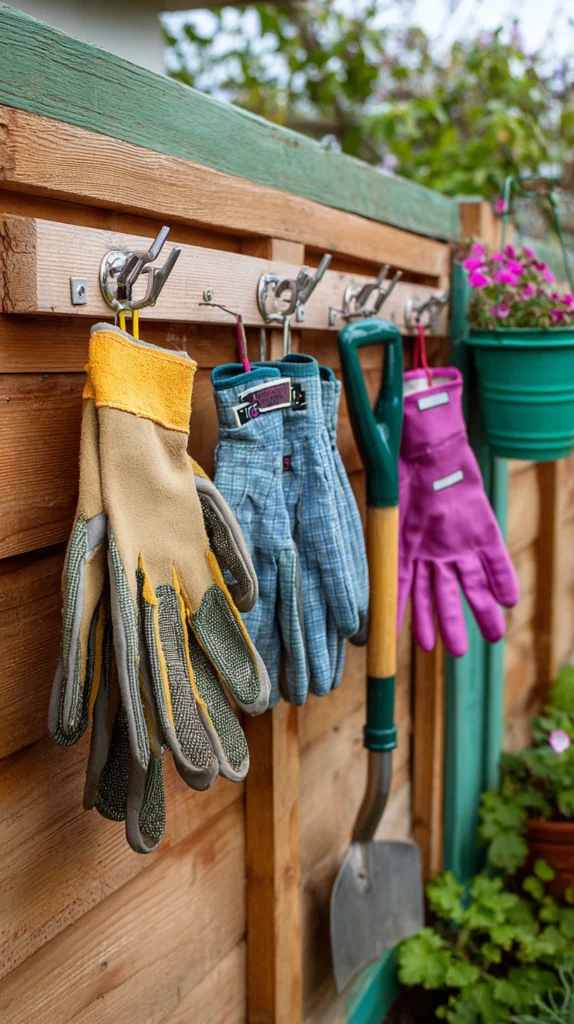
I was constantly losing my pruning shears, trowel, and watering wand. I’d set them down somewhere and then couldn’t find them when I needed them next.
I installed 15 small hooks along the walls and on posts. Now every tool has a home and goes back there after use. I can see at a glance exactly what I have.
I also hung a small basket for my gloves, twist ties, and plant labels. All the little stuff that used to get lost now stays in one spot. So much less frustration.
What I hung up:
- Pruning shears on a hook by the door
- Trowel and cultivator on pegboard
- Watering wand on a long hook near the rain barrel
- Spray bottles on a shelf near the workbench
- Gloves and small supplies in a hanging basket
This probably saved me 10 hours in the first month alone. No more searching for stuff. Grab what you need, use it, hang it back up. Simple system that actually works.
15. A Thermometer and Humidity Gauge (Know What’s Happening)
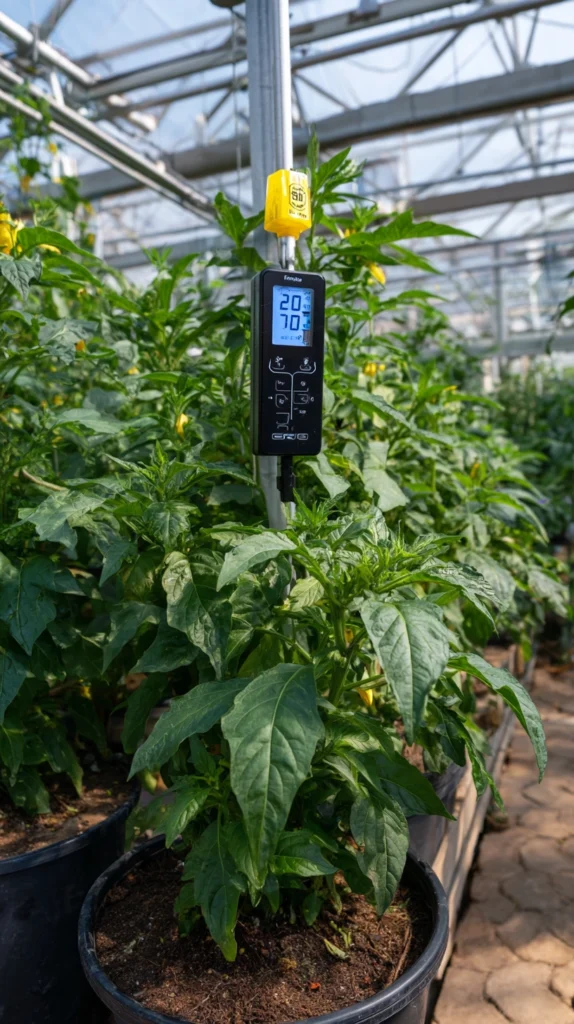
I had no idea how hot or humid my greenhouse actually was. I was just guessing based on how I felt when I walked in. Turns out I’m terrible at guessing.
I bought a combo thermometer and humidity gauge for $12 on Amazon. Now I know exactly what’s happening and can adjust vents, shade, and watering accordingly. Game changer.
Turns out my greenhouse was way more humid than the plants wanted. I added more ventilation, and the humidity dropped. My tomatoes stopped getting fungal diseases immediately. Wish I’d known sooner.
I mounted it on the wall at plant level, not near the roof. Temperature at plant height is what actually matters. Roof temperature is always way hotter and not useful.
What the gauge taught me:
| Problem I Had | What Gauge Showed | How I Fixed It |
| Plants wilting | 105°F at 2pm | Added shade cloth |
| Powdery mildew | 85% humidity | Opened more vents |
| Seedlings dying | 50°F at night | 105°F at 2 pm |
| Uneven growth | 20°F difference across space | Added a fan for circulation |
Now I check the gauge every morning and know if I need to adjust things. Takes 5 seconds and prevents so many problems before they start.
Mistakes I Made That You Shouldn’t
I bought cheap plastic shelving that collapsed. It couldn’t handle the weight of wet pots. Spent $120 on shelving that broke, and had to buy metal ones anyway. Should’ve bought metal from the start.
I didn’t leave enough walking space. I packed plants so tightly that I could barely squeeze through. Ended up knocking pots over constantly. Now I keep a 2-foot-wide path down the middle always clear.
I forgot about winter entirely. Didn’t insulate or add heat. Lost everything when it hit 25°F one night. Now I have bubble wrap insulation and a small space heater for cold nights.
I put my workbench in the sunniest spot. That’s prime growing space! I moved the bench to a shadier corner and put plants in the best light. Way smarter use of space.
What Makes a Greenhouse Actually Functional
It’s not about looking pretty, though that’s a nice bonus. A functional greenhouse is organized so you can actually find stuff and move around comfortably. Everything has a place.
You need different zones for different activities. Potting area, growing area, storage area. When these are clearly separated, work flows smoothly instead of being chaotic and frustrating.
Good air circulation is critical. If air doesn’t move, you get mold and disease. I added vents, a fan, and made sure shelves weren’t blocking air flow. This fixed so many plant health problems.
Easy access to water is huge. If watering is a pain, you won’t do it enough. My rain barrel and accessible hose bib made watering actually easy instead of a dreaded chore.
How Much Did I Spend on Interior Design?
Here’s every penny I spent making my greenhouse actually usable and nice:
Shelving: $180 (three metal units) Work bench lumber: $40 Pegboard and hooks: $25 Gravel for floor: $80 Paint for wall: $30 Rain barrel: $40 String lights: $30 Plant caddies: $72 (six at $12 each) Storage bins: $40 Shade cloth: $25 Tools and hooks: $35 Thermometer/humidity gauge: $12
Total: $609
That seems like a lot, but remember I use this greenhouse every single day. It’s my favorite place on my whole property. Worth every penny to make it actually work right.
You could do it cheaper by skipping some stuff or finding things used. I got my workbench lumber free from a neighbor’s old deckthat they tore down. Rain barrels are often free on Craigslist.
What I’d Change If Starting Over
I’d build or buy a bigger greenhouse from the start. I thought 8×10 feet was plenty. It’s not. I’m already out of space again and want to expand.
I’d run electricity to it properly instead of using extension cords from my house. Having real outlets would let me run a fan, heater, and lights without tripping breakers constantly.
I’d spend more on really good shelving right away. The cheap stuff I bought first was a waste of money. Buy quality once instead of cheap twice.
But honestly, I’m really happy with how it turned out. It went from an embarrassing mess to a space I’m actually proud of. Friends ask for tours when they visit now.
The Biggest Benefit I Didn’t Expect
I thought a greenhouse was just for growing plants. That was the whole point, right? Turns out it became my favorite place to relax and think.
I go in there when I’m stressed or need a break from screens. Just being surrounded by green growing things makes me feel better. It’s like therapy but cheaper.
My kids love playing in there too. They help water plants and check for ripe tomatoes. It’s teaching them about growing food and being responsible for living things. Didn’t expect that bonus.
It’s become the heart of my yard and my gardening hobby. Everything starts there – seeds, cuttings, projects. Then moves out to the main garden. The greenhouse is where all the magic begins.
Ready to Design Your Greenhouse Interior?
You don’t need to spend thousands or hire a designer. Start with the basics: good shelving, a work surface, and a decent floor. Everything else is a bonus.
Add things as you figure out what you actually need. I didn’t know I needed a rain barrel until I got tired of dragging hoses. Learn as you go.
The goal is to make a space that works for YOU and how you garden. Not copying someone else’s perfect Instagram greenhouse. Make it functional first, pretty second.
My greenhouse went from a frustrating mess to my favorite place in two months of gradual improvements. Yours can too. Just start with one project at a time.
Now go make your greenhouse actually usable instead of just a glass box full of random plants!
Quick Summary:
- Add tiered shelving for 3x more growing space
- Install a sturdy workbench with storage underneath
- Use vertical space with hanging baskets and trellises
- Put down gravel for a clean, draining floor
- Paint walls white to reflect more light
- Add a rain barrel for free water
- Include shade cloth for hot summer days
- Organize with hooks, bins, and labels
- Leave 2-foot walking paths always clear
- Add seating to actually enjoy the space
- Track temperature and humidity with a gauge
- Start with the basics, add features as you learn what you need