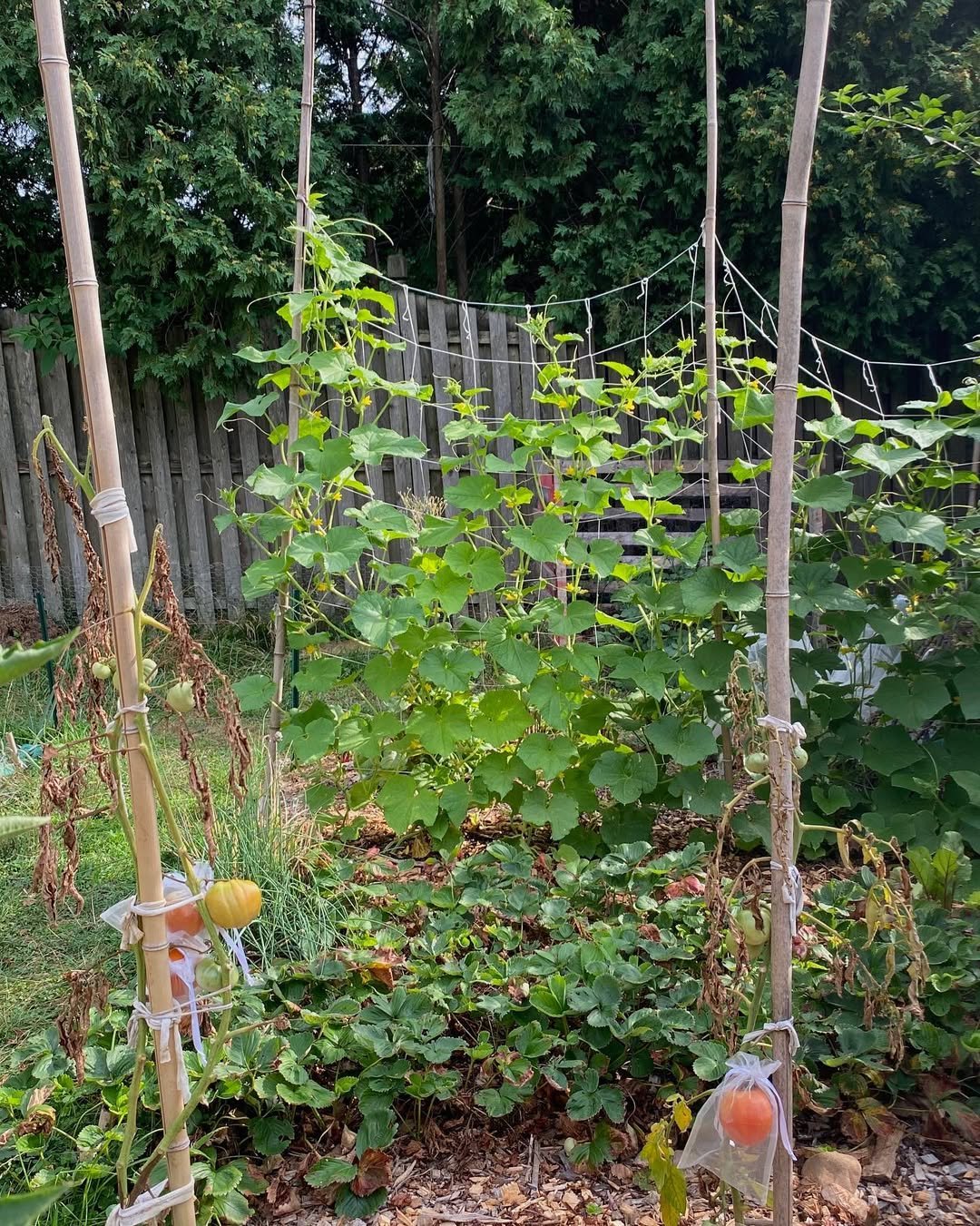
How to Build a Cucumber Trellis and Why You’ll Love Having One
I grew cucumbers on the ground for three years. They sprawled everywhere, took up half my garden, and I’d find rotten cucumbers hidden under leaves weeks after they ripened.
My harvest: Maybe 10 cucumbers from 4 plants because half rotted before I found them.
Then I built a simple trellis for $15. Same number of plants, vertical growing, 60+ perfect cucumbers that were easy to see and pick.
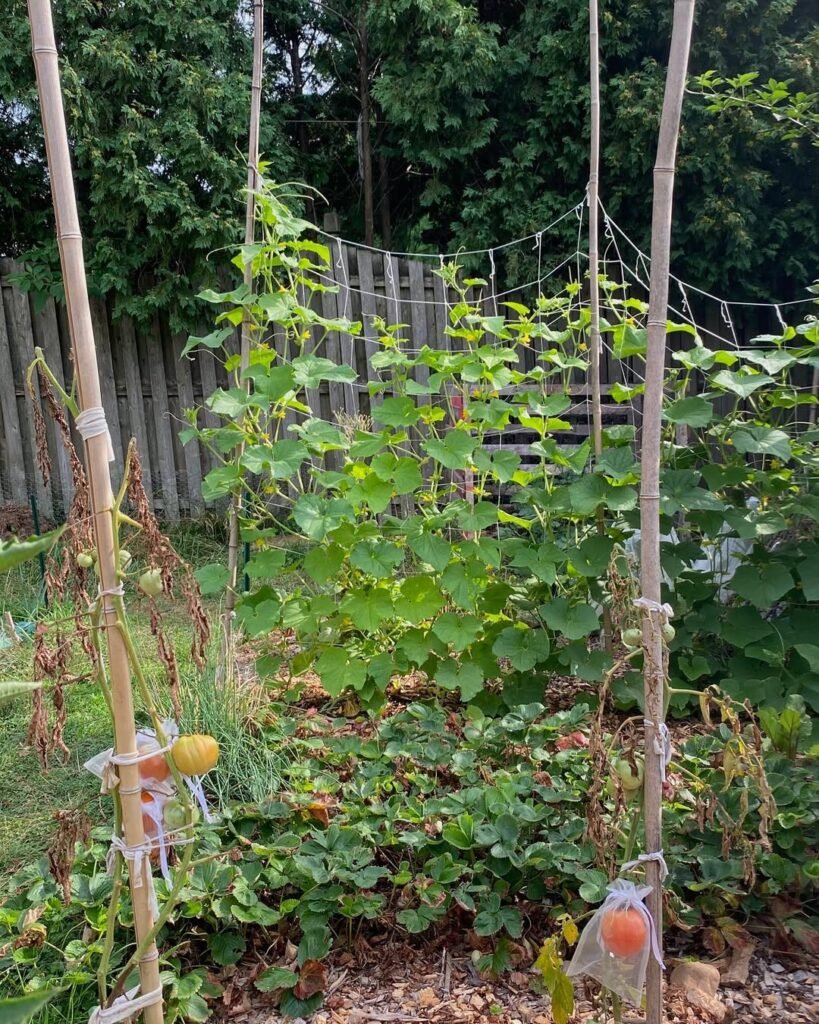
Let me show you why trellises are game-changers and how to build one this weekend.
Why Ground Cucumbers Are a Mess
My ground-growing disasters:
Problem 1: Space hogs
- Each plant spread 6-8 feet
- Took over entire 4×8 bed
- No room for anything else
Problem 2: Hidden fruit
- Cucumbers grew under leaves
- Found them yellow and bitter
- Wasted 50% of harvest
Problem 3: Disease
- Leaves touched wet soil
- Powdery mildew everywhere
- Plants died mid-season
Problem 4: Pests
- Slugs ate cucumbers on ground
- Couldn’t see aphids under vines
- Lost cucumbers to rot
Then I went vertical. All these problems disappeared.
What Changed With a Trellis
Same 4 plants, completely different results:
Space savings:
- Ground: 32 square feet (8×4 sprawl)
- Trellis: 8 square feet (8×1 footprint)
- Freed up 24 square feet for other crops
Harvest improvement:
- Ground: 10 cucumbers (many rotted)
- Trellis: 60+ cucumbers (all perfect)
- 6× better harvest
Plant health:
- Better air circulation
- No soil-borne diseases
- Leaves dried faster (less fungus)
- Plants lived 2 months longer
Harvesting ease:
- Saw every cucumber clearly
- Picked at perfect size
- No bending over
- No digging under leaves
The trellis paid for itself in saved space and increased harvest the first year.
The $15 Cattle Panel Trellis (What I Built)
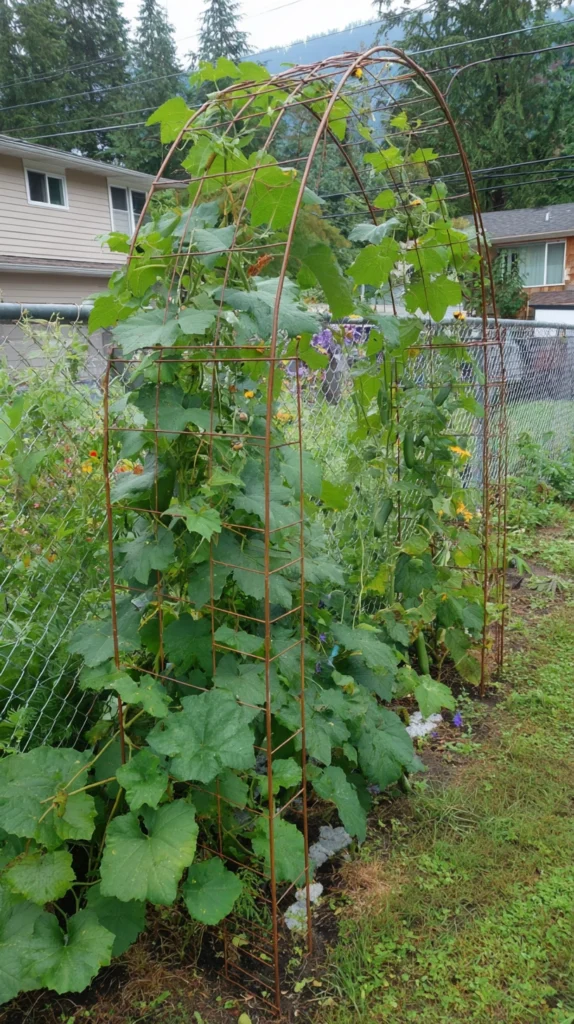
This is the simplest, cheapest, most effective trellis I’ve ever used.
Materials needed:
| Item | Cost | Where to Buy |
| Cattle panel (16×4 feet) | $25 | Farm supply store |
| Two T-posts (6 feet tall) | $8 each | Hardware store |
| Wire or zip ties | $3 | Hardware store |
| Total | $44 |
Wait, that’s not $15! You’re right. But one cattle panel makes THREE 4-foot trellises. Cut it into thirds.
Actual cost per trellis: $44 ÷ 3 = $14.67
Cutting Cattle Panel
The cattle panel is welded wire with 4×4 inch squares. Super strong, lasts forever.
How to cut it:
- Mark cutting line with chalk
- Use bolt cutters on vertical wires
- Takes 10 minutes
- Makes three 4×5-foot sections
I cut mine in the Tractor Supply parking lot before loading it in my car. Full panel doesn’t fit in most vehicles.
Assembly Steps
Took me 30 minutes total:
Step 1: Drive T-posts at ends of bed
- 8 feet apart
- 2 feet into ground
- Use post driver or sledgehammer
Step 2: Attach cattle panel to posts
- Wire or zip tie at multiple points
- Top, middle, and bottom
- Make sure it’s secure
Step 3: Curve panel slightly
- Creates arch shape
- Adds strength
- Looks better
Done. Plant cucumbers at base.
This trellis has survived:
- Three growing seasons
- Heavy cucumber weight
- Wind storms
- Winter weather
- Still going strong
The Budget String Trellis ($5 Version)
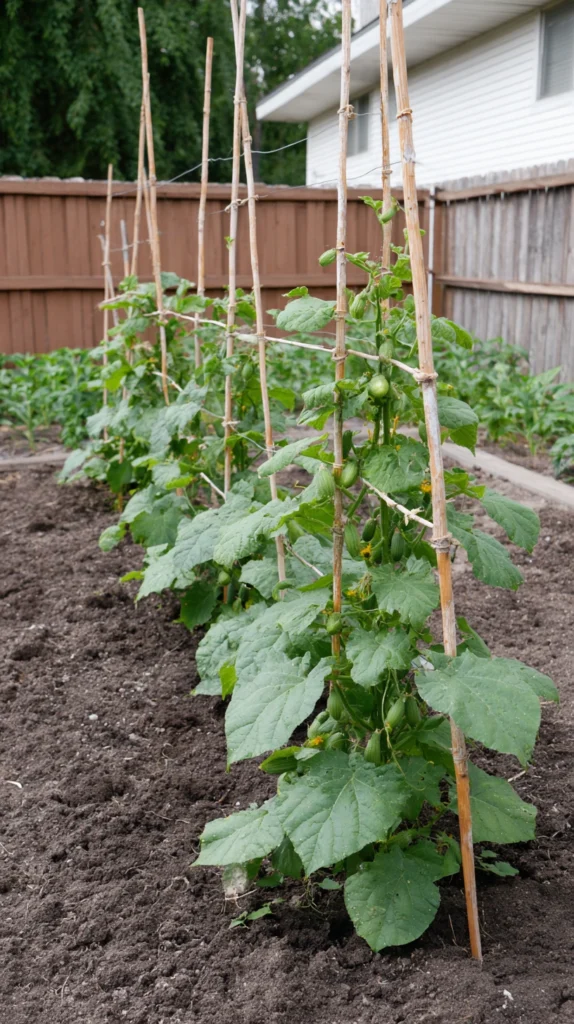
Even cheaper option if you’re not sure you’ll like trellising.
Materials:
- Two 6-foot stakes ($2)
- Ball of garden twine ($3)
- Total: $5
Construction:
Step 1: Drive stakes at ends of bed
- 6-8 feet apart
- 2 feet into ground
Step 2: Run horizontal strings
- String every 12 inches vertically
- Tie to stakes at ends
- Creates ladder effect
Step 3: Plant cucumbers at base
Pros:
- Super cheap
- Easy to build
- Works fine for light cucumbers
Cons:
- Not as sturdy as cattle panel
- Needs replacement each year
- Twine can break mid-season
I started with string trellis. It worked but wasn’t great. Upgraded to the cattle panel and never looked back.
A-Frame Trellis (Freestanding Design)
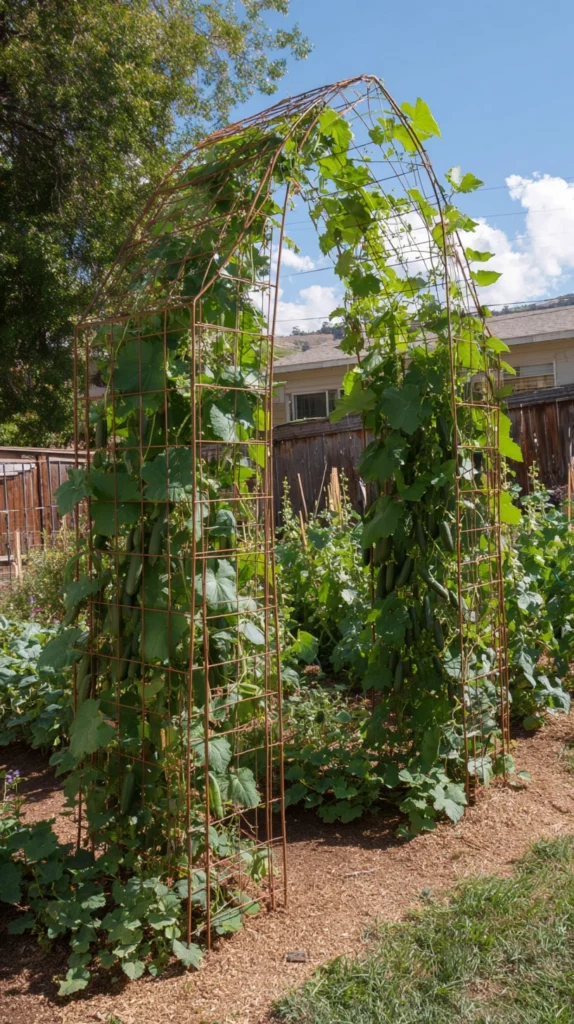
Don’t want to attach to bed? Build a freestanding A-frame.
Materials:
- Two cattle panels (4×4 feet each)
- Wire or zip ties
- Optional: wooden base frame
Assembly:
- Stand two panels vertically
- Lean tops together (A-frame shape)
- Wire together at top
- Spread bottoms 3-4 feet apart
- Plant on both sides
Benefits:
- Freestanding (move anywhere)
- Plant both sides (double production)
- Very stable
- Looks cool
My setup: I have one A-frame in the middle of my garden bed. Cucumbers on both sides, tomatoes growing underneath in partial shade.
Space used: 4×4 feet footprint Cucumbers grown: 8 plants (4 per side) Shade created: Perfect for lettuce underneath
Wooden Ladder Trellis (Looks Fancy)
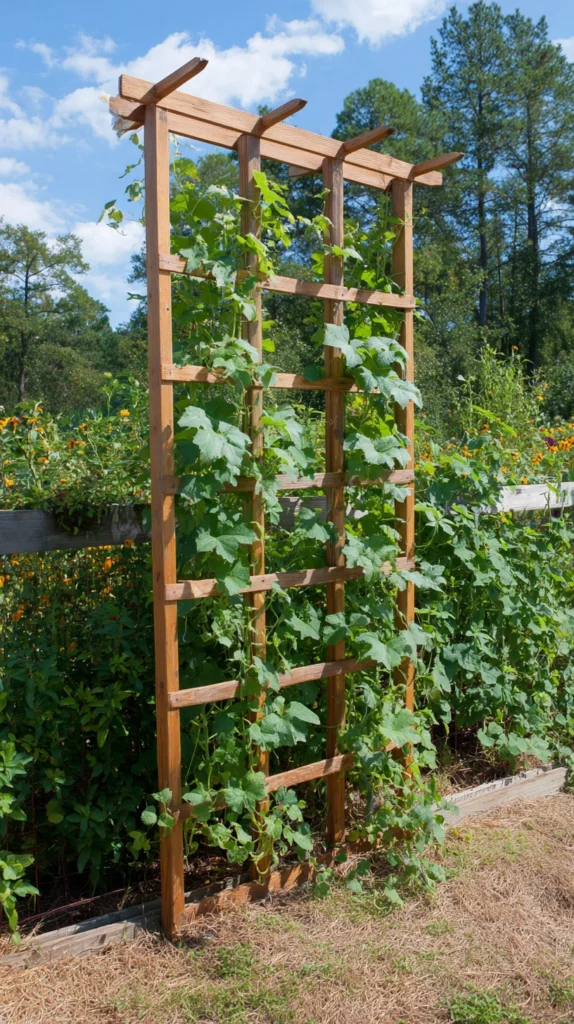
Prettiest option but more work to build.
Materials:
- Four 2×2 boards (8 feet long): $16
- Horizontal slats (1×2 boards): $8
- Screws: $5
- Total: $29
Construction:
- Create two vertical sides (8 feet tall)
- Attach horizontal rungs every 12 inches
- Forms ladder shape
- Paint or stain for looks
Why I didn’t build this:
- More expensive than cattle panel
- Takes longer to build
- Doesn’t work better (just prettier)
- Wood rots eventually
Who should build this:
- Front yard gardens (appearance matters)
- People who like woodworking
- Those with extra budget
For pure function, the cattle panel wins. For looks, wooden ladders are prettier.
Teepee Trellis (Kids Love This)
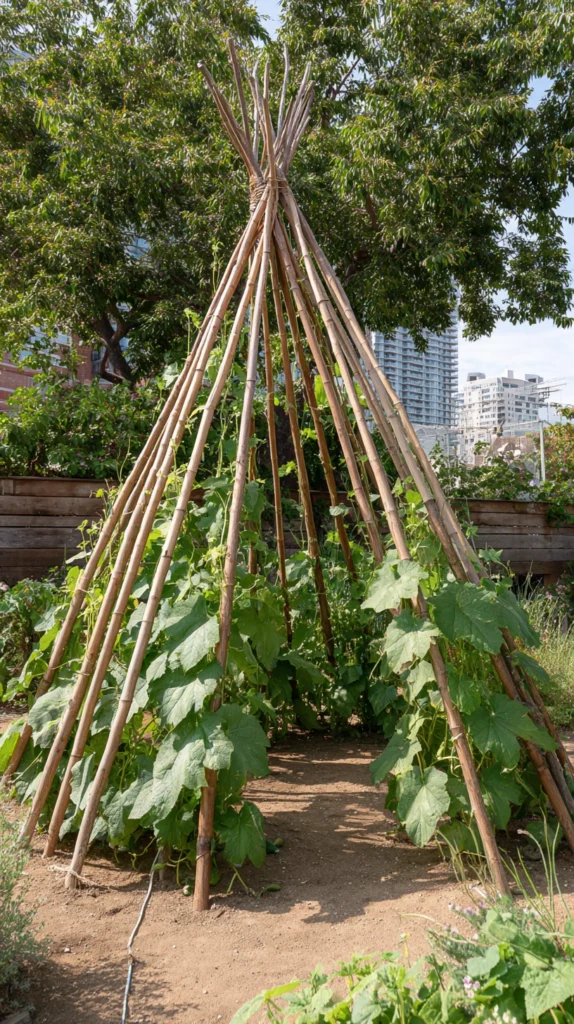
Three or more poles forming cone shapes. Creates hideout space inside.
Materials:
- 4-6 bamboo poles (8 feet long): $12
- Twine to tie top: $3
- Total: $15
Setup:
- Push poles into ground in circle
- Lean tops together
- Tie tops securely with twine
- Plant cucumbers at each pole base
What makes it special:
- Kids play inside
- 360-degree growing space
- Moveable
- Natural shade spot
My daughter’s favorite. She has a “cucumber hideout” and helps pick cucumbers from inside.
Production: About the same as straight trellis but way more fun for kids.
Against-the-Fence Trellis (Use Existing Structure)
I attached trellis netting to my existing fence. It costs almost nothing.
Materials:
- Trellis netting (6×8 feet): $8
- Zip ties or staples: $2
- Total: $10
Installation:
- Stretch netting against fence
- Attach at top, bottom, sides
- Plant cucumbers at base
- They climb the netting
Advantages:
- Uses existing structure
- Cheapest option
- No posts needed
Disadvantages:
- Fence becomes permanently garden-y
- Can’t move trellis
- Netting needs yearly replacement
Works great if you have a sunny fence you’re willing to dedicate to cucumbers.
Cattle Panel Arch Trellis (Over Walkway)
Curved arch over garden path. Beautiful and functional.
Materials:
- One cattle panel (16×4 feet): $25
- Two T-posts or rebar: $16
- Wire: $3
- Total: $44
Construction:
- Drive posts on opposite sides of path
- Bend cattle panel into arch
- Attach to posts
- Creates tunnel over path
Benefits:
- Shades walkway
- Plant both sides (double cucumbers)
- Creates focal point
- Kids love walking under
My friend built this. It’s stunning in her garden and produces tons of cucumbers from both sides.
Path width needed: 3-4 feet minimum for comfortable walking.
How to Train Cucumbers Up Trellis
Cucumbers don’t automatically know how to climb. You have to help them initially.
Week 1-2: Getting Started
When plants are 6-8 inches tall:
- Gently guide main stem toward trellis
- Weave through bottom openings
- Don’t force or break stems
Cucumbers have tendrils that grab and hold. Once they touch trellis, they figure it out.
Week 3-4: Active Climbing
Check every 2-3 days:
- Guide wayward vines toward trellis
- Tuck wandering shoots into openings
- Remove side shoots near ground (optional)
They climb fast. Once started, cucumbers grow several inches per day during peak season.
Week 5+: Maintenance
Minimal work needed:
- Cucumbers climb on their own
- Just check occasionally
- Harvest regularly
My time investment: 5 minutes per week guiding vines. That’s it.
Spacing Plants on Trellis
Don’t be overcrowded. This ruins the whole point of vertical growth.
Proper spacing on 8-foot trellis:
- 4 plants maximum
- Spaced 24 inches apart
- Room for air circulation
What I planted once (too many):
- 8 plants on 8-foot trellis
- Complete tangled jungle
- Couldn’t see or reach cucumbers
- Disease spread quickly
- Total disaster
Now I plant 4 plants per 8-foot trellis. Much better results.
Variety Matters
Bush cucumbers: Don’t use these. They’re bred for ground growing, and won’t climb well.
Vining cucumbers: Perfect for trellises. These include:
- Slicing varieties (most are vining)
- Pickling types (check label)
- English cucumbers (all vining)
Look for these terms on seed packet:
- “Climbing”
- “Vining”
- “Indeterminate”
Avoid packets saying:
- “Bush”
- “Compact”
- “Container variety”
I accidentally bought bush cucumbers once. They grew 2 feet tall and stopped. Wasted a whole season.
Support for Heavy Fruit
Large cucumbers get heavy. Sometimes I need extra support.
When to add support:
- English cucumbers (12+ inches)
- Armenian cucumbers (very long)
- If vines breaking under weight
How I support them:
Method 1: Slings
- Cut old t-shirt into strips
- Tie under cucumber
- Attach to trellis above
- Supports weight
Method 2: Netting bags
- Old onion bags work perfect
- Slip over small cucumber
- Tie to trellis
- Grows inside bag
Method 3: Let them hang
- Most cucumbers fine unsupported
- Gravity makes them straight
- Only huge ones need help
I rarely need support. Regular slicing cucumbers hang fine on their own.
Watering Trellised Cucumbers
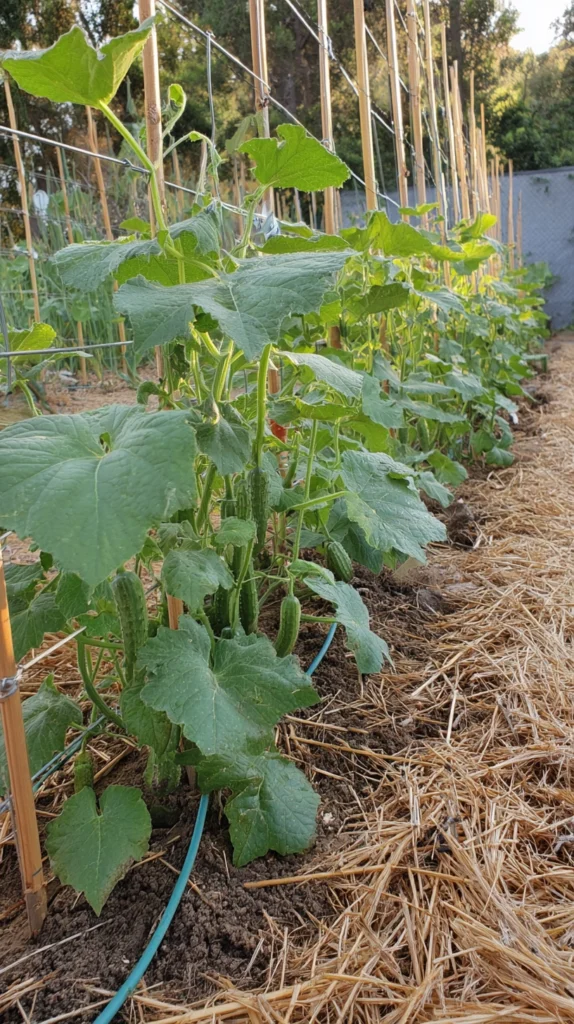
Vertical cucumbers need consistent water. They grow faster, produce more, and need more water.
Drip Irrigation Setup
What I use:
- Drip line along trellis base
- Timer controls watering
- Waters twice daily in summer
Cost:
- 25 feet drip line: $12
- Timer: $25
- Fittings: $8
- Total: $45
Worth every penny. Set it and forget it.
Hand Watering Schedule
No drip system? Water by hand:
Summer (hot weather):
- Daily, sometimes twice
- Soil should stay consistently moist
- Never let it completely dry
Spring/Fall (cooler):
- Every 2-3 days
- Check soil moisture
- Adjust based on rain
Mulch heavily around the base to retain moisture. I use straw 3 inches deep.
Signs of Water Stress
Underwatered cucumbers:
- Wilting in afternoon
- Bitter fruit
- Slow growth
- Leaves yellowing
Overwatered:
- Yellow leaves
- Stem rot at base
- Fungus growth
- Root rot
I check daily by sticking my finger in the soil. Damp = good. Dry or soggy = adjust watering.
Harvesting from Trellis (So Much Easier)
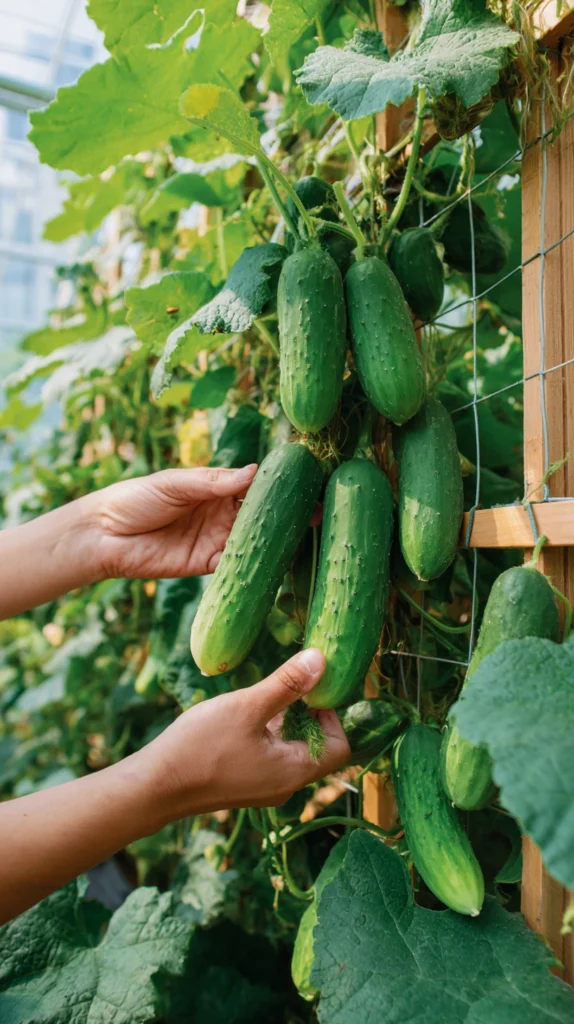
This is where trellising really shines.
Ground cucumbers:
- Bend over
- Lift leaves
- Search underneath
- Miss half of them
- Back hurts
Trellised cucumbers:
- Stand upright
- See every cucumber
- Pick at perfect size
- No bending
- Takes 2 minutes
I harvest every 2-3 days during peak season. Quick visual scan, snip off ripe ones, done.
Perfect Harvest Size
Slicing cucumbers: 6-8 inches Pickling cucumbers: 2-4 inches English cucumbers: 10-12 inches
Check size by:
- Length (measure if unsure)
- Diameter (should be consistent)
- Color (dark green usually ready)
If they turn yellow: Too late, over-ripe, will be bitter and seedy.
Harvest frequently. The more you pick, the more the plant produces. Leaving cucumbers on the vine signals the plant to stop producing.
Pest and Disease Benefits
Trellising reduces problems significantly.
Fewer Diseases
Ground growing:
- Leaves touch wet soil
- Powdery mildew everywhere
- Bacterial wilt common
- Plants die early
Trellised:
- Air circulates freely
- Leaves dry quickly
- Soil doesn’t splash on leaves
- Plants healthy all season
My ground cucumbers died from powdery mildew by mid-July. Trellised cucumbers produce until the first frost in October.
Easier Pest Control
Can see pests immediately:
- Aphids visible on stems
- Cucumber beetles easy to spot
- Check undersides of leaves easily
I hand-pick beetles right off the vines. On ground plants, I never saw them until damage was done.
Cleaner Fruit
No ground contact means:
- No dirt on cucumbers
- No slug damage
- No rot from sitting in mud
- Rinse and eat
Ground cucumbers needed serious scrubbing. Trellised ones just need a quick rinse.
Companion Planting Under Trellis
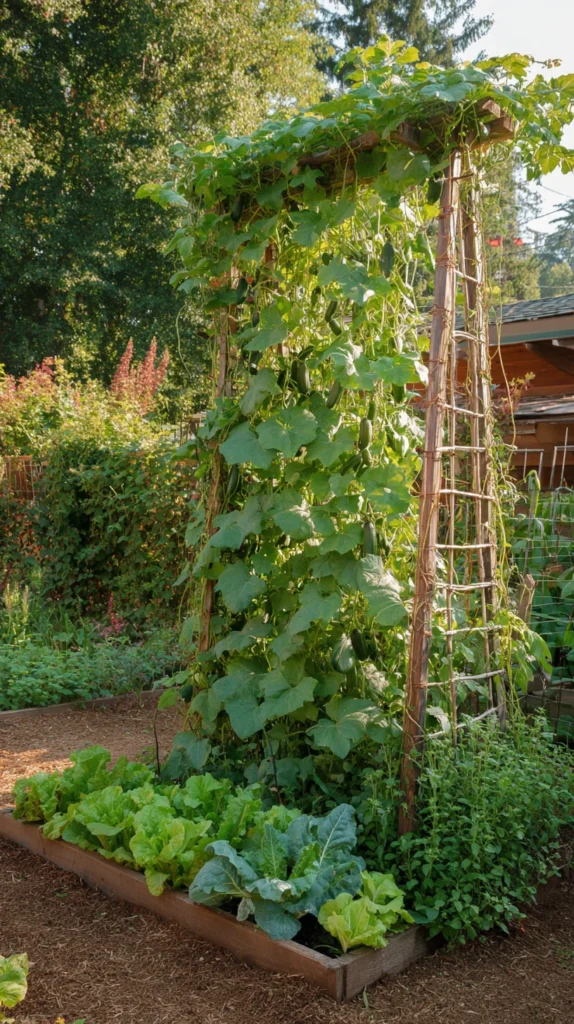
Trellis creates partial shade underneath. Use this space!
What I plant under cucumbers:
Lettuce:
- Loves partial shade
- Won’t bolt as fast
- Stays tender longer
Spinach:
- Hates full sun heat
- Thrives in cucumber shade
- Bonus crop from same space
Radishes:
- Quick growing
- Done before shade gets heavy
- Adds early harvest
Herbs:
- Parsley and cilantro love shade
- Basil okay if gets morning sun
- Chives and mint thrive
What doesn’t work:
- Tomatoes (need full sun)
- Peppers (same reason)
- Squash (too big, will compete)
I get two crops from the same footprint: cucumbers above, lettuce below. Efficient use of space.
Trellis Maintenance and Longevity
Different materials have different lifespans.
Cattle Panel Trellis
Lifespan: 10-20 years Maintenance: None Problems: Rust eventually (doesn’t affect function)
My 4-year-old cattle panel:
- Some surface rust
- Still structurally perfect
- Will last 10+ more years
String Trellis
Lifespan: One season Maintenance: Replace yearly Problems: Breaks under weight, rots
Needs complete rebuild every spring. Cheap but labor-intensive.
Wooden Trellis
Lifespan: 5-10 years depending on wood Maintenance: Stain/paint every 2-3 years Problems: Rots, warps, splinters
Treated lumber lasts longer but chemicals near food plants make some people uncomfortable.
Bamboo Teepee
Lifespan: 2-4 years Maintenance: Re-tie top yearly Problems: Bamboo dries out and cracks
Replace poles as they break. Cheap enough that this isn’t a big deal.
Best value: Cattle panel. Initial cost higher but lasts forever.
Making It Look Good
Trellises can be beautiful, not just functional.
What I did:
Painted T-posts:
- Rust-oleum black spray paint
- Looks more intentional
- Cost: $5
Added decorative elements:
- Solar lights on posts
- Looks nice at night
- Kids love the glow
Coordinated with garden:
- All trellises same style
- Creates cohesion
- Looks designed, not random
Planted flowers at base:
- Nasturtiums climb with cucumbers
- Marigolds at base
- Adds color
My front yard trellis looks decorative enough that neighbors think it’s landscaping, not veggie garden.
Common Trellis Mistakes
Mistake 1: Built Too Short
My first trellis was 4 feet tall. Cucumbers outgrew it in a month, vines flopped over the top.
Fix: Build minimum 6 feet tall, 8 feet better.
Mistake 2: Not Secured Properly
Wind blew over my lightweight trellis with cucumbers attached. Lost entire crop.
Fix: T-posts deep in ground, secure attachment.
Mistake 3: Planted Too Close to Trellis
Plants at base couldn’t climb because they were touching the trellis already.
Fix: Plant 6-12 inches away from trellis base so vines grow UP to it.
Mistake 4: Wrong Cucumber Variety
Bush cucumbers don’t climb no matter how nice your trellis is.
Fix: Always check seed packet for “vining” variety.
Mistake 5: Too Many Plants
Overcrowded trellis became tangled mess.
Fix: Maximum 4 plants per 8-foot trellis.
Cost Comparison: All Methods
Here’s what each trellis actually costs:
| Trellis Type | Materials Cost | Lifespan | Cost Per Year |
| Cattle panel | $44 (makes 3) | 15+ years | $1 per year |
| String | $5 | 1 year | $5 per year |
| Wooden ladder | $29 | 7 years | $4 per year |
| Bamboo teepee | $15 | 3 years | $5 per year |
| Fence netting | $10 | 1 year | $10 per year |
| A-frame | $50 | 15+ years | $3 per year |
Best value long-term: Cattle panel at $1 per year.
Best if unsure: String trellis at $5 to test if you like vertical growing.
Building Your First Trellis This Weekend
Saturday morning (2 hours):
Option 1: Cattle panel (recommended)
- Buy panel, T-posts, wire
- Drive posts at bed ends
- Attach panel
- Done
Option 2: String (cheapest)
- Buy stakes and twine
- Drive stakes
- String horizontal lines
- Done
Saturday afternoon:
- Plant cucumber seedlings or seeds
- Water well
- Mulch around base
Sunday:
- Rest and admire your work
- Plan where to put second trellis
Following weeks:
- Guide vines as they grow
- Water consistently
- Watch cucumbers climb
Two months later:
- Harvest perfect cucumbers
- Wonder why you didn’t do this sooner
- Plan to add more trellises
Why You’ll Never Grow Cucumbers on Ground Again
After one season with a trellis, you’ll be converted.
What changed for me:
Production: 6× more cucumbers from same plants
Quality: Every cucumber perfect, none rotted or hidden
Space: Freed up 75% of bed for other crops
Work: Easier harvesting, less disease management
Aesthetics: Garden looks intentional and organized
Total investment: $15 and one morning
Return on investment: Literally hundreds of cucumbers
My only regret: Not building a trellis my first year. Wasted three years growing on the ground.
Now I trellis everything that climbs: cucumbers, beans, peas, even small squash varieties.
Go buy a cattle panel this weekend. Build a trellis. Plant cucumbers. Thank me in 60 days when you’re drowning in perfect cucumbers.
Your back will thank you, your harvest will explode, and you’ll actually enjoy picking cucumbers instead of dreading the search-and-bend routine.
Now stop reading and go build a trellis!
Quick Summary:
Best trellis for most people:
- Cattle panel ($15 per trellis, lasts 15+ years)
- Two T-posts, wire attachment
- 8 feet wide, 6 feet tall
- Easiest, cheapest, most durable
Budget option:
- String trellis ($5)
- Two stakes, garden twine
- Works but needs yearly replacement
Benefits of trellising:
- 6× more cucumbers (my actual results)
- Easier harvesting (no bending)
- Cleaner fruit (no ground contact)
- Healthier plants (better air flow)
- 75% space savings
- See cucumbers clearly
How to grow on trellis:
- Plant vining varieties only (not bush)
- 4 plants per 8-foot trellis maximum
- Space 24 inches apart
- Guide vines first 2 weeks
- They climb on their own after
Maintenance:
- Water daily in summer
- Harvest every 2-3 days
- Guide wayward vines
- 5 minutes per week
Common mistakes:
- Building too short (need 6+ feet)
- Planting bush varieties (won’t climb)
- Too many plants (creates jungle)
- Not securing well (wind damage)
- Planting too close to base
Plant underneath for bonus crop:
- Lettuce (loves shade)
- Spinach (won’t bolt)
- Radishes (quick harvest)
- Herbs (cilantro, parsley)
Weekend project:
- Saturday: Build trellis (2 hours)
- Saturday: Plant cucumbers
- Sunday: Relax
- 60 days: Harvest tons of perfect cucumbers