How to Grow Bell Peppers Indoors: Easy Tips for Thriving Plants
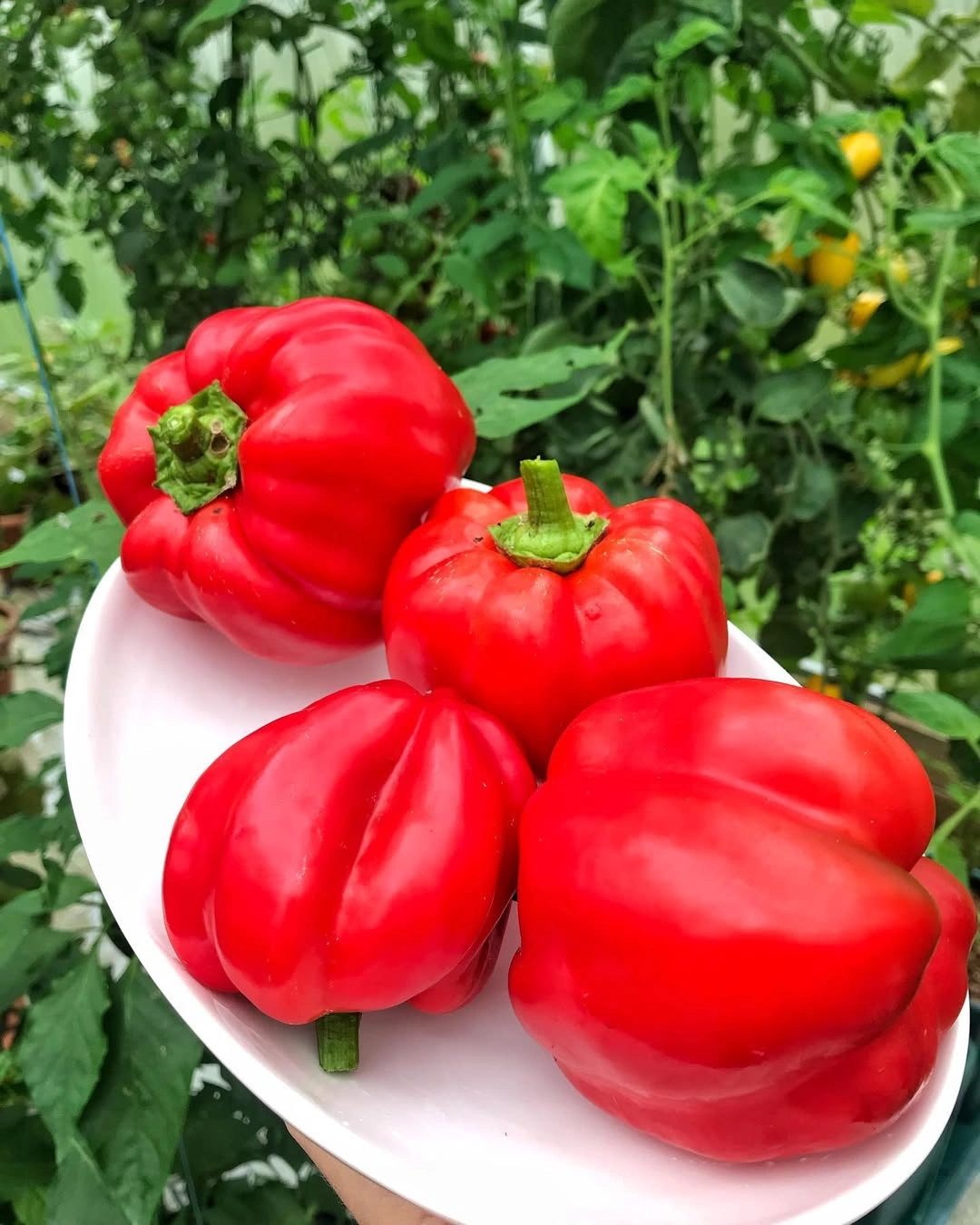
I bought bell peppers from the store for $4 each last winter. Four dollars for ONE pepper! That’s when I decided to try growing them inside my apartment.
I had no garden and barely any sunlight. Guess what? It worked. I got my first pepper after 3 months and it tasted better than anything from the store.
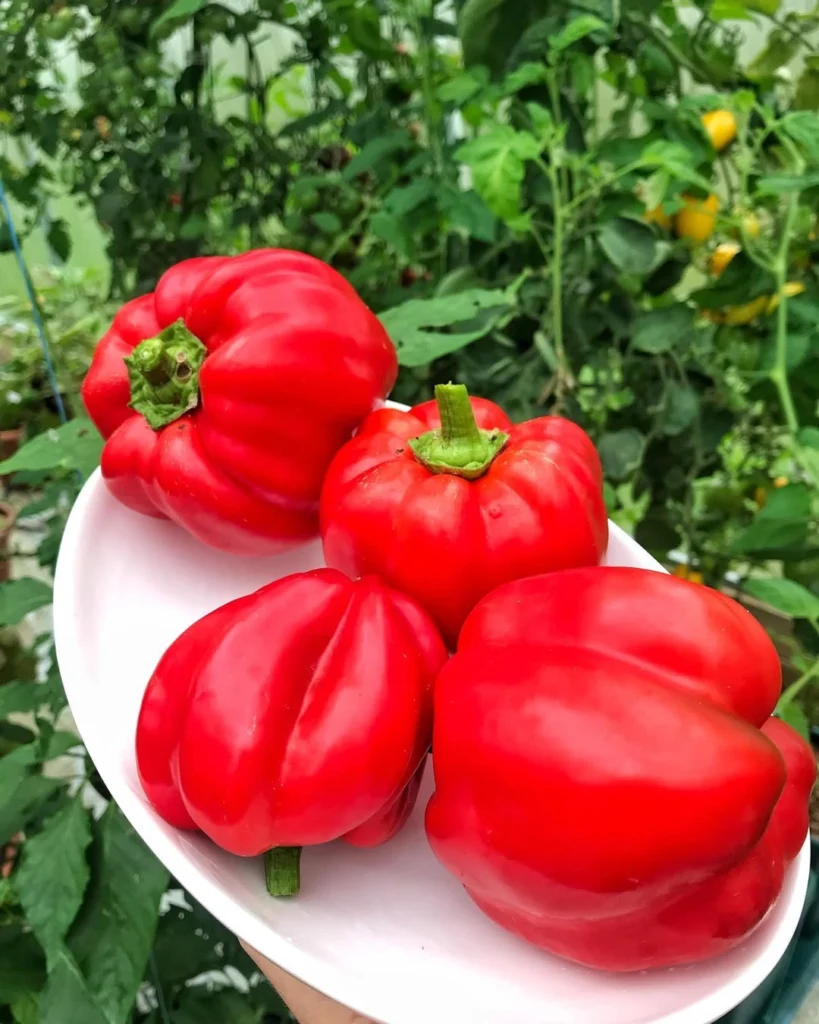
Let me show you how I did it, plus all the mistakes I made, so you don’t have to.
Why I Started This Crazy Experiment
My apartment has no balcony. No yard. Just a small kitchen window. But I love cooking with fresh peppers.
They go in my omelets, my pasta, my salads – everything tastes better with them. Store-bought peppers cost too much, and sometimes they’re mushy inside.
I thought, if people can grow tomatoes inside, why not peppers? Turns out, bell peppers actually like being indoors if you treat them right.
My First Attempt Was a Disaster
I planted seeds in a tiny pot I found under my sink. Put it on my windowsill and waited.
The plant grew tall and skinny, like it was stretching to find something. After two months, I got exactly zero peppers.
The flowers fell off before turning into anything. I almost gave up. Then my neighbor told me what I was doing wrong.
The Pot Size Problem Nobody Warns You About
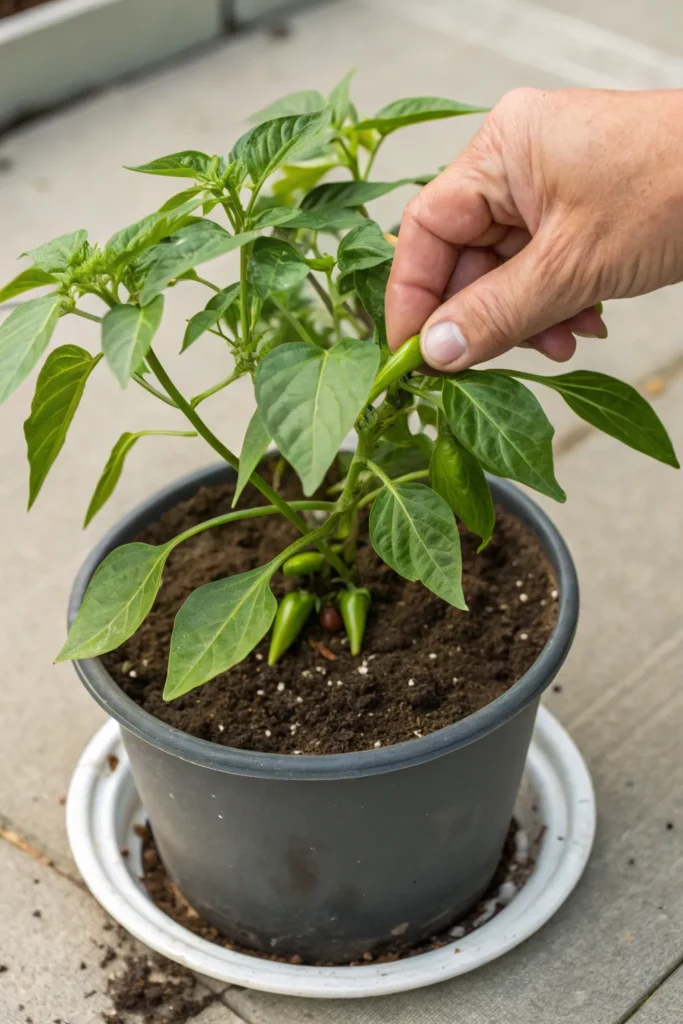
Here’s what I learned the hard way: small pots equal small peppers or no peppers at all. Bell peppers have big roots that need room to spread out.
My first pot was maybe 6 inches wide. Way too small. Now I use pots that are 12 inches wide and 12 inches deep.
Sometimes I go even bigger if I have space. The bigger the pot, the happier the plant gets. Trust me on this one.
What Your Pot Needs:
| Thing You Need | Why It Matters |
| 12-14 inches deep | Roots grow down far |
| 10-12 inches wide | Holes in the bottom |
| Holes in bottom | Water must drain out |
| Saucer underneath | Catches extra water |
Make sure there are holes in the bottom of your pot. I killed a plant by using a cute pot with no holes at all.
Water couldn’t escape, and the roots rotted in just one week. The whole plant turned brown and died right in front of me.
Picking the Right Dirt (It’s Not Just Dirt)
Don’t use soil from outside your house. It gets hard as a rock when you put it in pots.
I tried this because I wanted to save money. Big mistake. The soil turned into cement, and nothing could grow in it.
Buy potting mix from any store, and it works great. The $6 bag is perfect. Look for one that says “well-draining” on the bag.
Bell peppers hate sitting in soggy soil all day. I add some plant food pellets when I first plant my peppers. I use the slow-release kind that feeds for 3 months.
My Soil Recipe:
| What I Use | How Much |
| Potting mix | Fill most of the pot |
| Perlite (white rocky bits) | Mix in a handful |
| Slow-release fertilizer | Follow package directions |
The perlite makes the soil fluffy and light. Water drains better, and roots can breathe easier. This little trick made a huge difference for my plants.
Seeds vs Baby Plants (Which Should You Pick?)
You can start in two ways: plant seeds or buy a small plant from the store. Both ways work fine, but they’re different.
Seeds are cheaper but slower. They cost like $2 for a whole packet. But they take forever – like 2-3 months before you see any peppers. It’s fun to watch them grow from nothing, though.
Small plants cost more but save time. They cost $4-5 each at the garden store. They’re already growing, so you get peppers way faster. You skip the whole baby stage completely.
I use baby plants now because I’m really impatient. I want peppers on my plate, not a science experiment. But if you like watching things grow from scratch, seeds are pretty cool.
If You Plant Seeds, Do This
Soak your seeds in warm water overnight before planting. This wakes them up faster, and they sprout quicker.
Plant them about half an inch deep in damp soil. Not soaking wet, just damp like a wrung-out sponge.
Cover the pot with plastic wrap to keep it warm and humid inside. Seeds like it cozy and warm. Put it somewhere warm in your house.
I put mine on top of my fridge, where it’s always warmer than the rest of the kitchen. They sprout in 1-2 weeks usually. Once you see green shoots, take the plastic wrap off right away.
Seed Starting Quick Guide:
| Step | What to Do |
| Day before | Soak seeds in warm water |
| Planting day | Put seeds ½ inch deep |
| Keep warm | 70-80°F is perfect |
| Keep damp | Check soil every day |
| Wait | 7-14 days for sprouts |
The Light Problem That Almost Ended Everything
This was my biggest mistake when I started. I thought putting the plant near a window was enough light for it to grow.
Wrong. So very wrong. Bell peppers are total light hogs, and they want 12-16 hours of bright light every single day.
My window gave maybe 5 hours on a really sunny day. The plant grew tall and super weak, reaching desperately for more light like a zombie.
I finally bought a grow light from Amazon for $28. Just a basic LED one that clips onto things. Everything changed almost overnight.
The plant got thick and strong within just two weeks. Best $28 I ever spent on gardening stuff.
How to Use a Grow Light Without Overthinking It
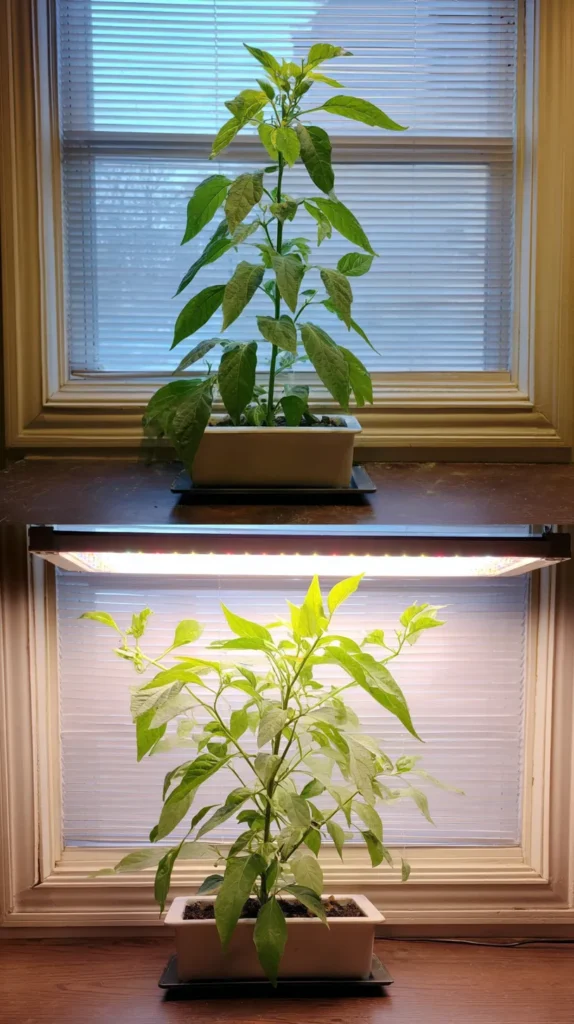
Hang it or clip it about 6-12 inches above your plant. Not too close or it burns the leaves.
Turn it on for 14-16 hours a day to give your plant enough light. I use a cheap timer from the dollar store, so I don’t have to remember every day.
When the plant grows taller, move the light up to keep the same distance. That’s literally it. Don’t make it more complicated than this.
My Light Setup:
| Light Thing | What I Do |
| Type of light | LED grow light ($25-30) |
| How far above plant | 6-12 inches |
| How long each day | 14-16 hours |
| Timer | Yes, so I don’t forget |
If you have a super sunny window that gets sun all day long, you might be okay without a grow light. But most people don’t have that kind of window. Most people need the light.
Watering Without Killing Your Plant
I killed my first pepper plant by watering it every single day like clockwork. I thought plants needed water all the time.
Peppers don’t like wet feet constantly. Their roots need to dry out and breathe between waterings, or they rot.
Now I check the soil with my finger every few days. Stick your finger about an inch deep into the soil.
Is it dry down there? Time to water it. Is it still damp? Wait another day or two before checking again.
For me, that works out to watering every 3-4 days, usually. But it depends on how warm and dry your house is.
When I do water, I really water it good. I pour water until it comes out of the bottom drainage holes. Then I dump the extra water from the saucer underneath.
Never let the pot sit in standing water for hours. That drowns the roots, and they die pretty fast.
Temperature Stuff (Peppers Are Picky About This)
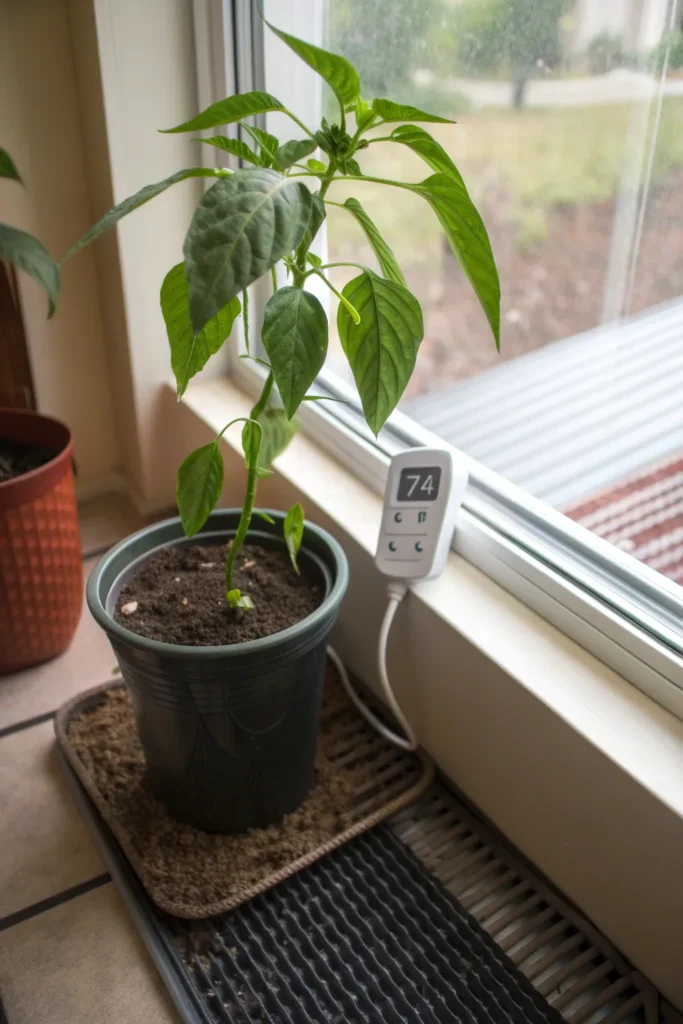
Bell peppers like it warm but not super hot. They’re kind of picky about temperature, actually.
They’re happiest at 70-80°F during the day when the sun is up. At night, 60-70°F is perfectly fine for them.
I had a plant sitting near my AC vent one summer. It totally hated the cold air blasts and just stopped growing for weeks.
I moved it across the room away from the vent. It started making peppers again within just one week. Location matters more than you think.
Don’t put your pepper plants near cold windows in winter, AC vents that blast them, heaters that dry them out, or drafty doors that let cold air in.
Best Temperature Guide:
| Time | Temperature |
| Daytime | 70-80°F |
| Nighttime | 60-70°F |
| Too cold | Below 55°F (plant gets sad) |
| Too hot | Above 90°F (flowers drop) |
If your house runs cold in winter, use a heating mat under the pot. They cost about $15 at any garden store. They keep the roots nice and warm.
The Hand Pollination Thing (Sounds Weird But Works)
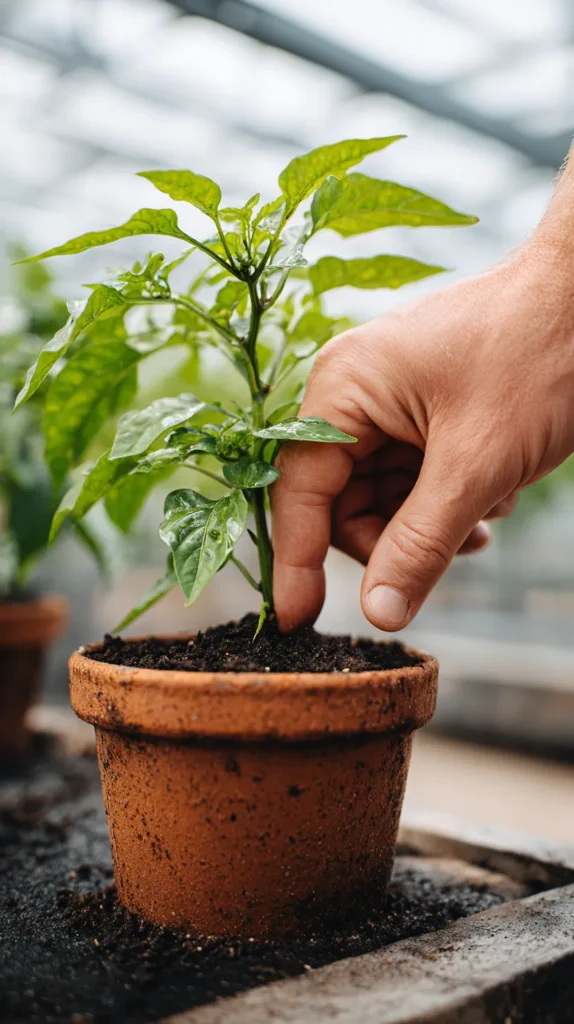
After about 2 months of growing, you’ll see little white flowers appear on your plant. This is super exciting and means peppers are coming!
Outside in a garden, bees do all the pollination work for you. Inside your house, no bees are flying around, obviously.
So you have to become the bee yourself. I know it sounds really strange and weird at first.
I use a small paintbrush or cotton swab from the bathroom. Every morning, I gently tickle the inside of each open flower for a few seconds.
This moves the pollen around from flower to flower. Without doing this step, flowers just fall off, and you get nothing at all.
Do this when flowers are open and ready. Usually, morning time works best for pollinating. It takes maybe 10 seconds per flower once you get the hang of it.
Feeding Your Hungry Plant
Bell peppers are really hungry plants, especially when they start making actual peppers. They need food to keep going strong.
I use liquid plant food every 2 weeks once I see the first flowers appear. Mix it with water according to what the bottle says.
I actually use half the strength the bottle recommends. Full strength burned my plant’s roots once, and the leaves turned yellow.
Any vegetable or tomato fertilizer works perfectly fine. I got mine at Walmart for just $4. You don’t need fancy, expensive stuff.
Feeding Schedule:
| Plant Age | What to Do |
| First month | Nothing, soil has food already |
| After flowers appear | Liquid food every 2 weeks |
| How much | Half of what the bottle says |
| Stop when | Nothing, the soil has food already |
Yellow leaves with bright green veins mean too much fertilizer. If you see this happening, skip feeding for a whole month. Less is more with plant food.
Watching Your Pepper Grow (The Waiting Game)
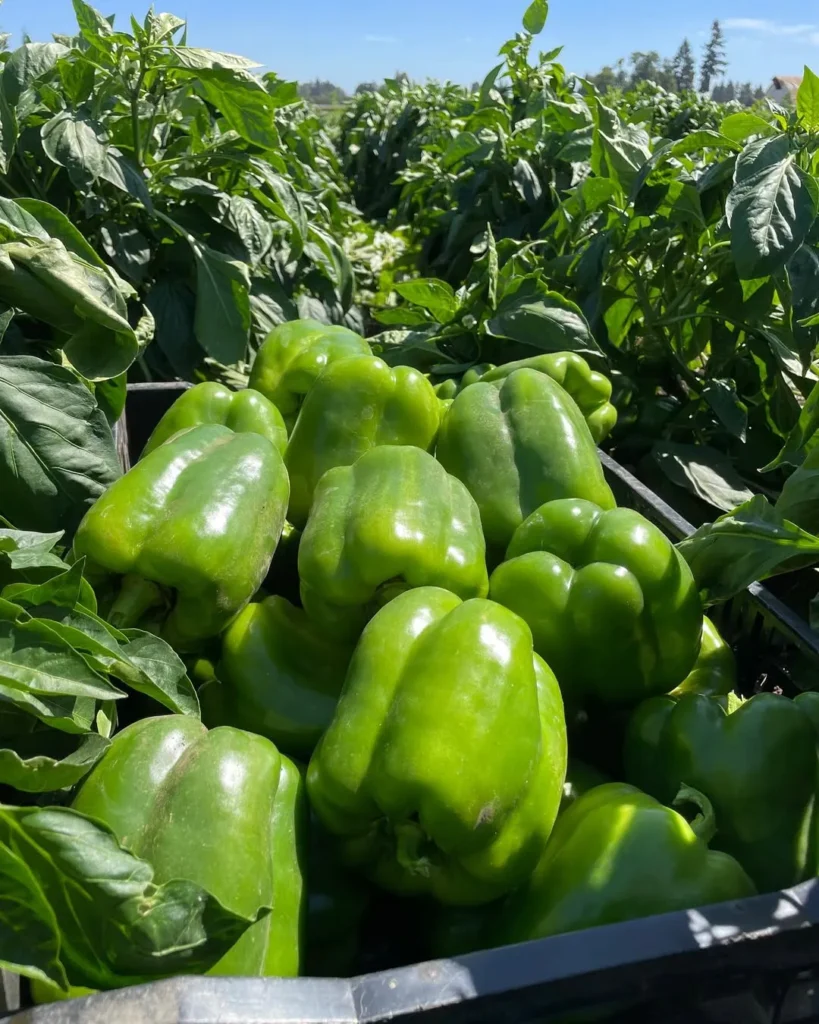
After you pollinate the flowers, tiny baby peppers will appear. They’re so cute and small at first!
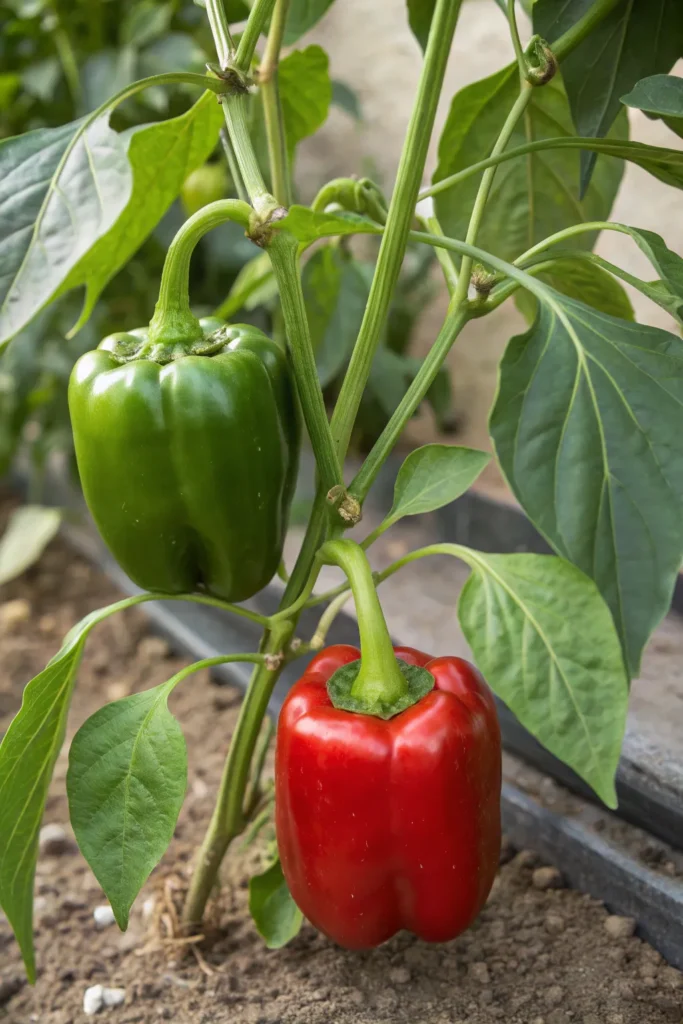
They always start green, no matter what color they’ll be later. All bell peppers do this.
Here’s the thing nobody tells you: you can pick them green OR wait for them to change to their final color. Both ways are fine.
Green peppers are ready to pick in 60-80 days after planting. They taste okay, but they’re bitter compared to colored ones.
Colored peppers like red, yellow, or orange take way longer – like 90-120 days total. That’s a long wait, but they taste much sweeter and better.
I pick mine when they’re about the size of my closed fist. Sometimes I wait for them to turn red because the taste is so much better. Worth the extra wait time.
Problems I Had to Fix Along the Way
Yellow leaves falling off everywhere:
I was watering way too much and drowning the poor plant. I let the soil dry out more between each watering.
It fixed itself in about a week. New leaves came in green and healthy again.
All the flowers kept falling off:
The plant wasn’t getting enough light during the day. I moved the grow light about 3 inches closer to the plant.
Also, I kept forgetting to pollinate the flowers every morning. Started using my paintbrush religiously every single day. Flowers stayed on after that.
Tiny bugs crawling on the leaves:
Aphids found my plant even though it’s indoors! I have no idea how they got inside my apartment.
I took the whole plant to my kitchen sink. I sprayed the bugs off with water from the faucet. I did this every 2 days for about a week.
The bugs finally left and never came back. Problem solved without any chemicals or sprays.
Plant growing tall and super skinny:
It really needed way more light to grow properly. I actually bought a second grow light to add more brightness.
All the new growth after that came in thick and strong. The plant looked so much healthier within two weeks.
No peppers after waiting months:
My house was running too cold at only 62°F all day. Peppers need it warmer than that to make fruit.
I moved the plant to my warmer bedroom instead. I also added a heating mat underneath the pot. Got my first pepper just 3 weeks later!
How Many Peppers Should You Expect?
From one single indoor plant, I usually get somewhere between 6 and 12 peppers total. Not a ton, but not bad either.
It’s not as many as big outdoor garden plants make. But it’s still pretty good for a plant sitting in your kitchen.
The peppers themselves are smaller than the ones at the grocery stores. Mine come out about fist-sized instead of softball-sized like store peppers.
But the taste is absolutely incredible compared to store-bought ones. They’re sweet and crunchy and super fresh tasting. Way better flavor overall.
One plant keeps giving me peppers for cooking for about 2 months straight. Then it starts slowing down and getting tired.
When Things Get Old and Tired
My pepper plants usually last about 8-10 months growing indoors before they get too old. After that point, they get really tired.
The leaves start looking rough and damaged. The peppers get smaller and smaller each time. It’s just not worth keeping them going.
When that happens, I just start a brand new plant from scratch. It’s easier than trying to revive an old, tired one.
Some people online say you can keep plants going strong for years and years. I’ve honestly never managed to do that myself.
It’s just easier to start fresh with a new plant. Takes less work, and you get better peppers anyway.
What I Use Now (My Whole Setup)
Here’s exactly what my current setup looks like in my kitchen. Nothing fancy or expensive.
The pot is a 12-inch basic plastic pot with 4 drainage holes in the bottom. It sits in a matching plastic saucer to catch drips.
The light is a $28 LED grow light from Amazon on a timer. It runs for 14 hours every day automatically. I keep it about 8 inches above the top of the plant.
The location is a corner of my kitchen counter where it stays pretty warm. Usually around 72°F most of the time. Away from any vents or windows.
I water it every 3-4 days whenever the top inch of soil feels dry to my finger. I give it liquid vegetable fertilizer at half strength every 2 weeks.
I pollinate with a cotton swab every single morning when I see open flowers. It takes maybe 2 minutes total. The total cost for my whole setup was about $50 to get started. After that, it’s just soil and fertilizer.
Quick Start Checklist for Beginners
Here’s the complete list of everything you actually need to get started growing peppers indoors:
✓ Big pot that’s at least 12 inches wide and deep ✓ Good potting mix from any store ✓ LED grow light with a clip or stand ✓ Timer for the light so you don’t forget ✓ Baby pepper plant or seeds to start ✓ Liquid fertilizer for vegetables ✓ Cotton swabs for pollinating flowers
That’s the whole list of supplies. You don’t need anything fancy or expensive. Simple stuff works great.
My Best Tips After 2 Years of Growing Indoors
Start with just ONE plant your first time. Don’t get all excited and buy five plants at once like I did.
Get the grow light before you even plant anything. Don’t waste weeks trying to make a window work when it won’t. I learned this the hard way.
Buy a small baby plant instead of seeds if you want to eat peppers this year. Seeds take way too long for most people’s patience.
Use a bigger pot than you think you actually need. Seriously, go bigger. I can’t stress this enough from my experience.
Be patient and wait it out. It takes 3-4 months total, but homegrown peppers taste absolutely amazing. So worth the wait time.
Don’t give up if your very first plant dies on you. My first three plants all died, and now I’m actually pretty great at this. Practice makes perfect.
What I Wish Somebody Told Me From Day One
You need way more light than you think plants need. Windows just don’t cut it for peppers at all.
The pot size actually matters a huge ton for how big your plant gets. A bigger pot equals more peppers later.
Hand pollinating with a cotton swab is super easy and totally necessary indoors. Not optional if you want peppers.
Peppers take forever to grow, but they’re completely worth the long wait. The taste is unbelievable compared to store-bought ones.
One single plant gives you enough peppers for cooking for several weeks. You don’t need a whole garden of them.
Ready to Give This a Try?

Growing bell peppers inside your home seems really hard at first. I honestly thought it was impossible in my tiny apartment with no sunlight.
But now I have fresh homegrown peppers even in January when it’s cold outside. I cook with them all winter long.
The first pepper you pick from your very own plant tastes different somehow. Better and sweeter. You actually grew that thing yourself!
Start with just one plant to test it out. Follow all these steps I shared. Be patient and don’t give up early.
In 3-4 months from now, you’ll be cooking dinner with your own homegrown peppers. You’ll feel so proud of yourself.
And you’ll never want to pay $4 for a single store pepper ever again. Growing your own is cheaper and way more fun.
Quick Summary Checklist:
- Use a 12-inch pot with drainage holes in the bottom
- Get a grow light and run it 14-16 hours daily
- Water only when the top inch of soil feels dry
- Keep the temperature between 70-80°F during the day
- Pollinate flowers with a cotton swab every morning
- Feed with liquid fertilizer every 2 weeks after flowers
- Wait patiently for 3-4 months for the first pepper
- Pick green early or wait longer for color