14 Powerful Hippie Garden Ideas For Happy Living
My garden used to be sterile rows of vegetables in bare dirt. Everything organized, nothing wild, zero soul.
It produced food but felt empty. Like a factory, not a sanctuary.
Then I embraced chaos – mixed flowers with vegetables, added wild corners, planted for vibes not just yield.
Now my garden feeds my spirit as much as my stomach. Same space, completely different energy.
Let me show you 14 hippie garden ideas that create joyful, abundant, soulful spaces.
What Makes a Garden “Hippie”
The philosophy shift:
Traditional garden mindset:
- Control nature
- Straight rows
- Single crops
- Chemical inputs
- Fight everything
Hippie garden mindset:
- Work with nature
- Organic chaos
- Mix everything
- Natural solutions
- Peace with ecosystem
My transformation:
Before: Neat rows, constant work, stressed plants, felt like chore
After: Wild abundance, easy maintenance, thriving ecosystem, feels like meditation
Same effort, totally different vibe.
Core Hippie Garden Principles
What defines this style:
Peace with nature:
- Accept some “pests” (they feed birds)
- Let things self-seed
- Welcome volunteers
- Work with cycles, not against
Abundance mindset:
- Plant more than you need
- Share generously
- Feed everyone (people, pollinators, wildlife)
- Overflow is good
Aesthetic freedom:
- Beautiful chaos over rigid order
- Color explosions
- Mix edibles and ornamentals
- Personal expression matters
Sustainability:
- Organic only
- Reuse everything
- Closed-loop systems
- Earth-friendly practices
I stopped fighting nature and started flowing with it. Game changer.
1. The Peace Garden (Meditation Circle)
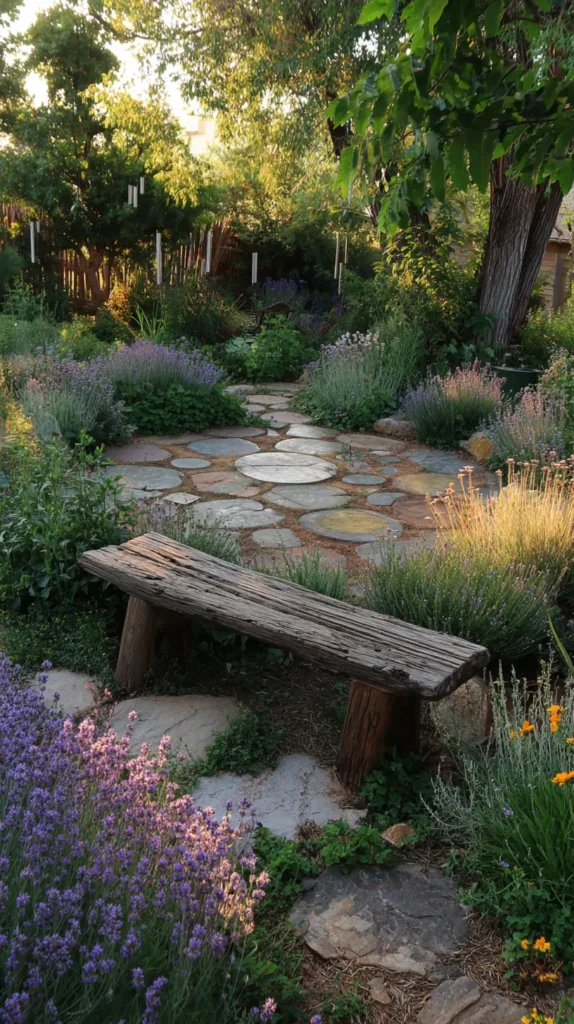
Central gathering space surrounded by calming plants.
My backyard sanctuary:
Design:
- 10-foot diameter circle
- Mosaic stepping stones (made from broken pottery)
- Weathered wooden bench
- Fire pit in center
Plantings around circle:
Calming herbs:
- Lavender (aromatherapy, bees love it)
- Chamomile (tea, ground cover)
- Lemon balm (calming scent)
- Catnip (relaxing tea)
Sensory plants:
- Lamb’s ear (soft, touchable)
- Ornamental grasses (soothing movement)
- Wind chimes in tree above
Morning ritual:
- Coffee on bench
- Watch sunrise
- Listen to birds
- Start day centered
This space feeds my soul more than any vegetable bed.
Creating Your Peace Space
Minimum requirements:
Seating: Chair, bench, or cushions on ground Privacy: Hedge, fence, or secluded corner Sensory elements: Fragrant plants, textured foliage, sound (wind chimes, water)
My DIY bench: Old pallets sanded and stained ($0, found pallets)
Time spent here: 20-30 minutes daily, best investment in garden.
2. Mandala Garden (Sacred Geometry)
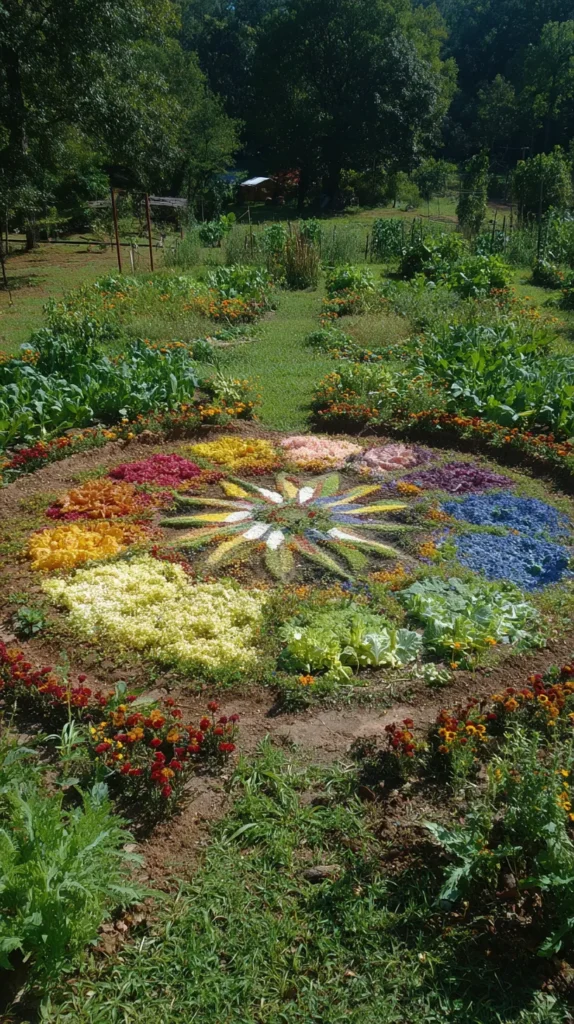
Circular beds in geometric patterns create meditative growing space.
My mandala design:
Layout:
- 12-foot diameter circle
- Divided into 8 pie-slice beds
- Paths between like wheel spokes
- Center focal point (sundial)
Planting by color wedges:
Wedge 1 (north): Purple (eggplant, purple basil, lavender) Wedge 2: Blue (borage, cornflowers) Wedge 3: White (white flowers, cauliflower) Wedge 4: Yellow (sunflowers, calendula, yellow tomatoes) Wedge 5: Orange (nasturtiums, marigolds) Wedge 6: Red (tomatoes, red chard, zinnias) Wedge 7: Pink (cosmos, radishes) Wedge 8: Green (herbs, kale, lettuce)
Creates rainbow from above.
Why mandalas work:
- Meditative to plant and maintain
- Beautiful from all angles
- Represents wholeness, unity
- Good energy flow (if you believe that)
I find it peaceful to work in circular patterns vs straight rows.
3. Wildflower Meadow Corner (Let It Be Wild)
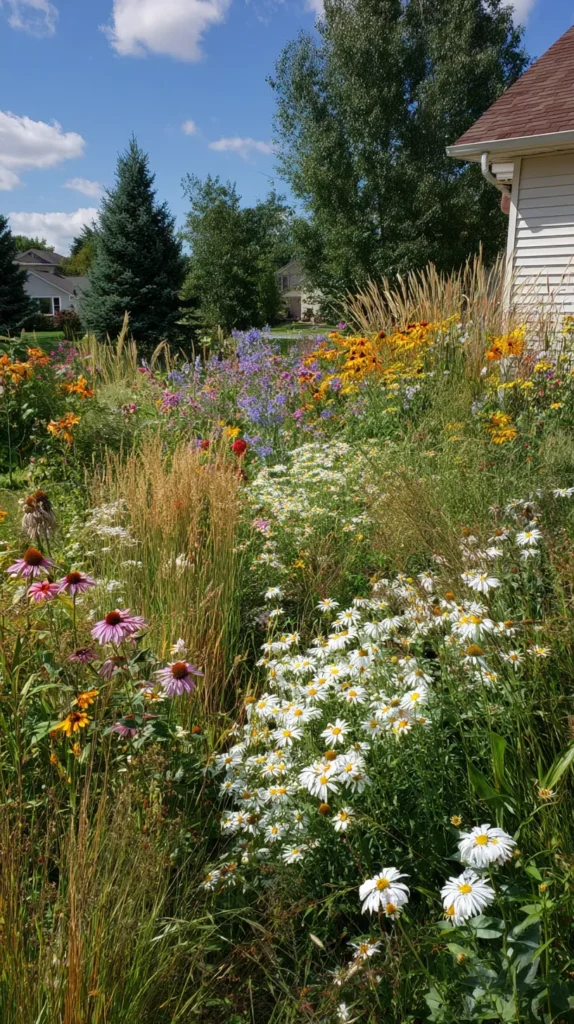
Dedicated wild space where nature does its thing.
My 15×15 corner:
Setup:
- Stopped mowing
- Scattered native wildflower seeds
- Added pollinator plants
- Let it go wild
What grows there now:
- Black-eyed Susans (volunteers everywhere)
- Native grasses
- Coneflowers (spread on their own)
- Milkweed (monarch butterflies!)
- Queen Anne’s lace
- Whatever seeds itself
Benefits:
Zero maintenance:
- No watering after year 1
- No weeding (it IS the weeds)
- No fertilizing
- Mow once in late fall, that’s it
Wildlife haven:
- Butterflies constantly
- Bees everywhere
- Goldfinches eating seeds
- Native insects thriving
My meditation spot – watching pollinators is therapy.
Starting a Wild Corner
How I did it:
- Stopped mowing section
- Let existing plants grow (see what you have)
- Added native wildflower mix ($8)
- Watered first month
- Forgot about it
Two years later: Self-sustaining ecosystem, looks intentional, supports local wildlife.
4. Sharing Garden (Grow for Community)
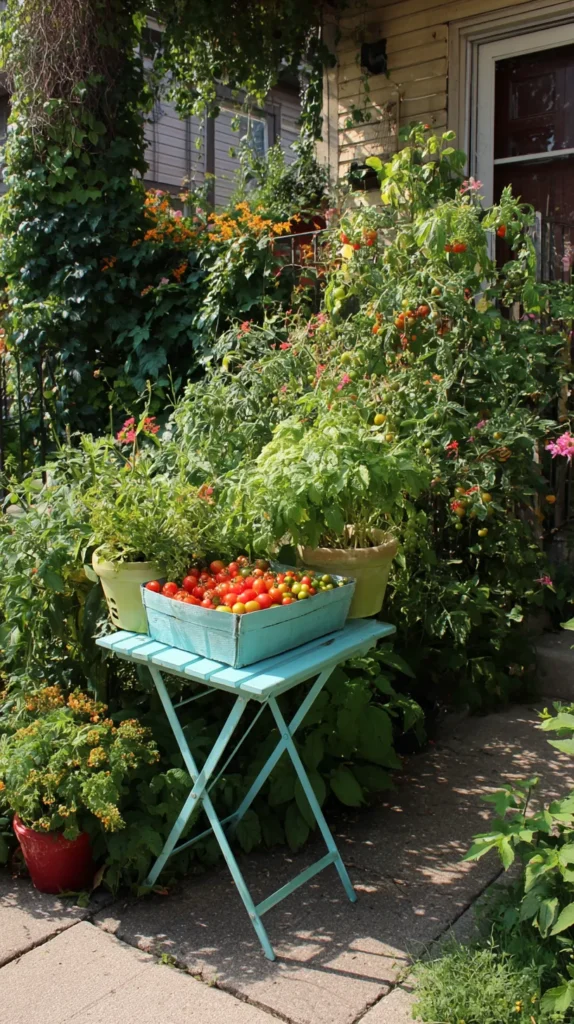
Extra produce for neighbors and strangers.
My front yard approach:
Sign by sidewalk: “Free Veggies – Take What You Need”
What I plant extra:
- Cherry tomatoes (prolific)
- Herbs (everyone needs basil)
- Flowers (for cutting)
- Zucchini (always too much anyway)
Small table setup:
- Folding table by sidewalk
- Baskets of produce
- Take what you want, leave what you can
- Honor system
Why I do this:
Abundance mindset:
- Gardens produce more than I need
- Sharing multiplies joy
- Connects with neighbors
- Good karma
What happens:
- Neighbors leave eggs, baked goods, other produce
- Kids stop by for cherry tomatoes
- Creates community
- Garden becomes neighborhood gathering point
I’ve met more neighbors this way than 10 years of waving.
5. Three Sisters Guild (Indigenous Wisdom)
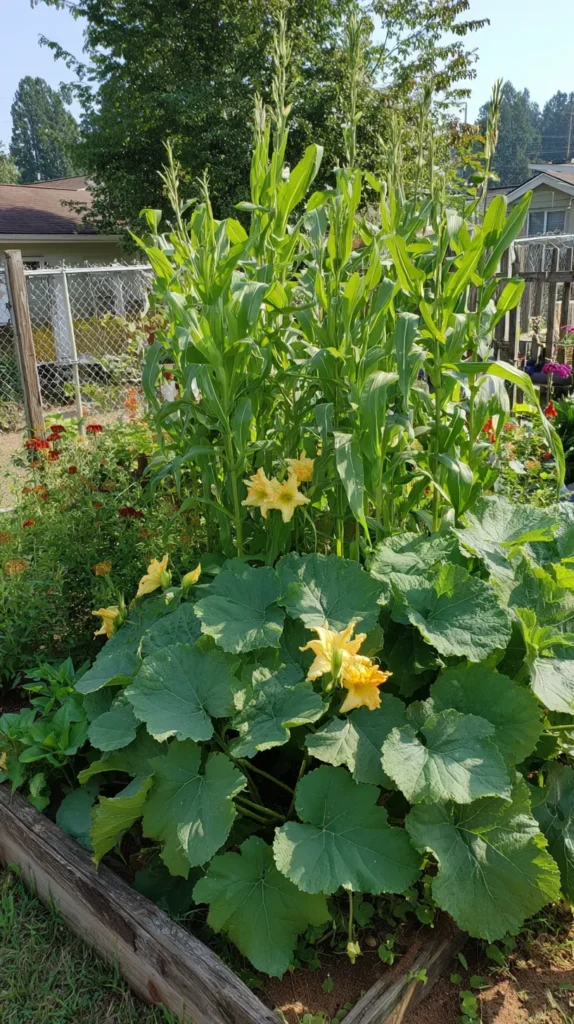
Traditional Native American companion planting – corn, beans, squash together.
My 12×12 three sisters bed:
Planting:
- Corn (provides pole for beans)
- Pole beans (fix nitrogen for corn and squash)
- Squash (shades soil, prevents weeds)
Layout:
- Mounds 3 feet apart
- 4 corn plants per mound
- 4 beans around each corn
- 2 squash between mounds
Why it’s hippie:
- Ancient indigenous knowledge
- Plants helping each other
- Complete nutrition in one bed
- Honors traditional wisdom
- Symbiotic relationships
First year I tried this felt like connecting to something ancient and wise.
Harvest:
- 40 ears corn
- 15 pounds beans
- 30 pounds squash
- From 144 square feet
6. Spiral Herb Garden (Energy Vortex)
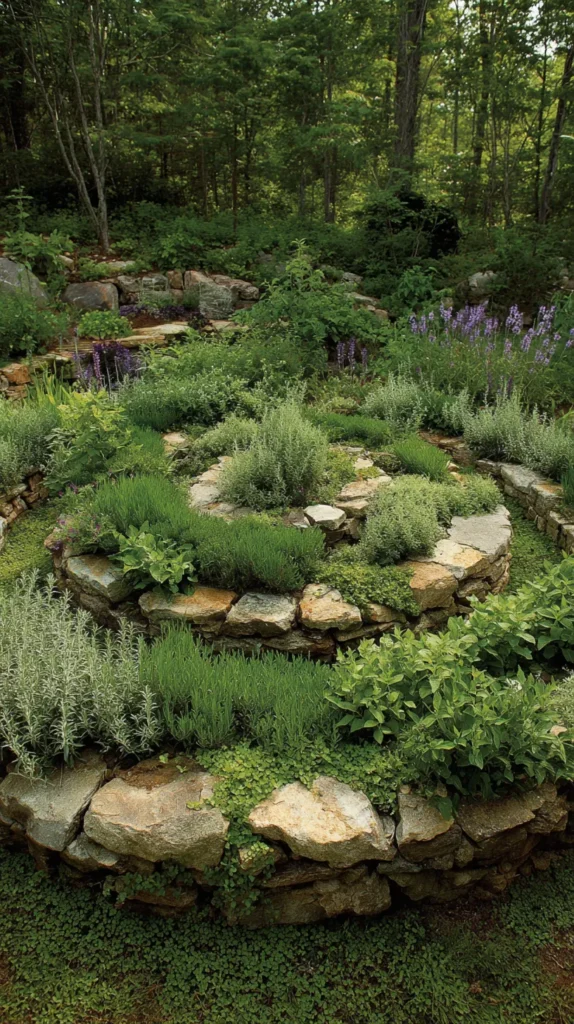
Raised spiral creates multiple microclimates in one small space.
My 6-foot spiral:
Construction:
- Stone spiral wall
- Rises from ground to 3 feet at center
- Creates natural terraces
- Dramatic focal point
Herbs by elevation:
Top center (hot, dry):
- Rosemary, thyme, oregano
- Mediterranean loves
Middle spiral:
- Basil, parsley
- Moderate needs
Bottom edge (cool, moist):
- Cilantro, mint, chives
- Moisture lovers
Energy perspective:
- Spiral represents life force
- Plants arranged by elemental needs
- Harvesting follows spiral (meditative)
- Beautiful from all angles
My most photographed garden feature.
7. Moon Garden (Night Magic)
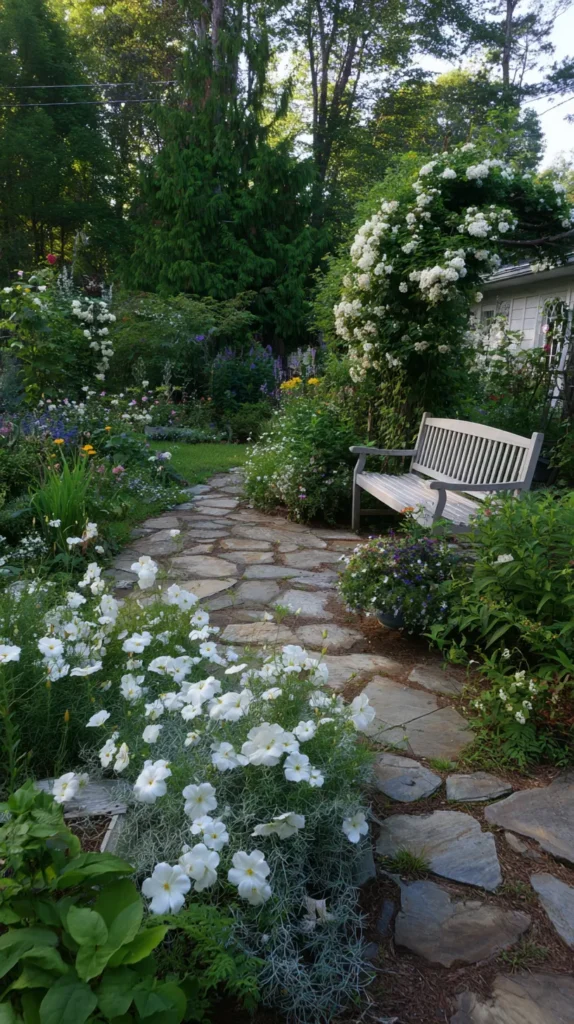
White and silver plants that glow in moonlight.
My evening meditation space:
Plant selection:
White flowers:
- White cosmos
- White zinnias
- White nicotiana (fragrant at night)
- White moonflowers (night-blooming)
Silver foliage:
- Lamb’s ear
- Artemisia
- Dusty miller
- Silver sage
Night-blooming:
- Evening primrose
- Four o’clocks
- Night-blooming jasmine
Setup:
- Crescent-shaped bed
- Faces west (catches setting sun)
- Bench for evening sitting
- Path lights (solar)
Evening ritual:
- Sit as sun sets
- Watch garden transform
- White flowers glow
- Moths and night pollinators arrive
Completely different energy than daytime garden.
8. Upcycled Container Garden (Reclaim Everything)
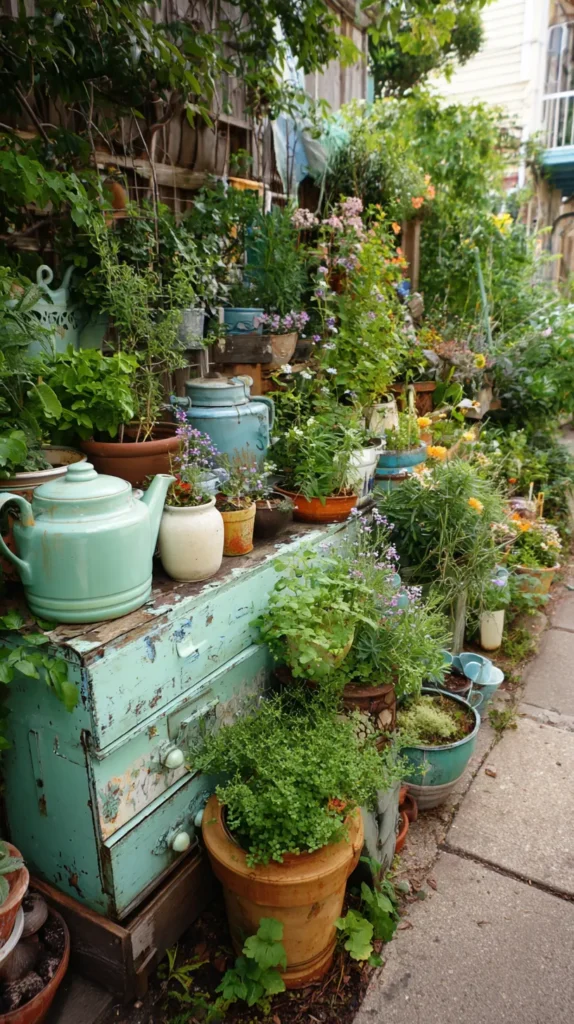
Creative reuse of found objects as planters.
My collection:
What I’ve planted in:
- Old boots (thyme, creeping plants)
- Vintage metal buckets (herbs)
- Broken wheelbarrow (strawberries)
- Dresser drawers (lettuce)
- Colander (trailing plants, drainage built-in)
- Teapot (small succulents)
- Bathtub (water garden with edible lotus)
Why it’s hippie:
- Reduce, reuse, recycle
- Nothing goes to landfill
- Quirky personal expression
- Conversation starters
- Anti-consumerism
Rules I follow:
Drainage holes mandatory (drill if needed) Food-safe materials (no treated wood for edibles) Stable placement (old boots tip over!)
Cost: $0 for containers (all found/reclaimed)
Finding Containers
My sources:
- Thrift stores ($1-5 per item)
- Garage sales (free, end of day)
- Curbside finds (trash picking)
- My own broken stuff (repair with plants)
Old hiking boots filled with thyme look amazing and cost nothing.
9. Fairy Garden Integration (Magic and Whimsy)
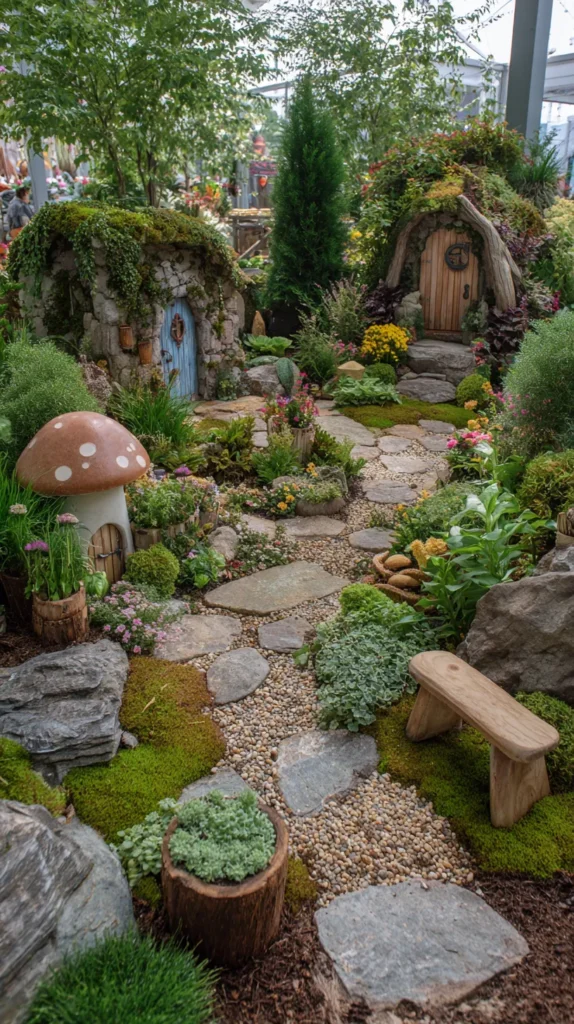
Miniature magical spaces tucked throughout garden.
My fairy spots:
Under the apple tree:
- Tiny fairy door on trunk
- Miniature mushroom houses
- Moss ground cover
- Small ferns
- Pebble path
Between tomato plants:
- Tiny wooden bench
- Bottle cap bird bath
- Stick teepee
- Creeping thyme “lawn”
Why include whimsy:
Adults love it:
- Adds playfulness
- Encourages exploration
- Makes gardening fun
- Reduces stress
Kids go wild:
- Neighborhood kids visit to check fairy garden
- Gets them interested in plants
- Gentle introduction to gardening
- Creates magic
I’m 45 and building fairy houses. No shame. Pure joy.
10. Compost Mandala (Sacred Waste Transformation)
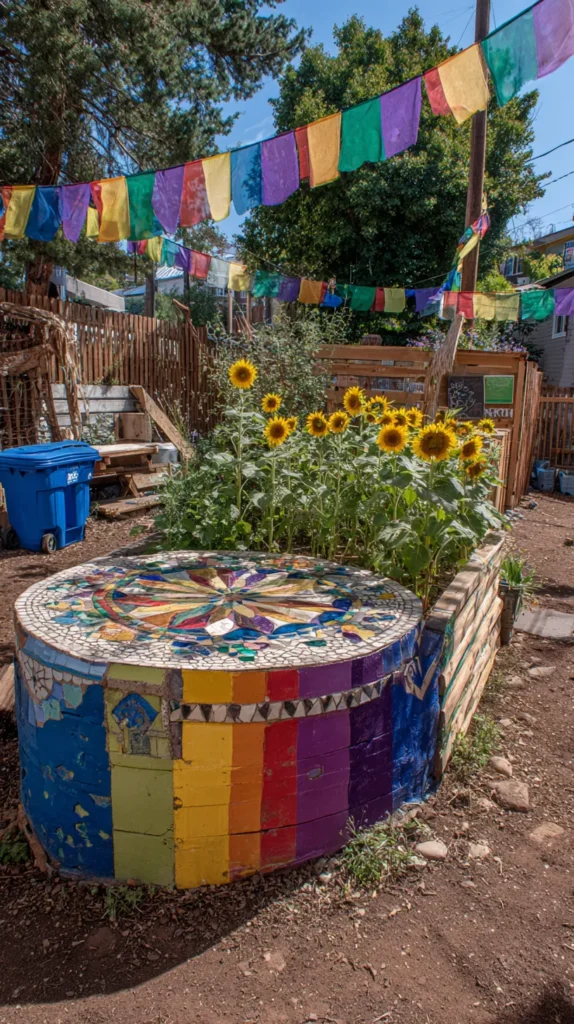
Beautiful compost system that celebrates decay.
My setup:
Three bin system arranged in arc:
- Cedar slat bins (homemade)
- Painted with bright colors (rainbow gradient)
- Decorated with mosaics
- Functional art piece
Bins:
- Bin 1: Fresh scraps
- Bin 2: Cooking (turning weekly)
- Bin 3: Finished compost
Decoration:
- Mosaic tiles on front panels (broken pottery)
- Hand-painted signs (“Birth, Death, Rebirth”)
- Sunflowers planted behind
- Prayer flags above
Why make compost beautiful:
- Honors the cycle of life
- Death feeds life
- Nothing is waste
- Transforms mundane into sacred
My most zen garden task – turning compost becomes meditation.
11. Rainbow Food Garden (Color Therapy)
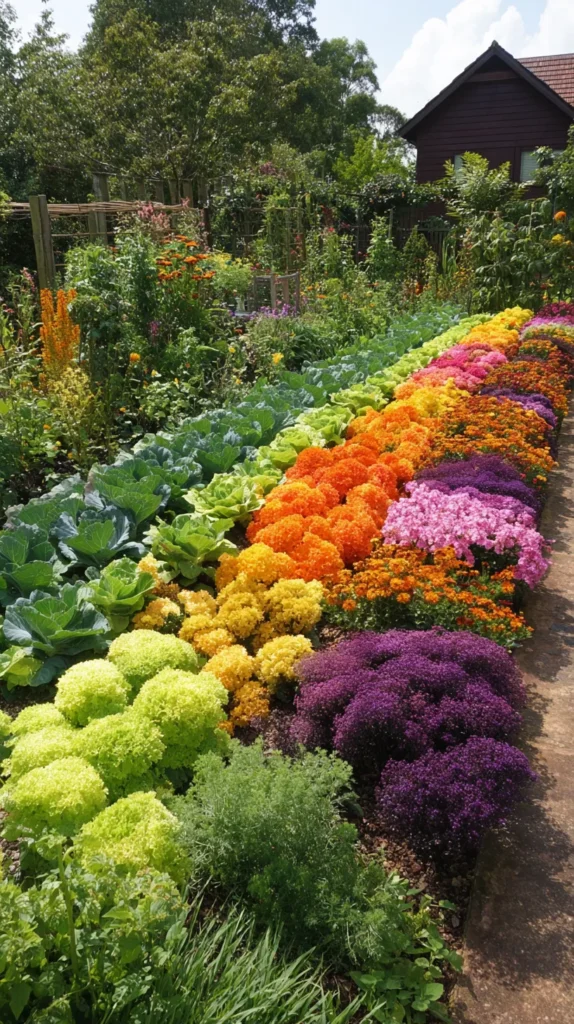
Plant by color for visual and energetic impact.
My rainbow bed layout:
Seven rows, one color each:
Red row: Red tomatoes, red chard, red amaranth, red peppers Orange row: Carrots, orange tomatoes, calendula, nasturtiums Yellow row: Yellow tomatoes, yellow squash, sunflowers, marigolds Green row: Kale, lettuce, herbs, broccoli Blue row: Blue potatoes, borage, cornflowers (limited blue options) Purple row: Purple cabbage, eggplant, purple basil, lavender White row: White eggplant, cauliflower, white cosmos
Impact:
- Stunning from distance
- Each color has energy/meaning
- Kids love it
- Makes picking fun (“get some from the orange row”)
Harvest becomes color meditation – what color do I need today?
12. Seed Library and Sharing Station (Community Resource)
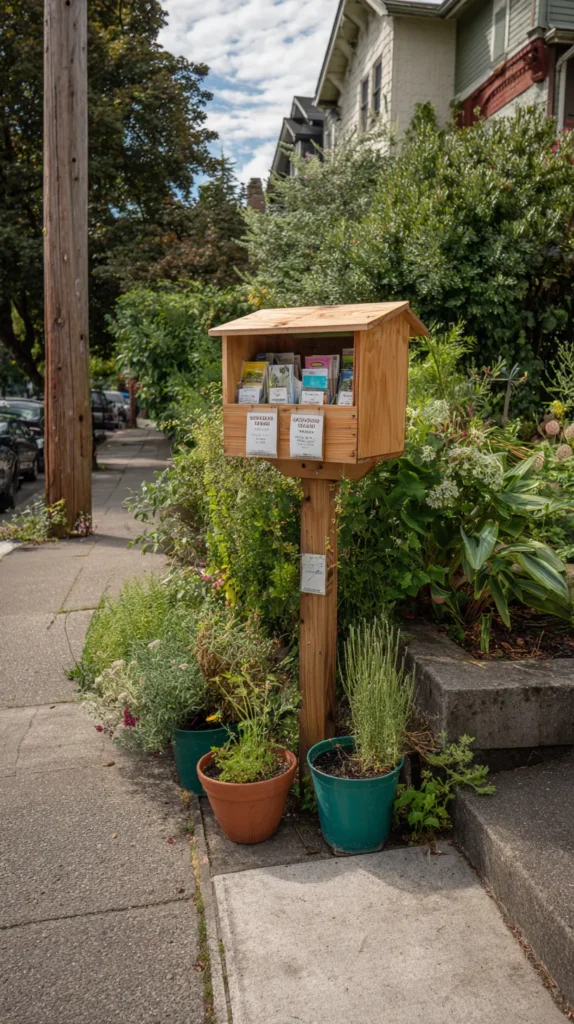
Free seed exchange promotes sharing and biodiversity.
My setup:
Little Free Library box (like book exchange):
- Mounted on post by sidewalk
- Stocked with saved seeds
- Instructions for saving seeds
- Take seeds, leave seeds
What I stock:
- Seeds I’ve saved (tomatoes, beans, flowers)
- Extra purchased seeds
- Harvested perennial divisions
- Garden plant starts in spring
Why it matters:
Builds community:
- Neighbors exchange varieties
- Share heirloom seeds
- Preserve biodiversity
- Knowledge sharing
Anti-corporate:
- Free seeds vs bought
- Heirlooms vs hybrids
- Self-sufficiency
- Seed sovereignty
I’ve gotten amazing heirloom varieties from neighbors through this.
13. Meditation Walking Path (Labyrinth Style)
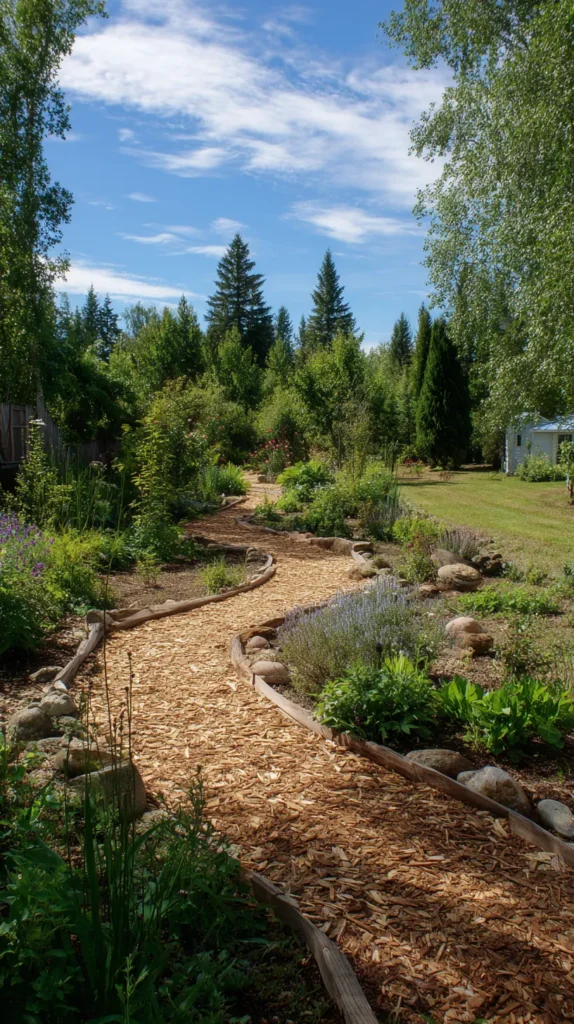
Winding path through garden for walking meditation.
My 20×20 path design:
Layout:
- Serpentine path
- Winds through entire garden
- Wood chip surface
- 2 feet wide
Path passes:
- Herb garden (smell lavender)
- Wildflower meadow (watch butterflies)
- Vegetable beds (check progress)
- Peace garden circle (stop and sit)
- Returns to start
Morning practice:
- Walk path slowly
- Notice what’s changed
- Touch plants
- Breathe deeply
- 10-15 minutes
Turns garden maintenance into moving meditation.
Creating Walking Meditation
Minimum needed:
- Defined path (mown, mulched, or paved)
- Circuit that returns to start
- Interesting things along way
- Comfortable surface
My wood chip path cost: $40 for chips, one weekend to lay
14. Native Plant Sanctuary (Earth Healing)
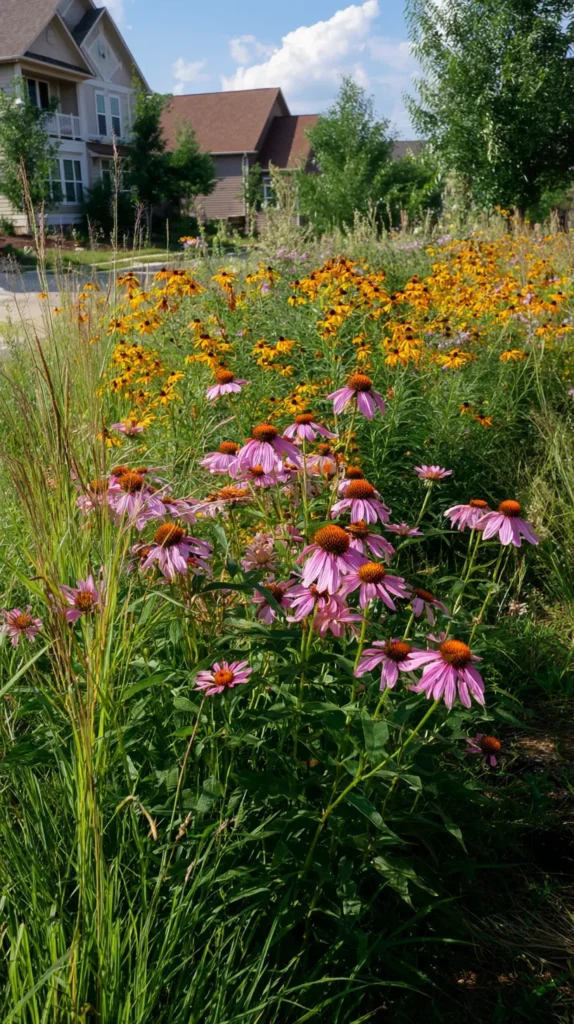
Native plants only section supports local ecosystem.
My 10×15 native bed:
Plants (all native to my region):
- Coneflowers (Echinacea purpurea)
- Black-eyed Susans (Rudbeckia)
- Milkweed (Asclepias – monarch host)
- Wild bergamot (Monarda)
- Goldenrod (Solidago)
- Native grasses (little bluestem)
Why natives matter:
Ecosystem support:
- Native insects evolved with these plants
- 90% of insect species specialized
- Support food chain
- Create balanced ecosystem
Zero maintenance:
- Adapted to local conditions
- No water after year 1
- No fertilizer ever
- Disease resistant
Spiritual connection:
- These plants were here first
- Healing the land
- Honoring indigenous knowledge
- Returning to what was
My most effortless bed – plants want to grow here.
Creating Good Vibes in Any Garden
Hippie garden is mindset, not size.
Elements I include everywhere:
Sound:
- Wind chimes (bamboo)
- Water feature (bubbling fountain)
- Rustling grasses
- Bird songs (feeders attract them)
Scent:
- Lavender near paths
- Herbs brushed when walking
- Night-blooming flowers
- Fresh earth smell
Touch:
- Lamb’s ear (soft)
- Moss (cool and cushiony)
- Smooth river rocks
- Rough bark
Color:
- Rainbow plantings
- Bright painted elements
- Natural earth tones mixed
Movement:
- Grasses swaying
- Flags and banners
- Trailing vines
- Butterflies and birds
Even tiny balcony can have these elements.
Organic Living in Hippie Gardens
No chemicals ever – core principle.
My natural solutions:
Pest Control
Handpicking: Slugs, beetles, caterpillars (5 minutes daily) Beneficial insects: Ladybugs, lacewings (attract with flowers) Companion planting: Marigolds, herbs repel pests Acceptance: Some damage is okay, feeds birds
I lost 10% of crops to pests. Still harvest way more than I need.
Fertilizing
Compost: All I use, make it myself Worm castings: Worm bin produces gold Compost tea: Steep compost in water Mulch: Breaks down, feeds soil
No bottles, no store-bought. Closed system.
Disease Management
Spacing: Good air flow prevents fungus Diversity: Mixed planting stops spread Healthy soil: Strong plants resist disease Remove affected plants: Compost hot pile only
Had powdery mildew once – removed affected leaves, problem solved naturally.
Philosophical Practices in Garden
Gardening as spiritual practice.
What I do:
Gratitude ritual:
- Thank plants when harvesting
- Acknowledge abundance
- Appreciate beauty
- Never take for granted
Moon planting:
- Plant above-ground crops during waxing moon
- Plant roots during waning moon
- Does it work? Maybe placebo, but ritual feels good.
Mindful weeding:
- Pulling weeds as meditation
- Focus on each plant
- Feel soil
- Be present
Talking to plants:
- I do it. Judge me if you want.
- They might not understand
- But I feel connected
- Intention matters
These practices make gardening sacred instead of chores.
Community and Sharing
Hippie gardens overflow – meant to share.
How I share:
Front yard produce stand: Free vegetables Seed saving: Share varieties Surplus to food bank: 50+ pounds donated yearly Teaching neighbors: Free advice, start plants for them Garden tours: Invite people in, inspire them
Gardens connect people. Mine has created community where there was none.
Music and Garden Energy
Sound affects plants (maybe, probably, I believe it).
What I play in garden:
Morning: Acoustic guitar (I play badly, plants don’t judge) Afternoon: Wind chimes (constant gentle sound) Evening: Silence (listen to nature’s sounds)
Outdoor speaker setup:
- Solar powered
- Plays soothing music
- Volume low
- Blends with bird songs
Does music help plants grow? Scientific evidence mixed. Do I care? Nope. Makes me happy, that’s enough.
Budget Reality
Hippie gardens can be free.
My spending:
Things I bought:
- Seeds: $30 yearly
- Mulch: $50 yearly (wood chips bulk)
- Wind chimes: $20 (gift to myself)
- Total: $100 yearly
Things that were free:
- Seeds from sharing station
- Compost (I make it)
- Containers (found objects)
- Plants (divisions from friends)
- Decorations (natural materials)
- Tools (inherited, found)
Most hippie garden elements cost nothing:
- Native plants (seeds free from wild areas)
- Letting things go wild (free)
- Meditation space (free)
- Peace and joy (priceless)
My Garden Transformation
Before embracing hippie principles:
Appearance: Rigid rows, bare dirt, stressed Time: 10 hours weekly maintenance Production: Moderate harvest Feeling: Like work, chore, obligation Wildlife: Almost none Community: Isolated
After transformation:
Appearance: Abundant chaos, colorful, thriving Time: 5 hours weekly (half the work!) Production: Overflow harvest Feeling: Sanctuary, joy, meditation Wildlife: Birds, butterflies, bees everywhere Community: Neighbors involved, connected
Same space, same effort, completely different energy.
Starting Your Hippie Garden Journey
Don’t redesign everything overnight.
This month:
Choose one element:
- Add peace circle
- Let one corner go wild
- Plant moon garden
- Start seed sharing
My journey:
- Year 1: Let corner go wild
- Year 2: Added peace circle
- Year 3: Rainbow plantings
- Year 4: Community sharing station
- Year 5: Native plant sanctuary
Evolved slowly, each addition felt right.
Start where your heart pulls you.
The point isn’t perfection – it’s joy, peace, connection, and living in harmony with earth.
Now go let your garden get a little wild and a lot more soulful!
Quick Summary:
Core hippie garden principles:
Peace with nature: Work with, not against Organic only: No chemicals ever Abundance mindset: Share generously Aesthetic freedom: Beautiful chaos over rigid order Sustainability: Closed-loop, earth-friendly
14 powerful ideas:
Meditation spaces: Peace garden, walking labyrinth Sacred geometry: Mandala, spiral herb garden Wild spaces: Meadow corner, native sanctuary Community: Sharing garden, seed library Whimsy: Fairy gardens, upcycled containers Energy: Rainbow plantings, moon garden Tradition: Three sisters, indigenous wisdom
Easiest to start:
Let corner go wild: Stop mowing, add wildflower seeds Peace circle: Bench + calming plants Share surplus: Front yard produce stand Upcycle containers: Plant in found objects
Budget requirements:
Free/minimal: Wild corner, peace circle, sharing Under $50: Upcycled containers, seed library $50-150: Spiral garden, moon garden $200+: Mandala garden, major installations
Time commitment:
Less than traditional garden: 5 vs 10 hours weekly Meditation integrated: Work becomes practice Self-maintaining: Nature does more work Joyful effort: Feels less like chore
Space needed:
Tiny balcony: Upcycled containers, herb spiral Small yard: Peace circle, rainbow bed, wild corner Medium yard: Mandala, native sanctuary, paths Large yard: All elements, community spaces
What makes it “hippie”:
Philosophy: Peace, love, earth harmony Aesthetic: Colorful chaos, personal expression Practice: Meditation, gratitude, mindfulness Community: Sharing, connecting, teaching Sustainability: Organic, recycled, earth-friendly
Maintenance reality:
Less work overall: Nature self-regulates Different work: Observation vs control Enjoyable tasks: Meditation vs chores Seasonal rhythms: Flow with nature Acceptance: Perfection not required
Wildlife benefits:
Before: Sterile, few insects/birds After: Thriving ecosystem, constant activity Natives: 90% more insect species Diversity: Food web established Balance: Natural pest control
Community impact:
Connection: Neighbors involved Sharing: Overflow distributed Teaching: Knowledge spreads Inspiration: Others start gardens Culture shift: Abundance mindset grows
Spiritual practices:
Gratitude: Thank plants, appreciate abundance Mindfulness: Present while working Meditation: Walking paths, pulling weeds Intention: Conscious planting, harvesting Connection: Earth, seasons, cycles
Natural methods only:
Pest control: Handpicking, beneficials, acceptance Fertilizing: Compost, worm castings, mulch Disease: Spacing, diversity, healthy soil No chemicals: Ever, for any reason
Sound and energy:
Wind chimes: Constant gentle sound Music: Acoustic, soothing (maybe helps plants) Silence: Nature’s sounds valued Water features: Bubbling, peaceful
Color therapy:
Rainbow beds: Seven color rows Moon garden: White and silver glow Wild meadow: Natural color chaos Seasonal shifts: Energy changes throughout year
Quick start plan:
This weekend: Choose one wild corner, stop mowing This month: Add peace circle with bench This season: Plant native sanctuary or rainbow bed This year: Build community sharing station
Success indicators:
- Garden feels peaceful (not stressful)
- Wildlife abundance increasing
- Neighbors curious/involved
- Work feels meditative
- Harvest overflowing
- Joy in the space
Remember: Hippie garden is about energy and intention more than specific plants or designs. Start where your heart guides you.