15 Vegetable Garden Layout Ideas for Every Gardener
I planted my first vegetable garden in random rows as I’d seen in pictures. It looked terrible, and half my vegetables died because I couldn’t reach them to weed.
I wasted so much space between rows that I could only grow maybe 15 plants in a 10×10 area. Meanwhile, my neighbor grew 40 plants in the same space with a better layout.
Layouts actually matter. A good layout means more vegetables, easier maintenance, and a garden that looks intentional instead of chaotic.
Let me show you 15 layouts that actually work for different spaces and goals.
Why My First Garden Layout Failed
Three major problems killed my first garden:
- Rows were too far apart (wasted 50% of space)
- Couldn’t reach the middle of the beds without stepping on plants
- No logical organization, just plants scattered randomly
I thought copying traditional farm rows would work. But farms use tractors that need wide spacing. Home gardens need different layouts optimized for hand tools and maximum production.
The worst part? Weeds took over the space between rows. I spent more time weeding paths than actually harvesting vegetables.
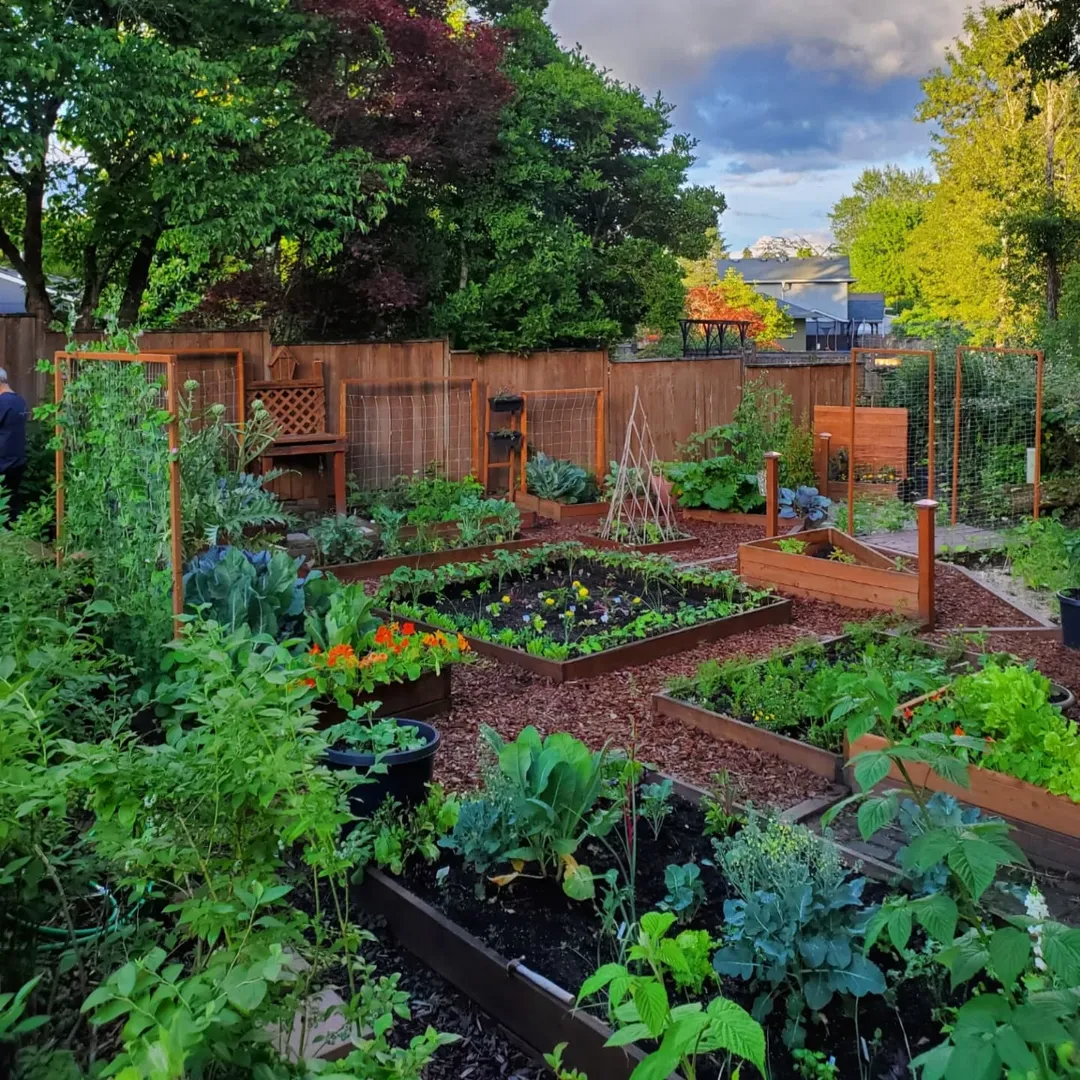
1. Raised Bed Grid Layout (My Current System)
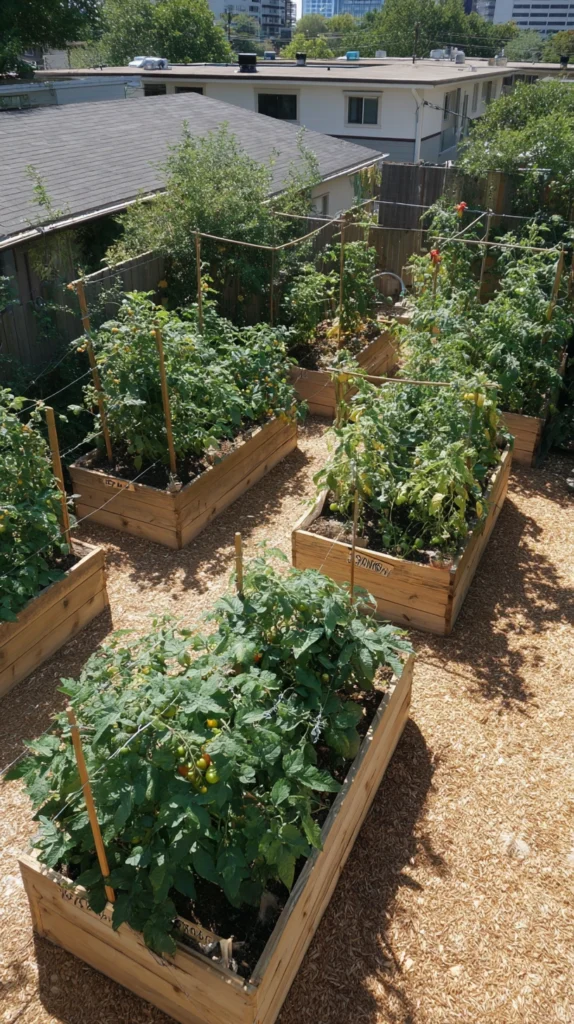
This is what I use now, and it changed everything.
I built four 4×8-foot raised beds arranged in a rectangle with 2-foot paths between them. Clean, organized, maximum growing space.
Why this works:
- Can reach the middle of the bed from either side (4 feet wide is perfect)
- Paths stay clean with wood chip mulch
- Beds are permanent, no re-planning each year
- Looks professional and intentional
My exact setup:
- 4 beds total: 4 feet wide × 8 feet long × 12 inches tall
- 2-foot walking paths between all beds
- Total space used: 12×20 feet
- Growing space: 128 square feet
- Grows 60+ plants easily
The grid pattern lets me rotate crops between beds each year. Tomatoes in bed 1 this year, bed 2 next year. Prevents soil disease buildup.
Building the Beds
I used untreated cedar boards because treated wood can leach chemicals. Each bed costs about $40 in lumber.
Materials per bed:
- Two 8-foot boards (16 feet total)
- Two 4-foot boards (8 feet total)
- Corner brackets or screws
- Landscape fabric on bottom (optional)
Fill with quality soil, not yard dirt. I use a mix of compost, peat moss, and vermiculite. Good soil is worth the investment.
What I Grow Where
Bed 1: Tomatoes and basil (8 tomato plants) Bed 2: Peppers and herbs (12 pepper plants) Bed 3: Lettuce and greens (succession planted) Bed 4: Beans, cucumbers on trellis (vertical crops)
This rotation keeps soil healthy and prevents the same crop from depleting the same nutrients year after year.
2. Square Foot Gardening (Perfect for Beginners)
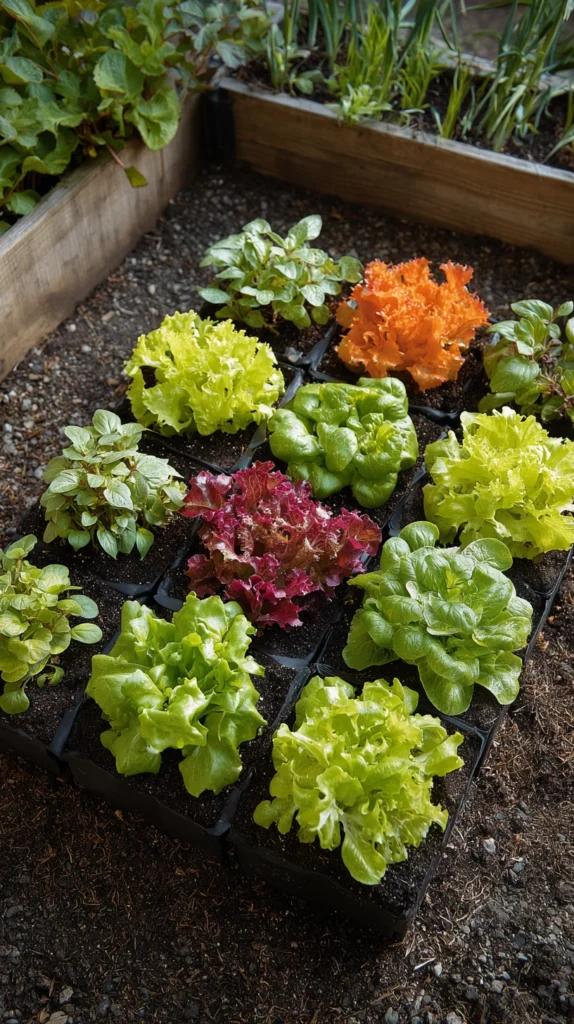
The concept: Divide your bed into 1-foot squares and plant different amounts in each square based on plant size.
Planting density per square:
- 1 plant: tomato, pepper, cabbage, broccoli
- 4 plants: lettuce, chard, basil
- 9 plants: spinach, beets
- 16 plants: radishes, carrots, onions
I tried this in one 4×4 bed and grew 16 different vegetables in 16 square feet. Way more variety than traditional rows.
Pros:
- Easy to plan and visualize
- Maximum space efficiency
- Great for small spaces
- Perfect for beginners
Cons:
- Reaching center squares can be awkward
- Some plants outgrow their square
- A rigid grid might not suit all gardens
My Square Foot Setup
I built a 4×4 bed specifically for square foot gardening. Used a string to mark the grid into 16 squares.
What I planted:
- 4 squares: tomatoes (1 per square)
- 4 squares: lettuce (4 per square)
- 4 squares: carrots (16 per square)
- 2 squares: peppers (1 per square)
- 2 squares: herbs (4 basil per square)
Harvested constantly all summer from just 16 square feet. This method maximizes production in minimal space.
3. Traditional Row Layout (When You Have Space)
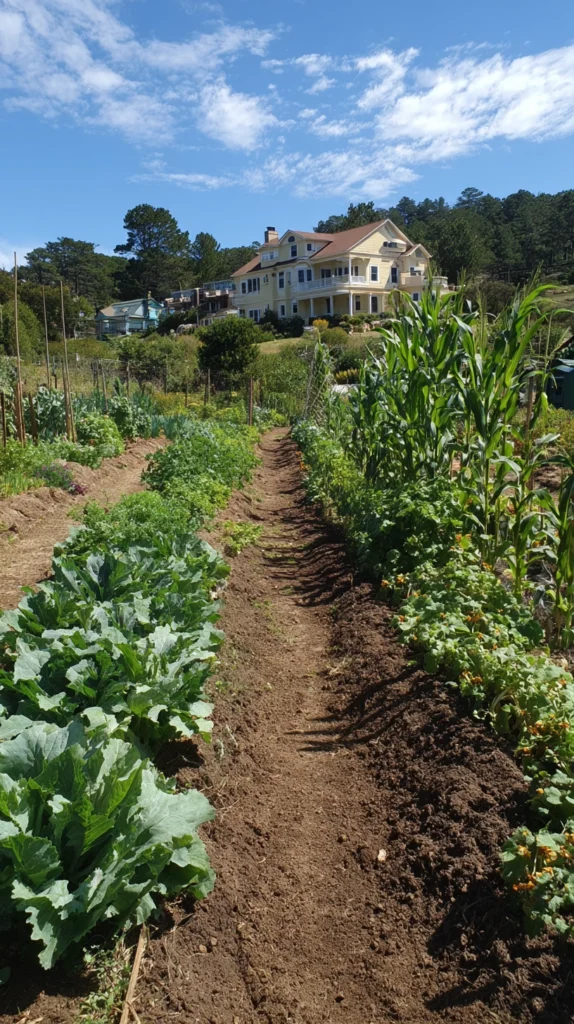
I don’t recommend this for small gardens, but it works fine if you have a big yard and don’t mind wasted space.
Plant vegetables in straight rows with 2-3 foot paths between rows. Simple and traditional, but uses lots of space.
When rows make sense:
- You have a large garden (1,000+ square feet)
- Using a tiller or cultivator between rows
- Growing just a few crop types in quantity
Space requirements:
- Each row: 3-4 feet apart
- Plants within row: varies by vegetable
- Total space: 60% paths, 40% growing
I used rows my first year and wasted half my garden on empty paths. I switched to beds and doubled my harvest in the same space.
4. Keyhole Garden (Water-Efficient Design)
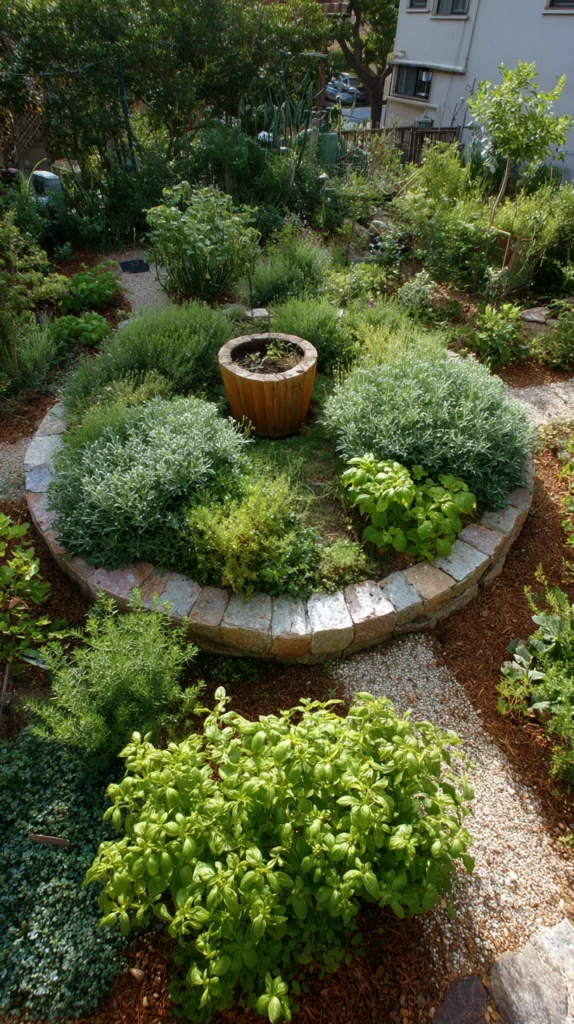
A circular raised bed with a path to the center. The center holds a compost basket that waters and feeds plants while you work.
I built one 6-foot diameter keyhole garden, and it’s incredibly water-efficient in summer drought.
How it works:
- Circular bed, 3-4 feet tall
- Wedge-shaped path leads tothe center
- Center basket holds compost and kitchen scraps
- Water compost basket, it feeds the surrounding plants
Benefits:
- Compost feeds plants directly
- Captures and holds water efficiently
- Can reach all plants from center path
- Interesting focal point in yard
Building a Keyhole
I used rocks and bricks I had lying around. Total cost: $30 for compost basket wire.
Construction:
- Mark a 6-foot circle on the ground
- Build walls 3 feet high (rocks, bricks, wood)
- Create a wedge-shaped path to the center
- Install a wire compost basket in the center
- Fill with soil, higher in the middle
Plant intensively around the compost basket. The closer to the center, the more nutrients plants get.
5. Vertical Trellis Wall Layout (For Small Spaces)
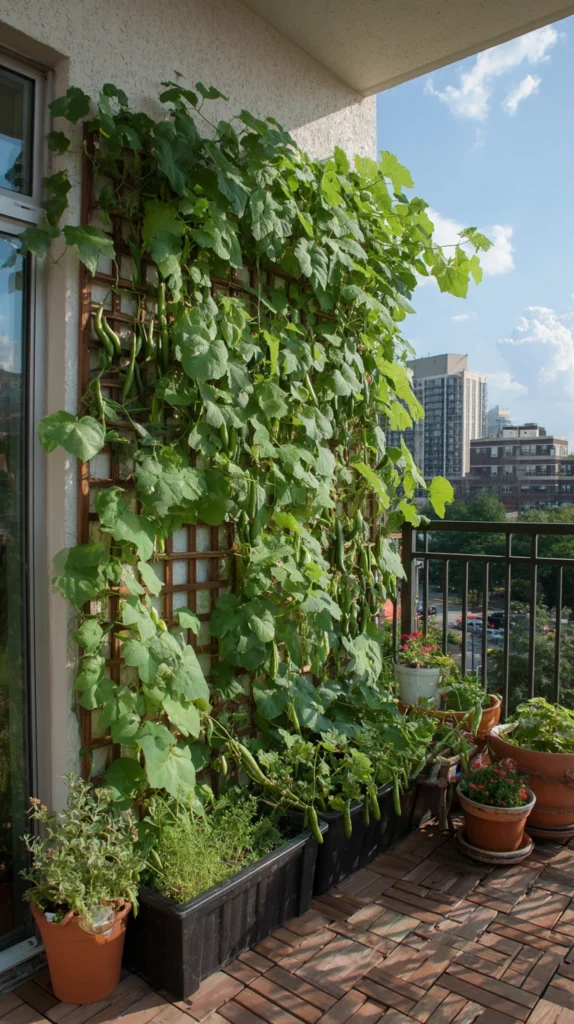
Maximize vertical space when horizontal space is limited.
I grow 20+ plants on a 4×8-foot trellis against my fence. Cucumbers, beans, peas, and even small squash climb vertically.
What grows vertically:
- Pole beans (produce for months)
- Cucumbers (way easier to harvest)
- Peas (sugar snap and snow peas)
- Small squash varieties
- Tomatoes (with support)
Space savings:
- Horizontal ground space: 4×2 feet
- Actual growing space: 4×8 feet (trellis height)
- Doubles usable space through vertical growing
My Trellis System
I attached cattle panel fencing (4×16 feet) to T-posts. Cost: $25 total, lasts 10+ years.
Setup:
- Two T-posts 8 feet apart
- Cattle panel attached with wire
- 2-foot wide bed at base
- Plants grow up the panel
Harvest from both sides. Everything hangs at eye level instead of hiding under leaves on the ground.
6. Potager Garden (Beautiful and Productive)
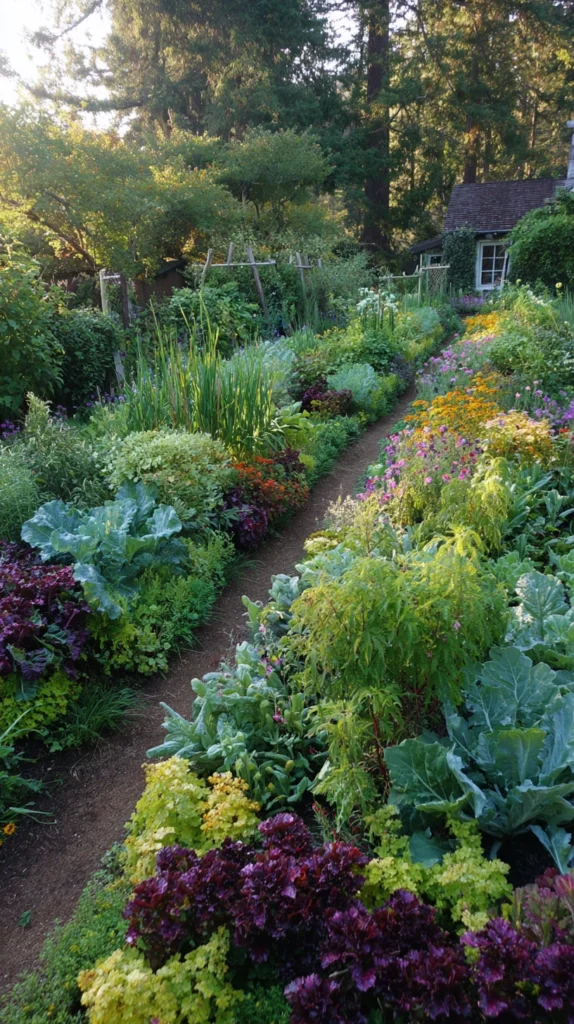
A French-style decorative vegetable garden that mixes vegetables, flowers, and herbs in pretty patterns.
I made a small potager in my front yard. Neighbors thought it was purely decorative until they saw me harvesting food from it.
Key elements:
- Geometric beds (often four squares with paths)
- Mix vegetables with flowers
- Herbs as borders
- Edible and beautiful together
What makes it work:
- Neat edges and defined paths
- Colorful vegetables (purple kale, rainbow chard)
- Flowers attract pollinators and look pretty
- Everything edible, but ornamental too
My Front Yard Potager
Four 4×4 beds in a square pattern with a 3-foot path cross in the middle. Looks intentional and elegant.
Planting scheme:
- Bed edges: marigolds and nasturtiums (edible flowers)
- Main crops: rainbow chard, purple cabbage, lettuce
- Corners: herb plants (basil, parsley)
- Vertical: obelisk trellises with beans
Harvested vegetables from my front yard without anyone realizing it was a vegetable garden. It just looked like pretty landscaping.
7. Three Sisters Companion Planting Layout
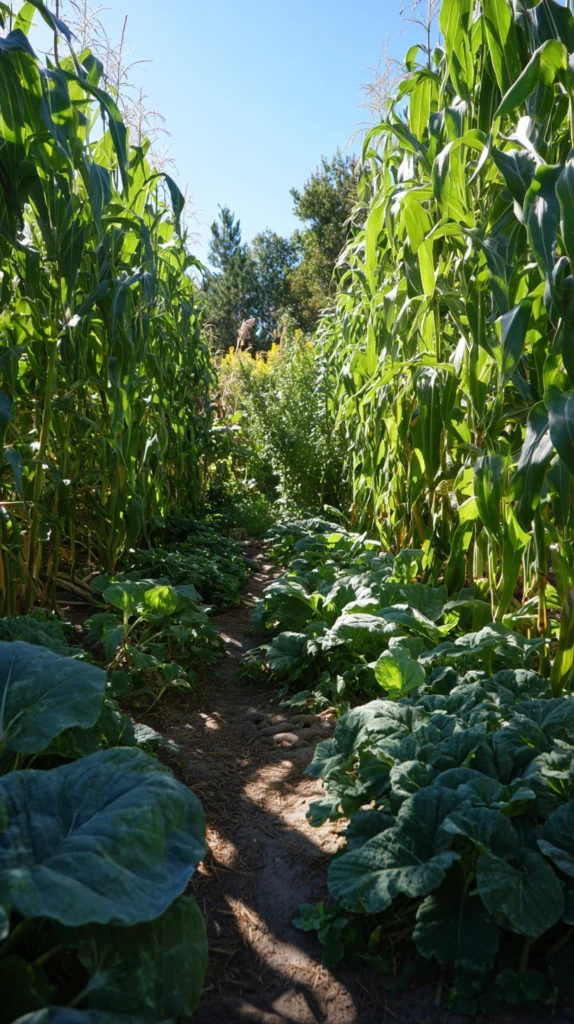
Native American method: Corn, beans, and squash grown together in mounds. Each plant helps the others.
How it works:
- Corn provides a pole for beans to climb
- Beans add nitrogen to the soil
- Squash leaves shade the soil, preventing weeds
I tried this, and it worked okay but took lots of space. Better for large gardens than small spaces.
Planting pattern:
- Mound of soil 3-4 feet wide
- 4 corn plants inthe center
- 4 bean plants around corn
- 2 squash plants around edges
- Space mounds 6-8 feet apart
My Three Sisters Experience
Built 3 mounds, 8 feet apart. Each mound produced:
- 12-16 ears of corn
- 2 pounds of beans
- 4-6 squash
Pros: Great production, low maintenance once established. Cons: Needs significant space, all crops ready atthe same time
Better for someone with a large garden who wants a traditional, natural method. Not space-efficient for small yards.
8. Container Garden Layout (No Ground Needed)
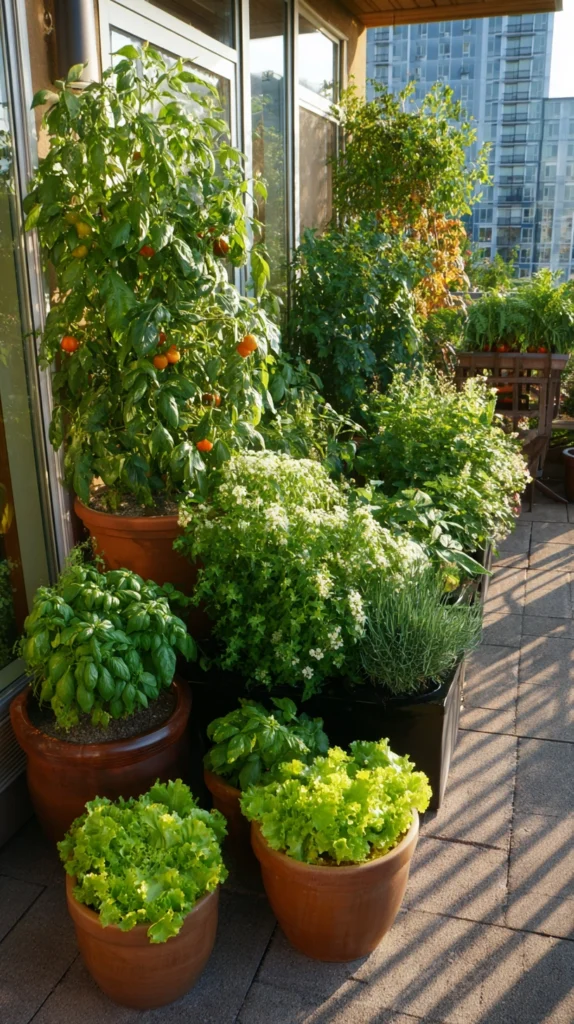
Grow vegetables in pots on a patio, balcony, or driveway. Perfect for renters or people with terrible soil.
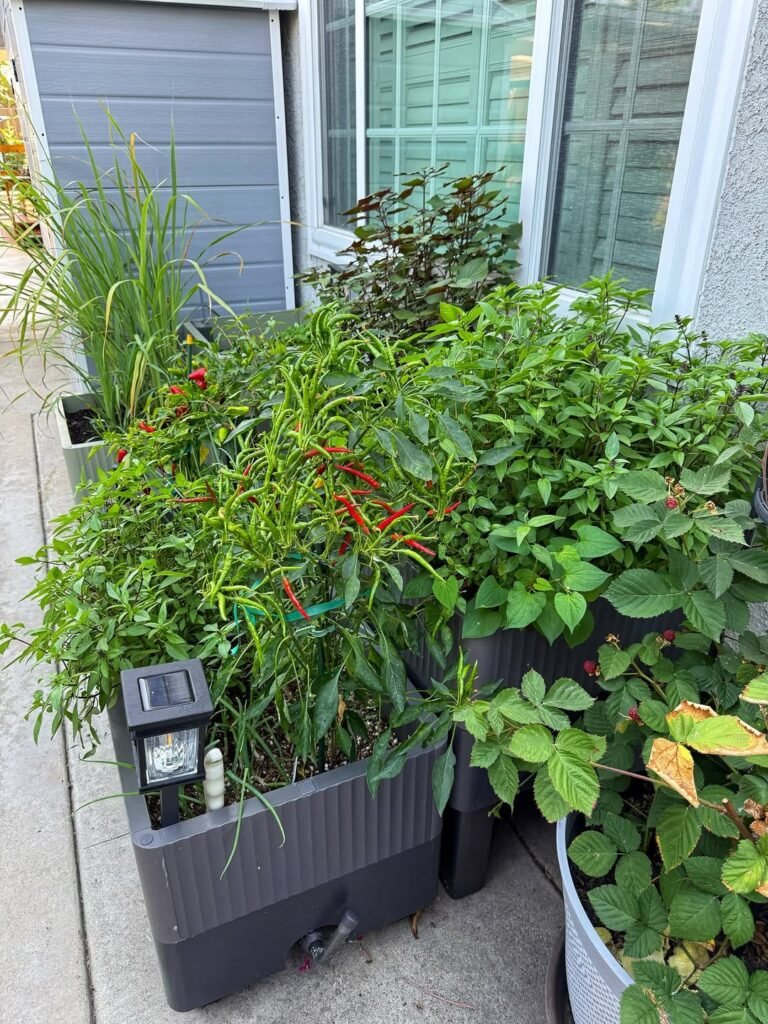
I have 12 containers on my patio growing tomatoes, peppers, herbs, and lettuce. Zero ground space used, full harvest.
Container size by crop:
| Vegetable | Container Size | Plants Per Pot |
| Tomatoes | 5 gallons minimum | 1 |
| Peppers | 3-5 gallons | 1 |
| Lettuce/greens | 12″ wide, 6″ deep | 4-6 |
| Herbs | 8-12″ pot | 1-3 |
| Cucumbers | 5 gallons | 1 with trellis |
Critical rules:
- Must have drainage holes (no holes = dead plants)
- Use potting mix, not yard soil
- Water more often than ground gardens
- Fertilize every 2 weeks
My Patio Setup
12 containers arranged by height:
- Back row: tall tomatoes (5 pots)
- Middle: peppers and cucumbers on trellis (4 pots)
- Front: herbs and lettuce (3 pots)
This creates visual depth, and everything gets light. Harvest from a 10×6-foot concrete patio.
9. Raised Bed Horseshoe Layout (Easy Access)
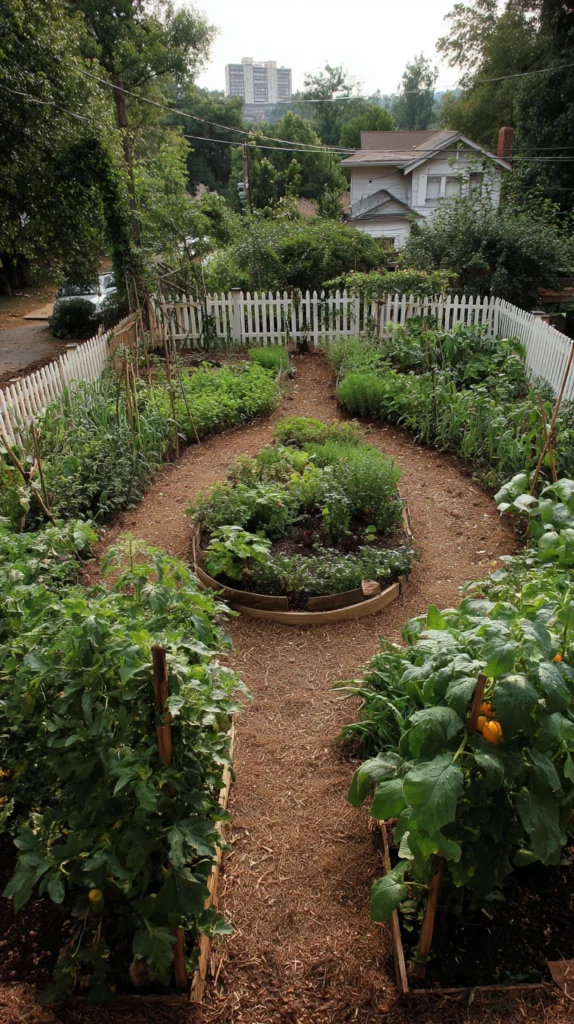
U-shaped raised bed arrangement with a path in the middle. Can access all plants without walking around the whole garden.
Benefits:
- Reach all beds from the center path
- Good for mobility issues
- Efficient layout for corners or small yards
- Protected feeling (beds wrap around you)
My dimensions:
- 3 beds in U-shape: each 4×8 feet
- Center path: 4 feet wide
- Total space: 16×12 feet
- Growing space: 96 square feet
Plant tall crops (tomatoes) in the back bed. Medium crops (peppers) in side beds. Low crops (lettuce) in front for easy viewing.
10. Intensive Planting in Blocks (Maximum Production)
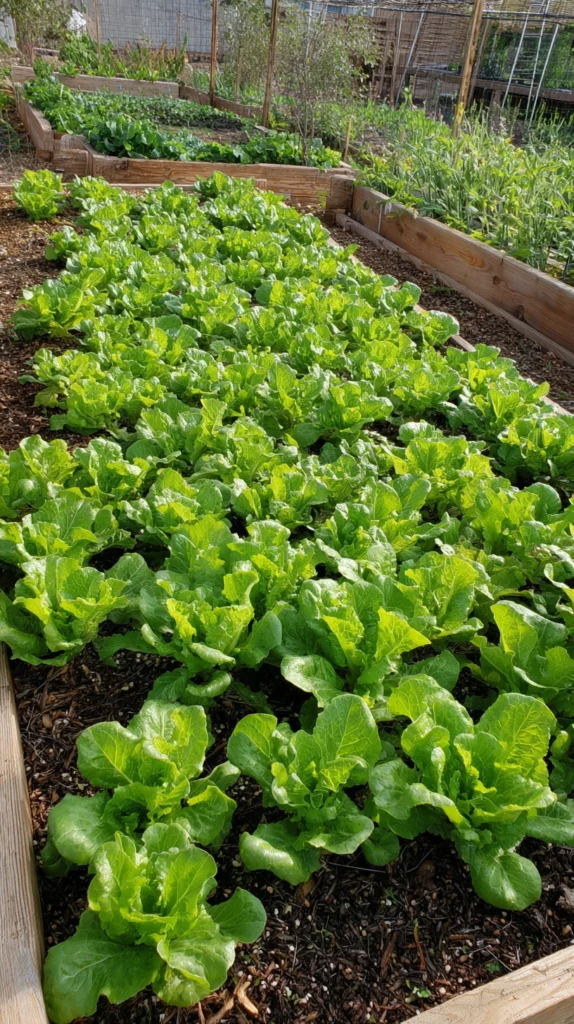
Forget rows. Plant in solid blocks with just enough space for each plant to grow.
I plant lettuce in a 4×4 block with plants 6 inches apart in all directions. 64 lettuce plants in 16 square feet instead of 16 in rows.
Block spacing guide:
- Lettuce: 6 inches apart
- Carrots: 3 inches apart
- Onions: 4 inches apart
- Beets: 4 inches apart
- Radishes: 2 inches apart
Advantages:
- 2-3× more plants in the same space
- Plants shade out weeds
- Better moisture retention
- Easier to net against pests
Implementing Block Planting
Mark spacing with a grid:
- Use a string to mark 6-inch squares
- Plant one seed/seedling per intersection
- Remove the string after planting
Plants grow together into a solid mass. Leaves touch and shade the soil, preventing weed growth naturally.
11. Mandala Garden (Circular Beauty)
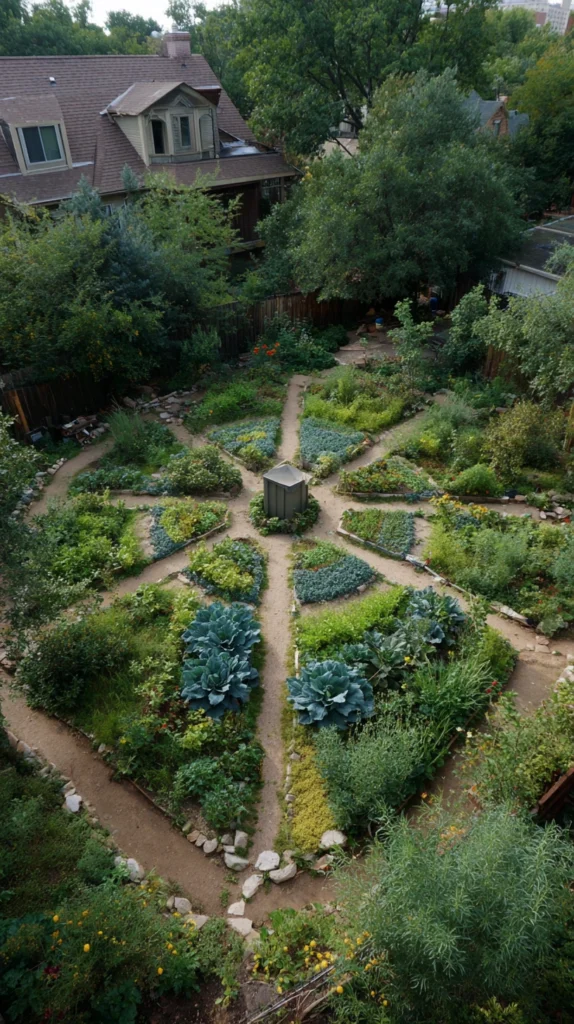
Circular beds radiating from a center point. More artistic than practical, but beautiful and functional.
I created a 10-foot diameter mandala with 6 pie-slice beds and paths between slices.
Layout:
- Center: compost bin or water feature
- 6 wedge-shaped beds radiating out
- Narrow paths between wedges
- Circular outer border
Plant by sun exposure:
- North wedges: shade-tolerant crops (lettuce, spinach)
- South wedges: sun lovers (tomatoes, peppers)
- East/West: medium light crops
This layout is more for beauty than maximum production, but it’s stunning and makes gardening feel special.
12. Tiered Terrace Layout (For Slopes)
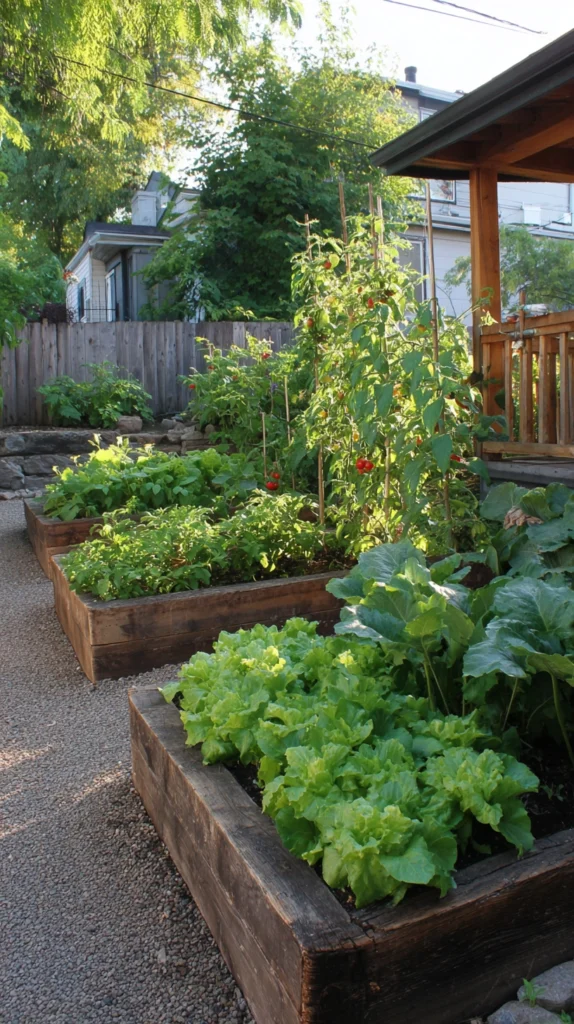
Got a sloped yard? Build terraced beds that step down the slope instead of fighting it.
My yard slopes 3 feet over 20 feet. I built 3 terraced beds stepping down the hill. Turned an unusable slope into a productive garden.
Benefits:
- Uses sloped land effectively
- Natural drainage downhill
- Each tier gets full sun
- Visually interesting
Construction:
- Build a retaining wall for each tier (wood, stone, or blocks)
- Each bed 3-4 feet wide
- 2-foot path between tiers
- Steps or slope for path access
Planting Tiered Gardens
Top tier (least water): Drought-tolerant plants (tomatoes, peppers). Middle tier: Medium water needs (beans, squash) Bottom tier (most water): Water-loving plants (lettuce, celery)
Water naturally flows downhill, giving bottom plants more moisture. Work with the slope instead of against it.
13. Succession Planting Layout (Continuous Harvest)
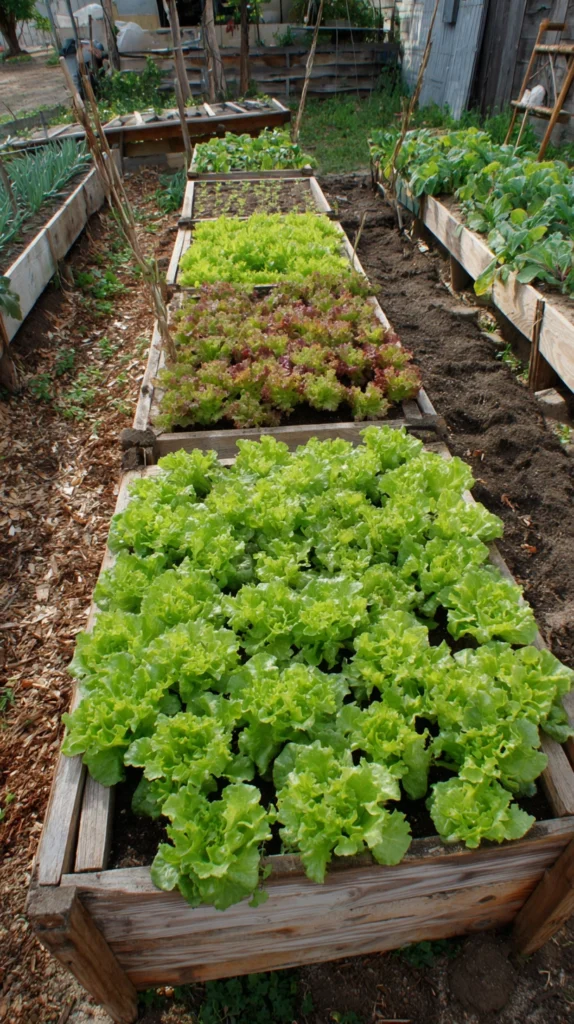
Plant the same crop every 2 weeks instead of all at once. Never run out of fresh vegetables.
I divide one 4×8 bed into 4 sections. Plant lettuce in section 1. Two weeks later, plant section 2. Repeat.
Result: Continuous harvest for 8+ weeks instead of one big harvest, then nothing.
Best crops for succession:
- Lettuce and salad greens
- Radishes (ready in 30 days)
- Bush beans
- Carrots
- Beets
My succession schedule:
| Week | Section to Plant | First Harvest Week |
| 1 | Section A | Week 5-6 |
| 3 | Section B | Week 7-8 |
| 5 | Section C | Week 9-10 |
| 7 | Section D | Week 11-12 |
By week 6, I’m harvesting from section A and planting section A again. Continuous cycle all season.
14. Shade Garden Layout (North Side or Under Trees)
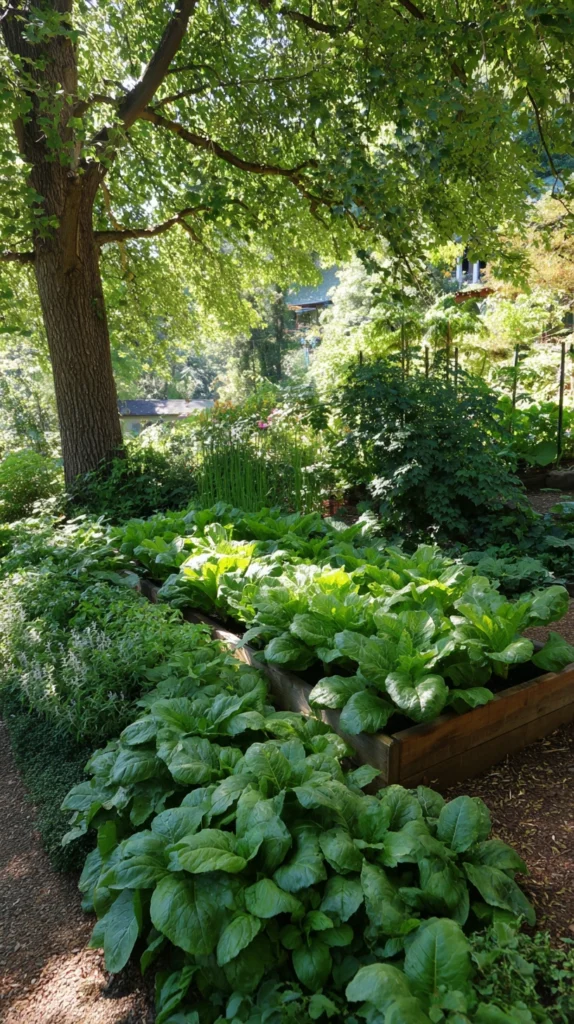
Not all gardens are sunny. Some vegetables actually prefer shade or partial sun.
I have a bed on the north side of my house that gets 3-4 hours of sun. Can’t grow tomatoes there but greens thrive.
Shade-tolerant vegetables:
- Lettuce (actually prefers some shade)
- Spinach (bolts in full sun)
- Arugula
- Kale and chard
- Herbs: parsley, cilantro, mint
Layout for shade:
- 4×8 bed against the north wall or under a tree
- Plant only shade-tolerant crops
- Dense planting (shade prevents weeding anyway)
- Focus on greens and herbs
Making Shade Work
Add reflected light:
- Paint nearby walls white
- Use light-colored mulch
- Remove lower tree branches if possible
Even 3 hours of sun can grow plenty of greens. Stop trying to grow tomatoes in shade and embrace what actually works there.
15. Season Extension Layout (Year-Round Growing)
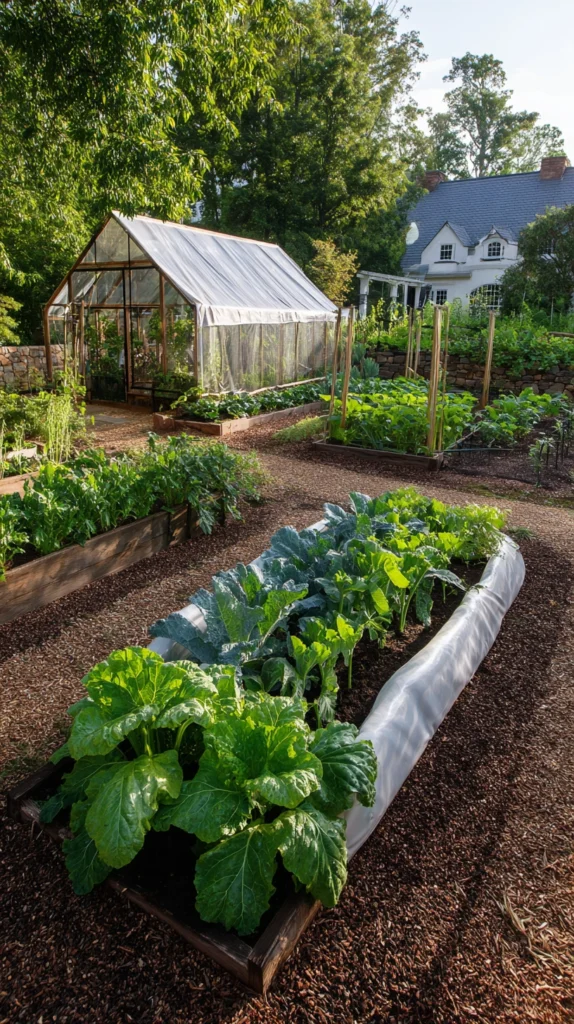
Grow vegetables into winter using cold frames, row covers, and strategic layout.
My cold-weather setup:
- One bed covered with a cold frame (extends the season 6-8 weeks)
- One bed under row cover (frost protection)
- Two beds uncovered (hardy crops only)
Cold-hardy vegetables:
- Kale (survives to 10°F)
- Spinach (regrows in spring)
- Carrots (sweeter after frost)
- Garlic (planted in fall)
- Onions (overwintered varieties)
Building a Simple Season Extension
Cold frame: Old window laid over short raised bed walls. Traps heat, protects from frost.
Row cover: White fabric over wire hoops. Costs $20, adds 4-6 weeks of growing.
My fall planting:
- August: plant kale, spinach, lettuce
- September: cover with row covers
- October: harvest continues
- November: add a cold frame over the best bed
- December: still harvesting kale and spinach
Fresh vegetables in December from a simple cold frame. Minimal investment, huge return.
Choosing the Right Layout For Your Space
Small space (under 100 sq ft): Use square foot gardening or intensive containers
Medium space (100-400 sq ft): Raised bed grid or keyhole design
Large space (400+ sq ft): Multiple layouts combined, or traditional rows with intensive planting
Slopes: Terraced beds stepping down the hill
No ground space: Container layout on patio or balcony
Shady yard: Focus shade-tolerant crops in blocks
What I Actually Use
I combine multiple layouts:
- 4 raised beds in grid (main production)
- Vertical trellis along fence (vining crops)
- 12 containers on patio (herbs and extra tomatoes)
- One keyhole bed (experimental zone)
Total growing space: About 200 square feet producing vegetables for a family of four all season.
Common Layout Mistakes
Beds too wide to reach across. Anything over 4 feet wide, and you’ll step on plants trying to reach the middle. Stick to 3-4 feet maximum.
Paths are too narrow. Made 12-inch pathsin my first year. Couldn’t walk through without stepping on plants. Minimum 18 inches, 24 inches is better.
No plan for tall plants. Planted tomatoes on the south side. They shaded everything behind them. Tall plants go on the north side always.
No water access. Built a garden 100 feet from the nearest hose. Dragging hoses got old fast. Plan gardens near water sources.
How to Plan Your Layout
Step 1: Measure your available space accurately
Step 2: Draw it on graph paper (1 square = 1 foot)
Step 3: Mark permanent features (trees, buildings, fences)
Step 4: Note sun exposure (full sun, partial, shade)
Step 5: Sketch bed placement with 2-foot paths
Step 6: List what you want to grow
Step 7: Assign crops to beds based on sun needs
My Planning Process
I spend 2-3 hours in January planning on graph paper. Saves countless hours and mistakes during the actual season.
I consider:
- Crop rotation (don’t plant tomatoes where tomatoes were)
- Companion planting (basil near tomatoes)
- Succession planting areas
- Space for new plants as early crops finish
This upfront planning makes the season run smoothly instead of chaotic scrambling.
Making Your Layout Look Good
Even vegetable gardens can be pretty:
- Define edges clearly (borders, edging, clean lines)
- Use mulch on paths (wood chips, straw, gravel)
- Add flowers (marigolds, nasturtiums are edible)
- Paint raised beds or containers
- Symmetry and repetition (matching beds, repeated patterns)
My neighbors compliment my garden regularly because it looks intentional and neat, not chaotic.
Quick Beauty Tips
- Mulch paths immediately (prevents weeds, looks clean)
- Paint bed edges one color (creates cohesion)
- Add vertical elements (trellises, obelisks add interest.
- Edge beds with flowers or herbs (softens hard edges)
A beautiful garden is easier to maintain because you actually want to be out there working in it.
Starting Your Layout This Weekend
Pick one layout from this list. Don’t try to combine everything immediately.
Start small. One 4×8 bed or 4 containers is enough for the first year.
Sketch it out on paper first. 20 minutes of planning saves hours of work.
Build or buy what you need. Beds, containers, or just mark rows with a string.
Plant and learn. The first year is always learning. Adjust next year based on what worked.
My first layout was terrible, but I learned from it. Year three, my layout is efficient, productive, and actually looks good.
Now grab some graph paper and start planning the layout that’ll work for YOUR space!
Quick Summary:
Best layouts by situation:
- Beginners: Square foot gardening or raised bed grid
- Small spaces: Containers or vertical trellis
- Large yards: Multiple raised beds or intensive rows
- Slopes: Terraced beds
- Renters: Container layout
- Shady areas: Block planting with shade crops
Key layout principles:
- Beds max 4 feet wide (reachable from sides)
- Paths minimum 18-24 inches (comfortable walking)
- Tall plants on the north side (won’t shade others)
- Water access crucial (don’t locate far from the hose)
- Start small and expand (master one bed first)
Biggest space savers:
- Vertical trellises (doubles growing area)
- Intensive block planting (3× more plants)
- Succession planting (continuous harvest)
- Season extension (grow 8+ months instead of 3)