15 Wildlife Feeding Station Ideas to Bring Nature to Your Backyard
My yard was empty of wildlife for years. Saw maybe 3 bird species total, zero squirrels, nothing interesting.
Just grass and a few shrubs. Quiet, lifeless, boring.
Then I installed my first feeding station. Within a week: 12 bird species, squirrels, chipmunks, butterflies.
Now my yard is a wildlife sanctuary. I see something interesting every single day from my kitchen window.
Let me show you 15 feeding station ideas that transform yards into wildlife habitats.
Why My Yard Was a Wildlife Desert
What I had for years:
Just lawn:
- Mowed grass
- Few generic shrubs
- One tree
- Zero food sources
Wildlife count:
- Robins occasionally
- Crows passing through
- House sparrows (3-4)
- Nothing else ever
Why nothing came:
- No food
- No water
- No shelter
- No reason to visit
After adding feeding stations:
First week:
- Cardinals (pair)
- Blue jays (3)
- Chickadees (flock of 8)
- Goldfinches (12+)
- Squirrels (constant)
Current regular visitors (3 years later):
- 25+ bird species
- Squirrels, chipmunks
- Butterflies, bees
- Occasional hawks (hunting the feeders!)
- Possums, raccoons at night
Same yard, completely different ecosystem.
Benefits of Feeding Stations
What changed:
Entertainment:
- Better than TV
- Watch from kitchen window
- Kids love identifying species
- Never boring
Education:
- Learn bird species
- Observe behaviors
- Understand ecology
- Science lessons
Connection to nature:
- Daily wildlife interactions
- Awareness of seasons
- Migration patterns visible
- Deeper appreciation
Garden benefits:
- Birds eat pests
- Pollinators increase
- Natural pest control
- Healthier plants
My daily routine now: Coffee watching birds, beats scrolling phone.
1. Classic Bird Feeder Station (My Gateway Setup)
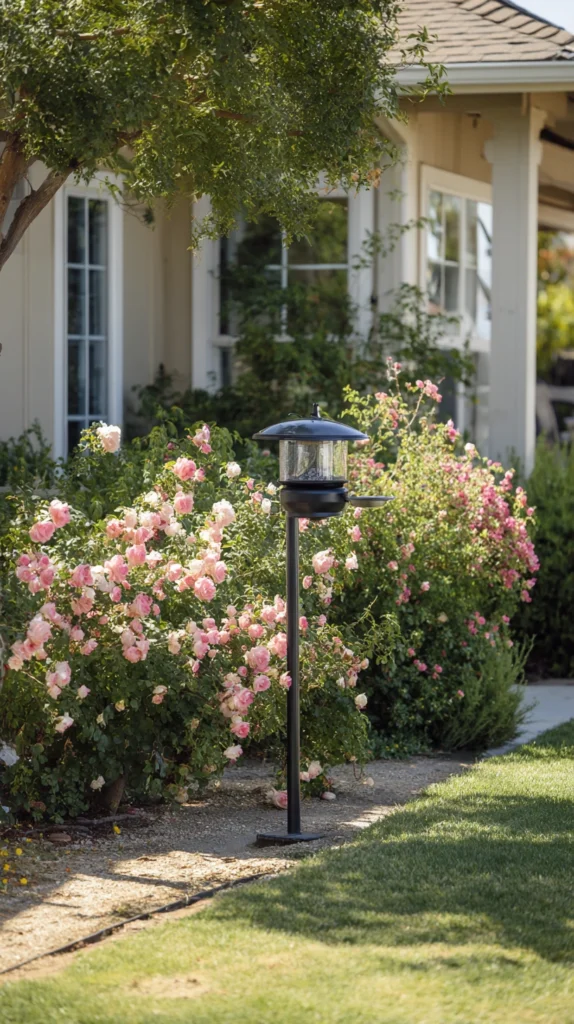
Simple tube feeder on pole – where I started.
My first setup:
Equipment:
- Tube feeder ($20)
- Pole with baffle ($30)
- Black oil sunflower seeds ($15 for 20 lbs)
- Total: $65
Placement:
- 10 feet from window (viewing)
- 5 feet from shrub (cover)
- Open area (predator detection)
- Visible from house
What came immediately:
Week 1:
- Chickadees (5-8 birds)
- Tufted titmice (3-4)
- House finches (flock of 12)
Month 1:
- Cardinals added
- Nuthatches discovered
- Woodpeckers checking it
- Consistent traffic
Benefits:
Simple to start:
- One feeder
- One seed type
- Easy maintenance
- Instant results
Low cost:
- Under $70 to begin
- $15 monthly seed
- Minimal investment
- Proves concept
My first feeder: Still in use 3 years later, foundation of my feeding station.
Tube Feeder Tips
What I learned:
Baffle essential:
- Keeps squirrels out
- Dome above feeder
- Worth every penny
- Or accept squirrels (I did)
Seed choice matters:
- Black oil sunflower: Most species
- Cheap mix: Wasted, birds fling it
- Quality seed = less waste
- Don’t cheap out
Cleaning schedule:
- Monthly minimum (disease prevention)
- Dishwasher safe feeders easier
- Hot soapy water
- Prevents sickness
2. Multi-Level Feeding Station (My Current Setup)
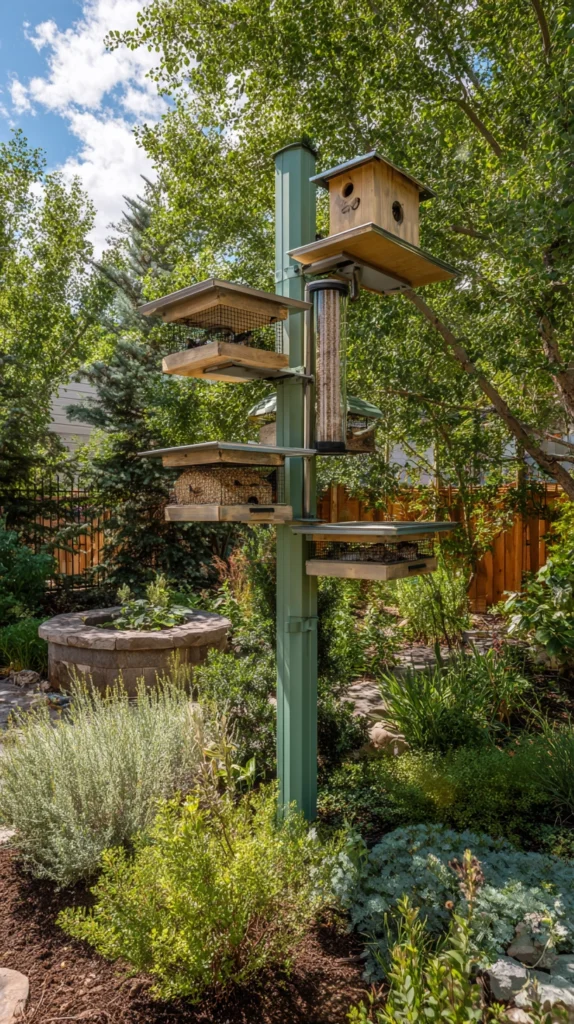
Multiple feeders at different heights – serves more species.
My evolved station:
Upper level (8 feet):
- Tube feeder (sunflower seeds)
- Suet cage
- Visiting: Woodpeckers, nuthatches, chickadees
Middle level (5 feet):
- Platform feeder (mixed seeds)
- Nyjer feeder (finches)
- Visiting: Cardinals, finches, jays
Ground level:
- Tray on ground (scattered seed)
- Visiting: Doves, juncos, towhees
Why multiple levels work:
Different species prefer different heights:
- Woodpeckers: High
- Cardinals: Middle
- Juncos: Ground
- Serve everyone
Reduces competition:
- More feeding spots
- Less fighting
- Happier birds
- Better viewing
Year-round interest:
- Always something happening
- Different species different levels
- Constant activity
- Never dull
My multi-level station cost: $150 initial, feeds 20+ species simultaneously.
3. Squirrel Feeding Station (Embrace Don’t Fight)
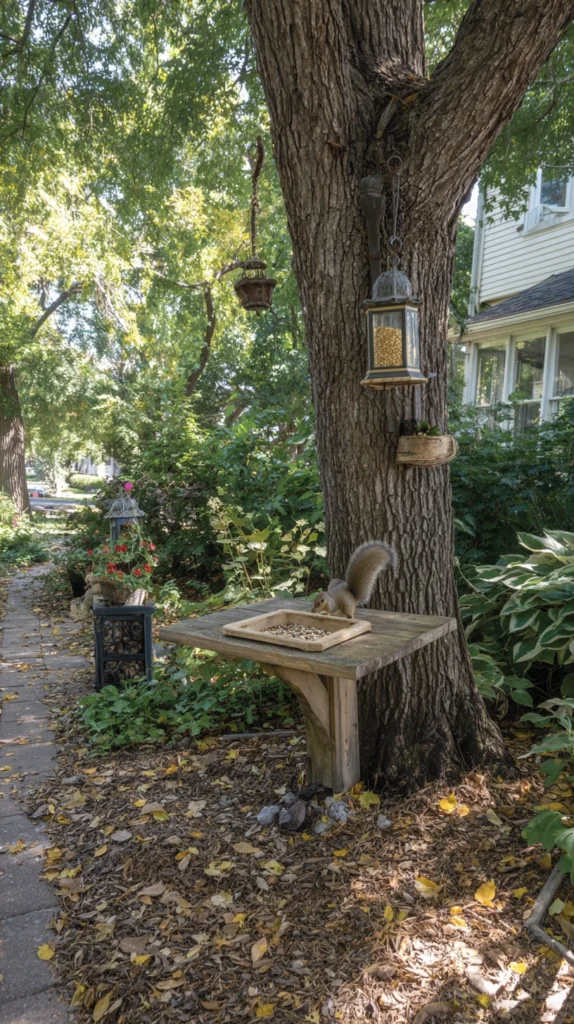
Dedicated squirrel feeder – stops them raiding bird feeders.
My squirrel station:
Setup:
- Ear corn on spike ($15)
- Platform for nuts
- 20 feet from bird feeders
- Separate area
What I offer:
- Dried corn ($8 for 20 lbs)
- Peanuts in shell ($12 for 5 lbs)
- Sunflower seeds
Why separate squirrel feeding:
Stops bird feeder raids:
- Squirrels have own food
- Less motivated to raid
- Birds get more
- Everyone happy
Entertainment value:
- Squirrels are hilarious
- Acrobatics watching
- Kids love them
- Worth feeding
Cost effective:
- Corn cheap ($8 lasts month)
- Keeps them away from expensive bird seed
- Actually saves money
- Win-win
I fought squirrels for 6 months – baffles, “squirrel-proof” feeders, frustration. Gave them own station – problem solved, everyone eating peacefully.
Squirrel Feeder Benefits
What happened:
Bird feeder raids: Dropped 90% Bird seed waste: Reduced dramatically My stress: Gone Entertainment: Increased hugely
Current equilibrium:
- Squirrels mostly eat at their station
- Occasionally raid bird feeders (acceptable)
- Birds and squirrels coexist
- Peaceful yard
4. Hummingbird Feeding Garden (Nectar Station)
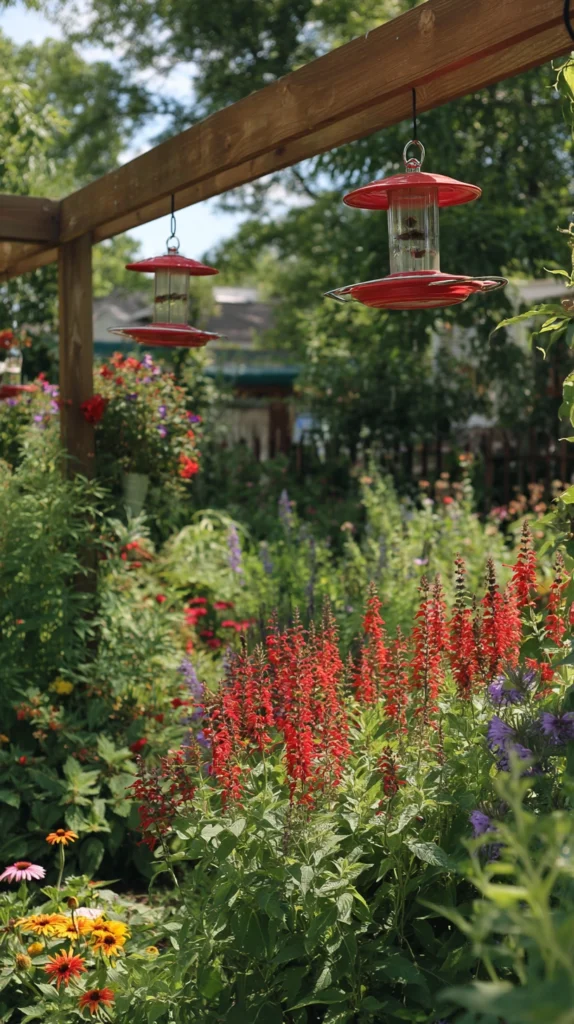
Multiple feeders plus flowers – hummingbird heaven.
My hummingbird setup:
Feeders:
- 3 nectar feeders (different locations)
- 8-12 oz size each
- Red accents (attracts them)
- $15 each = $45
Nectar recipe:
- 1 part sugar
- 4 parts water
- Boil, cool, fill
- No red dye needed (harmful)
Flowers nearby:
- Salvia (red)
- Bee balm
- Cardinal flower
- Trumpet vine
- Zinnias
Season:
- April-October (my area)
- Peak July-August
- Dozens of hummingbirds
- Territorial battles
Benefits:
Free entertainment:
- Hummingbird wars (territorial)
- Acrobatic displays
- Constant movement
- Mesmerizing
Easy to maintain:
- Change nectar weekly (more often in heat)
- Clean feeders (prevent mold)
- 15 minutes weekly
- Simple
My hummingbird station: Peak activity has 30+ hummingbirds fighting over 3 feeders, chaos and beauty.
5. Butterfly Buffet Station (Nectar and Fruit)
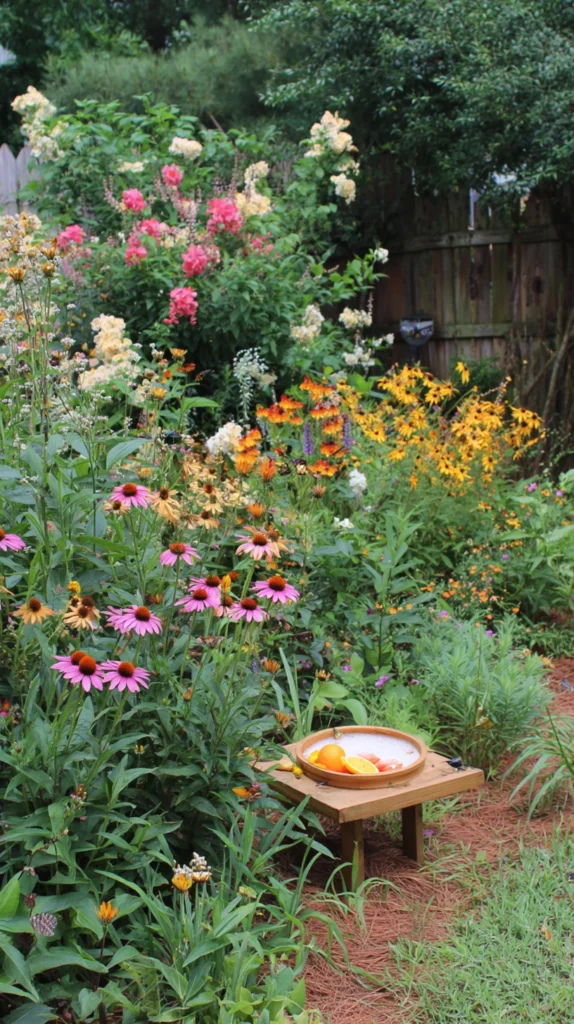
Flowers plus fruit feeding platform – butterfly attraction.
My butterfly station:
Nectar flowers:
- Butterfly bush (3 plants)
- Coneflowers (purple)
- Black-eyed Susans
- Zinnias (mixed colors)
- Milkweed (monarch host plant)
Fruit feeding platform:
- Shallow dish on post
- Overripe fruit (bananas, oranges, watermelon)
- Replaced every 2-3 days
- Attracts different species
Mud puddle:
- Shallow dish with sand
- Keep moist
- Butterflies “puddle” for minerals
- Males especially
Results:
Species count: 15+ butterfly species regular Peak season: July-September Activity: Constant during sunny days Bonus: Caterpillars on host plants (nature education)
Cost: $60 for plants initially, free fruit (kitchen scraps), zero ongoing
6. Suet Station for Woodpeckers (Year-Round Feeding)
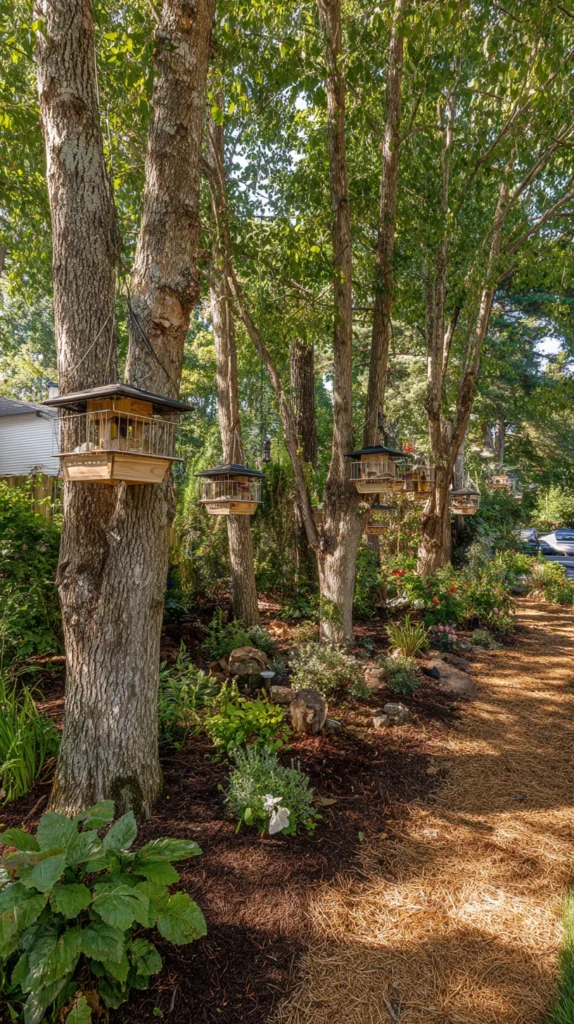
Multiple suet cages – woodpecker magnet.
My woodpecker setup:
Three suet cages:
- One peanut suet
- One insect suet
- One berry suet
- $1.50 per cake, 3 cakes weekly = $4.50 weekly
Placement:
- On tree trunks
- Under branches (weather protection)
- 6 feet high
- Natural perching
Woodpecker species I see:
- Downy woodpeckers (daily)
- Hairy woodpeckers (weekly)
- Red-bellied woodpeckers (daily)
- Northern flickers (occasional)
- Pileated woodpeckers (rare, exciting!)
Why suet works:
High energy:
- Fat and protein
- Especially important winter
- Helps survival
- Year-round feeding
Attracts specialists:
- Woodpeckers primarily
- Also: Nuthatches, chickadees, wrens
- Different from seed feeders
- Increases diversity
My suet station: Goes through 3 cakes weekly in winter, 1-2 in summer, always active.
7. Ground Feeding Station (Low-Level Birds)
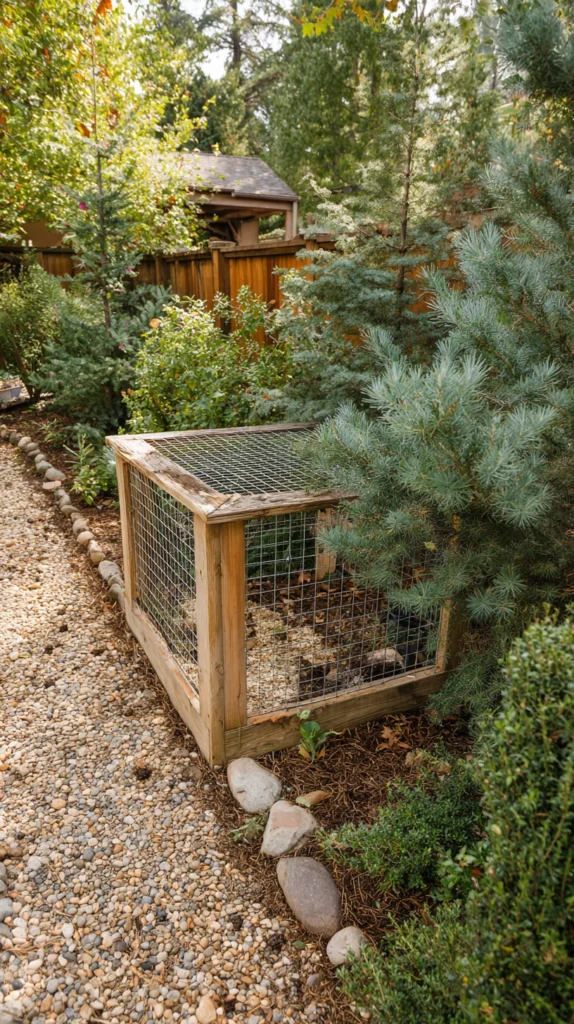
Protected ground area – serves ground-feeders.
My ground station:
Setup:
- 4×4 foot area
- Wire mesh cover (predator protection)
- Scattered seed and millet
- Under shrubs (cover nearby)
Ground-feeding birds:
- Mourning doves (flock of 20+)
- Dark-eyed juncos (winter)
- White-throated sparrows
- Towhees
- Cardinals (sometimes)
Protection:
Wire cover:
- 2×4 lumber frame
- Hardware cloth over top
- Birds fit through, hawks don’t
- Safety feature
Shrub cover nearby:
- Escape route
- 5 feet away
- Quick shelter
- Essential for ground feeders
Maintenance:
- Rake up hulls weekly
- Refresh seed every 2-3 days
- Check for mold
- Simple upkeep
My ground station: Year-round use, especially popular winter, different species than elevated feeders.
8. Window Feeder Station (Close-Up Viewing)
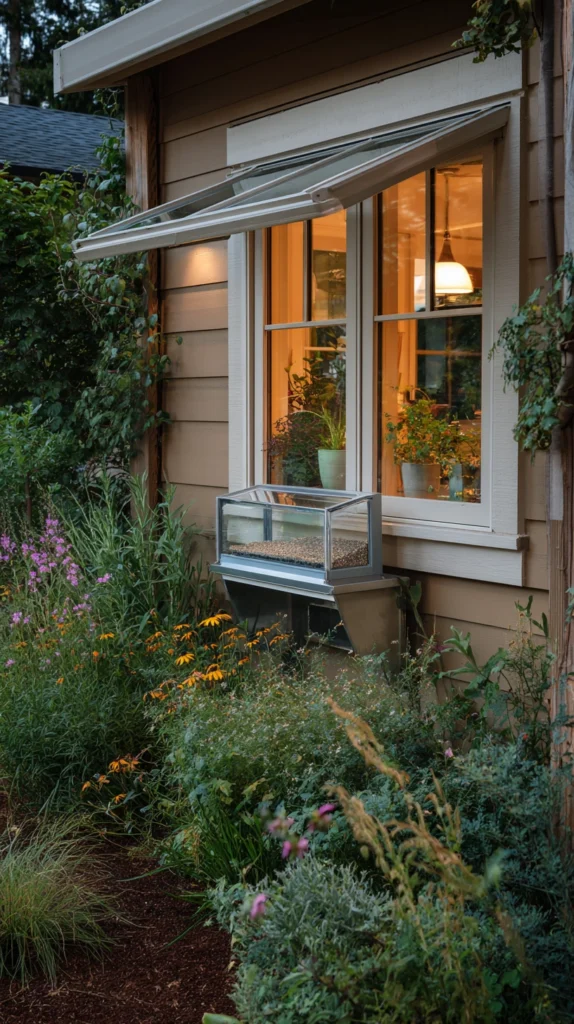
Suction cup feeder – birds inches from face.
My kitchen window setup:
Feeder:
- Clear acrylic with suction cups
- $15
- Holds 2 cups seed
- Attaches to window
Window placement:
- Kitchen window (most-used view)
- Above sink (dishwashing entertainment)
- East-facing (morning activity)
- Perfect location
What visits:
- Chickadees (bold, first to discover)
- Tufted titmice
- Cardinals (eventually)
- Nuthatches
- House finches
Benefits:
Intimate viewing:
- 12 inches from birds
- See details (feather patterns)
- Eye contact possible
- Photography opportunities
Kid-friendly:
- Perfect height for children
- Safe viewing
- Educational
- Encourages interest
Weather-protected:
- Under roof overhang
- Stays dry
- Year-round use
- Low maintenance
My window feeder: Refill every 3-4 days, kids’ favorite, best $15 spent.
9. Native Plant Feeding Station (Natural Food Sources)
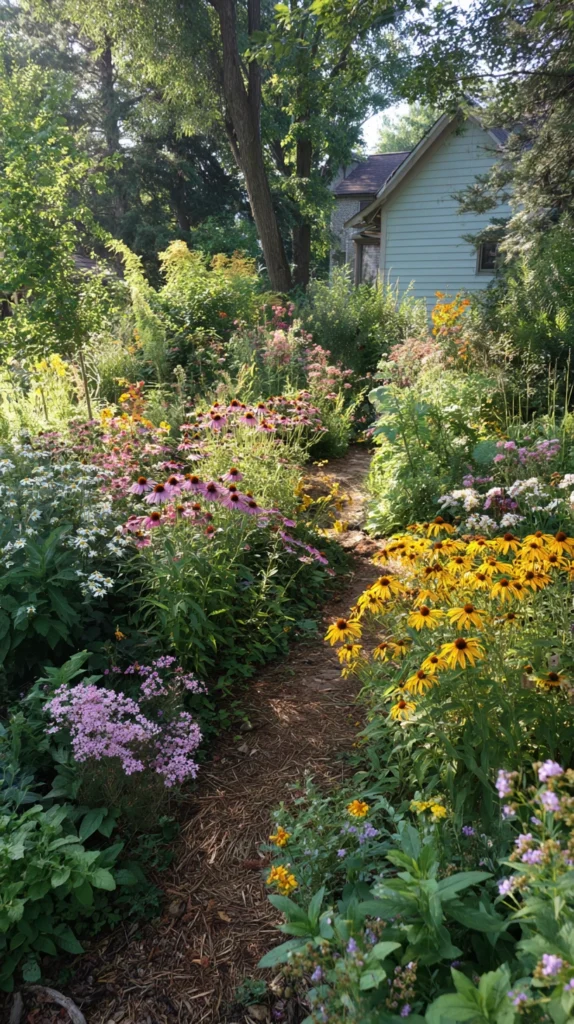
Native berry/seed-producing plants – self-sustaining feeding.
My native plant buffet:
Berry plants:
- Elderberry (2 bushes)
- Serviceberry (3 trees)
- Dogwood (red-twig, berries)
- Viburnum (native species)
- Winterberry holly
Seed-producing:
- Coneflowers (goldfinches love seeds)
- Black-eyed Susans
- Native sunflowers
- Asters (fall)
Benefits:
Year-round food:
- Spring: Early blooms
- Summer: Insects on plants
- Fall: Seeds and berries
- Winter: Persistent berries
Zero ongoing cost:
- Plant once
- Produces yearly
- No seed purchases
- Self-sustaining
Natural behaviors:
- Birds foraging naturally
- Not dependent on feeders
- Healthier ecosystem
- More authentic
My native station: $200 initial plant cost, feeds birds forever, most sustainable option.
Native Plant Timeline
What feeds when:
March-April: Serviceberry flowers (insects), early berries May-June: Elderberry flowers (pollinators) July-August: Elderberries ripe (20+ species eat them) September-October: Dogwood berries, aster seeds November-February: Winterberry persists, coneflower seeds
Something available every month.
10. Water Feature Feeding Station (Hydration Hub)
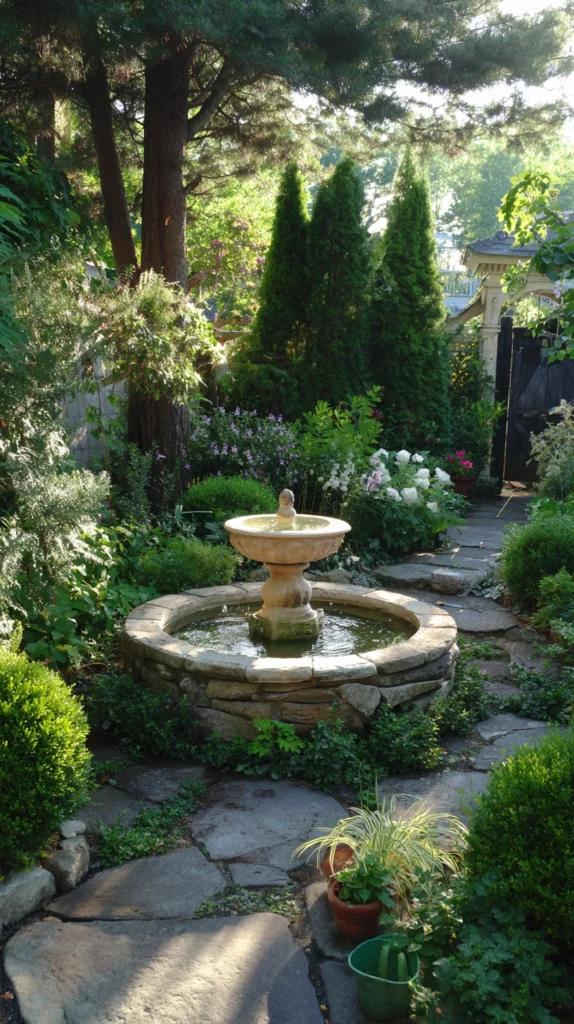
Birdbath plus feeders – complete station.
My water station:
Birdbath:
- Heated birdbath ($60)
- Runs year-round
- 2 inches deep
- Cleaned weekly
Surrounding feeders:
- Tube feeder (5 feet away)
- Suet cage
- Platform feeder
- All within 10 feet
Why water attracts more:
Essential resource:
- Birds need water daily
- Bathing (feather maintenance)
- Drinking (survival)
- Often scarcer than food
Increased diversity:
- Species that don’t eat seeds
- Robins love baths (rarely feed)
- Warblers, thrushes
- Migrating birds stop
Year-round use:
- Summer: Bathing, drinking
- Winter: Heated = only liquid water
- Critical winter resource
- Draws rare species
My water station: Single best addition, 30+ species use bath vs 20 at feeders.
11. Covered Feeding Station (Weather Protection)
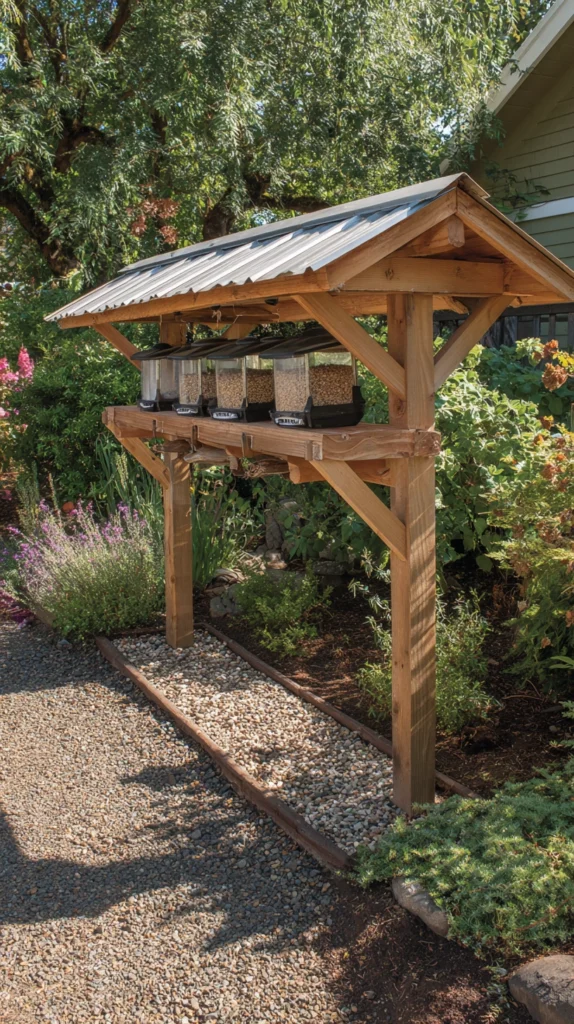
Roof over feeders – keeps seed dry and birds comfortable.
My covered station:
Structure:
- 4×4 post
- 4×4 roof (corrugated plastic)
- $80 materials
- DIY build (4 hours)
Under roof:
- Platform feeder
- Nyjer feeder
- Suet cage
- All weather-protected
Benefits:
Seed stays dry:
- No moldy seed
- Less waste
- Healthier for birds
- Cost savings
Birds feed in rain:
- Protection from weather
- Year-round comfort
- Increased use
- Happy birds
Extended feeder life:
- Wood doesn’t rot
- Metal doesn’t rust
- Feeders last longer
- Equipment protection
My covered station: Cost $80 to build, saves money on seed waste and feeder replacement.
12. Specialist Feeding Station (Target Species)
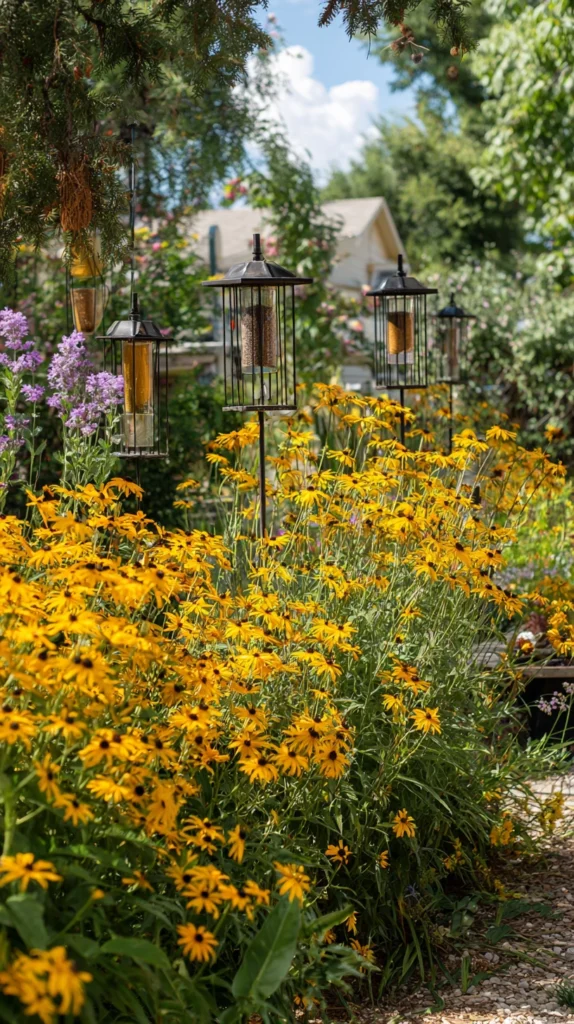
Feeder setup for specific birds – attract favorites.
My goldfinch station:
Target: American goldfinches
Setup:
- 3 nyjer feeders (thistle seed)
- Yellow flowers nearby (attraction)
- Away from other feeders (reduce competition)
Results:
- Flock of 30+ goldfinches
- Year-round residents
- Breeding nearby (nesting in yard)
- Success!
Other specialist stations:
Bluebird station:
- Mealworm feeder (live or dried)
- Open area (bluebird preference)
- House mounted nearby
Oriole station:
- Grape jelly feeder
- Orange halves
- May-September only
- Bright orange feeders
My specialist approach: Started with goldfinches (successful), adding oriole station next spring.
13. All-Season Feeding Complex (Year-Round Station)
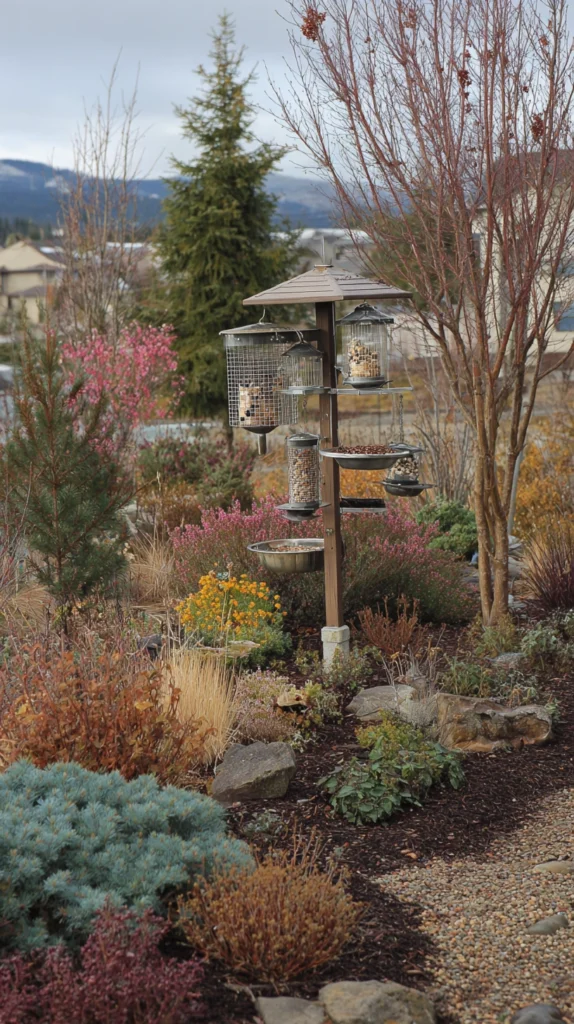
Multiple feeders adapted by season – never empty yard.
My year-round rotation:
Spring (March-May):
- Regular seed feeders
- Suet (migration energy)
- Nectar feeders up (hummingbirds arrive)
- Nesting material (string, pet fur)
Summer (June-August):
- Reduced seed (natural food abundant)
- Nectar feeders peak
- Water critical (heat)
- Fruit for orioles/butterflies
Fall (September-November):
- Increase seed (migration fueling)
- Suet returns
- Nectar feeders until frost
- Platform feeders (messy eaters)
Winter (December-February):
- Maximum seed output
- High-fat suet
- Heated water (critical)
- Mealworms (extra protein)
Seasonal adjustments keep activity year-round.
14. Camera-Monitored Feeding Station (Digital Observation)
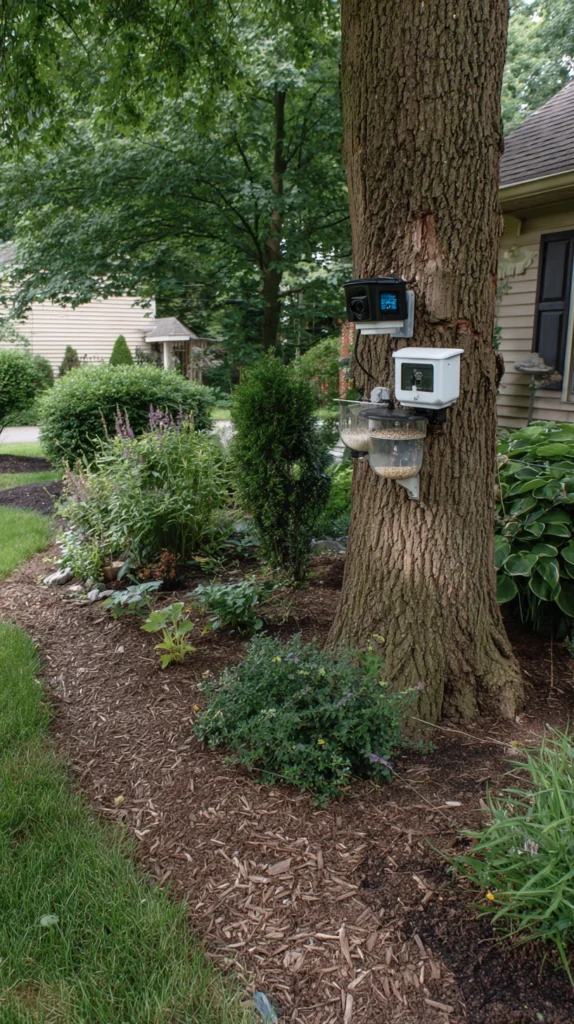
Trail camera at feeder – catch nighttime visitors.
My camera setup:
Equipment:
- Trail camera ($80)
- Mounted on tree
- Aimed at main feeder
- Motion-activated
Discoveries:
Daytime expected:
- All the usual birds
- Squirrels
- Chipmunks
Nighttime surprises:
- Raccoons (3 regular)
- Opossums (1-2)
- Flying squirrels (!)
- Owls hunting at feeder
Benefits:
See nocturnal visitors:
- No idea they were there
- Flying squirrels shock (never saw them)
- Complete picture of yard wildlife
- Educational
Behavior documentation:
- Which species when
- Interaction patterns
- Seasonal changes
- Data collection
My camera: Changed understanding of my yard, active 24/7 not just daylight.
15. Educational Feeding Station (Learning Center)
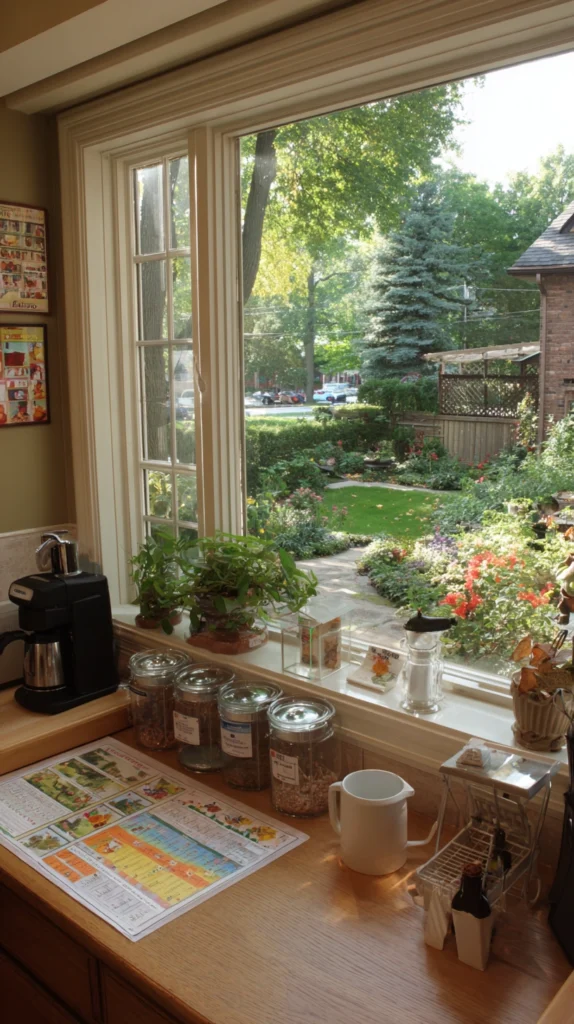
Feeders with identification aids – teaching tool.
My educational setup:
Elements:
Feeders:
- Multiple types (tube, platform, suet)
- Varied seeds (different species)
- Visible from house
Educational additions:
- Laminated bird ID chart (on window)
- Notebook for logging (species, dates)
- Binoculars on windowsill
- Field guide nearby
Kid involvement:
Daily tasks:
- Check and refill feeders
- Mark species on chart
- Count individuals
- Record in journal
Learning outcomes:
- Identified 30+ species (8-year-old)
- Understands migration
- Recognizes calls
- Science education
My educational station: Homeschool science curriculum, nature connection, family activity.
Feeding Station Placement Strategy
Location determines success.
Distance from Windows
My guidelines:
3 feet or less:
- Too close (birds shy initially)
- Eventually accept it
- Best viewing
- Takes time
10-15 feet:
- Ideal distance
- Birds comfortable
- Good viewing
- My main feeders
30+ feet:
- Birds less wary
- Harder to view
- Better for shy species
- Secondary stations
I have feeders at all three distances – serves different species and purposes.
Cover Proximity
Essential safety:
Shrub/tree within 5-10 feet:
- Escape from predators
- Perching before feeding
- Shelter
- Mandatory
My setup:
- Evergreen shrub 8 feet from main feeder
- Provides cover
- Birds stage there
- Quick escape route
Without cover nearby:
- Birds won’t come
- Too vulnerable
- Predator risk
- Wasted feeder
Predator Protection
Hawk problems:
What happened:
- Sharp-shinned hawk learned feeder = lunch
- Hunts my feeding station
- Natural but problematic
- Birds scared away
Solutions I tried:
Pause feeding 1-2 weeks:
- Hawk moves on
- Resume feeding
- Birds return
- Temporary fix
Dense cover nearby:
- Harder for hawk to maneuver
- Birds can escape
- Safer feeding
- Better solution
Accept it:
- Part of nature
- Hawk needs to eat too
- Actually sign of healthy ecosystem
- I chose this approach
Seasonal Feeding Adjustments
What I change throughout year:
Spring Migration (March-May)
High energy needs:
- Increase suet
- More feeders out
- Nectar feeders up early
- Support migration
My spring setup:
- Double seed output
- 3 suet cages
- Hummingbird feeders by April 15
- Welcome migrants
Summer Abundance (June-August)
Natural food plentiful:
- Reduce seed feeders (not eliminate)
- Focus on water
- Nectar feeders peak
- Supplement, not replace
My summer approach:
- Half the seed
- Triple the water sources
- 5 nectar feeders
- Less feeding, more water
Fall Migration (September-November)
Fueling up:
- Increase seed again
- High-fat foods
- Platform feeders (messy feeders welcome)
- Support southbound migration
My fall feeding:
- Back to full seed
- Sunflower seed emphasis
- Peanuts available
- Energy-rich offerings
Winter Survival (December-February)
Critical resource:
- Maximum feeding
- High-fat suet
- Heated water (only liquid source)
- Consistent refilling
My winter commitment:
- Feed daily
- Never let feeders empty
- They depend on it
- Responsibility accepted
Maintenance Reality
Actual time and cost:
Weekly Tasks
My routine:
Refilling (15 minutes):
- Check all feeders
- Top up as needed
- 20 lbs seed weekly ($15)
Cleaning (20 minutes):
- Brush out hulls
- Wash platform feeders
- Check for mold
- Disease prevention
Ground maintenance (10 minutes):
- Rake up hulls underneath
- Prevent rodent attraction
- Keep tidy
- Neighbor-friendly
Total weekly: 45 minutes
Monthly Deep Clean
Disease prevention:
Monthly tasks (1 hour):
- Disassemble all feeders
- Wash with dilute bleach solution (1:10)
- Scrub perches
- Dry completely
- Reassemble
Critical for bird health – diseases spread at feeders without cleaning.
Annual Costs
My actual spending:
Seed: $15 weekly × 52 = $780 yearly Suet: $5 weekly × 52 = $260 yearly Nectar sugar: $20 yearly Equipment replacement: $50 yearly (wear and tear) Total: $1,110 yearly
Sounds expensive but:
- Feeds 40+ species
- Year-round entertainment
- Educational value
- Better than cable TV ($100/month = $1,200)
Worth every penny for daily wildlife connection.
Common Feeding Station Mistakes
I made all these errors:
Mistake 1: Cheap Feeders
Bought $5 plastic feeder – broke in 2 months, waste of money.
Fix: Invest in quality ($20-40), lasts years, actually cheaper long-term.
Mistake 2: Poor Seed Quality
Bought cheap mixed seed – birds flung 70% on ground, wasted money.
Fix: Quality black oil sunflower, birds eat it all, less waste despite higher price.
Mistake 3: Irregular Refilling
Let feeders go empty – birds left, took weeks to return.
Fix: Consistent feeding once you start, birds depend on it.
Mistake 4: No Water Source
Just feeders, no water – missing 30% of species that need water.
Fix: Added birdbath, diversity exploded.
Mistake 5: Dirty Feeders
Didn’t clean for months – birds got sick, some died, felt terrible.
Fix: Weekly rinsing, monthly deep clean, non-negotiable now.
Wildlife Feeding Ethics
Important considerations:
Year-Round Commitment
If you start feeding:
- Birds become dependent (especially winter)
- Must continue consistently
- Can’t just stop mid-winter
- Serious responsibility
I feed year-round – accepted the commitment, birds rely on it.
Natural Balance
Supplemental feeding, not replacement:
- Native plants primary
- Feeders supplement
- Natural behaviors encouraged
- Balanced approach
My yard: 60% natural food sources (plants), 40% feeders
Predator Acceptance
Hawks hunt feeders:
- Natural behavior
- Part of ecosystem
- Sometimes distressing
- Must accept it
I’ve witnessed: Sharp-shinned hawk catches cardinal at feeder – hard to watch but nature.
My Complete Feeding Station Setup
What’s actually in my yard:
Main station (multi-level):
- 3 tube feeders (different seeds)
- 2 platform feeders
- 3 suet cages
- Heated birdbath
- Cost: $200, feeds 25+ species
Hummingbird area:
- 3 nectar feeders
- Flower garden
- Cost: $45 feeders + $60 plants
Squirrel station:
- Corn feeder
- Platform for nuts
- Cost: $30
Ground feeding area:
- Protected scatter zone
- Cost: $40 (wire cover)
Native plant buffet:
- Berry-producing shrubs
- Seed-producing flowers
- Cost: $200 initially
Window feeder:
- Kitchen window view
- Cost: $15
Total investment: ~$600 over 3 years Monthly cost: $65 (seed, suet, sugar) Annual cost: $780 ongoing
Species count: 40+ birds, squirrels, chipmunks, butterflies, occasional mammals
Daily visitors: 100+ individual animals
Transformed my yard from sterile to thriving ecosystem.
Getting Started This Weekend
Don’t build everything at once.
This weekend:
Buy basic starter setup:
- One tube feeder ($20)
- Pole with baffle ($30)
- 20 lbs black oil sunflower ($15)
- Total: $65
Install:
- 10 feet from best viewing window
- 5 feet from shrub/tree (cover)
- Fill feeder
- Wait
What to expect:
Day 1-3: Nothing (birds cautious) Day 4-7: First visitors (chickadees usually) Week 2: Regular traffic establishing Month 1: Multiple species, daily routine
My recommendation:
Start simple:
- One feeder
- One seed type
- Learn the basics
- See if you enjoy it
Then expand:
- Add different feeder types
- Try different seeds
- Increase variety
- Build over time
I started with one feeder – now have 15+ feeding points built over 3 years.
Now go create your wildlife sanctuary and connect with nature daily!
Quick Summary:
Easiest starter setup:
- Tube feeder ($20, most versatile)
- Pole with baffle ($30, squirrel protection)
- Black oil sunflower ($15, all species)
- Total: $65
Best bang-for-buck feeders:
Tube feeder: $20, serves 15+ species Platform feeder: $25, messy eaters Suet cage: $10, woodpeckers Window feeder: $15, close-up viewing Birdbath: $30-60, attracts non-seed-eaters
By target species:
Maximum diversity:
- Multi-level station (tube, platform, suet, ground)
- Water source (birdbath)
- Native plants
Woodpeckers:
- Suet cages (3+)
- Tree-mounted
- Year-round feeding
Hummingbirds:
- Multiple nectar feeders
- Red flowers nearby
- April-October
Finches:
- Nyjer feeders
- Small perches
- Year-round residents
Ground feeders:
- Protected scatter area
- Millet, cracked corn
- Cover nearby
Seed types and who eats them:
Black oil sunflower: Cardinals, chickadees, finches, jays (most species) Nyjer (thistle): Goldfinches, siskins (finches only) Safflower: Cardinals, chickadees (squirrels don’t like) Peanuts: Jays, woodpeckers, nuthatches Suet: Woodpeckers, nuthatches, wrens, chickadees Cracked corn: Doves, juncos, sparrows (ground feeders) Mealworms: Bluebirds, wrens, robins
Placement guidelines:
From window: 10-15 feet ideal viewing From cover: 5-10 feet (escape route) Height: Varies by species (ground to 8 feet) Sun exposure: Partial shade prevents seed spoilage
Maintenance schedule:
Daily: Check/refill (5 min) Weekly: Clean platforms, rake ground (30 min) Monthly: Deep clean all feeders (1 hour) Seasonally: Adjust offerings, repair equipment
Time investment:
Weekly: 45 minutes (refill, basic clean, rake) Monthly: Additional 1 hour (deep clean) Total: ~4 hours monthly
Annual costs:
Seed: $600-800 (varies by amount) Suet: $200-300 Nectar sugar: $20 Equipment replacement: $50 Total: $870-1,170 yearly
Squirrel management:
Fight them:
- Baffles ($20-40)
- “Squirrel-proof” feeders ($40-80)
- Frustration (ongoing)
Feed them separately:
- Dedicated corn feeder ($15)
- Cheap corn ($8/20 lbs)
- Peace achieved
- Recommended approach
Water sources:
Birdbath: $20-40 (basic) Heated birdbath: $60-100 (year-round) Fountain: $80-200 (moving water attracts more)
Water more important than food in many seasons.
Seasonal adjustments:
Spring: Increase output (migration) Summer: Reduce seed, increase water Fall: Increase again (migration fueling) Winter: Maximum feeding, heated water critical
Common mistakes:
- Cheap feeders (break quickly)
- Poor seed quality (wasted money)
- Irregular refilling (birds leave)
- No water source (miss species)
- Dirty feeders (disease spreads)
- No cover nearby (birds won’t come)
- Starting in summer (low activity, discouraging)
Best time to start:
Fall (September-November): Migration, eager birds, fast results Winter (December-February): Critical need, loyal visitors Avoid summer start: Natural food abundant, slow uptake
Species timeline:
Week 1: Chickadees, house finches (fearless) Week 2-4: Cardinals, titmice, nuthatches Month 2-3: Woodpeckers, jays, more species Year 1: 15-20 species typical Year 2-3: 25-30+ species with diverse offerings
Native plants vs feeders:
Best approach: Both Native plants: 60% of food (sustainable) Feeders: 40% (supplement, especially winter) Combined: Complete ecosystem
Predator reality:
Hawks will hunt feeders:
- Natural behavior
- Part of ecosystem
- Temporary pause in feeding helps
- Or accept as nature
Legal considerations:
Check local laws:
- Some cities ban bird feeding
- HOA restrictions possible
- Neighbor complaints (keep tidy)
- Usually allowed but verify
ROI calculation:
Initial: $65-600 (depending on scale) Monthly: $50-100 (ongoing costs) Value: Priceless daily nature connection vs cable TV: Similar cost, better entertainment
Quick start plan:
Week 1: Buy tube feeder, pole, seed ($65) Week 2: Install, wait for first visitors Month 1: Add platform feeder ($25) Month 2: Add suet cage ($10) Month 3: Add birdbath ($30) Month 6: Evaluate and expand based on success
Success indicators:
- Multiple species visiting
- Daily activity at feeders
- Birds waiting for refills
- You watching daily
- Family discussing species
- Neighbors asking about your setup
Remember: Start small (one feeder), quality over quantity (good seed), consistency matters (daily refills), be patient (takes 1-2 weeks), expand gradually (add feeders over months), enjoy the process (it’s entertainment and education).