15 Herbs You Can Grow in Water
I killed my first three herb gardens. Planted them in dirt, forgot to water them, and watched them shrivel up and die. $45 wasted on dead plants.
Then my friend showed me her kitchen windowsill. She had jars of herbs growing in just water. They looked healthy and green and she’d been cutting from them for months.
I tried it myself and haven’t looked back. Now I have fresh herbs year-round with basically zero effort. No soil, no mess, just water and sunlight.
Let me show you exactly how to do this. It’s so easy you’ll wonder why you ever bothered with dirt.
Why I Switched to Growing Herbs in Water
I’m messy. Potting soil would end up all over my kitchen counter. Dirt tracked onto my floor. My wife hated the mess every time I replanted herbs.
Watering was always a guessing game too. Too much water and roots rotted. Too little and plants died. With water-only growing, the roots are literally in water so you can’t mess it up.
Bugs were another problem with soil. Fungus gnats would fly out of my herb pots and drive me crazy. Water growing has zero bugs. None. Ever.
Plus I can actually see the roots growing which is really cool. My kids love watching new roots appear. It’s like a science experiment that also gives you food.
1. Basil (The Easiest One to Start With)
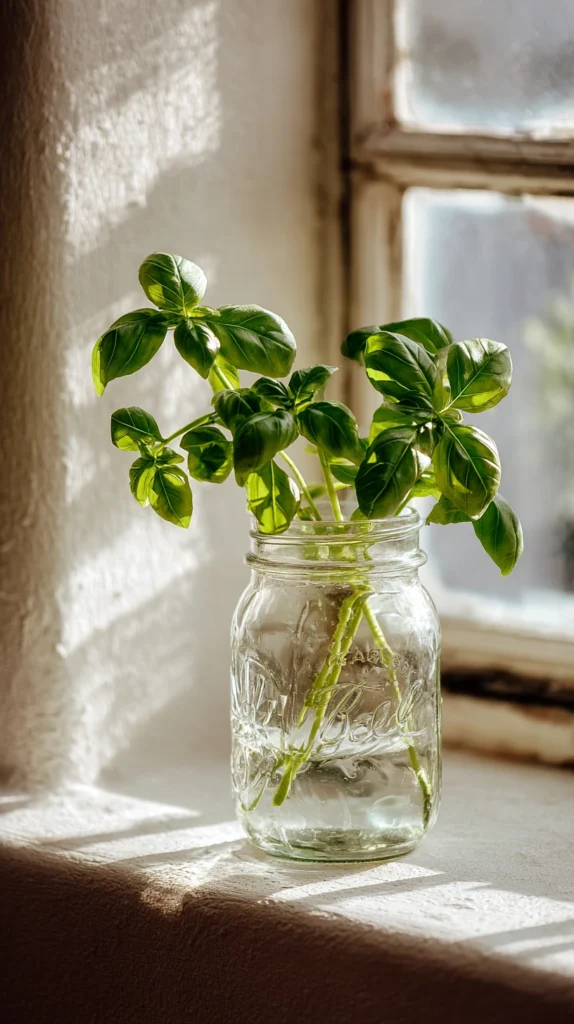
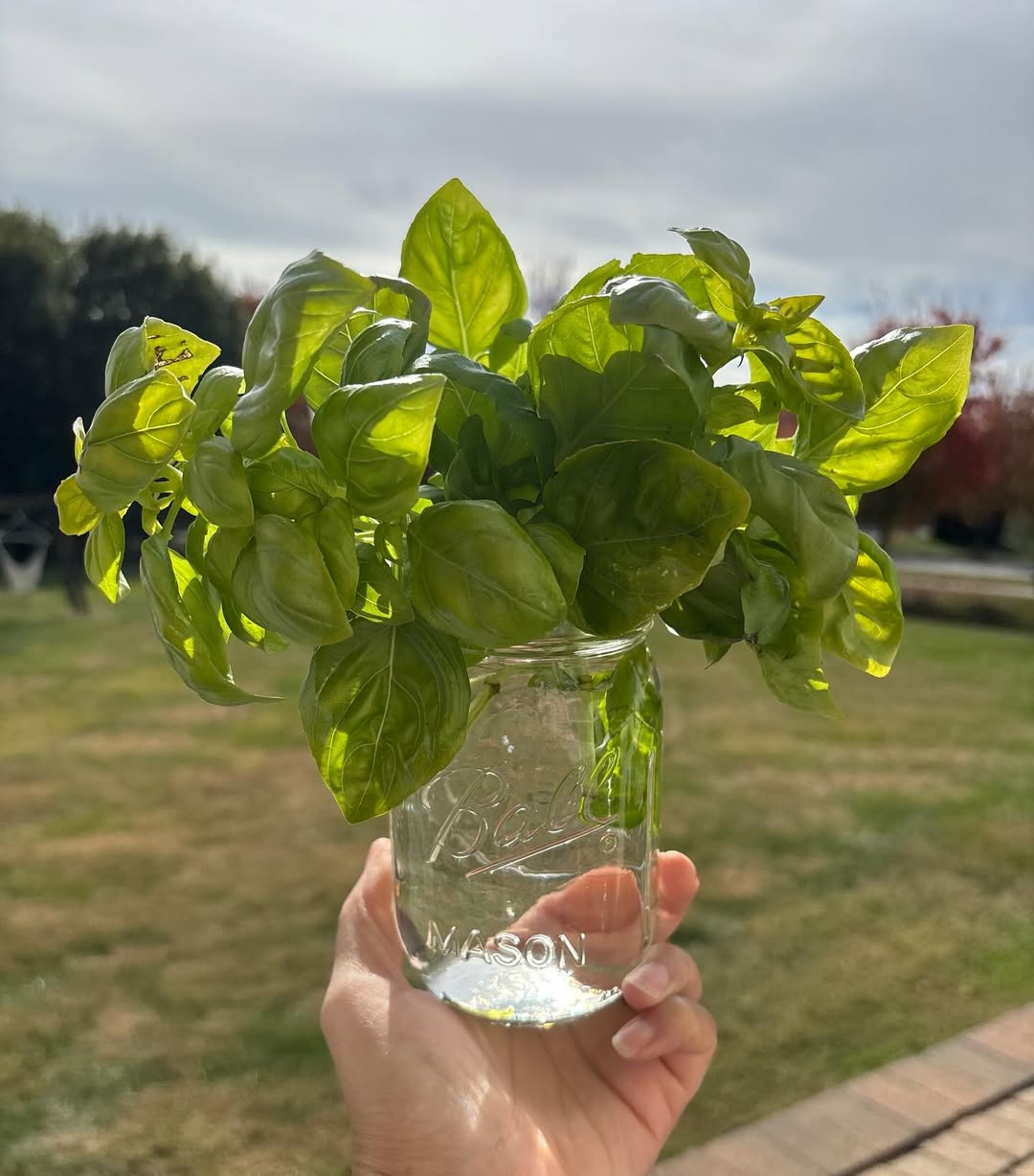
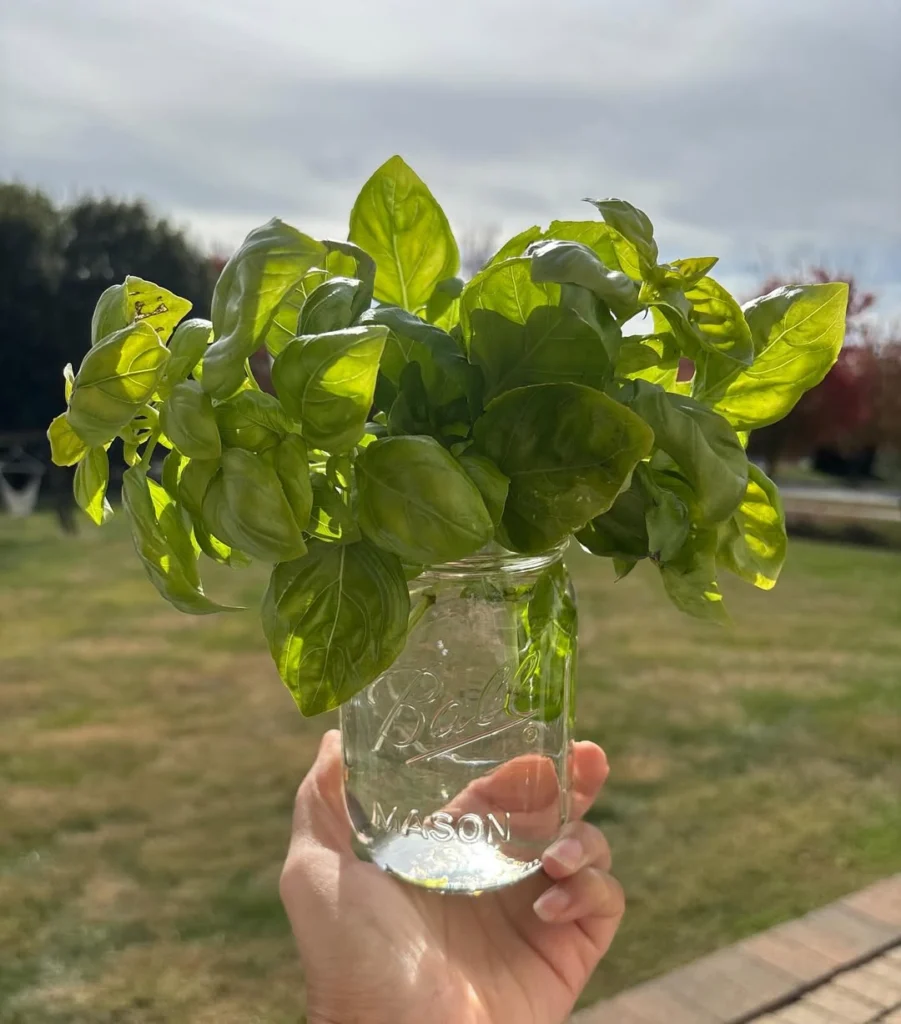
Basil is ridiculously easy to grow in water. I’ve never had one fail. If you’re new to this, start with basil and you’ll feel like a gardening genius.
I cut a 4-inch piece from a basil plant and stick it in a jar of water. That’s it. Roots appear in 5-7 days like magic. No rooting hormone, no special tricks.
After two weeks, the cutting has strong roots and starts growing new leaves. I can start cutting from it for cooking within a month. One cutting becomes an endless supply.
I have six basil jars on my kitchen windowsill right now. All started from one grocery store basil bunch that cost $3. That was eight months ago and I’m still cutting from them.
How to grow basil in water:
- Cut 4-6 inch stem from basil plant
- Remove bottom leaves (keep top 2-3 leaf sets)
- Place in jar with 2-3 inches of water
- Put in sunny window
- Change water every 5-7 days
- Roots appear in one week
The key is removing bottom leaves so they don’t rot in water. Only the stem should be underwater, not leaves. This prevents the whole thing from getting gross and moldy.
2. Mint (Grows Like a Weed in Water)
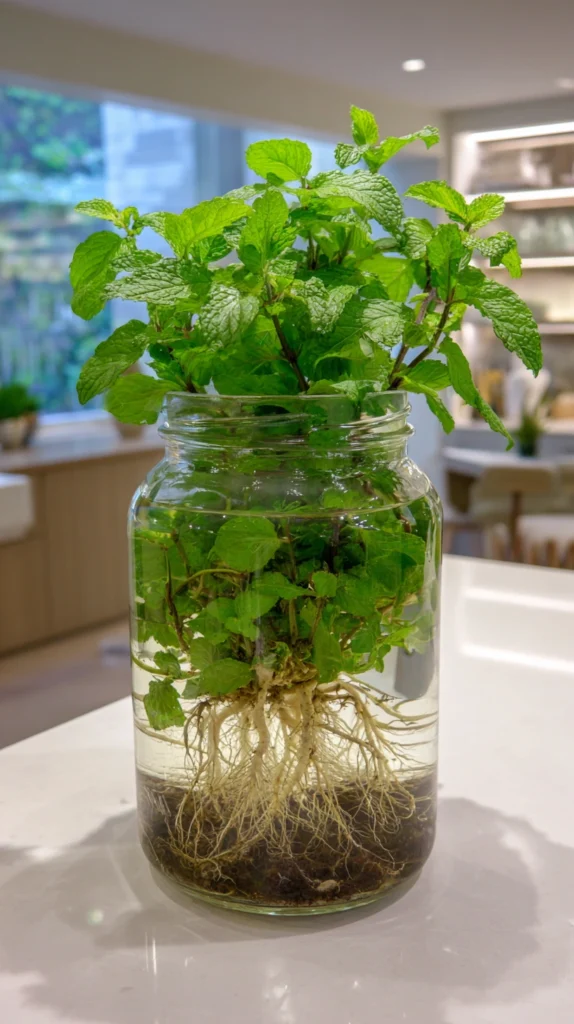
Mint in soil takes over your whole garden. In water, it’s contained and controlled but still grows crazy fast. Perfect solution for this aggressive herb.
I stuck one mint stem in water and within two weeks it had roots everywhere. The roots grow so thick they fill the whole jar. It’s almost aggressive how well it grows.
Mint in water produces more leaves than mint in soil in my experience. Maybe because it gets perfect moisture all the time. Whatever the reason, one jar gives me unlimited mojitos all summer.
I have three types growing – spearmint, peppermint, and chocolate mint. Each jar smells amazing and the different flavors are great for tea, desserts, and drinks.
Mint growing tips:
- Take 6-inch cutting from mint plant
- Strip bottom leaves off
- Root in water (happens super fast)
- Grows so well you’ll be giving it away
- Pinch off flower buds to keep leaf production going
Mint water needs changing more often than other herbs. The roots get so dense that water gets cloudy fast. I change mine every 3-4 days instead of weekly.
3. Oregano (Takes Longer But Works Great)
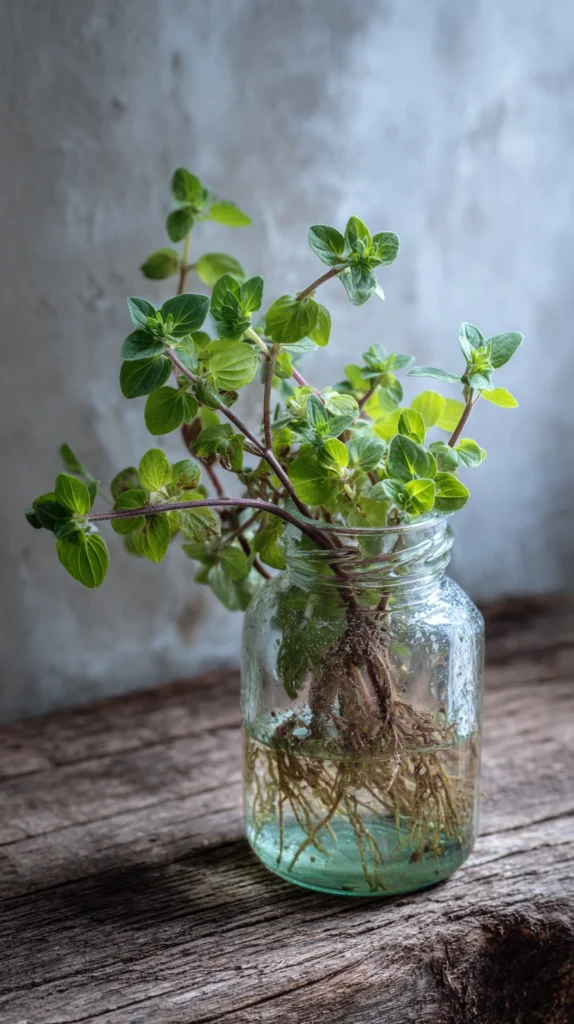
Oregano was slower to root than basil or mint. Took about 2-3 weeks to see roots instead of one week. But once it started, it grew just fine in water.
The flavor is actually stronger in water-grown oregano. Maybe because the plant focuses on leaves instead of fighting with soil conditions. I use less of it in recipes now.
I cut stems as needed for cooking. New growth appears from where I made the cut within days. It’s like the plant wants to be harvested and keeps making more.
One oregano cutting has supplied my pizza and pasta needs for six months now. No more buying those expensive little packages at the store that go bad before I use them.
Oregano in water basics:
| Step | What to Do | Timeline |
| Take cutting | 4-6 inch stem, remove bottom leaves | Day 1 |
| Place in water | Clean jar, 2-3 inches water | Day 1 |
| Wait for roots | Be patient, nothing happens for weeks | 2-3 weeks |
| Change water | Fresh water weekly | Ongoing |
| Start harvesting | Once plant has new growth | Week 4-5 |
Oregano stems are woodier than basil so they take longer to root. Don’t give up if nothing happens the first week. Just keep changing the water and wait.
4. Rosemary (Tricky But Possible)
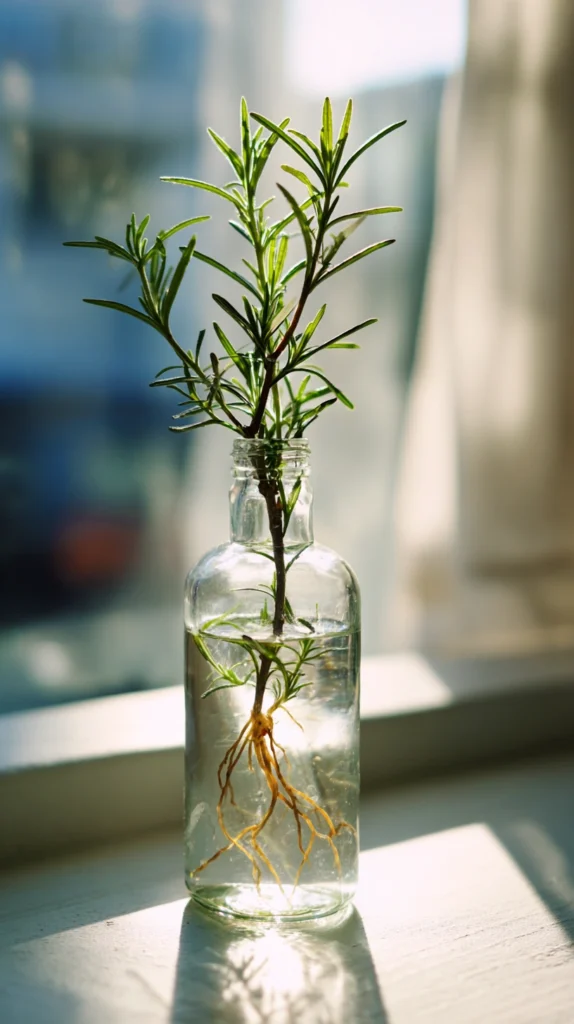
Rosemary is the hardest herb on this list to grow in water. I’ve had about 50% success rate. But when it works, it’s amazing to have fresh rosemary forever.
The trick with rosemary is taking cuttings from new green growth, not old woody stems. Old woody stems almost never root. New green tips root much better.
I strip all needles from the bottom 2 inches of the cutting. Just the stem goes in water. If needles sit underwater they rot and make everything gross.
Rosemary can take 4-6 weeks to root. Sometimes longer. I’ve waited two months for roots to appear. It’s a patience game but worth it if you use rosemary a lot.
Why rosemary is difficult:
- Woody stems resist rooting
- Takes 4-8 weeks for roots (if it works)
- Needs bright light or it gets leggy
- Water must stay very clean
- Success rate only about 50% for me
When rosemary finally roots, the roots grow slowly. Not the explosion of roots you get with basil or mint. Just a few slow thin roots that gradually get stronger.
5. Thyme (Small But Mighty)
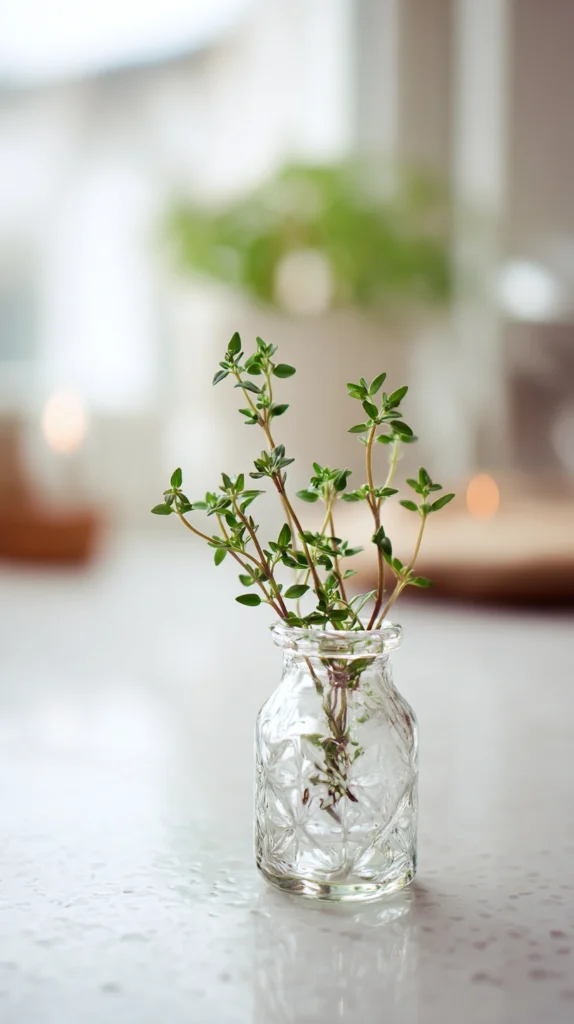
Thyme cuttings are tiny compared to basil or mint. I use 3-4 inch pieces because that’s all the length you really get with thyme. The small cuttings still work fine.
I grow lemon thyme in water and it smells incredible. Every time I brush past the jar the whole kitchen smells like lemon. Regular thyme works great too.
Thyme roots appear in about 10-14 days. Faster than oregano but slower than basil. Once rooted, it grows steadily and produces more than I can use.
The stems stay pretty small in water. Thyme doesn’t get huge like it does in soil. But for harvesting leaves for cooking, small works just fine.
Growing thyme in water:
- Use 3-4 inch cuttings (they’re naturally small)
- Remove bottom leaves carefully (they’re tiny)
- Change water weekly
- Roots in 10-14 days
- Harvest individual leaves as needed
I keep two jars of thyme going. One lemon thyme and one regular. Together they cover all my cooking needs for this herb. Way better than dried thyme from a jar.
6. Sage (Slower Growing But Flavorful)
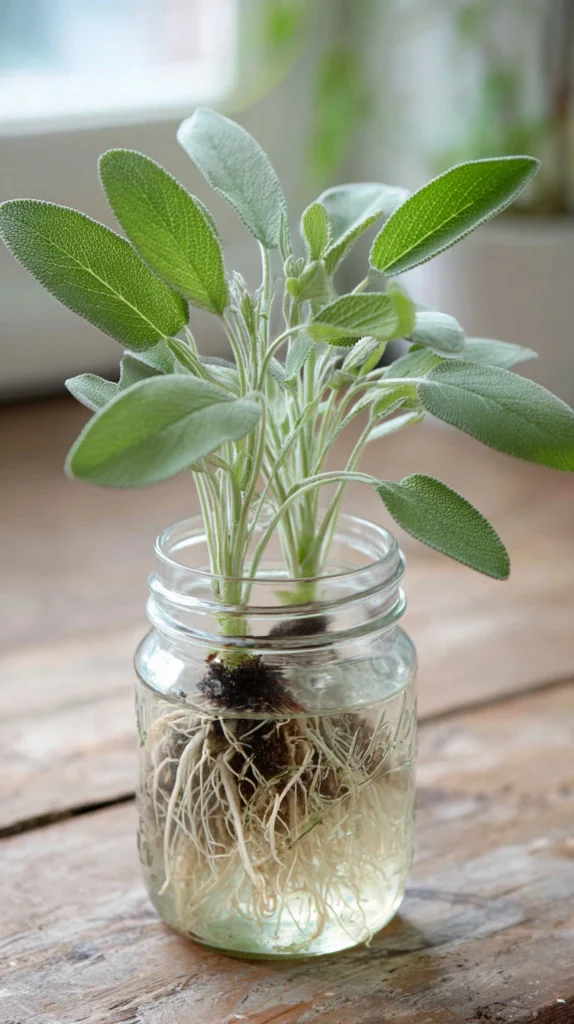
Sage took almost a month to root for me. I thought it was dead several times but kept changing the water anyway. Finally roots appeared after 3 weeks.
The leaves on water-grown sage stay smaller than soil-grown. But the flavor is just as strong. One small leaf is plenty for most recipes.
Sage grows really slowly in water. Like painfully slowly. But it does grow and stay healthy. If you’re patient, it works fine long-term.
I only keep one sage jar because I don’t use it that often. One jar provides more than enough for the occasional recipe that needs it.
7. Stevia (Sweet Leaves Without Sugar)
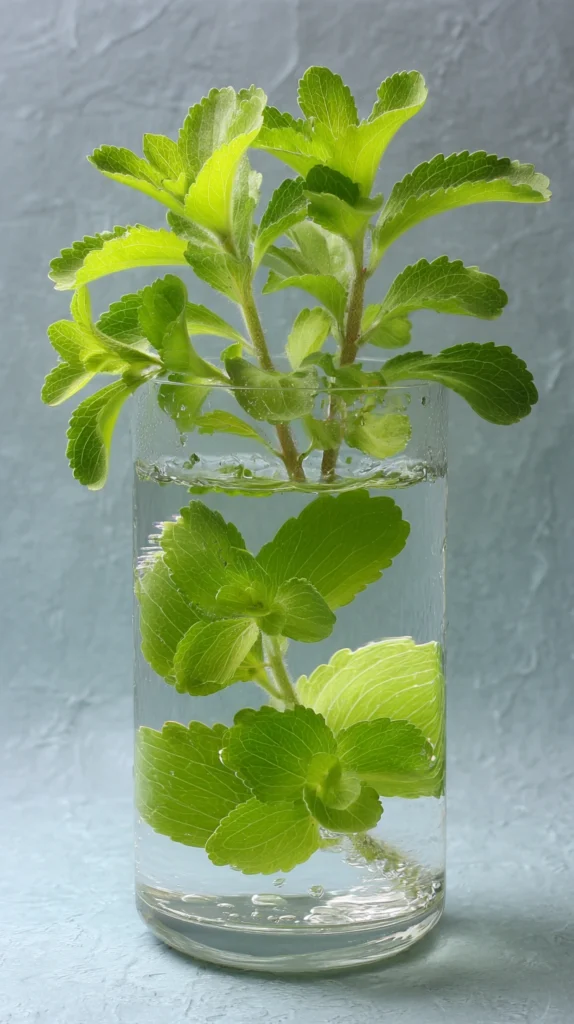
I started growing stevia in water just as an experiment. Turns out it works great and I use the leaves to sweeten tea without any sugar or calories.
Stevia roots in about two weeks. The plant grows pretty quickly after rooting. I can harvest leaves weekly and the plant just keeps making more.
Fresh stevia leaves are way better than the processed white powder you buy at stores. They taste sweet with a slight licorice undertone. Really interesting flavor.
I put 2-3 fresh stevia leaves in my iced tea. Natural sweetness with zero calories. My wife uses it in her morning smoothies too. One plant sweetens drinks for our whole family.
How to use fresh stevia:
- One small leaf equals about 1 teaspoon of sugar
- Add to tea, coffee, smoothies
- Can chew the leaf directly (very sweet)
- Doesn’t dissolve like sugar, you taste little pieces
- Fresh tastes way better than powder
Stevia in water needs bright light or the leaves lose sweetness. I keep mine in the sunniest window I have. More light equals sweeter leaves.
8. Lemon Balm (Smells Amazing)
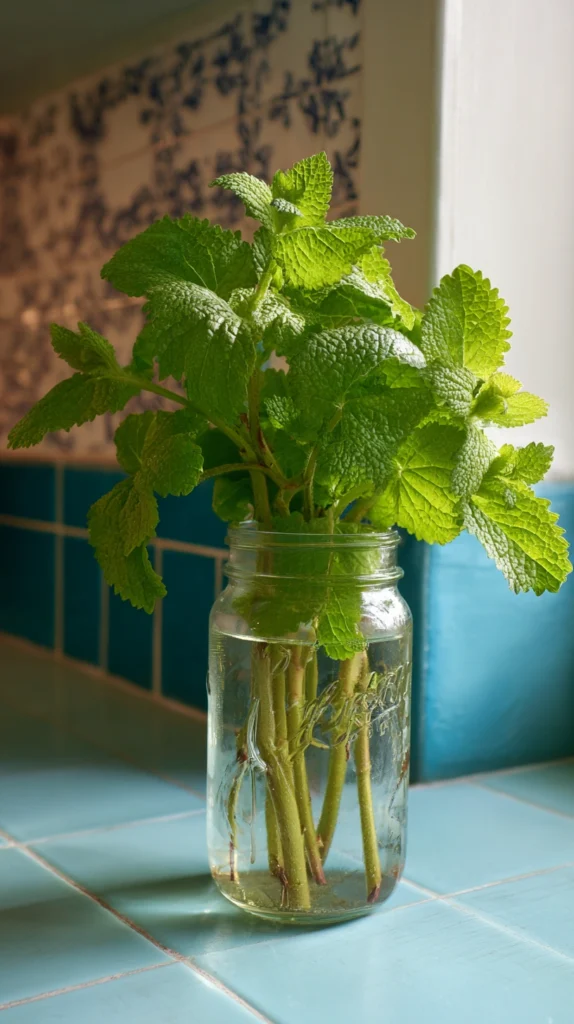
Lemon balm is related to mint and roots just as easily. Stick a stem in water and roots appear in 5-7 days guaranteed. Super easy and reliable.
The whole plant smells like lemon candy. I brush my hand over it just to smell it sometimes. The scent is relaxing and uplifting at the same time.
I use lemon balm in tea constantly. Fresh leaves make the best calming tea before bed. Way better than store-bought tea bags and actually helps me sleep.
Lemon balm grows so enthusiastically in water that I have to trim it back weekly. It wants to take over. But that means unlimited fresh leaves for tea and cooking.
Lemon balm benefits:
- Roots in 5-7 days (very easy)
- Smells incredible
- Makes calming tea
- Grows fast, harvest often
- Related to mint, similar care
The leaves lose flavor when dried. Fresh is so much better. Having it growing in water means I always have fresh leaves ready whenever I want tea.
9. Cilantro (Use It Before It Bolts)
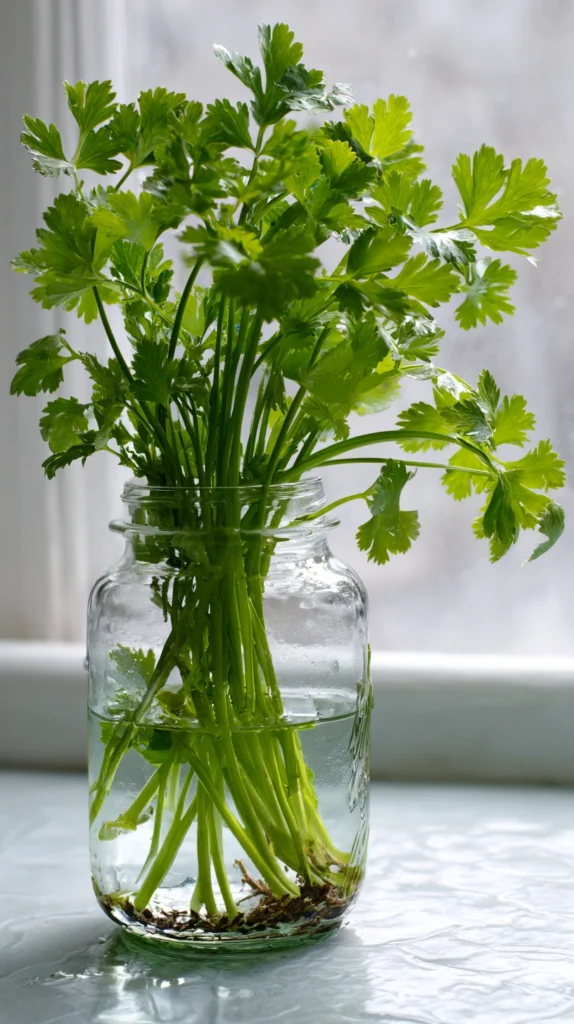
Cilantro in water works but it’s short-lived. The plant wants to flower and make seeds (coriander). Once it starts flowering, the leaves taste bad.
I get about 4-6 weeks of good cilantro leaves before the plant bolts. That’s still plenty of time to use it up. Way better than store-bought cilantro that goes slimy in three days.
When my cilantro starts trying to flower, I just start a new cutting. Always having a new one rooting means I never run out. Continuous supply.
Cilantro roots appear in about 10 days. It grows quickly after that. I harvest the outer leaves and the center keeps producing more for a while.
Cilantro challenges:
| Problem | Solution | How Long It Works |
| Bolts quickly | Start new cuttings every 3 weeks | 4-6 weeks per plant |
| Doesn’t like heat | Keep in coolest sunny spot | Summer is hard |
| Stems get woody | Use only tender young stems | First month is best |
Some people say cilantro tastes like soap. If you’re one of those people, skip this one. Your genetics won’t let you enjoy it anyway. Grow more basil instead.
10. Parsley (Both Types Work)
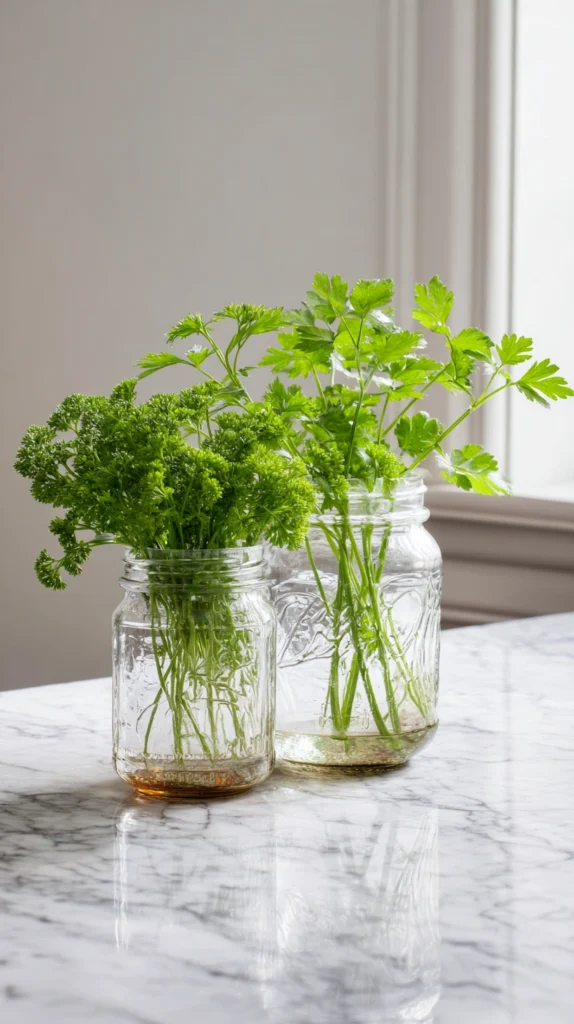
I grow both curly and flat-leaf parsley in water. Both types root and grow well. Flat-leaf tastes better but curly looks prettier. I keep both.
Parsley takes 2-3 weeks to root. Slower than basil but totally reliable. I’ve never had a parsley cutting fail to root if I was patient enough.
Once established, parsley in water grows slowly but steadily. I can harvest outer stems weekly. The center keeps pushing up new growth constantly.
Water-grown parsley lasts way longer than store-bought bunches. Those bunches go slimy in the fridge within a week. My water jars stay fresh for months.
Parsley growing notes:
- Use 4-6 inch stems
- Remove lower leaves
- Takes 2-3 weeks to root (be patient)
- Grows slowly but reliably
- Harvest outer stems, center keeps producing
I use parsley as a garnish less than I use it in actual cooking. Parsley in water gives me enough for both uses without ever buying it at the store.
11. Tarragon (Licorice Flavor)
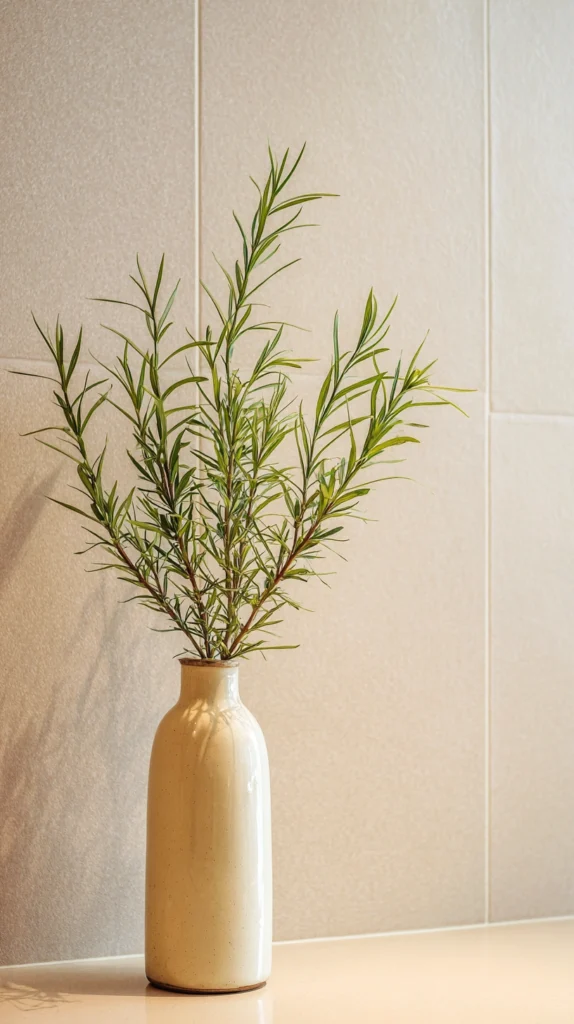
Tarragon has this unique anise/licorice flavor that you either love or hate. I love it in chicken dishes and fish. My wife hates it and won’t touch it.
It roots in about 2 weeks in water. The roots grow fine but the plant itself stays pretty small. Doesn’t matter since you only need a little for flavor anyway.
Fresh tarragon is way stronger than dried. I use maybe one-third of what recipes call for because fresh is so potent. Dried tarragon barely tastes like anything compared to fresh.
One jar of tarragon is more than enough unless you’re French and put it in everything. Most people only need it occasionally so one plant is perfect.
12. Lavender (Barely Works But I Tried)
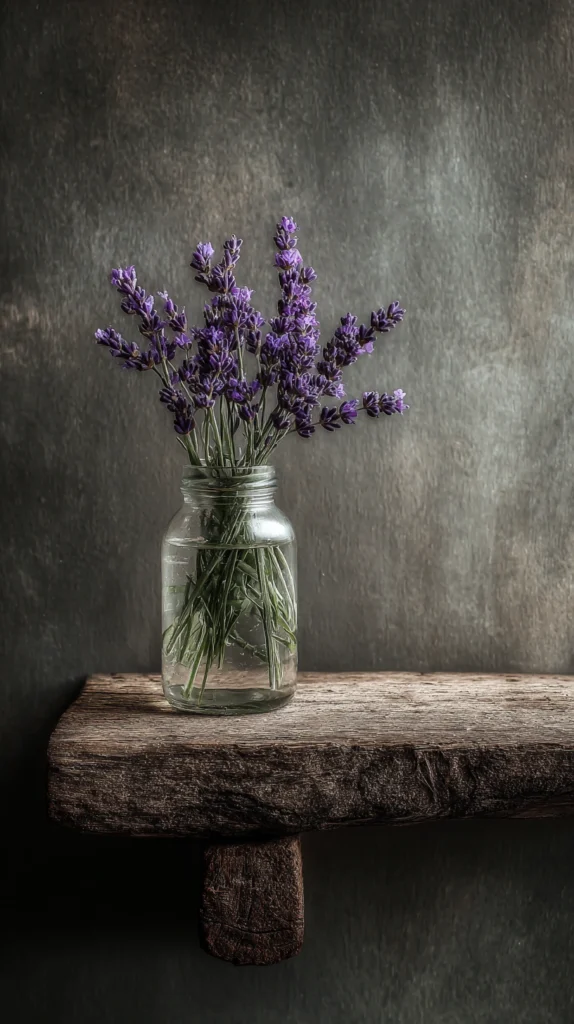
Lavender is really hard to grow in water. I’ve tried probably 10 times and only succeeded twice. The success rate is terrible compared to other herbs.
When it does root, lavender grows very slowly in water. Like one new tiny leaf per month slowly. It’s not ideal but it’s possible.
I honestly recommend growing lavender in soil instead of water. But if you want to experiment, use very fresh green stem tips, not woody old growth.
The lavender I did successfully root in water stayed alive for about 4 months before it gave up and died. It never thrived, just survived. Not worth the effort really.
Why lavender is hard in water:
- Woody stems resist rooting
- Success rate under 20% for me
- Grows extremely slowly even when successful
- Usually dies after a few months
- Better grown in soil or just skip it
I’m including lavender on this list for completeness but honestly don’t recommend it. Save yourself the frustration and grow something easier.
13. Chives (Green Onion Alternative)
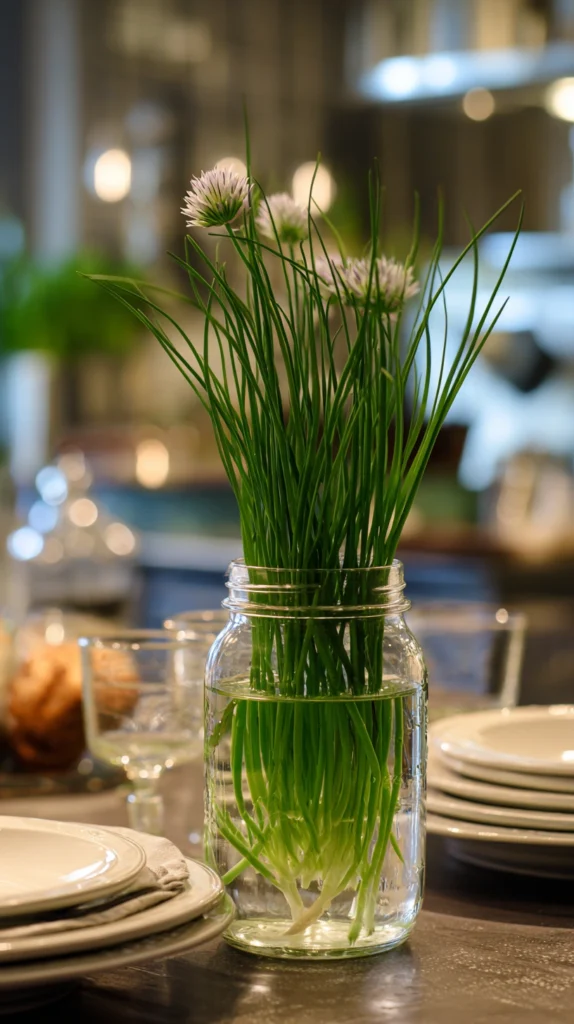
Chives are technically in the onion family but they grow from cuttings in water just fine. They taste like mild onions and look pretty with their thin tubular leaves.
I use them anywhere I’d use green onions. Baked potatoes, eggs, salads, cream cheese. The flavor is similar but chives are easier to grow in water than green onions.
Chives root in about 2 weeks. After rooting, they send up new shoots pretty quickly. Each shoot is hollow and tube-like. Snip them with scissors for cooking.
One jar of chives is enough for my cooking needs. They don’t produce huge amounts but enough for regular use. And they occasionally send up pretty purple flowers.
Chive growing basics:
- Start from small clumps with roots already
- Place whole clump in water
- New shoots appear from the base
- Harvest with scissors, more grow back
- Sometimes produces purple flowers (edible!)
Chives are easier to start if you buy a small potted plant and put the whole root system in water. Starting from cuttings is possible but harder.
14. Lemongrass (Easiest Thing Ever)
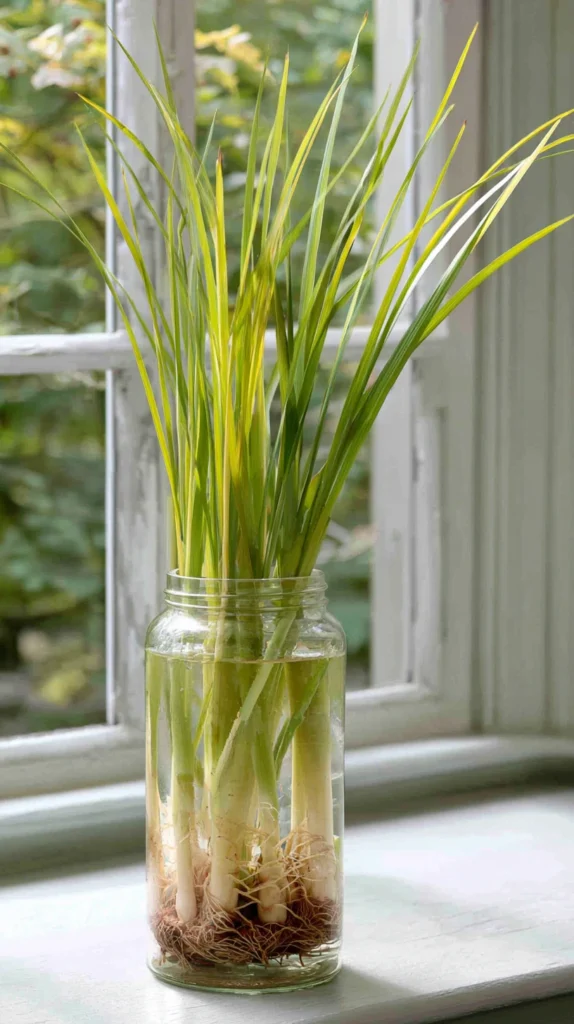
Lemongrass is stupidly easy to grow in water. Easier than basil even. Buy lemongrass stalks at an Asian grocery store and stick them in water. That’s it.
Roots appear in about one week. New green shoots start growing from the center within two weeks. You can harvest outer stalks and the center keeps producing.
I use lemongrass in Thai cooking and tea. Fresh lemongrass tastes way better than the dried stuff in jars. And it’s cheaper to grow than buying fresh stalks constantly.
One stalk from the store becomes a never-ending supply of lemongrass. I started with three stalks last year. Now I have 12 jars because they multiply so fast.
How to grow lemongrass:
- Buy fresh stalks from Asian grocery (about $2 for 3)
- Cut off dried top leaves
- Place in water with 2-3 inches submerged
- Roots appear in 7-10 days
- New shoots grow from center
- Harvest outer stalks as needed
Lemongrass water gets smelly fast because of the natural oils. Change the water every 3-4 days instead of weekly. Keeps things fresh and prevents algae buildup.
15. Vietnamese Coriander (My Secret Weapon)
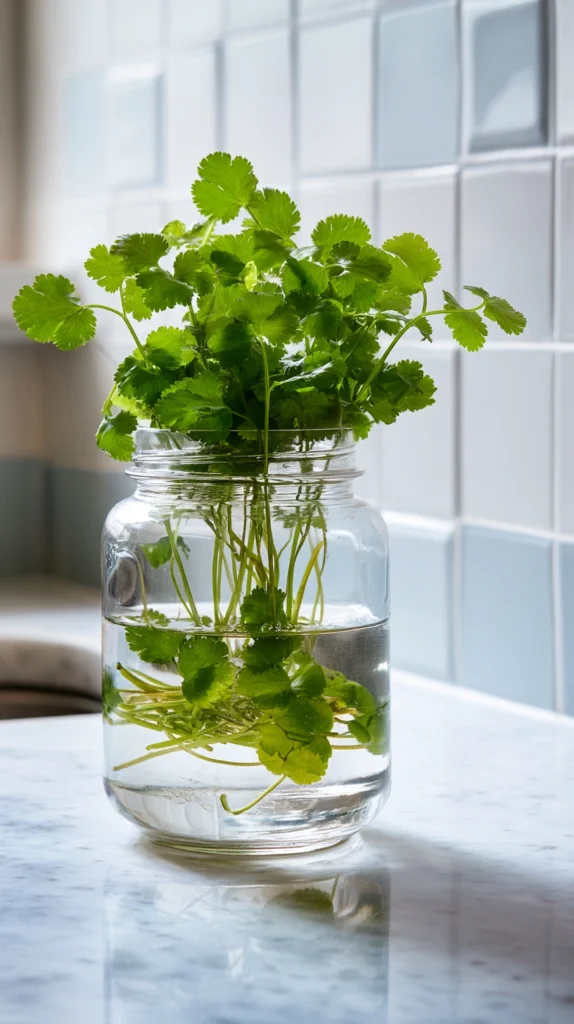
Most people have never heard of Vietnamese coriander. It tastes like cilantro but doesn’t bolt to seed. You can grow it indefinitely in water. Game changer!
I discovered this herb at an Asian market. The vendor told me it’s what they use when cilantro is out of season. I’ve been growing it ever since.
It roots in water within one week. Grows like crazy after that. I harvest leaves constantly and it just keeps producing more. Way easier than regular cilantro.
The flavor is similar to cilantro but slightly spicier. Works perfectly in salsa, pho, tacos, curry – anywhere you’d use cilantro. But it never flowers and dies like cilantro does.
Why Vietnamese coriander is better:
| Vietnamese Coriander | Regular Cilantro | Winner |
| Grows indefinitely | Bolts in 6 weeks | Vietnamese |
| Roots in 7 days | Roots in 10 days | Vietnamese |
| Spicy cilantro flavor | Classic cilantro | Tie (personal preference) |
| Hard to find | Easy to find | Cilantro |
The only downside is finding it to start with. Check Asian grocery stores or order cuttings online. Once you have it, you’ll never run out because it roots so easily.
What You Actually Need to Succeed
Good news: you don’t need much. I use stuff I already had in my kitchen. No special equipment or supplies required for growing herbs in water.
Clean glass jars are best because you can see the roots and water level. I use old pasta sauce jars, mason jars, whatever. Just wash them well first.
Filtered or tap water both work fine. I use regular tap water and change it weekly. Some people swear by filtered water but honestly I haven’t noticed a difference.
A sunny windowsill is required. Herbs need at least 4-6 hours of bright light daily. Low light makes them leggy and weak. South or west-facing windows work best.
Complete supply list:
- Glass jars (any clean jar works)
- Water (tap water is fine)
- Sunny windowsill
- Herb cuttings or starts
- That’s literally it
I spent zero dollars on supplies because I used jars I already had. The only cost was buying fresh herbs at the store to take cuttings from. Total investment maybe $10.
How to Take Cuttings Properly
Use clean scissors or a knife. Dirty tools can introduce bacteria that make cuttings rot instead of root. I wipe my scissors with rubbing alcohol first.
Cut just below a leaf node. That’s the bump on the stem where leaves grow out. Roots form best from these nodes. Cut at a 45-degree angle for more surface area.
Take cuttings from healthy plants only. Sick or stressed plants produce weak cuttings that often fail. Pick the greenest, healthiest looking stems you can find.
Morning is the best time to take cuttings. Plants are fully hydrated from the night. Afternoon cuttings are stressed from the day’s heat and struggle more.
Cutting technique step-by-step:
- Choose healthy green stem
- Cut 4-6 inches long
- Cut just below a leaf node at 45-degree angle
- Remove bottom 2 inches of leaves
- Place in water immediately
- Keep only 2-3 leaf sets above water
I take multiple cuttings even if I only need one. Some fail so having backups means I don’t have to start over. Take 3-4 cuttings and keep the best one after they root.
Changing the Water (Don’t Skip This)
Change water weekly minimum. More often for fast-growing herbs like mint and basil. Old water gets cloudy and smelly and makes roots rot.
I rinse the jar when changing water. Algae builds up on glass in sunlight. A quick rinse prevents green slime from taking over. Takes 30 seconds extra.
Rinse the roots gently too if they look slimy. Just let water run over them in the sink. Don’t scrub or you’ll damage them. Gentle rinsing removes algae buildup.
Room temperature water is better than cold tap water. I fill jars and let them sit for an hour before putting cuttings back. Cold water shocks the roots.
Water changing schedule:
| Herb | How Often | Why |
| Basil, mint, lemongrass | Every 3-4 days | Fast growers, water gets cloudy |
| Oregano, thyme, sage | Weekly | Slower growers, water stays cleaner |
| All herbs in summer | Twice weekly | Heat makes water gross faster |
| All herbs in winter | Weekly | Cooler temps, water lasts longer |
I change all my herb water on Sunday mornings. Having a schedule means I don’t forget. Forgotten water changes are the main reason cuttings die.
When Roots Get Too Crowded
Eventually roots fill the whole jar. When this happens, you have three options: trim roots, move to bigger jar, or plant in soil.
I trim roots back by about one-third when they get crazy. Use clean scissors and just snip off the longest roots. The plant doesn’t care and keeps growing fine.
Moving to a bigger jar works but then you have giant jars taking up windowsill space. I prefer keeping jars small and trimming roots instead.
Some people plant rooted cuttings in soil after a few months. I never do because I like the water method. But it’s an option if you want to transition them.
Fertilizing Water-Grown Herbs
Herbs in water need fertilizer eventually. Water has zero nutrients. After a month, plants start looking pale and weak without food.
I use liquid fertilizer at quarter strength. Full strength burns roots in plain water. I add it when I change water every week. Just a few drops per jar.
Hydroponic fertilizer works best but it’s expensive. Regular liquid houseplant fertilizer works fine diluted way down. I use whatever is cheap at Home Depot.
Too much fertilizer makes water green with algae. Less is more with feeding water-grown herbs. Start with very little and only add more if plants look hungry.
Signs your herbs need fertilizer:
- Pale yellow-green color instead of dark green
- New growth smaller than old growth
- Leaves falling off for no reason
- Slow growth or no growth
- Weak stems that flop over
I add maybe 1/4 teaspoon of liquid fertilizer to a quart jar when changing water. That’s plenty. More causes problems instead of helping.
Common Problems and Easy Fixes
Stems rotting instead of rooting: Water is too dirty or too much stem is underwater. Change water more often and remove more bottom leaves.
Leaves turning yellow: Needs fertilizer or too much direct hot sun. Add diluted fertilizer and move jar back from window slightly.
Algae growing on roots and jar: Too much light on the water. Wrap jar in paper or use colored glass jars instead of clear. Algae won’t grow without light.
No roots after 3 weeks: Cutting might be dead. Try a fresh cutting from a different plant. Some cuttings just fail and there’s no saving them.
Roots turning brown or black: Root rot from old water. Change water immediately and every 2-3 days until roots look white again. Cut off any black mushy roots.
Plant gets leggy and weak: Not enough light. Move to sunnier window or add a small grow light. Herbs need bright light to stay compact.
My Current Water Herb Setup
I have 15 jars on my kitchen windowsill right now. It looks like a little herb forest. Every jar has a different herb or multiple of my favorites.
The collection includes: 3 basil (different varieties), 2 mint, 1 oregano, 1 thyme, 1 rosemary, 1 cilantro, 1 parsley, 2 lemongrass, 1 Vietnamese coriander, 1 stevia, 1 lemon balm.
I stuck a tension rod across my window and hung small jars from it with twine. This doubled my growing space without taking up counter room. Looks pretty too.
Total investment for 15 herbs growing year-round: maybe $30 for initial herb purchases. Now I never buy fresh herbs at the store. Saves me at least $100 a year easily.
Why This Changed My Cooking
I use way more fresh herbs now that they’re literally within arm’s reach. Before I’d skip herbs because I didn’t have them or they went bad in the fridge.
My food tastes better. Fresh herbs are a completely different thing than dried herbs from jars. The flavor is alive and bright instead of dusty and dull.
I experiment more with herb combinations. When you have 15 fresh herbs available, you start putting basil AND thyme in things. Mixing oregano with mint. Getting creative.
My kids actually ask to help pick herbs for dinner. They each have a favorite jar they’re “responsible for.” Gets them involved in cooking prep without really cooking.
What I Wish I’d Known Starting Out
You don’t need to buy plants from a garden center. Just buy fresh herbs at the grocery store and take cuttings from the bunch. Way cheaper and works exactly the same.
Start with basil and mint. These root the fastest and build your confidence. Don’t start with rosemary or lavender because they’re hard and you might give up.
More light is always better. I started with herbs in a north window and they sucked. Moved them to a south window and everything improved immediately.
Be patient with rooting times. I used to throw away cuttings after one week thinking they failed. Some herbs take 3-4 weeks. Just keep changing water and wait.
Timeline for beginners:
| Week | What’s Happening | What to Do |
| Week 1 | Nothing visible | Change water once, be patient |
| Week 2 | Maybe tiny root bumps | Change water, still be patient |
| Week 3 | Real roots appearing | Change water, keep waiting |
| Week 4 | Good root growth | Start adding dilute fertilizer |
| Week 6 | Ready to harvest | Begin using leaves in cooking |
The hardest part is the waiting. Once roots appear, everything gets easier and more exciting. But those first few weeks test your patience.
Ready to Grow Herbs in Water?
Stop wasting money on fresh herbs that go bad in days. Stop killing herbs in pots with dirt. Just stick some stems in water and see what happens.
Start small with one or two jars. Don’t try to grow 15 herbs on day one like I described. Build your collection slowly as you figure out what you actually use.
Keep it simple. Clean jar, clean water, sunny window, weekly water changes. That’s the whole formula. Don’t overthink it or make it complicated.
The worst that happens is a cutting doesn’t root and you try again. You’re out maybe $3 for a grocery store herb bunch. The best that happens is endless free fresh herbs forever.
Now go buy a bunch of basil, stick it in a jar of water, and start your water herb garden. You’ll be harvesting fresh basil for pasta within a month!
Quick Summary:
- Easiest herbs: basil, mint, lemongrass, lemon balm
- Medium difficulty: oregano, thyme, parsley, stevia, chives
- Harder herbs: rosemary, sage, tarragon, cilantro
- Nearly impossible: lavender (grow in soil instead)
- Take 4-6 inch cuttings below a leaf node
- Remove bottom leaves so only stem touches water
- Change water weekly (more for fast growers)
- Use clean glass jars you can see through
- Need 4-6 hours bright sun daily
- Add quarter-strength fertilizer weekly after first month
- Roots appear in 5 days to 4 weeks depending on herb
- Start harvesting after 4-6 weeks
- Trim roots when they get crowded in jar
- Room temperature water better than cold
- Vietnamese coriander is cilantro that never bolts