How to Revive an Orchid: A Simple Guide to Bringing Yours Back to Life
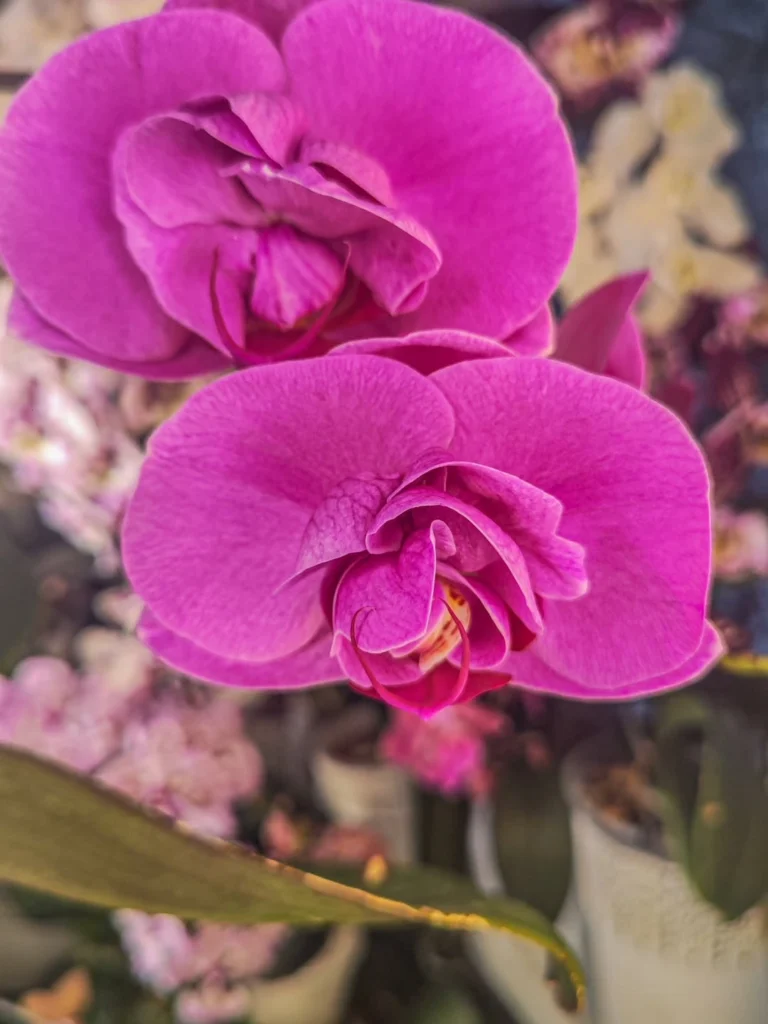
I’ve killed at least eight orchids. Maybe more. I lost count after the first few shriveled up and died on my windowsill.
Every time someone gave me an orchid, it would bloom beautifully for a few weeks. Then the flowers would fall off and the plant would slowly decline into a sad mess of yellow leaves and dried-up roots.
I thought orchids were just impossible to keep alive. Then I learned what I was doing wrong. Now I have five orchids that have been alive and blooming for over two years.
Let me show you how to bring your dying orchid back to life. It’s way easier than you think once you know the secrets.
Why My First Orchids All Died
I treated orchids like regular houseplants. I planted them in potting soil, watered them like my other plants, and wondered why they rotted and died.
Orchids aren’t like other plants. They grow differently in nature and need completely different care. Using regular plant rules on orchids kills them fast.
I also kept them in the decorative pots they came in. Those pots have no drainage holes. Water sits at the bottom, roots rot, and the whole plant dies. Killed three orchids this way.
The biggest mistake was watering too much. I’d water whenever the surface looked dry. Orchids hate this. Their roots need to dry out between waterings or they rot.
How to Tell If Your Orchid Is Actually Dead
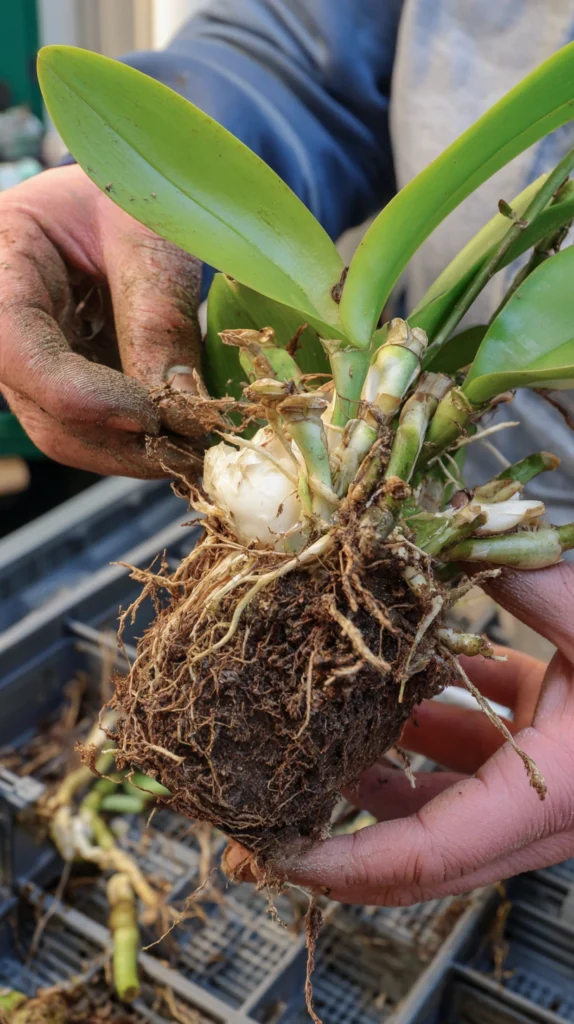
Check the roots first. Pull the orchid out of its pot and look at the roots. Green or white roots mean it’s alive. Brown mushy roots are dead.
If you have ANY firm green or white roots, your orchid can be saved. Even just one or two healthy roots is enough. The plant can recover from that.
Check the stem and leaves next. Green leaves and a green stem mean life. If everything is brown, shriveled, and papery, the orchid is probably dead for real.
The crown is the center where leaves grow from. If the crown is black and mushy, the orchid is usually dead. But check roots anyway because sometimes they’re still alive.
Signs your orchid can be saved:
- At least 1-2 firm green or white roots
- Any green on the stem or leaves
- Crown still firm, not black mush
- New growth appearing anywhere
Signs it’s probably actually dead:
- All roots brown, mushy, and falling apart
- Entire plant brown and papery
- Crown completely black and rotted
- No firm tissue anywhere
I’ve saved orchids that looked completely dead except for two small white roots. Those two roots were enough. The plant grew back over six months and bloomed again.
The Root Problem Everyone Has
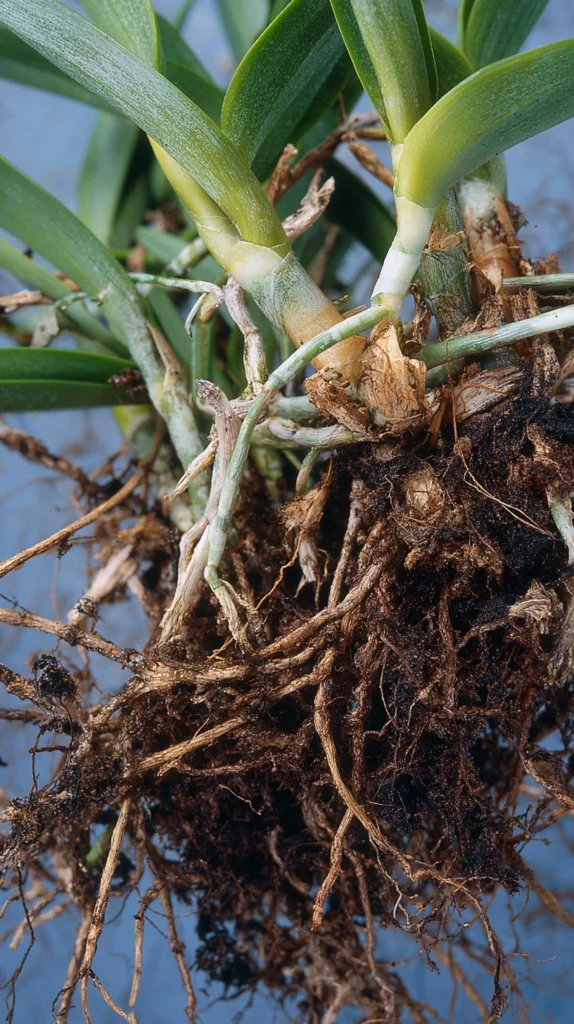
Orchid roots are different from normal plant roots. They’re thick, silvery-white, and designed to grab onto tree bark in nature. Not sit in wet soil.
When roots stay too wet, they rot and turn brown and mushy. This is the number one killer of orchids. Over-watering causes root rot which kills the whole plant.
Good orchid roots are firm and either bright green (when wet) or silvery-white with green tips (when dry). They should feel solid, not squishy or hollow.
Dead roots are brown or black, mushy, papery, or hollow when you squeeze them. They fall apart easily. These roots are gone and won’t recover.
What I do with roots:
| Root Condition | What It Looks Like | What I Do |
| Healthy roots | Firm, white or green | Leave them alone |
| Dried but firm | Gray and shriveled but solid | Keep, they can recover |
| Mushy brown | Soft, brown, gross | Cut off with sterile scissors |
| Papery hollow | Feels empty when squeezed | Remove completely |
I use scissors cleaned with rubbing alcohol to cut off dead roots. Cut right where the dead part meets healthy tissue. This prevents rot from spreading to good roots.
The Repotting Process That Saved My Orchids
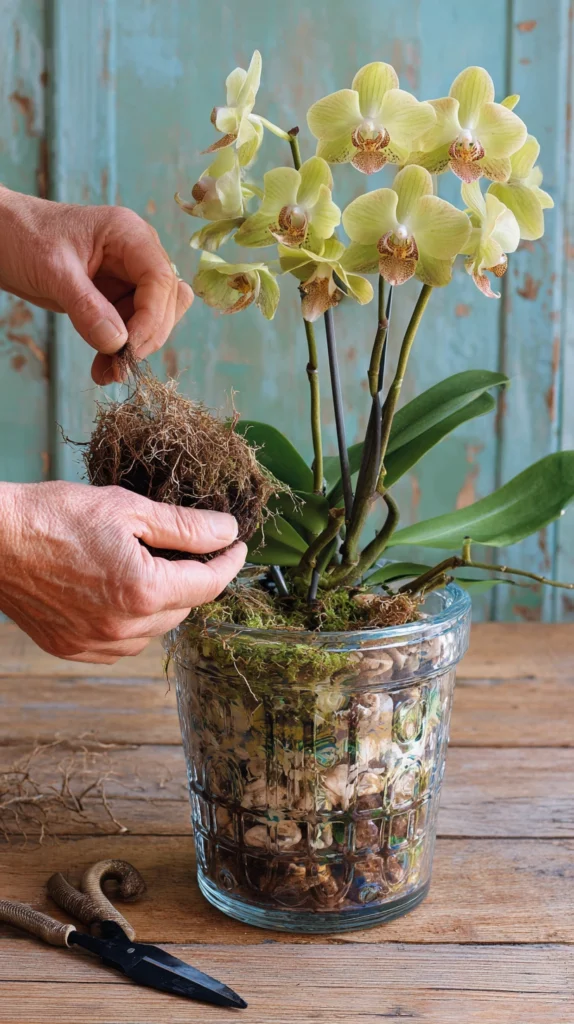
I take the orchid completely out of whatever pot it’s in. Usually there’s a tiny plastic pot hidden inside a decorative one with no drainage. Get rid of the decorative pot.
I remove all the old growing medium. Orchids often come planted in tightly packed moss that stays wet forever. This moss kills roots. I pull it all off gently.
After removing all old mediums, I can see the roots clearly. I cut off anything brown, mushy, or papery. Sometimes I’m left with just 2-3 good roots. That’s okay.
I report in fresh orchid bark mix, not regular potting soil. Orchid bark is chunky and allows air flow around roots. Regular soil stays too wet and suffocates orchid roots.
My repotting steps:
- Remove orchid from all pots and decorative covers
- Pull off all old moss or bark
- Inspect every root closely
- Cut off dead roots with clean scissors
- Rinse remaining roots under lukewarm water
- Let sit for 30 minutes to dry slightly
- Repot in fresh orchid bark in a pot with drainage holes
The pot needs drainage holes. I use clear plastic pots so I can see the roots. Sounds weird but being able to see root health is super helpful for knowing when to water.
Why Clear Pots Changed Everything For Me
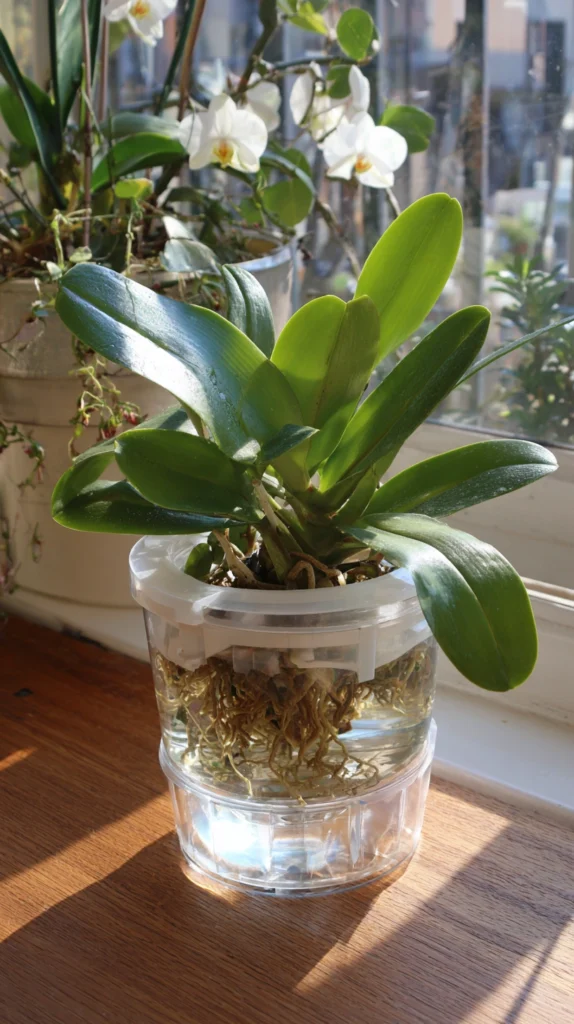
Clear plastic orchid pots let you see the roots. You can tell if they’re wet or dry, healthy or dying, just by looking. No more guessing about watering.
When roots are bright green, the orchid is wet and doesn’t need water. When the roots are silvery-white, it’s dry and ready for water. Visual watering cues instead of guessing.
I can also spot problems early. If roots start turning brown, I see it immediately and can fix it. In opaque pots, I wouldn’t know until the whole plant was dying.
Clear pots cost like $2 at any garden center. You can put them inside a decorative pot if you want it to look pretty. Just take it out to water then put it back.
The Watering Method That Finally Worked
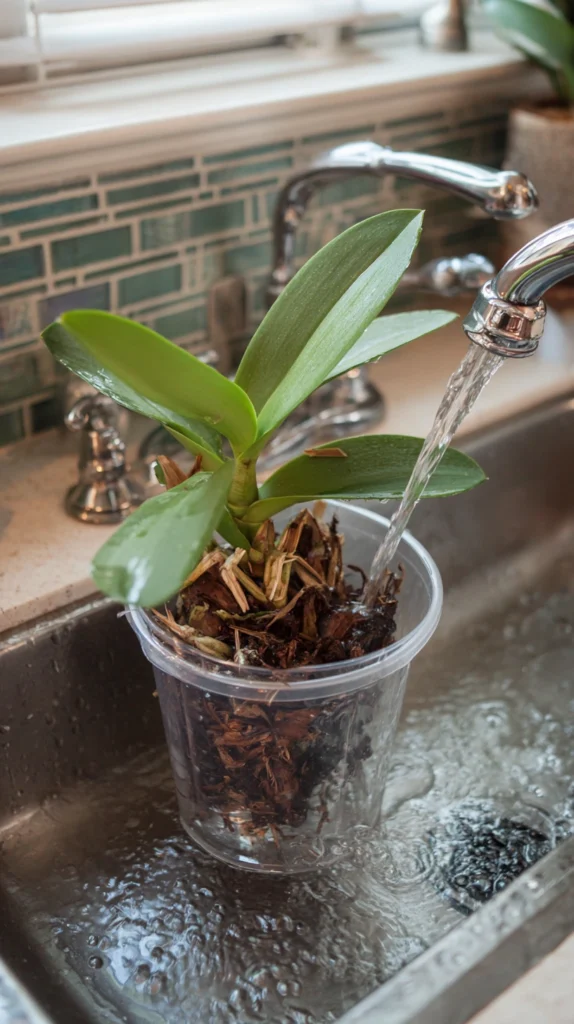
I water my orchids once a week by soaking them. I take the pot to the sink, run lukewarm water through it for about 30 seconds, then let it drain completely.
The key is letting it drain completely. I leave it in the sink for 10 minutes so all excess water runs out. Never let orchids sit in standing water. This kills them fast.
Between waterings, I let the roots turn silvery-white and the bark get mostly dry. Orchids need this dry period. Their roots breathe during this time and rot if constantly wet.
In winter I water every 10 days instead of weekly because my house is cooler and drier. I check the roots and bark. If they’re still wet, I wait longer.
My watering schedule by season:
| Season | How Often | Why |
| Summer | Every 5-7 days | Warmer, plants grow faster |
| Winter | Every 10-14 days | Cooler, slower growth, less evaporation |
| Spring/Fall | Every 7-10 days | Moderate conditions |
Some people say to soak orchids for 15 minutes. I tried this and it was too much water for my conditions. Every house is different. Watch your roots and adjust.
The Light Situation Nobody Explains Right
Orchids need bright indirect light. Not direct sun which burns leaves. Not low light which prevents blooming. Bright but indirect is the sweet spot.
I killed orchids by putting them in dark corners. They survived but never bloomed again. Orchids need good light to make flowers. Low light equals no blooms.
I also burned an orchid by putting it in a south window with direct afternoon sun. The leaves got brown spots and shriveled. Too much sun is almost as bad as too little.
Now I keep mine in an east window. They get bright morning sun for a few hours, then bright indirect light the rest of the day. This is perfect for blooming.
Light conditions explained:
| Light Level | What It Means | Result for Orchid |
| Low light | North window or far from windows | Survives but won’t bloom |
| Bright indirect | East window or sheer curtain | Perfect, blooms regularly |
| Direct sun | South window, no curtain | Burns leaves, stresses plant |
If leaves are dark green, the orchid needs more light. If leaves are pale yellow-green or have brown spots, it’s getting too much light. Medium green leaves are perfect.
Temperature and Humidity Tricks
Orchids like it around 65-75°F during the day. At night, they actually prefer it cooler by about 10 degrees. This temperature drop triggers blooming.
I leave mine in a room that naturally cools at night. The bedroom is perfect because we turn the heat down at night. This day/night temperature change makes them bloom.
Humidity should be around 40-60%. My house is dry in winter so I put orchids on pebble trays. Put pebbles in a tray, add water below the pebbles, and set pot on top.
The pot sits above the water, not in it. As water evaporates, it creates humidity around the plant. Simple and works great in dry winter houses.
My humidity setup:
- Shallow tray from the dollar store
- Layer of rocks or pebbles
- Water filled to just below top of pebbles
- Orchid pot sits on pebbles, above water
- Refill water as it evaporates
I don’t mist my orchids. Misting gets water stuck in the crown where leaves meet the stem. This causes crown rot which kills the plant. Pebble trays are safer.
Fertilizing Without Burning Roots
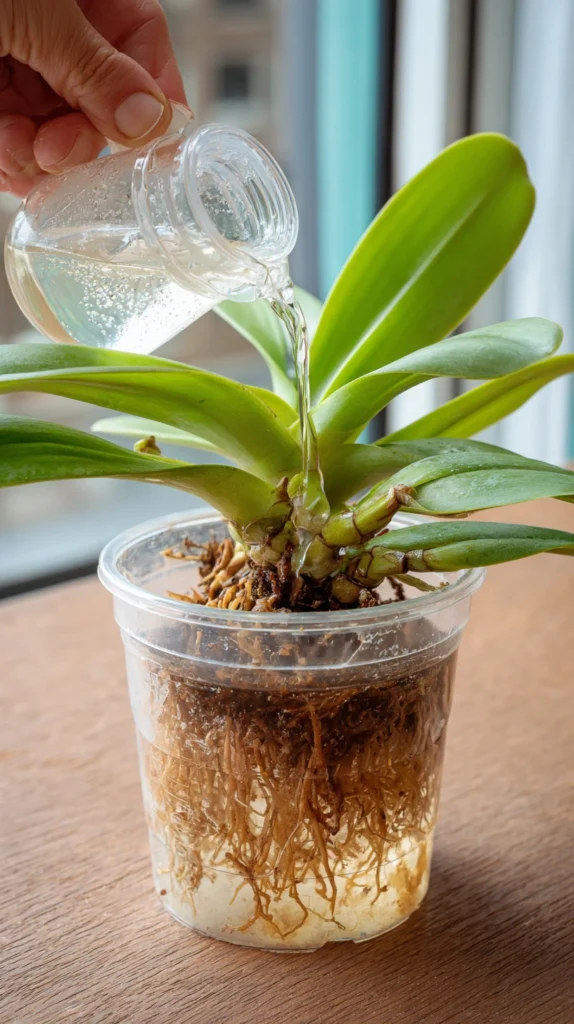
I use orchid fertilizer diluted to half strength every other watering. Full strength fertilizer burns orchid roots. Weak fertilizer often is better than strong rarely.
The fertilizer I use says “weekly, weakly” on the label. This means weak dilution applied weekly. Much better than strong fertilizer monthly which shocks the plant.
I skip fertilizer completely for two months after repotting. Fresh bark has enough nutrients. Fertilizing too soon after repotting can burn the damaged roots and kill the plant.
If I see brown tips on roots or leaves, I’m over-fertilizing. I flush the pot with plain water several times and skip fertilizer for a month. The problem usually fixes itself.
My fertilizing routine:
- Use orchid-specific fertilizer only
- Dilute to half the package directions
- Apply every other watering during growing season
- Skip completely in winter when plant is dormant
- Never fertilize right after repotting
Some people use regular houseplant fertilizer diluted way down. I tried this and it worked okay. But orchid fertilizer is cheap and designed for their specific needs.
What to Do With the Flower Spike After Blooms Fall
When flowers fall off, don’t cut the spike immediately. Sometimes it’ll make more flowers from the same spike. I wait and watch for a few weeks.
If the spike stays green, I leave it. New flower buds sometimes appear on old green spikes. I’ve gotten second and third rounds of blooms this way.
If the spike turns brown and dry, I cut it off near the base with clean scissors. A brown spike is dead and won’t rebloom. Cutting it lets the plant focus energy on roots and leaves.
Some people cut green spikes to force the plant to rest. I don’t do this. If the spike is green and happy, I let it do its thing. Nature knows better than me.
Flower spike decisions:
| Spike Condition | What I Do | Why |
| Still green | Leave it alone | Might rebloom from same spike |
| Turning brown from tip | Wait, watch | Sometimes stops browning and rebounds |
| Completely brown and dry | Cut near base | Dead spike, won’t rebloom |
| Green but no buds for 3 months | Optional to cut | Can force plant to rest |
After I cut a dead spike, the orchid usually rests for 3-6 months before making a new spike. This is normal. Keep caring for it and eventually a new spike appears.
Getting Blooms to Come Back
My orchids bloom once a year now, sometimes twice. The trick is the temperature drop at night plus bright light during the day. This combo triggers blooming.
I move them to a cooler room at night starting in fall. The 10-15 degree temperature drop tells the plant it’s time to make flowers. Works like clockwork for me.
Cutting back on water slightly in fall also helps trigger blooming. I go from weekly to every 10 days. This mild stress signals the plant to reproduce by flowering.
Once I see a flower spike starting, I go back to normal watering and keep the plant in bright light. The spike grows for 2-3 months before flowers actually open.
How I trigger blooming:
- Bright light year-round (east window)
- Temperature drop at night in fall (move to cooler room)
- Slightly less water in fall (every 10 days instead of weekly)
- Keep fertilizing weakly through fall
- Be patient, spikes take months to develop
Some orchids are stubborn and won’t bloom for a year or more after being stressed. Keep providing good care and eventually they’ll bloom when they’re ready.
Signs Your Orchid Is Actually Recovering
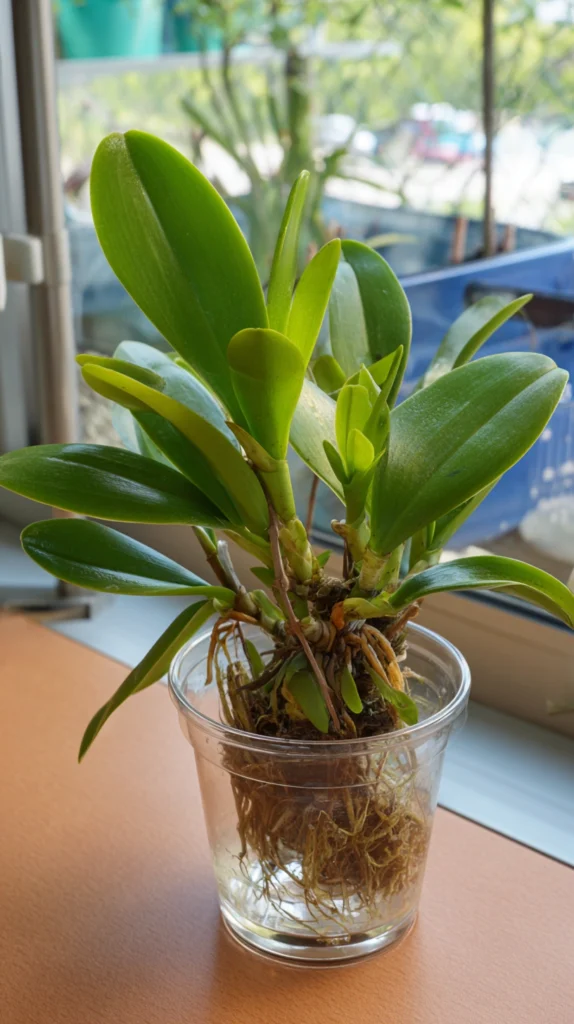
New root tips appear. Healthy root tips are bright green and look shiny. This means the plant is actively growing and recovering. First good sign to watch for.
New leaves start growing from the center. Baby leaves are lighter green and smaller. As they mature they darken. New leaf growth means the plant is healthy.
Existing leaves firm up and turn darker green. When I first rescue an orchid, leaves are often floppy and pale. As health improves, they get firm and properly colored.
The whole plant just looks better. Hard to describe but you can tell when an orchid is thriving versus just surviving. It looks perky and alive instead of sad.
Recovery timeline I’ve experienced:
| Timeline | What I See | What It Means |
| Week 1-2 | Nothing | Plant is adjusting, be patient |
| Week 3-4 | Roots look less shriveled | Beginning to recover |
| Week 6-8 | New root tips appear | Actively growing now |
| Month 3-4 | New leaf starts growing | Plant is healthy |
| Month 6-12 | Flower spike appears | Fully recovered, ready to bloom |
Don’t expect overnight results. Orchids recover slowly. I’ve waited four months before seeing obvious improvement. Patience is required but it’s worth it.
Common Mistakes I Made (And How to Avoid Them)
Keeping it in the decorative pot with no drainage. This killed three orchids before I learned. Always use pots with drainage holes. Always.
Using regular potting soil instead of orchid bark. Soil suffocates roots and stays too wet. Only use chunky orchid bark that allows air flow around roots.
Watering on a schedule without checking if it actually needs water. Now I check the roots. If they’re green, no water needed. If silvery-white, time to water.
Not cutting off dead roots during repotting. Dead roots spread rot to healthy roots. I cut off anything mushy or brown to prevent rot from spreading.
Mistakes that kill orchids:
- No drainage holes in pot
- Using regular potting soil
- Watering too frequently
- Leaving in old soggy moss
- Not enough light for blooming
- Crown rot from water sitting in center
- Extreme temperature swings
Giving up too soon. I thought orchids were dead when they were just stressed and dormant. If there are any healthy roots, give it at least six months of good care before deciding it’s dead.
The Supplies I Actually Use
Clear plastic orchid pots with drainage holes. I bought five for $10 total. Being able to see roots makes orchid care so much easier. Game changer.
Orchid bark potting mix. I use the kind that’s chunky bark pieces, not fine. A bag costs $8 and lasts for repotting many orchids. Never use regular soil.
Orchid fertilizer. I have a bottle that’s lasted two years. Costs like $7. I dilute it to half strength and it works great for keeping orchids healthy.
Sharp scissors for trimming dead roots and spikes. I clean them with rubbing alcohol before and after use. Dirty scissors spread disease between plants.
My orchid supplies:
| Supply | Cost | Where to Get | How Long It Lasts |
| Clear plastic pots | $2 each | Garden center | Years |
| Orchid bark mix | $8 | Any garden store | Repot 4-5 orchids |
| Orchid fertilizer | $7 | Amazon or garden center | 2+ years |
| Sharp scissors | $5 | Dollar store | Until they get dull |
| Pebble tray | $3 | Dollar store | Forever |
I spent maybe $30 total on supplies and they’ve lasted me for years of orchid care. You don’t need expensive stuff. Basic supplies work perfectly fine.
What Saved My Worst Orchid Case
I got an orchid from my mom that she’d given up on. It had no flowers, yellow leaves, and when I unpotted it, there were only two tiny white roots left.
Most people would’ve thrown it away. But I cut off all the dead roots, removed the awful soggy moss it was planted in, and repotted it in fresh bark.
I kept it in bright indirect light and watered it carefully. For three months, nothing happened. No new growth, just those two sad roots staying alive.
Then suddenly, a tiny green root tip appeared. Then another. Within six months it had ten healthy roots and a new leaf. A year later it bloomed for the first time.
How I saved the worst orchid:
- Cut off all dead mushy roots (left just 2 alive)
- Removed all old wet moss
- Repotted in fresh chunky bark
- Bright east window light
- Careful watering only when roots silver
- Waited patiently for six months
- Believed it could recover
That orchid is still alive three years later and blooms every year now. Started with literally two roots. If it can recover, most orchids can.
When to Actually Give Up
If absolutely every root is brown mush and falls apart when touched, it’s probably dead. No roots means no way to absorb water. The plant can’t survive.
If the crown (center where leaves grow) is completely black and mushy, it’s usually done. Crown rot is hard to recover from. I’ve never saved an orchid with complete crown rot.
If the entire plant is papery, brown, and crispy with no green anywhere, it’s dead. Sometimes plants just die and that’s okay. Don’t feel bad about it.
I give orchids six months of proper care before deciding they’re truly dead. Sometimes recovery is just really slow. If nothing improves in six months, it’s probably actually gone.
My Current Orchid Collection
I now have five orchids that have been alive for 2-3 years each. Four are blooming right now. One is resting between bloom cycles.
All five started as “dying” orchids I rescued from clearance sections or people who were giving up on them. Total investment was maybe $15 for all five.
They sit in my east-facing bedroom window on a long shelf. They get bright morning sun and I can check on them daily. Perfect setup for their needs.
I spend maybe 10 minutes per week on orchid care total. Quick check of roots to see if watering is needed. That’s it. They’re way easier than people think.
Why Orchids Are Actually Easy
Once you understand their basic needs, orchids are easier than most houseplants. They tell you exactly what they need through their roots and leaves. You just have to look.
They need way less water than people think. Once a week or less. Way less needy than plants that need water every 2-3 days. Low maintenance actually.
They handle neglect better than over-care. I’ve forgotten to water for two weeks and they were fine. Over-watering kills them fast though. Benign neglect works.
The same care works for most orchids. I treat all five of mine basically the same. They all thrive. Unlike other plants where every type needs different care.
Why I think orchids are easy now:
- Water once a week or less
- Don’t need repotting often (every 2-3 years)
- Tell you exactly what they need through appearance
- Handle neglect better than most plants
- Same care works for most varieties
- Live for years with minimal effort
My orchids are less work than my fern, my peace lily, or most of my other houseplants. They’re actually low-maintenance once you know the basics.
Ready to Revive Your Orchid?
Pull it out of the pot right now and look at the roots. If you see any firm white or green roots, it can be saved. Don’t give up on it yet.
Get some orchid bark and a clear plastic pot with drainage holes. Repot it properly. This one step fixes like 80% of orchid problems immediately.
Put it in bright indirect light and water only when roots turn silvery-white. Stop watering on a schedule. Let the plant tell you when it needs water.
Be patient. Recovery takes months, not weeks. Keep doing the right things and eventually you’ll see new growth. Then one day, a flower spike will appear.
My first rescued orchid took eight months to bloom again. Now it blooms every single year like clockwork. Yours can too with proper care and patience.
Now go check those roots and start the revival process. Your orchid isn’t dead yet – it’s just waiting for you to figure out what it actually needs!
Quick Summary:
- Check roots: firm white/green = alive, brown mush = dead
- Repot in chunky orchid bark, never regular soil
- Use clear pots with drainage to see root health
- Water when roots turn silvery-white (weekly or less)
- Let drain completely, never sit in standing water
- Bright indirect light (east window is perfect)
- Cut off all dead brown mushy roots when repotting
- Remove old wet moss that came with plant
- Fertilize weakly (half strength) every other watering
- Temperature drop at night triggers blooming
- Recovery takes 3-6 months, be patient
- New root tips = first sign of recovery
- Don’t give up if any healthy roots remain
- Benign neglect better than over-care
- Most “dead” orchids can be saved with proper care