15 Stunning Container Gardening Flower Ideas to Brighten Your Space
I killed my first five container gardens. Every single one. The flowers would look amazing at the store, then die at my house within two weeks.
I wasted probably $200 on plants that didn’t make it. My porch looked sad with dead brown plants in pretty pots. So embarrassing when neighbors walked by.
Then I figured out what I was doing wrong. Now my containers overflow with flowers from spring until the first freeze. People actually stop to ask how I do it.
Let me show you the flower combinations that actually work and stay beautiful all season long.
Why My First Containers Failed So Badly
I would go to the garden center and just grab whatever looked pretty. No plan, no research, just random flowers thrown together. They never looked good.
Some plants needed full sun while others needed shade. I’d put them all in the same pot and wonder why half died. Mixing sun and shade plants is a disaster.
I also watered on a random schedule. Sometimes daily, sometimes I’d forget for three days. Flowers in pots need consistent water or they die fast. Way faster than plants in the ground.
My biggest mistake was using tiny pots. Flowers looked cute in 6-inch pots but they dried out in hours on hot days. I’d come home from work to wilted dead plants constantly.
1. The Classic Red Geranium and White Alyssum Combo
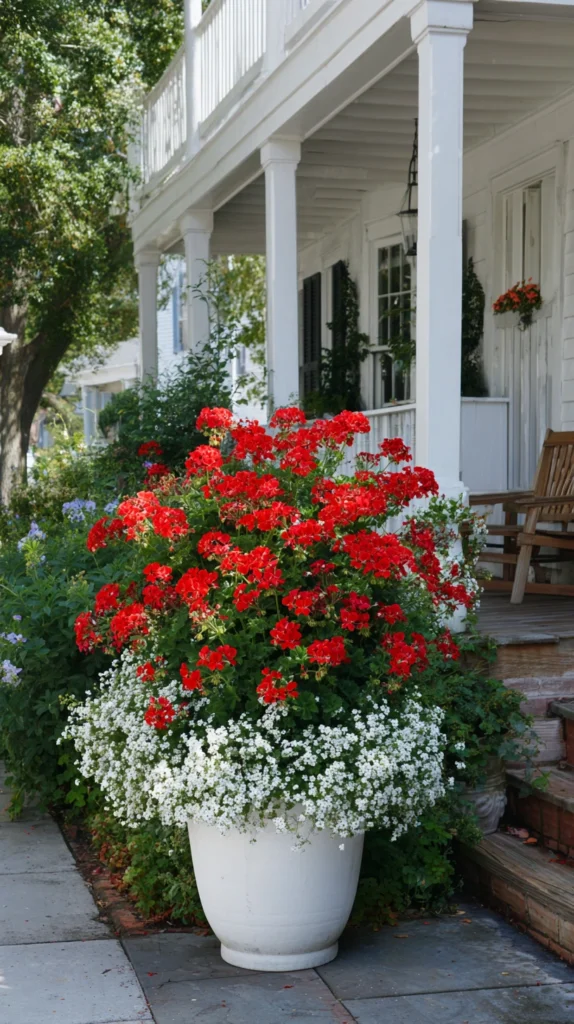
This is the combination my grandma used for 40 years. Red geraniums in the center with white alyssum spilling over the edges. Simple but absolutely beautiful.
I use three red geranium plants in the middle of a 16-inch pot. Then I plant white alyssum all around the edges. The contrast is stunning and works every single time.
Geraniums handle full sun and heat like champions. Alyssum is tough too and smells amazing up close. Both need the same watering schedule which makes care super easy.
This combo lasts from May until October in my area. The geraniums keep blooming and the alyssum keeps spreading. I deadhead the geraniums once a week to keep flowers coming.
What you need:
- One 16-inch pot with drainage holes
- Three red geranium plants
- Six white alyssum plants for the edges
- Good potting soil
- Full sun location
The white alyssum grows and trails down the pot sides within three weeks. Creates this gorgeous cascading effect that hides the pot completely. Looks expensive but costs maybe $25 total.
2. Shade Container with Coleus and Impatiens (My Favorite)
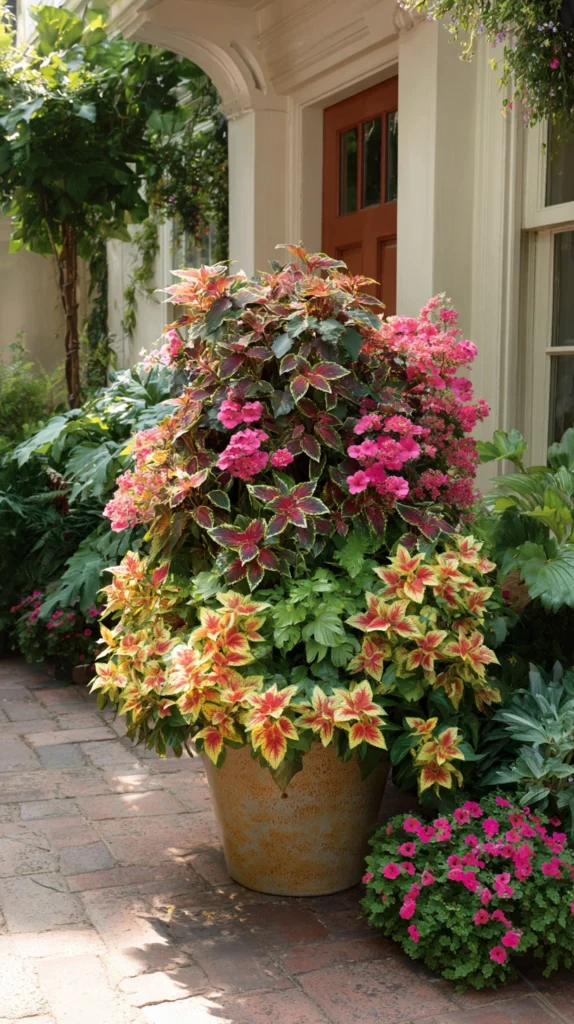
My front porch gets maybe two hours of morning sun. Most flowers need way more sun than that. I struggled to find anything that would grow there.
Then I discovered coleus and impatiens together. Both love shade and the color combinations are incredible. My shady porch finally looks amazing instead of sad and empty.
I use one big coleus in the center for height and color. Then I surround it with impatiens in colors that match the coleus leaves. The effect is like a living piece of art.
Coleus comes in crazy color patterns – purple with green edges, red with yellow spots, lime green with dark veins. Pick one you love and build the whole pot around those colors.
My shade container recipe:
| Plant | How Many | Where in Pot | Color Choice |
| Coleus | 1 large | Center | Any pattern you love |
| Impatiens | 4-5 | Around coleus | Match coleus colors |
| Trailing vinca vine | 2-3 | Edges | White or solid green |
This combo needs water every day in summer because shade plants are actually thirsty. But no deadheading needed. Impatiens clean themselves and keep blooming without any work.
I have four of these shade containers on my porch now. Each one has a different coleus color pattern. Together they make my shady porch look like a tropical garden.
3. All White Container (Looks Expensive But Isn’t)
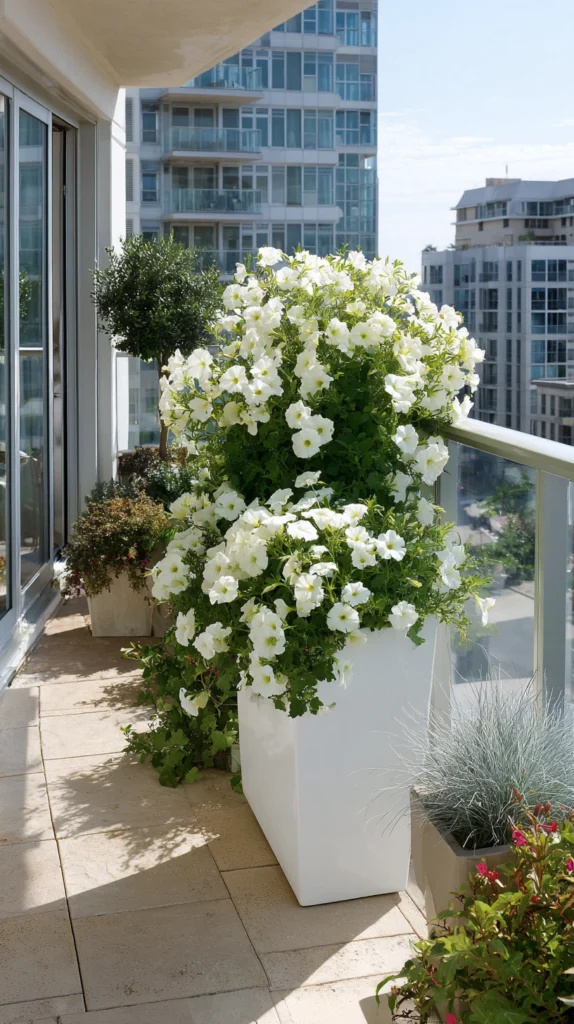
I made an all-white flower container for my front door area. White petunias, white calibrachoa, white bacopa, and dusty miller for silvery foliage. Looks so elegant and classy.
White flowers at night catch any available light and almost glow. My white container is visible from the street even after dark. Creates amazing curb appeal.
The all-white theme feels cohesive and intentional. Way better than my old random rainbow pots that looked chaotic. One color theme makes everything look more expensive somehow.
I add one trailing white sweet potato vine to spill over the edges. Within a month it’s cascading down two feet. The lime green leaves make the white flowers pop even more.
All-white container plants:
- White petunias (main show)
- White calibrachoa (smaller flowers, more delicate)
- White bacopa (tiny flowers, trails nicely)
- Dusty miller (silvery foliage for contrast)
- White sweet potato vine (chartreuse leaves, dramatic trailing)
This combination needs full sun and lots of water. I water every morning in summer. The white flowers stay bright white if you deadhead spent blooms twice a week.
4. Thriller, Filler, Spiller Formula (Works Every Time)
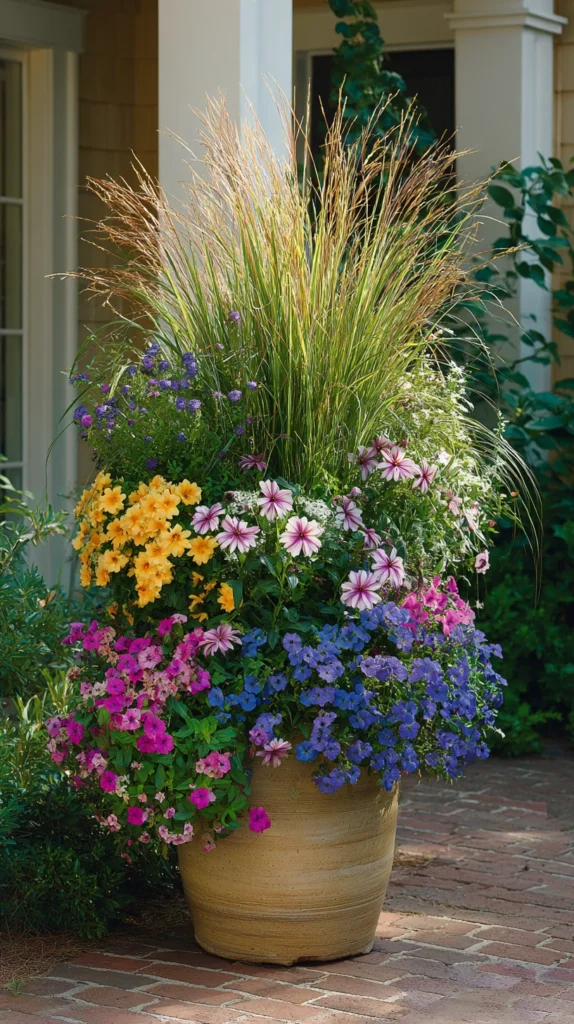
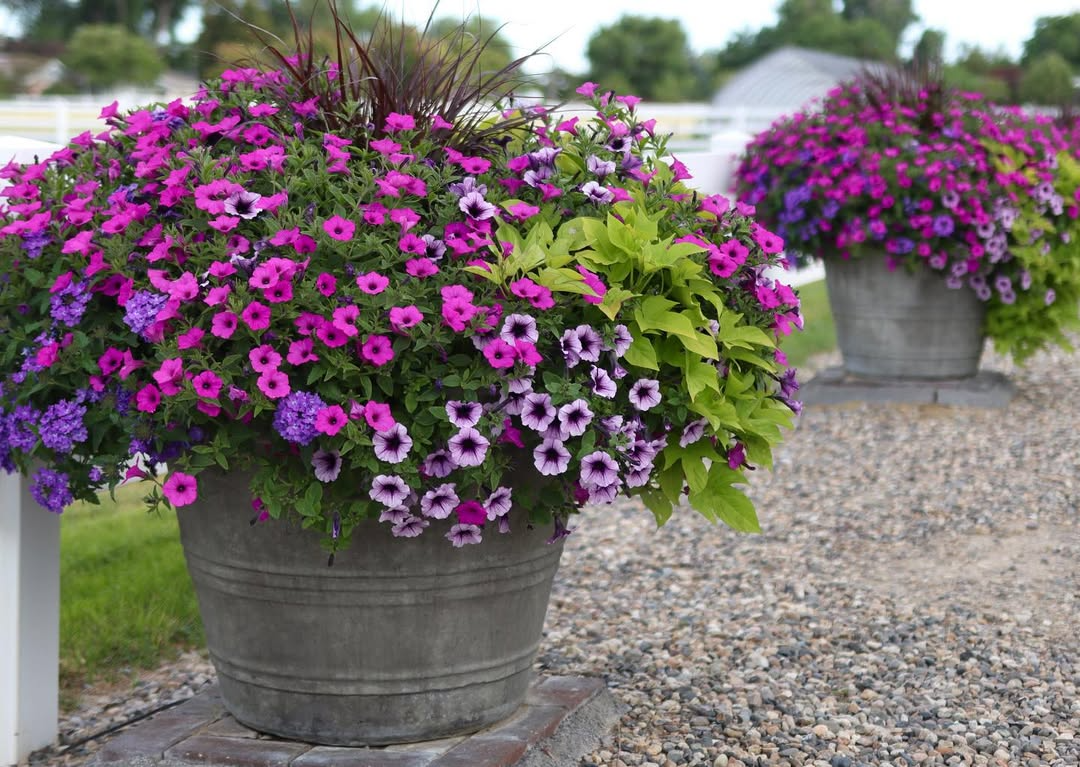
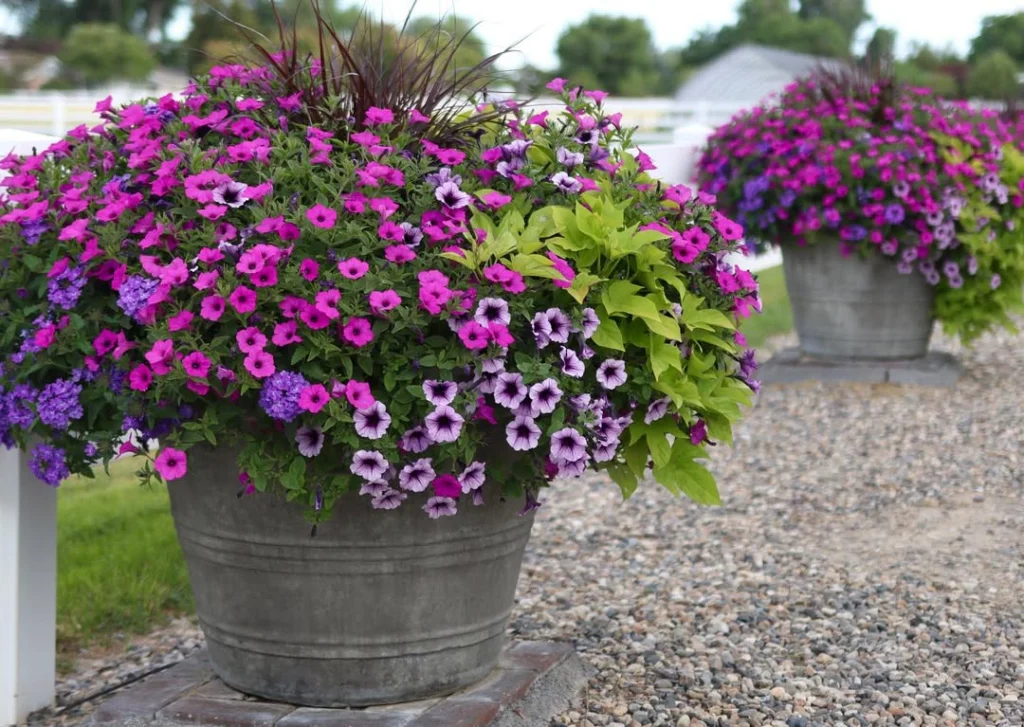
This is the magic formula that finally made my containers look professional. One tall plant in the center (thriller), medium plants around it (fillers), and trailing plants at edges (spillers).
I use a spike plant or tall grass as my thriller in the center. Then surround it with petunias or marigolds as fillers. Finally I add trailing verbena or lobelia as spillers around the edges.
This formula creates height, fullness, and movement all in one pot. It looks like something from a magazine but it’s just following a simple three-part pattern.
The thriller should be about twice as tall as the pot is wide. So for a 12-inch pot, use a 24-inch tall thriller plant. This keeps the proportions looking right.
My go-to thriller, filler, spiller combo:
- Thriller: Purple fountain grass (dramatic height and movement)
- Filler: Orange marigolds (bright and cheerful)
- Spiller: Purple trailing verbena (ties back to grass color)
I plant one thriller dead center, four fillers around it in a circle, and three spillers at the edges evenly spaced. Same pattern works in any size pot from 12 inches to 24 inches.
This formula means I never have to guess what to plant. I just pick a color scheme and plug plants into the thriller-filler-spiller spots. Works perfectly every single time.
5. Monochromatic Purple Container (My Most Complimented)
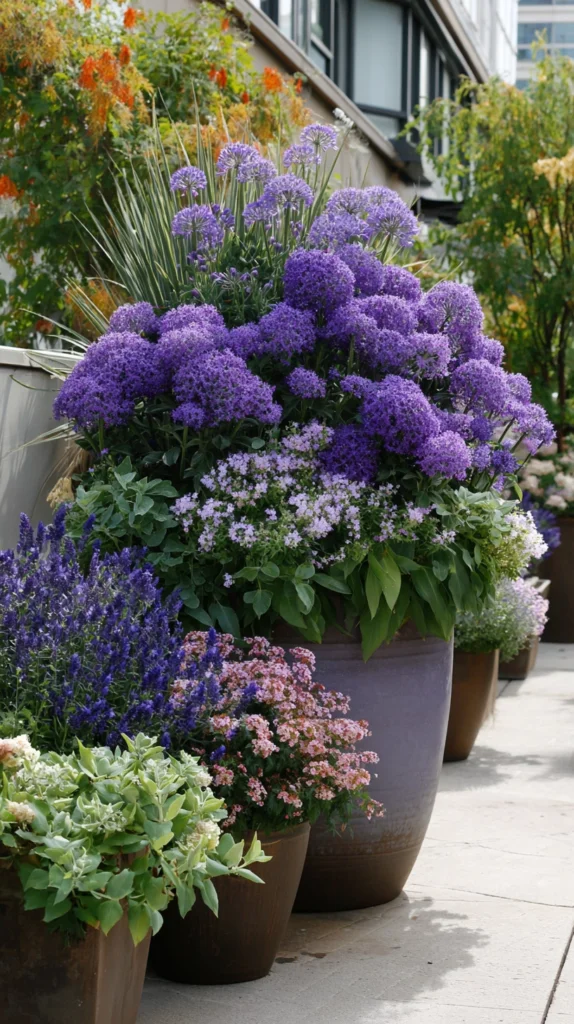
I made one container using only purple flowers in different shades. Dark purple petunias, light purple calibrachoa, deep purple verbena, and silvery purple heuchera for foliage.
Everyone who sees this pot compliments it. The different purple shades create depth and interest without being chaotic. It’s sophisticated and calming to look at.
Purple flowers attract butterflies and hummingbirds like crazy. My purple container has constant wildlife visitors. Way more than my other colored pots for some reason.
I added one dark purple sweet potato vine that’s almost black. It trails down and makes the lighter purples look even brighter by contrast. The dark foliage really makes everything pop.
Purple container plant list:
| Plant | Shade of Purple | Role in Container |
| Dark purple petunia | Deep eggplant | Center thriller |
| Light purple calibrachoa | Soft lavender | Mid-level filler |
| Purple verbena | Medium violet | Trailing spiller |
| Purple heuchera | Burgundy leaves | Foliage filler |
| Dark sweet potato vine | Almost black | Dramatic spiller |
This combo needs at least 6 hours of sun. In too much shade the colors get muddy and less vibrant. Full sun makes the purples really sing and look their best.
6. Edible Flower Container (Pretty and Useful)
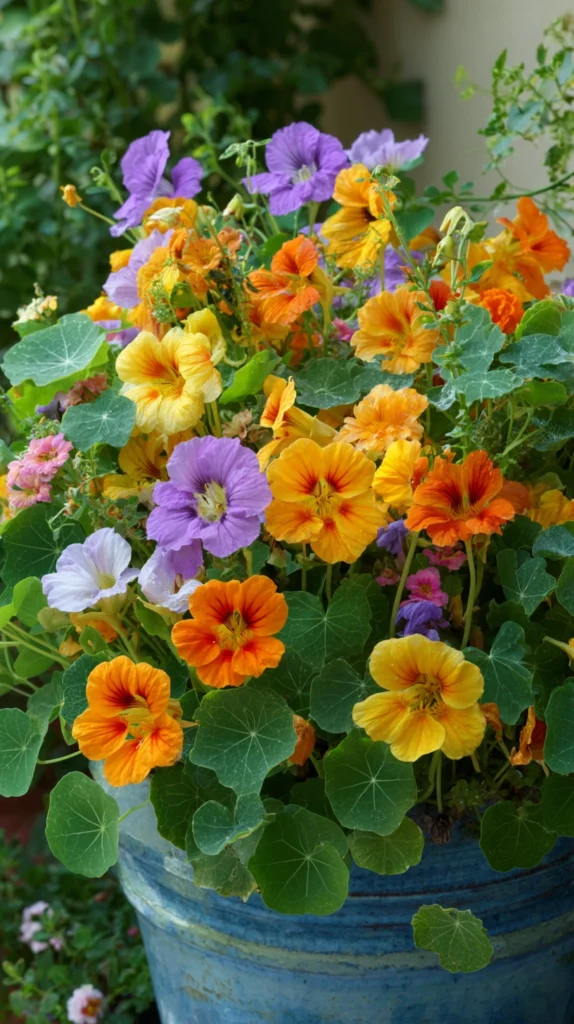
I planted a container with only edible flowers. Nasturtiums, pansies, violas, and calendula. They’re gorgeous AND I can toss them in salads or use them to decorate cakes.
My kids think it’s magic that we can eat flowers. They love picking pansies for their lunch boxes. Gets them excited about gardening in a way vegetables never did.
Nasturtiums are the star of this container. They have big round leaves and bright orange, yellow, or red flowers. Both the flowers and leaves are edible with a peppery taste.
The whole container costs maybe $20 to plant but provides edible flowers all summer long. Way cheaper than buying edible flowers at fancy grocery stores for $8 per tiny package.
Edible flowers that grow well together:
- Nasturtiums (peppery taste, trailing habit)
- Pansies (mild flavor, come in every color)
- Violas (similar to pansies but smaller)
- Calendula (slightly spicy, bright orange/yellow)
- Herb flowers like basil, chive, and oregano blooms
Don’t use any pesticides or chemicals on edible flower containers. Only organic fertilizer. You’re going to eat these so keep them clean and safe.
I pick flowers in the morning after the dew dries but before the heat of the day. They last longer in the fridge if picked at the right time. Store them between damp paper towels.
7. Heat-Loving Container for Full Blazing Sun
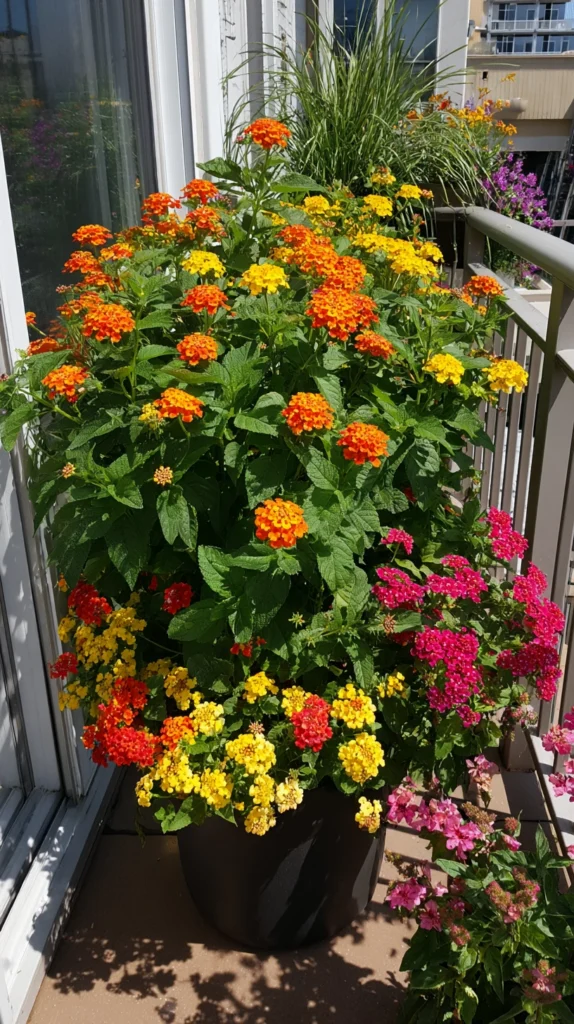
My driveway area gets full sun from sunrise to sunset. It’s brutally hot in summer. Most flowers just fry and die in that intense heat and sun.
I planted a container with only super tough heat-loving plants. Lantana, portulaca, gaillardia, and ornamental peppers. They actually thrive in the heat that kills other flowers.
This container looks best in July and August when everything else is struggling. The hotter it gets, the better these plants perform. They laugh at 95-degree weather.
I barely water this one compared to my other containers. Maybe every other day instead of daily. Heat-loving plants often hate being too wet anyway.
Best flowers for brutal heat:
- Lantana (butterflies love it, needs zero care)
- Portulaca (succulent-like leaves, bright flowers)
- Gaillardia (tough daisy-like blooms)
- Ornamental peppers (colorful peppers in purple, orange, red)
- Zinnia (handles heat and drought like a champ)
This container is perfect for people who forget to water. These plants forgive you if you miss a day or two. Way more forgiving than fussy petunias or impatiens.
8. Night Blooming Container (For Evening Enjoyment)
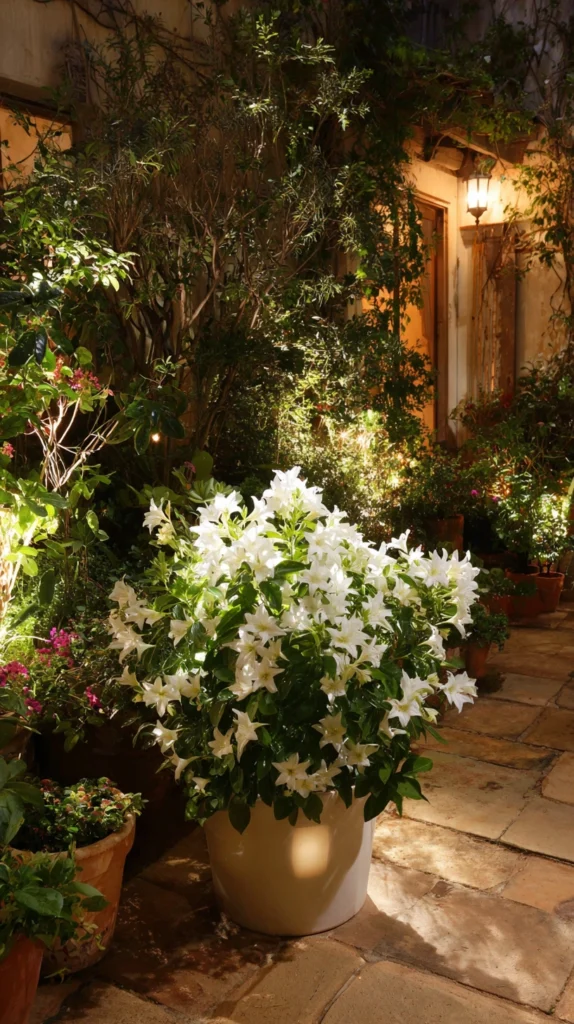
I made a container specifically for enjoying after dark. White moonflowers, white nicotiana, and white four o’clocks. They all bloom or smell amazing at night.
We eat dinner on the patio most summer evenings. This night container is positioned right where we sit. The flowers open up and smell incredible just as we’re eating.
Moonflowers are huge white trumpet-shaped blooms that open at dusk. They smell like heaven – sweet and strong. One bloom can perfume a whole patio area.
Four o’clocks got their name because they open around 4pm and stay open through the night. They come in pink, yellow, and white. I use white to match the theme.
Night blooming container plants:
- Moonflower vine (needs trellis in pot, amazing scent)
- White nicotiana (tobacco plant, sweet evening scent)
- White four o’clocks (open late afternoon)
- Evening stock (smells like cloves at night)
- White petunias (not night-blooming but show up in dark)
This container is kind of boring during the day honestly. The flowers are mostly closed and it doesn’t look like much. But at night it transforms into something magical.
9. Low Maintenance Succulent and Flower Mix
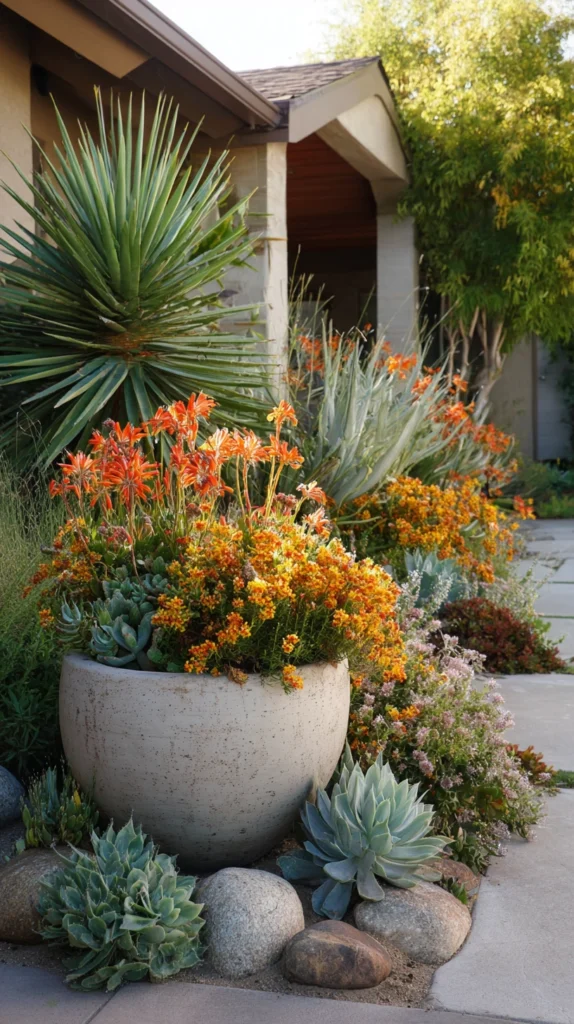
I travel for work sometimes and need containers that wouldn’t die if I was gone for a week. I mixed succulents with drought-tolerant flowers. Perfect solution.
Hens and chicks succulents in the center, surrounded by portulaca and ice plant. All of them handle being dry way better than regular flowers. They survive my travel schedule.
The succulents provide interesting texture and structure. The flowers add pops of bright color. Together they look intentional and designed instead of just surviving.
I use cactus soil mix instead of regular potting soil for this container. Regular soil holds too much water and rots succulents. Cactus mix drains fast which everything in this pot prefers.
Drought-tolerant container combo:
| Plant Type | Specific Plant | Water Needs |
| Succulent | Hens and chicks | Very low |
| Succulent | Sedum varieties | Very low |
| Flower | Portulaca (moss rose) | Low |
| Flower | Ice plant | Low |
| Foliage | Dusty miller | Low to medium |
I only water this container once a week, sometimes less. It actually looks better, slightly neglected, than over-watered. Perfect for busy or forgetful people like me.
10. Hummingbird and Butterfly Magnet Container
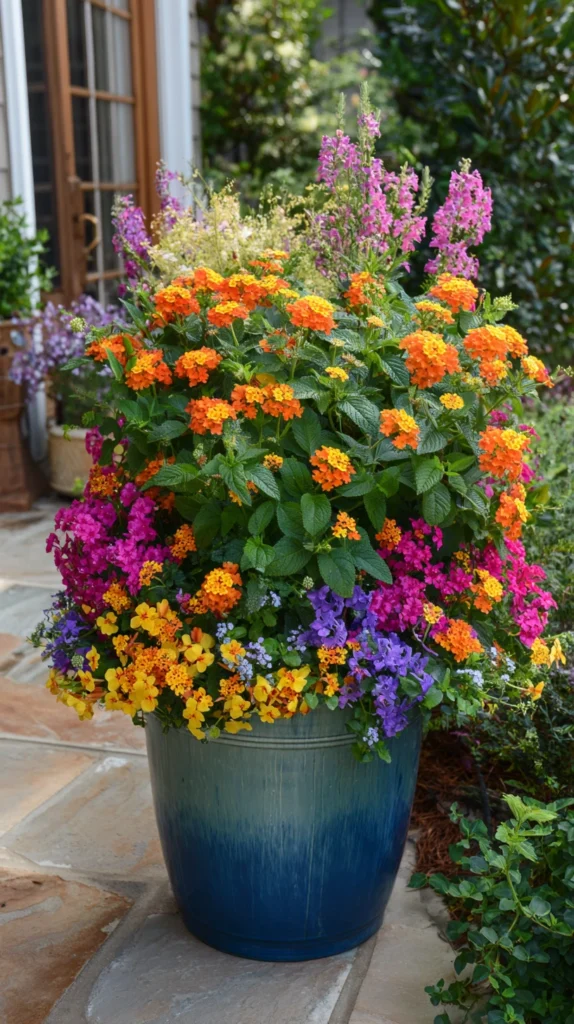
I specifically designed one container to attract hummingbirds and butterflies. Red salvia, purple verbena, orange lantana, and pink pentas. Wildlife goes crazy for it.
I see hummingbirds visiting this container at least 5-6 times per day. Sometimes two are fighting over it at once. Better than any hummingbird feeder I’ve ever had.
Butterflies land on it constantly throughout the day. Swallowtails, monarchs, painted ladies – so many different types. My kids pull up chairs to watch them like it’s a nature show.
The key is using tubular flowers for hummingbirds and flat landing pad flowers for butterflies. This container has both types so it attracts everything with wings.
Wildlife-attracting flowers:
- Red salvia (hummingbird favorite, tubular flowers)
- Lantana (butterfly magnet, flat flower clusters)
- Pentas (both hummingbirds and butterflies love it)
- Purple verbena (butterfly landing pads)
- Zinnias (easy for butterflies to land on)
This container needs full sun and good drainage. I deadhead every few days to keep new flowers coming. More flowers means more wildlife visitors.
11. Fall Container with Mums and Ornamental Kale
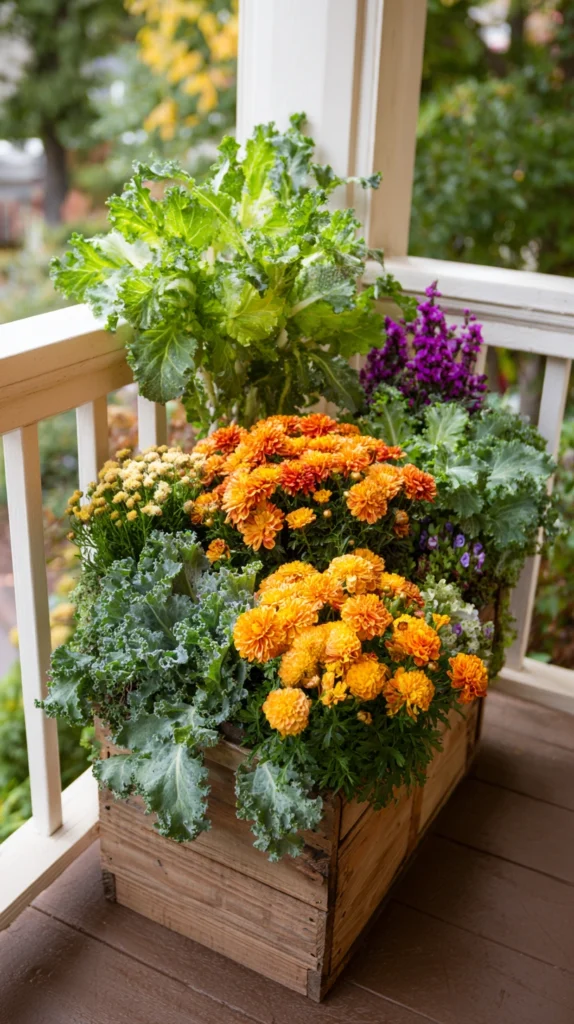
Come September, most of my summer containers look tired and done. I replant them with fall flowers for a whole new look through November.
I use three large mums in burgundy, orange, and yellow. Then I add ornamental kale and cabbage around the edges. The colors are perfect for fall.
Mums last for months if you deadhead them and keep them watered. Way longer than people think. Mine bloom from September through the first hard freeze in late November.
Ornamental kale actually gets prettier after a light frost. The cold makes the colors more intense. Purple centers get deeper, white edges get brighter. Frost improves them instead of killing them.
Fall container recipe:
| Plant | How Many | Color Options | Special Notes |
| Mums | 3 large | Orange, burgundy, yellow, white | Deadhead for longer bloom |
| Ornamental kale | 2-3 | Purple, white, pink centers | Gets prettier after frost |
| Pansies | 4-5 | Fall colors | Bloom through winter in mild areas |
| Trailing ivy | 1-2 | Green or variegated | Adds trailing element |
This container sits on my front porch from September through Thanksgiving. After that I switch to evergreen branches and berries for winter. But the fall version is absolutely gorgeous.
12. Cottage Garden Style Container (Romantic and Full)
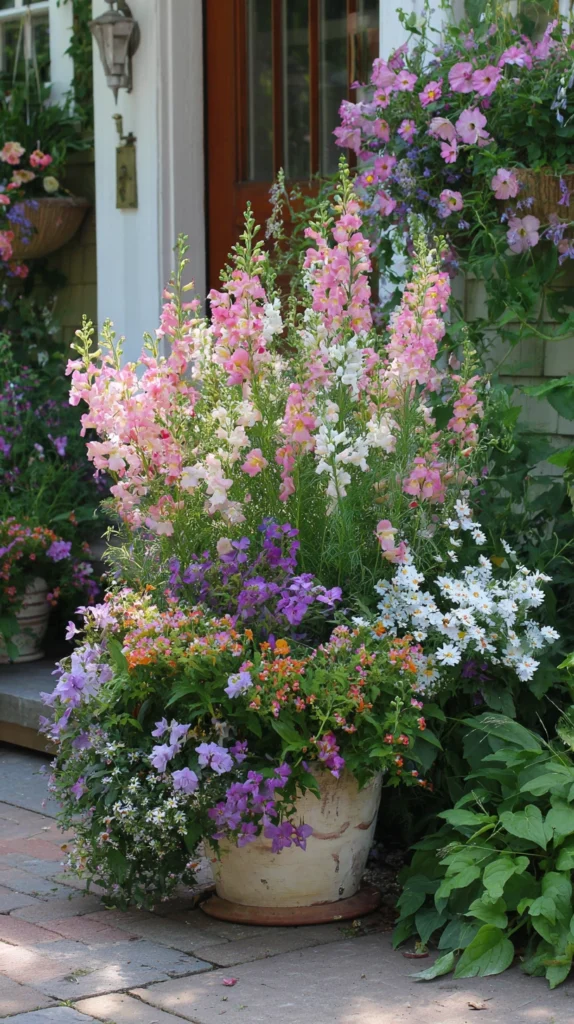
I wanted one container that looked like an English cottage garden. Loose, overflowing, romantic, and full of different textures and colors all mixed together.
I used snapdragons for height, sweet alyssum for scent, lobelia for trailing, and bachelor buttons for wispy texture. Threw in some cosmos too. It’s beautifully chaotic.
This style is the opposite of neat and controlled. It’s supposed to look a bit wild and overflowing like it just happened naturally. Very relaxed and romantic feeling.
The key is using soft colors together. Pinks, purples, whites, and soft yellows. No harsh orange or red. Keep the palette gentle and the whole container feels cohesive despite being mixed.
Cottage garden container plants:
- Snapdragons (tall spikes of color)
- Sweet alyssum (honey scent, tiny white flowers)
- Lobelia (trailing, delicate blue or white)
- Bachelor buttons (wispy, soft blue)
- Cosmos (airy, dancing on stems)
- Trailing petunias in soft pink
This container looks best when it’s grown a bit and everything is touching and mixing together. Give it a month to fill in and get that overflowing cottage look.
13. Single Variety Container (Less Is More)
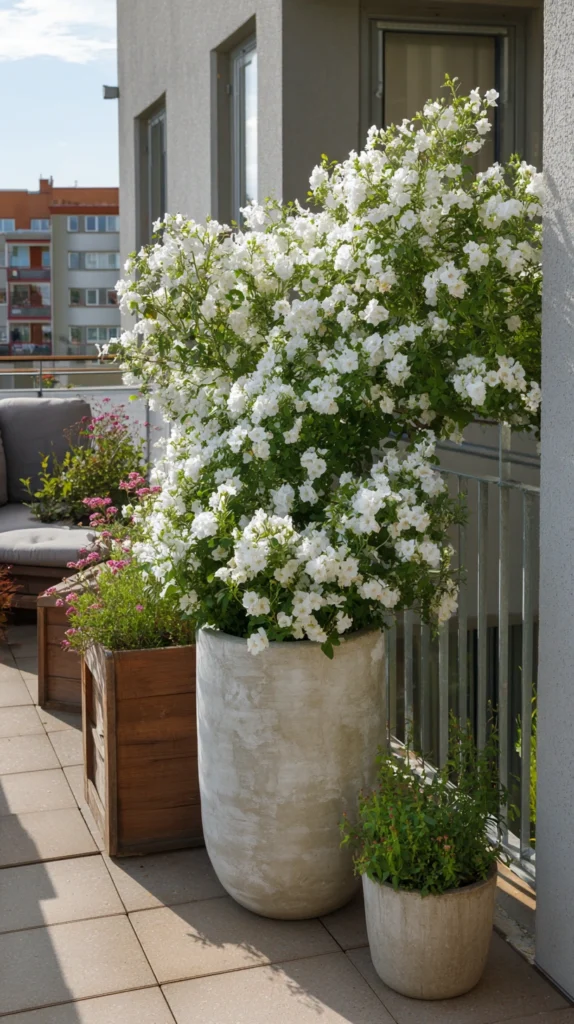
Sometimes I make containers with just one type of flower in one color. A pot of all pink petunias or all orange marigolds. Simple but stunning.
The single variety approach looks very intentional and sophisticated. More like modern design than a mixed cottage garden. Both styles work but create totally different moods.
I have three matching containers on my front steps, each with only white petunias. The repetition and simplicity looks amazing and fancy. Guests always comment on them.
Single variety containers are also way easier to care for. Everything needs the same water, same food, same deadheading schedule. No guessing about different plant needs.
Great flowers for single variety containers:
- Petunias in one color (classic and easy)
- All white geraniums (clean and elegant)
- All blue lobelia (trailing sheets of color)
- All orange marigolds (bright and cheerful)
- All pink begonias (perfect for shade)
I group three of these matching containers together for maximum impact. One alone is nice, but three together is stunning. Odd numbers always look better than even in design.
14. Tropical Container with Bold Foliage (Not Just Flowers)
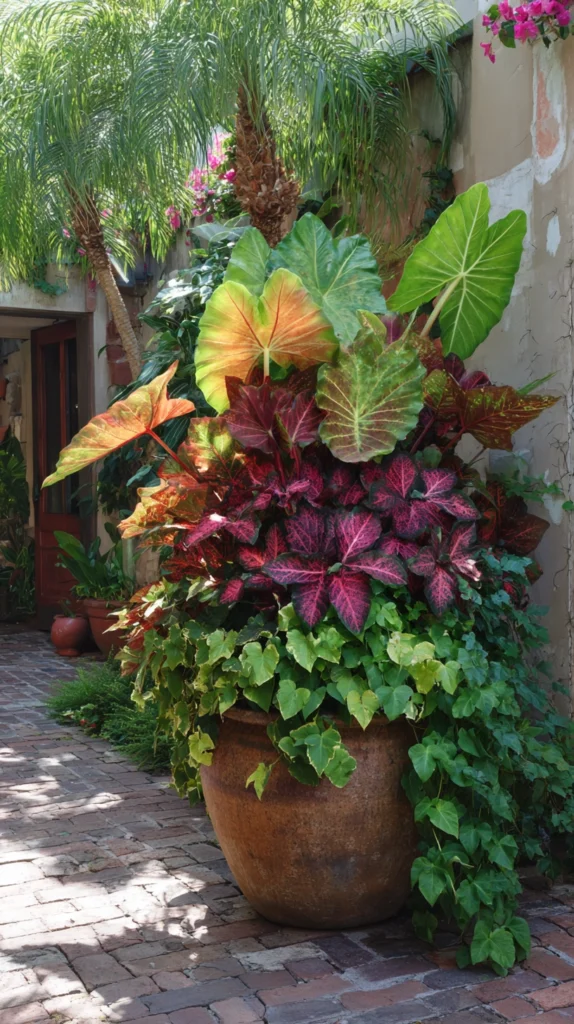
I got bored with just flowers and made a container focused on bold tropical foliage instead. Elephant ears, canna lily, coleus, and sweet potato vine. Barely any flowers but incredibly dramatic.
The huge leaves create way more impact than small flowers ever could. One elephant ear leaf is like 18 inches across. You can’t miss it from across the yard.
This tropical container lives on my back patio where I see it up close. The bold textures and leaf patterns are interesting to look at every single day. Flowers would bore me but foliage stays interesting.
I do have one canna lily that puts out red flowers occasionally. But honestly I’m more interested in the big striped leaves than the flowers. The foliage is the real star.
Bold foliage container plants:
| Plant | What Makes It Bold | Sun Needs |
| Elephant ears | Huge leaves, 1-2 feet across | Part shade to sun |
| Canna lily | Striped or burgundy leaves | Full sun |
| Coleus | Crazy color patterns | Shade to part sun |
| Sweet potato vine | Lime or black, dramatic trailing | Sun to part shade |
| Caladium | Heart-shaped, pink and white | Shade |
This container needs more fertilizer than flower containers because it’s making so much leaf growth. I feed it weekly with liquid fertilizer instead of every two weeks.
15. Self-Watering Container for Forgetful People
I’m terrible at remembering to water every single day. I’d forget and my containers would wilt and look sad by afternoon. So frustrating and wasteful.
I bought three self-watering containers that have a water reservoir in the bottom. I fill the reservoir once a week and the plants draw water up as needed. Game changer!
My flowers in self-watering pots look better than my hand-watered ones. They get consistent moisture instead of the feast-or-famine watering I was doing. Consistent moisture means better growth.
Self-watering containers cost more upfront – like $30-50 instead of $10 for a regular pot. But they save so much time and water and failed plants that they’re totally worth it.
Best flowers for self-watering containers:
- Petunias (love consistent moisture)
- Begonias (hate drying out)
- Impatiens (wilt fast when dry)
- Coleus (performs better with steady water)
- Any combination really – all plants do better with consistent moisture
These containers are perfect for people who travel, work long hours, or just forget to water. The reservoir holds enough water for 5-7 days usually. Fill it on weekends and forget about it all week.
What I Learned About Container Success
Size matters way more than you think. Bigger pots hold more soil which holds more water. They don’t dry out in three hours on hot days. Go bigger than you think you need.
All plants in one container must have the same sun and water needs. Mixing shade and sun plants never works. They kill each other trying to get what they need.
Good potting soil is worth every penny. I tried cheap soil and my plants struggled. Quality potting soil with fertilizer already mixed in makes everything grow better and easier.
Drainage holes are absolutely required. No holes means death. I don’t care how pretty the pot is. If it has no drainage, don’t use it for plants.
Container success rules:
| Rule | Why It Matters |
| Use 12″+ pots minimum | Small pots dry out too fast |
| All plants same sun needs | Can’t make everyone happy in mixed light |
| Quality potting mix | Plants need good soil to thrive |
| Drainage holes required | Standing water kills roots |
| Water daily in summer | Pots dry way faster than ground |
| Fertilize every 2 weeks | Potting soil has no nutrients long-term |
Following these basic rules transformed my containers from constant failures to success stories. The rules aren’t optional. They’re requirements for containers that actually thrive.
My Watering Schedule That Actually Works
Summer (June-August): Water every single morning before it gets hot. Check in the afternoon if it’s over 90°F and water again if dry.
Spring and Fall (April-May, September-October): Water every other day usually. Check soil with your finger – if dry, water. If damp, skip.
Winter (November-March): Only water when soil is completely dry. Maybe once a week or less. Over-watering in winter causes root rot.
I stick my finger in the soil one inch deep. Dry equals water. Damp equals wait. This simple test prevents over and under watering better than any schedule.
Signs you need to water:
- Soil dry one inch down when you finger test
- Leaves starting to droop or wilt
- Pot feels light when you lift it
- Soil pulling away from pot edges
Signs you’re watering too much:
- Yellow leaves falling off
- Mold or algae growing on soil surface
- Roots visible and mushy or black
- Soil stays wet for days after watering
I killed more plants from over-watering than under-watering. It’s tempting to water daily just to have a routine. But only water when plants actually need it, not just because it’s watering day.
Fertilizing Containers (Don’t Skip This)
Potting soil has fertilizer mixed in that lasts maybe 4-6 weeks. After that, your plants are starving. You have to feed them or they stop blooming and growing.
I use liquid fertilizer mixed with water every two weeks. It takes maybe 5 extra minutes while I’m watering anyway. The difference in plant performance is huge.
I tried the “continuous feed” potting soils. They cost twice as much and didn’t perform any better than regular soil plus my own fertilizer. Save your money and just fertilize yourself.
Flowering plants need fertilizer with higher middle numbers (phosphorus). Look for something like 10-30-10. That middle number pushes flower production instead of just leaves.
My fertilizing routine:
- Weeks 1-4: Nothing, soil has food already
- Week 5 onwards: Liquid fertilizer every 2 weeks
- I use half strength – full strength burns roots
- Water-soluble fertilizer from any store works fine
Plants that aren’t blooming much probably need more fertilizer. I learned this when my petunias had tons of leaves but barely any flowers. Fed them and flowers exploded within a week.
Common Container Mistakes People Make
Using containers with no drainage holes. I see this constantly. Pretty ceramic pots with no holes. Your plants will die. Drill holes or use them as outer decorative pots only.
Planting too early before last frost. I’ve killed entire containers by planting in April when frost hit in early May. Wait until you’re sure frost is done in your area.
Mixing incompatible plants together. Sun lovers with shade plants. Drought-tolerant with water-loving. They can’t both be happy. Pick plants with the same needs.
Crowding too many plants in one pot. Everything dies competing for water and nutrients. Leave space for plants to grow and fill in. Less is more.
Never deadheading spent flowers. Old dead flowers tell the plant to stop making more. Pinch them off and the plant keeps blooming for months instead of quitting.
Ignoring the thriller-filler-spiller formula. Random plants stuck together rarely look good. Following this simple formula makes containers look professional every time.
What Makes a Container Actually Stunning
It’s not about expensive plants or fancy pots. My best containers use cheap plants from Walmart in basic plastic pots. It’s about the combination and care.
Color coordination makes a huge difference. Three colors maximum in one pot. Too many colors look chaotic and messy instead of pretty and intentional.
Proper proportions matter. Tall plants in back or center, medium around them, trailing at edges. This creates a balanced visual weight that looks professional.
Consistent care is the real secret. The most beautiful plant combinations die if you forget to water. Mediocre combinations look amazing with daily watering and bi-weekly feeding.
How Much Does This Actually Cost?
Here’s what I spent on my favorite containers this year:
Classic red geranium combo (16″ pot):
- Pot: $12
- 3 geraniums: $12
- 6 alyssum: $12
- Soil and fertilizer: $8 Total: $44
Shade container with coleus (14″ pot):
- Pot: $10
- 1 coleus: $8
- 5 impatiens: $10
- 2 vinca vines: $6
- Soil: $6 Total: $40
Tropical foliage container (18″ pot):
- Pot: $18
- 1 elephant ear: $15
- 1 canna: $8
- 2 sweet potato vines: $8
- Soil: $10 Total: $59
Most of my containers cost $35-60 each to plant. They last 5-6 months looking beautiful. That’s like $8-10 per month for flowers that make me happy every single day.
Ready to Create Stunning Containers?
Stop overthinking and just start with one container. Pick a simple combination from this list and try it. See what happens. Learn what works in your specific conditions.
You’ll kill some plants. Everyone does. I still kill plants sometimes and I’ve been doing this for years. It’s part of learning what works in your yard.
Take pictures of your successes. I photograph containers that work well so I can repeat them next year. My memory is terrible so pictures help me remember winning combinations.
The most stunning containers are ones that make YOU happy when you see them. Not what looks good on Instagram. Plant flowers you love in colors you enjoy. That’s what makes them stunning to you.
Now go buy some flowers and pots. Start with one container using the thriller-filler-spiller formula. See how good it feels to create something beautiful that grows!
Quick Summary:
- Use pots at least 12-16 inches for enough soil and water
- Thriller-filler-spiller formula works every time
- All plants in one pot need same sun and water
- Water daily in summer, check soil with finger test
- Fertilize every 2 weeks after first month
- Deadhead spent flowers for continuous blooms
- Drainage holes are required, not optional
- Choose 2-3 colors max for cohesive look
- Bigger pots dry out slower and easier to maintain
- Quality potting soil makes huge difference
- Classic combos: geraniums with alyssum, coleus with impatiens
- Heat lovers: lantana, portulaca, zinnia
- Shade plants: impatiens, coleus, begonias
- Self-watering containers perfect for busy people
- One well-cared-for container beats five neglected ones