14 Living Room Furniture Layout Ideas
Spent six months rearranging the same furniture in the same room before understanding what was actually wrong. Not the furniture. Not the room. The relationship between them.
Every arrangement felt slightly off in a way that was hard to name. The sofa too far from the coffee table. The chairs facing the wrong direction. The room set up for a purpose nobody was using it for.
Then stopped starting with the furniture and started with the question. What does this room need to do? Who uses it and how? What is the primary activity and what is secondary?
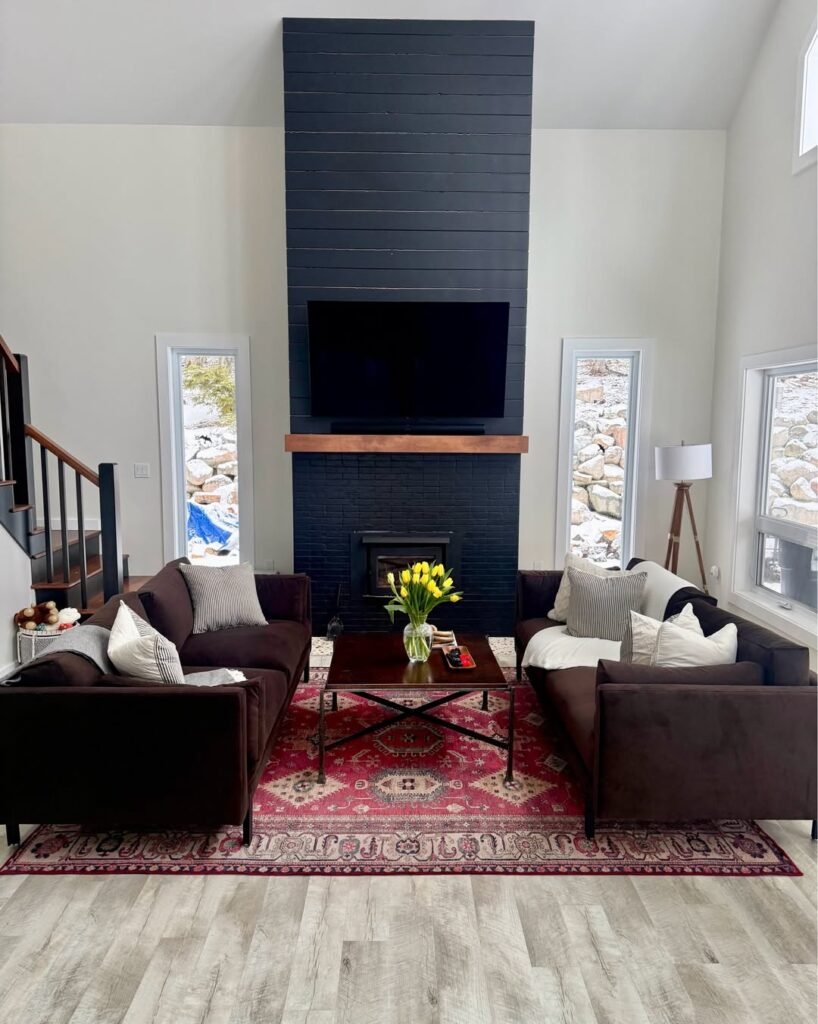
Every arrangement after that: better. Not perfect immediately. But oriented correctly.
Here are 14 layout ideas built on that orientation.
The Questions Before the Furniture
The room tells you what it needs before you move a single piece:
What is the primary use:
- Conversation: chairs face each other
- Television viewing: seating faces the screen
- Reading: seating near the window, lamp positioned
- Both: the two zones must coexist without conflict
What is the focal point:
- Fireplace: the room arranges around it
- Television: the room faces it
- View: the seating faces outward
- No natural focal point: one must be created
What is the traffic flow:
- How people enter and move through
- The furniture must not block the natural path
- The path must be 36 inches minimum (comfortable passage)
- The furniture: not an obstacle course
What is the relationship to other rooms:
- Open plan: the living area must define itself within the larger space
- Formal living room: more symmetrical arrangement possible
- Family room: durability and flexibility more important than formality
The Measurements That Matter
Before moving anything:
The coffee table distance:
- 14–18 inches from sofa to coffee table
- Close enough to reach without leaning forward awkwardly
- Far enough to walk past
- The most commonly wrong measurement in living rooms
The conversation distance:
- 8 feet maximum between facing seats
- At 8 feet: conversation requires raised voices
- At 5–6 feet: comfortable conversation
- At 4 feet: intimate
Seating to television:
- Minimum distance: 1.5× the screen diagonal
- 55-inch TV: minimum 6.9 feet
- 65-inch: minimum 8.1 feet
- Sitting too close: eye strain and neck movement
Traffic paths:
- Primary path (front door to other rooms): 36 inches minimum
- Secondary paths (within the room): 24 inches minimum
- Never less than 18 inches anywhere
- Test before fixing furniture position
The rug:
- All front legs on the rug (minimum)
- All legs on the rug (maximum)
- Neither: the rug appears to float
- Size: go larger than instinct suggests (always)
1. The Fireplace Focal Point (Classic Symmetry)
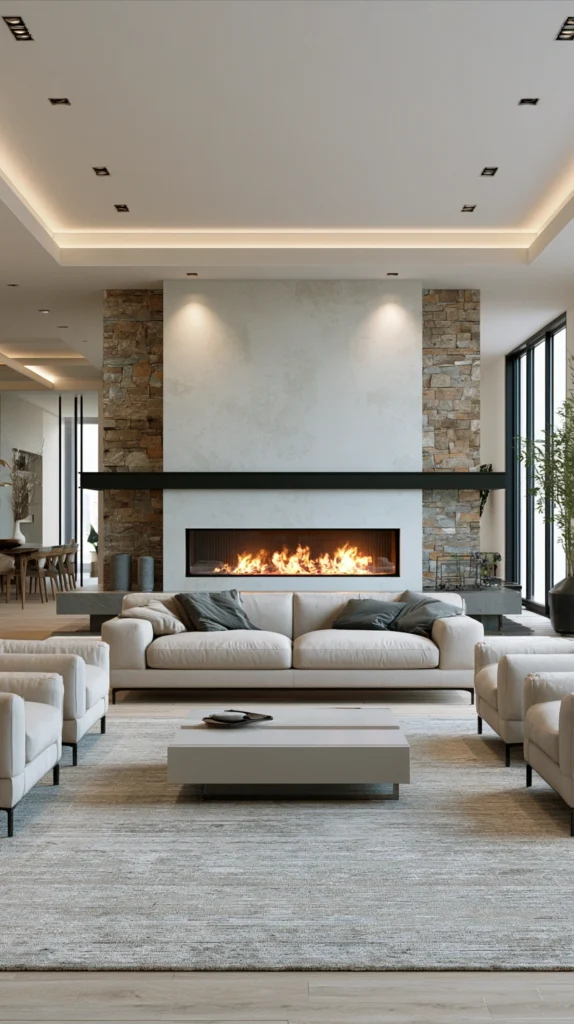
All seating arranged to face and frame the fireplace — the layout when the room has a natural anchor.
Why fireplaces demand this arrangement:
The hierarchical focal point:
- A fireplace is never a secondary element
- Placing the television beside a fireplace and facing seating toward the TV: a mistake
- The fireplace is the room’s architecture
- The architecture: the organising principle
The symmetrical arrangement:
The central sofa:
- Sofa facing the fireplace
- Perpendicular to the fireplace wall
- Centred on the fireplace (not offset)
- The sofa: the primary seating
Two armchairs:
- One each side of the sofa
- Slightly angled in (toward the fireplace)
- Not straight: angled
- The angle: creates the conversation zone
The coffee table:
- Centred in front of the sofa
- 16 inches from the sofa
- Centred between the chairs as well
- The table: the room’s organising object
The symmetry:
- Identical lamps on identical tables: each side of the fireplace
- Or: matched plants
- Or: matched artwork each side
- The symmetry: signals that this is a considered arrangement
When the television must also be included:
Above the fireplace (controversial):
- Ergonomically: too high for extended viewing
- Visually: the two focal points as one
- Increasingly common: acceptable in many rooms
- The compromise: best managed with a tilting mount
Flanking the fireplace:
- TV recessed into an alcove beside the fireplace
- Seating angled to see both
- The sofa at 45 degrees: works for both
- Not ideal for either: the honest assessment
Cost consideration:
- No additional cost
- Layout change only
- Two armchairs if not already owned: $300–600
2. The Conversation Grouping (People-First Layout)
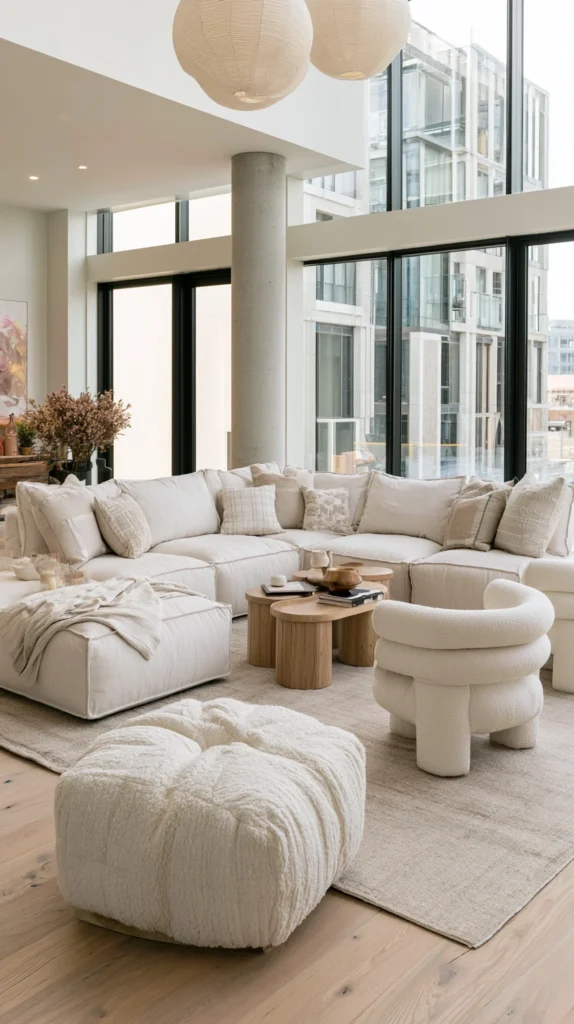
All seating facing inward, optimised for talking — the layout when the room is primarily social.
Why conversation-first layouts are the most overlooked:
The television problem:
- Most living rooms: arranged around the TV
- All seating: faces the screen
- The room: set up for a screen
- The conversation: made difficult by the arrangement
The conversation alternative:
- All seating: faces inward
- The television: secondary or turned away
- The people in the room: the focal point
- The arrangement: the declaration that people matter more than screens
The U-shape:
The most conversation-effective:
- Sofa on one side
- Two chairs opposite
- One additional chair or loveseat at the open end
- The U: everyone facing the centre
The closed circle:
- Four chairs in a circle
- No sofa
- The most democratic
- The most intimate
- Suits a smaller room
The L-shape conversation:
- Sofa and loveseat forming an L
- One chair completing the corner
- Less formal than the U
- Suits open-plan spaces
The coffee table:
- Centre of the conversation group
- Within reach of every seat (approximately 18 inches)
- Wide enough to anchor the group
- Not so wide it prevents reach from either side
The rug:
- Defines the conversation zone
- Large enough to include all furniture
- The rug: the room within the room
- Unifies the arrangement visually
The television:
- Placed where it can be viewed without rearranging
- Not the focal point
- Off to one side
- Or: in a cabinet that closes
- The option: the television not always visible
3. The Open Plan Zone (Defining Space Within Space)
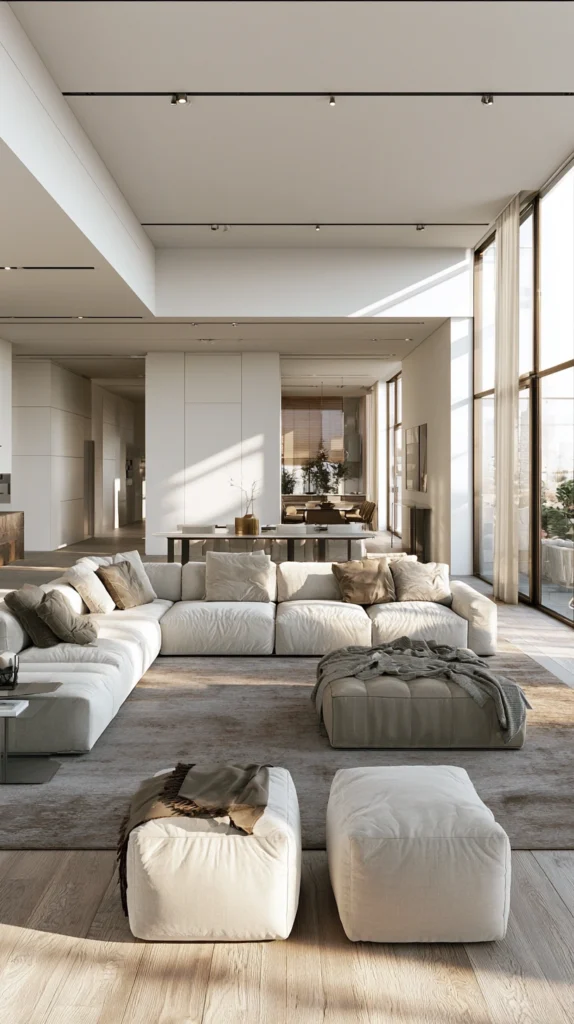
Using furniture to define a living area within a larger open-plan space — the layout challenge of the contemporary home.
Why open-plan spaces need defining:
The undifferentiated problem:
- One large room with kitchen, dining, and living
- No walls to define the living zone
- Furniture scattered: no zone
- The room: a large waiting area
The furniture as architecture:
- The sofa back: defines the edge of the living zone
- The rug: defines the floor of the living zone
- The overhead light: defines the ceiling of the living zone
- Three elements: a room within a room
The sofa back:
The defining move:
- Sofa placed with its back facing the kitchen or dining area
- Not pushed against a wall
- Floating in the room
- The back: the wall that is not a wall
This single decision:
- Creates two distinct zones
- The living area: defined by the sofa’s back edge
- The dining or kitchen: behind the sofa
- No construction required
The rug (essential in open plan):
- The living zone: on the rug
- The dining zone: on its own rug or on the floor
- The rugs: define the zones as clearly as walls
- Without rugs: the zones blur
The console table behind the sofa:
- A narrow console at the sofa’s back
- Creates a natural boundary
- Lamps on the console: define the zone at height
- Practical: the zone has an additional surface
Lighting zones:
Different lighting per zone:
- Living zone: pendant or chandelier above
- Dining: its own pendant over the table
- Kitchen: under-cabinet and task lighting
- The light: the invisible wall
Cost consideration:
- Sofa (already owned): repositioned
- Console table: $150–400
- Area rug: $150–400
- The zone: created for the cost of the console and rug
4. The Two Sofa Facing Layout (The Formal Arrangement)
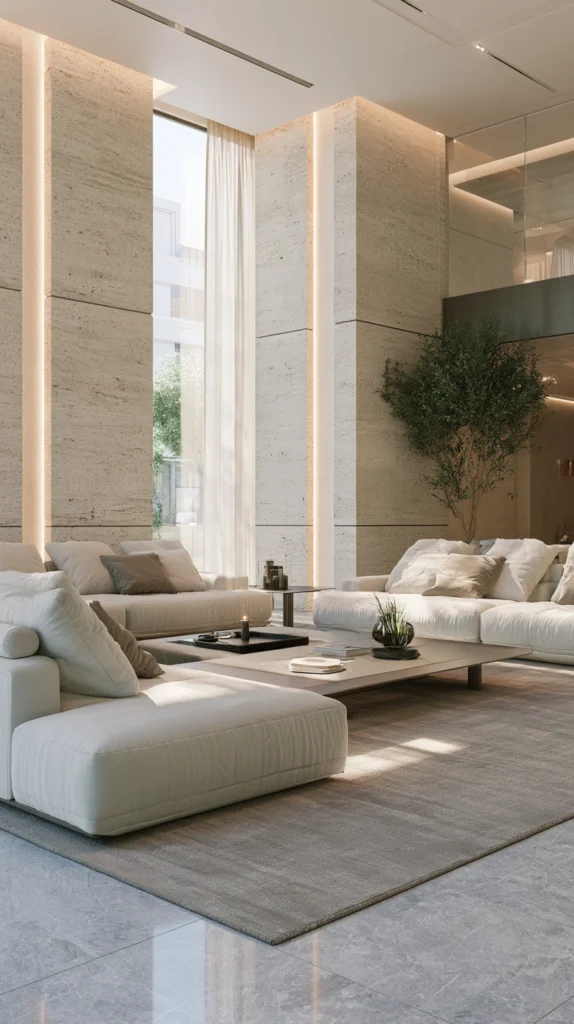
Two sofas facing each other across a coffee table — the most formal living room layout and the most conversationally generous.
Why two sofas facing works:
The conversation capacity:
- Two sofas: eight to ten people facing each other
- The most social seating arrangement per square foot
- Every person: sees every other person
- The arrangement: made for gathering
The formality:
- Two facing sofas: symmetrical
- Symmetry: formal
- Formal: suits certain rooms (traditional, period, formal living rooms)
- Contemporary rooms: the layout can feel stiff
The contemporary version:
Different pieces (not two identical sofas):
- One sofa (longer)
- One loveseat opposite (shorter)
- The asymmetry: contemporary
- Still facing: still conversational
The distance:
- Between the two sofas: 4–6 feet (the coffee table fills this)
- Too close: intimate (appropriate for small rooms)
- Too far: conversation at volume required
- The 5-foot gap: the standard
The coffee table:
- Long and rectangular (suits two facing sofas)
- Or: two smaller tables side by side
- The length: approximately the sofa length
- The proportion: the key
What flanks the ends:
- Accent chairs at the open ends of the arrangement
- Or: a side table each end
- Or: left open (traffic flow)
- The chairs at the ends: the most social configuration
The problems:
The long room:
- Two facing sofas: suit a room longer than it is wide
- Square room: the two sofas create a tunnel
- Asymmetric rooms: rarely work
- The proportion test: the layout requires the right room
5. The L-Shaped Sofa Layout (The Contemporary Standard)
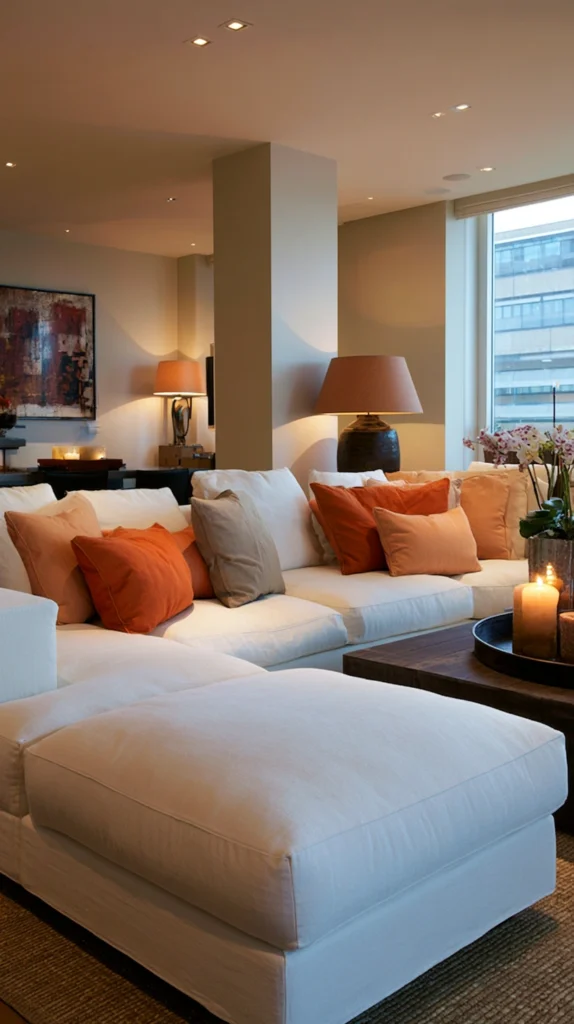
An L-shaped sectional with chairs completing the arrangement — the layout that maximises seating in most contemporary living rooms.
Why the L-shaped sectional works:
The seating quantity:
- L-shaped sectional: 5–7 people
- Most living rooms: want to seat this number
- The single piece: one purchase for the primary seating
- The simplicity: the appeal
The corner use:
- The L fills the corner
- The corner: often wasted by other arrangements
- The L: uses the full room efficiently
- The efficiency: space maximised
The chair addition:
One or two accent chairs:
- Complete the seating group
- Opposite the chaise end
- Angled slightly inward
- The chairs: the flexibility the sectional lacks
The floating L:
The temptation (and the mistake):
- Push the sectional into the corner
- The sectional against two walls
- The room: a seating theatre facing nothing
- The problem: the room has no focal point
The floating alternative:
- Pull the sectional away from the walls
- 12–18 inches from the wall (minimum)
- The room: breathes around the sectional
- The look: designed, not default
The television:
- L-shaped sectional often wraps around a television
- The chaise end: parallel to the TV wall
- The sofa portion: angled view of TV
- The compromise: the chaise has better sightlines
The rug:
- The most important element with an L-shaped sectional
- All legs on the rug: the ideal
- Front legs minimum
- Without a rug: the sectional floats without anchor
6. The Apartment Layout (Small Room, Full Function)
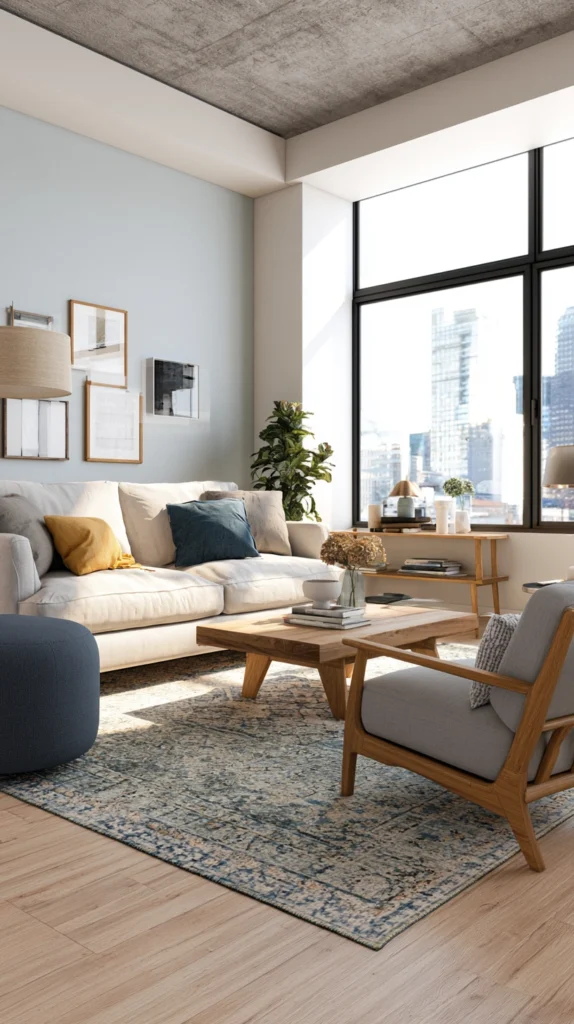
Maximising a small living room — every decision made to create the impression and function of a larger space.
The small room challenges:
What makes small rooms feel smaller:
- Furniture pushed against all walls (makes it feel like a waiting room)
- Too many pieces competing
- No single focal point
- Rug too small (the most common small room mistake)
What makes small rooms feel larger:
Float the furniture:
- Away from the walls
- Even 6–8 inches from the wall
- The breathing room: the room expands
- Counterintuitive: correct
One statement piece:
- One large sofa (not two small ones)
- One large rug (not two smaller)
- Confidence of scale: the room reads as confident
- The timid choice (smaller): makes the room feel smaller
Multipurpose furniture:
- Ottoman with storage: seating, foot rest, storage
- Coffee table with shelf below: display and storage
- Sofa with chaise: additional sleeping when needed
- The furniture: earning more than one function
The sofa size:
The paradox:
- Small room: instinct says small sofa
- The right answer: the largest sofa the room can accommodate
- Large sofa: fills the room with purpose
- Small sofa: the room looks furnished timidly
The layout:
One sofa (primary), one chair (secondary):
- Not two sofas (too much)
- Not all chairs (lacks comfort)
- The sofa: the room’s primary function
- The chair: the flexibility
The L-shape for small rooms:
- The sectional in a small room: use a smaller scale sectional (2-seat sofa + chaise)
- Fits a small room: 100–120 square feet minimum
- The chaise: provides the lounging function without a second sofa
Mirrors:
- Large mirror on the wall opposite the window
- Reflects the light: the room brighter
- Reflects the room: the space doubled visually
- The mirror: the most impactful small room intervention
7. The Reading Room Layout (Function-Specific Design)
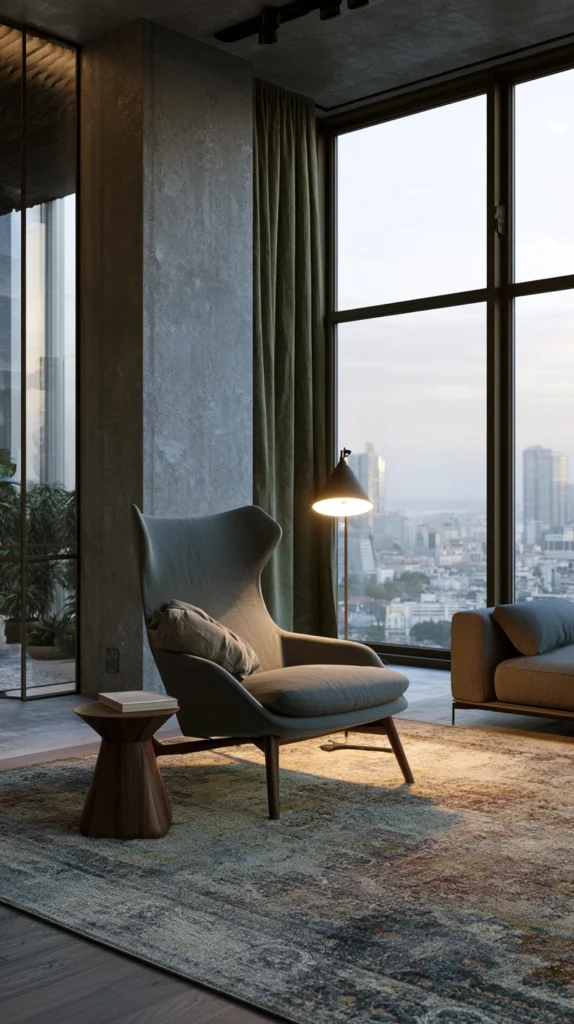
A living room designed primarily for reading — the layout that places comfort and light above everything else.
Why a reading-first layout is different:
The shift:
- Television: the assumed primary function
- Reading: the actual preferred use for many
- The design for the actual use: the correct design
- The television: secondary or absent
The requirements of reading:
The chair:
- One excellent reading chair (the primary investment)
- Wide enough to shift position
- Angled toward natural light
- The lamp: beside and above shoulder height
The light:
- Natural light: the reading chair faces the window
- Not looking into the window (glare)
- Light coming from behind and to the side
- The afternoon light: the reading hour (arrange accordingly)
The lamp:
- Floor lamp beside the chair: for evenings
- Arc lamp over the shoulder: the reading position
- Warm temperature (2700K)
- Adjustable: the reading lamp should be moveable
The storage:
- Bookshelves within sight of the reading chair
- Books visible from the reading position
- The room: aware of its purpose
- The library quality: the room designed to hold books
The layout:
Two reading chairs:
- Facing each other at an angle (45 degrees)
- Shared lamp between them
- Side table each side
- The conversation possible: the companionable reading
One reading chair and a sofa:
- The sofa: secondary seating
- The reading chair: the primary function
- Angled differently: each serving its purpose
- The television: possible from the sofa, secondary
Cost consideration:
- One excellent reading chair: $300–700
- Arc floor lamp: $80–200
- Adjustability of existing arrangement: free
8. The Open-Arm Chair Circle (Flexible and Democratic)
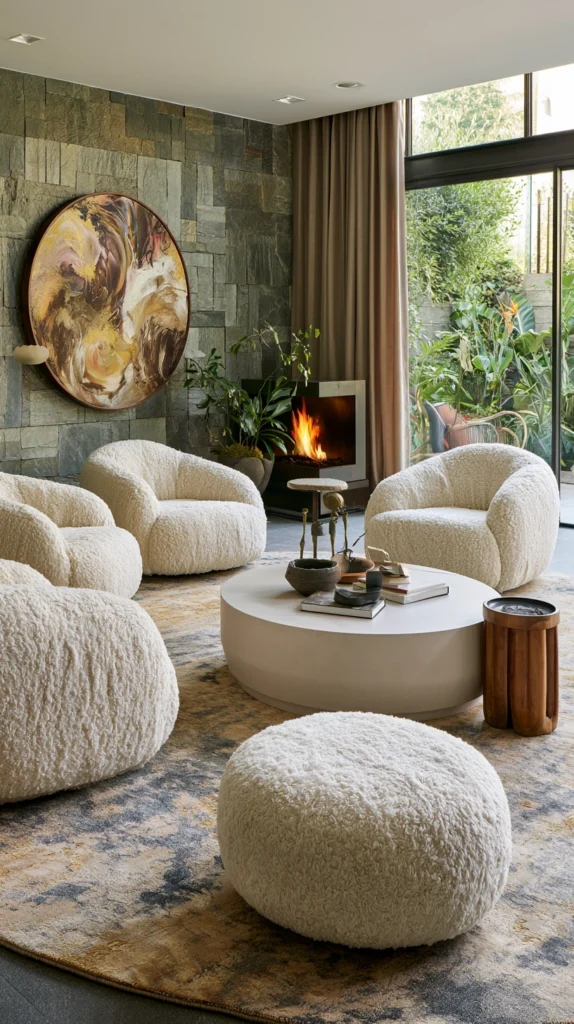
Four individual chairs in a circular or square arrangement, no sofa — the layout that serves conversation best and resists the television’s pull.
Why chairs without a sofa is sometimes the right answer:
The sofa assumption:
- Every living room must have a sofa
- This assumption: unchallenged
- The reality: not every living room needs one
- A room of excellent chairs: more conversational, more flexible
The chairs-only benefits:
Each person has their own seat:
- No sofa hierarchy (who sits where)
- No armchair-is-less-good feeling
- Each person: equally positioned
- The equality: the social effect
Rearrangeability:
- Chairs move
- A sofa does not
- The living room for parties: chairs rearranged
- The living room for television: two chairs to face the screen
- The flexibility: the chairs’ advantage
The circle layout:
Four chairs:
- One at each compass point
- Or: two pairs facing each other
- Coffee table at centre
- The conversation: natural from any chair
The chair selection:
- Not four identical chairs: boring
- Not four completely different: chaotic
- Two matching + two matching (different from each other): the design
- Or: four different chairs in the same colour family
The size consideration:
- This layout requires more space than a sofa plus chairs
- Four chairs: more room to manoeuvre
- Minimum room size: 12×14 feet for four chairs to feel correct
- Smaller rooms: two chairs facing each other may be the approach
9. The Television-Centred Layout (Honest About the Primary Function)
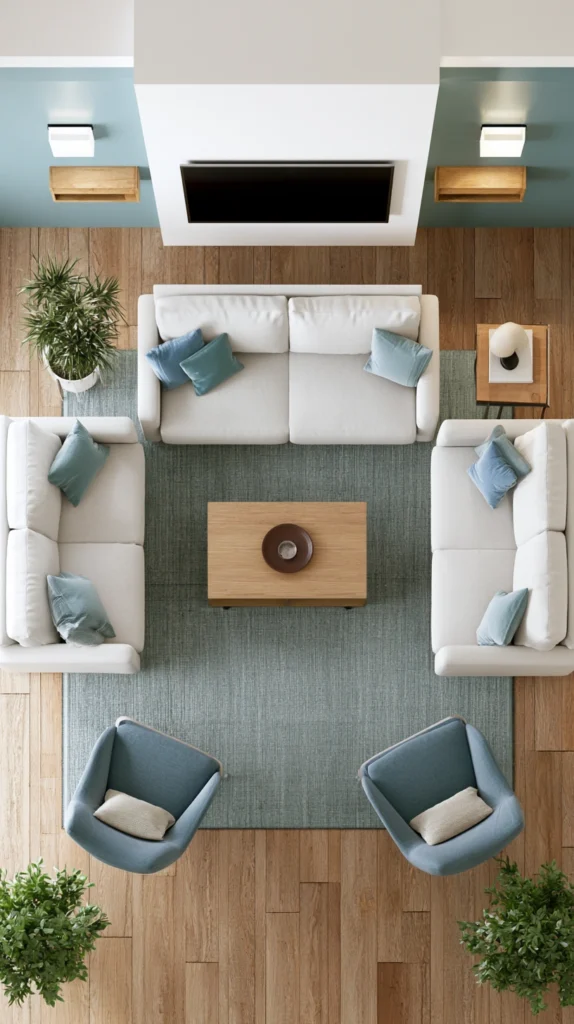
Seating arranged to serve television viewing without apology — the honest layout when television is the genuine primary use.
Why honesty matters in layout:
The pretence problem:
- Many living rooms: arranged for television
- The layout: obvious
- The attempt to disguise it: the television above the fireplace (wrong height), the television in a cabinet that is always open, the television in a room called the “sitting room” where everyone watches television
- The pretence: makes the room less good at its actual function
The honest television layout:
The primary axis:
- The television: on one wall
- The seating: facing it
- The axis: clear and functional
- The television height: eye level when seated (not above the fireplace)
Television height:
- Screen centre: 42 inches from the floor (seated eye level)
- Below the mantelpiece is not achievable in most fireplace situations
- The wall-mounted television at correct height: the correct solution
- The above-mantle television: ergonomically wrong
The seating arrangement:
Sofa centred facing the screen:
- Equidistant from each end of the sofa to the television
- The sofa: the primary viewing seat
- Side chairs: angled for viewing without neck turning
The viewing distances:
- 65-inch television: optimal viewing at 8–9 feet
- 55-inch: 7–8 feet
- 75-inch: 9.5–10.5 feet
- The sofa placement: derived from the screen size
The secondary arrangement:
- Conversation still possible (chairs angled inward slightly)
- The television room is not exclusively a television room
- The conversation: when the screen is off
- The layout: serves both
10. The Awkward Room Layout (Solving the Difficult Space)
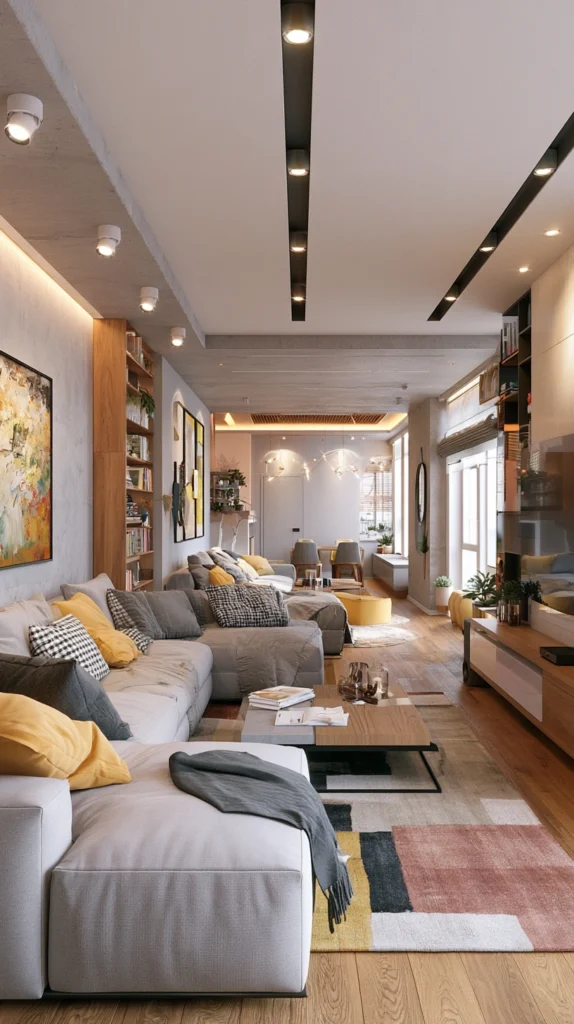
Handling the off-square, too-narrow, or oddly-shaped living room — the layout ideas for spaces that resist standard approaches.
The long narrow room:
The problem:
- Standard layouts: all furniture in one end
- The room: half used
- The other half: dead space
The solution — two zones:
- Zone one: main seating near the entrance end
- Zone two: secondary seating or reading area at the far end
- The long room: becomes two rooms
- The connection: a rug each zone, a clear path between
The room-length arrangement:
- Sofa on one long wall
- Two chairs on the opposite long wall
- Coffee table between
- The arrangement: runs the length of the room
- The traffic: through the space (not around it)
The too-small square room:
The problem:
- Cannot fit standard arrangements
- Feels cramped with a sofa and chairs
The solution:
- One loveseat (smaller than sofa)
- Two occasional chairs
- Small coffee table
- Scale down every piece
- Or: one sofa against one wall, chairs at angles
- The smaller pieces: the room they create
The diagonal arrangement:
- In a small or awkward square room
- The sofa placed at a 45-degree angle to the walls
- Chairs opposite, also at angle
- The diagonal: adds perceived length
- The room: reads larger
The room with too many doors:
The problem:
- Every wall has a door
- Nowhere to place a sofa
- The traffic paths: everywhere
The solution:
- Float all furniture away from walls
- The sofa: backs to one path (its back is the wall)
- The traffic: behind the sofa and around the chairs
- The furniture: defines its own zone without the walls
11. The Gallery and Display Layout (When Art Is Part of the Function)
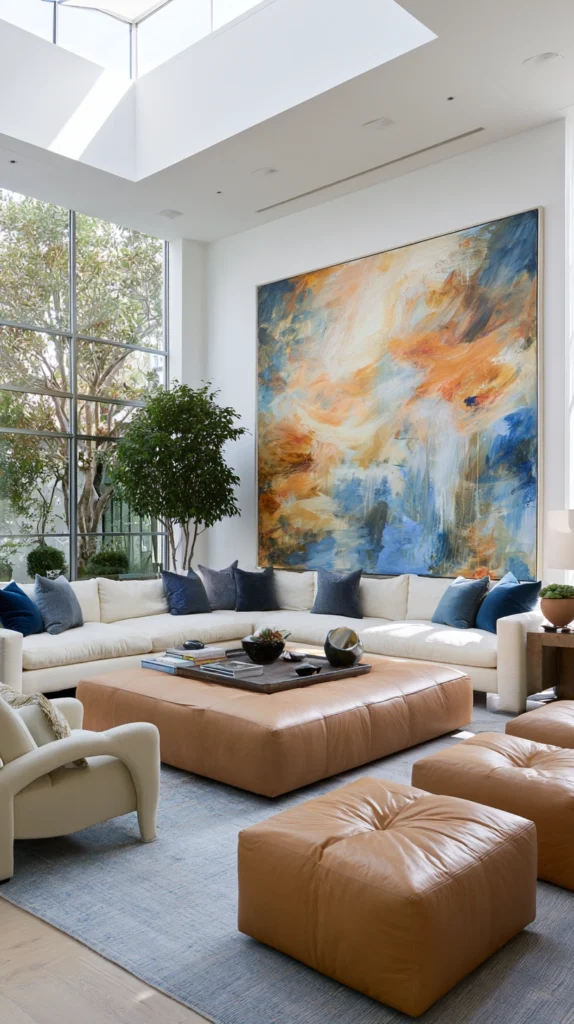
The living room arranged in relationship to art and significant objects — the layout when the room contains things worth looking at.
Why art changes the layout:
The display consideration:
- Art on the wall: requires viewing distance
- Significant object: needs space around it
- The room layout: must allow the display to be seen
- The furniture: not blocking what is meant to be seen
The art-facing arrangement:
One significant piece:
- The major artwork: one wall
- The primary seating: facing it
- The viewing distance: minimum 8–10 feet for large pieces
- The art: the fourth focal point option (alongside fireplace, TV, and view)
The gallery wall:
- One wall devoted to an arrangement of art
- Seating angled or facing it
- The gallery wall: the destination of the eye
- The layout: acknowledges the destination
The significant object:
- Antique, sculpture, or family piece
- Given space around it (18–24 inches minimum)
- Not surrounded by competing objects
- The breathing room: the respect the object requires
The bookshelf wall:
Bookshelves as focal point:
- Bookshelves from floor to ceiling: a significant surface
- Seating that allows viewing into the books
- The library aesthetic: a form of art
- The reading chair: in front of or beside
The layout principle:
- What is worth looking at in this room
- The seating: arranged to look at it
- The layout: follows the gaze
12. The Dual-Purpose Layout (Living Room and Home Office)
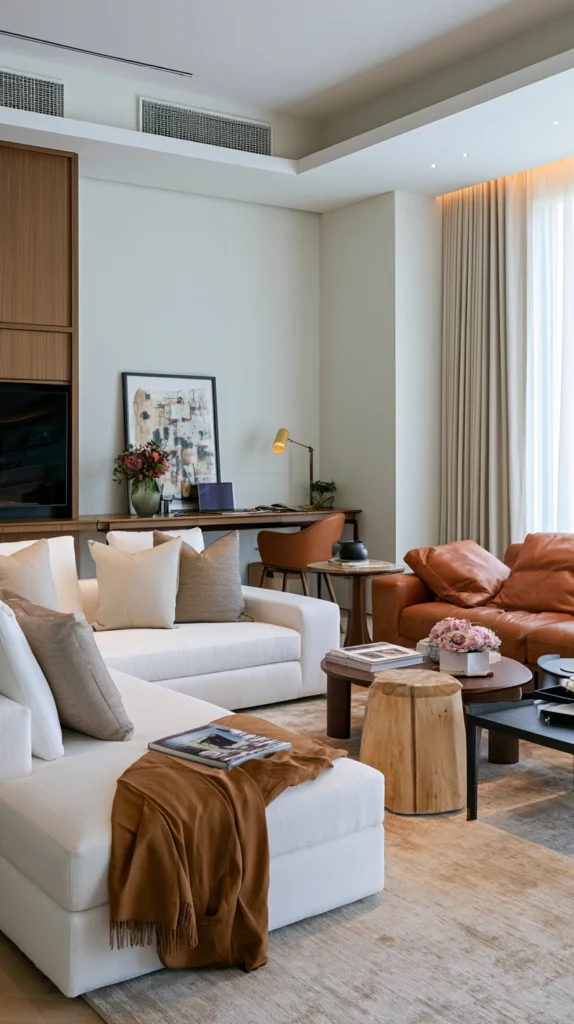
A living room that also functions as a home office — the layout that serves both without either looking wrong.
Why this is now a common challenge:
The working-from-home reality:
- The home office in the living room: common
- The desk visible from the sofa: the problem
- The work life and the rest life: sharing space
- The layout: must allow both to function without either undermining the other
The separation strategies:
The desk placement:
- Against a wall not visible from the main sofa
- Behind the sofa (if the sofa floats)
- In a corner at 45 degrees (tucked)
- The desk: present but not the focus of the room
The screen direction:
- The computer screen: facing away from the sofa
- Not visible from the main seating
- Work: less present when not working
- The visual: the desk is there but not demanding
The cabinet solution:
- Desk inside a cabinet or armoire
- Cabinet closed: the living room
- Cabinet open: the home office
- The closing: the signal that work is done
The room divider:
- Bookshelf as room divider
- The books: the living room side
- The desk: the behind-the-bookshelf side
- The divider: two zones without a wall
The styling discipline:
The desk: styled when not in use:
- A plant on the desk
- Books arranged
- No paperwork visible
- The desk tidy: the rest of the room works
The chair:
- Office chair when working
- Rolled away or replaced with an accent chair when not
- The working chair is not the living room chair
- The option: depends on storage
13. The High-Ceilinged Room Layout (Dealing With Vertical Space)
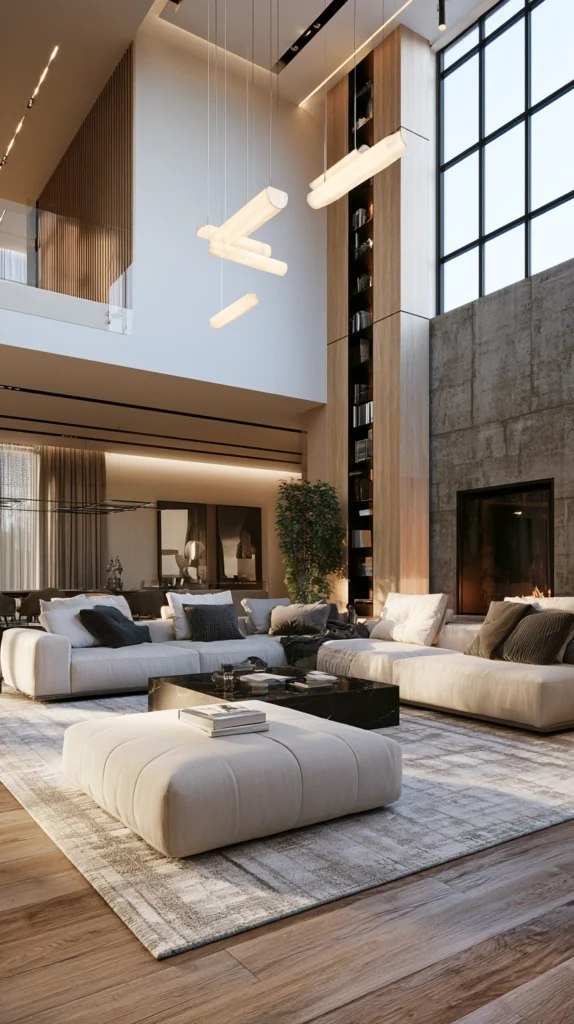
The living room with a ceiling above 10 feet — the space that presents specific challenges around proportion and warmth.
Why high ceilings change layout:
The vertical proportion:
- Standard furniture: designed for 8–9 foot ceilings
- In a room with 12-foot ceilings: the furniture looks small
- The scale problem: the furniture and the room disagree
- The solution: address the height
Adding vertical elements:
Tall bookshelves:
- Floor-to-ceiling in high rooms (possible)
- The vertical line: connects floor to ceiling
- The room: the proportions addressed
- The bookshelf: wall decoration and function
Tall plants:
- Ficus, fiddle leaf, or large tropical plant
- In the high room: tall plants correct in scale
- The vertical: addressed without construction
The floor lamp:
- Arc lamp: tall (fills vertical space)
- The light source: at a useful height
- The lamp: earns its vertical space
The furniture groupings:
Multiple groupings:
- In a high-ceilinged room: more space usually
- Two seating groups rather than one
- The room: used more completely
- The groups: each with their own rug and light
The rug:
- In a high room: the rug defines the ground plane
- Large: connects the furniture to the floor
- Without a large rug: the furniture floats
- The floating: amplified by the height above
The light:
- Chandelier or large pendant: fills the height
- The fixture: the room’s vertical anchor
- Low enough to illuminate the seating (not at ceiling height)
- Pendant dropped low: the room warmed from above
14. The Layout Refresh (Rethinking What Is Already There)
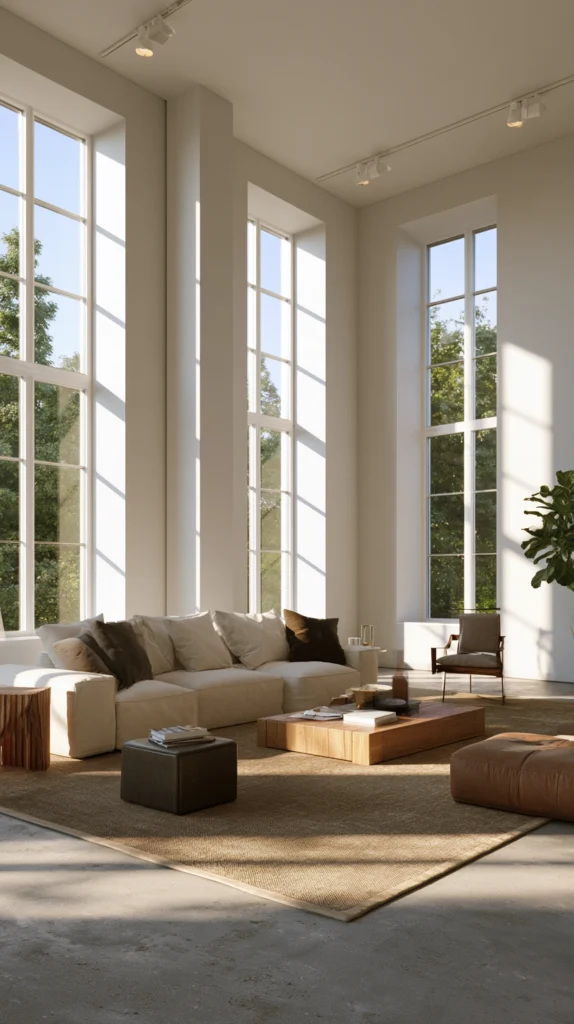
The process of reassessing an existing layout — the approach when the furniture is right but the arrangement is wrong.
Why the refresh before the purchase:
The purchase impulse:
- The room feels wrong
- Instinct: buy new furniture
- The reality: often the arrangement
- The test: rearrange before buying
The diagnosis:
Why does the current arrangement feel wrong:
- Traffic paths blocked
- Television at wrong height or angle
- Sofa too far from the coffee table
- No clear focal point
- The rug too small
- The chairs facing the wrong direction
The one-question test:
Where do people naturally sit:
- The room’s current use: the most accurate feedback
- Everyone chooses one end of the sofa: the other end is serving no purpose
- Nobody uses the chairs: they are positioned wrong
- The observation: the diagnosis
The rearrangement approach:
Start empty:
- Remove everything from the room
- Stand in the empty room
- Note: where the light falls, where the paths naturally go, where the eye wants to go
- The empty room: tells you what the arrangement should be
Bring back the essential pieces first:
- The sofa: the primary piece
- Place it in the new position
- Live with just the sofa for one day
- Then: add the next piece
The test before the final position:
Before fixing anything:
- Walk every path through the arrangement
- Sit in every seat (check the view)
- Check the coffee table distance (lean forward from the sofa)
- Check the television sightlines from every seat
- Check the lamp positions (will they actually reach the seats)
The arrangement is right when:
- Every seat is used regularly
- The traffic paths feel natural
- The room serves its stated primary purpose
- The arrangement does not fight the room
The Universal Layout Principles
Whatever the specific layout chosen:
The rug is always the anchor:
- Every arrangement: defined by a rug
- The rug: the floor of the room within the room
- Too small: nothing is anchored
- The rug size: the first decision, not the last
The 18-inch rule:
- Coffee table: 16–18 inches from the sofa front
- Closer: the toes hit it
- Further: cannot reach it
- This one measurement: correct in every arrangement
Floating beats pushed:
- Furniture away from the walls: almost always better
- The breathing room: makes the room look designed
- 12–18 inches from the wall: the recommendation
- The exceptions: very small rooms, rooms where circulation requires wall placement
One focal point only:
- The room with two competing focal points: always feels wrong
- Fireplace AND television both demanding: the tension
- One primary: the arrangement is resolved
- Two primary: the arrangement is always compromised
The conversation test:
- Sit in every seat
- Turn to the person in the next seat
- Is the conversation natural from this position
- If not: the arrangement is not right yet
Getting Started This Weekend
The two-hour layout review:
Step one (20 minutes):
- Remove all small objects (lamps, plants, accessories)
- See the furniture arrangement clearly
- Photograph from the doorway
Step two (10 minutes):
- Note what is not working
- Traffic blocked? Focal point unclear? Coffee table wrong distance? Chairs facing wrong way?
Step three (60 minutes):
- Move the sofa first
- Then: the chairs in relationship to the sofa
- Then: the coffee table in relationship to the sofa
- Then: the accessories back, now in the right positions
Step four (30 minutes):
- Walk every path
- Sit in every seat
- Check every view
- Adjust as needed
Cost: nothing. Time: two hours. The room: potentially transformed.
The purchase that most often improves a layout:
A larger rug.
Most living rooms have a rug that is too small. A larger rug — one where all the front legs of all the furniture sit on it — resolves more layout problems than any other single purchase.
The furniture stops floating. The room starts reading as a room.
Size up before moving anything else.