14 Budget-Friendly Outdoor Upgrades That Look High-End
Spent four hundred dollars on patio furniture once. Looked cheap immediately. Rusted by year two. Gone by year three.
Then spent eighty dollars on a single upgrade that made the entire patio look more expensive than anything the furniture had managed. One coat of dark stain on the fence behind it. The furniture looked different because the backdrop changed.
High-end appearance is not about what is spent on individual pieces. It is about how every piece relates to everything around it. Context creates the reading. Change the context and the reading changes.
Here are 14 upgrades that change the context for very little money.
Why Cheap Things Look Cheap and Expensive Things Look Expensive
It is not the price tag:
What signals cheap:
- Mismatched materials fighting each other
- Visible plastic in natural settings
- Things that have no relationship to each other
- Clutter without intention
- Dead or neglected plants
- Unfinished edges and transitions
What signals expensive:
- Materials that agree with each other
- Nothing out of place
- Every element relates to everything else
- Edited not accumulated
- Alive and maintained
- Clean edges everywhere
The expensive-looking principle:
- Cohesion costs nothing
- Editing costs nothing
- Cleaning costs nothing
- Dark paint costs twenty dollars
- None of these require budget — they require attention
The subtraction law:
Before any of these upgrades:
- Remove everything plastic that is not essential
- Remove dead plants immediately
- Remove random objects without purpose
- Remove anything broken or rusted
- Clear and assess what remains
Subtraction is free and always increases perceived quality.
What remains after subtraction:
- Every piece gets more attention
- Relationships between pieces become visible
- The upgrade land in clear space
- Context becomes possible to control
The High-End Signals That Cost the Least
In order of cost-to-impact ratio:
Free:
- Arrangement (the way things are positioned)
- Editing (removal of what does not belong)
- Cleaning
Under twenty dollars:
- Paint one element dark
- Steel edging a bed
- Arrange terracotta pots in odd numbers
Under fifty dollars:
- Fresh dark mulch
- One quality plant as focal point
- Warm string lights
Under one hundred dollars:
- Outdoor rug (right size)
- Three matching lanterns
- Painted fence section
The upgrades below are ordered roughly by cost. Every one of them looks more expensive than it costs.
1. Dark Paint on One Structural Element (The Twenty-Dollar Transformation)
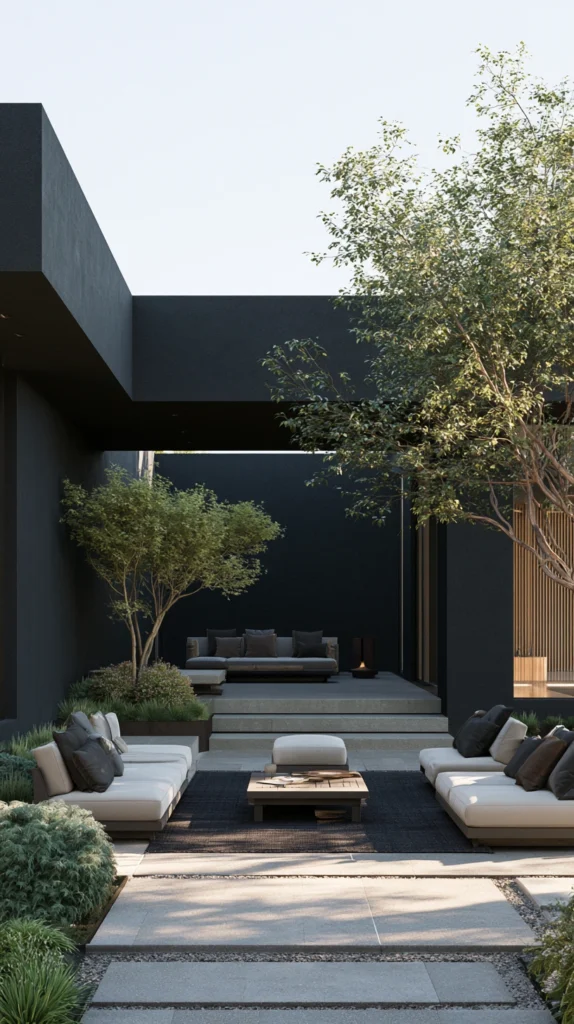
One coat of dark exterior stain or paint on a fence, shed, or gate — the single highest-return outdoor upgrade available.
Why dark paint is the most powerful cheap upgrade:
The backdrop effect:
- Dark surface recedes visually
- Everything in front of it comes forward
- Plants look more vivid
- Furniture looks more intentional
- Pale fence: everything washed out. Dark fence: everything pops.
The signal it sends:
- Someone made a deliberate colour decision
- A decision was made not a default accepted
- Decisions signal design
- Design signals expense
The material truth:
- Paint is the same price regardless of colour
- Dark colour dramatically more effective
- Dark charcoal or forest green: transformative
- Beige or natural wood: the safe choice that costs the same but delivers nothing
What to paint:
Fence (highest impact):
- Largest surface area
- Most visible from seating
- Most backdrop to planting
- Start here if one element only
Shed (second highest):
- Larger than fence in some gardens
- Often previously ignored
- Completely different building after painting
- Climbing plant on it after (completes the look)
Gate (lowest effort, visible immediately):
- Small surface area
- Highly visible (arrival point)
- One afternoon
- Disproportionate impact to effort
The product:
Solid colour exterior stain:
- Not paint (peels eventually)
- Not preservative (clear — does nothing visual)
- Solid colour stain penetrates wood
- Lasts 5–8 years before touch-up needed
The colours:
Charcoal (most versatile):
- Works behind every planting style
- Modern and traditional both
- Photographs with depth
- First choice for most gardens
Deep forest green:
- Disappears into garden (excellent)
- Most natural option
- Plants of every colour work in front
- More traditional than charcoal
Near-black:
- Most dramatic
- Most sophisticated
- Contemporary gardens specifically
- Requires everything else to be sharp
The process:
- Clean surface (scrub or pressure wash)
- Allow 48 hours to dry completely
- Apply with brush or roller
- One coat usually enough for solid stains
- Two coats: richer and longer-lasting
Cost breakdown:
- Solid colour exterior stain (1 gallon): $25
- Brush: already owned
- One Saturday morning
- Total: $25
My dark fence: Before — $300 of furniture looked cheap against bare wood. After — same $300 of furniture looked like a design decision. The fence did it, not the furniture.
Dark Paint Tips
The prep determines the result:
- Dirty or damp wood: stain repelled or blotchy
- Clean dry wood: stain absorbs perfectly
- One extra day of preparation: worth it every time
The overspray problem:
- Cover plants below fence before painting
- Or paint in sections with plant protection
- Stain on foliage: damages leaves
- Five minutes of covering: no problem
2. Steel Bed Edging (Lines That Signal Professional Landscaping)
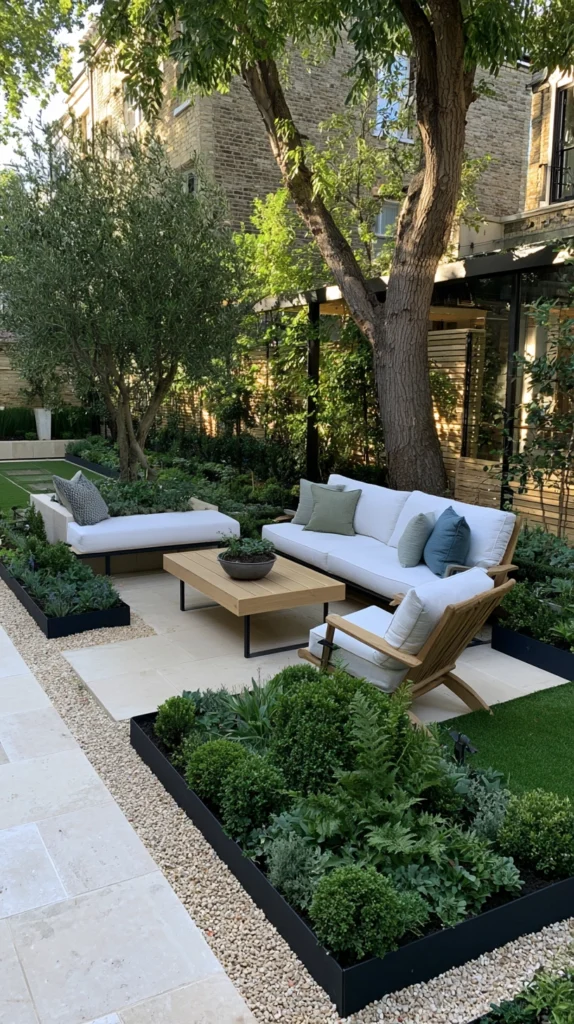
Cor-ten steel or black aluminium edging on all bed transitions — the detail professionals always include and home gardeners always skip.
Why edging signals expense:
The visible effort:
- Clean edges require installation
- Installation requires decision
- Decision signals intention
- Intention reads as professional
The multiplication effect:
- Good plants without edges: fine
- Same plants with crisp edges: designed
- Edges do not improve the plants
- Edges improve the reading of the plants
The material:
Cor-ten steel (best long-term):
- Weathers to warm rust-brown
- Installed once (lasts indefinitely)
- 4mm thickness (stays rigid)
- $2–3 per linear foot
Black aluminium (cleanest):
- Stays consistently black
- Lightest weight (easiest to install)
- Flexible for curves
- $1.50–2.50 per linear foot
Where to install:
Every transition without exception:
- Lawn to border
- Path to planting
- Gravel to grass
- Patio to bed
- Undefined transition anywhere
One undefined edge undoes three defined ones. Every transition must be addressed.
Installation:
Manual method (most edges):
- Dig a narrow trench along edge line
- Insert edging strip into trench
- Push flush with ground level
- Backfill and tamp
- No special tools required
The edging wheel:
- Roll along edge while edging installs in trench
- Faster for long straight runs
- Not necessary — manual works fine
After installation:
First month:
- Grass wants to creep back
- Pull back encroaching grass
- One pass with string trimmer keeps top clean
- Permanent edging: permanent professional appearance
Cost breakdown:
- 50 feet of black aluminium edging: $100
- Installation: one afternoon
- Total: $100 for significant border run
Or Cor-ten for same run: $130. Worth the extra for the warm-rust colour.
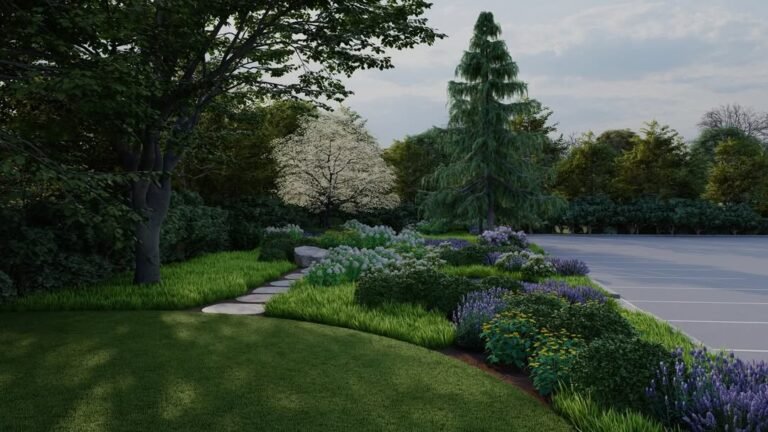
3. Fresh Dark Mulch on Every Bed (The Annual Finish Coat)
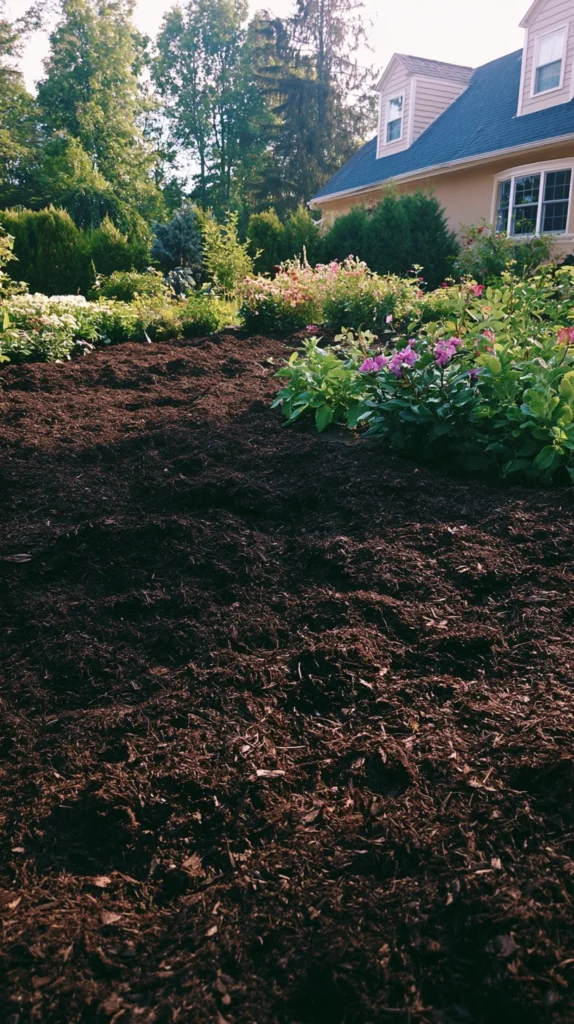
3 inches of dark bark mulch applied every spring — the single maintenance action that makes every planting look professionally managed.
Why mulch is underestimated:
What mulch actually does visually:
- Dark background makes green plants vivid
- No bare soil visible (unfinished removed)
- Weed-suppression maintained (neglect invisible)
- Every bed looks freshly tended
The colour effect:
- Dark mulch: green plants jump forward
- Pale bark chip: plants flatten visually
- Gravel mulch: reads as modern (different aesthetic)
- Dark fine bark: most universally effective
The fresh application effect:
Old mulch (18+ months):
- Faded, thin, patchy
- Weeds pushing through
- Looks like effort was made and abandoned
- Reads as neglected
Fresh mulch (applied this spring):
- Deep, dark, uniform
- Everything beneath suppressed
- Looks like the garden was attended to
- Reads as maintained
The process:
Clean beds first:
- Remove all weeds
- Cut back dead growth
- Edge the bed (after edging is in place)
- Then mulch
Application:
- 3 inch depth (not less — depth matters)
- Pull back from plant stems (4-inch clearance)
- Pull back from tree trunks (10-inch clearance)
- Even coverage throughout
Volume needed:
- 1 cubic yard covers 100 square feet at 3 inches
- Order by the yard, not by the bag
- Bulk is 40–60% cheaper than bagged
- Delivery: $40–60 typically
The mulch type:
Fine composted bark (best):
- Darkest colour
- Finest texture (most refined appearance)
- Breaks down to improve soil
- Best-looking mulch available
Avoid:
- Light wood chip (pale, reads as cheap)
- Dyed mulch (artificial and temporary colour)
- Coarse bark (large chunks look unfinished)
- Rubber mulch (visible as synthetic immediately)
Cost breakdown:
- 2 cubic yards bulk bark mulch: $80
- Delivery: $50
- One spring morning to apply
- Total: $130 for significant garden
The annual return: same $130 every spring. Garden looks professionally managed every year. No other maintenance action has this visual return.
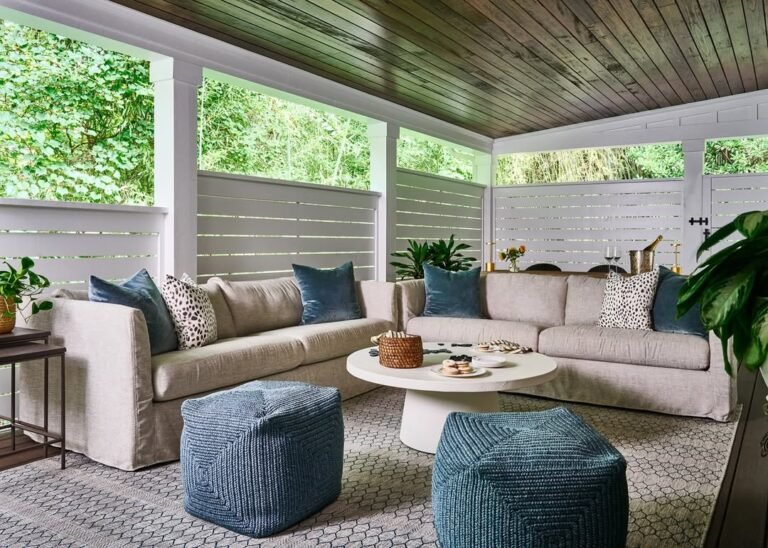
4. Outdoor Rug in the Right Size (The Room That Wasn’t There)
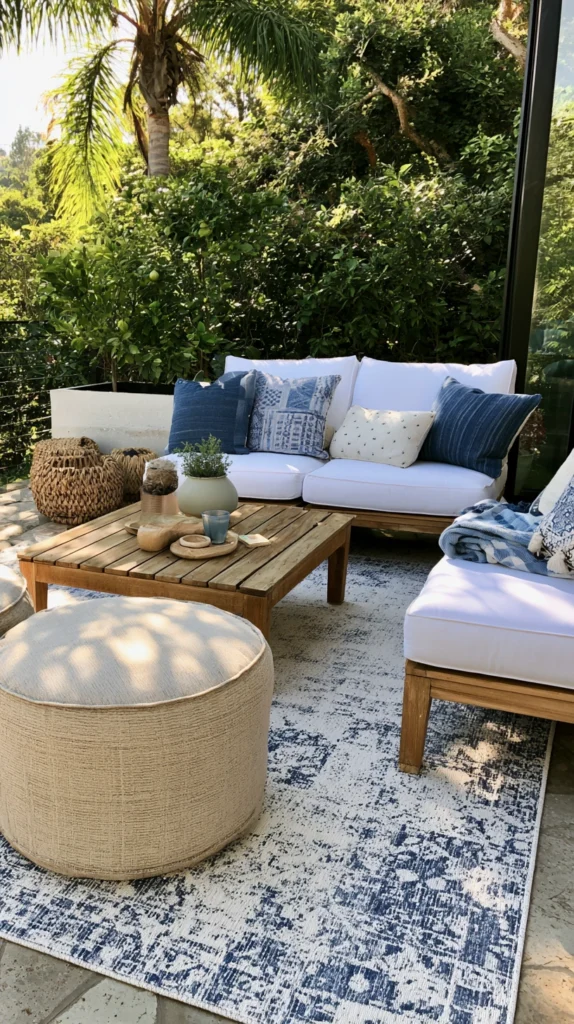
A properly scaled outdoor rug beneath the seating — the upgrade that turns furniture on paving into a designed outdoor room.
Why scale matters more than quality:
The wrong size (cheapest option that backfires):
- Small rug under coffee table only
- Furniture floats around it
- Space looks more disjointed than no rug
- The most common outdoor rug mistake
The right size (the upgrade):
- All front legs of all furniture on the rug
- Rug extends 12 inches beyond furniture
- Everything belongs to the same composition
- Room has been created
The size calculation:
- Four-chair dining: 8×10 minimum
- L-shaped sofa: 9×12
- Two chairs and coffee table: 6×9 minimum
- Always go up a size when uncertain
Why it looks high-end regardless of price:
The room signal:
- Rugs define rooms indoors
- Same signal outdoors
- Paving without rug: outdoor floor
- Paving with right-size rug: outdoor room
- The room is what looks expensive, not the rug
The layering trick:
Two rugs together:
- Larger neutral polypropylene underneath
- Smaller patterned or textured over (offset by 6 inches each way)
- Designer detail for the cost of a second cheaper rug
- Looks intentionally layered not accidentally mismatched
Material for outdoors:
Polypropylene (most practical):
- UV-resistant (will not fade in sun)
- Quick-dry (rain not a problem)
- Hose-clean
- Soft underfoot (better than expected for synthetic)
The pattern:
Simple geometric or stripe:
- Most widely compatible
- Does not compete with plants or cushions
- Adds texture without asserting itself
- The rug serves the room, not vice versa
Bold pattern:
- The rug becomes the room’s personality
- Everything else quieter
- More decisive
- Higher risk, higher reward
Cost breakdown:
- 8×10 outdoor rug (polypropylene): $75–95
- Smaller layered rug: $35
- Total: $110–130
My outdoor rug: Furniture that looked randomly parked on the patio for two years looked arranged and intentional within an hour of the rug being unrolled. Nothing else changed.
5. Matching Lanterns in a Cluster (Warm Light Composition)
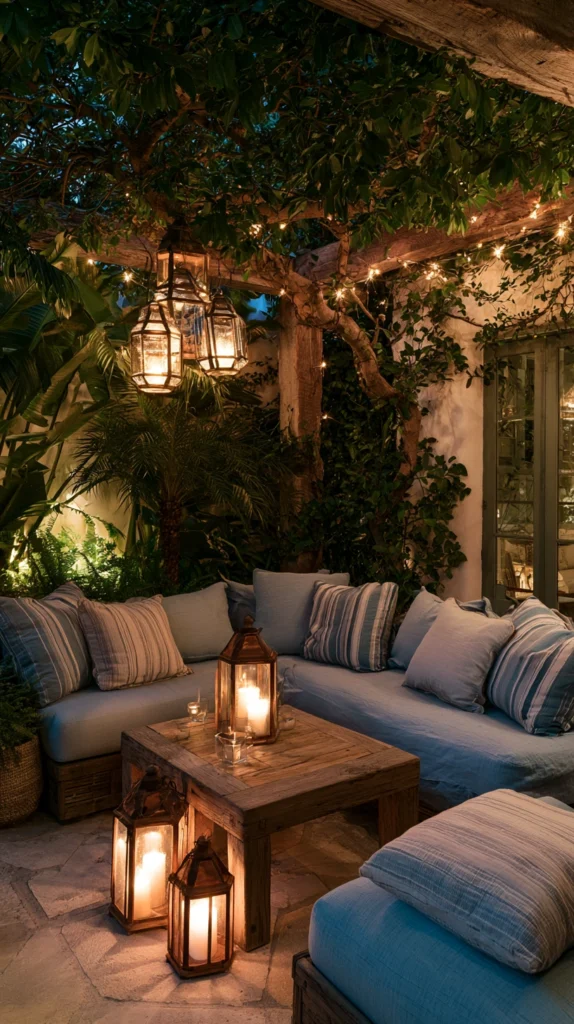
Three or more lanterns of varied height in the same finish — the lighting detail that makes outdoor spaces look styled rather than just lit.
Why lantern groupings read as high-end:
The composition signal:
- Grouped objects imply arrangement
- Arrangement implies thought
- Thought implies design
- Design implies quality regardless of price
The single lantern problem:
- One lantern: functional
- Three lanterns: decorative
- Same price, different effect
- Number creates the difference
The matching finish rule:
All same finish (essential):
- Matte black: most versatile
- Aged brass: warmest
- Galvanized: most industrial
- One finish across all: cohesion. Mixed: chaos.
The height variation (equally essential):
- Tall (18–24 inch): one
- Medium (12–14 inch): one
- Short (6–8 inch): one or two
- Placed close together, touching or near
- Flat-height grouping of same-size lanterns: misses the design entirely
Where to source affordably:
TJ Maxx and HomeGoods:
- Turnover means finding quality pieces cheaply
- Go regularly (new stock unpredictable)
- Matte black available consistently
- $8–20 per lantern
IKEA BORRBY:
- $10, reliable, good proportions
- Widely available
- Buy multiples (consistency guaranteed)
- Acceptable starting point
Target clearance (end of season):
- August–September: summer stock cleared
- 50–70% off
- Buy next year’s lanterns this year
- Best value available
Inside the lanterns:
Flameless LED with timer:
- Set to come on at dusk
- Never manually switched
- Realistic flicker (quality brands)
- $8–12 each
Real pillar candles (for evenings):
- Most charming option
- Requires lighting before sitting
- Worth it for specific occasions
- Ritual of lighting is itself pleasurable
Cost breakdown:
- Three lanterns (varied heights): $45
- Flameless candles (3): $30
- Total: $75
The grouping at corner of sofa: From nowhere to immediately the most-noticed detail by every visitor.
6. A Single Specimen Plant in a Quality Pot (Scale and Intention)
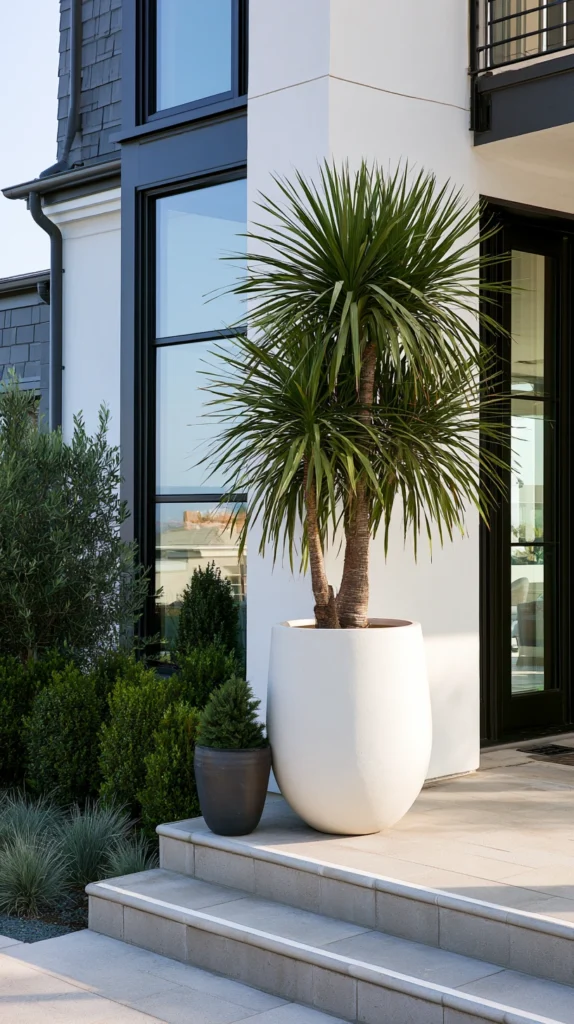
One architectural plant in the correct-sized quality container — the upgrade that adds more visual weight than twenty small pots.
Why one large beats many small:
The scale principle:
- Large single plant: statement
- Small plants scattered: busy
- Scale reads as confidence
- Confidence reads as expense
The quality pot principle:
- Plant is temporary (seasons)
- Pot is permanent (years)
- Invest in the permanent thing
- Cheap pot undercuts expensive plant every time
The specimen plant:
What makes a plant a specimen:
- Architectural quality (interesting structure)
- Works in all seasons
- Does not require constant replacement
- Scale appropriate to the pot and space
Best specimen plants:
Olive tree:
- Year-round silver foliage
- Architectural branching structure
- Mediterranean association (luxury signal)
- Zone 8+ in ground, anywhere in large pot (overwinter inside if cold)
- $50–150 depending on size
Japanese maple:
- Spring to autumn drama
- Winter structural beauty
- Autumn fire (extraordinary)
- Suits partial shade
- $60–180
Clipped bay (Laurus nobilis):
- Evergreen
- Clipped to lollipop standard
- Formal and confident
- Culinary bonus
- $40–100
Bamboo (clumping):
- Dramatic height instantly
- Movement in wind (alive-feeling)
- Year-round structural presence
- $30–70
The pot:
Size (always larger than instinct):
- Pot diameter: roughly same as plant spread
- Undersized pot: plant looks crammed
- Oversized slightly: plant looks generous
- Go up one size from comfortable
Material that reads quality:
- Concrete: heavy, modern, serious
- Terracotta (large, aged): warm, classical
- Lead-effect fiberglass: traditional, lightweight
- Glazed ceramic: colour and character
- Avoid cheap plastic: cannot be disguised
Cost breakdown:
- Olive tree (medium): $80
- Large terracotta pot (18-inch): $45
- Quality compost: $15
- Total: $140
Placed beside front door or seating area: disproportionate impact to cost. One quality decision visible from the entire space.
7. Climbing Plant on Every Bare Fence (Green Architecture for Almost Nothing)
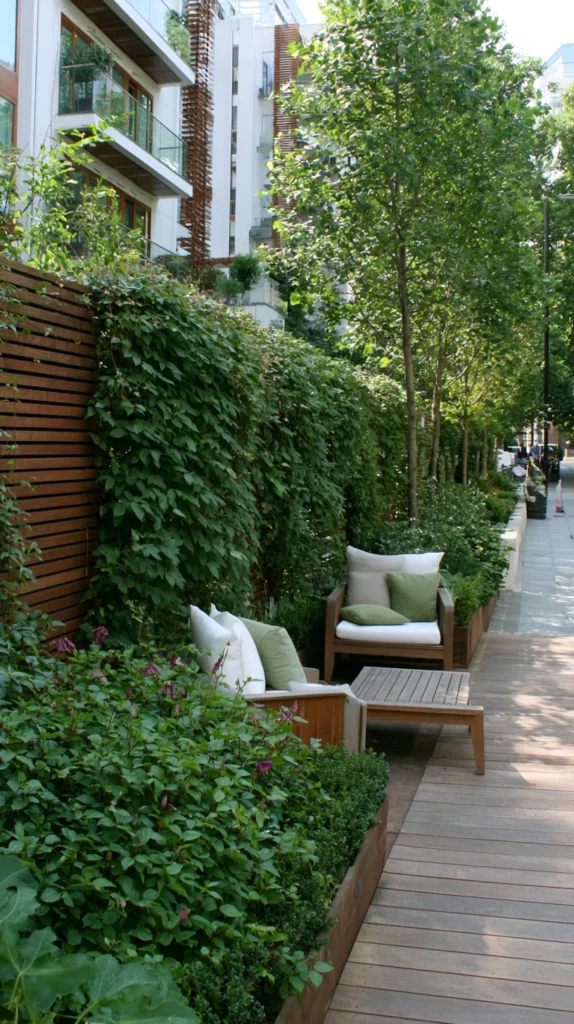
A climbing plant trained on each section of fence — the upgrade that turns hard boundary into living backdrop.
Why climbing plants transform spaces:
The bare fence problem:
- Bare fence: hard, industrial, boundary
- Same fence with climbing plant: backdrop, living, designed
- Same fence: entirely different reading
- Plant does the work, fence provides the structure
The time investment:
- Climbing plants take time to establish
- Year one: small, tentative
- Year two: beginning to cover
- Year three: the photograph
- Start now — every year of delay is a year further from the result
The cost:
- Most climbing plants: $12–25
- One plant per fence panel (8 feet)
- Trellis or wire for support: $15 per panel
- Returns that compound every year after
Best climbing plants by budget and speed:
Fastest (results in year one):
- Clematis (flowers in first season)
- Nasturtium (annual, covers fence by midsummer)
- Sweet peas (annual, cover fence and fragrant)
- Honeysuckle (fast perennial, fragrant)
Best long-term (year two onwards):
- Climbing rose (the classic — worth every year of wait)
- Wisteria (patient investment, extraordinary reward)
- Jasmine (fragrant, fast enough, reliable)
- Trachelospermum (star jasmine, evergreen)
The support system:
Wire on fence (best):
- Horizontal wires every 12 inches
- Vine eyes screwed into fence posts
- Wire threaded through
- Invisible once covered
- Plant ties trained along
Trellis panel on fence:
- Easier than wire
- Visible (becomes feature itself)
- Attached with 1-inch standoff (air circulation)
- $8–15 per panel
Cost breakdown:
- Three climbing plants (honeysuckle, clematis, jasmine): $55
- Trellis panels (3): $35
- Wire and vine eyes alternative: $20
- Total: $75–90
Year three: guests ask which plants were planted when the house was built. Answer: three years ago. Cost: less than a dinner out.
8. Spray Paint the Existing Furniture (Cohesion for Five Dollars)
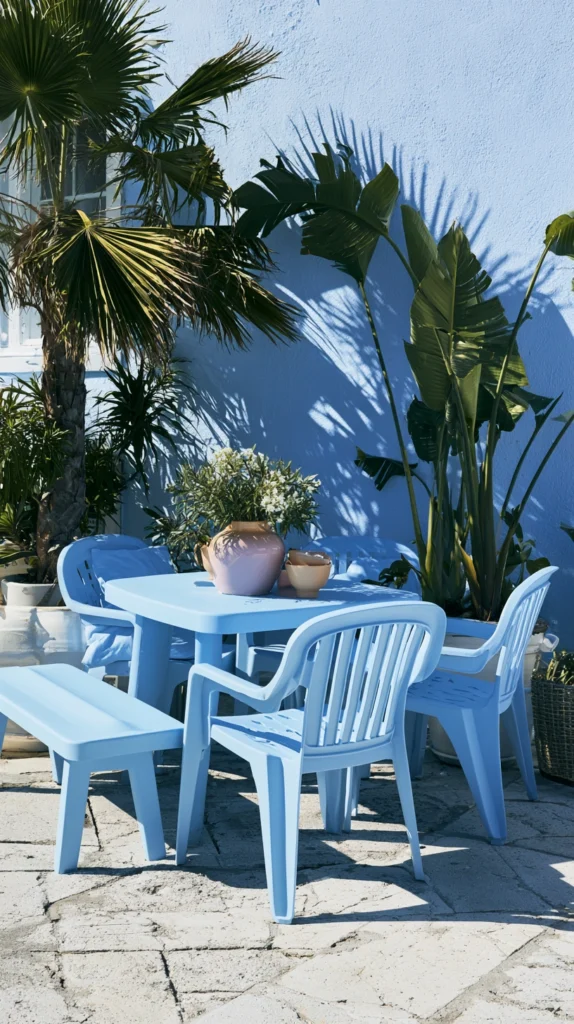
Spray painting mismatched or faded furniture in one colour — the cheapest possible upgrade that creates instant cohesion.
Why cohesion matters more than quality:
Mismatched furniture (common situation):
- Chair from one purchase: brown
- Table from another: black
- Older chair: faded green
- Together: random and cheap-looking
Same furniture spray-painted one colour:
- All charcoal, all black, or all white
- Suddenly a set
- Cohesion signals intention
- Intention signals design
The spray paint choice:
Matte black or charcoal:
- Most versatile
- Photographs beautifully
- Hides imperfections (matte surface)
- Works with any planting palette
Warm white or cream:
- Brightest option
- Mediterranean aesthetic
- Shows marks more
- Suits garden with flowers as colour
The process:
Preparation:
- Clean thoroughly (soap and water, then dry completely)
- Sand lightly if glossy surface
- Mask off any parts not being painted
- Work outside with good ventilation
Application:
- Thin coats (not thick — runs and drips)
- Three thin coats better than one thick
- 30 minutes between coats
- Total: one afternoon
The products:
Rust-Oleum 2X Coverage:
- Most durable spray paint for furniture
- Bonds to plastic, metal, wood (different primers)
- $6–9 per can
- One to two cans per piece of furniture
Krylon Fusion (for plastic specifically):
- Bonds to plastic without primer
- Most important for plastic chairs
- $7–10 per can
- Worth specifying for plastic
Cost breakdown:
- Two cans spray paint (covers 3–4 pieces): $16
- One afternoon of time
- Total: $16
My spray-painted furniture: Four mismatched pieces from various purchases. All now matte charcoal. Guests assume it is a set. It is not. Never was.
Spray Paint Tips
The drip problem:
- Drips from holding can too close or too long
- Hold 12 inches from surface
- Keep can moving constantly
- Thin coats eliminate drips
The touch-up option:
- Spray paint chips more than brush paint
- Keep one can for touch-ups
- Small chip: spray into lid, brush on
- Seamless repair
9. Window Boxes With Trailing Plants (Vertical Colour at Eye Height)
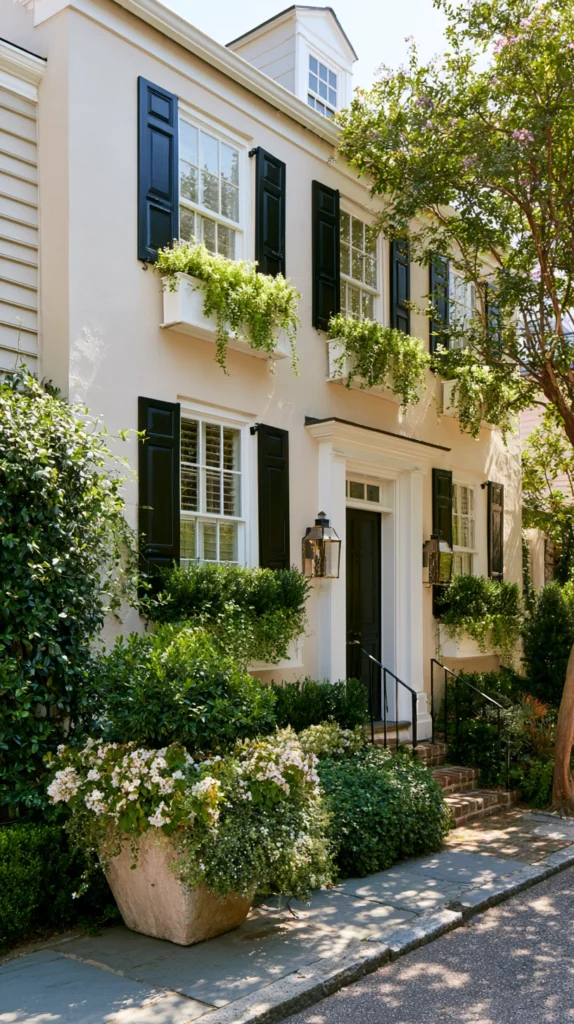
Generously planted window boxes on every street-facing surface — the upgrade that gives a house a face and a garden its first vertical layer.
Why window boxes signal care:
The effort they represent:
- Window boxes require planting
- Planting requires attention
- Attention signals someone cares about this house
- Caring signals quality
The visual height:
- Most garden interest is ground level
- Window boxes bring colour to face height
- Different to looking at
- More intimate and immediate
The overflowing principle:
Sparse window box:
- Two plants with gaps between
- Looks unfinished
- Looks cheap regardless of plant cost
- The worst version
Overflowing window box:
- Five plants in the same space
- Nothing but plant visible
- Trailing spills over front
- The look that photographs and saves
The thriller-filler-spiller formula:
- Thriller (tall central): geranium, snapdragon, salvia
- Filler (bushy): bacopa, lobularia, calibrachoa
- Spiller (trailing): trailing lobelia, sweet potato vine, ivy geranium
- Three roles, one complete box
The box itself:
Self-watering (essential recommendation):
- Window boxes dry out fastest of all containers
- Daily watering in summer without self-watering
- Self-watering reservoir: every other day minimum
- $5–15 extra per box: worth it completely
Size:
- Minimum 8 inches deep (roots need space)
- Width: same as window (at minimum)
- Wider than window: more impact
- Never narrower
Cost breakdown:
- Two self-watering window boxes: $40
- Plants (8 total, thriller-filler-spiller × 2): $32
- Potting compost: $10
- Liquid feed (season): $8
- Total: $90
Every person who walks past sees the window boxes. Most impactful street-level upgrade on this list.
10. Garden Path From Nothing (Creating the Arrival)
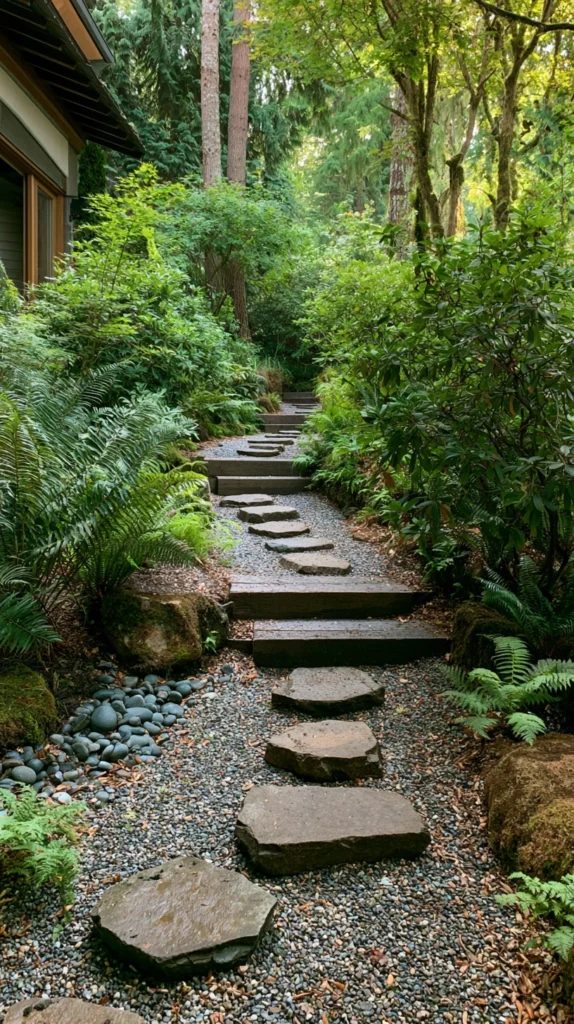
A defined path where none existed — the upgrade that turns crossing a garden into arriving somewhere.
Why paths signal investment:
No path:
- Cross the grass to get somewhere
- Garden is traversed not experienced
- The ground is just ground
- Function without form
Defined path:
- Route created deliberately
- Walk is choreographed
- Journey created within the space
- Ground becomes architecture
The budget path materials:
Stepping stones in gravel (most affordable):
- Steel edging defines rectangle or organic shape
- Gravel fills inside
- Stepping stones placed on gravel
- Complete path: $150–200 for 15 feet
Reclaimed brick:
- Salvage yards: $0.50–$1.50 per brick
- Charming and aged immediately
- Herringbone pattern: most beautiful
- Labour intensive but material cost low
Gravel alone:
- Cheapest path option
- Steel edging essential (contains gravel)
- 3-inch depth
- Buff or warm gravel (not grey)
The planted edge:
What elevates a simple path:
- Low plants either side
- Lavender (fragrant when brushed)
- Catmint (spills onto path)
- Creeping thyme (between stepping stones)
- Path becomes a sensory experience
The width:
Generous width signals quality:
- 36 inches: two cannot walk comfortably side by side
- 42 inches: comfortable pair
- 48 inches: generous and confident
- Narrow paths signal timidity
Cost breakdown:
- Gravel path with steel edging (15 feet): $130
- Lavender planted edge (8 plants): $40
- Total: $170
The path that did not exist yesterday creates the garden that feels designed today. Structure first.
11. Terracotta Pot Collection Aged and Grouped (Abundance Signalled)

A grouped collection of aged terracotta pots — the decor upgrade that costs almost nothing and photographs endlessly.
Why terracotta groupings signal quality:
The abundance principle:
- Many pots together: generous
- Generosity signals investment
- Investment signals quality
- The reading is not about price — it is about abundance
The aged material:
- New bright orange terracotta: functional
- Weathered terracotta with salt marks and moss: beautiful
- Aging is free (leave outside and wait)
- Or accelerated (yogurt method, 4–6 weeks for moss)
Building the collection:
Start small (3 pots), grow over time:
- Three pots in varied sizes: the minimum
- Five: more impact
- Seven or more: full abundance effect
The varied sizes (essential):
- One large (18-inch+): anchor
- Two medium (10–14 inch): backbone
- Two small (6–8 inch): fill and texture
- Never all same size: flat and uniform
Height variation without buying more pots:
- Stack smallest on upturned larger pot
- Or on brick (matches terracotta)
- Or on log round
- Height for free
Grouping placement:
Together not scattered:
- All pots in one cluster (or two clusters)
- Not dotted individually around garden
- Density creates abundance
- Spread creates emptiness
Beside the entrance, beside the seating, at the focal point:
- Never in a corner as afterthought
- Position of prominence
- Viewed from main sitting position
- Arrival point
Aging them quickly:
The yogurt method:
- Plain yogurt blended with equal water
- Brushed onto pot exterior
- Keep moist (misting) for two weeks
- Moss establishes in 4–6 weeks
- Free and irreversible
Cost breakdown:
- Five terracotta pots (varied, new): $45
- Plants for three of them: $30
- Yogurt for aging: $2
- Total: $77
Most collected over time (buy one a month): collection grows and each new addition makes the previous ones look better. Compound charm.
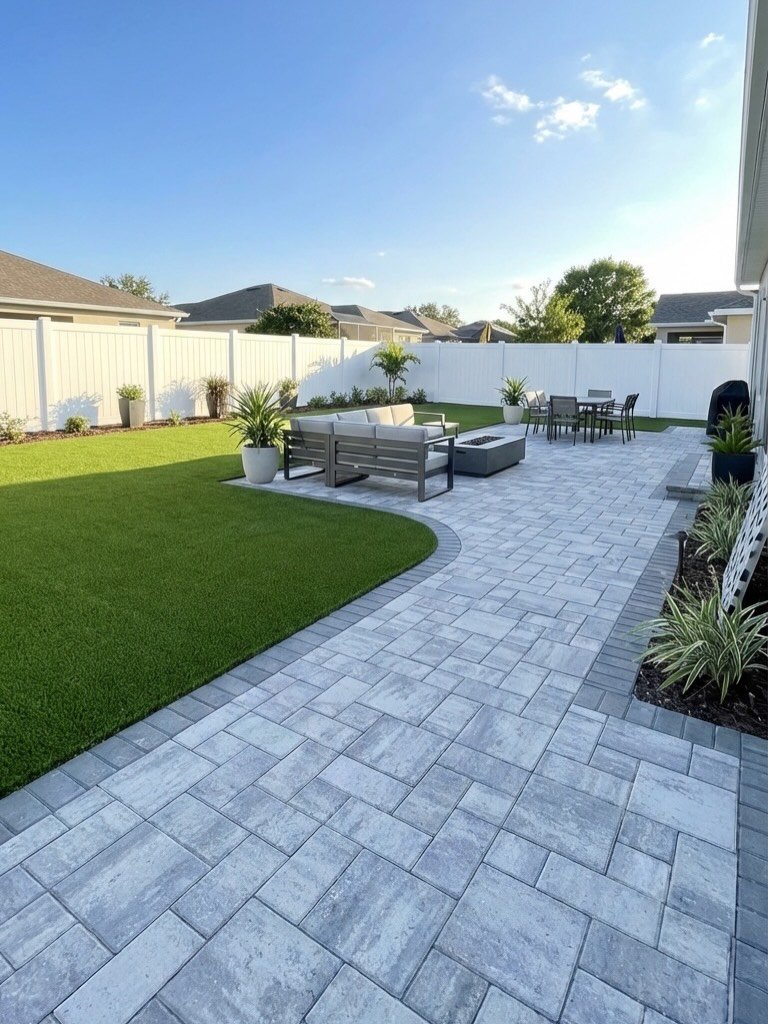
12. Clean and Repair the Existing Paving (The Invisible Upgrade)
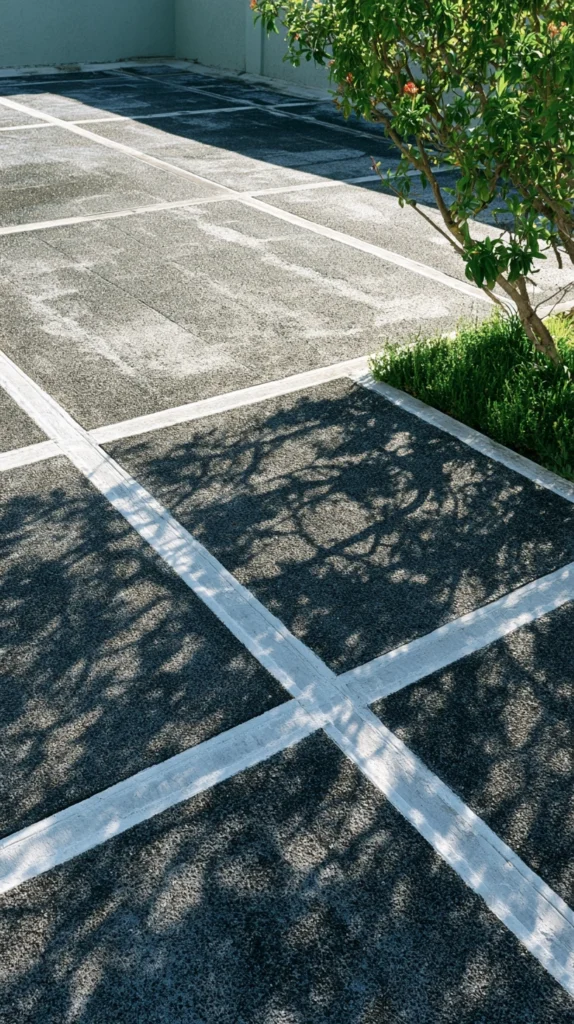
Pressure washing, filling cracks, and sealing existing paving — the upgrade that looks like new paving without the new paving cost.
Why clean paving changes everything:
The neglect signal:
- Dirty paving: everything on it looks cheaper
- Stained paving: effort elsewhere undermined
- Cracked and weedy paving: entire space reads as neglected
The maintenance signal:
- Clean paving: someone attends to this
- Attention to hard surfaces: thorough maintenance overall
- Cleaned paving makes plants look better planted
- Context cleaned: everything in context improved
The pressure washer:
Rental (most affordable):
- $40–60 per day
- Enough for most properties
- Produces better results than lower-pressure alternatives
- Worth renting rather than buying for occasional use
Owned (frequent use):
- $80–150 for competent electric model
- Pays for itself in third or fourth use vs rental
- Store and use seasonally
What pressure washing removes:
- Green algae (most common, most transformative to remove)
- Dirt and grime
- Most surface stains
- Light moss
After pressure washing:
Fill cracks:
- Polymeric jointing sand: swept in, sets hard
- Or mortar (more permanent)
- Cracks are weeding access points (fill = less weeding)
- Filled cracks: finished. Open cracks: unfinished.
Edge the paving:
- Where paving meets garden: edging installed
- Same rule as grass edges
- Hard surface to soft surface: defined
- Undefined: looks like accident
The sealing option:
Sealer after cleaning:
- Preserves clean state longer
- Slight sheen (choose matt sealer for natural look)
- Protects against oil and organic staining
- $25–40 per can (covers significant area)
Cost breakdown:
- Pressure washer rental: $50
- Jointing sand: $20
- Paving sealer: $30
- Total: $100
The invisible upgrade: same paving, looks like it was recently installed. Everything placed on clean paving looks better.
13. Matching Outdoor Cushions in One Colour (The Soft Signal)
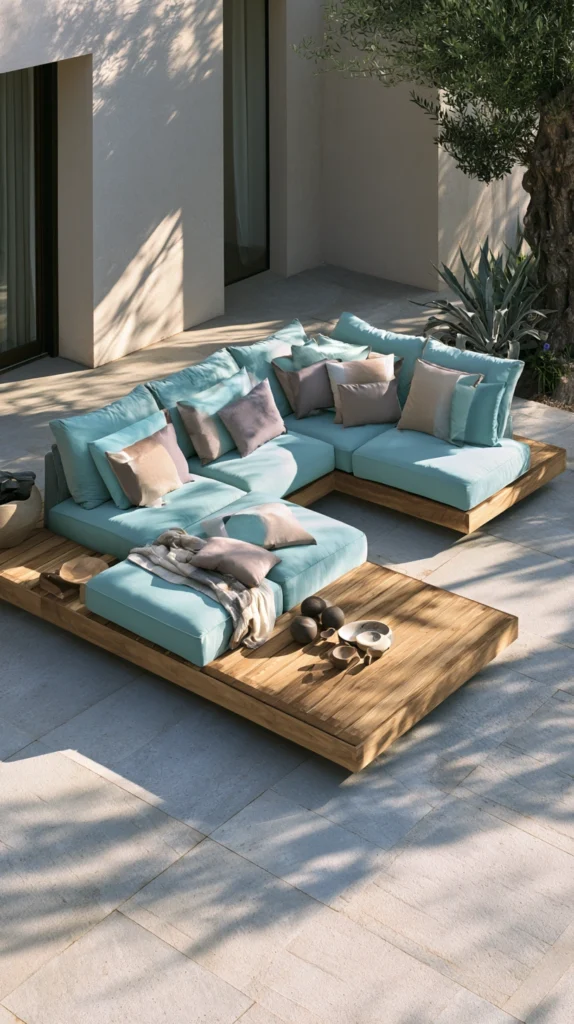
Four to six outdoor cushions in a single cohesive colour — the soft layer that changes furniture from functional to inviting.
Why matching cushions signal quality:
Mismatched cushions:
- Each from a different purchase
- No relationship to each other
- Random: reads as budget
- Functional not designed
Matching cushions:
- One colour family throughout
- Everything in conversation
- Designed: reads as quality
- The furniture becomes intentional
The matching rule:
Not identical — cohesive:
- Two solid cushions in main colour
- Two in subtle texture or slight variation
- One in simple pattern (same colour family)
- Five together: cohesive. Not identical. Not random.
The colour:
Neutral (most flexible):
- Warm gray, sage, cream
- Everything else in garden works with it
- Safe and effective
- Correct for most garden contexts
One bold colour:
- All cushions in deep teal, warm rust, or olive
- Garden palette set by cushions
- More decisive
- Plants chosen to complement
The material:
Budget with durability:
- Solution-dyed acrylic: colour throughout fibre
- Cannot fade (unlike surface-dyed)
- Outdoor-rated
- Not Sunbrella price: similar performance
The quantity:
More than feels right:
- Four cushions for a two-seater sofa: correct
- Six on a three-seater: even better
- Abundance is the luxury signal
- Two cushions on a sofa: insufficient
Cost breakdown:
- Four outdoor cushions (solution-dyed, matching): $80
- Two accent cushions (subtle variation): $35
- Total: $115
The immediate effect: furniture that looked like it came from a car boot sale looks like it came from an outdoor furniture boutique. Same furniture. Different soft layer.
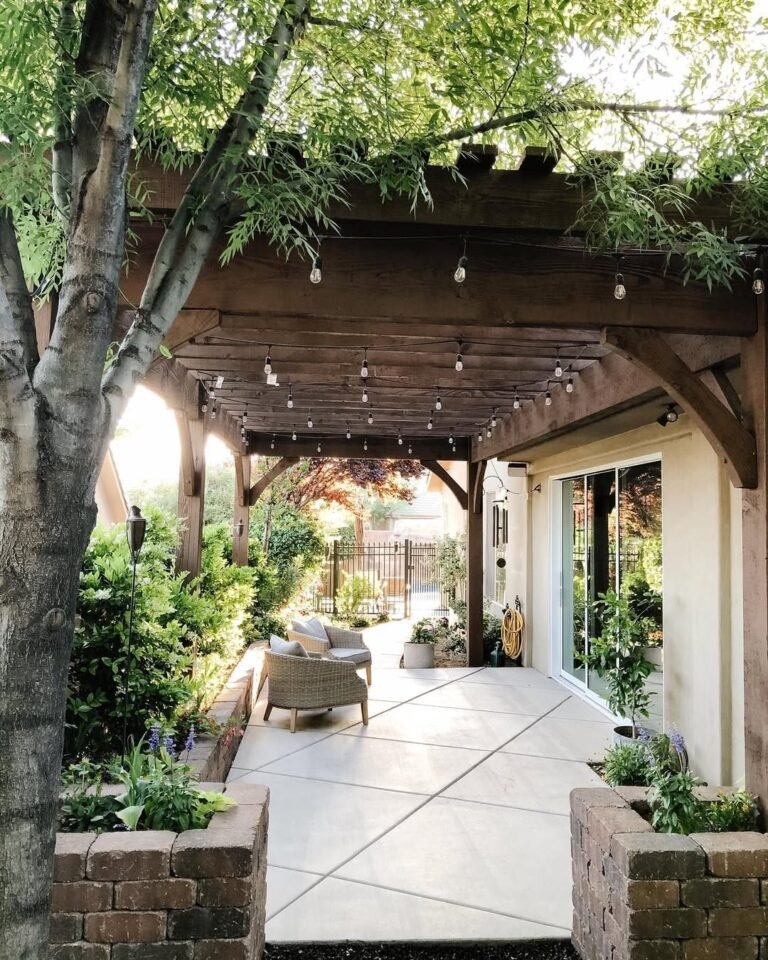
14. Warm String Lights on a Timer (The Evening Upgrade That Changes Everything)
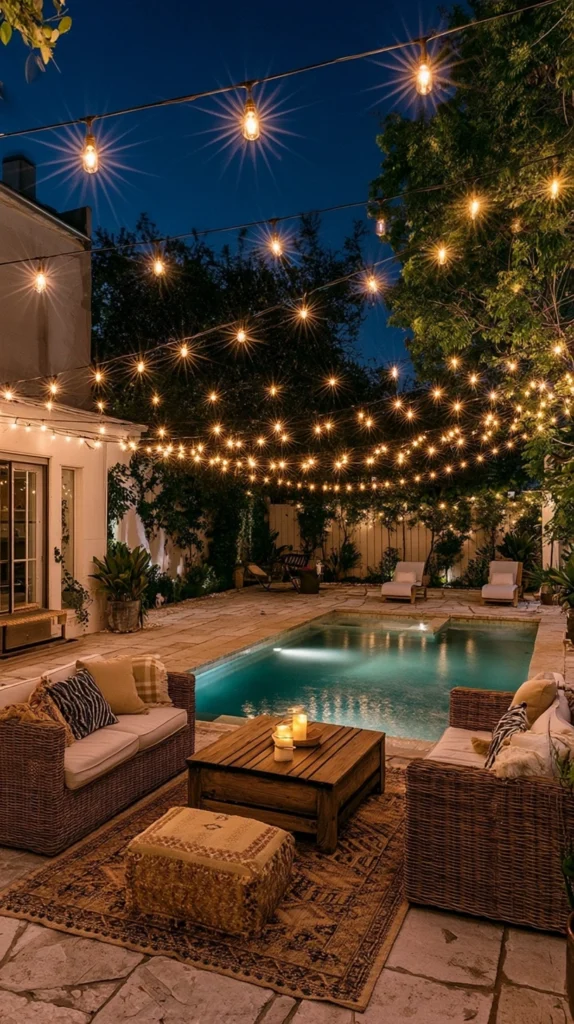
Warm Edison string lights on automatic timer — the upgrade that makes every previous upgrade look better by giving them all a stage.
Why this is always the last and most powerful upgrade:
The multiplier:
- Every other upgrade on this list exists in daylight
- After dark without lighting: invisible
- After dark with warm lighting: amplified
- String lights are the stage everything else performs on
The before and after calculation:
Without lighting:
- Outdoor space exists 6–8 hours per day (daylight only)
- Evening hours: go inside or sit in dark
- $0 of any previous upgrade visible at 8pm
With warm string lights:
- Outdoor space exists 16–18 hours per day
- Evening hours: the best hours, now available
- Every previous upgrade visible and better at 8pm
The timer is not optional:
Without timer:
- Remember to switch on each evening (friction)
- Friction reduces use
- Often forgotten until already inside
- Space dark when it should be lit
With timer:
- Set once (on at dusk, off at midnight)
- Never forgotten
- Always ready when the evening is
- Space always available
The bulb choice:
2200K–2700K (warm amber to warm white):
- Campfire quality light
- Every surface warmed
- Every colour enriched
- The only acceptable choice
Above 3000K:
- Cool, clinical, cheerless
- Destroys every other upgrade’s effect
- More expensive to get wrong than right
- Check packaging before buying
The coverage:
Full grid overhead:
- Most impactful
- Parallel lines 12 inches apart
- Complete canopy above seating
- Requires posts or existing structure
Perimeter with drops:
- Lights run along edges
- Drop every 8 feet to center height
- Less material than full grid
- Still creates overhead room
Single garland (minimum):
- Run once across the space
- Even one line: dramatically better than nothing
- The entry point
- Upgrade to full grid later
Cost breakdown:
- Two strands warm Edison lights (50 feet): $55
- Outdoor timer switch: $12
- Four timber posts (if no structure): $48
- Total: $115 without posts, $163 with
The evening my string lights first came on: sat outside until 11pm. Had not done that in three years of owning the house. The upgrade that changes behaviour changes everything.
The Order That Matters
These upgrades compound best in sequence:
Foundation first (remove before adding):
- Subtract clutter, plastic, dead plants
- Clean existing surfaces (Upgrade #12)
- Paint one dark element (Upgrade #1)
Structure second:
- Install bed edging (Upgrade #2)
- Apply fresh mulch (Upgrade #3)
- Add path if missing (Upgrade #10)
Softness third:
- Outdoor rug (Upgrade #4)
- Matching cushions (Upgrade #13)
- Terracotta pot grouping (Upgrade #11)
Light last:
- String lights (Upgrade #14)
- Lantern cluster (Upgrade #5)
- All previous upgrades now visible at night
Each layer makes the previous ones work harder.
Getting Started This Weekend
The two-upgrade weekend under $50:
Spray paint (Upgrade #8): $16
- Gather existing furniture
- One colour, one afternoon
- Cohesion created from chaos
Three lanterns from HomeGoods (Upgrade #5): $35
- Same finish, varied heights
- Grouped beside the seating
- Warm light at night
Total: $51. Two upgrades. Both visible immediately.
The following weekend under $100:
- Dark fence paint (Upgrade #1): $25
- Fresh bag of dark mulch (two bags): $30
- One terracotta pot with plant (Upgrade #11): $30
- Total: $85
Four upgrades across two weekends: $136.
The backyard looks different. Not because $136 was spent on new objects. Because the existing objects now exist in a different context — darker backdrop, clean beds, one warm anchor object, warm light grouping.
Context is the upgrade. Everything on this list changes context.
Choose by what bothers you most when you look outside:
- Looks mismatched: Upgrade #8 (spray paint) and Upgrade #5 (matching lanterns)
- Looks unfinished: Upgrade #2 (edging) and Upgrade #3 (mulch)
- Looks cold after dark: Upgrade #14 (string lights) and Upgrade #5 (lanterns)
- Looks flat and characterless: Upgrade #1 (dark paint) and Upgrade #7 (climbing plants)
- Looks cheap despite the furniture: Upgrade #4 (rug right size) and Upgrade #13 (cushions)
The high-end appearance is not a budget problem. Every garden on this list proves it. It is an attention problem.
Pay attention to the right things. Fourteen of them are listed above.