14 Above Couch Wall Decor Ideas for Living Rooms
Left that wall blank for two years. Told myself I was waiting for the right idea. Really just afraid of committing to the wrong one.
The wall above the sofa is the most visible surface in most living rooms. The one that photographs in every corner shot. The one guests look at when they sit down opposite. The one that, when empty, makes the entire room feel unfinished regardless of what else has been done.
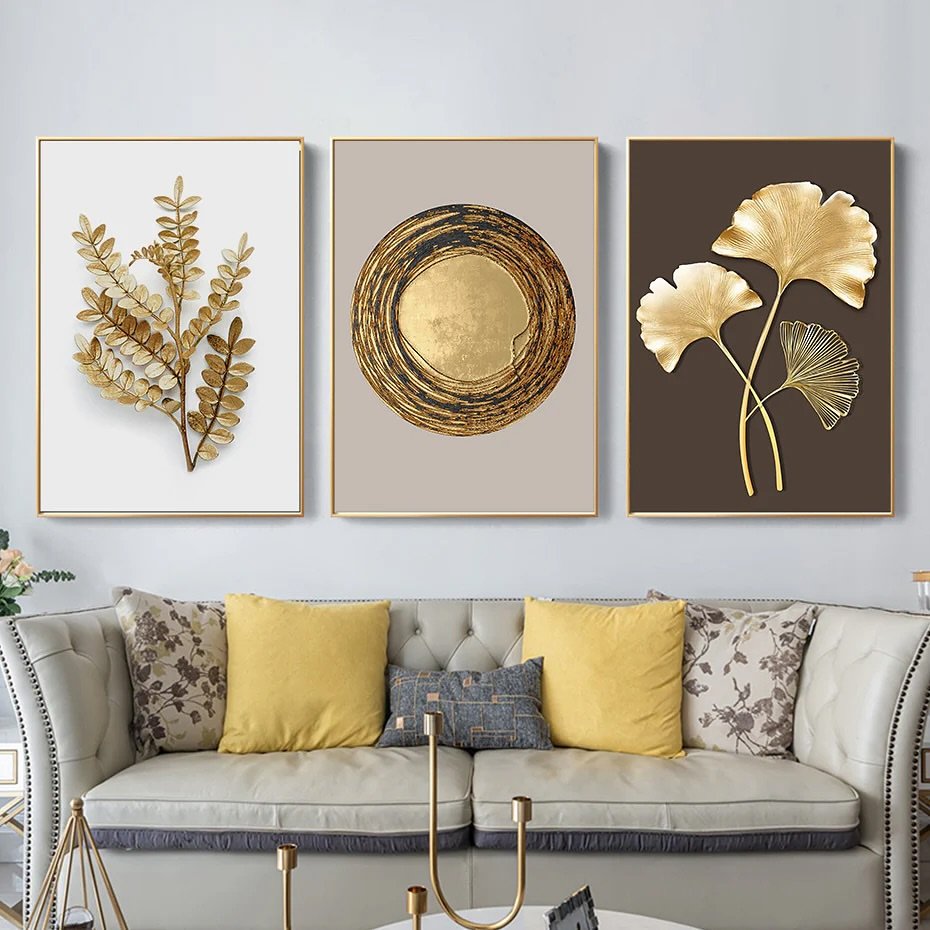
Then stopped waiting for the perfect idea and started understanding the principles behind the ones that work. Scale. Proportion. The relationship between wall and what is below it. Why some arrangements photograph beautifully and others look like an accident.
Here are 14 ideas built on those principles — each one complete enough to start this weekend.
Why the Wall Above the Sofa Is the Hardest Wall to Decorate
The specific challenges:
The scale trap:
- Instinct says: hang a picture
- One standard picture above a large sofa: looks like a postage stamp
- The wall wins and the art loses
- Scale is the first and most common mistake
The floating problem:
- Art hung too high: disconnected from the sofa
- Floating above where the eye naturally travels
- Not in relationship with the furniture below
- The art and the sofa: two separate things
The proportion rule most people get wrong:
- Art or arrangement should cover 60–75% of sofa width
- Never wider than the sofa
- Never narrower than two-thirds of the sofa
- This one rule eliminates most common mistakes
The height rule:
- Bottom edge of artwork: 6–8 inches above sofa back
- This connects the wall decor to the furniture
- Higher than this: the floating problem
- At this height: one composition, not two separate elements
The colour relationship:
- Art does not exist independently of the room
- Must relate to upholstery, rug, cushions
- Can contrast — but the contrast must be intentional
- Ignored: the art looks like it belongs in a different room
What Makes Above-Sofa Decor Work
Three requirements in every successful arrangement:
Correct scale:
- Big enough to anchor the wall
- In proportion to the sofa below
- 60–75% of sofa width as a guide
- When in doubt: go larger
Connection to the sofa:
- 6–8 inches above the sofa back
- Creates one unified composition
- Art and furniture: one thing, not two
- Lower than expected is almost always correct
Relationship to the room:
- Colour pulled from existing room palette
- Or deliberate contrast that works with the palette
- Material relates to other materials in the room
- Nothing looks arrived from another design world
1. The Large-Scale Single Art Piece (The Confident Statement)

One piece of art large enough to anchor the entire wall — the most impactful and most underused approach.
Why large-scale single art works:
The confidence signal:
- One large piece: a decision was made
- Decision: design confidence
- Small piece: uncertainty signalled
- Large piece: the wall has been claimed
The rest the eye gets:
- Multiple pieces: eye moves between them
- Single piece: eye rests on it
- Rest creates focus
- Focus creates presence
The scale:
Width:
- 60–75% of sofa width (minimum)
- 80-inch sofa: art 48–60 inches wide
- Most people buy art that is 24–36 inches wide
- Then wonder why it looks wrong
Height:
- Proportional to width
- Standard: landscape format (wider than tall) for above sofa
- Or square: equally works
- Portrait (taller than wide): works on narrower walls
Sourcing large art affordably:
Printed canvas:
- Online canvas printing services
- Upload a photograph or purchase license
- Large format print on canvas: $60–120 for 48×36 inches
- Most affordable route to large-scale art
Poster in frame:
- Oversized poster (various print sellers)
- Float in a simple frame
- Or use clip frame (frameless minimalist)
- $40–80 for art plus basic frame
Thrift and vintage:
- Large old paintings: often inexpensive
- Oil on canvas (even amateur): texture and presence
- The imperfections are the charm
- Charity shops, estate sales, auctions
DIY canvas:
- Stretched canvas, house paint, and intention
- Abstract approaches require no skill — just commitment
- The handmade quality reads differently than purchased
- $25 in materials, genuine original art
The hanging height:
- Centre of art: at standing eye level or just below (57–60 inches from floor)
- Bottom of art: 6–8 inches above sofa back
- Test with paper template before any holes
- Never guess: the template is essential
Cost breakdown:
- Large canvas print (48×36): $85
- Simple floating frame: $40
- Picture hanging strips (no holes): $12
- Total: $137
My blank wall: two years of empty wall solved in one afternoon. One large print, correct scale, 7 inches above the sofa back. The room looked designed for the first time.
Large Art Tips
The paper template method:
- Cut paper or newspaper to exact art dimensions
- Tape to wall with painter’s tape
- Live with it for 24 hours
- Adjust before any permanent hanging
- The single most useful decorating technique
The lighting upgrade:
- Art above a sofa is often underlit
- Picture light above (warm): museum quality
- Or: floor lamp to the side casting warm light upward
- Lit art: completely different from unlit
2. The Gallery Wall (Curated Collection)

Multiple pieces arranged together as a cohesive composition — the approach that allows collection building over time.
Why gallery walls work when done correctly:
The collection quality:
- Multiple pieces: accumulated over time
- Time suggests: this person lives with art
- Lives with art: specific and personal
- Personal: the most interesting quality a room can have
The permission it gives:
- Not all pieces need to be expensive
- Mixed sizes, mixed frames: intentional diversity
- Children’s drawings beside vintage prints: charming
- Personal history visible: the room has a story
The arrangement:
The anchor piece:
- One piece largest (centre or slightly off-centre)
- Everything else arranged around it
- The anchor: the piece the eye goes to first
- Other pieces: in conversation with the anchor
The spacing:
- 2–3 inches between frames (consistent throughout)
- Consistent spacing: what makes it a gallery not a scatter
- Measure with cardboard strips
- The spacing is the invisible design element
The bottom line:
- All bottom edges on an imaginary horizontal line
- Or: centres on a horizontal line
- Or: top edges on a line
- Choose one alignment and maintain it
- One alignment: order. No alignment: chaos.
The frame approach:
All matching frames (most formal):
- Same colour, same profile
- Black frames: contemporary
- Natural wood: warm and relaxed
- Gold: traditional and rich
- Complete consistency: the most designed appearance
Mixed frames within a palette (most interesting):
- Varied sizes, same colour family
- Black and dark wood together
- Natural wood and white together
- The palette: the cohesion
- Variety within the palette: the interest
Completely eclectic:
- All different: high risk
- Can work if the art is strong
- Usually reads as random
- Requires very deliberate curation
What to put on it:
The mix:
- Photographs (personal or art prints)
- Mirrors (reflect light, add depth)
- Textile art
- Botanical prints
- Typography or text
- Dried botanicals in frames
- Objects (mounted meaningfully)
The layout planning:
Paper template method (extended):
- Trace each frame on paper
- Cut out
- Arrange on floor first
- Photograph arrangement from standing height
- Transfer to wall maintaining that arrangement
Cost breakdown:
- Eight matching black frames (various sizes): $80
- Art prints (mix of purchased and personal photos): $40
- Picture hanging strips: $15
- Total: $135
The gallery wall over two years: started with three pieces. Added one roughly every two months. Now at eleven. Every addition: a decision and a memory. The wall is a diary.
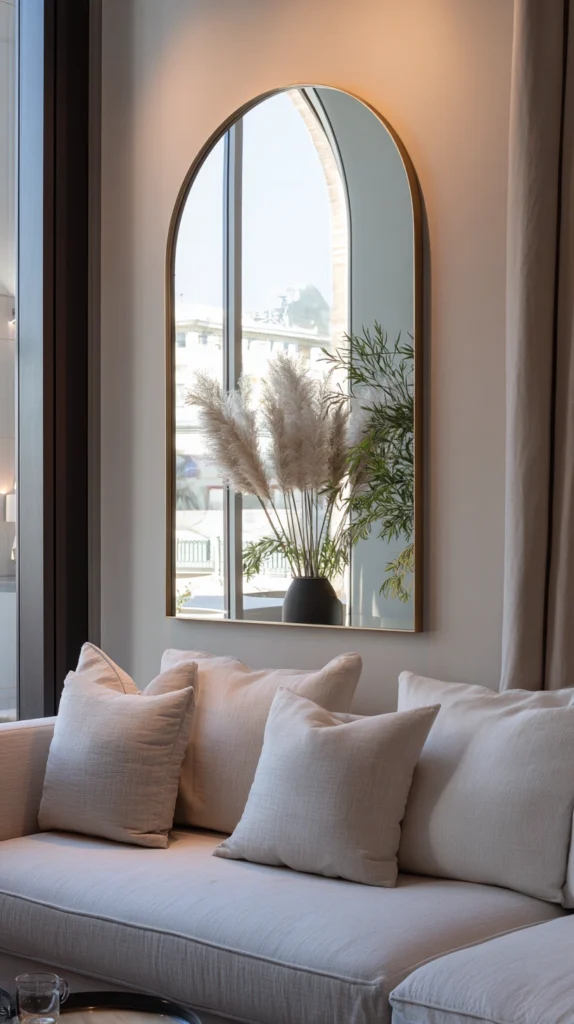
3. The Oversized Mirror (Light, Depth, and Space)

A single large mirror positioned above the sofa — the functional art that adds perceived space to any living room.
Why a mirror works as above-sofa decor:
The space addition:
- Mirror doubles the perceived depth of the room
- Reflects whatever is opposite (usually the rest of the room)
- Small room: significantly larger
- Always architecturally correct
The light:
- Reflects natural light back into the room
- North-facing or dark rooms: transformed
- Light from windows multiplied
- The cheapest lighting upgrade available
The focal point:
- Mirror: always catches the eye
- Reflects the room back to itself
- Constantly changing as people move
- Most dynamic wall element available
The frame:
Ornate gilt (traditional):
- Grand and formal
- Suits older architecture
- Statement in any room
- Antique versions: charity shops and auctions ($30–80)
Simple metal (contemporary):
- Thin frame, all-mirror
- Contemporary and clean
- Works with modern furniture
- $60–150 depending on size
Vintage wooden (transitional):
- Works with both traditional and contemporary
- Ages beautifully
- Often interesting details
- Salvage yards and antique shops
Arched top (most saved):
- Most widely appealing shape
- Adds height to the composition
- Implies an architectural element
- Rectangular feels like a window; arched: like a portal
The scale:
- Same rules as art: 60–75% of sofa width
- Larger mirror: more impact
- Smaller: the floating problem again
- When in doubt: larger
Where to find large mirrors:
Charity shops and thrift stores:
- Most common source of inexpensive large mirrors
- Frames can be painted (spray paint: any colour)
- Glass rarely damaged
- Best value
IKEA HOVET or NISSEDAL:
- Large format, simple frame
- $80–120
- Spray paint the frame for a custom look
- Most practical affordable option
Cost breakdown:
- Large mirror (thrift store): $35
- Spray paint for frame upgrade: $8
- D-ring and wire for hanging: $10
- Total: $53
The mirror on the sofa wall: the room that felt one size now feels 30% larger. The same lamp, reflected, adds a second light source. The darkest corner brightens.
4. The Textile Wall Hanging (Warmth and Texture)
A woven, macramé, or printed textile hung as the primary wall feature — the decor that adds the one thing framed art cannot: texture.
Why textiles work where art does not:
The warmth:
- Hard surfaces (walls, glass, frames): visually cold
- Textile: visually warm
- Against a sofa with fabric upholstery: one continuous soft world
- The room exhales
The texture:
- Woven texture: depth that framed art lacks
- Shadow and dimension at every light change
- Morning light versus evening light: different piece
- Texture is the most underused quality in room decoration
The sound:
- Soft wall surfaces absorb sound
- Hard walls reflect: echoey rooms
- Textile wall hanging: improves acoustics
- The room becomes quieter and warmer simultaneously
Types:
Macramé wall hanging:
- Knotted cotton rope
- Fringe and texture
- Bohemian and contemporary both
- Handmade versions available, DIY possible
- $40–150 depending on size
Woven tapestry:
- Loom-woven, geometric or abstract
- Scandinavian or Mexican traditions
- Warm colours common
- Increasingly available at accessible prices
Printed fabric panel:
- Large print on cotton or linen
- Hung like a scroll (dowel rod top and bottom)
- Almost any image possible (custom print services)
- Most affordable route to large textile art
Vintage kilim or rug panel:
- Small kilim or section of larger rug
- Hung with dowel or clip rail
- Rich colour and pattern
- Charity shops, antique dealers
The hanging:
Dowel rod:
- Wooden dowel (hardware store, $5)
- Fabric folded over and stitched or pinned at top
- Clean and minimal
- Works with any textile
Decorative rod with rings:
- More formal presentation
- Fabric hung in gathered loops
- Suits tapestries and printed panels
- Various materials (brass, black, natural wood)
Cost breakdown:
- Woven wall hanging (medium, 36 inches): $65
- Or printed fabric panel: $40
- Dowel rod: $5
- Total: $45–70
The woven hanging: the room that felt cold (plaster walls, glass windows, hard floor) became warm. The textile did more than three cushions had managed.
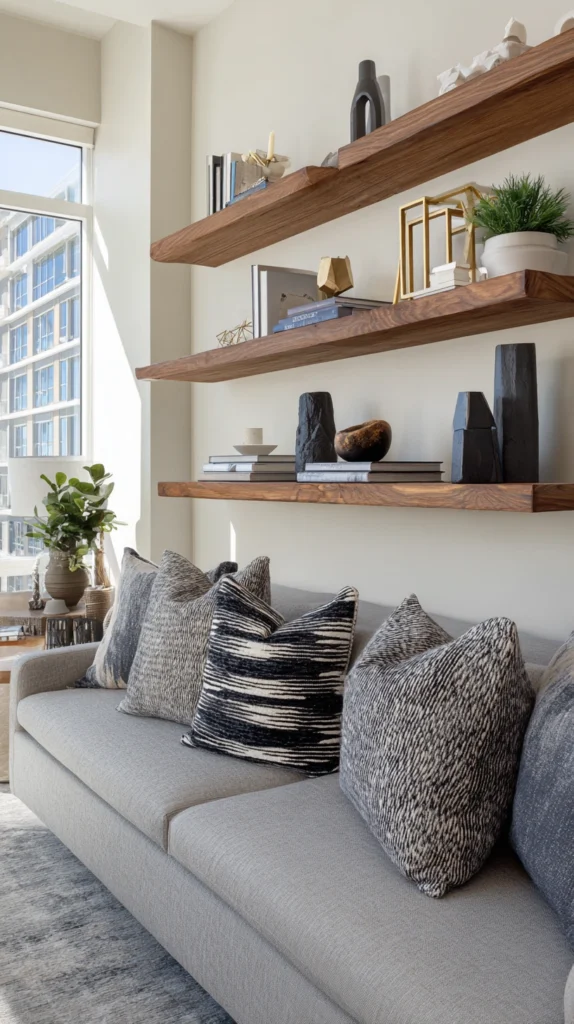
5. The Floating Shelf Display (Three-Dimensional Decor)

One or two floating shelves above the sofa with a curated display — the decor that adds depth to the wall and flexibility to change.
Why floating shelves work above sofas:
The dimensionality:
- Framed art: flat against wall
- Shelf display: projects into the room
- Objects at different depths: three-dimensional composition
- The eye can travel toward and into the display
The flexibility:
- Art hung: relatively permanent
- Shelf objects: changed seasonally
- The same shelf: different room depending on styling
- Low commitment, high adaptability
The scale:
Two shelves stacked:
- More visual weight than one
- Top shelf: taller objects
- Bottom shelf: lower, wider objects
- The pair reads as a complete arrangement
Width:
- Same rule: 60–75% of sofa width
- Or: full-width statement (shelf as architectural element)
- Never narrower than half the sofa
The styling:
The rule of three:
- Group objects in threes
- Odd numbers: natural, comfortable
- Even numbers: symmetrical, formal
- Three together: the minimum grouping
Height variation:
- One tall object (candle, vase, plant)
- One medium object (stack of books, sculpture)
- One low object (small bowl, candle, stone)
- The heights create movement within the group
The plant on the shelf:
- Small trailing plant overhanging shelf edge
- Trailing pothos or string of hearts
- Living element: no other material does this
- The shelf comes alive
What to use:
Books (horizontal stacks):
- Spine colour intentional (not random)
- Remove covers if they fight (white paper under)
- Height and depth variation
- The backbone of most shelf displays
Ceramics:
- Handmade appearance most interesting
- Varied tones of one colour (cohesion within variation)
- Mix glazed and unglazed
- Height variation within the group
Candles:
- Pillar candles in varied heights
- On a small tray or slate
- Amber light when lit: the shelf changes personality
- One candlelit evening per week: worth it
Cost breakdown:
- Two floating shelves (IKEA LACK): $40
- Styling objects (mix of owned and new): $40
- Small trailing plant: $12
- Total: $92
The shelf arrangement: changed the styling four times in the first year. Each time: different mood, same shelf. The flexibility is the point.
Shelf Styling Tips
The negative space rule:
- Leave empty space on the shelf
- Not every inch filled
- Empty space: breathing room
- Breathing room: sophisticated
- Filled to capacity: cluttered
The book colour technique:
- Spine out: normal
- Or: all books turned spine inward (white pages facing out)
- All-white shelf of books: surprisingly beautiful backdrop
- Works with any colour palette
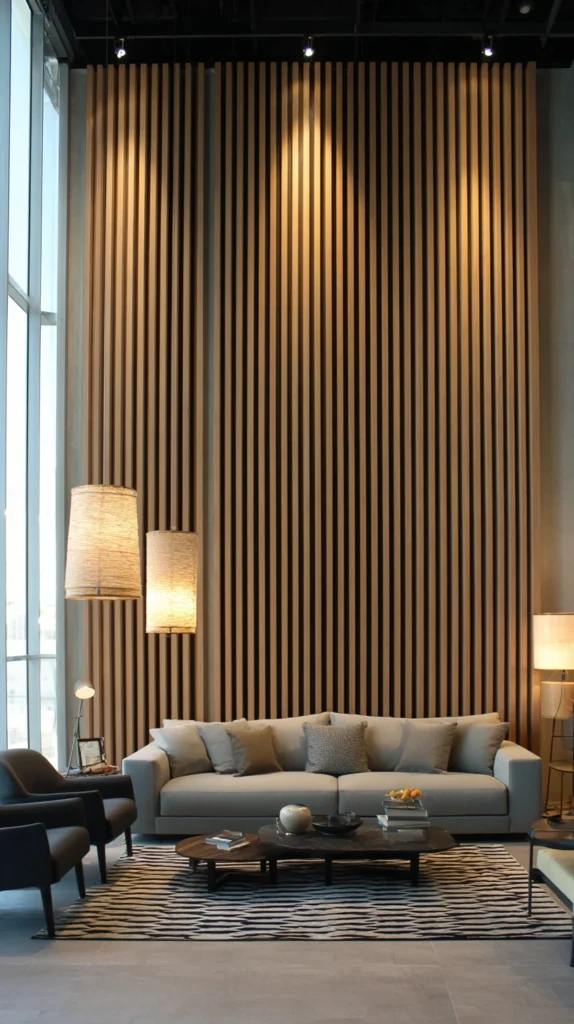
6. The Statement Wallpaper Panel (The Architectural Upgrade)
A section of bold wallpaper applied to the wall above the sofa only — the approach that adds pattern and colour without committing to an entire room.
Why a wallpaper panel transforms a room:
The framed-wall effect:
- Panel of wallpaper: the wall becomes art
- The rest of the room: the frame
- The sofa wall: the feature wall
- The feature wall: the room has an identity
The commitment level:
- Full room wallpaper: a decision
- Single panel above sofa: a much smaller commitment
- Change it in two years if desired
- Significantly lower risk than full room
The pattern amplification:
- One bold pattern above the sofa: statement
- Same pattern on all walls: overwhelming
- Restraint (one wall): the pattern appreciated not endured
Types of wallpaper:
Botanical print:
- Most widely compatible
- Works with most furniture styles
- Green and neutral palette: easy to complement
- Timeless without being boring
Geometric:
- Contemporary and structured
- Works with modern furniture
- Graphic impact
- More seasonal than botanical (bold statement)
Abstract or painterly:
- Artistic and personal
- Requires more confidence
- Most impactful
- Relates to any art in the room
Textured wallpaper (grasscloth, linen-look):
- Not pattern — texture
- Adds warmth and depth without colour commitment
- Most neutral approach
- Elevates without asserting
The panel dimensions:
Width:
- 2 feet wider than the sofa on each side
- Or: wall-to-wall if the sofa wall has no interruption
- The panel should appear intentional not accidental
Height:
- From the top of the sofa back height (approx 36 inches from floor)
- To the ceiling
- Or: floor to ceiling for maximum impact
The border:
Painted border at panel edge:
- Simple strip of contrasting paint
- Frames the wallpaper
- Separates it from surrounding wall
- Most professional finish
Wallpaper border trim:
- Decorative trim strip
- Applied at edges
- Available in most wallpaper ranges
Cost breakdown:
- Peel-and-stick wallpaper (3 panels): $80
- Or traditional wallpaper + paste: $65
- Total: $65–80
The botanical panel: the same neutral room for three years. One wallpaper panel behind the sofa: the room had an identity for the first time.
7. The Arch Mirror or Arch Frame (Architectural Drama)

An arched frame — with mirror, art, or as an empty architectural element — the shape that adds height and drama without increasing complexity.
Why arched forms work above sofas:
The height implication:
- Arch rises above the horizontal line of the sofa
- Implies continuation upward
- Makes the wall feel taller
- Low ceilings: the arch is the most effective remedy
The architectural association:
- Arches: doorways, windows, portals
- The arch above a sofa implies: somewhere worth going
- The furniture becomes a threshold
- The most architectural piece of furniture in the room
The universal appeal:
- Round arch (full semicircle): most classic
- Pointed arch: Gothic, more dramatic
- Keystone arch: most architectural
- Flat arch (slightly curved): most contemporary
Types:
Arched mirror:
- Already covered (Idea #3)
- The most functional arch
- Light and space added
- Most practical choice
Arched frame with art:
- Standard canvas cut to arch shape
- Or: arched frame with rectangular art (frame shape vs. content)
- The frame shape is the statement
- Art inside secondary to the form
Empty arched frame:
- Decorative frame with no art inside
- Frames the wall behind it
- Reveals a section of wall as the art
- Most minimal version
DIY arch:
- Thin timber moulding cut to arch shape
- Painted same as wall (subtle) or contrasting (bold)
- Applied directly to wall surface
- Creates architectural detail for under $30
The DIY painted arch:
Most accessible approach:
- Draw arch shape on wall with pencil
- Use string and pencil as compass for perfect curve
- Paint the arch in contrasting colour
- No construction required
Dimensions:
- Width: 60–75% of sofa width
- Height: floor to ceiling (most dramatic) or above sofa only
- The painted arch behind the sofa: the room has architecture
Cost breakdown:
- Arched mirror (thrift find): $30–60
- Or DIY painted arch: $10 (paint only)
- Or arched frame: $45
- Total: $10–60
The painted arch: drew it on a Saturday, painted it Sunday. Took four hours total. The room looked like it had been architecturally designed.
8. The Botanical Print Collection (Nature Indoors)
A set of botanical or nature prints hung as a cohesive series — the collection that brings outside in and works with almost every interior style.
Why botanical prints are perennially saved:
The organic quality:
- Natural subject matter: relaxing to look at
- Greens and neutrals: compatible with everything
- Scientific illustration quality: intelligent and beautiful
- Never aggressively modern or defiantly traditional
The series quality:
- Matching prints: connected
- Connected prints: a collection
- Collection: someone curated this
- Curation: the most valuable quality in a display
Types:
Vintage scientific illustration:
- 18th–19th century botanical plates
- Extraordinary detail and craft
- Now in public domain (free to download and print)
- The most beautiful and most affordable art available
Where to find free vintage botanicals:
- Biodiversity Heritage Library (free, public domain)
- Rawpixel.com (free vintage section)
- The British Library digitised collections
- Hundreds of thousands of images, all free
Contemporary botanical print:
- Modern illustrators in botanical tradition
- Etsy: enormous range
- More contemporary interpretation
- Supports independent artists
Photography:
- Macro flower photography
- Architectural plant photographs
- More contemporary than illustration
- Black and white option: most versatile
The arrangement:
Grid (most structured):
- Same size frames in equal grid
- 2×2, 2×3, or 3×3
- Mathematical precision: elegant
- Consistent spacing throughout (3 inches)
Horizontal line (most contemporary):
- Same height frames in a row
- Single row above sofa
- All centres aligned
- Clean and modern
Staggered (most casual):
- Varied heights but similar spacing
- More relaxed than grid
- Suits the less formal room
- Allows different size prints
The frame approach:
All identical frames (recommended for botanicals):
- Same frame colour, same profile
- The art: the variable. The frame: the constant.
- Natural light wood: most compatible with botanical subject
- Thin black: most contemporary
- Cream or white: traditional and clean
Cost breakdown:
- Six matching frames (8×10): $50
- Printed botanical images (home printed): $6
- Total: $56
The botanical grid: six vintage illustrations, six matching frames, grid arrangement. Downloaded from a public domain library. Printed at home. Framed on a Saturday. The wall above the sofa: complete.
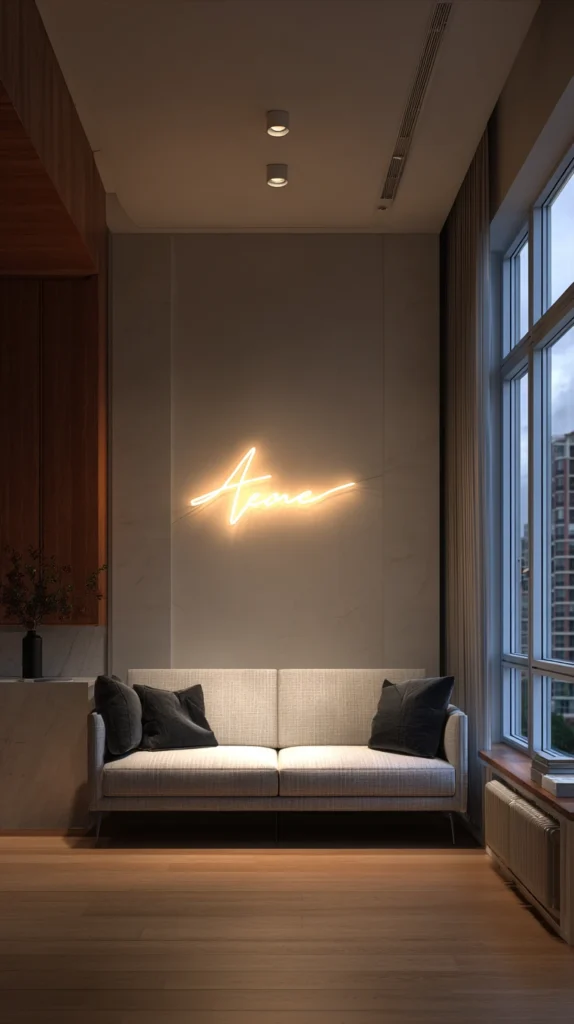
9. The Neon or LED Sign (Personality Statement)

A custom or purchased neon or LED sign as the sole wall feature — the modern element that adds personality and light simultaneously.
Why neon works as above-sofa decor:
The light source quality:
- Art during the day: visual
- Neon at night: light source plus visual
- The room changes character at dusk
- One element: two very different rooms
The personality signal:
- Words or symbols: specific and personal
- Generic art: could be anyone’s room
- Neon with meaning: clearly this person’s room
- Specificity creates memory
The contemporary edge:
- Other ideas on this list: timeless
- Neon: contemporary and specific
- The design-forward choice
- Suits apartments and modern spaces particularly
Types:
LED neon flex:
- Most affordable
- Identical appearance to glass neon
- Safer (no glass, no gas)
- Most available for purchase or custom order
Real glass neon:
- Traditional manufacture
- Rich, slightly uneven glow
- Fragile but beautiful
- More expensive, more authentic
Acrylic LED:
- Edge-lit acrylic panel
- Clean and contemporary
- Lower light output than neon
- Most budget-friendly option
Content:
Personal words or phrases:
- A meaningful quote
- A family name or place
- A word that describes the room’s intention
- The most personal choice
Simple symbol:
- Lightning bolt, star, moon, arrow
- Universal but personalisable
- Works without words
- More abstract impact
Ready-made phrases:
- Commercial options widely available
- ‘Good Vibes’, ‘Home’, ‘Dream’, etc.
- Lower specificity but immediately available
- Choose words with genuine meaning to the person
The colour:
Warm white:
- Most versatile
- Works with any room palette
- Feels like candlelight
- The safe and beautiful choice
Amber or gold:
- Warmer than white
- More distinct glow
- Works with warm palette rooms
Soft pink or red:
- Most photographed neon colour
- Distinctive and warm
- Suits certain rooms very specifically
Cost breakdown:
- Custom LED neon sign (text, 24 inches): $80–120
- Or purchase ready-made: $40–70
- Power adapter included
- Total: $40–120
The neon above the sofa: during the day — interesting. After dark — the most commented-on element of the room.
10. The Framed Fabric or Tapestry Art (Colour and Pattern Without Commitment)
A section of beautiful fabric stretched in a frame — the accessible art approach that makes custom colour matching possible at low cost.
Why framed fabric works:
The colour matching:
- Art: fixed colours
- Fabric: chosen specifically for the room
- The room has specific upholstery colours
- Matching fabric: the art is made for the room
The texture:
- Fabric inside a frame: texture within structure
- The frame provides the formality
- The fabric provides the warmth
- Best of both materials
The accessibility:
- Canvas print: requires digital file and printing service
- Framed fabric: requires fabric and a frame
- Fabric: available in every colour and pattern imaginable
- Immediate and customisable
The fabric:
Woven cotton or linen:
- Texture most visible
- Works in any scale
- Most versatile material
- Natural fibres age beautifully
Velvet:
- Most luxurious appearance
- Catches light differently from every angle
- Bold colour impact
- Suits more formal rooms
Embroidered fabric:
- Pattern and texture together
- Often vintage available
- One-of-a-kind quality
- Charity shops: often extraordinary finds
Printed fabric:
- Geometric or botanical
- Any colour
- Designer fabric by the yard: more affordable than framed prints
The framing technique:
Canvas frame (stretcher bars):
- Available from art supply stores
- Fabric stapled to bars
- No glass required
- Most similar to canvas art appearance
Standard picture frame:
- Glass over fabric
- More formal presentation
- Fabric behind glass: colours slightly richer
- Suits more formal settings
Cost breakdown:
- Stretcher bars (24×24): $15
- Fabric (2 yards of interesting material): $25
- Staple gun: already owned
- Total: $40
The framed fabric: matched to the sofa cushion fabric. The room felt designed for the first time — every element in conversation.
11. The Collection of Small Framed Mirrors (Light and Movement)

Three to five small mirrors arranged as a group — the reflective collection that multiplies light from multiple angles.
Why multiple small mirrors work:
The light multiplication:
- One mirror reflects from one angle
- Multiple mirrors at varied heights and angles
- Light reflected from different directions
- The room lit from the wall itself
The movement:
- As people move around the room: reflections shift
- Multiple reflections moving differently
- The dynamic quality that static art lacks
- The wall is alive
The frames:
All matching (most cohesive):
- Same frame across all mirrors
- The shape: the variable (round, oval, arch, rectangle)
- Frame: the constant
- Consistency within variety
All different (most eclectic):
- Varied frames from varied sources
- United by material (all gilt, all black, all natural)
- More collected quality
- Requires the right eye
The arrangement:
Cluster (most organic):
- Grouped together
- Edges close but not touching
- Asymmetric
- Mirrors touching at different heights
Vertical column:
- Single column of mirrors
- Creates height above sofa
- Visually extends the wall upward
- Works on narrow walls
Scattered (most casual):
- Distributed across the wall
- Nothing precise about the placement
- Relaxed and curated simultaneously
- Requires the fewest holes
Sizes:
Varied within the group:
- One large (anchor)
- Two medium
- Two small
- Hierarchy within the arrangement
Cost breakdown:
- Five small-medium mirrors (thrift stores): $35–60
- Picture hanging strips: $10
- Total: $45–70
The mirror group: the darkest corner of the room. Three mirrors. The corner is no longer dark. The wall reflects light from the window on the opposite side. One arrangement, two problems solved.
12. The Oversized Clock (Functional Art)

A large-format clock as the primary wall feature — the functional object that also serves as art.
Why oversized clocks work above sofas:
The scale:
- Clock: designed to be read across a room
- Large scale is inherent to the function
- Same scale as art needs to be above a sofa
- Function and aesthetic requirements: identical
The focal point:
- Eye goes to the clock (trained to)
- The focal point is controlled by the object
- Other art: eye may or may not engage
- Clock: always engaged
The functional art principle:
- Beautiful objects that do something: doubly satisfying
- Art that serves a purpose: justified at any cost
- The aesthetic is not decoration: it is the object
- The clock is as useful as it is beautiful
Types:
Industrial / vintage:
- Station or factory clock aesthetic
- Large diameter (24–36 inch+)
- Black and cream or black and white
- Most widely compatible with any style
Minimal:
- No numbers or marks
- Hands only
- High-contrast (black on white or gold on white)
- Most contemporary
Architectural salvage:
- Old school or church clocks
- Genuinely aged dials
- Most character
- Salvage yards, eBay
Skeleton / exposed mechanism:
- Gears visible
- Industrial aesthetic
- Conversation piece
- Works in specific room styles
The scale:
- 24-inch minimum for most living rooms
- 30–36 inches: the statement scale
- Larger than feels right: usually correct
- Clock too small: just tells the time (not the point)
Cost breakdown:
- Large industrial clock (30-inch): $65–90
- Or oversized reproduction clock: $45
- Total: $45–90
The 30-inch clock: every other decorating decision in the room was about aesthetics. The clock does two things. It earns its place differently than anything else.
13. The String Light or Fairy Light Frame (Soft Evening Glow)

String lights or fairy lights shaped into a frame, letter, or constellation above the sofa — the soft light addition that transforms the room after dark.
Why string lights work as wall decor:
The two-mode quality:
- Day: interesting arrangement of wire and lights
- Evening: warm glow that changes the room
- One element: two completely different rooms
- The switch between them is the pleasure
The warmth:
- Warm white string lights: candlelight quality
- The wall: warm and ambient
- The sofa: the most inviting spot in the room
- The effect: wanting to sit there
The scale:
- String light arrangement can be any scale
- Shaped to the wall: no size constraint
- The arrangement defines its own dimensions
- More flexible than framed art
Types:
Cascading curtain lights:
- Drop from a single horizontal run at top
- Waterfall of warm points
- Most dramatic
- 6-foot width available
Shaped arrangement:
- Arranged in geometric shape (star, hexagon, circle)
- Or letter or word
- Requires wire, command hooks, and planning
- Custom to the room
Constellation arrangement:
- Random points across the wall
- Suggests stars
- No pattern required
- Most casual approach
Frame of lights:
- Rectangle of lights around the sofa area
- Defines the sofa zone
- Frame of warm light
- The sofa inside the frame: a room within a room
The product:
Copper wire fairy lights:
- Most flexible (follows any shape)
- Thin wire nearly invisible
- Warm white only
- Battery or USB powered (no visible cord)
Vintage Edison string lights:
- More visible wire
- Larger bulbs
- More industrial aesthetic
- Works with specific room styles
Cost breakdown:
- Copper fairy lights (33 feet): $15
- Command hooks: $8
- Total: $23
The curtain of lights above the sofa: the cheapest thing done to the room. The most commented on in the evening.
14. The Three-Dimensional Wall Sculpture (Depth Beyond the Picture Plane)

Sculptural wall-mounted objects that project into the room — the decor that makes the wall itself three-dimensional.
Why wall sculpture changes a room:
The depth:
- Framed art: flat against the wall
- Wall sculpture: projects into the room
- Eye can perceive depth, not just surface
- The wall becomes part of the room, not just a boundary
The shadow:
- Three-dimensional object on wall: casts shadow
- Shadow changes with light throughout the day
- Morning versus afternoon: different piece
- Evening lamp light: dramatic shadows
- The wall decor is never static
The material range:
Ceramic relief:
- Handmade quality
- Varied glazes and textures
- Contemporary ceramics artists: Etsy
- One-of-a-kind pieces
Metal wall art:
- Laser-cut steel or aluminium
- Botanical, geometric, or abstract
- Powder-coated black: most versatile
- Projects 1–3 inches from wall
Woven baskets:
- Flat baskets arranged as art
- African or Native American styles
- Warm earth tones
- Mix of shapes and sizes
Natural materials:
- Driftwood arrangements
- Pressed botanical (behind glass, or three-dimensional)
- Stone or mineral specimens
- Antlers or bones (considered carefully)
The arrangement:
One large piece:
- Statement sculpture
- No arrangement decisions required
- The piece speaks for itself
Grouped collection:
- Five to nine pieces of one type
- Woven baskets: the most commonly saved version
- Varied sizes (same material)
- Distributed across the wall width
Layered arrangement:
- Different depths from wall
- Some flat, some projecting
- Creates genuine depth
- The most sophisticated approach
The woven basket wall:
Currently one of the most searched and saved:
- Eight to twelve baskets
- Varied shapes (round, oval, flat, deep)
- Same material family (natural woven)
- Distributed across the wall
Sources:
- World Market
- Thrift stores (most affordable)
- Ethnic grocery and home stores
- African or Asian home goods stores
The arrangement:
- Largest at centre
- Smaller toward edges
- Overlapping allowed (three-dimensional)
- Irregular distribution (not a grid)
Cost breakdown:
- Eight woven baskets (thrift store): $40
- Nails or command hooks: $8
- Total: $48
The basket wall: guests who have never heard of wall baskets see it and immediately save a photograph. The combination of texture, natural material, and unexpected context is exactly what makes a room memorable.
What All 14 Ideas Share
The principle beneath every one:
Scale first:
- Every failed above-sofa decoration is too small
- Scale is not a preference: it is the first requirement
- Before any other decision: is this large enough
Connection second:
- 6–8 inches above the sofa back
- Art and furniture: one composition
- Not floating. Not touching. Hovering.
Relationship to room third:
- Colour pulled from the room
- Material in conversation with other materials
- Nothing from a different design world
The paper template always:
- Cut paper to size of the intended piece
- Tape to wall
- Live with it 24 hours
- Adjust before committing to holes
Getting Started This Weekend
The two-decision start:
Decide what approach:
- Single large piece: the confident choice
- Gallery wall: the collector’s choice
- Mirror: the practical choice
- Textile: the warmth choice
- Shelf display: the flexible choice
Decide what you already have:
- Existing art too small: float it in a larger frame
- Photographs owned: gallery wall begins
- A basket collection: the wall begins
- Nothing: the botanical print download and frame is the $56 start
This weekend under $60:
- Download six vintage botanicals (free)
- Print at home or at print shop ($6)
- Six matching frames from a dollar store or thrift store ($30)
- Arrange in grid, 3 inches apart, 7 inches above sofa back
- Total: $36–56
Or the single statement under $100:
- One large mirror (thrift store, $35)
- Spray paint frame charcoal ($8)
- Hang centred above sofa, 7 inches above back
- Total: $43
The wall above the sofa has been blank long enough. Not because the right idea never came. Because no template was held up to understand the scale. No principle was applied to understand the height.
Both are now available.
The wall is ready. The weekend is enough time.
