14 Herbs That Thrive in Summer Heat
Herbs are among the most heat-adapted plants in cultivation. The majority of the herbs used in everyday cooking originated in the sun-baked regions of the Mediterranean, the Middle East, and tropical Asia — environments where intense heat, lean soil, and minimal rainfall are the baseline conditions rather than the exception. These are not plants that tolerate heat. They are plants that require it to develop the essential oils that give them their flavour, fragrance, and medicinal properties. The hotter the summer, the better most of them perform.
The fourteen herbs below are the ones that genuinely come into their own in summer — producing more flavour, more fragrance, and more harvestable growth as the temperature rises. Each one is widely available, straightforward to grow, and rewarding in ways that go well beyond the kitchen. Costs and practical growing tips are included with each to help you get the most from every plant through the warmest months of the year.
1. Basil
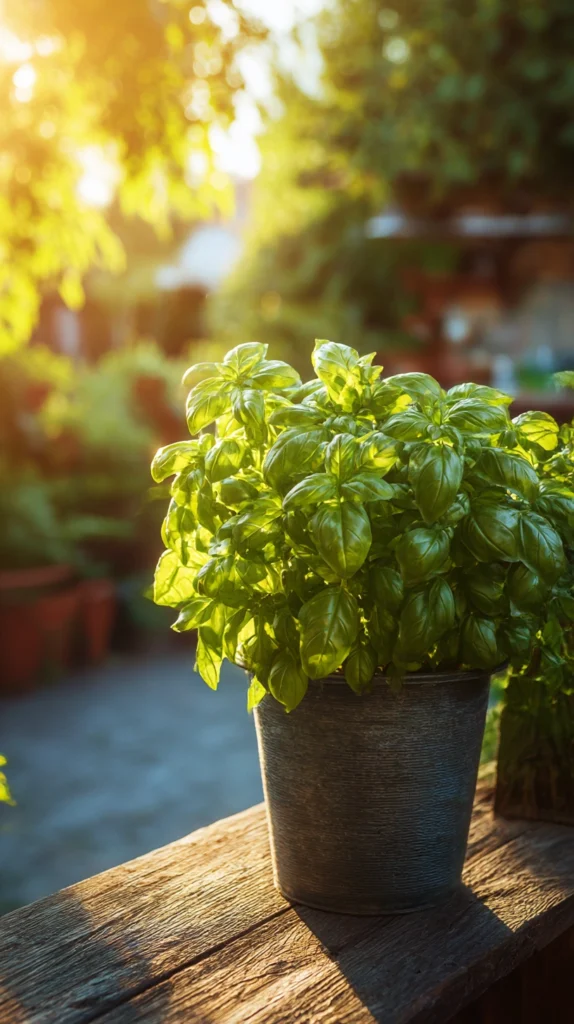
Cost: $2 – $5 per seed packet or $3 – $6 per pot plant
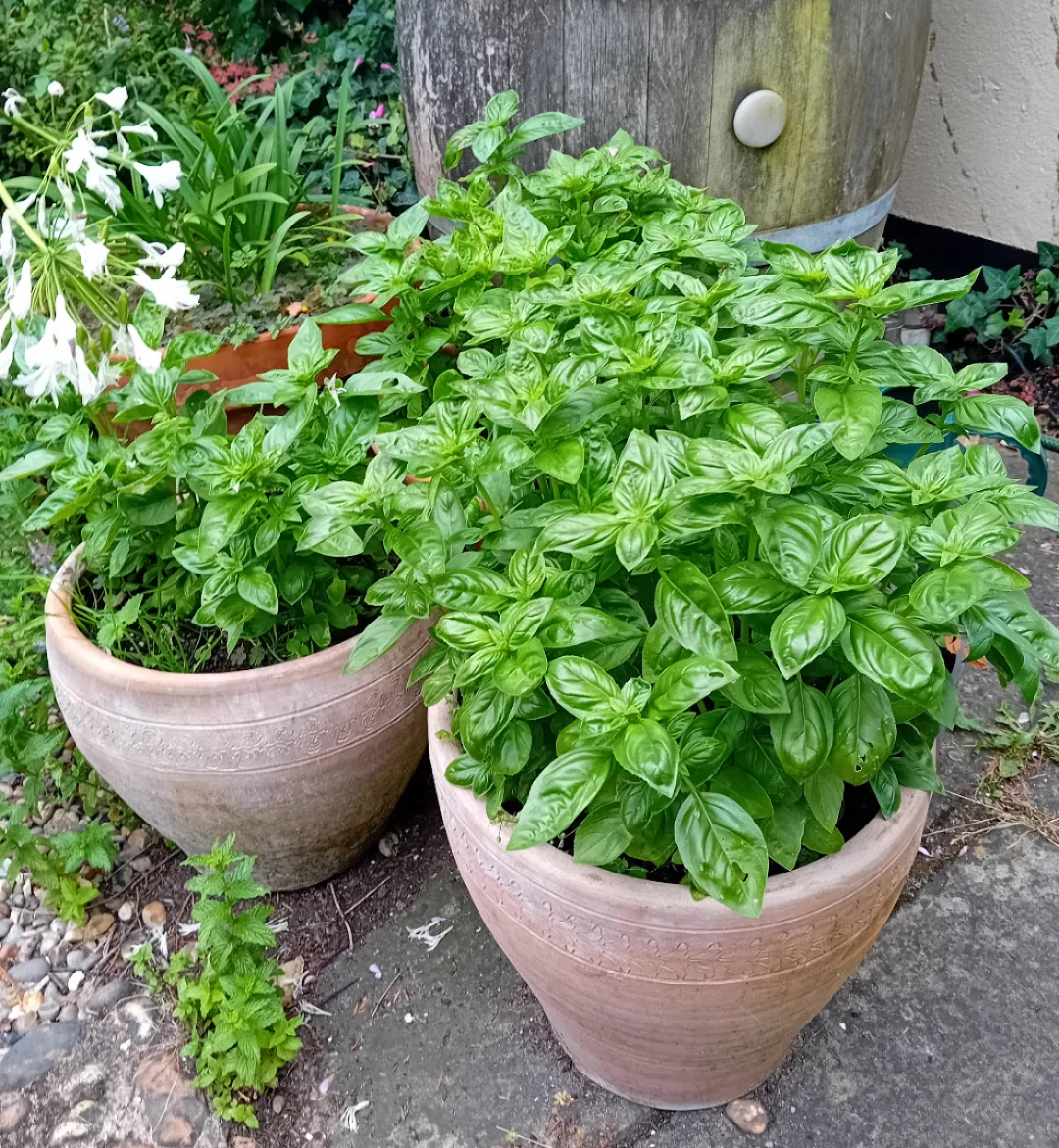
Basil is the quintessential summer herb — a plant so dependent on warmth that even a single cold night can blacken its leaves and set the plant back by weeks. In genuine summer heat, however, it grows with extraordinary vigour, producing large, aromatic leaves that are at their most flavourful just before the plant flowers. Sweet basil, Genovese basil, Thai basil, and lemon basil all thrive in full sun and warm temperatures and each has a distinct character that suits different uses in the kitchen.
Basil performs best in a position that receives at least six hours of direct sun per day and is sheltered from cold winds. Water at the base of the plant rather than over the leaves — wet foliage in warm conditions invites fungal problems that can destroy a plant quickly. A pot of basil on a south-facing windowsill or sunny terrace grows more reliably through summer than one in a border where soil temperature fluctuates. Feed with a balanced liquid fertiliser every two weeks to sustain the rapid growth that summer conditions make possible.
Growing tip: Pinch out the growing tip and any flower buds the moment they appear. Once basil flowers, the plant redirects all its energy into seed production and leaf quality drops sharply — the leaves become smaller, tougher, and significantly less flavourful within days of the first flower opening. Regular pinching keeps the plant in a vegetative state and producing at its best for weeks longer than an unpinched plant.
2. Rosemary
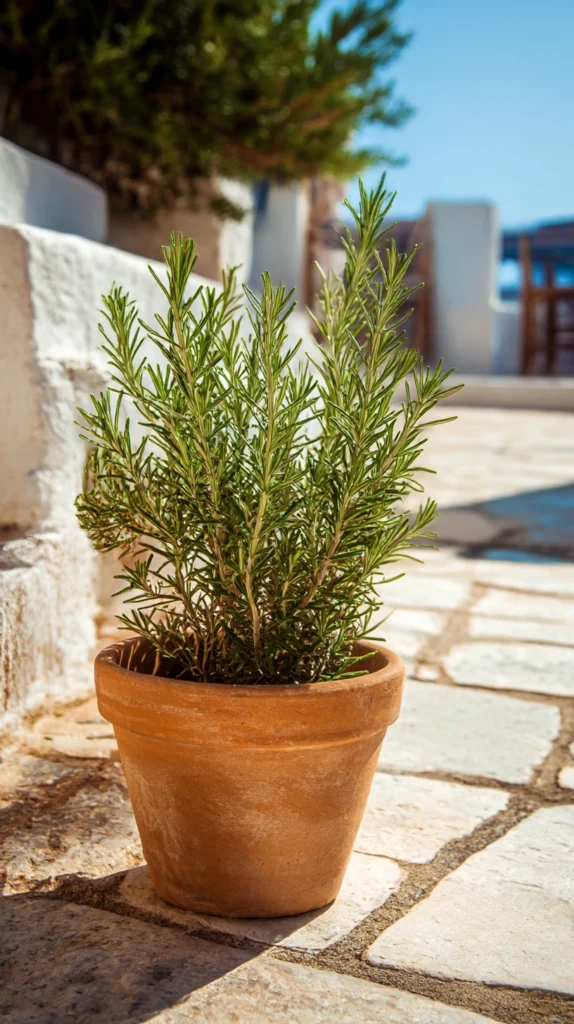
Cost: $4 – $12 per plant
Rosemary is a Mediterranean native that evolved on dry, rocky hillsides in full sun and has never stopped preferring those conditions. In a summer garden it is almost completely self-sufficient once established — it needs no feeding, infrequent watering, and only an occasional light trim after flowering to maintain a compact, productive shape. The resinous, piney fragrance of the leaves intensifies in heat, and sprigs harvested in midsummer carry more aromatic oil and more flavour than those cut at any other time of year.
Plant rosemary in the sunniest, most free-draining position available. It will rot in waterlogged soil regardless of temperature, so poor drainage is a greater risk than drought in most garden situations. Established plants reach 60–120 cm in height and spread, forming a woody-based shrub that lives for many years with minimal intervention. Upright varieties such as Miss Jessopp’s Upright are the most commonly grown. Trailing varieties work well in containers and raised beds where the stems can cascade over the edge naturally.
Growing tip: Harvest rosemary by cutting soft stem tips of 10–15 cm rather than pulling individual leaves from older woody stems. Tip harvesting encourages branching below the cut point, which results in a bushier, more productive plant with each successive harvest through the season. Older, woody stems do not regenerate well when cut and should be left on the plant.
3. Thyme
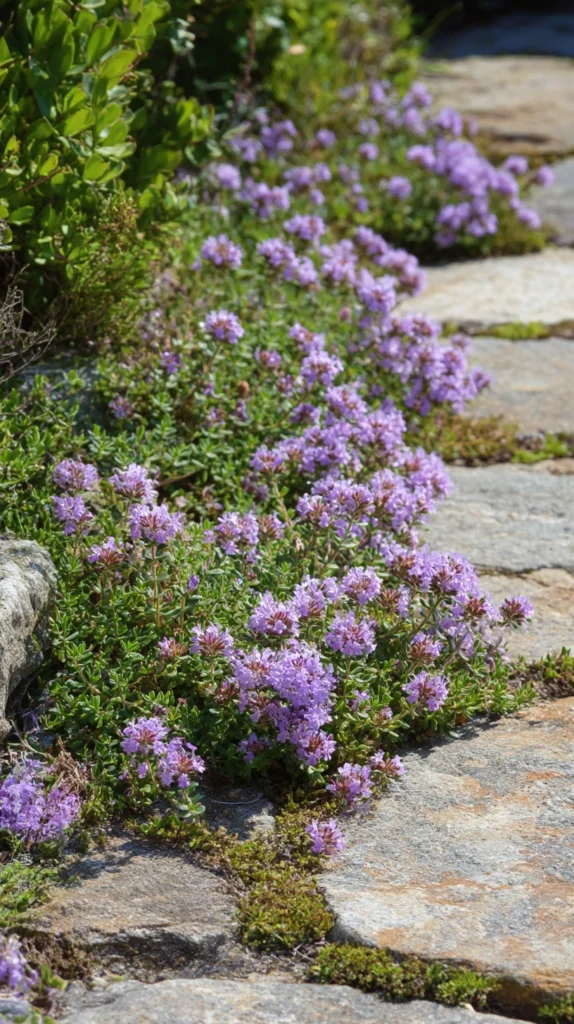
Cost: $3 – $8 per plant or $2 – $4 per seed packet
Thyme is one of the toughest and most drought-tolerant culinary herbs in existence. A native of the dry, rocky slopes of the Mediterranean, it has adapted over millennia to conditions of intense sun, minimal water, and lean, alkaline soil — precisely the conditions that a hot summer garden provides. The flavour of thyme is directly linked to the heat and stress it experiences: a plant baked in full sun through a hot summer contains significantly more thyme oil and more intense flavour than the same variety grown in cool, moist conditions.
Common thyme, lemon thyme, creeping thyme, and orange thyme are all reliable summer performers. Plant in sharply drained soil in full sun — thyme planted in rich, fertile soil produces excessive soft growth with diluted flavour and a tendency to become leggy and open in structure. Common thyme reaches 20–30 cm in height. Creeping thyme spreads flat across the ground and is effective as a fragrant path edging or ground cover between paving stones where it releases fragrance when walked upon. Divide established clumps every three years to maintain vigour.
Growing tip: Trim thyme back by one third immediately after the main flush of flowers in early summer. This prevents the plant from becoming woody and open at the centre, maintains a compact mound of harvestable growth, and often triggers a secondary flush of both flowers and fresh foliage through late summer. Do not cut into old, leafless woody stems — thyme does not regenerate reliably from bare wood.
4. Oregano
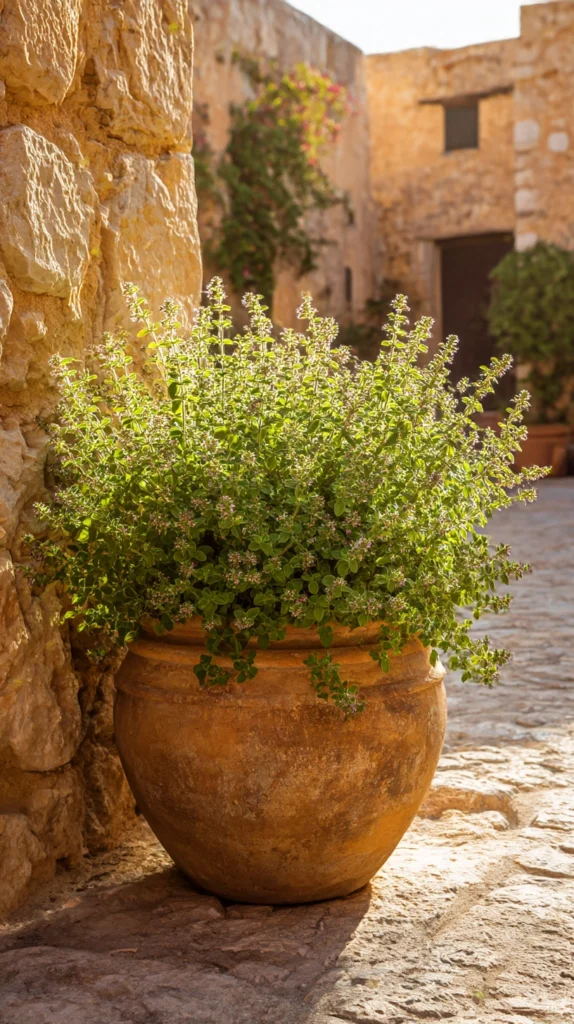
Cost: $3 – $8 per plant or $2 – $4 per seed packet
Oregano is at its aromatic best in summer heat. The essential oils that give it its distinctive warm, slightly peppery flavour are produced most abundantly when the plant is grown in full sun with minimal water and lean, well-drained soil — conditions that a hot summer garden delivers naturally. Greek oregano is the most intensely flavoured variety and the one most commonly used in Mediterranean cooking. Italian oregano is slightly milder. Both are fully hardy perennials that die back in winter and return reliably each spring, growing slightly larger and more productive each year.
Oregano reaches 30–45 cm in height in flower and spreads to a similar width over several seasons. It self-seeds freely in open soil and the seedlings that appear around the parent plant can be transplanted to fill other sunny spots in the garden at no cost. The small white or pale pink flowers that appear in midsummer attract a wide range of pollinators and are themselves edible — dried flower stems make a fragrant garnish and can be used in the same way as the leaves in cooking. Harvest throughout the summer by cutting stems back by one third.
Growing tip: Harvest oregano just before the flowers open fully — this is the point at which the essential oil content in the leaves peaks and the flavour is at its most concentrated. Leaves harvested at full flower or beyond are still usable but noticeably less intense than those cut at the bud stage. Dry surplus harvests at this moment by hanging stems in a warm, airy place for two weeks for the best quality dried herb.
5. Sage
Cost: $4 – $10 per plant or $2 – $4 per seed packet
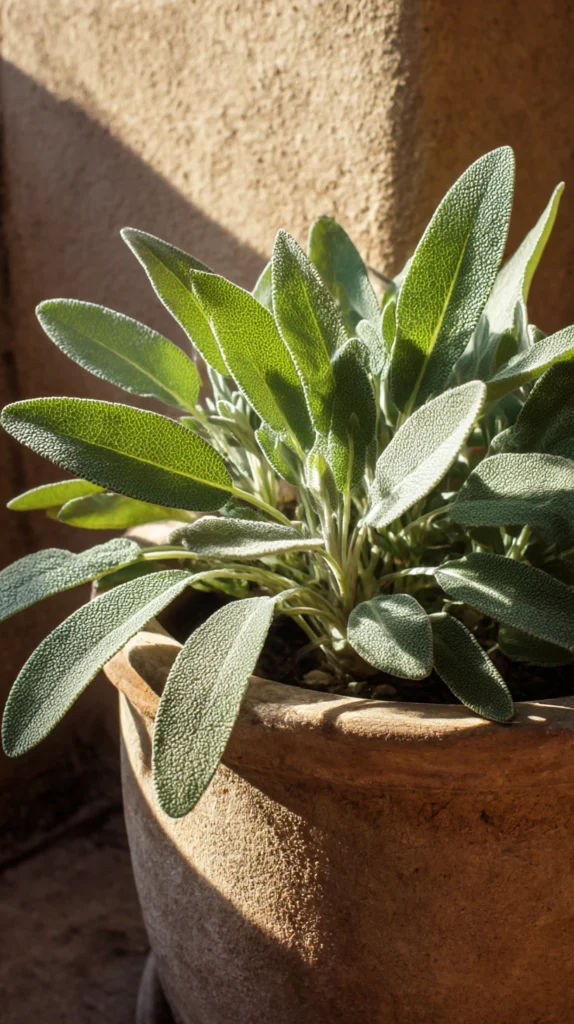
Common sage is a Mediterranean subshrub that performs exactly as well in the heat of a summer garden as its origins suggest it should. The broad, grey-green leaves — velvety in texture and intensely aromatic — carry the highest concentration of the volatile oils responsible for sage’s distinctive flavour through the warmest months, making midsummer the best time of year to harvest for both fresh use and drying. Purple sage, golden sage, and tricolour sage offer the same growing conditions with ornamental leaf colour as an added benefit.
Plant sage in full sun in free-draining soil — it shares the drought tolerance of its Mediterranean relatives and will decline rapidly in waterlogged conditions. Established plants reach 45–60 cm in height and develop an attractive woody base over several years. Cut back by one third each spring before new growth begins to prevent the plant from becoming excessively woody and reducing its productive leaf area. Replace plants every four to five years as they become increasingly open and woody at the centre and produce progressively less harvestable foliage per plant.
Growing tip: Do not harvest more than one third of the plant’s foliage at any single time, particularly through the establishment period. Sage recovers more slowly from heavy harvesting than most other Mediterranean herbs, and a plant stripped too severely in its first or second season may not regenerate fully before the cooler autumn temperatures slow growth further. Little and often is the right approach to sage harvesting at every stage of the plant’s life.
6. Chives
Cost: $3 – $7 per plant or $2 – $4 per seed packet
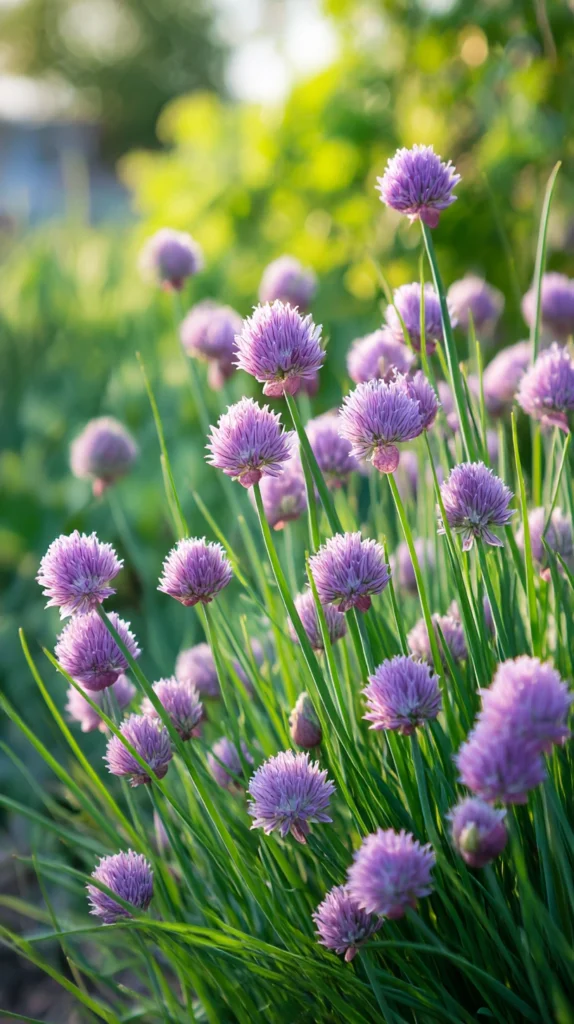
Chives are one of the most reliably productive and unfussy herbs in the summer garden. They grow in almost any well-drained soil in a position with at least partial sun, they return vigorously each spring after dying back in winter, and they produce a continuous supply of mild, onion-flavoured stems from April through to October with no significant maintenance required beyond occasional division every two to three years. The ball-shaped purple flowers that appear in early summer are edible, attractive to pollinators, and decorative enough to justify growing chives in an ornamental border as well as a herb garden.
Chives form dense clumps reaching 25–35 cm in height that expand steadily in width over several seasons. Divide established clumps in spring every two to three years to prevent congestion and maintain the vigorous growth of younger outer sections. Cut the whole clump back to 5 cm above the ground level once or twice through the summer when the foliage becomes coarse or the plant has flowered heavily — new growth regenerates within two to three weeks and is noticeably more tender and flavourful than the original stems that were removed.
Growing tip: Allow a few chive flowers to open fully and then deadhead them before they set seed. Chives self-seed prolifically and while this is useful for filling gaps in the herb garden, an ungoverned self-seeder can spread through a raised bed or container more quickly than is convenient. Deadheading most flowers while allowing a few to seed gives you control over where new plants appear without losing the self-seeding benefit entirely.
7. Lemon Verbena
Cost: $5 – $15 per plant
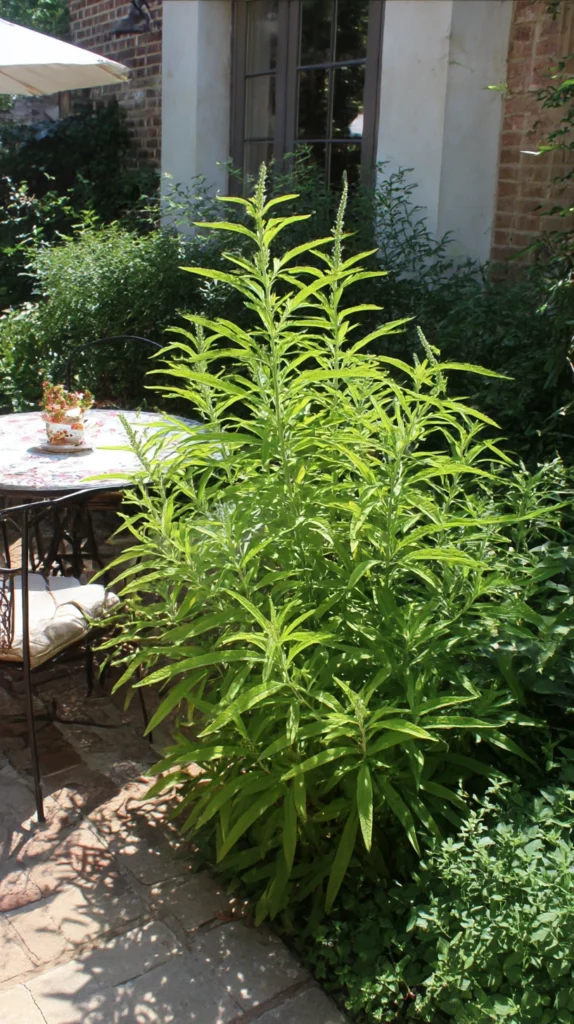
Lemon verbena is a tender perennial shrub from South America that is at its absolute best in summer heat. The long, lance-shaped leaves carry an intensely citrusy fragrance — far more strongly lemon-scented than any other plant in the garden — and are used fresh in teas, desserts, salad dressings, cocktails, and as a flavouring in cooking where a clean, bright lemon note is wanted. The fragrance releases at the lightest touch, making it one of the most rewarding sensory plants available for a sunny terrace or patio herb garden.
Lemon verbena reaches 60–150 cm in a single growing season in warm conditions and drops its leaves in winter even in frost-free climates, which alarms many growers who assume the plant has died. It has not — new growth emerges reliably in late spring once temperatures rise. In climates with hard frosts, grow in a large container that can be brought under cover from October to April. The container also concentrates the fragrance immediately around the seating area, which is where it is most enjoyable. Harvest stems frequently through summer to keep the plant compact and productive.
Growing tip: Harvest lemon verbena stems in the morning when the essential oil content in the leaves is at its highest. Dry surplus stems by hanging in a warm, well-ventilated space — the dried leaves retain their fragrance and flavour far better than most other herbs and produce one of the finest herbal teas available from any garden plant. A single summer’s harvest dried carefully will supply fragrant tea through the entire winter.
8. Marjoram
Cost: $3 – $8 per plant or $2 – $4 per seed packet
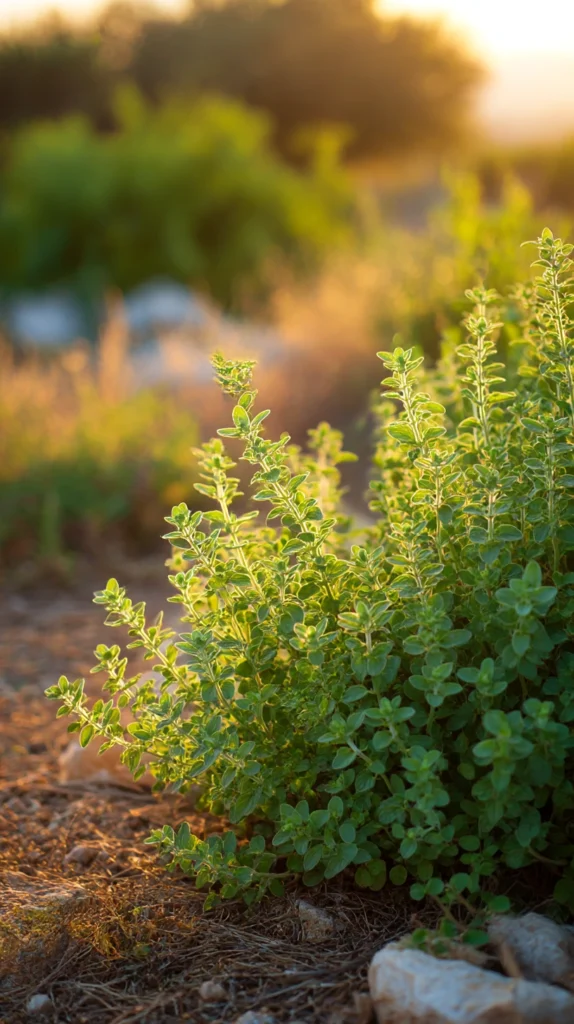
Sweet marjoram is the more delicate and subtly flavoured cousin of oregano, sharing the same Mediterranean origins and the same preference for heat, sun, and lean, well-drained soil. Its warm, slightly sweet flavour works particularly well in dishes where oregano would be too assertive — egg dishes, cream sauces, mild cheeses, and vegetables. In summer heat the flavour develops its finest qualities: a gentleness and warmth that cold-grown marjoram never achieves. It is one of the herbs that makes the strongest case for growing your own rather than relying on the supermarket dried version.
Grow sweet marjoram in full sun in the warmest, most sheltered position available — it is less hardy than oregano and benefits from the additional warmth of a south-facing wall or fence. Plants reach 30–40 cm in height and are typically grown as annuals in cooler climates, though they survive outdoors through mild winters in sheltered spots. Pot-grown marjoram brought indoors for winter continues producing fresh leaves year-round from a bright, warm windowsill. Harvest frequently through summer by cutting stem tips of 10 cm to keep the plant compact and continuously producing.
Growing tip: Harvest marjoram just before the small white or pink flower clusters open — the leaves are most flavourful at the bud stage, as with oregano. Once in full flower, the plant’s energy shifts toward reproduction and leaf production slows. Cutting back by one third at the bud stage delays full flowering, extends the leaf harvest, and keeps the plant producing harvestable growth for several additional weeks through the summer season.
9. Coriander (Cilantro)
Cost: $1 – $3 per seed packet
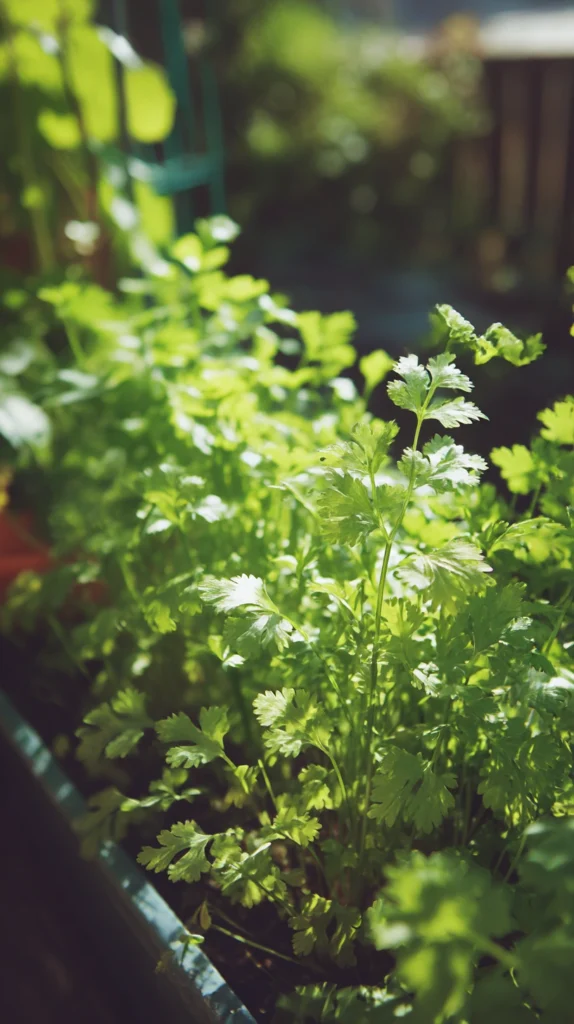
Coriander is one of the most widely used culinary herbs in the world and one of the most straightforward to grow in summer — provided you understand its particular relationship with heat. Standard coriander bolts to seed rapidly in hot conditions, but slow-bolt varieties bred specifically for summer growing hold their leaf production for significantly longer in warm weather. The seeds themselves — produced abundantly once the plant flowers — are a valuable spice in their own right, with a warm, citrusy flavour entirely different from the fresh leaf and equally useful in the kitchen.
Use slow-bolt varieties such as Leisure or Confetti for summer leaf production — these are specifically bred for heat resistance and outperform standard varieties significantly through the hottest weeks. Sow directly in the growing position 1 cm deep and 5 cm apart — coriander develops a taproot early and dislikes transplanting. Sow a small quantity every two to three weeks through summer rather than a single large sowing: succession sowing is the most reliable way to maintain a continuous leaf harvest when each individual sowing bolts faster than you might like in warm conditions.
Growing tip: Allow some plants to bolt and set seed intentionally rather than pulling them out once flowering begins. Collect the dried seed heads by cutting into a paper bag when the seeds turn from green to beige and use them whole or ground as a spice. Self-seeded coriander plants from dropped seeds will also appear around the original planting through the following season, extending the supply at no additional cost or effort.
10. Thai Basil
Cost: $3 – $6 per plant or $2 – $4 per seed packet
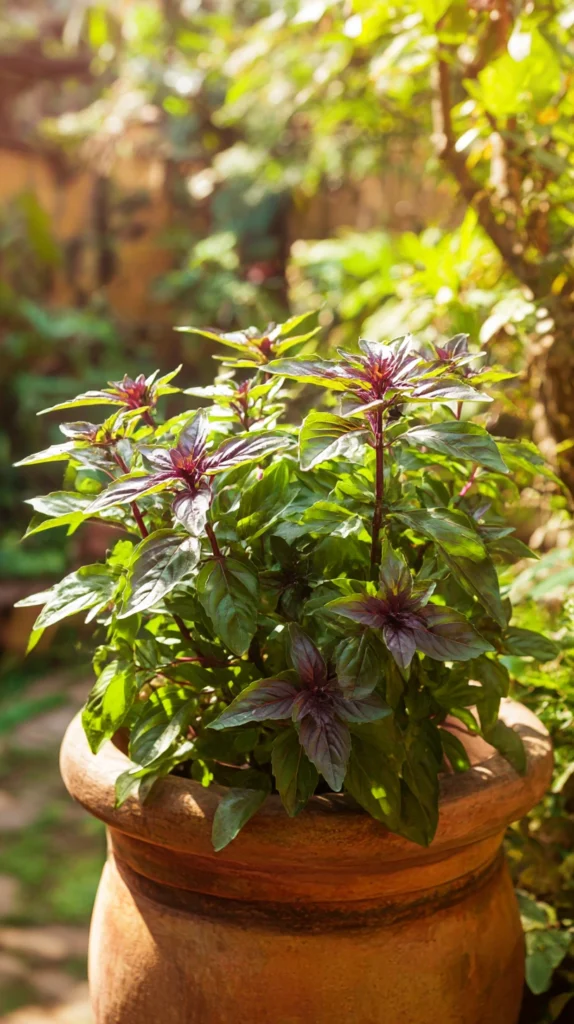
Thai basil is significantly more heat-tolerant than sweet or Genovese basil and is the variety of choice for gardens in genuinely hot climates where standard basil struggles to maintain quality through the peak summer months. The leaves are smaller, firmer, and more intensely flavoured than Italian varieties, with a distinct anise note that makes them essential in South-East Asian cooking — stir-fries, curries, soups, and noodle dishes — and increasingly popular in fusion cuisine and cocktail garnishing. In hot conditions it grows vigorously and is far slower to bolt than sweet basil.
Plant Thai basil in full sun in well-drained soil or a large container. It tolerates higher temperatures than Italian varieties without the immediate leaf quality decline that heat causes in standard basil — in fact, Thai basil grown in a hot position often outperforms the same plant grown in moderate conditions in terms of both growth rate and flavour intensity. Water at the base consistently and feed fortnightly with a balanced fertiliser through the growing season. Pinch out flower buds as they appear to extend the leaf harvest, though Thai basil is somewhat slower to bolt than sweet varieties and gives you more time before intervention is critical.
Growing tip: Take cuttings of Thai basil in late summer by placing 10 cm stem tips in a glass of water on a warm windowsill. Roots develop within ten to fourteen days and the rooted cuttings can be potted up and grown indoors through winter, providing fresh Thai basil leaves year-round from a plant that would otherwise be lost to autumn frosts. A single well-established indoor plant from a late summer cutting produces usable leaves continuously through the colder months.
11. Mint
Cost: $3 – $8 per plant
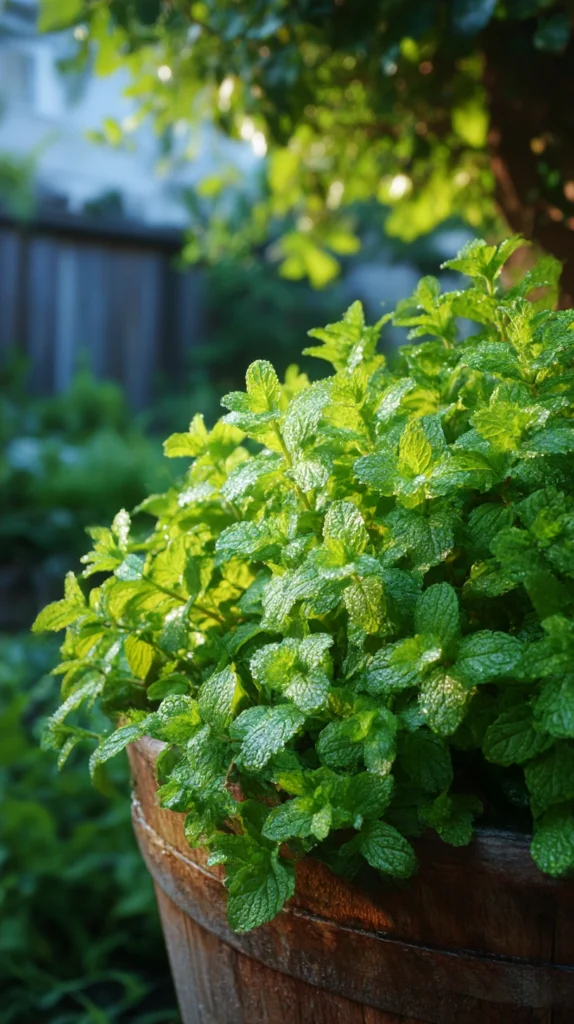
Mint is one of the most vigorous and productive herbs for summer growing — in warm conditions it spreads rapidly, produces abundant harvestable stems continuously from May through to September, and delivers the freshest, most aromatic leaves of the year during the hottest summer months. Spearmint, peppermint, apple mint, chocolate mint, and Moroccan mint all grow with the same enthusiasm in summer heat and each offers a distinct character suited to different culinary and drinks applications. Summer is unquestionably the season when mint earns its keep most completely.
Grow mint in containers rather than directly in the ground — it spreads aggressively through underground runners and will overwhelm neighbouring plants in an open border within one to two seasons. A large pot with drainage holes, placed in full sun or partial shade, is the ideal growing situation. Mint tolerates more moisture than most Mediterranean herbs and benefits from consistent watering through dry spells. Cut stems back hard — to within 5 cm of the soil surface — once or twice through summer when the plant becomes straggly. Fresh growth emerges within ten days and is far more flavourful than tired, overgrown stems.
Growing tip: Plant mint into a container sunk into the ground with its rim at soil level if you want it in a border rather than a pot. The buried container restrains the roots from spreading while the plant appears to be growing in the ground. This gives the visual effect of in-ground planting with the containment of pot growing — the most practical solution for gardeners who want mint in a mixed herb bed without it taking over.
12. Lemon Balm
Cost: $3 – $8 per plant or $2 – $4 per seed packet
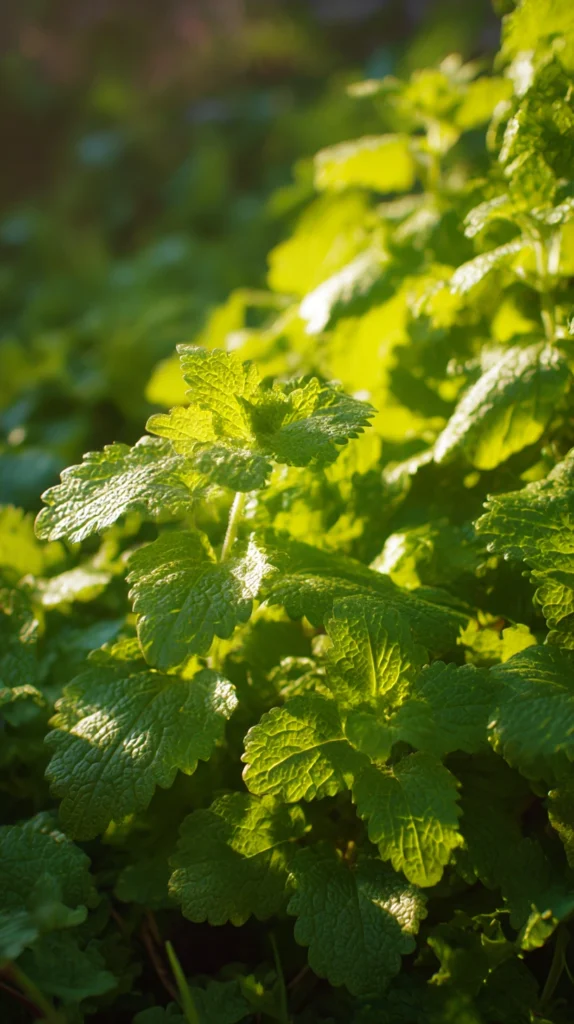
Lemon balm is a vigorous, hardy perennial that produces its most fragrant and flavourful foliage through the summer months when warmth triggers the highest production of the citronella-like essential oils responsible for its distinctive lemon scent. The leaves are used fresh in teas, cold drinks, salads, and desserts, and the plant has a long history of use in herbal medicine as a calming and digestive herb. In summer heat it grows with the same enthusiasm as mint — to which it is related — and is similarly productive when cut back regularly.
Plant lemon balm in full sun or partial shade in well-drained soil. It is fully hardy and returns reliably each spring, growing into a generous mound of 40–60 cm by midsummer. Like mint, it self-seeds prolifically and can spread through a border if allowed to flower and set seed freely — cut back before flowering in midsummer if self-seeding would be unwelcome. Cut the whole plant back to 10 cm above the soil surface once or twice through summer to encourage a fresh flush of tender, intensely fragrant new growth that is far superior in flavour to older, coarser leaves.
Growing tip: Use lemon balm leaves fresh rather than dried wherever possible. The delicate citrus fragrance and flavour that makes the herb appealing fades significantly during drying — dried lemon balm retains some flavour but loses much of the brightness that makes the fresh leaf worth growing. Use a generous handful of fresh leaves steeped in cold water with ice and sliced cucumber for one of the most refreshing summer drinks a herb garden can produce.
13. Summer Savory
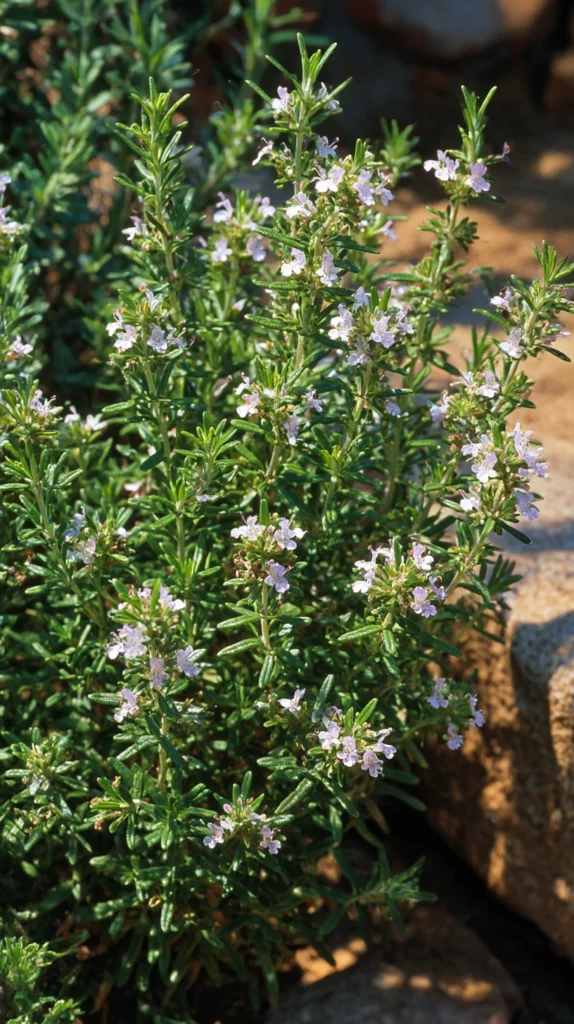
Cost: $2 – $4 per seed packet or $3 – $7 per plant
Summer savory is one of the oldest culinary herbs in cultivation and one of the most underused in modern home gardens. The warm, slightly peppery flavour — stronger than thyme, more complex than oregano — pairs exceptionally well with beans, grilled meats, tomatoes, and robust summer vegetables, and the plant has a particular historical association with bean dishes that has earned it the informal name of bean herb in parts of central Europe. It thrives in full sun and heat, producing its most intensely flavoured leaves in the warmest weeks of summer when essential oil content in the foliage peaks.
Summer savory is a hardy annual reaching 20–35 cm in height that germinates readily when sown directly in the growing position in late spring or early summer. Sow seed 0.5 cm deep and thin to 15 cm spacing. It prefers lean, well-drained soil in full sun and dislikes rich, moist conditions that encourage soft, low-flavour growth. Harvest stems frequently from early summer onward, cutting back by one third to keep the plant compact and producing. Summer savory flowers in late summer and the whole plant — stems, leaves, and flowers — can be harvested at this point, dried, and stored for winter use.
Growing tip: Add a stem of fresh summer savory to the cooking water when boiling or steaming French beans or broad beans. The herb has a specific affinity with legumes that reduces their digestive effects while simultaneously enhancing their flavour — a traditional pairing that modern cooks have largely forgotten but that is worth reviving for both culinary and practical reasons.
14. Stevia
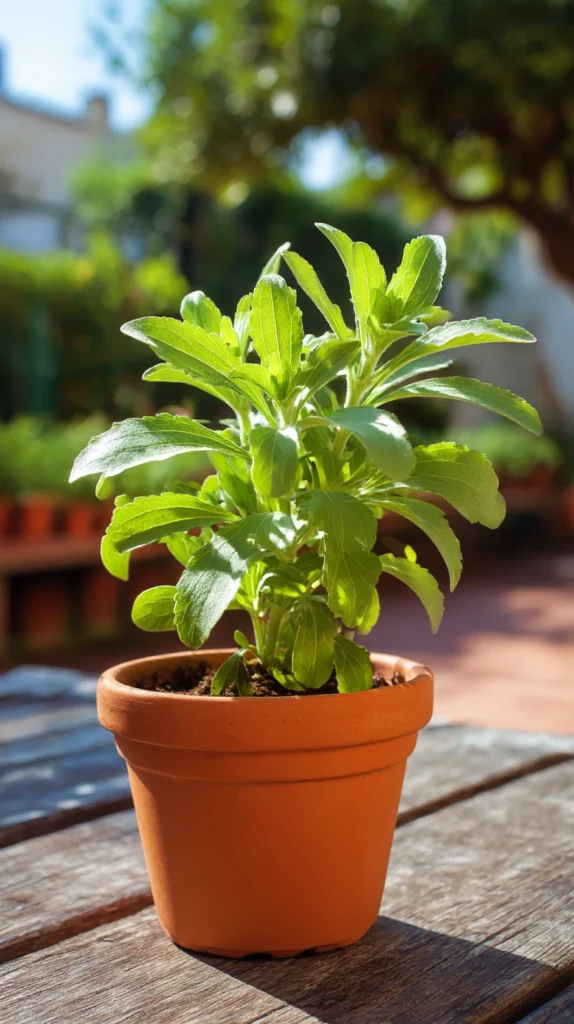
Cost: $4 – $10 per plant or $3 – $6 per seed packet
Stevia is a South American herb that thrives in summer heat and produces its most intensely sweet leaves through the hottest months of the growing season. The leaves contain steviol glycosides — natural compounds up to 300 times sweeter than sugar — that can be used fresh or dried to sweeten teas, drinks, and desserts without any of the calories associated with sugar. As interest in reduced-sugar cooking has grown, stevia has moved from specialist health food shops into mainstream garden centre herb sections and is now one of the more widely available unusual herbs for summer growing.
Plant stevia in full sun in well-drained, moderately fertile soil or a large container. It is a tender perennial that needs protection from frost — in temperate climates it is grown as an annual or brought indoors over winter. Plants reach 40–80 cm in height through summer and respond well to regular harvesting of stem tips, which keeps the plant compact and delays the onset of flowering. Harvest leaves in the morning for the highest sweetness concentration. Dry surplus leaves at low temperature — no higher than 40°C — to preserve the steviol glycoside compounds that provide the sweetness.
Growing tip: Use fresh stevia leaves sparingly until you are familiar with their intensity — the sweetness is significantly more concentrated than sugar and a small amount goes considerably further than intuition suggests. Start with one or two leaves per cup of tea and adjust from there. Drying the leaves and crumbling them into a fine powder makes measurement easier and the powder dissolves more readily in cold drinks than whole dried leaves.
The herbs on this list ask very little of you and give back a great deal — fresh flavour, fragrance, colour, and the particular satisfaction of cooking with something you have grown yourself from a pot on the windowsill or a bed in the garden. Most of them improve rather than suffer under the heat that challenges so many other garden plants, and most of them require less water, less feeding, and less intervention through summer than any other edible plant you could choose to grow.
Start with one or two herbs that you already use regularly in the kitchen and build from there as confidence grows. The best herb garden is not the most comprehensive one — it is the one you actually harvest from, consistently, through every week of the summer. Keep it within reach of the kitchen, keep it in the sun, and keep picking from it. The more you harvest, the better it grows.