15 Fall Greenhouse and Sunroom Garden Ideas
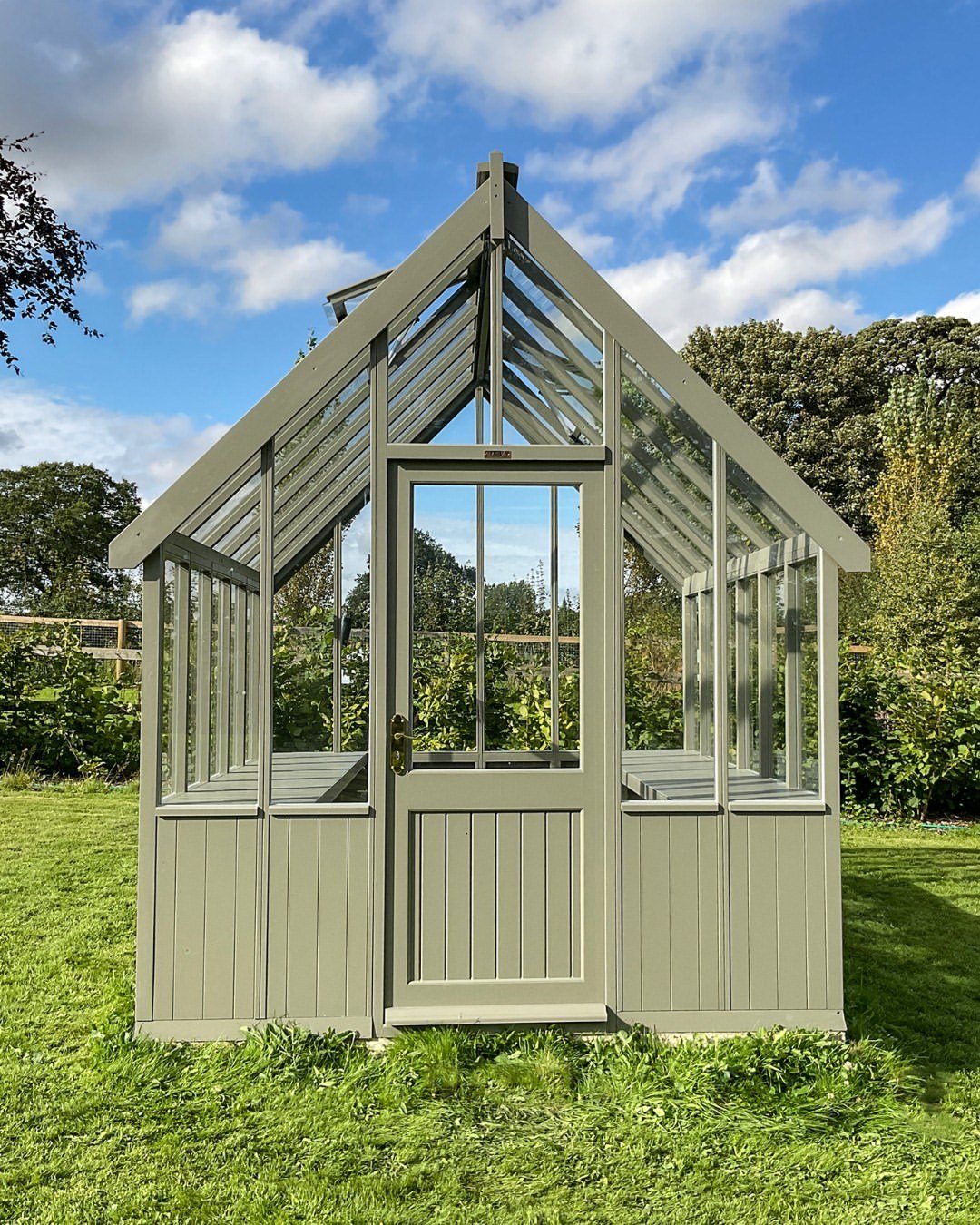
The greenhouse becomes a different room in September. Not because anything changes about the structure. Because the relationship between what is inside and what is outside reverses.
In summer, the greenhouse is a place where tender plants get started and then move outward — seedlings hardening off, cuttings rooting, heat-lovers extending their season. The greenhouse serves the outside garden.
In autumn, the relationship reverses. The greenhouse becomes the destination rather than the departure point. The outside garden sends things in. The tender plants summering outside: brought in. The last tomatoes in the border: given a few more weeks inside. The chrysanthemums, the dahlias, the pelargoniums: overwintered here.
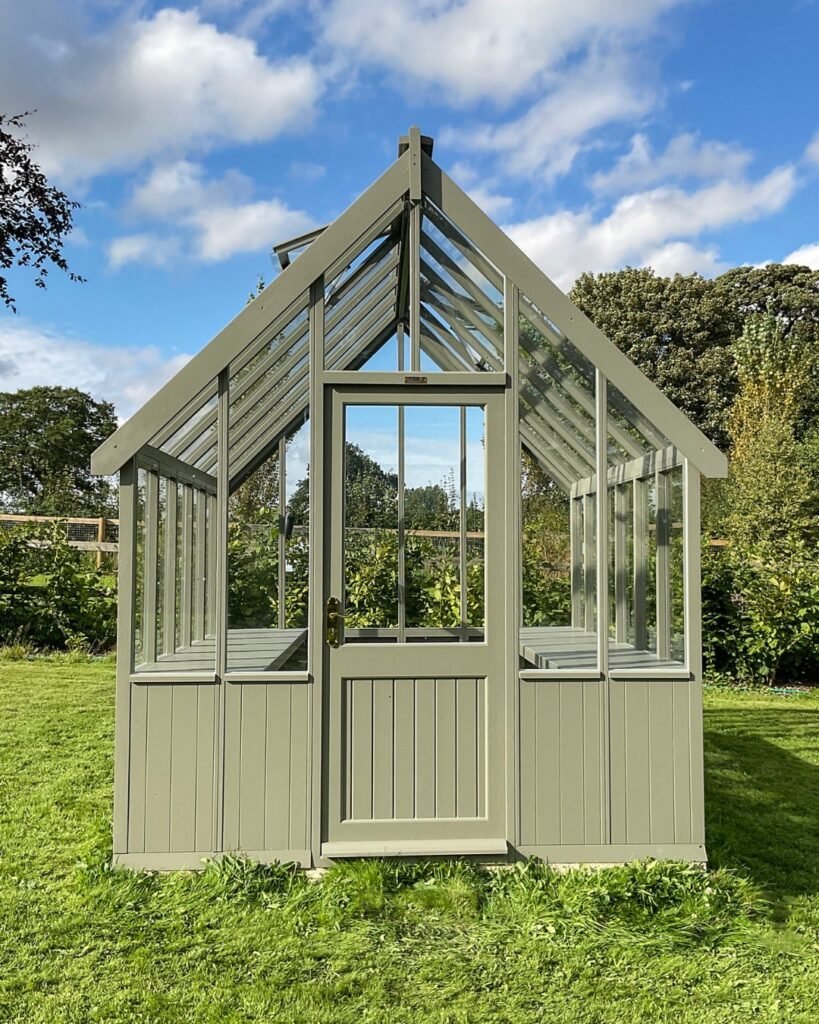
And the person: more likely to be found inside the greenhouse than outside, as the October mornings become too cold for comfortable outside work.
Here are 15 ideas for making the greenhouse and sunroom work better as the autumn garden’s most important space.
Why the Greenhouse and Sunroom Are Autumn’s Most Valuable Structures
The autumn temperature gap:
Outside, October:
- Average daytime temperature: 45–55°F (depending on climate zone)
- First frosts: likely from late October
- The growing season: effectively closed for most tender plants
- The garden: winding down
Inside the greenhouse, October:
- Even an unheated greenhouse: 10–15°F warmer than outside
- A heated greenhouse: maintained at whatever the target temperature
- The growing season: continuing
- The structure: not winding down — working hardest
What the greenhouse enables in autumn:
Extension of the harvest:
- Tomatoes finishing outside: brought into the greenhouse for the last ripening
- Peppers and aubergines: months more production inside
- Salad leaves: growing in the greenhouse when they have stopped outside
Protection of the investment:
- Pelargoniums that took a full season to develop: overwintered inside, not repurchased
- Tender perennials: saved rather than lost to frost
- Dahlia tubers: stored dry inside after lifting
- The investment of time and money: protected
A new growing season:
- While the outside garden rests: the greenhouse begins the next cycle
- October sowings for spring: happening inside now
- The autumn greenhouse gardener: months ahead of the gardener who waits for spring
What the Greenhouse Needs in Autumn
The specific adaptations:
Heat:
- The unheated greenhouse: extends the season but does not protect from sustained frost
- A minimum temperature of 40°F (5°C): keeps most overwintering plants alive
- A minimum of 50°F (10°C): allows active growing through winter
- The heating: the most important autumn infrastructure investment
Ventilation:
- Even in autumn: the greenhouse can overheat on sunny days
- Vents open on any day above 55°F outside: the standard
- Closed at night: the protection
- The management: 5 minutes each morning and evening
Light:
- The greenhouse in autumn: lower light levels than summer
- The glass: clean (clean glass: transmits 30% more light than dirty glass)
- The glass cleaning: October’s most impactful single task
1. The Autumn Tomato Finish (The Harvest Extension)
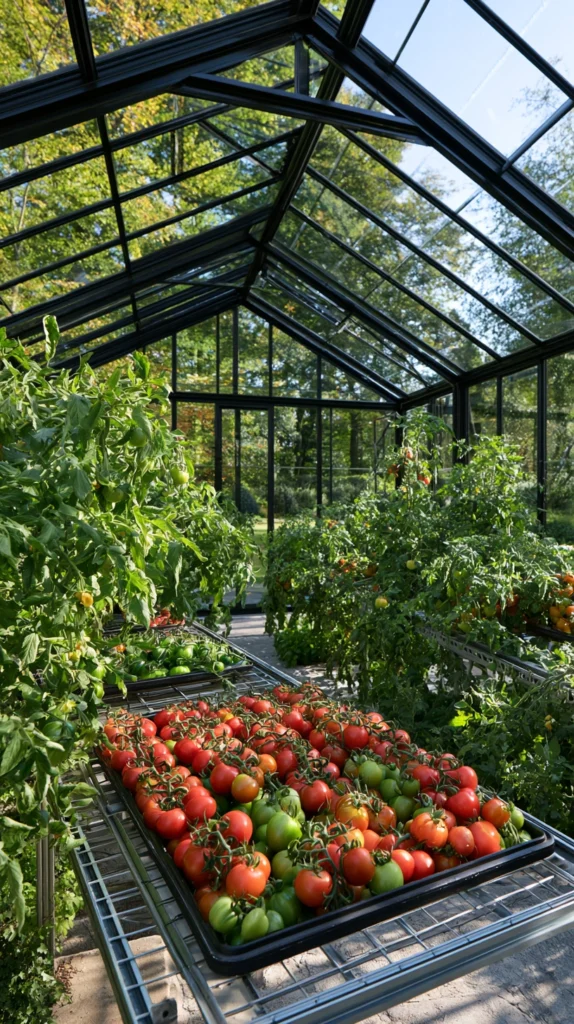
Moving the last tomato crop into the greenhouse for the final ripening — the month of additional harvest that the outside gardener loses and the greenhouse gardener keeps.
Why tomatoes continue in the greenhouse when they stop outside:
The temperature trigger:
- Tomatoes need 55°F (13°C) to ripen
- Outside in October: temperature drops below this at night
- The ripening: slows and stops
- Inside the greenhouse: the minimum maintained
- The tomatoes: continuing to ripen
The method:
Option one: the whole plant:
- Dig up the entire tomato plant before the first frost
- Hang upside down inside the greenhouse
- The remaining tomatoes: ripen from the plant’s reserves
- The final harvest: available over the following 2–4 weeks
Option two: the green tomatoes:
- Pick all remaining green tomatoes before first frost
- Bring inside (do not refrigerate — cold prevents ripening)
- Lay in a single layer on newspaper in the greenhouse
- Add a ripe banana nearby (ethylene gas from the banana: accelerates ripening)
- Check daily: remove any that begin to rot
Option three: the potted tomato:
- If the tomato was grown in a pot: bring the pot inside
- The plant: continues in the greenhouse
- Additional weeks of fresh tomatoes from the same plant
The harvest extension:
- Without the greenhouse: the first frost ends the tomato season
- With the greenhouse: four to six additional weeks of tomatoes
- In some years: fresh tomatoes into November
- The harvest extension: the most immediately valuable greenhouse use in autumn
Cost breakdown:
- If the greenhouse exists: no additional cost
- The harvest: from plants already growing
- Total: $0
The autumn greenhouse tomatoes: fresh tomatoes in November. The outside gardener: using supermarket tomatoes since October.
Tomato Tips
The ripening rate:
- Green tomatoes ripen slowly without warm temperatures
- A warm position in the greenhouse (away from the cold glass): the fastest ripening
- The tomato near the heater: done in a week
- The tomato in the cold corner: possibly three weeks
Blight-affected plants:
- Do not bring blight-affected plants inside
- The disease: spreads in the enclosed conditions
- Blight-affected tomatoes: pick the fruit, discard the plant outside
2. The Winter Salad Greenhouse (The Year-Round Leaf Supply)
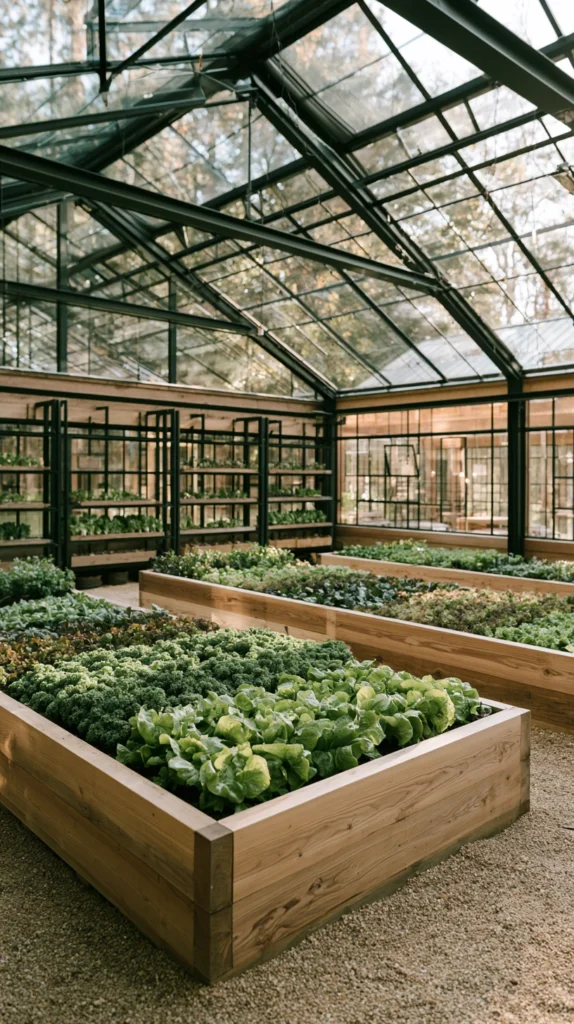
A section of the greenhouse dedicated to winter salad leaf production — the harvest that continues through the coldest months.
Why salad in the greenhouse through winter:
The demand:
- Fresh salad leaves: desired year-round
- The outside garden: stops producing leaves in November in most climates
- The greenhouse: can produce through January and February
- The gap: closed by the greenhouse
The specific advantage:
The greenhouse for salad versus outdoor:
- Outside, winter: leaves freeze, grow extremely slowly, or stop entirely
- Inside the greenhouse: 10–15°F warmer
- The temperature differential: the difference between growing and not growing
- The winter salad: only from the greenhouse or from a cold frame
The space:
One greenhouse bed or a section of staging:
- 6 square feet of staging or ground bed
- Enough for a cut-and-come-again leaf supply for a family
- The seed: the cheapest possible greenhouse crop
The varieties:
For winter greenhouse production:
Mizuna:
- The fastest-growing winter salad leaf
- Cut 1 inch above the soil: regrows in 2–3 weeks
- Peppery, distinctive
- The greenhouse workhorse
Winter lettuce:
- ‘Winter Density’ (compact butterhead)
- ‘Arctic King’ (specifically bred for cold conditions)
- ‘Valdor’ (the yellow-green, cold-tolerant type)
- These: growing in temperatures that kill summer lettuce varieties
Spinach (true spinach):
- ‘Medania’ or ‘Matador’: the best winter varieties
- Extremely productive in cool-but-protected conditions
- The cut-and-come-again approach: as per outdoor growing
Corn salad (Lamb’s lettuce):
- The hardiest of all salad leaves
- Tolerates the coldest greenhouse temperatures
- Small rosettes of mild, tender leaves
- Almost no heat required
The sowing schedule:
September (now):
- The main winter sowing
- Enough lead time to establish before the shortest days
- The harvest: from November through February
October:
- A second sowing (succession)
- The harvest: from December through March
November:
- The last useful sowing in an unheated or cool greenhouse
- The harvest: very slow — January through April
Cost breakdown:
- Winter salad seed mix: $6–10
- Seed trays or a small bed prepared: $0–15
- Total: $6–25
3. The Pelargonium Overwintering System (The Investment Protected)
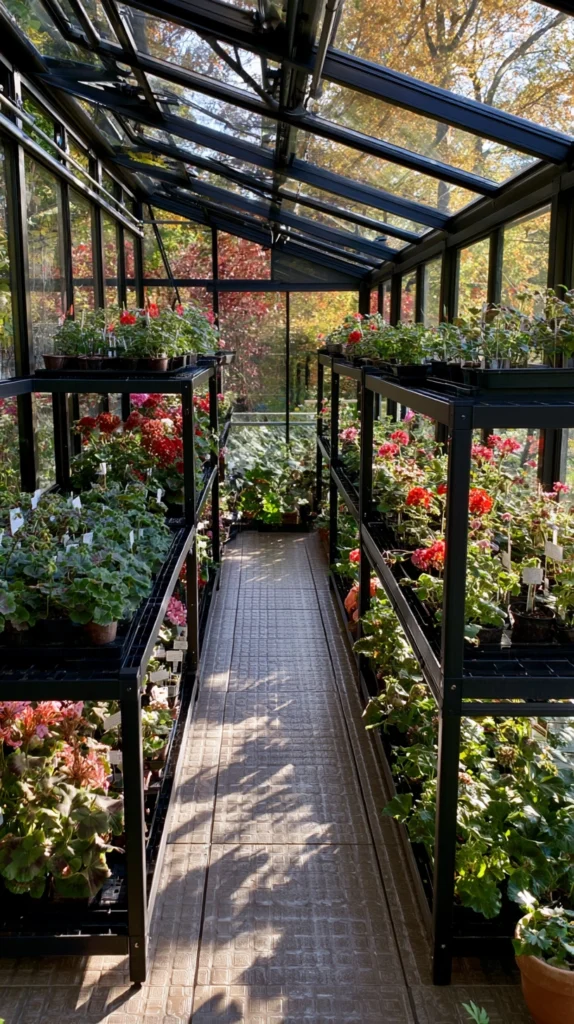
A proper system for overwintering pelargoniums (geraniums) through the winter — the autumn greenhouse task that saves the most money over time.
Why pelargoniums are worth overwintering:
The replacement cost:
- A pelargonium purchased in spring: $3–6
- The same plant after one season: multiple stem cuttings, a root-developed parent plant, 12 months of growth
- The developed parent: worth far more than the original purchase
- Repurchasing every year: paying again for what was already developed
The overwintering method:
The cut-back and bring inside method:
- Before the first frost: cut the plant back by half
- Remove any dying leaves or stems
- Lift the plant from the garden (if planted out) or bring in the container
- Place in the greenhouse at a minimum of 40–45°F
- Water very sparingly (once every 2–3 weeks at most)
- The plant: dormant or near-dormant through winter
The cutting method (alternative):
- Take stem cuttings in August
- Root in a small pot of gritty compost
- The cuttings: younger and more vigorous than the parent
- Overwinter the young cuttings: take up less space than the full plants
- The cuttings: the insurance policy against the parent plant failing over winter
The spacing:
The greenhouse in winter:
- Pelargoniums need much less space than in summer
- They will not grow significantly
- Pack more tightly than in summer
- The winter space: efficient storage, not generous growing
The light:
- Even dormant pelargoniums: need some light
- Below the greenhouse staging rather than on it: the darkest position, acceptable for fully dormant plants
- On the staging in a light position: for those showing any growth
The spring awakening:
- February: bring to the lightest position
- Begin watering more regularly
- The new growth: begins
- The plant: restored to full vigour by April when it can go outside again
Cost breakdown:
- No additional cost if the greenhouse exists
- Total: $0 (saving $30–60 per year in replacement plants for an average collection)
4. The Dahlia Tuber Storage (The Autumn Lifting and Storing)
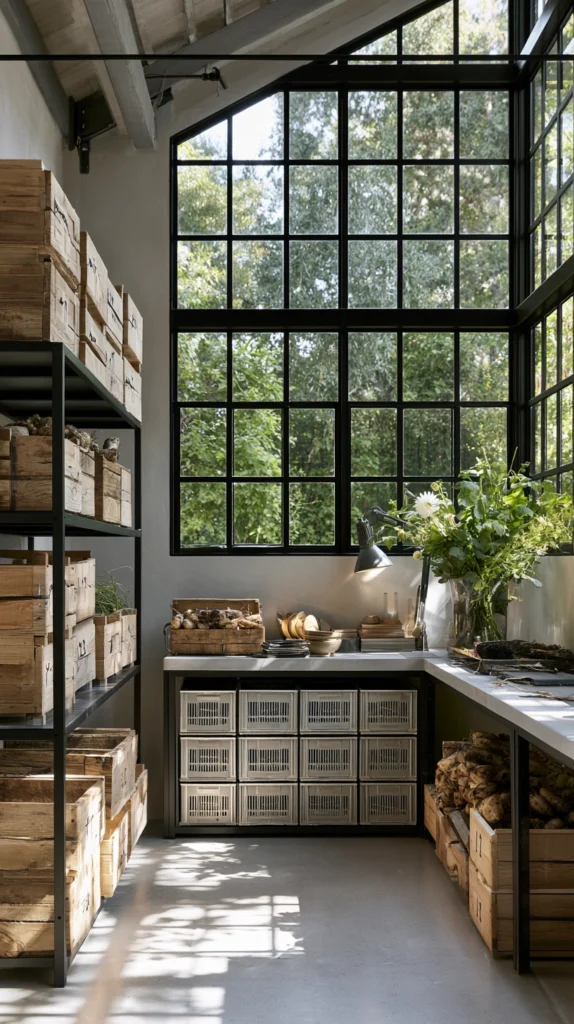
Lifting dahlia tubers in autumn and storing them in the greenhouse — the task that preserves the most valuable autumn flowering investment.
Why dahlias require this attention:
The dahlia vulnerability:
- Dahlia tubers: killed by frost (the tubers, not just the top growth)
- In climates with sustained frost below 28°F (-2°C): the tubers left in the ground are lost
- The plants that flowered prolifically from July to October: a significant investment
- The lifting and storage: the preservation of that investment for next year
The lifting:
After the first frost (or just before in colder climates):
- The foliage: blackened by frost (the signal)
- Cut the stems to 6 inches
- Dig carefully around the tubers (they break off at the stem if the fork is too close)
- Lift the whole tuber clump
- Turn upside down for one week (the remaining water drains from the hollow stems)
The storage preparation:
The cleaning:
- Remove soil from the tubers (not completely — some soil provides protection)
- Check for any rot: cut it out with a clean knife
- Dust cut surfaces with garden sulphur (prevents fungal spread in storage)
The storage material:
Slightly damp compost or vermiculite:
- In a box or tray
- The tubers buried in the material
- Just enough moisture to prevent desiccation without causing rot
- Bone dry: the tubers shrivel. Too wet: they rot.
The greenhouse storage conditions:
Frost-free (above 32°F / 0°C):
- The critical minimum
- A heated greenhouse: maintains this easily
- An unheated greenhouse in a mild climate: may be adequate
- In a very cold climate: an additional source of heat specifically for the storage area
The storage check:
- Monthly: open the box and check for rot
- Remove any tubers that have started to rot (they spread to neighbours)
- The healthy tuber: firm, slightly waxy, with visible eyes
The spring restart:
- March: inspect and pot up the tubers
- One eye per pot: the division that multiplies the collection
- The greenhouse: now the starting point for the summer’s dahlias
Cost breakdown:
- Dahlia tubers (already lifted from existing plants): $0
- Storage material (vermiculite or compost): $5–10
- Storage boxes: $0–15
- Total: $5–25
5. The Autumn Seed Sowing (Getting Ahead of Spring)
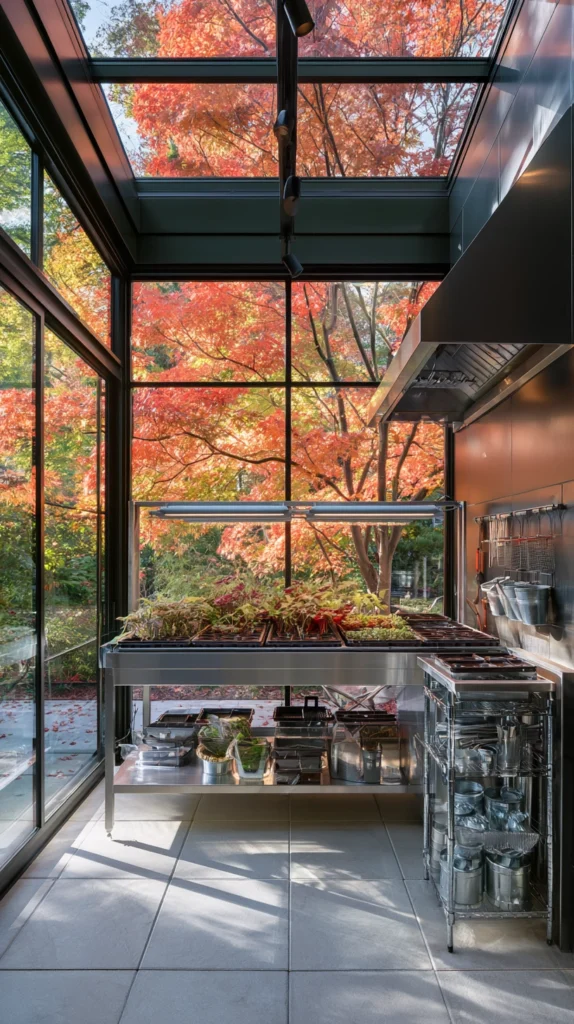
Sowing seeds in the autumn greenhouse for planting out the following spring — the growing advantage that means the spring garden is months ahead of the winter-waiting gardener.
Why autumn sowing is the greenhouse’s greatest advantage:
The spring gardener:
- Waits for the last frost
- Sows seeds in March or April
- Plants out in May or June
- Harvests in August and September
The autumn greenhouse gardener:
- Sows in September and October
- Plants out in March and April (8 weeks earlier)
- Harvests in June and July (8 weeks earlier)
- The harvest season: meaningfully extended
What to sow in the autumn greenhouse:
Flowers:
Hardy annuals (sow October–November):
- Sweet peas: the classic autumn greenhouse sow
- Cornflower: direct or in modules
- Larkspur: prefers autumn sowing
- Nigella: self-seeds in the garden, but a managed autumn sow gives earlier, more controlled flowering
- The hardy annual: needs the cold period (vernalisation) to flower properly — autumn sowing provides this naturally
Half-hardy perennials (sow September–October for rooting before winter):
- Antirrhinums (snapdragons): autumn sowing gives larger, earlier-flowering plants
- Penstemon: slow from seed, benefits from the long establishment period
- The early start: the advantage only the greenhouse can provide
Vegetables:
Brassicas for spring:
- Cabbage (spring varieties): sow September, plant out February
- The earliest spring cabbage: only possible with an autumn greenhouse sowing
Onions:
- Japanese overwintering onions from seed: sow September
- The seed-grown overwintering onion: more variety choice than the set-grown
- Ready to plant out in October
Sweet peas (the most important):
The autumn sweet pea sowing:
- Sow in deep root trainers (sweet peas: long-rooted)
- Keep just above freezing through winter (8–10°C)
- The root system: develops through winter
- February: the vigorous root system already there, top growth beginning
- The advantage: earlier flowering by 4–6 weeks versus a spring-sown sweet pea
Cost breakdown:
- Sweet pea seeds (one packet, 20+ seeds): $3–5
- Hardy annual seeds (3 varieties): $8–12
- Root trainers or deep modules: $8–15
- Total: $19–32
6. The Greenhouse Herb Garden (The Winter Kitchen Supply)
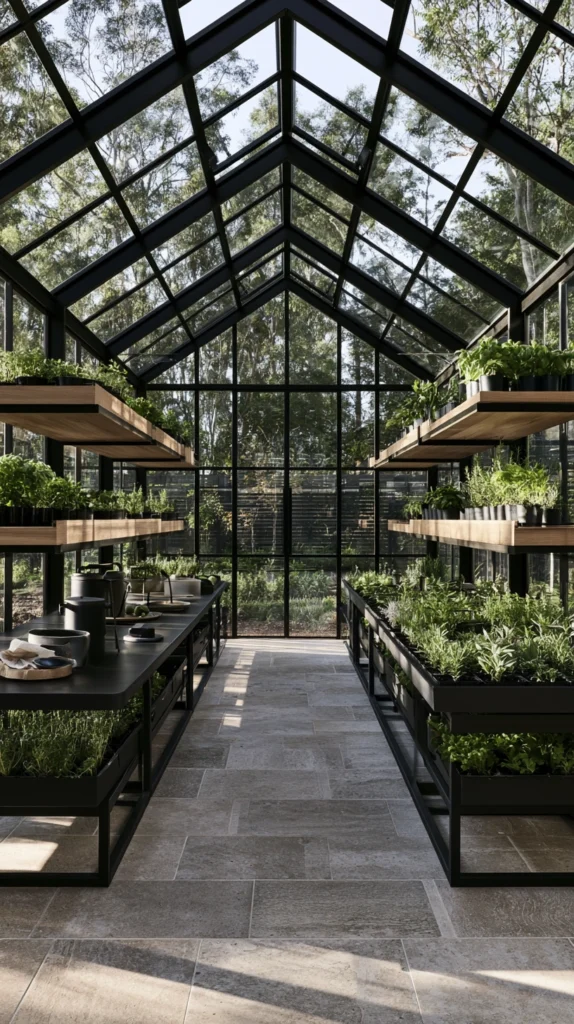
Dedicating a section of the greenhouse to culinary herbs for winter kitchen use — the herb supply that continues when the outdoor herb garden is dormant.
Why the greenhouse herb garden:
The herb connection (from the herb garden article):
- The windowsill herbs: the zero-friction kitchen herbs
- The greenhouse herbs: available for a larger harvest
- The greenhouse: the winter herb garden for those who have one
- The supplement to the indoor windowsill herbs: more space, more varieties
What the greenhouse supports:
The tender herbs extended:
- Basil: the herb killed by first frost outdoors
- In the greenhouse: continues through October and into November
- A heated greenhouse: basil through winter (though it needs good light)
The hardy herbs pushed into overdrive:
- Parsley: grows far faster in the protected warmth
- Chives: more vigorous inside than in the cold outside
- Coriander: the autumn-and-winter variety in the greenhouse (the cold-resistant option)
The greenhouse herb growing approach:
Dedicated pots on the staging:
- Not planted in the greenhouse bed (they need no more space than a pot allows)
- 6–8 inch pots: sufficient for most herbs
- In the warmest, lightest position
The rotation system:
Greenhouse herbs and the kitchen:
- A pot in the greenhouse: the supply
- A smaller pot in the kitchen: the current use
- When the kitchen pot is depleted: it returns to the greenhouse to recover
- A fresh pot from the greenhouse: takes its place in the kitchen
- The rotation: the continuous supply
What to grow specifically:
The winter greenhouse herb collection:
- Parsley (flat-leaf): the most useful, the most willing
- Chives: the everyday cut-and-come-again herb
- Mint: in a contained pot (always contained)
- Lemon thyme: the ornamental and the useful
- Coriander: the ‘Calypso’ slow-bolt variety for winter
Cost breakdown:
- Herb plants or seeds: $10–20
- Pots (6–8 inch): $0–15
- Total: $10–35
7. The Chrysanthemum Autumn Display (The Greenhouse’s Own Show)
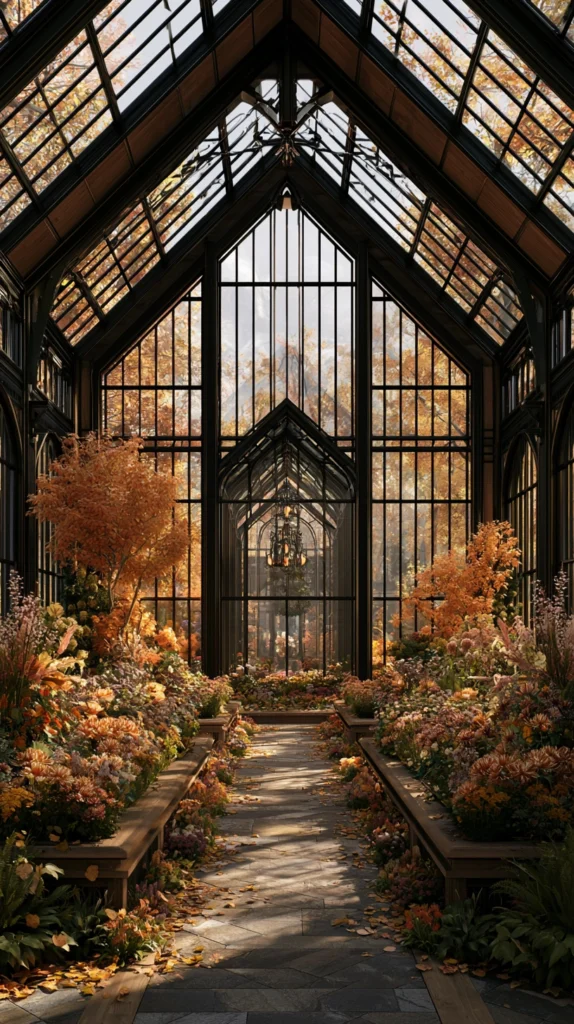
Chrysanthemums grown specifically for their autumn display within the greenhouse — the cut flower harvest and the greenhouse at its most beautiful.
Why chrysanthemums and the autumn greenhouse belong together:
The florist’s chrysanthemum:
- The exhibition and florist chrysanthemum: grown in the greenhouse
- The outdoor hardy mum: the garden version
- The greenhouse chrysanthemum: larger, more complex flowers, the autumn greenhouse’s most dramatic display
The growing:
The cutting back (August):
- Final pinch (stopping) in August
- The buds: set for the October–November flowering
The staking:
- Chrysanthemums: tall and potentially top-heavy when flowering
- Bamboo stakes at 12 inches per stem: the support
- Tied at regular intervals as they grow
The greenhouse conditions for chrysanthemums:
Cool but frost-free:
- Chrysanthemums prefer cool growing conditions (they are not tropical)
- 50°F (10°C): the ideal autumn growing temperature
- The cool greenhouse: better than the heated one for most chrysanthemums
- The cool conditions: also extend the flower life
The disbudding:
For large, single blooms:
- Remove all buds except the terminal bud on each stem
- The single bud: develops a large exhibition bloom
- The un-disbudded plant: many smaller blooms (also beautiful, different effect)
- The greenhouse exhibition chrysanthemum: the disbudded version
The varieties:
For the autumn greenhouse:
- Reflexed (petals curving down): the classical exhibition form
- Incurved (petals curving in to form a ball): the Japanese-influenced form
- Intermediate (between the two): the most commonly grown
- Spider and anemone types: the most unusual and most photographed
The cutting:
- Cut for the house: the greenhouse chrysanthemum as the autumn cut flower
- In a vase: lasts 2–3 weeks
- The greenhouse: the cut flower source through October and November
Cost breakdown:
- Chrysanthemum rooted cuttings (spring purchase): $4–8 per variety
- Stakes and ties: $5–10
- Total: $15–30 for a significant display
8. The Autumn Bulb Forcing System (Winter Flowers Ahead)
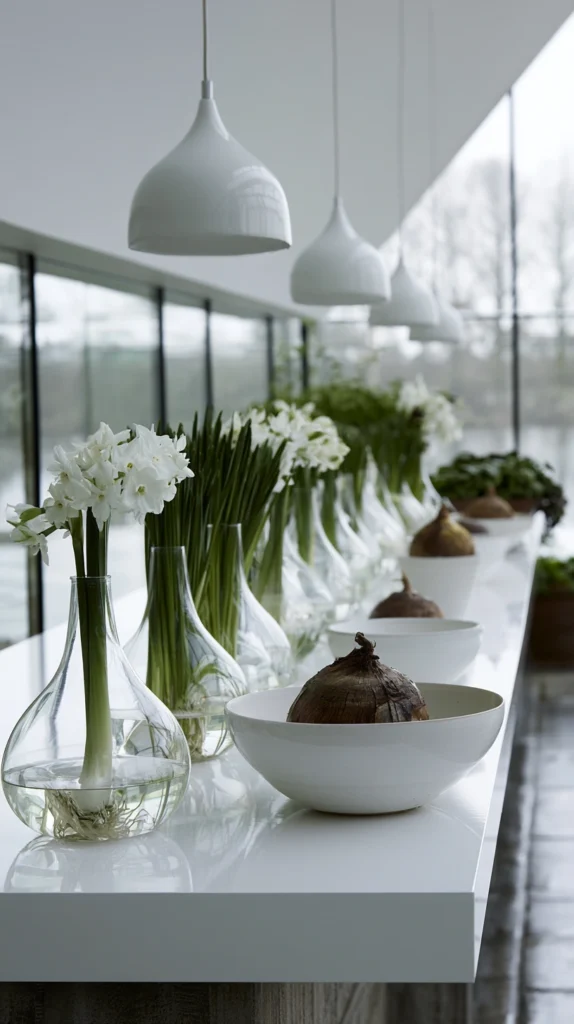
Setting up a system for forcing bulbs through the winter for late winter and early spring flowers — the greenhouse work that creates the February and March display.
Why bulb forcing is the autumn greenhouse’s most rewarding long-term task:
The result:
- Hyacinths in December
- Narcissus in January
- Tulips in February
- These: from forced bulbs, available months before their natural outdoor season
The forcing principle:
What forcing means:
- Most spring bulbs require a cold period (vernalisation) to flower
- Normally: they get this in the ground over winter
- Forcing: providing the cold artificially, then bringing the bulbs into warmth at the desired flowering time
The stages:
Stage one: cold storage (6–15 weeks depending on the bulb):
- The planted bulbs: in a cool, dark place
- The greenhouse in autumn (before heating): the ideal cold storage space
- Or: a shed, a cool garage, a cold frame
- Temperature: 35–48°F (2–9°C)
- Not freezing (the pots would freeze solid)
Stage two: the light and warmth:
- When shoots are 2–3 inches tall: bring into warmth and light
- The greenhouse staging: the ideal position
- Temperature: 60–65°F
- The bulbs: flower within 3–6 weeks of moving to warmth
The bulbs:
Hyacinths:
- The strongest fragrance of any forced bulb
- Available as ‘prepared’ hyacinths (pre-treated for forcing): these reliably flower by Christmas
- ‘Jan Bos’ (red), ‘City of Haarlem’ (yellow), ‘Delft Blue’: classic forcing varieties
- The greenhouse with forcing hyacinths in November: the most fragrant space available
Narcissus:
- ‘Paper White’ (Narcissus papyraceus): the easiest forcing narcissus
- Does not require a cold period (the exception to the rule)
- Plant in water and pebbles: flowers in 4–6 weeks
- The most beginner-friendly forcing bulb
Tulips:
- Require the longest cold period (16–20 weeks)
- Plant October, cold storage until February, flower in March–April
- The single late and parrot varieties: most spectacular when forced
Cost breakdown:
- Prepared hyacinth bulbs (5): $10–15
- Narcissus Paper White (10): $8–12
- Forcing vases or bulb bowls: $10–20
- Total: $28–47
9. The Citrus Overwintering (The Mediterranean in the Greenhouse)
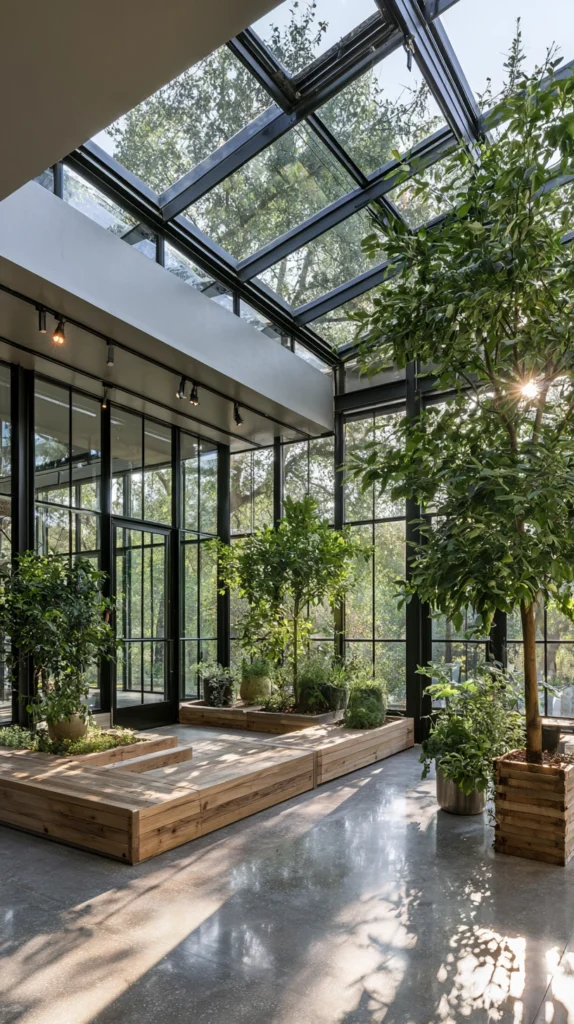
Moving citrus plants — lemons, oranges, kumquats — into the greenhouse for the winter — the Mediterranean garden protected through the cold months.
Why citrus in the greenhouse in autumn:
The citrus problem:
- Citrus: beautiful container plants for summer terraces
- Citrus: killed by sustained frost (below 28°F / -2°C)
- The autumn task: moving inside before the frost
- The greenhouse: the citrus’s winter home
The timing:
When to bring inside:
- Before the first frost (not after)
- October in most temperate climates: the transition moment
- The citrus: inside until the last frost risk has passed (April or May)
- The transition period: 6–7 months inside
The winter care:
Light:
- Citrus: need as much light as possible in winter
- The lightest position in the greenhouse: the citrus position
- Supplemental light (a grow light): significantly improves winter performance
- Without adequate light: the citrus drops its leaves
Temperature:
- Citrus in winter: prefer cool conditions (45–55°F / 7–13°C)
- A cool greenhouse: better than a very warm one
- Too warm: encourages soft growth that is vulnerable to pests
Watering:
- Winter: much less than summer
- The soil: allowed to partially dry between waterings
- The citrus: not drought-tolerant but sensitive to overwet roots in winter
The pest consideration:
The enclosed greenhouse in winter:
- Warm and still: ideal conditions for red spider mite and scale insect
- Citrus: particularly vulnerable
- Check the undersides of leaves monthly
- The early detection: the management
The winter fruit:
Lemon specifically:
- The lemon tree: fruits in winter (when most fruiting plants are dormant)
- The winter greenhouse lemon: producing while nothing else does
- The lemon from the greenhouse in February: the Mediterranean moment in the cold garden
Cost breakdown:
- Lemon tree (established, in a pot): $40–80
- If already owned: no additional cost
- Grow light (optional): $20–40
- Total: $0–120
10. The Autumn Greenhouse Cleanup (The Reset Before Winter)
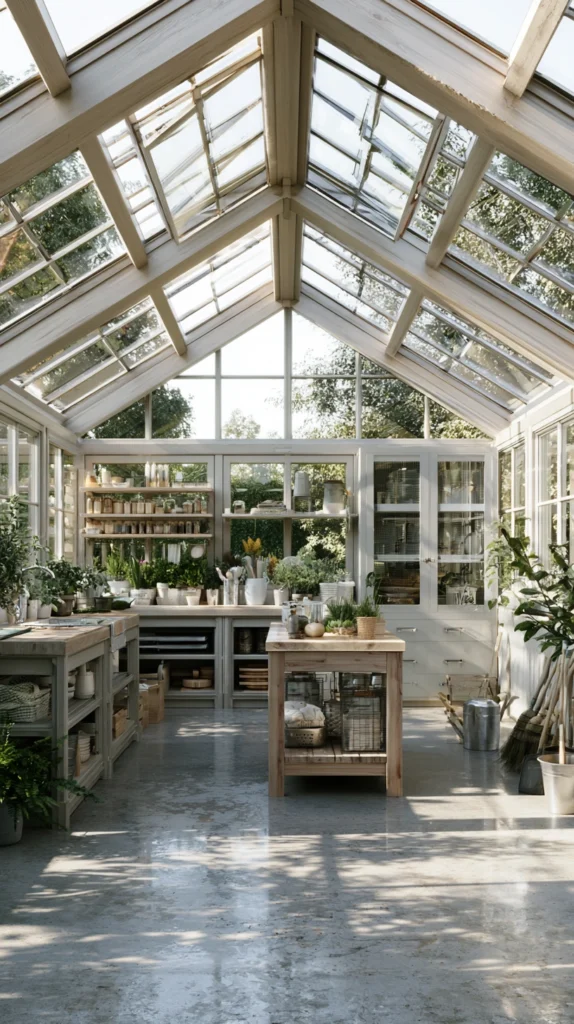
A thorough greenhouse clean before the overwintering season begins — the most important single autumn task for the greenhouse gardener.
Why the autumn clean is essential:
The pest and disease reset:
- The greenhouse through summer: accumulates pests and diseases
- Aphids, whitefly, red spider mite, botrytis (grey mould): present in most greenhouses by autumn
- An autumn clean: disrupts these populations before they overwinter and explode in spring
- Without the clean: the following spring’s pest pressure: immediately high
The hygiene:
The empty greenhouse (as far as possible):
- Move all plants outside temporarily (on a warm October day)
- The greenhouse: empty
- The clean: thorough
The cleaning process:
The structure:
- Scrub the glass inside and out (a warm soapy solution: removes algae and grime)
- The clean glass: transmits 30% more light than dirty glass
- In the short light days of winter: this 30% matters enormously
- The glass cleaning: the single most impactful greenhouse productivity improvement
The staging:
- Scrub all staging with dilute bleach or Jeyes Fluid
- The staging: the source of soil-borne disease if not cleaned
- Rinse thoroughly
The irrigation system:
- Clean all watering cans, irrigation tubes, and nozzles
- The algae in irrigation systems: a disease source
The pests:
- Treat the structure with an insecticide (the insects: hiding in the nooks and crannies)
- The glasshouse whitefly specifically: present in most greenhouses
- The autumn treatment: reducing the overwintering population
The result:
The clean greenhouse:
- Clean glass: maximum light transmission through winter
- Sanitised staging: disease-free starting point
- Pest-reduced: lower spring pressure
- The plants brought back inside: a clean environment
Cost breakdown:
- Soapy water and scrubbing: $0
- Jeyes Fluid or similar sanitiser: $5–10
- Insecticide (optional): $5–10
- Total: $5–20
11. The Heated Propagating Area (The Small Investment With Large Returns)
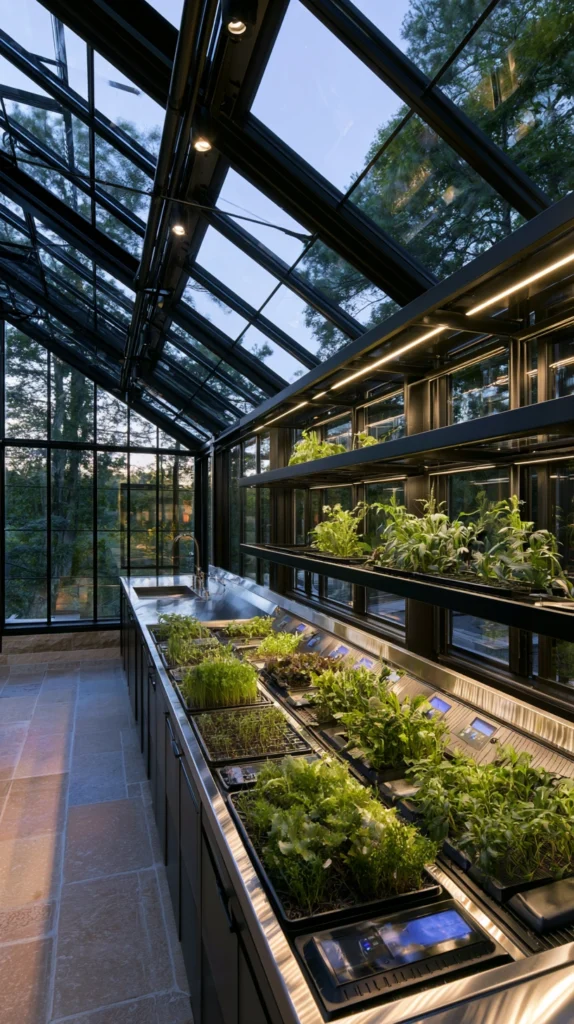
A heated propagating bench or propagator within the greenhouse — the specific heat source that enables winter and early spring seed sowing.
Why the heated propagator changes what is possible:
The challenge of winter sowing:
- Seeds germinate at specific soil temperatures
- Tomatoes: 70–75°F (21–24°C)
- Peppers: 75–80°F (24–27°C)
- A cool greenhouse in January: 40–45°F
- The temperature gap: seeds do not germinate in a cool winter greenhouse
The heated propagator:
- A thermostatically controlled electric heating mat
- Placed on the greenhouse staging
- Seeds on the mat: soil temperature 70–75°F regardless of air temperature
- Above: the air can be cold. The seeds: in warm soil.
- The result: seeds germinating in January in an otherwise cold greenhouse
The specific advantage:
The early tomato:
- Sown January in the heated propagator: ready to plant in April
- The average gardener: sows in March, plants in June
- The heated propagator: the 8-week advantage at the start of the season
The early pepper:
- Peppers: the slowest vegetable from seed to harvest
- Require the most lead time
- A January greenhouse sowing in the heated propagator: the earliest practical start
- The advantage: months of earlier harvest
The types:
Electric seed propagators (windowsill or staging):
- Self-contained units with a clear lid
- The cheapest version: around $15 (no thermostat)
- With thermostat: $30–60
- For a greenhouse: the heated mat is more versatile than the enclosed propagator
Heated seedbed (the greenhouse version):
- Electric heating cable buried under sand on a section of staging
- The sand: distributes heat evenly
- Pots and trays placed on the warm sand
- The most professional greenhouse propagation setup
Cost breakdown:
- Basic electric propagator: $15–30
- Heated mat for staging: $30–60
- Total: $15–60
12. The Autumn Colour Sunroom Display (When the Sunroom Becomes the Garden)
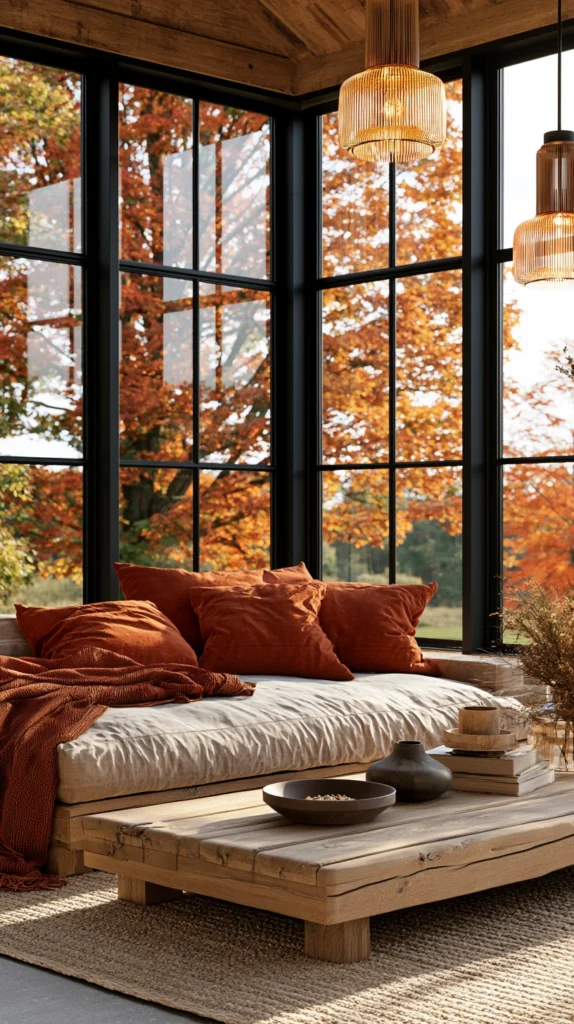
A curated display of autumn plants in the sunroom — the room that bridges the outdoor and indoor experience.
Why the sunroom is the autumn garden’s natural extension:
The sunroom’s position:
- Neither fully inside nor fully outside
- Usually south or southwest-facing (the maximum light)
- Often used most in summer and then abandoned as autumn arrives
- The opportunity: the sunroom as the autumn indoor garden
The autumn sunroom display:
The plants:
Large ornamental grasses in tall pots:
- Miscanthus or stipa in substantial containers
- The grass: taller than the furniture around it
- The seed plumes: visible in the sunroom and visible from outside through the glass
- The movement in any draught from the door
Tender plants relocated:
- The pelargoniums from the summer garden: into the sunroom
- Still flowering in October in the sunroom warmth
- The summer plants: extending their season in the intermediate climate
The citrus display:
- A lemon or orange tree in the sunniest sunroom corner
- The citrus: growing and possibly fruiting
- The Mediterranean atmosphere: achieved through one significant container plant
The autumn herbs:
- The kitchen herb pots: on the sunroom windowsill
- More light than inside the house
- The herbs: more vigorous than on a darker kitchen windowsill
The display design:
Layering as in any garden:
- Tall (the grass, the citrus, the large pelargonium): the back
- Medium (the smaller potted plants): the middle staging
- Low (the ground-level herbs, the small pots): the floor
The autumn palette:
- Even inside: the autumn palette
- Copper and rust cushions on the sunroom furniture (if furnished)
- The autumn-toned textiles: connecting the room to the season outside
The lighting:
- String lights along the sunroom ceiling
- Warm temperature (2700K)
- Timer for the autumn evenings
- The sunroom at 5pm in October: the most beautiful room in the house
Cost breakdown:
- String lights for the sunroom: $25–40
- Additional plants (if desired): $20–50
- Total: $25–90
13. The Autumn Greenhouse Growing Calendar (The Planning Framework)
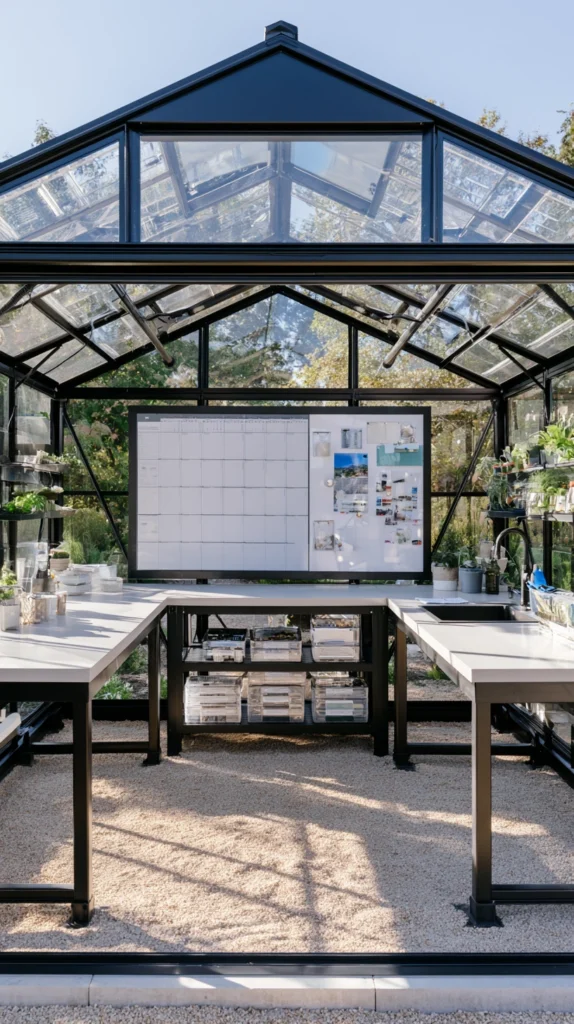
A month-by-month guide to what is happening in the autumn greenhouse — the planning tool that ensures nothing is missed.
September:
The transition month:
- The outside summer garden: still producing
- The greenhouse: beginning to receive the first arrivals
The September tasks:
- Pot up pelargoniums for overwintering
- Sow sweet peas in deep root trainers
- Sow overwintering onions from seed
- Begin the clean glass project (if not done)
- Bring in the first tender plants at risk from early frosts
The September sowings:
- Sweet peas (for spring)
- Overwintering salad leaves (first sowing)
- Lamb’s lettuce
- Winter spinach
October:
The main overwintering month:
- Most of the summer’s tender plants: inside by end of October
- The first frosts: happening in most climates
The October tasks:
- Complete the pelargonium overwintering
- Lift dahlia tubers (after first frost blackens the tops)
- Bring in citrus plants
- The full greenhouse cleanup
- Plant forced bulbs (into cold storage stage)
The October sowings:
- Lettuce (second winter sowing)
- Hardy annual flowers
- Coriander (cold-resistant variety)
November:
The management month:
- The greenhouse: full of overwintering plants
- The temperature: the primary concern
The November tasks:
- Set the minimum temperature (the heater: check and commission)
- Ventilate on mild days (the temperature inside: can exceed 70°F on a clear November day)
- Reduce watering across all overwintering plants
- Check for pests (the first inspection of the overwintered collection)
- Move forced bulbs to light and warmth as needed
The November sowings:
- Hyacinths to light and warmth (if planted in September)
- Very little new sowing this month
December:
The minimum intervention month:
- Most plants: resting or growing slowly
- The greenhouse: on maintenance mode
- The person: checking in, not working intensively
The December tasks:
- Fortnightly checks on all stored plants
- Removal of any failing or diseased material (immediately)
- Monitoring of the minimum temperature
- The chrysanthemums (if started in summer): flowering this month
What is flowering in December:
- Forced hyacinths (if planted September)
- Narcissus Paper White (fastest forced bulb)
- The winter greenhouse chrysanthemum
- The citrus flowers (fragrant throughout winter)
Cost breakdown:
- Calendar: $0 (the planning framework itself)
- The tasks: the time investment of the greenhouse gardener
- Total: $0
14. The Sunroom Garden Room (The All-Season Room)
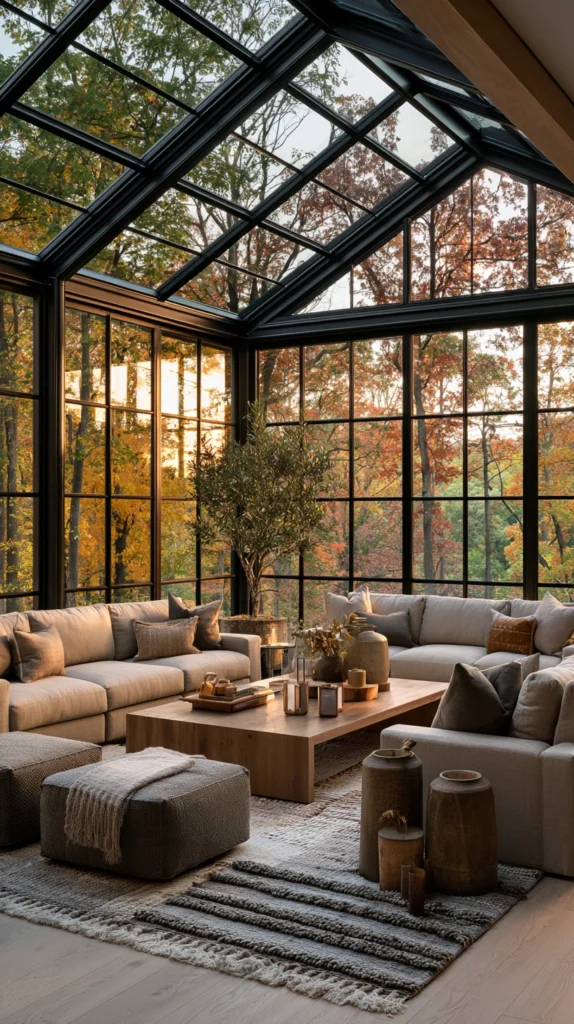
Designing the sunroom as a functioning garden room — with plants, seating, and natural materials — that works across all four seasons — the room that is always the most beautiful in the house.
Why the all-season sunroom is a design investment:
The single-season sunroom:
- Used in summer, abandoned in winter
- The plants: removed in autumn
- The room: a glass box with furniture through winter
- The potential: unrealised
The all-season garden room:
- Designed for every season
- The plants: chosen for continuous interest
- The room: inviting in January as much as in July
- The design: the investment that earns its value year-round
The year-round plant selection:
For a sunroom that is always beautiful:
The evergreen structure (present all year):
- One significant evergreen (olive tree, citrus, bay standard)
- The year-round anchor: the room’s structure in every season
The winter-flowering plants:
- Jasminum polyanthum: the winter jasmine, fragrant in February inside
- Cyclamen persicum: the winter jewel
- Camellia sasanqua: flowers November–January in a light sunroom
The spring performers:
- The forced bulbs from Idea #8 (hyacinths in winter, narcissus in spring)
- The pelargoniums beginning again in April
- The tender perennials starting to grow
The summer abundance:
- The bougainvillea (where climate and light allow)
- The large pelargoniums in full flower
- The herbs on the windowsill
The autumn colour:
- The ornamental grasses brought in
- The chrysanthemums from the greenhouse (Idea #7)
- The autumn harvest decorating the coffee table
The material design:
Consistent with a garden room:
- Natural materials (terracotta pots, woven baskets, wooden furniture)
- No plastic — the material honesty of a room that is both inside and garden
- The rug: a natural fibre (jute, seagrass)
- The furniture: rattan or teak
The lighting:
- The greenhouse/sunroom lighting: the most important investment after the plants
- String lights along the ceiling
- A lamp in the corner
- The candles: on the table
- The warm light: the room at its most beautiful in the October evenings
Cost breakdown:
- String lights: $25–40
- Additional plants for year-round interest: $40–80
- Natural material accessories: $50–100
- Total: $115–220
15. The Complete Autumn Greenhouse and Sunroom System (Everything Working Together)
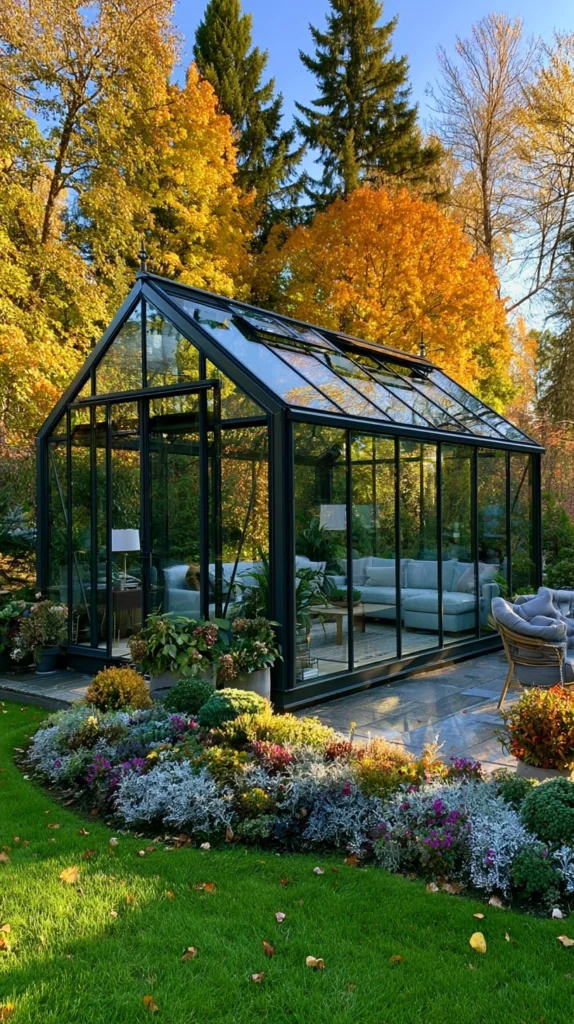
The greenhouse and sunroom as an integrated autumn growing and living system — the full potential realised.
The integrated system:
The greenhouse:
- The overwintering facility: pelargoniums, dahlias, citrus
- The winter growing space: salad leaves, herbs, forced bulbs
- The propagation facility: heated propagating bench, autumn sowings
- The autumn show: chrysanthemums and harvest displays
The sunroom:
- The transition space: neither fully inside nor outside
- Plants from both environments (the greenhouse feeding the sunroom, the sunroom feeding the house)
- The display and the living together: the plants in a room that is used
- The lighting and the textiles: the room dressed for the season
The house:
- The forced bulbs: moved to the kitchen windowsill for their last flowering stage
- The herbs from the greenhouse: rotating through the kitchen via the sunroom
- The cut flowers from the chrysanthemums: on the dining table
- The harvest from the extended tomato crop: in the kitchen
The flow:
The circle of the autumn system:
Garden → Greenhouse: the tender plants overwintering, the harvest material gathered Greenhouse → Sunroom: the best plants displayed, the herbs rotated Sunroom → House: the flowering bulbs, the fresh herbs, the cut flowers House → Greenhouse: the used pots, the compost for the spring sowings
The system: circular, continuous, each element serving the next.
What the complete autumn system provides:
From October through February:
- Fresh salad leaves (greenhouse beds)
- Fresh herbs (greenhouse pots into sunroom rotation)
- Forced bulb flowers from December
- Chrysanthemum cut flowers through November
- Winter lemons (if the citrus is productive)
- Sweet pea seedlings developing for the spring garden
- The summer’s tender plants: safe and healthy for next year
The cost of the complete system:
If starting with an existing greenhouse and sunroom:
- Autumn cleanup and glass clean: $5–20
- Winter salad seeds: $6–10
- Forced bulb purchase: $28–47
- Chrysanthemum cuttings: $15–30
- Heated propagator: $30–60
- Autumn sunroom display additions: $25–90
- Total: $109–257
If setting up for the first time:
- A small lean-to or freestanding greenhouse (6×8 feet): $400–800
- The heating system: $50–150
- All the above: $159–407
- Total first-year setup: $609–1,357
The return on this investment:
Year one:
- Pelargoniums saved (not repurchased): $30–60
- Dahlia tubers saved: $40–80
- Tomatoes extended by 6 weeks: $20–40
- Fresh salad through winter (versus purchased): $50–100
- Sweet peas and dahlias from overwinter: $30–60
- Year one savings: $170–340
Year two and beyond:
- The plants from the overwintered collection: increasing
- The forced bulb collection: expanding
- The autumn seed sowing advantage: compounding
- The greenhouse: paying for itself in three to four years
The Autumn Greenhouse and Sunroom Philosophy
The gardener who uses these structures in autumn is not doing extra work. They are doing the same gardening differently — in a different space, in a different season, with a different rhythm.
The autumn rhythm of the greenhouse:
- More contemplative than the summer garden
- The close observation of individual plants
- The daily check of the temperature, the moisture, the pest
- The forced bulb checked for its first shoot
- The sweet pea measured as it grows toward the winter light
This is not a lesser version of the summer gardening. It is a different form of it — slower, more attentive, more specific.
And the returns are specific:
- The first spring sweet pea: weeks earlier than any neighbour’s
- The January narcissus on the kitchen table
- The summer’s pelargoniums, recovered and vigorous, going outside again in May
- The tomato eaten in November
These are the specific pleasures of the autumn greenhouse gardener. Not consolation prizes for the end of summer. The specific rewards of a different kind of attention paid to a different kind of growing.
Getting Started This Weekend
The three autumn greenhouse actions that have the most immediate impact:
One: clean the glass.
- The most impactful single action for any greenhouse
- Warm water, a scrubber, and a cloth
- The light levels: noticeably improved
- The hour spent: the most productive hour of any autumn greenhouse session
Two: pot up the pelargoniums before the first frost.
- If there are pelargoniums outside: bring them in now
- Cut back by half
- Into the greenhouse
- The saving: immediate
Three: sow sweet peas in deep modules.
- Buy or use any sweet pea seed
- Deep module trays (or toilet paper rolls)
- Three seeds per module
- In the greenhouse
- The spring sweet peas: already growing
Total cost: the price of a packet of sweet pea seeds.
The greenhouse in autumn: available, productive, and specifically rewarding for the gardener who turns toward it rather than away from it as the season changes.
That turn: this weekend.