15 Edible Plants That Love Full Sun
A south-facing garden, a sun-baked terrace, or a plot that receives eight or more hours of direct sun daily is not a growing challenge — it is one of the best growing assets a food gardener can have.
The edible plants that perform most powerfully in full sun include some of the most productive, most flavourful, and most rewarding crops available. They do not merely tolerate the conditions — they require them to develop the sugars, essential oils, and fruit sets that make them worth growing in the first place.
The fifteen edible plants below are all sun-lovers in the truest sense — they produce more flavour, more fruit, and more reliable harvests in direct sun than in any other position. Each one is widely available, well-suited to home growing, and genuinely rewarding through the warmest months of the year. Costs and a growing tip are included with each to help you get the most from every plant in the sunniest spots your garden has to offer.
1. Tomato
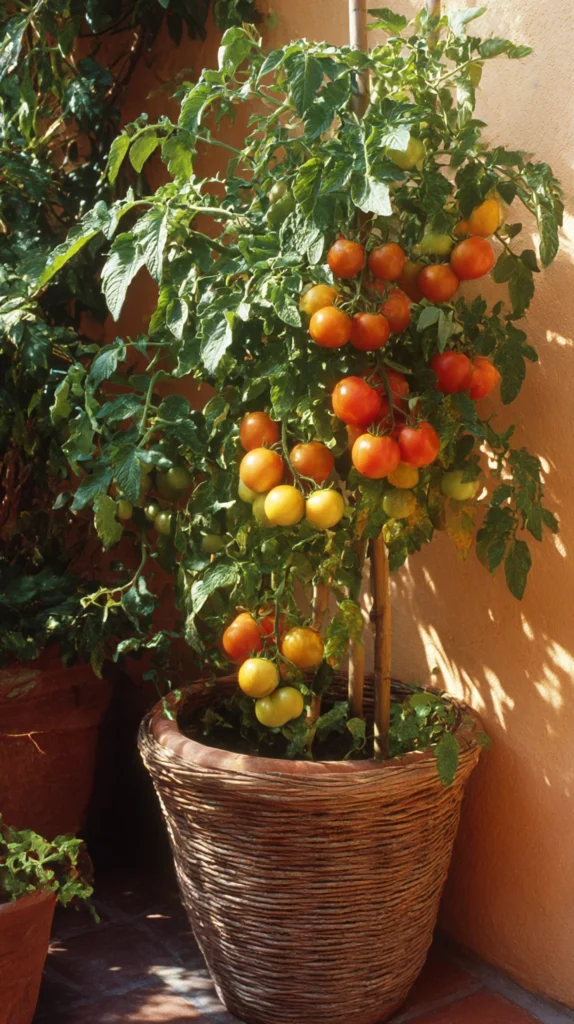
Cost: $3 – $12 per plant or $2 – $5 per seed packet
Tomatoes are the definitive full-sun food crop. They require a minimum of six hours of direct sunlight per day to fruit at all, and they produce their best flavour — the sweetness and acidity that makes a homegrown tomato so different from a supermarket one — only in a position that receives eight or more hours. The essential sugars that develop in the fruit are produced through photosynthesis, and photosynthesis in a tomato is directly proportional to the amount of direct sunlight the plant receives through the growing season.
Grafted tomato plants in late spring cost $6–$12 and offer better disease resistance and vigour than standard varieties. Ungrafted plants cost $3–$7. Cherry tomato varieties are the most forgiving for container and smaller garden growing and the most continuously productive from a single plant. Large 30–40 litre containers in full sun produce comparable yields to a well-prepared ground bed when fed fortnightly with a high-potassium liquid fertiliser from the moment the first flowers open. Remove sideshoots weekly from cordon varieties to maintain a single productive main stem.
Growing tip: Water tomatoes deeply and consistently rather than shallowly and frequently. Irregular watering — particularly the cycle of drought followed by sudden heavy watering — is the primary cause of blossom end rot and fruit splitting, both of which are among the most common and most preventable tomato problems in a home garden. A consistent watering routine produces significantly better fruit quality than any fertiliser or variety choice alone.
2. Chilli Pepper
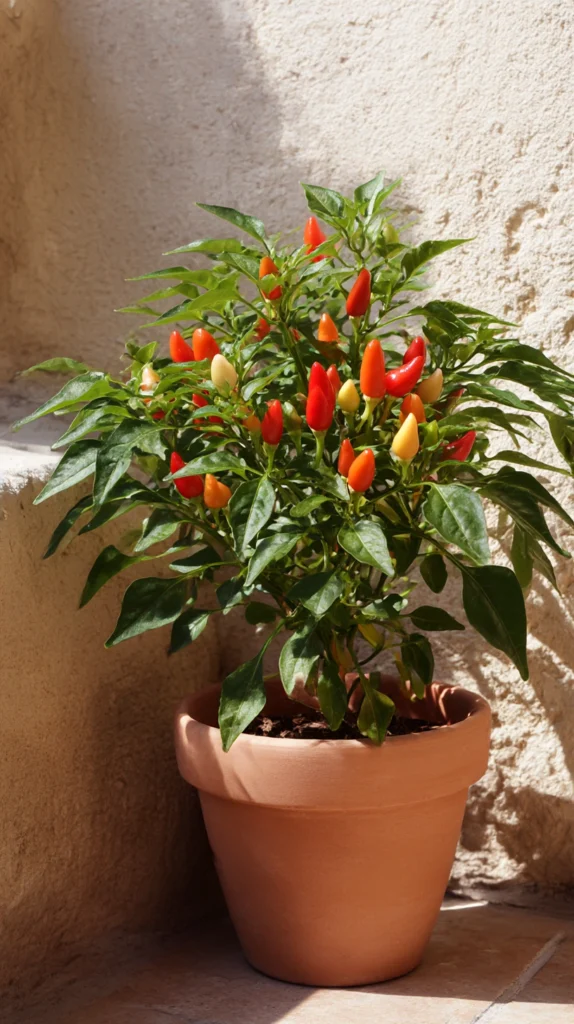
Cost: $3 – $8 per plant or $2 – $4 per seed packet
Chilli peppers are tropical plants by origin and they behave accordingly — the hotter and sunnier the growing position, the better they perform. Full sun is not a preference for chillies but a requirement: plants grown in partial shade produce fewer fruits, ripen them more slowly, and develop significantly less heat and flavour than the same variety grown in an equivalent position with uninterrupted direct sun. A south-facing wall that reflects additional warmth is the ideal position for chillies in a temperate garden and can extend the ripening season by several useful weeks.
Chilli plants are available from garden centres in late spring for $3–$8 each across a wide range of heat levels and fruit types. Grow in 20–25 cm individual pots or in a sheltered sunny bed. Feed with a high-potassium liquid fertiliser every two weeks once flowers appear. The fruits develop through green to their final ripe colour — yellow, orange, red, or chocolate brown depending on variety — over several weeks, and the whole plant continues producing new flowers and fruits until the first autumn frost. Harvest a mix of green and ripe fruits throughout the season to keep the plant productive.
Growing tip: Overwinter chilli plants by cutting them back to a framework of woody stems in autumn and bringing them indoors to a frost-free position. Chillies are perennials in their native climate and an overwintered plant resumes growth in spring two to three weeks ahead of a newly planted one, producing the first fruits of the season significantly earlier than a plant started fresh from seed or a new transplant.
3. Courgette and Summer Squash
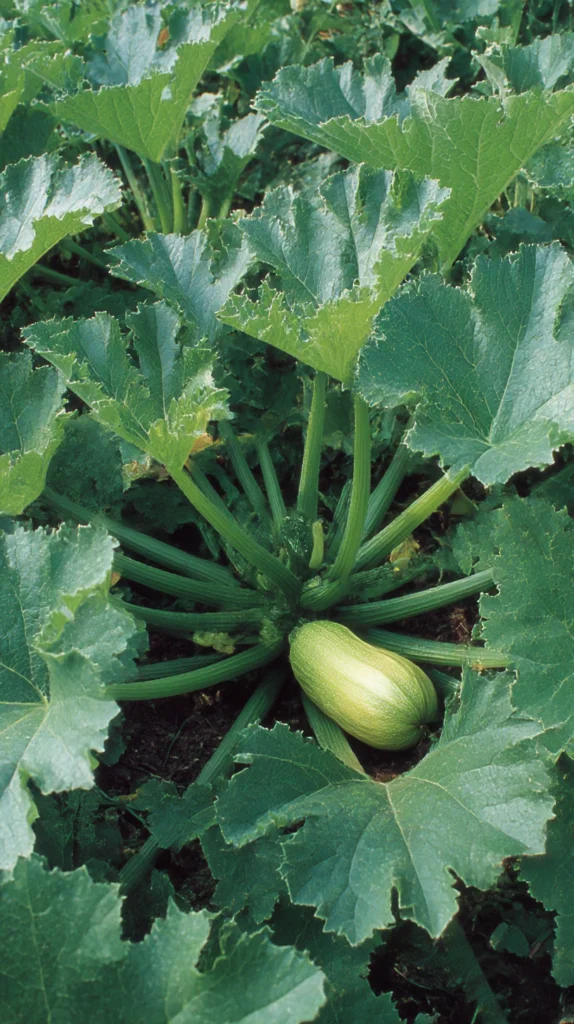
Cost: $2 – $5 per seed packet or $3 – $7 per plant
Courgette and summer squash are among the most vigorous and sun-dependent productive plants in the kitchen garden. In full sun with consistent watering they grow with a speed and generosity that still manages to surprise experienced growers — a single plant in a good summer can produce one to two fruits per day at peak productivity, and the flavour and texture of sun-grown courgettes harvested at 15–20 cm long is noticeably better than those grown in cooler, shadier conditions. The large yellow flowers are also edible and are used stuffed or battered in Mediterranean cuisines.
Sow seed directly in a large pot or prepared ground position 2 cm deep after the last frost date. Each plant needs 90 cm of space in every direction. Water deeply and consistently — courgette has a large root system and surface watering is ineffective. Feed fortnightly with high-potassium fertiliser once flowering begins. Harvest fruits every two to three days without fail — a courgette at 15 cm on Monday becomes a marrow by Thursday in warm sunny conditions, and oversized fruits significantly reduce the plant’s ongoing productivity by diverting energy away from the development of new flowers and smaller fruits.
Growing tip: Grow at least two courgette plants for reliable pollination. A single isolated plant relies on pollinators visiting both male and female flowers in sequence — a gap of even a few days between the opening of the two flower types results in unpollinated females that rot at the base without setting fruit. Two plants flowering simultaneously makes successful pollination significantly more likely throughout the season.
4. Cucumber
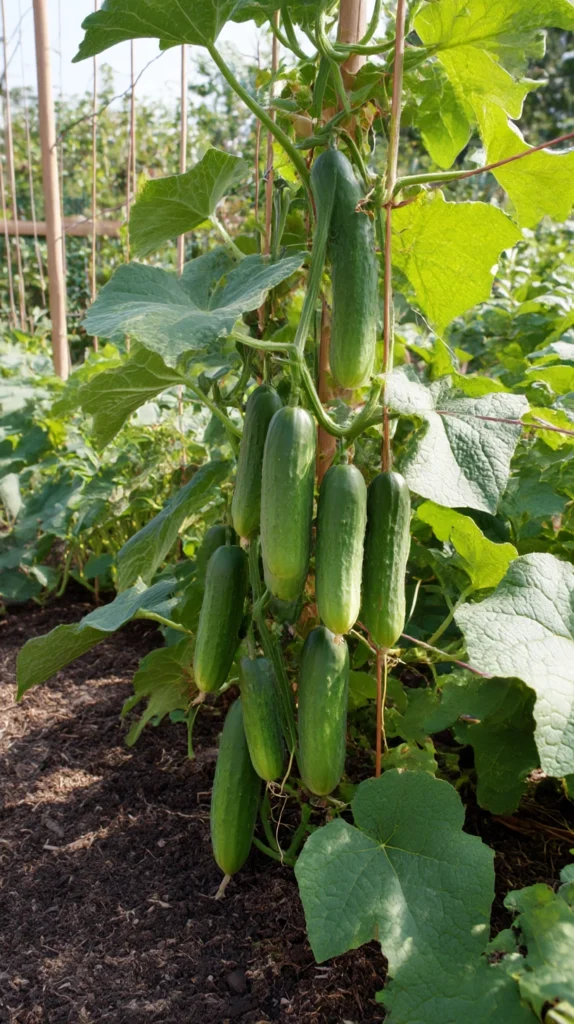
Cost: $2 – $5 per seed packet or $3 – $7 per plant
Cucumber is a tropical vine by nature and one of the most heat and sun-dependent vegetables in common cultivation. In full sun it grows vigorously, sets fruit reliably, and produces cucumbers of excellent quality throughout the summer. In shade or partial shade it produces excessive foliage at the expense of fruiting, and the fruits that do set are often pale, poorly flavoured, and slow to reach usable size. The relationship between sun exposure and cucumber productivity is among the most direct of any food crop — more sun reliably equals more and better fruit.
Outdoor ridge cucumber varieties such as Marketmore and Burpless Tasty Green are the most practical for an open garden situation. Plant into large containers or prepared beds with rich, moisture-retentive compost. Provide a vertical support from planting and tie the main stem in as it grows. Water deeply and consistently — inconsistent moisture causes bitter-tasting cucumbers regardless of variety or sun exposure. Feed with high-potassium fertiliser every two weeks from the first fruit set. Harvest cucumbers before the ends begin to yellow — a yellowing tip indicates the fruit is past peak quality and is beginning to direct the plant’s energy toward seed production rather than further fruiting.
Growing tip: Pinch out the growing tip once the main stem reaches the top of its support. This redirects the plant’s energy from upward growth into the lateral fruiting shoots that carry the majority of the season’s crop. An unpinched cucumber plant that has run out of vertical support becomes unmanageable quickly and produces significantly fewer fruits in its upper growth than a pinched plant with well-developed lateral branches throughout the supported section of stem.
5. Aubergine (Eggplant)
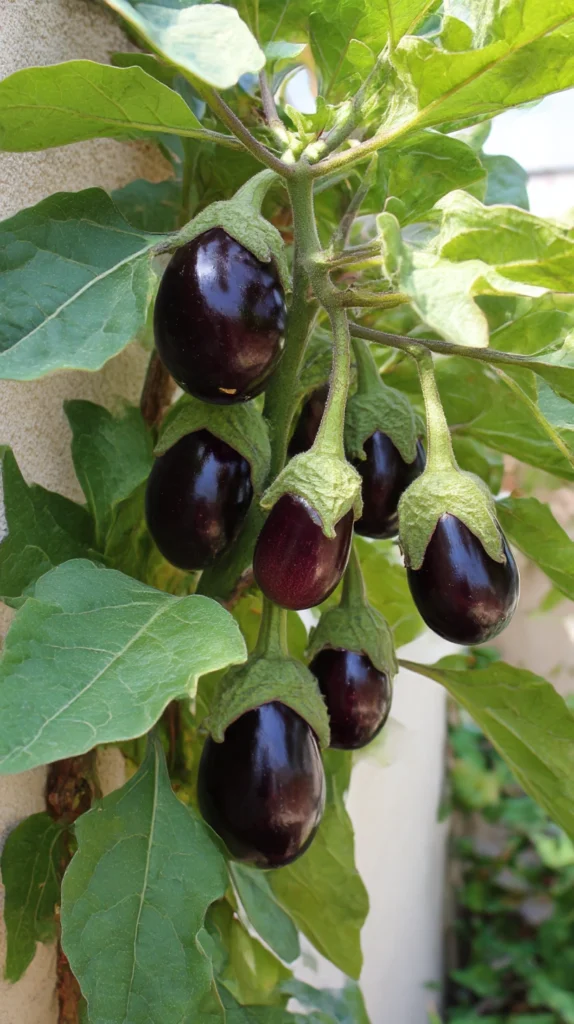
Cost: $3 – $8 per plant or $2 – $5 per seed packet
Aubergine is one of the most sun-dependent food crops available for a home garden — it requires sustained warmth and direct sun to produce well and declines noticeably in productivity in any position that does not deliver both consistently through the summer. In the right conditions — full sun, a sheltered position, and generous feeding — it produces glossy, well-formed fruits from midsummer through to autumn in quantities that reward the extra care the crop demands. A south-facing wall that reflects additional heat from a masonry or rendered surface is the ideal position for aubergine in temperate garden situations.
Aubergine plants from a garden centre cost $3–$8 each in late spring. Grow in large 25–30 cm containers in full sun for the most reliable results — containers warm up faster than open ground and deliver the root temperature that aubergine needs for vigorous growth. Feed with a high-potassium liquid fertiliser every two weeks from the first flowers. Varieties such as Black Beauty, Moneymaker, and Baby Rosanna are all reliable performers for container and sheltered garden growing in temperate climates. Remove the growing tip of each plant once four to six fruits have set to concentrate the plant’s energy into developing those fruits fully rather than continuing to produce more flowers.
Growing tip: Mist aubergine flowers with water during very hot, dry spells to assist pollination. The pollen of aubergine becomes sticky and difficult to transfer in hot, dry conditions — a fine mist from a spray bottle applied in the morning when the flowers are freshly open improves fruit set noticeably during the driest weeks of summer when natural humidity is at its lowest.
6. Sweetcorn
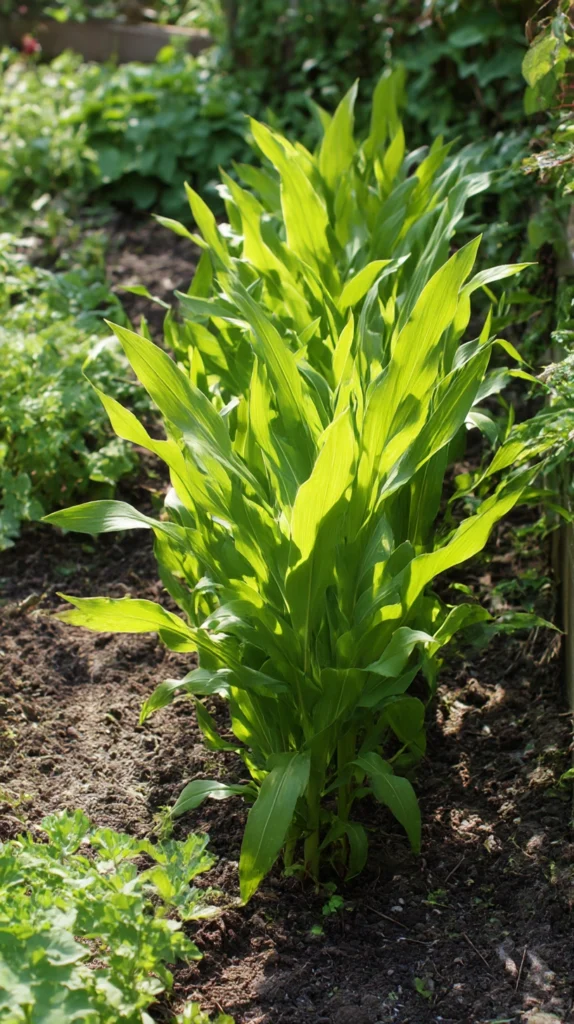
Cost: $2 – $5 per seed packet
Sweetcorn is a genuinely sun-dependent crop that makes no compromise with partial shade. Each cob requires the accumulated warmth and light of a full summer in direct sun to develop the sugar content that distinguishes fresh homegrown corn from anything available in a shop. The sugar in a freshly picked sweetcorn cob begins converting to starch within hours of harvest — eating it within thirty minutes of picking, still warm from the sun, is one of the most straightforwardly pleasurable things a kitchen garden can produce.
Sow sweetcorn seed 3 cm deep directly in the growing position or start in deep individual pots for transplanting once the last frost has passed. Plant in a block of at least four rows rather than a single line — corn is wind-pollinated and requires the dense pollen cloud that a block planting produces for fully filled cobs. A 4×4 block of sixteen plants is the minimum practical size for reliable pollination. Each plant produces one to two cobs. Harvest when the silks at the top of the cob have turned brown and a thumbnail pressed into a kernel releases a milky liquid rather than a watery one.
Growing tip: Water sweetcorn deeply at the base of the plant rather than overhead during the tasselling and silking stage — the period when pollen falls from the tassels at the top onto the silks below. Overhead watering during this period washes pollen from the silks before fertilisation is complete and results in cobs with missing kernels. Drip or base watering through this critical stage protects the pollination process and produces fully filled cobs.
7. Rosemary
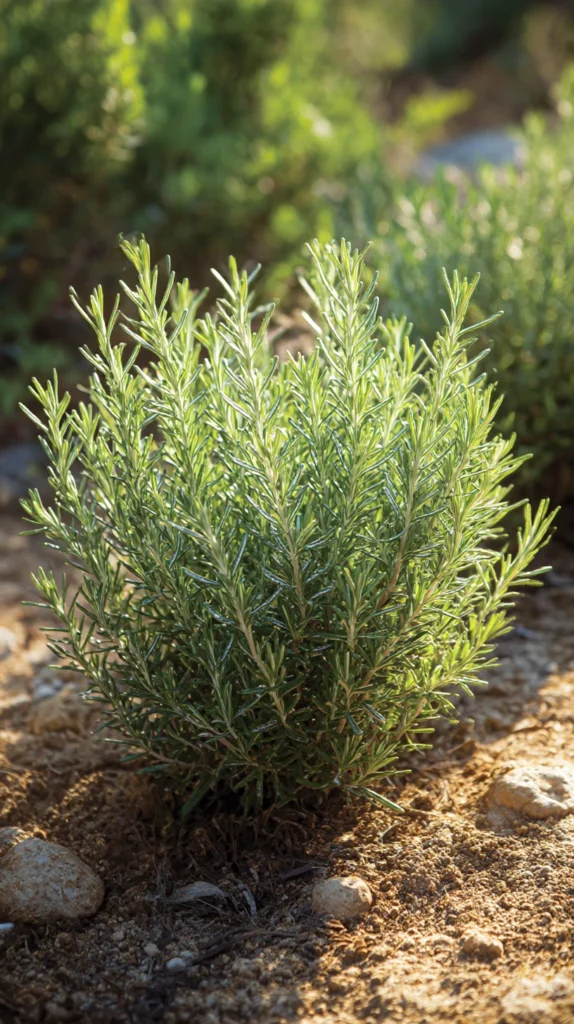
Cost: $4 – $12 per plant
Rosemary is one of the most flavourful and aromatic culinary herbs precisely because it grows in conditions most plants would consider hostile — full sun, lean soil, minimal water, and maximum heat. The essential oils that give it its distinctive piney, resinous flavour are produced most abundantly under exactly those conditions. A rosemary plant baked in full sun through a hot summer carries three to four times the aromatic oil content of the same variety grown in a cool, partially shaded position with regular watering. The flavour difference between the two is immediately apparent in the kitchen.
Plant rosemary in the sunniest, most free-draining position your garden offers. It tolerates drought significantly better than waterlogging — poor drainage is the primary cause of death in an otherwise well-situated plant. Established plants reach 60–120 cm and live for many years as a productive, increasingly substantial woody shrub. Harvest by cutting soft stem tips of 10–15 cm throughout the growing season — tip harvesting encourages branching below the cut and produces a bushier, more productive plant with each successive harvest. Prune the whole plant lightly after flowering in late spring to maintain a compact, accessible shape.
Growing tip: Propagate rosemary from softwood cuttings taken in early summer rather than buying new plants. Take 10 cm tip cuttings, strip the lower leaves, and push into a pot of gritty compost. Keep in a warm, bright position and the cuttings root within four to six weeks — providing free, established rosemary plants for new positions in the garden, for gifts, or as replacements for any plants lost to winter wet. One parent plant can produce a dozen rooted cuttings from a single summer propagation session.
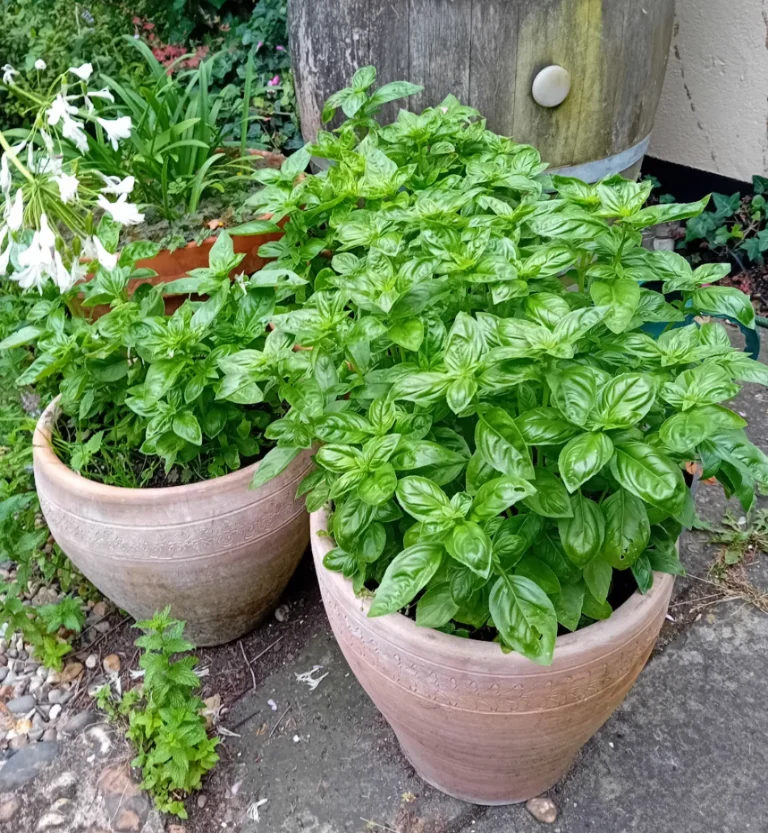
8. Basil
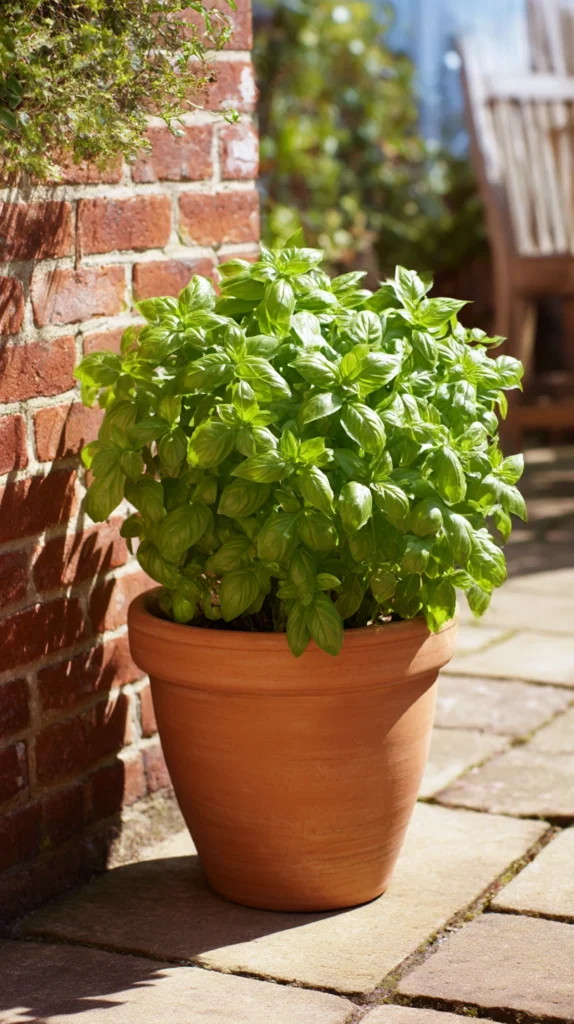
Cost: $2 – $5 per seed packet or $3 – $6 per pot plant
Basil is the food plant most directly dependent on warmth and direct sunlight of everything on this list. It chills at temperatures below 10°C, blackens in cold draughts, and produces its finest leaves — largest, most aromatic, and most richly flavoured — only when grown in full sun with consistently warm temperatures day and night. A basil plant moved from a warm sunny windowsill to a cool kitchen counter for two days in cool weather loses more quality than a plant on the same windowsill for two additional weeks. Temperature and sun exposure are everything for this herb.
Grow basil in the warmest, most sheltered, sunniest position available — ideally against a south-facing wall or in a large pot on a heat-absorbing paved surface that retains warmth into the evening hours. Water at the base only, never over the leaves, which invites fungal disease in warm conditions. Feed fortnightly with a balanced liquid fertiliser through summer to support the vigorous growth that heat and sun make possible. Pinch out every flower bud as it appears — once basil flowers, leaf production slows immediately and quality declines within days.
Growing tip: Sow a fresh pot of basil every four weeks through summer rather than relying on a single plant through the whole season. Basil grown from seed in warm summer conditions reaches a harvestable size in three to four weeks and a single pot maintained through the season eventually becomes tired and less productive than a fresh sowing of the same variety made six weeks later. Succession sowing is the most reliable strategy for a continuous supply of the best-quality basil leaves through the full summer.
9. Oregano
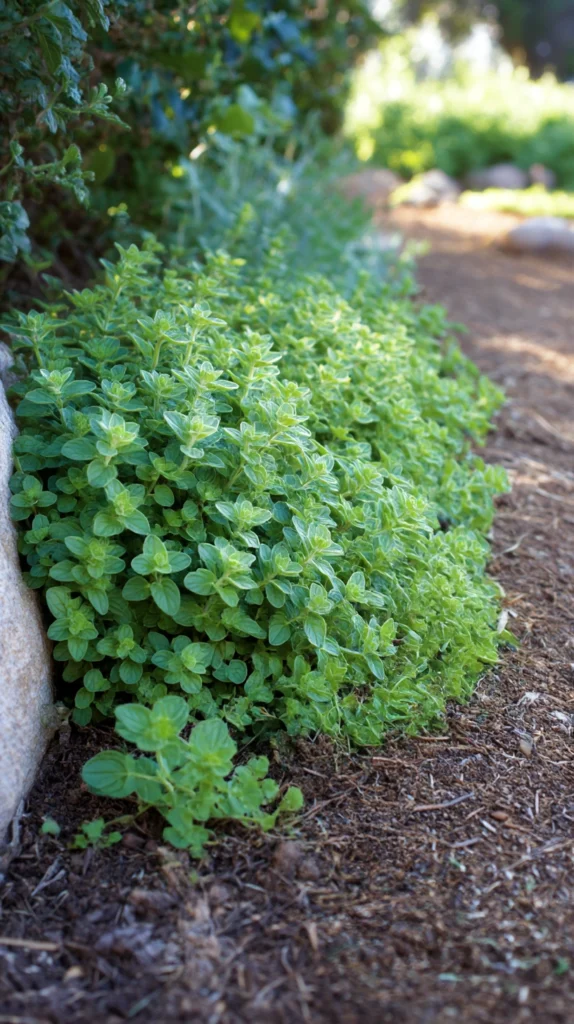
Cost: $3 – $8 per plant or $2 – $4 per seed packet
Oregano grown in full sun in lean, free-draining soil is one of the most flavour-dense culinary herbs available from any garden. The warm, complex essential oils responsible for its distinctive flavour are produced most abundantly under conditions of heat, light, and mild drought stress — the same conditions that make it one of the most low-maintenance herbs in the garden. Oregano grown in rich soil with regular watering and partial shade is a larger, greener, more luxuriant plant than its sun-baked counterpart, but the flavour of the shaded plant is noticeably thinner and less interesting in comparison.
Greek oregano is the most intensely flavoured variety and the best choice for culinary use. Italian oregano is milder and suits those who find Greek oregano too assertive. Both are fully hardy perennials that die back in winter and return reliably in spring, growing more productive with each passing year. Harvest throughout summer by cutting stems back by one third. Allow a portion of the plant to flower in midsummer — the flowers attract pollinators, are themselves edible, and mark the peak of the plant’s essential oil content, which is the best moment to harvest for drying and storing.
Growing tip: Dry a significant quantity of oregano at the peak of flowering each summer for use through the winter months. Dried oregano loses less flavour than most other dried herbs and the homegrown dried version is considerably more aromatic than anything available commercially. Harvest full stems at the bud-to-flower stage, tie in small bunches, and hang in a warm, well-ventilated space for two weeks before stripping the leaves and storing in a sealed jar away from direct light.
10. Fig
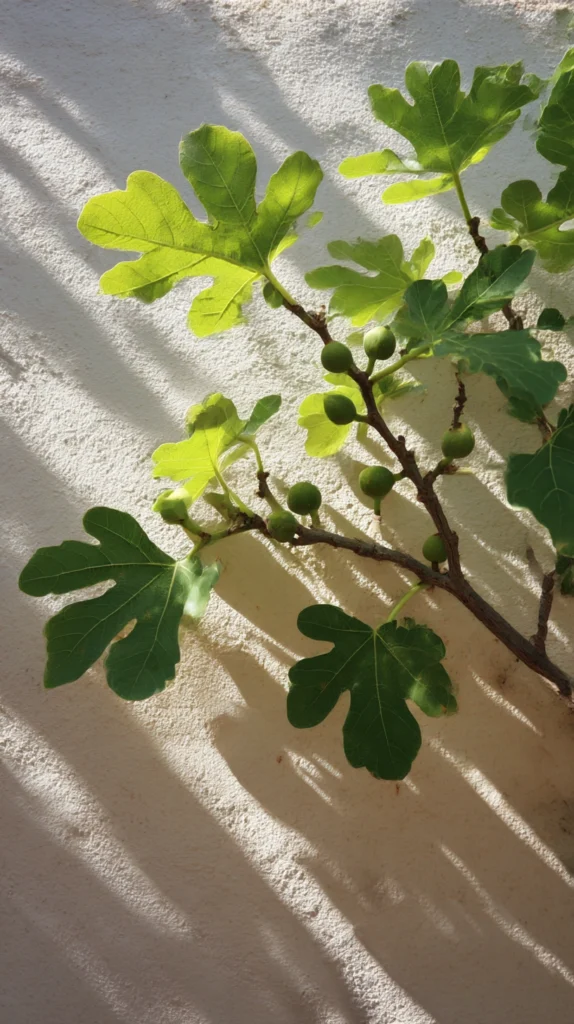
Cost: $15 – $50 per plant
The fig is one of the most rewarding and most sun-dependent fruit trees available for a garden or large container. It requires a warm, sheltered, south-facing position to ripen fruit reliably in temperate climates — without full sun and reflected warmth from a wall or fence behind the plant, figs in cool summers remain hard and green until autumn frosts end the season. In the right position, however, a fig tree produces successive crops of richly flavoured fruit that are among the finest things a garden can offer for fresh eating and for preserving.
Fig plants in 3–5 litre containers cost $15–$30 from most garden centres and specialist fruit nurseries. Larger, more established specimens in 10–15 litre containers run $30–$50. Brown Turkey and Brunswick are the most reliable varieties for outdoor cropping in temperate climates. Restrict the roots by planting in a large container or by lining the planting hole with paving slabs — unrestricted root growth produces excessive foliage at the expense of fruit. Train against a south-facing wall for the maximum warmth and shelter the plant needs to ripen fruit consistently through the summer and autumn months.
Growing tip: Remove all figs larger than a small pea in autumn before the first frost. These are the current season’s late-developing fruits that will not ripen before winter and, if left on the plant, divert energy away from the tiny embryonic figs already forming at the branch tips — the ones that overwinter and become next summer’s crop. The small pea-sized embryonic fruits are the only ones worth protecting through winter.
11. Grape
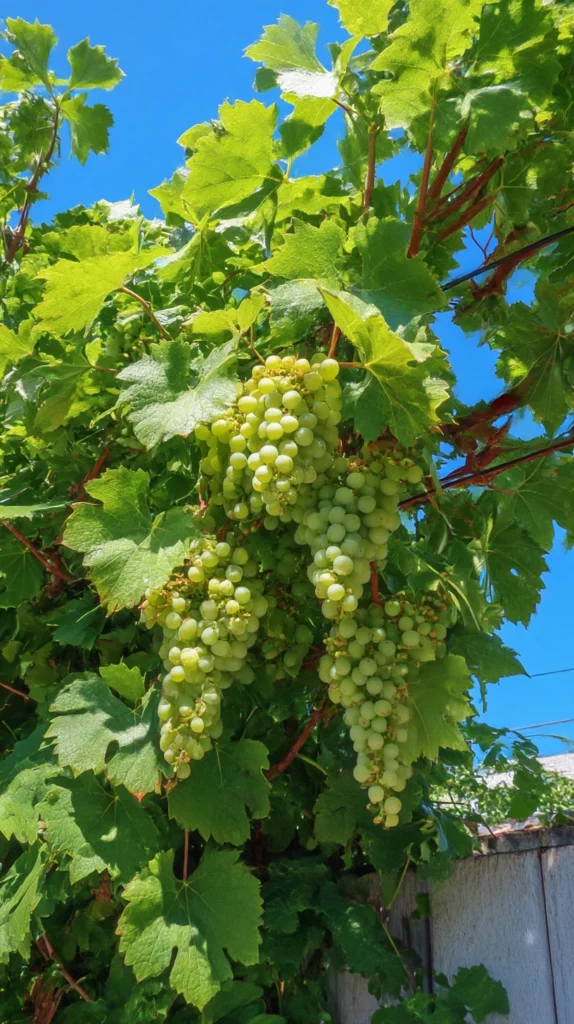
Cost: $12 – $40 per vine
Grapevines are one of the most sun-dependent productive plants available for a garden wall, pergola, or south-facing fence. They have been cultivated in full-sun positions for thousands of years for the simple reason that without intense, sustained sun exposure through the growing season, the fruit does not ripen, the sugars do not develop, and the harvest is sour and disappointing regardless of variety. In a genuinely sunny position, however, a well-trained grapevine produces abundant clusters of sweet, flavourful grapes and provides one of the most beautiful and productive overhead structures available for a garden pergola.
Bare-root grapevines cost $12–$25 from specialist fruit nurseries in winter. Container-grown vines are available from garden centres through the growing season for $20–$40. Dessert varieties for fresh eating include Muscat of Alexandria, Black Hamburg, and Boskoop Glory. Train on a system of horizontal wires fixed to a south-facing wall or over a pergola frame. Prune back to two buds on each lateral spur in winter — this is the single most important annual task in maintaining a productive vine. Without regular pruning a vine becomes unproductive and unmanageable within three to four seasons.
Growing tip: Thin the grape clusters in midsummer once the individual fruits have set and reached the size of small peas. Use fine scissors to remove approximately one third of the berries from each cluster, leaving the remaining fruits evenly spaced. Thinning allows the remaining grapes to develop to a larger size, ripen more evenly, and develop better flavour than unthinned clusters where every berry competes for the same amount of light, air, and the plant’s available resources.
12. Thyme
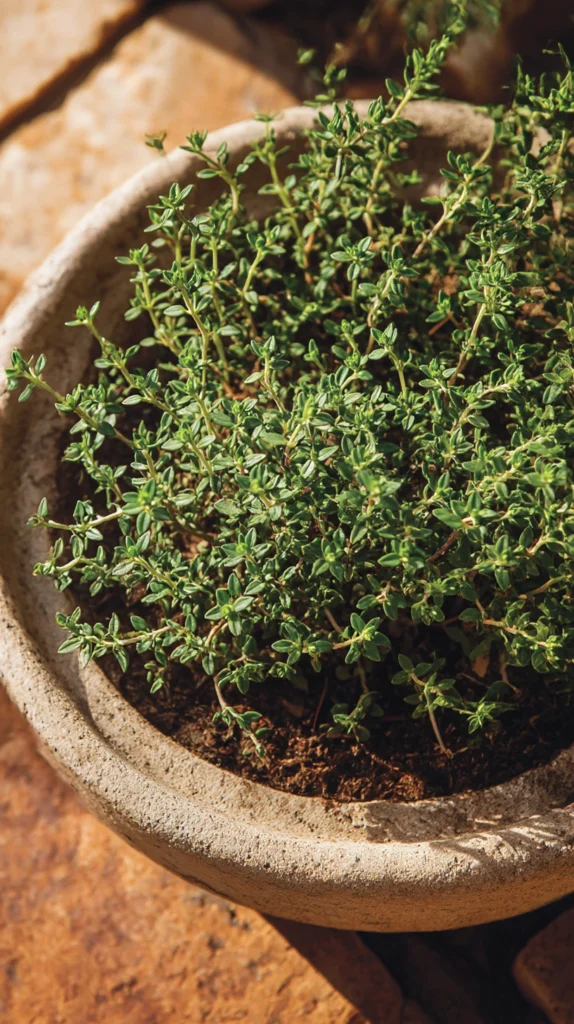
Cost: $3 – $8 per plant or $2 – $4 per seed packet
Thyme is the culinary herb most completely suited to a full-sun, dry, lean-soil position. It evolved on the rocky, sun-exposed hillsides of the Mediterranean where it has never encountered rich, moist, shaded growing conditions and has no adaptation for them. Grown in its preferred position — maximum sun, sharply drained soil, no feeding — it produces compact, intensely aromatic growth with a flavour concentration that the same plant grown in shade, rich soil, or wet conditions cannot approach. The harsher the growing conditions within reason, the better thyme tastes.
Common thyme, lemon thyme, and caraway thyme are all reliable culinary varieties for a full-sun position. Plant in free-draining soil or in a gritty, lean container compost — add 30 percent horticultural grit to standard compost if planting in pots. Established plants need almost no watering once settled, no feeding at any stage, and only a light trim after the main flush of summer flowers to keep the plant compact and productive. Divide clumps every three years and replant the younger outer sections — the centre of older thyme plants becomes increasingly woody and unproductive and benefits from renovation on this timescale.
Growing tip: Harvest thyme by cutting soft stem tips of 8–10 cm throughout the growing season rather than stripping individual leaves from older wood. Tip cutting encourages branching below the cut, produces a more compact and densely leafed plant over time, and is significantly faster than leaf-by-leaf harvesting for any practical kitchen quantity. The cut tips can be used fresh, stored in the refrigerator for up to a week, or dried in a warm place for long-term use.
13. Strawberry
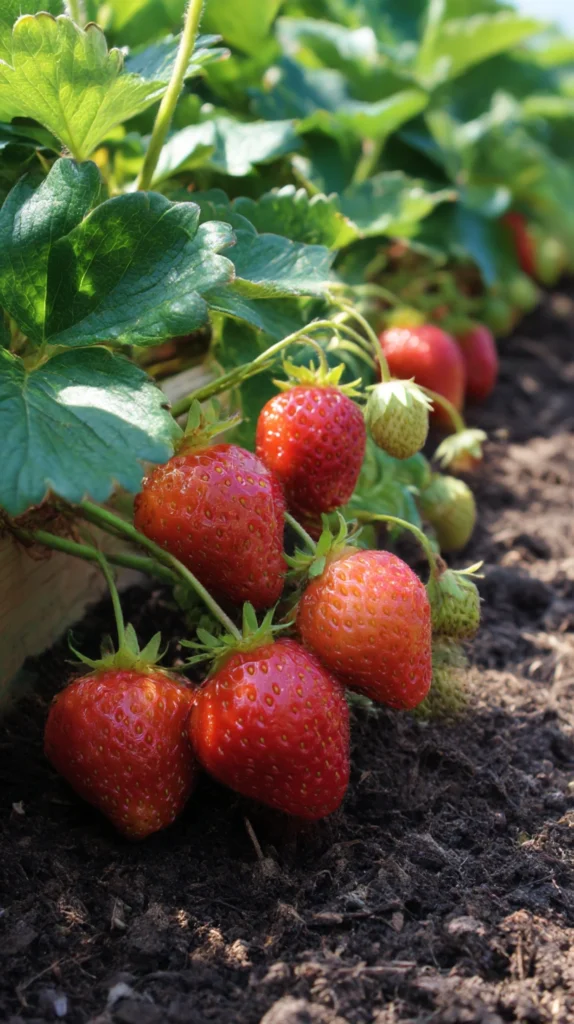
Cost: $2 – $5 per plant or $8 – $20 per tray of runners
Strawberries produce their sweetest, most flavourful fruit in full sun. The sugar development that distinguishes a sun-ripened homegrown strawberry from a shop-bought one is directly linked to the photosynthetic activity of the leaves — which is, in turn, directly proportional to the sun exposure the plant receives through the growing season. A strawberry plant in full sun produces more fruit, ripens it faster, and develops better flavour than the same variety in partial shade. This is one of the clearest sun-dependency relationships in edible gardening.
Strawberry plants are available from garden centres and online nurseries in spring and late summer as pot-grown plants or bare-root runners. Summer-fruiting varieties such as Elsanta, Honeoye, and Hapil produce a concentrated crop in June and July. Perpetual-fruiting varieties such as Flamenco produce smaller quantities continuously from June through to October. Plant with the crown at soil level — too deep causes crown rot, too shallow causes the plant to dry out at the roots. Feed with a high-potassium fertiliser from the moment flowers open and water consistently through the fruiting period.
Growing tip: Lay straw around the base of strawberry plants once the fruits begin to develop — this is the traditional practice that gives the strawberry its name. The straw keeps ripening fruits off the damp soil surface, prevents grey mould from spreading upward from the ground, and retains soil moisture around the roots through the driest weeks of the fruiting season. A handful of straw per plant costs almost nothing and makes a measurable difference to the quality of the harvest.
14. Pepper (Sweet)
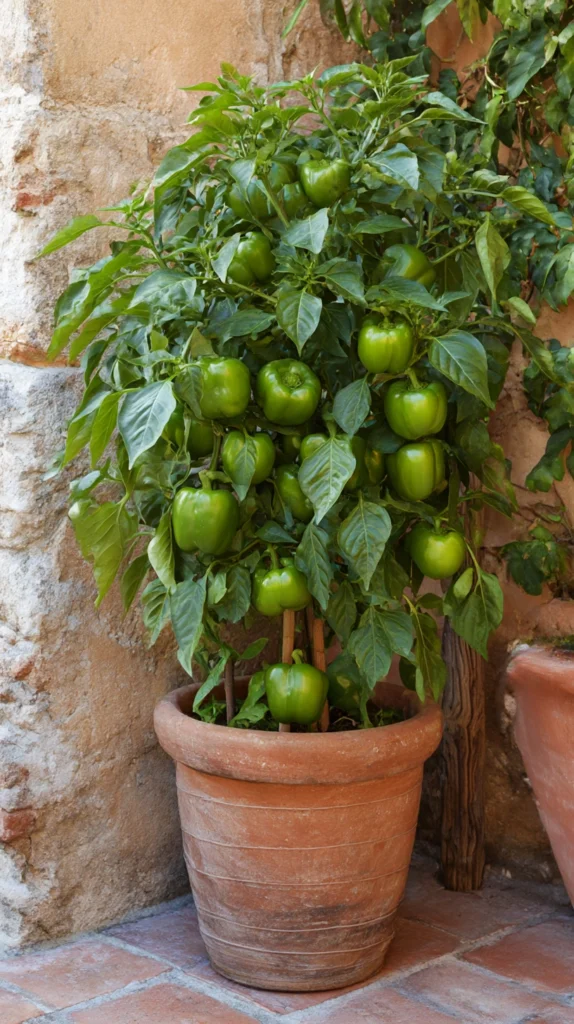
Cost: $3 – $8 per plant or $2 – $5 per seed packet
Sweet peppers share the same sun and heat dependency as their chilli relatives and require a similarly warm, sheltered, fully exposed position to perform well in temperate gardens. In full sun with adequate warmth they develop their characteristic sweetness, colour, and thick flesh through the late summer and early autumn months. In partial shade they produce fruit slowly, ripen it poorly, and develop thin-walled fruits with diluted flavour that are a pale reflection of what the same variety can achieve in the right growing conditions.
Sweet pepper plants cost $3–$8 each from garden centres in late spring. Grow in 25–30 cm containers in the warmest, sunniest available position — a south-facing wall that absorbs and reflects heat is ideal. Feed fortnightly with a high-potassium fertiliser from the first flowers. Peppers are slower to ripen from green to red than chillies — allow six to eight weeks after fruit set for full colour development. Harvesting some fruits at the green stage rather than waiting for all of them to ripen simultaneously encourages continued flower production and increases total seasonal yield.
Growing tip: Support pepper plants with a small cane once fruits begin to develop. The weight of a full crop of maturing peppers on a single stem is considerable and unsupported plants frequently snap at the base of a heavily laden branch — losing a full branch of ripening peppers late in the season when there is no time for replacement growth is one of the more preventable disappointments in a kitchen garden. A simple cane and soft tie installed at the flowering stage prevents it entirely.
15. Melon
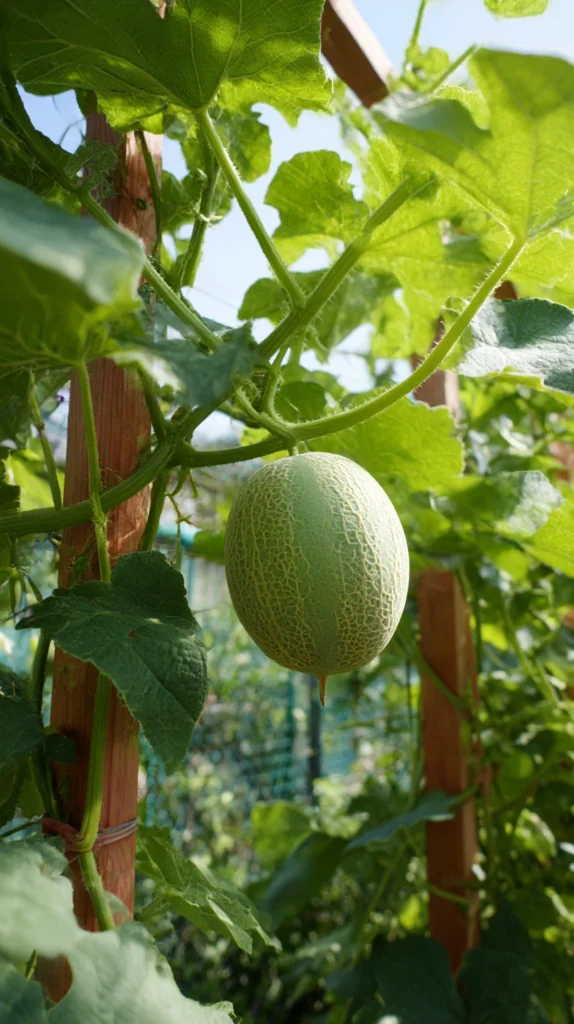
Cost: $3 – $8 per plant or $2 – $5 per seed packet
Melon is the most sun-dependent food crop on this list and the one that rewards a truly hot, sunny growing position most dramatically. In a cool, overcast summer it struggles to ripen fruit reliably. In a genuine heat summer in a south-facing, sheltered position it produces sweet, fragrant fruits of quality that rival those from warmer climates. Growing melon successfully in a temperate garden is genuinely possible — it simply requires the hottest position available, a long growing season started early under glass, and consistent care through the summer months.
Melon plants cost $3–$8 each from specialist seed companies or garden centres in late spring. Varieties bred for cooler climates — Alvaro, Edonis, and Collective Farm Woman — are significantly more reliable than standard tropical varieties in a temperate garden. Grow in a large container or a prepared bed at the base of a south-facing wall. Train the main stem vertically and support developing fruits in individual net slings tied to the wall or trellis. Feed with a high-potassium fertiliser every ten days from the first fruits setting. A ripe melon is indicated by a sweet fragrance at the stalk end and a slight softening of the blossom end of the fruit.
Growing tip: Limit each melon plant to three or four fruits maximum by removing surplus flowers once the first fruits have set. A plant carrying more fruits than it can ripen fully in the available growing season produces several small, underripe, disappointing melons at harvest. Three or four well-supported fruits given the plant’s full resources ripen properly and develop the sweetness and fragrance that make melon worth growing — which is the only outcome worth planning for.
The edible plants on this list share one clear characteristic — they were shaped by sun over generations and they carry that requirement in everything they produce. Placing them in the conditions they evolved for is not a concession to their needs but the most direct route to the best flavour, the highest yields, and the most rewarding growing experience any of them can offer. A sunny garden planted with the right crops is one of the most productive and satisfying kitchen gardens it is possible to keep.
Start with two or three plants from this list that match the food you actually cook and eat — the flavour of a homegrown tomato, a handful of sun-warm strawberries, or a bunch of fresh basil cut five minutes before a meal is the most compelling argument for a kitchen garden that any list of ideas can only gesture toward. Plant them in the sunniest spot you have and let the season do the rest.