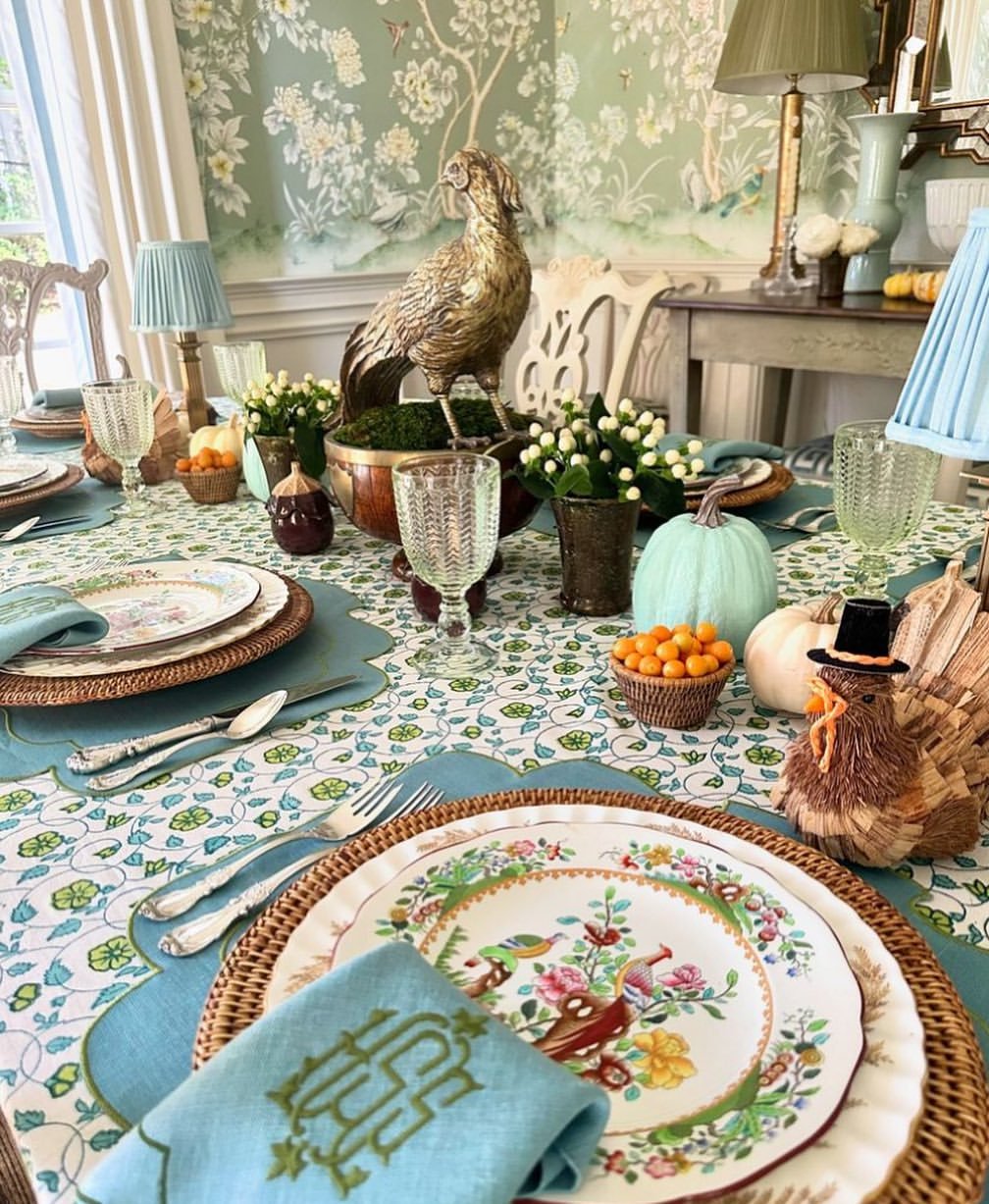
13 Thanksgiving Garden Centerpiece Ideas from Your Backyard
Walked through the garden the week before Thanksgiving and wrote down everything worth cutting. Miscanthus plumes. The last rose hips. Dried echinacea cones. The seed heads of the alliums. A few stems of pyracantha with orange berries. Dried hydrangea heads still holding their colour. The bronze fennel gone to seed.
Came back inside with an armful of material that cost nothing and had been growing in the garden since spring. That armful became the Thanksgiving centrepiece.
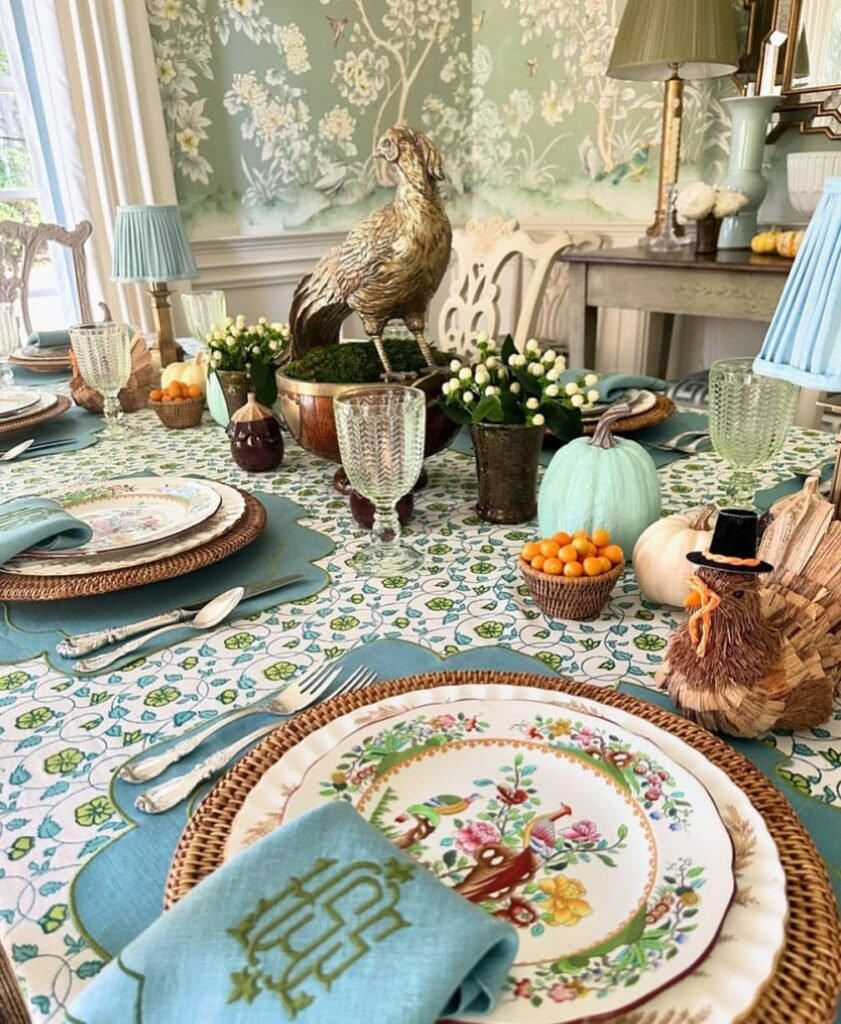
The Thanksgiving centrepiece from the backyard is not a budget compromise. It is the most specific and honest version of the decoration. Nothing generic about a centrepiece made from what is actually growing this week, in this garden, in this climate. The materials: specific to this November, this frost, this garden. The centrepiece: a record of the season.
Here are 13 ideas built on that principle — from the simplest single-stem arrangement to the full table installation.
What the November Garden Offers
The free material available right now:
The structural:
- Ornamental grasses (miscanthus, pennisetum, stipa — at their absolute autumn peak)
- Dried seed heads (echinacea, rudbeckia, allium, nigella, honesty)
- Bare branches (twisted hazel, dogwood stems with colour)
- Evergreen stems (rosemary, thyme, sage, boxwood)
The berry and fruit:
- Rosehips (on any rose — the larger-hipped Rosa rugosa the most dramatic)
- Pyracantha berries (orange, yellow, or red)
- Cotoneaster berries
- Crab apples
- Holly (if present — the most traditional)
The harvest:
- Small pumpkins and ornamental gourds (from the kitchen garden or the seasonal display)
- Dried corn
- Seed pods from the vegetable garden
- The last herbs (rosemary, sage, thyme — fragrant and structural)
The unusual:
- Dried fennel seed heads (feathery and architectural)
- Artichoke heads (dried or fresh — the most dramatic flower-substitute)
- Teasel (the spiky geometric form)
- The dried bean pods from the summer’s runner beans
The materials that need no preparation:
- Cut and use immediately: berry-bearing branches, evergreen stems, grasses
- Allow to dry in the vase: fresh-cut grasses, some seed heads
- Already dry on the plant: most seed heads, dried grasses from the garden
The Design Principles
Before gathering anything:
The palette:
- The Thanksgiving palette: warm tones (amber, copper, rust, deep orange, cream, warm gold)
- The garden in November: providing exactly this palette naturally
- The design task: gathering within the palette, not mixing palettes
The scale:
- The centrepiece: should not block sight lines across the table
- The standard height: 12–15 inches maximum for a table people will talk across
- The exception: a dramatic tall centrepiece to one end, not the centre
- The rule: either low enough to see over, or tall enough to see through (open and airy structures are fine tall)
The three layers:
- Structural (the tallest, providing the form)
- Fill (the body of the centrepiece)
- Detail (the small elements that reward a close look)
1. The Grass and Gourd Table Runner (The Long Form)
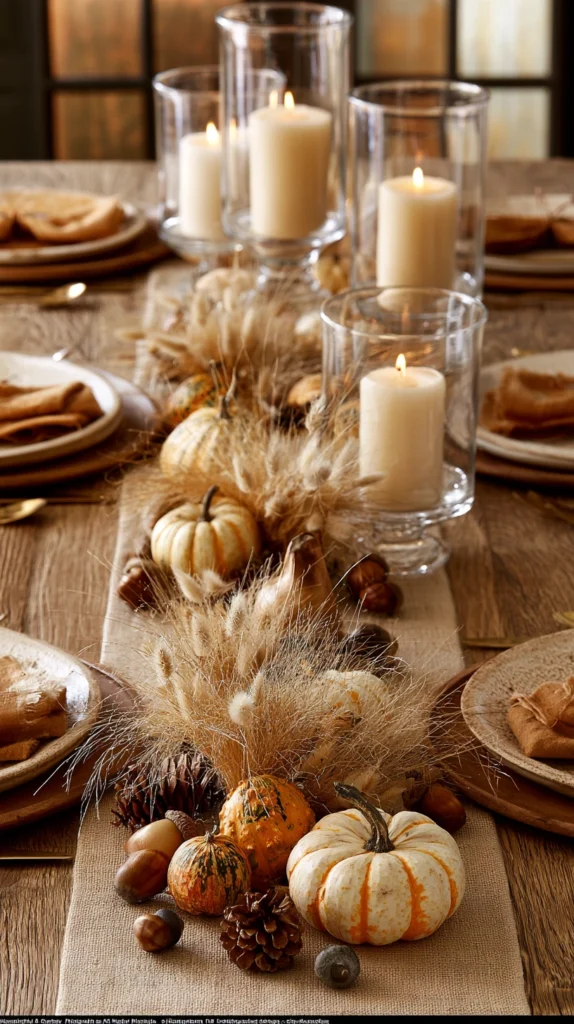
A continuous centrepiece running the length of the table — the most generous and most specifically American of Thanksgiving table formats.
Why a table runner suits Thanksgiving:
The table runner:
- Not one focal point but a continuous garden along the table’s length
- The effect: the table is the garden, the guests seated within it
- The long table that Thanksgiving requires: specifically suited to a runner that uses the full length
The materials:
The runner structure:
- Dried grasses: the airy structure running the length
- Gathered and laid along the table centre
- Not in a vase: lying flat on the table
- The grasses: the backbone of the runner
The additions:
Along the grass runner:
- Small pumpkins and gourds: nestled into the grasses
- At intervals: not at every inch, but grouped in threes
- Rosehips: the red detail scattered along
- Dried seed heads: the occasional accent
- Candles: in hurricane glasses, positioned between the groupings
The construction:
Layer one (the grass):
- Lay miscanthus plumes along the table centre
- Stagger the stems (some heads pointing left, some right)
- The loose arrangement: the grasses in drift
Layer two (the gourds and pumpkins):
- Nestle three small pumpkins toward one end of the runner
- Two or three gourds toward the other end
- The irregular placement: natural not symmetrical
Layer three (the small details):
- Scattered rosehips and dried berries along the runner
- Pine cones pressed into the grasses
- Dried seed heads at intervals
- Acorns gathered from the garden
Layer four (the candles):
- Four or five hurricane glasses with pillar candles
- Positioned between the groups, not at the ends
- At dusk: the table becomes the most beautiful version of the garden
The table runner measurement:
- The same width throughout (6–8 inches)
- Running from within 12 inches of each end of the table
- Not touching the plates: clear space for the settings at both ends
Cost breakdown:
- Materials: from the garden ($0)
- Hurricane glasses and candles: $25–35
- Small pumpkins: $8–15 (if not already in the garden)
- Total: $0–50
The grass and gourd runner: the table that visitors photograph before sitting down.
2. The Single Dramatic Stem (The Minimalist Statement)
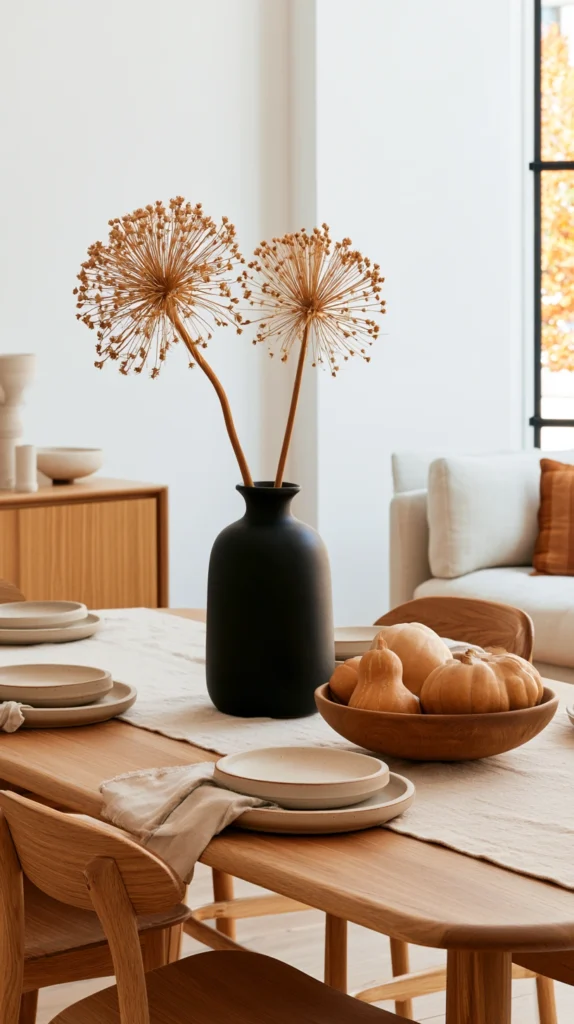
One significant stem or branch as the sole centrepiece — the design confidence that needs nothing more.
Why one stem can be enough:
The minimalist principle:
- One stem that is genuinely beautiful: needs nothing else
- Additional elements: sometimes take attention from the main thing rather than adding to it
- The single beautiful object: the statement of confidence
What works as a single stem:
The artichoke head:
- A dried artichoke from the vegetable garden
- If the artichoke was allowed to flower: the thistle-like purple flower dried on the stem
- Or: the dried artichoke head before flowering
- On a tall stem in a simple dark vase: architectural and extraordinary
- The single artichoke: the most dramatic single plant object available in November
The dried allium:
- The spherical allium seed head on a long stem
- The sphere: the most precisely geometric form in any garden
- In a tall narrow vase: the sphere at head height
- One stem: complete
A branch of rosehips:
- From any well-hipped rose (Rosa rugosa: the most dramatic)
- The red hips clustered on the branch
- In a ceramic vessel with water
- The branch: filling the space above the table without blocking sight lines
The large dried hydrangea head:
- Papery, cream-to-faded-green, still structural
- One head on a long stem in a dark bottle or vase
- The most widely available dried flower from any garden
- The simplicity: the statement
The vase:
For the single stem:
- The vase: as important as the stem
- Dark ceramic or stoneware: the most appropriate for November
- Simple form: nothing that competes
- The vase as the pedestal for the stem
Cost breakdown:
- The stem: from the garden ($0)
- A quality ceramic vessel: $15–40
- Total: $15–40
3. The Herb and Harvest Centrepiece (The Kitchen Garden Table)
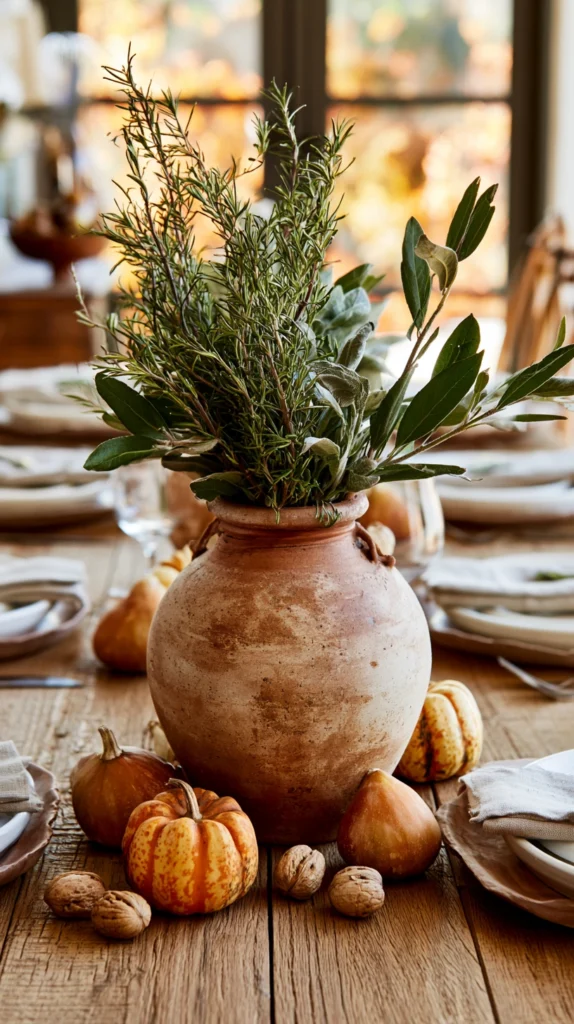
Fresh herbs combined with small harvest vegetables — the centrepiece that is also the kitchen, the harvest, and the scent of the meal being prepared.
Why herb centrepieces are specifically Thanksgiving:
The Thanksgiving meal:
- The herbs in the centrepiece: the herbs in the cooking
- Rosemary: on the table and in the stuffing
- Thyme: the centrepiece and the broth
- Sage: the decoration and the butter
- The centrepiece: in direct relationship with the meal
The herb centrepiece design:
The structural herbs:
- Rosemary branches: long, straight, structural
- Sage: the broad grey-green leaf
- Bay: evergreen, slightly formal
- These three: the backbone
In a terracotta pot:
- A large terracotta pot: the most appropriate vessel for a kitchen herb centrepiece
- The rosemary, sage, and bay arranged as if still growing
- The harvest vegetables nestled between them
The harvest additions:
At the base of the herbs:
- Small ornamental gourds
- A few walnuts or hazelnuts (gathered or purchased)
- Dried chilli strings if grown in the garden
- The herbs and the harvest: the kitchen garden in miniature on the table
The fragrance:
At a dinner table:
- The herbs release their scent slightly with the warmth of the room and the candles
- The rosemary: the most present fragrance
- The sage: the most distinctly autumnal
- The centrepiece: fragrant, which no bought floral arrangement achieves
The dual-use:
- During dinner: the rosemary sprig snipped and added to a dish
- After the meal: the centrepiece moves to the kitchen
- The centrepiece: genuinely functional
Cost breakdown:
- All from the garden: $0
- Terracotta pot (if not owned): $8–15
- Walnuts or hazelnuts for the base: $5
- Total: $0–20
4. The Copper and Rust Arrangement (The Autumn Colour Study)
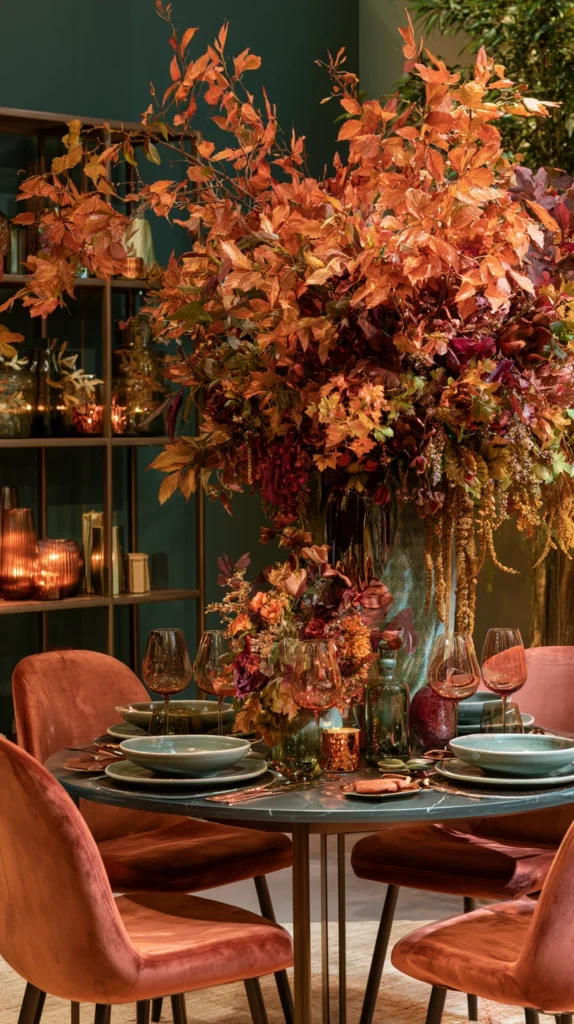
An arrangement focused on the copper and amber tones of the autumn garden — the centrepiece that looks like the season itself has been placed on the table.
Why a focused colour palette makes the centrepiece:
The colour-focused arrangement:
- Not a variety of autumn colours (orange, red, gold, brown, purple, green)
- One colour family: copper, amber, rust, warm brown
- The focused palette: more sophisticated and more composed than a mixed palette
The copper palette from the garden:
The copper plants:
- Miscanthus sinensis ‘Malepartus’: the copper-bronze plume
- Rudbeckia seed heads: the amber-brown disc
- Copper fennel foliage (if present): the amber feathery mass
- The copper chrysanthemum (from the pots at the door)
- Dried sedums in their copper autumn form
The amber additions:
- Dried grasses (amber-gold straw colour)
- Dried honesty pods (with a hint of gold)
- Crab apples or rosehips (the warming orange-red)
- Dried wheat stalks (if grown or available)
The arrangement:
In a dark vessel:
- The deep green or black vase: the dark backdrop
- The copper and amber materials: glowing against it
- The maximum contrast: the palette amplified
The height:
- The tall grasses: creating the upper register
- The fuller flowers and seed heads: the middle register
- The small gourds, seed pods, and details: the lower register
The candles:
- Amber or beeswax candles in the arrangement
- The amber of the candle: the continuation of the palette
- The warm light: highlighting the copper tones
Cost breakdown:
- All plant material: from the garden ($0)
- Dark ceramic vase: $20–35
- Beeswax candles: $12–18
- Total: $12–53
5. The Berry Branch Arrangement (The Red and Orange Drama)
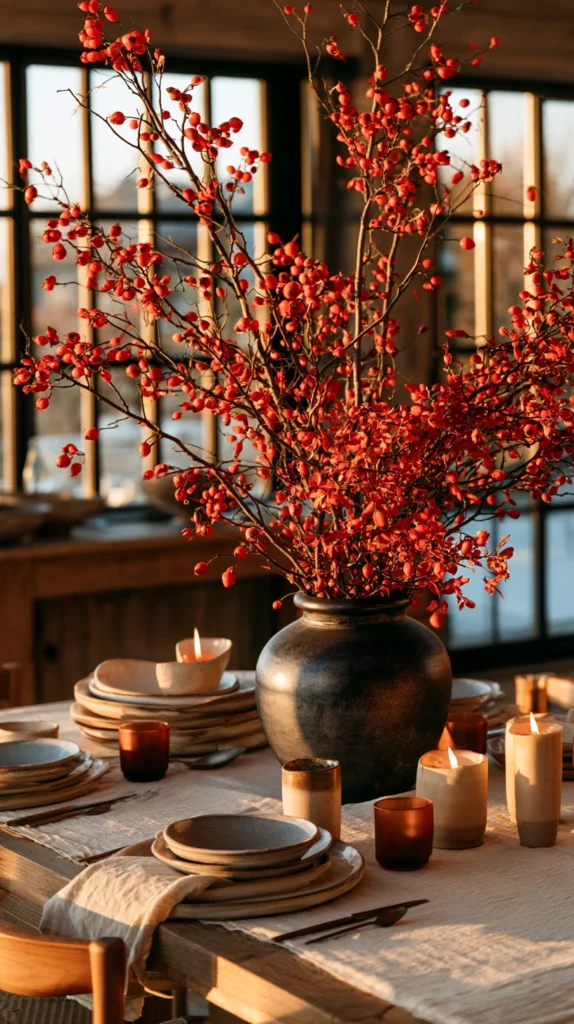
Branches bearing berries — rosehips, pyracantha, cotoneaster — as the primary decorative element — the garden’s most vivid November colour.
Why berry branches are November’s most specific material:
The November garden:
- The flowers: finished
- The foliage: declining
- The berries: at peak
- The berry: November’s specific garden contribution
The dramatic quality:
The berry cluster:
- Clusters of bright red, orange, or yellow berries
- Against the November sky or the neutral table: vivid
- The contrast: the warmth of the berry against the cool grey of November
The plants:
Rosehips (Rosa rugosa: best):
- The largest and most vivid hip
- Deep red, round, substantial
- On arching branches: beautiful
- Cut with secateurs: long stems
Pyracantha (firethorn):
- Orange or red berries in clusters
- The most abundantly berried shrub available
- Against dark green leaves: dramatic
- Thorny: handle with care
Cotoneaster:
- Smaller red berries
- More delicate than pyracantha
- Often horizontally branched: interesting in a low arrangement
Holly (where available):
- The most traditional
- The combination of berry and leaf: the Christmas association (acceptable early)
- The gloss of the holly leaf: the most polished material in any arrangement
The arrangement approach:
Long branches in a tall vase:
- The branches extending above the vase by 18–24 inches
- The berries: visible from across the room
- The drama: the height and the colour
Short branches in a wide bowl:
- The branches cut short, filling the bowl
- The berries: massed at table level
- More intimate, less dramatic
Combined with bare branches:
- The berry branches beside bare architectural branches
- The contrast: the living colour and the winter structure
Cost breakdown:
- All from the garden: $0
- Vase or vessel: $10–25
- Total: $0–25
6. The Gourd and Candle Cluster (The Simple Seasonal Grouping)
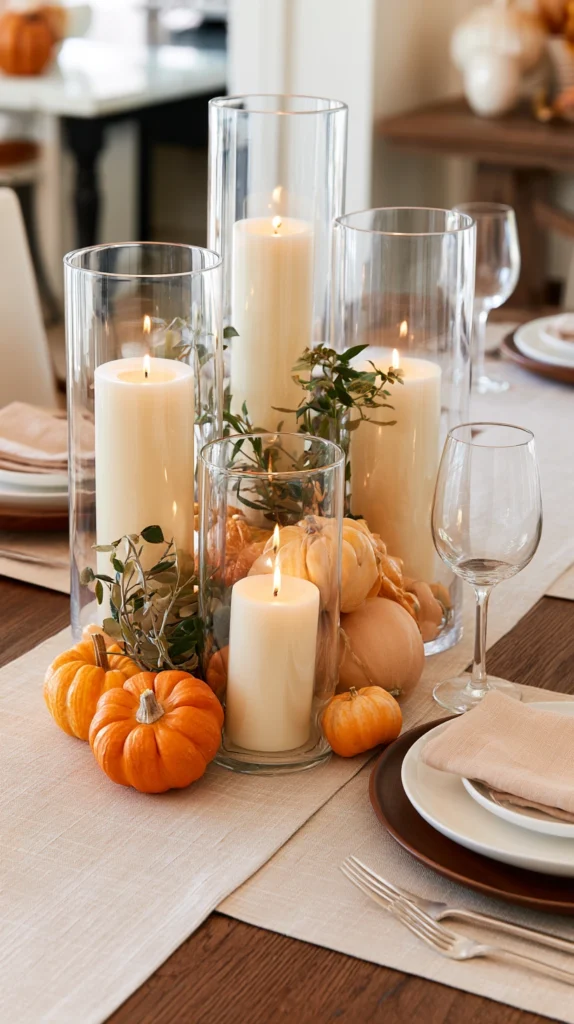
A grouped arrangement of small gourds, pumpkins, and candles — the simplest effective Thanksgiving centrepiece.
Why simplicity works:
The simple grouping:
- Three or five objects
- All from one material family (all gourds, or all gourds and candles)
- Grouped tightly, some touching
- Nothing else needed
The odd number principle:
- Three: the most versatile grouping
- Five: slightly more generous
- Even numbers: the symmetry stops the eye
- Odd numbers: the eye keeps moving through the group
The gourd selection:
From the garden:
- Ornamental gourds of varied shape (the swan-neck, the turban, the round)
- Small pumpkins (the white ‘Baby Boo’, the orange carving type, the flat ‘Cinderella’ shape)
- Three different shapes: the visual interest within the group
From the farmers market:
- A wider variety available than most gardens produce
- The combination of garden-grown and purchased: still honest and seasonal
The candles:
The height addition:
- Two or three pillar candles at different heights alongside the gourds
- In hurricane glasses: protected from draughts
- The candles and the gourds: the two elements
- Nothing else
The grouping principle:
Not arranged — placed:
- The gourds placed as if settled naturally
- Some overlapping, some slightly apart
- The candles nestled among them, not separate
- The group: reading as one composition
The low height:
- This centrepiece: low enough to see over
- The gourds: 4–8 inches tall
- The candles: 6–10 inches tall
- The conversation: uninterrupted across the table
Cost breakdown:
- Gourds from the garden: $0
- Or purchased gourds: $12–20
- Pillar candles (3): $12–18
- Hurricane glasses (3): $12–18
- Total: $12–56
7. The Wreath as Table Centrepiece (The Circular Garden)
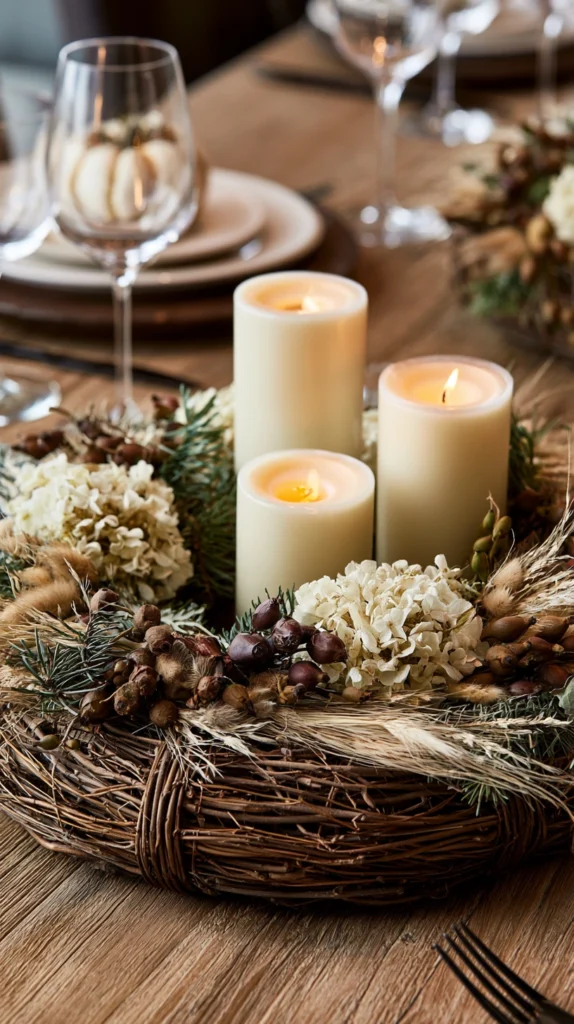
A wreath laid flat on the table as a centrepiece — the display format that references the gathering circle.
Why a horizontal wreath works as a centrepiece:
The wreath laid flat:
- The wreath: designed to be seen from one angle (hanging on a wall)
- Laid flat: seen from above and all sides
- The materials used must work from above
- The result: a garden circle on the table
The centrepiece wreath:
Building specifically for the table:
- A grapevine base (either purchased or made from the garden’s own vine)
- Materials arranged to look beautiful from above
- The materials: not just the top surface but filling the ring
The table wreath materials:
From the garden:
- Dried grasses tucked into the vine base
- Sprigs of rosemary (the evergreen)
- Dried hydrangea heads (papery and full)
- Rosehips pushed into gaps
- Small gourds nested within the ring
The centre of the ring:
- A cluster of candles in the centre of the wreath
- Three pillar candles at varied heights
- Or: one large candle in a candleholder
- The candles: the focal point within the circular garden
The arrangement:
The wreath materials:
- Less important that the top of the wreath is perfect
- More important that the overall circle reads as a rich, full arrangement
- The depth: built up by layering materials
- The result: a full, abundant ring
The vine base:
From the garden:
- The dried canes of climbing roses or hops or any vine
- Twisted into a ring
- The irregular: the charm
- Secured with wire or garden twine
Cost breakdown:
- Grapevine base: $0 (from the garden) or $8 purchased
- Garden materials: $0
- Candles: $12–18
- Total: $12–26
8. The Dried Flower Arrangement (The Harvest Preserved)
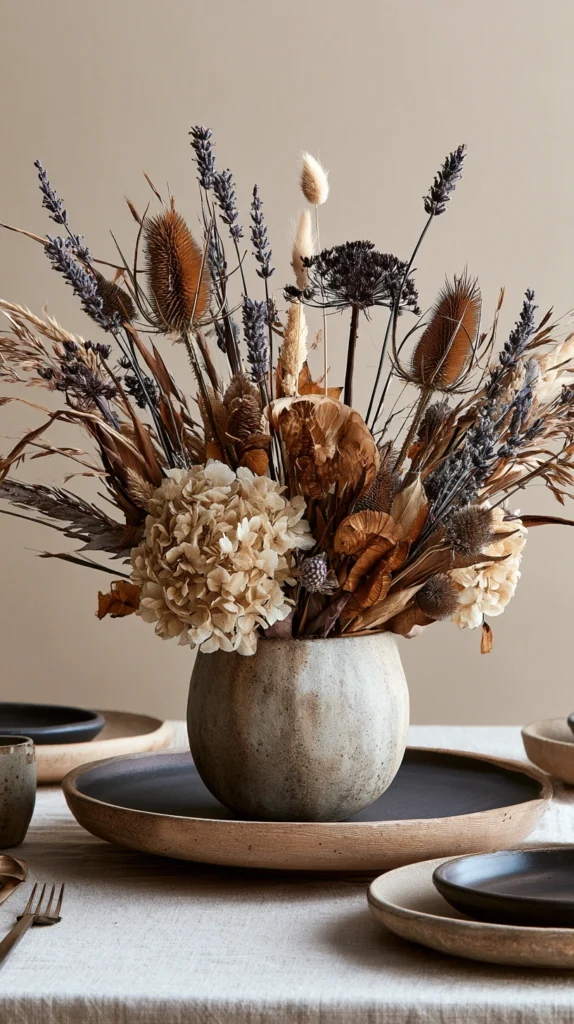
An arrangement of materials dried from the summer and autumn garden — the centrepiece that represents the whole growing year.
Why dried arrangements are specifically appropriate for Thanksgiving:
The Thanksgiving meaning:
- The harvest: the theme of the holiday
- The dried arrangement: the harvest preserved, the year’s growing captured
- The dried materials from the garden: specific to this garden’s year
- The centrepiece: the garden’s autobiography
What dries well from the garden:
Already dried on the plant:
- Honesty (Lunaria): the silver pods — the most beautiful dried plant material
- Teasel: the architectural spiky sphere
- Allium: the globe seed head
- Chinese lantern (Physalis): the orange paper lanterns
- Rudbeckia seed heads
- Echinacea cones
Dried from a summer or autumn cut:
- Hydrangea heads: papery cream and faded blue-pink
- Statice: the small papery flowers in blue, purple, and white
- Lavender: grey-silver stems and dried purple flowers
- Amaranth: the deep red feathery plumes
- Strawflower (Helichrysum): retains colour when dried
The arrangement:
The dried flower centrepiece:
- Tall elements: the dried grasses, the teasels, the tall stems
- Mid-level: the hydrangea heads, the large seed pods
- Low detail: the honesty discs, the small seed pods, the rosehips
- The three layers: applied to a low arrangement (12–15 inch maximum height)
The vase:
For dried arrangements:
- A heavy, opaque vase: the dried stems cannot hold water, the vase stability matters
- Or: a wire frog or floral foam in a wide bowl
- The opaque vase: hides the unsightly dried stem bases
The longevity:
The dried centrepiece:
- Lasts for the entire Thanksgiving season (and beyond)
- No watering required
- The same arrangement: beautiful on Thanksgiving and still beautiful in January
- The investment in a dried centrepiece: returns far longer than a fresh one
Cost breakdown:
- All from the garden: $0
- Quality ceramic or stoneware vase: $20–40
- Total: $20–40
9. The Fruit and Foliage Display (The Living Harvest)
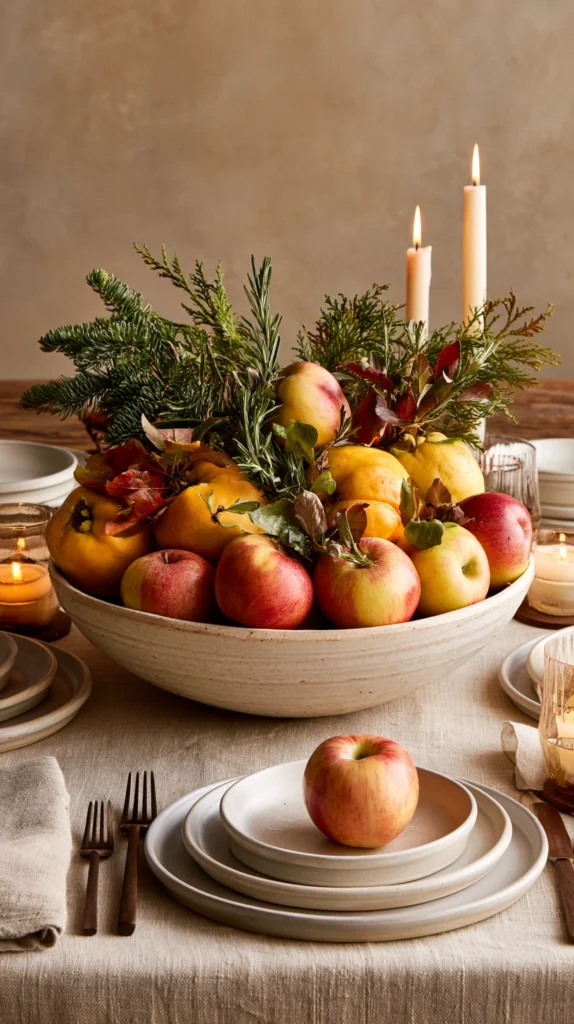
Late autumn fruit from the garden — crab apples, quince, rosehips — combined with foliage — the living centrepiece with the most vivid colour available in November.
Why fruit-based centrepieces are the most vivid option:
The fruit in November:
- The berries and small fruit: among the most saturated colour available
- The crab apple: brilliant red or orange, clustered
- The quince: golden, fragrant, weighty
- The pomegranate (in warmer climates): deep red, architectural
- The fruit: the colour that neither the dried seed heads nor the evergreens provide
The specific materials:
Crab apple branches:
- The small apples: clustered on arching branches
- Cut with long stems: in a vase with water (they last 1–2 weeks)
- The brilliant red against the table: the most vivid November colour
Quince:
- The large yellow fruit: placed directly on the table (not in water)
- Grouped in threes: the grouping principle
- The fragrance: the quince’s specific and extraordinary smell fills the room
- A quince centrepiece: scenting the Thanksgiving table
Pomegranate:
- Both decorative and edible
- The deep red: the most jewel-like colour available in November
- The opened pomegranate: the seeds visible (the most beautiful cut fruit)
- In a bowl or as individual elements among other materials
The foliage:
Combined with the fruit:
- Evergreen stems: providing the green structure
- Rosemary and bay: the fragrant herbs
- Holly leaves (if available): the gloss and structure
- The foliage: the backdrop against which the fruit reads
The arrangement approach:
A wide, low bowl:
- Filled with water
- Crab apple branches cut short (6–8 inches) and arranged in the bowl
- Evergreen sprigs added throughout
- Additional fruit placed around the bowl base
- The arrangement: living and fresh, changing subtly over the Thanksgiving weekend as the fruit develops
Cost breakdown:
- All from the garden: $0
- Wide bowl or vessel: $15–30
- Total: $0–30
10. The Garden Basket Centrepiece (The Harvest Gathered)
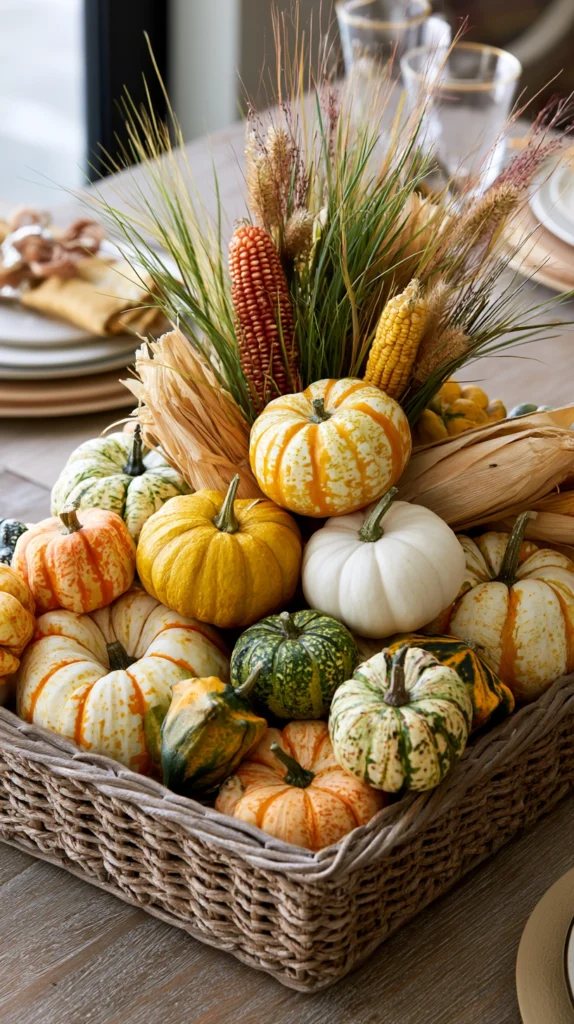
A wide basket or trug filled with the autumn garden’s harvest — the most abundant and most overtly harvest-themed centrepiece.
Why the basket reads as harvest:
The basket material:
- The woven basket: specifically associated with gathering
- The harvest brought in from the field: always in a basket
- The Thanksgiving centrepiece in a basket: the harvest theme made literal
The filling:
The overflowing principle:
- The basket: not neat but full
- Materials spilling slightly over the edge
- The abundance: the visual message
- The stuffed basket: the harvest at its most expressive
What fills the basket:
From the garden:
- Three or five small pumpkins of varied colour (the foundation)
- A bundle of dried corn leaned against the inside of the basket
- Gourds nestled among the pumpkins
- Dried grasses emerging from the back
- Rosehips scattered throughout
- Dried seed heads at intervals
From the kitchen garden:
- The last root vegetables (a parsnip, a few carrots) with their tops still on
- The dried bean pods from the summer runner beans
- The dried chilli strings
The styling:
The layers:
- Tall materials at the back (dried grasses, corn, dried fennel)
- Medium materials in the middle (pumpkins, gourds)
- Small details at the front and scattered throughout (rosehips, seed pods, acorns)
- The arrangement: receding from front to back
The basket itself:
The material:
- Woven willow or wicker: the most traditional
- A dark-stained or natural wicker: the autumn palette
- An aged or antique basket: the most character
- A simple gardening trug: also appropriate (the harvest tool itself)
Cost breakdown:
- Garden materials: $0
- Basket (if not owned): $15–30
- Total: $0–30
11. The Candle Garden (The Lighting Centrepiece)
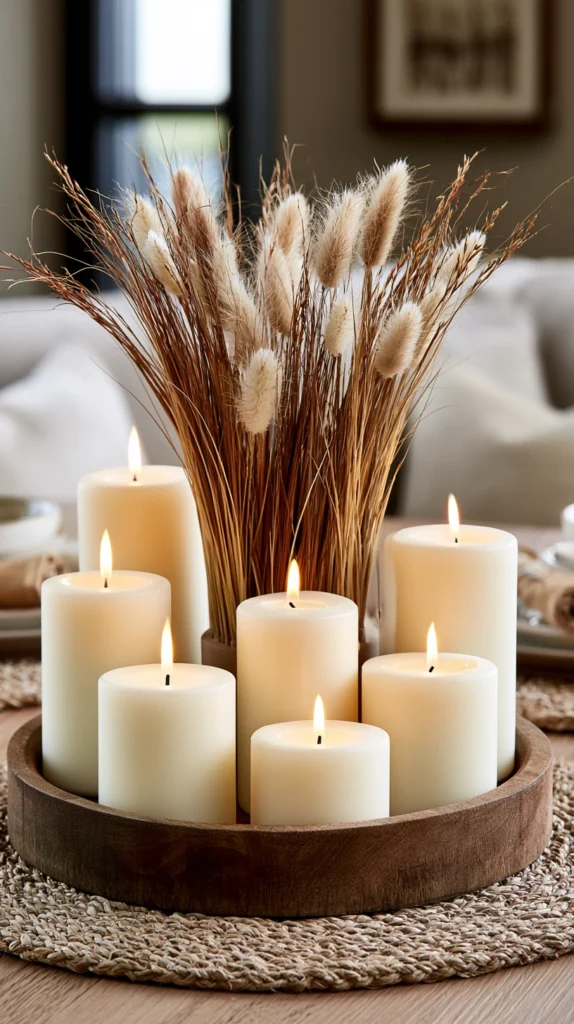
Multiple candles at varied heights, set among botanical materials — the centrepiece that is primarily light, with the garden materials as the setting.
Why a candle-forward centrepiece suits Thanksgiving specifically:
The Thanksgiving evening:
- Thanksgiving dinner: often at dusk or into the evening
- The candlelit table: the Thanksgiving aesthetic
- The candle garden: the centrepiece designed for evening
The candle types:
Pillar candles at varied heights:
- Three pillar candles: 3 inches, 5 inches, 7 inches tall
- The height variation: the visual interest
- All the same colour: cream or beeswax amber
- Arranged close together (not spread apart)
Taper candles in candlesticks:
- A pair of taper candles in mismatched candlesticks
- The mismatched candlesticks: the collected quality
- Tall: visible above the botanical materials
The botanical setting:
Around and between the candles:
- Dried grasses: the feathery frame
- Dried seed heads nestled between the candle bases
- Rosehips scattered at the base
- A few evergreen sprigs: the green accent
- Small gourds leaned against the candle bases
The safety:
- Candles and dried botanical materials: the fire consideration
- The dried grasses: kept away from the flames
- The arrangement: the candles accessible (the wicks reaching above the surrounding materials)
- Attended: always when the candles are burning
The hurricane glasses:
For safety and aesthetics:
- Hurricane glasses over some candles: protects from draughts and from the proximity of materials
- The glass: also beautiful (the flame visible through the glass, slightly diffused)
- The hurricane glass candle: the most practical candle for this type of centrepiece
Cost breakdown:
- Candles (three pillar, two taper): $20–30
- Candlesticks (pair): $15–30
- Hurricane glasses (2): $12–18
- Botanical materials: from the garden ($0)
- Total: $47–78
12. The Children’s Garden Centrepiece (The Made Together)
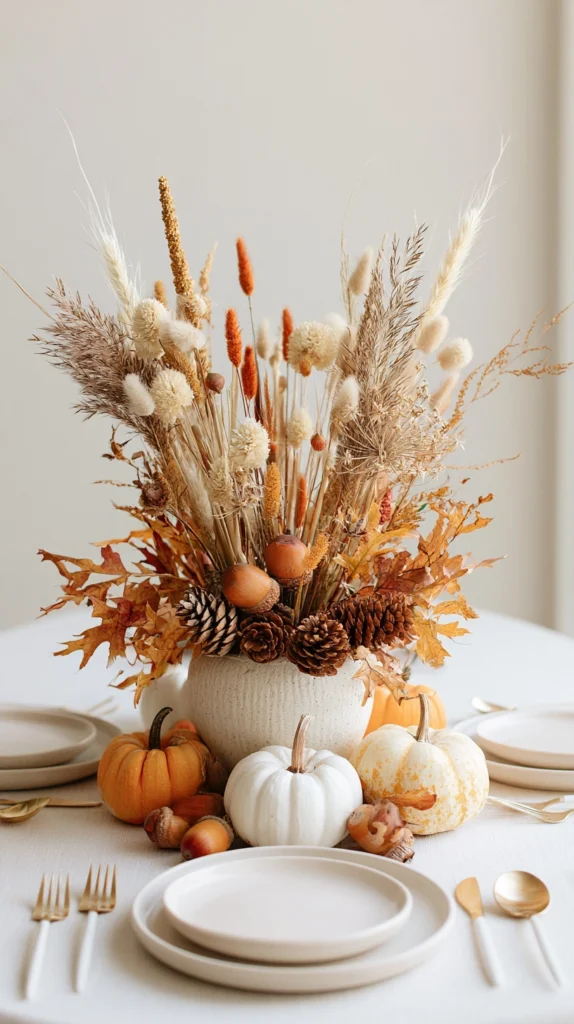
A centrepiece made with the children using materials gathered from the garden — the centrepiece that becomes a Thanksgiving tradition.
Why the made-together centrepiece is the most meaningful:
The table setting as a shared experience:
- The Thanksgiving table: the setting for the family gathering
- The centrepiece made together: a piece of the gathering already begun
- The children’s contribution: visible on the table throughout the meal
- The tradition: the centrepiece-making that precedes every Thanksgiving
The making process:
The gathering walk:
- Children and adults in the garden together
- Looking for the interesting, the beautiful, the seasonal
- The dried grasses, the seed heads, the fallen cones
- The walk: the attention to the garden as a shared act
The arrangement:
Simple enough for all ages:
- A wide bowl or basket
- Materials pushed into florist foam or arranged loosely
- No technical skills required
- The arrangement: as the children make it
The additions:
Painted elements:
- Acorns painted gold or bronze (gold acrylic paint: 10 minutes)
- Pine cones with white paint at the tips (the frost effect)
- Small pumpkins with painted patterns
- The craft-and-garden combination: the making is the activity
The displayed result:
On the Thanksgiving table:
- The children know which elements they gathered
- The centrepiece: a conversation point
- The tradition: remembered in years when the same process happens again
The materials:
- All from the garden and from craft supplies
- Nothing purchased specifically for the centrepiece
Cost breakdown:
- Garden materials: $0
- Gold paint and craft supplies: $5–10
- Florist foam or basket: $5–10
- Total: $10–20
13. The Complete Thanksgiving Table (All Garden Elements Together)
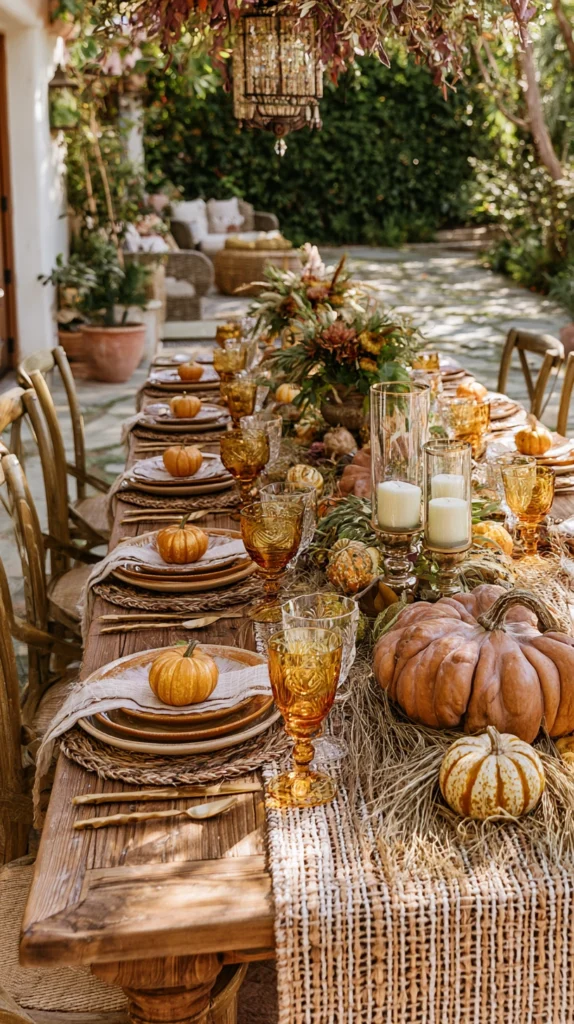
A complete table setting using only garden materials, from the centrepiece to the place settings — the fully garden-sourced Thanksgiving table.
What the complete garden-sourced table looks like:
The centrepiece:
- The grass and gourd runner running the length (Idea #1)
- Candles in hurricane glasses positioned along the runner
- The runner: the garden brought inside
The place settings:
The name card:
- A pressed autumn leaf (gathered and pressed from the garden as part of the cleanup, Idea #4 from the cleanup article)
- The guest’s name: written in gold ink on the leaf
- The leaf: at the place setting as a card
- The personal and the seasonal: combined
The napkin ring:
- A sprig of rosemary and a sprig of thyme: tied around the napkin with garden twine
- The fragrance: at each setting
- The herbs: used during the meal
- The napkin ring: fragrant, edible, and free
The place setting decoration:
- One small gourd at each place setting (a ‘Baby Boo’ white pumpkin: small enough to sit beside a plate)
- The guest takes it home at the end of the meal (the Thanksgiving favour)
The table surface:
Scattered along the runner:
- Dried rosehips
- Acorns and conkers
- Small pine cones
- The organic texture: the garden floor on the table
The mantelpiece and surrounding:
If the table is visible from a decorated fireplace:
- The berry branches from Idea #5: on the mantelpiece
- The dried arrangement from Idea #8: on the sideboard
- The gathering: entirely within the autumn garden palette
The lighting:
The candles:
- All beeswax or cream: the warm amber glow
- All in hurricane glasses: safe, undisturbed by draughts
- The room lit primarily by the table’s candles: the most beautiful version of the Thanksgiving meal
The complete table cost:
All plant materials from the garden: $0
- Hurricane glasses (5): $20–30
- Beeswax candles (5): $20–25
- Gold ink pen (for the leaf name cards): $4
- Garden twine for the napkin rings: $2
- Total: $46–61
The most beautiful and the most personal Thanksgiving table: the least expensive.
The Gathering Walk
Before any arrangement, any design, any vessel:
The gathering walk.
Thirty minutes in the November garden, a pair of secateurs, and a basket or trug. Looking at what is there with a different intention than maintenance — looking with the eye of someone who is going to display what they find.
The seed head that has been looking past for a month: now the most important structural element. The rosehips on the rose that was otherwise disappointing this year: suddenly the most beautiful thing in the garden. The dried grass plume: not a candidate for the compost pile but the centrepiece’s backbone.
The Thanksgiving centrepiece does not begin at the craft store. It begins here, in the garden, with the attention to what is already growing.
Everything else: the vessel, the candle, the arrangement — in service of what the garden already provides.
Getting Started
The immediate action:
Walk through the garden this weekend.
Not to clean it. To look at it as display material.
Write down (or photograph) everything that has potential:
- The seed heads still standing
- The berries on any plant
- The dried grasses
- The evergreen stems that could be cut without harming the plant
- The fallen leaves that are still at their best colour
Gather one trug of material.
Bring it inside. Put it on the kitchen table. Look at what is there.
Arrange it in whatever vessel is closest: a large mason jar, a deep bowl, an old jug.
That is the centrepiece. Not finished, perhaps. Not polished. But specific, seasonal, honest, and costing nothing.
The Thanksgiving table that starts from that first arrangement: the most Thanksgiving-appropriate table of all. The harvest, from this garden, this November, this year.