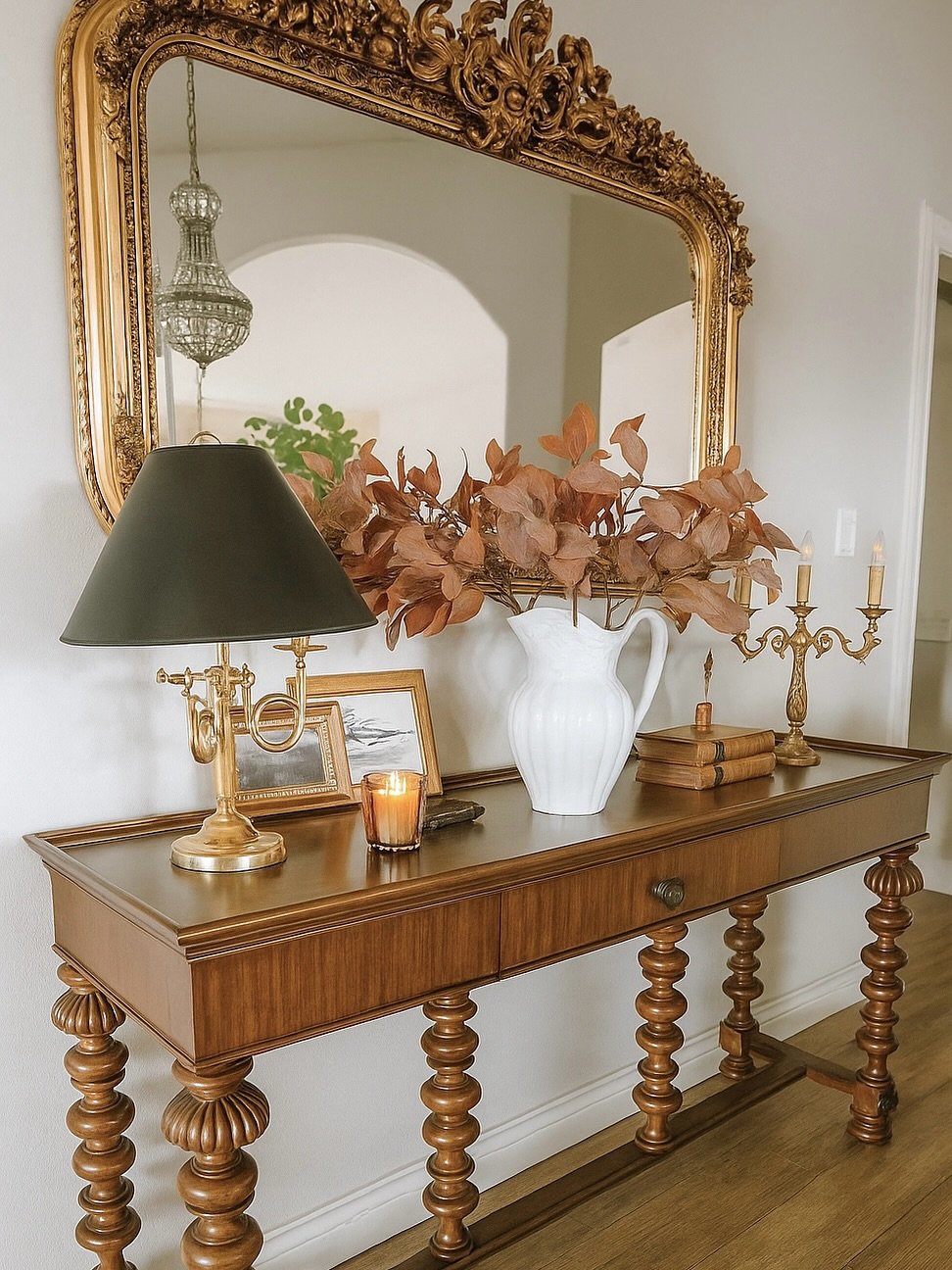
15 Fall Entry Table Decor Ideas
An entry table has one job in every season: give the eye something to land on before it takes in the rest of the space. In fall, that job comes with a second requirement, because the entry table is usually the first place a home signals the season has changed. Before the pumpkins on the porch, before any fall wreath on the door, the entry table is what registers first to anyone stepping inside.
That makes it a small amount of surface area carrying a disproportionate amount of seasonal responsibility. A cluttered fall table — every gourd variety at once, three competing colours, candles of four different heights with no relationship to each other — reads as decorated rather than styled. A restrained one, built on the same principles that make any surface look considered, reads as intentional the moment someone walks through the door.
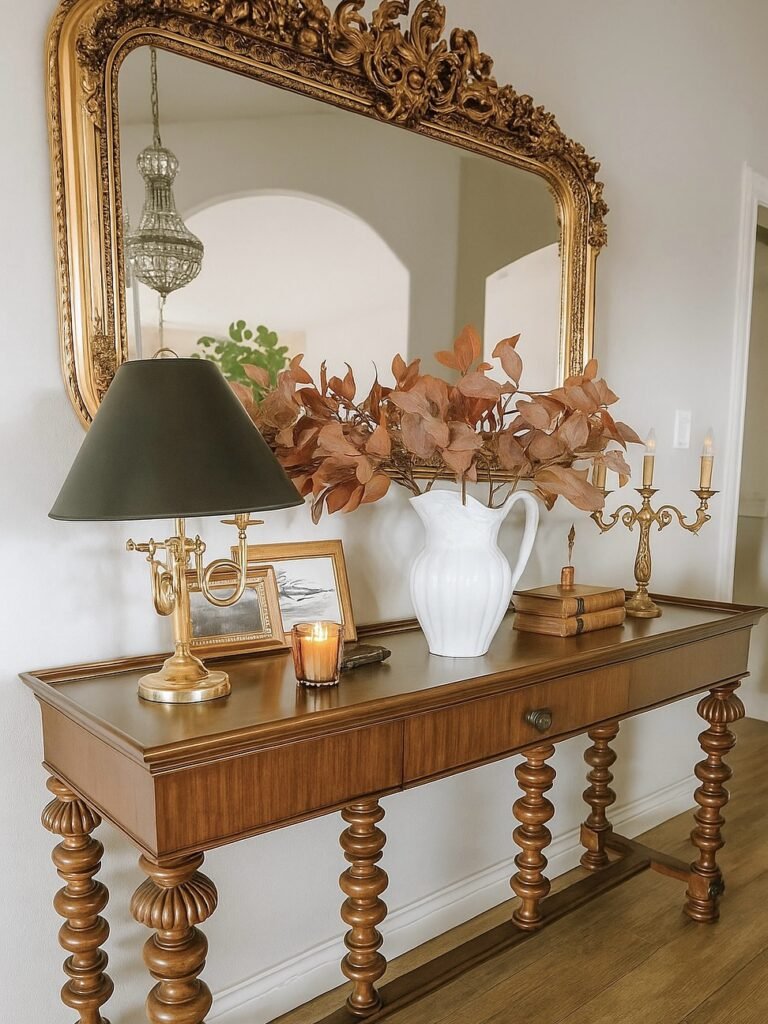
The good news is that fall styling has more built-in cohesion than almost any other season. Warm tones, natural textures, and organic shapes already relate to each other before a single decision is made. The task isn’t finding pieces that go together — it’s choosing a small enough number of them, and arranging them with the same restraint that works on any styled surface.
Here are 15 ways to do it, from a five-minute swap to a fully layered table.
Why Some Fall Tables Look Cluttered Instead of Cozy
The variety problem:
Without a restrained approach:
- Every fall object owned gets placed on the table at once: pumpkins, gourds, candles, leaves, and a wreath, all together
- Multiple competing colours: orange, deep red, gold, and brown all present in equal amounts
- No object taller than any other, so nothing anchors the eye
- The result: reads as a storage surface for seasonal decor rather than a styled table
With a restrained approach:
- A small number of object categories, each represented once or twice, not all of them at once
- One dominant tone (usually warm amber or deep cream) with one or two supporting accent colours
- A clear height hierarchy: one tall element, a few medium, a few low
- The result: reads as considered, the same as any other styled console or shelf
The scale problem specific to entry tables:
- Fall decor objects (pumpkins, gourds, branches) are often bought at a size suited to a porch or a large mantel, not a narrower entry table
- Oversized objects on a narrow table read as crowded regardless of how few there are
- Matching object scale to the table’s actual footprint matters as much as the object count
The single-note problem:
- An entry table styled entirely in pumpkins, with no other texture, reads as one-dimensional
- The same table with pumpkins, one dried botanical element, and one candle reads as a fuller seasonal moment, without necessarily using more objects
The Five Fall Table Essentials
Before choosing any individual idea below, these five categories account for nearly every well-styled fall entry table:
A grounding base:
- A tray, runner, or woven mat that defines the styled area within the larger table surface
- Keeps the arrangement from reading as objects scattered across the whole tabletop
One height anchor:
- A tall vase, branch, or lantern
- Gives the eye a clear starting point before it moves to the smaller objects
A textural cluster:
- Pumpkins, gourds, or dried botanicals grouped in odd numbers
- The main seasonal statement, kept to one grouping rather than spread thin
A warm light source:
- A candle or lantern, lit or unlit
- Reinforces the amber, low-light quality associated with the season
Restrained colour:
- One dominant warm tone with no more than one or two supporting accents
- The single biggest factor separating a styled table from a decorated one
1. The Layered Pumpkin Cluster
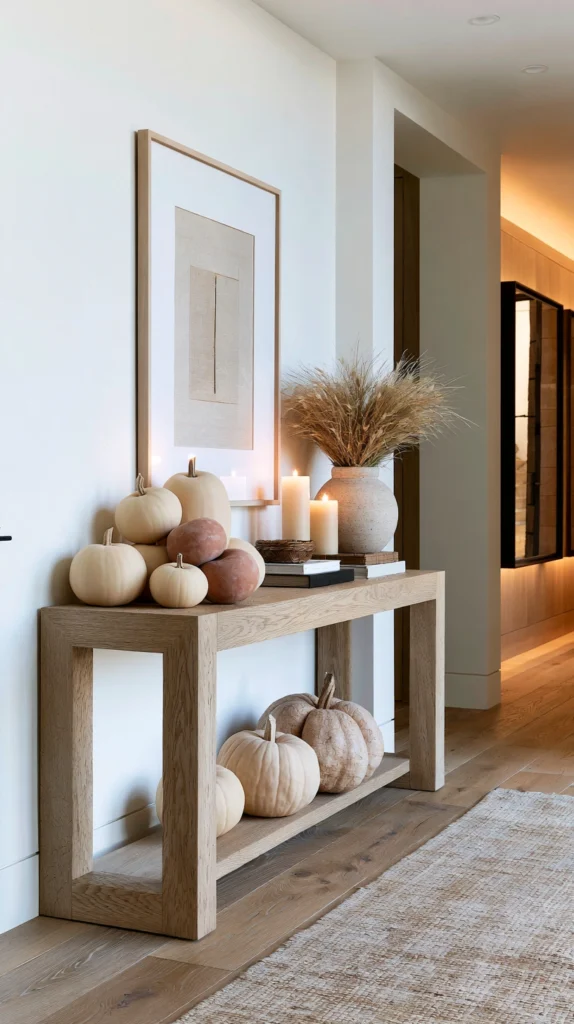
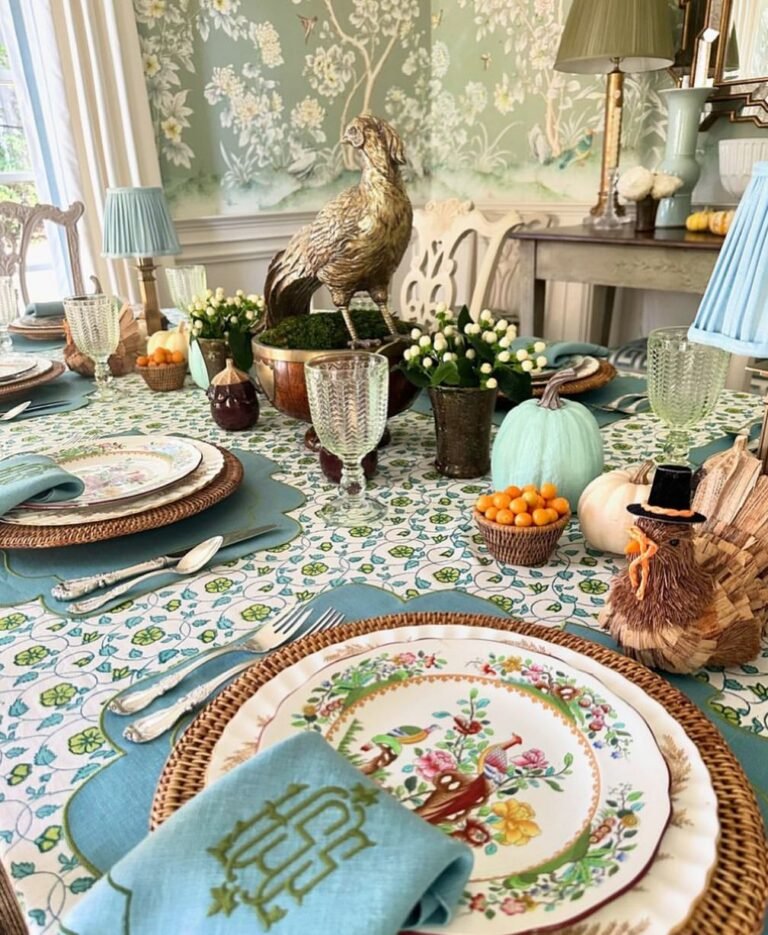
Three to five pumpkins in varied sizes and a single tonal colour family, grouped at one end of the table rather than spread across its full length.
Why one cluster beats a scattered arrangement
Pumpkins spread evenly across the table’s length compete with everything else placed there. The same pumpkins grouped into one confident cluster leave the rest of the table surface open for the height anchor and candle, and the varied sizes within the cluster create their own small hierarchy.
Choosing the cluster
- One larger pumpkin (6–8 inches), two medium (4–5 inches), two small (2–3 inches)
- A single colour family — natural orange, or an all-white and cream grouping for a more neutral palette
- Real or high-quality faux pumpkins both work; faux offers longevity across the full season without softening
Cost breakdown
- Pumpkins (5, mixed sizes): $15–35
- Total: $15–35
2. The Dried Pampas or Wheat Grass Vase
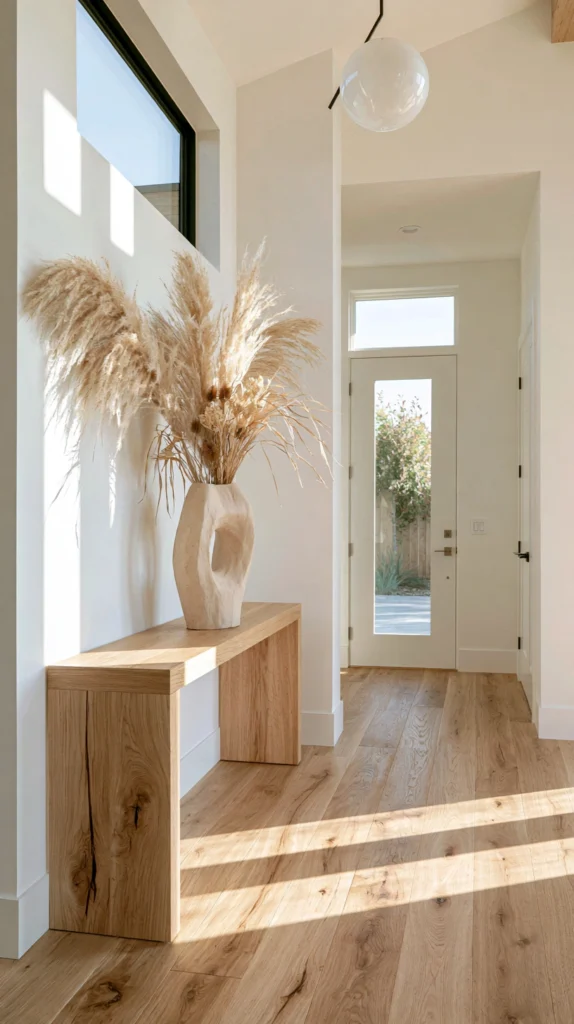
A tall vase filled with dried pampas grass, wheat stems, or bunny tail grass, positioned as the table’s height anchor.
Why dried botanicals work better here than fresh
Fresh fall florals typically last one to two weeks, requiring water and replacement through the full season. Dried grasses and stems last the entire season without maintenance, and their pale, warm-toned colour palette pairs naturally with the rest of a fall arrangement.
Sizing
- Vase height: 10–14 inches for a standard entry table
- Stem height above the vase: roughly 1.5 to 2 times the vase’s own height, so the full arrangement reaches 24–36 inches total
Cost breakdown
- Dried pampas or wheat grass bundle: $15–30
- Vase: $20–45
- Total: $35–75
3. The Layered Table Runner
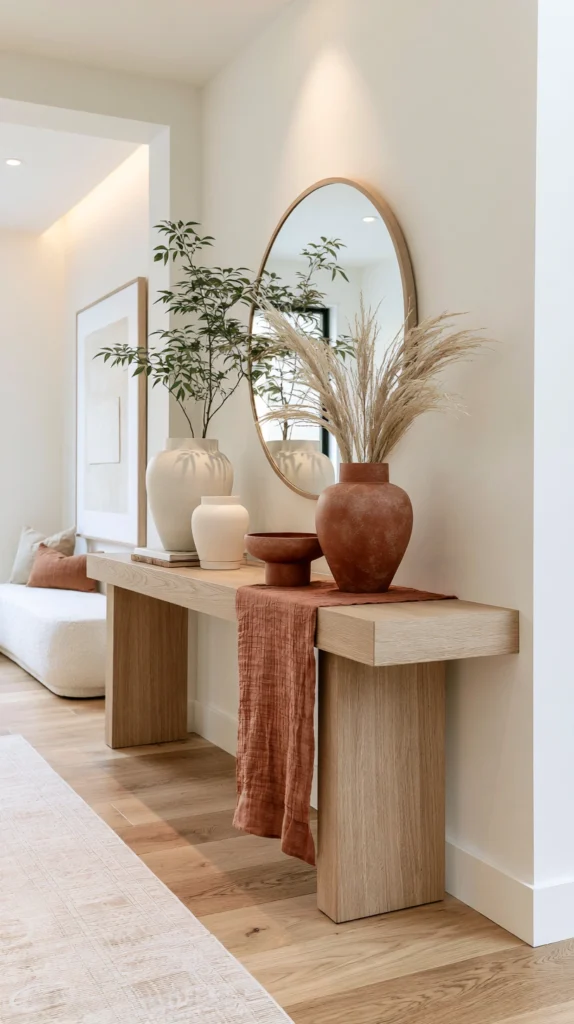
A textured table runner in a warm neutral or rust tone, positioned beneath the styled objects to define the arrangement’s footprint.
Why a runner grounds the whole table
Without a defined base, objects placed directly on a bare tabletop can look like they landed there individually. A runner creates a visual boundary for the styled area, the same way a rug defines a seating group, and its texture adds a layer of warmth before a single object is placed on top of it.
Material and placement
- Linen, burlap, or a loosely woven cotton in rust, cream, or warm brown
- Runner width: roughly two-thirds the table’s depth, so a few inches of bare table show on either side
- Runner length: extending slightly beyond the table’s edges on both ends for a relaxed, layered drape
Cost breakdown
- Table runner: $18–35
- Total: $18–35
4. The Amber Glass Vase Filler
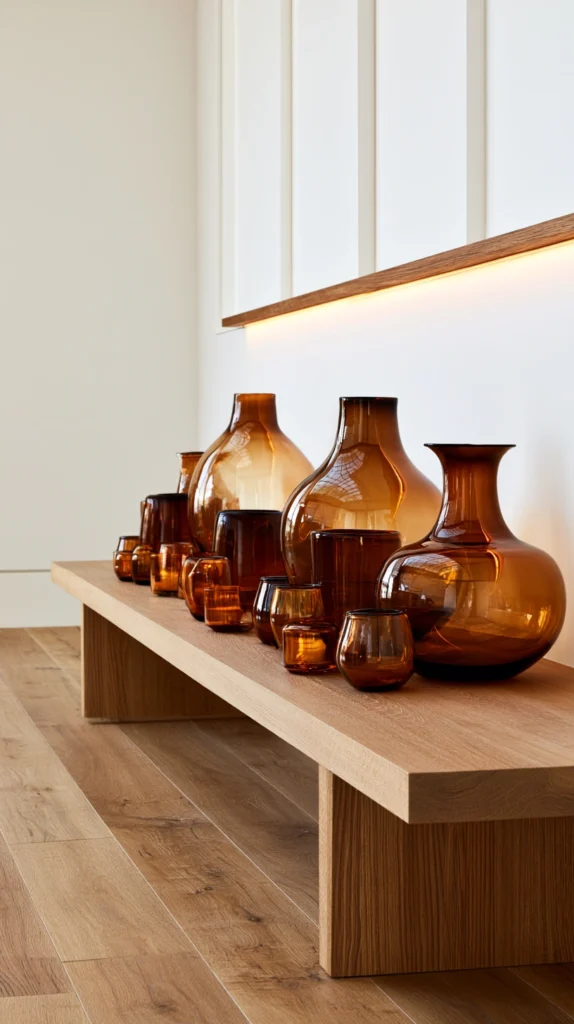
A cluster of amber or smoked-glass votives and small vases, grouped near the candle or lantern element, catching and warming the table’s overall light.
Why amber glass specifically
Clear glass reflects light without adding colour to it. Amber and smoked glass tint the light passing through them, reinforcing the warm, low-light quality associated with fall even before a candle is lit, and the colour reads as part of the seasonal palette on its own.
Grouping
- Three votives in varied heights (3, 5, and 7 inches), clustered rather than spaced evenly across the table
- Positioned near, but not directly beside, the pumpkin cluster, so each grouping remains visually distinct
Cost breakdown
- Amber glass votives (set of 3): $20–35
- Total: $20–35
5. The Stacked Fall-Toned Books
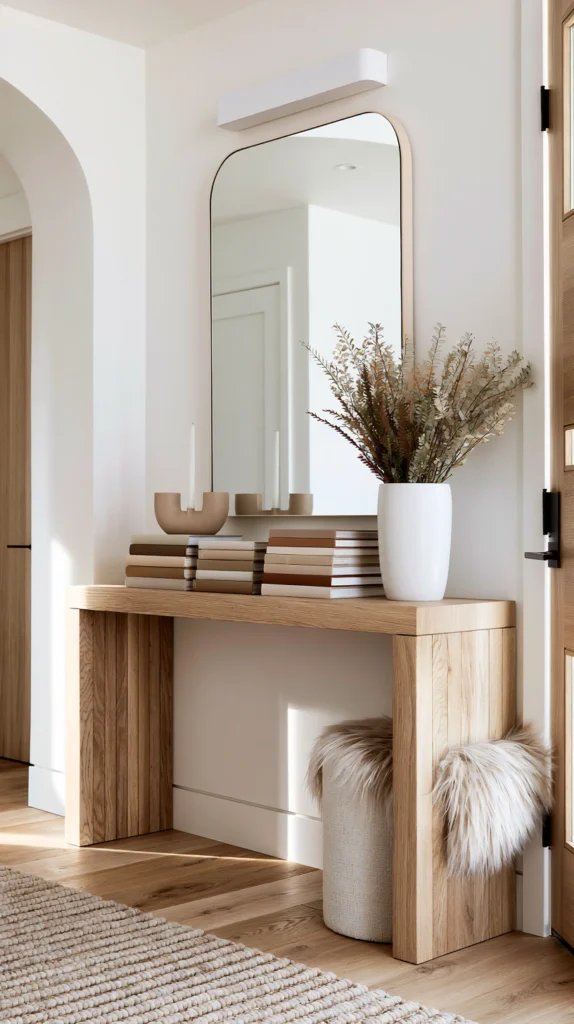
A small stack of two or three books in warm, muted cover tones, used as a base to elevate a smaller decorative object.
Why books work as styling, not just reading material
A stack of books does the same job on a fall table that it does on any styled shelf: it adds height variation and a considered, collected quality, and provides a natural pedestal for a smaller object like a mini pumpkin or a votive candle to sit on top of.
Selection and styling
- Choose books by cover tone (cream, rust, deep green, tan) rather than by title or subject
- Stack largest at the bottom, smallest on top, with the top book’s cover facing up
- Top the stack with one small object — a mini pumpkin, a small dried floral stem, or a candle
Cost breakdown
- Secondhand books by cover tone (2–3, if not already owned): $5–15 total
- Total: $0–15 depending on existing collection
6. The Taper Candle Pair
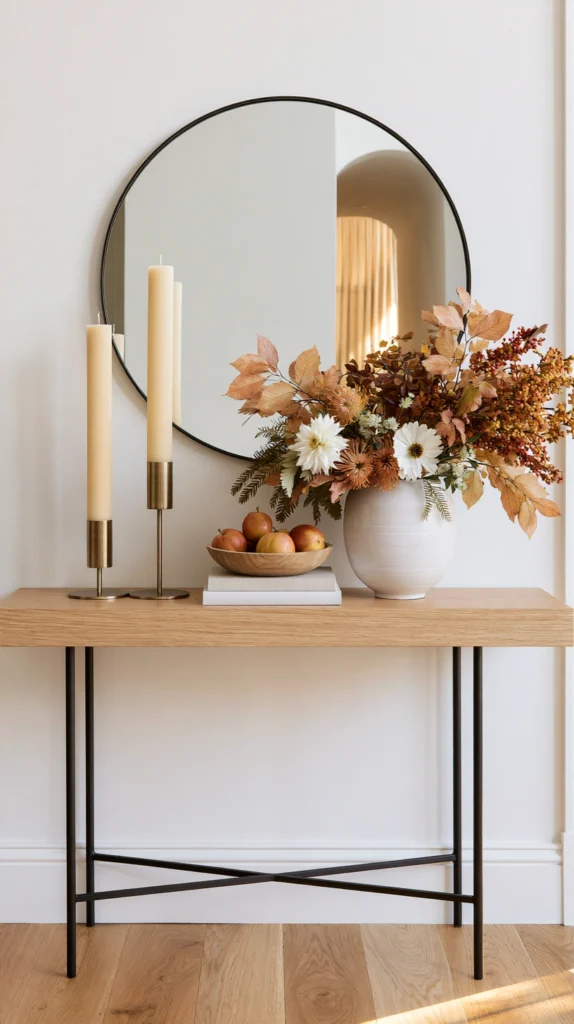
Two taper candles in a warm cream or terracotta tone, set in simple brass or ceramic holders, flanking or standing near the table’s central grouping.
Why tapers specifically, over pillar candles
Taper candles add height and a slim, elegant line that pillar candles don’t provide at the same scale, and a pair of them (rather than one) creates a small moment of symmetry within an otherwise asymmetrical table arrangement.
Placement
- Positioned at the back of the table, behind the pumpkin cluster, so their height is visible without the candles themselves crowding the front of the arrangement
- Spaced 6–10 inches apart if used as a pair
Cost breakdown
- Taper candles (pair): $10–20
- Candle holders (pair): $20–40
- Total: $30–60
7. The Woven Tray Base
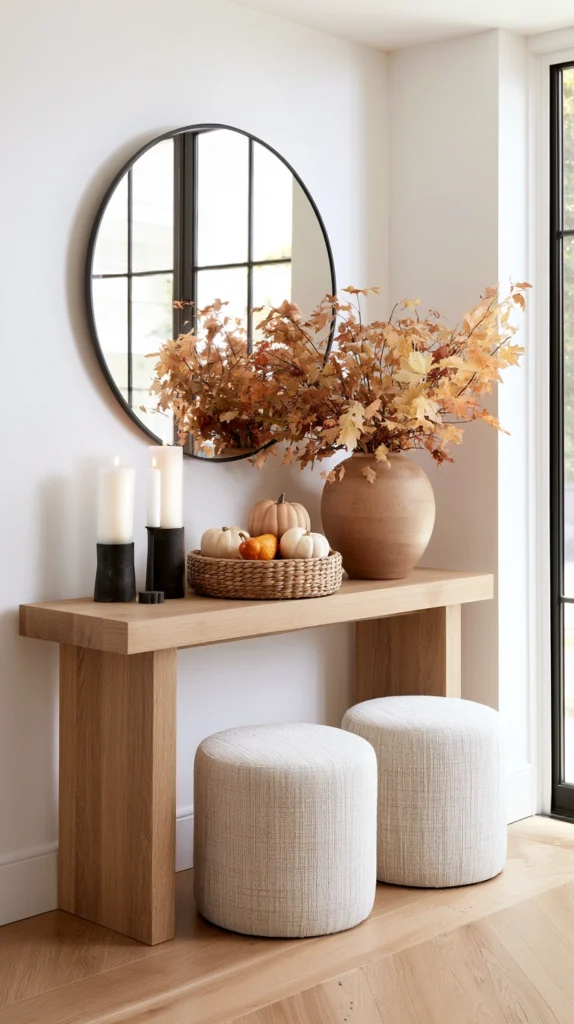
A round or oval woven tray beneath the main grouping, corralling the pumpkins, candles, and smaller objects into one defined unit.
Why a tray works even with a runner already in place
A runner defines the table’s overall styled zone; a tray defines a tighter grouping within it. Used together, they create the same layering effect a rug-within-a-rug does in a living room — the tray holds the primary cluster, while the runner extends the warmth to the rest of the table surface.
Sizing and material
- Woven rattan, seagrass, or wood, 14–18 inches in diameter
- Positioned toward the back third of the table, leaving the front open for a smaller accent object like the catch-all tray from an entryway system
Cost breakdown
- Woven tray: $20–40
- Total: $20–40
8. The Leaning Mini Wreath
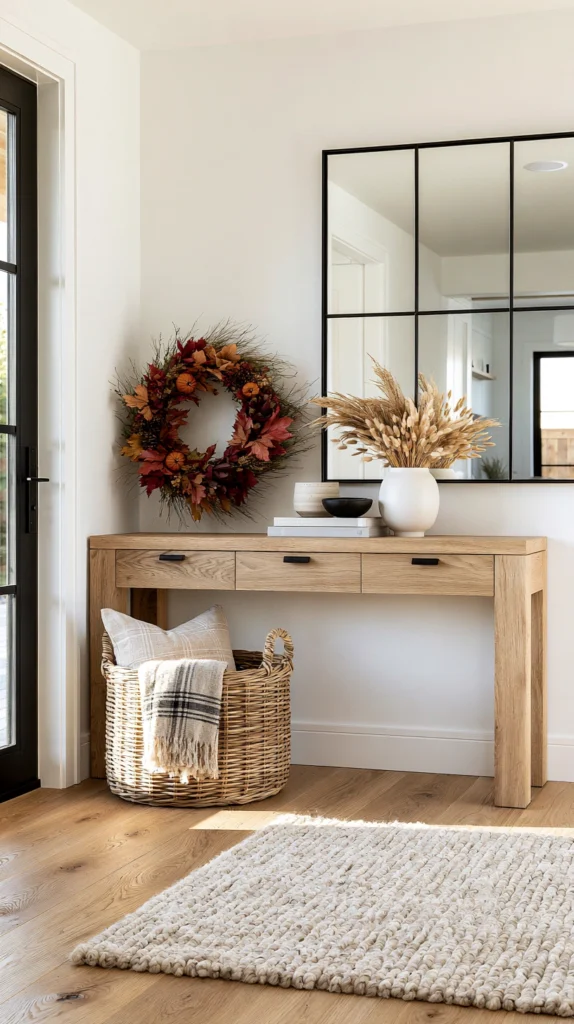
A small wreath, sized for the table rather than the door, leaned against the wall behind the table instead of laid flat on the surface.
Why a leaning wreath outperforms a flat one on a table
A wreath laid flat on a table surface takes up disproportionate space and competes directly with everything else placed on it. The same wreath leaned against the wall behind the table adds height and a seasonal silhouette without consuming any of the table’s actual surface area.
Sizing
- 12–16 inches in diameter, smaller than a typical door wreath
- Leaned centred behind the main grouping, or slightly off to one side if a mirror or art hangs above the table
Cost breakdown
- Small dried or faux fall wreath: $25–50
- Total: $25–50
9. The Mini Pumpkin and Acorn Scatter
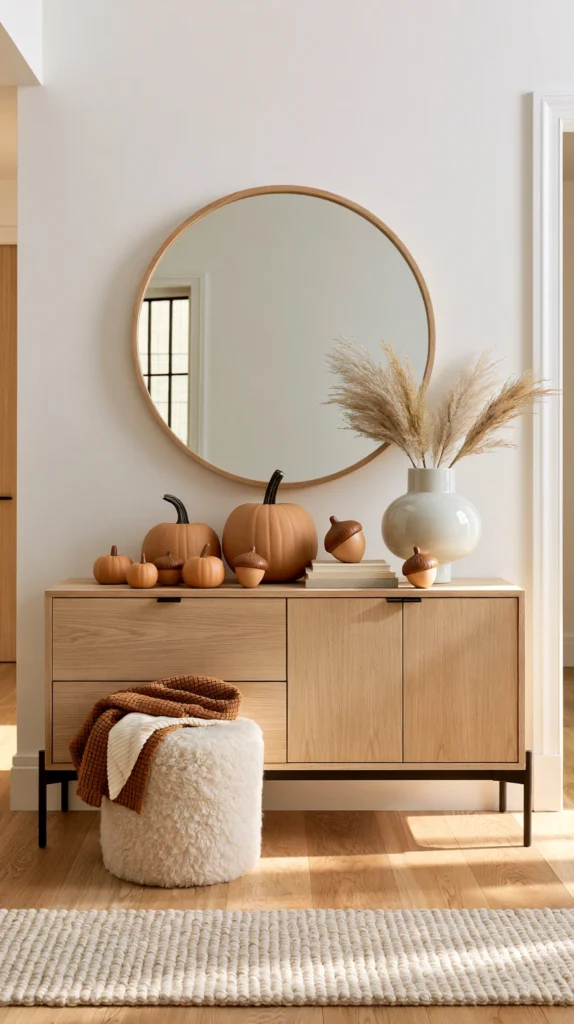
A small handful of mini pumpkins, gourds, or ceramic acorns scattered loosely around the base of the main cluster, rather than added as a second separate grouping.
Why scatter, not a second cluster
A second, separate grouping of small objects elsewhere on the table competes with the main cluster for attention. The same small objects scattered loosely at the base of the primary grouping instead reinforce it, adding texture and a slightly organic, gathered-from-the-garden quality without introducing a new focal point.
Selection
- 4–6 small objects (mini pumpkins, gourds, or ceramic acorns), no larger than 2–3 inches each
- Mixed textures if possible — one or two ceramic pieces among real or faux gourds add variation
Cost breakdown
- Mini pumpkins or gourds (4–6): $8–15
- Or ceramic acorn accents: $15–30
- Total: $8–30
10. The Dried Wheat Bundle Tied With Twine
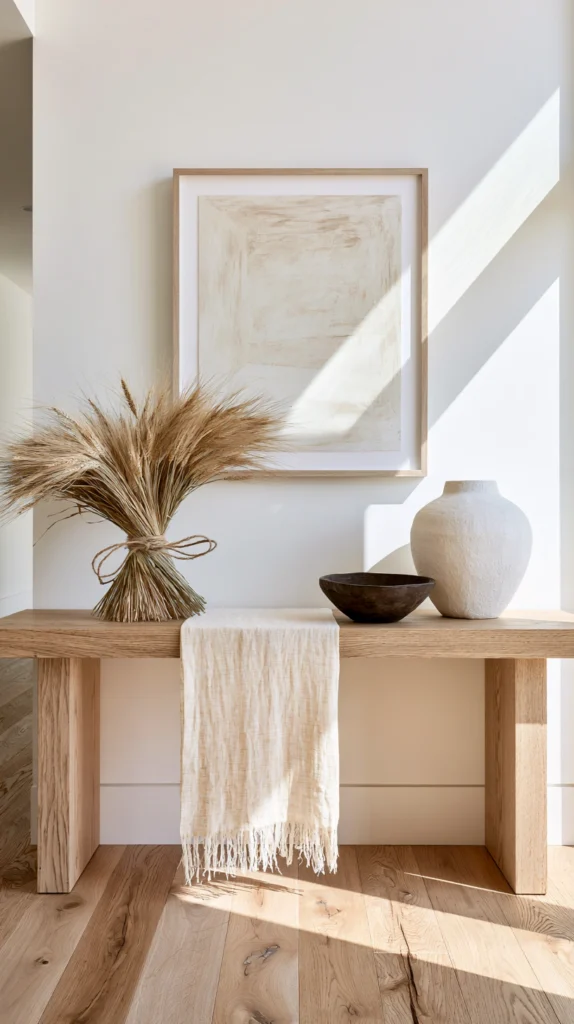
A small bundle of dried wheat stems, tied with natural jute twine, laid horizontally across part of the table rather than placed upright in a vase.
Why a horizontal bundle adds a different texture than the vase arrangement
The vertical vase (Idea #2) provides height; a horizontal bundle laid across the table provides a grounding line at the table’s base level, and the visible twine tie adds a small handmade, gathered detail that pure florals don’t offer on their own.
Placement
- Laid diagonally or horizontally near the front edge of the table, in front of or beside the pumpkin cluster
- Tied with two wraps of twine, left with a few inches of tail for a relaxed, unfussy finish
Cost breakdown
- Dried wheat bundle: $8–15
- Jute twine: $3–5
- Total: $11–20
11. The Ceramic Pumpkin Accent
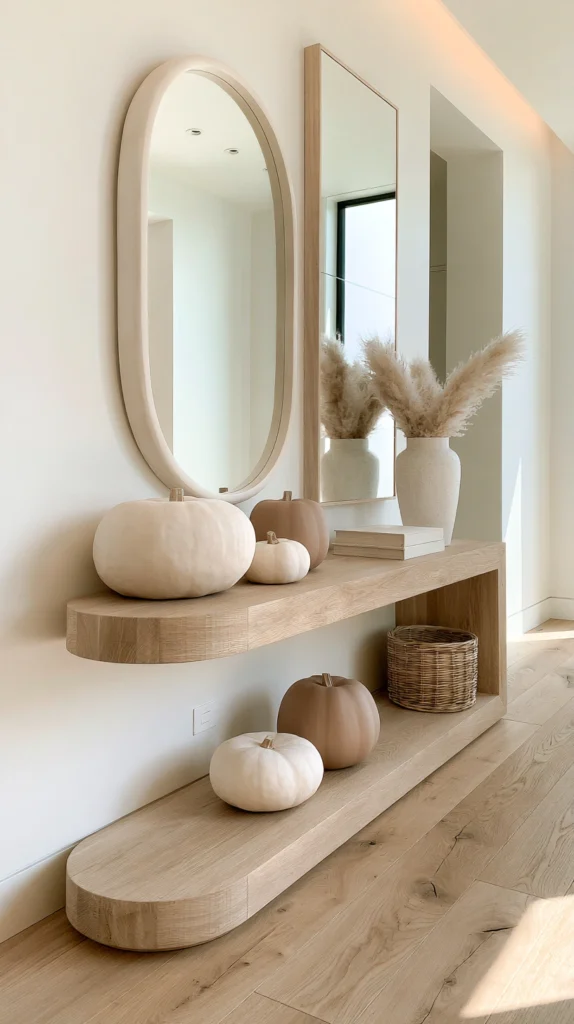
One or two higher-quality ceramic or stoneware pumpkins, in a matte neutral glaze, mixed into the main pumpkin cluster alongside real or faux natural pumpkins.
Why mixing in one ceramic piece elevates the whole cluster
A cluster made entirely of natural or faux pumpkins, however well-arranged, reads as seasonal decor purchased for the moment. Adding one higher-quality ceramic piece into the same grouping signals a longer-term design investment, and its matte glaze catches light differently than the natural pumpkins around it, adding variation within the cluster.
Selection
- A matte, neutral glaze (cream, sage, or warm grey) rather than a bright orange ceramic, which would compete rather than complement
- Sized to sit as the tallest or second-tallest piece within the pumpkin cluster
Cost breakdown
- Ceramic pumpkin accent: $25–50
- Total: $25–50
12. The Brass Lantern With a Candle
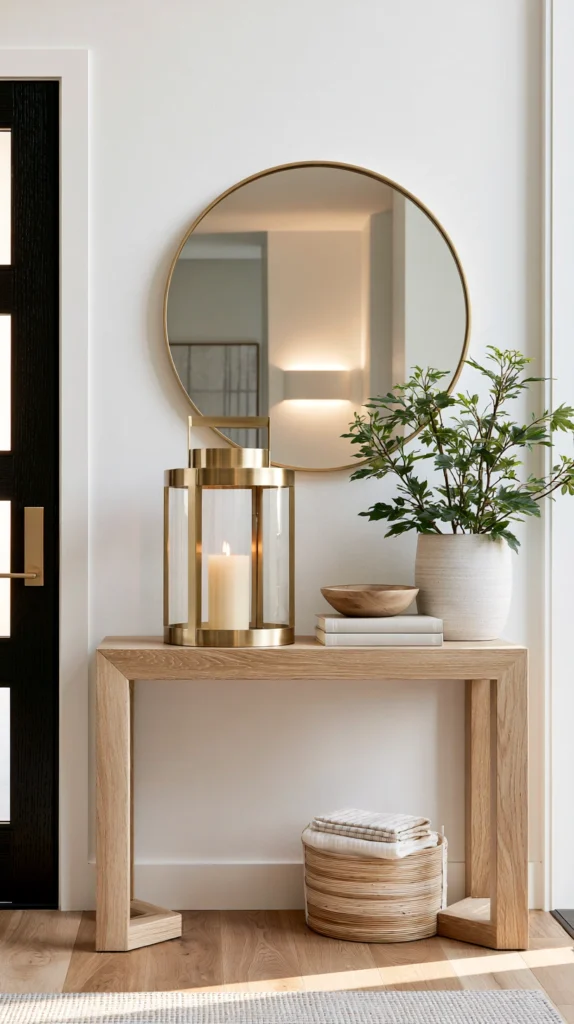
A small brass or aged-metal lantern, holding a pillar candle, positioned as an alternative or companion height anchor to the vase arrangement.
Why a lantern adds a different quality than an open candle
An open candle in a holder reads as decor; the same candle inside a lantern reads as a light source with intention behind it, and the metal frame introduces the warm-metal accent that ties an entry table into the same material language as the rest of the entryway’s hardware and fixtures.
Sizing and placement
- Lantern height: 10–14 inches, similar scale to the vase arrangement if both are used
- Positioned at the opposite end of the table from the vase, so the two height elements balance the table rather than crowding one end
Cost breakdown
- Brass or metal lantern: $30–60
- Pillar candle: $12–20
- Total: $42–80
13. The Fall Foliage Branch
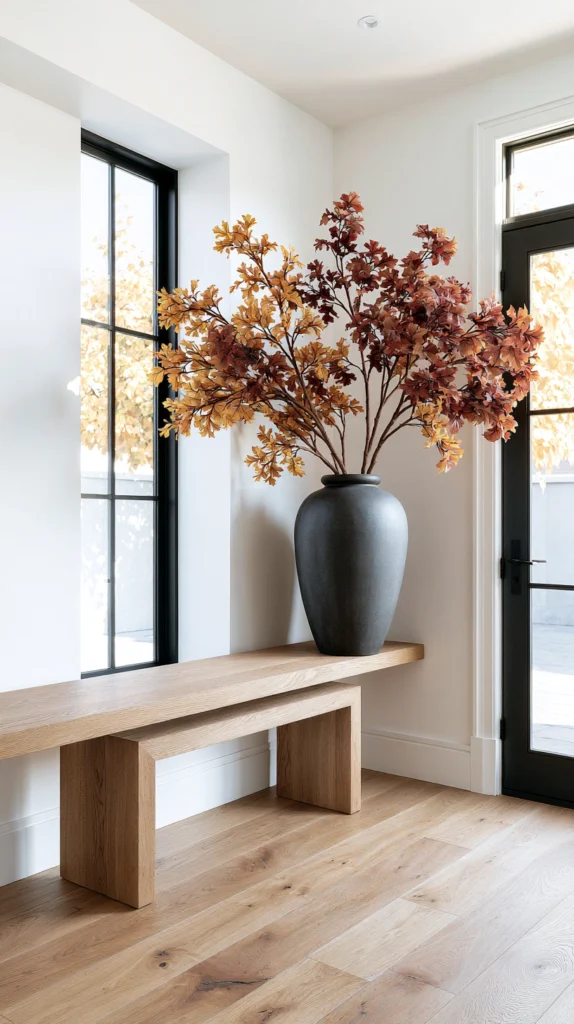
A single tall branch of faux or preserved fall foliage — maple, oak, or a similar turning leaf — in a tall floor or table vase, used in place of or alongside the pampas grass arrangement.
Why a foliage branch reads differently than grasses
Where pampas and wheat grass provide a soft, neutral texture, a foliage branch introduces actual seasonal colour — deep red, burnt orange, gold — directly into the height anchor, giving the table a stronger colour presence at eye level without needing colour anywhere else in the arrangement.
Sizing
- Branch height: 30–40 inches for a floor-standing tall vase, or 18–24 inches for a smaller tabletop version
- A single branch, not a full bunch — the goal is one graphic line, not a dense arrangement
Cost breakdown
- Faux fall foliage branch: $15–30
- Total: $15–30
14. The Cinnamon Stick and Botanical Bundle
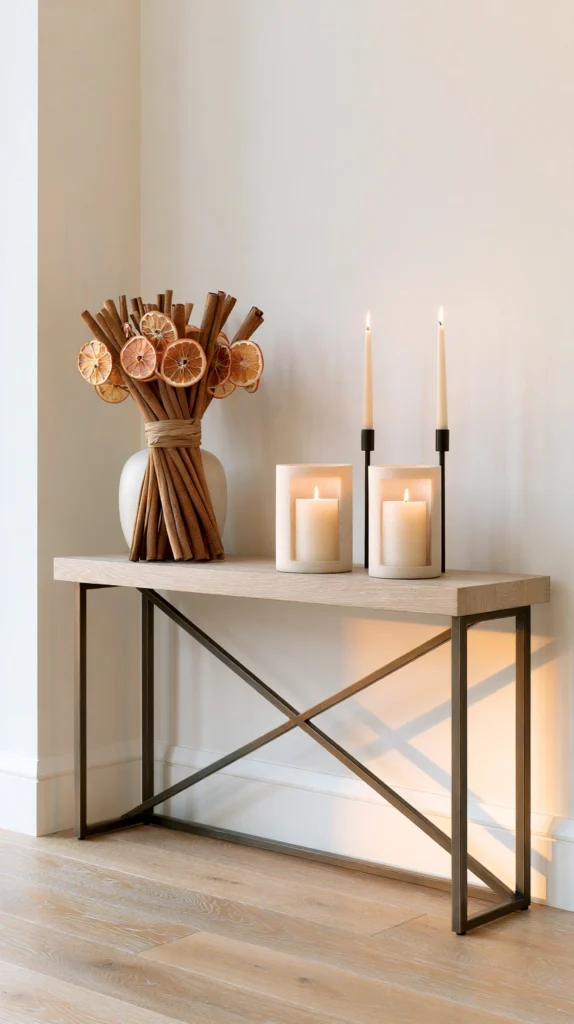
A small bundle of cinnamon sticks, dried orange slices, or mixed dried botanicals, tied and placed near the candle grouping — a detail-scale object that adds both texture and, in the case of cinnamon or dried citrus, a subtle scent.
Why a small tied bundle earns its place on a restrained table
Unlike a full seasonal wreath or a large floral arrangement, a small tied bundle takes up almost no table space while adding a layer of detail that rewards a closer look — exactly the kind of small, considered object that belongs in the catch-all tray or beside the candles on an already-styled table.
Assembly
- 4–6 cinnamon sticks, or 3–4 dried orange slices, bundled with twine
- Placed loosely beside the candle holders or tucked into the edge of the pumpkin cluster
Cost breakdown
- Cinnamon sticks or dried orange slices: $6–12
- Total: $6–12
15. The Complete Fall Entry Table
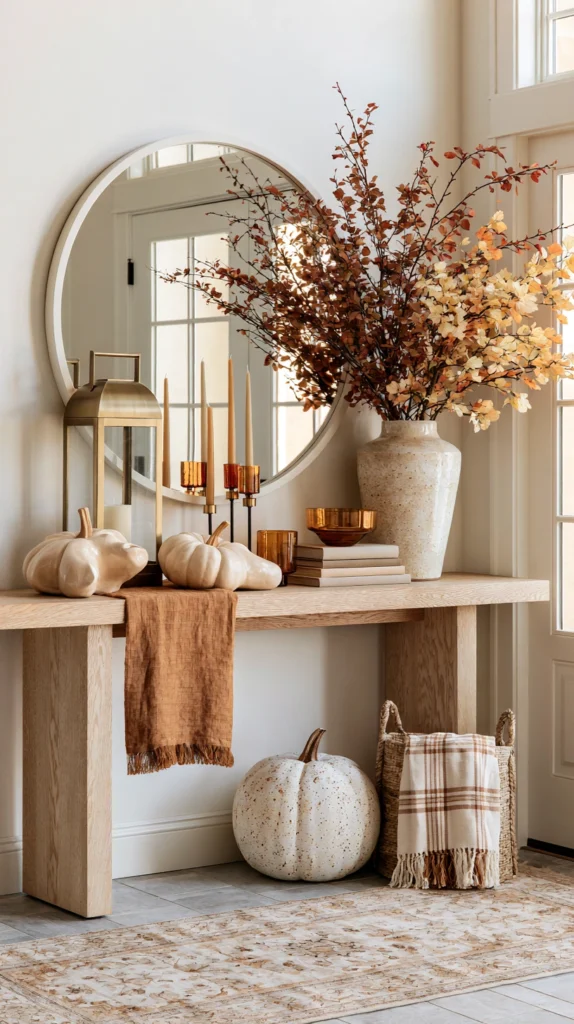
An entry table styled with every principle above applied together — the definitive version of a fall table that reads as intentional from the moment the front door opens.
What separates the complete table from a few good pieces
A table with a beautiful pumpkin cluster sitting directly on a bare tabletop, with no height anchor and no light source, still reads as unfinished. The complete version resolves every category — base, height, texture, light, and colour restraint — together, so the whole table reads as one arrangement rather than a few unrelated seasonal objects.
The elements of the complete table
The base:
- A layered table runner defining the styled zone (Idea #3)
- A woven tray grounding the main cluster within it (Idea #7)
The height anchors:
- A dried pampas or fall foliage branch in a tall vase at one end (Idea #2 or #13)
- A brass lantern with a candle at the other end (Idea #12)
The main cluster:
- A layered pumpkin grouping in one tonal colour family (Idea #1)
- One ceramic pumpkin accent mixed into the cluster (Idea #11)
- A scatter of mini pumpkins or acorns at its base (Idea #9)
The light and detail layer:
- A pair of taper candles behind the cluster (Idea #6)
- Amber glass votives near the candles (Idea #4)
- A small cinnamon or botanical bundle tucked beside the cluster (Idea #14)
The vertical backdrop:
- A mini wreath leaned against the wall behind the table (Idea #8)
The table on an ordinary fall evening:
The lantern and taper candles are lit as the light fades outside, their glow reflecting softly off the amber glass votives beside them. The pumpkin cluster sits grounded on the woven tray, the wheat bundle laid loosely in front of it. The wreath behind the table adds a shape at eye level without taking up an inch of surface space. Nothing on the table competes with anything else — each element has its own defined role and its own small footprint.
Cost breakdown for the complete table
Assuming a starting point of a bare entry table:
- Table runner: $18–35
- Woven tray: $20–40
- Height anchor (vase and grass, or branch): $35–75
- Lantern and candle: $42–80
- Pumpkin cluster: $15–35
- Ceramic pumpkin accent: $25–50
- Mini pumpkin scatter: $8–30
- Taper candles and holders: $30–60
- Amber glass votives: $20–35
- Wheat bundle: $11–20
- Cinnamon bundle: $6–12
- Mini wreath: $25–50
Total: $255–522
Phased for a quick versus a fuller season:
Quick version ($60–120):
- Table runner
- Pumpkin cluster
- One height anchor
- Taper candles
Fuller version ($200–400):
- All of the above, plus the woven tray, lantern, ceramic accent, and mini wreath
The complete fall entry table: not a large investment, but a small, layered system that carries the same considered feeling as any other styled surface in the home — just built for one specific, warm season.
The Question Before Any Fall Table Styling
Before buying a single pumpkin:
What is currently on this table the rest of the year?
If the answer is: nothing, it’s usually bare — start with the runner and one height anchor, then build the cluster on top of that foundation.
If the answer is: a catch-all tray and daily items already live here — style around them rather than replacing them; add the pumpkin cluster and candles to one open end of the table.
If the answer is: it’s already fairly styled with year-round objects — swap in seasonal versions of the same categories (a fall-toned vase filler in the existing vase, a warm candle instead of the existing one) rather than adding entirely new object categories.
If the answer is: unsure how much fall styling is too much — start with the pumpkin cluster and one candle pair; that combination alone reads as seasonal without any additional layers.
The styling follows what the table already does the rest of the year, not the most elaborate arrangement available. A table that already functions well daily just needs a seasonal layer added on top of its existing system, not a full replacement.
Getting Started This Weekend
The immediate fall table update:
Lay down a table runner in a warm, textured tone.
The base for everything else, and a change that works on its own even before any objects are added.
Group three to five pumpkins in one cluster, not scattered across the table.
The single highest-impact seasonal object, arranged with restraint.
Add one tall element — a vase of dried grass or a leaning mini wreath.
Gives the eye a place to travel upward before landing on the smaller objects.
Light one candle or lantern.
The detail that makes the whole table feel warm rather than simply seasonal.
The rest of the design: the elaboration of this weekend.
The layer: the beginning. The fall entry table: what stays styled through the whole season once it’s in place.