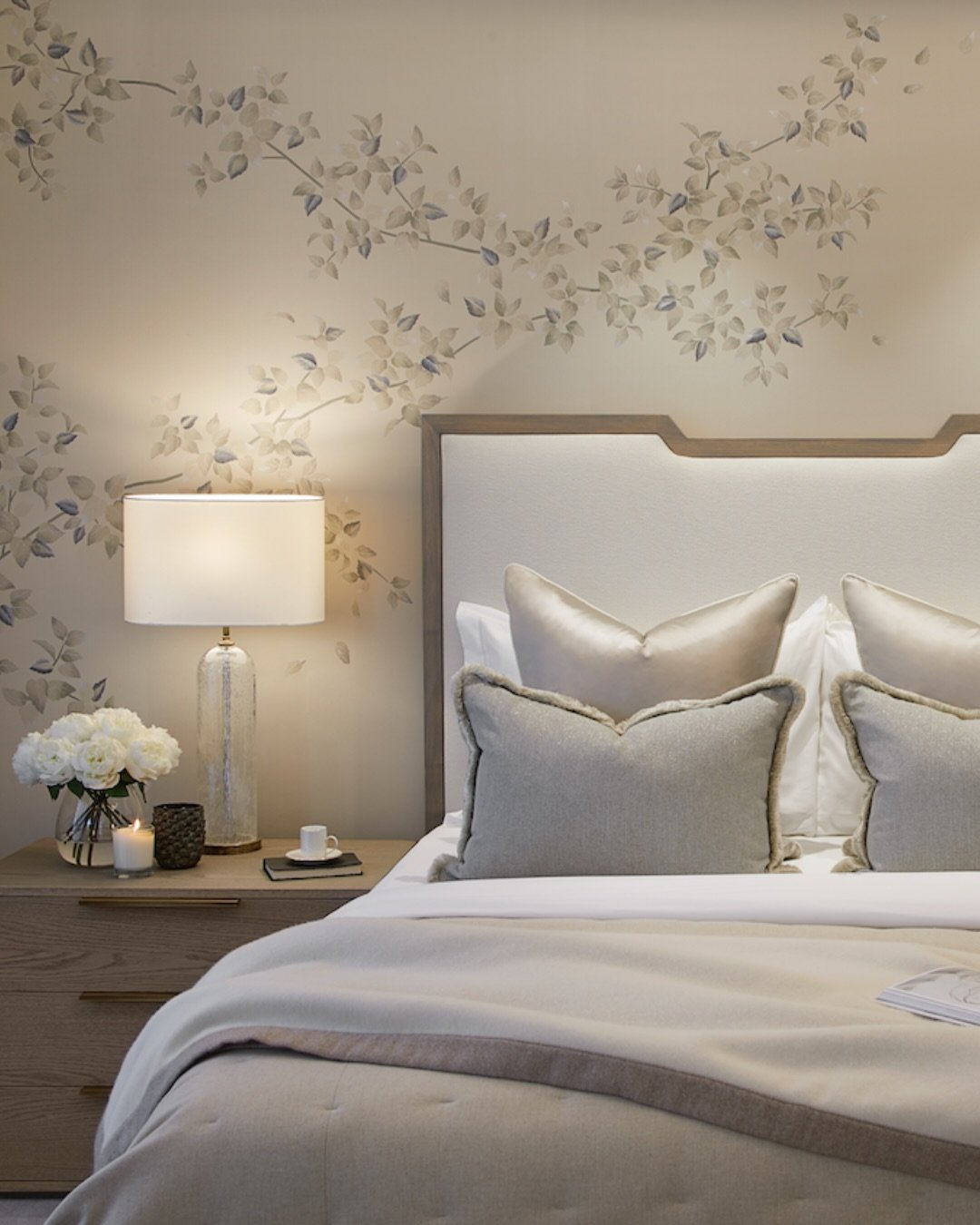
14 Bedroom Wallpaper Accent Ideas
Hung wallpaper on one wall of the bedroom and stood in the doorway afterward not quite believing it was the same room. Same bed. Same everything else. One wall changed.
That was the moment the whole room made sense. Before: a collection of furniture in a beige box. After: a room with a point of view.
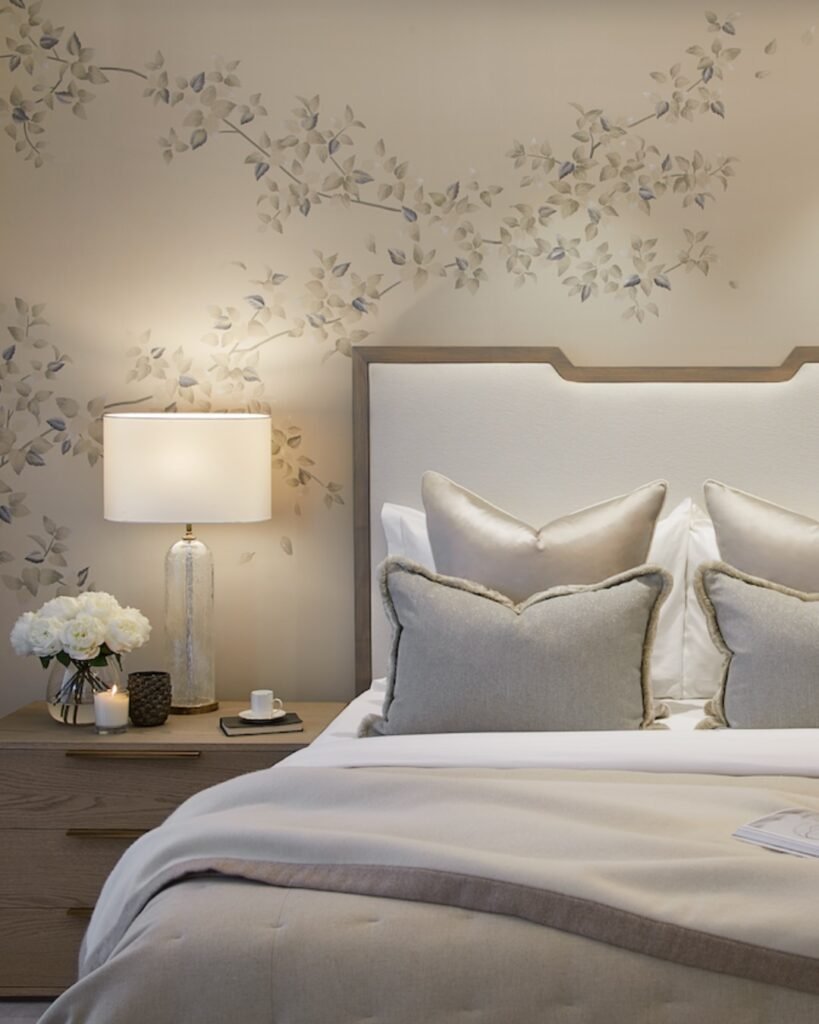
An accent wall is not decoration added to a room. It is the decision the rest of the room had been waiting for. Everything else — the bedding, the art, the lamps — exists in relationship to that wall once it is there. Before it: nothing has anything to relate to.
Here are 14 ways to make that decision.
Why Wallpaper Works as an Accent and Not Everywhere
The full-room commitment versus the single-wall decision:
Full-room wallpaper:
- A significant investment
- A significant commitment
- Pattern surrounds on all sides
- Right for some rooms, overwhelming in most bedrooms
The accent wall:
- One wall: contained risk
- The pattern: appreciated, not endured
- The cost: a fraction of full-room
- The commitment: lower, the impact: often equal or greater
The accent wall principle:
- Pattern needs negative space to be seen
- Three plain walls: the negative space
- One patterned wall: the statement
- The contrast: what makes the statement readable
Which Wall to Choose
Not arbitrary:
The headboard wall (most common and most effective):
- Behind the bed
- The wall seen by anyone entering the room
- Not the wall slept facing (the sleeper’s back is to it)
- The wall that frames the bed: the natural choice
Why the headboard wall works:
- The bed: the room’s largest object
- The wall behind it: the backdrop to that object
- Pattern behind the bed: frames it
- The headboard: appears more substantial against pattern
The alternative: the wall opposite the bed:
- The wall seen while lying in bed
- The last thing seen before sleep
- The first thing seen on waking
- A more contemplative choice: the pattern lived with rather than displayed
Avoid:
- The wall with the most windows (pattern competes with light changes, often looks patchy)
- A wall broken up by doors (the pattern interrupted, looks incomplete)
- A very narrow wall (the pattern cannot establish itself)
The Scale Question
Pattern size and room size:
Small bedroom:
- Larger scale pattern: surprisingly works
- Small pattern repeated many times: busier
- Large pattern: fewer repeats, calmer
- The counterintuitive rule: bigger pattern, calmer small room
Large bedroom:
- Small to medium pattern: can get lost
- The wall: large enough for any scale
- More freedom in scale choice
The viewing distance:
- Most bedroom wallpaper viewed from 6–10 feet (across the room)
- At this distance: detail blurs into overall pattern
- The overall effect: what matters most
- Step back before deciding (the showroom sample, viewed from across the room)
1. The Botanical Mural (Nature as Backdrop)
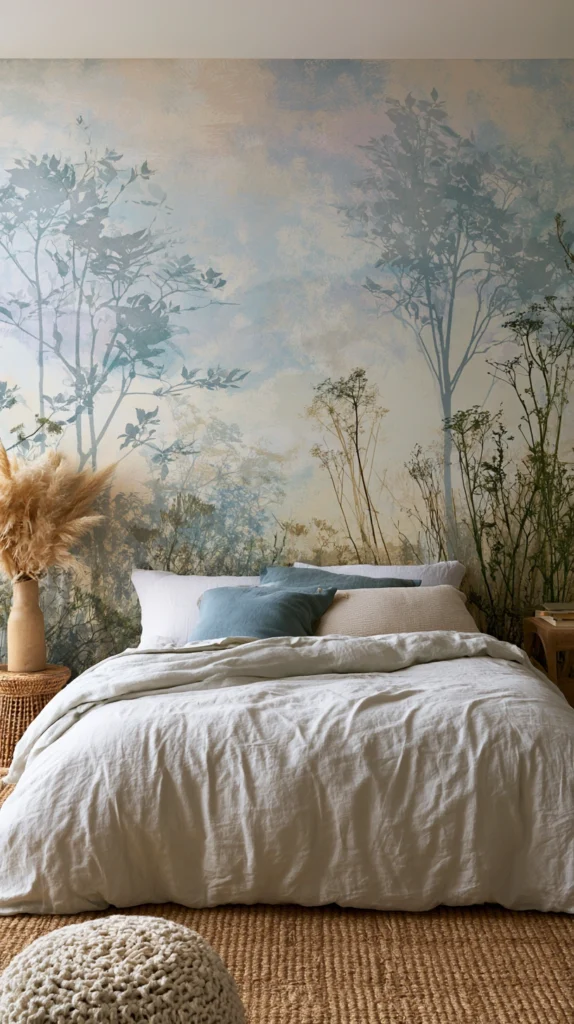
A large-scale botanical or landscape mural behind the bed — the wallpaper that turns the headboard wall into a window onto a garden, forest, or landscape.
Why botanical murals are the most-saved bedroom wallpaper:
The escape:
- A bedroom: the most private room
- A mural: extends that privacy into a landscape
- Waking inside a forest, a garden, a meadow
- The room: feels larger because the wall suggests space beyond it
The calming effect:
- Green and botanical colours: associated with relaxation
- The biophilic principle applied to wallpaper
- The bedroom: the room most benefiting from this calm
The styles:
Large leaf / jungle:
- Oversized leaves (monstera, banana, palm)
- Dense and immersive
- Suits a bold, warm bedroom
- Works in both small and large rooms (the scale: makes small rooms feel like a retreat)
Soft floral mural:
- Painterly, watercolour-style florals
- Often muted tones (dusty pink, sage, cream)
- Romantic without being twee
- Suits traditional and transitional bedrooms
Tree and woodland:
- Birch trees, woodland scenes
- Often monochrome or muted
- The most serene option
- Suits Scandinavian and minimalist bedrooms
Vintage botanical illustration (scaled up):
- Large-format reproduction of antique botanical plates
- Sophisticated and unusual
- Often in panels (not a continuous mural)
- Suits a more eclectic, collected bedroom
The installation:
Mural panels:
- Often sold as a set of panels that combine to form the full image
- Order based on wall measurements (height and width)
- Custom-sized options available from many suppliers
- Professional installation recommended for seamless panel alignment
Peel-and-stick versions:
- More accessible for renters
- Quality varies significantly
- The pattern: same impact, the application: more forgiving of mistakes
The colour relationship to the room:
Bedding:
- Pull one colour from the mural
- Solid bedding in that colour: ties the room together
- White or cream bedding: lets the mural be the only colour statement
Cost breakdown:
- Mural (full wall, mid-range): $200–500
- Professional installation: $150–400
- Total: $350–900
My jungle mural: the smallest bedroom in the house. The mural made it feel like the room extended into a forest. Visitors always comment first on this room.
Botanical Mural Tips
The pattern direction:
- Most botanical murals: have a clear top and bottom
- Some have a “horizon” that needs to align with the room’s proportions
- Order a sample and hold it up before committing
- The horizon line: should feel natural for the wall height
The lighting:
- Murals: respond significantly to lighting
- Warm light (2700K): enhances greens and warms the overall tone
- Avoid cool overhead lighting directly onto a botanical mural (washes out the colour)
2. The Geometric Statement (Pattern With Confidence)
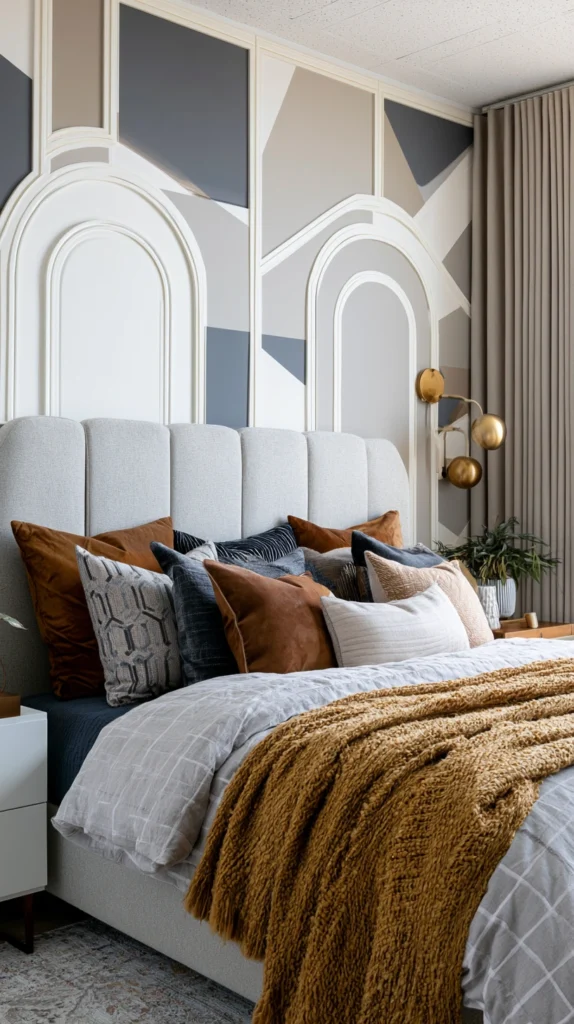
A bold geometric pattern on the headboard wall — the wallpaper choice for a bedroom with a contemporary point of view.
Why geometric patterns suit bedrooms more than expected:
The order:
- Geometric pattern: inherently ordered
- A bedroom: a room associated with rest
- Order: calming in its own way (different from softness, equally restful)
- The pattern: structured, the room: organised
The contemporary signal:
- Geometric pattern: reads as current
- The bedroom: updated without a full renovation
- The single wall: the entire signal
The pattern types:
Art deco-inspired:
- Fan shapes, sunburst patterns, geometric arches
- Often in gold/metallic on a dark ground
- Glamorous and warm
- Suits a bedroom wanting drama
Mid-century geometric:
- Repeating shapes (circles, triangles, hexagons)
- Often in two or three colours
- Retro but not dated
- Suits a room with mid-century furniture
Minimalist linework:
- Thin lines forming geometric shapes
- Often monochrome or two-tone
- Subtle from a distance, detailed up close
- Suits a pared-back, Scandinavian-leaning bedroom
Op-art / optical:
- Patterns that create visual movement
- Bold and graphic
- Higher risk: works best in larger rooms
- The statement: unmistakable
The colour approach:
Two-tone (most versatile):
- One pattern colour, one ground colour
- Easier to coordinate with bedding and furniture
- The classic geometric wallpaper approach
Metallic accent:
- Gold, copper, or silver within the pattern
- Catches light, adds warmth (gold/copper) or coolness (silver)
- The metallic: a small amount goes a long way
The headboard relationship:
With the geometric wall:
- A simple, solid-colour headboard: lets the pattern lead
- An upholstered headboard in a contrasting solid: the pattern frames it
- Avoid: a second pattern on the headboard (competing patterns)
Cost breakdown:
- Geometric wallpaper (one wall): $80–250
- Professional installation: $100–250
- Total: $180–500
3. The Textured Grasscloth (Subtle Sophistication)
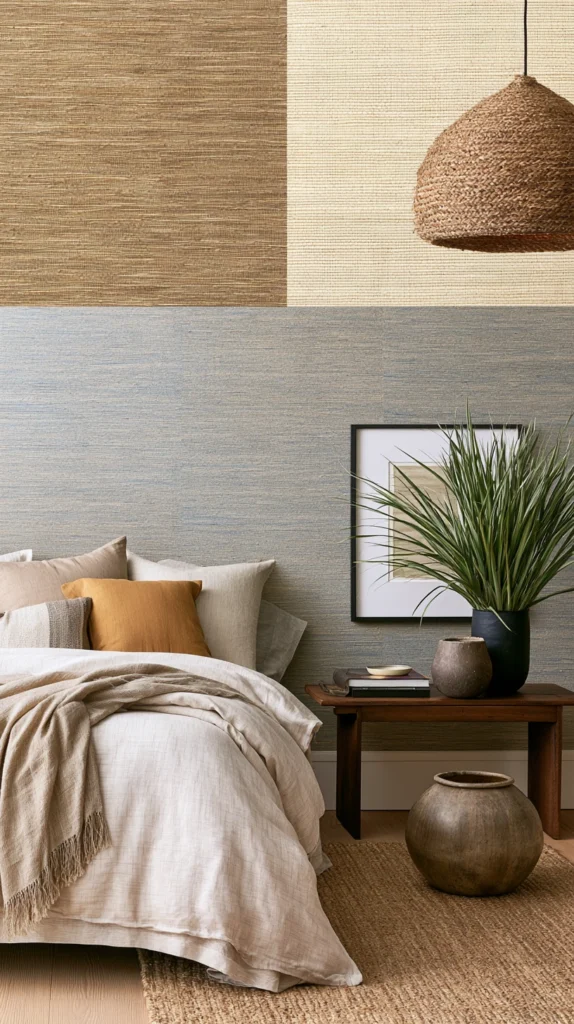
Natural grasscloth or textured wallcovering — the accent that adds depth and warmth without pattern.
Why grasscloth works when pattern feels like too much:
The texture-not-pattern solution:
- Some people want more than paint, less than a bold pattern
- Grasscloth: the answer
- Texture: visible up close, subtle from across the room
- The depth: photographs as richness, not busyness
What grasscloth is:
The material:
- Natural fibres (jute, sisal, arrowroot) woven and adhered to a paper backing
- Each roll: slightly different (a natural product)
- The variation: part of the appeal (not a flaw)
The colour range:
- Natural tones (tan, oatmeal, warm grey)
- Dyed versions in nearly any colour
- Deep colours (navy, forest green, charcoal) in grasscloth: particularly striking — the texture catches light differently across the surface
Why it suits bedrooms specifically:
The acoustic quality:
- Textured wallcoverings: absorb sound slightly more than smooth paint
- A quieter wall: a subtly calmer room
- Not dramatic, but bedrooms benefit from any reduction in echo
The warmth:
- Grasscloth: visually and texturally warm
- Cold bedroom walls (especially in older homes): grasscloth adds perceived warmth
- The material: never reads as cold, regardless of colour
The installation considerations:
Seams are visible:
- Unlike pattern-matched wallpaper, grasscloth seams show as a natural part of the texture
- This is expected and correct, not a flaw
- Professional installation: still recommended (grasscloth can be fragile during hanging)
Avoid high-moisture areas:
- Not suitable for bathrooms or very humid rooms
- A bedroom: typically fine
- Ensure the wall is fully cured if recently plastered
The colour and the room:
Deep tones (navy, forest, charcoal, burgundy):
- The most-saved grasscloth bedroom application
- Pairs with brass or warm metal accents
- Creates an enveloping, cocoon-like feeling — particularly suited to the headboard wall
Natural tones (oatmeal, sand, warm grey):
- The quiet sophistication choice
- Works in almost any bedroom style
- A safe but elevated choice for those uncertain about commitment
Cost breakdown:
- Grasscloth wallpaper (one wall): $150–400 (natural fibre wallcoverings cost more than printed paper)
- Professional installation: $150–350 (more technical hanging)
- Total: $300–750
4. The Vintage Floral Revival (Heritage With a Twist)
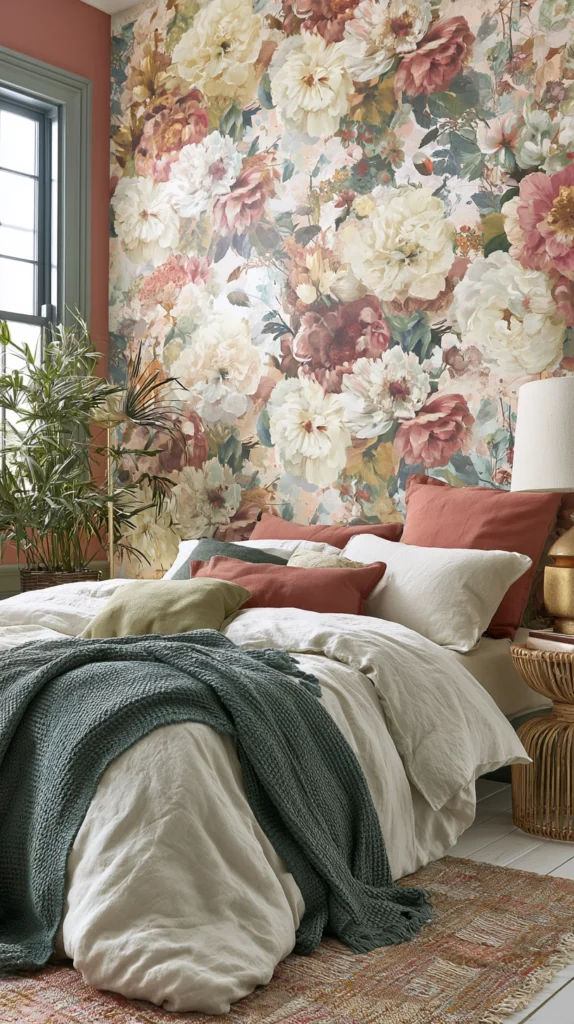
A large-scale vintage-style floral on one wall — the pattern that brings warmth, history, and romance without overwhelming.
Why vintage florals are returning to favour:
The reaction to minimalism:
- Years of pared-back, neutral interiors
- The pendulum: returning toward warmth, pattern, and personality
- Vintage florals: the clearest expression of that shift
- The bedroom: the room where this feels most appropriate first
The scale matters:
Large-scale florals (the current preference):
- Oversized blooms (sometimes life-size or larger)
- Fewer repeats across the wall
- Reads as art rather than “wallpaper pattern”
- The single wall: enough for the full effect of the design to be appreciated
Small-scale ditsy florals:
- Tiny repeated flowers
- More traditional, more cottage
- Can feel busy on a full wall if the room is small
- Better suited to a room with more negative space elsewhere
The colour direction:
Muted and earthy (most current):
- Terracotta, sage, dusty rose, mustard, warm brown
- Less “chintz,” more “heritage”
- Pairs beautifully with brass, wood tones, and linen bedding
Dark ground florals:
- Florals on a black, navy, or deep green background
- Dramatic and cocooning
- The flowers: appear to glow against the dark ground
- A striking headboard wall choice
Cream or white ground florals:
- Lighter, more traditional
- Suits a room wanting brightness with pattern
- The classic English country bedroom approach
The room around it:
Keep furniture simple:
- A vintage floral wall: the room’s pattern statement
- Furniture in solid wood tones or simple upholstery
- Avoid patterned bedding competing with the wall
The lamp and lighting:
- Warm light enhances the depth of vintage florals significantly
- A bedside lamp with a fabric shade: softens further
- The combination: the wall glows rather than just being lit
Cost breakdown:
- Vintage floral wallpaper (one wall): $90–280
- Professional installation: $100–250
- Total: $190–530
5. The Dark and Moody Wall (Drama Behind the Bed)
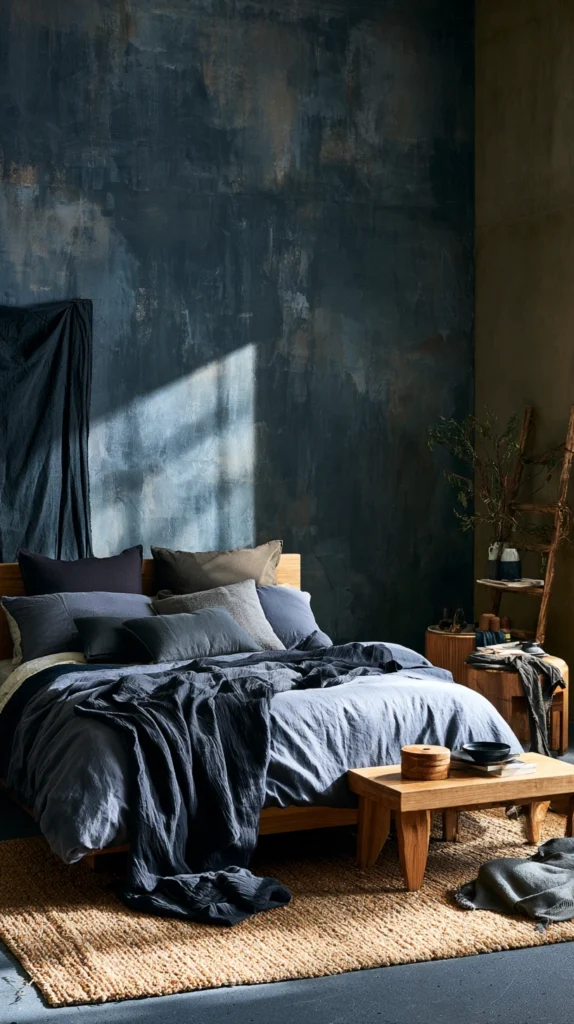
A deep, saturated wallpaper — navy, black, forest green, burgundy — on the headboard wall — the choice for a bedroom designed to feel like a retreat from the day.
Why dark walls in bedrooms are consistently popular:
The psychological association:
- Dark colours: enclosure, intimacy, retreat
- A bedroom: the room where enclosure is desirable
- Living rooms (social): often want brightness
- Bedrooms (private): often want the opposite
The cocoon effect:
- A dark wall behind the bed: the bed appears to recede into it
- The effect: the bed feels embedded, protected
- Particularly effective with a dark pattern (rather than a flat dark colour) — the texture of the pattern catches available light
The patterns that work in dark tones:
Tonal pattern (same colour family):
- A pattern in a slightly different shade of the same dark colour
- Subtle from a distance, rich up close
- The most sophisticated dark wallpaper approach
- Avoids feeling like a “feature wall” and more like a considered material
Metallic on dark:
- Gold, copper, or bronze pattern on a dark ground
- Candlelight and lamp light: catch the metallic beautifully
- The most glamorous version of this idea
Botanical on dark:
- Dark green or navy ground with botanical illustration
- The plants: appear to glow against the dark
- A particularly current combination
The lighting requirement:
Essential for dark walls:
- Dark walls absorb light
- Without adequate lighting: the room can feel like a cave rather than a cocoon
- Bedside lamps: essential (not optional)
- Warm bulbs (2700K or below): non-negotiable with dark walls
The contrast with the rest of the room:
Three light walls, one dark wall:
- The standard approach
- The dark wall: receives the drama
- The light walls: keep the room from feeling closed in
- The contrast: makes the dark wall more impactful, not less
The white ceiling:
- Keep the ceiling white or very light
- A dark wall with a dark ceiling: can feel oppressive
- The light ceiling: the room still feels it has height
Cost breakdown:
- Dark patterned wallpaper (one wall): $80–300
- Professional installation: $100–250
- Bedside lamps (if needed, pair): $60–150
- Total: $240–700
6. The Textured Grass and Bamboo Look (Coastal and Natural)
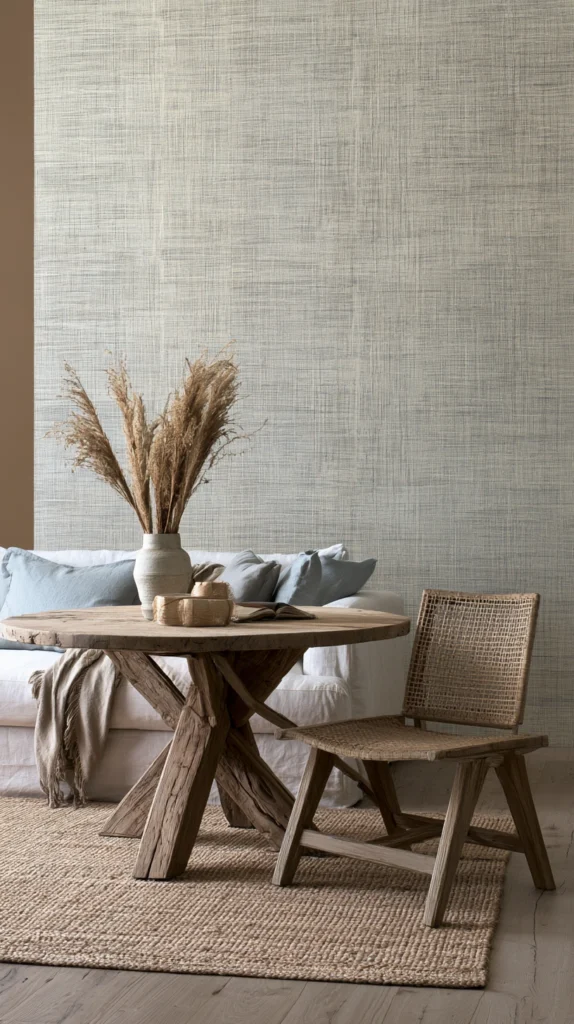
Wallpaper that mimics woven bamboo, rattan, or coastal grass — the accent that brings a relaxed, natural quality without true grasscloth’s cost.
Why this look is trending:
The coastal and relaxed living movement:
- Natural materials in interiors: a sustained trend
- Real woven materials (rattan, bamboo) on a wall: difficult and expensive
- Wallpaper that replicates the look: accessible
- The visual: 90% of the effect, fraction of the cost and complexity
The patterns:
Woven basket weave:
- A pattern that mimics tightly woven natural fibre
- Often in warm neutrals (tan, honey, soft brown)
- Adds visual texture without actual texture
- More affordable and easier to maintain than real woven coverings
Bamboo print:
- Vertical bamboo stalks, printed
- A specific, recognisable motif
- Suits a bedroom leaning toward a relaxed, slightly tropical feel without going fully “jungle”
The colour and tone:
Warm neutrals (most common):
- Honey, tan, soft khaki
- Pairs with white, cream, and warm wood
- The understated choice
Pairing with the room:
Linen bedding:
- Natural linen in white or oatmeal: the natural material pairing
- The wallpaper: reinforces a textile-led, relaxed room
Wood furniture (light tones):
- Light oak, ash, or rattan furniture
- The wallpaper: extends the natural material story onto the wall
Cost breakdown:
- Bamboo/woven-look wallpaper (one wall): $60–180
- Professional installation: $100–200
- Total: $160–380
7. The Mural-Style Mountain or Landscape (Scenic Escape)
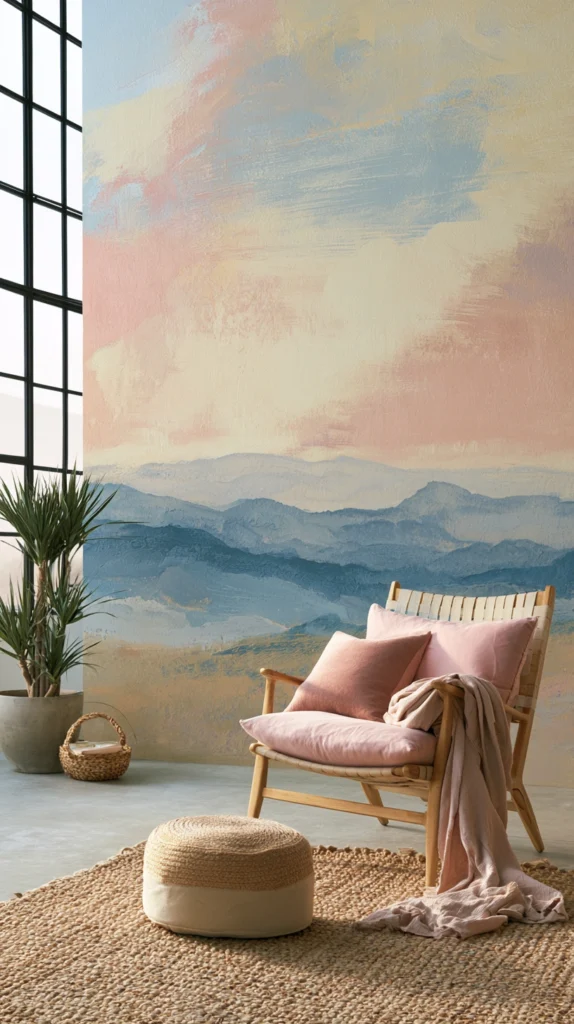
A large-format scenic mural — mountains, hills, or open landscape — on one wall — the accent for a bedroom designed around the feeling of waking up somewhere else.
Why landscape murals work specifically in bedrooms:
The waking experience:
- The first thing seen each morning
- A landscape: opens the room visually
- The bedroom: feels less like a box, more like it has a view (even without a window in that direction)
The styles:
Misty mountains (most popular):
- Soft, often monochrome or muted-tone mountain ranges
- Layered ridgelines suggesting depth and distance
- Calming and slightly dreamlike
- Suits almost any bedroom style — works as a backdrop rather than a statement
Desert and arid landscape:
- Warm tones (terracotta, sand, dusty pink skies)
- A more contemporary, southwestern-leaning choice
- Pairs with warm wood and woven textures
Forest depth:
- Looking into a forest (rather than a wide landscape)
- More enclosing, less expansive
- Suits a smaller bedroom wanting a sense of depth without openness
The colour palette consideration:
Monochrome or limited palette murals:
- Easier to work with than full-colour scenes
- The mural: reads as a backdrop, not competing with bedding and decor
- A blue-grey mountain mural: complements almost any bedding colour
The installation:
Panel alignment:
- Landscape murals often rely on horizon lines matching across panels
- Critical that the wall is measured accurately
- Professional installation strongly recommended for this category
The room’s other elements:
Keep it as the only “view”:
- Avoid heavy patterned curtains or busy art competing with the mural
- The mural: functions as the room’s visual destination
- Simple window treatments, simple bedding
Cost breakdown:
- Landscape mural (full wall, mid-range): $200–550
- Professional installation: $150–400
- Total: $350–950
8. The Two-Tone Wallpaper and Paint Combination (Layered Sophistication)
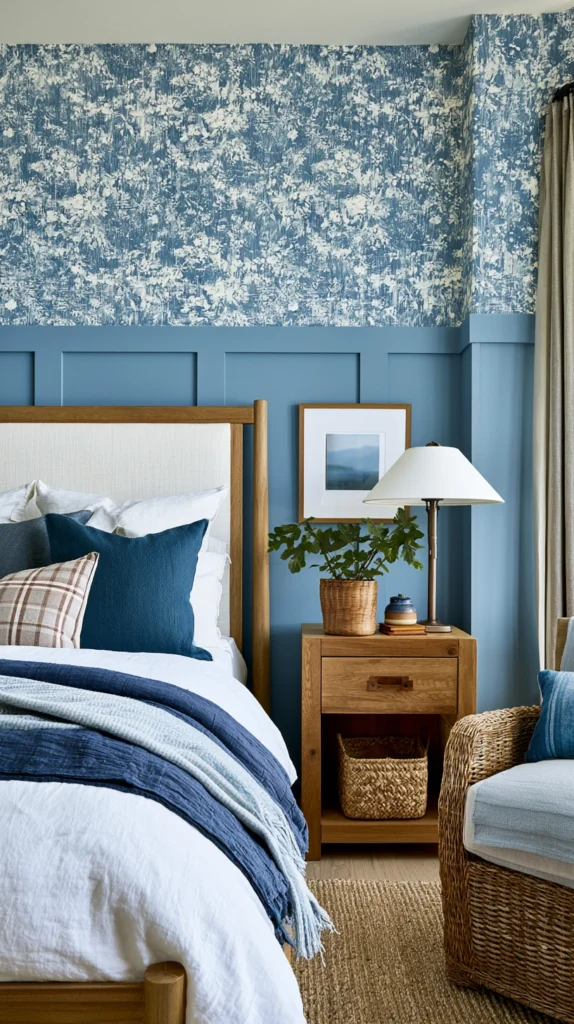
Wallpaper on the upper portion of the wall, paint below (or the reverse) — the accent that adds detail and a sense of architecture to a plain bedroom.
Why this combination is gaining popularity:
The architectural illusion:
- A horizontal division on the wall: suggests panelling, wainscoting, or a chair rail — even without any of those physical elements
- The room: appears more detailed and considered
- A flat wall: gains apparent structure
The proportion benefit:
Lower ceilings:
- Wallpaper on the upper two-thirds, paint below (or vice versa): can make a room feel taller if the division line is positioned thoughtfully
- A horizontal line at picture-rail height (roughly 12 inches below the ceiling): draws the eye up
Higher ceilings:
- A division at a lower point (chair-rail height, around 32–36 inches from the floor): grounds the room, makes a tall space feel more intimate
The combinations:
Pattern above, solid colour below:
- The pattern: in the upper portion (often busier or more detailed patterns work well here, viewed from a slight distance)
- The solid: a colour pulled from the pattern
- The transition: a thin moulding strip (picture rail or simple wood trim) marks the division cleanly
Solid colour above, pattern below:
- Less common but striking
- The pattern at a lower level: more noticeable up close (where furniture often sits)
- Works well with a smaller-scale pattern
The dividing line:
A simple wood batten:
- Inexpensive (a length of timber, painted or stained)
- Installed at the chosen height
- Provides a clean, deliberate edge between the two treatments
- $15–40 in materials for a standard bedroom wall
Cost breakdown:
- Wallpaper (upper portion only — less material needed): $50–150
- Paint (lower portion): $20–40
- Wood batten/trim and paint: $20–40
- Installation (wallpaper portion): $80–180
- Total: $170–410
9. The Ceiling Wallpaper Accent (The Fifth Wall)
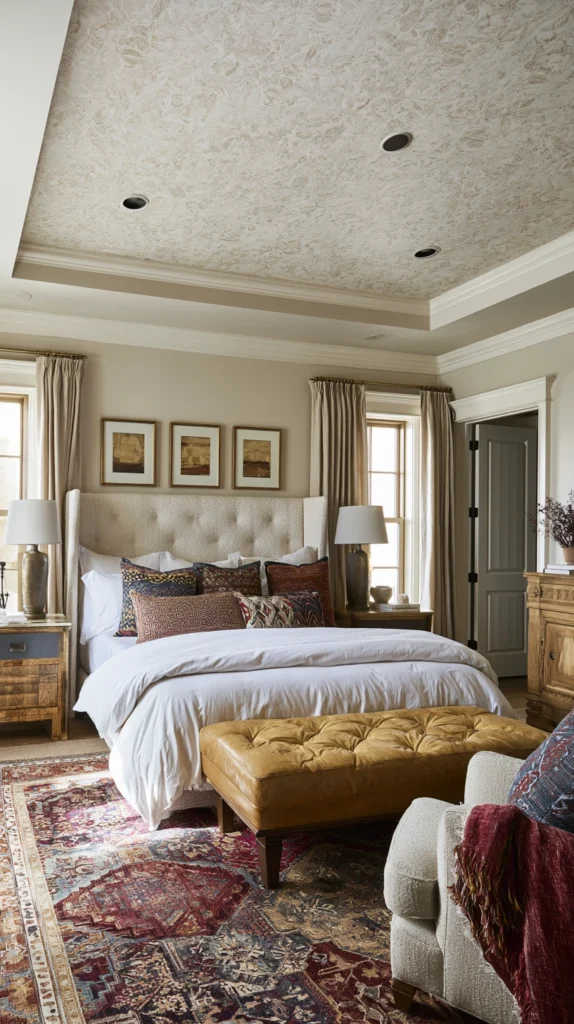
Wallpaper applied to the ceiling rather than (or in addition to) a wall — the unexpected accent that transforms the experience of lying in bed.
Why ceiling wallpaper is having a moment:
The view from bed:
- The ceiling: the view for hours each night and morning
- Most ceilings: plain white, unconsidered
- A patterned ceiling: turns the most-viewed surface (while lying down) into the most considered
The “fifth wall” concept:
- Interior designers refer to the ceiling as the fifth wall
- Treating it as a design opportunity rather than an afterthought
- A bedroom: the room where this has the most direct, daily impact
The patterns that work on ceilings:
Soft, light-scale patterns:
- A busy, dark pattern overhead: can feel heavy
- Lighter patterns — small botanicals, soft clouds, subtle geometrics — work better
- The pattern: discovered gradually, not overwhelming on first glance
Sky and cloud patterns:
- A literal, soft cloud-on-blue pattern
- Particularly suited to a child’s room or a romantic bedroom
- The ceiling: appears to open upward
Metallic or pearlescent finishes:
- A subtle shimmer overhead
- Catches and reflects available light (especially candlelight or warm lamps)
- Adds richness without pattern, if pattern feels like too much for a ceiling
The practical considerations:
Installation difficulty:
- Ceiling wallpaper: more difficult to hang than wall wallpaper (gravity working against the installer)
- Professional installation: strongly recommended
- The cost: often higher per square foot due to the difficulty, despite ceilings typically being smaller in area than walls
Lighting fixtures:
- Plan around any ceiling light, fan, or fixture
- The pattern: should work around these interruptions, not be disrupted by them
- Consider whether fixtures will be removed/relocated as part of the project
The combination with walls:
Ceiling only (walls plain):
- The most restrained version
- The ceiling: the surprise
- Walls: simple paint, allowing the ceiling to be the focus
Ceiling and one wall (matching or coordinating):
- A more enveloping effect
- Often the ceiling paper continues down onto the headboard wall, or a coordinating pattern is used
- Creates a true “cocoon” bedroom
Cost breakdown:
- Ceiling wallpaper (standard bedroom ceiling): $80–250
- Professional installation (ceiling, higher labour cost): $200–450
- Total: $280–700
10. The Removable Peel-and-Stick Accent (Renter-Friendly Drama)
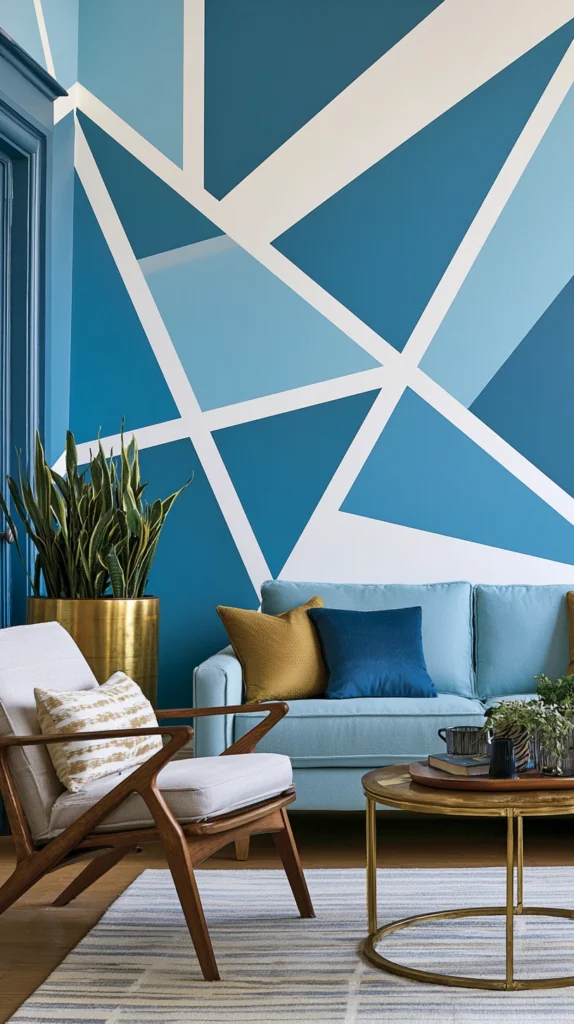
High-quality peel-and-stick wallpaper on an accent wall — the option for those who cannot or do not want to commit to traditional wallpaper.
Why peel-and-stick has moved beyond “temporary fix”:
The quality improvement:
- Early peel-and-stick: thin, prone to bubbling, limited designs
- Current generation: thicker materials, better adhesives, far more design variety
- Many designs: visually indistinguishable from traditional wallpaper once applied
Who this serves:
Renters:
- The accent wall: achievable without landlord permission issues (in most cases — always check lease terms)
- Removable without damage when done correctly
- The bedroom: personalised despite not being permanently owned
The uncertain decision-maker:
- For those unsure about committing to a bold pattern
- Lower cost, lower risk
- If it does not work: removed and replaced relatively easily
Frequent updaters:
- Those who like to change their space regularly
- Peel-and-stick: allows the accent wall to change with the seasons or with changing taste, more affordably than repeated traditional wallpaper projects
The application tips for success:
Wall preparation:
- The wall: must be clean, smooth, and dry
- Any texture, bumps, or imperfections: will show through and affect adhesion
- A freshly painted wall: should cure for at least 3–4 weeks before applying peel-and-stick (the adhesive can react with fresh paint)
The application technique:
Top-down, small sections:
- Peel back a small portion of the backing at a time
- Smooth with a squeegee or credit card as you go
- Working in small sections: avoids large air bubbles and misalignment
The seam approach:
- Slight overlap at seams (follow manufacturer guidance — usually 1/8 inch)
- Or: butt seams precisely for patterns designed to match exactly
- Patience at seams: the difference between a professional and amateur-looking result
The pattern selection for peel-and-stick:
Most peel-and-stick designs available in:
- Botanical and floral
- Geometric
- Faux grasscloth and texture looks
- Marble and stone effects
- The category has expanded to cover most of the styles in this article
Cost breakdown:
- Peel-and-stick wallpaper (one wall): $40–120
- Application tools (squeegee, level): $15
- Total: $55–135
The advantage: the entire project — purchase to finished wall — completed in an afternoon, without professional installation costs.
Peel-and-Stick Tips
Test in an inconspicuous spot first:
- Apply a small piece behind furniture or in a closet
- Leave for 24–48 hours
- Check it adheres properly and removes cleanly
- This: prevents a larger mistake on the main wall
Removal:
- Pull slowly at a 180-degree angle (back over itself), rather than straight out from the wall
- Slow and steady: minimises any risk of paint coming away with it
- Adhesive residue (if any): typically removed with warm water and a cloth
11. The Pattern-Matched Headboard Wall (Wallpaper as Headboard)
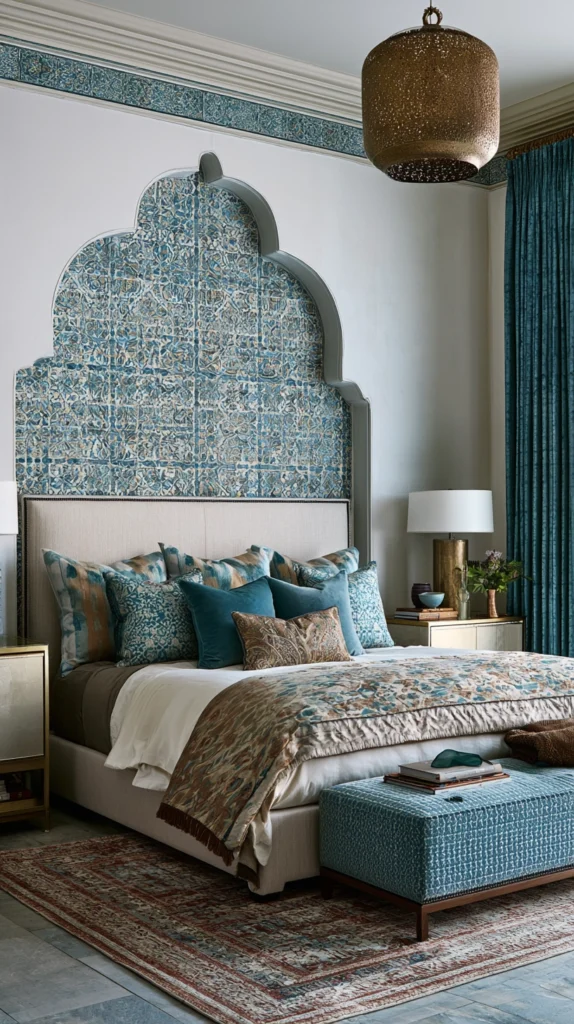
Wallpaper applied behind the bed in a shape that frames it like an oversized headboard — the accent that uses pattern placement, not just pattern choice, as the design.
Why shaped wallpaper placement is distinctive:
Beyond the full wall:
- Most accent walls: wallpaper covers the entire wall
- This approach: wallpaper applied in a specific shape — an arch, a rectangle, a panel — positioned behind the bed
- The effect: an oversized, two-dimensional headboard made of pattern
The shapes:
The arch:
- A large arched shape of wallpaper, centred behind the bed
- The arch: rises from roughly headboard height to several feet above
- Suits rooms with some ceiling height (the arch needs room to read as intentional, not cramped)
- A softening shape: particularly effective with floral or botanical patterns
The rectangle/panel:
- A defined rectangular section of wallpaper, often outlined with thin moulding or trim
- Reads as a piece of art or a framed panel rather than wallpaper covering the wall
- Suits a more structured, architectural bedroom style
The half-circle or scalloped edge:
- A more decorative, softer shape
- Particularly suited to children’s rooms or romantic, traditional bedrooms
- The shape itself: becomes part of the room’s character
Why this approach suits indecisive spaces:
Lower commitment than full wall:
- Less wallpaper required (lower cost)
- The pattern: contained within a shape, feels more like an object (a headboard, artwork) than a wall treatment
- Easier to remove or change later (smaller area)
The execution:
Measuring and marking:
- The shape: drawn onto the wall first (pencil, removable)
- A large piece of paper or cardboard template: useful for arches, to ensure the curve is symmetrical
- Measure the bed’s position carefully — the shape should be centred on the bed, not the wall (if the bed is not centred on the wall)
The trim/moulding (for rectangular panels):
- Thin wood moulding around the wallpaper panel
- Painted to match the wall colour (so it reads as a frame) or in a contrasting colour (so it reads as a deliberate border)
- Mitred corners for a clean finish
The pattern choice for shaped applications:
Patterns with a clear “all-over” quality:
- Patterns without an obvious directional grain or focal motif work best
- A pattern with a centred motif (e.g., a single large flower) may look odd if cropped by an arch shape
- Test by holding a cut-out of the intended shape against a sample
Cost breakdown:
- Wallpaper (partial wall — typically 30–50% of a full wall’s material): $40–150
- Wood moulding/trim (if used): $20–50
- Installation: $80–200
- Total: $140–400
12. The Wallpaper Border or Stripe (Minimal Pattern, Maximum Definition)
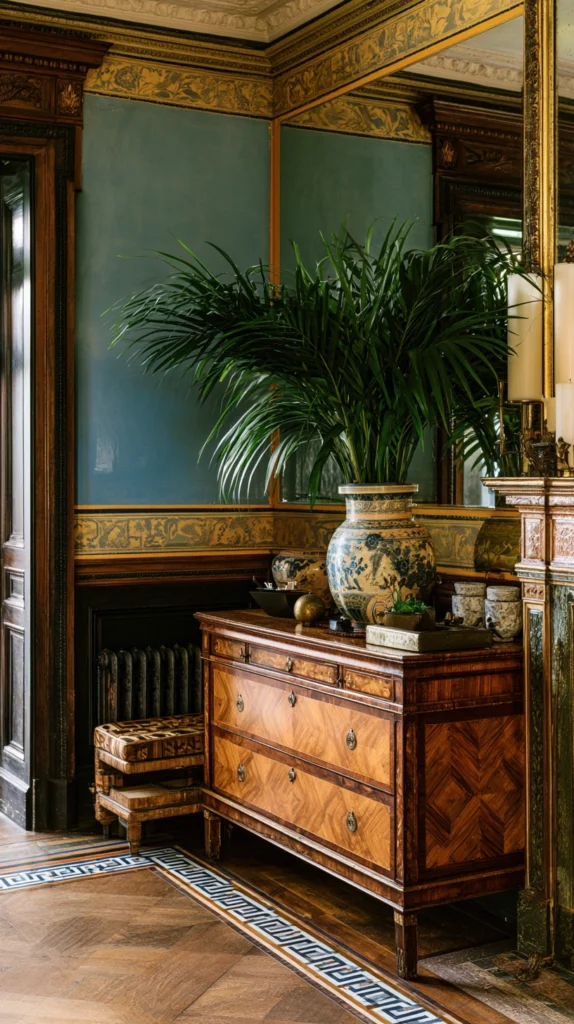
A horizontal or vertical band of wallpaper, rather than a full wall — the smallest-scale wallpaper accent with an outsized effect on the room’s sense of design.
Why a border or stripe works when a full wall feels like too much:
The minimal-intervention approach:
- Not everyone wants a full accent wall
- A border: introduces pattern in a contained, linear way
- The effect: the room reads as “finished” and “considered” without a dominant pattern statement
The placements:
At picture-rail height (horizontal band):
- A band of patterned wallpaper running around the room (or just behind the bed) at the height a picture rail would traditionally sit
- Below it: paint
- Above it (to the ceiling): paint in the same or a different colour
- The band: like a piece of trim made of pattern
As a vertical stripe behind the bed:
- A single vertical strip of wallpaper, the width of the headboard (or slightly wider), centred behind the bed
- Paint surrounds it on the rest of the wall
- The effect: similar to the “pattern-matched headboard” idea (#11) but as a simple rectangle/stripe rather than a shaped panel — a more minimal version
As a border at the ceiling line (cornice height):
- A narrower band of pattern where the wall meets the ceiling
- Subtle, often only noticed on closer inspection
- Adds a sense of architectural detail to a plain room
The pattern choice:
Smaller-scale, busier patterns suit borders:
- Because the area is small, more detailed patterns read clearly without overwhelming
- A pattern that might be too busy across a full wall: often perfect as a border
The colour relationship:
The border colour, picked up elsewhere:
- A border in a colour also present in bedding, a rug, or curtains: ties the room together
- The border: functions almost like a piece of trim that happens to be patterned
Cost breakdown:
- Wallpaper (border — minimal material needed): $25–80
- Installation (smaller, more fiddly — may cost similar to larger areas due to labour): $60–150
- Total: $85–230
13. The Wallpaper Inside Built-In Shelving or Alcoves (Hidden Pattern, Revealed)
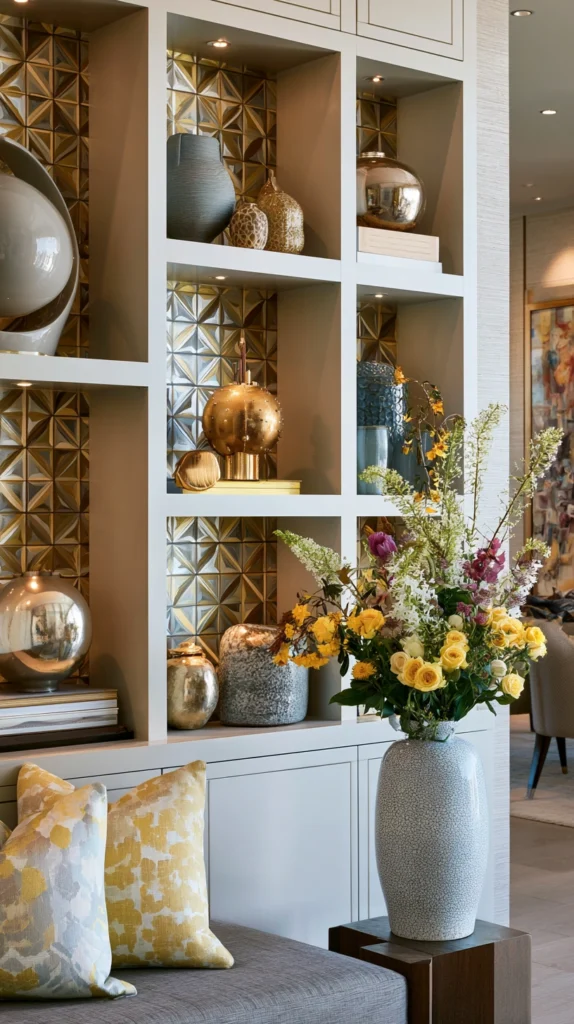
Wallpaper applied to the back of bookshelves, alcoves, or niches — the accent that is discovered rather than immediately seen.
Why this placement is distinctive:
The reveal:
- Pattern: not on the open wall, but behind objects
- Glimpsed between books, around displayed items, in the gaps of a shelving unit
- The discovery: more engaging than an immediately visible accent wall
Where this applies in a bedroom:
Built-in bookshelves:
- If the bedroom has built-in shelving (alcove shelves, a reading nook)
- The back panel of the shelving: wallpapered
- Books and objects on the shelves: sit in front of the pattern
- The effect: every shelf becomes a small framed scene
Bedside niches:
- Many bedrooms (particularly older homes) have alcoves either side of a chimney breast, or recessed areas
- These recesses: wallpapered, while the rest of the wall remains plain
- The recess: appears deeper and more intentional
Behind open wardrobe doors or dressing areas:
- If a wardrobe has open shelving or a dressing nook
- Wallpaper at the back: visible when the doors are open, hidden when closed
- A personal touch, seen only by the room’s occupant
The practical advantage:
Small area, big impact:
- The amount of wallpaper required: often very small (a few square feet)
- Many wallpapers: sold in larger rolls than needed for this purpose — but the cost per roll covers multiple small projects
- One roll: potentially enough for several alcoves or shelf backs
The pattern choice:
Bold and detailed patterns work well here:
- Because the area is small and often partially obscured by objects
- A pattern too busy for a full wall: perfect for this contained application
- Metallics and high-contrast patterns: particularly effective, as they catch the eye even in small glimpses
The installation:
Smaller, more manageable project:
- Often achievable without professional installation (the area is small enough for careful DIY)
- Precise cutting around shelf edges: the main skill required
- A craft knife and patience: usually sufficient
Cost breakdown:
- Wallpaper (often one roll covers multiple small areas): $30–70
- Total: $30–70
The niche either side of the chimney breast: wallpapered in a deep botanical pattern. Open shelving in front, holding books and small objects. The pattern: visible in the gaps, never overwhelming, always noticed eventually by visitors.
14. The Coordinated Multi-Pattern Approach (Confident Layering)
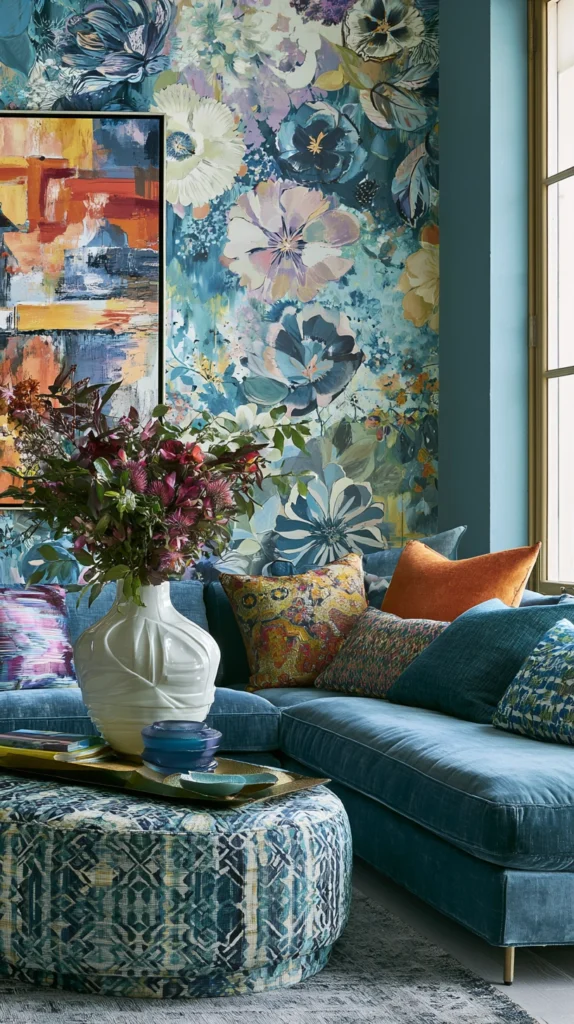
Two or more wallpaper patterns used deliberately within the same room — the most advanced approach, for a bedroom with a strong, layered design identity.
Why multiple patterns can work (when done deliberately):
The myth of “pattern clash”:
- The assumption: multiple patterns in one room always clash
- The reality: patterns from the same colour family, with varied scale, can layer successfully
- The skill: not avoiding multiple patterns, but coordinating them
The coordination principles:
Shared colour palette:
- Every pattern used: draws from the same 2–3 colour family
- This is the single most important rule
- If every pattern “speaks the same colour language,” the patterns support rather than compete with each other
Varied scale:
- One large-scale pattern (the accent wall)
- One small-scale pattern (perhaps a border, or the inside of an alcove — see idea #13)
- The scale variation: prevents visual competition
- Two patterns of similar scale and similar busyness: more likely to clash
One pattern “leads”:
- The accent wall pattern: the primary statement
- Any additional pattern (border, alcove, ceiling): secondary, smaller in area
- The hierarchy: clear at a glance
Example combinations:
Large floral accent wall + striped border:
- The floral: the headboard wall
- A simple striped wallpaper border at picture-rail height, in one of the floral’s colours
- The stripe: ties the room together without competing
Botanical mural + wallpapered ceiling in a coordinating tone:
- The mural: one wall
- The ceiling: a subtle, smaller-scale pattern in a complementary tone (perhaps a tonal version of a colour in the mural)
- The effect: an immersive, considered room — without the ceiling pattern competing for primary attention
Geometric accent wall + wallpapered alcove in a contrasting but coordinated geometric:
- The main wall: a larger-scale geometric
- A smaller geometric (different shape, same colours) inside an alcove or shelf back
- The relationship: family members of the same design language, not identical twins
The risk management:
Start with one, plan for two:
- Install the primary accent wall first
- Live with it for a few weeks
- The secondary pattern (border, alcove, ceiling): added once the primary choice feels settled
- This: reduces the risk of an overwhelming result from doing everything at once
When this approach is not advisable:
For a first wallpaper project:
- Multiple patterns: the most advanced version of this list
- Better attempted after experience with a single accent wall
- The single accent wall (any of ideas #1–10): the place to start
Cost breakdown:
- Primary wallpaper (accent wall): $80–300
- Secondary wallpaper (border/alcove/ceiling — smaller area): $30–150
- Installation (both elements): $150–400
- Total: $260–850
What All 14 Ideas Share
The principles that apply across every choice:
One wall (or contained area) carries the pattern:
- Even the most elaborate ideas on this list (multi-pattern, ceiling treatments) maintain restraint elsewhere
- The contrast between pattern and plain: what makes the pattern visible and effective
The headboard wall is usually correct:
- Not always, but usually
- The bed: the room’s largest object and primary focus
- The wall behind it: the natural canvas
Lighting changes everything:
- Every pattern, every colour, every texture: transformed by the quality of light
- Warm light (2700K or below): the consistent recommendation
- Test the wallpaper sample under the room’s actual evening lighting before committing
Scale relative to the room, not the sample:
- A sample swatch: misleading
- Hold a larger piece (or view digitally at scale) before deciding
- View from across the room, not up close
Getting Started This Weekend
The lowest-risk starting point:
Order samples.
Most wallpaper suppliers offer samples or small swatches, often for a low cost or free. Before any wall is touched:
- Order 3–5 samples in different styles (one botanical, one geometric, one textured, one dark, one peel-and-stick)
- Tape each sample to the intended wall
- Live with them for a few days
- View at different times of day, under different lighting
The decision that follows:
Choose based on:
- What still looks right after a week (not just the first impression)
- What works with the existing bedding and furniture (or what bedding/furniture changes are also planned)
- What matches the commitment level — full wall, peel-and-stick, border, or alcove
The weekend project (peel-and-stick, idea #10):
- Order peel-and-stick sample, test for 24–48 hours
- If successful: order full amount for one wall
- Apply in an afternoon
- Total: $55–135, completed in a weekend
The room transforms not because everything changed. One wall did. Everything else — the bed, the lamps, the art — now has something to relate to.
That relationship is the design. The wallpaper is just where it begins.
