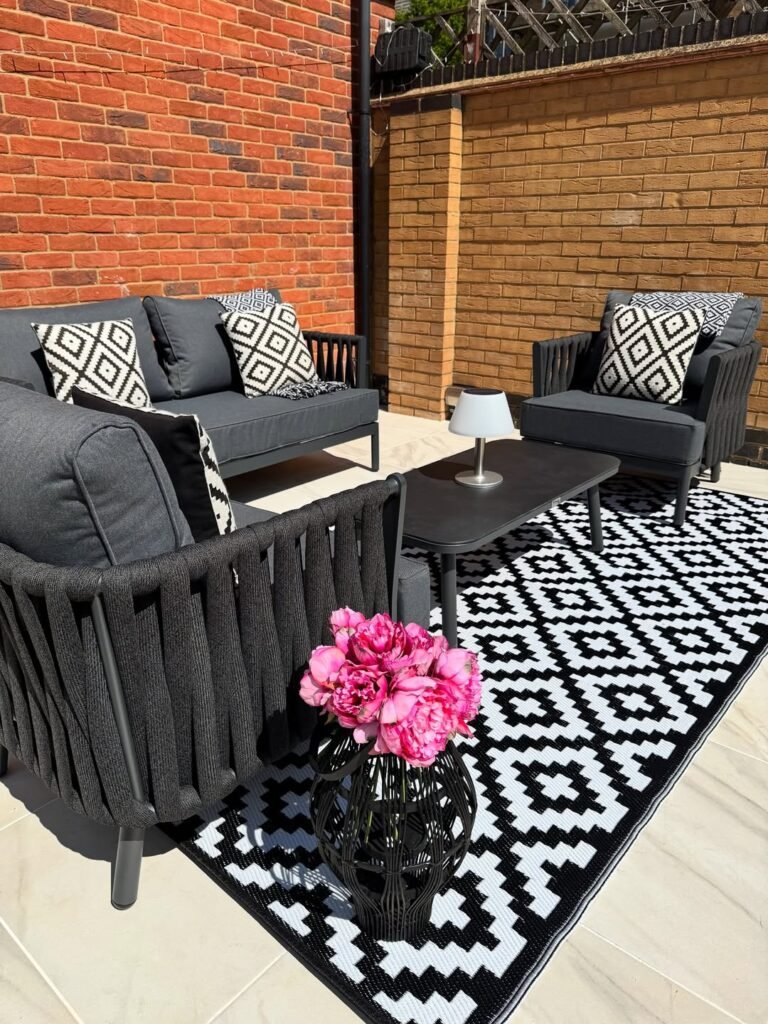
14 Summer Garden Shade Ideas for Hot Weather
There is a point in every summer when the garden stops being a place of pleasure and becomes a place to avoid. The midday sun turns the patio into a heat trap, the lawn bleaches pale, and the idea of sitting outside with a cold drink feels genuinely appealing only in theory. The solution is not to wait for the temperature to drop — it is to build shade into the garden in a way that is beautiful, considered, and genuinely effective at making the outdoor space usable through the hottest part of the day.
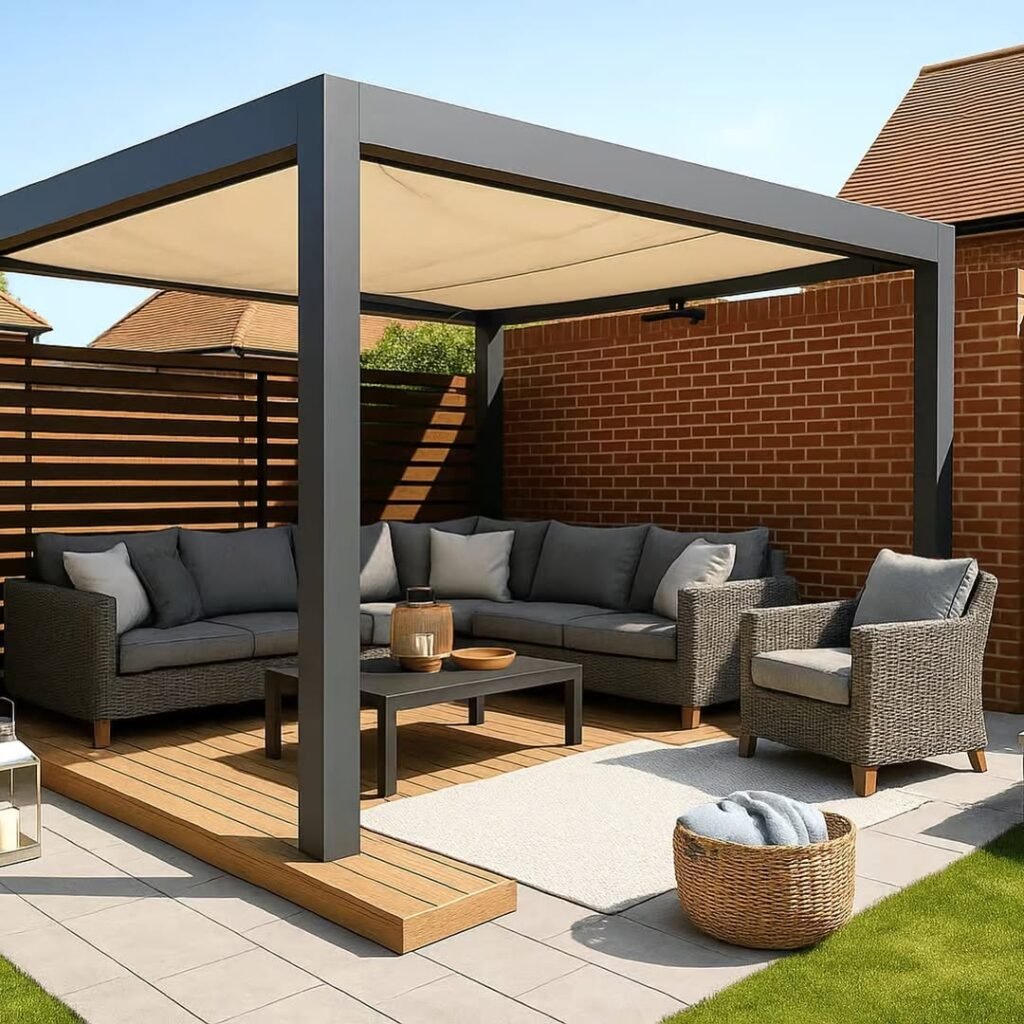
Good garden shade does more than block the sun. It creates atmosphere, defines outdoor rooms, provides a sense of enclosure and privacy, and transforms a flat, exposed garden into a layered space with distinct areas for different activities and different times of day. The ideas below cover every approach to garden shade — from a simple sail shade stretched across a patio to a full pergola draped in climbing plants — with practical guidance on making each one work as hard as it looks.
1. The Sail Shade
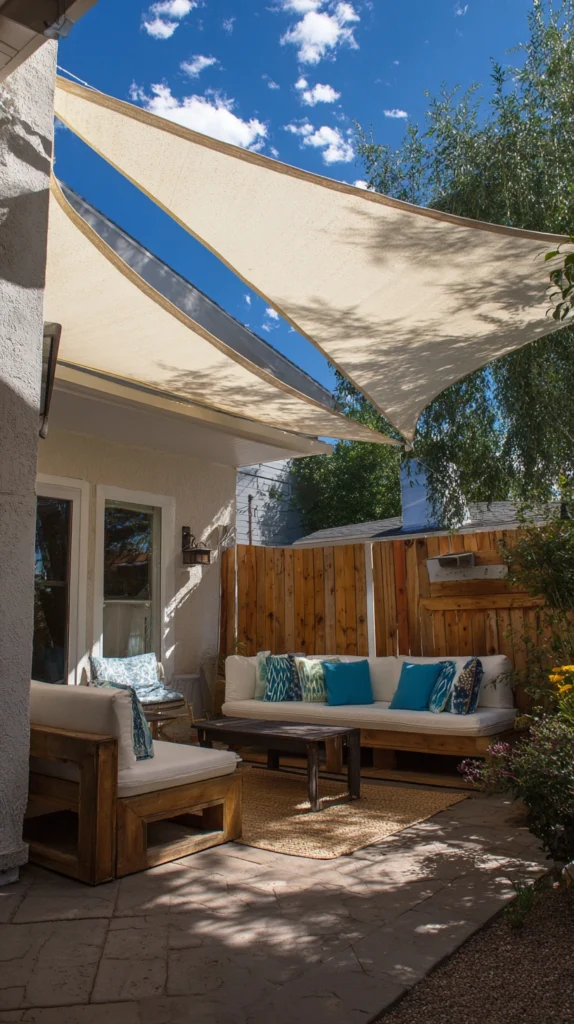
Budget: $40 – $200
The sail shade is the most versatile, most affordable, and most immediately effective shade solution available for a garden. A large triangle or rectangle of UV-resistant woven fabric, tensioned between fixing points on posts, walls, or trees, blocks between 90 and 98 percent of UV radiation while allowing air to circulate freely beneath — which means the shaded area stays genuinely cool rather than simply dim. A single large sail shade can cover an entire seating area within an afternoon of installation.
Sail shades cost $30–$120 depending on size and fabric quality. Look for HDPE woven fabric with a high UV block rating rather than cheaper polyester versions that degrade within a single season. Stainless steel fixing hardware — D-rings, tensioning ropes, and pad eyes — costs $15–$40 and is worth investing in for a secure, long-lasting installation.
Garden tip: Install the sail shade at an angle rather than horizontally flat. A sail tensioned with one corner higher than the others sheds rainwater naturally, prevents pooling that stresses the fabric, and catches more direct sunlight across the arc of the day than a flat horizontal panel. Even a 20-degree angle makes a significant practical difference.
2. The Timber Pergola
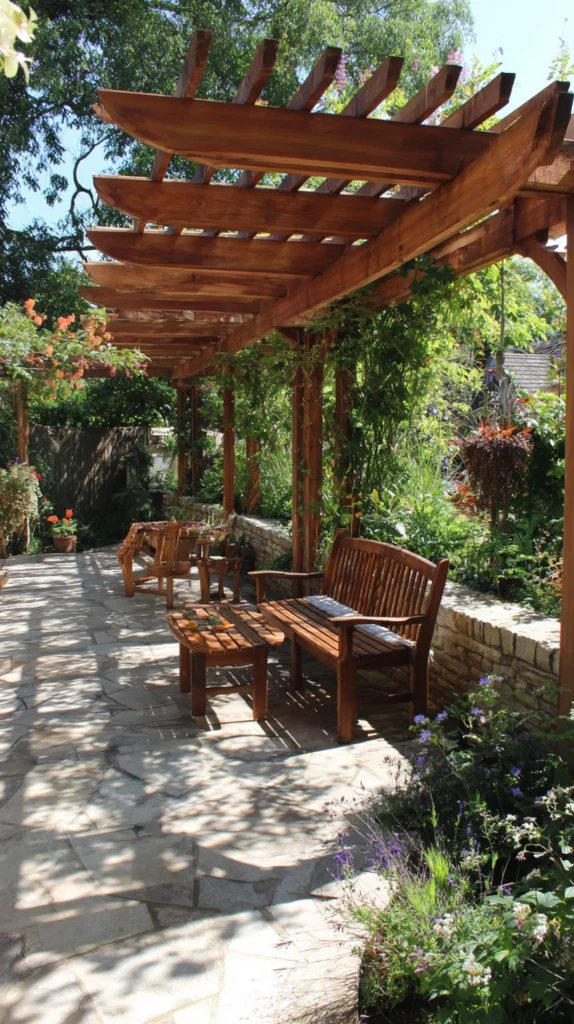
Budget: $200 – $1,500
A pergola is the most structurally permanent and visually substantial shade solution a garden can have. A timber frame of uprights and cross beams creates an outdoor room with a defined ceiling, solid presence, and the kind of architectural weight that transforms a plain patio into a genuine living space. Even without any climbing plants, a pergola provides partial shade and a strong sense of enclosure. With climbing plants covering the beams, it becomes one of the most beautiful features a garden can offer.
Softwood pergola kits cost $200–$600. Hardwood or cedar pergolas, built from better materials, cost $400–$1,200 as a kit and more when professionally built. Fix the uprights into steel post anchor brackets concreted into the ground — this is more stable than simply setting the posts into concrete directly and allows replacement of individual posts without breaking up the base if timber deteriorates over time.
Garden tip: Oversize the pergola relative to what feels instinctively right. A pergola that appears large on a plan looks surprisingly modest once built and planted up. Add at least 60 centimetres to the footprint you think you need in every direction — the finished structure will feel exactly right rather than slightly cramped beneath the beams.
3. The Climbing Plant Canopy
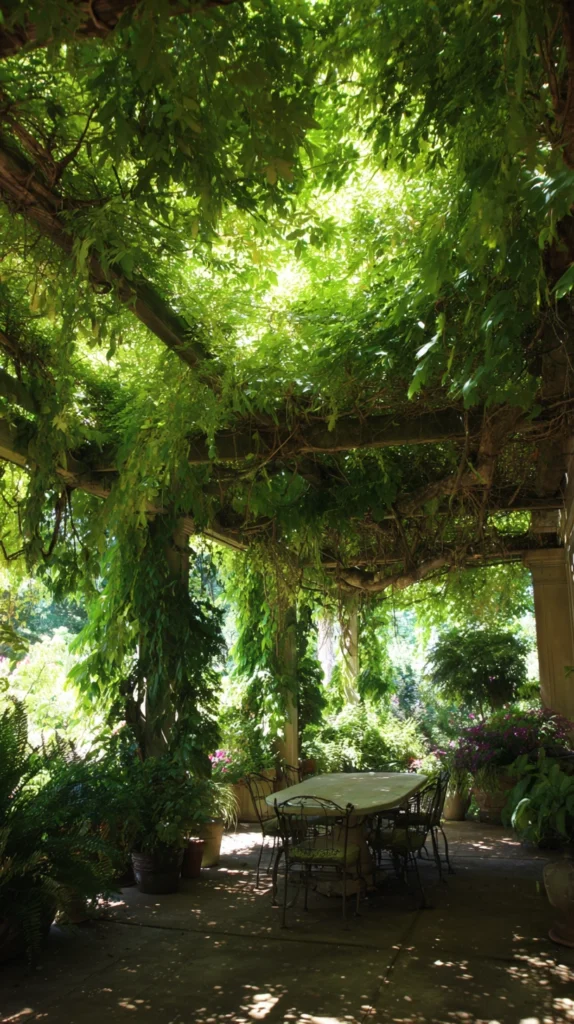
Budget: $30 – $150
A canopy of climbing plants trained over an existing pergola, arbour, or wire framework creates the most beautiful and atmospheric shade a garden can produce. Wisteria in full flower in late spring, grapevines providing dense leaf cover through summer, climbing roses scattering petals across the table below — a living canopy transforms the experience of being in the garden in a way that any manufactured shade structure simply cannot replicate.
Wisteria is the most dramatic choice but takes several years to reach full coverage. Vitis coignetiae — the ornamental vine — covers a pergola in a single season and turns extraordinary shades of crimson in autumn. Humulus lupulus (the hop plant) is the fastest climber of all and creates an extraordinarily dense, fresh-green canopy within weeks of its spring growth beginning.
Garden tip: Train the main stems of climbing plants along the horizontal beams rather than allowing them to grow straight upward. A climber that reaches the top of a pergola and then grows vertically shades the posts but leaves the seating area beneath open to the sky. Horizontal training along the beams is what creates the overhead canopy that actually shades the space below.
4. The Garden Umbrella Cluster
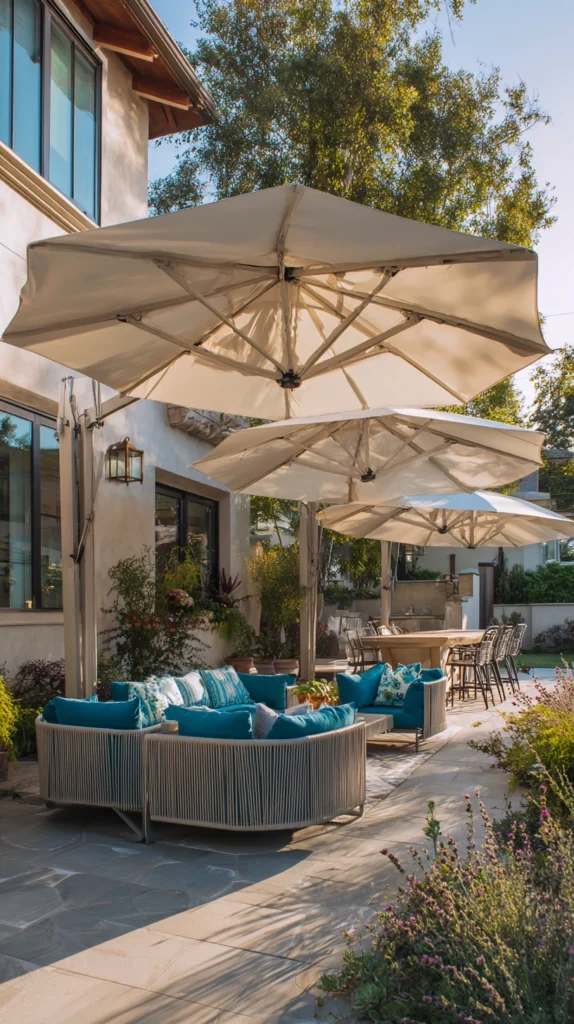
Budget: $60 – $400
A single large garden umbrella is a familiar sight on any patio. A cluster of three umbrellas in varying heights, positioned to overlap their canopies and cover a larger area than any single umbrella could achieve, is a far more interesting and flexible approach. The layered overlapping canopies create depth, the varying heights add visual dynamism, and the arrangement can be reconfigured or stored away entirely at the end of the season without any permanent installation.
Cantilever parasols — the type with a side arm that holds the canopy away from a central post — are more practical for dining areas than centre-pole versions because they allow furniture to be arranged freely beneath without working around a post in the middle of the table. A quality cantilever parasol costs $80–$250. Look for models with a weighted base heavy enough to resist wind without needing to be anchored.
Garden tip: Choose a single consistent colour or fabric pattern across all three umbrellas rather than mixing different styles. Three umbrellas of different colours or patterns in the same cluster looks accidental; three matching umbrellas positioned at different heights looks like a considered outdoor design decision.
5. The Living Wall of Tall Grasses
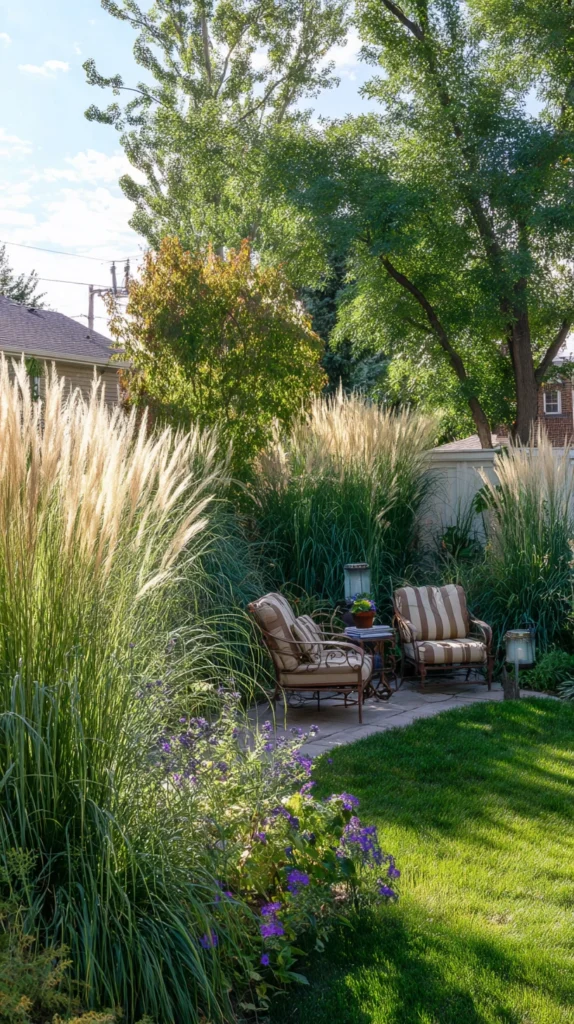
Budget: $40 – $150
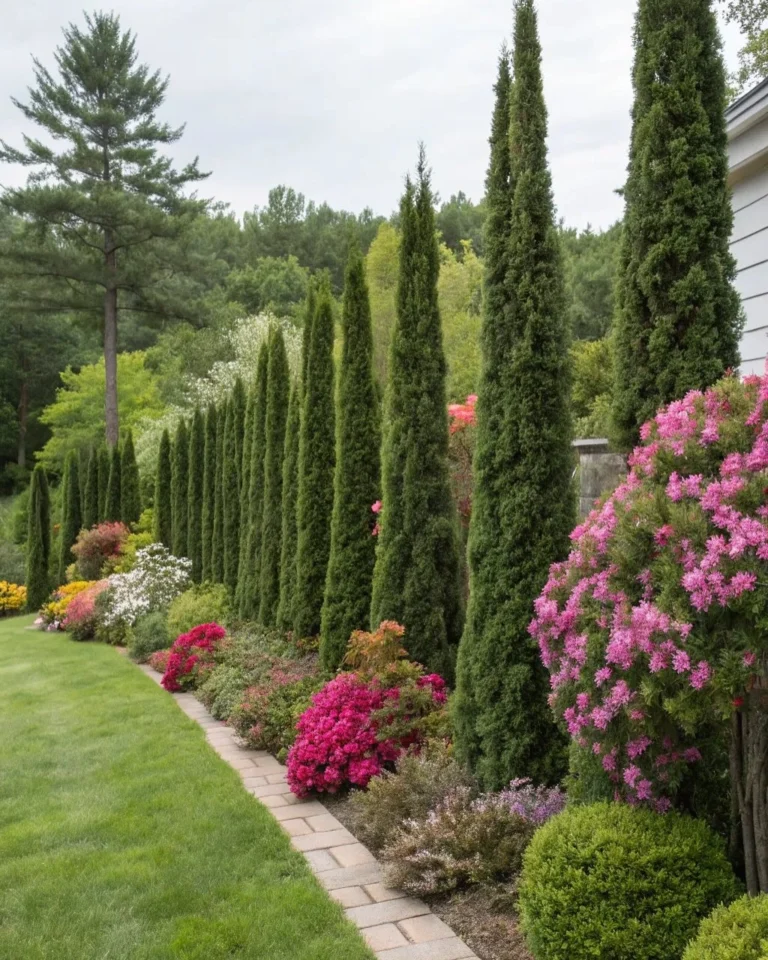
Tall ornamental grasses — miscanthus, pampas, calamagrostis, and cortaderia — planted in a dense row along the sunniest boundary of a seating area create a living screen that filters direct sunlight, reduces wind, and provides a softly rustling green backdrop that no fence or wall can replicate. This is shade in its softest, most naturalistic form — not the deep shadow of a solid structure but the dappled, moving filtered light of a grass screen that shifts with every breeze.
Miscanthus giganteus grows to four metres in a single season from a small rhizome division, making it one of the fastest and most impactful screening plants available. Plant in a staggered double row for a denser screen. A single row of tall grasses planted in spring will provide meaningful shade and privacy by midsummer.
Garden tip: Cut tall ornamental grasses to the ground in late February or early March each year. Left uncut, the old stems become progressively untidy and the clump develops a dead centre. An annual hard cut takes ten minutes and the fresh growth that follows is denser, healthier, and a more vivid green than any growth on uncut plants.
6. The Shade Sail With Outdoor Curtains
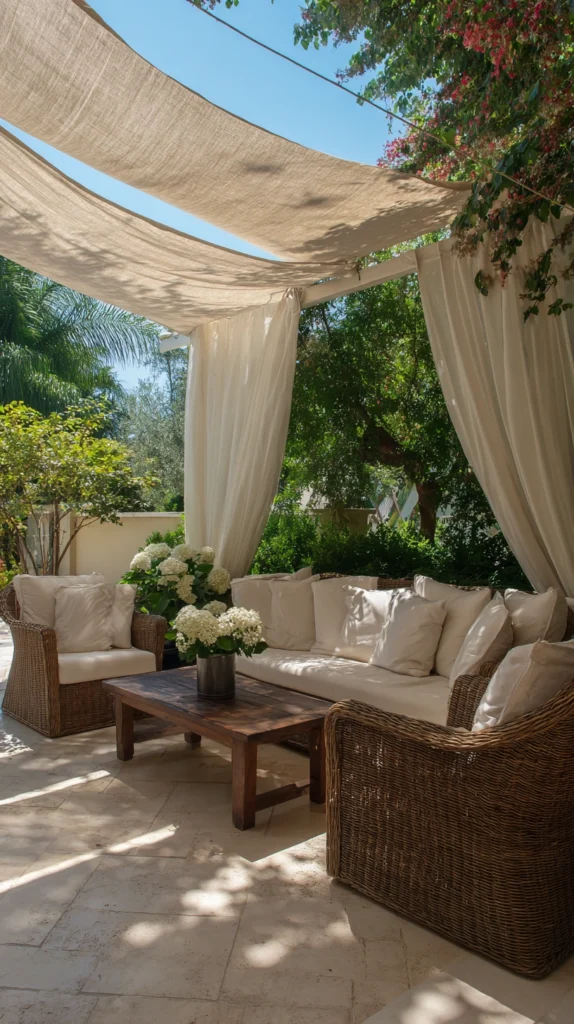
Budget: $80 – $300
Combining a sail shade overhead with outdoor curtain panels hung from a horizontal rail on the sunniest side of the seating area creates a shaded outdoor room that feels genuinely enclosed and private. The sail handles overhead sun while the curtains filter the low, raking afternoon light that comes in horizontally and is missed by any overhead shade structure. Together they create a level of shade and privacy that neither could achieve alone.
Outdoor fabric curtain panels cost $20–$60 per pair. A galvanised steel curtain rod or tensioned wire cable ($15–$40) serves as the hanging rail. Choose a pale, semi-sheer fabric rather than a heavy opaque one — light fabric filters rather than blocks, creating a soft, diffused quality of light beneath that feels relaxed and atmospheric rather than dark and enclosed.
Garden tip: Hang the curtain panels so they can be drawn fully open to one side when not needed rather than removed entirely. Curtains that are easy to open and close will be used constantly and intuitively; curtains that need to be taken down and stored will be used rarely and eventually not at all.
7. The Shade Tree
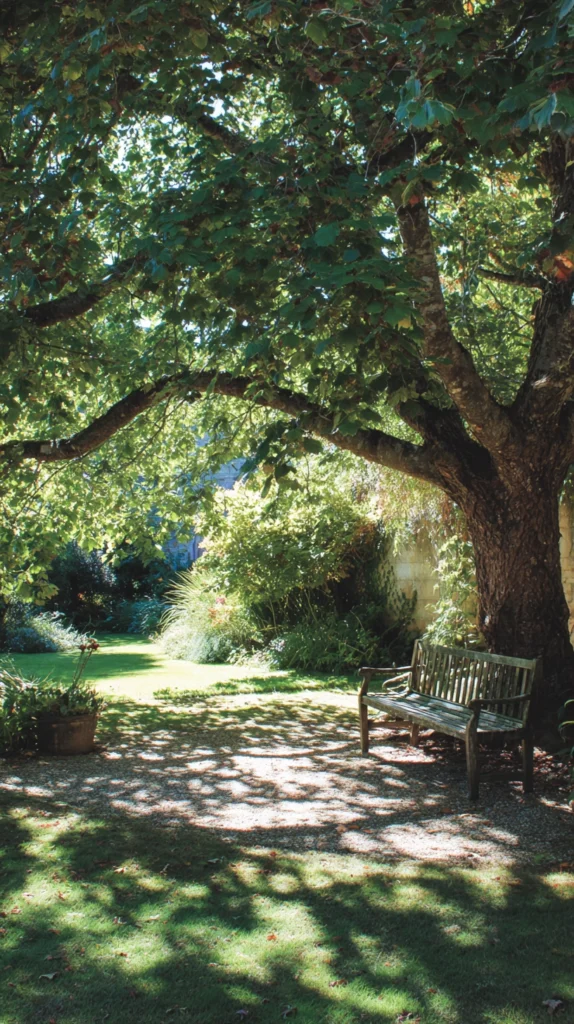
Budget: $50 – $400
Nothing provides shade with the quality, naturalness, and long-term value of a well-chosen tree. The dappled light beneath a mature canopy — shifting and moving with the wind, cooling the air temperature measurably beneath it, and providing a habitat for birds and insects — is the most pleasant outdoor environment a garden can offer. Planting a tree is the longest-term shade solution on this list and the one that delivers the most in return.
Amelanchier, gleditsia, cercis, and multi-stem birch are all excellent choices for gardens where space is limited — they provide meaningful canopy without the scale of a forest tree and reach useful shade-providing size within five to seven years. A semi-mature specimen tree in a 30-litre container costs $50–$200 and provides immediate visual impact while establishing its root system.
Garden tip: Water a newly planted tree deeply and consistently through its first two summers — this establishment period determines the long-term health and vigour of the tree more than any subsequent care. A tree that establishes a strong root system in its first two years will largely look after itself thereafter; one that suffers drought stress during establishment will struggle for years.
8. The Bamboo Screen and Canopy
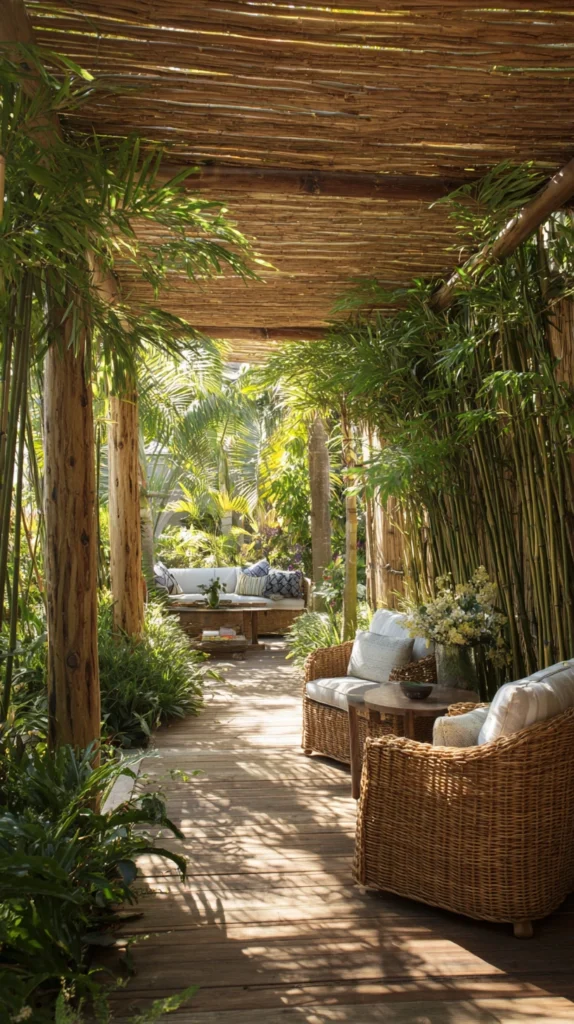
Budget: $60 – $250
Bamboo — whether used as a growing screen, a harvested cane structure, or a woven panel — creates some of the most atmospheric and tactile shade in any garden. A framework of bamboo canes lashed together overhead with jute twine, covered with woven bamboo matting or leafy bamboo canes, creates a shade structure with a tropical, relaxed quality that suits courtyard gardens, Mediterranean-style spaces, and Eastern-inspired garden designs beautifully.
Bamboo screening panels cost $15–$40 per metre. Thick structural bamboo canes for building a shade frame cost $3–$8 each. The natural golden-green colour of bamboo softens in sunlight and creates a warm, filtered light beneath that feels entirely different from the cooler shade of fabric or timber structures.
Garden tip: Seal the cut ends of structural bamboo canes with exterior wood glue or candle wax before installing them. Bamboo splits along its length from the cut ends when exposed to alternating wet and dry conditions — sealed ends dramatically extend the life of any outdoor bamboo structure and prevent the splitting that makes canes look shabby within a single season.
9. The Retractable Awning
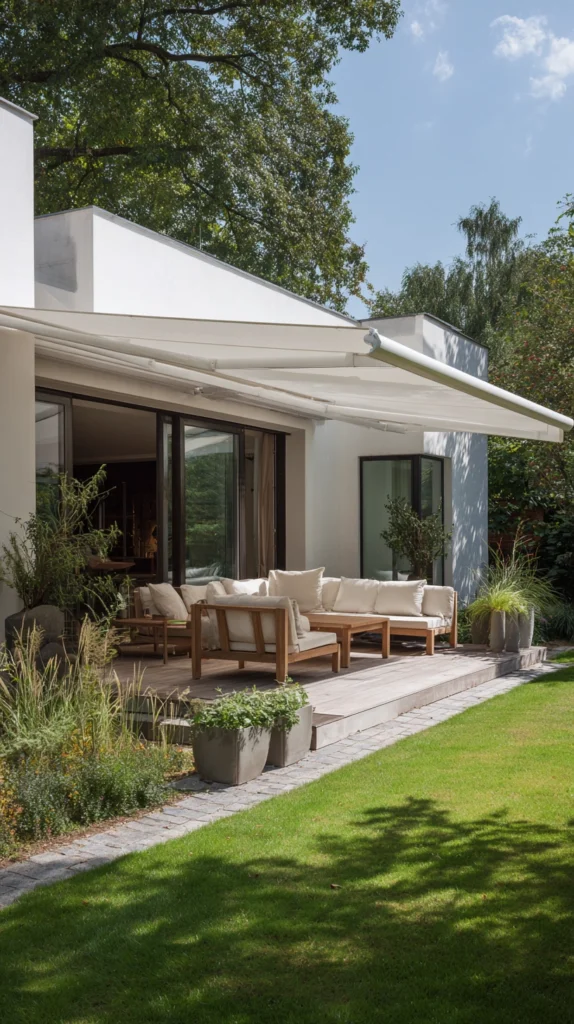
Budget: $300 – $2,000
A retractable awning — a motorised or manual fabric canopy that extends from the house wall to cover the patio and retracts when not needed — is the most practical and weatherproof shade solution for a patio directly adjacent to the house. It provides instant shade at the touch of a button, retracts fully in high winds to protect the fabric, and leaves the patio completely open on cooler days or evenings when shade is not wanted.
Manual crank awnings cost $300–$600. Motorised versions cost $600–$1,500 and can be fitted with wind and sun sensors that extend and retract the awning automatically. The fabric is the most important quality consideration — look for solution-dyed acrylic fabrics like Sunbrella that are UV-resistant, water-repellent, mould-resistant, and retain their colour for ten or more years.
Garden tip: Extend the awning at the end of each day when not in use to allow any accumulated moisture to dry off before retracting. Storing a damp awning in its retracted position, particularly in a closed cassette housing, is the primary cause of mould growth on the fabric — a simple daily habit of evening extension and morning retraction prevents this almost entirely.
10. The Shade Garden Planted Bed
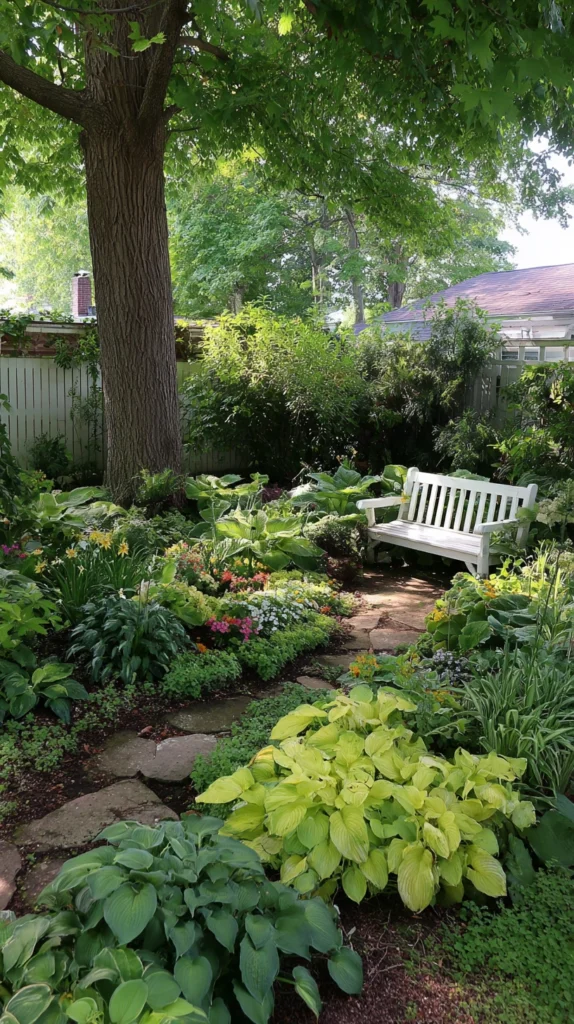
Budget: $40 – $180
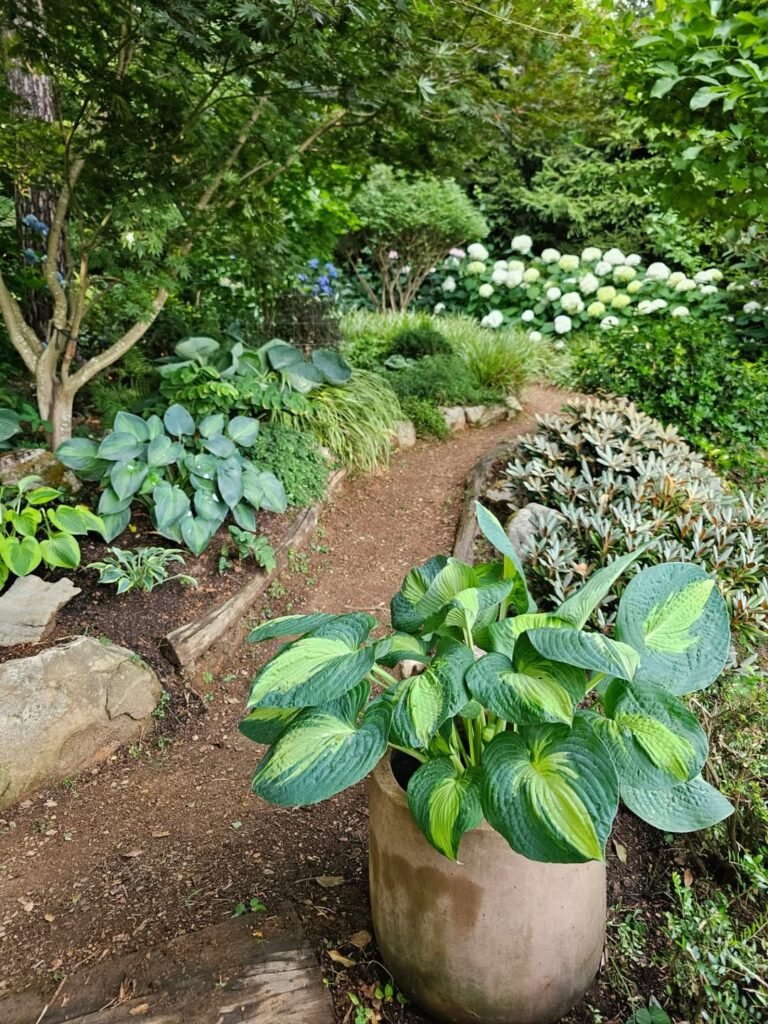
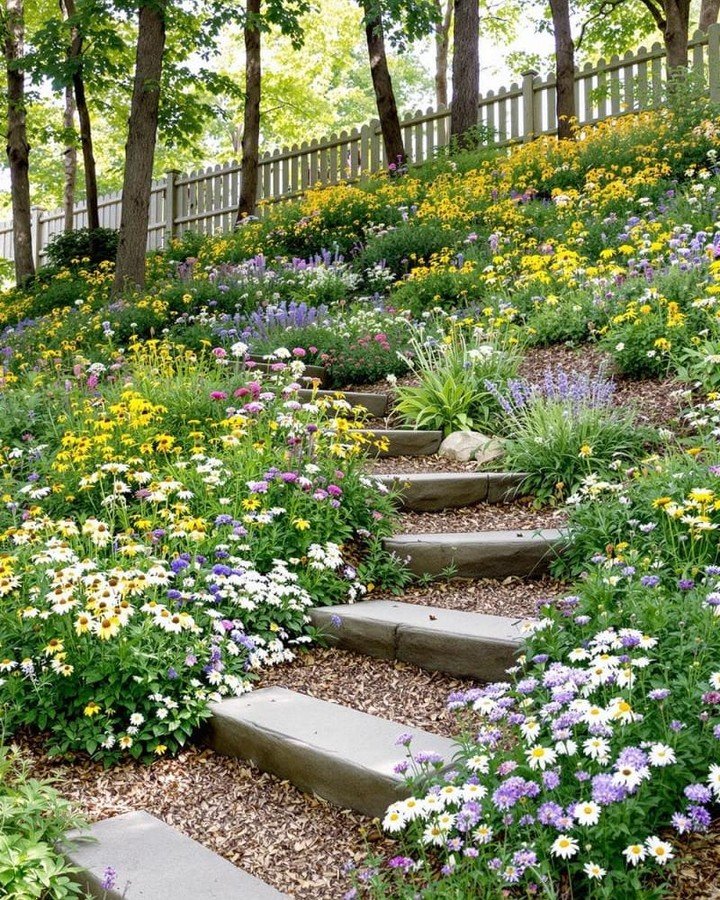
Rather than fighting the shade that an existing tree, wall, or structure creates, planting into it with a carefully chosen shade-loving plant palette turns a problem area into one of the garden’s most interesting and atmospheric spaces. Hostas, ferns, astilbes, hellebores, epimediums, and foxgloves create a lush, layered understorey that looks beautiful in the kind of dappled indirect light that most flowering plants dislike.
A shade garden planted beneath an existing tree canopy requires minimal watering once established because the leaf canopy above reduces soil evaporation significantly. It requires no mowing, no deadheading in most cases, and virtually no feeding — the leaf litter from the tree above provides all the organic matter the soil needs through the natural cycle of growth and decomposition.
Garden tip: Improve the soil beneath a tree before planting by working in generous quantities of leaf mould or composted bark. Tree roots compete aggressively for available nutrients and moisture, and the soil directly beneath a mature canopy is often depleted and compacted. A one-off improvement at planting time gives shade garden plants the start they need to establish quickly and compete successfully with the tree roots.
11. The Louvre Pergola
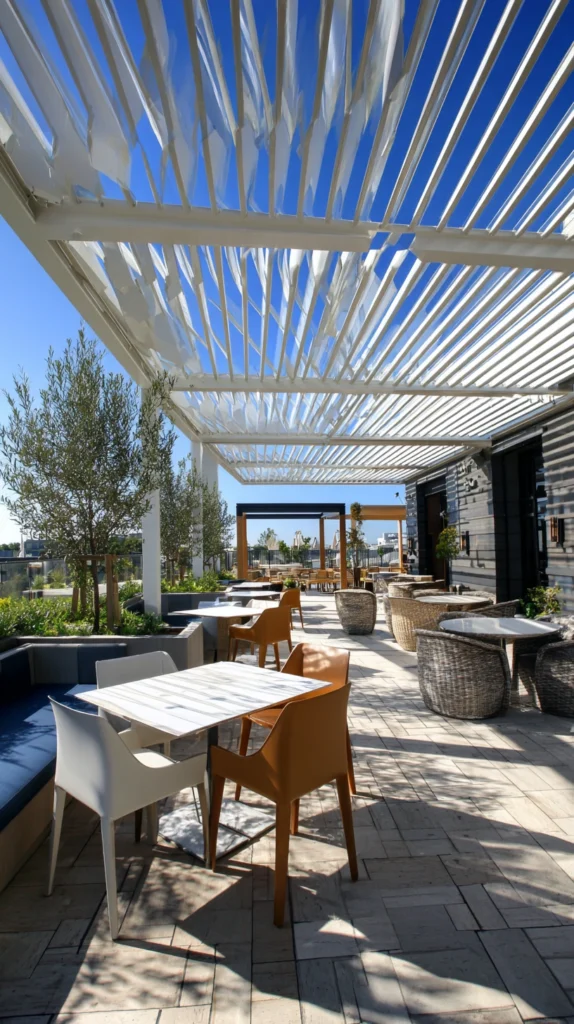
Budget: $800 – $4,000
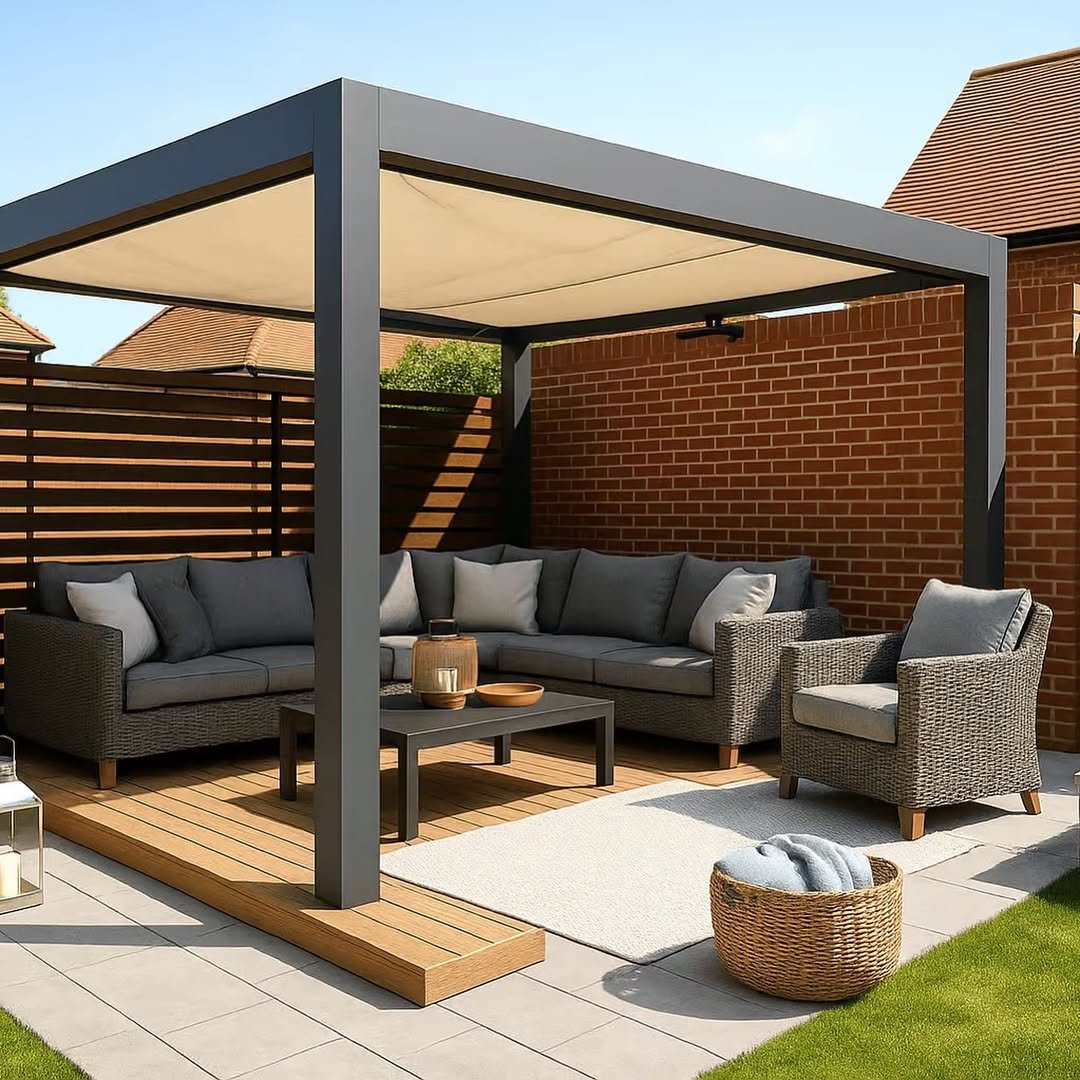
A louvre pergola — a fixed pergola structure with adjustable angled slats in the roof that can be opened and closed to control the amount of light and shade beneath — represents the most sophisticated and versatile shade solution available for a garden. The slats can be fully opened to allow complete sky and starlight views on clear evenings, partially angled to filter strong midday sun, or fully closed to provide weather protection in light rain. The control it gives over the outdoor environment is genuinely transformative.
Entry-level louvre pergola kits cost $800–$1,500. Architect-designed and custom-built versions cost $2,000–$8,000 and above. For households that use outdoor space extensively across a long season, the investment in a louvre pergola converts what would otherwise be a weather-dependent patio into an outdoor room usable for nine or ten months of the year.
Garden tip: Specify a built-in drainage channel in the louvre pergola frame at the design stage rather than adding it as an afterthought. When the slats are closed in rain, water needs somewhere to go — a frame without integrated drainage allows water to run down the posts and pool at the base, while an integrated channel routes it away cleanly and keeps the structure looking sharp in all weather conditions.
12. The Hammock Between Two Trees
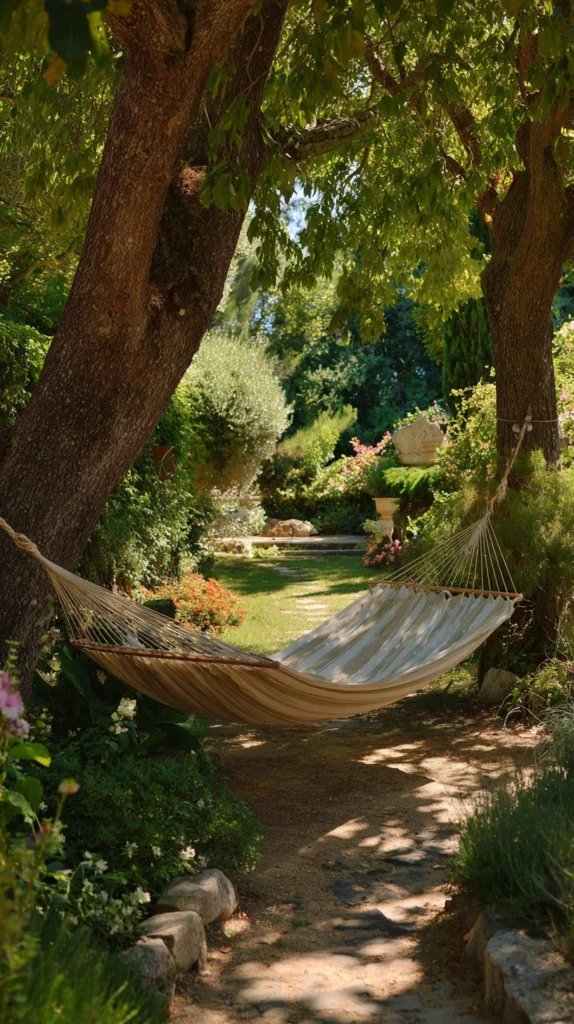
Budget: $30 – $150
Two established trees at the right spacing are all the infrastructure a hammock requires, and a hammock strung between them in the dappled shade of a summer garden is one of the most genuinely pleasurable outdoor experiences available at any price point. The natural canopy overhead provides soft, moving shade, the gentle sway of the hammock creates its own cooling effect, and the whole arrangement costs a fraction of any constructed shade solution.
A quality cotton or canvas hammock costs $30–$80. Brazilian-style hammocks without a spreader bar pack down small and are more comfortable for sleeping than spreader bar versions. Tree-hanging straps ($15–$30) protect the bark from the pressure of the hanging point and spread the load across a wider area of trunk than a rope or chain would. Never hang a hammock from a hook screwed directly into living wood — it damages the tree and weakens over time.
Garden tip: Position the hammock so you lie across it diagonally rather than straight along its length. Lying diagonally in a hammock — at roughly 30 degrees to the hanging axis — creates a naturally flat, supported sleeping position that removes the banana curve that makes straight lying uncomfortable over extended periods. This is how hammocks are used traditionally throughout Central and South America.
13. The Shade Canopy With Outdoor Lighting
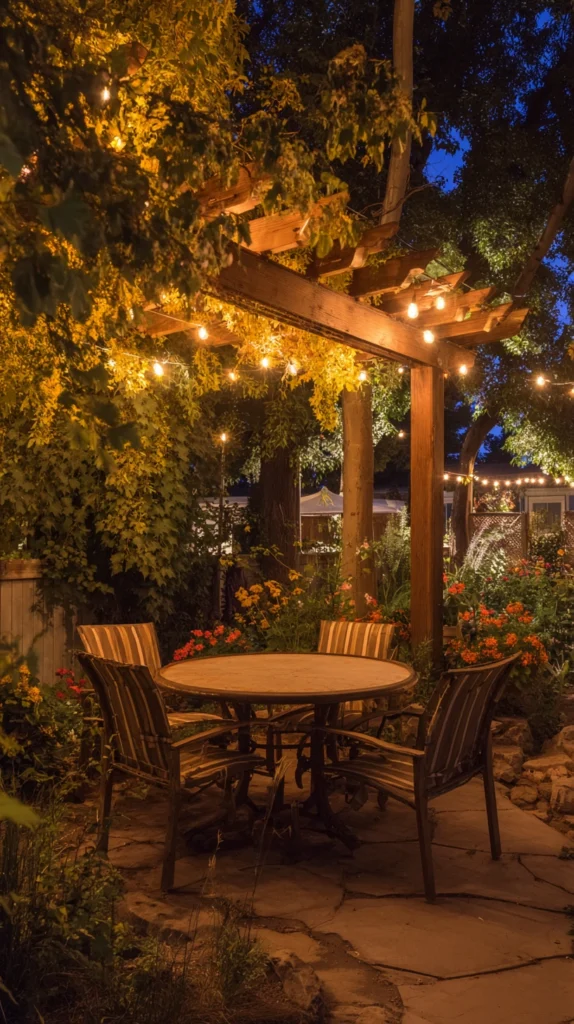
Budget: $80 – $350
A shade structure designed from the outset to be used in the evening as well as during the day — with outdoor string lights, lanterns, or LED strip lighting integrated into the canopy frame — extends the useful hours of a shaded outdoor area well beyond sunset. A pergola or sail shade that is purely functional in daylight becomes a genuinely atmospheric outdoor room in the evening when the lighting comes on and the canopy overhead glows warmly.
Outdoor string lights threaded through the beams of a pergola or along the edges of a sail shade cost $15–$40 per string. Solar-powered versions eliminate the need for wiring. Warm white bulbs (2700K colour temperature) create the most flattering and atmospheric outdoor light — cooler white and daylight-spectrum bulbs are too harsh for a relaxed evening setting.
Garden tip: Use bulbs of a consistent wattage and colour temperature across the entire canopy rather than mixing different types. A mix of bulb sizes, brightness levels, or colour temperatures across a single canopy looks uneven and restless at night rather than cohesive and warm. Consistent lighting across the whole structure makes the canopy read as a unified space.
14. The Green Roof Shade Structure
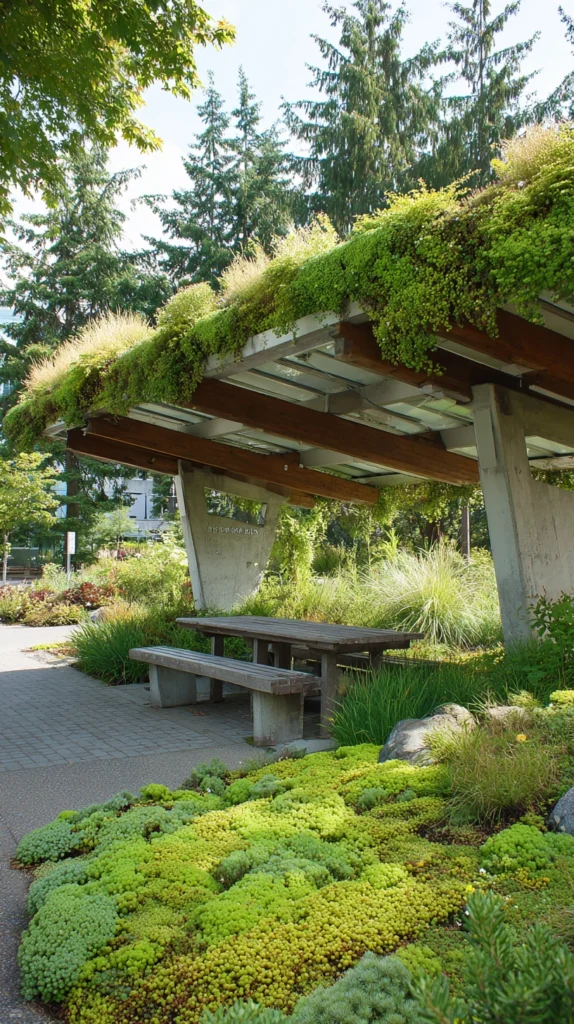
Budget: $300 – $2,000
A shade structure with a living green roof — a shallow-profile sedum or grass planting over a waterproof membrane on a flat or gently pitched roof — is the most ecologically rich, thermally effective, and visually beautiful permanent shade solution available for a garden. The planted layer insulates the roof, reduces rainwater runoff, provides habitat for pollinators, and creates a shade structure that looks as though it belongs in the garden rather than having been installed in it.
A green roof requires a structural frame capable of supporting the additional weight of substrate and plants when saturated — approximately 80–120 kilograms per square metre for a shallow sedum roof. Purpose-made green roof substrate and sedum matting systems cost $20–$40 per square metre and are significantly easier to install than building up the layers individually.
Garden tip: Include a simple irrigation line in the green roof build, even if you do not connect it immediately. A dry summer can stress sedum roofs significantly — particularly in their first year before the plants are fully established — and having an irrigation point already in place allows easy watering without having to climb onto the roof with a hose every few days during a prolonged dry spell.
The best shade solutions are the ones that make the garden more beautiful as well as more comfortable — structures and plantings that look as good as they feel to sit beneath. Start with the idea that suits your space and your budget, install it properly, and then spend the summer in the outdoor room you have always wanted. The garden is there to be used, and a little well-placed shade is what makes using it a genuine pleasure through the hottest months of the year.