14 Sloped Garden Ideas That Transform a Challenging Space
A sloped garden is one of those outdoor spaces that inspires either frustration or creativity, and the difference between the two is almost entirely a matter of perspective. The same incline that makes mowing difficult and furniture placement awkward is also a naturally terraced landscape waiting to be revealed, a dramatic backdrop for bold planting, and a source of the kind of visual interest that a flat garden has to work hard to create artificially. Slope is a character. The task is simply learning how to use it.
The ideas below cover every gradient and every garden size, from a gentle incline that needs only a little thoughtful planting to a steep hillside that calls for serious structural intervention. Each one approaches the slope as an opportunity rather than a problem, with practical guidance on making it work beautifully and sustainably.
1. The Terraced Raised Bed System
Budget: $200 – $1,500
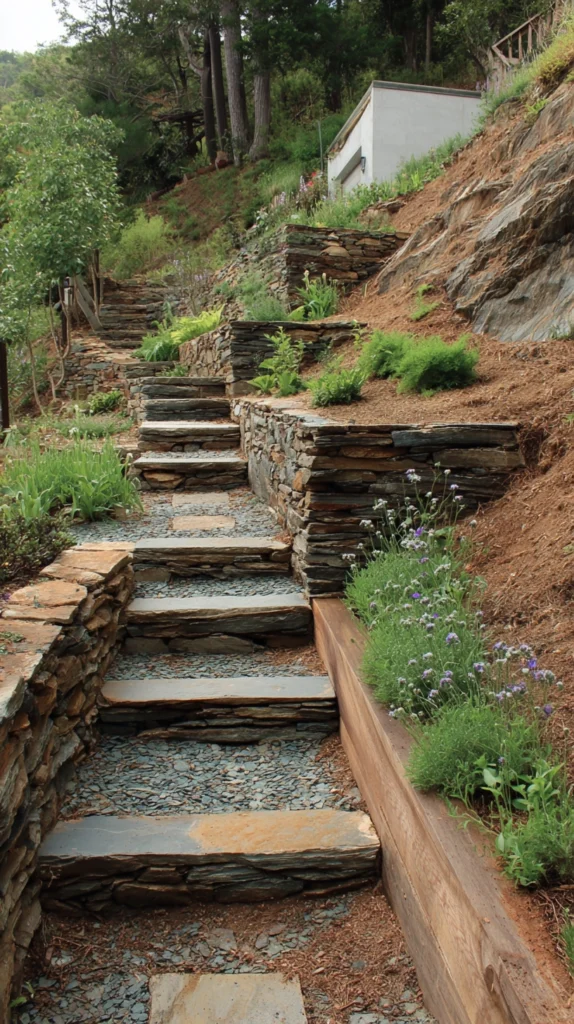
Cutting a sloped garden into a series of level terraces retained by low walls is the most classic and most effective structural solution available. Each terrace creates a flat, usable plane — for planting, for seating, for paths — and the retaining walls between levels become garden features in their own right, softened with trailing plants and built from materials that suit the character of the garden. A well-terraced slope reads not as a problem solved but as a garden designed with genuine intention.
Retaining walls can be built from dry stone, reclaimed brick, railway sleepers, gabion baskets filled with local stone, or rendered concrete block depending on budget and style. Dry stone walls are the most beautiful and the most ecologically valuable, providing habitat for insects and small mammals in the gaps between stones. Railway sleeper walls are the most straightforward for a confident DIY builder. All retaining walls over approximately 60 centimetres in height should be built with drainage in mind — a row of weep holes or a gravel backfill prevents water pressure from building behind the wall and destabilising it over time.
Garden tip: Step the terraces so each level is slightly wider than it is tall. A terrace whose width is less than its retained height feels cramped and inaccessible — the usable space on each level needs to be generous enough to accommodate planting, movement, and furniture where needed. The extra excavation is worth every hour it takes.
2. The Wildflower Slope
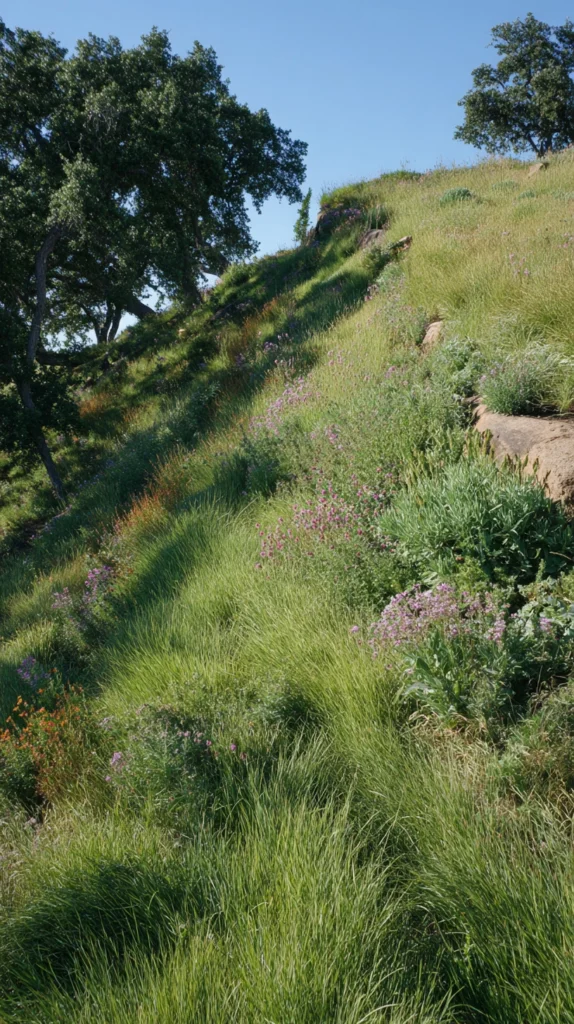
Budget: $20 – $80
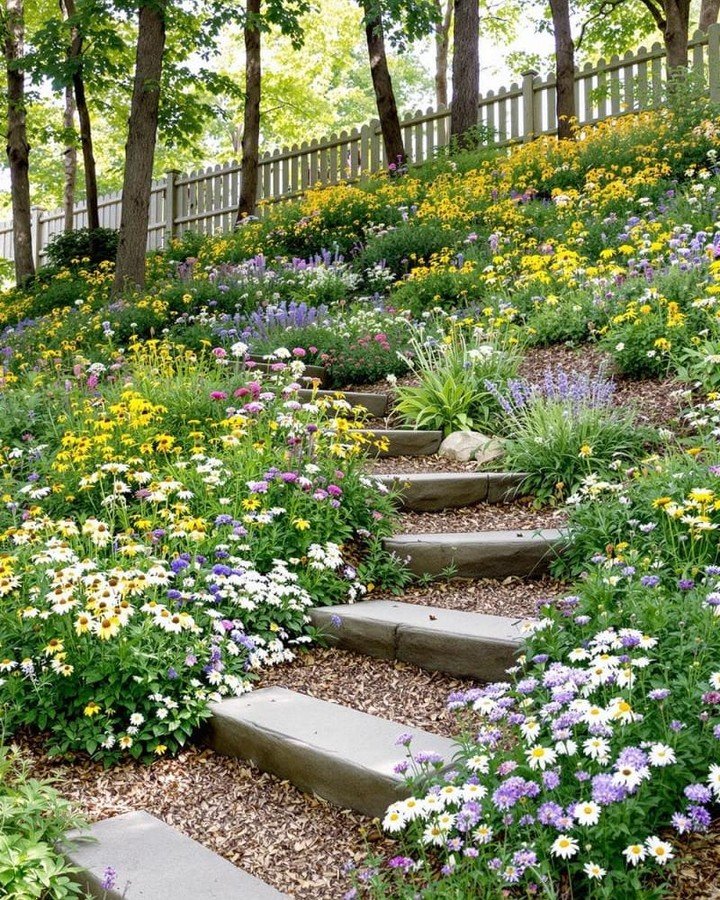
A bank or slope that is difficult to mow, impossible to plant formally, and constantly losing topsoil to erosion becomes an ideal wildflower meadow the moment you stop fighting it and work with its nature instead. A native wildflower seed mix broadcast across a prepared slope establishes a self-sustaining community of plants whose roots bind the soil, whose flowers feed pollinators throughout summer, and whose seed heads provide food for birds through autumn and winter — all with almost no maintenance once established.
Clear the slope of existing grass and weeds in autumn, scarify the soil surface to create a rough seed bed, and broadcast seed generously across the entire area. Yellow rattle — a semi-parasitic annual that weakens vigorous grasses — is worth including in the mix as it creates space for the more delicate wildflower species to establish without being crowded out. The slope that looked like a maintenance problem becomes, within a single season, the most ecologically rich and visually alive part of the garden.
Garden tip: Cut the wildflower slope once a year in late autumn after all the seed heads have ripened and dispersed. Remove all the cut material from the slope rather than leaving it as a mulch — a nutrient-rich mulch layer encourages the vigorous grasses that crowd out the delicate wildflower species you are trying to establish.
3. The Cascade Water Feature
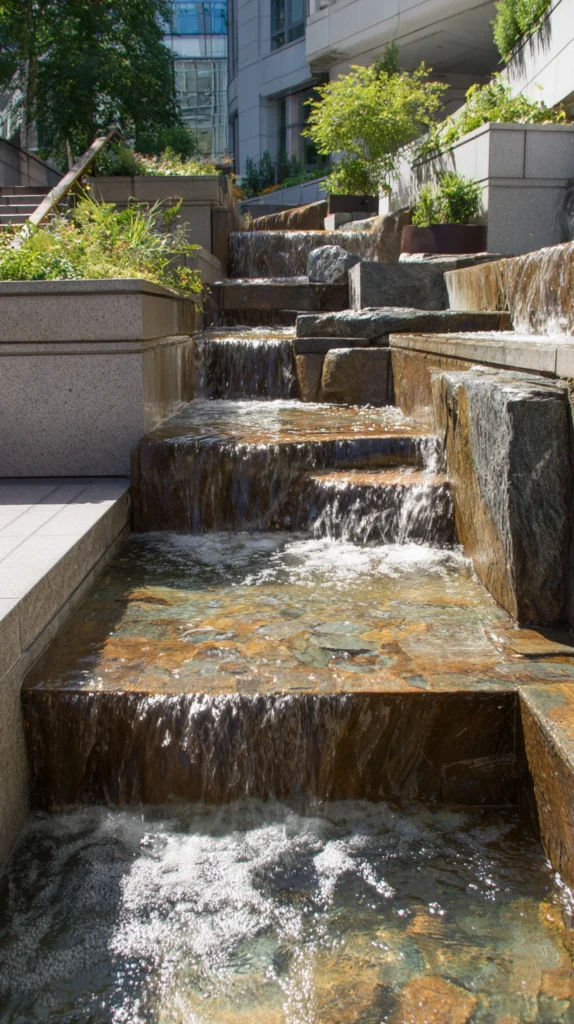
Budget: $150 – $1,500
A slope is the natural home of a water feature. Where a flat garden requires pumps, engineering, and careful concealment of pipework to create a convincing cascade, a sloped garden provides the gradient naturally — the water simply follows the land. A series of linked pools descending the slope, a stone-lined rill running through a planted bank, or a single bold cascade over a rock face all use the slope’s topography as the design itself rather than working against it.
Flexible pond liner ($30–$80 per square metre) allows any shape of pool or channel to be formed on the slope. Natural stone or reclaimed cobbles form the channel bed and edges at a cost that varies enormously with stone type and source. A submersible pump ($40–$150) circulates water from the lowest pool back to the top of the feature. The sound of water moving down a slope — the defining acoustic quality of a garden on an incline — is worth every element of the installation.
Garden tip: Excavate each pool basin slightly deeper than the design requires and line the bottom with a layer of compacted clay or additional liner before adding the decorative stone. This secondary waterproofing layer prevents the slow seepage loss that all flexible-liner pools experience over time and keeps the feature topped up between rainfall events without constant manual refilling.
4. The Zigzag Path
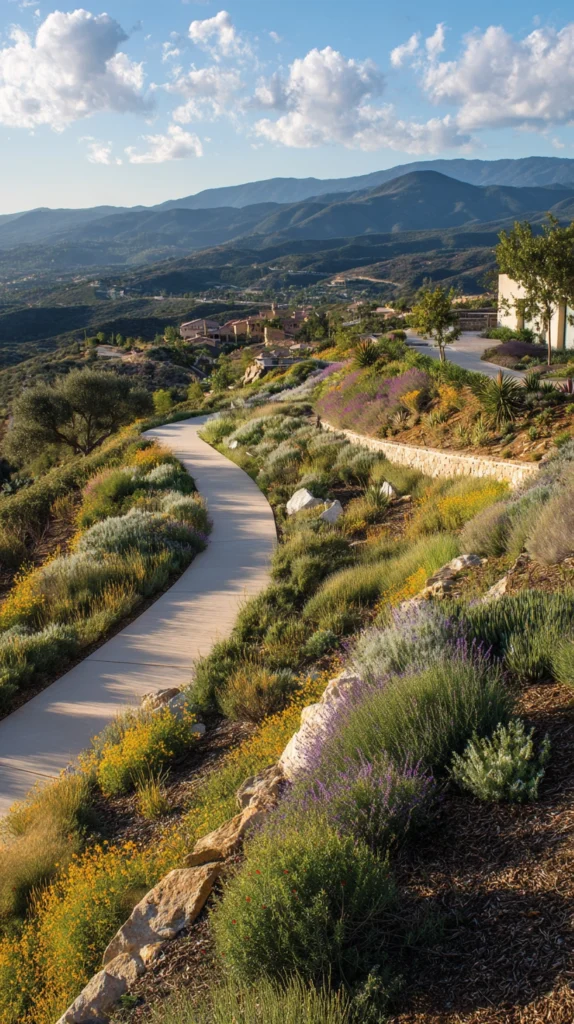
Budget: $50 – $400
A path that ascends a slope in a series of gentle zigzag switchbacks rather than attacking the gradient head-on is both more physically manageable and more visually interesting than a straight route. The path doubles the journey length up the slope, which halves the effective gradient — a 30-degree slope becomes a comfortable 15-degree walk — and the turns create a series of naturally framed views of the garden that a straight path eliminates entirely.
Hard materials — natural stone, reclaimed brick, compacted gravel with timber or steel edging — are significantly more durable on a slope than soft materials like bark mulch, which migrates downhill in heavy rain regardless of how generously it was applied. Each change of direction in a zigzag path is an opportunity for a landing — a slightly wider level area — that provides a comfortable pause point and breaks the visual rhythm of the path in a way that looks designed rather than simply functional.
Garden tip: Plant the inside corners of each zigzag bend with something bold and structural — a specimen grass, a clipped topiary ball, a large terracotta pot — to mark the turning point clearly and give each corner a sense of occasion. Unmarked bends in a garden path feel arbitrary; a planted focal point at each turn makes the zigzag feel like a guided journey rather than a route that simply could not go straight.
5. The Rock Garden
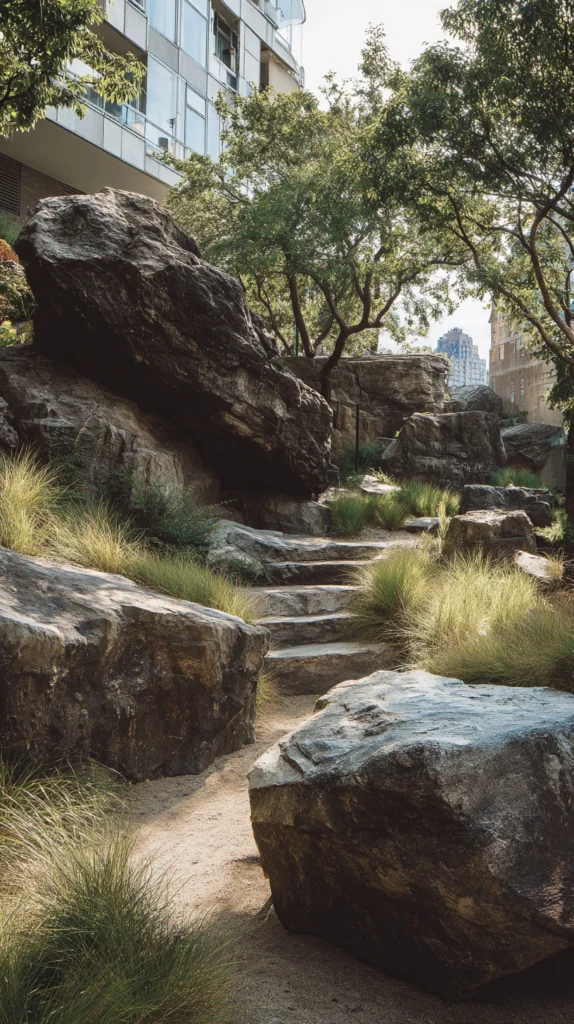
Budget: $100 – $600
A naturalistic rock garden on a slope — large rocks placed to look as though they emerge from the hillside, with planting between and around them in the pockets of gritty soil — is one of the oldest and most enduringly beautiful approaches to sloped garden design. The rocks act as retaining elements, preventing soil erosion and creating level planting pockets, while the planting softens and integrates the rocks into a composition that looks like a natural rocky hillside rather than a collection of stones placed on a lawn.
Place each rock so that at least a third of its volume is below the soil surface — rocks that sit entirely on top of the soil look placed rather than embedded and shift with freeze-thaw cycles and heavy rain. Tilt each rock slightly backward into the slope so its top surface angles back into the hill — this channels rainwater toward the roots of the plants behind each rock rather than directing it away from them, which is the key to keeping rock garden plantings alive in dry summers.
Garden tip: Source all rocks from a single quarry or geological source rather than mixing different stone types across the rock garden. A naturalistic rock garden built from one consistent stone looks as though the rocks belong to the same geological formation; a mix of sandstone, granite, and limestone looks like a collection of different stones rather than a unified landscape.
6. The Slope Seating Amphitheatre
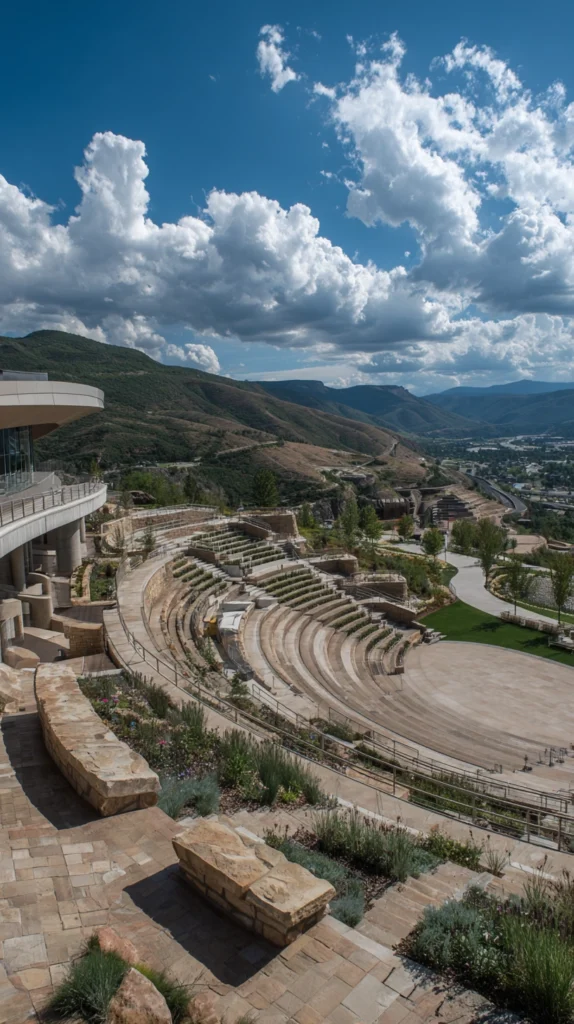
Budget: $300 – $2,000
A gentle to moderate slope is the natural form of an amphitheatre, and cutting the garden into a series of curved, stepped seating tiers facing a flat lawn, a performance space, or simply a beautiful view creates one of the most useful and characterful garden features imaginable. The slope does the structural work — the tiers follow the existing gradient rather than requiring deep excavation — and the result is a garden space with genuine drama and a strong sense of place.
Timber railway sleepers form the retaining edge of each tier at a cost of $15–$40 each. Turf or low ground-cover planting on each level surface keeps the tiers looking green and natural. A flat gravel or stone area at the base of the amphitheatre serves as the stage — for a projector screen, a firepit, an outdoor kitchen, or simply a clear space for children to play while the adults watch from the terraced seating above.
Garden tip: Slope each seating tier very slightly backward toward the retaining edge rather than leaving it perfectly flat. A 2–3 degree backward slope on each tier prevents rainwater from pooling on the seating surface and drains it away toward the retaining edge where it can be channelled away from the structure. A perfectly flat tier holds water after rain and becomes slippery and unpleasant to sit on.
7. The Planted Slope With Ground Cover
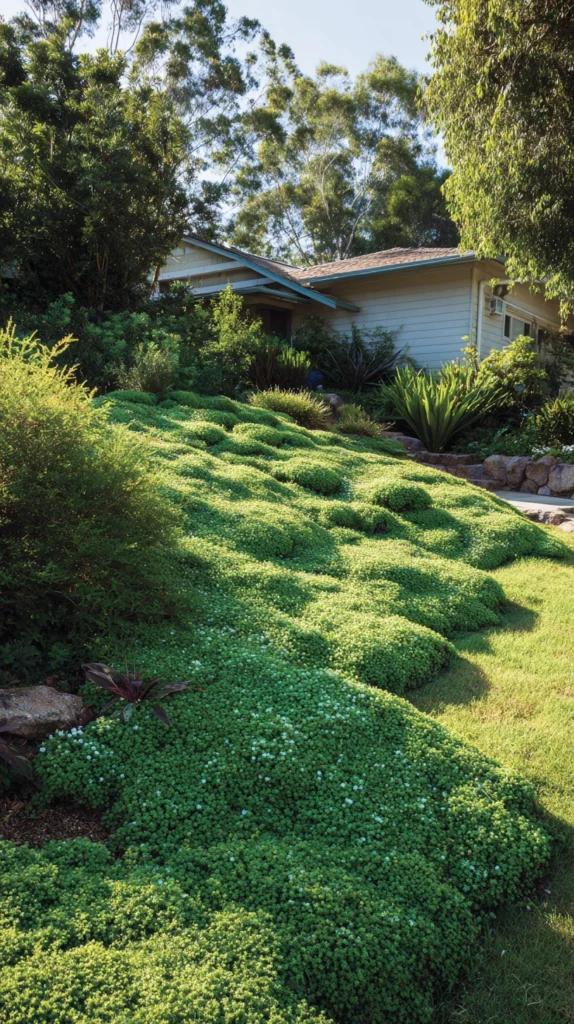
Budget: $40 – $200
The simplest and most ecologically generous approach to a sloped garden — covering the bank in a dense planting of ground-covering plants whose roots bind the soil, suppress weeds, and require no mowing or structural intervention. Vinca minor, pachysandra, epimedium, geranium macrorrhizum, ajuga, and hypericum calycinum all form dense, weed-suppressing mats that establish quickly, spread steadily, and hold a bank far more effectively than grass while requiring only a fraction of the maintenance.
Plant through a permeable weed-suppressing membrane on steep banks, cutting cross-shaped holes for each plant and pinning the membrane firmly at the top edge of the slope. The membrane prevents weed establishment during the critical first two seasons while the ground cover plants are spreading to fill the space — once the plants have covered the membrane, it becomes invisible and unnecessary.
Garden tip: Plant ground cover species in bold single-variety drifts rather than mixing different species across the entire slope. A slope covered in alternating individual plants of different species looks busy and unresolved. The same slope planted with generous flowing drifts of three or four species — each drift covering several square metres — reads as a naturalistic planting design of genuine beauty and confidence.
8. The Orchard on a Slope
Budget: $150 – $800
Fruit trees planted in a grid or informal arrangement across a gentle to moderate slope create a productive orchard landscape that is as beautiful as it is useful. The slope improves air drainage, reducing the frost pockets that damage blossom in spring — cold air flows downhill like water, and a slope allows it to drain away from the trees rather than pooling among them as it does in a hollow. An orchard on a slope is, in terms of fruit tree health and productivity, often a better site than a flat garden.
Apple, pear, plum, and damson trees on dwarfing or semi-dwarfing rootstocks cost $20–$60 each and are appropriate scales for a domestic garden orchard. Plant on the contour of the slope — in rows that run horizontally across rather than up and down — to slow surface water runoff and maximise the amount of rainfall absorbed by the soil around each tree’s root zone.
Garden tip: Establish a grass management regime between orchard trees rather than bare soil cultivation. A short-mown grass path between tree rows looks beautiful, is easy to manage, and supports the diverse insect populations that pollinate the blossom and control pest species. Keep a clear, mulched circle of at least one metre diameter around each tree trunk to prevent grass competition for water and nutrients at the critical root zone.
9. The Retaining Wall Garden With Planting Pockets
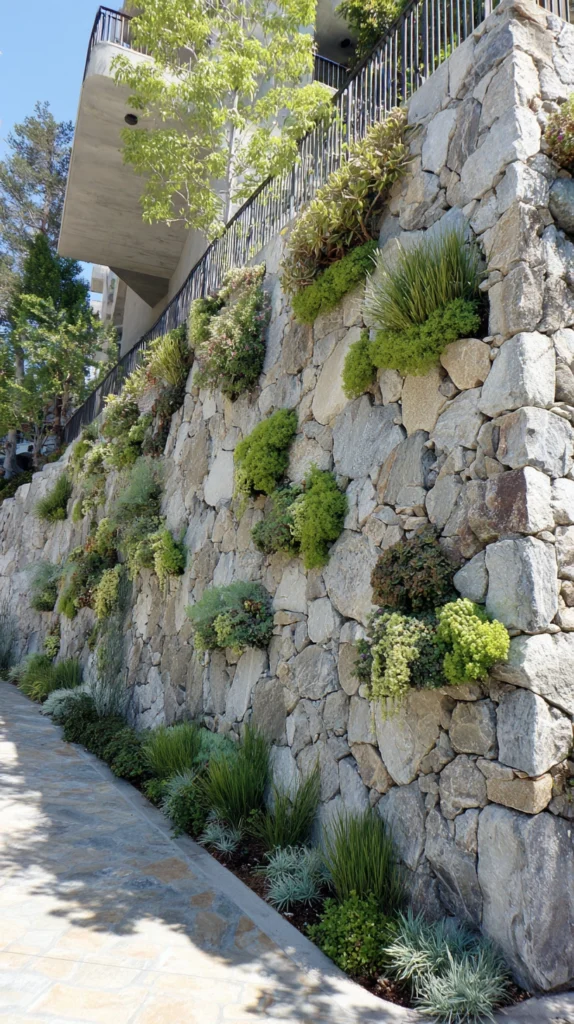
Budget: $100 – $500
A retaining wall built with deliberately created planting pockets — gaps in the wall face, oversized joints, or recessed cavities filled with free-draining soil — becomes a vertical garden as well as a structural element. Aubrieta, arabis, alyssum, thyme, sedums, wallflowers, and trailing pelargoniums planted into wall pockets cascade down the face of the retaining wall in a flowing curtain of colour and texture that softens the hard edge between one terrace level and the next.
Dry stone retaining walls provide the most natural planting pockets — the irregular gaps between stones accommodate plant roots without any special construction. Brick or block retaining walls need deliberate pocket creation at the building stage — omitting the odd brick or block at intervals across the face and filling with soil before planting. Attempting to add planting to a fully mortared wall after construction requires drilling and is far less successful than building the pockets in from the start.
Garden tip: Plant wall pockets while the wall is being built rather than afterward. A small plug plant or root cutting tucked into a pocket during construction, with roots in contact with the soil behind the wall, establishes far more successfully than a plant inserted into a pocket in a completed wall where root access to a continuous soil body is limited and drying out is rapid.
10. The Grass Steps With Planted Risers
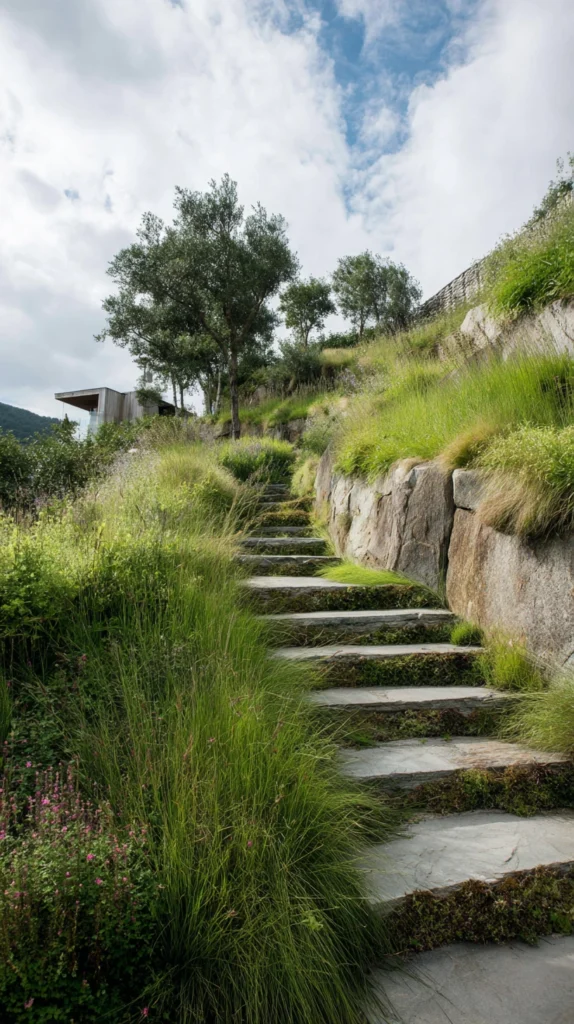
Budget: $60 – $300
Steps cut directly into a slope — with flat timber, stone, or brick risers and turfed treads — create a natural, flowing staircase that ascends the garden with a lightness and informality that hard-landscaped steps rarely achieve. The grass treads continue the visual surface of the lawn across the vertical change in level, making the steps feel like a natural part of the slope rather than an installed structure. Planted risers — with low spreading plants like thyme or sedum growing between and over the riser material — soften the transition further.
Railway sleepers used as risers are the most practical and most commonly used material for grass steps — they are heavy enough to stay in place without fixing, wide enough to accommodate a comfortable tread, and their dark weathered colour contrasts beautifully with the green of the turfed tread above. Peg them firmly into the slope with steel rods driven through pre-drilled holes before backfilling and turfing the tread behind each sleeper.
Garden tip: Make each grass tread at least 40 centimetres deep from riser to riser — preferably 50 centimetres or more. Grass steps with shallow treads are uncomfortable to climb, difficult to mow, and look mean and cramped from below. Generous treads look confident and welcoming and are genuinely comfortable to use at a natural walking pace.
11. The Kitchen Garden on Contour Terraces
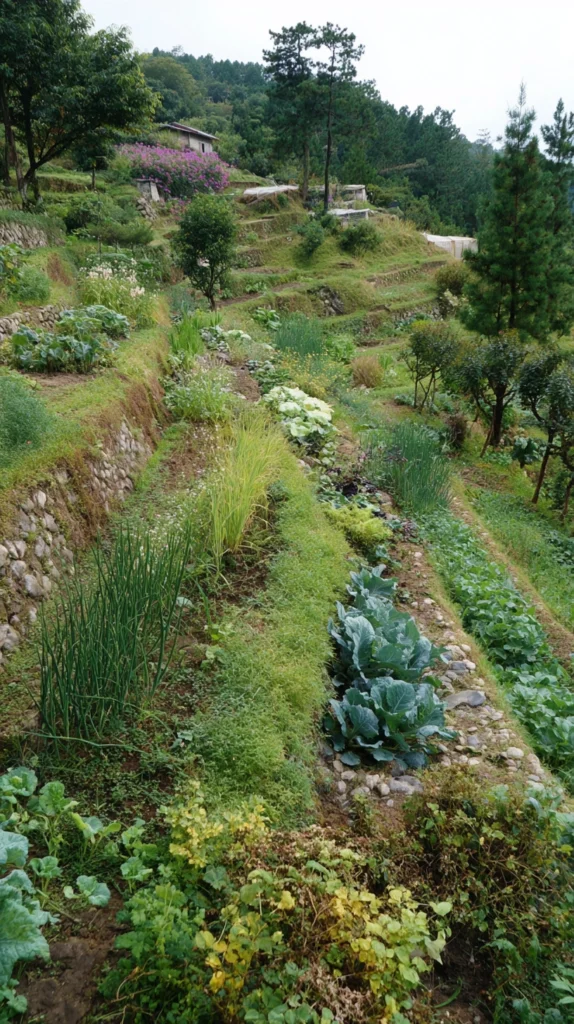
Budget: $200 – $1,000
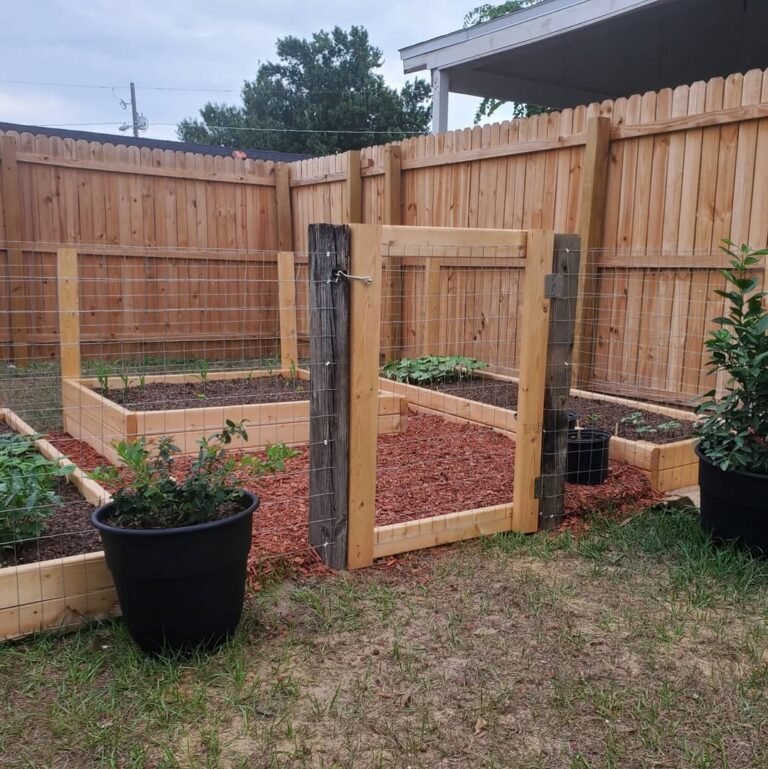
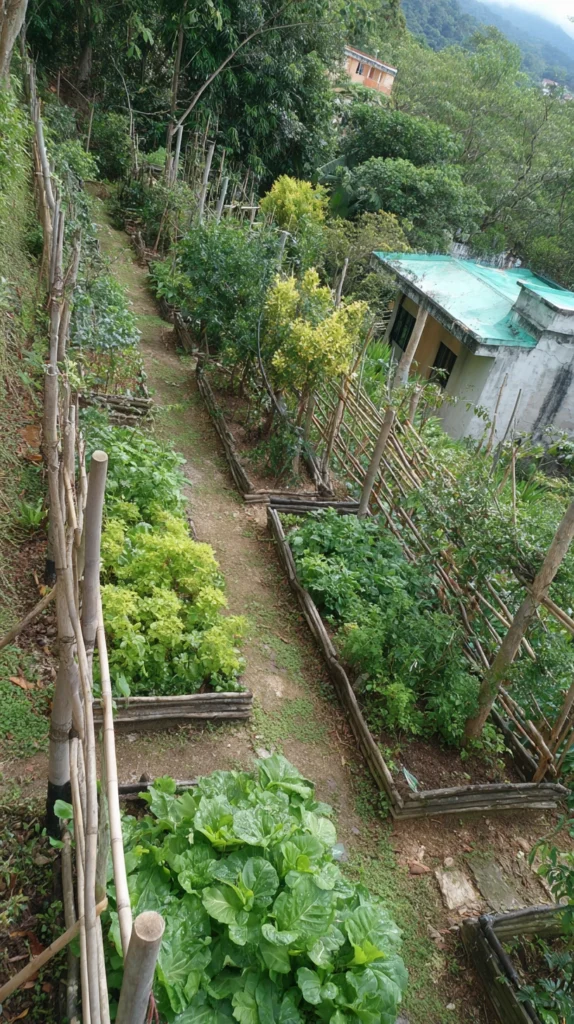
A series of contour terraces — level growing beds cut into and retained across the slope — creates an ideal kitchen garden on ground that would be unusable for productive growing in its unmodified state. The terracing improves drainage for root vegetables, creates warm, sheltered microclimates on south-facing slopes that extend the growing season, and organises the kitchen garden into clearly defined, easily managed beds that are accessible from the paths between them without stepping on the growing soil.
Orient the terraces to maximise sun exposure for the crops — on a south-facing slope, contour terraces catch sun along their full length throughout the day. On a north-facing slope, orient individual beds to run north-south across the terraces so crops on one bed do not shade crops on the next. The slope’s orientation is the primary determinant of what can be grown productively and how the terraces should be arranged.
Garden tip: Install a simple irrigation line along each terrace level before planting the first crops. Watering a terraced kitchen garden by hand requires carrying water up and down slope — an inefficient and time-consuming process that gradually reduces the frequency of watering. A drip irrigation line installed at the outset, connected to a timer, keeps every terrace consistently watered with no physical effort and pays for its installation cost within a single dry summer.
12. The Hillside Prairie Planting
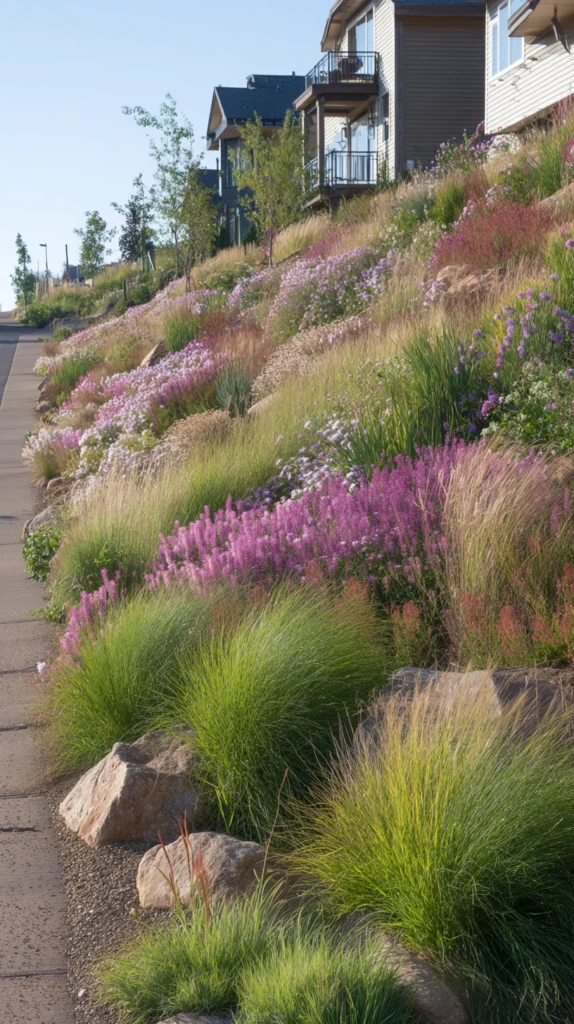
Budget: $60 – $300
A slope planted in the naturalistic prairie style — ornamental grasses, echinacea, rudbeckia, verbena bonariensis, salvia, and achillea planted in loose, flowing drifts — creates a garden that manages the slope’s erosion challenges through dense root systems while looking genuinely beautiful from midsummer through to the first hard frosts of winter. The movement of grasses and tall perennials in the wind on a hillside is one of the most dynamic and alive things a garden can offer.
The prairie planting style is particularly suited to slopes because the deep, fibrous root systems of prairie perennials and grasses bind soil far more effectively than shallow-rooted bedding plants or lawn grass. Establish plants through a permeable membrane in the first season to suppress weed competition while the prairie planting fills in, then remove or leave the membrane to degrade naturally once the plants have covered the slope.
Garden tip: Leave the entire prairie planting standing through autumn and winter rather than cutting it back after flowering. The dried seed heads, skeletal stems, and rustling grasses of a winter prairie on a slope are genuinely beautiful — particularly when frosted — and provide essential overwintering habitat for beneficial insects. Cut everything back to ground level in late February and the fresh spring growth that follows will be denser and more vigorous than any growth on a plant that was cut back in autumn.
13. The Sunken Garden Within a Slope
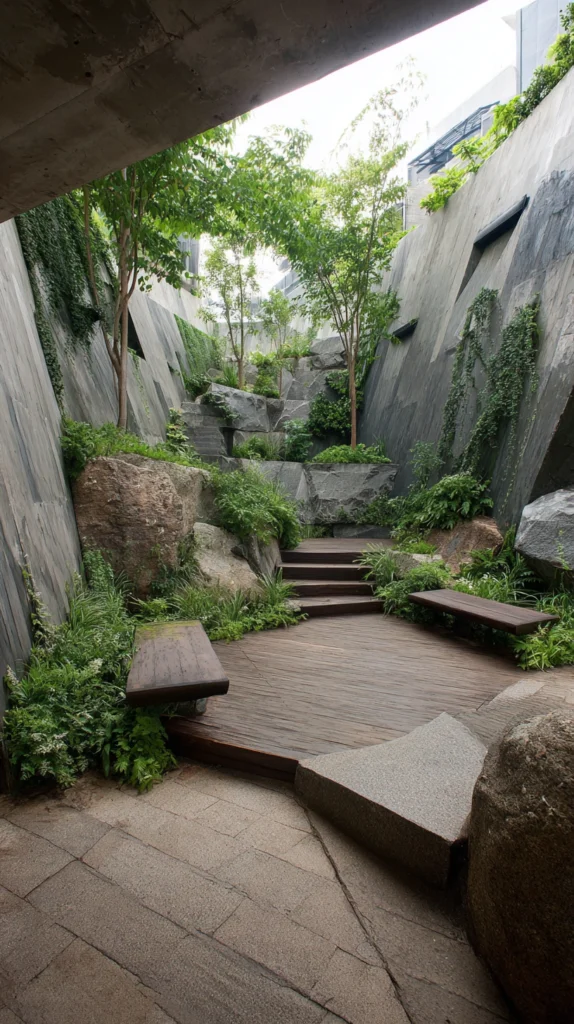
Budget: $300 – $2,000
A slope provides the perfect opportunity to create a sunken garden — excavating a level, enclosed space into the hillside and using the retained earth walls as the boundary of a sheltered outdoor room. The sunken space is protected from wind on the uphill sides, catches and holds warmth from the sun, and creates a sense of enclosure and privacy that an exposed slope can never provide. It is one of the most dramatic spatial experiences available in garden design, and a slope makes it achievable without the enormous earthworks a flat site would require.
The retained earth walls of a sunken garden need a structural facing — dry stone, rendered block, or planted gabion baskets — to prevent them from collapsing inward. A simple stone or rendered staircase descending from the garden level above into the sunken space adds to the sense of arrival and discovery. Plant the retained walls with cascading species — roses, clematis, wisteria — that tumble down from the level above and frame the sunken room in planting.
Garden tip: Ensure generous drainage in the base of any sunken garden — the enclosed space naturally collects water from the surrounding slope and from rainfall, and a sunken garden without adequate drainage becomes a waterlogged hollow rather than a sheltered retreat. Install a French drain around the perimeter of the sunken floor connected to a soakaway or drainage channel before laying any hard surface.
14. The Slope as a Green Roof
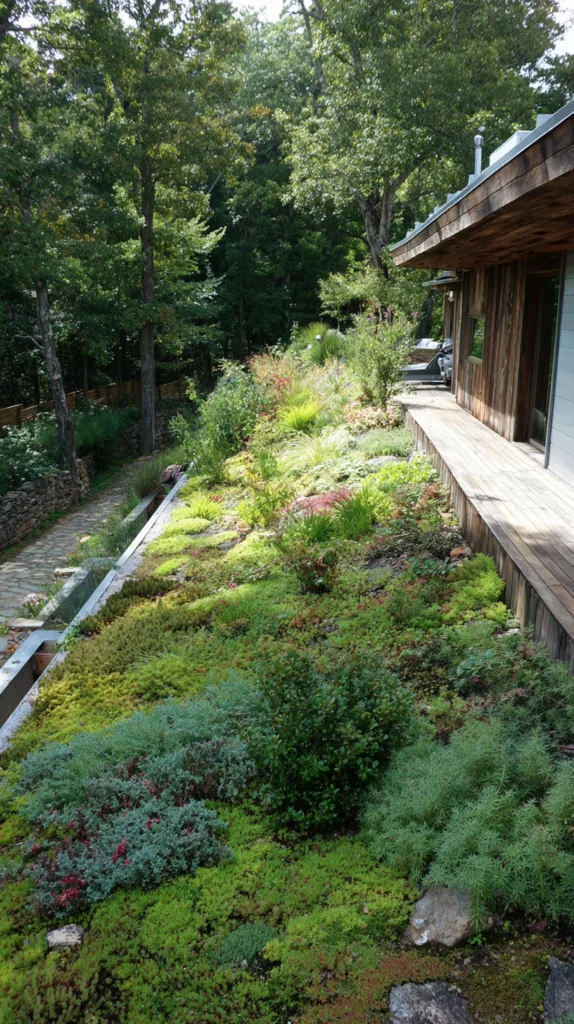
Budget: $100 – $600
A very gentle slope — particularly one that is visible from an upper storey window or from a raised terrace above — can be treated as a green roof landscape rather than a conventional planted garden. A covering of sedum mat, wildflower turf, or low ornamental grass across the slope creates a living carpet that is viewed primarily from above rather than from within, and the design should be planned accordingly — bold sweeps of colour, strong textural contrasts, and geometric or flowing patterns that read clearly from a bird’s eye perspective.
Sedum matting systems cost $15–$30 per square metre and can be laid across a prepared slope in a single day. They establish quickly, require no mowing, tolerate drought and poor soil, and provide seasonal colour from the flowers of different sedum species throughout spring and summer. A sedum slope viewed from a window or terrace above is as close as a domestic garden gets to the experience of looking down on a wildflower meadow from a hillside.
Garden tip: Edge the sedum or wildflower slope with a clear, crisp boundary of hard material — a steel or timber edging strip, a row of flush stone, or a mown grass path — that defines where the planted surface ends and the rest of the garden begins. Without a clear edge, a ground-cover slope blurs into its surroundings and loses the graphic quality that makes it so effective when viewed from above.
A sloped garden asks more of its designer than a flat one — more structural thinking, more attention to drainage and erosion, more careful consideration of how people will move through the space. But it also gives more in return. The borrowed landscape visible from a higher terrace, the drama of a planted bank in full summer growth, the sound of water following the gradient it was always meant to follow — these are qualities that no flat garden can manufacture. Work with the slope honestly and it will become the best thing about the garden.