14 Vertical Garden Ideas That Save Space and Look Stunning
Vertical gardening is the most efficient use of space available in any garden, balcony, or outdoor area. A bare fence, a blank wall, or an unused trellis panel represents an entire planting surface that the ground-level garden rarely considers — one that is at eye level, visible from the main seating area, and capable of supporting as much plant life per square metre as any conventional border. The ideas below show every way of using that space productively and beautifully.
Each idea works for a different wall type, space constraint, and aesthetic goal — from the smallest apartment balcony to a full garden boundary. Costs and growing tips are included throughout so you can choose the right setup for your space and get it right from the first season.
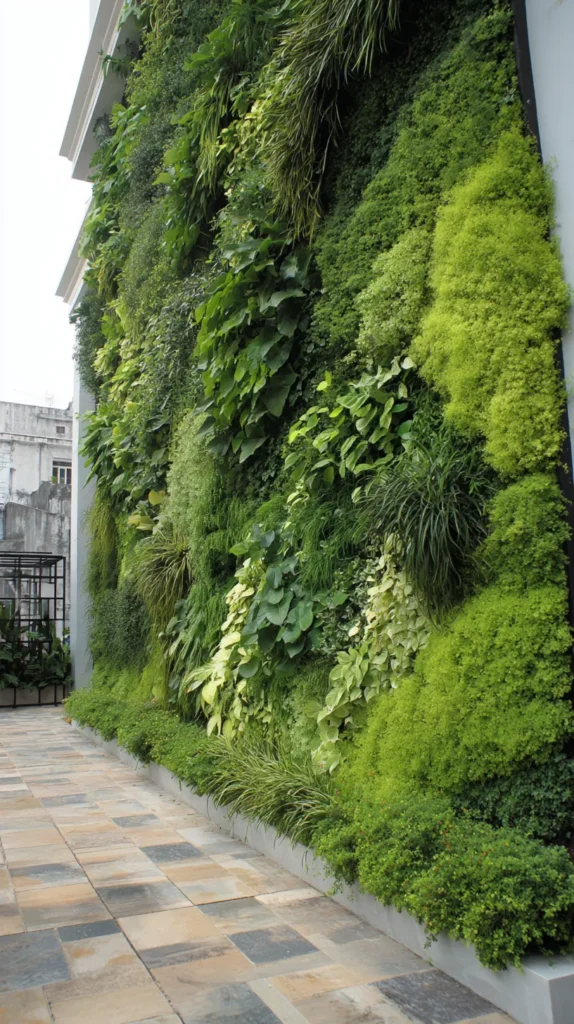
1. A Living Wall of Ferns and Foliage
Budget: $80 – $300
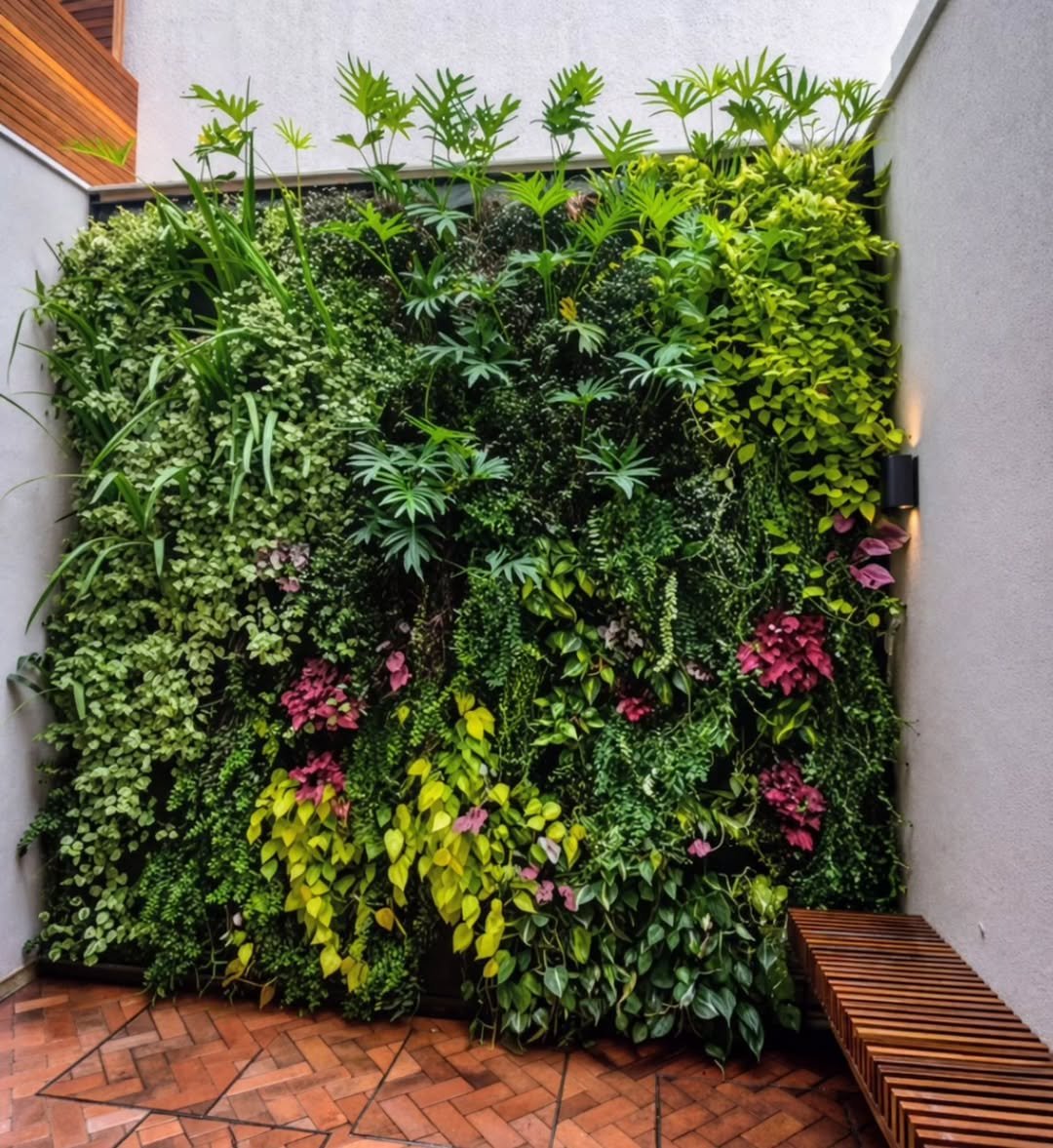
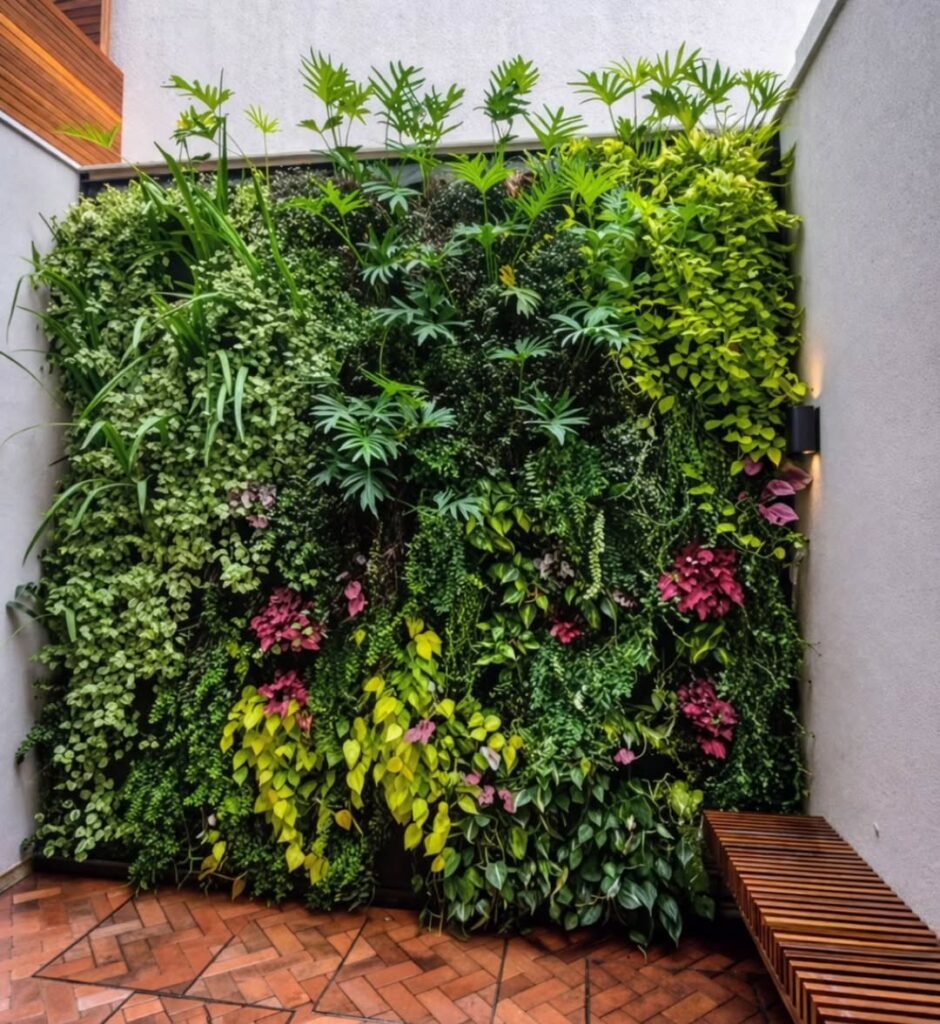
A modular living wall panel planted with a dense mix of ferns, heucheras, and trailing foliage creates a lush, textural green surface that transforms a bare shaded wall into one of the most visually rich features in a garden. It suits north and east-facing walls where flowering plants rarely perform well.
Modular planting panel systems cost $50–$150 for a 1×1 metre coverage area. Fill with hart’s tongue fern ($5–$10 each), heuchera in burgundy and lime tones ($6–$12 each), and trailing ivy ($4–$8 each). Install a simple drip irrigation line at the top panel before planting — consistent top-down moisture is essential for a shaded foliage wall to establish evenly across all planting zones.
Growing tip: Plant the panel densely from the outset — 20–25 plants per square metre — rather than at a spacing that will take two seasons to fill. A densely planted living wall looks intentional and complete from day one. A sparsely planted wall looks unfinished for the entire first season and is significantly more prone to weed colonisation in the empty gaps between plants.
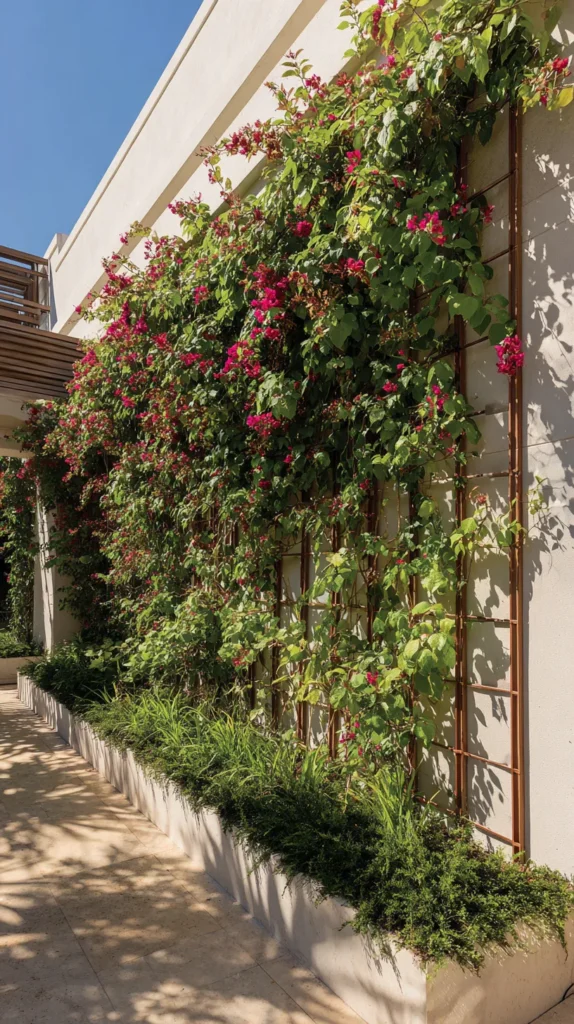
2. Climbing Roses on a Wall-Mounted Trellis
Budget: $50 – $200
A repeat-flowering climbing rose trained on a wall-mounted timber or wire trellis is the most classically beautiful vertical garden idea available — and one of the most long-lasting, with established plants covering several metres of wall within three to four years and flowering prolifically from June through to October.
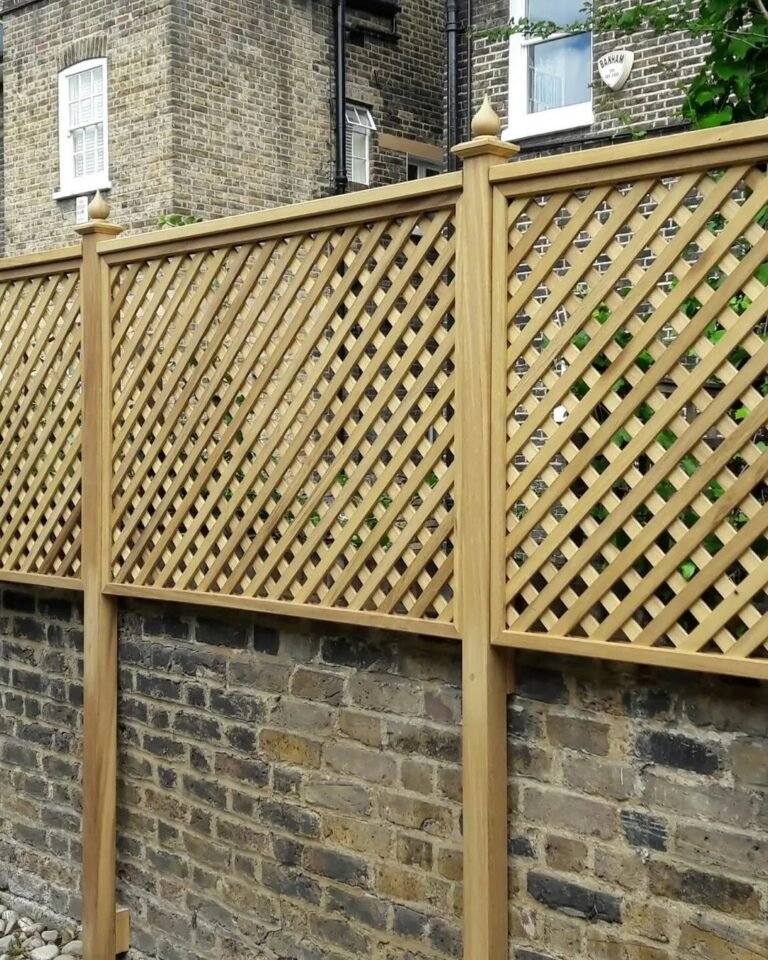
Trellis panels cost $15–$40 each fixed 5 cm from the wall surface. A climbing rose plant costs $15–$40. Varieties including New Dawn, Compassion, and Climbing Iceberg are reliably repeat-flowering and disease-resistant. Fix the trellis at least 5 cm from the wall surface — the air gap behind the trellis allows stems to twine naturally and prevents moisture damage to the wall behind the planting.
Growing tip: Train rose canes horizontally along the trellis wires rather than allowing them to grow vertically toward the top of the wall. Horizontal canes produce dramatically more flowering sideshoots than vertical growth — the difference in flower quantity between a horizontally trained and a vertically trained rose on the same wall is significant enough to see clearly from ten metres away.
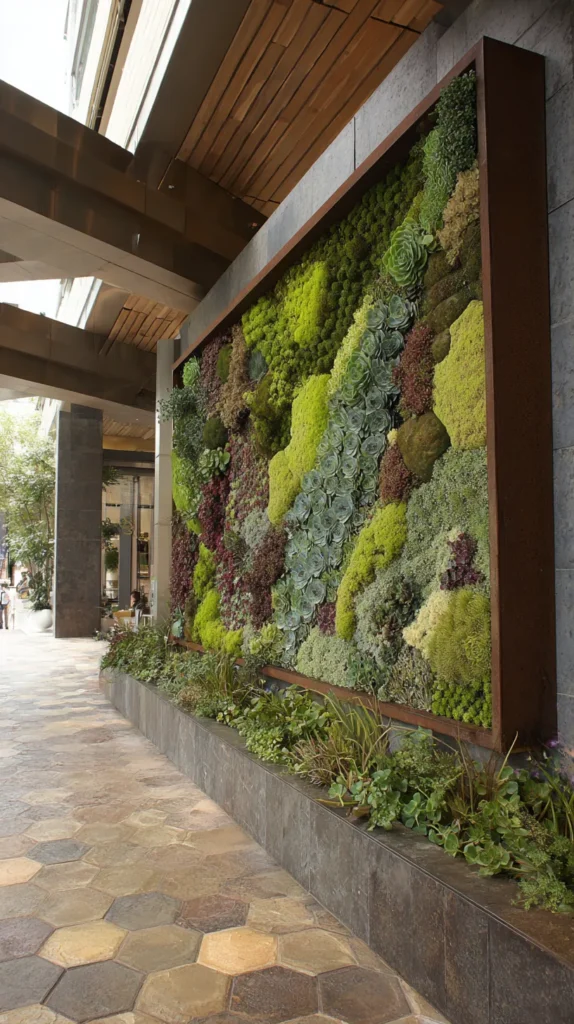
3. A Succulent Frame Garden
Budget: $50 – $180
A shallow timber shadow box frame filled with free-draining cactus compost and planted with a colourful mosaic of sempervivum, sedum, and echeveria creates a wall-mounted living picture that requires watering only once or twice a month and looks striking in full sun year-round. It suits south-facing walls and balconies where most other plants dry out.
A shadow box frame of 60×40 cm costs $20–$50 to build or buy. Fill with a 50/50 mix of cactus compost and coarse grit. A collection of fifteen to twenty succulent plugs or cuttings costs $15–$40. Lay the frame flat for six weeks after planting to allow roots to anchor fully in the compost before hanging it vertically — plants placed in an upright frame on the same day it is hung fall out before their roots establish.
Growing tip: Allow the compost in a succulent frame to dry completely between waterings once it is hung. Root rot from overwatering is the only reliable way to lose an established succulent wall — the shallow frame has almost no drainage and holds moisture significantly longer than a conventional pot. When in doubt, wait another week before watering.
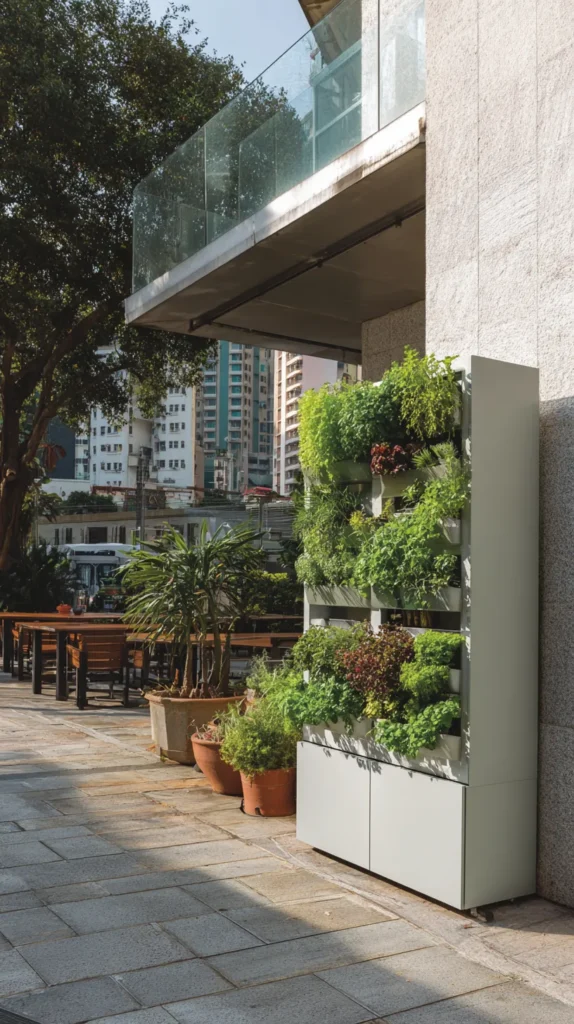
4. A Vertical Herb Garden on a Kitchen Wall
Budget: $30 – $120
A wall-mounted rail system holding a row of terracotta or metal clip-on pots — planted with the herbs used most frequently in cooking — turns a bare kitchen exterior wall into a productive growing surface within arm’s reach of the back door. It is the most immediately useful vertical garden idea on this list.
A simple horizontal rail system costs $20–$60 depending on length and material. Clip-on pot holders run $3–$8 each. Plant with basil, thyme, flat-leaf parsley, chives, and rosemary at $2–$5 per pot. Position on a south or west-facing wall for adequate sun — shade significantly reduces flavour concentration in all culinary herbs and makes the wall garden productive only in appearance rather than in practice.
Growing tip: Water herb wall pots from the topmost pot downward, allowing drainage to flow into each pot below in sequence. A slight offset between the positions of each lower pot so it sits directly beneath the drainage hole of the one above creates an efficient cascade watering system that reduces individual pot watering time to a single pass from the top rail downward.
5. A Pallet Garden of Trailing Flowers
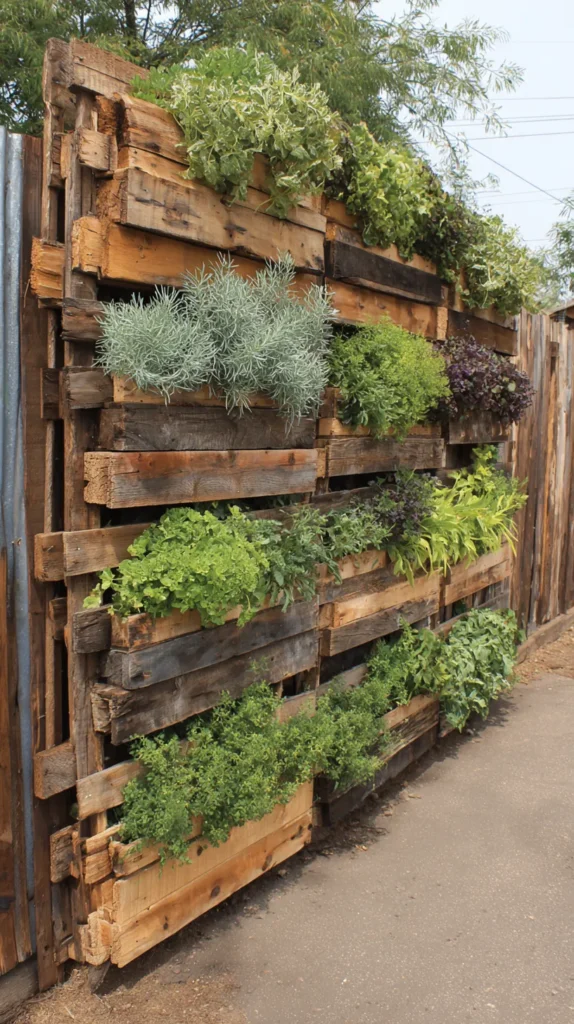
Budget: $10 – $50
A reclaimed wooden pallet stood against a fence or wall, lined with landscape fabric between the slats, and filled with compost creates a productive vertical growing surface at zero material cost if a pallet can be sourced locally. Planted with trailing petunias, calibrachoa, or nasturtiums it becomes one of the most colourful features in a summer garden.
Source only heat-treated pallets (marked HT on the stamp) rather than chemically treated ones. Landscape fabric to line the gaps costs $5–$15 per roll. Trailing petunia and calibrachoa plug plants cost $2–$5 each. Lay the pallet flat for two weeks after planting before standing it upright — roots need time to anchor in the compost before the planting is oriented vertically against gravity.
Growing tip: Feed trailing flowers in a pallet garden weekly with a high-potassium liquid fertiliser from midsummer. The limited compost volume in each pallet pocket depletes quickly under the fast growth of trailing annual flowers — regular feeding is the primary factor that determines whether a pallet garden looks spectacular through August or tired and yellowing by July.
6. Espalier Fruit Trees on a South-Facing Wall
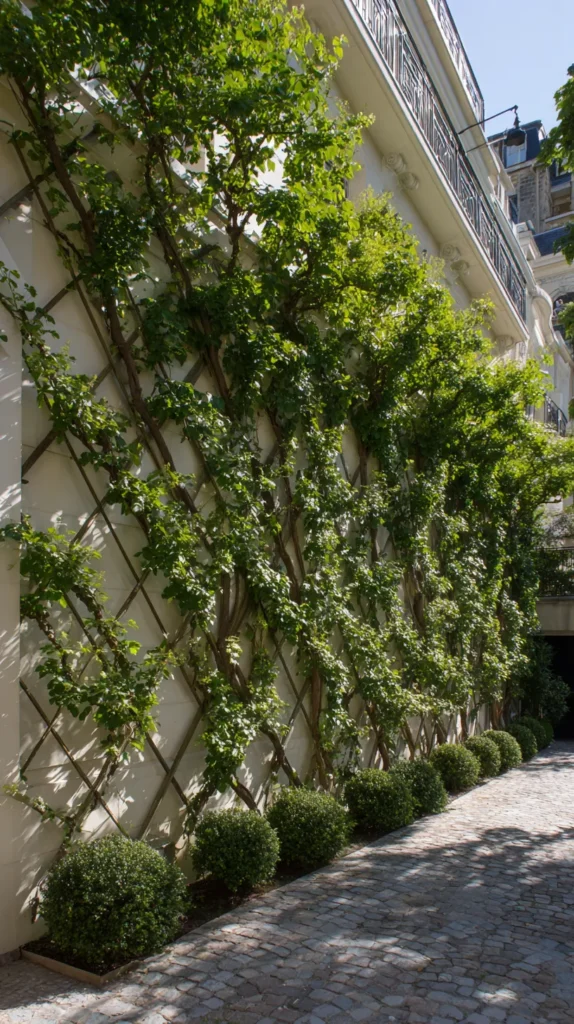
Budget: $60 – $250
An apple, pear, or cherry tree trained flat against a south-facing wall in an espalier or fan form creates a productive fruiting vertical garden that occupies almost no depth while covering a large wall surface with blossom in spring, fruit in late summer, and architectural branch structure through winter.
Horizontal galvanised wires fixed to the wall at 40 cm intervals cost $15–$30 for a 3-metre wall. A young espalier-trained fruit tree costs $30–$80 from specialist nurseries. The tree takes three to four years to fill the allotted wall space fully and begins fruiting from its second or third year. Annual pruning in both summer and winter maintains the flat form and maximises fruit production on the trained laterals.
Growing tip: Tie young lateral branches to the horizontal wires in early summer when the wood is still pliable rather than in winter when it is brittle. Branches bent into position in winter snap at the joint with the main stem — early summer training with a gentle, gradual tension produces the clean, flat espalier form without any breakages in the first critical years of training.
7. A Bamboo and Wire Trellis With Jasmine
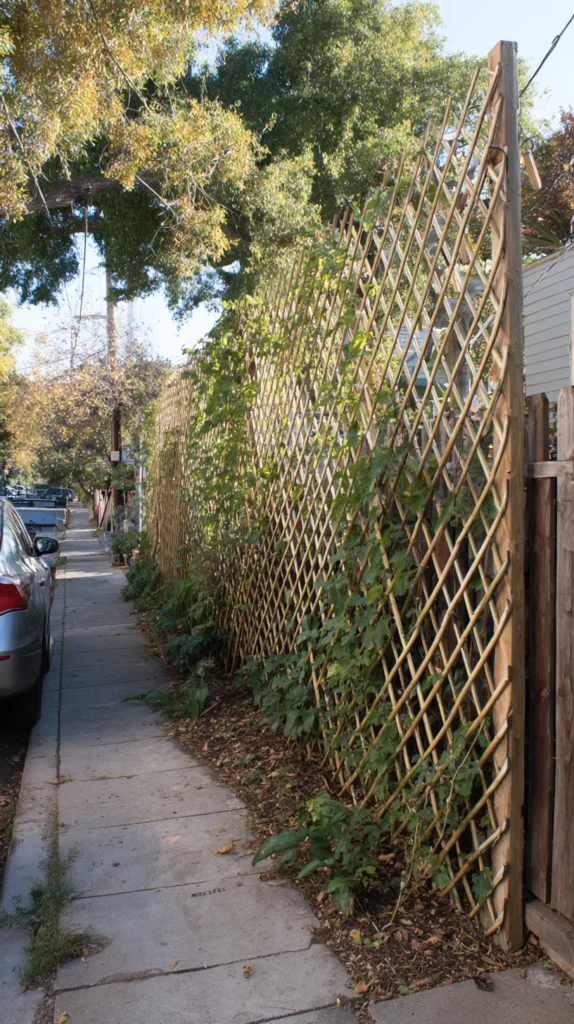
Budget: $30 – $120
Bamboo canes fixed horizontally across a fence panel at 30 cm intervals — or a simple wire grid — planted with common jasmine at the base creates a fragrant vertical garden that covers a full fence panel in two seasons and fills the garden with scent on warm summer evenings from June through July.
Bamboo canes cost $5–$15 per pack of twenty. Wire fixings and vine eyes cost $5–$10. A Jasminum officinale plant costs $10–$20. The jasmine climbs by twining and wraps itself through the bamboo and wire structure without requiring tying once the initial stems are guided into the framework — thereafter the plant finds its own way across the entire surface.
Growing tip: Train the initial jasmine stems deliberately across the lower half of the framework in all directions before they reach the top. A jasmine left to grow straight upward concentrates all its growth at the top of the framework and leaves the lower section bare. Early horizontal training in the first season distributes growth evenly across the whole wall from the start.
8. A Pocket Planter Salad Wall
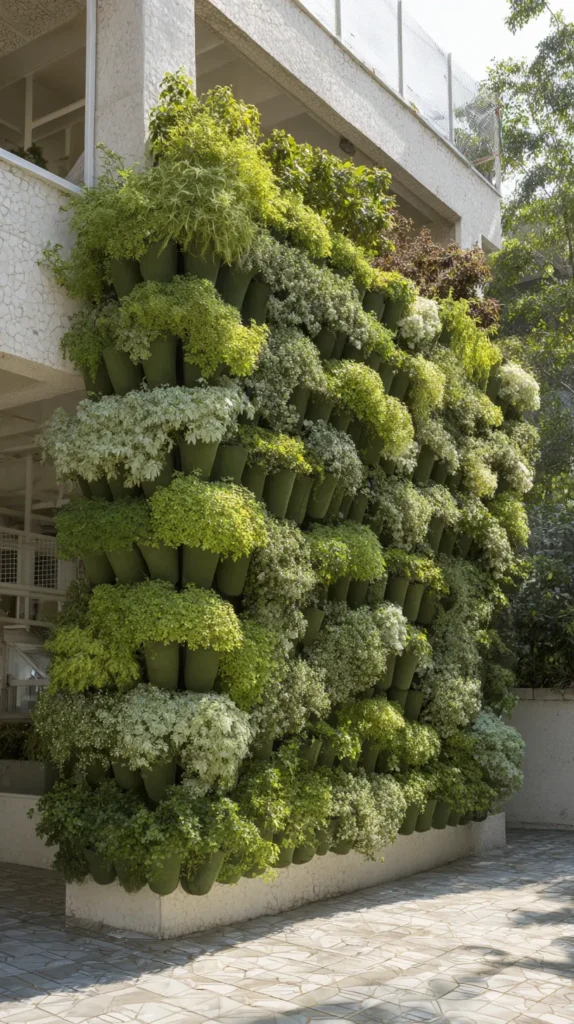
Budget: $25 – $80
A felt or fabric pocket planter system mounted on a sunny fence or wall, planted with cut-and-come-again salad leaves, rocket, and herbs, creates the most productive square metre of growing space available for a kitchen garden — harvesting is at eye height, the planting is compact, and new leaves regenerate within two weeks of each cut.
A twelve to twenty pocket felt planter system costs $20–$50. Mount on a south-facing surface with fixings rated for the weight of wet compost — approximately 1.5 kg per pocket when fully saturated. Fill each pocket with quality multipurpose compost and sow or plant one variety per pocket. Water daily in warm weather — the small individual compost volume dries significantly faster than any ground-level container.
Growing tip: Sow a new pocket of salad every two weeks through the growing season rather than resowing all pockets simultaneously. A staggered sowing schedule ensures that fresh, young leaves are always available from at least a third of the pockets at any point in the season — the whole-wall simultaneous harvest and resow approach leaves a two-week gap in supply between each cycle.
9. A Wisteria Pergola or Arch
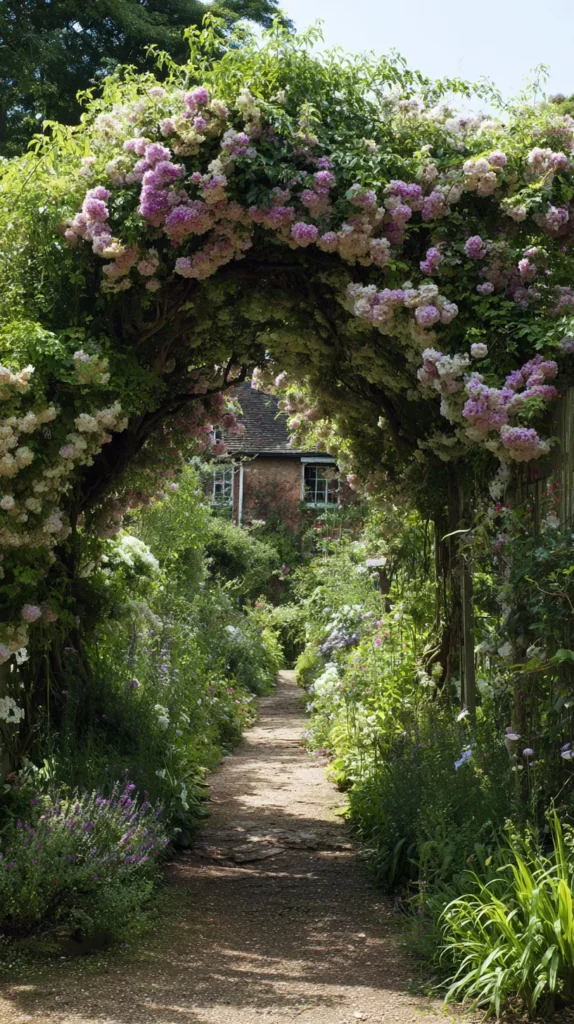
Budget: $80 – $600
Wisteria trained over a pergola arch or timber frame creates a vertical garden on the grandest scale available for a home garden — the cascading purple or white flower racemes in May and June and the dense summer foliage canopy that follows together produce one of the most spectacular and most photographed garden features possible from a single plant.
A metal or timber garden arch costs $50–$200. A pergola kit suitable for wisteria training runs $300–$700. A grafted wisteria plant in a 3-litre pot costs $20–$50 — grafted plants flower years sooner than seed-grown specimens. Prune twice yearly — once in August cutting back the whippy summer growth to five or six leaves, and again in February cutting those same shoots back to two or three buds — to develop the flowering spur system that makes wisteria spectacular.
Growing tip: Be patient with newly planted wisteria — a plant that shows little above-ground growth in its first two seasons is establishing a significant root system underground. Wisteria that is fed heavily in its early years to accelerate growth produces excessive leafy growth at the expense of flowers. Lean soil and patience produces the floriferousness that rich feeding never will.
10. A Log Slice and Moss Vertical Panel
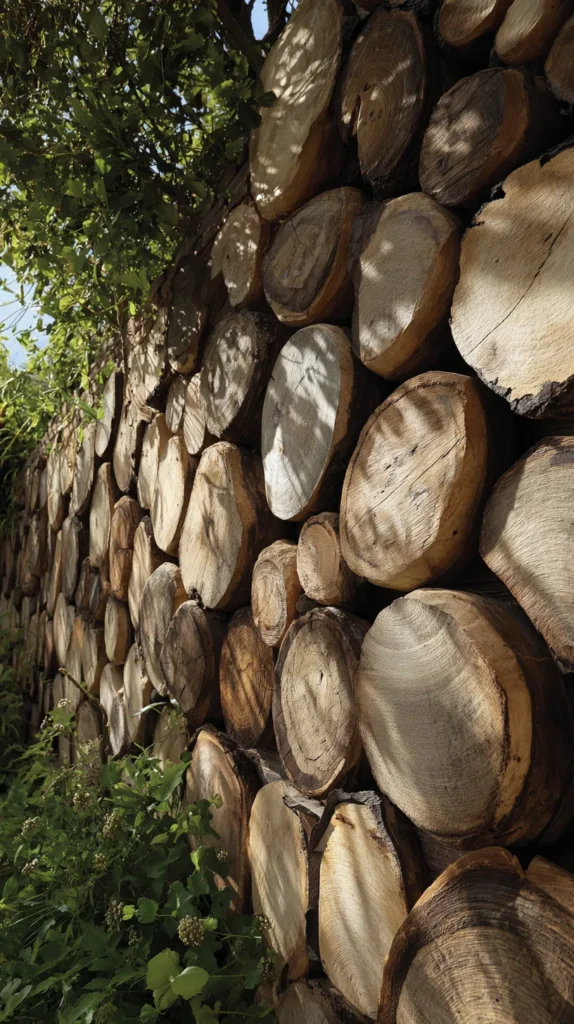
Budget: $30 – $100
Slices of reclaimed log fixed to a fence or wall panel in an irregular pattern, with cushion moss and small ferns tucked into the gaps between them, creates a woodland-style vertical garden that suits a shaded boundary and provides genuine texture, interest, and wildlife habitat in a form that no conventional planting approach replicates.
Reclaimed log slices from a timber yard cost $10–$30 per bag of mixed sizes. Screws and rawl plugs for fixing to a fence or masonry cost $5–$10. Cushion moss mats cost $8–$20 per square metre. The arrangement should look deliberately irregular — equally spaced log slices read as a pattern rather than a naturalistic composition. Vary the sizes, angles, and gaps to create a surface that looks found rather than designed.
Growing tip: Mist the moss sections of the panel twice weekly during dry periods using a hand mister rather than a watering can. Moss absorbs moisture through its surface and needs consistent humidity rather than occasional deep watering — the misting approach maintains the even dampness that keeps established cushion moss green and healthy through summer dry spells without waterlogging the spaces around the log slices.
11. A Tiered Planter Tower
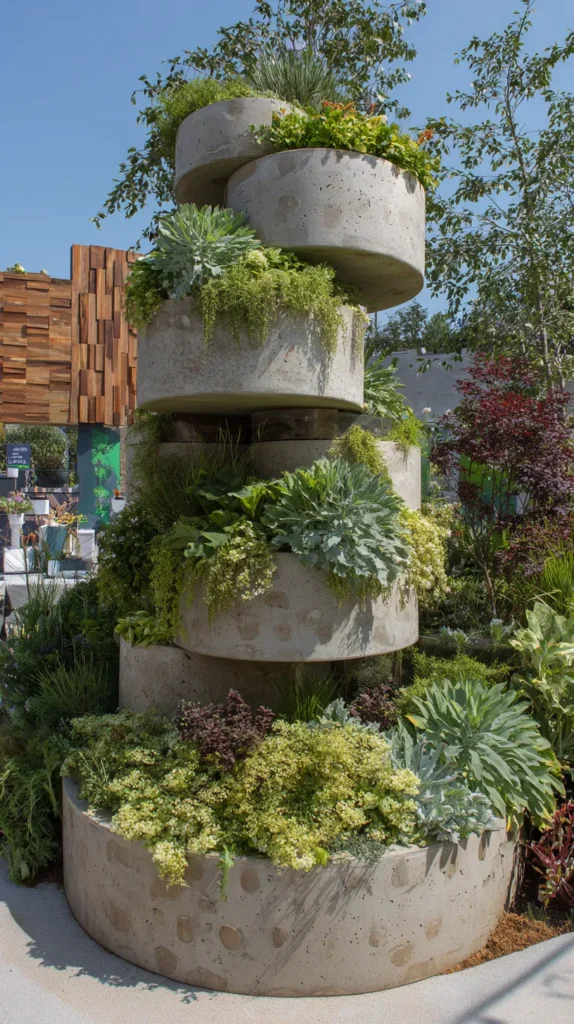
Budget: $40 – $150
A tiered planter tower — a freestanding column of stacked planting tiers that decreases in diameter toward the top — provides a compact, space-efficient growing surface for strawberries, herbs, and trailing annuals in a footprint of less than 60 cm diameter while providing the planting area of a border three or four times that size.
A purpose-made terracotta or plastic tiered planter tower costs $30–$80. A DIY version built from nesting terracotta pots of graduating sizes costs $20–$50 in pot materials. Fill each tier with quality compost and plant with one crop type per tier — strawberries in the upper tiers where the fruits are most visible, herbs in the middle, and trailing nasturtiums at the base to cascade downward over the lower sections.
Growing tip: Water tiered towers from the top tier only and allow water to percolate downward through each successive tier. Watering each tier individually wastes time and creates uneven moisture distribution. A single generous watering from the top that is absorbed through each tier in sequence takes the same time as watering a single pot and moistens every planting zone in one operation.
12. A Mirror and Trellis Combined Feature
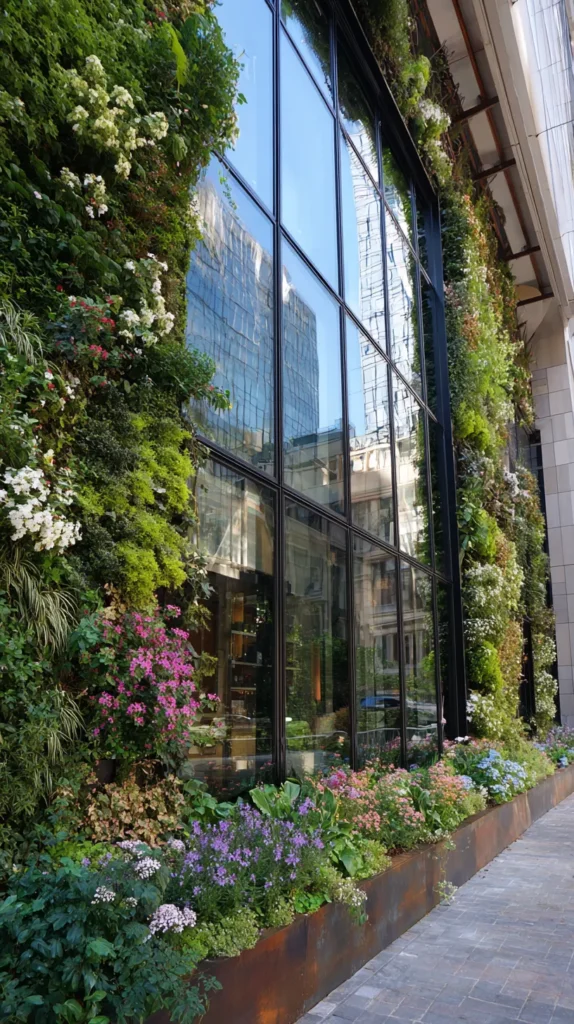
Budget: $60 – $200
An outdoor mirror fixed to a fence or wall with a trellis planted with climbing plants framing it on both sides creates a vertical garden feature that doubles the apparent depth of the space it occupies — the planting is reflected in the mirror, creating the impression of a planted garden on both sides of the mirror’s surface.
An outdoor-rated garden mirror costs $50–$150. Trellis panels flanking it cost $15–$30 each. A climbing plant on each trellis panel — jasmine, clematis, or climbing hydrangea — costs $10–$25 each. The mirror should be positioned so it reflects the most visually interesting part of the garden rather than a fence or building — the reflected view is as important as the planted framing around it.
Growing tip: Keep the climbing plants on the flanking trellis trimmed so they do not grow across the face of the mirror — a mirror partially obscured by unchecked climbing growth loses the reflective quality that makes the whole feature work. Annual light trimming in spring and late summer maintains the balance between planted frame and clear reflective surface.
13. A Green Roof on a Garden Building
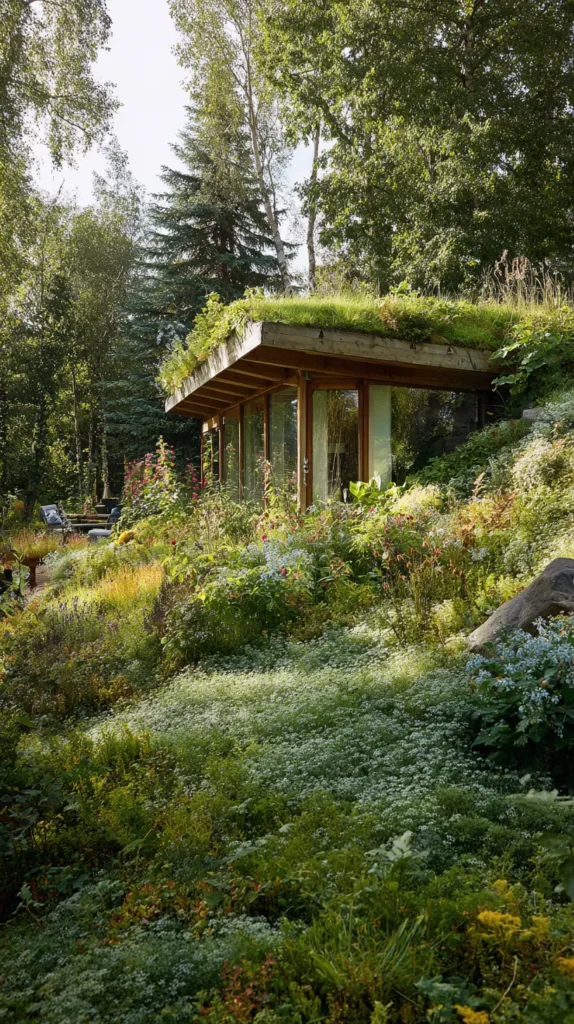
Budget: $100 – $600
A planted green roof on a garden shed, summerhouse, or log store turns a horizontal surface into a vertical garden of sorts — visible from upper windows, attractive from within the garden, and genuinely ecologically valuable as a habitat for pollinators and invertebrates through the growing season. Sedum green roofs are the lowest-maintenance option available for most garden buildings.
A sedum green roof mat costs $15–$30 per square metre. A standard 2.4×1.8 metre shed roof requires approximately 4.5 square metres at $70–$135 in sedum mat. A waterproof membrane and drainage layer add $40–$80. The total green roof installation cost for a standard garden building sits between $110 and $220 in materials — professional fitting adds $150–$400 depending on the building size and complexity of the installation.
Growing tip: Water a newly installed green roof twice weekly for the first six weeks after installation regardless of rainfall — the sedum mat needs consistent moisture to establish its root system in the drainage substrate before it can begin to source water independently. After the establishment period, a mature sedum roof requires supplemental watering only during prolonged summer drought.
14. A Full Modular Living Wall System With Irrigation
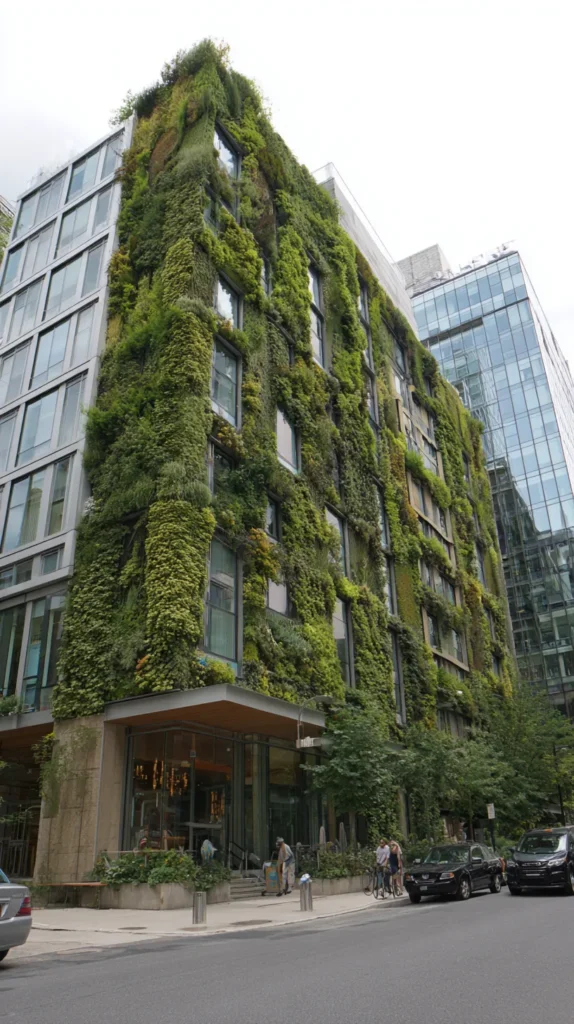
Budget: $300 – $1,500
A purpose-built modular living wall system — interlocking planting panels mounted on a wall frame with an integrated drip irrigation supply and drainage collection — is the most ambitious and most visually impressive vertical garden available, capable of covering an entire fence panel or exterior wall in dense, layered planting that reads as a green architectural surface from across the garden.
Entry-level modular systems covering 1×1 metre cost $200–$400. Professional systems covering a full 3×2 metre wall with automated irrigation run $600–$1,500. Plants for a full system — ferns, hostas, heucheras, and ornamental grasses for shade or lavender, sedums, and salvias for sun — cost $5–$15 each at a density of 30–60 plants per square metre for dense coverage from year one.
Growing tip: Install the automated drip irrigation system at the point of building the wall rather than adding it retrospectively. Hand watering a large living wall evenly and consistently enough to keep all plants healthy through warm weather is practically impossible — the irrigation system is not an optional convenience but the foundational element that determines whether the wall thrives or declines through its first and every subsequent summer.
The consistent quality across every successful vertical garden on this list is that the plants are matched honestly to the conditions of the wall they occupy — sun exposure, aspect, moisture, and the proximity of the gardener who will water and tend them. The most beautiful vertical garden is the one that thrives rather than struggles, and thriving always starts with the right plant in the right wall rather than the most ambitious plant in the most convenient one.
Start with a single panel or a single wall section. Establish it well, learn what it needs through one full season, and expand from there. A well-planted single trellis of climbing roses or a densely planted pocket wall of salad leaves delivers more satisfaction and more genuine visual impact than a half-established ambitious system covering three times the wall area. The vertical garden rewards the focused start more than the ambitious one.