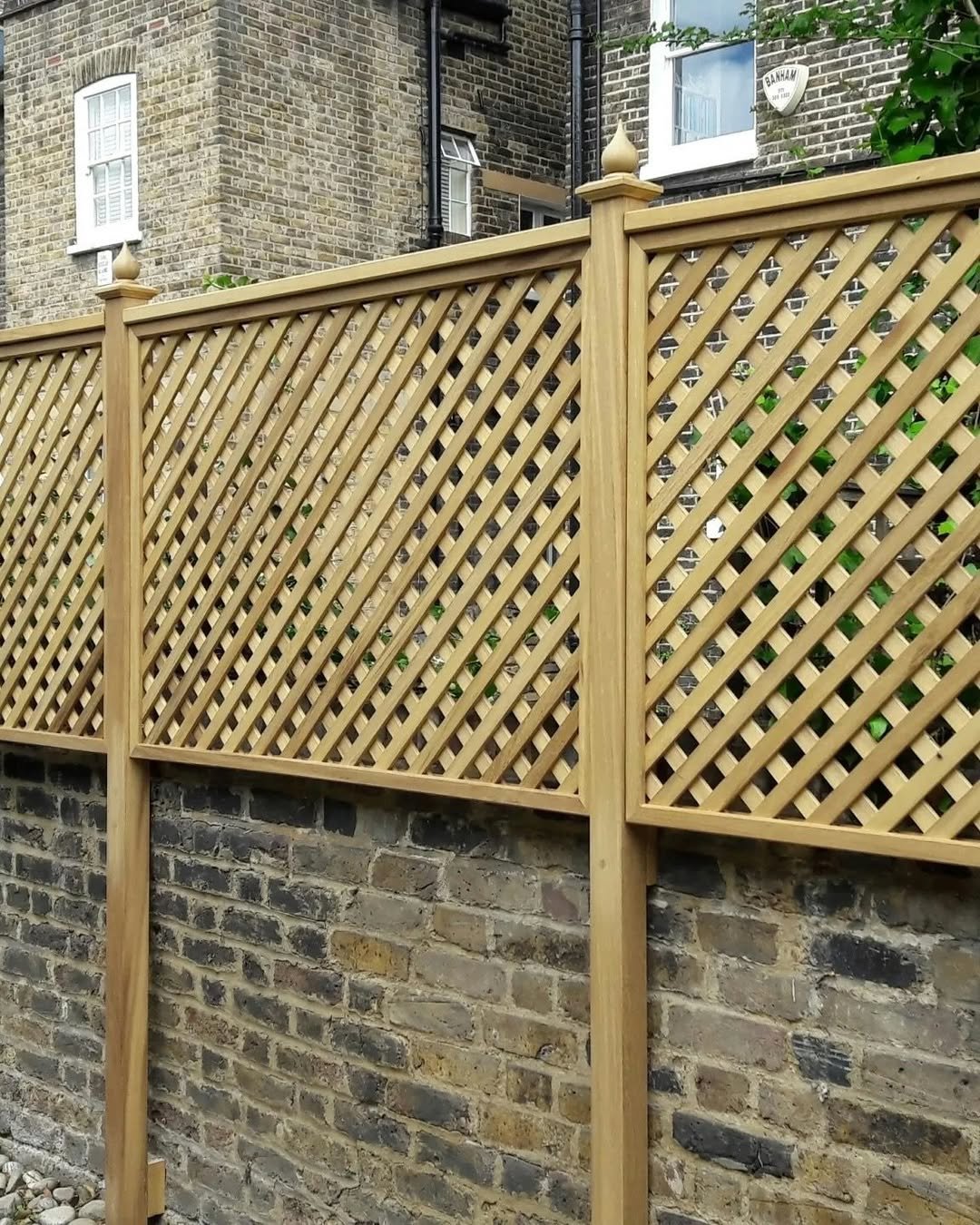
15 Garden Trellis Ideas for Climbing Plants and Style
A trellis does two things simultaneously — it gives climbing plants something to grow on and it gives the garden a visual structure that bare fences and walls rarely provide on their own. The right trellis turns an overlooked fence panel into a planting surface, a blank wall into a garden feature, and a boundary into an opportunity. The wrong one simply draws attention to how bare the surface behind it was before it arrived.
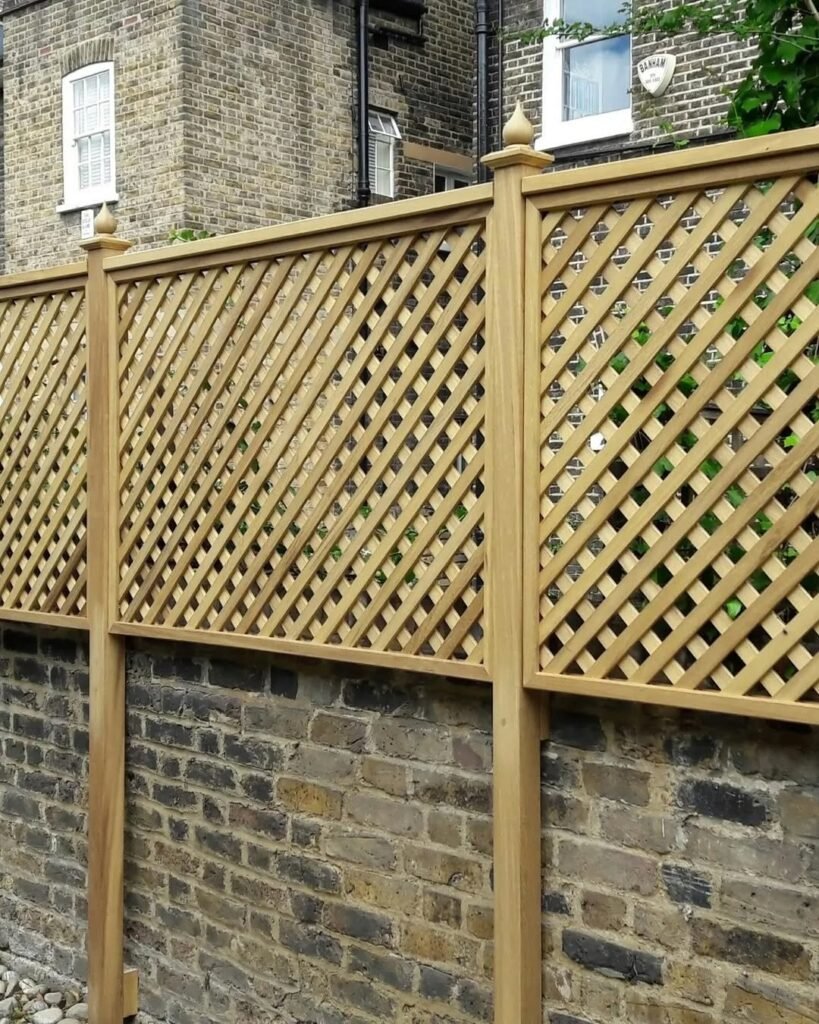
The fifteen ideas below cover every trellis material, style, and application — from a classic painted timber panel behind a climbing rose to a modern steel cable system trained with espalier fruit. Each includes what it costs and a practical tip to help you get the planting, fixing, and aesthetic right from the first season.
1. Classic Painted Timber Square Trellis
Budget: $20 – $80 per panel
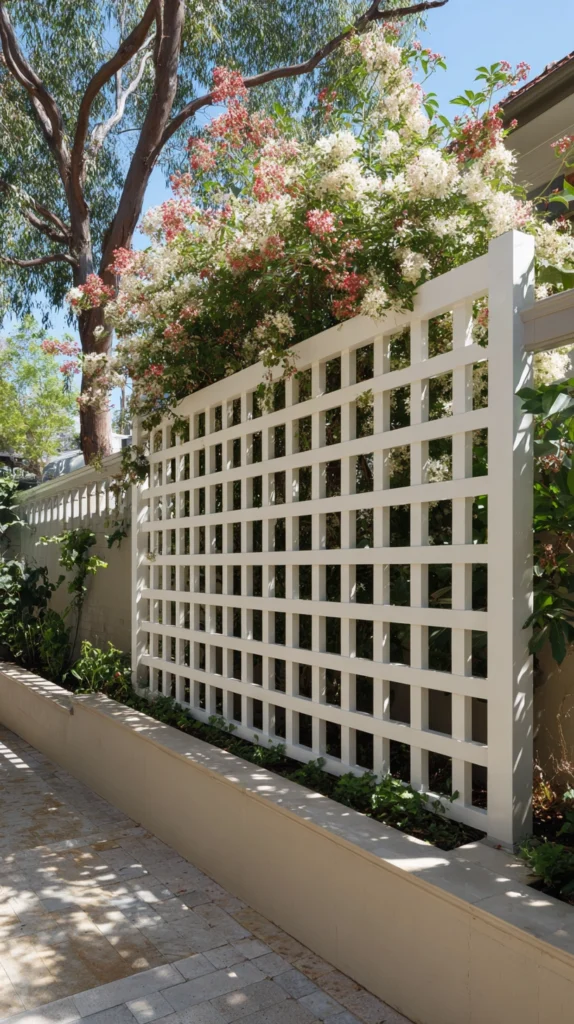
A square-pattern timber trellis panel fixed to a fence or wall and painted to match the surrounding woodwork is the most widely available and most immediately effective trellis solution for a cottage or traditional garden. Painted white, off-white, or a soft heritage colour it reads as an architectural detail rather than simply a plant support.
Timber trellis panels in 180×90 cm cost $15–$40 each. Fix 5 cm away from the wall or fence surface using spacer blocks — the gap allows stems to twine naturally and air to circulate, significantly reducing fungal disease on climbing plants trained against a warm, enclosed wall.
Trellis tip: Paint the trellis before fixing it to the wall rather than after. Painting in position is slow, uneven, and misses every surface facing the wall. A trellis painted on all faces before installation receives a complete, consistent coat without any awkward brush angles around fixings once the panel is in place.
2. Diamond Pattern Trellis for a Formal Look
Budget: $25 – $100 per panel
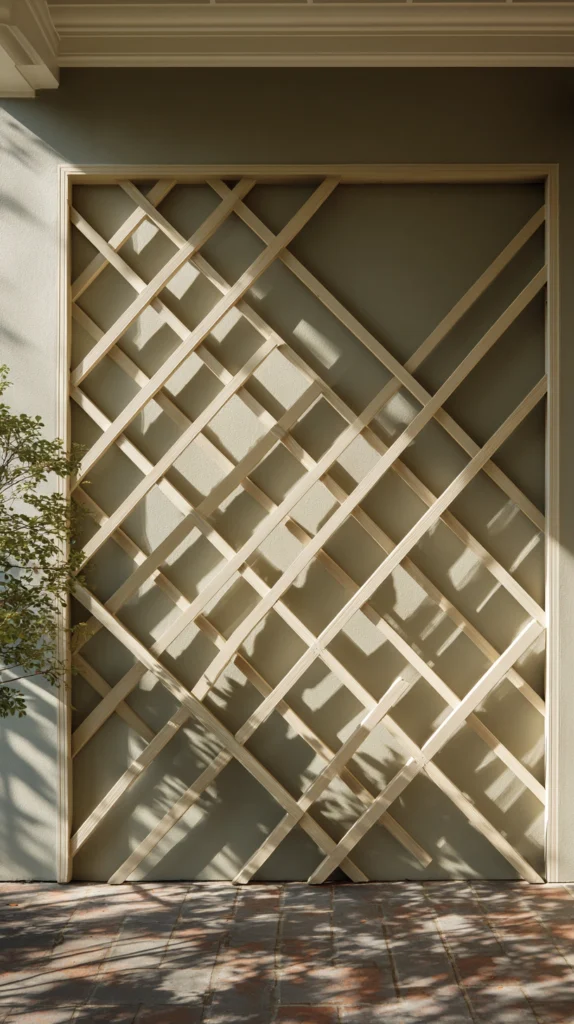
A diamond-pattern trellis — the square lattice rotated 45 degrees — creates a more formal and more visually dynamic surface than a square pattern. It suits period properties, walled gardens, and settings where a traditional aesthetic is the goal. The diagonal grid also provides more natural support points for climbers than a square pattern at the same spacing.
Diamond-pattern trellis panels cost $20–$60 each in standard sizes. Painted in a heritage colour — Farrow and Ball Pavilion Blue, Mizzle, or Purbeck Stone — the panel becomes a decorative surface that looks intentional even before any planting covers it. Use as a headboard panel behind a bench or as a garden divider as well as a plant support.
Trellis tip: Use diamond trellis in shorter, wider panels rather than tall narrow ones. A diamond pattern in a tall narrow panel looks compressed. The same pattern in a wide, lower panel — 120×60 cm rather than 60×180 cm — reads as a confident architectural panel that commands its section of wall appropriately.
3. Horizontal Wire and Vine Eye System
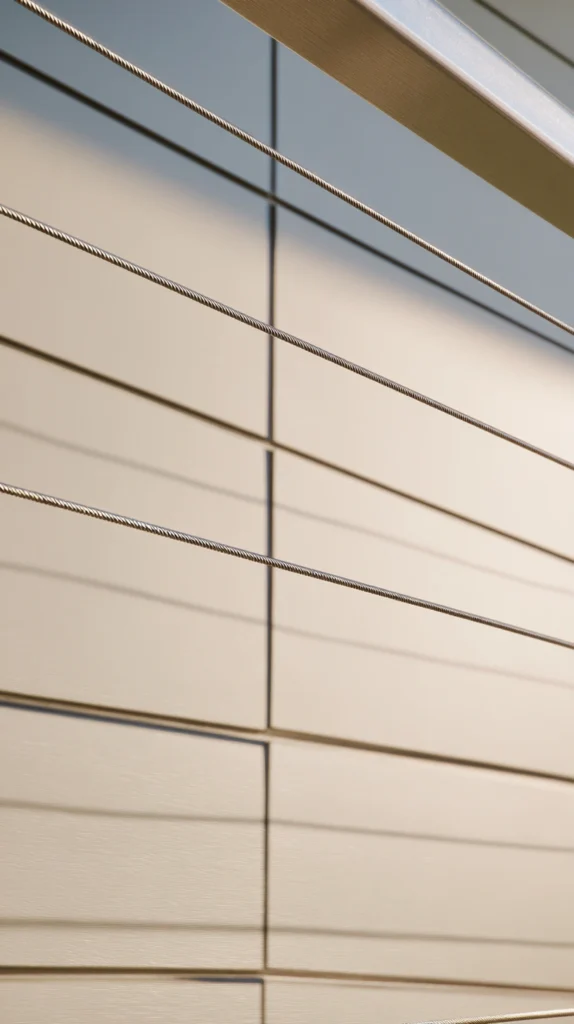
Budget: $20 – $60 per wall section
Horizontal galvanised wires fixed to a wall at 30–40 cm intervals using screw-in vine eyes provides the most discreet trellis system available — almost invisible from a distance and ideal for contemporary gardens where the plant is the feature. It is the system used by professional horticulturists for wall-trained fruit trees and climbing roses.
Vine eyes cost $0.20–$0.50 each. Galvanised wire costs $5–$10 per 20-metre reel. A 3×2 metre wall section requires six to eight vine eyes per row and three to four rows at a total material cost of $15–$40. Tighten with a cable tensioner ($5–$10) rather than knotting — a taut wire provides a firm, consistent tying point that a loosely strung one never does.
Trellis tip: Space vine eyes at no more than 1.5-metre intervals along each wire. Further apart and the wire sags visibly under the weight of mature climbing plant growth, particularly wet foliage after rain. A sagging wire looks provisional. A taut one looks engineered and deliberate — which is the quality a discreet support system needs to justify its invisibility.
4. A Trellis Privacy Screen
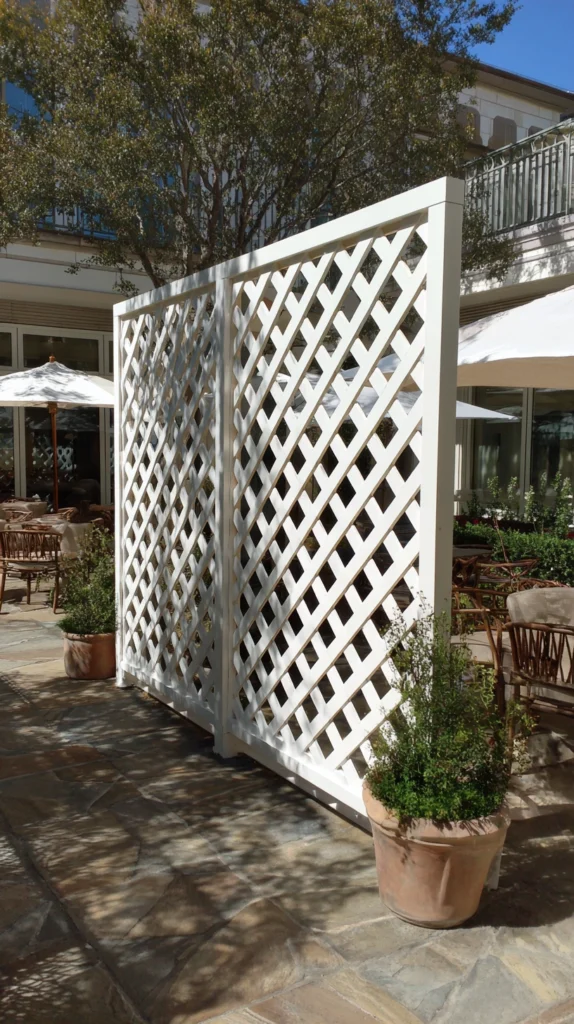
Budget: $60 – $250
A freestanding trellis panel mounted between two posts driven into the ground creates an instant privacy screen in any garden position without any permanent structure. Planted with a fast-growing climber it provides privacy within two seasons and functions as a decorative garden divider long before the planting reaches full coverage.
A freestanding trellis screen of 180×180 cm in treated timber costs $50–$150. Posts cost $10–$20 each. A fast-growing climber — Clematis montana, passionflower, or climbing hydrangea — costs $10–$30 and begins providing useful coverage within its first season. Position the screen to intercept the specific sight line that needs addressing rather than simply at the general boundary.
Trellis tip: Plant two climbers on a freestanding screen — a fast annual or temporary climber for immediate coverage alongside a slower permanent one that takes over by year three. Sweet peas or climbing nasturtiums provide colour and partial privacy in year one while the permanent plant establishes beneath and around them.
5. A Painted Black Trellis for Modern Gardens
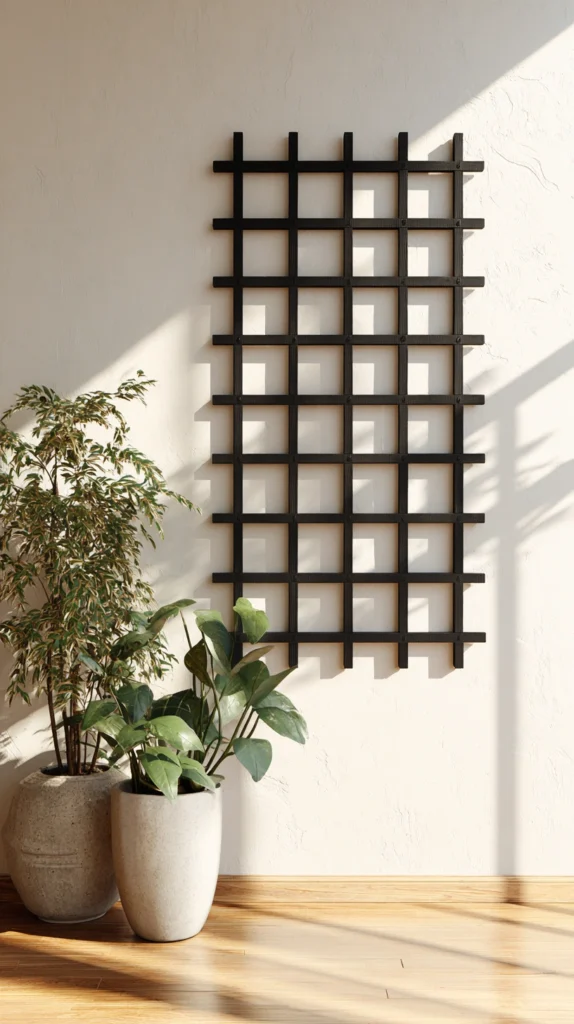
Budget: $25 – $120 per panel
A trellis panel painted in matte black against a white or pale rendered wall creates one of the most specifically contemporary garden aesthetics available. The graphic, linear quality of black trellis against a pale background references architectural drawing and interior grid detailing in a way that green or natural wood trellis does not. It suits urban gardens, modern extensions, and minimalist outdoor spaces.
Standard timber trellis panels painted in black exterior paint cost the same as any other painted panel. Powder-coated steel panels in matte black cost $40–$120 and provide a more permanent finish over time. Plant with large-leafed climbers — Hydrangea petiolaris, Vitis coignetiae, or large-leafed clematis — for the most dramatic contrast between the dark structure and the plant material growing through it.
Trellis tip: Choose a climber that does not achieve complete coverage of the black trellis. A plant that leaves sections of the structure visible through the season reads as a composition of plant and architecture rather than simply a covered surface. Complete coverage removes the quality that made the black colour choice meaningful in the first place.
6. A Trellis Garden Room Divider
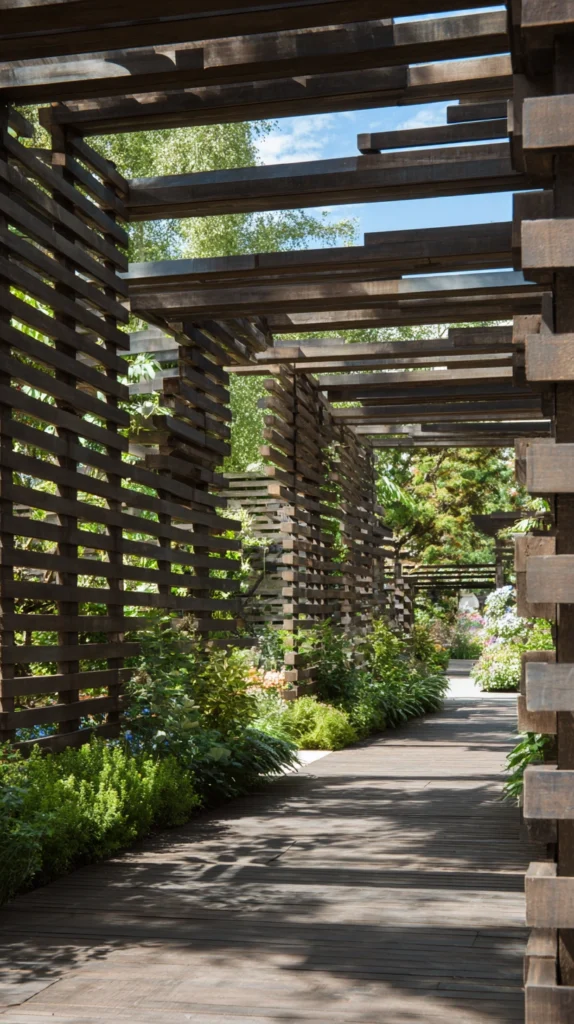
Budget: $100 – $400
A trellis panel or series of panels used to divide a garden into two distinct outdoor rooms — with a gap or gate between them — creates an architectural spatial division without the cost or permanence of a wall or hedge. The division is immediate, coverage develops seasonally, and the two spaces feel genuinely separate in a way that an open garden of the same area never achieves.
A three-panel trellis divider — one central and two flanking at angles — costs $60–$200 in materials. A trellis gate to complete the division costs $40–$100. Plant with a mix of clematis and roses — the two plants complement each other in growth habit and flowering season and together produce one of the finest features any planted dividing structure can offer.
Trellis tip: Offset the gap or gate slightly from the central sight line rather than aligning it directly. A slightly off-centre gap reveals part of the space beyond while concealing the rest — the partial concealment creates curiosity and draws movement through the garden in a way that a centrally aligned gap, which reveals everything at once, does not.
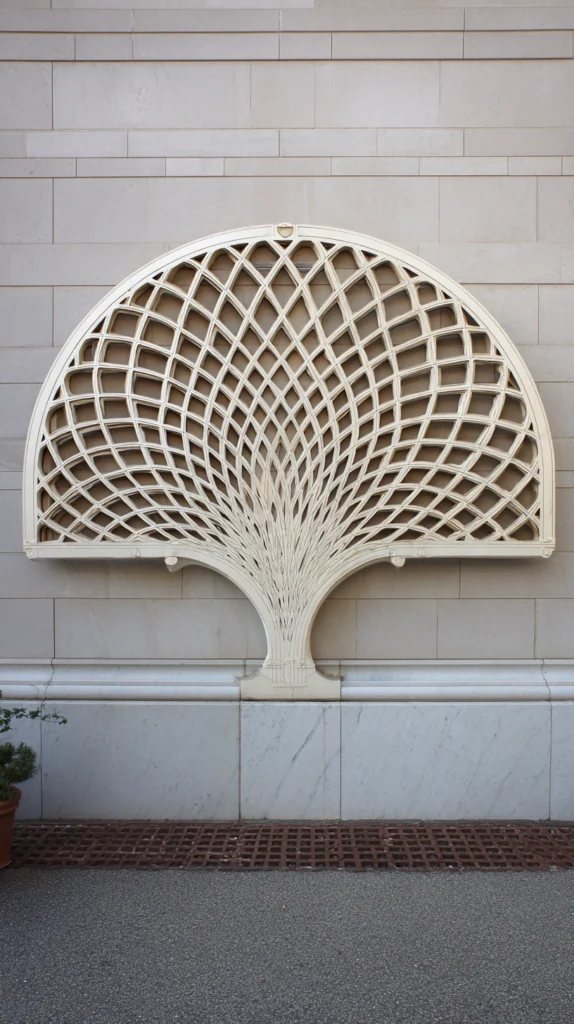
7. A Fan Trellis for Wall Training
Budget: $15 – $50 per panel
A fan-shaped trellis — radiating outward from a narrow base to a wider top — suits wall-trained shrubs and climbers that spread naturally in a fan form. Fan-trained peaches, morello cherries, and climbing roses all establish most naturally on a fan panel that mirrors their preferred growth habit. The shaped panel is also more visually interesting than a rectangle when only partially covered by planting.
Fan trellis panels in 90×90 cm size cost $10–$30 each. Two panels side by side create a full fan of 180 cm width suitable for a mature fan-trained fruit tree. Fix at least 5 cm from the wall surface — fan-trained fruit trees need maximum air circulation around developing fruits to prevent fungal disease in warm, humid summer conditions.
Trellis tip: Fix the fan trellis so that the widest upper section sits at the eventual mature spread of the plant — typically 1.5–2 metres from the ground for a standard wall-trained fruit tree. A fan trellis positioned too low runs out of usable panel before the plant reaches half its mature spread and trained branches must be redirected beyond the structure rather than supported by it.
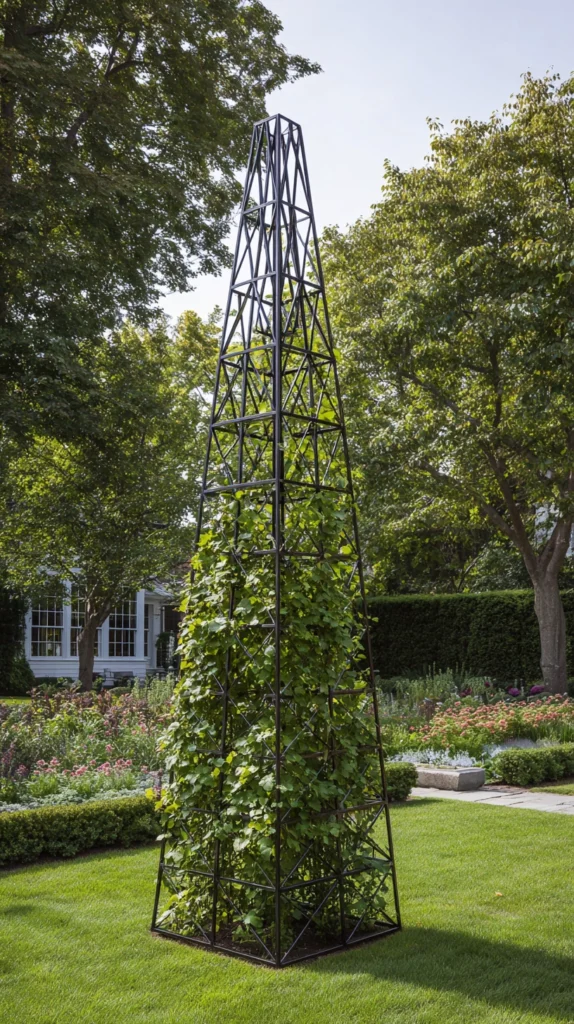
8. A Timber or Metal Obelisk
Budget: $30 – $150
A timber or metal obelisk standing in a border — planted with a clematis, climbing rose, or sweet peas — is a freestanding trellis that provides a vertical accent in flat planting rather than a wall-fixed support. The obelisk form gives height and structure to a border in the way that sculpture does, but with the added quality of a flowering plant that changes through the season.
Timber obelisks cost $30–$80 depending on height and quality. Powder-coated steel versions run $40–$150. A 150–180 cm obelisk suits most border positions — tall enough to read as a deliberate vertical accent without dominating the wider composition. Plant one climbing species per obelisk rather than multiple — a single species develops complete, coherent coverage that a mix of species on the same support rarely achieves.
Trellis tip: Install the obelisk before planting the climber at its base. An obelisk pushed into established soil beside an existing plant damages roots and is difficult to position centrally around a plant already in the ground. An obelisk installed first sits exactly where it needs to and the plant is positioned in relation to it rather than vice versa.
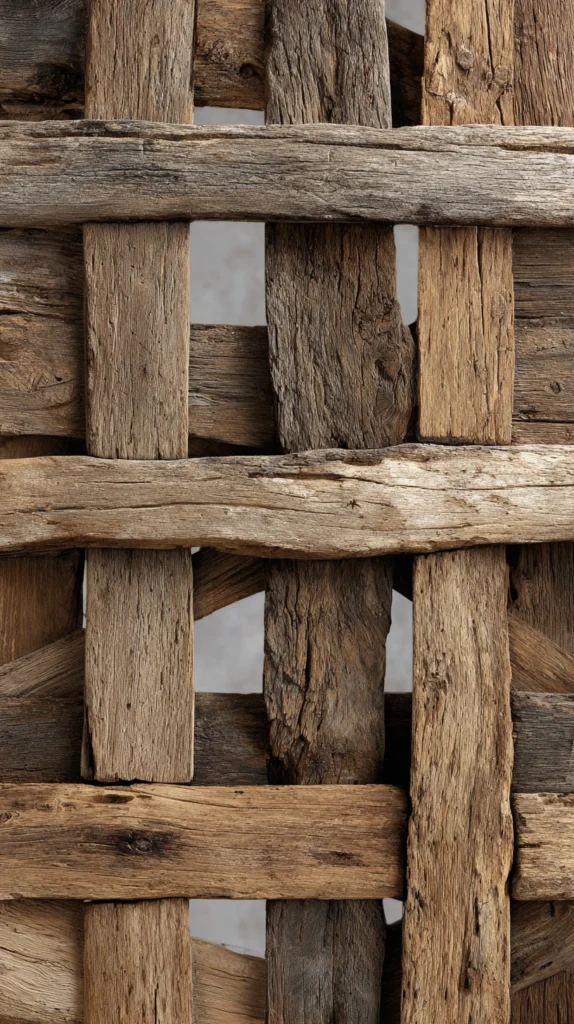
9. A Reclaimed Wood Rustic Trellis
Budget: $10 – $60
A trellis made from reclaimed timber offcuts — pallet wood, old fence posts, or reclaimed softwood — assembled in a rough grid and fixed to a boundary fence creates a rustic support surface that suits a wildlife garden, a cottage garden, or any setting where a natural and imperfect aesthetic is as important as the growing function. It costs almost nothing and looks exactly right in the right garden context.
Reclaimed timber costs nothing if sourced from building sites or demolition yards. Galvanised screws for fixing cost $5–$10. The resulting trellis has the weathered, imperfect quality of a genuine found-material structure that no new panel replicates — age and use are built into the reclaimed material from the outset rather than applied as a finish.
Trellis tip: Use reclaimed timber of varying widths and thicknesses rather than selecting for uniformity. The variation between individual components is what gives a reclaimed trellis its handmade quality — selecting uniform boards and cutting them to consistent lengths produces something that looks deliberately rustic rather than genuinely assembled from salvaged material, which is a subtle but clearly visible difference.
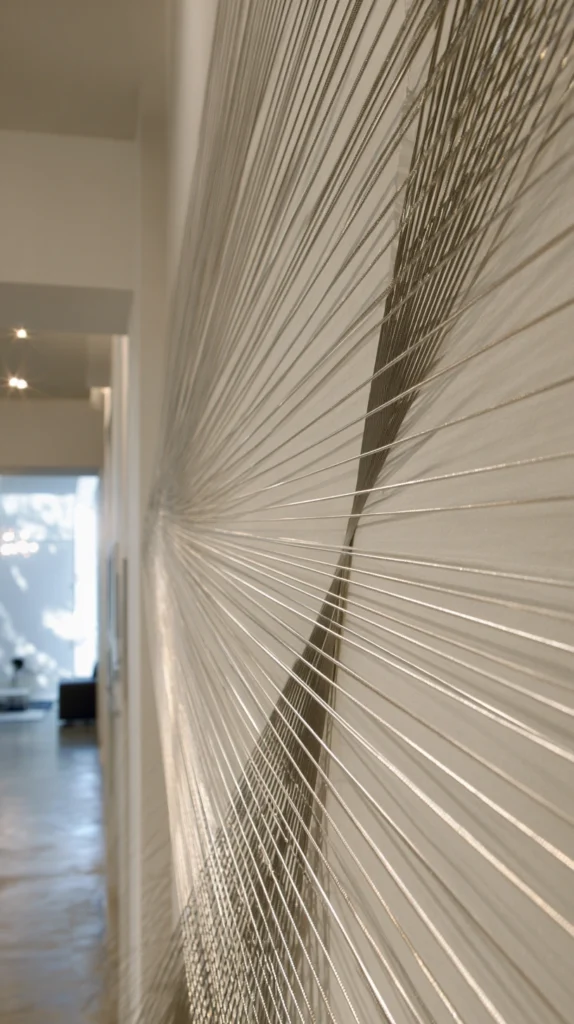
10. A Stainless Steel Cable System
Budget: $50 – $200 per wall section
Stainless steel cables tensioned between wall-fixed brackets create the most minimal and most contemporary trellis system available — almost invisible from a distance, completely weatherproof, and capable of supporting the heaviest climbing plants with no maintenance beyond occasional retensioning over many years. It suits modern and Scandinavian garden styles where any visible structure should be as unobtrusive as possible.
Stainless steel cable in 3 mm diameter costs $5–$10 per 5-metre reel. Wall-fixed end brackets cost $3–$8 each. A complete system for a 3×2 metre wall — five horizontal cables at 40 cm intervals — costs $40–$120 in materials. Tension each cable with a turnbuckle ($3–$6) rather than knotting at the ends — the turnbuckle allows retightening as the cable stretches slightly under plant weight through the first growing season.
Trellis tip: Add vertical cables between the horizontal ones if the climbing plant is a twiner rather than a tendril climber. Twiners — wisteria, honeysuckle, and jasmine — need something to wrap around rather than simply lean against, and a cable grid with both horizontal and vertical elements gives them a complete framework to engage with from any growth direction.
11. A Trellis Topper on an Existing Fence
Budget: $60 – $250
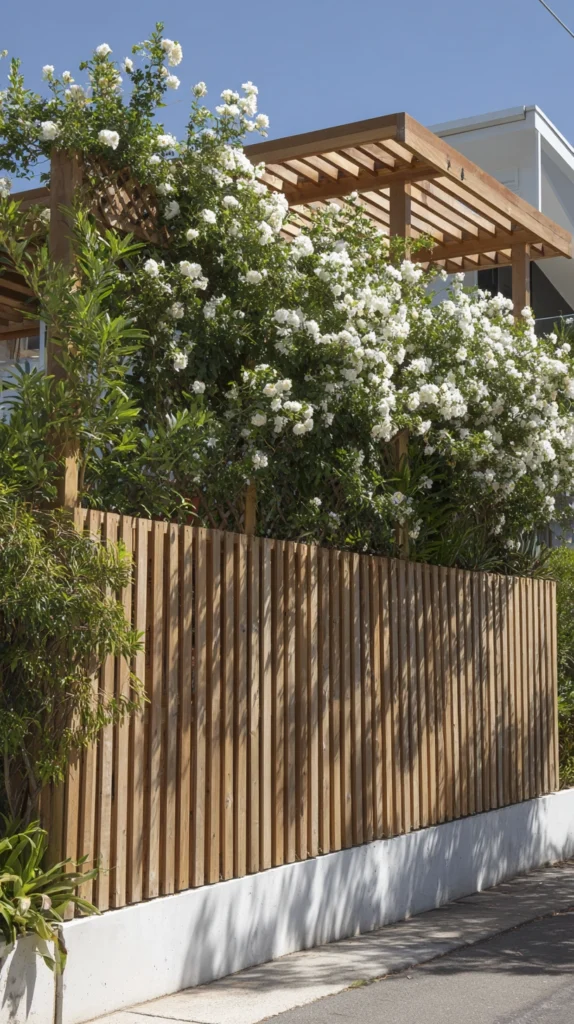
Fixing a trellis panel on top of an existing fence — extending its effective height by 60–90 cm without the cost and planning implications of a taller solid fence — creates additional privacy and a planting surface at exactly the height where climbing plant coverage is most useful. It is the most cost-effective way to increase the usable planting height of an existing garden boundary.
Trellis topper panels in 180×30 cm or 180×60 cm sizes cost $10–$30 each. Fix directly to existing fence posts using purpose-made trellis clips ($3–$5 per set of four). Most fence posts have sufficient height to accept a trellis topper without additional structural support. In exposed positions choose an open-pattern panel — the open structure reduces wind loading on the fence posts below compared to a dense-weave alternative.
Trellis tip: Check the condition of existing fence posts before adding a topper — the additional height and wind loading increases the leverage on each post significantly. A post that is sound today may fail within one to two seasons of supporting a trellis topper in a garden with significant wind exposure. Replace any borderline posts before installing the topper rather than after a storm forces the issue.
12. A Living Willow Trellis
Budget: $15 – $60
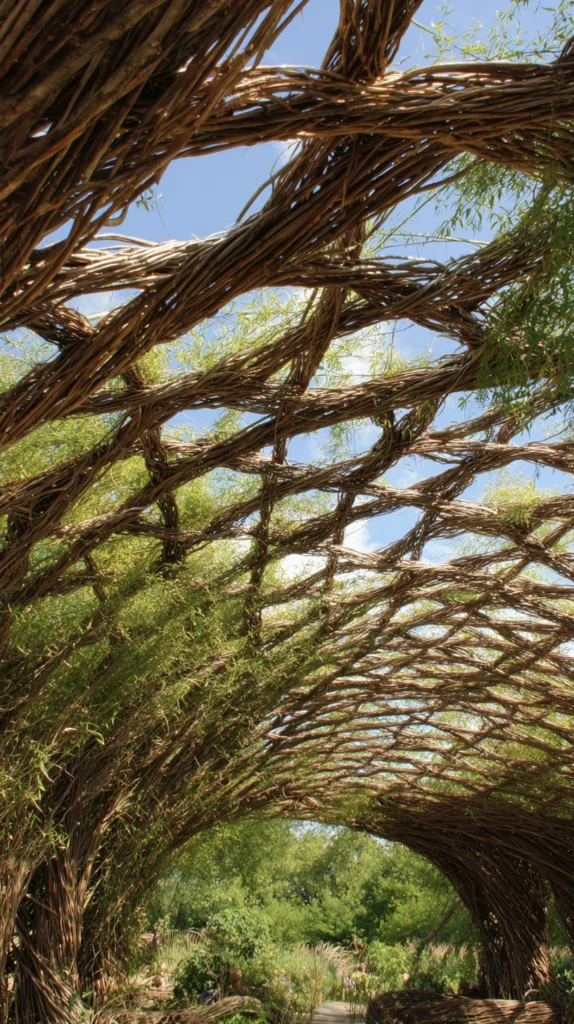
A trellis woven from living willow rods — pushed into moist soil while dormant and woven in a diamond or grid pattern while the rods are still flexible — creates a support structure that roots and grows into a living sculpture over the first growing season. The rods produce leaves and eventually a dense, leafy framework that is simultaneously trellis and hedge in the same structure.
Living willow rods (Salix viminalis) cost $0.50–$2 each. A trellis of 180×120 cm requires thirty to forty rods at $15–$80. Push rods 30 cm into moist, prepared soil in winter or early spring while fully dormant and weave the tops together before leaf break. Water through the first summer — once rooted the structure is self-sustaining and needs only an annual trim in late winter to maintain its form and density.
Trellis tip: Weave the willow rods while they are freshly cut and still fully flexible — rods left out of water for more than 24 hours begin to stiffen and become difficult to bend at crossing points without snapping. Cut, plant, and weave in the same session for the most complete and most reliable living trellis structure.
13. A Trellis and Bench Combination
Budget: $150 – $600
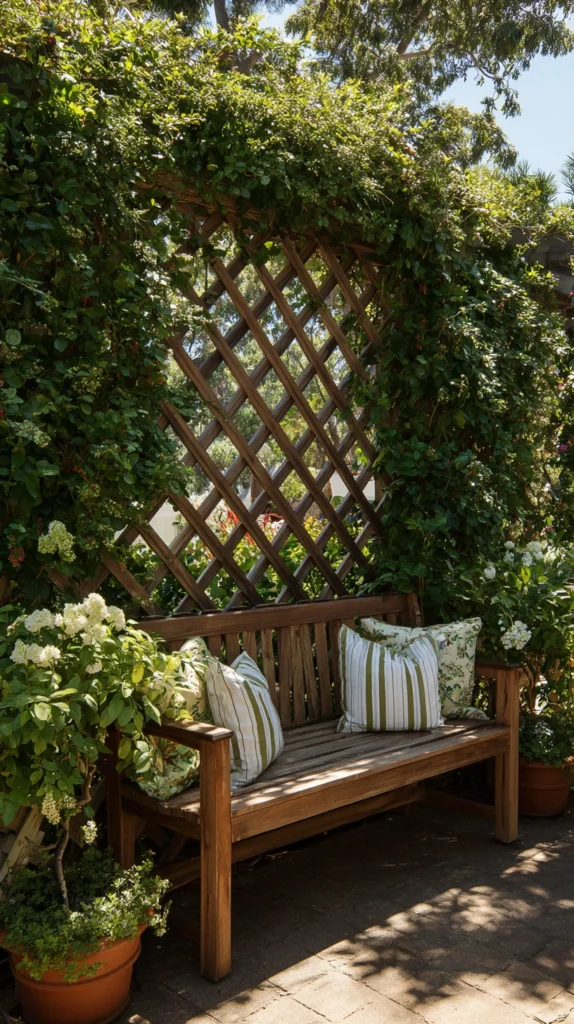
A trellis panel fixed behind a garden bench — close enough that climbing plants eventually grow above and partially around the seating area — creates the most enclosed and most romantically sheltered nook available without any built walls or roof. The trellis provides a planted backdrop and partial overhead canopy that makes the bench feel embedded in the garden rather than placed in front of it.
A bench with an integrated trellis backing costs $200–$500 professionally built or $120–$250 as a DIY project. A freestanding bench positioned 30 cm in front of a separately fixed trellis costs $80–$200 for the bench and $30–$80 for the panel. Plant with a fragrant climber — jasmine, climbing rose, or honeysuckle — so the seating area benefits from scent at exactly the height where it is most directly experienced by anyone sitting there.
Trellis tip: Train the climbing plant above and to the sides of the bench rather than directly behind the seating at head height. A climber trained directly behind the seat encroaches on the space occupied by people’s heads within one or two seasons. Training growth upward and outward keeps the immediate seating area clear while the overhead canopy of the mature plant provides the enclosure that makes the setup feel like a genuine outdoor room.
14. A Decorative Trellis Art Panel
Budget: $40 – $200
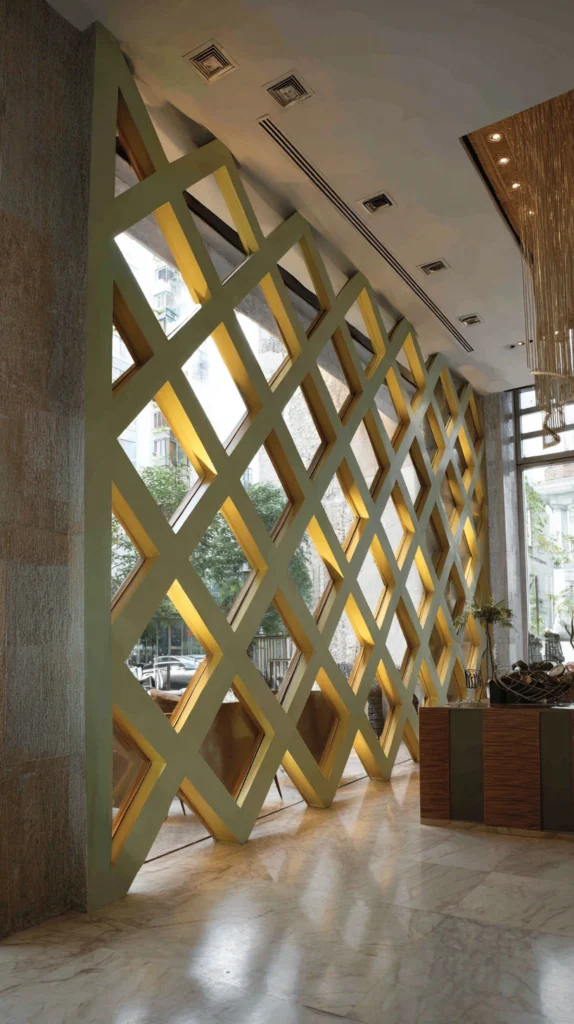
A trellis panel used primarily as a decorative surface — painted in a bold colour, hung with outdoor lanterns or mirrors, or used as a backdrop for container planting rather than for climbing plants — creates a garden feature that functions as wall art rather than horticulture. In a courtyard or small enclosed garden it provides the visual focal point that a large open garden achieves with a specimen tree or sculpture.
A 120×120 cm panel painted in deep sage green or terracotta and mounted on a white rendered wall costs $20–$50 in the panel itself. Hang two or three outdoor lanterns at varying heights ($15–$40 each) and position a cluster of terracotta pots in front ($10–$30 total) for a complete courtyard installation under $150 that reads as a genuinely designed garden feature rather than an improvised plant support with added objects.
Trellis tip: Seal or paint a decorative trellis on all faces including the back before installation. A decorative trellis viewed from both sides in a small courtyard needs to look finished from every angle — a trellis painted only on the front and left bare timber on the back reads as a display prop wherever the unfinished face is visible from any position within the space.
15. A Complete Garden Trellis Scheme
Budget: $300 – $1,200
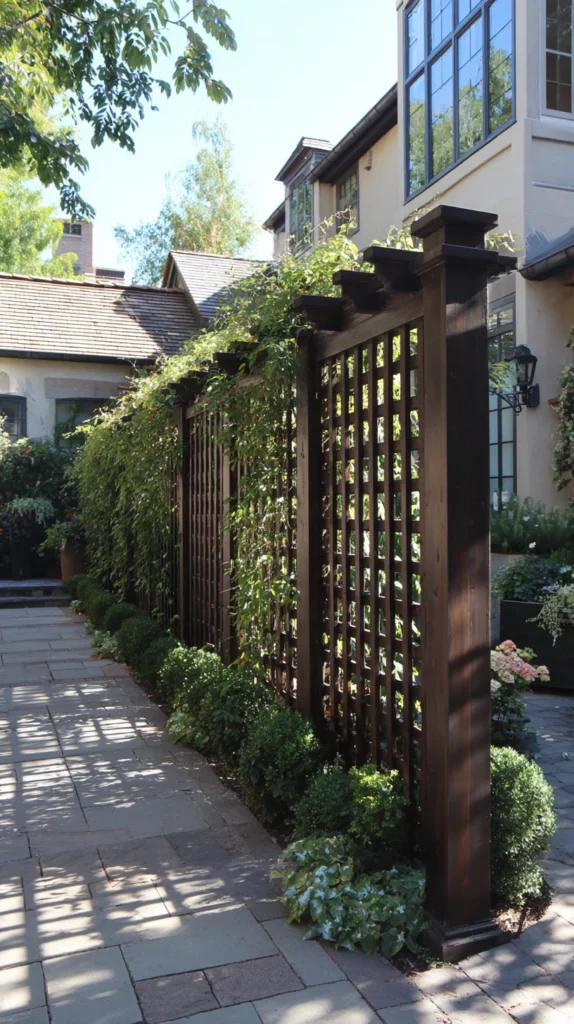
A complete garden trellis scheme — matching panels on every boundary fence, an obelisk in the main border, a trellis divider between garden rooms, and a trellis-backed bench in the seating area — creates a garden with a consistent structural vocabulary that reads as professionally designed from every viewpoint. The repetition of the same style and finish across every application is what creates the designed quality no single trellis idea alone can provide.
Choose one trellis style, one colour, and one finish and apply it consistently across every position in the garden rather than using different types in different locations. A garden with consistent painted white diamond trellis on every fence, divider, and obelisk reads as a considered scheme. The same garden with three different trellis styles in three different materials reads as a series of unconnected individual decisions made without a shared logic.
Trellis tip: Install the complete scheme — all panels, posts, and obelisks — before planting any climbers. A trellis scheme assembled around existing plants is always slightly compromised in its positioning by the plants already in place. A scheme installed first and planted into allows every panel to be positioned exactly where it needs to be for both the best visual result and the best growing conditions simultaneously.
The trellis that genuinely upgrades a garden is always the one that was planned before it was planted — where the position, the fixing method, the material, and the climber were all decided in relation to each other rather than added sequentially without a connecting logic. A trellis installed in the right place, fixed correctly, and planted with the right climber continues to improve for the lifetime of the plant growing through it.
Start with one panel in the position where a climbing plant would do most for the garden — the most visible fence section, the blankest wall, the pathway that needs an arch. Fix it well, plant it thoughtfully, and let the first season show you where the next one belongs. The garden always suggests the right answer once the first right question has been asked of it.