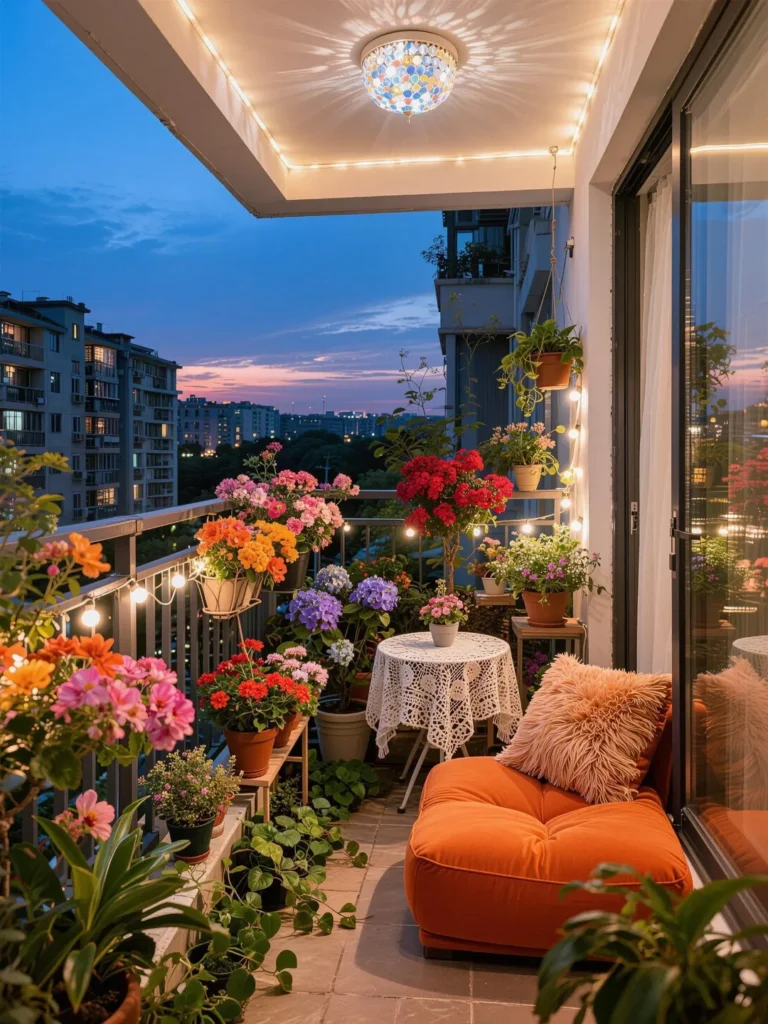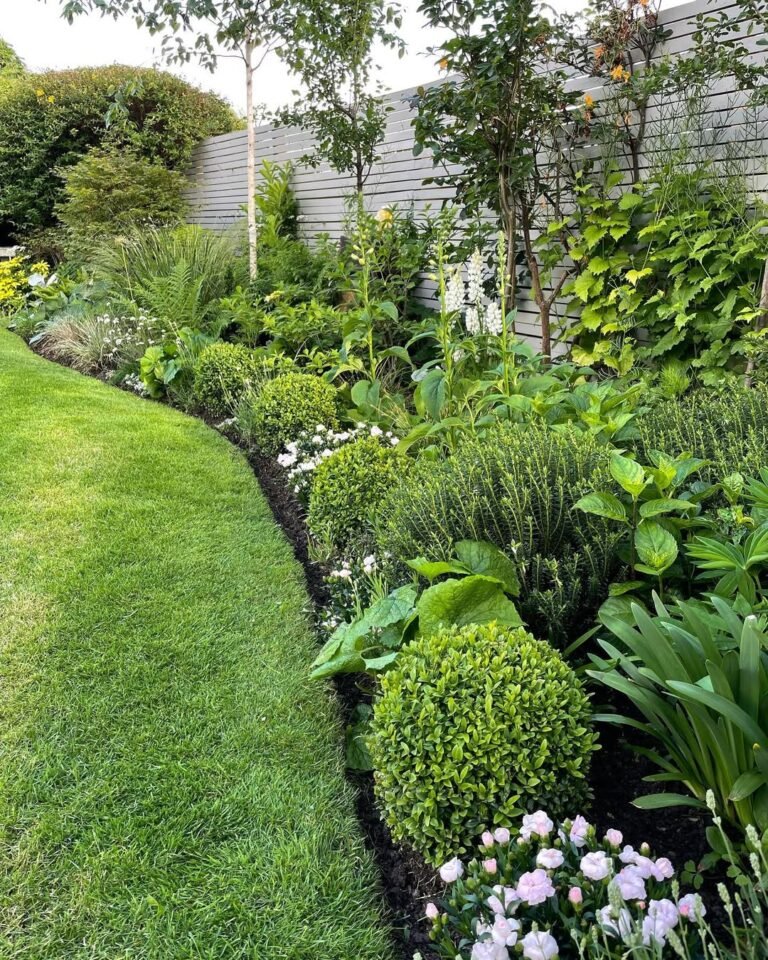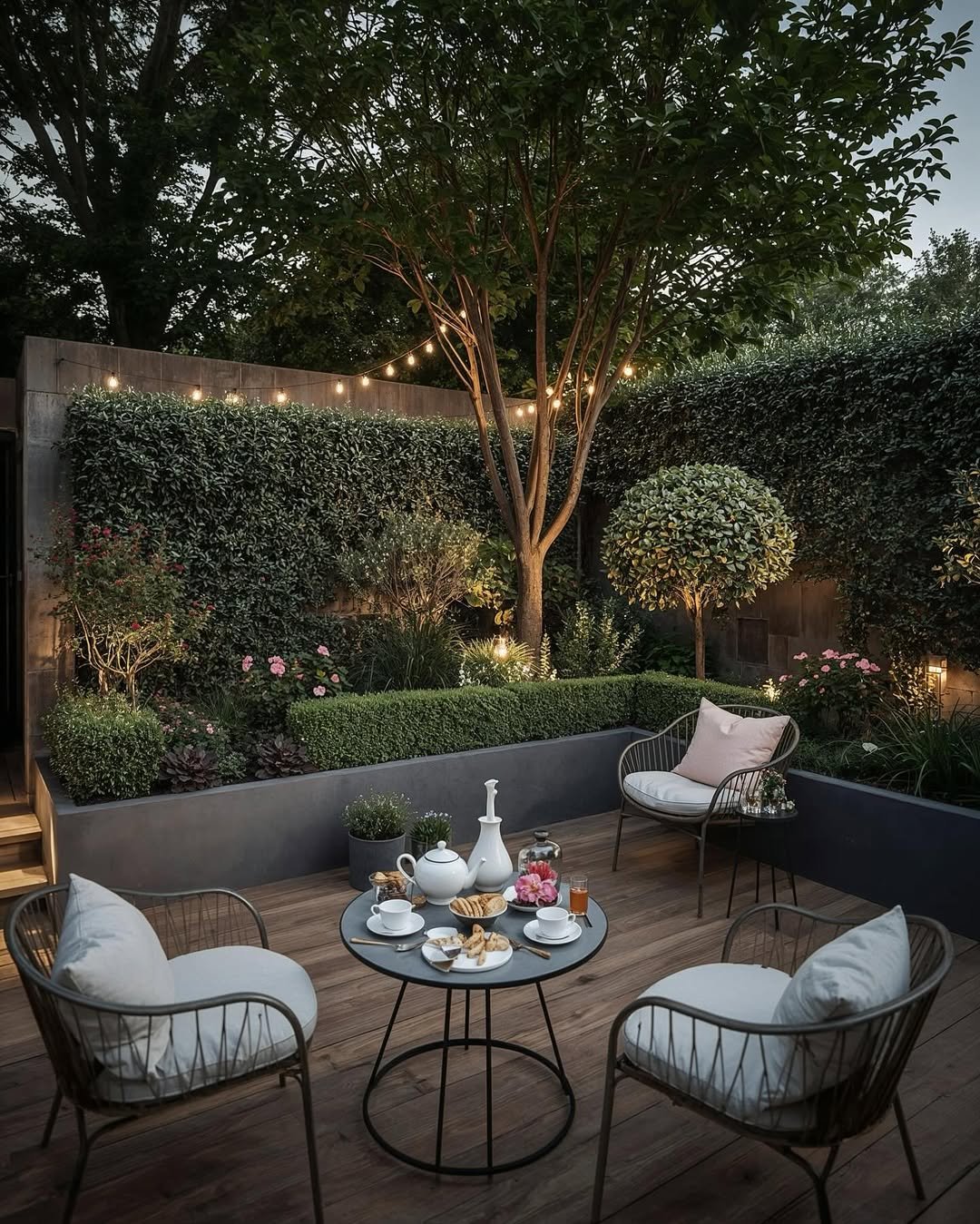
15 Garden Seating Nook Setups
A garden seating nook is not simply a chair placed outdoors. It is a defined space within the garden — one that has been thought about, positioned deliberately, and equipped with enough comfort and character to make staying there for an hour feel like the obvious choice. Done well, a seating nook becomes the reason the garden is used daily rather than occasionally, and the spot where the best conversations happen and the longest summer evenings are spent.
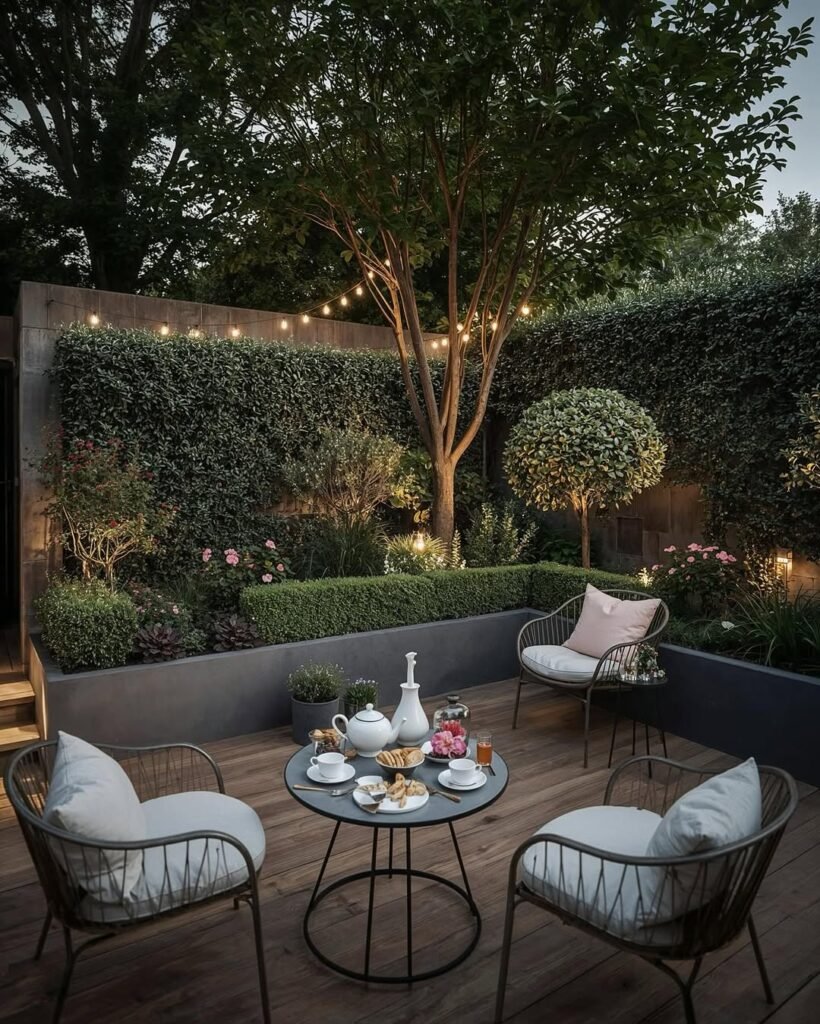
The fifteen setups below cover every scale, style, and budget — from a single chair tucked into a planted corner to a full enclosed outdoor room. Each one is designed around a specific mood or use, and each includes what it costs and a practical tip to help you get the most from the setup you choose. Pick the one that fits the garden you have and the pace you want from it.
1. The Tucked-Away Armchair Corner
Budget: $80 – $300
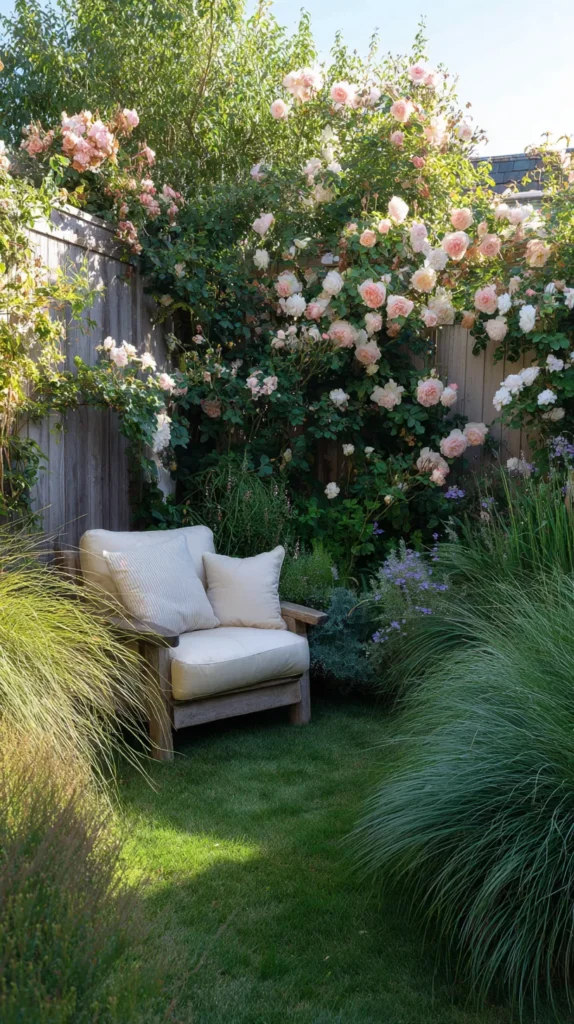
A single weather-resistant armchair pushed into a planted corner of the garden — bordered by tall grasses on one side and a climbing rose on the fence behind it — creates the most intimate and most personal seating nook available. It is not designed for company. It is designed for thirty minutes alone with a book and a cold drink on a warm afternoon, and it performs that function better than any larger, more social setup could. The single chair in a planted corner signals clearly and honestly what the space is for.
A quality weather-resistant armchair in powder-coated aluminium with a cushion costs $100–$250. A rattan or teak equivalent runs $120–$300. Position the chair so the sitter faces into the garden rather than toward the house — the view out matters more than the view back, and an outward-facing chair immediately creates a more contemplative atmosphere than one oriented toward domestic activity. Add a small side table ($25–$60) for a glass and a book, and a floor-level solar lantern ($10–$20) for evening use.
Setup tip: Plant the corner around the chair rather than placing the chair in front of existing planting. Ornamental grasses behind and to one side, a low lavender hedge in front, and a climbing plant on the nearest fence panel creates genuine enclosure that a chair placed in front of an existing border never achieves. The planting should embrace the chair, not merely back it.
2. The Pergola Dining Nook
Budget: $300 – $1,200
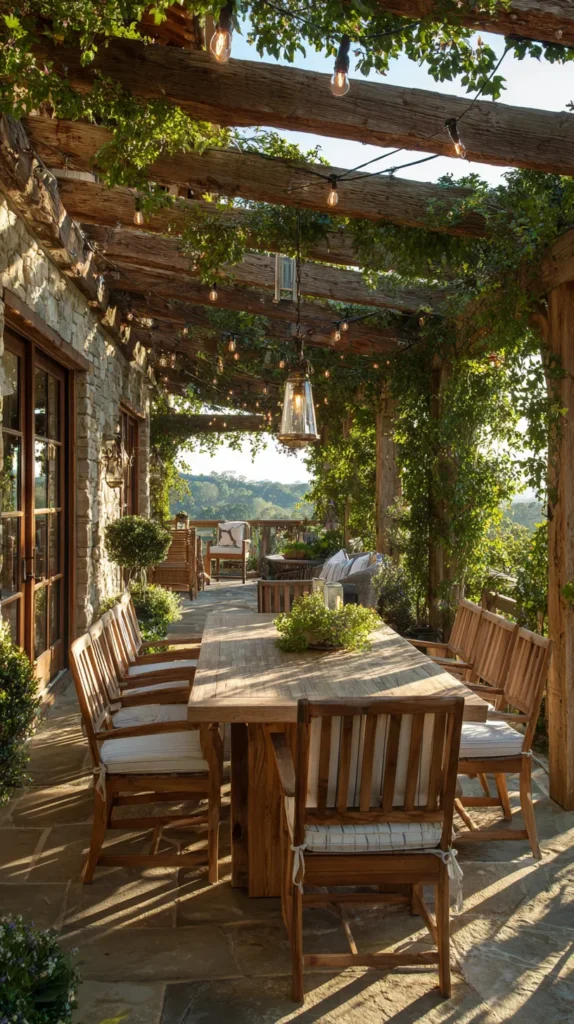
A pergola positioned over a dining table and chairs creates the most multi-functional seating nook in the garden — used for morning coffee, weekend lunches, and long summer evenings with equal ease. The overhead structure defines the space, provides a surface for climbing plants and string lights, and creates the room-like quality that makes outdoor dining feel genuinely different from a table set on an open patio. It is the seating nook that earns its cost most completely over a summer season.
A timber pergola kit for a 3×3 metre dining area costs $300–$700. A dining table and four to six chairs in powder-coated aluminium or acacia wood runs $200–$600. String lights woven through the pergola beams cost $30–$80. A climbing jasmine or wisteria planted at each upright costs $10–$25 per plant and begins to cover the structure within two seasons. The total investment for a complete pergola dining nook — structure, furniture, lights, and plants — sits between $550 and $1,500 for a setup that transforms how the garden is used through every week of summer.
Setup tip: Orient the pergola so that the open sides face east and north rather than south and west if shade is the priority. A pergola open to the south and west provides no meaningful shade during the hottest afternoon hours — the sun simply enters from the sides. A pergola open to the east and north is naturally shaded from mid-morning onward by the structure itself and by any planting on the south-facing wall or fence behind it.
3. The Hammock Between Two Trees
Budget: $40 – $150
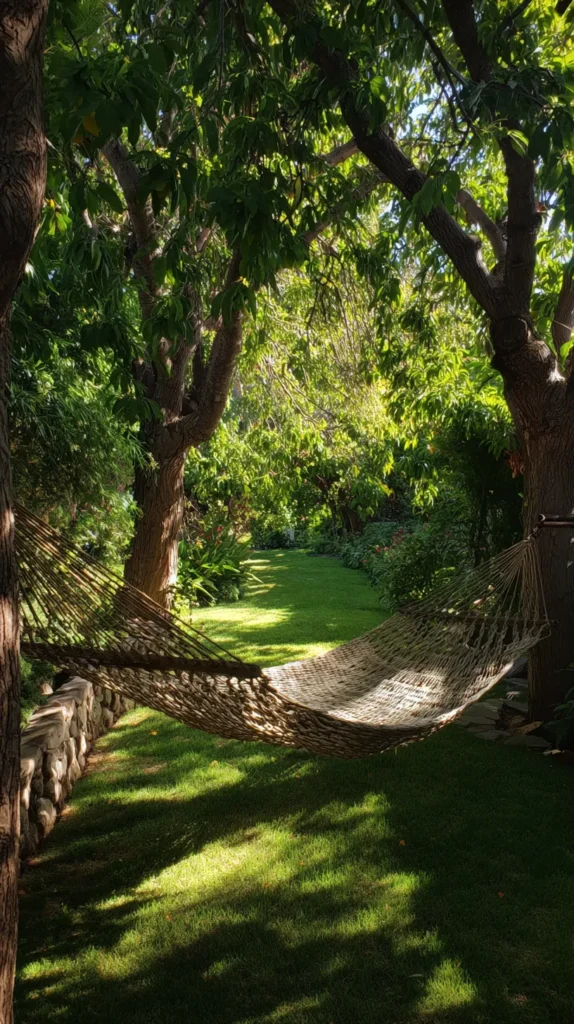
A hammock strung between two garden trees at a comfortable hanging height is the most relaxed and most immediately appealing seating nook available for a garden with the right tree spacing. It requires no furniture, no hard landscaping, and no additional structure — only two trees 3–5 metres apart, a quality hammock, and the decision to use it. The gentle swaying of a hammock in the lightest breeze is an experience no static garden seat replicates, and on a warm summer afternoon it is almost impossible to stay in for less than an hour.
A quality cotton or polyester rope hammock costs $40–$100. A Mayan-style woven hammock in a single vivid colour runs $50–$120. Hammock hanging hardware — S-hooks, tree straps, and adjustable carabiners — costs $10–$25 and avoids the need to fix anything directly into the tree bark. Hang the hammock with the centre sitting at approximately hip height when standing beside it — this feels low but produces the correct sitting angle once the hammock takes the weight of the occupant. Hang it too high and getting in becomes a gymnastic event rather than a pleasure.
Setup tip: Position the hammock in dappled shade rather than full sun. A hammock in direct afternoon sun is uncomfortably hot within ten minutes regardless of the air temperature. The same hammock beneath the canopy of a tree that filters rather than blocks the sun remains pleasant for hours and is substantially cooler than the open garden around it through the hottest part of the day.
4. The Built-In Bench and Raised Bed Nook
Budget: $200 – $700
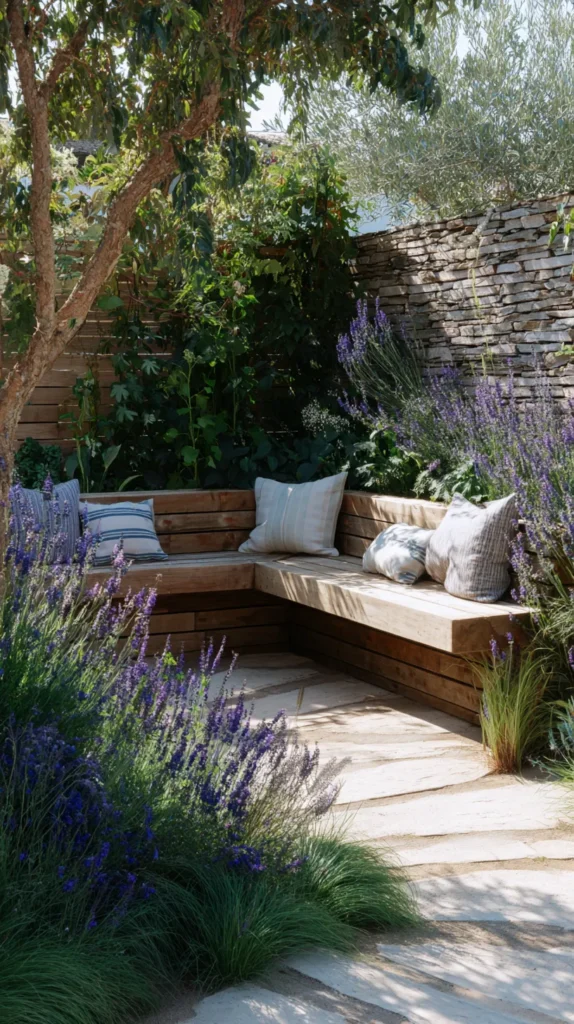
A built-in timber bench constructed along two sides of a right-angled corner, backed by raised beds of planting on the walls behind, creates one of the most integrated and most beautiful garden seating nooks available. The raised beds double as armrests and as fragrant, visual backdrops — planting them with lavender, rosemary, and tall ornamental grasses creates a living surround for the seating that no planted pot arrangement achieves with the same completeness. The setup looks permanent and considered because it is.
A simple built-in timber L-shaped bench constructed by a carpenter or a confident DIYer costs $200–$500 in materials for a typical 2-metre run on each side. Raised beds built from the same timber behind the bench cost $80–$200 in materials. Seat cushions cut to fit the bench cost $30–$80 per section. Plant the raised beds with a combination of structural evergreens for year-round privacy and seasonal flowering plants for summer colour. The complete nook — bench, raised beds, plants, and cushions — costs $400–$900 and becomes one of the most enduringly used features in the garden.
Setup tip: Build a simple storage compartment beneath the bench seat with a hinged lid. Outdoor cushions, throws, and gardening gloves stored directly within the seating nook are used far more consistently than the same items kept in a shed or garage. The proximity of the storage to the seat is the single most reliable predictor of whether the nook gets used spontaneously or only when everything has been retrieved and carried out from elsewhere.
5. The Shaded Reading Nook With Sail Shade
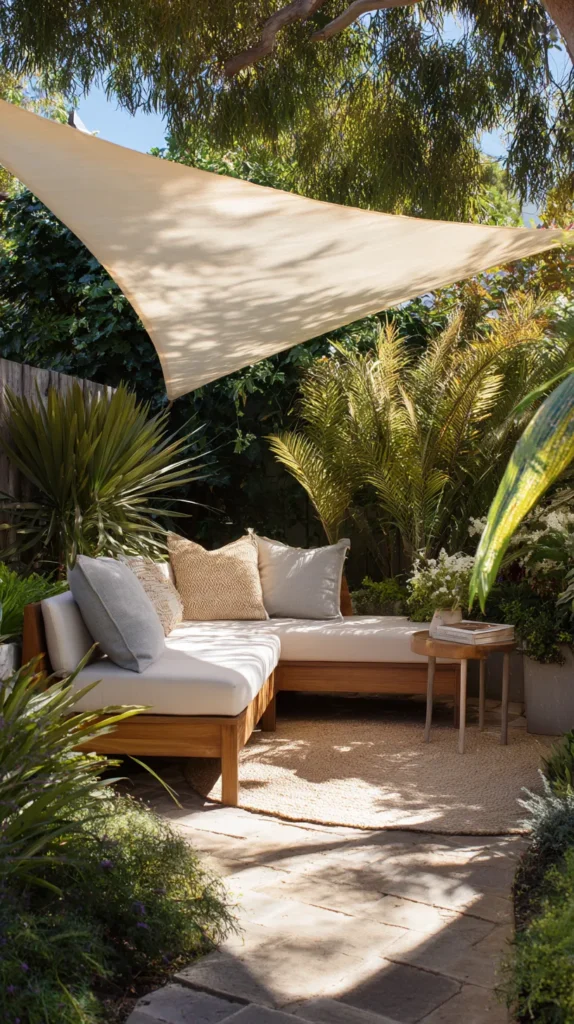
Budget: $100 – $400
A sail shade stretched diagonally above a low outdoor chair or daybed, positioned in the part of the garden that gets the most afternoon sun, turns a previously unusable hot spot into the coolest and most pleasant seating area available through the hottest hours of the day. The sail creates overhead shade without enclosing the space — air continues to move through freely and the garden remains fully visible — while blocking the direct UV that makes unshaded seating uncomfortable from mid-morning to late afternoon in midsummer.
A UV-blocking triangular sail shade in a 3.6×3.6 metre size costs $60–$150. Fixing points — eye bolts screwed into fence posts, walls, or freestanding poles — cost $10–$30 to install. A freestanding shade pole set costs $40–$100 for gardens without suitable fixing points. A low outdoor daybed or sun lounger costs $80–$200. The sail shade and lounger together create a shaded reading nook for $140–$350 that makes the garden usable through the hours it would otherwise be abandoned to the heat. Position the sail at an angle rather than flat — the angled surface deflects rain as well as sun and reduces pooling in wet weather.
Setup tip: Attach the highest fixing point of the sail shade to the west or south-west of the seating area rather than directly overhead. Afternoon sun approaches from the west and a shade positioned with its highest edge in that direction casts the maximum shadow over the seating area during the hours when shade is most valuable. A symmetrically positioned shade that peaks directly above the seat provides much less effective afternoon coverage than one angled deliberately toward the primary sun direction.
6. The Enclosed Garden Room Nook
Budget: $500 – $3,000
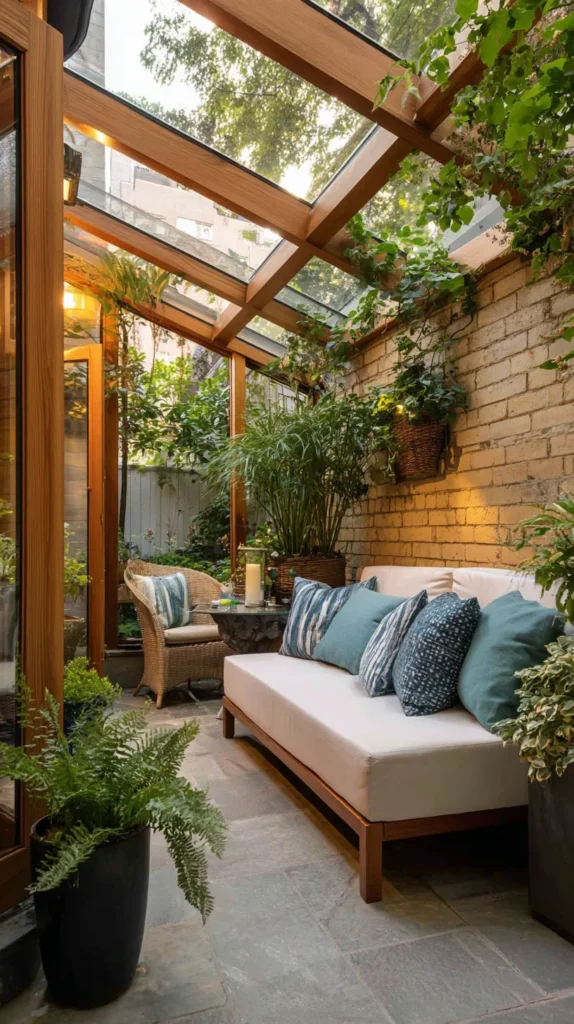
A three-sided or fully enclosed outdoor garden room — timber walls, a perspex or polycarbonate roof panel, open-fronted toward the garden — is the most permanent and most weatherproof seating nook available for a garden. It provides shelter from wind and light rain while remaining open to the garden view and the summer air. Furnished with a small sofa or daybed, a side table, and adequate lighting, it functions as a genuine additional room that extends the usable season of the garden from four months to eight or nine.
A simple open-fronted timber garden room or garden retreat structure costs $500–$1,500 for a kit version in 2×2 or 2.5×2.5 metre footprint. Bespoke or professionally built versions run $1,500–$3,000 or more. A small outdoor sofa costs $200–$500. Adequate weatherproof lighting costs $50–$150. The structure itself is the major investment — the furnishings within it are modest relative to the functionality the room delivers. Planning permission requirements vary by region and structure size — check local regulations before building anything larger than 2.5 metres in height.
Setup tip: Face the open front of the garden room south or south-west to capture maximum winter sun through the opening. A garden room facing north is significantly colder through the shoulder seasons — spring and autumn — when the additional warmth from direct sun exposure makes the difference between a space that can be used comfortably and one that cannot. Orientation is the most important single decision in siting a garden room.
7. The Fire Pit Circle
Budget: $100 – $600
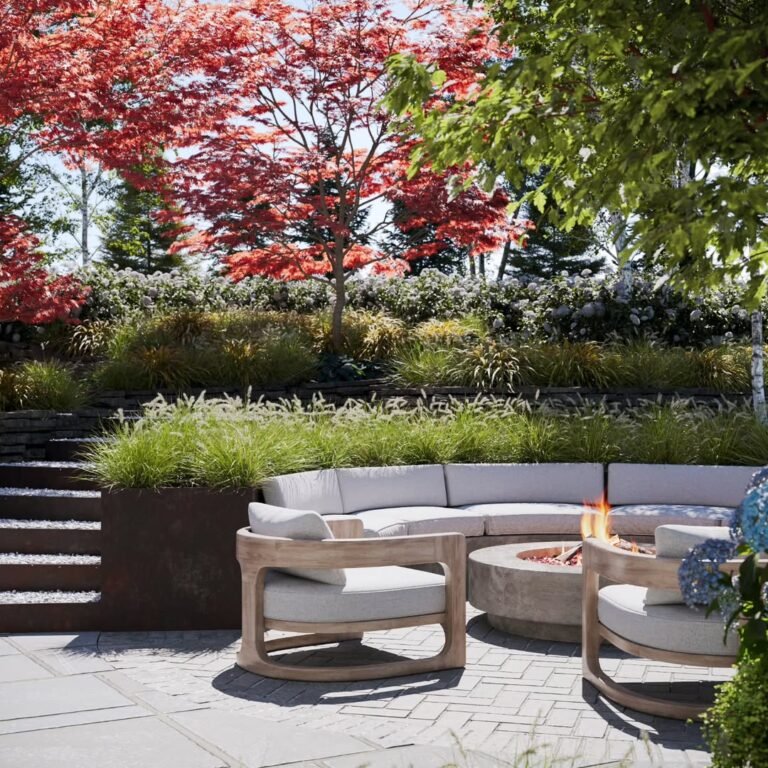
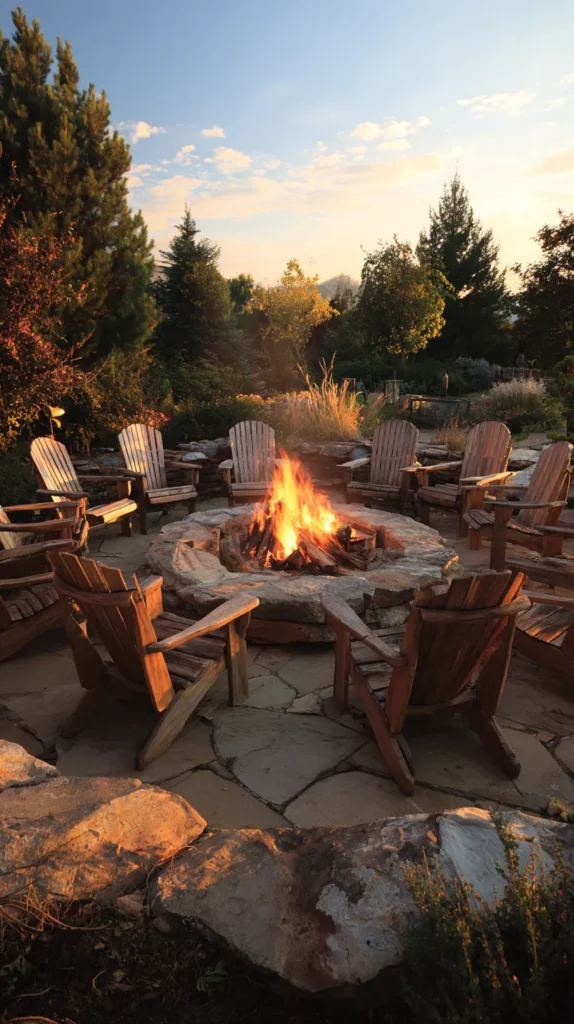
A fire pit at the centre of a circle of garden chairs — arranged loosely around the flame rather than in a formal line — creates a seating nook with a gravitational pull that no other outdoor setup quite replicates. The fire provides warmth, light, atmosphere, and a focal point around which conversation naturally organises itself. An evening fire pit circle extends the usable hours of the garden by two to three hours on every evening it is lit and keeps people outside long after the temperature has dropped below what would otherwise be comfortable.
A portable steel fire pit bowl costs $50–$120. A Corten steel fire pit with a more designed aesthetic runs $150–$400. A set of four to six garden chairs arranged around the fire costs $15–$50 each for folding chairs or $60–$150 each for more substantial garden chairs. Curved garden benches designed for fire pit circles cost $100–$300 each. Position the fire pit at least 3 metres from any fence, structure, or overhanging tree branch. A log store beside the seating area costs $30–$80 and keeps firewood accessible without interrupting the flow of an evening to retrieve it from elsewhere in the garden.
Setup tip: Arrange seating at different distances from the fire pit rather than all at the same radius. Some guests prefer the closest heat; others prefer a cooler position slightly further back. A circle of chairs all equidistant from the fire forces a single comfort level on everyone. Varied distances allow each person to find their preferred position and move freely between them through the evening without rearranging the furniture.
8. The Potted Plant Enclosure Nook
Budget: $100 – $400
A seating nook created entirely from large potted plants arranged in a horseshoe or U-shaped formation around two or three chairs requires no structural building work, no permanent installation, and no planning considerations — and yet it creates a genuinely enclosed, private seating space that feels substantially more secluded than an open garden chair placed in the same position. The pots can be moved, replaced, and rearranged seasonally, which makes this the most flexible seating nook option available.
Five to eight large pots of 40–50 cm diameter cost $15–$40 each. Plant with a combination of tall ornamental grasses (Miscanthus, Calamagrostis) at $10–$20 per plant, evergreen shrubs for year-round structure ($15–$40 each), and seasonal flowering plants for summer colour ($5–$15 each). A pair of garden chairs within the enclosure costs $80–$200 for a simple, comfortable option. The total setup — pots, plants, and chairs — sits between $250 and $600 for a genuinely effective enclosed seating nook that took an afternoon to create and can be completely reconfigured the following year if the garden changes around it.
Setup tip: Place the tallest pots at the back of the formation and graduate the heights toward the front, leaving the opening of the horseshoe clear. This arrangement creates the feeling of being enclosed from behind and the sides — the two directions from which privacy matters most — while maintaining the openness toward the garden view that makes the nook enjoyable to sit in rather than simply secluded.
9. The Treehouse or Elevated Platform Seat
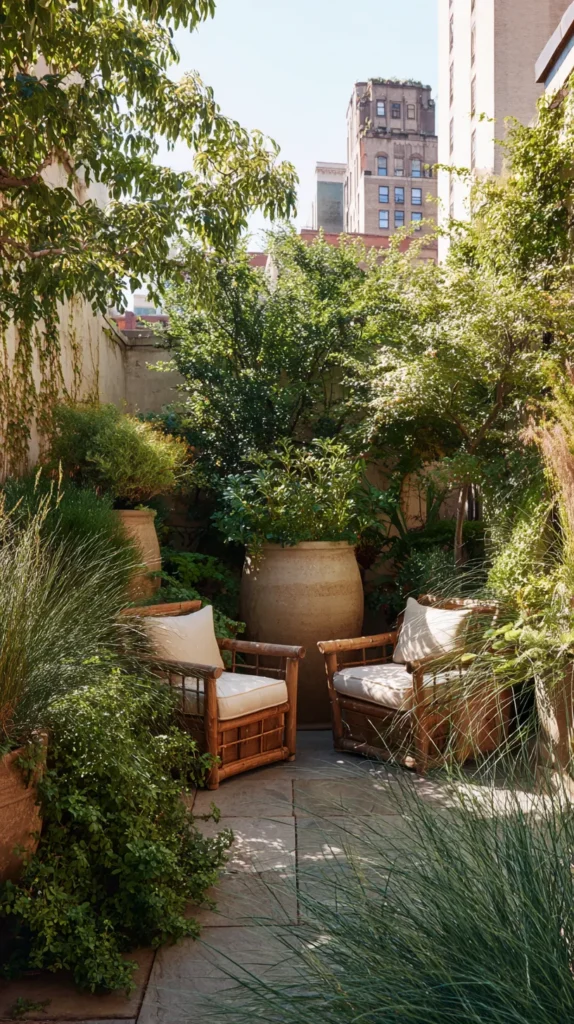
Budget: $400 – $3,000
An elevated seating platform — whether a genuine treehouse accessed by a ladder, a raised deck constructed around or beside a mature tree, or a simple elevated timber platform reached by two or three wide steps — creates a seating nook with a fundamentally different relationship to the garden than any ground-level alternative. The slight elevation changes the view, increases the sense of separation from the garden below, and creates a destination within the garden that has the feeling of arrival that makes a place worth spending time in.
A simple elevated timber platform of 2×2 metres raised 60–80 cm above ground level costs $300–$700 in materials for a DIY build or $600–$1,500 professionally constructed. A more substantial elevated garden retreat or treehouse structure runs $1,500–$3,000 or more. Furnish with two or three compact chairs or a small bench and a side table — the elevated position itself provides the character, and the furniture within it should be simple enough not to compete with the setting. Add rope lighting along the platform edge ($20–$40) for a warm, ambient glow at dusk.
Setup tip: Build the platform railing at a height that allows a seated person to see over it clearly. A railing that sits above eye level when seated blocks the elevated view that is the primary reason for the raised platform — which defeats the purpose of the entire setup. A railing at 90–100 cm height allows clear sightlines when seated in a standard garden chair and still provides the safety barrier the structure requires.
10. The Wildflower Meadow Bench
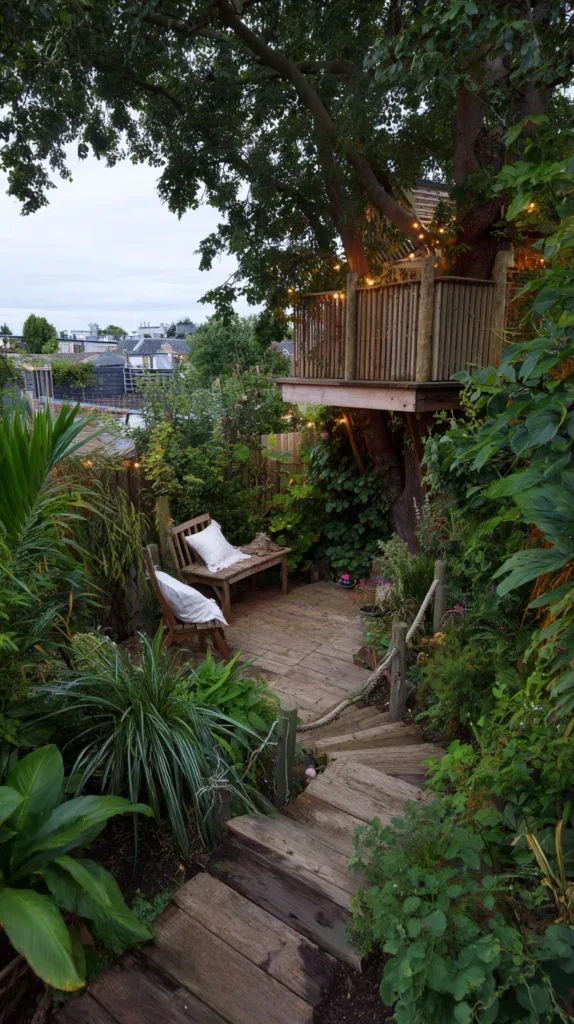
Budget: $50 – $200
A simple bench — timber, stone, or metal — placed within or at the edge of a wildflower meadow area creates a seating nook whose character comes entirely from what surrounds it rather than from any built structure. The meadow planting does all the work — the movement of grasses in the breeze, the visiting pollinators, the shifting colour through the season — and the bench provides the vantage point from which to observe it properly. It is the most naturalistic and most low-cost seating nook on this list and one of the most quietly rewarding.
A simple timber garden bench costs $60–$150. A reclaimed railway sleeper used as a bench seat on two low stone or brick supports costs $30–$80 in materials and has a weight and permanence that suits a naturalistic garden setting better than most conventional bench options. Establish the wildflower meadow around the bench by sowing a mixed native wildflower seed blend ($5–$15 per packet) onto cleared, bare soil in spring. The meadow matures over two to three seasons and requires only one annual cut in late autumn to maintain. The bench within it needs nothing added to it beyond a flat, comfortable sitting surface.
Setup tip: Position the bench so the sitter faces into the meadow rather than along it. A bench oriented into the planting — looking across the full depth of the meadow rather than along its edge — creates a sense of immersion in the landscape that a bench placed parallel to the meadow edge never produces. The viewing angle determines whether the bench feels like a seat within the garden or a seat beside it.
11. The Corner Sofa Patio Nook
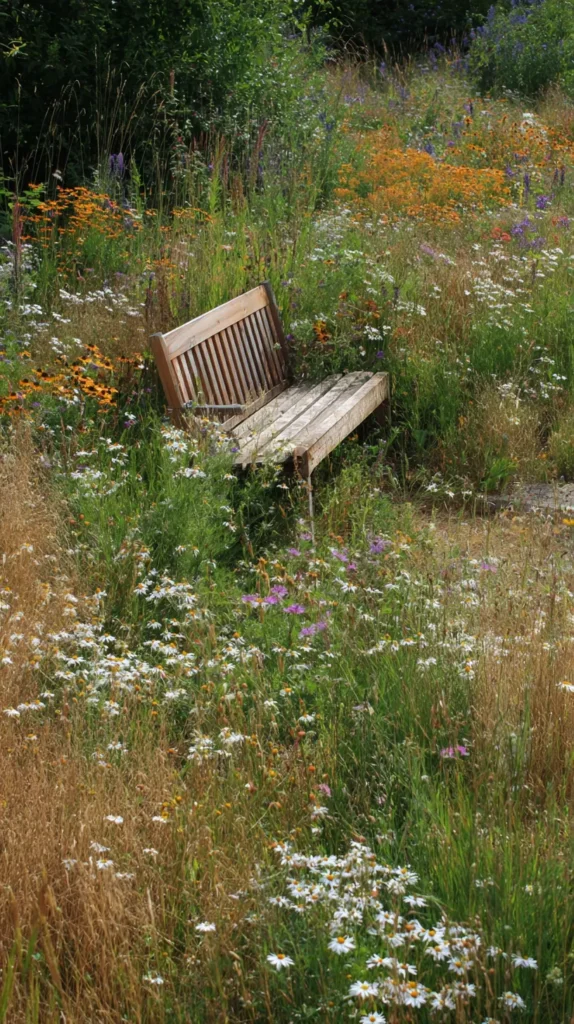
Budget: $200 – $800
An outdoor corner sofa — the L-shaped configuration that wraps around a low coffee table in a right angle — creates the most generously proportioned and most genuinely social seating nook available for a patio or terrace. The corner format seats more people comfortably than a linear arrangement of equivalent total length, encourages conversation by placing people at right angles to each other rather than side by side, and — crucially — creates the sense of an enclosed, room-like seating area without requiring any walls or structural elements to define it.
An outdoor corner sofa set in weather-resistant rattan or powder-coated aluminium with cushions costs $250–$700. A modular version that can be reconfigured between different layouts runs $300–$800. A low outdoor coffee table to complete the arrangement costs $60–$150. Choose cushion covers in a UV-resistant fabric — solution-dyed acrylic or polyester — that holds its colour through sun exposure rather than fading within a single summer season. Store cushions in a weatherproof storage box ($60–$120) that sits beneath or beside the sofa and eliminates the barrier of having to retrieve cushions from storage before the nook can be used.
Setup tip: Position the corner sofa with the inside of the L facing the garden view rather than the outside. An L-shaped sofa with the corner pointing toward the garden creates a seating arrangement that feels turned away from the space it inhabits. The same sofa with the open inside of the L facing outward creates a seating area that embraces the garden view and makes the best use of the wider outlook available from the patio position.
12. The Greenhouse or Glasshouse Retreat
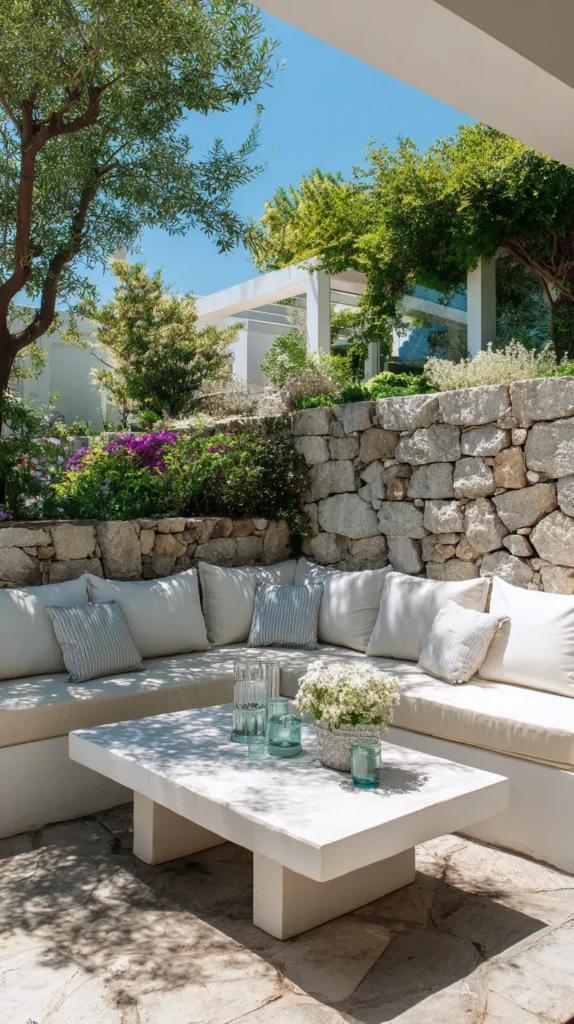
Budget: $300 – $2,000
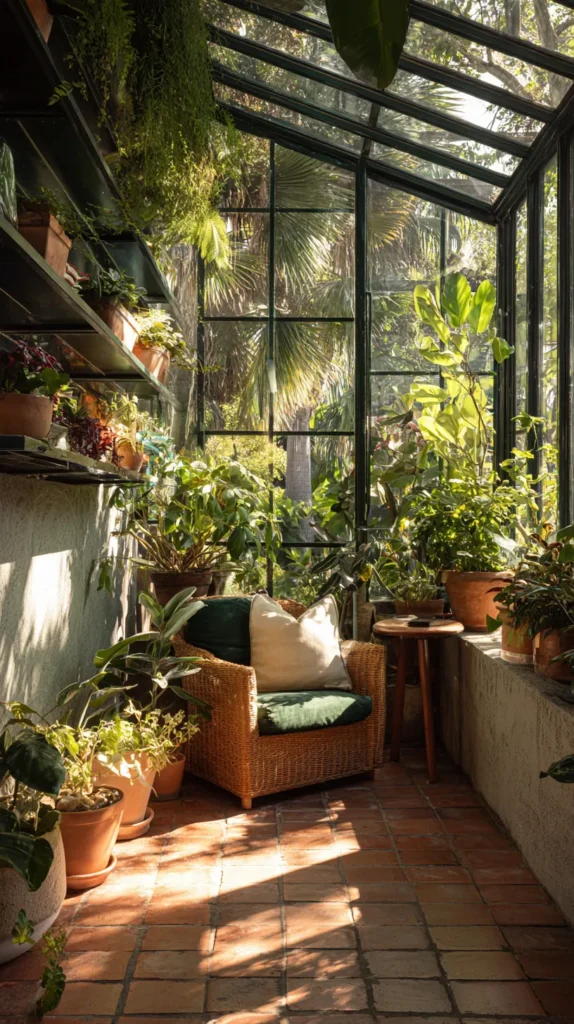
A small greenhouse or glasshouse used partly as a garden retreat — with one corner furnished with a chair and a small table alongside the growing shelves and plant staging — is one of the most unique and most atmospheric seating nooks available for a garden. The warm, humid air inside a greenhouse on a sunny day, the smell of compost and foliage, and the particular quality of light filtered through glass and surrounded by plants create an environment that is entirely unlike any other seating position in the garden and is especially welcome on cooler summer days when being outdoors in the conventional sense is less comfortable.
A small lean-to glasshouse of 1.8×1.2 metres costs $300–$600. A freestanding greenhouse of 2.5×2 metres runs $500–$1,200. A quality greenhouse chair or folding stool costs $30–$80. The growing and the retreating can happen simultaneously in a well-designed greenhouse layout — the chair placed beside the potting shelf rather than in a separate zone makes the nook feel embedded within the productive space rather than carved out of it. A small battery-powered fan ($20–$40) is essential for comfort on hot days when greenhouse temperatures can exceed 40°C without adequate ventilation.
Setup tip: Open all greenhouse vents and the door fully before sitting inside on hot summer days. A ventilated greenhouse on a warm day is pleasantly warm and fragrant. A closed greenhouse on the same day is dangerously hot within minutes. The greenhouse seating nook is at its most comfortable in spring, early summer, and early autumn when the ambient temperature outside is cool enough that the glass amplifies warmth to a pleasant rather than excessive level.
13. The Moongate or Arch Framed Seat
Budget: $150 – $600
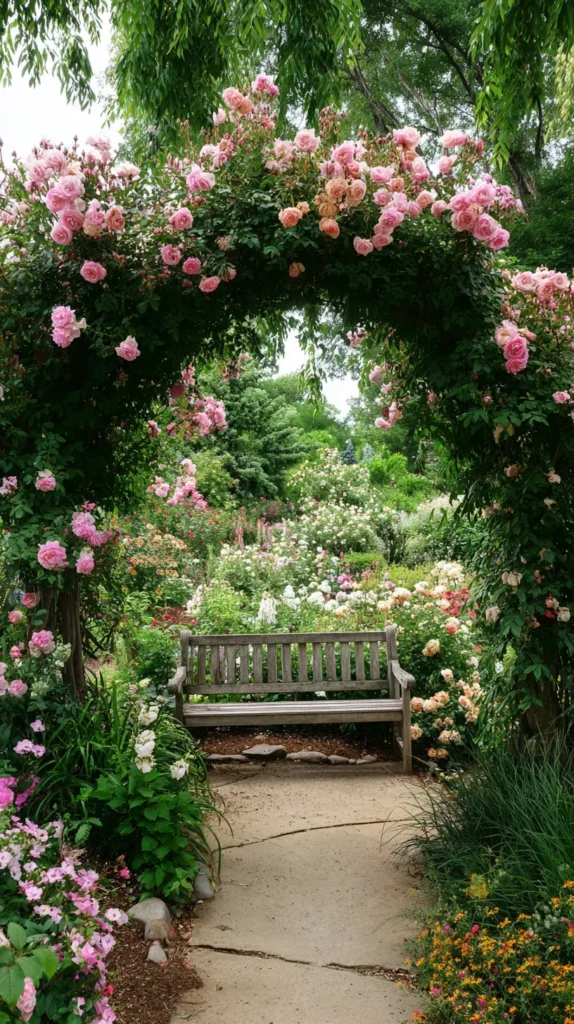
A garden arch or circular moongate — covered in climbing roses, jasmine, or wisteria — with a bench or loveseat placed directly beneath or just behind it creates a seating nook framed by flowering architecture that is one of the most romantic and most photographed garden setups available. The arch provides a visual boundary that defines the seating area without enclosing it, creates a sense of arrival as you pass through it, and provides a structural support for climbing plants that frames the seat in seasonal colour and fragrance.
A metal garden arch in a 1.2×0.6 metre footprint costs $50–$150. A larger timber pergola arch costs $100–$300. A circular moongate arch in painted mild steel runs $200–$600 for a bespoke or specialist version. A bench or loveseat positioned beneath the arch costs $80–$250. Plant a climbing rose on each upright at $15–$30 per plant — varieties including New Dawn, Generous Gardener, and Compassion produce enough coverage to frame a standard arch within two seasons and enough fragrance to justify the position as a destination in the garden in their own right.
Setup tip: Place the seat slightly behind the arch rather than directly beneath it. A seat positioned at the arch opening blocks movement through the garden feature and is never fully comfortable in the position — there is always the sense that the arch is above rather than around the seat. A bench 60–90 cm behind the arch sits within the visual composition created by the arch and framing plants without obstructing the feature itself.
14. The Water’s Edge Seat
Budget: $100 – $500
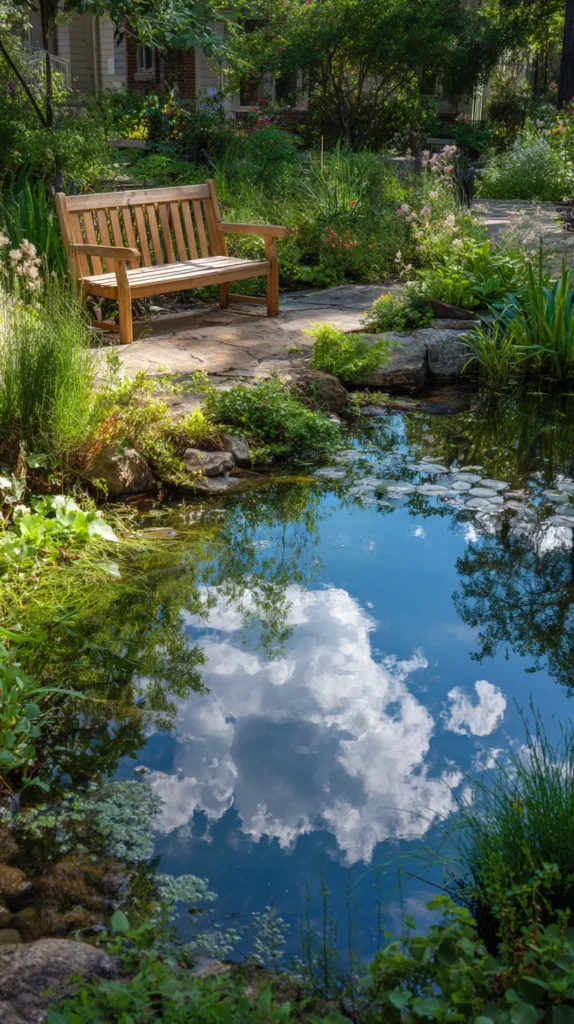
A seating nook positioned beside a garden pond, a water feature, or even a large barrel pond — with a bench or two chairs facing the water surface — creates an atmosphere of calm that no other garden position quite replicates. The reflections, the sound of any movement in the water, the visiting wildlife, and the particular quality of light that a water surface introduces into its immediate surroundings all combine to make the water’s edge one of the most genuinely restorative places to sit in any garden that includes it.
A small preformed garden pond of 1 metre diameter costs $30–$80 from garden retailers. A half-barrel water feature with a solar pump costs $40–$100. A bench positioned beside the water costs $60–$150. The combination of a simple water feature and a nearby seat costs as little as $130 to establish and delivers a quality of garden atmosphere that spending ten times that amount on planting alone rarely matches. Position the seat so the water surface is directly in the sitter’s field of view rather than to the side — the direct view of water is the primary experience that makes the nook work.
Setup tip: Plant the far edge of the pond or water feature — the edge directly opposite the seating position — with tall, architectural plants such as irises, marsh marigolds, or ornamental grasses. The planted far edge creates a backdrop to the water surface that makes the reflection on the water more interesting to look at and gives the seated viewer something to observe beyond the water itself. An unplanted far edge reduces the visual depth of the scene considerably.
15. The Secret Garden Nook
Budget: $150 – $800
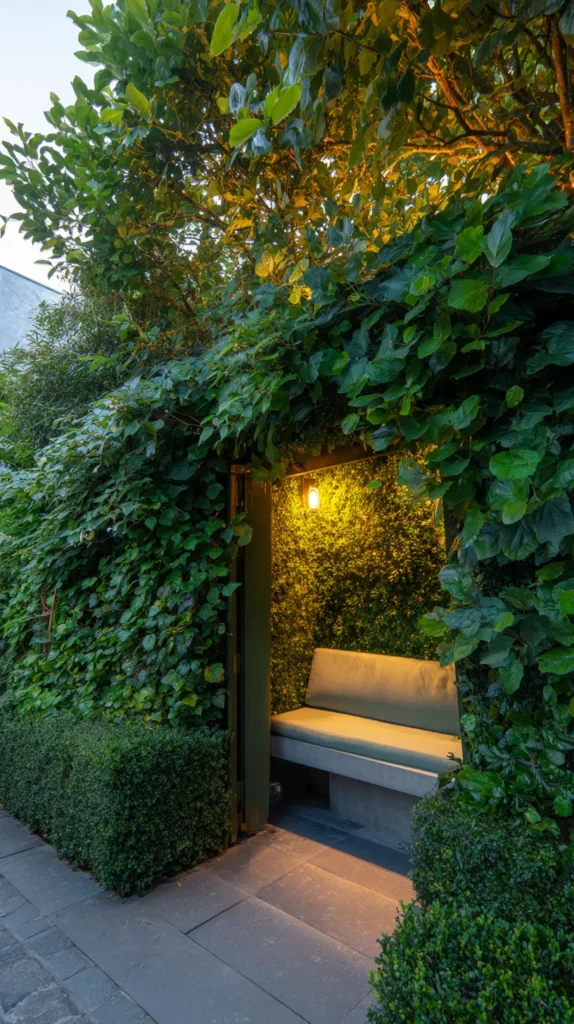
A seating nook that is genuinely hidden from the main garden — reached through a gap in a hedge, around the corner of a building, or through a gate in a fence — creates the most sought-after quality in any garden seating setup: the sense of discovery and seclusion that makes a place feel specifically yours. The secret garden nook does not need to be large or elaborately furnished. It needs only to be genuinely separate from the visible garden — concealed enough that arriving in it feels like finding something rather than simply sitting down.
Creating the concealment is the primary investment — a hornbeam or yew hedge planted to 1.5 metres from bare-root plants costs $5–$15 per plant and reaches the required height within three to four years. A timber gate or panel screen creating the entrance costs $80–$200. Within the hidden space, a single bench or two chairs, a small table, and one or two pots with planting completes the nook for $100–$300. String lights wound through the hedge or overhead costs $20–$50 and makes the nook equally usable after dark — which, for a secret garden nook, is often the hour when it feels most like exactly what it is.
Setup tip: Keep the entrance to the secret nook deliberately narrow — just wide enough for one person to pass through comfortably. A wide, obvious entrance removes the discovery quality that makes the space feel hidden. A narrow gap in a hedge or a small gate that must be deliberately opened creates the transition between the main garden and the nook that gives the arrival in it the character of entering somewhere separate rather than simply moving to a different part of the same space.
The best garden seating nook is the one that gets used — not the most elaborate, the most photographed, or the most expensively furnished. The setups on this list that earn their place most reliably are the ones that take the least effort to get to and the most effort to leave: a comfortable chair in genuine shade, a fire pit that needs only lighting, a hammock in exactly the right tree. Comfort and ease of access are always more important than ambition of design in a space that should feel effortless to inhabit.
Choose the setup that fits the garden you actually have rather than the one you are planning to create, and invest the budget in the single element that makes the biggest difference to how the nook feels — usually the seating itself, or the shade structure above it. Everything else can follow in its own time. The garden will use itself once the right seat is in the right place.