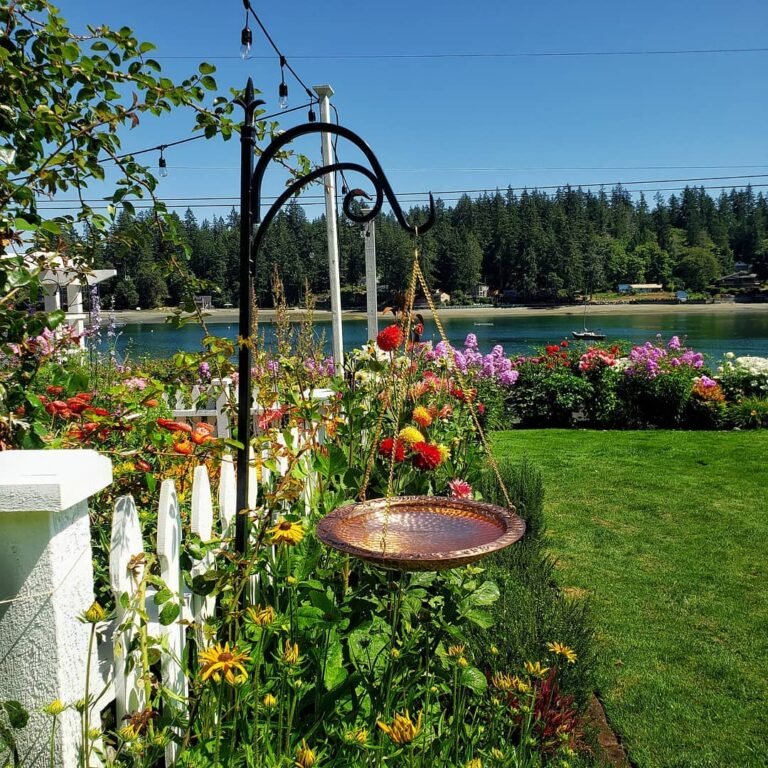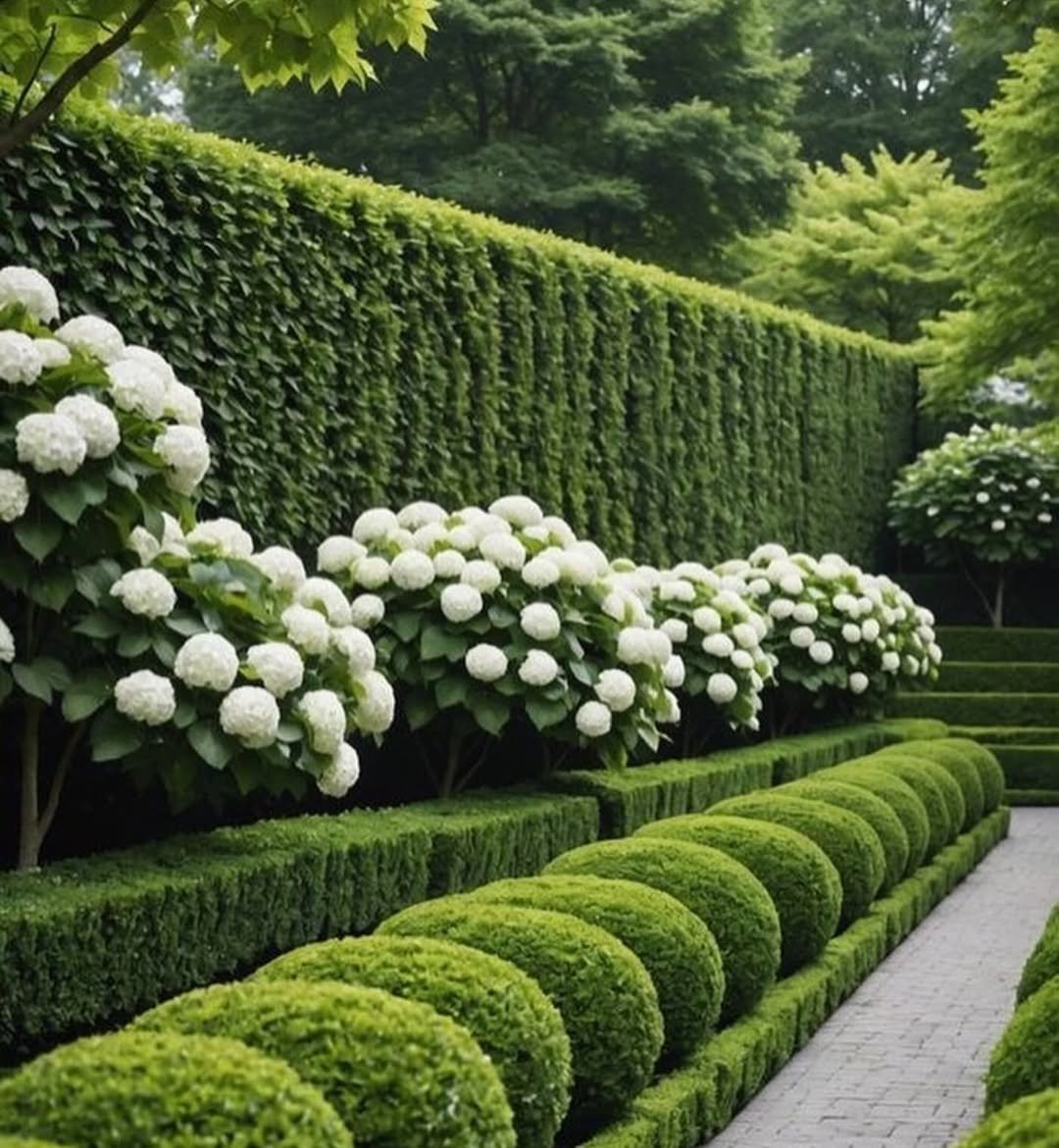
15 Garden Wall Ideas That Add Height and Interest
A garden wall does something that no fence, hedge, or planting scheme can quite replicate. It brings mass, permanence, and architectural weight to an outdoor space — the kind of solidity that makes a garden feel genuinely built rather than simply planted. A well-designed garden wall does not just mark a boundary or retain a slope. It creates enclosure, provides a backdrop for planting, captures and radiates warmth, supports climbing plants, and gives the garden a sense of having been considered from the ground up rather than decorated from the surface down.
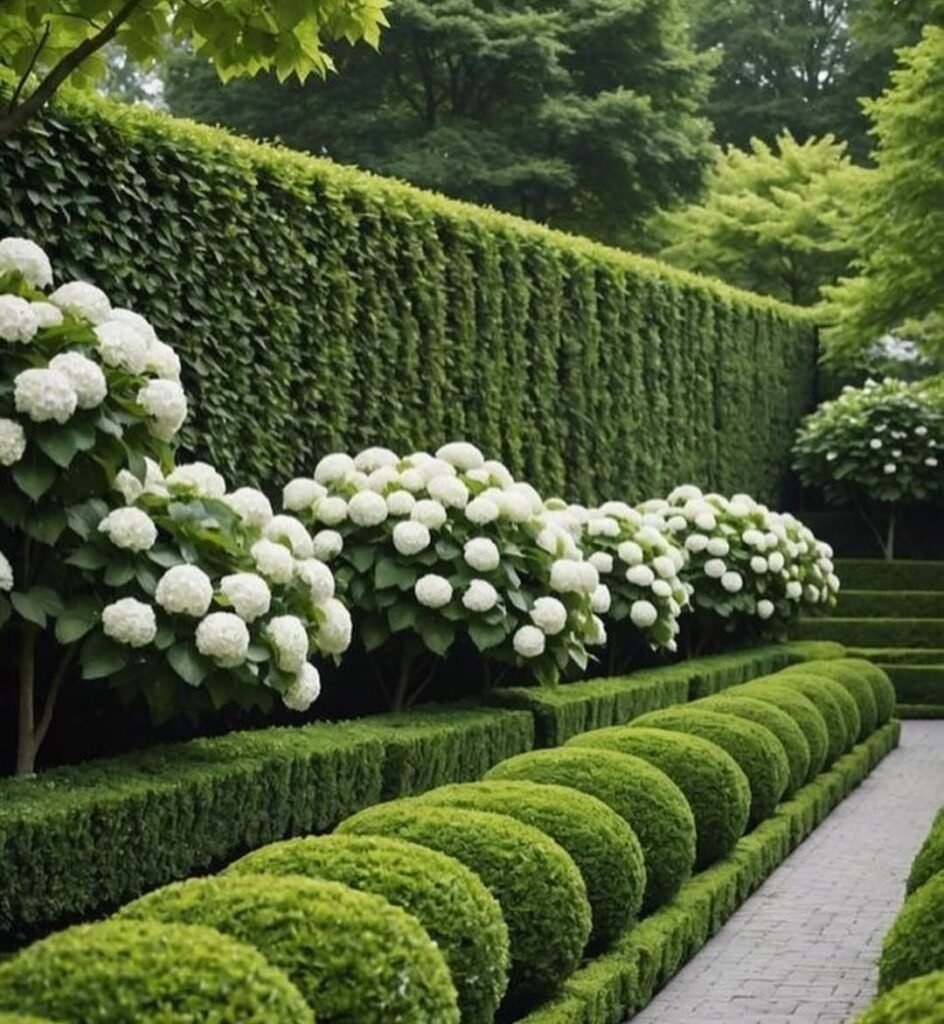
The ideas below cover every wall type, every material, and every purpose — from a simple rendered feature wall that transforms the mood of a courtyard to a complex gabion structure that doubles as a wildlife habitat. Each one treats the wall as a design opportunity rather than a structural necessity, with practical guidance on making it work as hard and as beautifully as possible.
1. The Rendered Feature Wall
Budget: $150 – $1,500
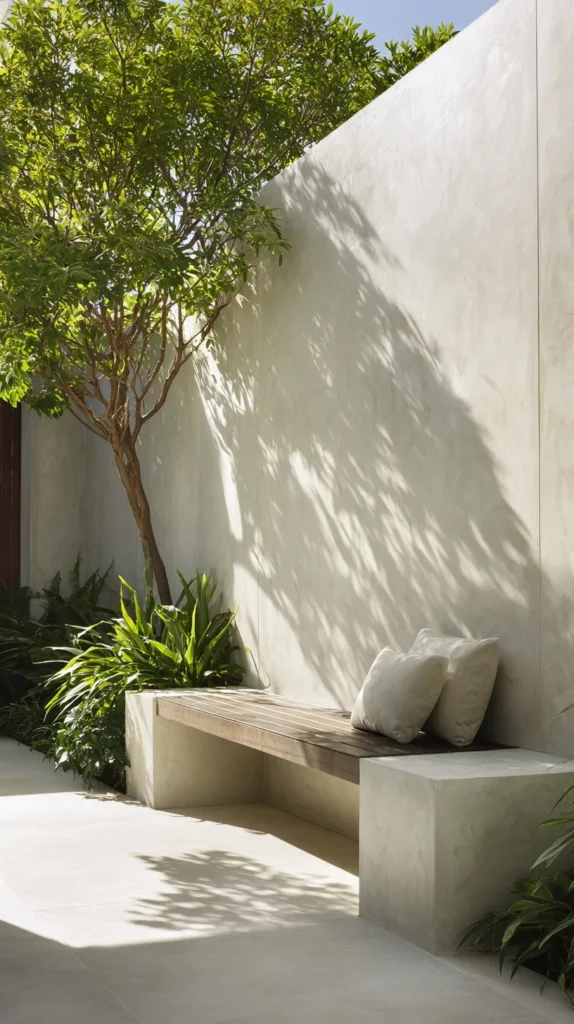
A single rendered and painted feature wall in a garden — one wall treated differently from its neighbours, finished in a strong colour or a textured render and used as a backdrop for planting or a focal point at the end of a view — is one of the most transformative and most affordable improvements a garden can receive. It costs a fraction of full garden landscaping and creates an immediate, powerful sense of design intention that plants alone take years to achieve.
Render a concrete block, brick, or existing rendered wall with a sand and cement scratch coat followed by a finish coat of smooth or textured render. Lime render produces a softer, more textural finish with a slight variation in tone that suits traditional and Mediterranean garden styles. Smooth sand and cement render sealed with exterior masonry paint in a deep colour — charcoal, forest green, deep ochre, or warm white — suits contemporary and modernist garden designs. Either approach costs $30–$80 in materials for an average garden wall.
Garden tip: Paint the rendered wall in a finish with a slight sheen rather than completely flat — an eggshell or satin exterior masonry paint reflects more light than a dead-flat finish, makes the colour appear richer and more saturated, and is significantly more resistant to algae and moss growth than a porous flat finish. The practical benefit and the visual improvement are both considerable for a small additional cost.
2. The Dry Stone Feature Wall
Budget: $100 – $800
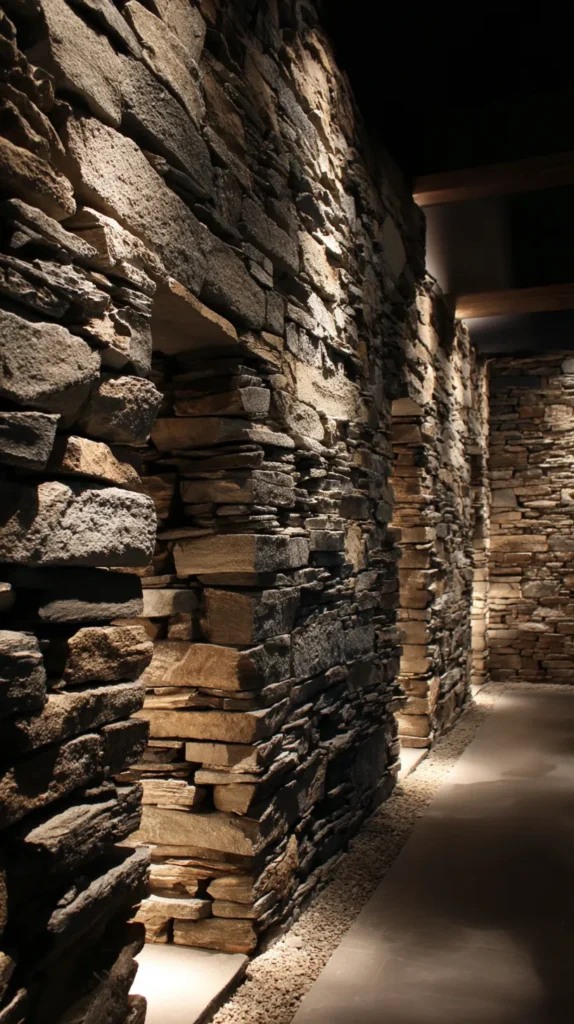
A dry stone wall built as a garden feature rather than a boundary or retaining structure — a low, freestanding wall that divides two areas of the garden, marks the edge of a terrace, or simply provides a visual anchor in an open space — brings a craft quality and a natural character to the garden that no other wall type achieves. The stacked stone surface, weathering with moss and lichen over time, the informal planting that colonises the gaps, and the ancient, settled quality of a well-built dry stone wall make it one of the most beautiful structural elements available in garden design.
A freestanding dry stone wall is built as a double-faced structure — two parallel faces of carefully selected stones leaning slightly toward each other, filled with smaller hearting stones in the middle, and tied together at regular intervals with long through stones that span the full width of the wall. The wall should be wider at the base than the top — a slight batter on both faces gives stability and the characteristic profile of traditional dry stone walling.
Garden tip: Finish the top of a freestanding dry stone wall with a course of upright flat stones — called cope stones — set on edge perpendicular to the wall length. Cope stones lock the top course in place, shed rainwater away from the wall interior, and give the wall a finished profile that distinguishes it from an unfinished pile of stones. A wall with cope stones looks complete and considered; one without looks as though something is missing.
3. The Climbing Plant Wall
Budget: $40 – $300
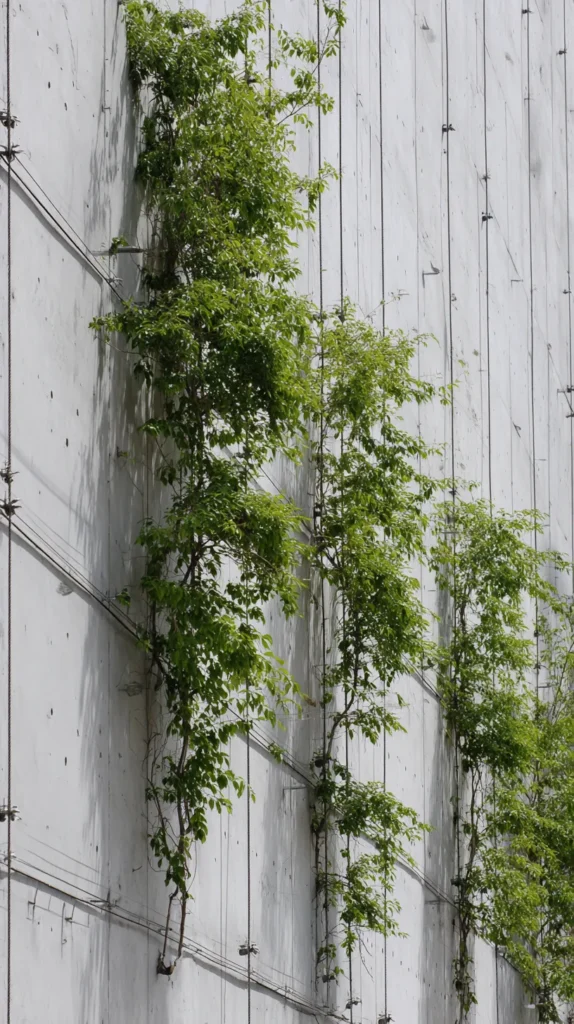
A garden wall covered in climbing plants is among the most beautiful sights in any outdoor space — the combination of the solidity and permanence of the masonry with the seasonal, living quality of the plants creates a surface of extraordinary depth and richness. Wisteria, climbing roses, clematis, hydrangea petiolaris, Virginia creeper, and jasmine all use a wall as a growing framework and in return give it colour, fragrance, and a living texture that the bare masonry could never possess alone.
Fix horizontal training wires at 30-centimetre vertical intervals across the wall face using galvanised vine eyes screwed or rawlbolted into the masonry — this creates a consistent framework that keeps plant stems away from the wall surface, allowing air to circulate and preventing the moisture retention that encourages algae and accelerates render deterioration. Space vine eyes at 50-centimetre horizontal intervals along each wire for adequate support.
Garden tip: Choose the climbing plant variety with reference to the wall’s orientation before purchasing anything. A south-facing wall suits wisteria, roses, ceanothus, and fremontodendron — all sun-lovers that perform best with maximum light and warmth. A north-facing wall suits hydrangea petiolaris, ivy, clematis montana, and parthenocissus — all shade-tolerant climbers that flower or fruit reliably without direct sun. The wrong plant on the wrong wall aspect will always underperform regardless of how well it is planted and maintained.
4. The Gabion Wall
Budget: $150 – $1,200
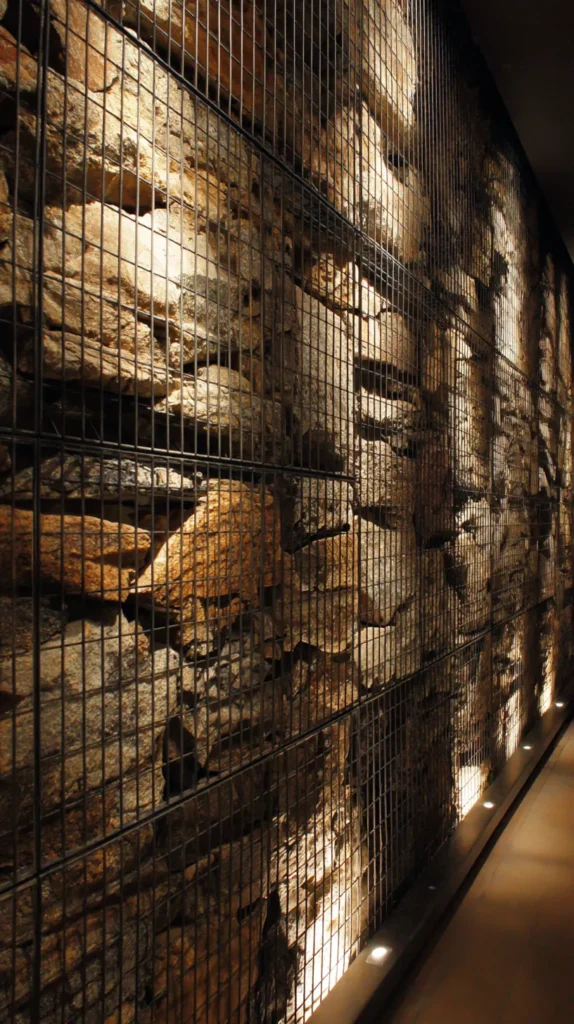
Gabion walls — steel wire mesh cages filled with rock, stone, recycled glass, or reclaimed brick and stacked to form a retaining or freestanding boundary — bring an honest, industrial character to a garden that suits contemporary, naturalistic, and urban garden styles with equal effectiveness. The combination of the structural steel mesh and the natural or reclaimed fill material has a raw, layered quality that improves with age — moss colonises the stone fill, the steel weathers to a darker tone, and the wall gradually settles into the garden as though it has always been there.
Standard gabion cage frames in 1×1×0.5 metre sizes cost $20–$50 each empty. The fill material determines both the cost and the character of the finished wall — local fieldstone is the cheapest and most naturalistic, recycled glass adds colour and translucency, reclaimed brick adds warmth and an urban character. Stack cages in a running bond pattern, staggering the vertical joints between courses exactly as a bricklayer would, for maximum structural stability.
Garden tip: Compact the fill material thoroughly as you fill each gabion cage rather than simply pouring it in loosely. A loosely filled gabion settles significantly after installation — sometimes by as much as 10–15 percent of its original height — which causes the cages to lose their crisp geometric form and the wall face to develop an uneven, bulging appearance. Filling in layers and compacting each layer produces a dense, stable fill that holds its form permanently.
5. The Brick Garden Wall With Planted Pockets
Budget: $200 – $1,500
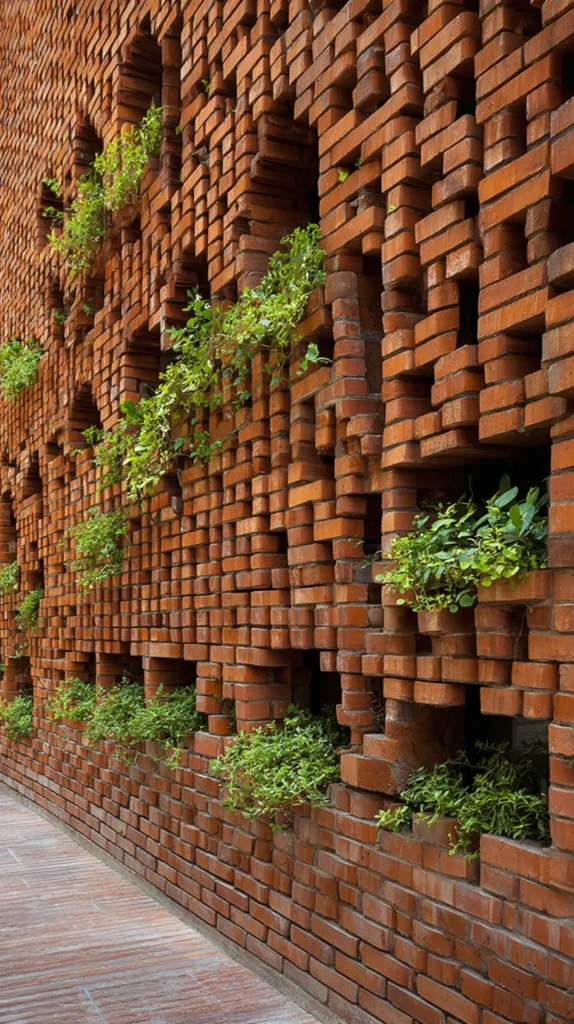
A brick garden wall built with deliberate planting pockets — single bricks omitted at intervals across the face, the cavity filled with free-draining compost — becomes a vertical garden as well as a structural boundary. Aubrieta, alyssum, thyme, sedums, wallflowers, erigeron, and trailing pelargoniums planted into the pockets cascade down the brick face in a flowing curtain of colour and texture that softens the hard edge of the masonry and gives the wall a living surface that changes with every season.
The planting pockets need to be planned and built in at the construction stage — attempting to add them to a completed wall requires cutting out individual bricks, which is time-consuming and risks destabilising the surrounding courses. Brief the bricklayer to omit specific bricks at planned positions across the wall face and fill the cavity behind each pocket with free-draining compost before the adjacent courses are laid.
Garden tip: Position planting pockets on the sunny face of the wall rather than the shaded face wherever possible. The warmth of a sunny brick wall radiates heat back to the plants in the pockets and creates a microclimate that extends the flowering season of most wall pocket plants by several weeks at both ends of the summer. A shaded wall pocket supports fewer species and produces a less generous flowering display than the same pocket on a sun-facing surface.
6. The Mosaic Feature Wall
Budget: $80 – $500
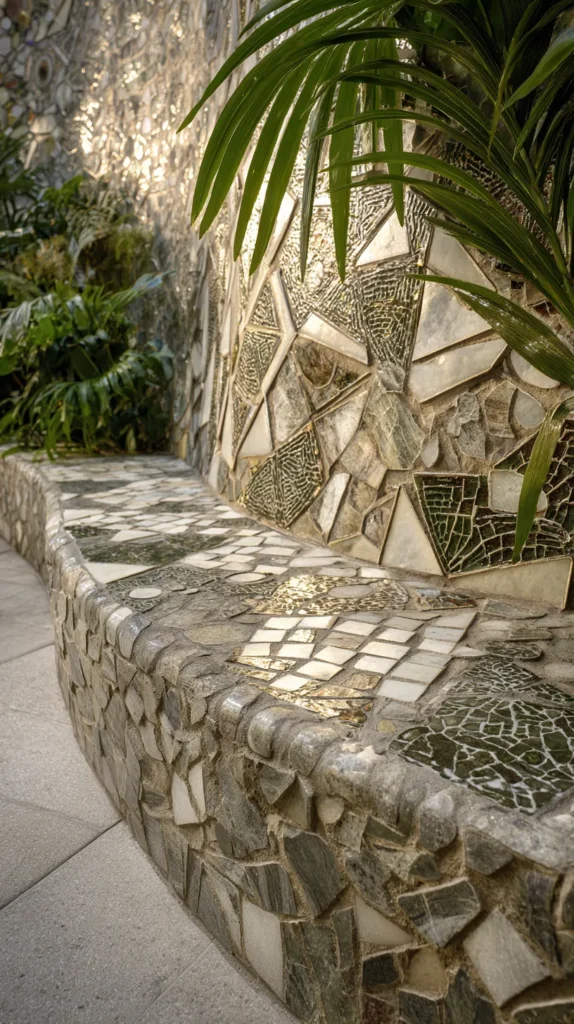
A section of garden wall covered in hand-laid mosaic — pebble mosaic, broken ceramic, vitreous glass tile, or a combination of all three — becomes a permanent artwork that gives the garden a level of craftsmanship and personal character that no other wall treatment achieves. A mosaic feature wall can be as simple as a geometric pattern in two contrasting colours or as complex as a full figurative scene — both approaches produce a result that is genuinely unique to the garden that contains it.
Use exterior-grade tile adhesive and weatherproof grout throughout — standard interior products fail in frost within a single season. Mount the mosaic on cement backer board fixed to the wall surface rather than directly onto render or brick — the backer board provides a stable, non-porous substrate that adhesive bonds to reliably and makes the mosaic panel removable if needed.
Garden tip: Design the mosaic at its actual finished size on paper before cutting a single tile. A small sketch scaled up to full wall size almost always reveals proportion and spacing issues that are entirely invisible at thumbnail scale. A full-size paper template pinned to the wall surface, used as a laying guide, saves hours of on-wall adjustment and produces a more confident, resolved composition than designing directly on the wall surface.
7. The Corten Steel Retaining Wall
Budget: $300 – $2,500
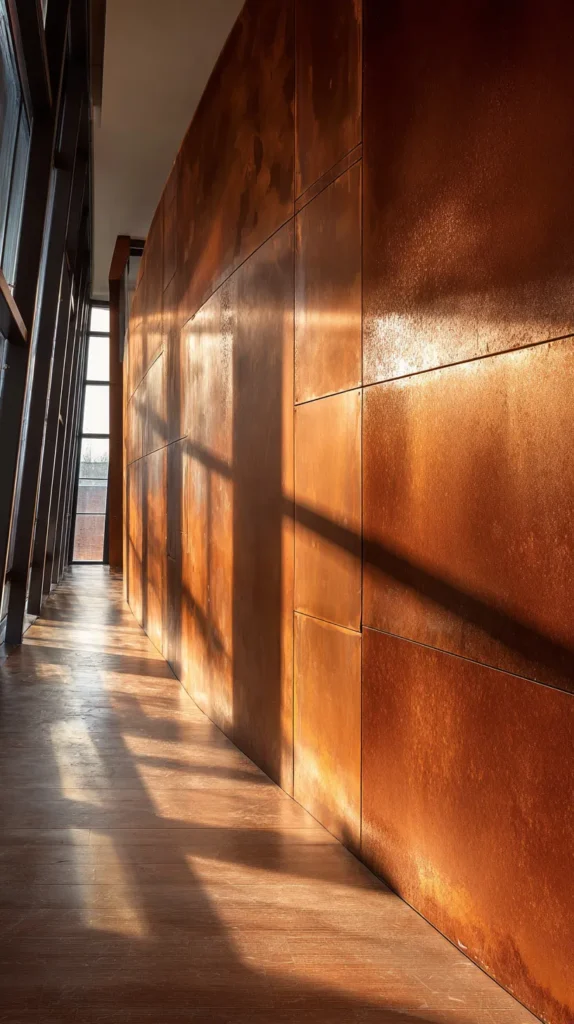
Corten steel panels used as a retaining wall — holding back a raised bed, a terraced slope, or an elevated planting area — bring the warm, amber-brown patina of weathering steel to a structural element that most gardens build from timber, block, or concrete. The rich, layered rust surface of aged corten is genuinely beautiful alongside both pale stone paving and lush planting, and the material requires no painting, no sealing, and no maintenance beyond the initial weathering period.
Corten retaining wall panels are fabricated to any height and length from 3–5 millimetre sheet steel with folded or welded return edges that anchor into the soil behind. A typical raised bed retaining wall in corten at 400 millimetres high costs $80–$200 per linear metre fabricated. Taller retaining walls require engineer specification to ensure the panel thickness and anchoring system are adequate for the soil pressure they will resist.
Garden tip: Allow corten steel retaining walls to weather fully for six to eight weeks before planting adjacent beds with pale-flowered or white-flowered plants. Freshly weathering corten weeps rust-coloured water that will stain pale flowers, light-coloured stone, and concrete surfaces in its immediate vicinity. Once the patina stabilises — typically after six to eight weeks of weathering — the rust runoff stops entirely and the material becomes completely clean to work beside.
8. The Living Wall
Budget: $200 – $2,000
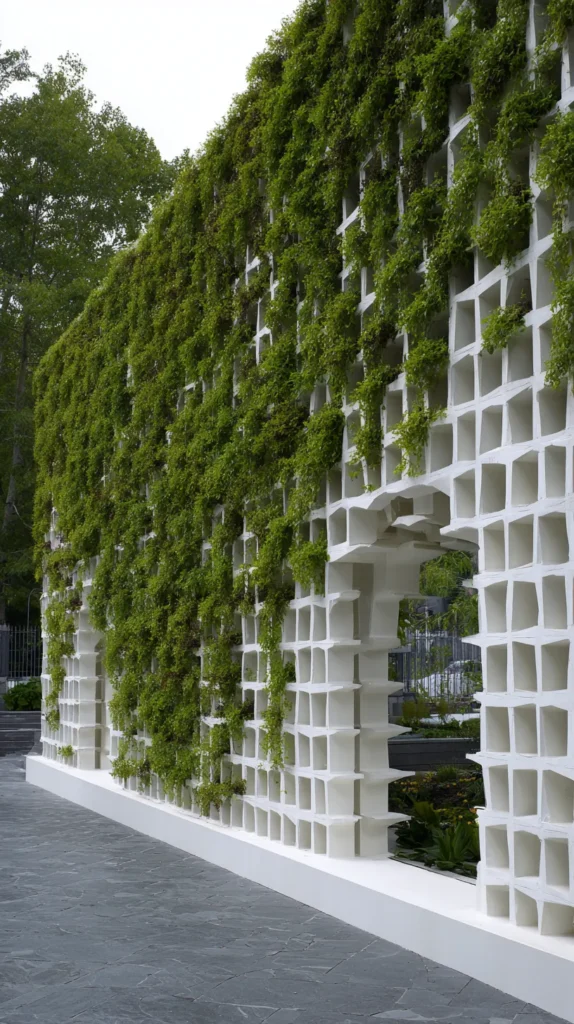
A living wall — a vertical surface planted with a dense matrix of plants in a modular growing system — is the most ecologically rich and visually dramatic wall treatment available in contemporary garden design. A well-established living wall covered in ferns, sedums, heucheras, grasses, herbs, and trailing perennials creates a surface of extraordinary colour and texture that changes through every season and provides habitat for insects and beneficial predators throughout the year.
Modular pocket planter systems designed for wall mounting cost $80–$200 per square metre installed. Felt pocket systems are the most affordable entry point. Rigid modular tray systems with integrated irrigation are the most reliable for long-term performance. Any living wall over approximately 4 square metres benefits significantly from an integrated drip irrigation system — hand watering a large living wall is time-consuming and inconsistent.
Garden tip: Choose plants for a living wall based on the wall’s orientation and light conditions before considering colour or visual effect. A living wall planted with sun-loving species on a north-facing wall will struggle and decline regardless of how well the irrigation system performs. Match the plant palette to the actual light conditions — shade-tolerant ferns, hostas, and heucheras for a north-facing wall, drought-tolerant sedums, salvias, and herbs for a south-facing one — and the wall will establish quickly and look good indefinitely.
9. The Flint and Brick Decorative Wall
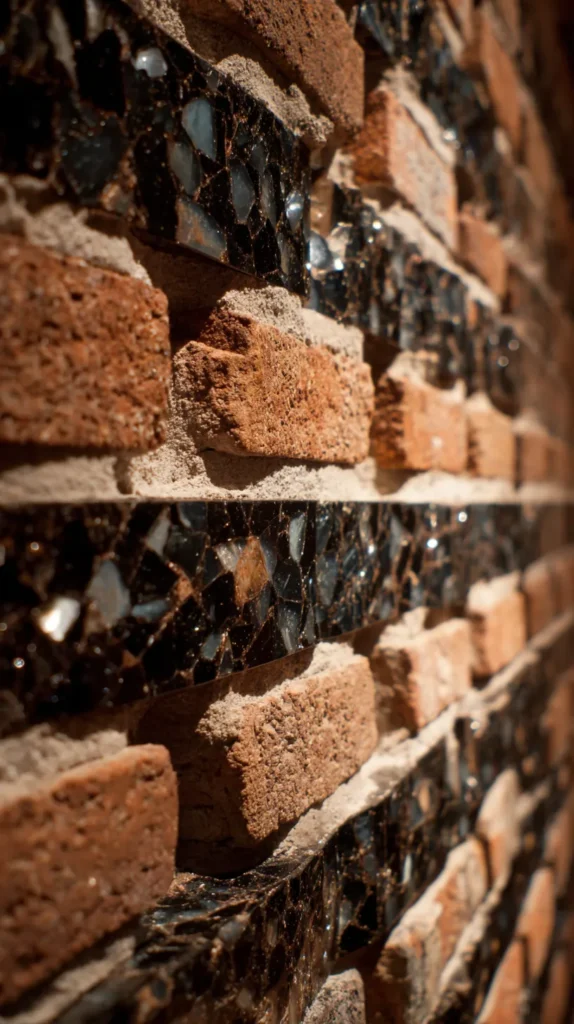
Budget: $300 – $2,000
A wall built from a combination of flint knapping and brick — the traditional vernacular building technique of southeast England and parts of northern Europe — creates a surface of extraordinary visual richness and regional character. The deep, glossy black of split flint set against the warm red of traditional brick, in patterns ranging from simple flush flint panels within brick quoins to elaborate diaper patterns of contrasting flint and brick, produces a wall surface that is simultaneously ancient and endlessly detailed.
Knapped flint — flint split to reveal the glassy black interior face — costs $80–$150 per square metre of wall face. The technique requires a skilled bricklayer familiar with traditional flint walling methods, which adds to the cost but produces a result with the quality of genuine craftsmanship. A single section of knapped flint and brick used as a feature panel within a simpler boundary wall balances the craft investment with the overall budget.
Garden tip: Use a slightly recessed mortar joint rather than a flush or proud joint on a flint and brick wall. A recessed joint — raked back 5–8 millimetres from the face — creates shadow lines that emphasise the texture and profile of the individual flint faces and brick courses, making the surface read with far more depth and character than a flush-pointed wall where the mortar fills the joint to the face of the materials.
10. The Espalier Wall Garden
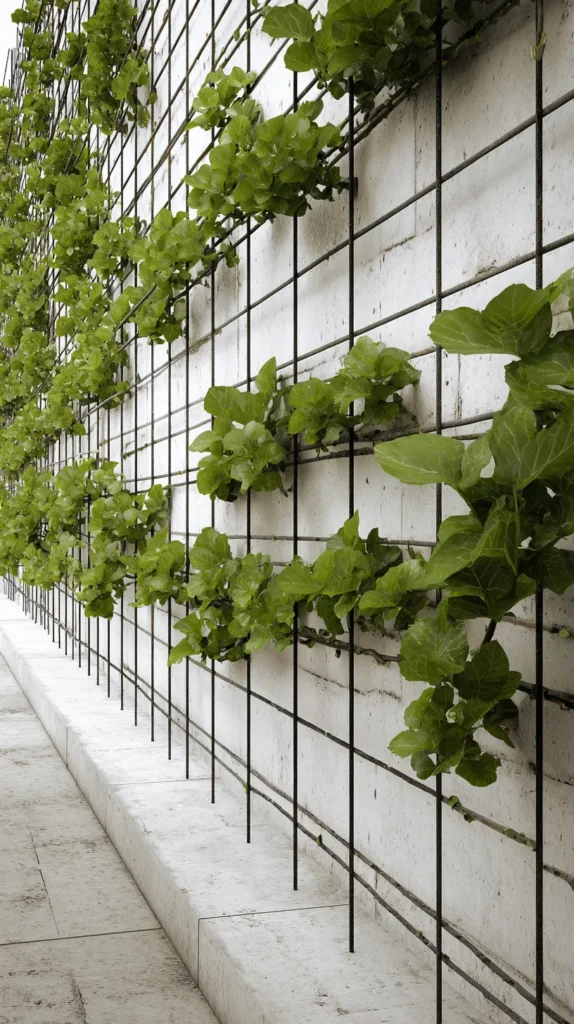
Budget: $80 – $500
A garden wall used as a framework for espaliered fruit trees — apples, pears, figs, peaches, and cherries trained flat against the wall with their branches spread horizontally on wires — creates a productive and visually extraordinary wall treatment that improves in beauty and in fruit yield with every passing year. The warmth stored and radiated by a masonry wall creates a microclimate that ripens fruit more reliably than open ground, and the flat, two-dimensional form of the espalier displays the blossom, the developing fruit, and the autumn colour of the leaves in a way that a freestanding tree never can.
Fix galvanised training wires at 40-centimetre vertical intervals across the wall face using vine eyes rawlbolted into the masonry. A young feathered maiden fruit tree planted at the base of the wall provides the initial framework from which horizontal tiers are trained and tied over three to four years. The investment of patience in the early training years produces a wall covering that lasts decades.
Garden tip: Paint or render the wall behind espalier fruit trees in a pale, reflective colour — white, cream, or pale grey — before planting. A pale wall reflects more light and radiated heat onto the back of the trained branches than a dark wall, which improves fruit ripening significantly, particularly for peaches, nectarines, and other sun-hungry crops that need every available degree of warmth to ripen fully in a cool climate.
11. The Low Boundary Wall With Planting Gap
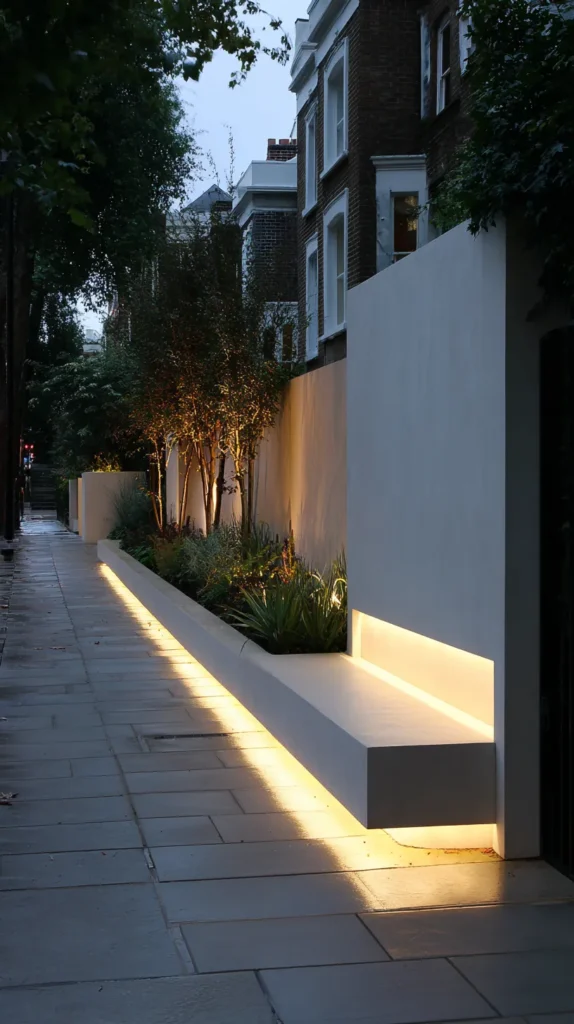
Budget: $100 – $600
A low boundary wall — 60 to 90 centimetres high — built with a deliberate planting gap along its top, either as a recessed trough channel filled with free-draining compost or as a series of drilled planting holes through the cap course, allows a continuous run of planting along the top of the wall that softens the hard edge between the garden and the street, driveway, or neighbouring space. Lavender, rosemary, thyme, sedums, and trailing roses all perform beautifully in wall-top planting positions.
A continuous channel trough along the top of a low wall — 15 centimetres wide and 20 centimetres deep, formed in the top course of blockwork or brickwork — costs very little additional to include at the construction stage and creates a permanent planted element that defines the wall as a garden feature rather than simply a boundary structure. Line the trough with polythene pierced for drainage before filling with free-draining compost.
Garden tip: Choose drought-tolerant plants for wall-top planting troughs — the elevated, exposed position and limited soil volume make wall-top planters significantly drier than ground-level beds, and species that require consistent moisture will struggle and decline in a hot summer regardless of how generously they were planted. Lavender, sedum, thyme, and sempervivum are all naturally adapted to the free-draining, drought-prone conditions of a wall-top position.
12. The Stacked Slate Feature Wall
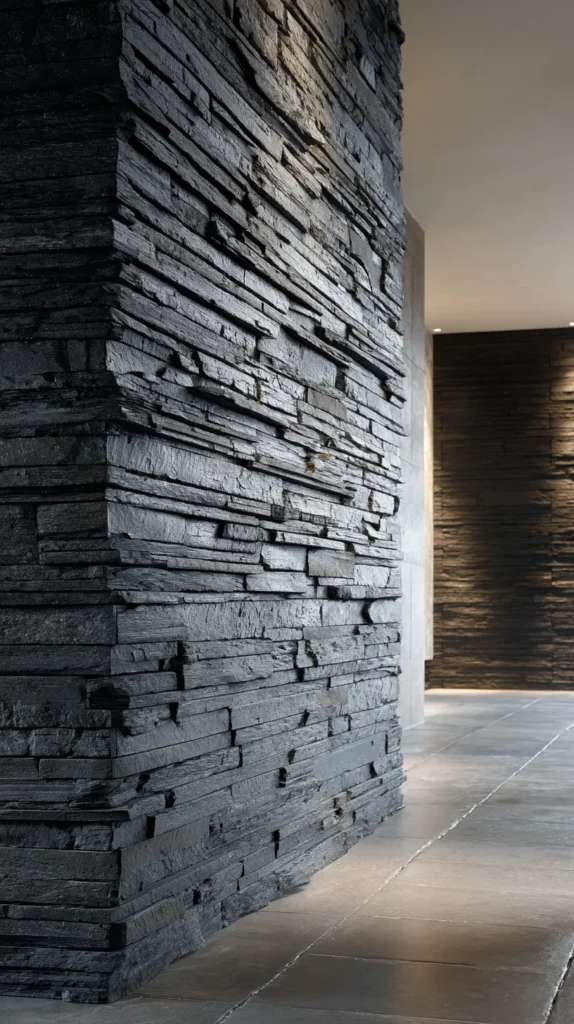
Budget: $150 – $1,000
Thin slates stacked horizontally in tight, even courses — either dry-stacked without mortar or pointed with a recessed joint — create a wall surface with a linear, graphic quality that suits contemporary and modernist garden designs particularly well. The dark, metallic tone of natural slate, the precision of the horizontal coursing, and the slight variation in thickness between individual slate pieces produces a wall texture that is simultaneously highly controlled and genuinely natural.
Welsh or Lakeland slate costs $60–$150 per square metre of wall face. The characteristic horizontal layering of slate — the natural result of its metamorphic geological formation — means that slate naturally presents in thin, flat pieces perfectly suited to horizontal coursing. A stacked slate wall looks as though the stone is expressing its own geological nature, which is exactly what gives it such a convincing, natural quality.
Garden tip: Source slates of a consistent length within each course but vary the length between courses for a more naturalistic appearance. A wall where every slate is cut to identical dimensions looks machined rather than natural; one where the individual slate lengths vary within a consistent overall coursing height reads as genuine stone walling rather than manufactured cladding.
13. The Wall With Integrated Seating
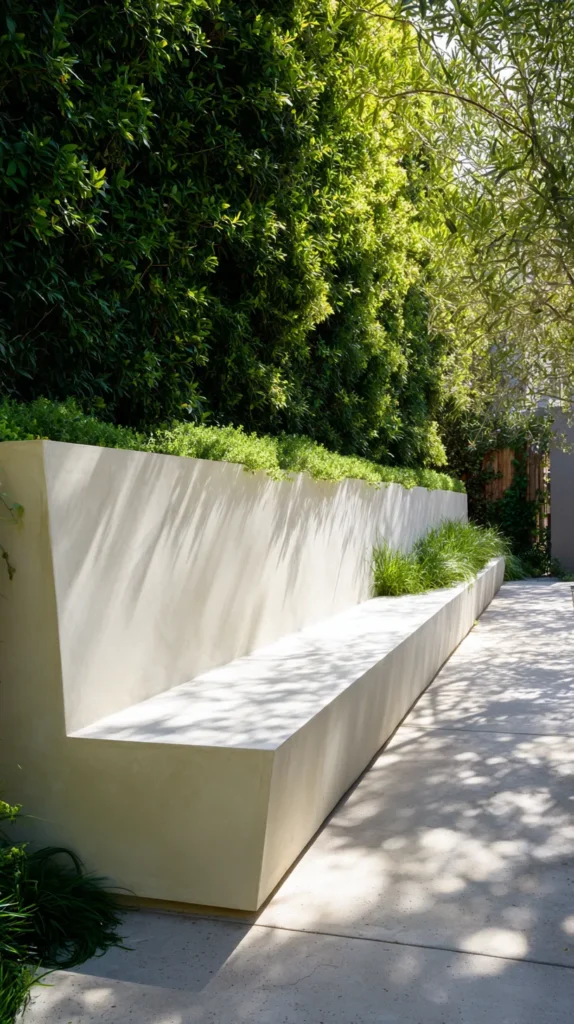
Budget: $300 – $2,500
A garden wall designed from the outset to incorporate integrated seating — a continuous stone, concrete, or timber bench cap along the top of a low retaining wall, or a recessed alcove seat built into a freestanding wall — creates an outdoor space with the functional richness of a well-designed interior room. The wall provides the seat back and the visual enclosure; the bench provides the seating surface; and the combination creates a place to sit that feels deliberately made for the purpose rather than furniture placed against a wall as an afterthought.
A low retaining wall of 45–50 centimetres — the standard bench height — with a coping of smooth granite, honed limestone, hardwood timber, or poured concrete provides a comfortable, permanent seating surface that requires no cushions in dry weather and no storage at the end of the season. The wall does the structural work; the coping does the seating work; and the whole thing is a single, integrated piece of garden architecture.
Garden tip: Round the front edge of any stone or concrete wall bench coping to a minimum radius of 25 millimetres. A sharp 90-degree arris on the front edge of a seating surface is uncomfortable against the backs of the thighs and causes people to perch forward rather than sitting comfortably back. A rounded front edge — easily achieved with a stone mason’s angle grinder and a bullnose grinding pad — makes the difference between a seat people use for five minutes and one they use for hours.
14. The Planted Retaining Wall Cascade
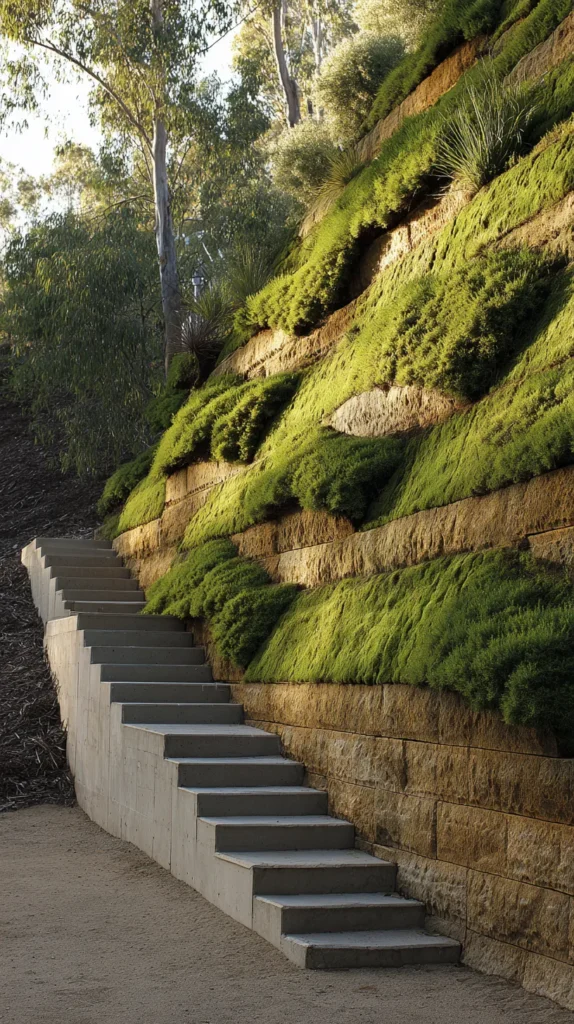
Budget: $150 – $1,000
A retaining wall on a sloped garden planted so that the planting at the top of the wall cascades down over the wall face — roses, wisteria, clematis, ivy, and trailing rosemary spilling from the upper level down across the masonry surface — creates one of the most romantic and visually generous effects available in garden design. The contrast between the solid, permanent wall and the soft, seasonal cascade of planting that pours over it gives the garden a sense of abundance and a quality of light in the planting that upright border planting never quite achieves.
Plant cascading species at the top edge of the retaining wall where their root systems have access to the full depth of the upper terrace soil rather than the limited growing medium of a wall pocket. Given a generous root run, cascading climbers and trailing shrubs establish quickly and begin their downward journey across the wall face within two to three seasons.
Garden tip: Guide the initial stems of cascading plants over the wall edge by tying them to a small peg or hook fixed to the top of the wall face in the first season. A young plant will not cascade naturally until its stems are long enough and heavy enough to fall under their own weight — a gentle initial guidance over the wall edge establishes the cascading habit early and encourages the plant to direct its new growth downward across the wall face rather than upward away from it.
15. The Illuminated Garden Wall
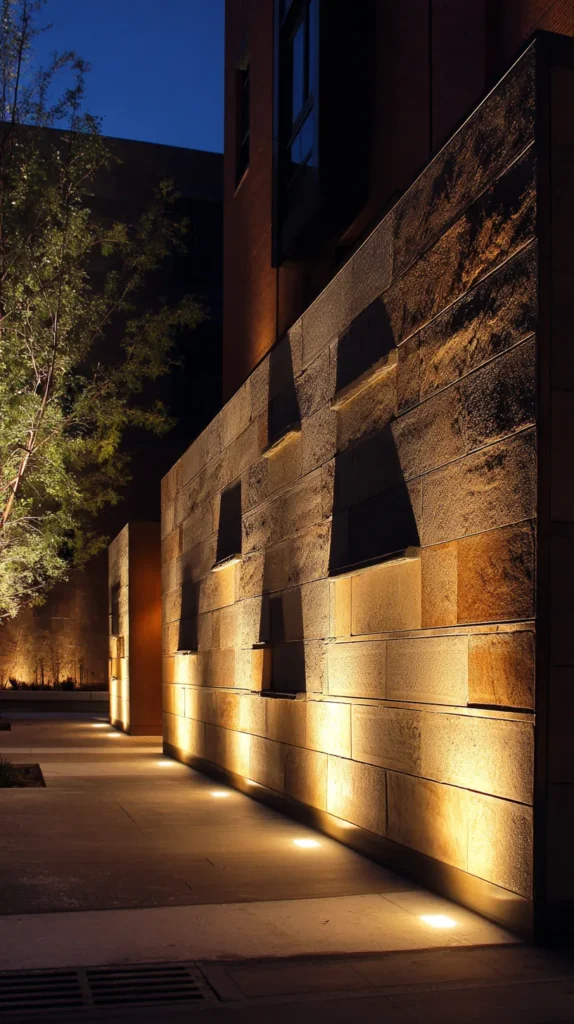
Budget: $150 – $1,500
A garden wall designed from the outset for evening illumination — with recessed uplights set into the ground at the wall base, grazing lights fixed to the wall face that wash across its texture, or backlit panels that glow from behind a translucent material — creates an outdoor space that is as beautiful and as inviting after dark as it is in daylight. Most garden walls are invisible at night; a wall designed for illumination becomes the defining feature of the evening garden.
Recessed LED uplights set in the paving at the base of a textured wall — a dry stone wall, a stacked slate wall, a rendered surface with board-formed texture — cast raking light across the surface that reveals every bump, joint, and shadow in a way that flat overhead lighting entirely misses. The texture that makes these walls beautiful in daylight becomes even more dramatic under a raking uplight at night.
Garden tip: Use a warm white light source at 2700K colour temperature for wall illumination rather than cool white or daylight spectrum. Warm white renders the natural colours of stone, brick, and render accurately and creates a welcoming, golden quality of light that suits a garden wall in the evening. Cool white makes masonry look cold, flat, and slightly clinical — exactly the opposite of the warmth a well-lit garden wall should create after dark.
A garden wall is always more than its function. It is a surface that defines the character of the space it encloses, a backdrop that determines how every plant in front of it reads, and a structural presence that gives the garden a permanence and weight that planting and furniture alone can never provide. Invest in it thoughtfully, build it properly, and treat its surface as a design opportunity — and the wall will repay that investment for as long as the garden exists.