14 Zen Garden Ideas That Feel Peaceful and Minimal
There is something quietly transformative about a Zen garden. Rooted in Japanese Buddhist philosophy, these contemplative spaces ask very little of us — only that we slow down, look closely, and let the mind follow the rake.
Whether you have a sprawling backyard or a tabletop corner, the principles remain the same: simplicity, intention, and the gentle art of doing almost nothing beautifully.
What follows are 14 ideas drawn from traditional and modern interpretations of the Zen garden — each one designed to guide you toward something that feels effortless, even if it takes a little work to build. Alongside each style, we have included practical guidance and estimated costs so you can plan with confidence.
1. The Classic Karesansui (Dry Rock Garden)
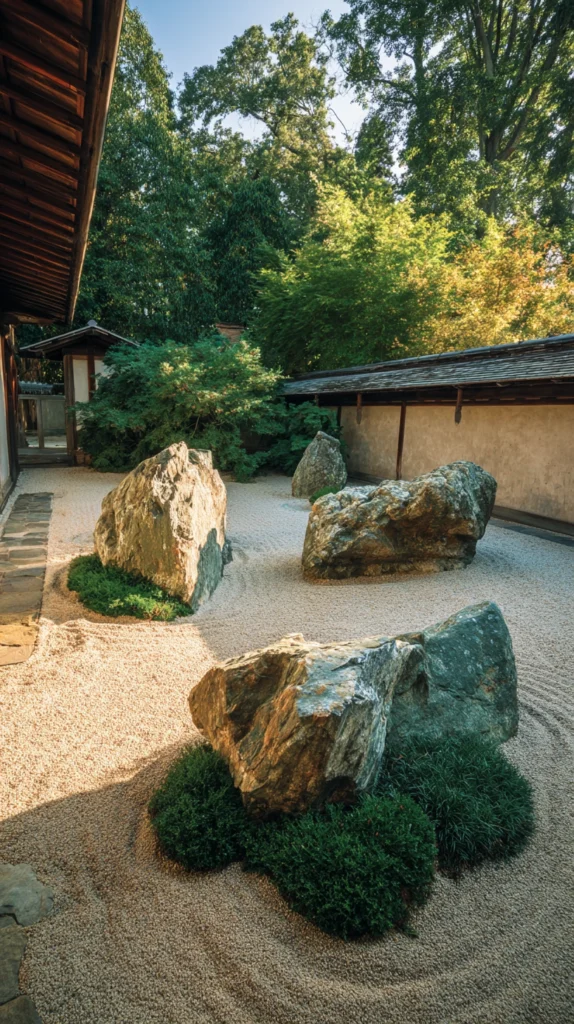
Budget: $150 – $600
The karesansui is the archetype — white or grey gravel raked into rippling wave patterns, punctuated by a few carefully chosen stones. Originating in 15th-century Japan, gardens like Ryōan-ji in Kyoto embody the idea that absence itself can be a form of beauty. The raked lines suggest water, movement, and the flow of time, yet the materials are utterly still.
For a home version, you will need decomposed granite or fine pea gravel (roughly $40–$80 per cubic yard), three to five weathered stones or boulders ($20–$150 depending on size), and a simple wooden or metal rake. A cedar edging border keeps the gravel contained and costs around $50–$100 for a 6×8 ft space.
Design tip: Use an odd number of stones — three or five — as asymmetry feels more natural and more Zen than symmetry. Rake in slow, parallel curves rather than geometric grids. The imperfection of the line is part of the practice.
2. The Moss and Stone Garden
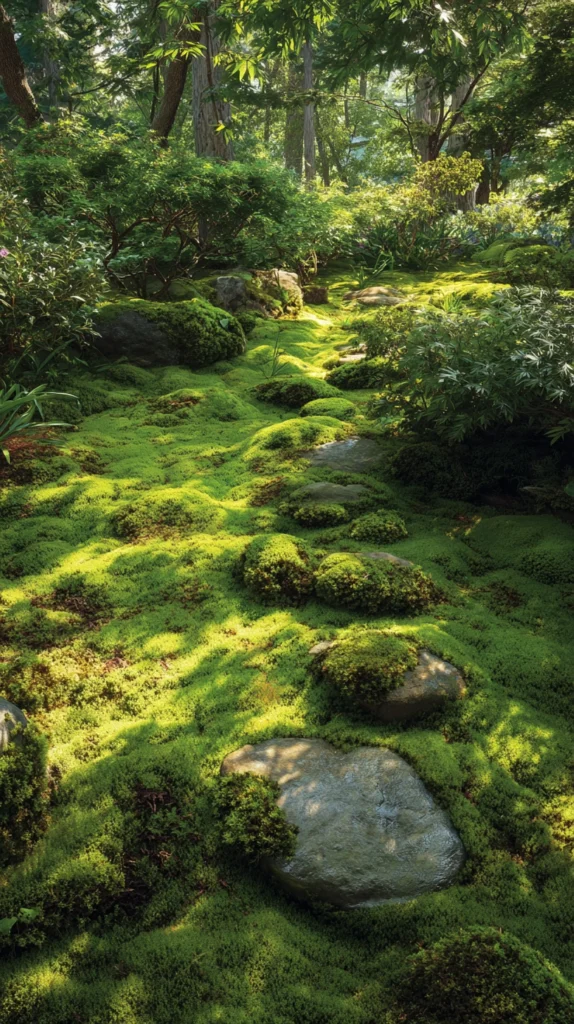
Budget: $80 – $400
Where karesansui is all sand and stone, the moss garden is soft and yielding. Thick, velvety moss carpets the ground between stepping stones, absorbing sound and light in equal measure. This style thrives in humid, partially shaded environments — making it surprisingly well-suited to many home backyards.
Moss plugs or sheets can be purchased from garden centres for $15–$50 per square foot. Pair with flat stepping stones ($2–$15 each) set 18–24 inches apart. The garden requires little maintenance beyond occasional misting during dry spells and removal of fallen leaves before they smother new growth.
Design tip: Avoid fertiliser — moss prefers lean, acidic soil. To establish it quickly, blend yogurt with moss fragments and paint the mixture onto moist soil. Within a few weeks, new growth begins to appear.
3. The Minimalist Water Basin (Tsukubai)
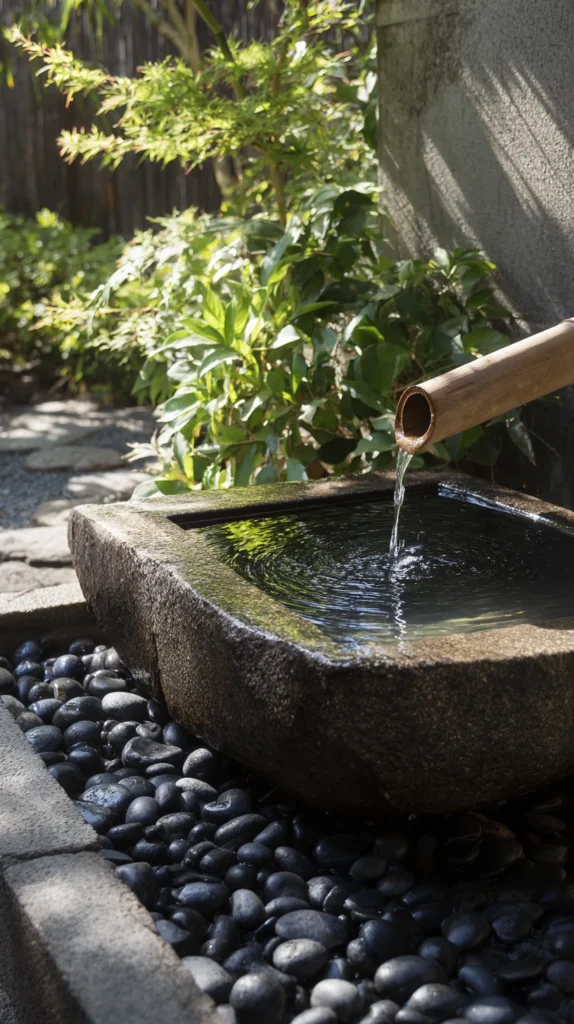
Budget: $120 – $900
The tsukubai is a stone water basin traditionally placed near a tea house entrance, requiring guests to crouch low — a gesture of humility before entering. In a garden, even a single basin filled with still water can anchor an entire composition. The sound of a bamboo spout releasing small drops into the bowl creates a rhythmic quiet that dissolves distraction.
Pre-carved granite tsukubai basins range from $80 to $500. Pair with a submersible water pump ($25–$60), a bamboo or copper spout, and smooth black river pebbles at the basin base. Installation takes an afternoon and requires no specialist skills.
Design tip: Position the basin so it catches dappled light rather than full sun — algae grows faster in direct sunlight. A few drops of barley straw extract naturally inhibits algae without chemicals.
4. Bamboo Screen and Gravel Path
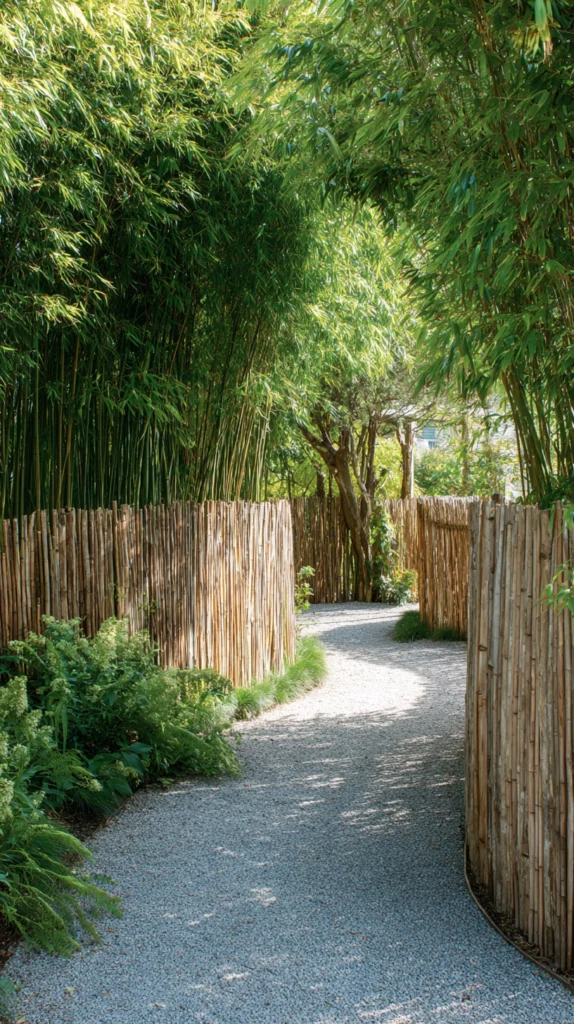
Budget: $200 – $800
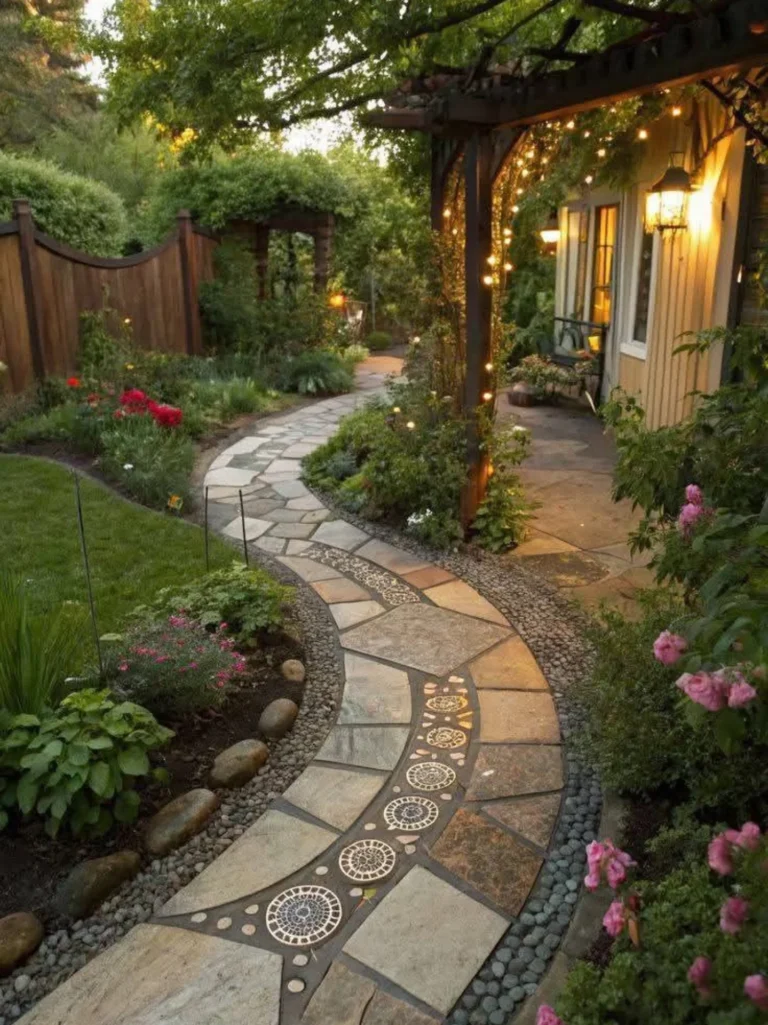
A bamboo fence or screen creates instant enclosure, turning even a small corner of a garden into something that feels private and contained. Combined with a simple gravel path, it forms a journey — a beginning, a middle, and an end. Movement through space is one of the most underrated elements of Zen garden design.
Rolled bamboo screening costs approximately $20–$60 per linear foot. Opt for natural, unbleached bamboo tied with black twine. Line your path with compacted decomposed granite ($30–$50 per bag) and edge with simple steel landscape edging ($1–$2 per foot) to keep lines clean.
Design tip: Let the path curve gently rather than run in a straight line. In Zen philosophy, a curved path slows the walker and encourages presence. Even a slight bend changes how a small space feels.
5. The Indoor Tabletop Zen Garden
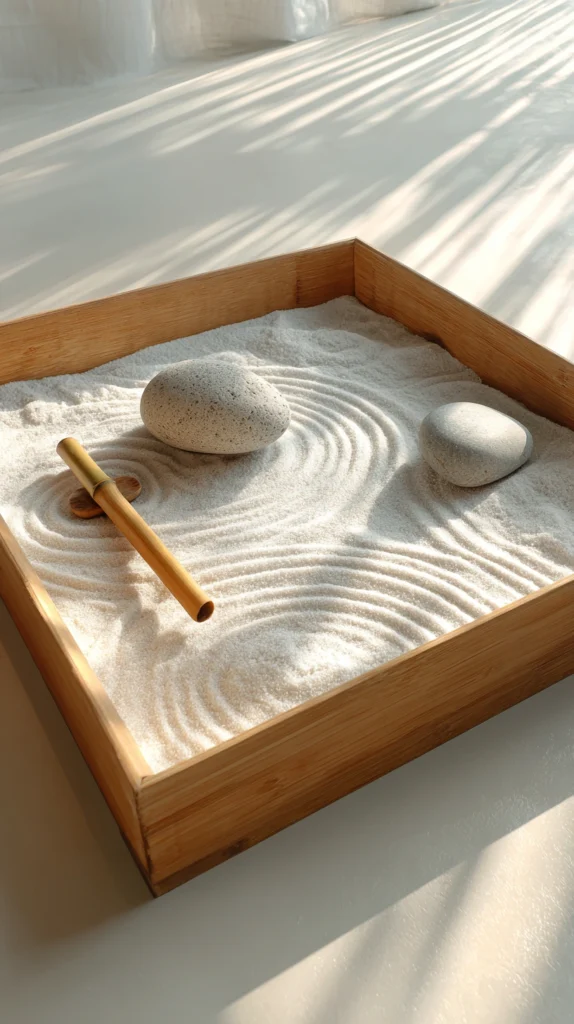
Budget: $25 – $150
Not everyone has outdoor space, and the tabletop Zen garden makes the philosophy entirely portable. A shallow wooden or lacquer tray filled with fine white sand, two or three smooth stones, and a small bamboo rake brings the meditative quality of the karesansui to a desk, windowsill, or bedside table. Many people find the act of raking sand for five minutes each morning more grounding than any other ritual.
Complete tabletop kits are sold at most lifestyle stores for $25–$80, or you can assemble your own with a reclaimed tray and craft sand ($8–$15). Customise with a single dried sprig or a small bonsai figurine if the plain arrangement feels too spare at first.
Design tip: Use white or pale grey sand rather than coloured craft sand — the neutrality is the point. Coloured sand turns the garden decorative rather than contemplative.
6. Stone Lantern as Focal Point
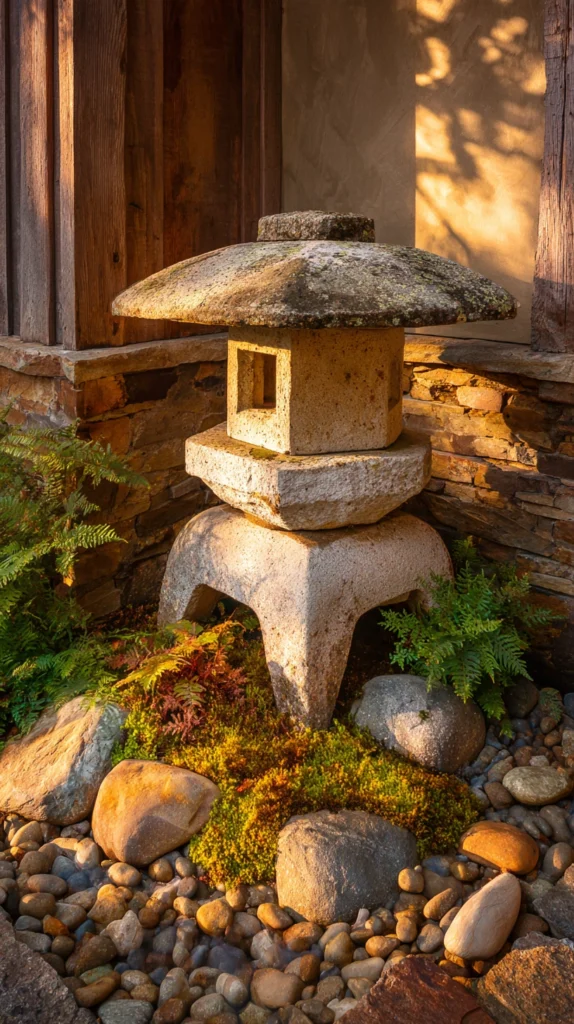
Budget: $80 – $600
The ishidōrō, or stone lantern, is one of the most iconic elements in Japanese garden design. Originally placed along temple paths to guide visitors, it now functions primarily as a sculptural presence — something to organise the garden around. Even unlit, a well-positioned lantern casts a kind of gravity over its surroundings, making everything else feel intentional.
Cast concrete lanterns start at around $80. Hand-carved granite versions run from $300 to $600 or more. Surround the base with moss or a cluster of black river stones to integrate it naturally. A small LED insert or battery-powered candle creates a soft amber glow without any wiring.
Design tip: Resist the urge to centre the lantern. Place it at one-third from a corner or edge — the slight offset creates tension and visual interest that a central placement never achieves.
7. The Gravel and Evergreen Composition
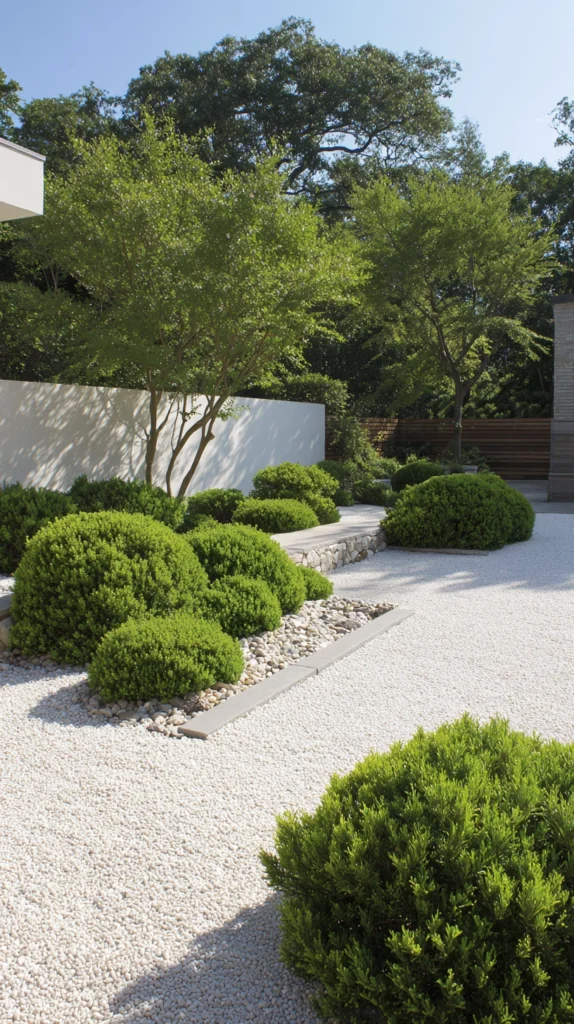
Budget: $300 – $1,200
A bed of pale gravel punctuated by slow-growing evergreens — Japanese black pine, dwarf hinoki cypress, or clipped azalea — creates a garden that changes very little from season to season. This constancy is itself a form of peace. Where most gardens perform in spring and retreat in winter, the evergreen Zen garden remains present and composed year-round.
Japanese black pines cost $50–$200. Dwarf conifers and sculpted boxwood run $30–$150 each. Plan for three to five plants maximum in a typical garden bed — density defeats the purpose. White or charcoal-grey granite chippings ($35–$70 per bag) complete the palette.
Design tip: Prune your evergreens once a year in late spring, removing only what disrupts the silhouette. The slow, deliberate act of pruning is as much a part of this garden style as the plants themselves.
8. Borrowed Scenery (Shakkei) Garden
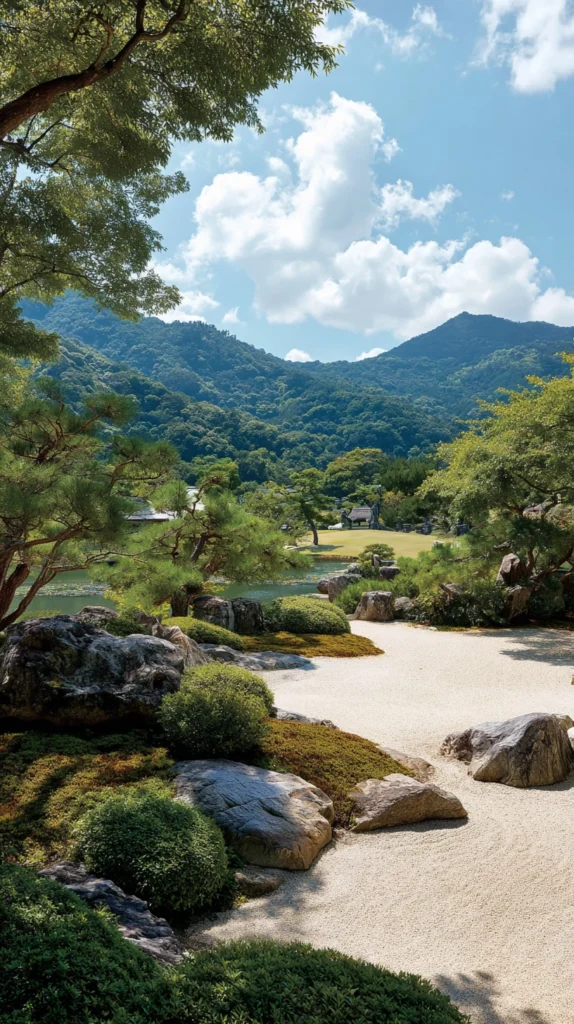
Budget: $100 – $500
Shakkei, or borrowed scenery, is the Japanese technique of framing and incorporating distant landscape — a hillside, a tree line, a neighbour’s cherry blossom — into the visual composition of your garden. Rather than closing the garden off, you open it to what lies beyond. The garden becomes a conversation between near and far.
This approach requires almost no budget for the distant element itself. The cost lies in creating a clean foreground: a flat gravel plane ($100–$300), a simple low hedge ($50–$200 for box or yew), and the removal of anything visually distracting between you and the borrowed view.
Design tip: Identify the best borrowed view from your most common vantage point — usually a bench or doorway — and design the entire foreground to guide the eye there. One clear sight line is worth more than ten features.
9. The Sand Mound Garden (Shirakawa Suna)
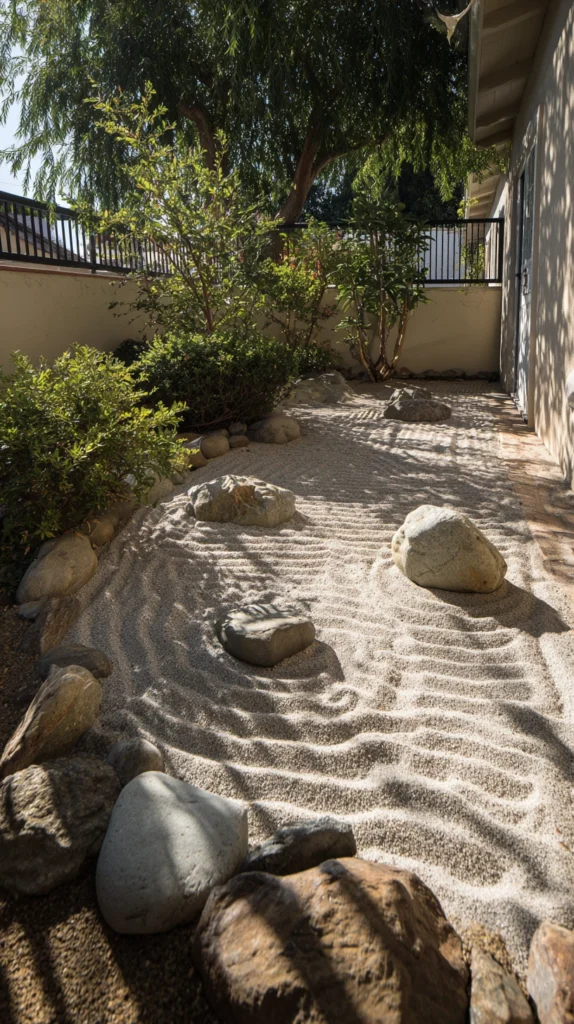
Budget: $60 – $250
Less common than the flat karesansui, the sand mound garden features carefully shaped cones or gentle domes of white sand, sometimes raked at the base. Historically used at Shinto shrines as a purifying element, the cone form brings a quiet drama to an otherwise flat surface. Two or three cones of differing heights create a skyline in miniature.
Use clean washed silica sand or Shirakawa-ji gravel — a fine-grained white granite aggregate from Japan, available online for $30–$80 per 25 kg bag. Shape the mounds by hand using a damp-sand technique, then brush the surface smooth with a soft paintbrush for a refined finish.
Design tip: Protect mounds from heavy rain with a simple temporary cover, or rebuild them after storms. The ritual of re-forming the mounds is itself considered part of the practice in traditional settings.
10. The Stepping Stone Path Through Grass
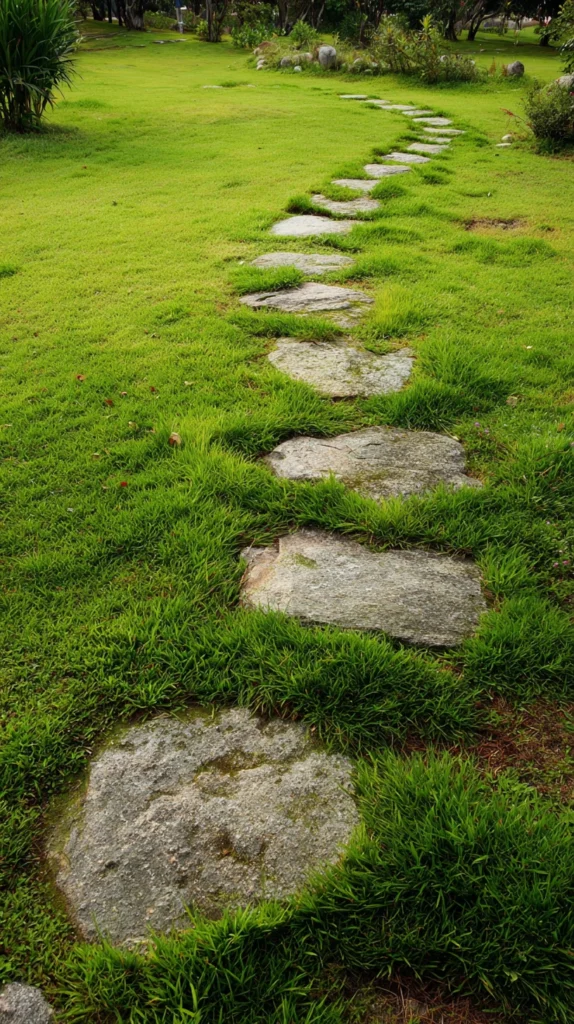
Budget: $80 – $350
A series of flat stones set into a lawn creates one of the simplest and most satisfying Zen garden elements. The path does not need a destination — the act of placing one foot deliberately in front of the other is the point. In Japan, the spacing of stepping stones is calibrated to a natural walking pace, subtly controlling how fast you move through a garden.
Irregular flagstone pieces cost $1–$5 per stone. Japanese stepping stones — flat, disc-shaped, and often dark grey — are sold at garden centres for $8–$30 each. Space them 18–22 inches apart, centre to centre, and set them flush with the grass surface so they feel integrated rather than placed on top.
Design tip: Walk the intended path naturally before placing any stones, and mark where your feet land each time. The result will be more instinctively comfortable than any measurement can achieve.
11. The Wabi-Sabi Corner: Weathered and Worn
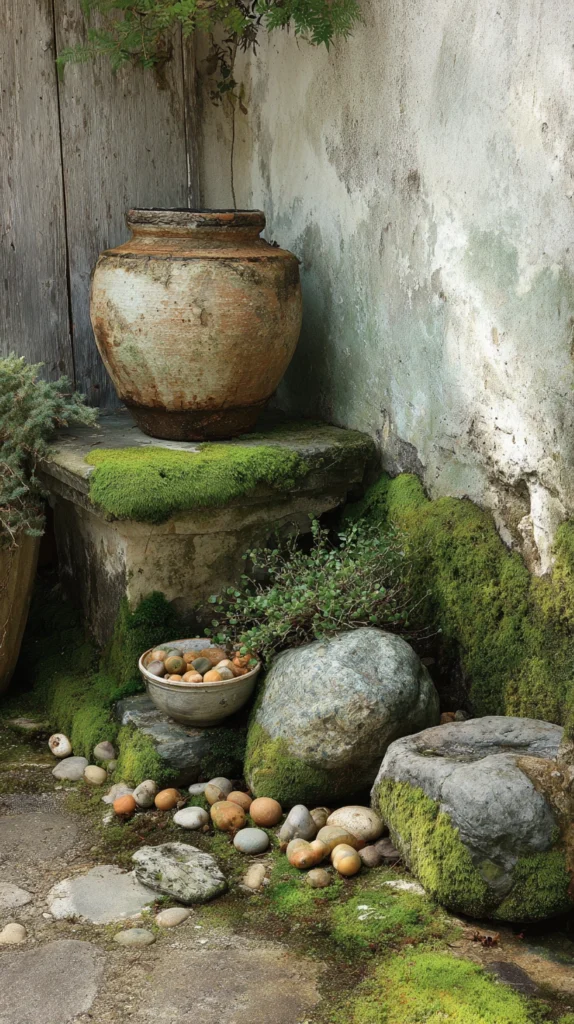
Budget: $50 – $300
Wabi-sabi is the Japanese aesthetic of imperfection, transience, and incompleteness — the beauty of the cracked pot, the mossy wall, the fallen leaf left where it landed. A wabi-sabi garden corner embraces materials that have aged: a weathered stone, an old ceramic shard used as a planter, a single bare branch thrust into gravel. Nothing is pristine, nothing is matched, and it is exactly right.
Source materials from salvage yards or antique markets. A rusted iron vessel used as a planter might cost $10 at a flea market. A cracked terracotta pot repaired with gold kintsugi powder ($15–$30 per kit) becomes a quiet philosophical statement. The budget here is intentionally low — the beauty comes from selection, not expenditure.
Design tip: Edit ruthlessly. A wabi-sabi corner with twelve elements becomes clutter. Limit yourself to three — and let the empty space around them breathe.
12. The Zen Garden with a Single Tree
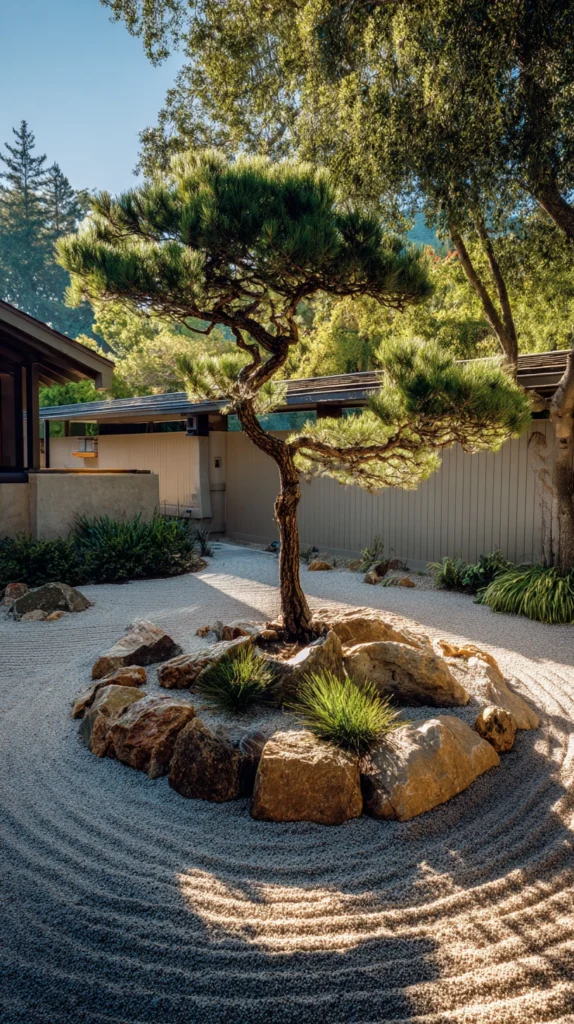
Budget: $200 – $2,000
Nothing organises a space quite like a single, beautifully shaped tree. In Japanese garden tradition, the specimen tree — often a Japanese maple, pine, or cherry — is chosen for its seasonal character and placed with the same care given to a sculpture. Everything else in the garden exists in relation to that one tree. It is the garden’s quiet authority.
A young Japanese maple costs $40–$150; a mature specimen with good structure can run $300–$2,000. Underplant with fine gravel and a ring of smooth stones to define the tree’s territory without fussing. Leave fallen leaves in autumn — their drift across the gravel is part of the seasonal composition.
Design tip: Choose a tree for its winter silhouette, not just its autumn colour. A bare Japanese maple in January, its branches reaching like ink brushstrokes against a pale sky, is often the most beautiful version of itself.
13. The Enclosed Courtyard Zen Space
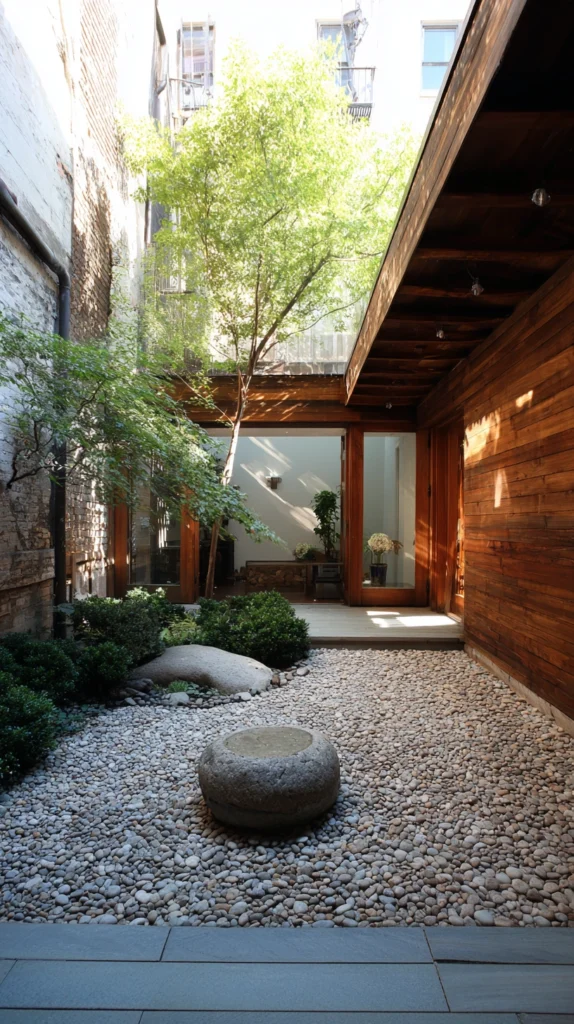
Budget: $500 – $3,000+
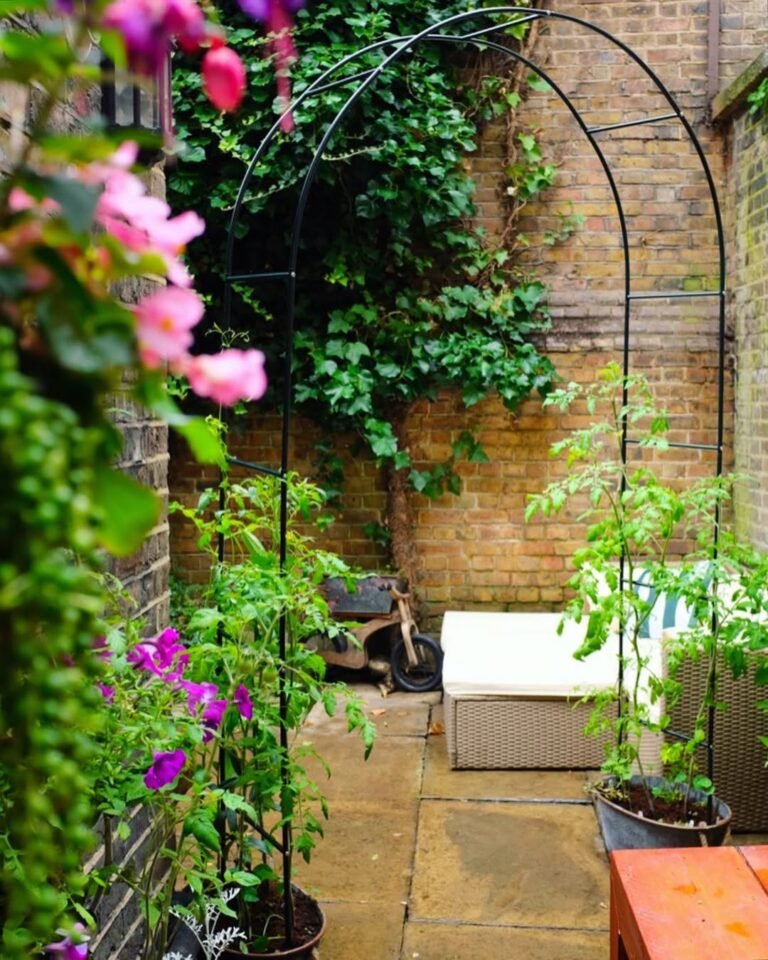
A walled or fenced courtyard creates total enclosure, separating the garden from the world outside with a definitiveness that an open garden can never achieve. Within that enclosure, the air changes. Sound softens. This is the principle behind the tsuboniwa, or small courtyard garden, found in traditional Kyoto townhouses.
A simple cedar fence enclosure might cost $800–$2,500; rendered masonry walls run considerably higher. Within the enclosed space, keep the elements few: gravel, one stone, one plant, and perhaps a small lantern. The walls do the heavy visual lifting — the interior needs almost nothing.
Design tip: A courtyard garden is often experienced from above as well as from within. Design the layout to read beautifully as a two-dimensional composition when viewed from an upper window.
14. The Night Garden: Light, Shadow, and Lantern
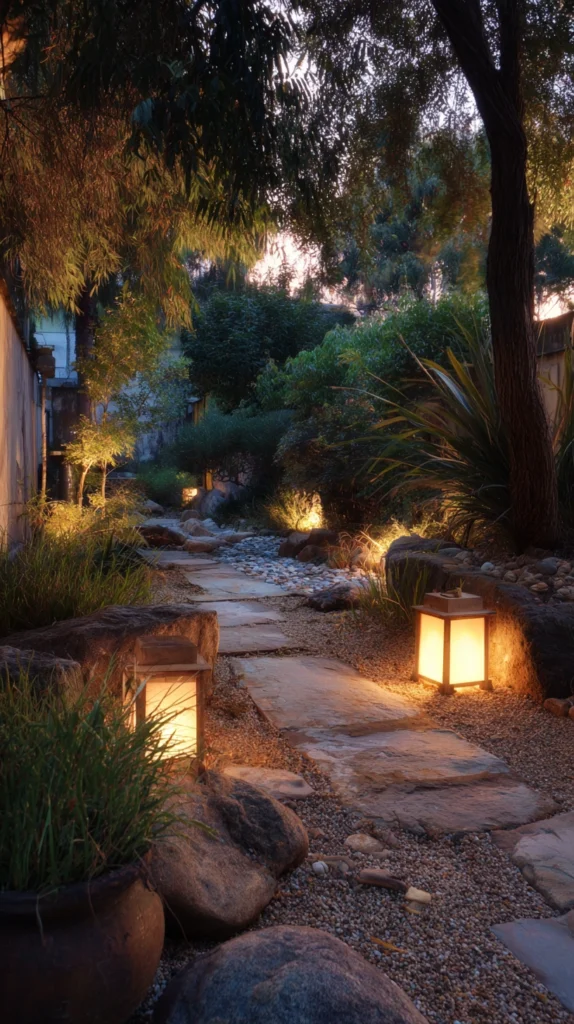
Budget: $100 – $600
A Zen garden experienced at night becomes something entirely different — shadow dissolves detail, the boundary between object and space blurs, and what remains is pure presence. Low solar lanterns, soft uplighting on a single stone or tree, and the glow of a water basin at dusk create a garden that rewards those who stay past sunset.
Solar stone lanterns cost $15–$80 each. Recessed ground lights suitable for garden paths run $20–$50 per fixture. A low-voltage uplighter on a specimen tree costs $30–$80. Avoid cool-white LEDs — warm white (2700K–3000K) creates the amber quality that flatters stone and gravel in the same way candlelight flatters a room.
Design tip: Less light is always more. Three well-placed lanterns in a garden of stillness are more affecting than ten scattered haphazardly. Darkness is part of the composition — do not fill it.
Across all fourteen of these ideas, one principle returns again and again: restraint. The Zen garden is not built by adding more until it feels complete — it is built by removing everything that is not essential, and then sitting with what remains. Whether you begin with a tabletop tray and a handful of white sand, or invest in a full courtyard enclosure, the spirit of the thing is the same.
Start with one element. Live with it for a season. Let it tell you what it needs next — if anything at all. The most peaceful Zen gardens are often the ones that were never quite finished, and never needed to be.