14 Garden Rock Design Ideas for a Natural Look
There is something ancient and deeply satisfying about a garden that incorporates rock well. Stone has been used in gardens for thousands of years — in the dry-laid walls of English hill farms, in the raked gravel and placed boulders of Japanese temple gardens, in the naturalistic rock gardens of Victorian alpine enthusiasts — and the reason it endures is simple.
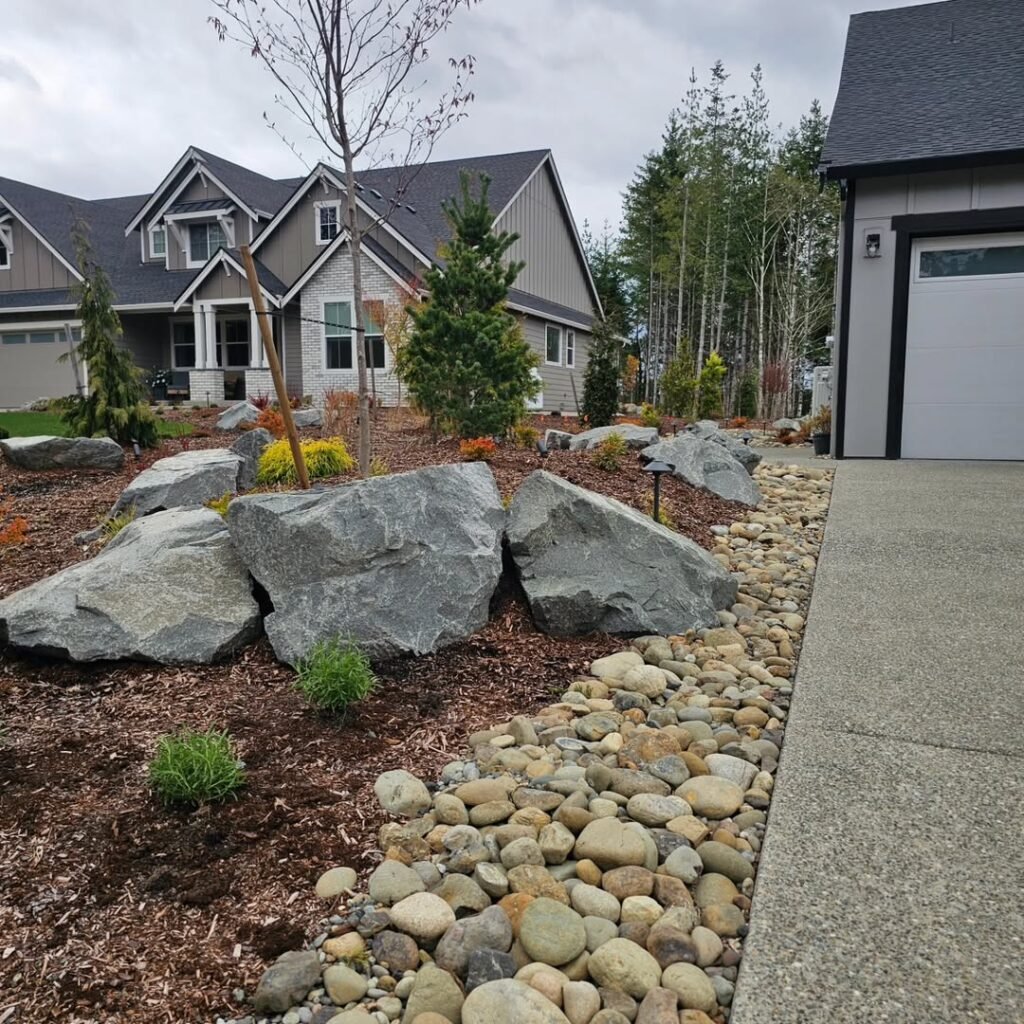
Rock looks as though it belongs in a landscape in a way that almost no manufactured material can replicate. It carries geological time in its surface, weathers into the garden rather than away from it, and provides a permanence and solidity that gives even a modest planting scheme a sense of having always been there.
The ideas below cover every scale of rock use in a garden — from a single statement boulder to a full dry stone landscape — with practical guidance on sourcing, placing, and planting around rock in a way that looks genuinely naturalistic rather than decorative.
1. The Naturalistic Boulder Grouping
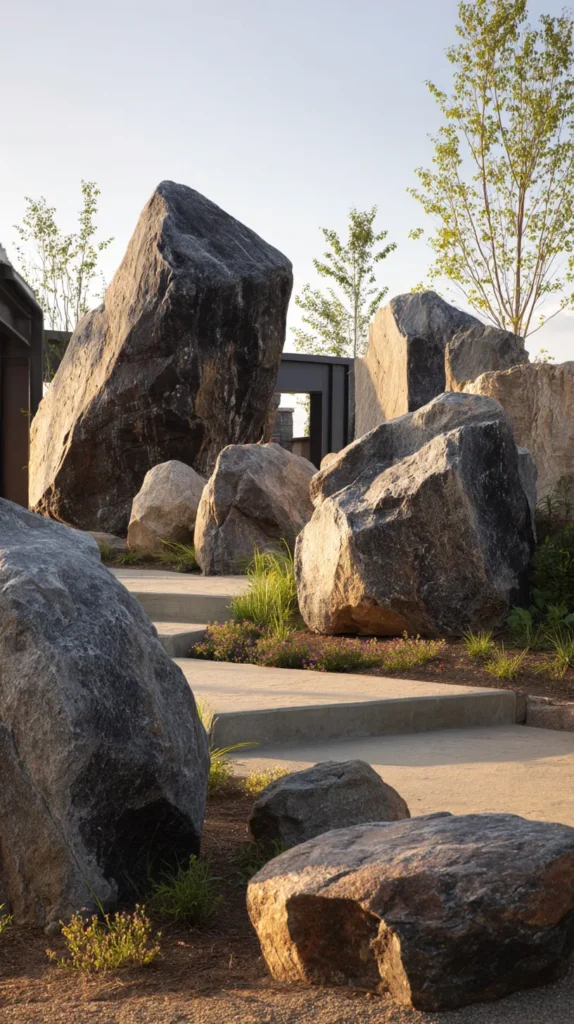
Budget: $100 – $800
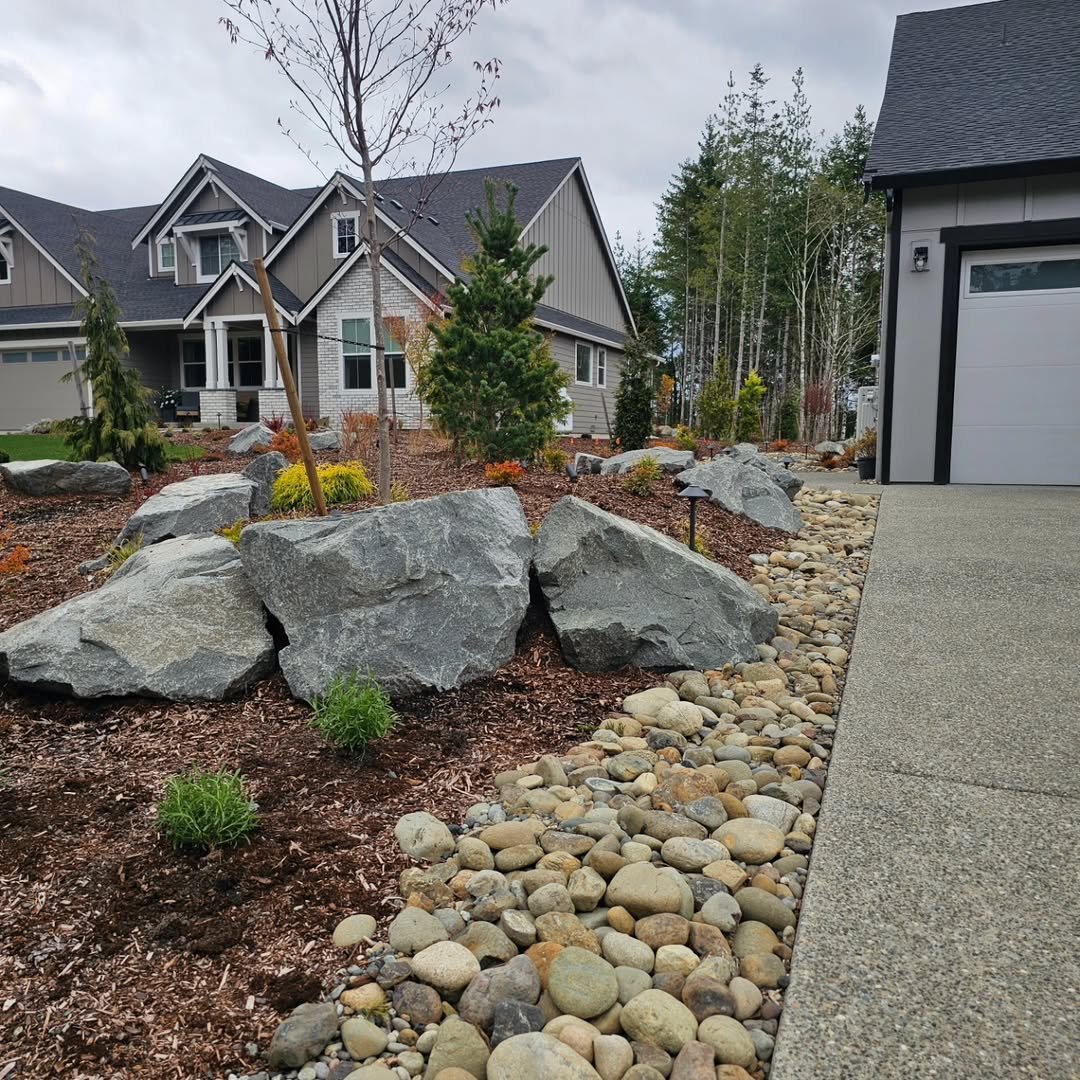
A grouping of large boulders placed in the garden as a focal point — without any retaining function, without any planting between them, simply placed as a composed sculptural arrangement — is one of the most powerful and most underused ideas in domestic garden design. Three or five large boulders of varying sizes, placed in a loose triangular or asymmetric arrangement, create a focal point with a geological authority that no manufactured garden ornament can replicate. The boulders do not need to do anything except be present — their weight, texture, and form are sufficient.
Source boulders from a local quarry or stone merchant rather than a garden centre — quarry-sourced stone is significantly cheaper, more varied in character, and more likely to be the local geological type that suits the landscape around your garden. Boulders in the 200–500 kilogram range cost $50–$200 each depending on stone type and region. Delivery and positioning requires a mini digger or telehandler — factor this into the budget as a one-off installation cost.
Garden tip: Bury at least one third of each boulder below the soil surface rather than sitting it on top of the ground. A boulder resting entirely on the surface looks placed — temporary and decorative. A boulder with its lower third embedded in the soil looks as though it emerged from the ground, which is exactly the geological reality the arrangement is trying to suggest. The buried portion is not wasted — it is what makes the visible portion convincing.
2. The Dry Stone Wall
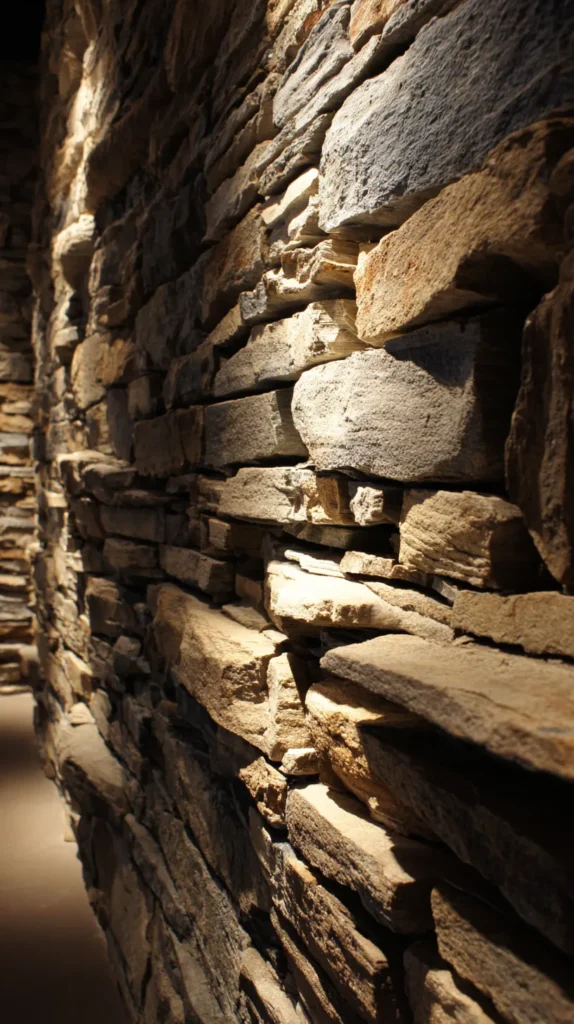
Budget: $150 – $1,500
A dry stone wall — stones stacked without mortar using a traditional technique that has remained essentially unchanged for thousands of years — is one of the most beautiful structural elements a garden can contain. The irregular courses of stone, the slight batter of the wall face, the flat capstones along the top, and the mosses and ferns that colonise the gaps over time create a surface of extraordinary texture and ecological richness that no mortared wall, rendered block, or timber fence approaches for character and natural beauty.
Dry stone walling requires no cement, no specialist equipment, and no planning permission in most circumstances — only good stone and a basic understanding of the laying principles. The foundation stones are the largest, the through stones bind the two faces of the wall together at regular intervals, and the hearting fills the interior. A wall built on these principles, even by a beginner, will stand for decades without maintenance and improve in beauty with every passing year.
Garden tip: Source stone locally wherever possible — a dry stone wall built from the same geological material as the surrounding landscape looks as though it always belonged there. A wall built from imported stone in a region where that stone does not naturally occur always looks slightly foreign, however beautifully it is constructed. The geological connection to the local landscape is a quality that money cannot entirely buy.
3. The Japanese Rock Garden
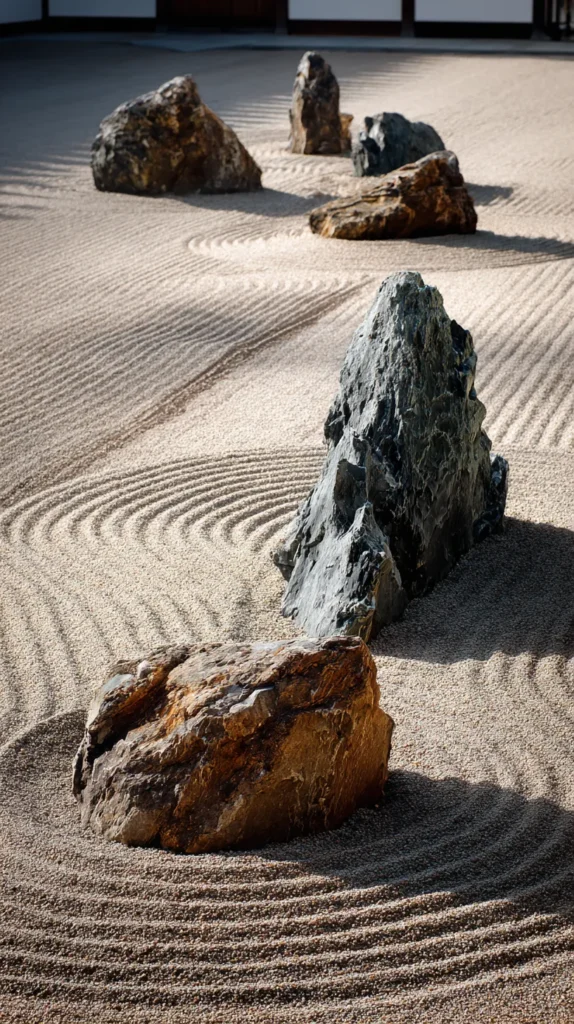
Budget: $100 – $600
The Japanese rock garden — or karesansui — uses carefully placed rocks, raked gravel, and minimal planting to create a meditative landscape that represents, in abstracted form, mountains, islands, and water. It is one of the most considered and most philosophically rich approaches to garden design in existence, and a domestic interpretation — even a modest one — brings a quality of stillness and intentionality to a garden that no other style achieves with the same economy of means.
Place rocks in groups of odd numbers — one, three, or five — with each rock oriented so its most interesting face is visible and its base embedded firmly in the gravel. Rake the gravel in parallel lines around the rocks to suggest water flowing around islands. Moss, a single clipped azalea, or a specimen pine are the only plants that belong in a traditional karesansui — the restraint of the planting palette is as important as the placement of the rocks.
Garden tip: Choose rocks with strong, distinctive forms — angular, stratified, or dramatically textured surfaces — rather than smooth, rounded stones for a Japanese rock garden. The rocks are the primary design elements and their individual character matters more than in any other rock garden style. A smooth, featureless boulder has no presence in a karesansui; a dramatically stratified piece of slate or a weathered piece of granite with strong surface texture reads as a mountain or a cliff face in miniature.
4. The Rock and Gravel Dry Garden
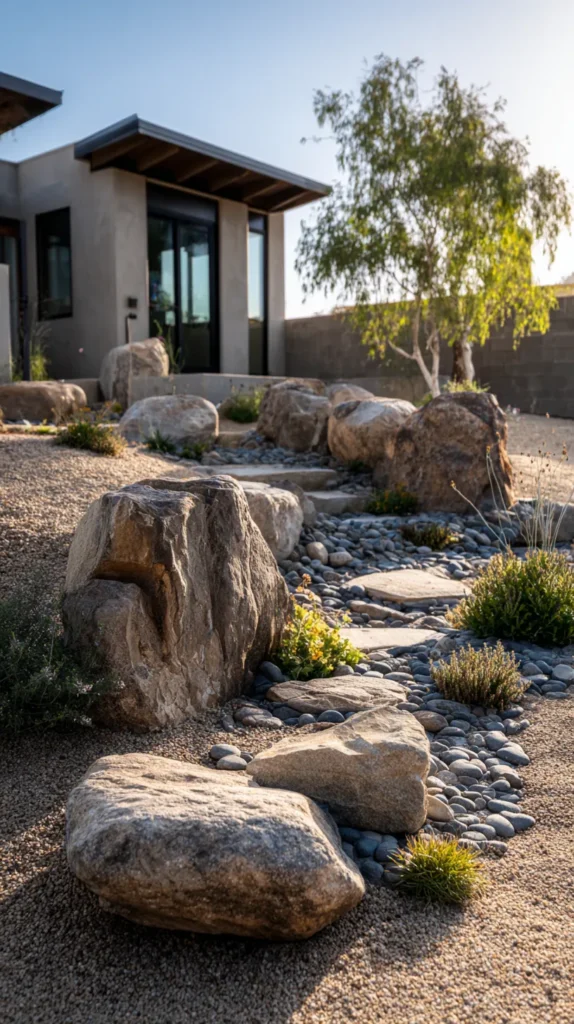
Budget: $80 – $400
A dry garden — rocks of varying sizes placed in a deep gravel mulch with drought-tolerant planting between them — creates a low-maintenance, high-impact landscape that suits warm, sunny gardens and contemporary architectural settings equally well. The rocks provide structure and visual weight, the gravel provides the clean neutral ground plane, and the planting — agaves, euphorbias, ornamental grasses, sedums, and lavender — provides colour, texture, and seasonal change without requiring irrigation or intensive maintenance once established.
Lay the gravel at a minimum depth of 7 centimetres over a permeable membrane before placing the rocks and planting through cut holes. The gravel mulch retains soil moisture below while keeping the surface dry — exactly the conditions that drought-tolerant plants prefer. Top-dress around newly planted specimens with an additional gravel layer to prevent bare soil from appearing between the plants as they establish.
Garden tip: Vary the size of the rocks across the dry garden rather than using a single consistent size throughout. A dry garden with rocks of one uniform size looks like a rock collection; a dry garden with boulders, medium rocks, and smaller stones of the same geological type looks like a natural landscape in which rocks of different sizes have been deposited by the same geological process.
5. The Rock Edged Planting Border
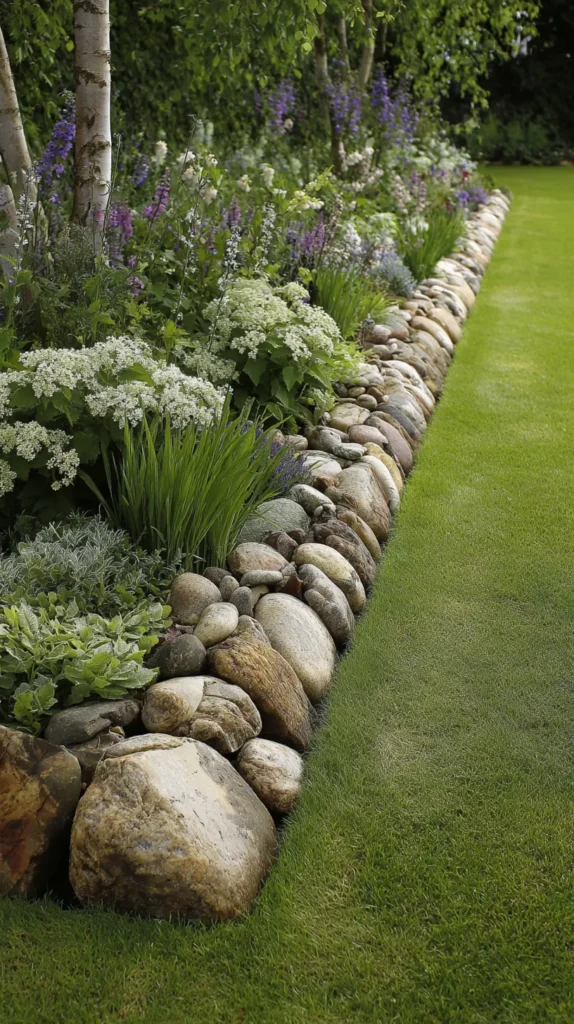
Budget: $60 – $300
Using rocks rather than timber, steel, or brick as the edging material for a planting border creates a boundary between lawn and bed that looks genuinely naturalistic and provides a habitat-rich alternative to any manufactured edging. Flat-topped rocks set flush with the lawn surface on the outer edge and slightly raised into the bed on the inner edge retain the soil, prevent lawn grass from spreading into the border, and create a naturalistic transition between the mown grass and the planted area that suits cottage, woodland, and naturalistic garden styles beautifully.
Use the largest rocks at the corners and at the most visible sections of the border, grading to smaller rocks along the straighter, less prominent runs. The largest rocks anchor the composition and give it visual weight; the smaller rocks between them fill the edging line without competing with the anchoring pieces. A consistent stone type throughout keeps the edging coherent as a design element.
Garden tip: Set rock border edging pieces so they tilt very slightly backward into the bed rather than sitting perfectly vertical or leaning outward. A slight backward tilt looks natural — it suggests the rock emerged from the ground at that angle — and channels rainfall toward the roots of the plants in the bed rather than directing it onto the lawn where it is less useful.
6. The Alpine Rock Garden
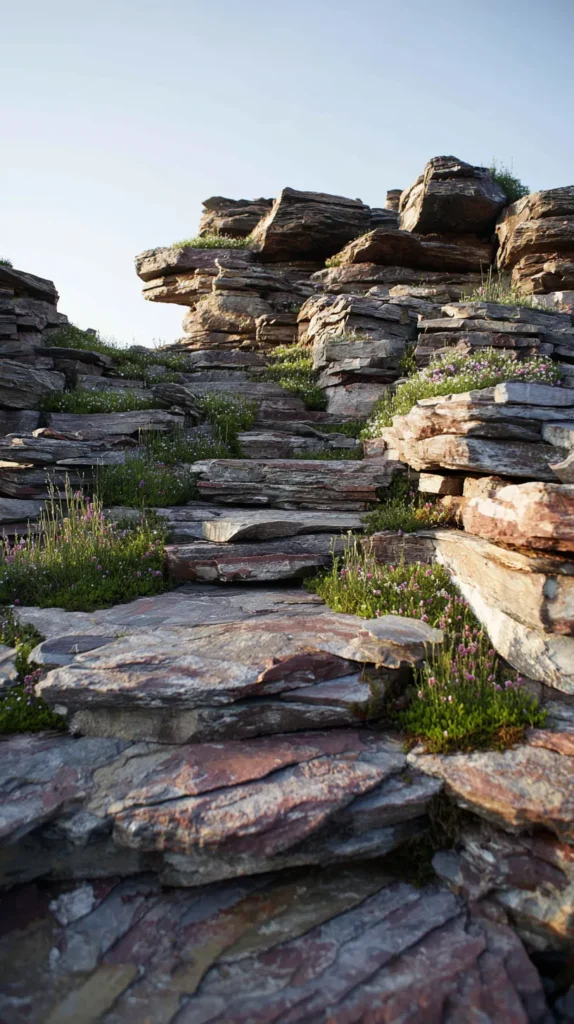
Budget: $100 – $500
An alpine rock garden — a mounded, free-draining raised bed of rock and gritty soil planted with small alpine and rock plants — recreates the conditions of a mountain scree or rocky hillside in a domestic garden setting. The rock plants that thrive in these conditions — saxifrages, sempervivums, thymes, gentians, aubrietias, armeria, and phlox subulata — are among the most detailed and beautiful plants available, and the close-up scale of an alpine rock garden rewards inspection in a way that a large-scale border never quite achieves.
Build the rock garden on a raised, free-draining mound of soil improved with 50 percent horticultural grit. Place the rocks in natural-looking horizontal strata — all tilted at the same angle as though they are part of the same geological formation — with planting pockets between the stones filled with the same gritty soil mix. The rocks should look like outcrops from a single buried stone formation, not a collection of individual pieces.
Garden tip: Build the rock garden in autumn and leave it unplanted through winter before planting in spring. The frost and rain of winter settles and consolidates the soil between the rocks, closing the air pockets that develop during construction. Planting into freshly built rock garden soil often results in plants sinking as the soil settles — a winter’s weathering produces a stable, consolidated growing medium that holds plants at the intended level.
7. The Stepping Stone Rock Path
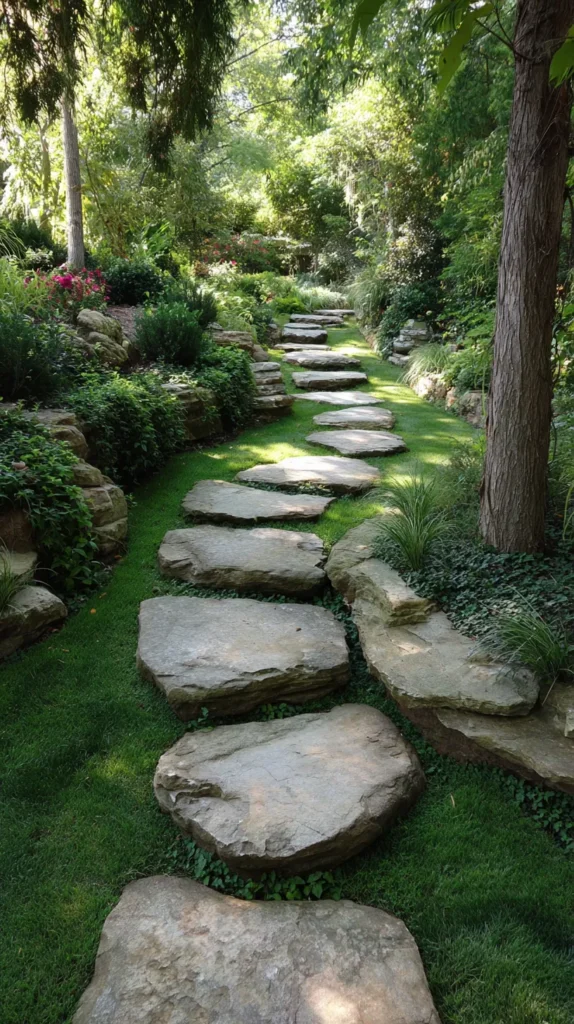
Budget: $50 – $300
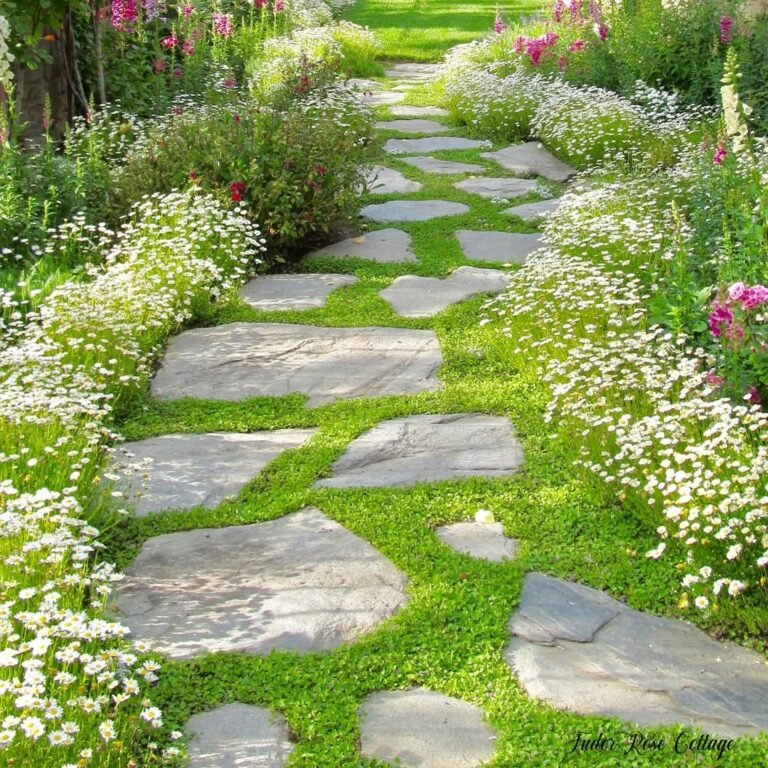
Large flat rocks used as stepping stones — set flush into lawn, gravel, or planted ground cover — create a path with a natural, unhurried quality that cut stone or brick pavers rarely achieve. The irregular shapes, varied sizes, and surface texture of natural flat rock gives a stepping stone path the feeling of a route that followed the lie of the land rather than one that was designed and installed. Each stone is slightly different; the path as a whole feels organic and discovered.
Slate, sandstone, limestone, and granite all produce excellent stepping stones when split or sawn into flat slabs 40–60 millimetres thick. Set each stone on a bed of compacted sharp sand so the surface sits flush with or just above the surrounding ground level — a stone that rocks underfoot is a hazard, and one that sits significantly above the surrounding surface is a trip hazard when the light is poor.
Garden tip: Before setting any stones permanently, walk the intended route several times at a natural pace and mark where your feet actually land. The spacing that feels right when standing still — approximately 60 centimetres between stone centres — is almost always slightly too wide when walking naturally. Most people find a 50–55 centimetre centre-to-centre spacing most comfortable for a relaxed walking pace on a garden path.
8. The Rock Mulch Planting Bed
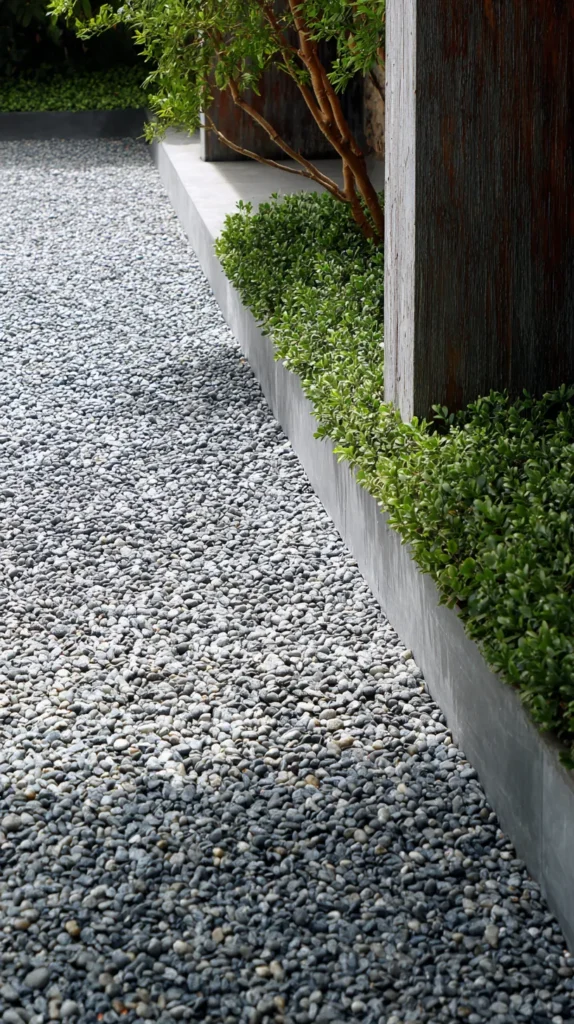
Budget: $40 – $200
Using small rocks and stone chippings as a mulch material in a planting bed — rather than organic bark mulch or compost — creates a surface that looks genuinely naturalistic, suppresses weeds effectively, retains soil moisture, and provides the free-draining conditions that many ornamental plants prefer. A rock-mulched bed planted with Mediterranean herbs, ornamental grasses, alliums, salvias, and euphorbias looks as though it was designed by the landscape rather than by a gardener.
Slate chippings, crushed granite, pea gravel, and flint all work as rock mulch materials and each creates a different aesthetic. Slate gives a dark, moody surface that makes plant colours read more vividly. Pale limestone gives a bright, warm surface that suits Mediterranean planting. Dark flint gives a rich, complex texture that suits naturalistic and prairie-style plantings. Choose a material that complements both the plants and the surrounding hard landscaping.
Garden tip: Apply rock mulch after a thorough hand-weeding of the bed surface and after watering the soil deeply. Mulching onto dry soil seals the moisture deficit in and makes it harder for rainfall to penetrate to the root zone. Mulching onto a weed-free, moist soil creates the conditions that suppress future weed germination most effectively and gives newly planted specimens the best possible start.
9. The Rock Pool and Bog Garden
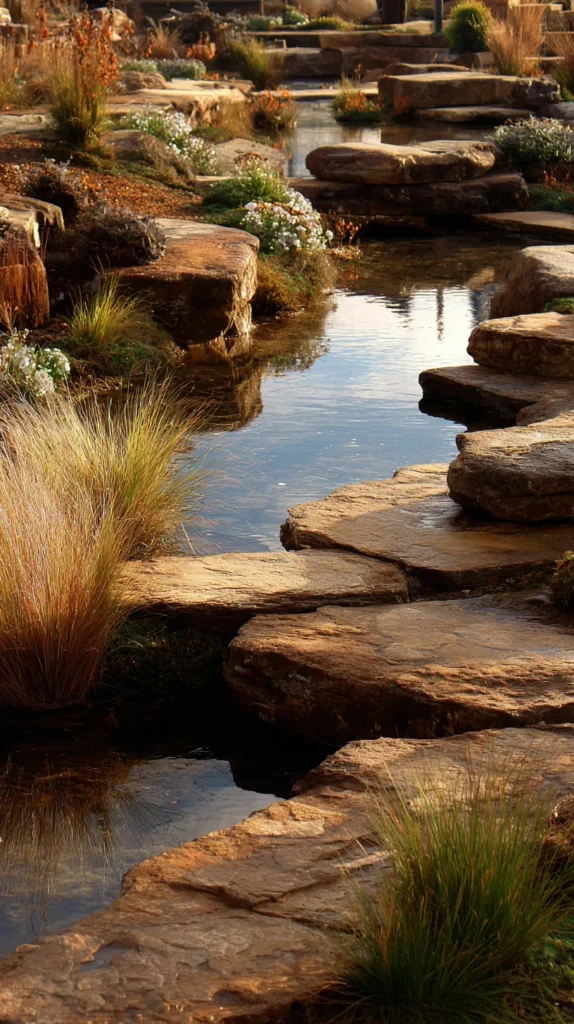
Budget: $150 – $800
A wildlife pond edged with rocks — some partially submerged as entry and exit points for visiting wildlife, others forming the dry bank planting areas around the pond perimeter — creates the most ecologically rich garden feature available at any scale. The rocks warm in the sun and provide basking spots for insects, frogs, and newts. The shallow rock margins create a gradual depth transition that allows wildlife to access the water safely. The planted rock edges support the moisture-loving species that complete the bog garden ecosystem.
Use a mix of large flat rocks as pond edging — laid to overhang the water surface slightly so the liner edge is concealed — and smaller rocks placed both in the shallow margins of the pond and in the planted areas beyond the water’s edge. Iris pseudacorus, caltha palustris, lobelia cardinalis, and primula candelabra hybrids all thrive in the moist soil of a rock-edged bog garden and provide colour from spring through late summer.
Garden tip: Create at least one gently sloping rock ramp from the shallow margin of the pond up to the bank level — a gradual slope of small rocks leading from the water surface to dry land allows hedgehogs, frogs, and other small animals that fall into the pond to climb out safely. A pond with no means of exit becomes a trap for small mammals — a simple rock ramp costs nothing and saves lives.
10. The Rock Retaining Terrace
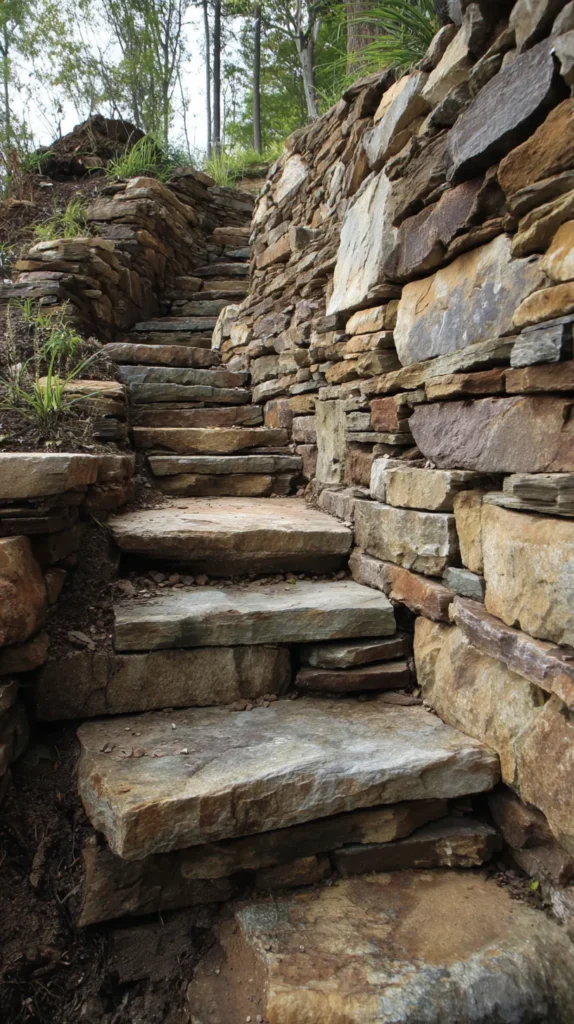
Budget: $100 – $600
Rock used as a retaining material on a sloped garden — laid as a dry stone wall, stacked as a gabion fill, or placed as large individual boulders at the break of slope — creates terracing that looks as though it evolved from the landscape rather than being installed by a landscaper. The naturalistic quality of rock retaining is particularly valuable on slopes where the surrounding landscape is rural or semi-rural — a rock-retained terrace in a country garden looks entirely at home in a way that rendered block or railway sleeper retaining walls cannot.
Stack retaining rocks with a backward lean into the slope — a slight batter of approximately 10–15 degrees from vertical — so the wall leans into the soil it is retaining rather than away from it. This angle is both structurally more stable than a vertical face and visually more naturalistic — rock strata in the landscape almost always presents at an angle rather than perfectly vertically.
Garden tip: Plant into the joints of a rock retaining wall as it is being built rather than afterward. Sedums, thymes, saxifrages, and erigeron tucked into the gaps between rocks during construction have immediate access to the soil behind the wall and establish far more successfully than plants pushed into a gap in a completed wall where root penetration to a continuous soil body is limited.
11. The Rock Sculpture Garden
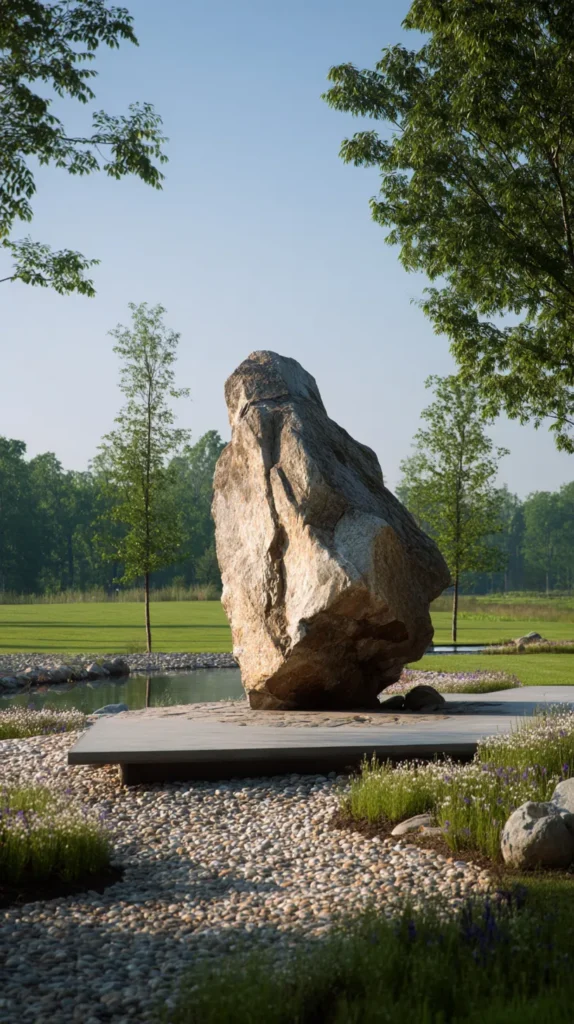
Budget: $200 – $2,000
A garden in which carefully selected rocks are placed as sculpture — chosen for their individual form, texture, and character rather than for any functional purpose — treats geology as art and creates a garden with the contemplative quality of an outdoor gallery. A single extraordinary piece of rock — a dramatically folded piece of metamorphic schist, a translucent piece of white quartz, a perfectly weathered piece of granite with an extraordinary surface texture — placed alone on a gravel or grass surface with clear space around it commands attention in the way that the best sculpture does.
The selection of the rock is the entire creative act in a rock sculpture garden. Visit a quarry or stone merchant with a good eye and take time to find pieces with genuine character — interesting colour variation, dramatic veining, unusual surface texture, or a strong natural form. A truly extraordinary rock is worth considerably more than a mediocre one regardless of weight, and the difference in character between an interesting piece and a generic one is immediately apparent in the garden.
Garden tip: Position rock sculpture pieces so they can be viewed from multiple angles by placing them away from walls and fences with clear circulation space around them. A rock placed against a wall can only be seen from one direction and loses half of its three-dimensional character. A rock with space around it can be walked around and experienced from every angle, which is the only way to fully appreciate a piece whose character changes completely depending on the viewpoint.
12. The Woodland Rock and Moss Garden
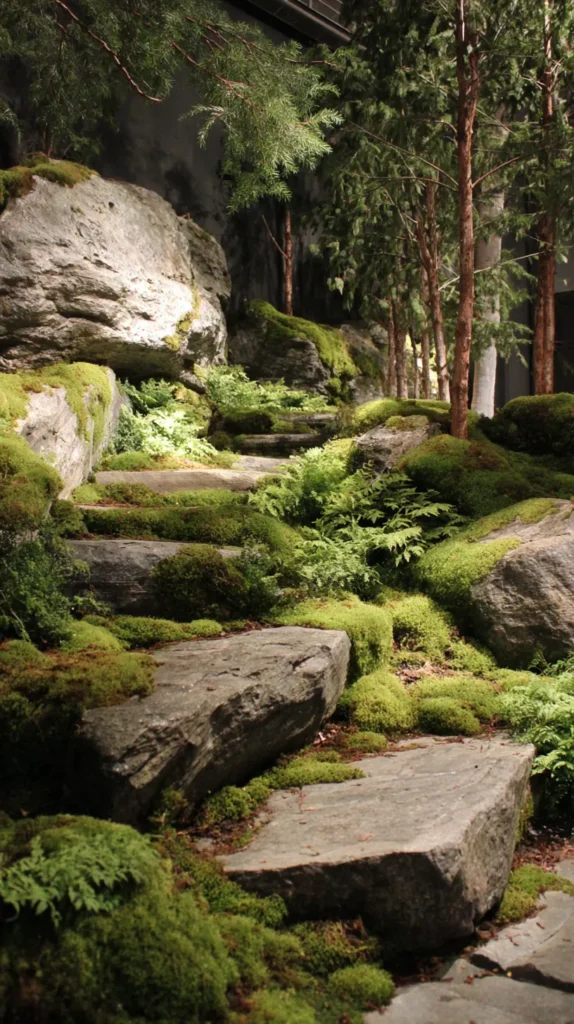
Budget: $60 – $300
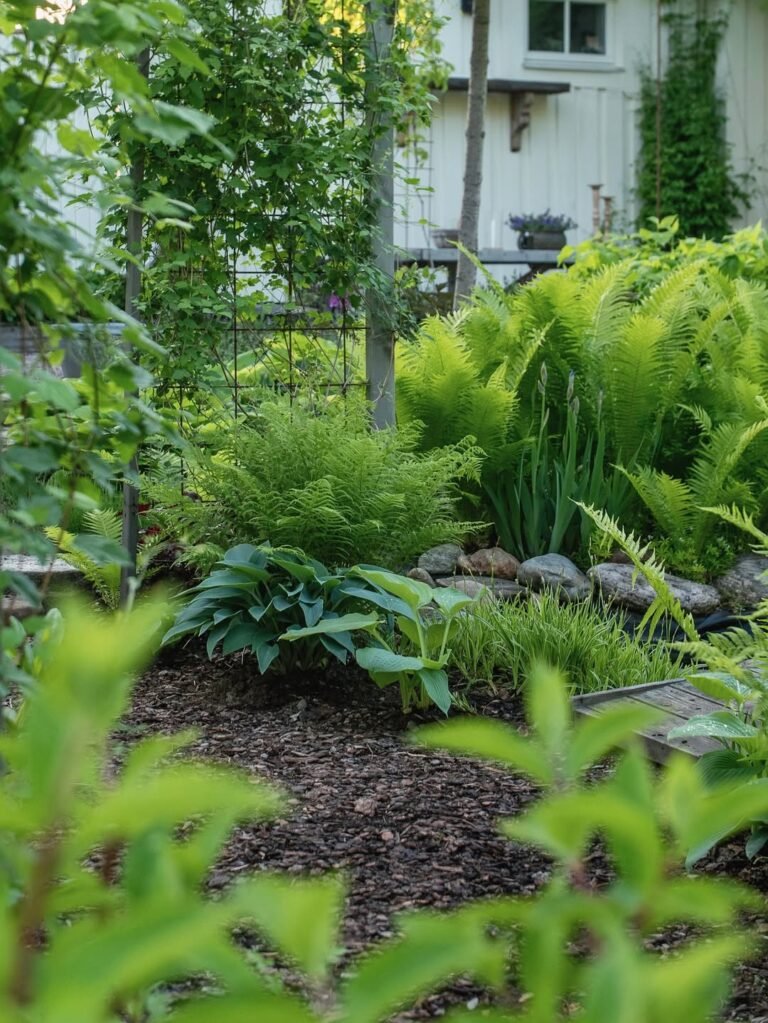
In a shaded garden with established trees, rocks placed among ferns, mosses, and woodland plants create a landscape of extraordinary atmospheric beauty. The combination of dappled light, deep green fern fronds, the ancient quality of weathered rock, and the soft carpet of moss covering both the ground and the rock surfaces creates a garden mood that nothing else in the design vocabulary of outdoor spaces quite replicates. It feels genuinely old — settled and undisturbed — even when it has only been planted for a season or two.
Encourage moss to colonise rocks by keeping them in a shaded, moist position and applying a mixture of live yoghurt blended with water to the rock surface — the beneficial bacteria create an acidic environment that moss spores colonise rapidly. A rock that would take years to acquire natural moss cover in a sunny, dry position can be covered in soft green moss within a single season in a shaded, moist woodland garden.
Garden tip: Choose rocks with a porous, rough surface texture for a woodland moss garden rather than smooth, dense stones. Granite and basalt are too dense and too smooth for moss to colonise easily. Sandstone, limestone, and weathered slate all have the surface porosity and texture that moss spores can grip — the right stone type in the right conditions will colonise itself naturally without any intervention beyond keeping it moist and shaded.
13. The Rock Edged Herb Spiral
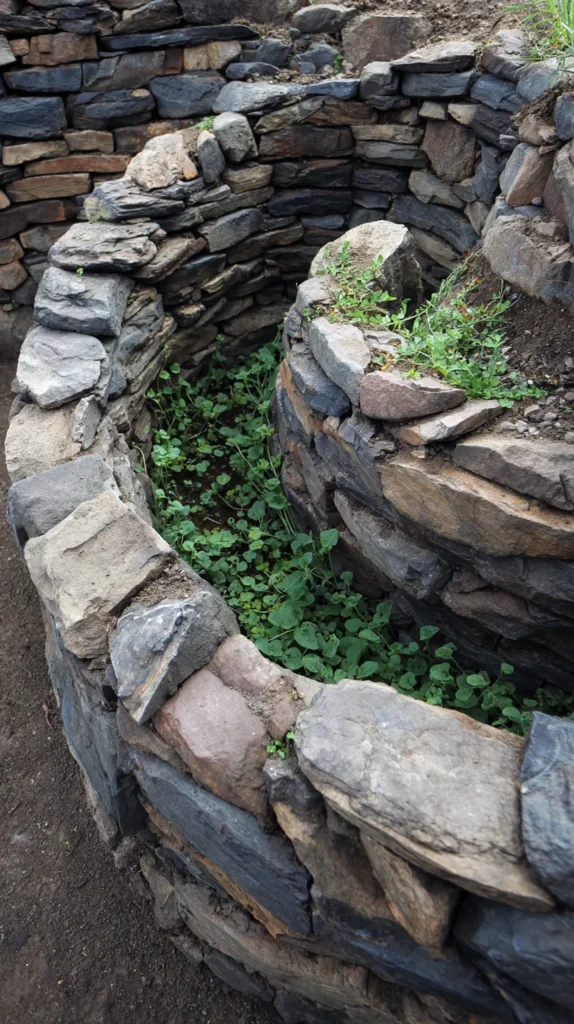
Budget: $50 – $200
A herb spiral — the cleverly engineered spiral mound that creates multiple growing conditions in a small footprint — built from stacked rocks rather than brick or timber becomes one of the most beautiful and most naturalistic small-scale garden structures available. The irregular surface of stacked stone, the planting that spills between the rocks at every level, and the way the spiral form suggests a natural geological feature rather than a constructed garden element give a rock herb spiral a character that the brick version, however practical, never quite achieves.
Stack rocks in a loose spiral form approximately 1.5 metres in diameter, raising the centre of the spiral to about 80 centimetres at its highest point. Fill with a free-draining mix of compost and grit and plant with herbs appropriate to each microclimate — rosemary and thyme at the dry, sunny top, chives and parsley in the middle zones, mint in a sunken pot at the moist base. The rocks retain heat, create sheltered pockets, and give the structure a permanence and visual weight that the plants alone cannot provide.
Garden tip: Use rocks of a consistent geological type but varying sizes throughout the spiral — the largest at the base where they provide the most structural stability, grading to smaller pieces toward the top where the structure is narrower and where smaller rocks are easier to handle and fit. Consistent geology unifies the structure visually; varying size creates the natural, stratified appearance that distinguishes a well-built rock spiral from a pile of stones.
14. The Riverbed Dry Stream
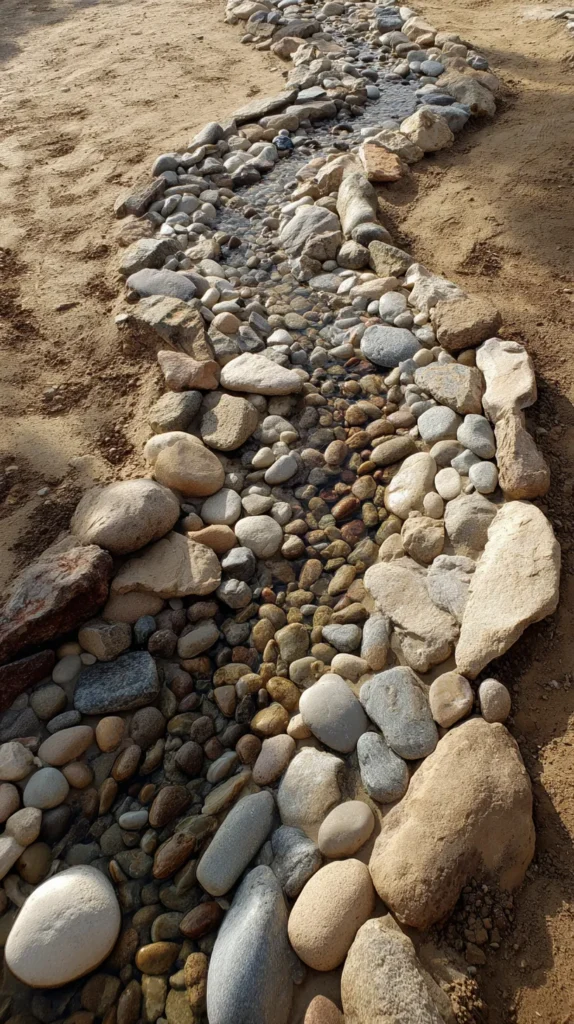
Budget: $60 – $350
A dry stream — a sinuous channel of smooth river pebbles and rounded boulders that mimics the appearance of a watercourse without containing any water — is one of the most elegant and most naturalistic rock garden features available for a flat or gently sloped garden. It creates the visual logic of a stream — a clear route through the garden, a narrative of water flowing from one point to another — without any pump, liner, or maintenance commitment. Planted on its banks with moisture-loving species that would naturally grow beside a real stream, it is entirely convincing.
Excavate a shallow, sinuous channel approximately 30–50 centimetres wide and 10–15 centimetres deep. Line with large rounded boulders at the outer edges of each bend — as a real stream deposits its largest material on the outside of curves — and fill the channel with smaller rounded pebbles and gravel of varying sizes. Plant the banks with iris, astilbe, carex, ligularia, and rodgersia for a planting palette that reinforces the waterside illusion.
Garden tip: Make the dry stream channel slightly wider at its curves and narrower at its straight sections — exactly as a real watercourse behaves under the hydraulic forces of flowing water. This simple adherence to the logic of real stream behaviour is the detail that makes a dry stream convincing rather than decorative, and it costs nothing beyond the observation of how water actually moves through a landscape.
A garden that uses rock well becomes a garden that feels as though it always existed — a space with geological time written into its surfaces and a permanence that no planted or constructed element alone can provide. Source the stone honestly, place it with conviction, allow the plants to grow into it gradually, and resist the temptation to tidy away the moss, the lichen, and the weathering that will come in time. Those are not signs of neglect. They are signs that the garden and the rock have found each other.