14 Balcony Garden Ideas That Feel Like a Mini Backyard
A balcony is not a compromise on outdoor space — it is a concentrated version of it. The best balcony gardens are the ones that stop apologising for their size and start exploiting their advantages: easy access from the living space, vertical surfaces on every side, and an intimacy of scale that a large garden can rarely match. A balcony where every surface grows something, where the seating is genuinely comfortable, and where the lighting extends the evening beyond sunset is one of the most enjoyable outdoor spaces available in any home.
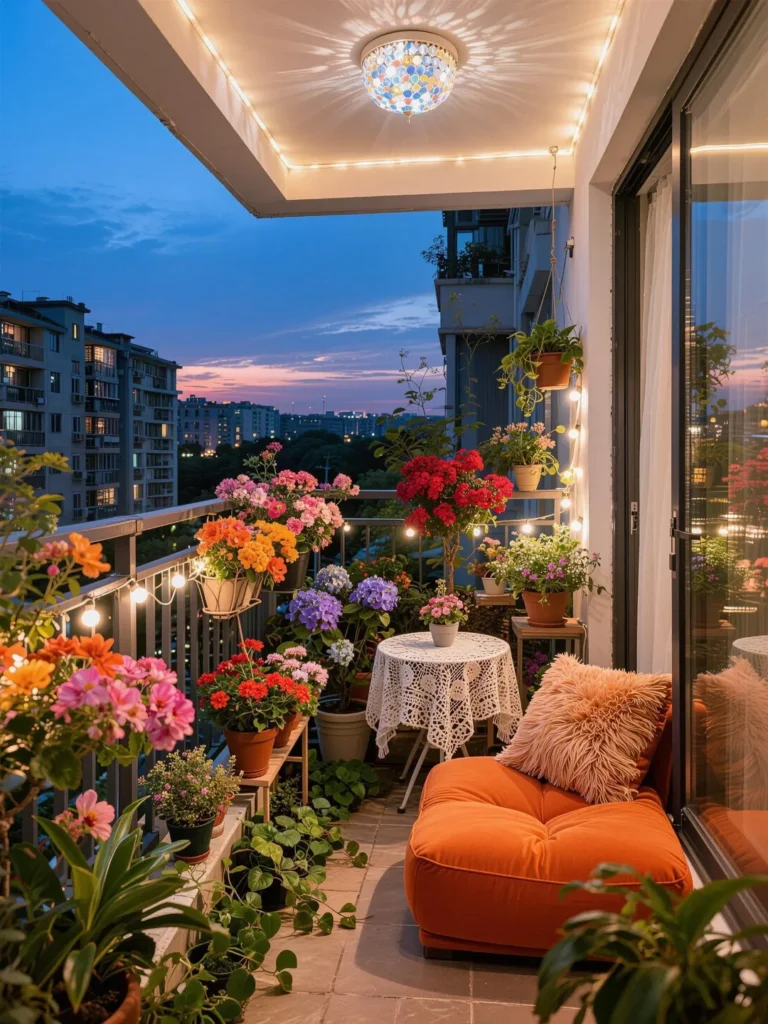
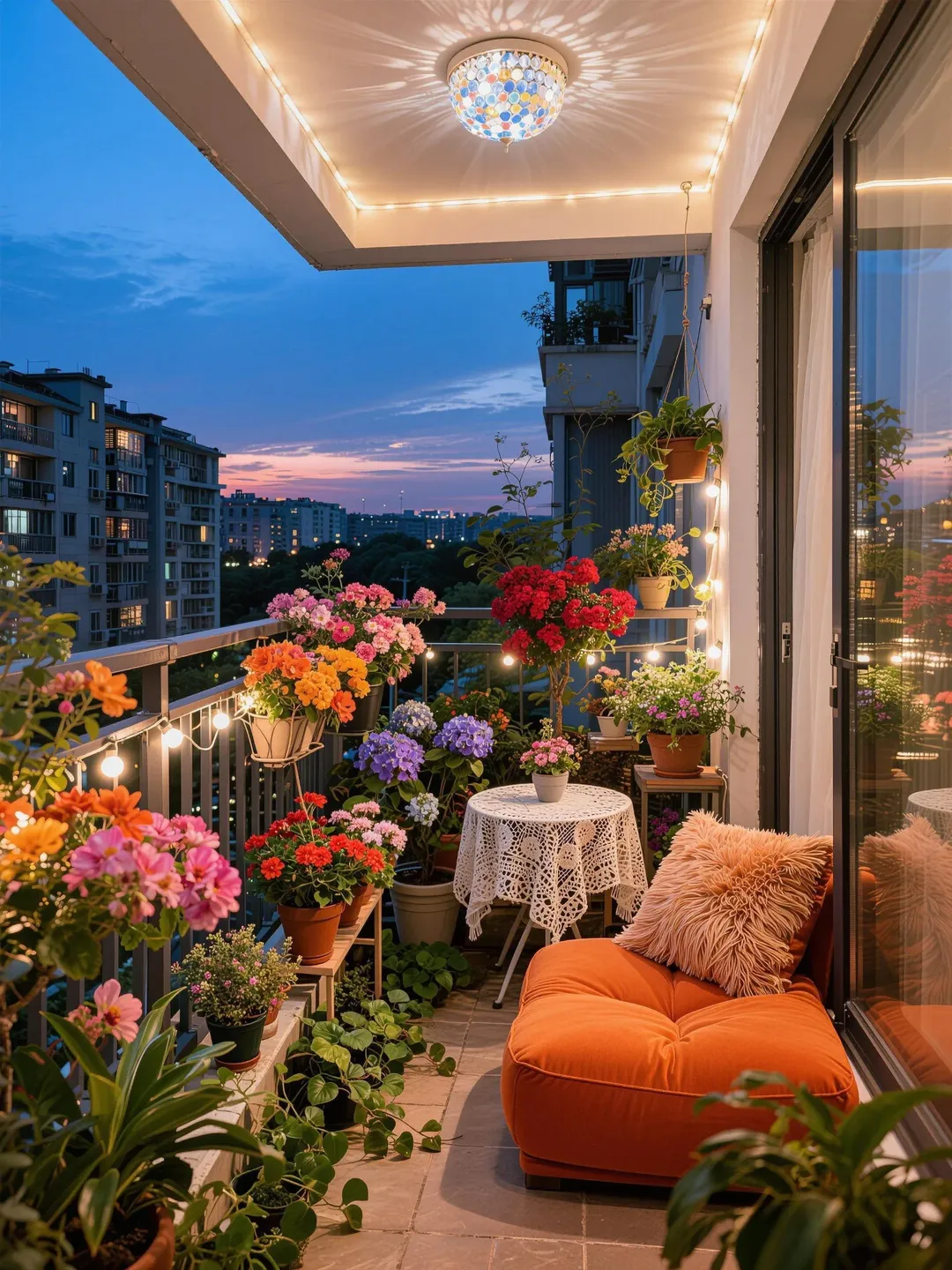
The fourteen ideas below cover every aspect of balcony gardening — from the railing planters to the lighting, from the flooring to the privacy screening — designed for spaces of every size and orientation. Each includes what it costs and a practical tip to help you get the most from the balcony you actually have.
1. Railing Planters for Instant Greenery
Budget: $30 – $120
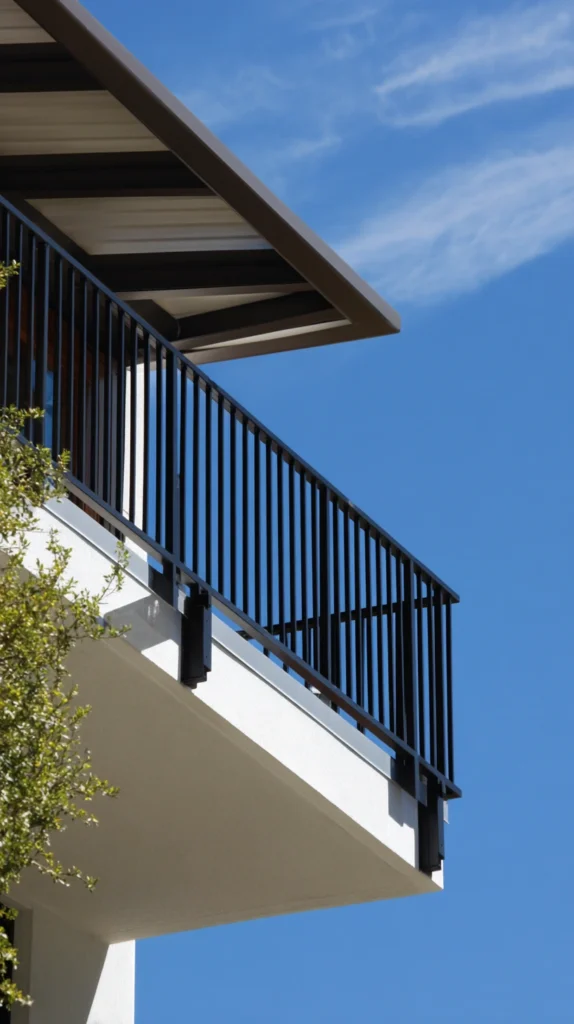
Balcony railing planters — containers that hook over or clamp to the railing and hang on the exterior face — are the most immediate and most space-efficient planting option available for any balcony. They add planting without consuming a single centimetre of floor space, they create a green privacy screen visible from the street below, and they are available in materials and finishes to suit every railing type and aesthetic.
Galvanised metal railing planters cost $8–$20 each. Powder-coated steel versions in matte black or white run $12–$30 each. A full railing run of 3 metres requires four to six planters at $35–$120 total. Plant with trailing lobelia, calibrachoa, and bacopa for continuous colour through summer — all three are relatively drought-tolerant, long-flowering, and wind-resistant enough for an exposed railing position. Self-watering planter inserts ($5–$10 each) reduce daily watering frequency significantly.
Balcony tip: Check your lease or building management rules before installing railing planters — many apartment buildings prohibit external attachments or require specific fixing methods. Railing planters that clamp internally rather than hanging externally are accepted in most buildings where external planters are prohibited and produce the same visual effect from the balcony interior.
2. A Vertical Privacy Screen With Plants
Budget: $60 – $250
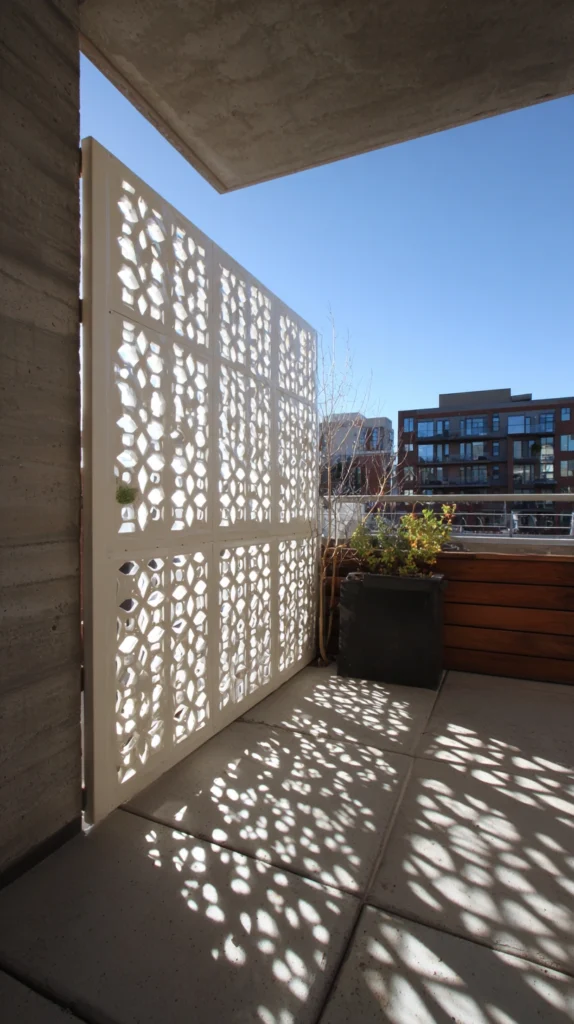
A freestanding trellis or bamboo screen panel positioned at the balcony edge — planted with a fast-growing climber — creates privacy without permanent structural installation and without consuming any floor space beyond the planter at the base of the panel. Within one to two growing seasons the planting covers the screen completely and the balcony feels genuinely enclosed and sheltered rather than exposed on all sides.
A freestanding bamboo screen panel costs $20–$60. A powder-coated metal trellis panel on a self-standing frame costs $40–$100. A fast-growing climber in a large container — Clematis armandii, jasmine, or passionflower — costs $10–$30 and begins to provide useful coverage within its first season. Position the container planter at the base of the screen with the planting tied loosely to the structure from the moment of installation rather than waiting for the plant to find the screen independently.
Balcony tip: In exposed, higher-floor balcony positions, choose semi-transparent screens rather than solid privacy panels. A solid screen in a windy position creates significant wind turbulence on the sheltered side — the swirling eddies behind a solid panel are more disruptive to plants and to people than the direct wind the panel is intended to block. A semi-transparent bamboo or trellis screen reduces wind speed without creating the turbulence that solid panels generate.
3. A Tiered Plant Stand as a Focal Point
Budget: $40 – $150
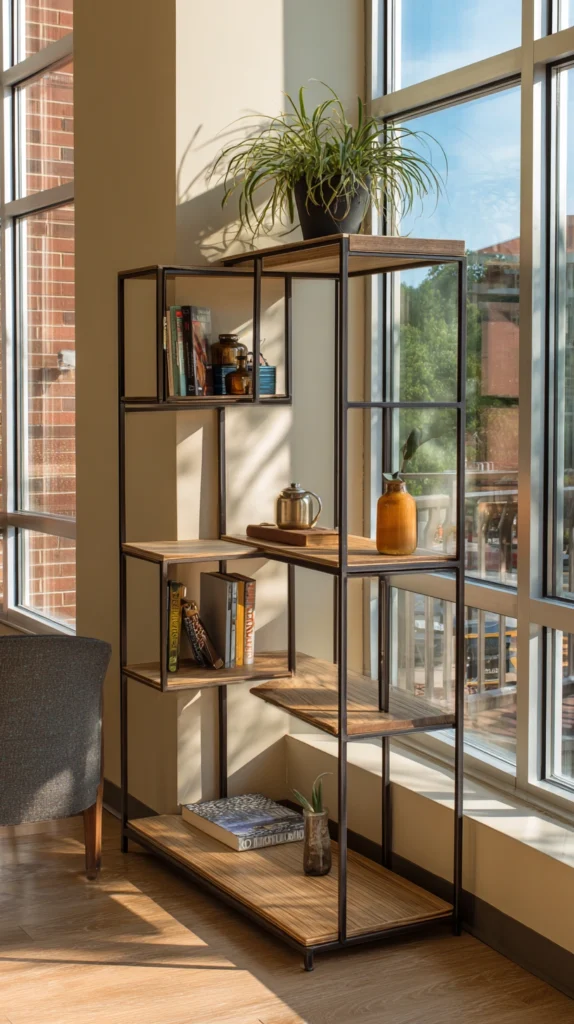
A multi-tiered plant stand in one corner of the balcony — displaying plants at five or six different heights from floor level to above the railing — creates the sense of a planted garden in a footprint of less than 60×60 cm. The vertical layering of plants at different levels mimics the structure of a border without requiring any horizontal ground space and produces the visual richness and depth that a single layer of containers on the floor never achieves.
A powder-coated steel etagère or ladder shelf for outdoor use costs $60–$150. A tiered terracotta pot tower costs $30–$80. Position in the corner that receives the most direct sun for the broadest plant selection, or in the shadiest corner with shade-tolerant species if the balcony receives limited light. Stock the stand with a mix of trailing plants on the upper tiers (trailing succulents, calibrachoa), mid-size plants in the middle (herbs, compact pelargoniums), and larger statement plants at the base (a small olive tree, a compact lavender).
Balcony tip: Water plants on multi-tier stands from the top tier downward and allow the drainage from each tier to fall naturally into the pot below. This top-down watering approach reduces the total watering time for a fully stocked stand to a single pass from the highest shelf to the lowest — considerably more efficient than watering each pot individually and less likely to miss any container in the process.
4. Outdoor Flooring to Define the Space
Budget: $50 – $300
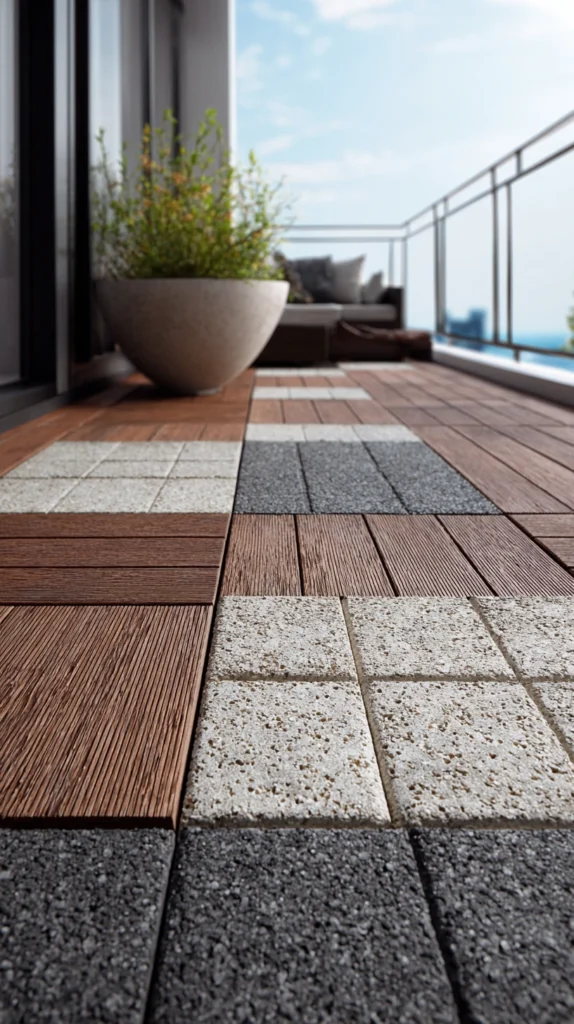
Laying outdoor flooring over a concrete or tiled balcony surface — interlocking timber deck tiles, artificial grass, or outdoor rugs — transforms the visual quality of the floor from an industrial utility surface to a finished outdoor room in a single afternoon. The floor is the largest visible surface from the main seating position and the change in material makes a more immediate difference to the overall feeling of the balcony than any amount of additional planting.
Interlocking timber deck tiles cost $2–$6 per tile and click together without any tools or fixings — a 2×1.5 metre balcony requires approximately twelve tiles at $24–$72 total. Artificial grass tile squares cost $3–$8 each and provide the most garden-like appearance at any balcony position. A jute or polypropylene outdoor rug costs $40–$120 and suits a seating area better than a full-coverage hard surface alternative when only part of the balcony is being dressed.
Balcony tip: Leave a small gap between interlocking deck tiles and the balcony drainage outlet — tiles installed flush against or over a drain prevent rainwater from clearing the surface and can cause standing water to pool behind the tile coverage. Verify the drain position before installing any floor covering and leave at least a 15 cm clear zone around the drain point for unobstructed drainage in all rainfall conditions.
5. A Compact Dining Setup
Budget: $80 – $400
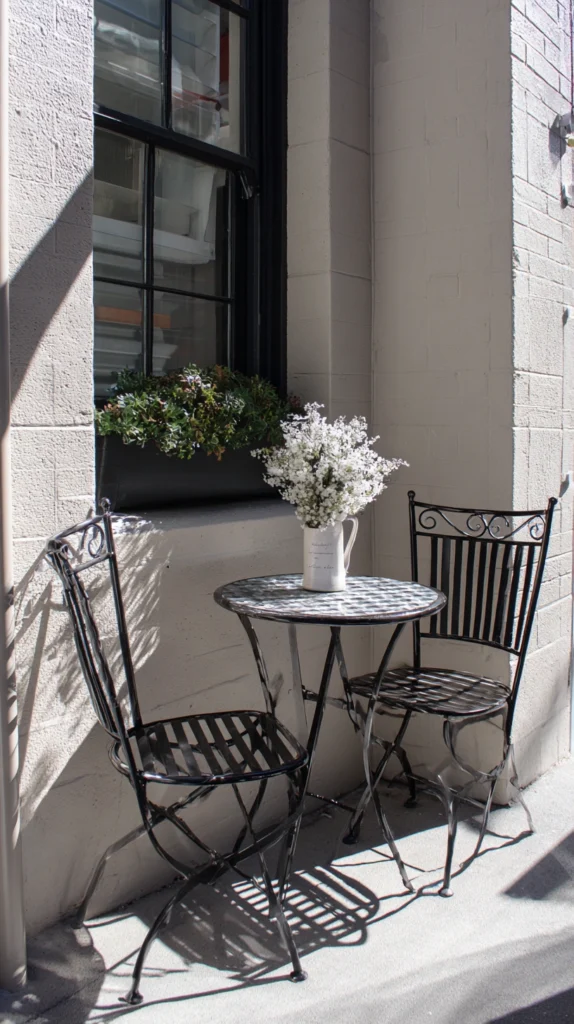
A small bistro table and two chairs — the original Parisian pavement café furniture format that exists precisely because it is designed for exactly the footprint constraints of a small outdoor space — creates a proper outdoor dining setup on the smallest balcony without consuming the space required by conventional garden furniture. Eating outside, even on a balcony, changes the character of daily life in a way that goes considerably beyond the food.
A cast iron or powder-coated steel bistro table of 60 cm diameter with two matching chairs costs $80–$200. Folding bistro sets in aluminium or rattan run $60–$150 and can be stowed against the wall when not in use — an important practical consideration for any balcony where multiple uses compete for the same floor area through the day. Choose a table with a slatted or perforated top rather than a solid surface — rain drains through immediately rather than pooling and drying slowly on a solid table top.
Balcony tip: Position the bistro table against the wall or in one corner of the balcony rather than in the centre. A table in the centre of a small balcony divides the floor space and makes movement around it awkward. A table in the corner occupies dead space that is difficult to use productively for any other purpose and leaves the main balcony floor area free for movement, additional planting, and the visual openness that makes a small space feel less constrained.
6. String Lights for Evening Atmosphere
Budget: $20 – $80
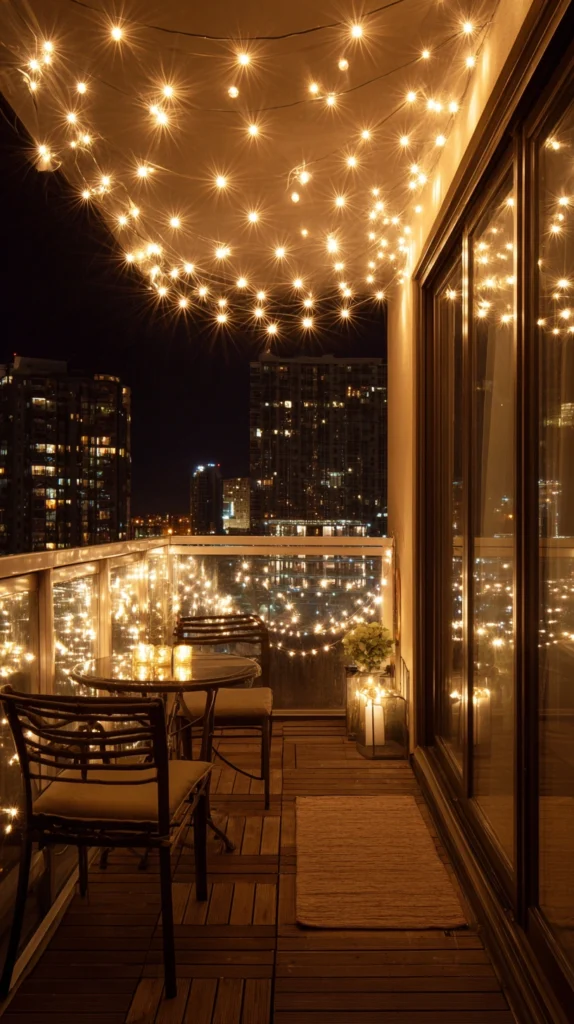
String lights on a balcony extend its usable hours by two to three on every summer evening and create an atmosphere that is difficult to replicate by any other means at any equivalent cost. A balcony lit by warm string lights at dusk becomes a different space from the one experienced in daylight — more intimate, more enclosed, and more specifically enjoyable as an evening destination rather than a daytime outdoor area.
Solar-powered outdoor string lights in warm white cost $20–$50 for a 5–10 metre run — sufficient to cover the full perimeter of most standard balconies. Plug-in versions provide more consistent brightness at $25–$60 for the same length. Weave along the railing, string between wall hooks, or drape along the ceiling of a covered balcony. Use warm white bulbs at 2700K only — cool white string lights on a balcony produce the same atmosphere as a fluorescent work light and undermine every other effort to make the space feel cozy.
Balcony tip: Fix string lights with purpose-made outdoor adhesive clips ($5–$10 per pack of twenty) rather than electrical tape, cable ties, or other improvised fixings. Adhesive clips designed for outdoor use maintain their grip through UV exposure and rain cycles while tape and cable ties deteriorate quickly and produce a progressively untidy-looking installation within one season of outdoor exposure.
7. A Herb and Edible Garden in Containers
Budget: $30 – $120
A balcony kitchen garden — cherry tomatoes in a grow bag, a collection of herb pots, a pot of chillies, and a strawberry planter at the railing — creates the most purposeful and most daily-use balcony garden available. A balcony that produces food that is actually eaten transforms from an aesthetic feature of the home into a genuinely useful one, and the relationship with the growing space it creates is more engaged and more consistently maintained than a purely ornamental balcony garden.
A cherry tomato grow bag costs $8–$15. Herb plants — basil, thyme, chives, and flat-leaf parsley — cost $2–$5 each. A chilli plant in a 15 cm pot runs $3–$8. A strawberry hanging basket costs $20–$40 including plants. The total investment for a productive balcony kitchen garden sits between $40 and $100 in plants and containers and produces food from June through to the first autumn frost with regular fortnightly feeding and consistent watering.
Balcony tip: Feed all balcony food plants with a high-potassium liquid fertiliser every two weeks from the moment flowers first appear. Container compost exhausts its available nutrients within six to eight weeks of planting and regular feeding is the single most important factor in productive balcony growing — a well-fed tomato plant in an adequate container significantly outperforms the same variety in a large container with no supplementary nutrition.
8. A Faux Grass or Moss Wall Panel
Budget: $30 – $150
A panel of preserved moss, faux grass, or artificial plant wall covering fixed to the balcony wall creates an instant green surface that requires no watering, no light, and no maintenance — making it the most practical vertical greening solution available for a balcony wall that receives no direct sun or where a living plant installation is not viable. The preserved or artificial version does not replicate the experience of a living wall but it produces the visual green quality of one on surfaces where nothing living would succeed.
Preserved moss wall art panels cost $30–$80 for a 60×40 cm section. Artificial green wall panels in a box grass or fern leaf style cost $20–$60 per 50×50 cm tile. Tiling multiple panels across the back wall of the balcony creates a full green wall effect for $80–$200 depending on wall area covered. Fix with outdoor adhesive or command strips rated for outdoor use — standard interior adhesives fail within one to two seasons of outdoor humidity and temperature cycling.
Balcony tip: Mix preserved moss panels with a few air plants (Tillandsia) pinned or mounted within the arrangement for an installation that combines the low-maintenance quality of preserved material with the visual authenticity of genuinely living plants. Air plants require misting once or twice weekly — requiring considerably less maintenance than any soil-based plant — and the combination of moss and air plants produces a wall that reads as a natural, living installation rather than a purely artificial surface covering.
9. A Compact Water Feature
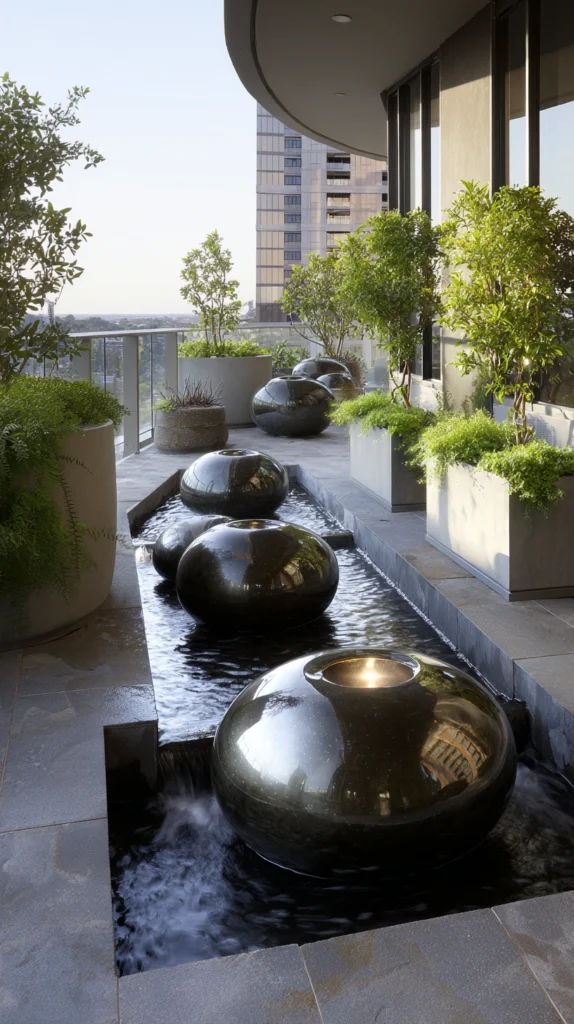
Budget: $30 – $150
A small self-contained water feature — a solar-powered tabletop fountain in a ceramic bowl, a wall-mounted spout into a small reservoir, or a compact bubbling millstone — brings sound, movement, and a quality of calm to a balcony that no visual element alone produces. The sound of moving water masks urban noise from the street below and creates an acoustic environment that makes a small balcony feel significantly more removed from the city around it than its actual elevation and position justify.
A solar-powered tabletop fountain in a glazed ceramic bowl costs $30–$80. A wall-mounted self-contained water spout feature runs $60–$150. Both are self-contained and require no plumbing connection — only a solar panel placed in a position that receives adequate direct sun for reliable pump operation. In partially shaded balcony positions, a plug-in pump version at $20–$50 provides more reliable and consistent water flow than a solar-powered alternative that receives limited charging hours.
Balcony tip: Add a handful of aquatic oxygenating plant (Elodea or Hornwort) to the water feature reservoir if the bowl is large enough to accommodate it. Aquatic plants significantly reduce algae growth in the water by competing for the same nutrients algae require — reducing the frequency with which the water needs to be changed or treated and keeping the water clearer and more attractive through the growing season with no additional effort.
10. A Privacy Curtain Between Balconies
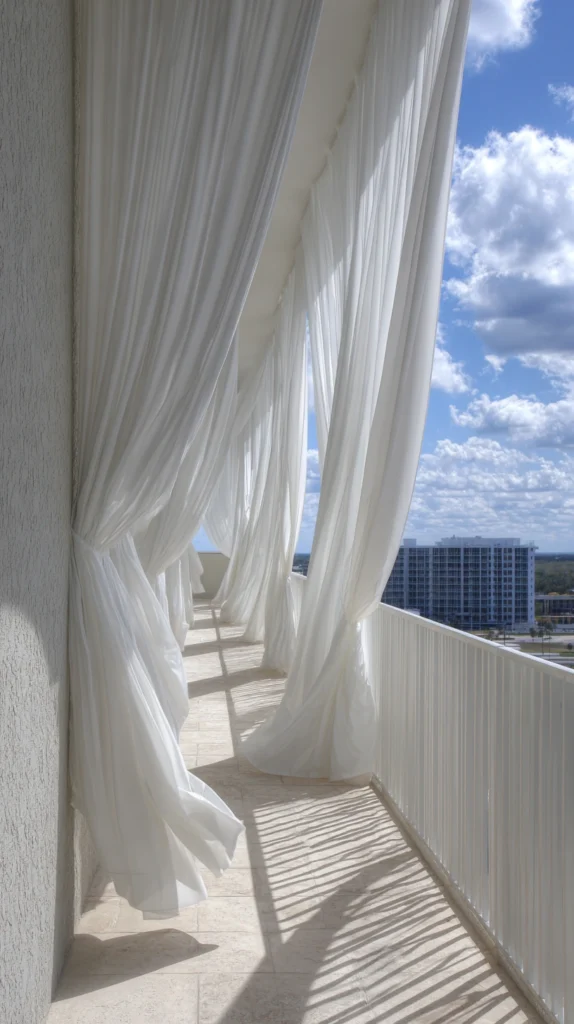
Budget: $20 – $80
A weather-resistant outdoor curtain hung from a tension rod between the balcony wall and the side railing creates an instant privacy screen between adjacent balconies without any permanent installation, any drilling, or any building management approval. The curtain softens the hard architectural lines of the balcony, adds colour and movement, and creates the sense of enclosure that makes a small outdoor space feel like a private retreat rather than a shared building element.
Outdoor fabric curtain panels in UV-resistant polyester or acrylic cost $15–$40 per panel. A tension rod suitable for outdoor use runs $8–$20. Choose a fabric weight heavy enough to hang well rather than billowing uncontrollably in any light breeze — 200g/m² or above is the minimum weight that hangs with the composed, considered quality that makes an outdoor curtain look designed rather than improvised. Neutral tones — cream, white, or warm grey — suit most balcony colour schemes and read as architectural rather than decorative.
Balcony tip: Use curtain tie-backs to secure the outdoor curtain against the wall or railing when not required for privacy — a curtain left loose in any wind flaps continuously and creates noise that can be as disruptive to the outdoor experience as the lack of privacy it was installed to address. Tie-backs ($5–$10 per pair) take five seconds to use and significantly extend the enjoyable conditions under which the curtain setup functions correctly.
11. A Statement Large Pot as the Garden’s Centrepiece
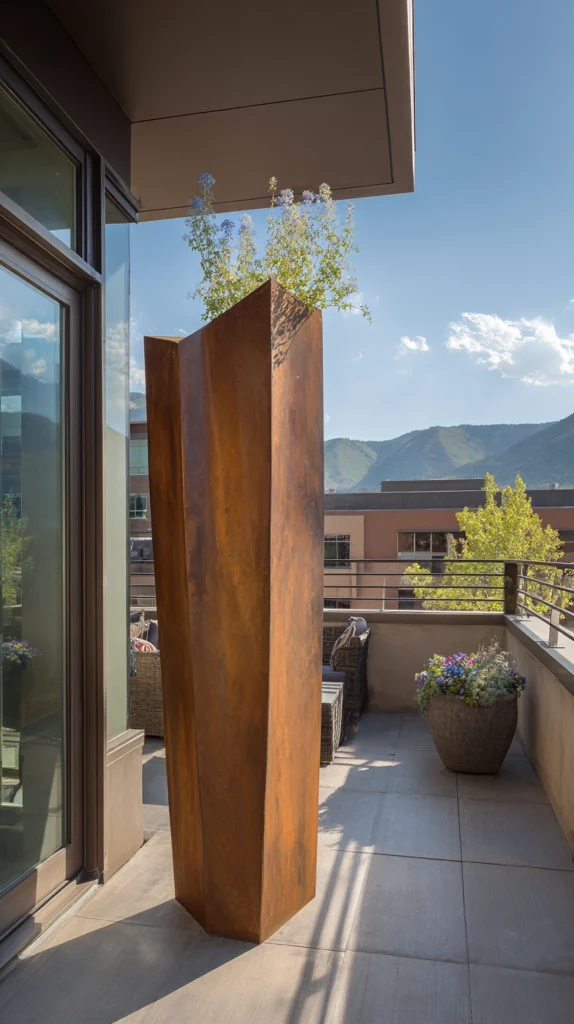
Budget: $30 – $150
One generously sized pot — 45–60 cm diameter — planted with a single statement plant becomes the garden’s centrepiece in the way that a specimen tree anchors a larger garden. A small olive tree, a standard bay, a compact Japanese maple, or a large architectural grass fills a corner or edge position with a presence and scale that a collection of small pots never achieves regardless of their total number. One big thing always reads more confidently than many small ones on a balcony.
A large glazed ceramic pot of 50 cm diameter costs $30–$80. A reclaimed terracotta pot of the same size costs $15–$40. A small olive tree in a 15-litre nursery pot costs $25–$60 and transfers to the display pot immediately. A standard bay tree runs $30–$80. A Japanese maple — the most seasonally varied and most specifically beautiful specimen plant available for a sheltered, partially shaded balcony — costs $30–$100 depending on size and variety.
Balcony tip: Check the weight of a large planted pot against the load-bearing specification of the balcony before placing it. A 50 cm pot filled with wet compost and a mature plant can weigh 50–80 kg — concentrated on the specific area of floor that the pot occupies. Spread the weight across two or three smaller pots if a single large pot approaches the balcony’s weight limit, which your building management company can advise on if it is not stated in the lease documentation.
12. A Colour-Themed Container Display
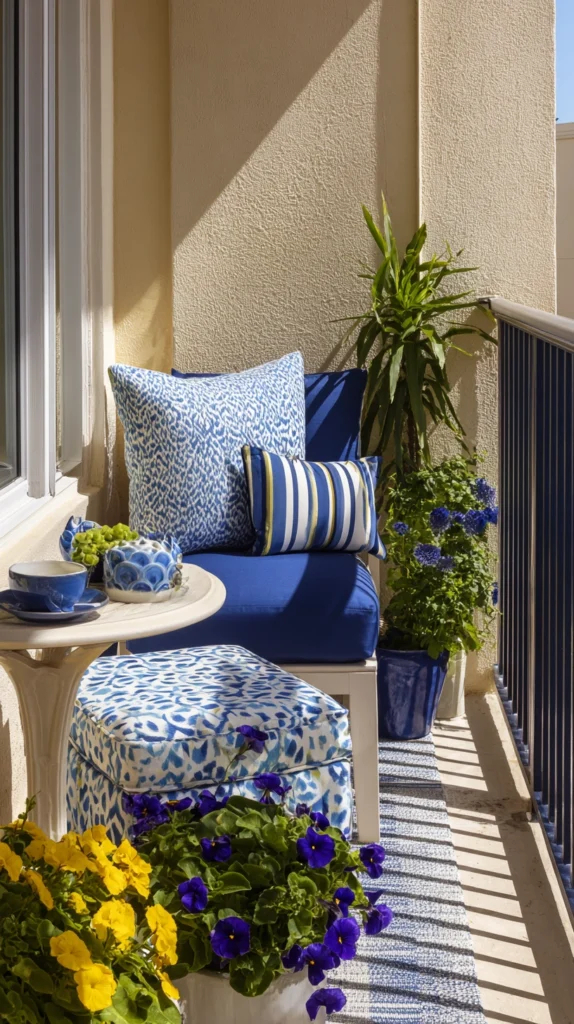
Budget: $50 – $200
A balcony garden planned around a single colour theme — all white flowers with silver foliage, all hot orange and red, or all blue and purple — creates a visual cohesion across multiple containers that makes the whole balcony read as a designed garden rather than a collection of individual pots. The theme is the decision that unifies everything, and a balcony with a clear colour identity always looks more considered than one planted without a shared logic regardless of the individual quality of each pot.
Choose three to five plant species that flower in the same colour family and use them across all the containers on the balcony — supplemented by foliage in a complementary tone. A white balcony display might combine white calibrachoa ($4–$8), white pelargonium ($3–$7), silver Artemisia ($5–$10), and white bacopa ($3–$6) across four to six containers. The colour theme makes all four species read as a single curated planting rather than four separate plants in four separate pots.
Balcony tip: Use consistent pot material throughout a colour-themed balcony display to reinforce the sense of a single unified scheme. All white ceramic, all terracotta, or all galvanised metal creates a material coherence that amplifies the impact of the colour theme. Mixing pot materials within a colour-themed balcony display creates two competing systems of order — the colour and the material — and each dilutes the impact of the other.
13. A Hammock Chair for a Relaxation Corner
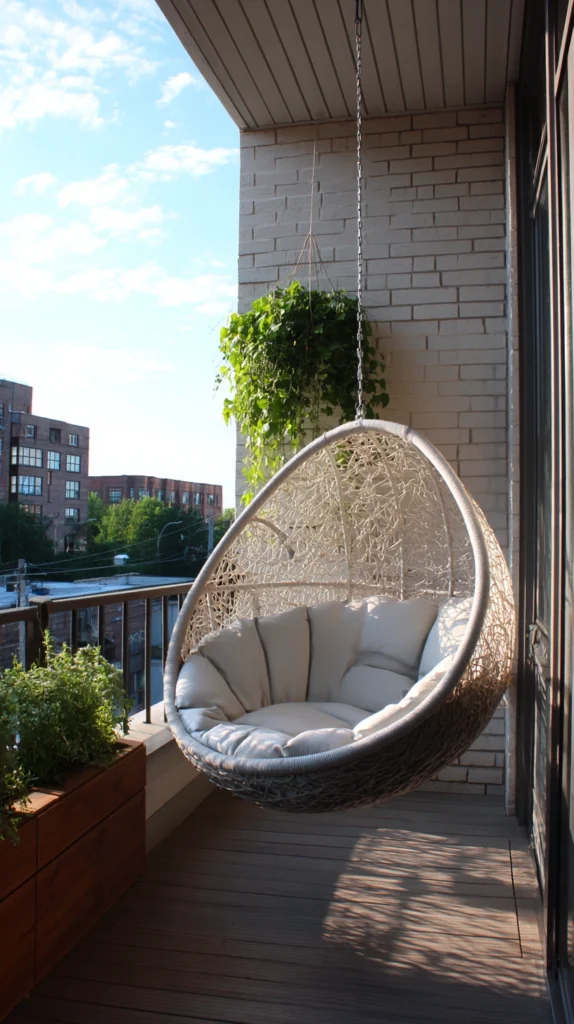
Budget: $60 – $200
A hanging egg chair or macramé hammock chair suspended from a ceiling hook or a purpose-built freestanding frame creates a genuine relaxation corner on a balcony that no conventional garden chair fully replicates. The suspended seat invites a different quality of sitting — more relaxed, more immersive, more specifically associated with leisure — and it makes a balcony feel like a destination in the home rather than simply an outdoor extension of the living space.
A macramé hanging chair in cotton cord costs $60–$150. A rattan egg chair with its own freestanding A-frame costs $120–$200 and requires no ceiling fixing — the freestanding version is the most practical choice for balconies where ceiling fixing is not permitted or where the structure is not rated for the suspended load. Pair with a small side table ($20–$50) for a glass and a book and the corner becomes completely self-contained as a relaxation zone.
Balcony tip: Position the hanging chair in the corner of the balcony that offers the most interesting view from the seated position rather than in the corner that has the most available floor space. A hanging chair is experienced primarily from within it — the view outward from the seated position is the primary quality of the experience, and the best view from the seated position is always more important than the convenience of the installation position.
14. A Miniature Sensory Garden
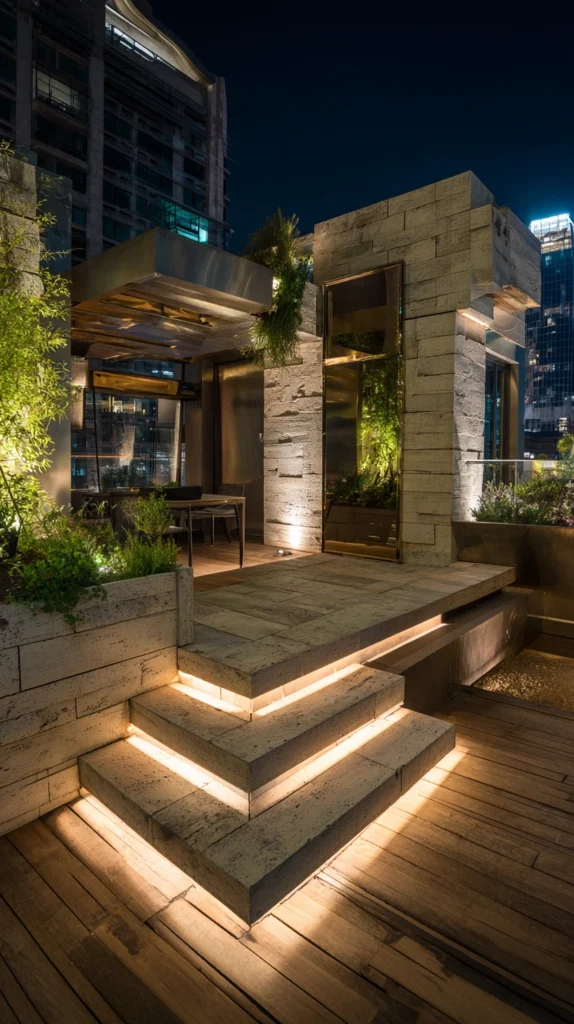
Budget: $40 – $160
A balcony planted specifically for sensory richness — fragrant flowers, textural foliage, the sound of wind through grasses, and the taste of edible herbs within arm’s reach — creates the most complete and most memorable outdoor space experience available in a small footprint. The garden that engages every sense simultaneously feels genuinely immersive in a way that a purely visual arrangement of plants in pots never achieves, and a balcony is the ideal scale at which to create that concentrated sensory environment.
Key plants for a sensory balcony include scented-leaf pelargoniums ($4–$8 each) for fragrance on touch, Stipa tenuissima ornamental grass ($7–$15) for sound and movement, trailing thyme ($3–$7) for scent and taste, lavender ($5–$12) for fragrance and pollinator visits, and a compact rose with strong fragrance ($12–$25) as the centrepiece. Together these five plants provide sight, smell, sound, touch, and taste from a balcony garden that occupies no more than four to six containers of varying sizes.
Balcony tip: Place the most fragrant plants closest to the door between the balcony and the interior of the home — beside the threshold rather than at the far end of the balcony. The fragrance experienced at the moment of stepping outside from the house makes the transition from interior to exterior most immediately rewarding and creates the strongest sensory impression of arriving somewhere genuinely different from the room you have just left.
The balcony that feels like a mini backyard is always the one that has been thought about as a room rather than as an outdoor ledge. It has a floor worth standing on, somewhere comfortable to sit, enough planting to create greenery at multiple heights, a light source that works after dark, and at least one thing that connects it to the natural world — a plant, a water feature, a bee visiting a lavender flower. Those elements together create the quality of being genuinely outside in a way that a bare concrete balcony with two chairs never does, regardless of how many floors above the street it sits.
Start with the flooring and one large pot — those two changes alone shift the balcony from an outdoor storage area to a garden-in-miniature. Add the string lights and a comfortable seat. Let the planting develop from the first season outward. The balcony that feels like a mini backyard always gets there gradually rather than all at once.