15 Garden Styling Ideas That Look Straight Out of Pinterest
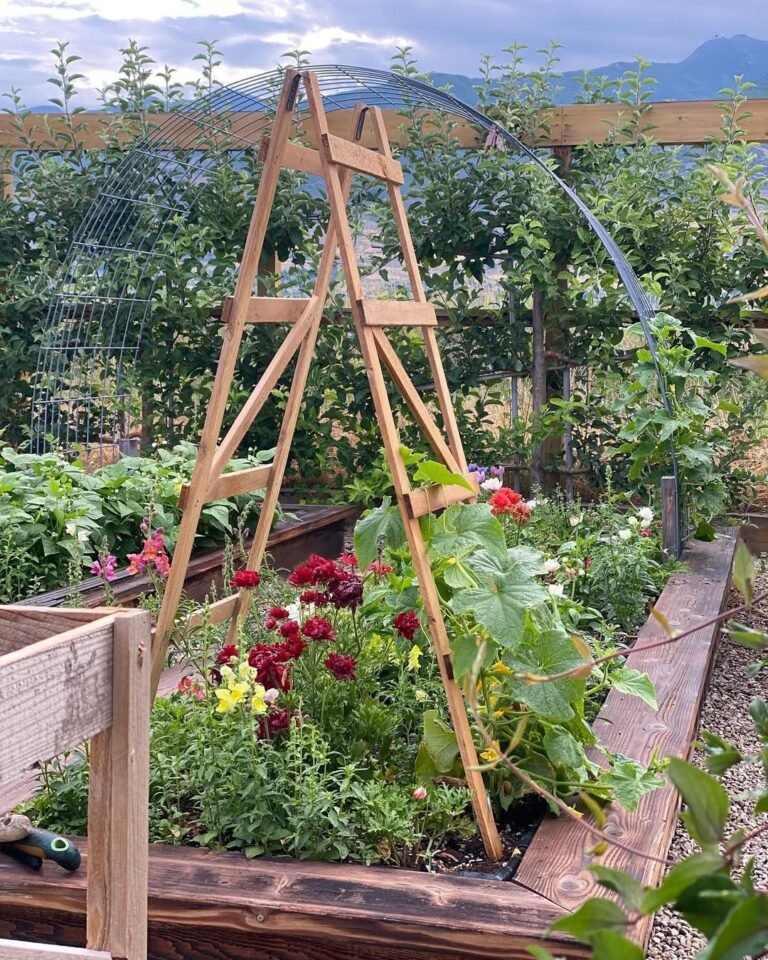
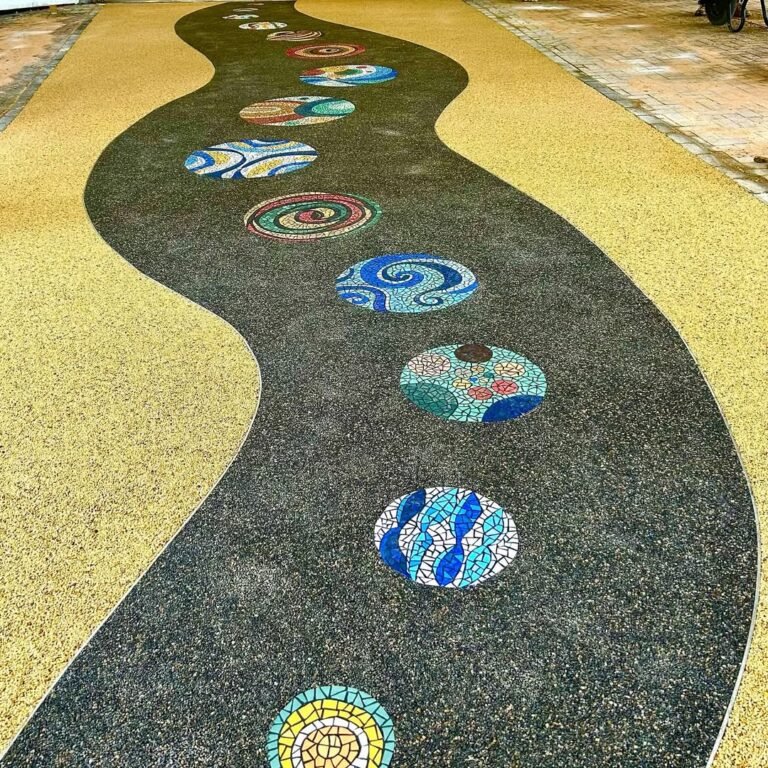
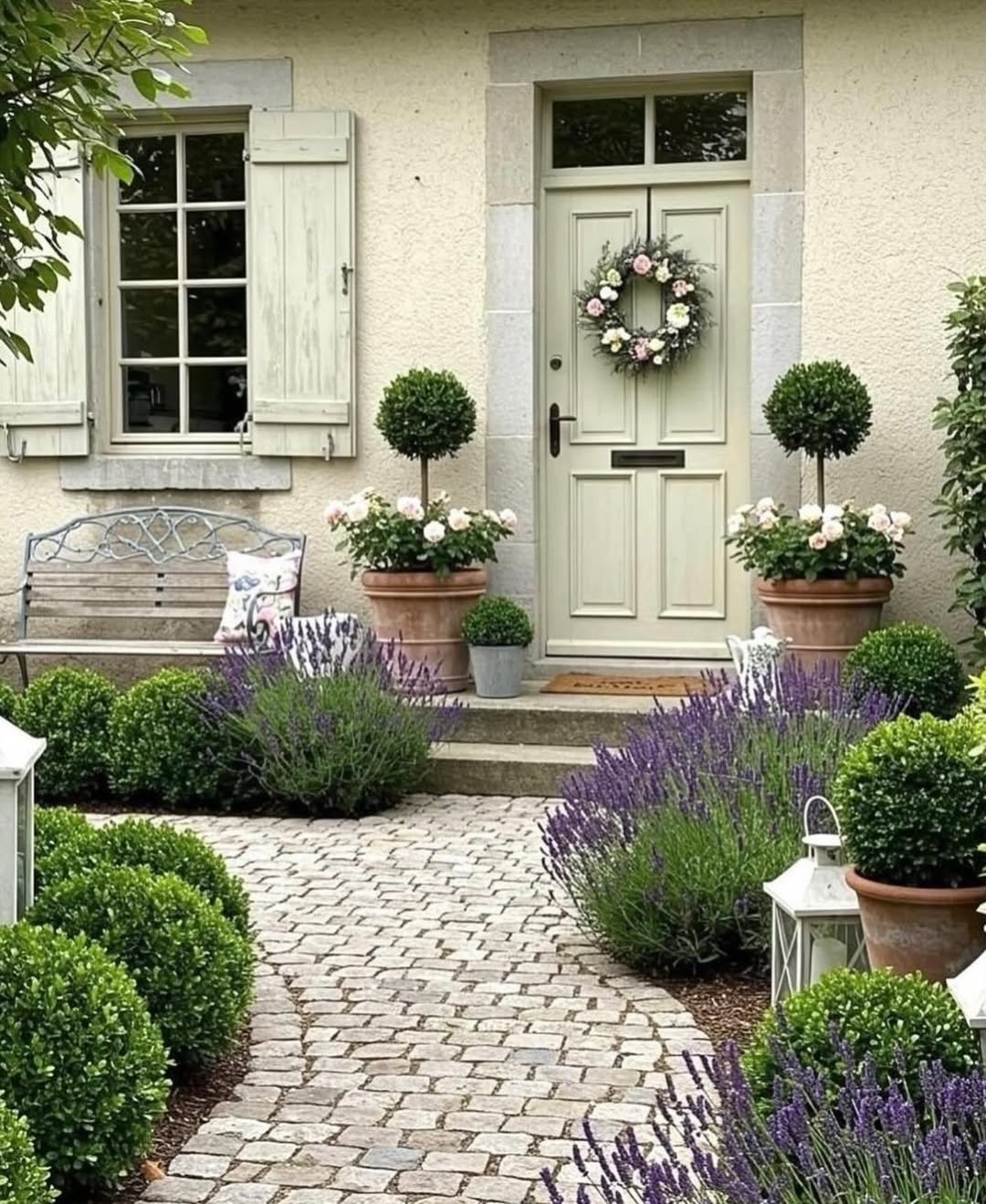
The gardens that stop the scroll on Pinterest are not necessarily the most expensive or the most elaborately planted — they are the ones where every element feels deliberately chosen and deliberately placed. A consistent material palette, a clear focal point, the right lighting at the right hour, and enough restraint to let individual details breathe. These are styling decisions more than gardening decisions, and they are available at every budget and in every garden size.
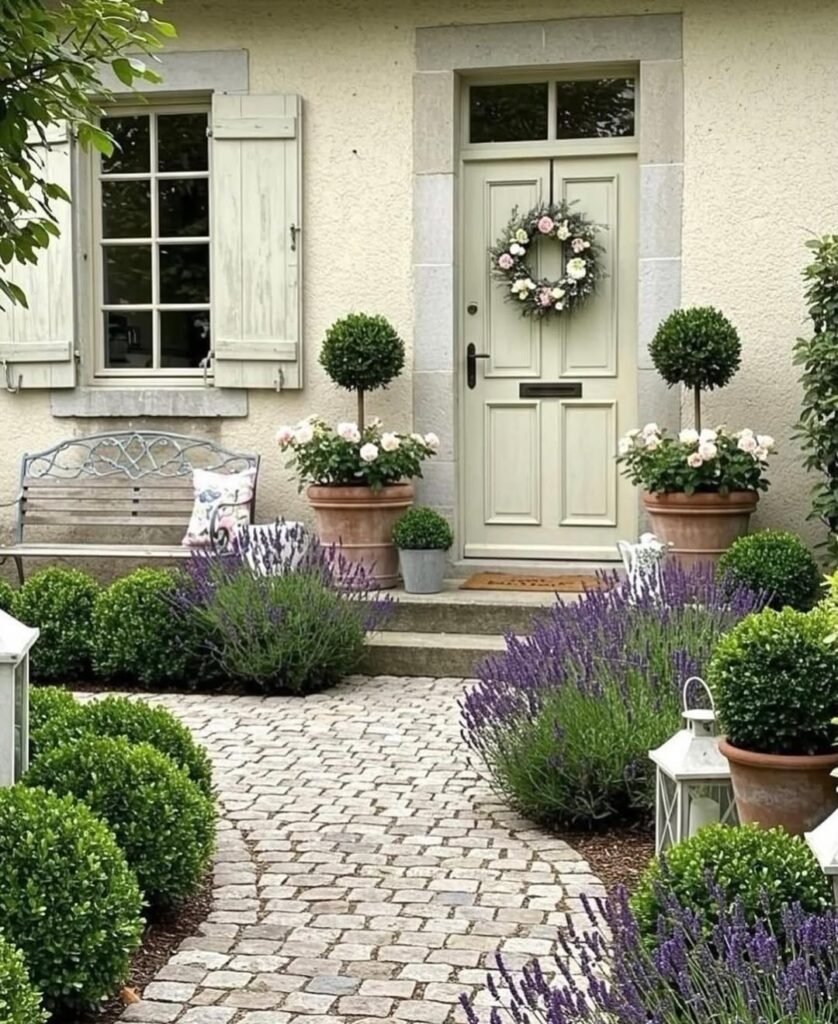
The fifteen ideas below are the specific styling moves that produce the most consistently shareable, most visually satisfying garden results — each one grounded in a principle that works in the real garden as effectively as it does in a photograph. Costs and a practical tip are included throughout.
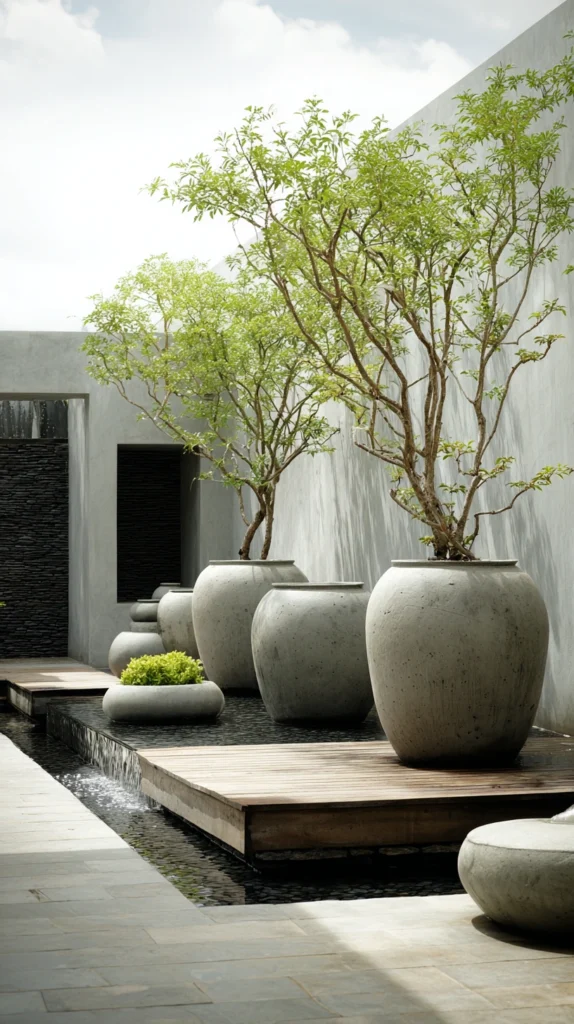
1. A Consistent Pot Material Throughout the Garden
Budget: $40 – $200
The single most transformative styling decision available for any garden is choosing one pot material and using it exclusively throughout the space. All terracotta, all black matte ceramic, all galvanised metal — the consistency creates a visual unity that makes the entire garden read as designed rather than assembled, regardless of how many different plant species fill those pots.
Terracotta in a consistent size range costs $5–$20 per pot. A collection of ten matching terracotta pots costs $50–$200 and immediately unifies a garden that previously had fifteen different pot types competing for visual attention. Distribute the consistent pots across the garden rather than grouping all of them together — the visual thread of the same material appearing at the front door, by the seating area, and at the rear boundary creates coherence across the whole space.
Style tip: Buy all matching pots in the same session rather than adding to the collection gradually from different sources. Terracotta from different manufacturers varies slightly in colour and finish — a collection assembled over two or three purchasing sessions from different retailers reads as similar rather than matching, which is a subtle but clearly visible distinction when multiple pots are displayed in close proximity to each other.
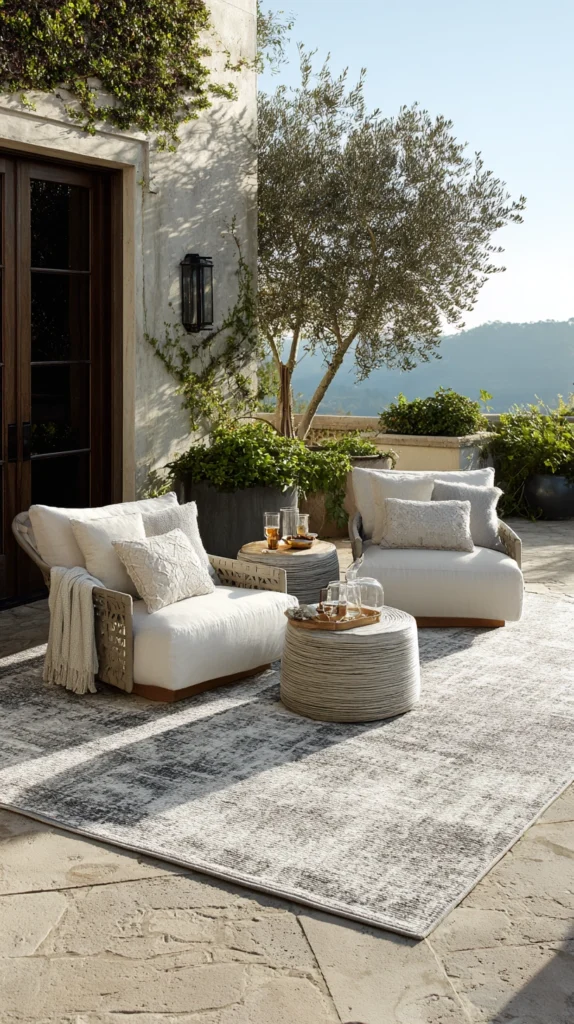
2. The Layered Outdoor Rug and Furniture Setup
Budget: $80 – $350
An outdoor rug beneath the seating furniture — large enough for all furniture legs to sit on it — transforms a patio or terrace from a functional outdoor area into a genuinely styled outdoor room. The rug is the element that makes the furniture arrangement read as a room rather than furniture placed on a hard surface, and it is the first thing any photographer or stylist adds to an outdoor space before shooting it.
A quality polypropylene outdoor rug in a bold stripe, geometric pattern, or warm natural tone costs $50–$150 for a 160×230 cm size. Layer a smaller patterned rug on top — a kilim or flat-weave in a complementary colour — for the maximalist layered look that consistently performs best on Pinterest boards. Add a rattan side table ($30–$80) and cushions in a consistent palette ($15–$35 each) and the full outdoor room setup reads as completely and as effortlessly as any professionally styled garden image.
Style tip: Choose an outdoor rug at least 30 cm larger on each side than the furniture footprint — a rug that is too small makes the furniture look stranded and draws attention to the proportional mismatch. The furniture should look as though it sits within the rug rather than on top of a mat placed beneath it, and the correct sizing is always the one that feels generous rather than precise.
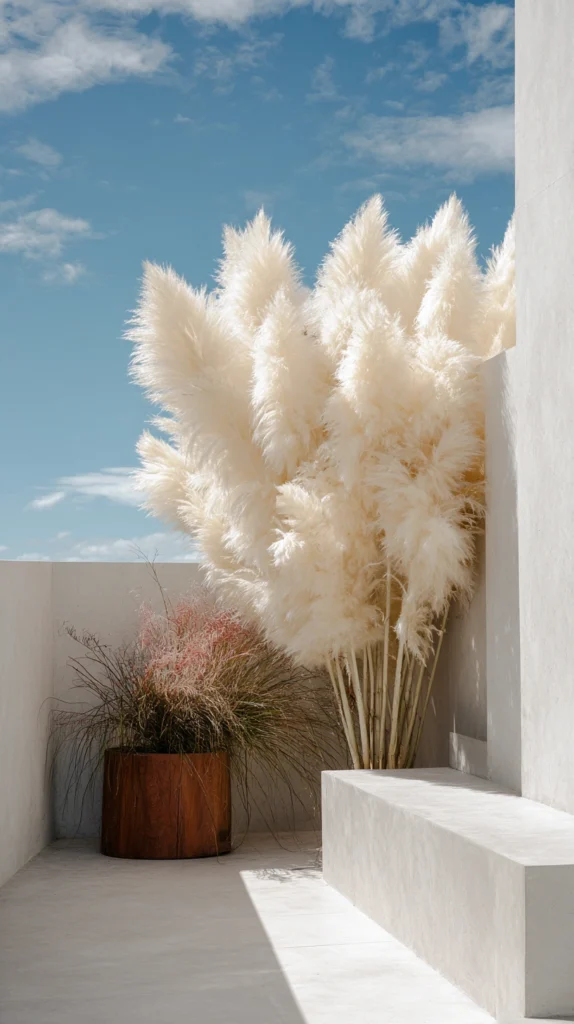
3. Pampas Grass as a Statement Plant
Budget: $15 – $60
Pampas grass — either growing in the garden border or as a cut stem arrangement in a large outdoor vase — has become one of the most consistently recognisable Pinterest garden elements for its soft, feathery plumes and warm neutral tones. In a garden setting, a single established pampas grass clump provides one of the most dramatic and most photographable plant features available through late summer and autumn.
A young Cortaderia selloana plant costs $15–$40 from garden centres. It takes two to three seasons to reach its full height of 2–3 metres and produce the large plumes that make it so striking. For an immediate result, cut dried pampas stems in a tall ceramic or rattan vase ($20–$50) create the aesthetic in any position without the wait. Position beside a rendered white wall, a pergola post, or the main seating area for the most frequently pinned context.
Style tip: Cut pampas stems for display before the plumes fully open — at the stage where the feathery material is still compact rather than fully expanded. Stems cut at the fully open stage shed their seed freely indoors and in still outdoor positions within weeks. Stems cut slightly early hold their structure for several months and develop their soft, open quality gradually after cutting rather than immediately.
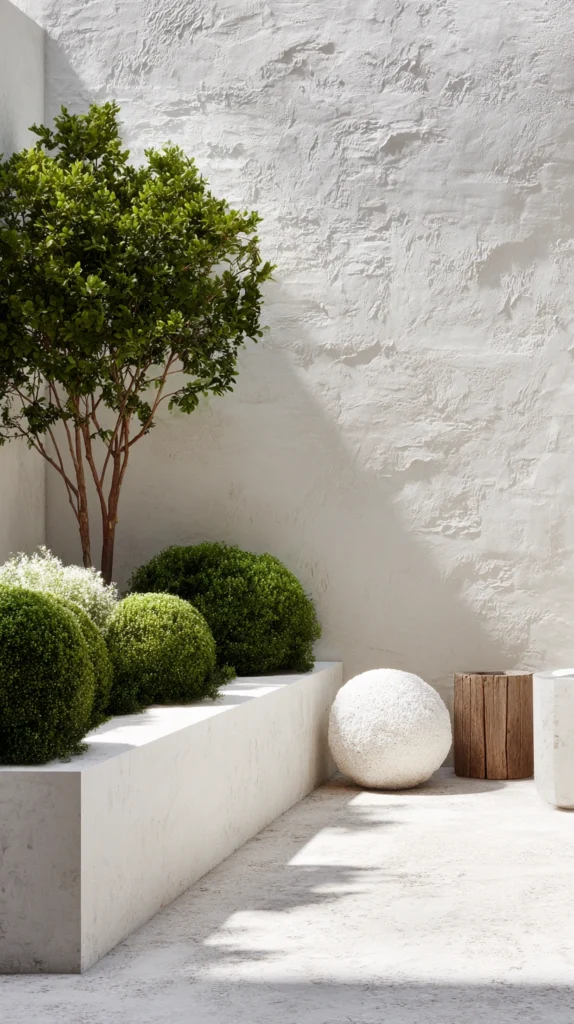
4. A White or Limewashed Rendered Wall
Budget: $30 – $200
A white or limewashed rendered wall as the backdrop to the main garden seating area or planting display is the garden equivalent of a white studio wall in interior photography — it makes everything in front of it look cleaner, more graphic, and more intentional than any other background colour. The warm irregularity of limewash suits a garden context better than flat brilliant white and photographs with more depth and warmth in natural light.
Limewash exterior paint costs $20–$50 per litre and covers approximately 10 square metres per litre in a single coat. Two coats on a standard garden wall section cost $40–$100 in paint and a half-day of application. The application technique — wide brush in irregular overlapping strokes — is simple and forgiving, which makes limewash one of the most accessible and most impactful exterior painting projects available for a home gardener without specialist skills.
Style tip: Paint only the wall that forms the primary backdrop of the garden’s most photogenic area rather than all walls simultaneously. A garden where one wall is dramatically limewashed and the others remain in their existing finish creates more visual interest than a garden uniformly painted in the same tone, and the contrast between the styled backdrop wall and the contextual surroundings makes the featured area read as more specifically designed.
5. String Lights in Every Evening Shot
Budget: $25 – $100
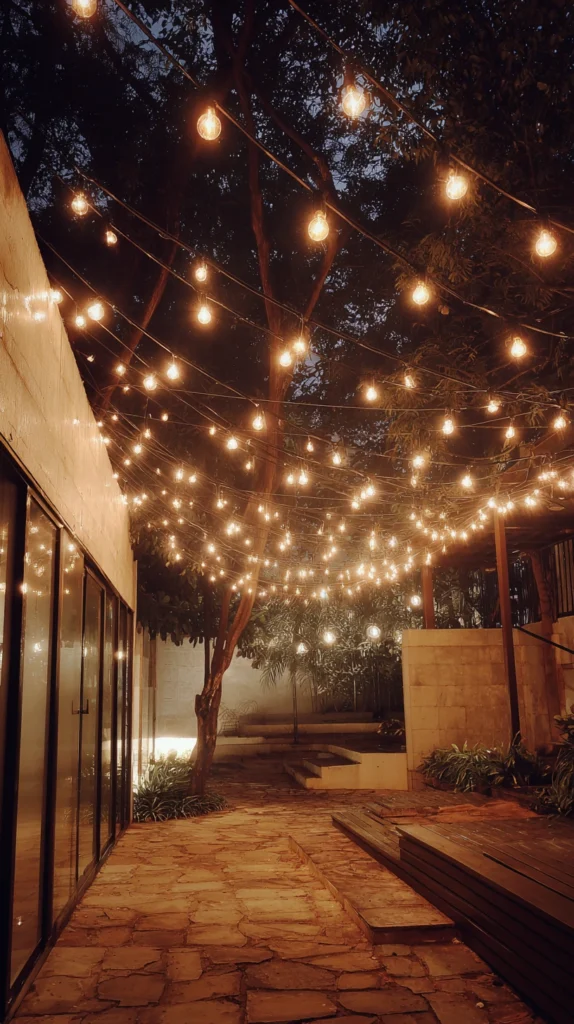
String lights are in virtually every high-performing Pinterest garden image for a simple reason — they create the warm, low light environment that photographs best at dusk and that genuinely feels best to spend an evening in. A garden without string lights looks different at 8pm. A garden with them looks like somewhere you do not want to leave.
Outdoor-rated warm white string lights in S14 Edison bulb format cost $35–$80 for a 10-metre run. Solar versions at $25–$60 require no electrical connection. Hang above the main seating area at 2–2.5 metres, weave through a pergola structure, or string between two posts above a dining table. The golden hour between full dusk and full dark — roughly 20–40 minutes — is when string lights photograph most beautifully and when the garden experience they create is most complete.
Style tip: Use S14 Edison bulb string lights rather than smaller fairy light format for outdoor dining and seating areas. S14 bulbs produce approximately four times more light per metre than fairy lights and remain visually striking even in daylight — a quality that makes them worth displaying as a permanent feature rather than a purely evening addition. Fairy lights disappear in daylight and provide inadequate light for comfortable evening use in most outdoor dining contexts.
6. A Gallery Wall of Botanical Prints on an Outdoor Wall
Budget: $30 – $120
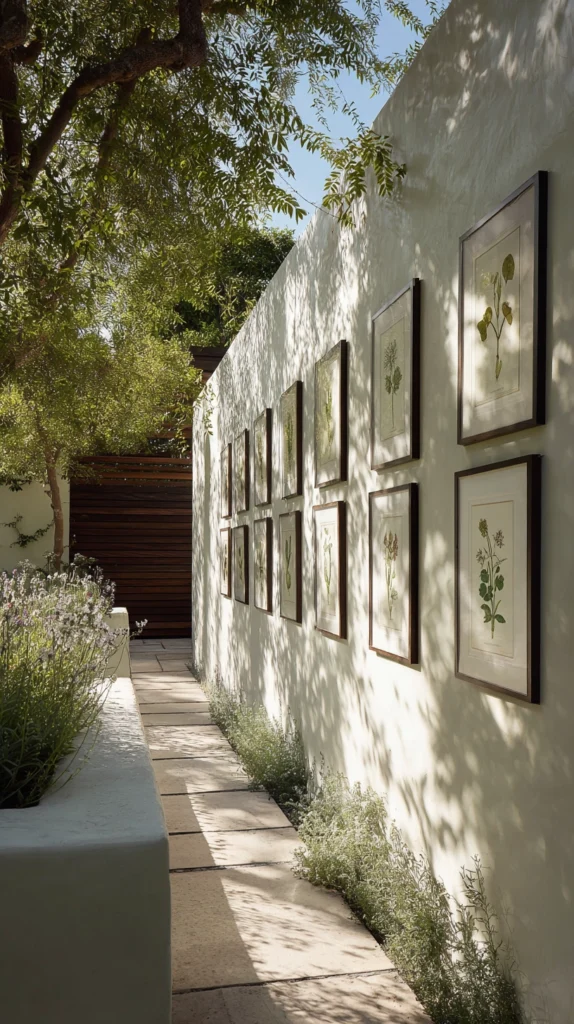
A grouping of botanical prints in matching frames fixed to an exterior garden wall — treated with a weatherproof backing or housed in UV-protected outdoor frames — creates one of the most immediately styled and most shareable garden wall treatments available. It references interior gallery wall culture in an outdoor context and creates the compositional richness of a picture wall in a space where walls are typically bare and undecorated.
Weatherproof outdoor prints in UV-resistant materials cost $10–$30 each. A grouping of three to five coordinated botanical or garden-themed prints in matching black or white frames creates the gallery wall effect for $50–$120 in total. Fix with stainless steel outdoor picture hooks ($3–$8 per pack) rated for exterior wall conditions. Choose a wall that receives indirect rather than direct sun — prints in direct sunlight fade faster even with UV-resistant materials and are more difficult to photograph without glare at any time of day.
Style tip: Lay the gallery wall arrangement on the ground before fixing any prints to the wall — arranging on the floor allows the spacing, alignment, and combination of frame sizes to be assessed and adjusted without making holes in the wall that cannot be undone. Photograph the ground arrangement and compare it to the available wall space before transferring the layout. This step consistently produces a more considered result than arranging directly on the wall by eye.
7. A Styled Potting Table or Plant Display Corner
Budget: $60 – $250
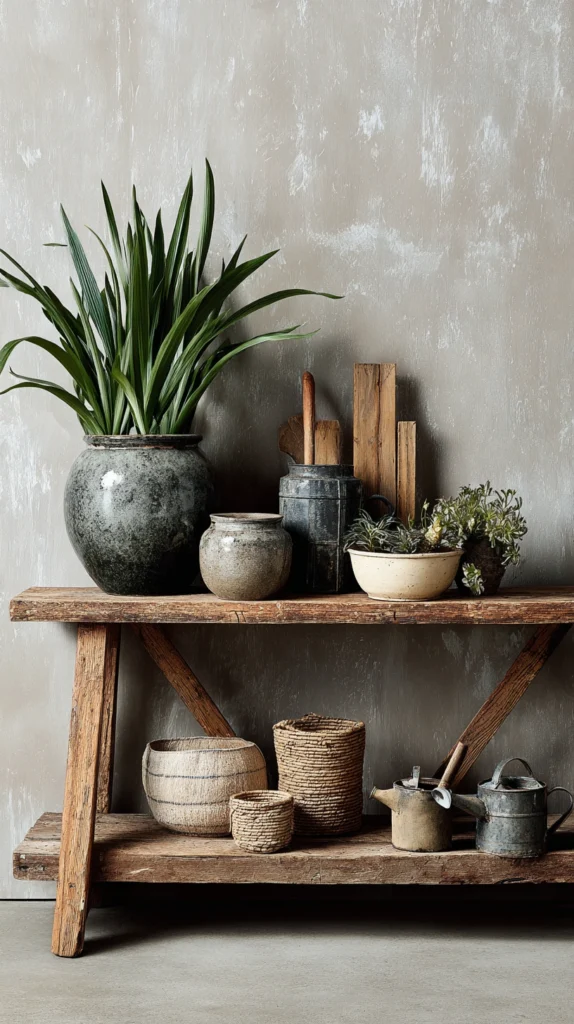
A potting table or dedicated plant display corner — a vintage or reclaimed timber table used as a surface for a curated grouping of plants, tools, and garden accessories — creates the most consistently photographed type of garden vignette on Pinterest. The composition of plants at varying heights, alongside a trowel, a watering can, and a ceramic pot or two, produces a scene of such immediate charm that it photographs well from almost any angle and in almost any light.
A reclaimed timber potting table costs $40–$150 from salvage markets. A vintage galvanised metal trolley converted to a plant table runs $50–$120. Style the surface with a mix of plants in matching terracotta, a lichen-covered stone, a pair of worn leather gloves, and one or two seed packets propped against a pot. Everything on the surface should suggest active use rather than static display — the scene of a garden being worked in is always more compelling than a purely decorative arrangement of garden objects.
Style tip: Include one intentionally imperfect element in the potting table vignette — a pot with a cracked rim, a tool with soil still on the blade, a half-used ball of twine. The imperfection signals genuine use and creates the authenticity that distinguishes a styled garden vignette from a showroom display. Perfectly clean, perfectly arranged, and perfectly uniform potting table styling always reads as staged rather than real, which loses the warmth that makes this type of garden moment so compelling.
8. A Climbing Plant Framing a Door or Window
Budget: $15 – $60
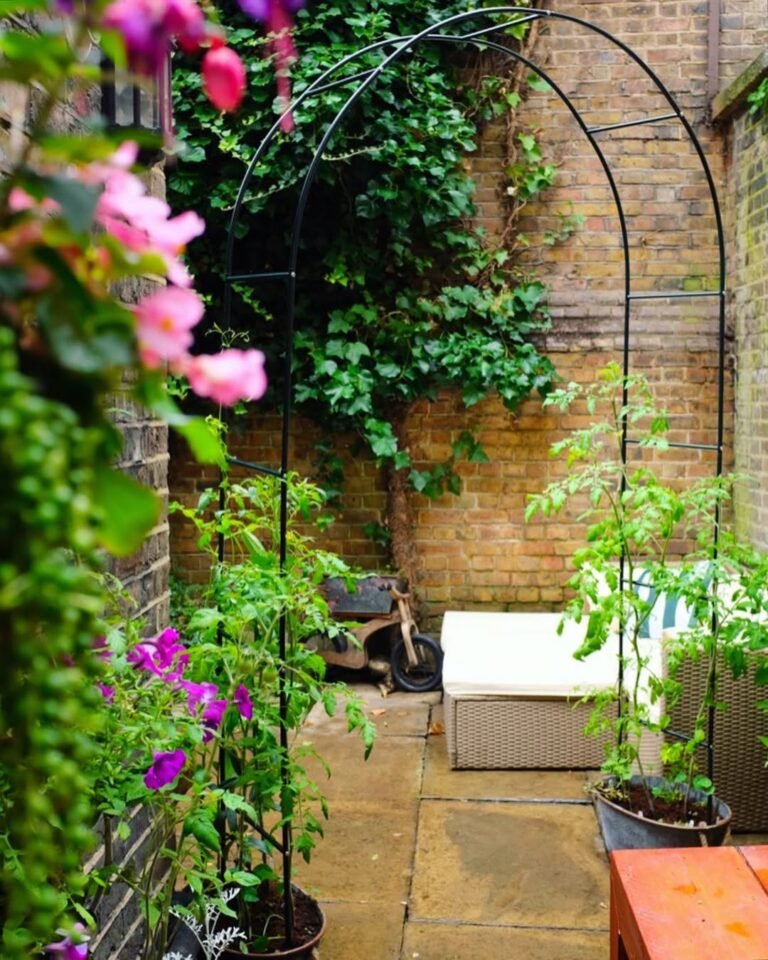
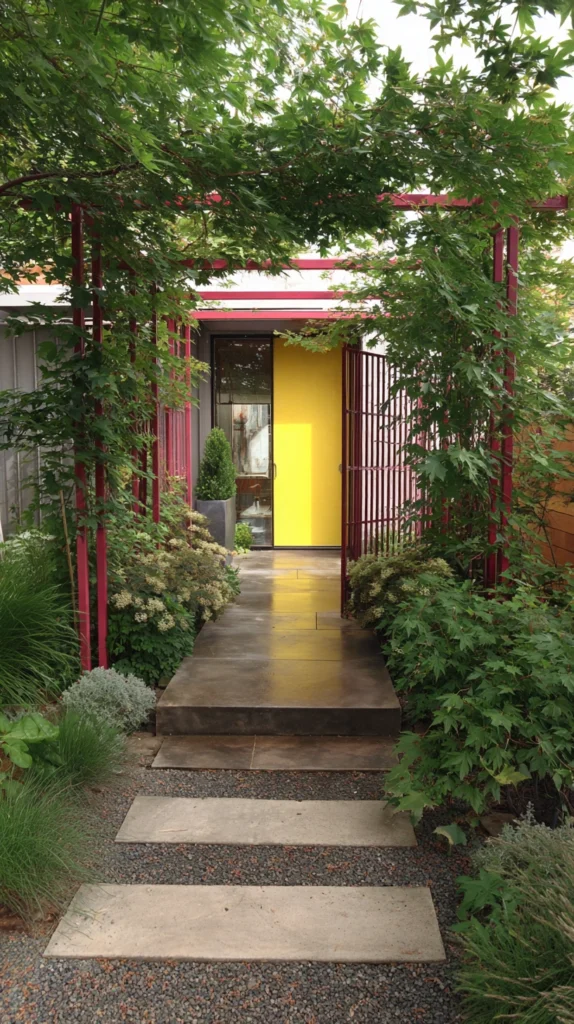
A climbing plant framing a garden door, gate, or window — a rose around a painted garden gate, a jasmine over a door arch, a clematis trained up and over a window frame — creates one of the most timeless and most reliably beautiful garden moments available. The plant-framed entry has been photographed and painted for centuries and continues to be the most shared single garden image type on every visual platform that has ever existed.
A climbing rose in a 3-litre pot costs $15–$40. Common jasmine runs $10–$25. A Clematis montana costs $10–$25. Fix horizontal vine eye and wire supports at 30–40 cm intervals on the wall beside and above the door or window before planting — the support framework takes thirty minutes to install and provides the structure that allows the plant to be trained into the framing position rather than simply scrambling wherever it finds purchase.
Style tip: Paint the door or gate beneath the climbing plant in a bold, complementary colour — deep navy with white rose, sage green with pink rose, terracotta with blue clematis. The colour relationship between the painted door and the climbing plant is what makes the composition so compelling in photographs — the contrast creates a clearly defined visual relationship between architecture and planting that a bare or neutral door rarely achieves.
9. A Gravel Garden With Bold Sculptural Plants
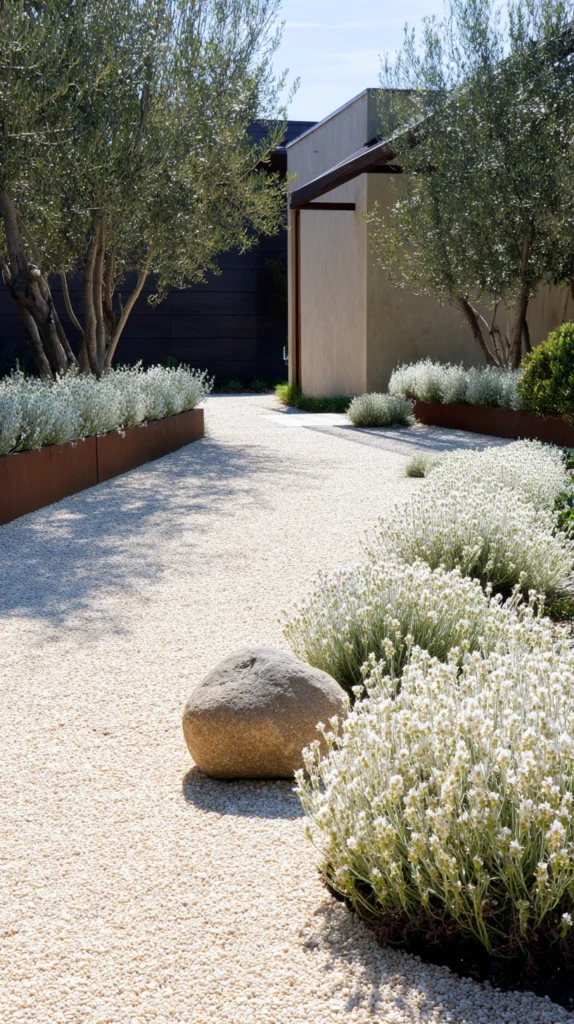
Budget: $150 – $500
A pale gravel surface planted sparingly with bold, architectural specimens — a single agave in a clay pot, ornamental grasses in small groups, three allium bulbs erupting from the ground — creates one of the most consistently photographed contemporary garden aesthetics. The clean gravel plane makes individual plants read as sculpture against a neutral background and the whole space photographs as a considered composition rather than a collection of garden features.
Pale gravel costs $20–$50 per large bag — a typical garden area of 3×3 metres requires four to five bags at 5 cm depth. An agave in a 25 cm clay pot costs $20–$50. Ornamental grasses suitable for a gravel garden — Stipa tenuissima, Festuca glauca — cost $7–$15 each. Allium bulbs cost $2–$4 each. The restraint of the planting is the aesthetic — no more than five plant species and no more than one of each large specimen.
Style tip: Keep the gravel raked and free of debris — a single leaf or twig on a pale gravel surface is immediately visible in photographs and draws the eye away from the planted composition. A raked gravel garden takes two minutes to tidy before photographing and the clean surface is as much a part of the image as any of the plants on it. The Zen garden principle of treating the surface as part of the composition rather than simply the background applies directly here.
10. Lanterns and Candles Grouped at Different Heights
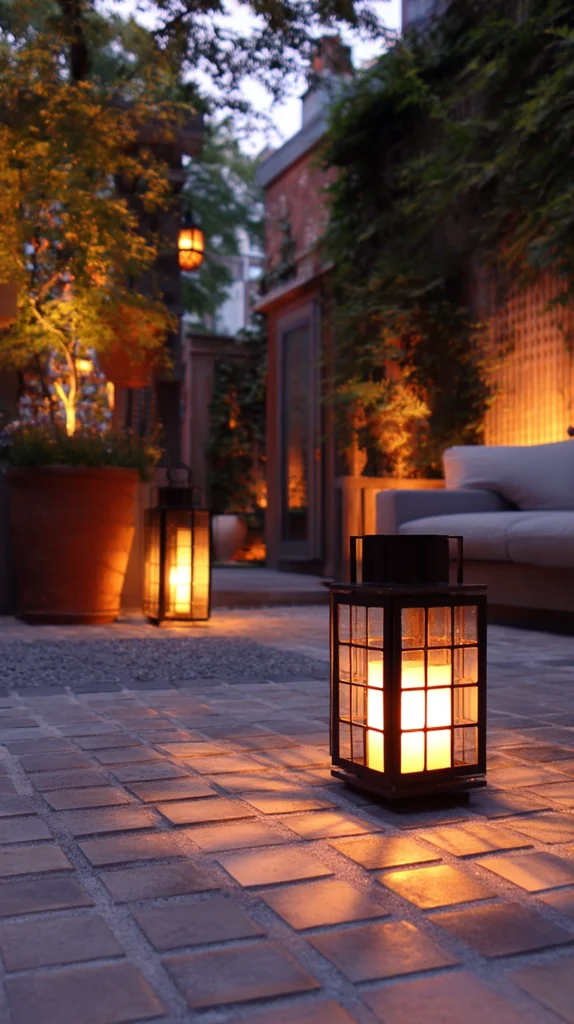
Budget: $30 – $120
A grouping of lanterns and candles at three different heights — on a table, on the ground beside a seat, and on a low wall or step — creates the most atmospheric and most photogenic garden lighting arrangement available without any electrical installation. The staggered heights produce a layered, warm light that appears in almost every high-performing Pinterest evening garden image because it is genuinely the most beautiful way to light an outdoor space after dark.
Large glass hurricane lanterns cost $10–$30 each. Moroccan punched metal lanterns run $15–$40. Ceramic lanterns in matte tones cost $12–$35. A grouping of five lanterns in two styles at three heights costs $50–$120 total. Use pillar candles ($5–$15 for a pack of three) or battery-powered LED candles ($8–$20 for a set of six) that flicker realistically — battery versions eliminate the fire risk near garden furniture and textiles while maintaining the warm, moving light quality of a real flame.
Style tip: Group lanterns in odd numbers — three or five — rather than even ones. Odd-numbered groupings create the visual balance of asymmetry that reads as naturalistic and designed simultaneously. Two lanterns looks paired and formal. Three lanterns looks arranged with intention. Five lanterns looks curated and abundant. Even numbers create a mirror-image symmetry that rarely suits the informal, gathered quality that lantern groupings are most effective at producing.
11. A Hammock or Swing in a Shaded Corner
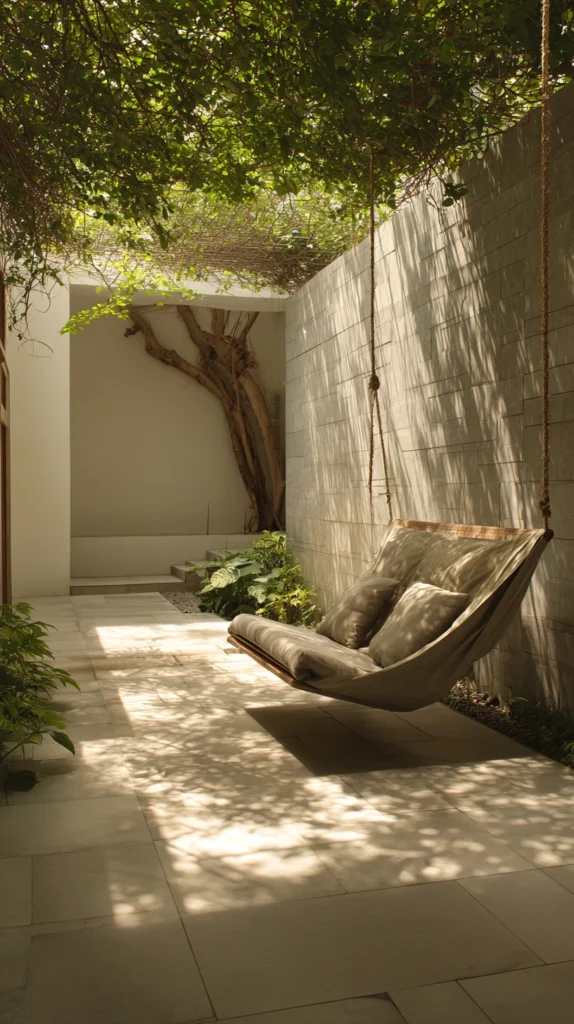
Budget: $60 – $250
A hammock strung between two trees, or a hanging egg chair suspended from a timber frame or pergola beam, with dappled light falling through the canopy above it — this is one of the most universally aspirational garden images available on Pinterest and one that is genuinely achievable in any garden with two trees of the right spacing or any overhead structure with a suitable load-bearing point.
A cotton or rope hammock costs $50–$120. A hanging egg chair on a freestanding A-frame costs $120–$250. The surrounding context makes the photograph — the hammock needs dappled shade, a slightly overgrown planted backdrop, a small side table or wooden crate nearby, and a book or a folded throw to suggest use rather than display. Without the contextual accessories the hammock is furniture. With them it is a lifestyle image.
Style tip: Photograph the hammock or hanging chair from a low angle rather than from standing height. A low-angle shot looking up slightly toward the suspended seat shows the canopy or overhead planting behind it and creates the dappled light quality that makes this garden moment so universally appealing. A standing-height shot looking across at the hammock shows primarily the surrounding garden rather than the quality of being within the shaded, suspended position that makes it so desirable.
12. A Styled Outdoor Dining Table
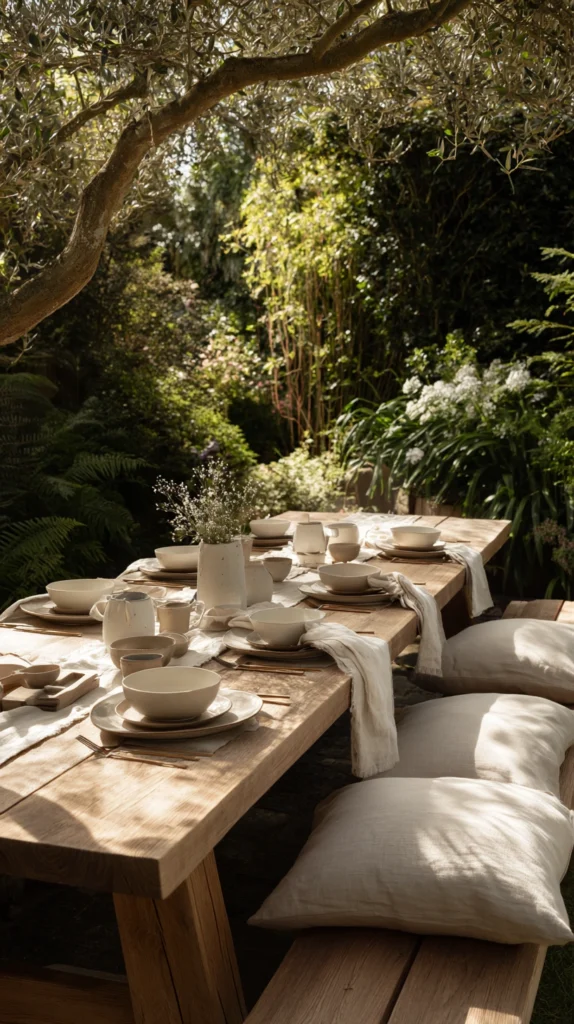
Budget: $30 – $120 for styling
An outdoor dining table dressed for an occasion — linen cloth with gentle creases, simple ceramic plates, a jug of fresh garden flowers as the centrepiece, mismatched glasses, and cotton napkins in a complementary colour — creates one of the most universally pinned garden images available and one that requires no additional furniture investment beyond whatever outdoor table is already present.
A linen tablecloth costs $20–$50. Fresh flowers from the garden cost nothing. Mismatched glasses from charity shops cost $1–$3 each. Cotton napkins run $15–$30 for a set of four. The key is the overall palette — choose one colour for the napkins, echo it in the flower colour, and keep everything else in the linen-and-white range that photographs best in natural outdoor light. A styled table that takes twenty minutes to dress provides an image that saves on the table for hours and provides a memory of the garden that outlasts the season.
Style tip: Dress the table in the morning before the direct sun reaches it rather than at midday. Harsh midday sun creates hard shadows and bleaches colours in garden photography — the soft, diffuse light of a shaded morning or an overcast day produces the even, warm-toned quality that makes outdoor table settings look most inviting in photographs and in reality. The best-styled table is always the one that looks good in the light it actually sits in rather than the light the styling was planned for.
13. A Feature Fence Panel in a Bold Colour
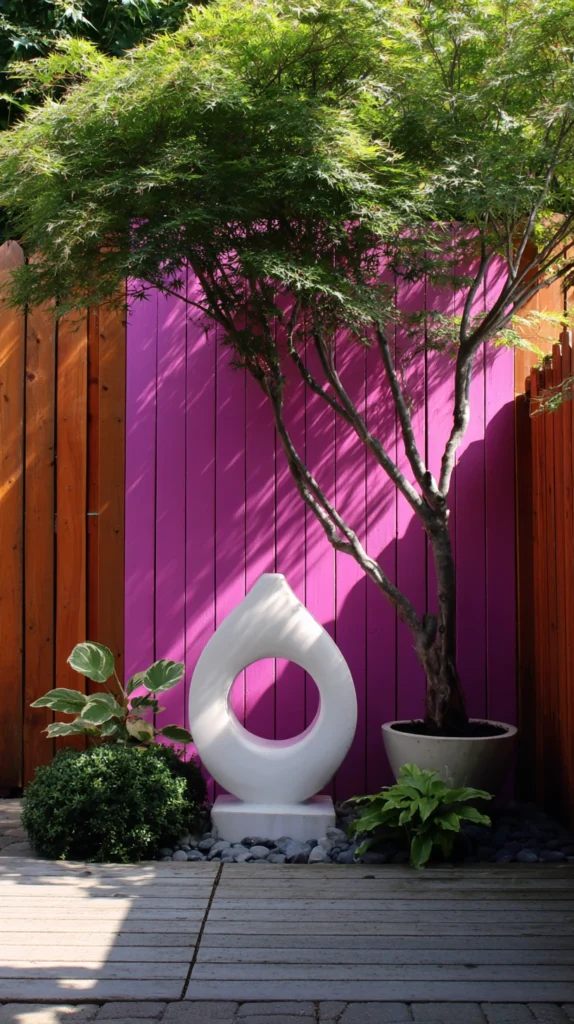
Budget: $20 – $80
Painting a single fence panel or section in a bold colour — deep navy, sage green, warm terracotta, or matte black — and positioning a large terracotta pot with a statement plant in front of it creates a visual composition of immediate impact. The coloured fence panel is the backdrop, the pot is the centrepiece, and the combination produces one of the most shareable garden vignettes available at minimal cost and in minimal time.
A tin of exterior fence paint in a deep tone costs $15–$35 and covers 5–8 square metres per litre in one coat. A single fence panel of standard size (180×90 cm) requires less than half a litre. A large terracotta pot costs $15–$40. A statement plant for the pot — an olive, a sculptural grass, or a clipped bay — costs $15–$50. The complete vignette — coloured panel, pot, and plant — costs $60–$125 and creates a garden focal point that photographs from any angle and in any light condition through the year.
Style tip: Position the feature panel and pot so that the composition is visible from the main indoor viewpoint — the kitchen window, the back door, or the living room — rather than only from within the garden. A garden vignette that is enjoyed daily from inside the house delivers its visual value every day of the year rather than only when the garden is actively being used, which multiplies the return on the small investment in materials and effort it required to create.
14. Dried Flowers and Seed Heads Left Standing

Budget: $0 – $30
Leaving ornamental seed heads and dried flower structures standing through autumn and winter — echinacea, rudbeckia, teasel, allium, and pampas grass — creates a garden that photographs as beautifully in November as in July. The dried structures catch frost and morning light in a way that summer flowers rarely achieve and they are the most consistently photographed garden detail in the autumn and winter Pinterest cycle.
No cost is involved — the decision not to cut back is the only investment required. Supplementing existing garden planting with additional seed-head-producing species costs $5–$30 in seed or $10–$30 in plants. Allium cristophii bulbs at $2–$4 each produce the most structurally striking dried seed spheres available from any garden plant. Teasel grown from seed at $2–$4 per packet produces tall, architectural dried structures that last through winter in any weather condition.
Style tip: Photograph dried garden structures in backlit conditions — with the early morning or late afternoon sun behind the seed heads and shooting toward the light source. Backlit dried structures become graphic silhouettes with translucent fringing that catches the light — an effect that is completely invisible in front-lit photography and that produces some of the most beautiful garden images available at any season of the year.
15. A Garden Nook That Tells a Story
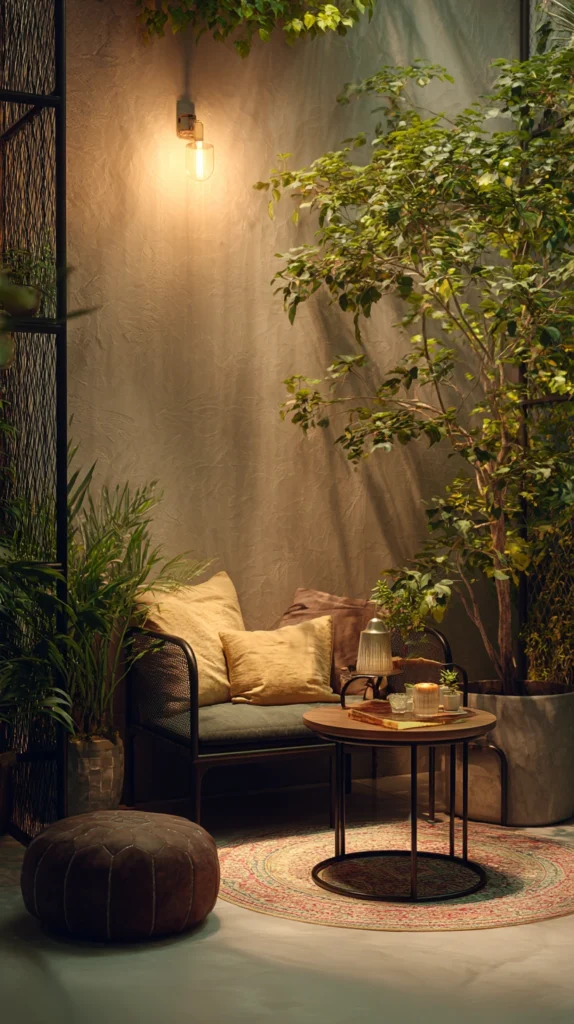
Budget: $50 – $200
The most consistently shared garden images on Pinterest are not the most perfect or the most expensively planted — they are the ones that tell a story. A worn garden chair beside a small table with a half-drunk cup of tea, a stack of gardening books beside a trowel, a pair of rubber boots at a back door with a climbing rose behind them. The story makes the image resonate because it suggests a person and a life rather than simply a styled space.
The garden nook that tells a story requires a comfortable seat ($40–$150), a small side table or crate ($15–$40), one or two lived-in accessories (a book, a candle, a cup or glass), and enough planting immediately around the seat to create the sense of being within the garden rather than beside it. The accessories cost almost nothing. The planting takes a season to establish. The story is always already there — it only needs the right physical context to become visible.
Style tip: Always include at least one sign of genuine use in a garden nook composition — something that suggests a person was recently here and will return. An empty garden nook is a furniture arrangement. A nook with a book face-down on the seat, a half-finished drink on the side table, or a jacket draped over the chair back becomes a moment from a life spent in the garden rather than a product photograph of garden furniture. That quality is what makes a garden image genuinely worth saving.
The garden that looks straight out of Pinterest is always the one where someone made a small number of deliberate decisions and executed them with consistency and confidence — a single pot material, a clear colour relationship, the right lighting at the right hour, and the restraint to stop adding before the space becomes too busy to breathe. The decisions are always more important than the budget, and the most shareable gardens are almost never the most expensive ones.
Choose two or three ideas from this list that suit the garden you already have and implement them this season. Style one corner, plant one frame, light one evening properly. The garden that is worth sharing is always closer than it appears from the outside — it usually needs one right decision rather than a complete transformation to reveal itself.