14 Flower Bed Ideas in Front of House
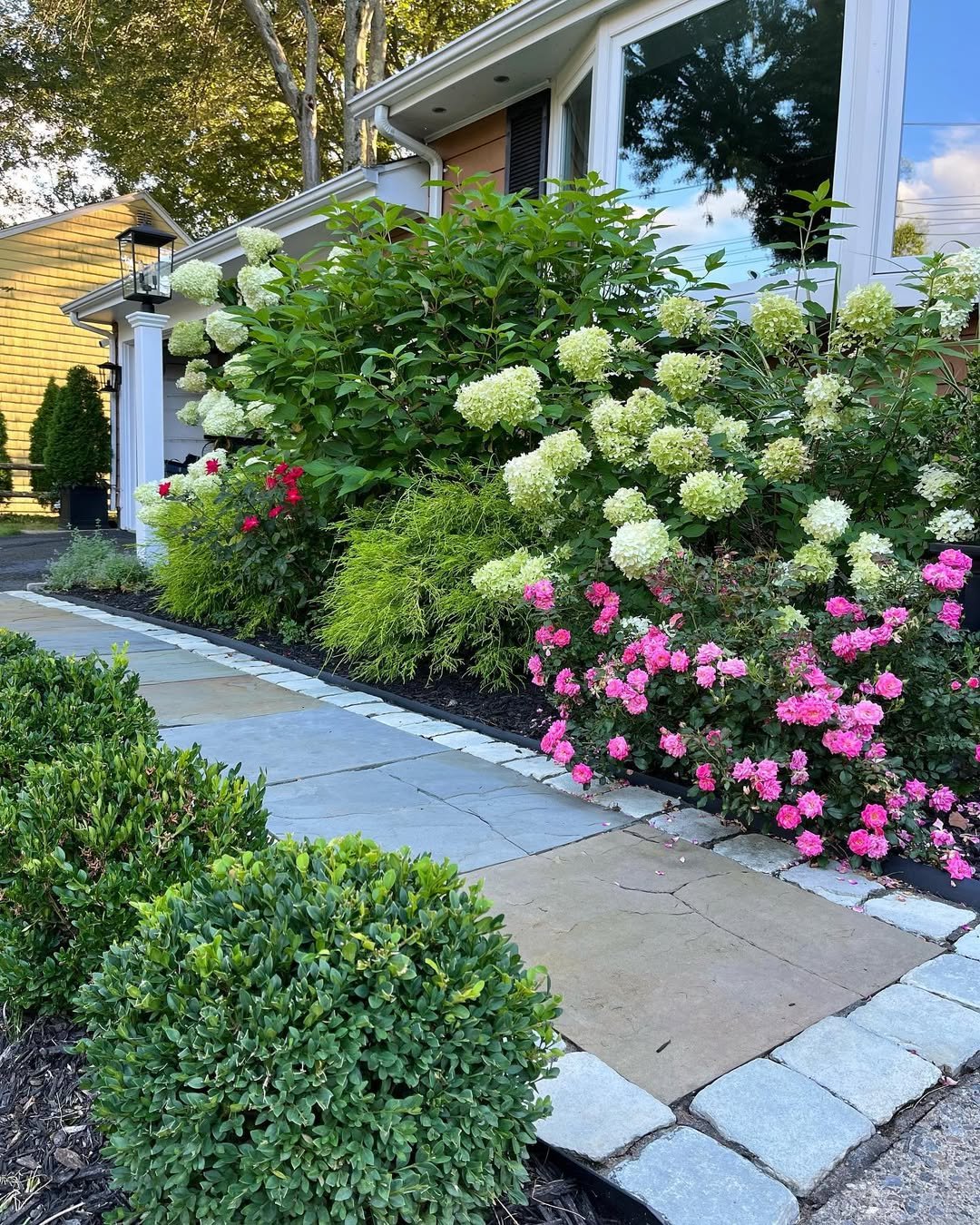
The front garden flower bed is the most public garden space a home possesses. It is seen by every visitor, every neighbour, and every person who walks past — and it communicates something about the household behind it before the front door has been reached or opened. A well-planted front flower bed does not simply add curb appeal in the estate agent’s sense of the phrase.
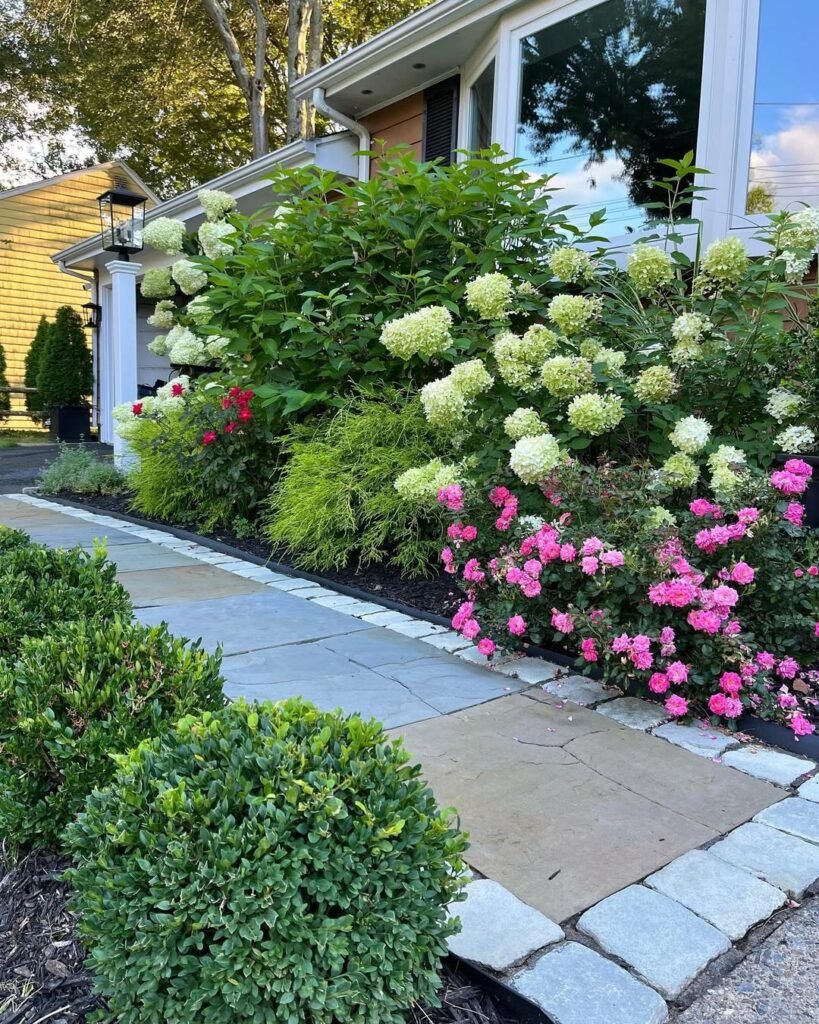
It communicates care, seasonal attention, and a genuine relationship with plants and growing things that the most expensive front door or the most freshly painted render cannot replicate on its own.
The front flower bed also operates under specific constraints that back garden beds do not — it is typically narrow, often receives foot traffic close to its edge, must look presentable throughout the year rather than only at its seasonal peak, and needs to work with rather than against the architecture of the house it fronts. Every idea below addresses these constraints honestly while showing what is possible within them — from a single statement planting to a layered, year-round flowering scheme that makes the front of the house genuinely beautiful in every season.
1. The Classic Cottage Front Border
Budget: $60 – $300
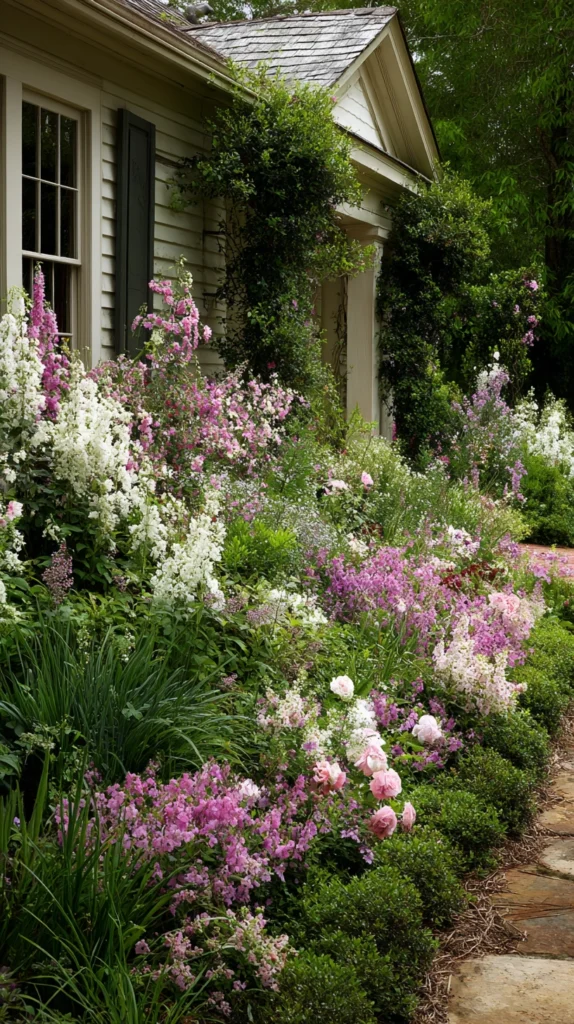
A traditional cottage-style front flower bed — densely planted with roses, lavender, delphiniums, foxgloves, catmint, and hardy geraniums in loose, flowing drifts — is the most enduringly beautiful and the most immediately welcoming front garden planting available. The cottage border communicates a relationship with plants that is both knowledgeable and unpretentious, and its seasonal generosity — building through spring, reaching full abundance in midsummer, and continuing with late-season performers through to autumn — ensures that the front of the house is at its most attractive through the months when it is seen and used most frequently.
Plants in odd-numbered groups of three or five of each variety rather than as individual specimens — drifts of the same plant create bold, readable patterns from the street that individual plants scattered through the border cannot achieve. Roses at the back, lavender and catmint in the middle, and hardy geraniums as a low edging creates the classic three-tier cottage border structure that suits most front garden widths and depths.
Garden tip: Plant lavender at the front edge of a cottage border where it can be brushed by people walking past — the fragrance released by contact with the foliage creates the most immediate and the most memorable sensory impression of the front garden. A lavender-edged path to the front door creates an arrival experience of genuine sensory pleasure that no other planting provides at the same low cost.
2. The Architectural Evergreen Statement
Budget: $80 – $400
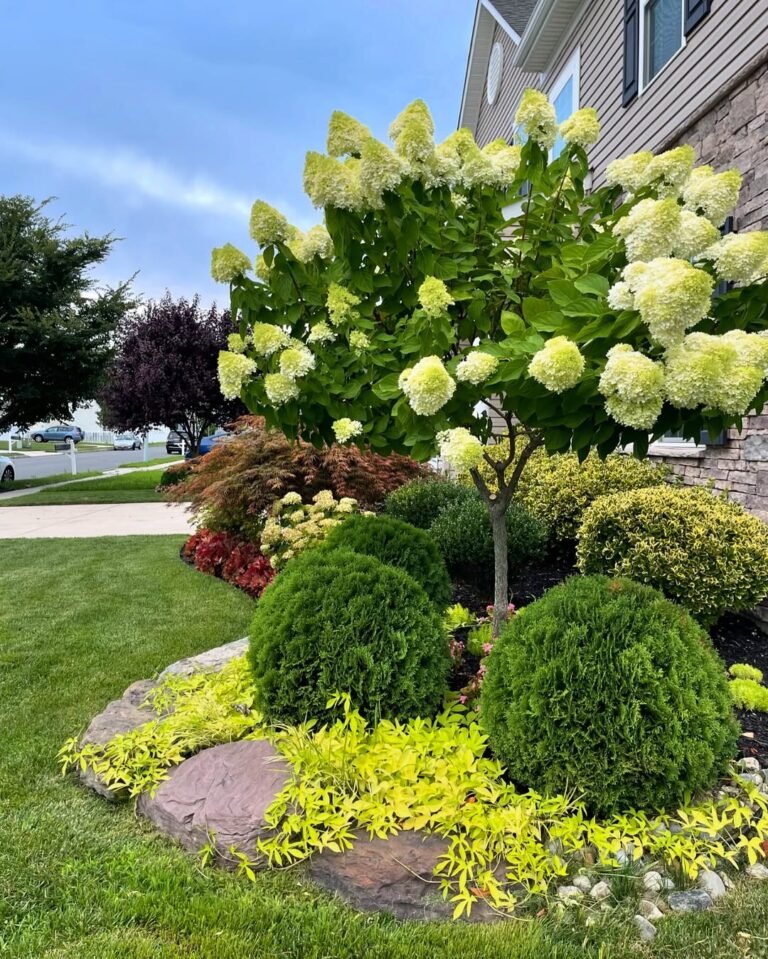
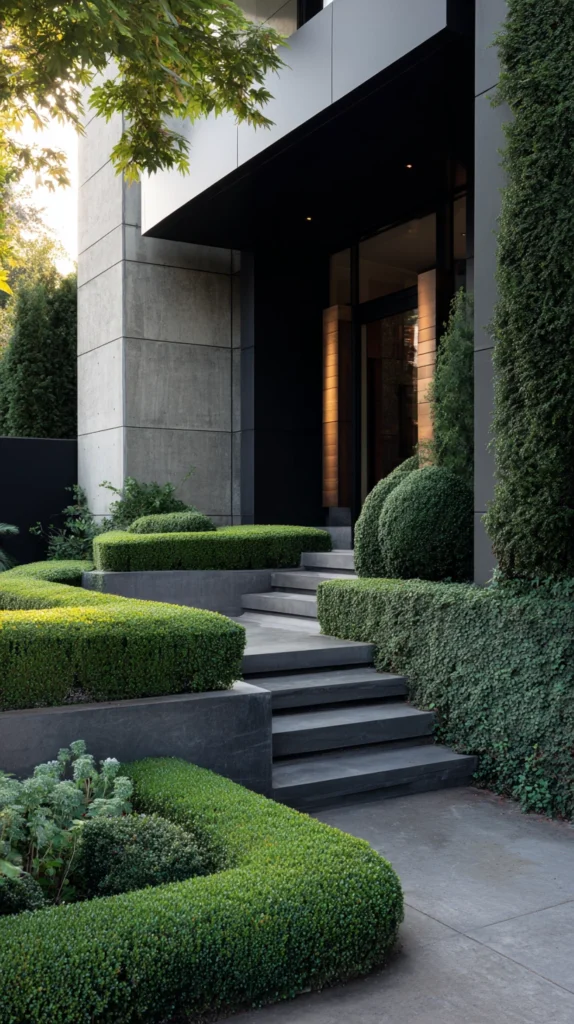
A front flower bed planted with architectural evergreen specimens — clipped box balls, yew cones, phormiums, fatsia japonica, or agapanthus — creates a front garden of year-round presence and design intention that seasonally dependent plantings cannot provide through the winter months. The evergreen statement bed communicates care through form and discipline rather than through floral abundance, and it suits contemporary, Georgian, and urban house frontages with a clean authority that looser cottage-style planting does not provide.
Box balls in matching pairs flanking the front path cost $20–$50 each depending on size and create immediate formal symmetry. Phormiums in architectural bronze or green forms cost $15–$40 each and provide dramatic spiky height at the back of a narrow border. Fatsia japonica costs $20–$50 and provides large, glossy, deeply lobed leaves that look tropical and remain genuinely handsome through the coldest months.
Garden tip: Clip evergreen topiary shapes twice a year — in late spring after the main growth flush and again in late summer — to maintain the clean, crisp silhouette that makes the architectural evergreen bed so effective. Topiary that is allowed to develop soft, irregular growth loses the precise form that is its primary decorative quality and begins to read as neglected rather than deliberate.
3. The Pollinator Paradise Front Bed
Budget: $40 – $200
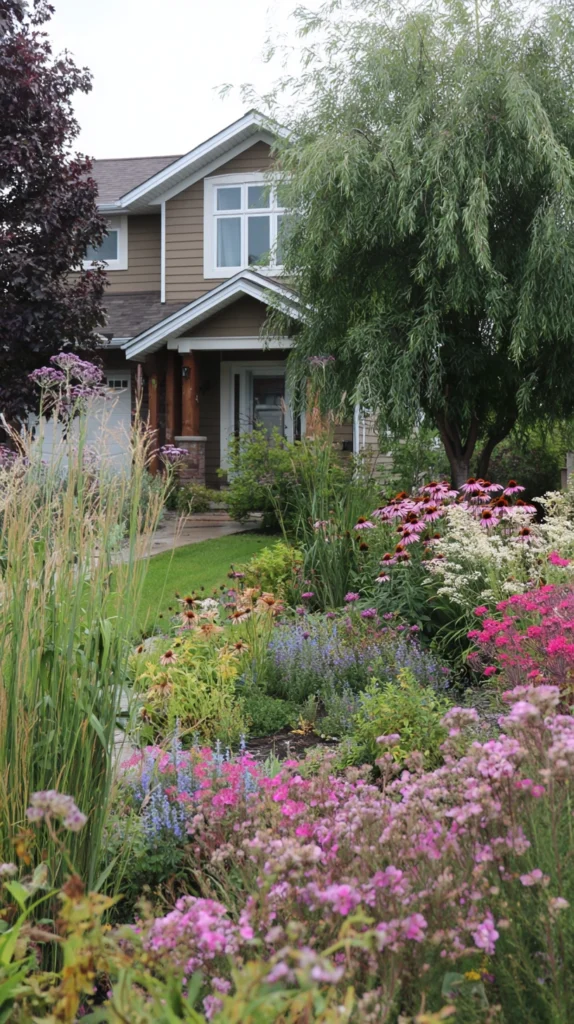
A front flower bed planted specifically to attract and support bees, butterflies, and other pollinators — lavender, alliums, echinacea, verbena bonariensis, salvia, nepeta, scabious, and single-flowered dahlias — creates a front garden that is simultaneously beautiful, ecologically valuable, and genuinely alive with insect activity throughout the summer months. A pollinator-rich front border communicates environmental awareness and genuine plant knowledge in a way that guests and neighbours both notice and appreciate.
Lavender, nepeta, and salvia are the three most reliably bee-attractive plants available for a front flower bed and all three provide months of continuous flowering from a single planting. Verbena bonariensis self-seeds freely once established and creates a naturalistic, airy presence at the back of the border that suits every house style from Victorian terrace to modern new-build.
Garden tip: Leave the seed heads of echinacea, alliums, and scabious standing through autumn and winter rather than cutting them back immediately after flowering. The dried seed heads are beautiful in low winter light and provide food for finches and other seed-eating birds through the coldest months — extending the ecological value of the front bed year-round and creating visual interest in the border through the seasons when nothing is flowering.
4. The Seasonal Bedding Display
Budget: $30 – $150 per season
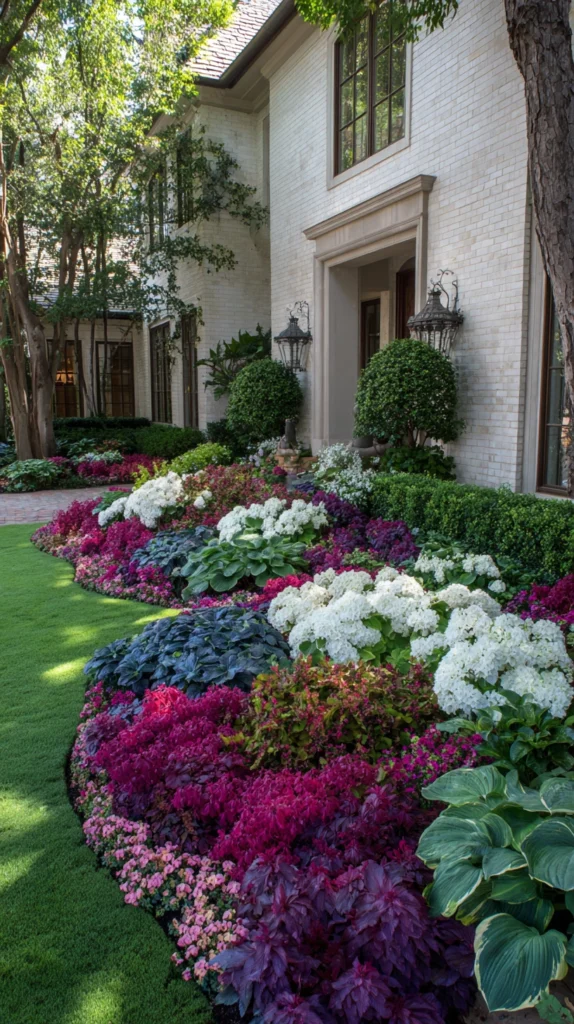
A front flower bed that is replanted with seasonal bedding — wallflowers and tulips in spring, pelargoniums and petunias in summer, ornamental cabbages and cyclamen in autumn — creates the most reliably colourful and the most consistently fresh-looking front garden available. The seasonal bedding approach requires more intervention than a permanent perennial scheme but rewards that intervention with continuous, maximum-impact colour through every season, never looking tired or between-seasons in the way that permanent plantings inevitably do at certain times of year.
Plant spring bedding in October for flowers from March through May. Plant summer bedding in late May after the last frost has passed for flowers from June through September. Plant autumn and winter bedding in September for interest from October through February. The three-season rotation means the front bed is replanted three times a year — a modest labour investment for a result that is always looking its best.
Garden tip: Prepare the bedding soil thoroughly between each planting — remove all old plants and roots, fork in a generous amount of garden compost or well-rotted manure, and rake to a fine tilth before planting the new season’s display. Bedding planted into tired, unimproved soil performs poorly and looks sparse; bedding planted into freshly prepared, rich soil establishes quickly and fills the bed densely within weeks.
5. The Grass and Perennial Modern Mix
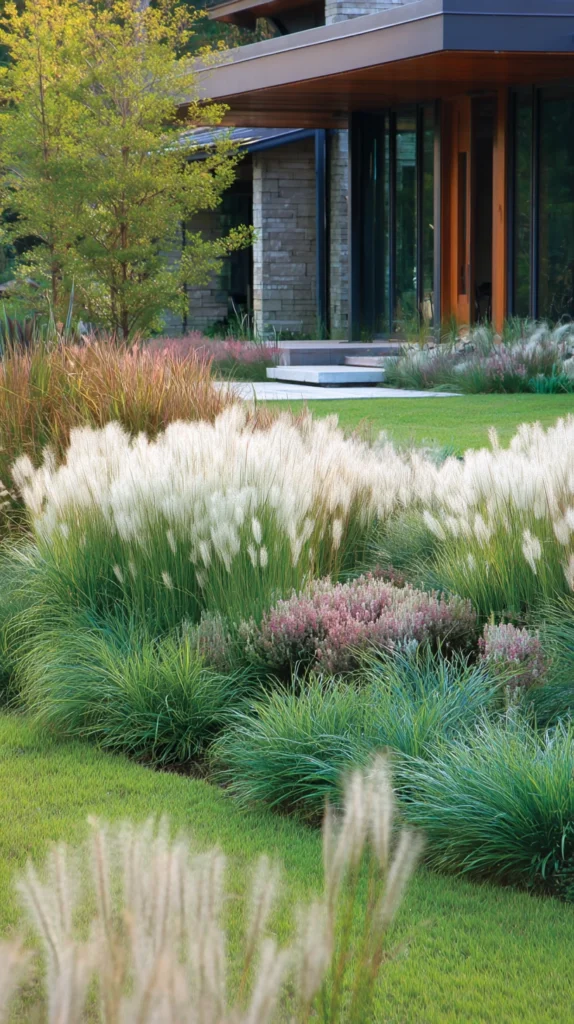
Budget: $60 – $280
A contemporary front flower bed combining ornamental grasses with prairie-style perennials — miscanthus, stipa, pennisetum, echinacea, rudbeckia, salvia, and agastache — creates a front garden planting of extraordinary seasonal movement and naturalistic beauty. The grasses catch every breeze and create a constant gentle motion in the front bed that no other plant type provides, and the prairie perennials flower from midsummer through autumn in the warm amber, purple, and pink tones that suit the movement and the light-catching quality of the grasses perfectly.
The grass and perennial mix suits contemporary house frontages particularly well — clean-lined architecture benefits from the softening quality of naturalistic planting, and the structured, upright habit of ornamental grasses provides a form of controlled informality that suits modern architecture without fighting it. It also provides exceptional winter presence — dried grasses and perennial seed heads are genuinely beautiful through December and January.
Garden tip: Cut the entire grass and perennial front bed back hard to the ground in late February or early March — not in autumn. The dried stems and seed heads provide food and shelter for beneficial insects through the winter and contribute genuine structural beauty to the front garden in the months when nothing else is providing visual interest. The annual late-winter cut takes an hour and produces vigorous, fresh growth within weeks.
6. The Rose Front Garden
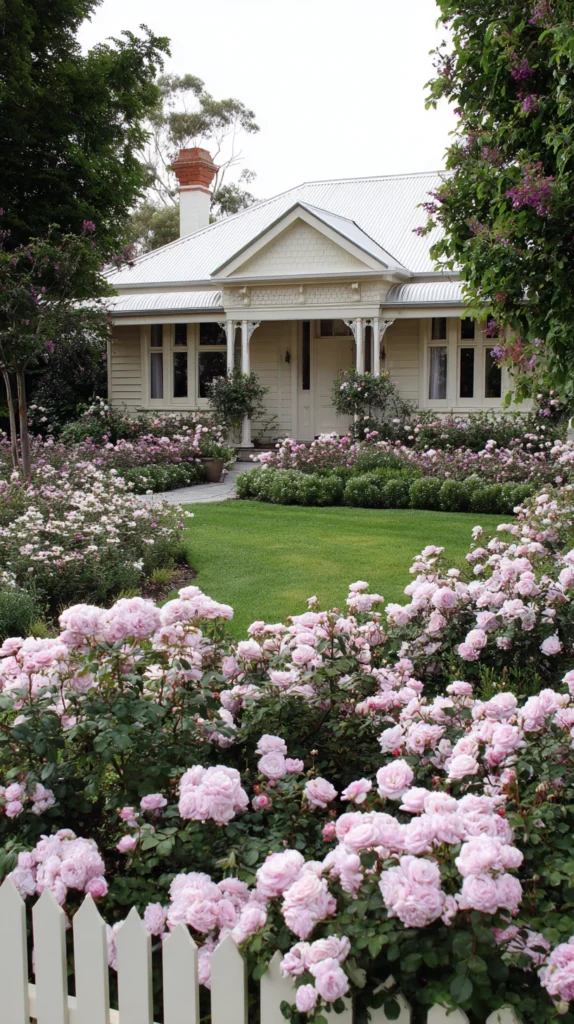
Budget: $80 – $400
A front flower bed planted primarily with roses — a mix of floribunda roses for continuous flowering abundance, climbing roses trained against the house wall, and ground cover roses at the border’s edge — creates the most romantically beautiful and the most traditionally English front garden available. Roses in a front bed communicate a specific quality of generous, unhurried domestic care that no other planting achieves with the same directness, and a rose-fronted house has a universally recognised quality of welcoming beauty that crosses every stylistic and cultural preference.
Floribunda roses — varieties that produce large clusters of flowers repeatedly throughout summer rather than a single annual flush — provide the best value for a front bed because their continuous flowering ensures the bed is never without colour between June and October. David Austin English roses combine the old rose flower form with modern disease resistance and repeat flowering — Olivia Rose, Gentle Hermione, and Munstead Wood are all reliable front garden performers.
Garden tip: Feed roses twice a year — once in early spring as growth begins and again immediately after the first flowering flush in June — with a specialist rose fertiliser high in potassium. Roses that receive consistent feeding produce significantly more flowers, more disease-resistant foliage, and better second and third flushes than unfed plants, and the visible difference between a well-fed rose and a neglected one is immediately apparent to anyone passing the front of the house.
7. The Low-Maintenance Shrub Border
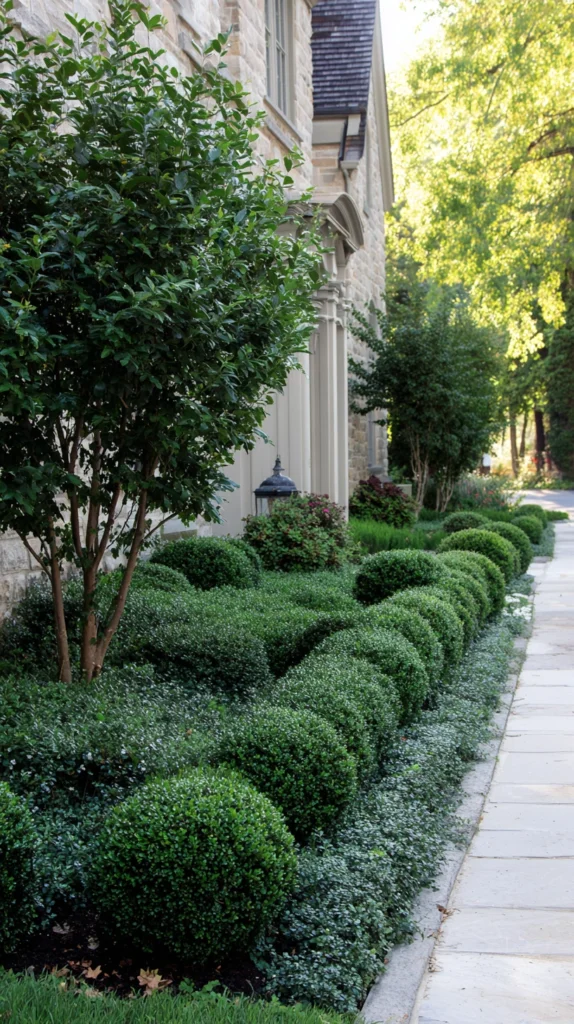
Budget: $80 – $400
A front flower bed planted with low-maintenance flowering shrubs — spiraea, weigela, deutzia, potentilla, hebes, and flowering currant — creates a front garden that looks genuinely planted and genuinely cared for while requiring only an annual pruning session and occasional watering in the driest summer weeks. The low-maintenance shrub border suits households where time for garden maintenance is limited but the desire for a planted, attractive front garden is genuine — it provides the substance and the seasonal character of a planted border without the continuous intervention that perennial and bedding schemes require.
Choose shrubs with different peak flowering periods to extend the seasonal interest across as long a period as possible — flowering currant in March, spiraea in April-May, weigela in May-June, potentilla and hebe from June to September. The sequential flowering of different shrub varieties creates a border that is never all at once — different sections peak at different times and the overall impression of continuous seasonal change is greater than any single-variety planting can achieve.
Garden tip: Resist the temptation to plant low-maintenance shrubs at their eventual mature spacing — the gaps between newly planted shrubs look empty for the first two years and invite weed colonisation. Plant at half the eventual mature spacing and plan to remove alternate plants in three to four years when the border fills in. The initial density produces an immediately full-looking border and the planned removal prevents overcrowding at maturity.
8. The Bulb and Perennial Combination
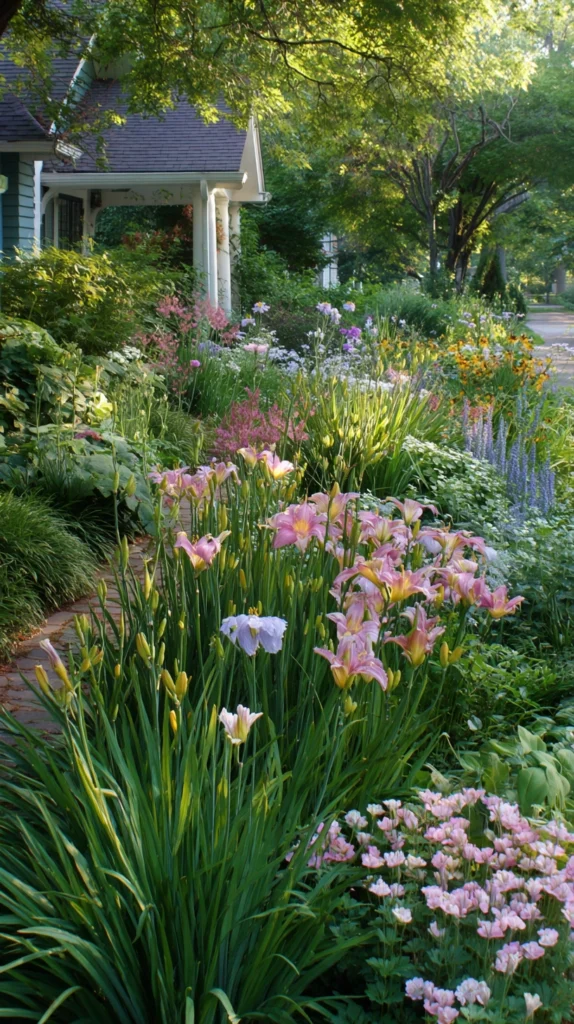
Budget: $40 – $200
A front flower bed layered with bulbs planted beneath perennials — tulips and alliums pushing through emerging hardy geraniums and salvias in spring, agapanthus and day lilies taking over in midsummer, and nerines and schizostylis providing late colour into October — creates a planting scheme of extraordinary seasonal continuity that uses the same ground to produce three or four successive waves of flowering from a single bed. The layered bulb and perennial approach is the most space-efficient front bed planting available.
Tulip bulbs planted in November at 15–20 centimetre depth beneath a perennial ground cover emerge in April and May to provide the most spectacular spring display available without any additional planting — the tulips use the vertical space above the dormant perennials and the perennials then cover the dying tulip foliage as summer progresses. Alliums planted at the same time as the tulips provide the transition from spring to summer with their architectural spherical heads in May-June.
Garden tip: Choose tulip varieties that naturalise — Darwin hybrid tulips and the Triumph group are the most reliably perennial tulip types — rather than single-season species that need replanting annually. Tulips that naturalise increase their flowering performance year on year and represent a genuine long-term investment in the front bed’s spring display rather than an annual replanting cost.
9. The Lavender and Salvia Mediterranean Front Bed
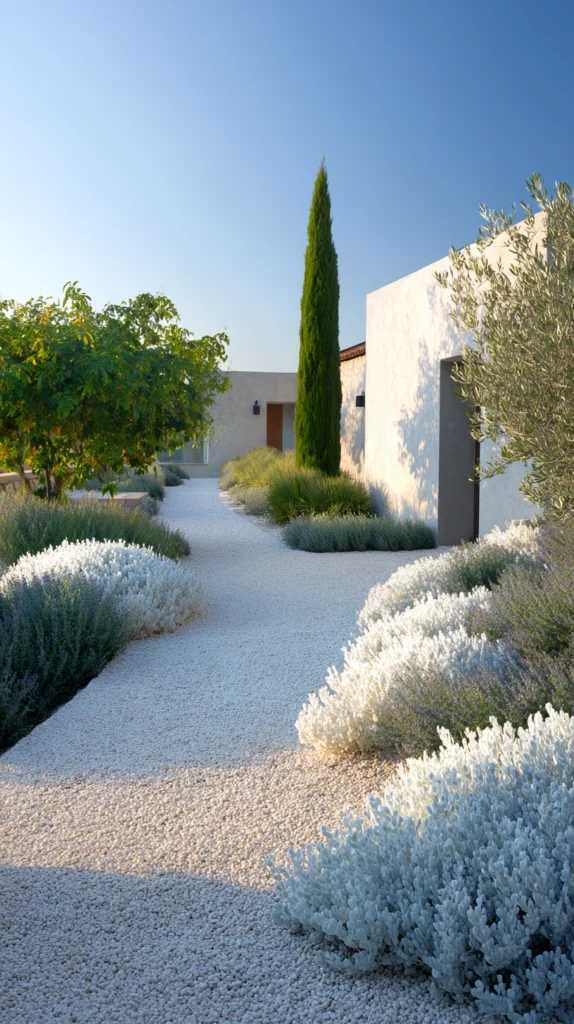
Budget: $40 – $180
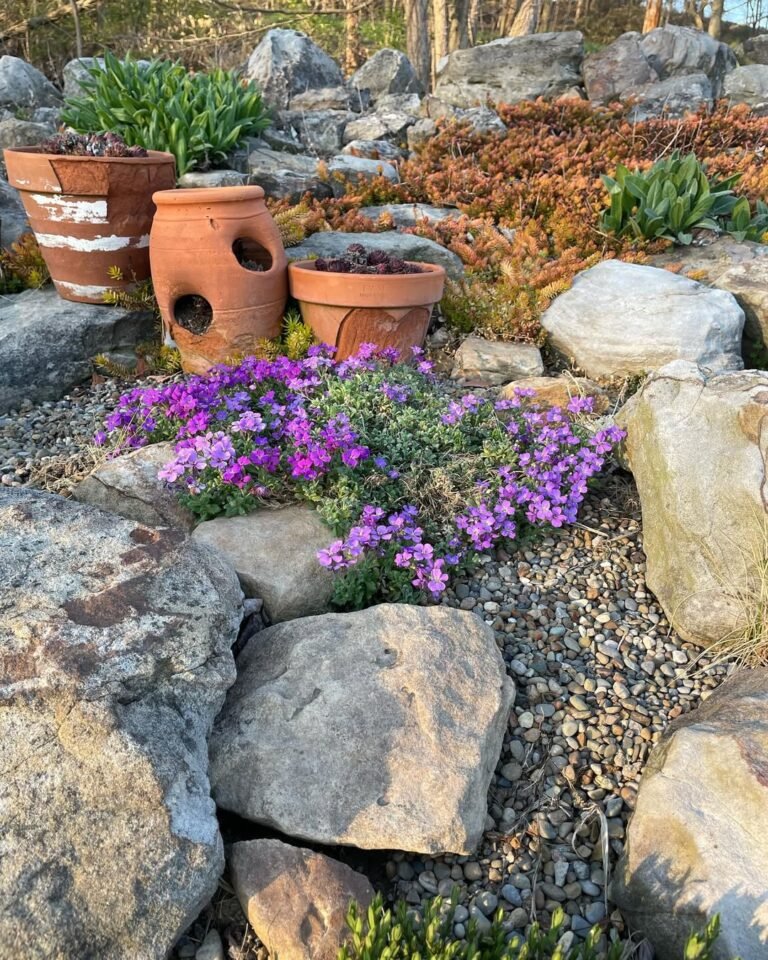
A front flower bed planted with drought-tolerant Mediterranean species — lavender, salvias, rosemary, cistus, phlomis, and alliums in a gravel mulch — creates a front garden of genuine beauty that thrives in the hottest, driest conditions and requires almost no maintenance once established. The Mediterranean front bed suits houses with a south or south-west facing aspect where the hottest summer sun reaches the front beds directly, and where conventional moisture-loving plants struggle in dry spells.
The silvery and grey-green foliage of Mediterranean plants — lavender, artemisia, stachys, and phlomis — creates a palette of extraordinary subtlety and softness that suits stone, render, and pale brick house frontages particularly well. The blue-purple of lavender and salvia against a pale stone or white rendered wall is one of the most beautiful and most immediately recognisable front garden combinations available.
Garden tip: Mulch the Mediterranean front bed with pale gravel or grit rather than bark mulch. Gravel reflects heat upward through the plant stems, prevents moisture from sitting against the base of the plants (which causes rotting in Mediterranean species), suppresses weeds effectively, and creates the free-draining aesthetic that suits the plants’ natural habitat conditions. A gravel-mulched Mediterranean front bed requires almost no maintenance after the initial installation.
10. The White Garden Front Bed
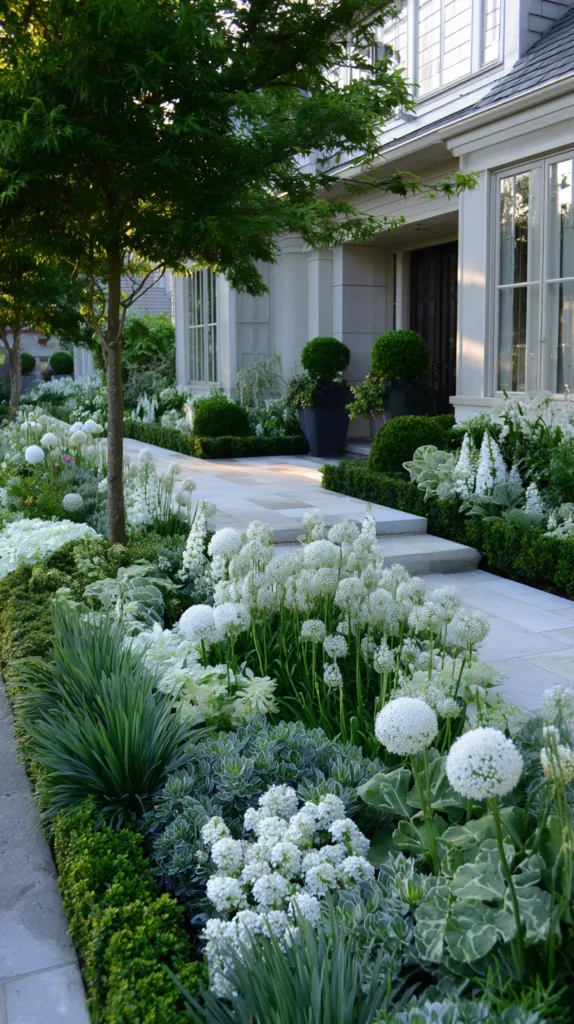
Budget: $60 – $300
A front flower bed planted exclusively in white and cream flowering plants — white roses, white alliums, white cosmos, white foxgloves, white agapanthus, white hydrangeas, and silver foliage plants — creates a front garden of extraordinary elegance and luminosity that looks beautiful at every time of day but is most spectacular in the evening light when white flowers glow after dark and remain visible long after all coloured flowers have disappeared into the dusk. A white front garden is simultaneously the most controlled and the most sophisticated single-colour planting approach available.
The success of the white front bed depends entirely on foliage texture and plant form rather than colour contrast — with only white available for the flowers, the shapes, heights, and leaf textures of the plants must provide all the visual interest. Mix spiky and rounded forms, fine and bold foliage textures, and tall and low habits for a border that reads as varied and designed rather than flat and monotonous.
Garden tip: Include silver and grey foliage plants — stachys, artemisia, senecio, salvia officinalis ‘Icterina’ — throughout the white flower bed to provide the tonal variation that white flowers alone cannot achieve. Silver foliage in a white border acts as the living equivalent of a grey mount in a picture frame — it gives the white flowers a visual context that makes them appear whiter and brighter than they would against green foliage alone.
11. The Native Wildflower Front Bed
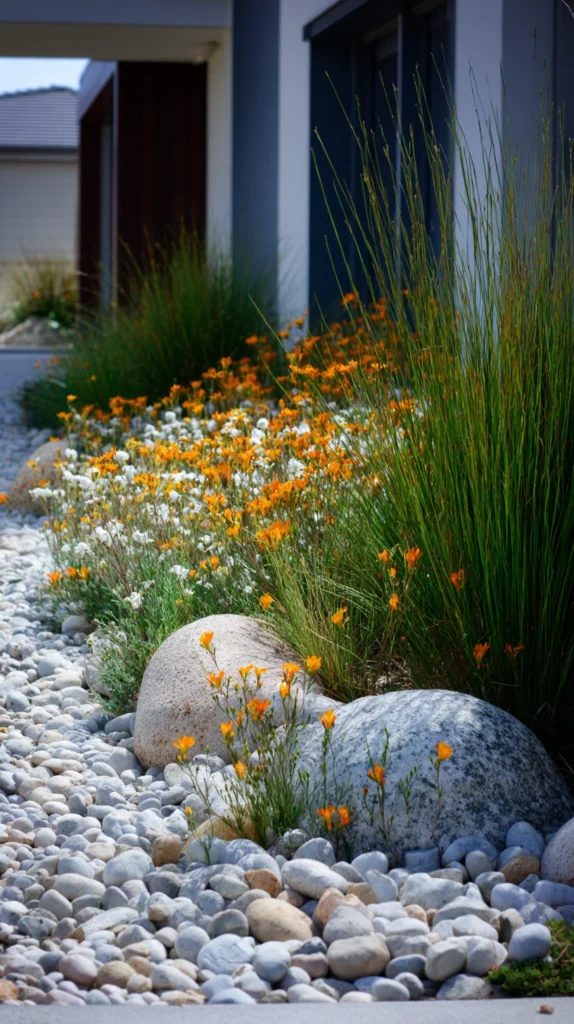
Budget: $15 – $80
A front flower bed sown with a native wildflower seed mix — cornflowers, poppies, ox-eye daisies, ragged robin, scabious, knapweed, and bird’s foot trefoil — creates the most ecologically valuable and the most genuinely naturalistic front garden planting available. A wildflower front bed communicates a clear environmental commitment while producing a display of extraordinary seasonal beauty and a habitat of significant value for native insects, bees, and butterflies throughout the summer.
Native wildflower seed mixes cost $5–$15 per packet and cover several square metres. Prepare the ground by removing all existing vegetation and creating bare soil — wildflowers establish best in low fertility conditions and compete poorly with vigorous grass and weeds. Sow in spring or autumn and allow the meadow to develop naturally without any intervention other than the annual late-autumn cut.
Garden tip: Mow a neat strip of short grass immediately in front of the wildflower bed, along the path edge and the pavement boundary. The contrast between the neatly mown edge and the apparently wild planting beyond it communicates that the wildflower bed is a deliberate design choice rather than an area of neglect. The mown edge is the signal that distinguishes an intentional wildflower garden from an unattended front garden, and it costs only minutes of additional mowing time.
12. The Tropical Foliage Front Bed
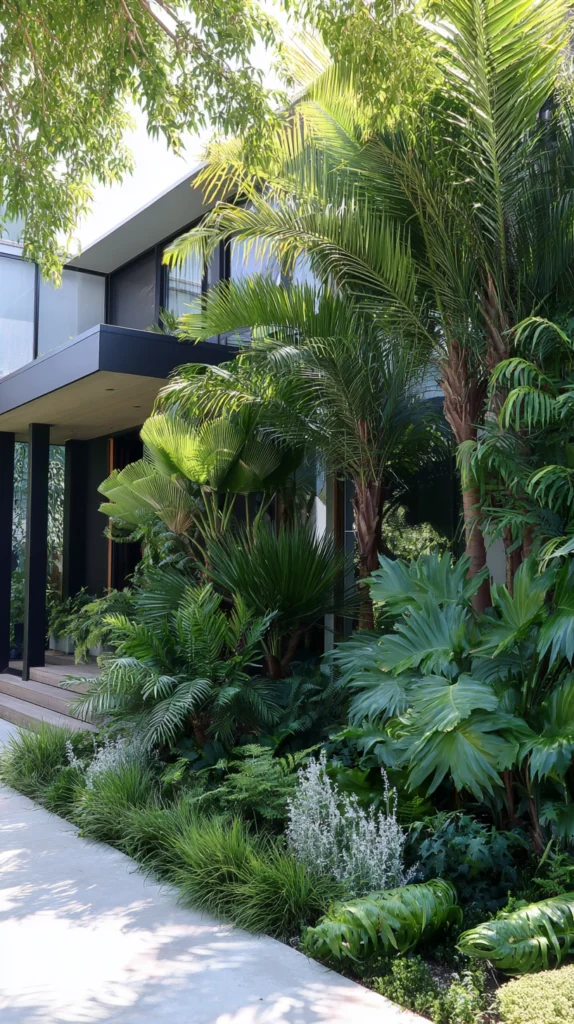
Budget: $80 – $400
A front flower bed planted with bold, large-leaved tropical and exotic-looking plants — cannas, dahlias, phormiums, gunnera in small gardens, banana plants in sheltered spots, and hardy palms in warmer regions — creates a front garden of extraordinary visual drama that immediately distinguishes the house from its neighbours and communicates a confident, experimental approach to planting that conventional flower beds cannot. The tropical front bed works particularly well in urban settings where it creates a vivid, unexpected contrast with the surrounding built environment.
Cannas are the most accessible and the most immediately dramatic tropical front bed plant — their large, banana-like leaves in green, bronze, or striped forms and their vivid flowers in red, orange, yellow, and pink create a maximum visual impact from a minimum number of plants. Hardy dahlias combine well with cannas and extend the tropical aesthetic with their large, geometric flowers in the warm colour range.
Garden tip: Lift and store tender tropical plants — cannas, dahlias, and banana plants — before the first autumn frost in colder regions. Store canna and dahlia tubers in barely moist compost in a frost-free shed or garage over winter and replant in May. The annual lifting and replanting is the only significant maintenance the tropical front bed requires, and the vigorous growth from well-stored tubers each summer justifies the minimal winter storage effort completely.
13. The Fragrant Front Border
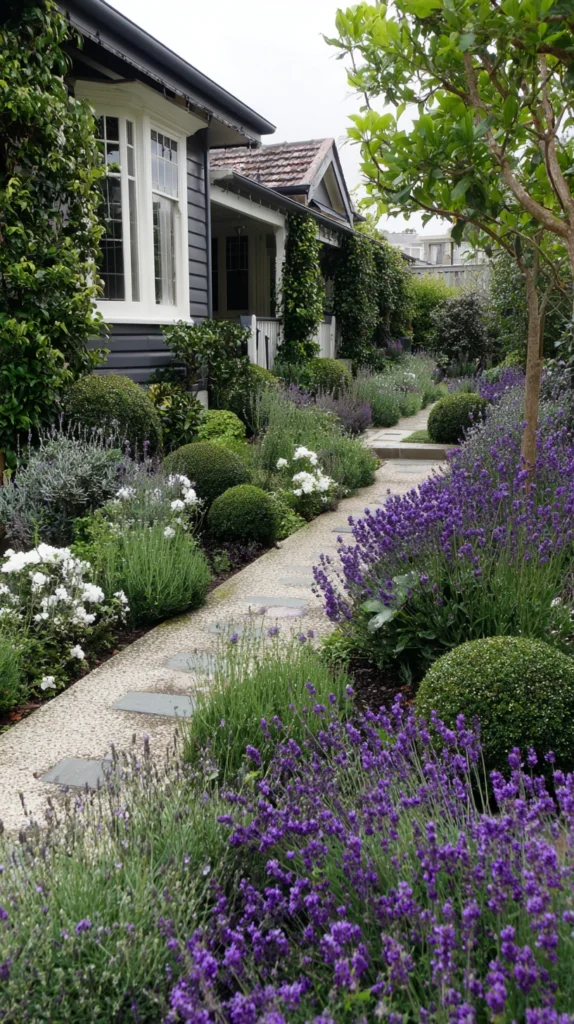
Budget: $50 – $250
A front flower bed planted specifically for fragrance — lavender, roses, sweet peas on a low support, night-scented stock, pinks (dianthus), sweet William, jasmine on the house wall, and lily of the valley in shade — creates the most sensuously welcoming front garden available. The fragrant front border is experienced before it is seen — the scent reaches a visitor while they are still on the path and creates the most immediate and the most emotionally powerful first impression of the home that any planting can produce.
Position the most fragrant plants — lavender, pinks, and sweet peas — at the front of the border where they are closest to the path and where contact with them as people pass is most likely. Dianthus pinks in particular release their warm, clove-scented fragrance most intensely on warm afternoons, and a generous planting of them in a south-facing front bed creates a fragrance environment of extraordinary richness throughout the summer.
Garden tip: Plant night-scented stock in a position beside the front door or along the path from the gate to the entrance — the flowers are modest in appearance but release an intense, sweet fragrance after dark that makes arriving home on a summer evening a genuinely extraordinary sensory experience. Night-scented stock is one of the least visually impressive plants available for a front bed and one of the most powerful in its sensory impact.
14. The Year-Round Structure Front Bed
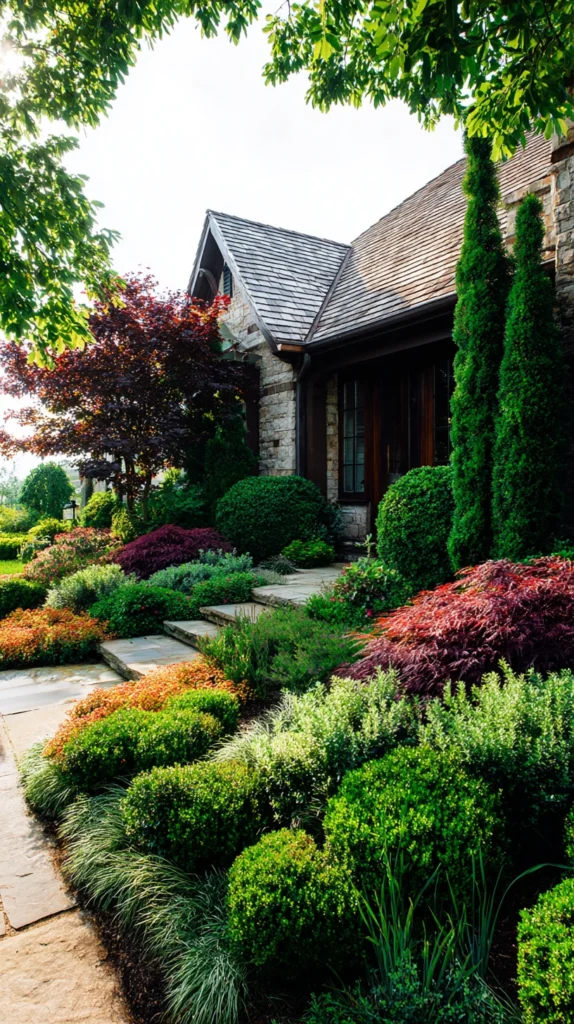
Budget: $100 – $500
A front flower bed designed specifically for year-round visual interest — combining evergreen structure, seasonal flowering, winter interest, and permanent architectural form — creates a front garden that is never between seasons, never looking bare or unplanted, and never requiring an apology from its owner. The year-round structure bed is the most ambitious and the most skilfully conceived front garden planting available, and it rewards the planning investment with a front of house that looks genuinely considered in every month of the calendar.
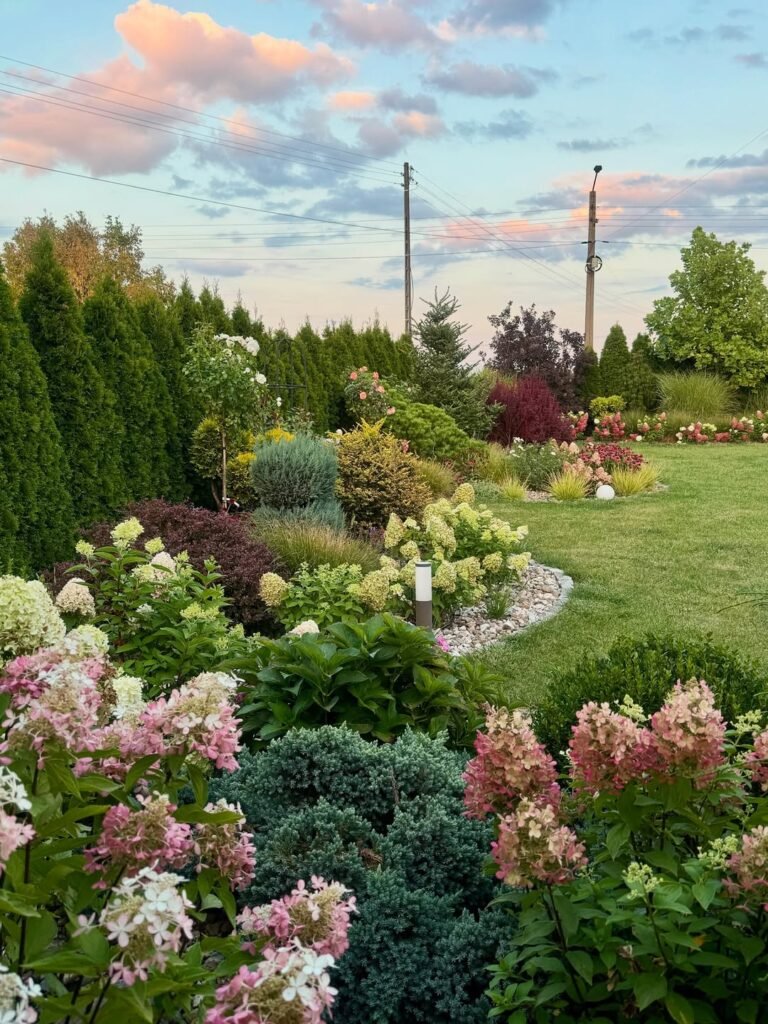
Build the structure on evergreen bones — a clipped box or yew ball, a phormium, or an architectural conifer as the permanent anchor — then layer seasonal flowering around it: spring bulbs pushing through a permanent ground cover, summer perennials and roses for the peak season, autumn seed heads and berrying shrubs for late-season interest, and winter structure plants — hellebores, euphorbias, ornamental grasses — for the months when everything else has died back.
Garden tip: Photograph the front bed in every month of the year for the first two years after planting and use the photographs to identify the gaps — the weeks or months when the bed lacks visual interest — and address each gap with a specifically chosen plant that peaks in that period. The photographic record is the most honest assessment available of how the year-round structure bed is actually performing across its full annual cycle, and it provides the precise brief for the additional planting needed to fill every seasonal gap.
The front flower bed at its best is not a decoration applied to the front of the house — it is a genuine garden in its own right, with its own seasonal character, its own ecological value, and its own relationship with the architecture behind it. Choose the planting scheme that suits the aspect, the soil, the house style, and the time available to maintain it, invest in it properly, and give it the two or three seasons it needs to reach its full potential. The front garden that is genuinely cared for and genuinely beautiful is one of the most generous gifts a household can give to the street it lives on.