14 Summer Front Yard Planting Ideas Inspired by 2026 World Cup Nation Colors
Summer is when your front yard has the biggest opportunity to shine. Bright sunlight, longer days, and peak blooming season create the perfect conditions for bold, eye-catching color. Instead of randomly mixing flowers, using the color palettes of World Cup nations gives your garden a clear, structured, and creative direction.
The beauty of this approach is that flag colors are already designed to stand out. When translated into plants, they naturally create high-impact combinations that feel balanced and intentional. With the FIFA World Cup 2026 taking place in summer, focusing on heat-tolerant, sun-loving plants ensures your garden looks vibrant when it matters most.
Below are 14 summer planting styles inspired by different nations, each designed for strong curb appeal and easy maintenance, along with practical pro tips to help you get the best results.
1. Red and White Garden (Japan, Canada)
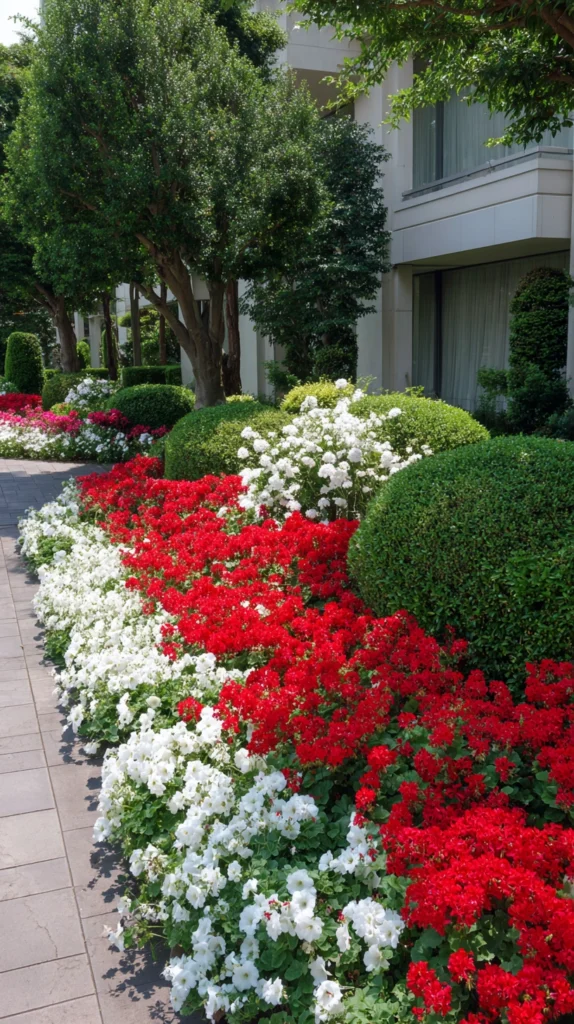
A red and white garden creates a clean, bold contrast that immediately catches the eye. This combination works beautifully in front yards because it looks organized and striking from a distance. The simplicity of the palette allows each plant to stand out while still contributing to a cohesive design.
For summer, plant red geraniums, zinnias, or salvia alongside white petunias, alyssum, or vinca. Keep the layout symmetrical for a polished look, especially along walkways or entry paths. Adding a green foliage base enhances the contrast and keeps the design from feeling too stark.
Pro Tip: Use repeating clusters of red and white instead of mixing them randomly. This creates a rhythm that makes your front yard look professionally designed.
2. Green, White, and Red Garden (Italy, Mexico)
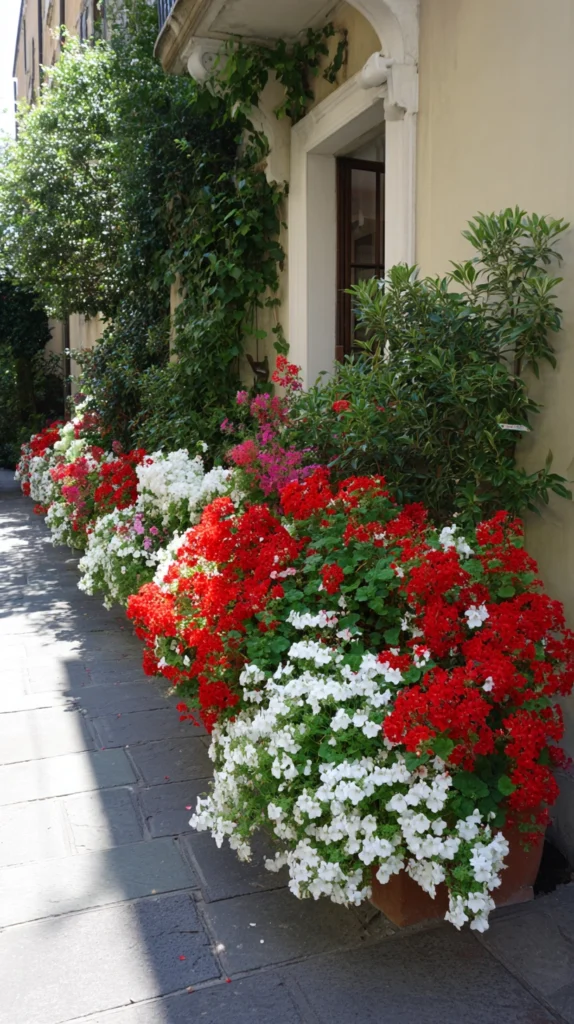
This palette feels lively and welcoming, perfect for creating a warm first impression. The combination of vibrant red flowers, soft white blooms, and lush greenery creates depth and balance without overwhelming the space.
Use red begonias or salvia, white cosmos or petunias, and incorporate herbs or ornamental grasses for the green element. The greenery acts as a buffer, allowing the brighter colors to stand out without clashing.
Pro Tip: Let green dominate about 50% of the space. This keeps the design natural and prevents the red and white from feeling too intense in strong sunlight.
3. Blue, White, and Red Garden (USA, France)
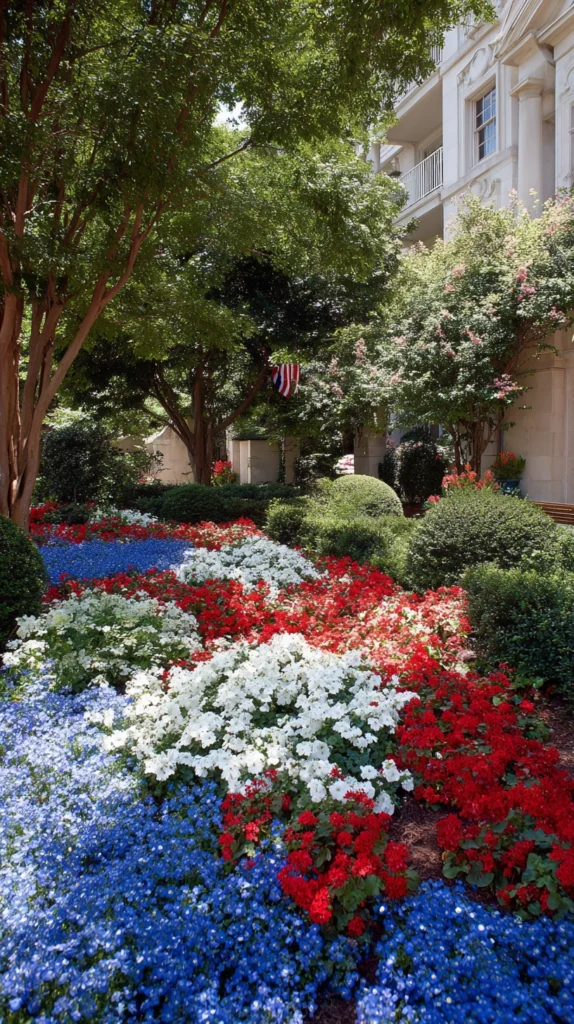
This classic trio blends cool and warm tones, making it one of the most balanced and versatile color schemes. It works especially well in structured front yard beds or along borders.
Plant blue lobelia or salvia, white petunias, and red geraniums or verbena. Arrange them in repeating patterns or blocks to create consistency across your yard.
Pro Tip: Place blue flowers slightly behind red and white ones. This layering technique adds depth and prevents the cooler tones from getting lost.
4. Yellow, Green, and Blue Garden (Brazil)
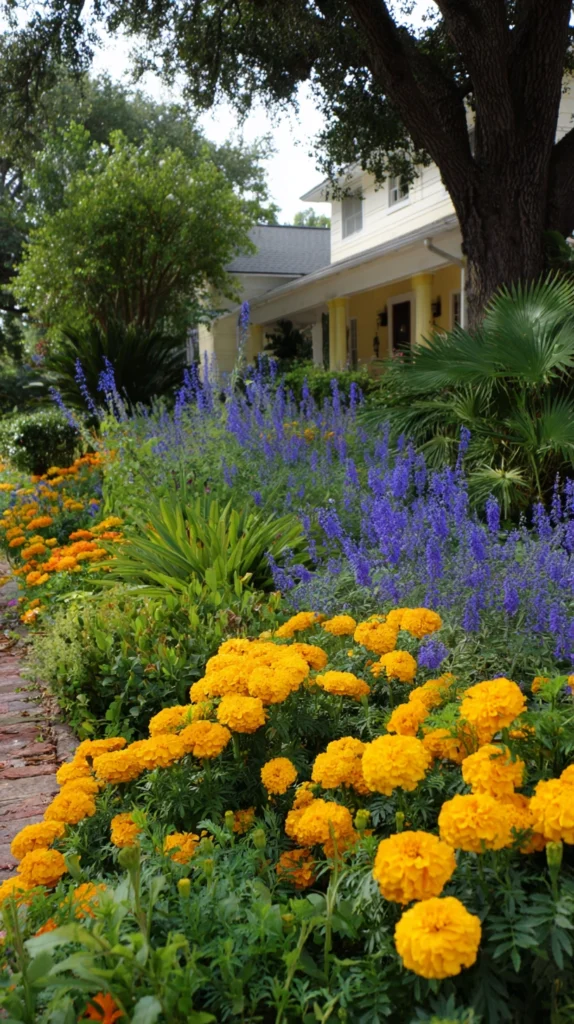
This bright and energetic palette instantly lifts the mood of your front yard. Yellow and blue create strong contrast, while green ties everything together for a natural look.
Use yellow marigolds or coreopsis, blue salvia or lobelia, and leafy green plants to fill gaps. This combination thrives in full sun and looks especially vibrant in open, sunny spaces.
Pro Tip: Use bold yellow sparingly as an accent rather than the dominant color. Too much yellow can overwhelm the design in bright sunlight.
5. Black, Red, and Yellow Garden (Germany)
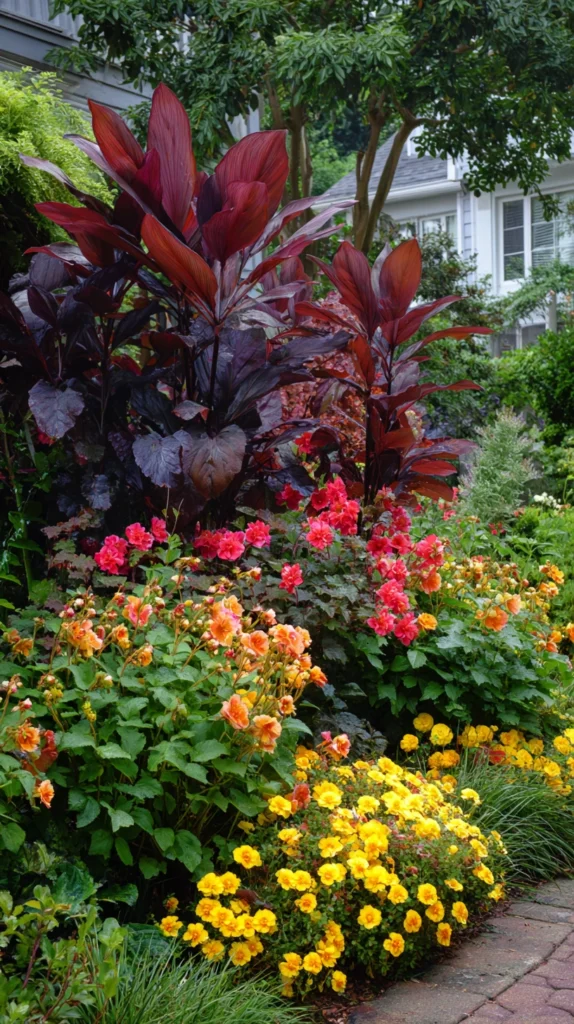
This dramatic palette adds depth and a modern edge to your garden. While black flowers are rare, dark foliage plants can create the same visual effect.
Combine deep burgundy leaves with red begonias and yellow marigolds. The contrast between dark and bright tones creates a layered, sophisticated look.
Pro Tip: Use dark foliage as a background rather than mixing it evenly. This helps the red and yellow flowers stand out more vividly.
6. Blue and Yellow Garden (Ukraine, Sweden)
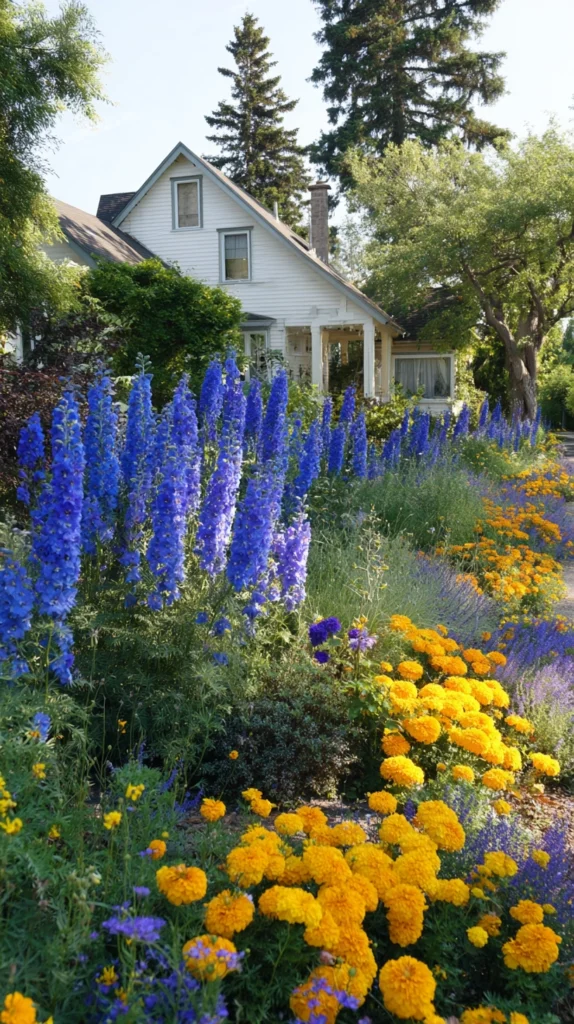
Blue and yellow create a striking yet harmonious contrast that feels fresh and uplifting. This palette works well in both formal and informal garden designs.
Plant blue delphiniums or salvia with yellow zinnias or marigolds. Alternate the colors in clusters to maintain balance and visual flow.
Pro Tip: Keep the planting slightly loose instead of overly structured. This enhances the natural harmony between these contrasting colors.
7. Red and Yellow Garden (Spain)
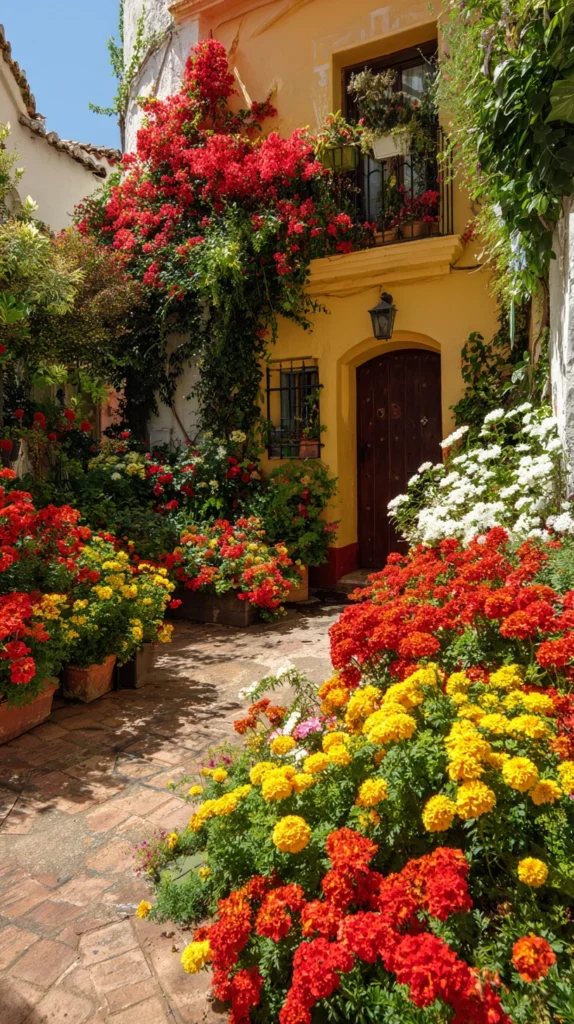
This warm, fiery combination brings energy and vibrancy to your front yard. It’s perfect for creating a welcoming and lively entrance.
Use red geraniums or celosia paired with yellow marigolds or sunflowers. Allow the plants to grow slightly freely to enhance the natural warmth of the palette.
Pro Tip: Add a small amount of green foliage between red and yellow clusters to prevent the colors from blending too harshly.
8. Green and White Garden (Nigeria, Saudi Arabia)
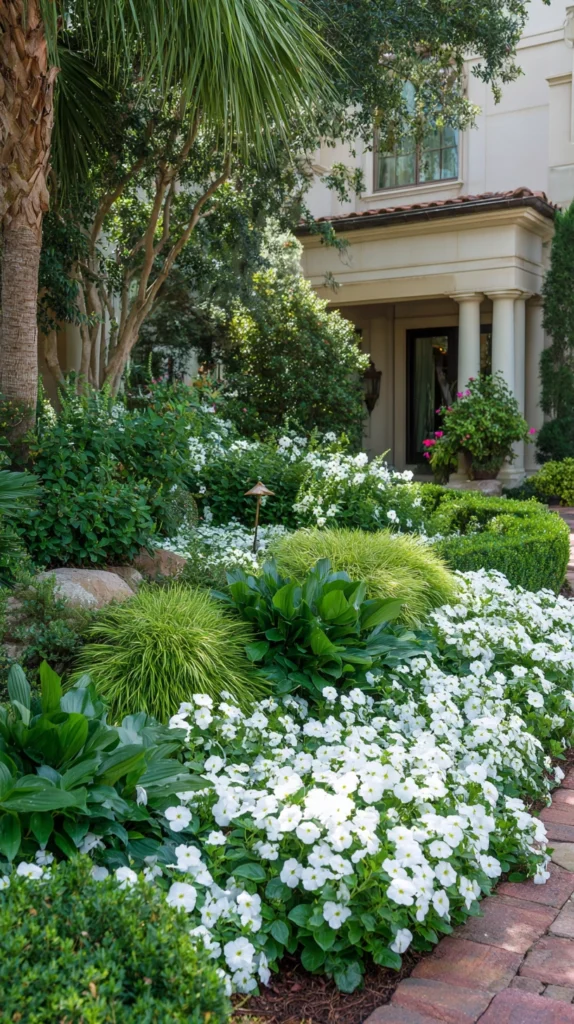
A green and white garden feels calm, elegant, and refreshing. It’s ideal for minimalist or modern front yard designs where simplicity is key.
Use white vinca, petunias, or impatiens paired with lush green foliage and ornamental grasses. Focus on texture and layering rather than bold color contrast.
Pro Tip: Mix different shades of green to avoid a flat look. Light and dark foliage together create depth without adding more colors.
9. Orange, White, and Green Garden (India)
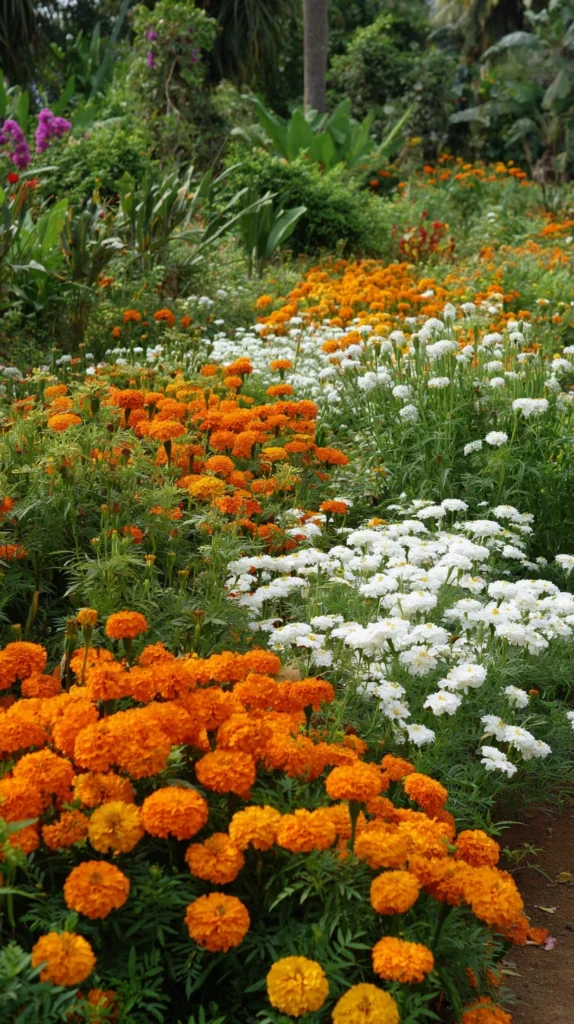
This vibrant combination blends warmth and freshness, making it perfect for a cheerful front yard. Orange adds energy, while white and green balance the intensity.
Plant orange marigolds or zinnias with white petunias and leafy green plants. Group them in clusters to create bold, defined sections of color.
Pro Tip: Use white flowers as separators between orange clusters. This keeps the design from feeling too dense or overwhelming.
10. Blue and White Garden (Greece, Finland)
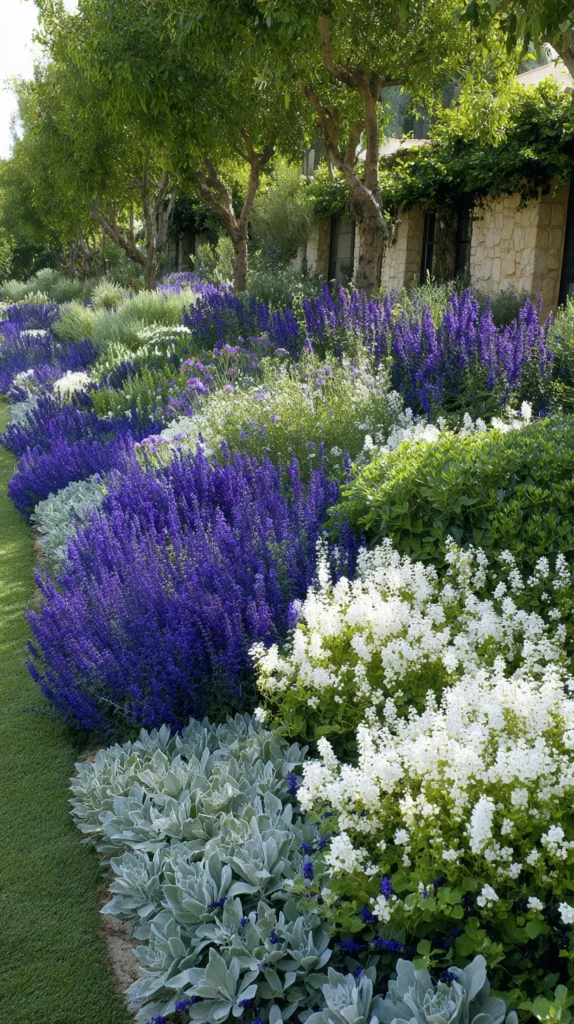
Blue and white gardens create a cool, calming effect that’s perfect for hot summer climates. These colors visually reduce the intensity of heat and sunlight.
Use blue lobelia or salvia with white alyssum or petunias. Keep spacing slightly open to maintain a light, airy feel.
Pro Tip: Add silver or gray foliage plants to enhance the cooling effect and give the garden a more refined look.
11. Red, Green, and Yellow Garden (Portugal)
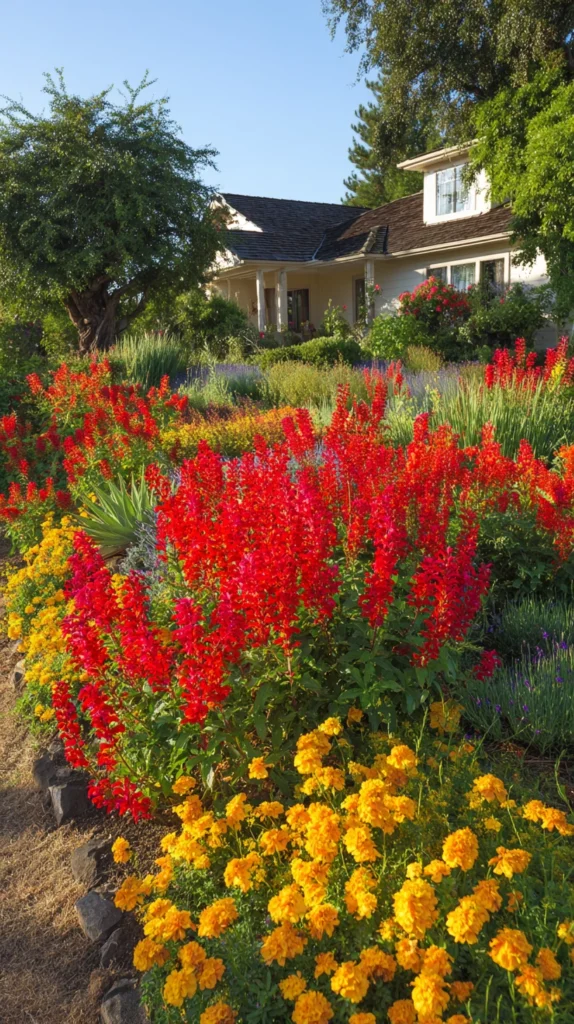
This rich and colorful palette creates a bold and lively front yard display. It works especially well in larger spaces where strong colors can spread out.
Use red salvia, yellow marigolds, and green foliage plants. Balance the colors evenly to avoid one dominating the design.
Pro Tip: Repeat the same plant combinations in multiple spots to create unity across your yard.
12. Purple, Yellow, and White Garden (Australia-inspired tones)
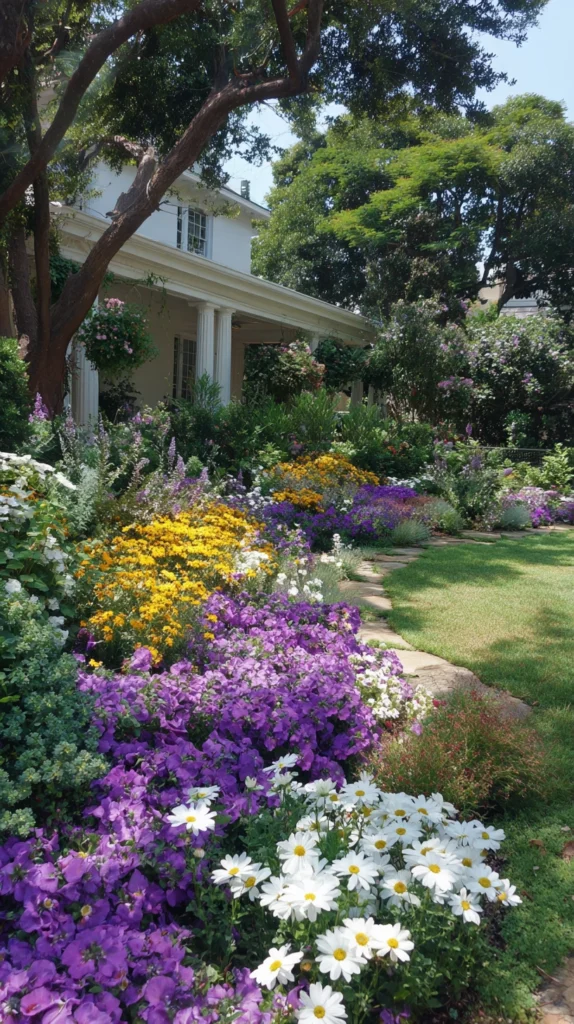
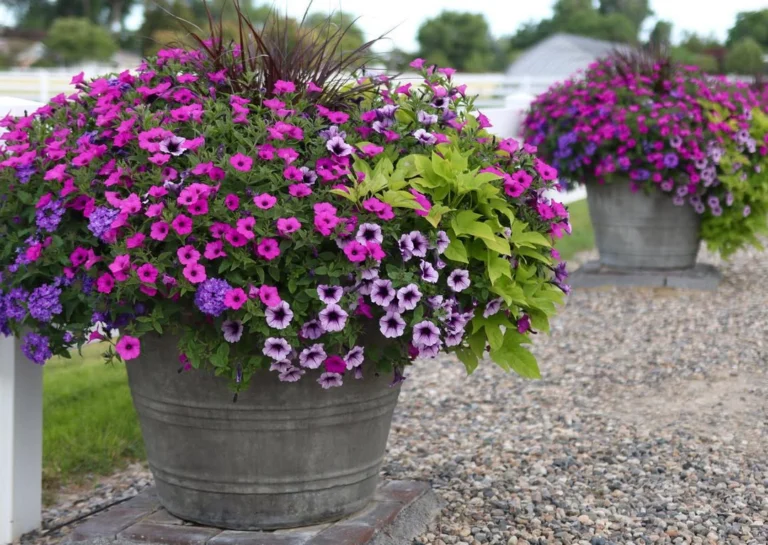
This palette offers a softer yet still vibrant combination. Purple adds depth, yellow brings brightness, and white keeps everything balanced.
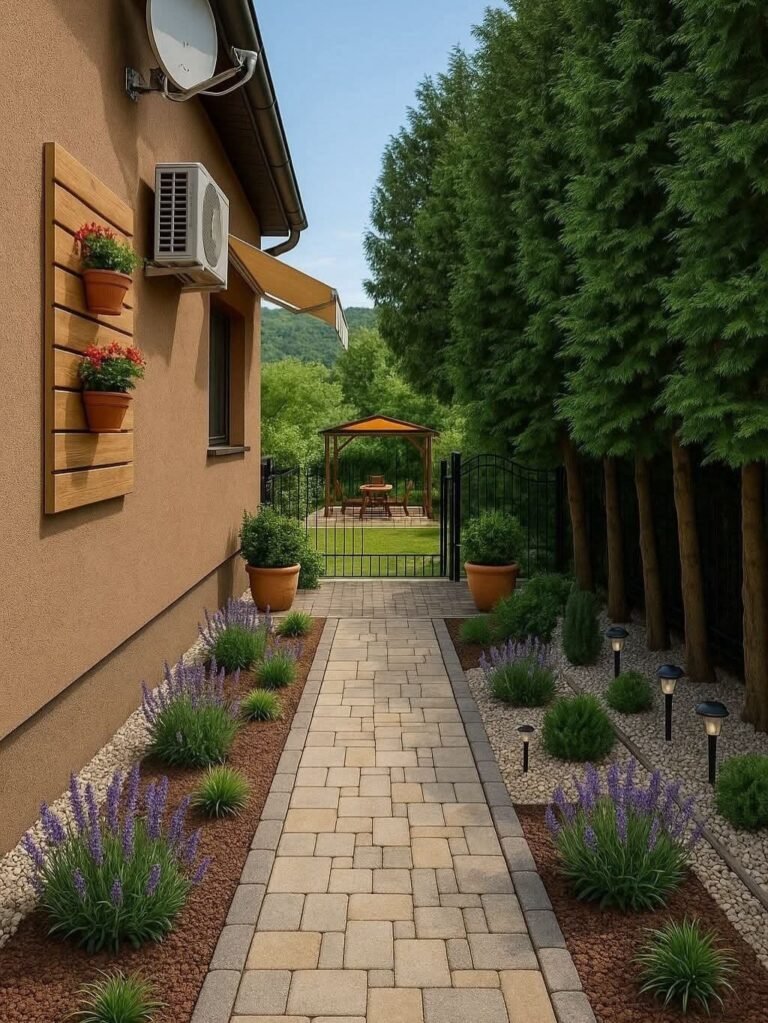
Plant lavender or purple petunias with yellow coreopsis and white daisies. This mix creates a layered, elegant look.
Pro Tip: Keep purple as the dominant color for a more sophisticated appearance, using yellow as a highlight.
13. Red and Blue Garden (Netherlands-inspired tones)
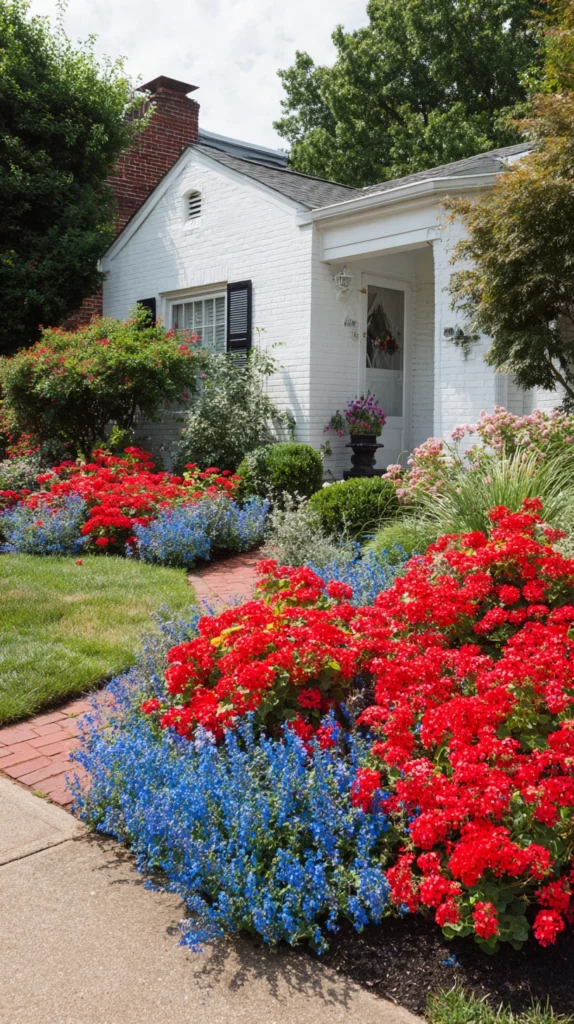
Red and blue create a bold, artistic contrast that stands out immediately. This less common pairing makes your front yard unique.
Use red geraniums with blue salvia or lobelia. Keep the layout structured for a clean and intentional design.
Pro Tip: Avoid adding too many extra colors. Keeping the palette limited strengthens the visual impact.
14. Multicolor World Cup Garden (Global Theme)
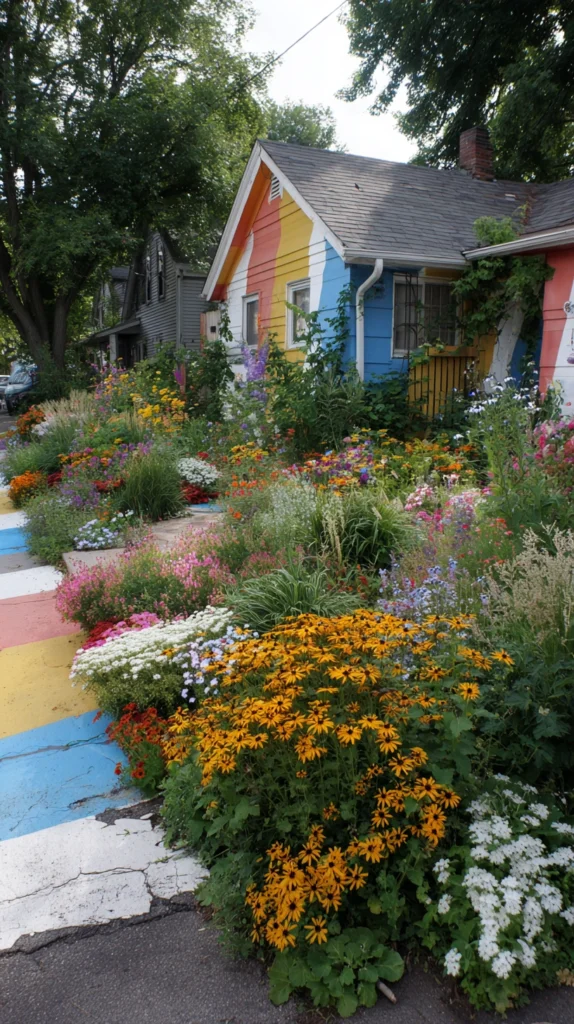
If you love variety, a multicolor garden inspired by multiple nations is a fun and creative option. Instead of sticking to one palette, divide your yard into sections with different color themes.
Use repeating patterns to maintain cohesion and avoid a cluttered look. This approach celebrates diversity while still feeling organized.
Pro Tip: Limit yourself to three or four color palettes and repeat them consistently to keep the design balanced.
Tips for Maintaining a Vibrant Summer Front Yard
To keep your garden looking its best throughout summer, choose plants that are known for heat tolerance and long blooming periods. Water deeply but less frequently to encourage strong root systems, and apply mulch to retain moisture and regulate soil temperature.
Deadheading spent flowers helps promote continuous blooming, while grouping plants with similar water needs makes maintenance easier. Consistency in care is just as important as design when it comes to achieving a vibrant front yard.
Final Thoughts
Designing your front yard using World Cup-inspired color schemes is a creative way to bring structure, personality, and global inspiration into your garden. By focusing on bold, heat-loving plants, you can ensure your space stays colorful and lively throughout the summer.
Whether you choose a single nation’s palette or combine multiple themes, these ideas help you create a front yard that feels intentional, eye-catching, and full of energy. With the right planning and a few smart choices, your garden can truly stand out this summer.