14 Herb Garden Ideas
There is something deeply satisfying about a herb garden that no other kind of growing has quite in the same measure.
The herbs are useful in an immediate, daily way — a sprig snipped for a sauce, a handful of leaves torn into a salad, a bunch hung to dry for winter — and their fragrance, released by the warmth of the sun or the brush of a hand against the foliage, connects the garden to the kitchen and the kitchen to the garden in a way that purely ornamental planting never achieves. A herb garden is a garden that earns its space every day it is used.
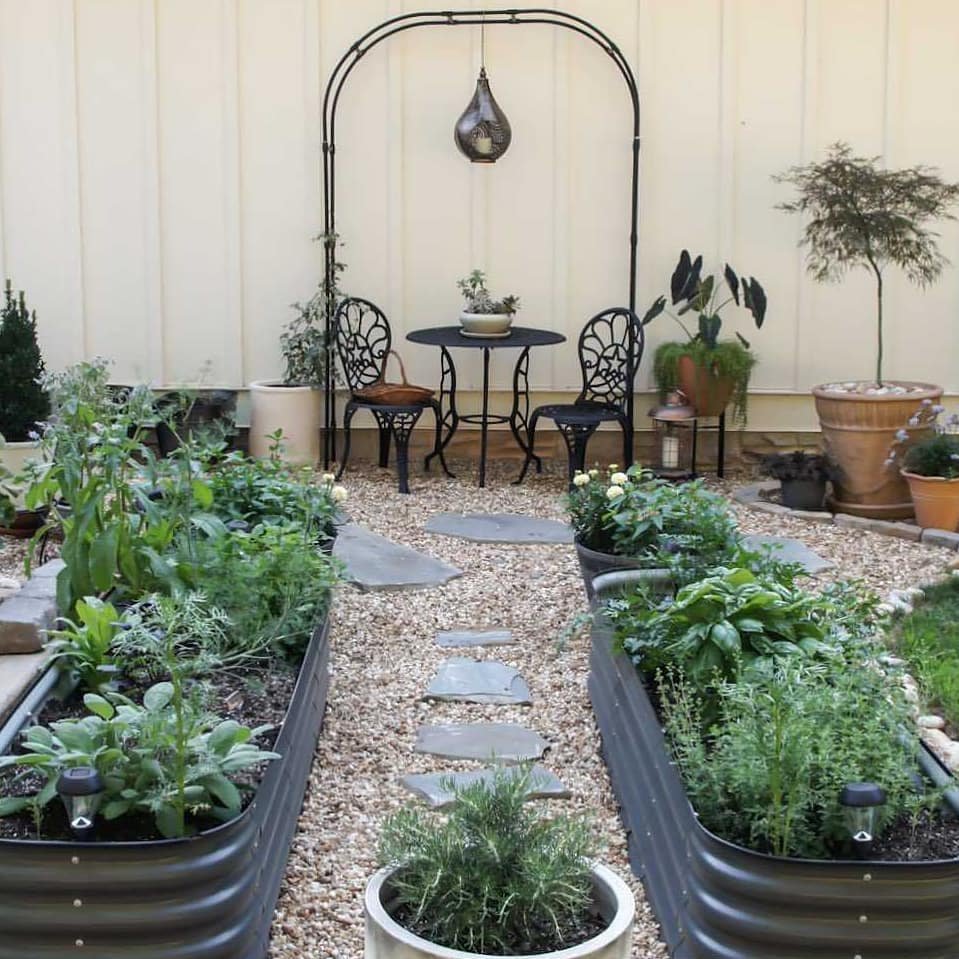
Herbs are also among the most forgiving and the most versatile plants available to the home gardener. They grow in pots, in raised beds, in the gaps between paving stones, in window boxes, on kitchen windowsills, and in dedicated garden beds.
They suit every scale of outdoor space from a single south-facing windowsill to a formal knot garden of considerable ambition. Every idea below addresses a specific approach to growing herbs — where to grow them, how to arrange them, and how to make the growing space as beautiful as it is productive.
1. The Classic Kitchen Garden Herb Bed
Budget: $40 – $200
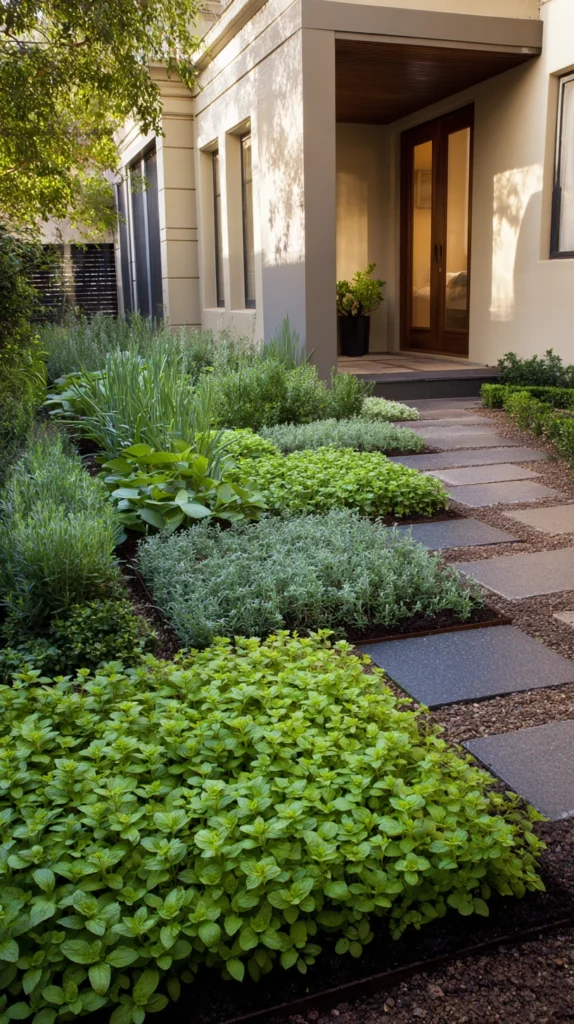
A dedicated herb bed positioned as close as possible to the kitchen door — ideally within three or four steps of the cooking space — is the most practically useful and the most regularly used herb garden available. The proximity to the kitchen is the single most important factor in whether a herb garden is actually used for cooking — herbs planted at the far end of the garden are admired; herbs planted beside the kitchen door are harvested daily. A simple rectangular bed, well prepared and densely planted with the herbs most frequently used in the household’s cooking, earns its position as the most productive square metre in the entire garden.
Plant in clearly defined blocks of a single variety each rather than mixing different herbs throughout the bed — a block of basil, a block of parsley, a block of thyme, a block of rosemary. The single-variety block is both more visually coherent and more practically useful than a mixed arrangement where individual plants are harder to identify and harder to harvest cleanly. Label each block with a handwritten slate label or a pressed metal tag for an attractive and functional planting guide.
Garden tip: Position the tallest herbs — rosemary, sage, fennel — at the back of the kitchen herb bed and the lowest growers — thyme, marjoram, chives — at the front, so every variety receives adequate light and every plant is visible and accessible from the path edge. A herb bed where taller plants shade lower ones produces poor growth in the shaded specimens and reduces both the visual quality and the harvest yield of the bed as a whole.
2. The Raised Bed Herb Garden
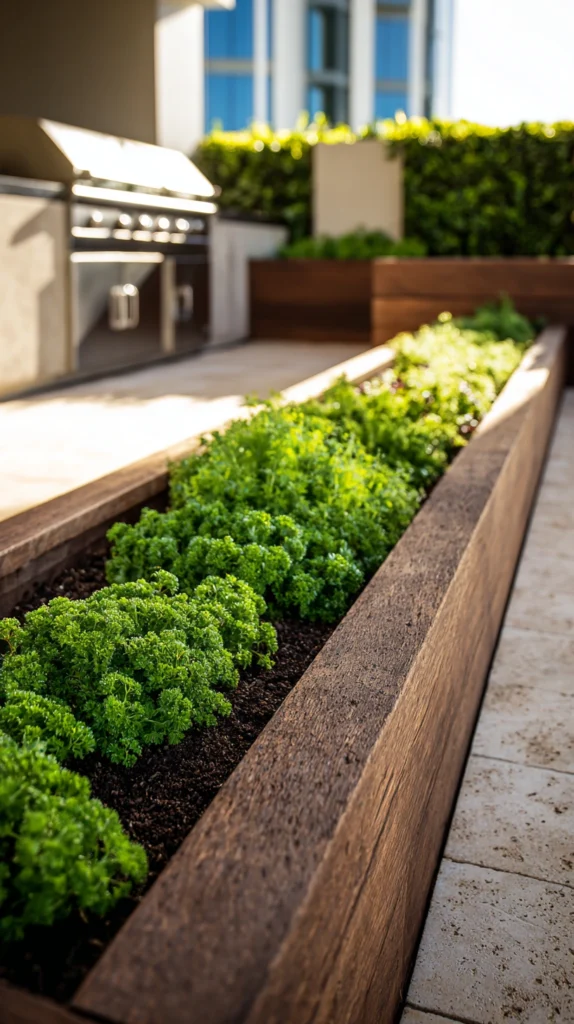
Budget: $60 – $300
A raised bed dedicated to herbs — ideally 30–40 centimetres deep to accommodate the root systems of shrubby herbs like rosemary and sage — creates the ideal growing conditions for the widest range of culinary herbs available. The raised structure improves drainage (critical for Mediterranean herbs that rot at the roots in waterlogged soil), allows complete control over the soil composition, warms up faster in spring to extend the growing season, and creates a defined growing space that is visually as well as practically organised.
Fill a herb raised bed with a mix of two parts topsoil, one part horticultural grit, and one part compost — a leaner, more free-draining mix than a standard vegetable bed that suits the Mediterranean origin of most culinary herbs. Rosemary, thyme, sage, oregano, and lavender all prefer this free-draining, relatively nutrient-poor substrate and will outperform identical plants grown in richer, moister soils.
Garden tip: Divide the raised bed into clearly defined quadrants or sections using low timber dividers, reclaimed bricks, or small slate pieces to contain spreading herbs and prevent more vigorous varieties from overwhelming their neighbours. Mint in particular must always be contained — plant it in a buried pot sunk to its rim in the raised bed soil to prevent its underground runners from colonising the entire bed within a single growing season.
3. The Spiral Herb Garden
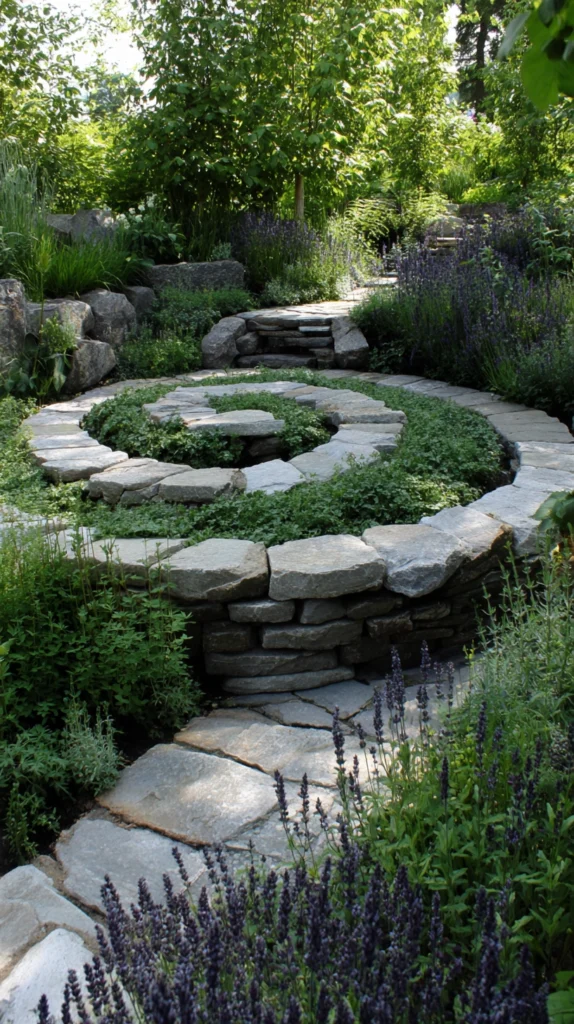
Budget: $50 – $200
A herb spiral — a raised, spiralling mound of soil and stone that creates multiple different growing microclimates within a footprint of approximately 1.5 metres diameter — is one of the most ingenious and the most beautiful small-scale garden structures available. The spiral creates sunny and dry conditions at the top (ideal for Mediterranean herbs), shadier and moister conditions at the base (ideal for moisture-loving herbs), and a gradient of conditions between the two extremes at every intermediate level. The result is a single structure that accommodates the full range of culinary herbs with their divergent growing requirements.
Build the spiral using reclaimed bricks, local stone, pebbles, or stacked timber — any durable material that can be stacked in a freestanding curve. Fill with a mix of compost and grit, adjusting the ratio from leaner and grittier at the top to richer and moister at the base. Plant rosemary and thyme at the sunny apex, basil and parsley in the middle zones, and mint and chives at the shaded, moist base.
Garden tip: Orient the spiral so the highest point faces south or south-west — the warmest and sunniest aspect in the northern hemisphere. A spiral oriented correctly maximises the growing conditions for the Mediterranean herbs at the top and creates the cool, north-facing shade at the base that moisture-loving herbs genuinely prefer. An incorrectly oriented spiral reduces the effectiveness of the microclimate gradient and makes the structure a decorative rather than a genuinely functional growing tool.
4. The Container Herb Collection
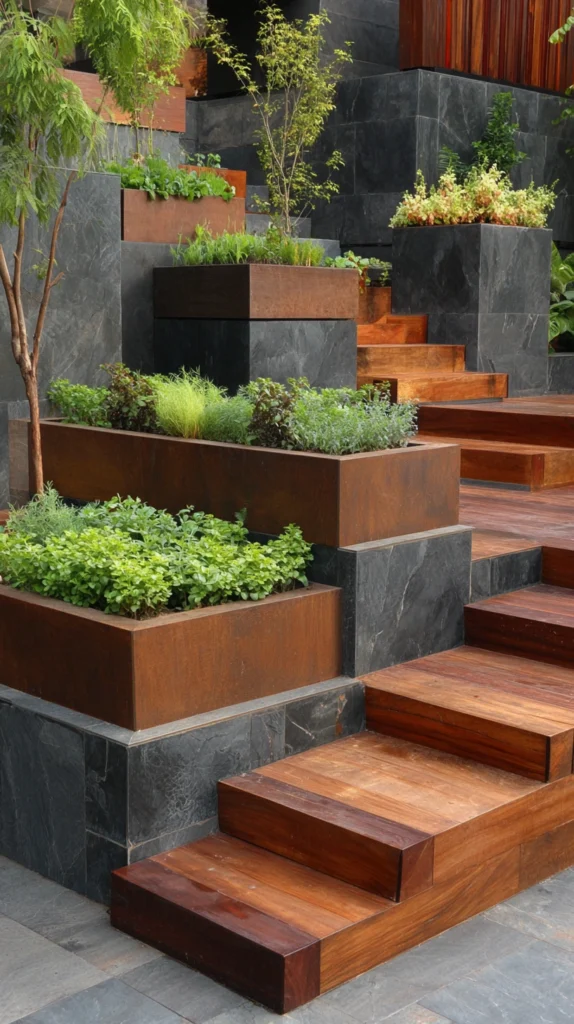
Budget: $30 – $150
A collection of containers — terracotta pots, ceramic bowls, galvanised troughs, wooden crates, old colanders — each planted with a single herb variety and grouped in a sunny corner of the patio or beside the kitchen door creates the most flexible and the most visually characterful herb garden available for any space without a dedicated growing bed. The container collection can be moved, reorganised, expanded, and updated at any time, which makes it the ideal herb garden for renters, for gardeners with changing requirements, and for anyone who finds the commitment of a permanent bed more than they currently want to take on.
Group containers at varying heights — some on bricks, some on an upturned pot, some at ground level — for a display with visual depth and a herb garden that is accessible and enjoyable to look at rather than a flat row of pots at a single level. The height variation also allows the most frequently harvested herbs to be positioned at the most conveniently accessible level and the more ornamental or less frequently used herbs to occupy the higher or lower positions.
Garden tip: Water container herbs daily in hot summer weather — the limited soil volume in a container dries out significantly faster than ground-level planting, and herbs that experience drought stress even briefly produce less aromatic foliage, become woody prematurely, and bolt to seed faster than consistently watered plants. Self-watering pots with integrated water reservoirs ($10–$25 each) significantly reduce the daily watering commitment while maintaining consistent moisture levels.
5. The Formal Knot Garden
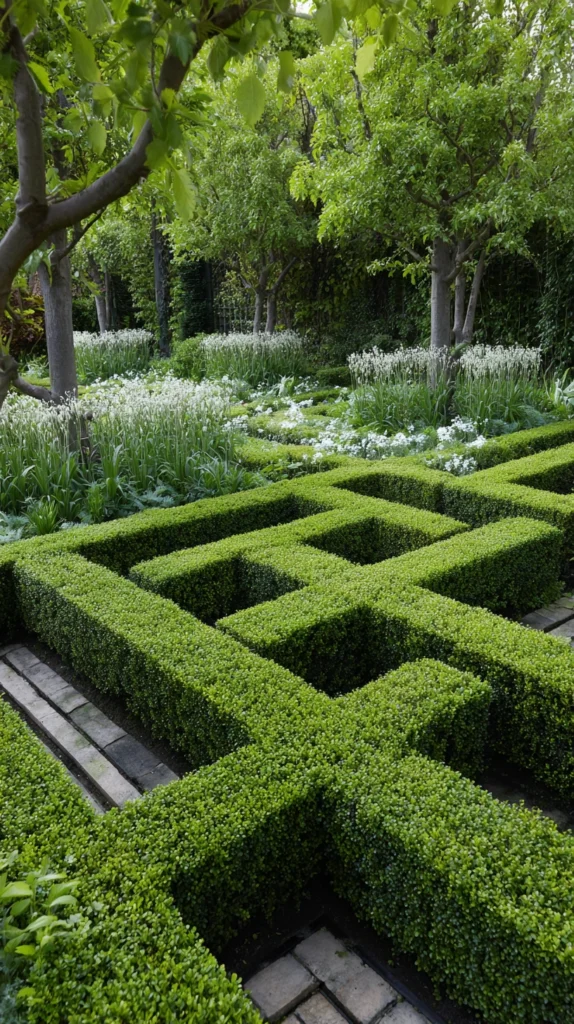
Budget: $200 – $1,500
A formal knot garden — a geometric pattern of low clipped hedges, traditionally planted with box, germander, or dwarf lavender, with herbs filling the spaces between the hedging plants — is the most historically rooted and the most architecturally ambitious herb garden idea available. The knot garden has its origins in the Tudor and Elizabethan periods when it was considered the height of horticultural sophistication, and a well-executed modern version — even a modest four-quadrant design — creates a front or back garden feature of genuine beauty and design authority.
A simple four-quadrant knot of dwarf lavender or box costs $60–$200 in hedging plants for a 2×2 metre design. The internal spaces between the hedging can be planted with culinary herbs for a productive knot garden or with gravel, contrasting soil colours, or ornamental plants for a purely decorative version. The discipline of the geometric design requires precise planting and consistent annual clipping to maintain its visual effectiveness.
Garden tip: Mark the knot garden design on the ground using sand poured from a bottle before planting a single hedging plant — the sand line shows the intended pattern clearly and allows adjustments to be made before any plant is committed to a position. The complexity of a knot garden pattern is always harder to execute accurately from a plan than from a marked ground template, and the sand line is the most practical and the cheapest design tool available for the initial layout.
6. The Window Box Herb Garden
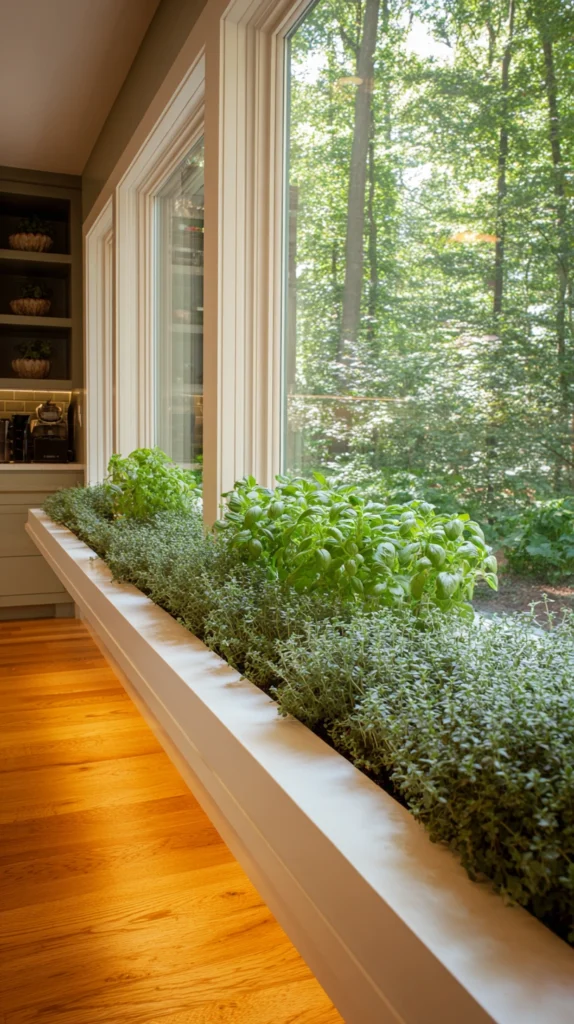
Budget: $20 – $80
A window box of culinary herbs on a south or west-facing kitchen windowsill is the most space-efficient and the most immediately practical herb garden available for any household regardless of garden size or outdoor space. A window box planted with basil, parsley, chives, mint, and thyme provides a year-round supply of the herbs most commonly needed in everyday cooking from a footprint of less than half a square metre — and the proximity to the kitchen window means that harvesting requires nothing more than opening the window.
Terracotta window boxes cost $10–$30 and provide the drainage and the natural material quality that suits herb growing better than plastic alternatives. A standard 60-centimetre window box accommodates four to six different herb varieties at a density that allows meaningful harvest from each. Ensure the window box has adequate drainage holes and is positioned on brackets rated for the combined weight of the box, soil, and plants when fully watered.
Garden tip: Replace the basil in the kitchen window box every four to six weeks through summer rather than attempting to maintain a single plant in continuous harvest. Basil is fundamentally an annual and it declines rapidly once it has been harvested intensively or has begun to flower. A replacement seedling purchased from a garden centre every month provides a better and more continuous harvest than a single plant maintained beyond its productive peak.
7. The Potager Herb and Vegetable Garden
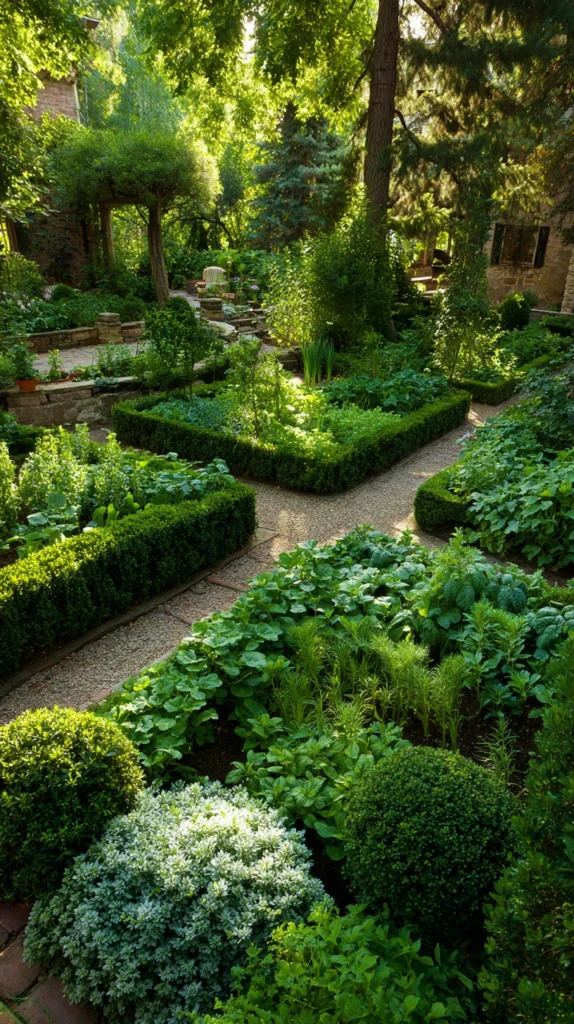
Budget: $100 – $500
A potager — the French tradition of the ornamental kitchen garden in which herbs, vegetables, and edible flowers are grown together in a formally designed space where productivity and beauty are considered equally important — is the most ambitious and the most visually sophisticated herb garden idea available. Herbs grown as edging plants around vegetable beds, fennel as an architectural backdrop, nasturtiums scrambling through the herb beds, and lavender along the central path create a kitchen garden that is as beautiful as any ornamental border and more useful than any purely decorative planting.
The potager principle — that food plants can be grown as beautifully as ornamental ones — transforms the attitude to the kitchen garden from a purely practical space to one that is genuinely worth spending time in and genuinely worth designing with care. Purple basil beside green parsley, bronze fennel behind grey-green rosemary, and flowering chives beside red-stemmed chard create a colour palette of extraordinary richness from purely edible plants.
Garden tip: Include at least three or four purely ornamental elements in the potager herb garden — a standard bay tree as a focal point, a rose arch over the central path, an ornamental urn at a path intersection — that provide permanent structure and visual anchoring points within the seasonal changes of the edible planting. Without permanent ornamental anchors, a potager looks full and abundant in summer but sparse and unplanted in winter; the permanent structural elements maintain the garden’s visual coherence year-round.
8. The Indoor Kitchen Herb Garden
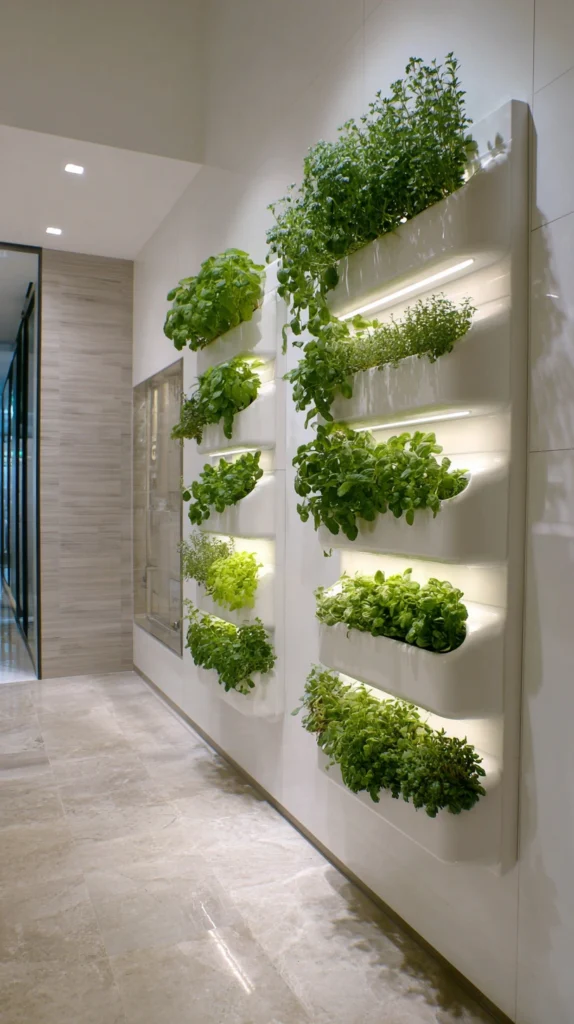
Budget: $20 – $100
A dedicated indoor herb growing system — a tiered herb stand on the kitchen counter, a wall-mounted magnetic pot system, or a self-contained growing unit with LED grow lighting — creates a year-round indoor herb garden that is completely independent of outdoor conditions and provides fresh herbs through the winter months when outdoor herb gardens are dormant. The indoor herb garden suits urban households with no outdoor space, flats without south-facing windowsills, and any household that wants to maintain a continuous fresh herb supply regardless of the season.
Self-watering wall-mounted herb planters cost $30–$60 for a three or four pot system and can be mounted directly to the kitchen splashback or wall. LED grow light herb gardens — countertop units with integrated full-spectrum lighting — cost $40–$100 and provide the light intensity that herbs need for vigorous indoor growth regardless of the natural light available in the kitchen.
Garden tip: Harvest indoor herbs little and often rather than in large quantities at extended intervals. Frequent light harvesting — removing the top two or three centimetres of growth every few days — keeps indoor herbs compact, bushy, and actively producing. Infrequent heavy harvesting removes too much of the plant’s photosynthetic capacity at once and causes it to struggle to recover in the reduced light conditions of an indoor environment.
9. The Heritage and Unusual Herb Collection
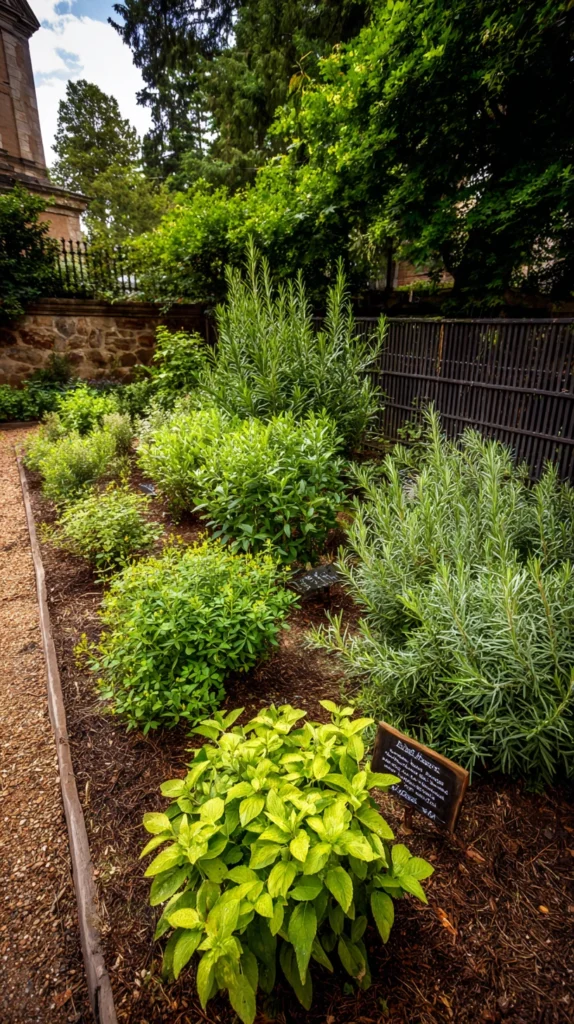
Budget: $30 – $150
A herb garden planted with heritage, unusual, and less commonly grown varieties — lemon verbena, lovage, sweet cicely, hyssop, borage, sorrel, Vietnamese coriander, summer savory, bronze fennel, Moroccan mint, and Vietnamese mint — creates a herb garden of genuine plant interest and culinary adventure that communicates specialist knowledge and genuine curiosity about the breadth of the herb world beyond the standard supermarket selection. A heritage herb collection is simultaneously an education in culinary history and a resource of extraordinary range for adventurous cooks.
Specialist herb nurseries stock most unusual herb varieties that mainstream garden centres do not carry — and many offer mail-order delivery that makes accessing unusual varieties straightforward regardless of local retail availability. A collection of ten or twelve specialist herbs provides the foundation for a herb garden that will attract the attention and the curiosity of every visitor who knows herbs well enough to recognise what they are looking at.
Garden tip: Label unusual herb varieties with both their common name and their botanical name — the combination of names on a handwritten slate or metal label adds a quality of reference and scholarship to the herb garden that communicates genuine plant knowledge. A herb that is unidentifiable to visitors is a missed opportunity for conversation; a well-labelled unusual herb invites questions, explains its culinary use, and communicates the care and knowledge that went into building the collection.
10. The Medicinal and Therapeutic Herb Garden
Budget: $40 – $200
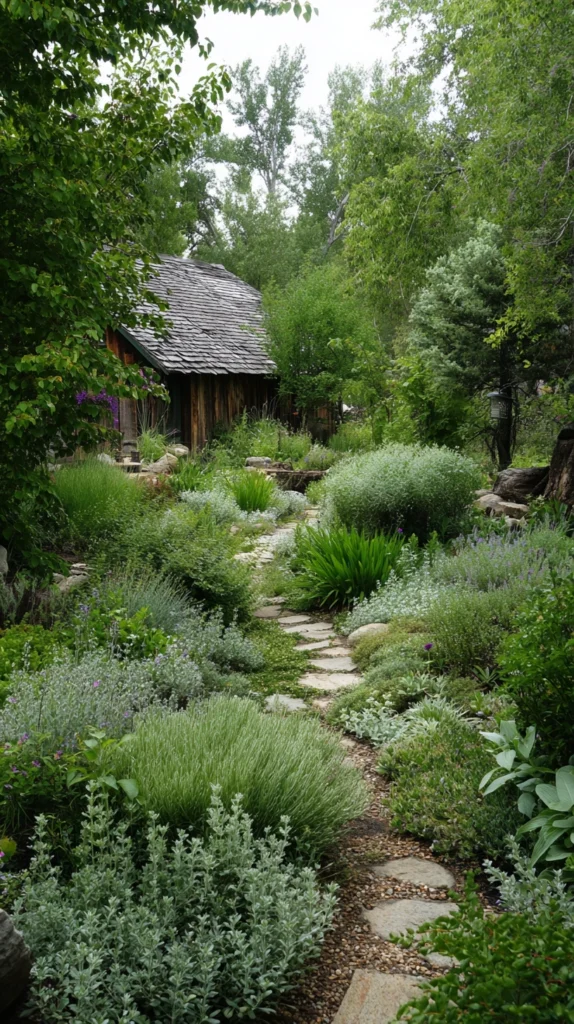
A herb garden planted specifically with medicinal and therapeutic herbs — echinacea, valerian, chamomile, calendula, St John’s wort, lemon balm, elderflower, lavender, yarrow, and feverfew — creates a growing space of historical depth and genuine practical value that extends the role of the herb garden beyond the purely culinary. The medicinal herb garden communicates a serious and knowledgeable engagement with the healing traditions of European herbalism and provides the raw materials for herbal teas, tinctures, infused oils, and dried botanical preparations throughout the growing season.
Many medicinal herbs are also among the most beautiful garden plants available — echinacea provides spectacular late-summer colour, calendula produces vivid orange and yellow flowers from June to frost, valerian creates tall, vanilla-scented flower clusters that are extraordinarily attractive to butterflies, and lavender is simply one of the most beautiful plants available at any price. A medicinal herb garden achieves the dual function of beauty and utility at least as well as any purely ornamental planting.
Garden tip: Harvest medicinal herbs at the correct stage of their development for maximum therapeutic potency — flowers at the moment of opening, leaves before flowering, roots in autumn when the plant’s energy has returned from aerial growth to the root system. The timing of harvest affects the quality of the dried or processed herb significantly, and a medicinally serious herb garden is one where the harvest timing is as carefully considered as the planting.
11. The Paved Path Herb Garden
Budget: $50 – $250
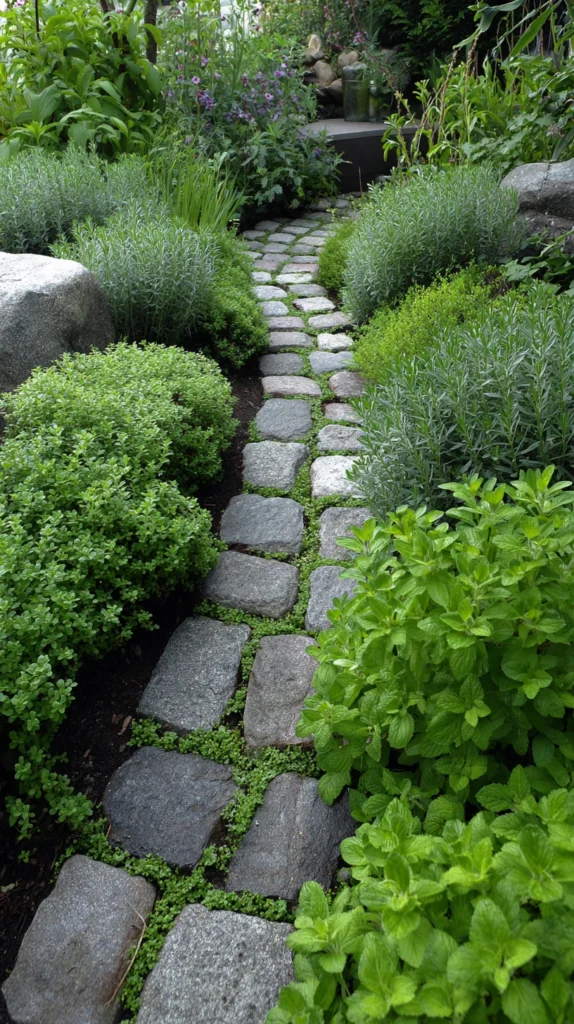
A herb garden planted in the gaps between paving stones — thyme, chamomile, Corsican mint, creeping oregano, and pennyroyal planted in the joints of a stone or brick path — creates a fragrant, living path surface that releases its fragrance with every footstep and communicates the most organic and the most naturally integrated relationship between the herb garden and the garden’s circulation. A path of fragrant herbs underfoot is one of those garden experiences that guests consistently describe as one of the most pleasurable they have encountered in any domestic garden.
Creeping thyme varieties — Thymus serpyllum and its cultivars — are the most robust and the most fragrant of all paving joint herbs and tolerate regular foot traffic with remarkable resilience. Roman chamomile releases its characteristic apple scent when trodden on and creates a path of extraordinary fragrance. Both cost $2–$5 per plant and require only a pocket of free-draining soil in the paving joint to establish and spread.
Garden tip: Plant path herbs when the paving is being laid or reinstated rather than attempting to introduce them into the joints of existing paving. Removing the old mortar from established paving joints, cleaning them out, and refilling with suitable growing medium is significantly more difficult than planting directly into freshly laid paving where joints can be left wider and filled with gritty compost at the time of laying. New paving allows perfect conditions to be created from the outset.
12. The Bee and Butterfly Herb Garden
Budget: $30 – $150
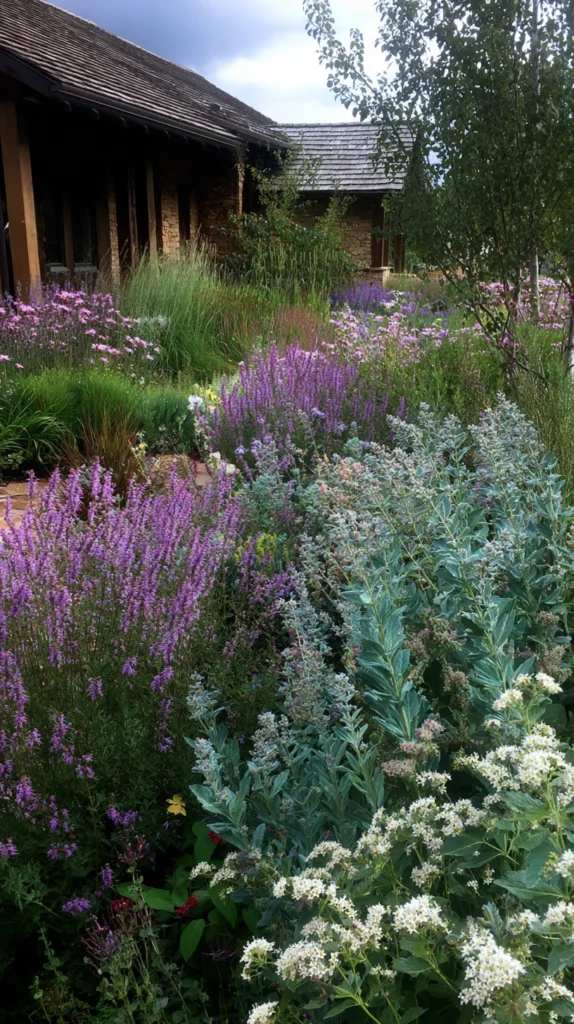
A herb garden planted specifically to attract and support bees, butterflies, and other beneficial insects — lavender, borage, flowering thyme, hyssop, marjoram, agastache, calamint, and lemon balm — creates a growing space of extraordinary ecological value that is simultaneously beautiful, fragrant, and genuinely useful for the pollinator populations that every garden and food garden depends on. A bee and butterfly herb garden is the most ecologically generous growing project available at small scale.
Borage is arguably the single most bee-attractive herb available — its vivid blue, star-shaped flowers produce abundant nectar from June to September and are sought by bees more consistently and more intensely than almost any other garden plant. It self-seeds freely once established, is completely edible (the flowers are delicious in salads and summer drinks), and requires no maintenance beyond cutting back in autumn.
Garden tip: Allow flowering thyme, marjoram, and oregano to flower fully rather than cutting them back when flowering begins — the conventional advice to prevent herbs from bolting to seed is correct for culinary quality but wrong for pollinator value. A herb garden that balances culinary harvesting from one section with uncut flowering in another section provides both excellent cooking herbs and a genuine pollinator resource simultaneously.
13. The Hanging Herb Garden
Budget: $30 – $120
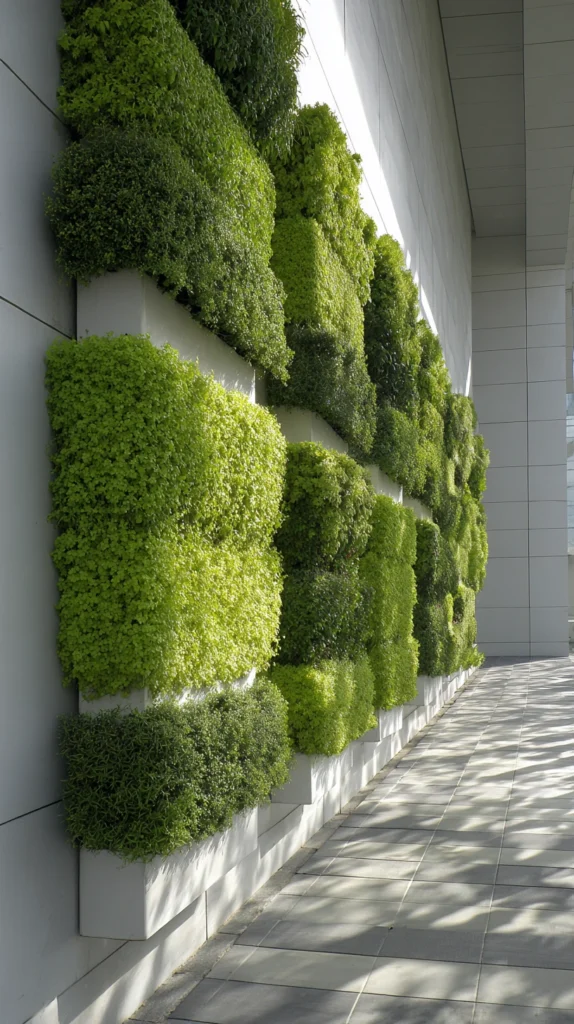
A vertical hanging herb garden — herbs growing in wall-mounted pocket planters, stacked hanging baskets, or a tiered hanging planter system on a sunny wall, fence, or pergola post — creates a herb garden in purely vertical space that uses no ground area and suits balconies, small patios, courtyard gardens, and any sunny wall where ground-level growing space is unavailable or impractical. The hanging herb garden makes genuinely productive use of vertical surfaces that most gardens leave entirely unused.
Fabric pocket planters fixed to a south-facing fence cost $15–$40 for a panel covering approximately one square metre and accommodate eight to twelve individual herb plants. Stacked terracotta hanging planters — three tiers of decreasing diameter suspended from a single hook — cost $20–$50 and create a compact, visually attractive vertical herb display that suits a patio or garden corner with a strong visual presence at a modest footprint.
Garden tip: Plant hanging herb gardens with compact, shallow-rooted varieties that perform well in the limited soil volume of a pocket or small container — thyme, parsley, chives, mint, small-leafed basil, and marjoram are all suitable. Deep-rooted or vigorous herbs — rosemary, fennel, lovage — need a larger root run than a hanging system can provide and will underperform and deteriorate in shallow planters regardless of how well they are watered and fed.
14. The Four-Season Herb Garden
Budget: $80 – $400
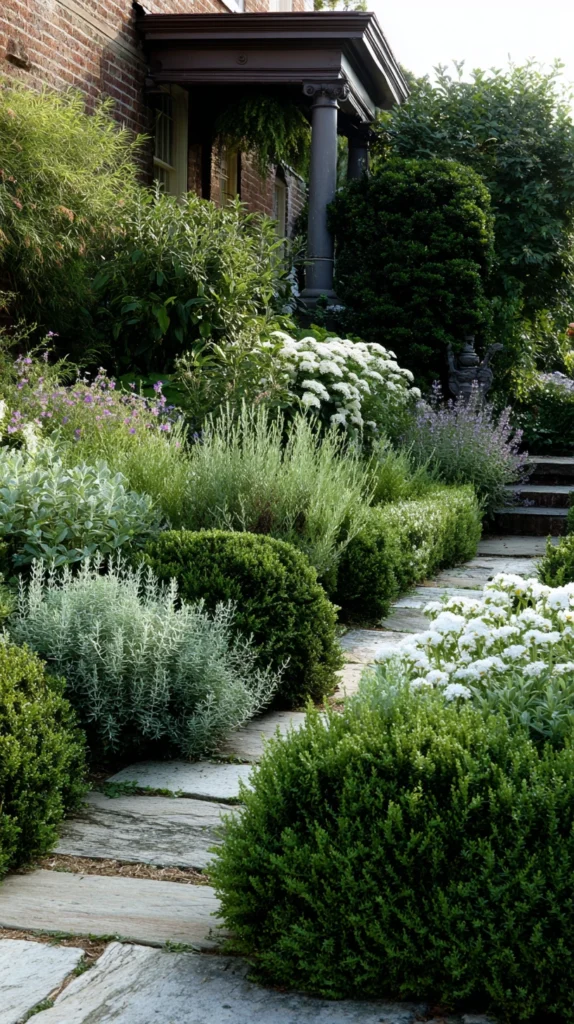
A herb garden specifically designed for year-round interest and year-round harvest — combining evergreen permanent herbs for winter structure, annuals and tender herbs for summer abundance, bulbous herbs for spring interest, and hardy perennials for autumn colour — creates a herb garden that is productive and visually interesting in every month of the calendar rather than spectacular in summer and bare through the winter months that account for almost half the year.
Build the four-season herb garden on evergreen bones — rosemary, sage, thyme, bay, and winter savory all remain productive and visually attractive through the coldest months. Layer summer annuals — basil, coriander, dill, chervil — above and between the evergreen shrubs for the summer harvest season. Add chives for early spring interest, fennel for late-summer height, and parsley (a biennial that provides autumn and spring harvest) to complete the full-year productive cycle.
Garden tip: Sow succession plantings of annual herbs — particularly coriander, dill, and chervil — every three weeks through the growing season rather than in a single sowing. These fast-growing, fast-bolting herbs provide a six-week harvest window from each sowing before running to seed — three-weekly succession sowing ensures a continuous supply throughout the summer and autumn without the feast-and-famine cycle that single-sowing produces. The succession habit, once established, is one of the most valuable skills in any productive herb garden.
A herb garden of any scale or ambition rewards the gardener who uses it. The herbs harvested and cooked with, the dried bundles that carry summer into winter, the fragrance that fills the kitchen when a fresh bunch is brought in from the garden — these are the returns on an investment that costs almost nothing in money or expertise and almost everything in sensory pleasure and daily satisfaction. Choose the scale and the approach that suits the space and the cooking habits of the household, plant with generosity, harvest with frequency, and let the garden earn its place every day it is used.