14 Garden Pathway Ideas That Make Any Backyard Look Expensive
A garden path is not just a surface to walk on — it is the primary line of the garden’s design. It determines where the eye goes first, how long it takes to reach the back of the garden, and whether the yard reads as considered or improvised from the moment anyone steps outside. A well-designed path makes even modest planting look intentional. A poorly laid one undermines the most expensive landscaping around it.
The fourteen ideas below cover every path material, width, and style — from a simple gravel track laid in an afternoon to a formal dressed stone pathway that lasts a generation. Each includes what it costs and a practical tip to help you get the result that genuinely upgrades the backyard rather than simply crossing it.
1. Large Format Porcelain Paving Slabs
Budget: $200 – $800
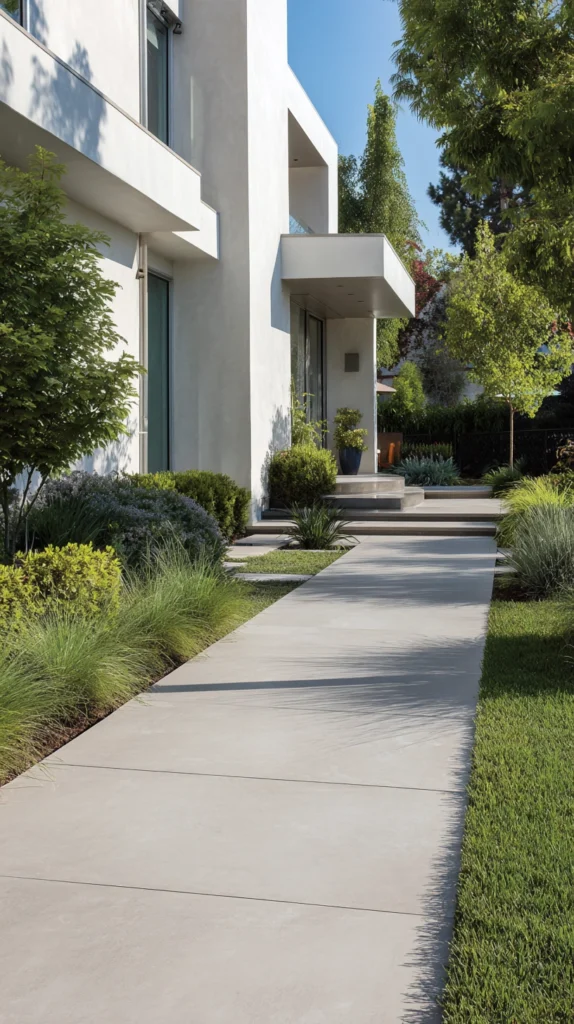
Large-format porcelain slabs in a 60×60 cm or 90×45 cm format laid with minimal grout joints create the most contemporary and most immediately expensive-looking garden path available. The large slab size reduces the number of joints visible, which gives the path a clean, architectural quality that smaller formats never achieve at the same cost.
Porcelain outdoor paving in a light grey or warm stone tone costs $25–$60 per square metre. A 1-metre wide path of 6 metres length requires approximately 6 square metres at $150–$360 in materials. Lay on a full concrete or compacted sand bed — large porcelain slabs require full support across the entire slab surface rather than the spot-fixing acceptable for smaller natural stone pieces.
Path tip: Keep grout joints at 3–5 mm maximum for a truly high-end appearance. Wider joints emphasise the individual slabs rather than the unified surface — a large slab path with tight joints reads as a continuous surface similar to interior tile work, which is the quality that makes it look considerably more expensive than the material cost alone suggests.
2. Stepping Stones Through a Lawn
Budget: $50 – $200
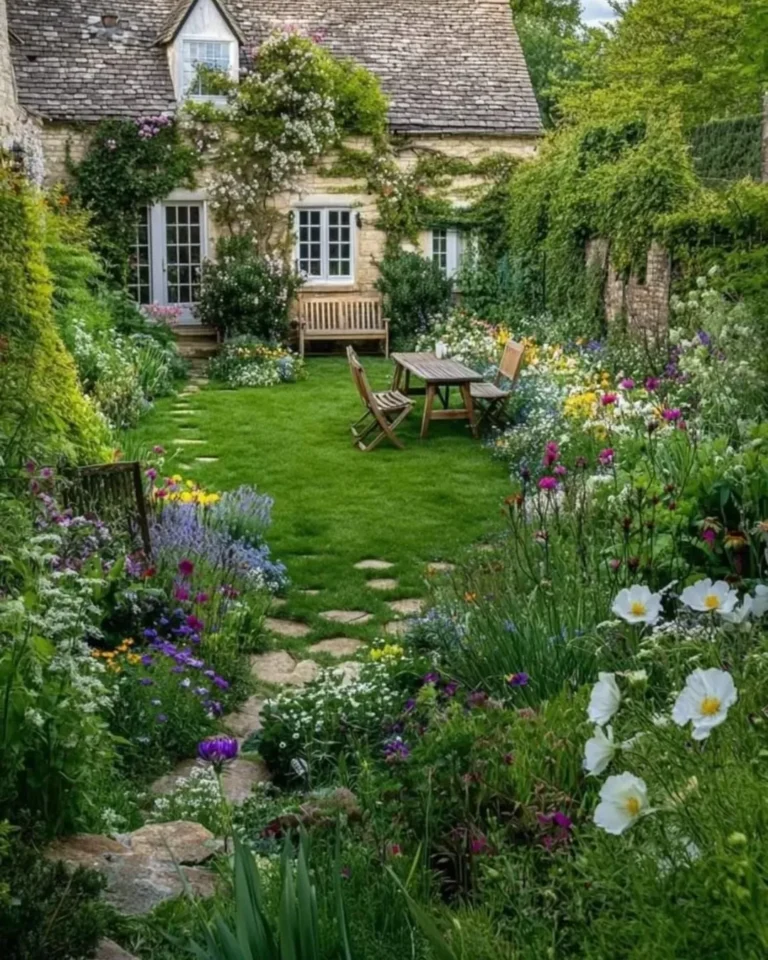
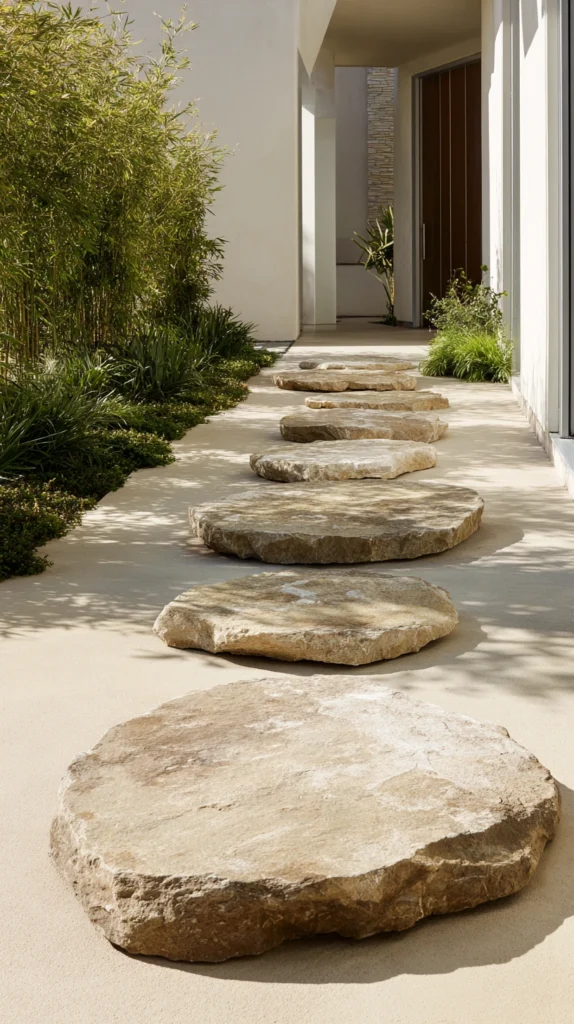
A series of flat stepping stones set flush with the lawn surface — positioned at a natural walking stride apart — creates a path that looks designed and effortless simultaneously. The stones do not interrupt the lawn visually from a distance but guide movement through the garden with a subtlety that any raised path or distinct surface material cannot achieve.
Irregular sandstone or slate stepping stones cost $5–$20 each depending on size. A 6-metre path requires eight to ten stones at $40–$200. Set each stone level with the lawn surface — any protrusion above lawn level causes the stone to catch the mower and eventually lifts it through frost heave. Bed each stone on a 5 cm layer of compacted sharp sand for stability.
Path tip: Walk the intended path naturally before placing any stones — place a stone wherever your foot lands rather than measuring a consistent spacing. The result is more instinctively comfortable to walk along than any evenly measured spacing and the slight variation between stone positions reads as natural rather than mechanically placed.
3. Reclaimed Brick Herringbone Path
Budget: $100 – $400
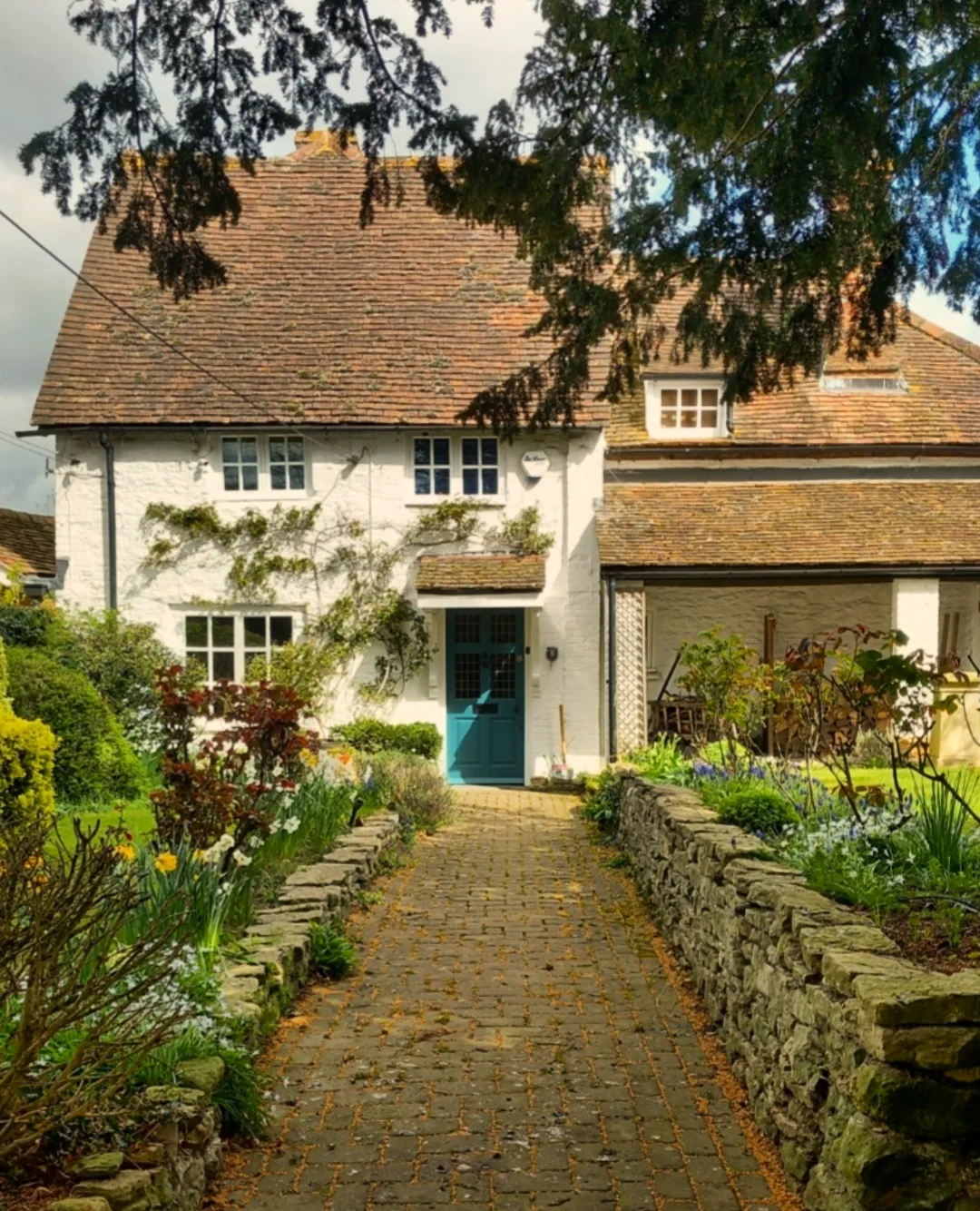
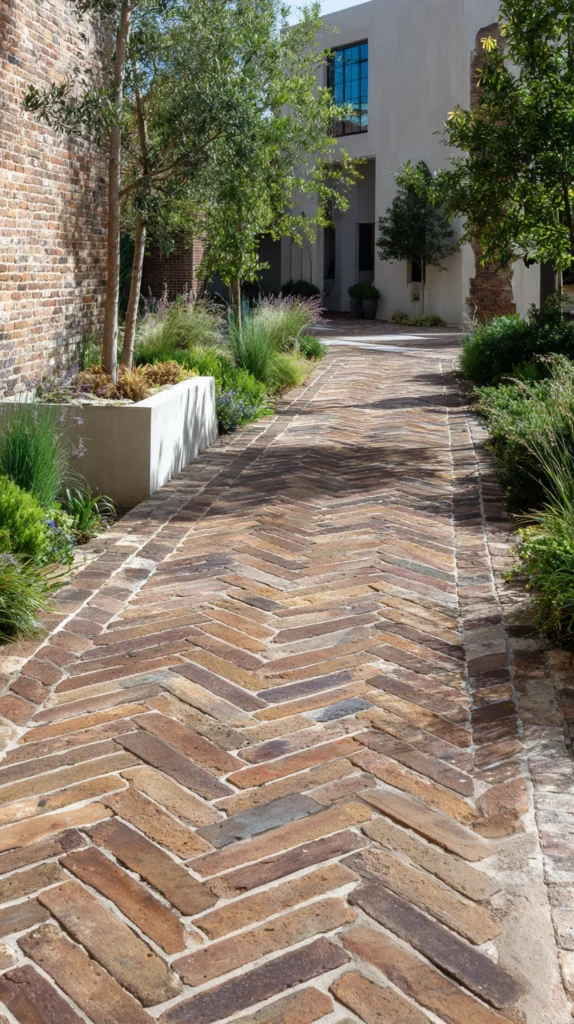
Reclaimed house bricks laid in a herringbone pattern create a warm, rich, genuinely expensive-looking path surface that improves with age rather than deteriorating — each year of weathering adds to the character that makes reclaimed brick one of the most sought-after and most timeless garden path materials available.
Reclaimed bricks cost $0.50–$2 each from salvage yards and architectural reclamation dealers. A 1-metre wide, 6-metre long herringbone path requires approximately 250 bricks at $125–$500 in materials. Lay on a compacted hardcore base with a sand laying course. Kiln-dried jointing sand brushed into the joints and sealed with a stabilising compound prevents weed colonisation without a permanent grouted joint that prevents future relaying.
Path tip: Source bricks from a single reclamation batch rather than mixing bricks from different sources. Bricks from different demolition sites vary in colour, size, and weathering quality — a herringbone path laid from mixed sources looks uneven and inconsistent. A single-source batch produces the uniform warmth of tone and surface texture that makes this path material so effective.
4. A Gravel Path With Steel Edging
Budget: $60 – $200
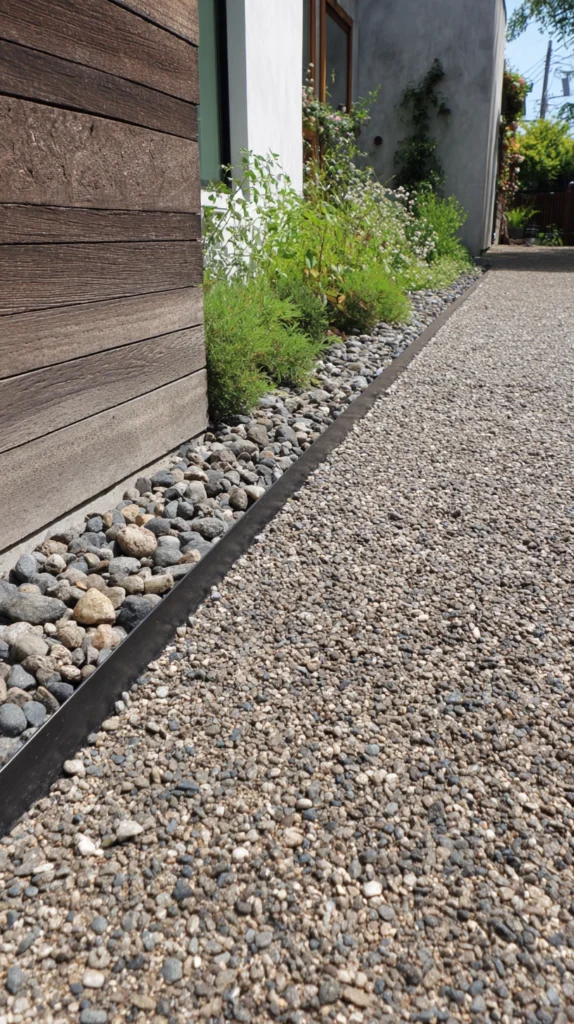
A gravel path defined by crisp steel edging on both sides — with a weed-suppressing membrane beneath the gravel — creates a clean, contemporary garden path for a fraction of the cost of any laid surface material. The steel edge is what makes it look expensive: without it the same gravel path looks rural and slightly unkempt. With it, the path reads as architectural and deliberate.
Flexible steel garden edging costs $30–$60 per 10-metre roll. A 10-metre path of 90 cm width requires two rolls of edging — one for each side — at $60–$120 total. Weed membrane costs $10–$20 per roll. 20mm gravel or chippings cost $20–$40 per large bag at a 5 cm laying depth. The complete path costs $90–$180 in materials and can be installed in a half-day without specialist skills.
Path tip: Install the steel edging first and lay the membrane and gravel within it rather than adding the edging to an existing gravel path. Edging retrofitted around gravel that is already in place is always slightly proud or recessed from the gravel surface. Edging installed first and gravel laid within it sits at exactly the right relative height to both the path surface and the lawn or border beside it.
5. Natural Stone Crazy Paving With Planted Joints
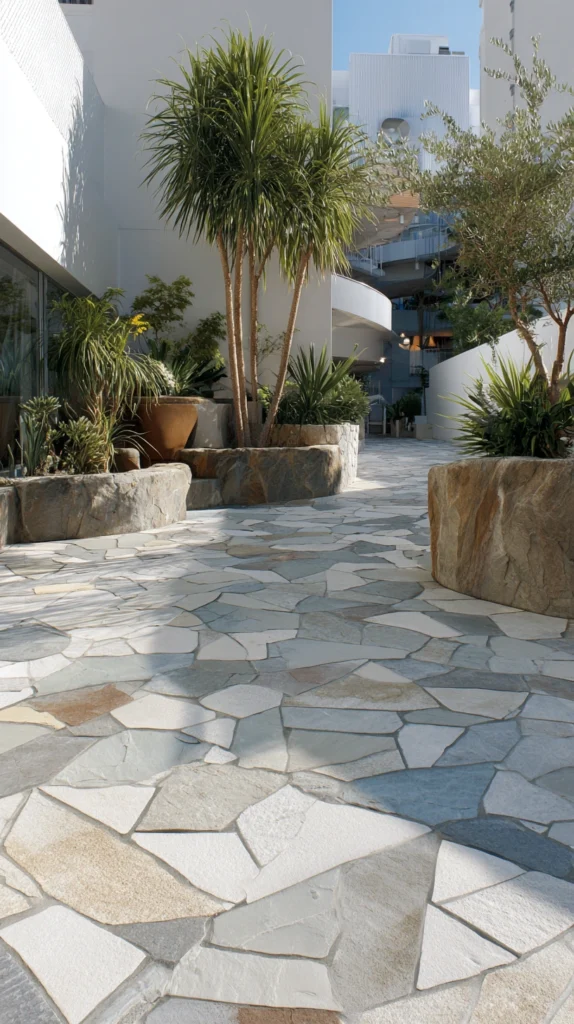
Budget: $80 – $350
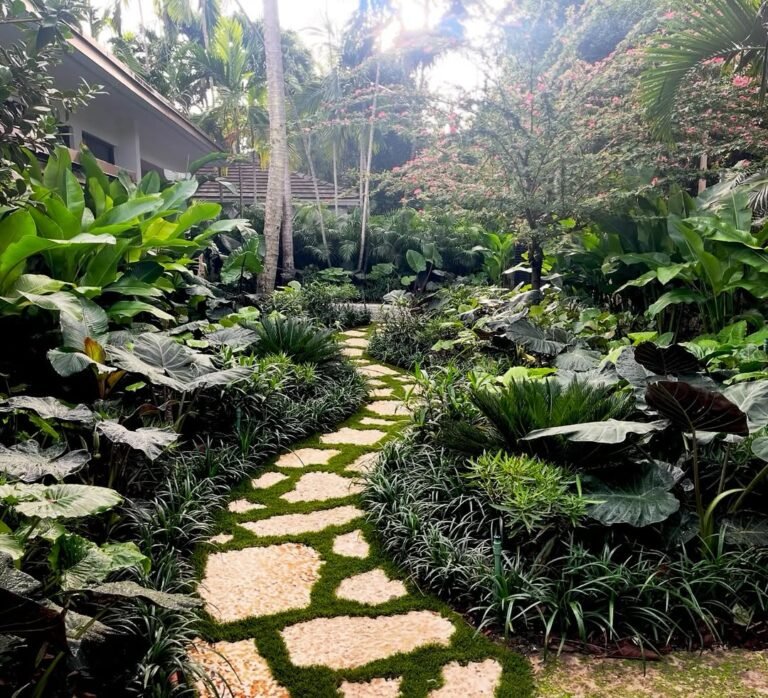
Irregular pieces of natural sandstone or limestone laid in a loose, organic pattern with creeping thyme, chamomile, or mind-your-own-business planted in the wide joints between stones creates a path that looks as though it has existed in the garden for decades — the planted joints are the detail that elevates it from a surface into a landscape feature.
Natural sandstone irregular pieces cost $20–$50 per square metre. A 1-metre wide, 5-metre path requires 5 square metres at $100–$250 in stone. Joint planting of creeping thyme plug plants costs $2–$5 each with one plant per 20–30 cm of joint. The thyme releases fragrance when walked upon, flowers in summer attracting pollinators, and survives light foot traffic without deterioration once established.
Path tip: Choose stones with a relatively consistent thickness — 30–50 mm — rather than mixing very thin and very thick pieces in the same path. Consistent thickness makes levelling simpler, produces a more even surface for walking, and creates the flush, settled appearance that makes natural stone crazy paving look genuinely expensive rather than simply irregular.
6. A Formal Dressed Stone Straight Path
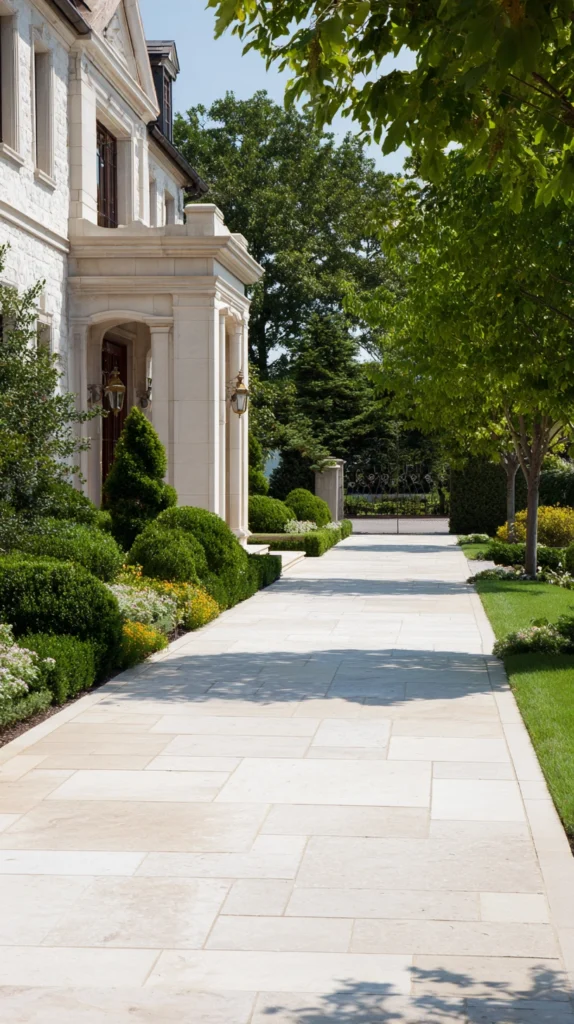
Budget: $300 – $1,200
A straight path of precisely cut and dressed natural stone — York stone, limestone, or granite — laid with consistent joint widths and a perfectly level surface is the most timeless and most genuinely expensive-looking path material available for a formal garden. It improves with every decade of weathering and rarely needs any maintenance beyond occasional pressure washing.
Dressed York stone costs $60–$120 per square metre. A 1-metre wide, 8-metre path — a typical garden path length — costs $480–$960 in stone alone. Professional laying adds $20–$40 per square metre. The investment is substantial but the result lasts the lifetime of the house and adds genuine monetary value to the property in a way that no temporary path surface material can replicate.
Path tip: Lay dressed stone on a full mortar bed rather than a dry sand bed. A mortar-bedded path resists frost heave and differential settlement significantly better than a sand-bedded equivalent and maintains the precise level surface and consistent joint widths that are the defining qualities of a formal dressed stone path over the first ten years of use.
7. A Mown Grass Path Through a Border
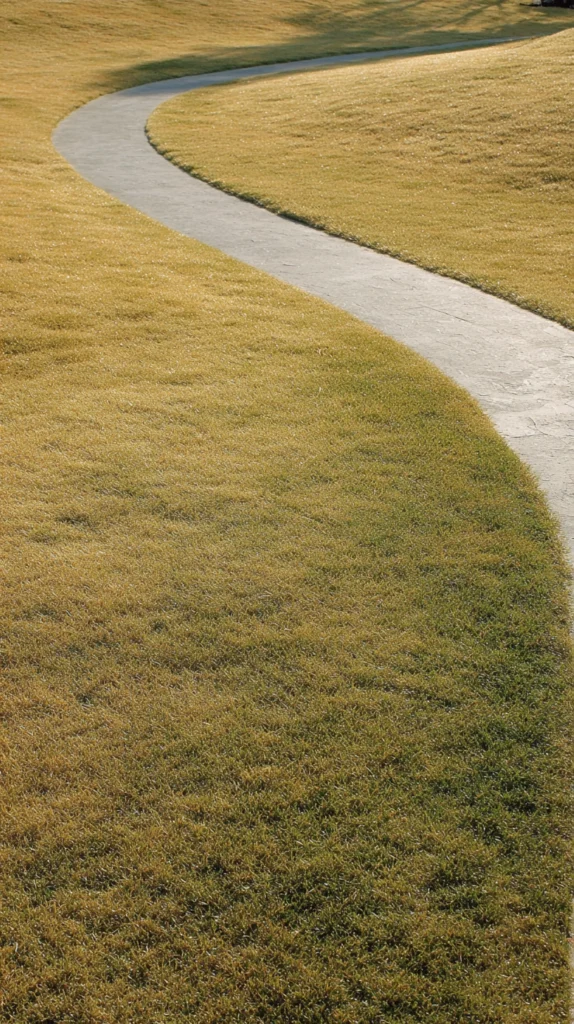
Budget: $0 – $20
A mown strip of lawn kept shorter than the grass on either side — running through a wide border, through a wildflower meadow, or between two planting areas — creates a path from material that is already present without any additional cost in materials. The contrast between the short mown strip and the taller planting on either side is what makes it read as a path rather than simply unmown grass.
The only cost is a cylinder mower or a rotary mower set at a low cut for the path strip and a higher cut for the surrounding grass. Mark the path width with two parallel lines of canes before mowing to keep the edges consistent. A mown grass path 60–80 cm wide suits most garden borders — narrower than 60 cm becomes awkward to walk without brushing the planting on either side.
Path tip: Mow the grass path in the opposite direction to the mow of the surrounding lawn — the directional grass stripes reflect light differently and emphasise the boundary between the path and the wider lawn. The contrast in mowing direction is visible from a distance and gives the path a definition that a same-direction mow never produces without any additional materials or tools.
8. Timber Decking Boards as a Path
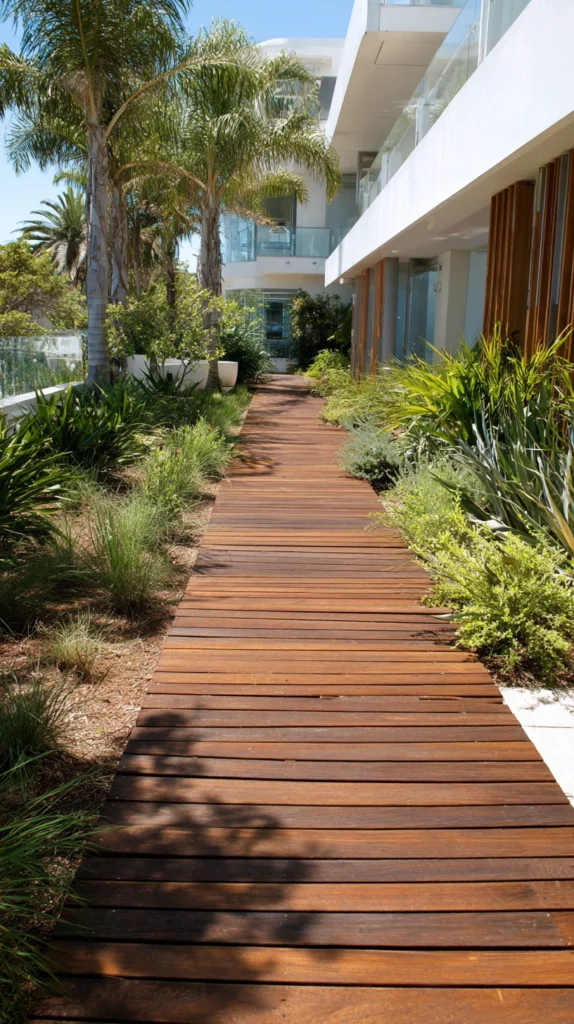
Budget: $100 – $500
Timber decking boards laid lengthwise along a garden path — with small gaps between boards for drainage — create a warm, contemporary path surface that suits modern and Scandinavian garden styles and sits naturally in planting borders without the hard, permanent quality of stone or brick. It is also the most accessible surface for garden users with mobility considerations.
Pressure-treated pine decking boards cost $3–$8 per linear metre. A 1-metre wide, 6-metre path requires approximately 36 linear metres of 140 mm board at $108–$288. Support on gravel-covered joists with a permeable membrane beneath the gravel to prevent weed growth while allowing drainage. Treat the surface with a quality decking oil annually to maintain the timber’s colour and weather resistance.
Path tip: Lay decking boards perpendicular to the direction of travel rather than parallel to it. Boards laid across the path create a visual rhythm that subtly slows the walker — the eye reads each board as a step — producing a more considered, deliberate pace through the garden. Boards laid parallel to the direction of travel have no rhythmic quality and read as simply a surface rather than a designed path.
9. Cobblestones or Setts for a European Feel
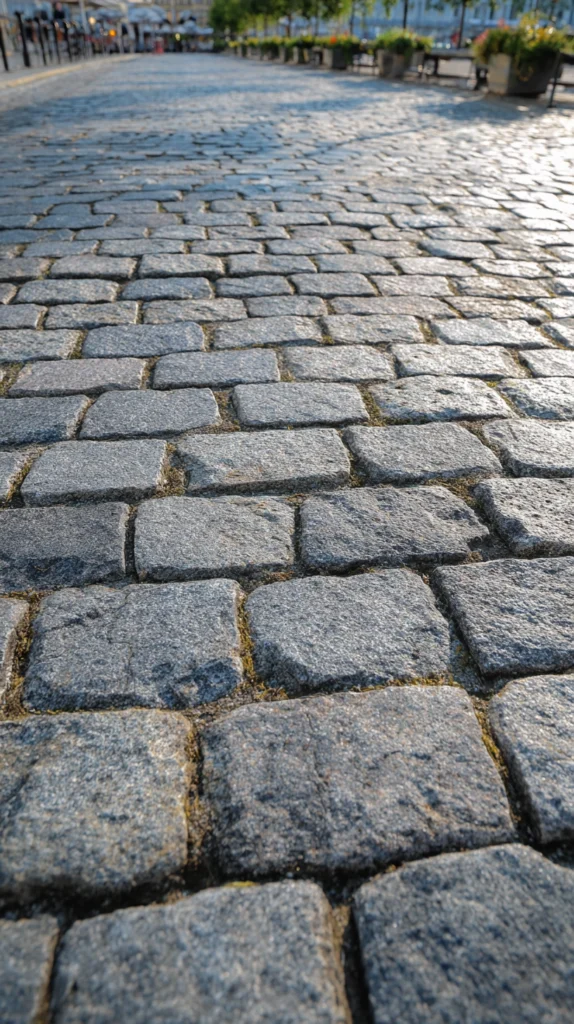
Budget: $150 – $600
Granite cobblestones or setts — the small, square-cut stone blocks used in European city streets — laid in a fan or running bond pattern create a path with a specifically urban, continental quality that suits both formal and contemporary garden styles. The material weathers slowly and beautifully and lasts for several generations without replacement.
Granite setts cost $30–$80 per square metre. A 1-metre wide, 5-metre path requires 5 square metres at $150–$400 in materials plus bedding and jointing costs. Lay on a full mortar or concrete bed for stability — setts laid on sand shift under foot traffic and the gaps between them widen unevenly over time. Brush kiln-dried sand into the joints between setts after laying and seal with a stabilising binder to prevent weed colonisation.
Path tip: Mix reclaimed and new granite setts in the same path to create the varied colour and weathering quality of a genuinely old European cobbled surface. New granite setts alone have a uniformity that reads as modern rather than historically informed. A mix of reclaimed and new provides the tonal variation and surface interest that makes this path material most compelling at close range.
10. A Moss and Stepping Stone Japanese Path
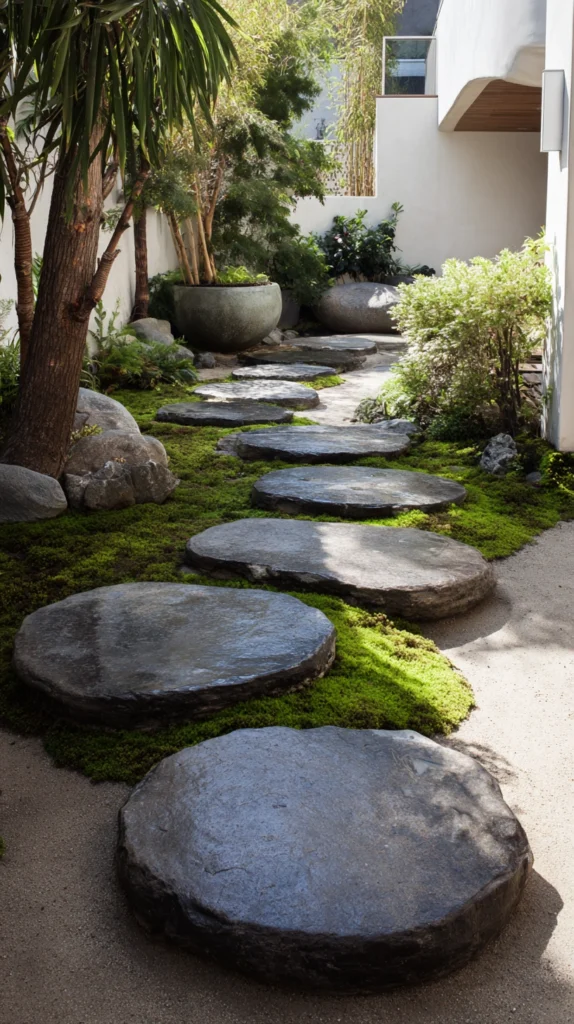
Budget: $60 – $250
A Japanese-inspired path of dark, flat stepping stones set in a bed of cushion moss — placed at a deliberate pace apart with each stone slightly offset from the one before — creates the most contemplative and most serene garden path available. It suits a shaded position where moss establishes naturally and where a slower, more mindful pace of movement through the garden is the goal.
Smooth dark stepping stones cost $5–$15 each. Cushion moss mats cost $8–$20 per square metre. A 5-metre path of eight to ten stones within a 1.2-metre wide moss bed costs $100–$200 in materials. Establish the moss around the stones by pressing it firmly into contact with moist, slightly acidic soil and misting regularly until rooted — typically four to six weeks in a shaded position.
Path tip: Offset each stepping stone slightly to the left or right of the previous one rather than laying them in a perfectly straight line. The slight alternation in position creates the natural, slightly wandering quality that is characteristic of traditional Japanese path design and significantly more interesting to walk along than a perfectly straight line of stones placed at identical intervals.
11. A Curved Gravel Path With Lavender Edging
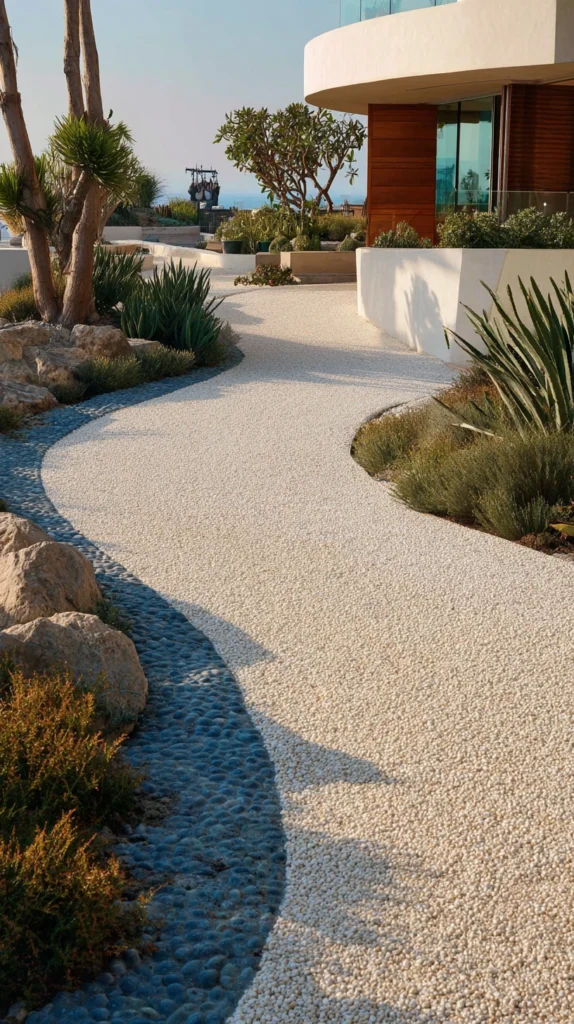
Budget: $80 – $300
A gently curving gravel path edged on both sides with lavender plants creates one of the most fragrant and most visually satisfying garden paths available — the lavender scent releases as anyone brushes against it while walking, and the purple-blue flower spikes in midsummer frame the pale gravel path in a combination that has been reproduced in garden photography more than almost any other plant-and-path pairing.
Lavender Hidcote plants cost $4–$10 each. A 6-metre curved path with lavender edging on both sides requires twenty to twenty-four plants at $80–$240. The gravel path itself costs $50–$100 in materials. Trim the lavender lightly after flowering each year to maintain the compact edge — an untrimmed lavender hedge becomes woody and open at the base within three seasons and loses the neat, structural quality that makes this path edging so effective.
Path tip: Mark the curve of the path with a garden hose laid on the ground and adjusted by eye until the line looks exactly right from the main viewpoint before cutting any turf or laying any edging. A curve committed to in physical materials is difficult to adjust. A hose lying on the ground can be moved in seconds until the curve is precisely right — the time spent on this step before any physical work begins is never wasted.
12. Decomposed Granite Path
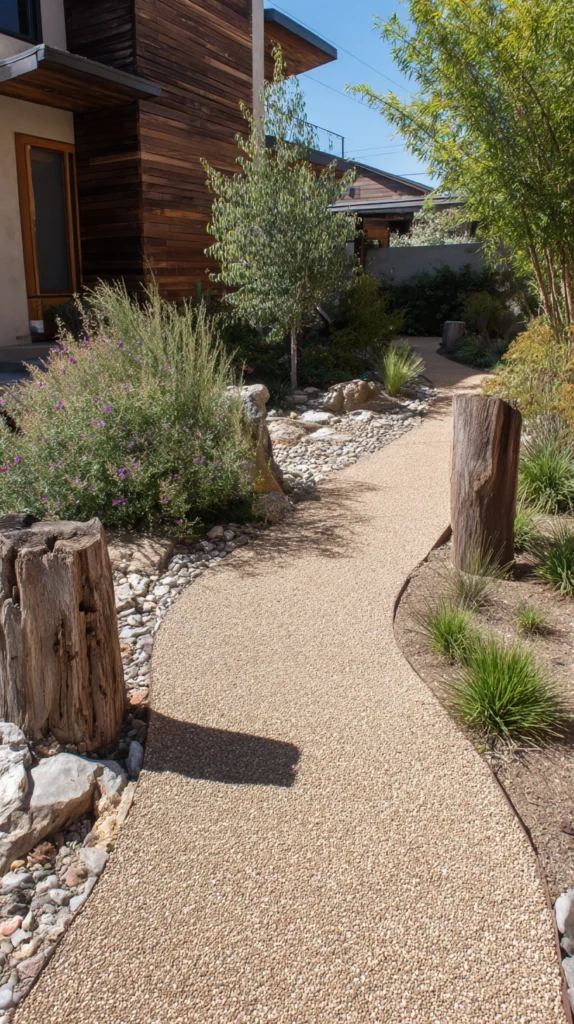
Budget: $50 – $200
Decomposed granite — a fine, compacted gravel aggregate that sets almost as hard as tarmac when correctly installed and watered — creates a path surface with the loose, natural appearance of gravel but the firm, stable footing of a laid surface. It is the path material of choice in many formal and contemporary landscape projects where a soft, naturalistic surface texture is required without the loose instability of conventional gravel.
Decomposed granite costs $20–$50 per large bag. A 1-metre wide, 6-metre path requires five to six bags at 8 cm depth to account for compaction. Compact in two layers with a plate compactor or manual tamper — one layer at 5 cm compacted to 4 cm, then the second layer on top. Water thoroughly after compaction and allow to dry for forty-eight hours before use. The set surface resists shoe-scatter significantly better than conventional gravel at the same aesthetic appearance.
Path tip: Apply a path stabiliser solution to the top surface after the final compaction and drying period. A stabiliser penetrates the top 2–3 cm of the decomposed granite and binds the fine particles together without changing the visual appearance of the surface — it significantly extends the time between resurfacing and reduces the tracking of fine granite dust into the house on shoes.
13. A Bark Chip Woodland Path
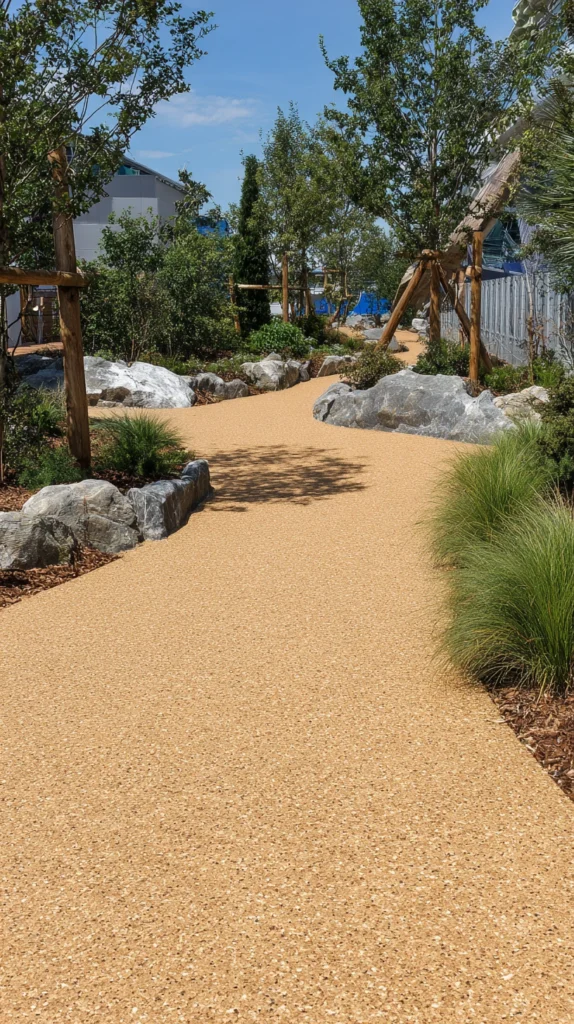
Budget: $30 – $100
A path of medium-grade bark chippings through a shaded woodland garden or between large shrubs creates the most naturalistic and most ecologically appropriate surface for a garden area where the aesthetic should feel unconstructed and grown rather than laid and designed. It is also the softest underfoot of any path material on this list.
Bark chippings in a 60-litre bag cost $8–$15. A 1-metre wide, 6-metre bark path requires five to six bags at $40–$90. Lay on a weed-suppressing membrane to prevent weed growth through the bark layer and to prevent the chippings from working down into the soil surface within the first season. Top up annually as the bark decomposes — the decomposed material enriches the soil beneath the path without any separate composting effort.
Path tip: Use medium-grade bark chippings (30–60 mm pieces) rather than fine bark or shredded wood. Fine bark compacts into a flat, matted surface within one season that resembles a deteriorating surface rather than a fresh path material. Medium-grade chippings maintain their open, textural appearance through two to three seasons before needing a top-up, and they are less likely to be displaced by foot traffic or wind than the larger decorative bark pieces.
14. A Lit Night Path With Inset Ground Lights
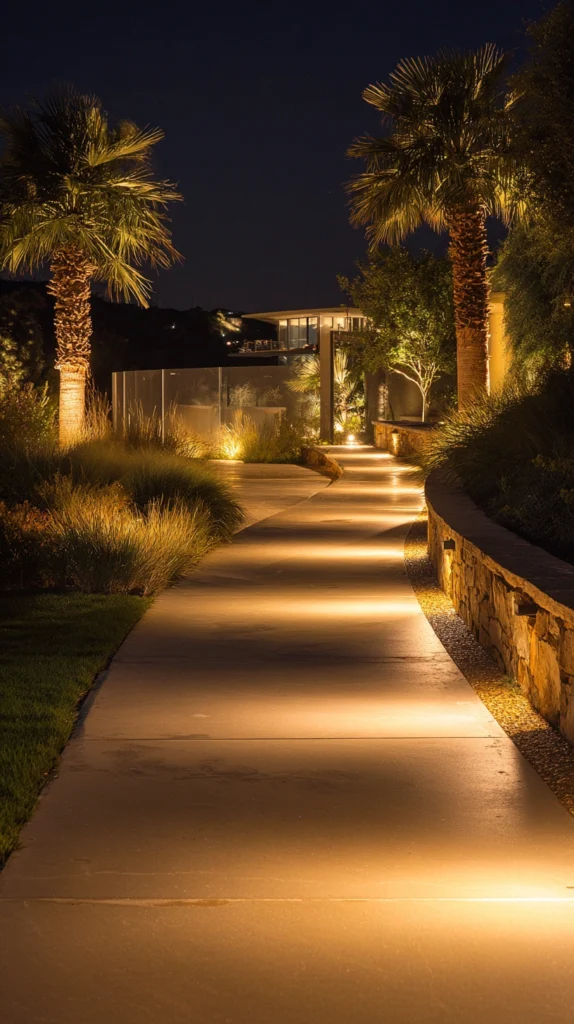
Budget: $100 – $500
Inset ground lights installed flush with the path surface — one every 60–80 cm along a straight path or at every change of direction on a curved one — transform an ordinary garden path into a feature that is as beautiful at night as it is practical, and that significantly extends the safe, enjoyable use of the garden and the path after dark through the summer months.
Recessed IP67-rated LED path lights cost $15–$40 each. A 6-metre path with ten lights costs $150–$400 in lights alone. Solar-powered versions at $10–$25 each require no wiring. Low-voltage wired versions require a transformer ($30–$60) and are brighter and more reliable than solar equivalents. Set all ground lights to warm white (2700K) — cool white ground lighting in a garden path creates the atmosphere of a security installation rather than a designed landscape feature.
Path tip: Space path lights unevenly rather than at mathematically even intervals — slightly closer together at curves and corners where the change of direction needs clear illumination, and slightly farther apart on straight runs where the established path direction requires less guidance. The variation in spacing looks more considered than even spacing and produces more effective functional lighting at the points where it matters most.
The path that makes a backyard look expensive is never the most expensive material alone — it is the right material executed with precision: a clean edge, a consistent surface, a considered width, and enough length to create a genuine sense of journey through the garden rather than simply a shortcut across it. Every path on this list achieves that quality at its own price point and in its own material language.
Choose the material that suits the garden’s existing character and the budget available now rather than the aspirational material that requires a budget still being saved. A beautifully laid gravel path with perfect steel edging outperforms a shoddily laid dressed stone path in both appearance and longevity — the quality of the execution is always more visible than the quality of the material beneath it.