14 Herb Drying Rack Ideas
Drying herbs is one of the oldest and most satisfying kitchen and garden practices available — and unlike most preservation methods it requires no equipment beyond something to hang the herbs on and a warm, well-ventilated space to hang them in. Done well, dried herbs retain the flavour and fragrance of the summer harvest through the entire winter. The drying rack itself, whatever form it takes, earns its place in the kitchen or garden as a functional tool and as a beautiful seasonal display simultaneously.
The fourteen ideas below cover every form of herb drying rack — from a single nail in the kitchen wall to a purpose-built ceiling-mounted frame — for every budget and every space. Each includes what it costs and a practical tip to help you dry herbs at their best quality.
1. A Simple Wooden Dowel Rack
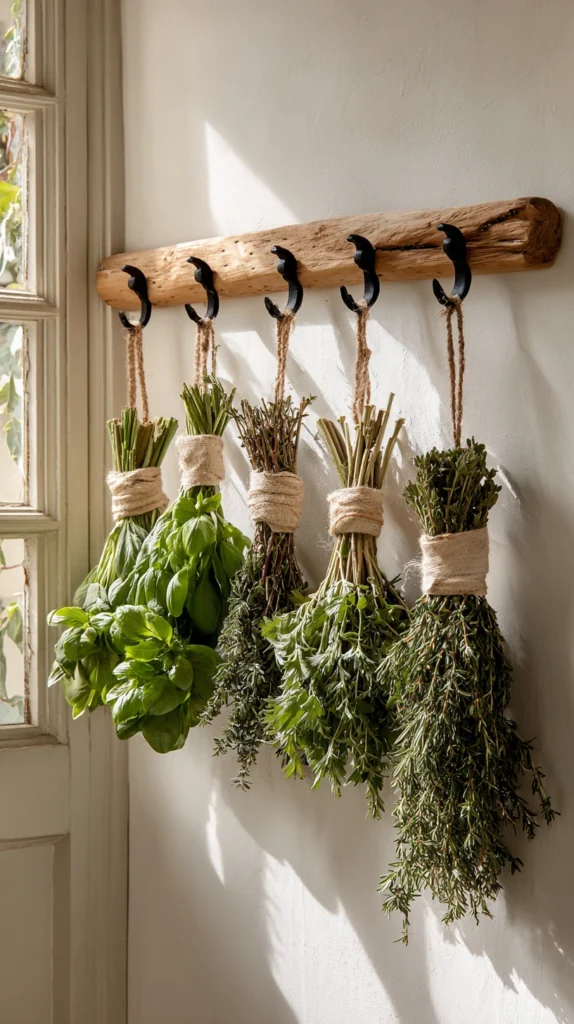
Budget: $5 – $25
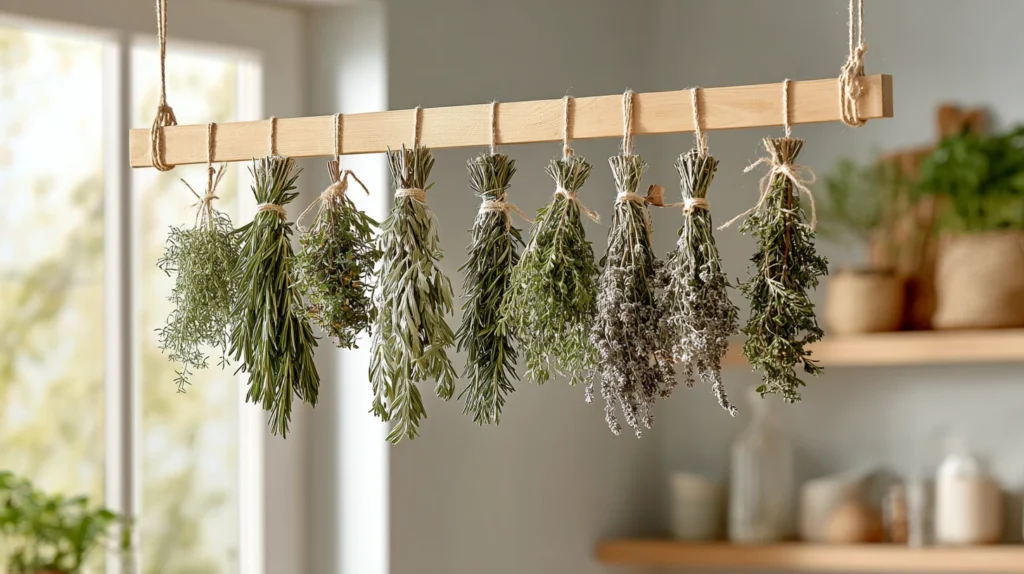
A wooden dowel suspended horizontally between two points — two wall hooks, the underside of a shelf, or two nails in a ceiling joist — is the most minimal and most functional herb drying rack available. Bundles of herbs tied with jute twine are hung upside down over the dowel and dry in two to three weeks in a warm, airy room. The simplicity of the setup is the point — nothing easier, nothing less expensive, nothing more effective.
A 60 cm timber dowel of 25 mm diameter costs $2–$5 from any DIY retailer. Two cup hooks for wall mounting cost $1–$3 each. The complete drying rack — dowel and hooks — costs under $12. Suspend at a height that allows herb bundles to hang freely without touching the wall, shelf, or each other. Six to eight herb bundles per 60 cm dowel is a comfortable density for good air circulation between bundles.
Drying tip: Harvest herbs for drying in the morning after the dew has evaporated but before the heat of the day has caused the essential oils to dissipate from the leaf surface. Morning-harvested herbs have the highest essential oil concentration of any harvest time and retain more flavour and fragrance after drying than the same herbs cut in the afternoon. This single timing decision makes a measurable difference to the quality of the dried herb.
2. A Vintage Wooden Clothes Airer
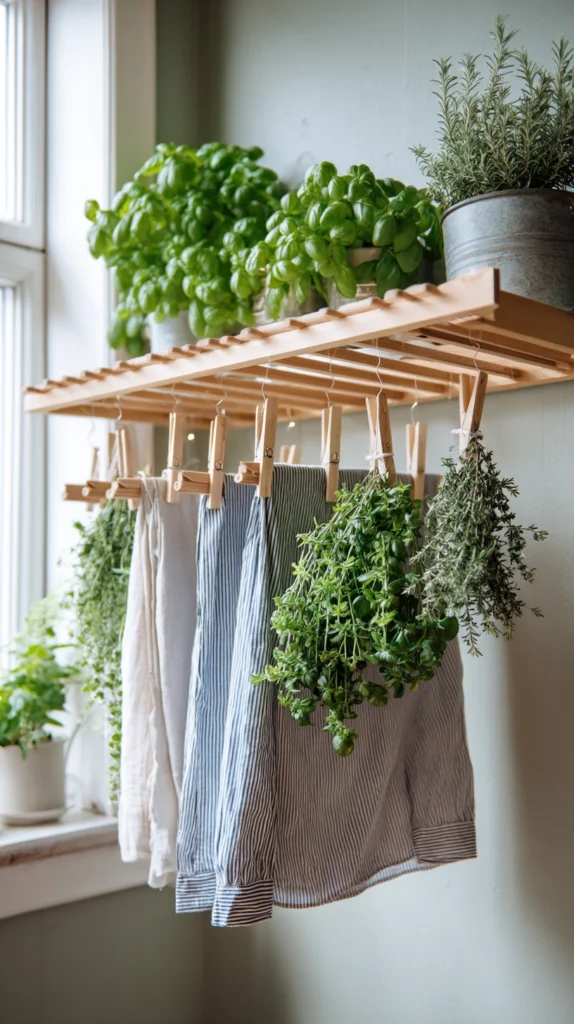
Budget: $10 – $60
A wooden clothes airer — the fold-flat, multi-rail type traditionally used for drying laundry — makes one of the most generous and most visually charming herb drying racks available. Its multiple horizontal rails accommodate dozens of herb bundles simultaneously, it folds flat for storage when not in use, and a vintage or aged wooden version has an immediate rustic quality that suits a traditional kitchen aesthetic perfectly.
New wooden clothes airers cost $15–$40. Vintage versions from charity shops and car boot sales cost $5–$20 and have the weathered wood quality that makes them particularly attractive as kitchen display pieces as well as functional drying racks. Position in a warm room with good air circulation — a kitchen, a utility room, or a dry conservatory are all suitable. Close the airer only partially for drying to allow maximum air movement between the rails and the bundles hanging from them.
Drying tip: Do not hang herbs in the kitchen directly above the stove or hob. The moisture and steam from cooking is absorbed by drying herb bundles and significantly extends the drying time while reducing the final quality of the dried herb. Position the drying rack in the warmest, driest part of the kitchen — near a window that receives direct sun through the day — rather than above the cooking area where humidity is consistently higher than elsewhere in the room.
3. A Ceiling-Mounted Pot Rail
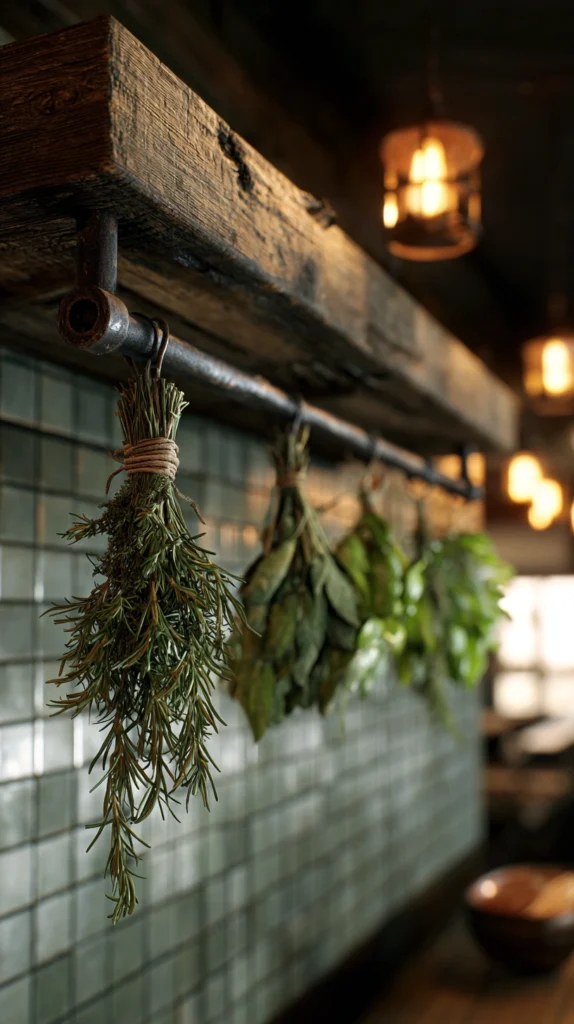
Budget: $30 – $100
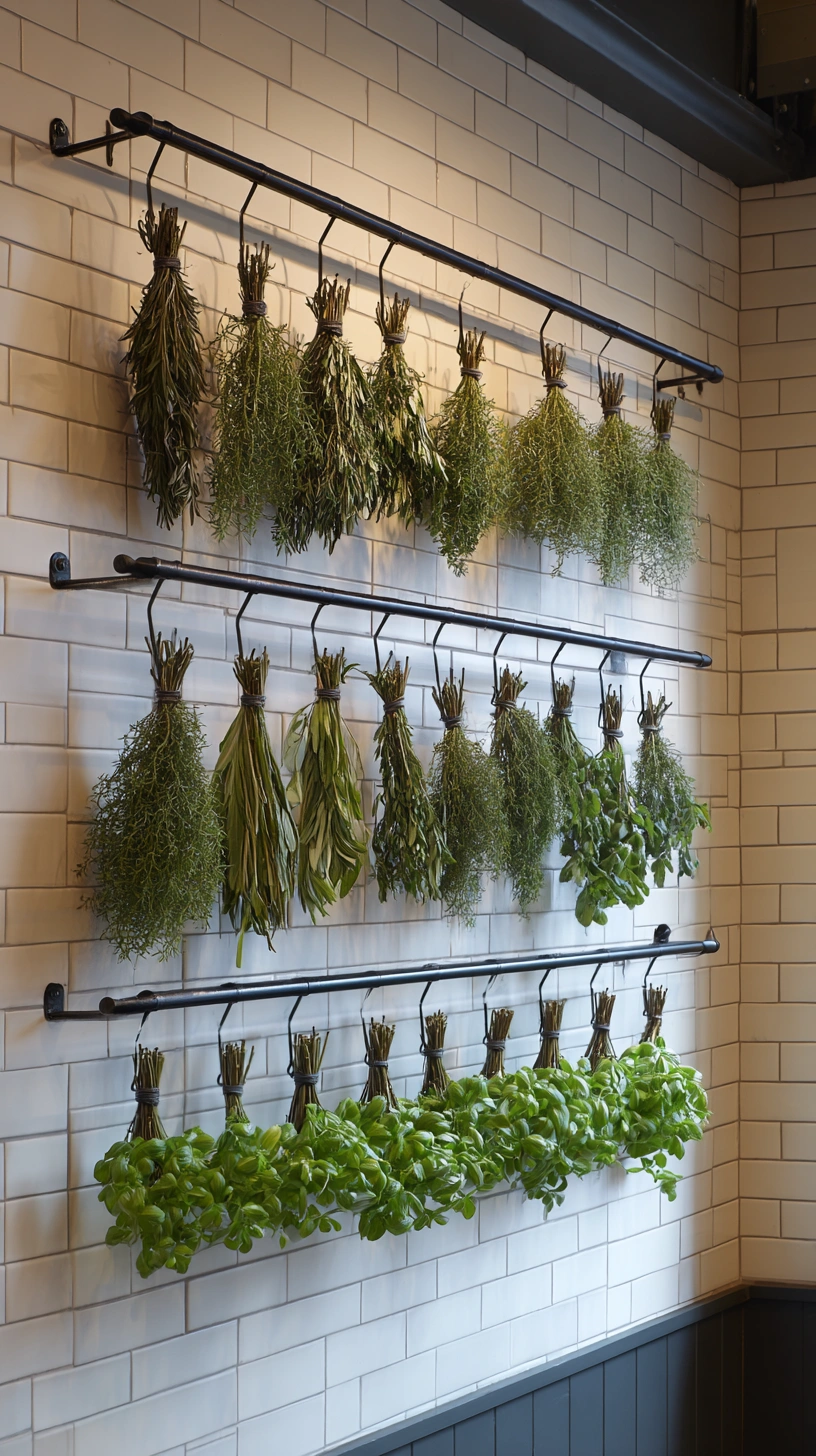
A ceiling-mounted pot rail — a horizontal timber or metal bar fixed to the kitchen ceiling with S-hooks and chains — provides permanent overhead herb drying space that doubles as a display when bundles are hanging and a pot storage surface at all other times. It is the most space-efficient and most visually integrated kitchen herb drying solution available for a room with high enough ceilings to accommodate the hanging depth of the rack plus the bundles beneath it.
A purpose-made ceiling pot rail in wrought iron or timber costs $30–$80. A DIY version assembled from a timber curtain pole and two lengths of chain costs $15–$30 in materials. Fix into ceiling joists for safety — the combined weight of the rack, the pots or utensils, and the herb bundles can be considerable and plasterboard fixings alone are not adequate for a loaded overhead suspension point. S-hooks for hanging herb bundles cost $3–$8 per pack of twenty.
Drying tip: Tie herb bundles in small quantities — five to eight stems per bundle — rather than in large dense bundles. Herbs in the centre of a large dense bundle receive less air circulation than those on the outside and take significantly longer to dry — sometimes developing mould before the drying process is complete. Small, loose bundles dry evenly throughout in two to three weeks. Large, dense bundles can take twice as long and produce a lower quality dried result.
4. A Repurposed Ladder Drying Rack
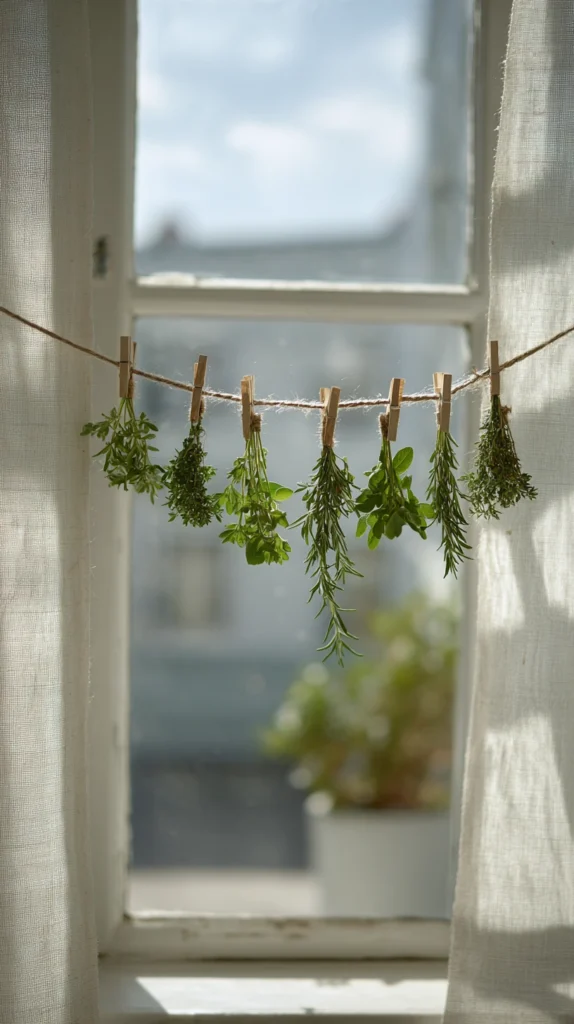
Budget: $0 – $40
An old timber ladder — leaned against a kitchen wall, hung horizontally from ceiling hooks, or stood as a freestanding A-frame — creates one of the most visually striking and most practically generous herb drying racks available. The multiple horizontal rungs provide more hanging positions than most purpose-built racks and the visual quality of a ladder draped with drying herb bundles is one of the most characterful kitchen displays available at any time of year.
A reclaimed timber ladder costs $0–$20 from salvage yards, car boot sales, or neighbourhood freecycle platforms. Fix two ceiling hooks at the appropriate spacing and suspend the ladder horizontally by rope or chain at a height that allows herb bundles to hang freely from the rungs without touching the floor. Alternatively, lean the ladder against the wall at a slight angle — the inclined rungs still provide adequate hanging positions and the freestanding format requires no ceiling fixing.
Drying tip: Hang different herb species on separate rungs of a ladder drying rack rather than mixing species on the same rung. Herbs with strong volatile oils — oregano, thyme, rosemary — can transfer their fragrance to milder neighbouring herbs during the drying period, particularly in the first week when the essential oils are most actively evaporating from the fresh plant material. Species separation preserves the individual character of each dried herb.
5. A Kitchen Window Herb Drying Line
Budget: $3 – $15
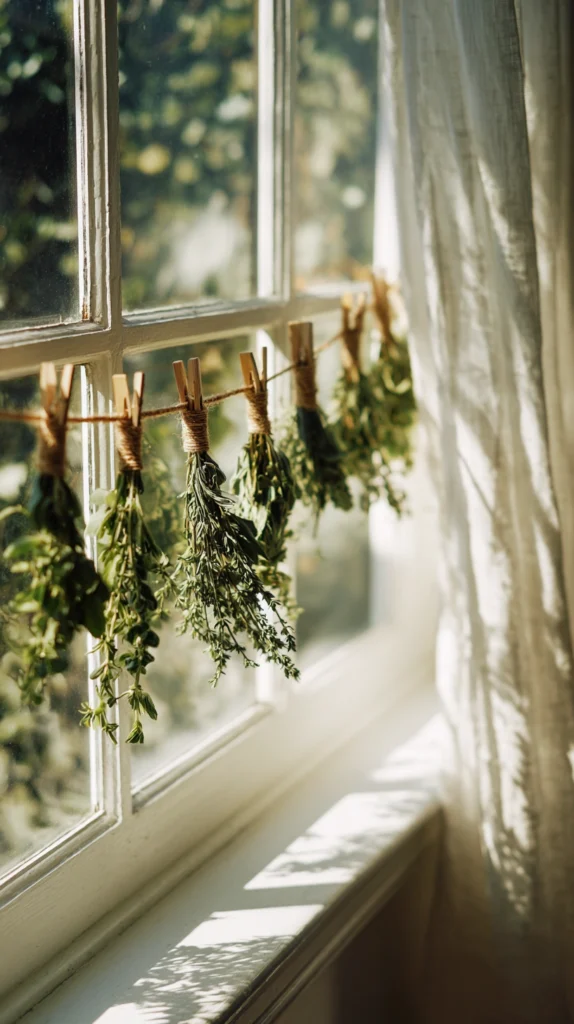
A length of natural jute twine or thin copper wire strung between two hooks on either side of a kitchen window creates the simplest possible herb drying installation — individual bundles clipped or tied to the line in front of the window catch whatever direct sun falls through the glass and dry slightly faster than bundles in indirect light. The window line also creates an attractive seasonal kitchen display that changes as different herbs come into harvest through the growing season.
Jute twine costs $2–$5 per reel. Two small cup hooks for the window reveal cost $2–$4 total. The complete installation costs $4–$9 and takes ten minutes to set up. Use wooden clothes pegs ($3–$6 per pack) to clip bundle stems to the line rather than tying each bundle directly to the twine — pegs allow bundles to be added and removed easily and can be repositioned along the line as new bundles are added beside drying ones.
Drying tip: Avoid drying herbs in direct strong sunlight for extended periods. A position that receives morning sun and afternoon indirect light is preferable to one in full direct sun all day — prolonged intense sun exposure bleaches the colour from many herbs and can drive off some of the more volatile aromatic compounds before the drying process is complete. Warm, moving air is more effective for herb drying than direct intense sun at any time of day.
6. A Wire Mesh Drying Frame
Budget: $10 – $40
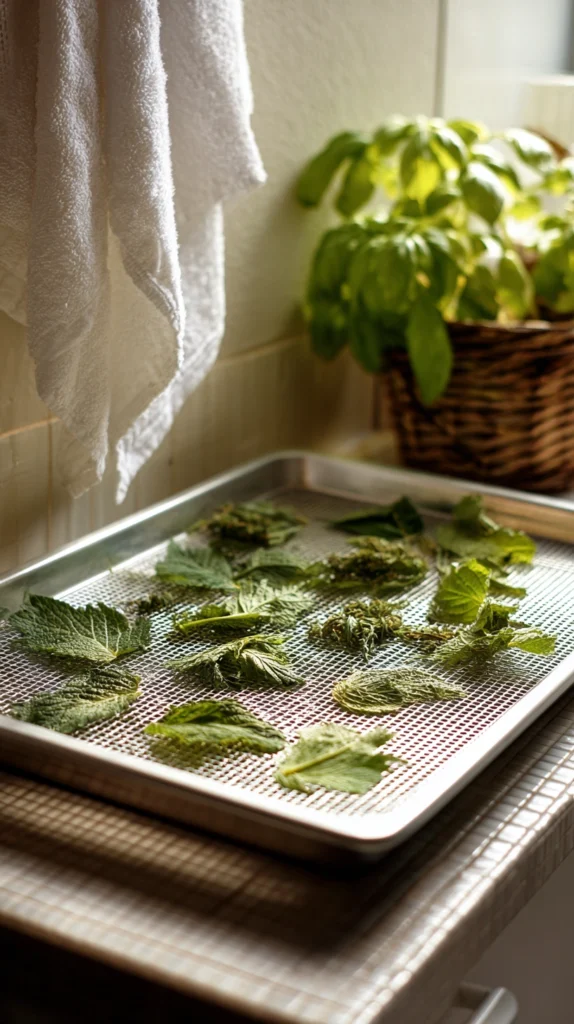
A wooden frame stretched with wire mesh or fine netting — laid flat and elevated on two supports — creates a flat drying rack for herbs that do not hang well, including flower heads, individual leaves, and delicate flat-stemmed herbs that lose their shape when hung vertically. Chamomile, rose petals, lavender heads, and individual herb leaves all dry better on a flat mesh surface where air circulates freely above and below the plant material simultaneously.
A simple wooden frame of 60×40 cm assembled from four timber battens costs $5–$10 in timber. Fine plastic mesh or fly screen stretched across the frame and stapled at the edges costs $3–$8 per metre. Two bricks or tin cans as elevation supports cost $0. The complete flat drying frame costs $8–$18 in materials and provides a drying surface for small quantities of herb flowers and individual leaves that no hanging rack can accommodate as effectively.
Drying tip: Spread material on a flat drying rack in a single layer without overlapping — herb flowers and individual leaves that overlap or stack dry unevenly, with the lower layers taking significantly longer than the upper surface layers. Turn the material once daily for the first three or four days of drying to expose all surfaces to the air equally and to check for any signs of mould developing in the lower layers of any unintended stacking.
7. A Branch and Twig Natural Rack
Budget: $0 – $10
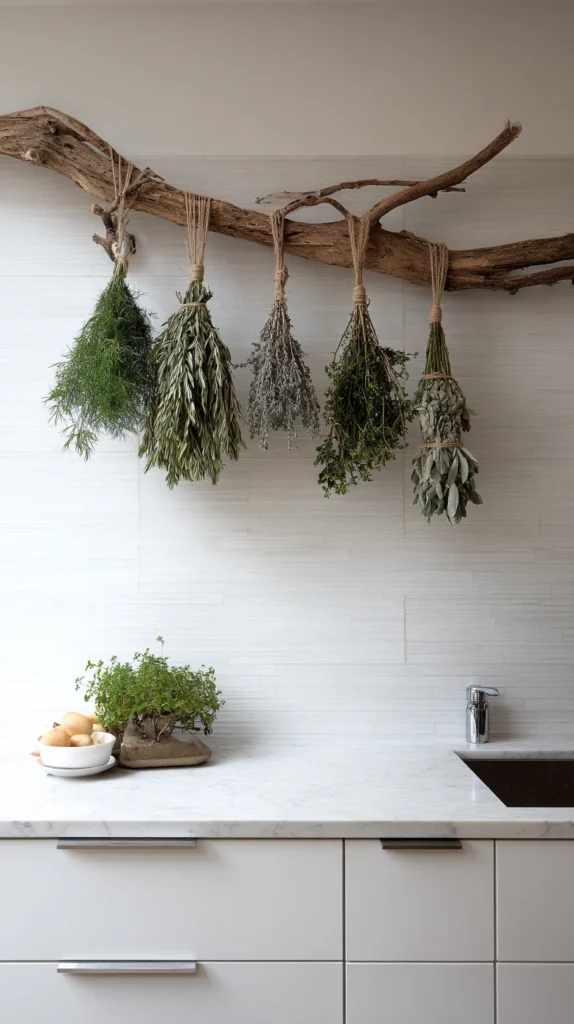
A Y-shaped branch or a section of a hazel or apple tree branch with multiple smaller side branches — suspended horizontally from two ceiling or wall hooks — creates the most naturally beautiful herb drying rack available and costs nothing beyond the time to find it. Herb bundles tied to the side branches with jute twine create a display that looks like something from a Scandinavian farmhouse kitchen and that is genuinely made from materials found within ten minutes of most homes.
A suitable branch costs nothing if foraged from a garden, a park, or a woodland walk. Ensure the branch is dry rather than freshly cut — freshly cut branches are too pliable to hold herb bundles securely and may twist or bend as they dry, dislodging the bundles tied to them. Fix to the ceiling or wall with two lengths of natural rope, jute twine, or leather cord at $2–$5 in material cost. The natural, irregular form of the branch creates a display that no manufactured rack replicates regardless of its design quality.
Drying tip: Choose a branch with an irregular, branching form rather than a straight, smooth pole. The side branches of a forked branch provide natural hanging points for bundles at varying heights and angles — creating the layered, varied appearance that makes a branch herb drying rack visually interesting from below and allowing each bundle sufficient space for the air circulation that even, complete drying requires.
8. A Copper Pipe Drying Bar
Budget: $10 – $35
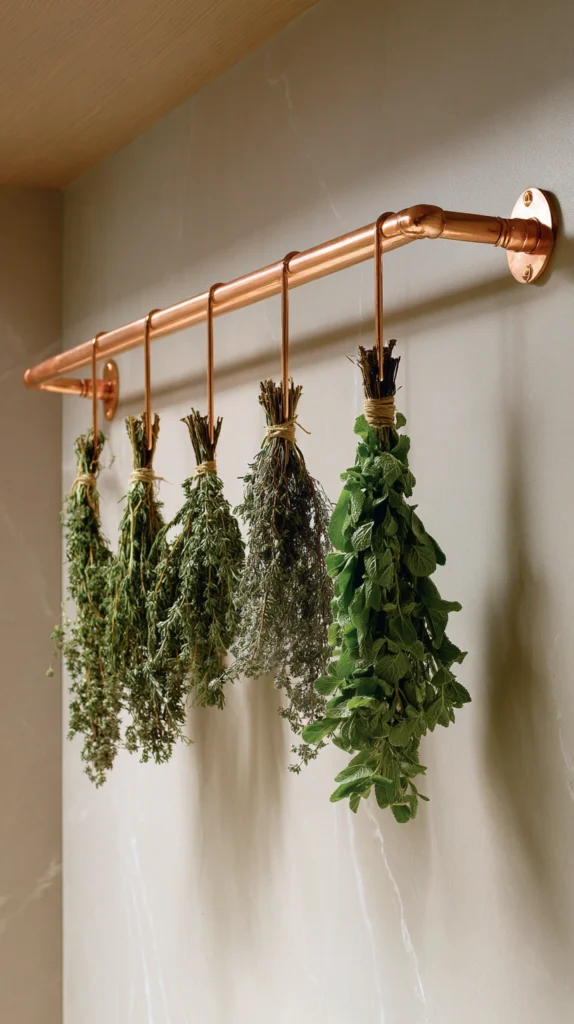
A length of copper pipe — the same material used in household plumbing — suspended horizontally between two wall-fixed brackets creates one of the most elegant and most contemporary herb drying rack aesthetics available. The warm rose-gold tone of copper suits a modern kitchen context perfectly and ages beautifully to a deeper, slightly patinated finish that becomes more attractive with time rather than less.
A 15 mm copper pipe in 60 cm length costs $3–$8 from plumbing suppliers or DIY retailers. Two copper pipe wall clips or bracket end caps for suspension cost $2–$6 total. The complete rack costs $5–$14 in materials and can be wall-mounted or suspended from ceiling hooks on copper wire for an even more finished appearance. S-hooks in copper or brass ($3–$8 per pack) complete the aesthetic consistently and suspend herb bundles from the bar without any visual compromise.
Drying tip: Label each herb bundle as it is hung using a small handwritten tag tied to the base of the bundle with jute twine. Multiple herb species look very similar after drying — oregano and marjoram, thyme and lemon thyme, and various mint species are all but impossible to distinguish by sight after drying. A label written at harvest prevents confusion at the jar-filling stage and ensures each dried herb is stored accurately in the right container.
9. A Linen Press or Drying Drawer
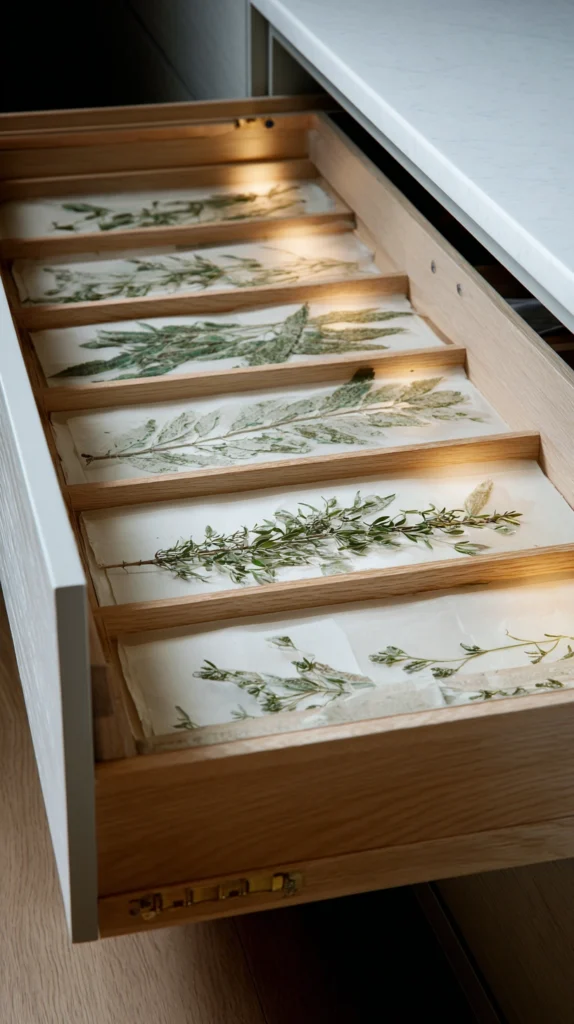
Budget: $0 – $20
A wide, shallow drawer or a flat linen press space — with individual herbs laid between sheets of breathable paper — provides the most protected, most dust-free herb drying environment available for herbs that are easily damaged by light handling. Herbs dried in a press or drawer lose the visual appeal of hanging bundles but retain more of their colour and fragrance than herbs exposed to open air for the same drying period, because they are protected from the UV and the dust that gradually degrade herbs dried in open kitchen conditions.
An existing drawer lined with a sheet of parchment paper costs $0–$2. A dedicated herb pressing drawer — a shallow timber tray of 60×30 cm with ventilation holes drilled in the base — costs $5–$20 in materials. Layer herb sprigs in the drawer between sheets of parchment paper and place a light weight (a book or a second tray) on top for the first few days of pressing. Lavender, mint, and flat-leafed parsley all press-dry particularly well and retain a more vivid colour than the same herbs dried hanging in open air.
Drying tip: Check herbs drying in a drawer or press every two to three days through the first week and replace the parchment paper if it has absorbed significant moisture. Damp parchment against herb material in a warm drawer creates conditions for mould development that are absent in open-air hanging — regular paper replacement in the first week maintains the dry environment that produces clean, well-dried herbs with the best possible flavour retention.
10. A Hanging Herb Bundles Display Rack
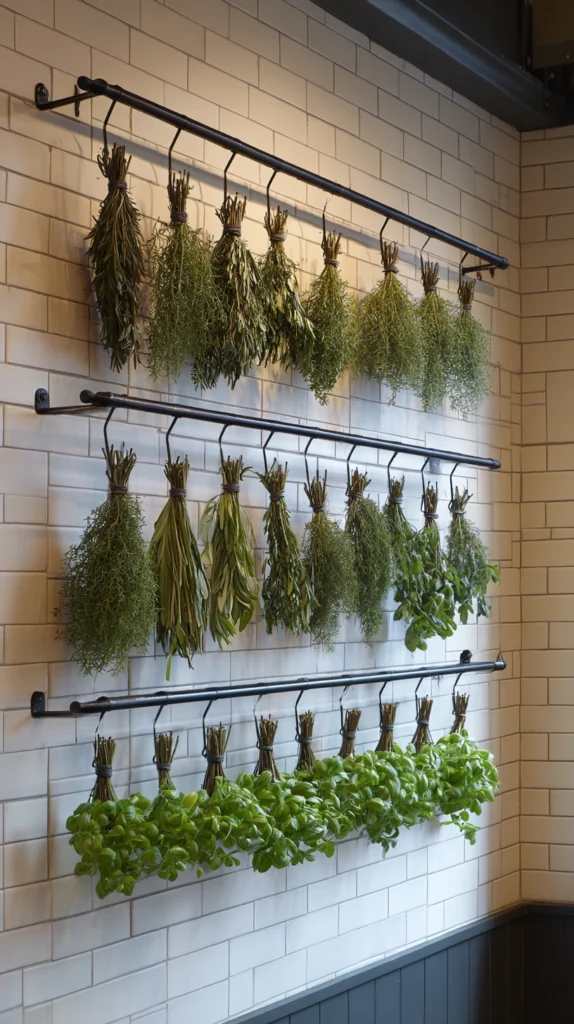
Budget: $15 – $60
A purpose-made herb drying rack with multiple hooks arranged across a timber bar or a wrought iron frame — sold as a wall-mounted kitchen rack in most kitchen and homeware retailers — combines the functional requirements of herb drying with a designed kitchen display piece that looks deliberate and attractive even when not in active use. It is the most polished and most specifically kitchen-integrated drying rack option on this list.
A timber wall-mounted herb rack with six to eight S-hooks costs $15–$40 from kitchen retailers and online marketplaces. A wrought iron version with decorative detailing runs $25–$60. Fix at a height where herb bundles hang freely and are easily accessed for checking — 170–190 cm from the floor is the standard kitchen rack height that suits most adults for comfortable daily interaction with the hanging bundles through the two to three-week drying period.
Drying tip: Gather herb stems into bundles of consistent size before hanging — approximately the diameter of a 50-cent coin at the tied end is the right bundle size for most herb species. Bundles consistently sized at this density dry evenly and reliably in two to three weeks in a warm kitchen. The consistent sizing also creates a more attractive and more uniform visual display on the rack than bundles of varying densities hung alongside each other.
11. A Garden Shed Rafter Drying Space
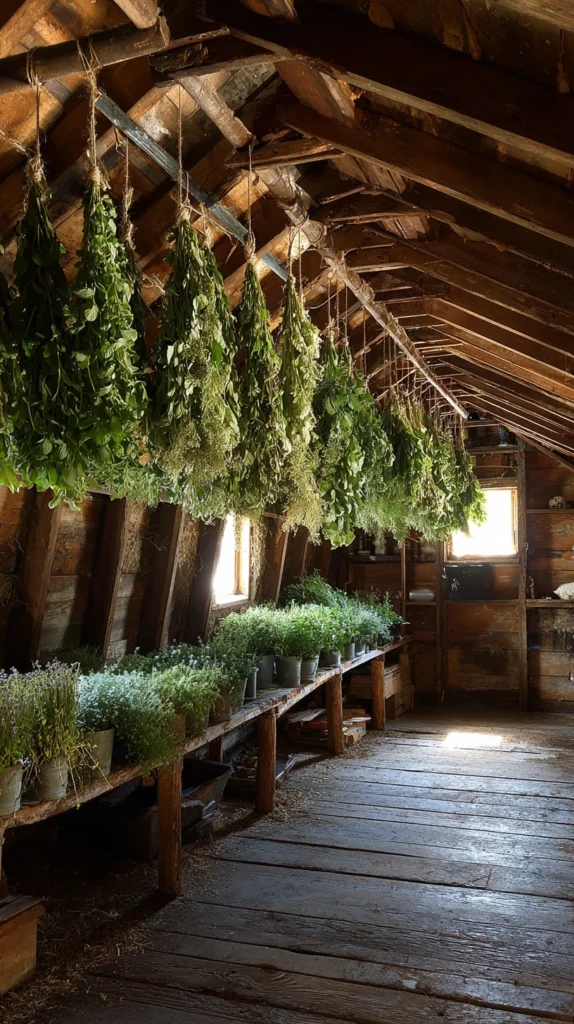
Budget: $0 – $15
The rafters of a garden shed provide a naturally warm, well-ventilated, and dust-free drying environment for large quantities of herbs harvested at peak summer — the warm air that accumulates beneath a south-facing shed roof is often better for herb drying than any kitchen position, and the shed location allows harvested herbs to be hung immediately without carrying them into the house in their freshest condition.
Screw a series of simple cup hooks into the lower edge of the shed rafters at 20–30 cm intervals — hooks cost $1–$3 per pack of ten. Use S-hooks or lengths of jute twine to suspend herb bundles directly from the fixed hooks. A shed with good ventilation through a window or ventilation panel dries herbs in two to three weeks in summer. An unventilated shed may take longer and in high-humidity conditions can cause mould on herbs before drying is complete — add a small mesh ventilation panel ($5–$10) if the shed has limited air movement.
Drying tip: Avoid hanging herbs near anything stored in the shed that carries a strong odour — paints, fertilisers, fuel, or pesticides. Dried herbs are particularly absorbent of airborne compounds during the drying process when the cell structure of the plant material is still open and the essential oils are actively concentrating. Herbs dried in proximity to chemical odours absorb those compounds and retain them in the dried product.
12. A Reclaimed Wooden Clothes Horse Rack
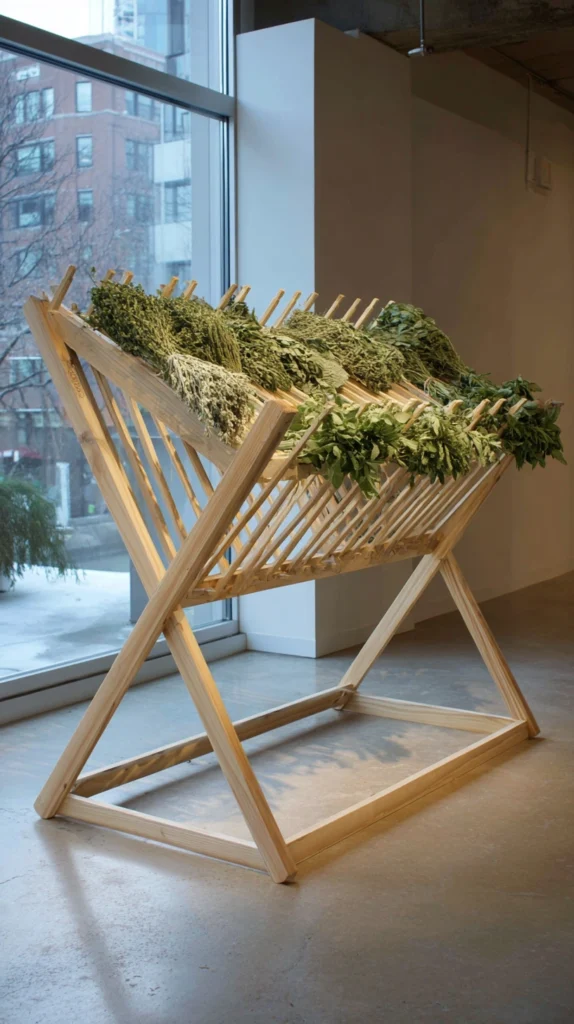
Budget: $5 – $30
A traditional wooden clothes horse — the X-framed, folding laundry rack — repurposed for herb drying provides more hanging positions per unit of floor space than almost any other herb drying solution available. Its folding structure allows it to be opened wide for maximum drying capacity during the harvest season and folded flat for compact storage at other times, which suits a kitchen or utility room where permanent display space for a drying rack is limited.
A second-hand wooden clothes horse costs $5–$20 from charity shops and car boot sales. Tie herb bundles directly to the horizontal rails using short lengths of jute twine or hang via S-hooks if the rail profile allows. A full-sized clothes horse provides eight to twelve rails for herb drying at a combined hanging length of 5–8 metres — enough for a very generous summer herb harvest across multiple species simultaneously.
Drying tip: Separate the two X-frames of the clothes horse slightly wider than the standard folded-open position to allow maximum air circulation between the hanging bundles on adjacent rails. The standard folding clothes horse position brings the rails relatively close together — widening the frame angle creates a more generous spacing between rails that benefits air movement around the bundles on each rail and accelerates the drying time for a fully loaded rack.
13. A Tension Wire Kitchen Herb Line
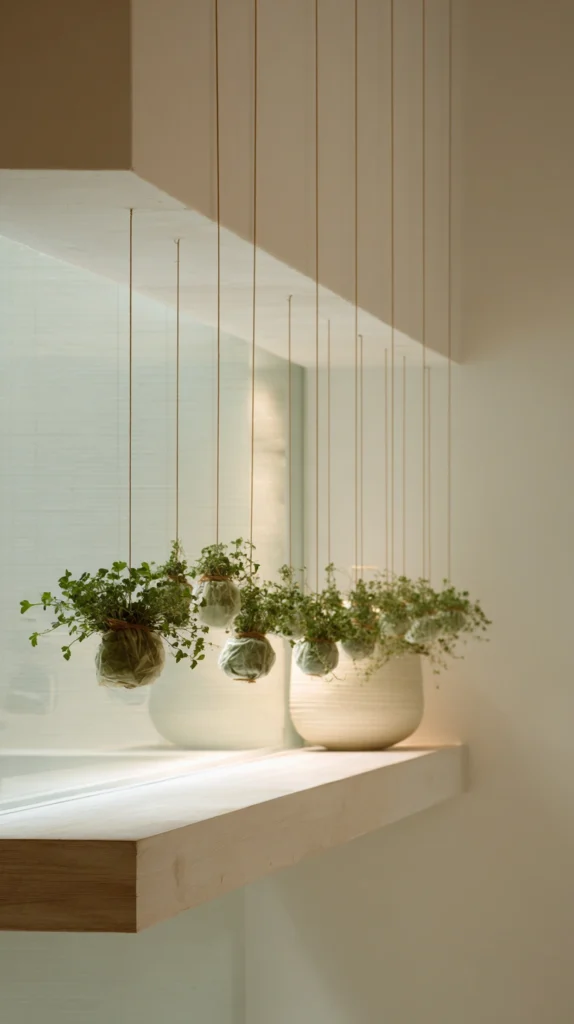
Budget: $8 – $25
Tensioned stainless steel or copper wire strung between two wall-mounted hooks creates a permanent, near-invisible herb drying line in any kitchen position. The wire is strong enough to support multiple herb bundles simultaneously, takes up no visual space when not in use, and when loaded with herb bundles creates a clean, contemporary display in a kitchen where a more rustic hanging rack would feel aesthetically out of place.
Stainless steel wire in 1.5–2 mm diameter costs $3–$8 per 5-metre reel. Two hook and eye wall fixings cost $3–$6. A wire tensioner ($3–$5) keeps the line taut as the weight of bundles causes the wire to deflect. The complete tension wire herb line costs $9–$19 in materials and installs in thirty minutes. Copper wire at slightly higher cost ($5–$12 per reel) provides a warmer, more decorative quality in a kitchen where the material palette includes warm metal tones.
Drying tip: Hang bundles on a tension wire line stem-upward rather than stem-downward if the wire diameter allows. Herbs dried stem-up allow the essential oils to migrate toward the leaf and flower material as the stems dry and shrink — producing a slightly more flavourful dried leaf than herbs hung in the conventional stem-down position. The difference is subtle but measurable in herbs with a particularly high essential oil content such as oregano and thyme.
14. A Bespoke Kitchen Ceiling Frame
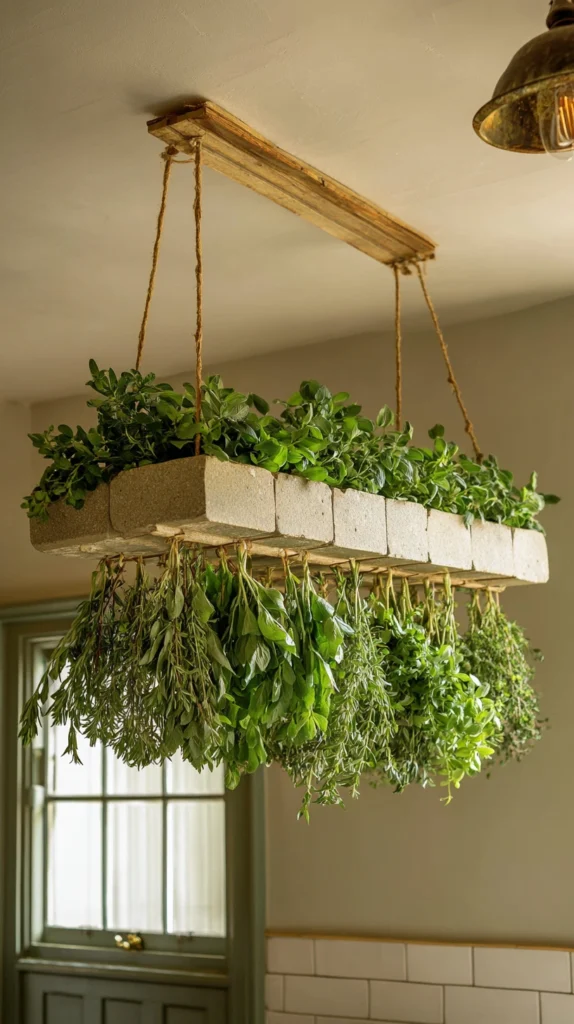
Budget: $40 – $150
A bespoke ceiling-mounted drying frame — a timber rectangle suspended horizontally from four ceiling points with chains or rope, with multiple S-hooks fitted along its lower face — creates the most generous and most visually authoritative herb drying installation available for a kitchen with adequate ceiling height. When fully loaded with herb bundles, a ceiling frame of 60×90 cm transforms the kitchen into a space that looks and smells like a working farmhouse herb store — one of the most immediately evocative seasonal kitchen experiences available.
A timber frame of 60×90 cm assembled from four 45×45 mm sections costs $10–$20 in timber. Four lengths of chain or rope for suspension from ceiling joists cost $5–$15. Twenty S-hooks for hanging bundles cost $3–$8. Total material cost: $18–$43. Fix into structural ceiling joists rather than plasterboard — a fully loaded herb drying frame can weigh 10–15 kg and requires fixing into solid timber for safe suspension at the ceiling height where it will be positioned above people moving through the kitchen.
Drying tip: Store completely dried herbs immediately rather than leaving them on the drying rack indefinitely. Herbs that remain on the rack after drying is complete continue to lose essential oil content through ongoing evaporation — the quality of a dried herb decreases progressively from the moment drying is complete and storage in an airtight glass jar dramatically slows this process. Check bundles after two weeks by crumbling a leaf between fingers — if it crumbles cleanly and dryly it is ready to store. Flexible, slightly leathery leaves need more drying time.
The herb drying rack is one of the simplest, most satisfying, and most useful seasonal kitchen projects available — it requires almost no expenditure, produces a genuinely beautiful display through the harvest season, and fills the kitchen with the particular fragrance of drying summer herbs in a way that no artificial product replicates. The investment of time and care in growing and harvesting the herbs is what makes the drying rack worth having. The rack itself is the final, simple step in that process.
Choose the rack that suits the kitchen you actually have and the quantity of herbs you actually grow. The simplest version — a dowel, two hooks, and a bundle of fresh-cut thyme — is as effective as the most elaborate ceiling installation for the first harvest of the season. Start there and let the growing collection of dried herbs tell you whether you need more hanging space before investing in anything more complex.