13 Best Vegetables for Hanging Baskets
Growing vegetables in hanging baskets is one of the most space-efficient growing methods available — producing food at eye level, out of reach of ground-level pests, and in positions that traditional container growing cannot use.
A south-facing wall, a pergola beam, a fence post bracket, or a porch ceiling all become productive growing spaces the moment a vegetable-planted basket is suspended from them. The limitation of the hanging basket — its small volume and rapid drying rate — is also its discipline: it forces the choice of compact, productive varieties that perform best precisely within the constraints of the format.
@/lauras_little_cottage_garden/
The thirteen vegetables below are the ones that suit hanging basket growing most completely — they are compact in habit, productive relative to their root volume requirement, attractive enough to earn their visual position, and manageable within the watering and feeding routine that hanging basket growing demands. Each includes what it costs and a practical growing tip to help you get the maximum food from each basket.
1. Cherry Tomatoes
Cost: $3 – $8 per plant
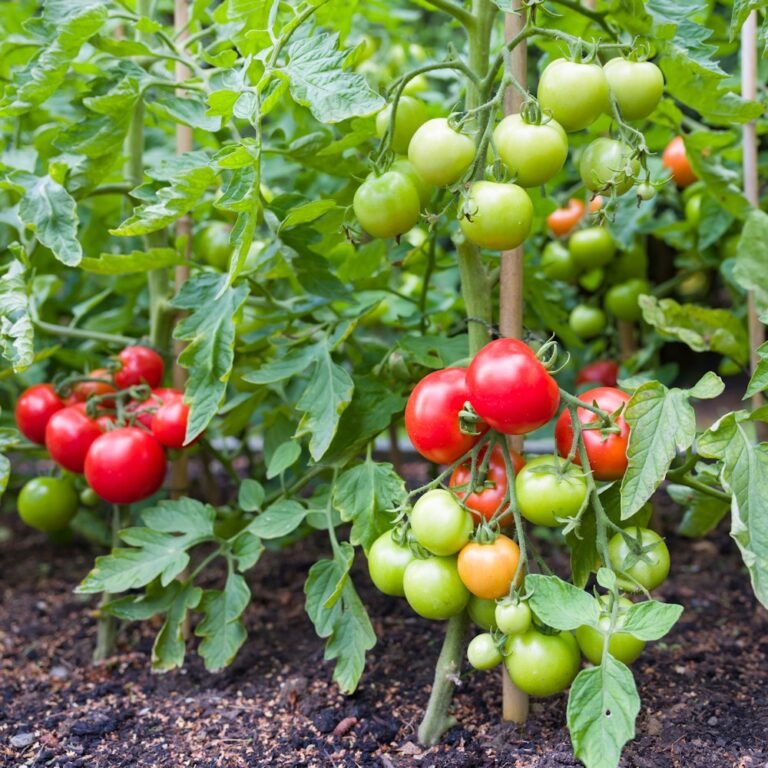
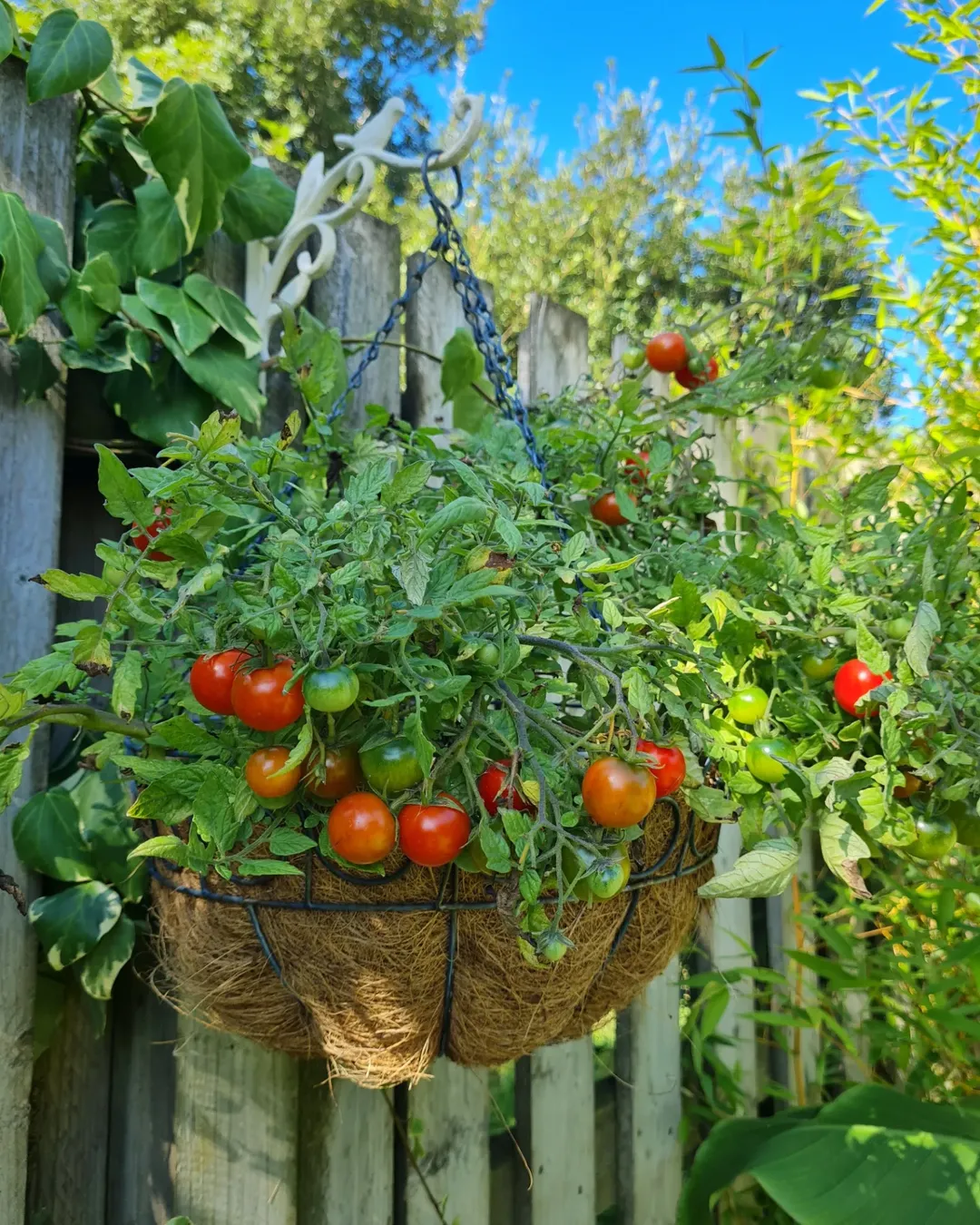
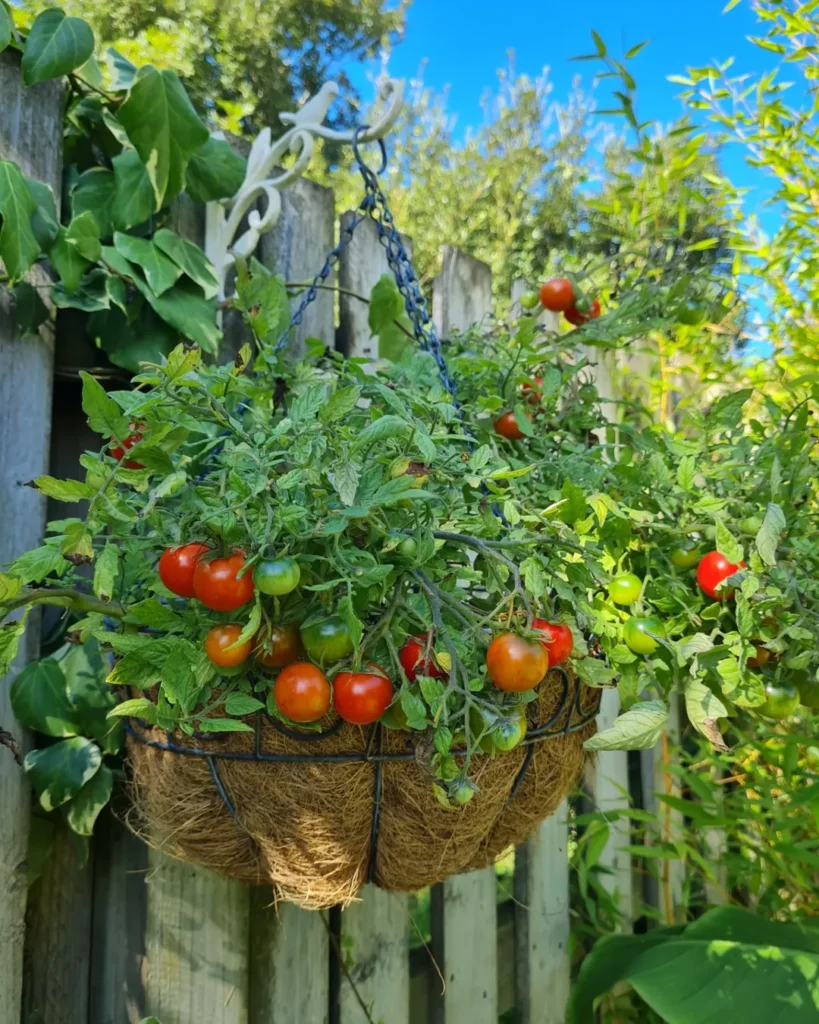
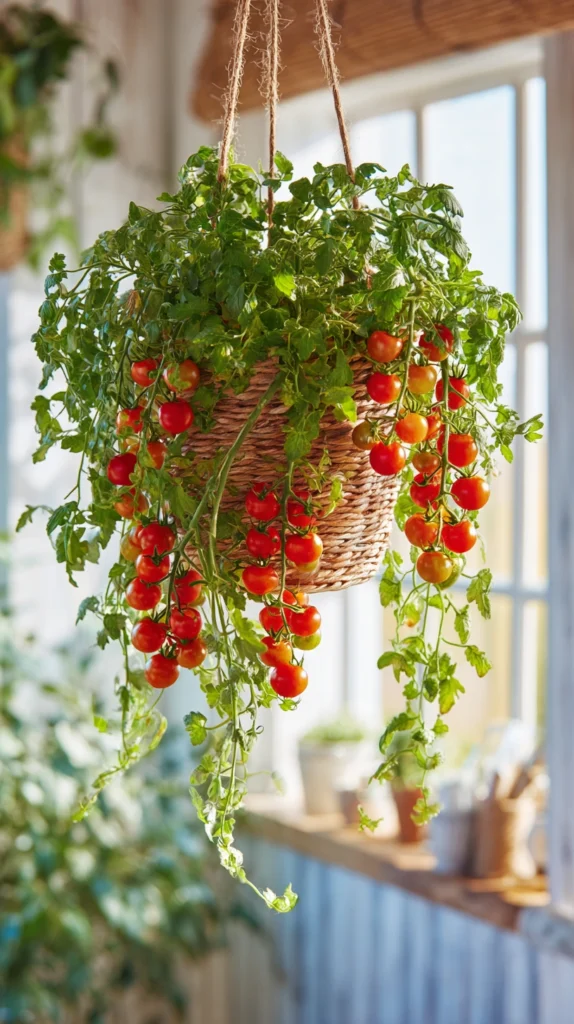
Cherry tomatoes are the definitive hanging basket vegetable — the cascading habit of trailing varieties like Tumbling Tom and Tumbler produces exactly the visual effect and growing behaviour that hanging basket cultivation is designed for. The fruits develop and ripen progressively along trailing stems that hang over the basket edge, keeping the developing tomatoes clean, visible, and easy to harvest without rummaging through dense foliage.
A 35–40 cm basket supports one Tumbling Tom or Tumbler plant as the sole occupant — the plant fills the basket completely within six weeks and fruits prolifically from July through October. Use a moisture-retentive tomato compost ($8–$12 per bag) rather than standard multipurpose — cherry tomatoes in a hanging basket are among the fastest-drying container plants in any garden and the moisture-retentive medium reduces the twice-daily watering requirement of standard compost to a once-daily or less frequent schedule.
Growing tip: Feed cherry tomato baskets with a high-potassium liquid tomato fertiliser every seven to ten days from the moment the first flowers open. Hanging basket cherry tomatoes have a small compost volume that depletes quickly under vigorous fruiting growth — weekly feeding at the recommended dose produces fruit of noticeably larger size and better flavour than biweekly feeding of the same variety in the same basket size through the same growing period.
2. Strawberries
Cost: $2 – $5 per plant
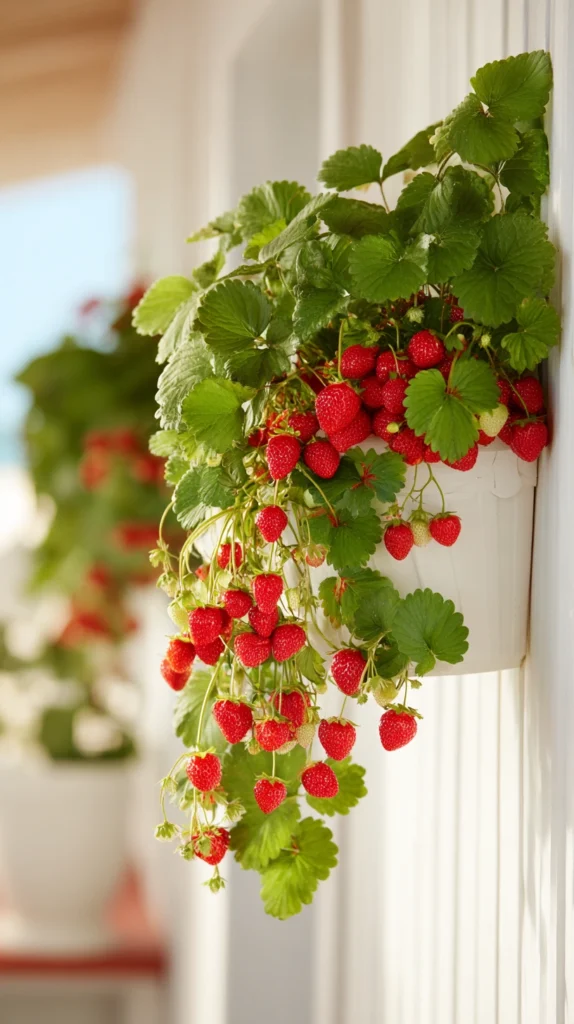
Strawberries in a hanging basket are one of the most traditionally proven and most practically effective growing combinations available in any format of food gardening. The elevated position keeps fruit completely clear of soil contact and slug access, the runners that develop through the season hang decoratively below the basket level, and the ripening fruit is immediately visible and accessible for harvesting without any searching through ground-level foliage.
A 35 cm basket accommodates five to six strawberry plants planted around the rim and one in the centre — the conventional strawberry basket planting that provides the fullest coverage and the most productive yield per basket. Varieties including Honeoye, Sweetheart, and Elsanta all perform reliably in basket cultivation. A self-watering basket with an integral reservoir ($15–$30) significantly reduces the watering frequency for strawberry baskets — strawberries need consistent moisture through the fruiting period and self-watering baskets maintain this more reliably than standard daily hand watering.
Growing tip: Remove the first flush of flowers that appears immediately after planting — typically within two to three weeks of the basket being assembled. Removing the first flowers allows the plant to direct its energy into establishing a strong root system and healthy foliage rather than fruiting immediately from a shallow, newly established root system. The second and subsequent flushes of flowers develop on a more established plant and produce noticeably larger, better-flavoured fruit than those developed from the first immediate flowering.
3. Lettuce and Salad Leaves
Cost: $2 – $5 per packet of seed or $1 – $3 per plug plant
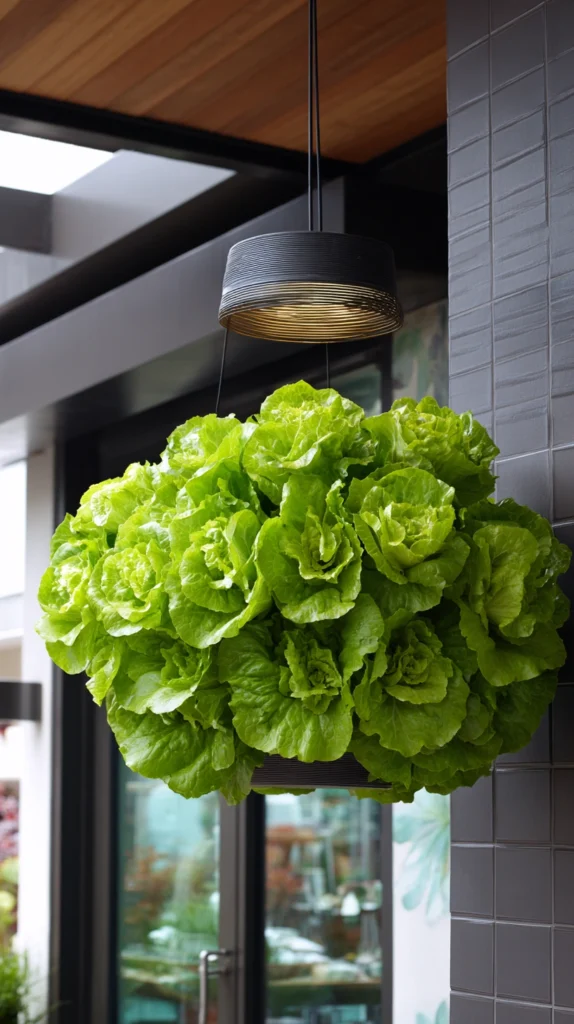
Cut-and-come-again salad leaves in a hanging basket — sown thickly across the basket surface and harvested by cutting the outer leaves with scissors as they reach 8–10 cm height — provides a continuous supply of fresh salad from a single basket through six to eight weeks per sowing. The basket can be resown two or three times through the season for a continuous supply from the same growing position with minimal replanting effort.
Sow salad leaf seed directly onto the basket compost surface after lining and filling — a mixed leaf packet costs $2–$4 and contains enough seed for three or four successive basket sowings through the season. Water with a fine rose immediately after sowing to avoid displacing the seed. The first harvest comes within three to four weeks of sowing. Cut with scissors 2–3 cm above the compost surface and the basket regrows within two to three weeks for a second cut before needing resowing.
Growing tip: Hang salad leaf baskets in a position that receives morning sun and afternoon shade during the hottest weeks of summer. Direct afternoon sun causes salad leaves to bolt rapidly — running to seed and becoming bitter — which dramatically shortens the productive period of each sowing. Afternoon shade in a sheltered, bright position extends each sowing’s productive life by two to three additional weeks compared to the same basket in full afternoon sun.
4. Chillies
Cost: $3 – $8 per plant
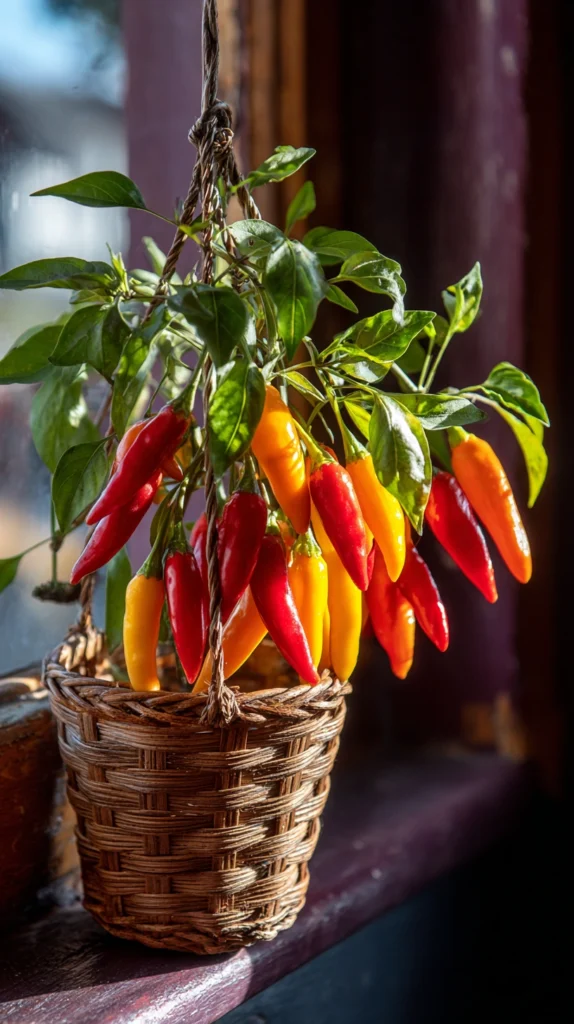
Dwarf and compact chilli varieties in a hanging basket create one of the most ornamental vegetable displays available — the upright, jewel-bright fruits in red, orange, yellow, and purple hanging from a basket above eye level are genuinely beautiful as well as productive. Chillies are naturally compact in root requirement relative to their above-ground growth and suit the limited compost volume of a basket well, provided they are fed consistently through the fruiting season.
Apache, Prairie Fire, and Demon Red are the most reliably compact and most prolific chilli varieties for basket cultivation. A 30–35 cm basket supports one to two plants comfortably. Position in full sun — chillies require maximum sun exposure for both fruit set and fruit ripening and perform poorly in any position that receives less than five hours of direct sun per day. A single well-grown chilli plant in a basket produces fifty to one hundred fruits through the season from July to the first frost.
Growing tip: Harvest chillies from the basket at the green stage as well as the ripe red stage — picking green fruits at regular intervals through the season encourages the plant to continue flowering and setting new fruits rather than concentrating all its energy into ripening the existing fruit load. A chilli plant from which green fruits are regularly harvested produces a higher total yield of fruit through the season than one on which all fruits are left to ripen fully before any are picked.
5. Dwarf French Beans
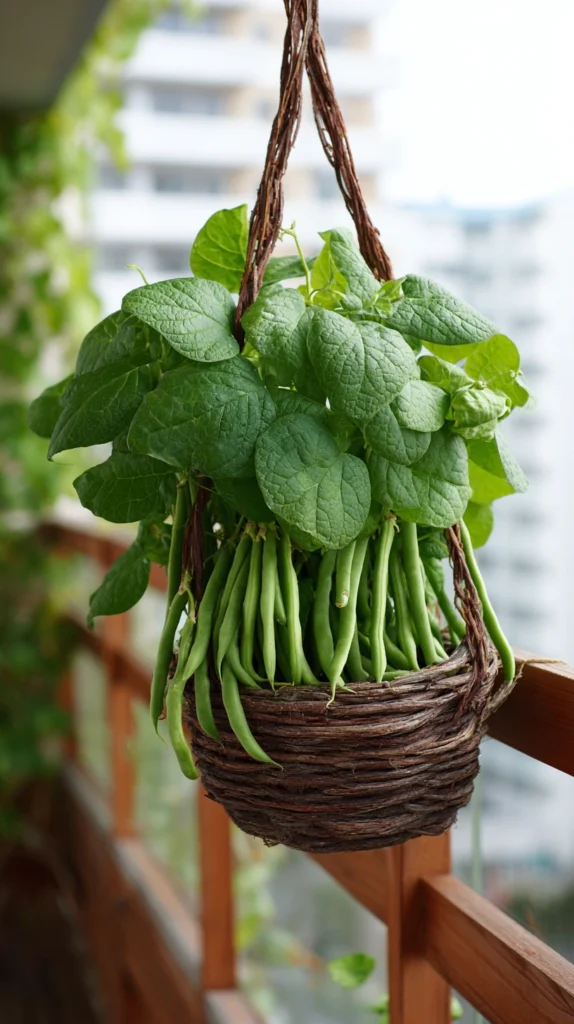
Cost: $2 – $4 per packet of seed
Dwarf French bean varieties — bred specifically for compact habit without the climbing stems of standard French beans — suit hanging basket growing surprisingly well, producing a tidy, bushy plant of 30–40 cm height with pods that hang attractively over the basket rim as they develop. The combination of ornamental foliage, white or purple flowers, and developing pods makes a dwarf French bean basket as visually attractive as any purely ornamental planting through the peak of its productive season.
Dwarf French bean varieties suitable for basket cultivation include Mascotte, Hestia, and Rocquencourt. Sow two or three seeds per 30 cm basket — the beans germinate quickly in warm compost and the three plants together create a bushy, productive display within six weeks of sowing. First pods are ready to harvest approximately eight weeks after sowing. Pick regularly every two to three days once pods reach 10–12 cm length — leaving pods on the plant to mature and set seed triggers the plant to stop producing new pods within days of the first pod being left unpicked.
Growing tip: Soak dwarf French bean seeds in water for six hours before sowing in a hanging basket — the warm compost of a basket positioned in a sheltered, sunny position dries seed coats faster than ground-level sowing conditions and soaked seeds germinate more reliably and more evenly from a basket position than dry seeds sown directly into the same compost type and temperature.
6. Peas (Dwarf Varieties)
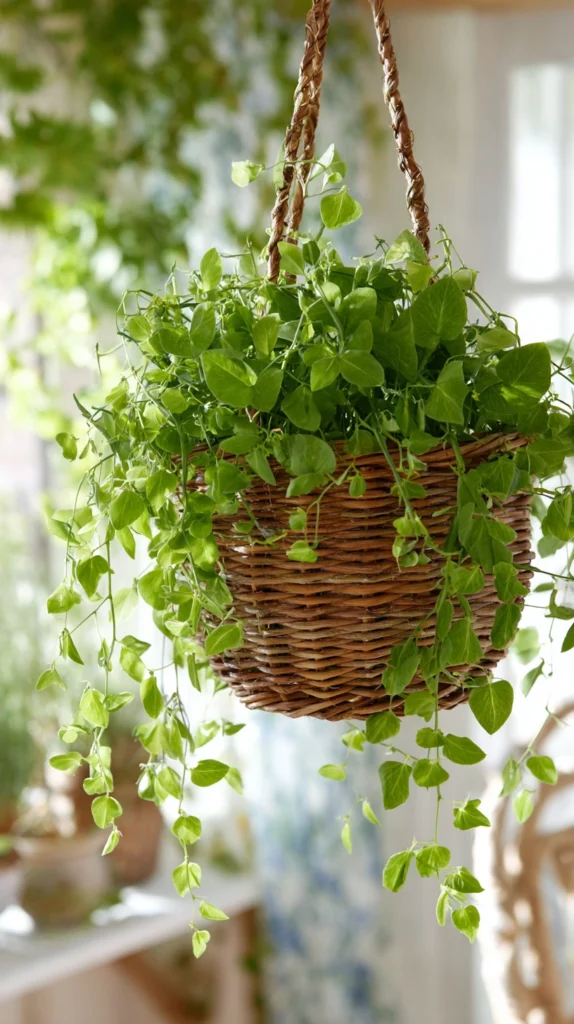
Cost: $2 – $4 per packet of seed
Dwarf pea varieties bred for compact growth — reaching 40–60 cm rather than the 120–150 cm of standard climbing types — suit hanging basket cultivation well and produce the bonus of sweet peas picked directly from a basket hanging at arm height without any ground-level stooping or searching through netting. Sugar snap and mangetout types are particularly suited to basket growing because the entire pod is eaten — a higher yield per plant relative to the root volume than shelling varieties where the pod is discarded.
Dwarf pea varieties including Petit Poucet, Tom Thumb, and Little Marvel are the most reliably compact for basket cultivation. Sow four to five seeds per 35 cm basket, pushing each seed 3–4 cm into the compost at even spacing around the basket’s inner rim. The peas may need minimal support from short twigs pushed into the compost centre — even dwarf varieties tend to lean as they develop pods, and a central support cluster prevents the whole plant from tilting to one side of the basket under the weight of pods in late development.
Growing tip: Hang pea baskets in a position that receives some afternoon shade during the hottest weeks of summer. Peas are a cool-season crop and their productivity declines significantly in sustained high temperatures — a partially shaded position through July and August extends the productive season of a basket sown in late spring by three to four additional weeks compared to a basket in full afternoon sun through the same high-temperature period.
7. Radishes
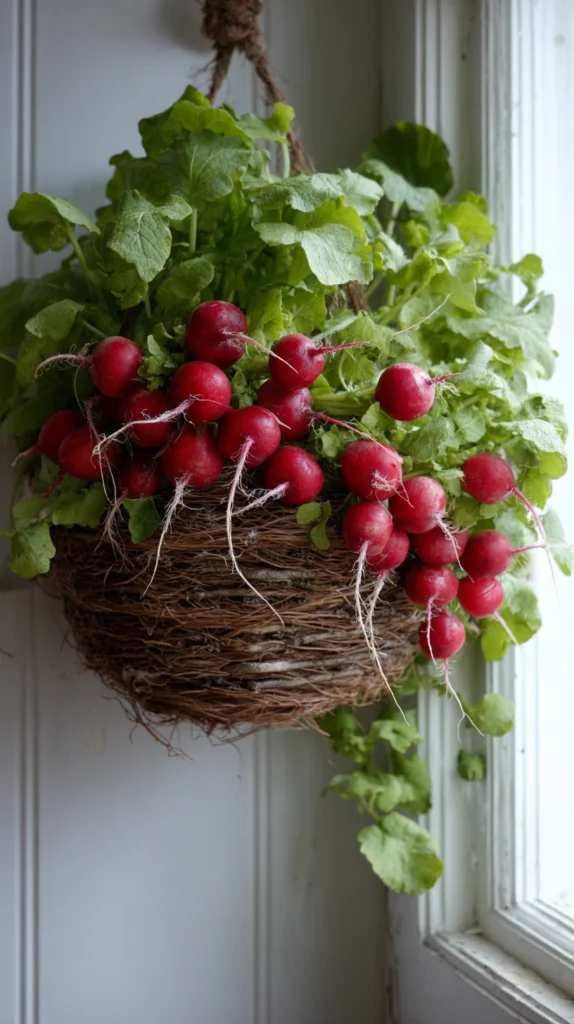
Cost: $1 – $3 per packet of seed
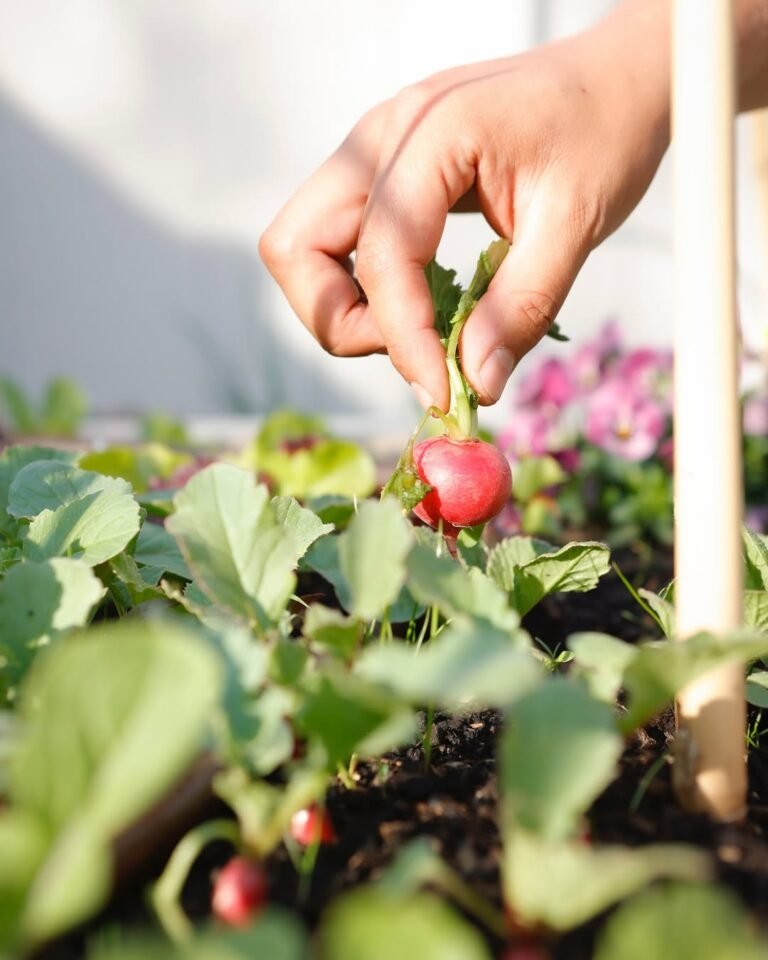
Radishes are the fastest vegetable available for a hanging basket — ready to harvest in as little as three weeks from sowing — which makes them the most frequently replanted and most continuously productive vegetable choice for a basket that is intended to provide regular harvests through the whole season. A basket sown every three weeks from April through August provides fresh radishes continuously without a single gap in supply between successive sowings.
Sow radish seed thinly across the basket surface, pressing each seed 1 cm into the compost at 3–4 cm spacing. Thin to 5 cm spacing once seedlings emerge. The round, short-rooted varieties — Cherry Belle, French Breakfast, and Sparkler — suit basket cultivation better than long-rooted types, which require more compost depth than a standard basket provides for full root development. The entire above-ground appearance of a radish basket in active growth — fresh green leaves, hints of red at the soil surface — is attractive enough to earn a decorative position on any sunny wall or porch.
Growing tip: Water radish baskets consistently and generously through the growing period — irregular watering is the primary cause of pithy, unpleasantly hot radishes rather than the crisp, mild-flavoured roots that the variety is capable of producing. A radish that dries out even once during its three-week development develops a fibrous, sharp-flavoured root that is barely usable in the kitchen. Consistent moisture throughout the short growing period is the single most important growing variable for radish quality in any container format.
8. Spinach and Swiss Chard
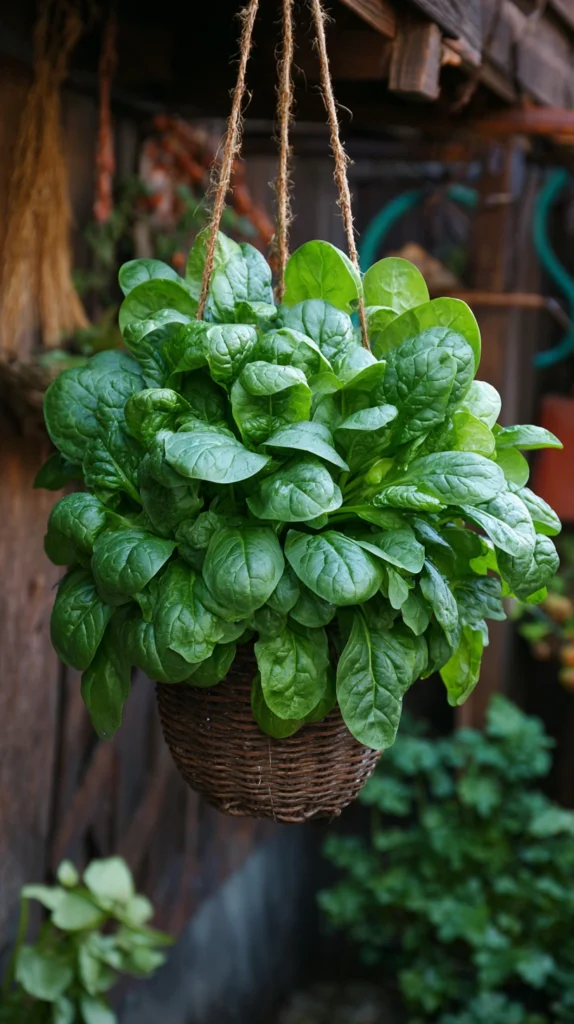
Cost: $2 – $4 per packet of seed or $2 – $4 per plug plant
Spinach and Swiss chard in a hanging basket provide a continuously harvestable supply of nutritious greens through the season when managed as cut-and-come-again crops. Swiss chard is particularly suited to basket cultivation — its compact root system, attractive coloured stems in red, yellow, orange, and white, and genuine cut-and-come-again productivity over a long season make it one of the most visually ornamental and most practically productive vegetables available for a decorative basket position.
Rainbow chard seed costs $2–$4 per packet and provides enough seed for multiple successive sowings. Sow four to six seeds per 30–35 cm basket and thin to the strongest two to three plants once established. Begin harvesting outer leaves individually from 15 cm height onward — the central growing point continues producing new leaves for three to four months of regular harvest before the plant becomes exhausted and needs replacing with a fresh sowing. This harvest longevity makes chard one of the best-value vegetables for a basket position.
Growing tip: Harvest Swiss chard and spinach leaves when they are young and 15–20 cm in length rather than allowing them to grow to full size before picking. Young leaves are significantly more tender, more flavourful, and less coarse in texture than large mature leaves — and regular harvesting of young growth keeps the plant in a state of continuous active production rather than the periodic stalling that occurs when large leaves are left on the plant until they exhaust the plant’s energy reserves before being removed.
9. Spring Onions
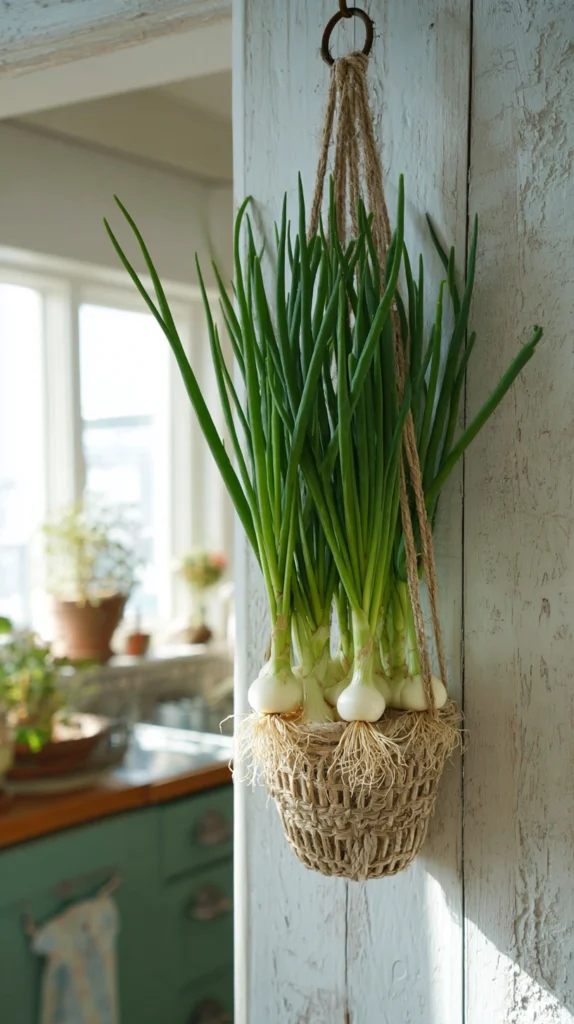
Cost: $1 – $3 per packet of seed
Spring onions are one of the most underused hanging basket vegetables and one of the most practical — they require minimal root depth, they grow quickly from seed, and they can be harvested gradually as individual stems reach the right thickness rather than all at once as a single crop. A basket of spring onions sown in succession — a fresh area of the basket sown every three weeks — provides usable stems continuously through the season from a single suspended growing position.
White Lisbon and Guardsman are the most reliable spring onion varieties for basket cultivation. Sow seed 1 cm deep at 3–4 cm spacing across the basket surface without thinning — spring onions grow better in close proximity than most other vegetables and the competition between stems produces the slim, upright habit most useful in the kitchen. A basket of spring onions reaches harvestable size in six to eight weeks from sowing and can be harvested over a two to three-week period by pulling alternate stems and leaving the gaps to fill with adjacent growth.
Growing tip: Interplant spring onions in a basket with a trailing edible flower — nasturtiums or violas — for a combination that provides both a food harvest and an attractive appearance. Spring onion baskets are functional rather than showy on their own — the addition of a trailing edible flower gives the basket visual appeal during the weeks when the spring onions are still developing to harvestable size and makes the combined basket genuinely attractive as a decorative as well as productive feature.
10. Cucumbers (Trailing Varieties)
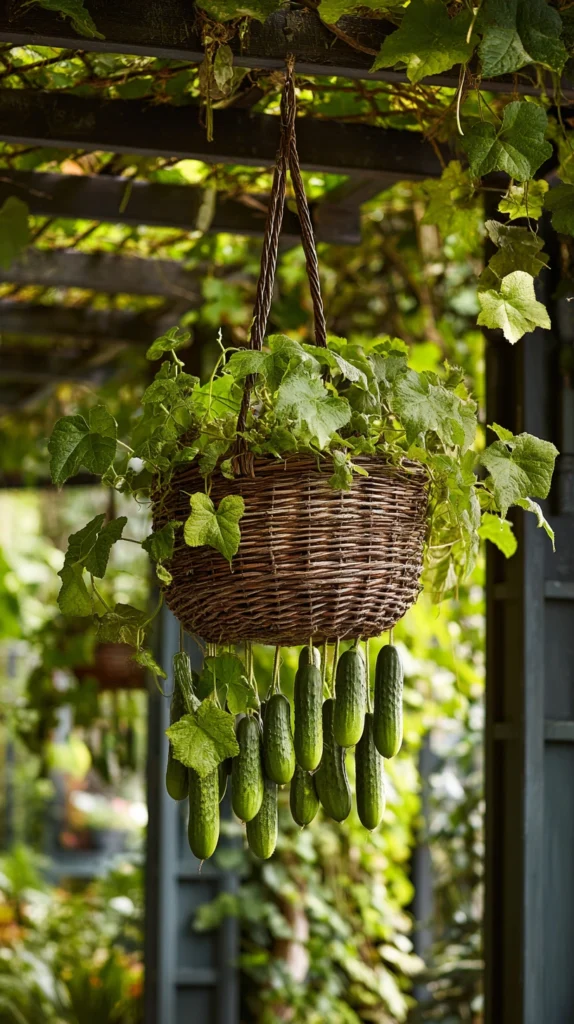
Cost: $3 – $7 per plant or $2 – $4 per seed packet
Trailing cucumber varieties — bred specifically for tumbling and hanging growth rather than climbing — produce surprisingly generous yields from a hanging basket and the developing cucumbers hanging from the basket below eye level are among the most satisfying and most visually striking vegetable basket displays available. Bush pickle and Spacemaster are the most reliably compact varieties for basket cultivation, reaching 50–60 cm of trailing growth rather than the 1.5–2 metres of standard climbing varieties.
A large basket of 40 cm diameter is the minimum practical size for a single cucumber plant — cucumbers are thirsty, large-leafed plants that require a compost volume larger than most vegetables to sustain productive growth through the fruiting season. Water twice daily in warm summer conditions and feed with a high-potassium fertiliser every ten days from the first flower. The cucumber fruits hang naturally below the basket as they develop and should be harvested before they begin to yellow at the tip — a yellowing tip indicates the fruit is past its best and is directing the plant’s resources toward seed development rather than further fruiting.
Growing tip: Pinch out the growing tip of the main cucumber stem once the plant has produced four or five sets of leaves above the basket rim. This tip-pinching redirects the plant’s energy from continued stem extension into the lateral fruiting shoots that develop below the pinch point — producing a wider, more productive plant with fruits distributed across multiple shorter stems rather than concentrated at the tip of a single long trailing stem that extends well below the basket hanging height.
11. Peppers (Compact Varieties)
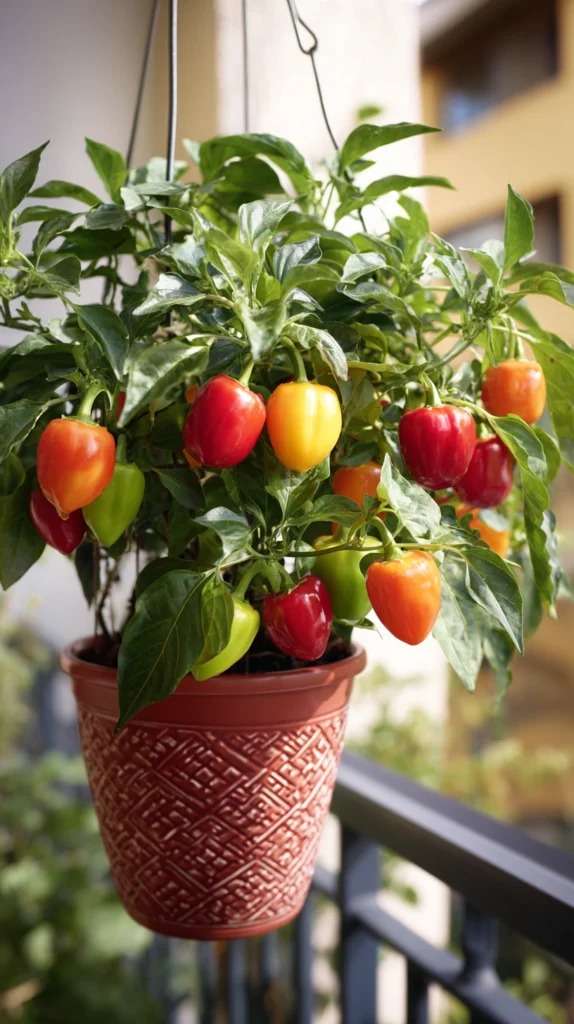
Cost: $3 – $8 per plant
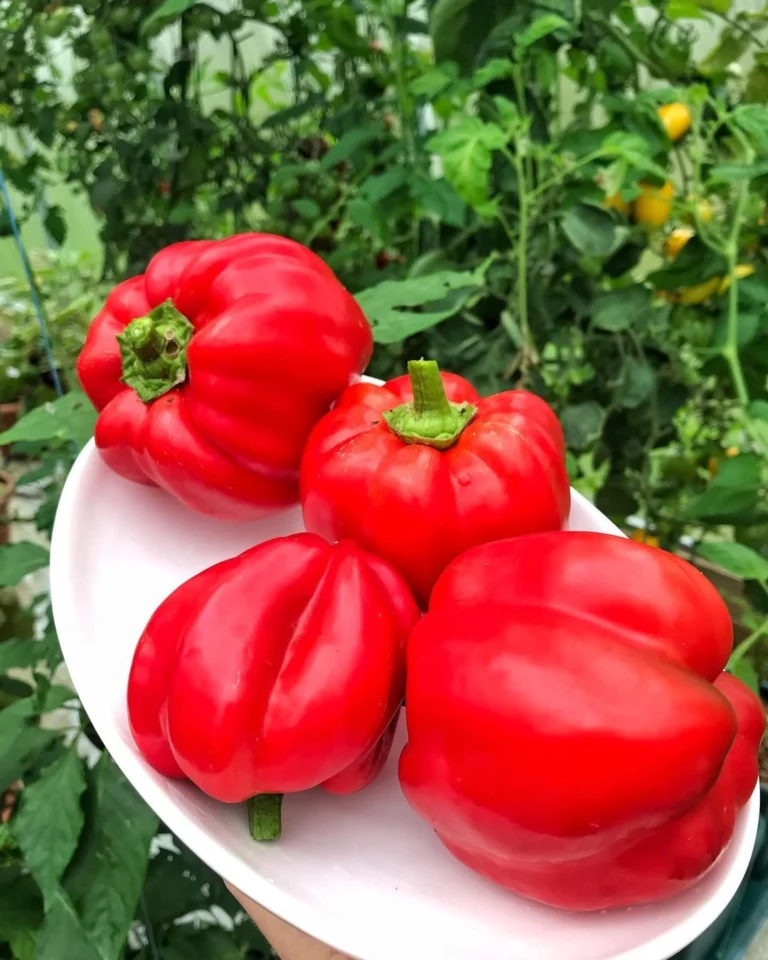
Compact sweet pepper varieties — dwarf cultivars that reach 30–40 cm rather than the 60–90 cm of standard varieties — suit hanging basket cultivation well and produce a season-long supply of small, sweet peppers that develop and ripen progressively from green through yellow to red through the summer and autumn months. The compact varieties are also among the most ornamental of all vegetable basket plants — the upright, colourful fruits against dark green foliage create a genuinely attractive display that earns a prominent garden position.
Compact sweet pepper varieties for basket growing include Redskin, Mohawk, and Baby Belle. A 35–40 cm basket accommodates one to two plants comfortably. Peppers need maximum sun — at least five to six hours of direct sun per day — for reliable fruit set and ripening in a basket position. Feed with a high-potassium fertiliser every ten days from the first flowers and harvest fruits at any stage of colour development from green onward — picking green fruits regularly encourages continued flowering and new fruit set rather than the plant focusing all its resources on ripening a fixed number of existing fruits.
Growing tip: Support compact pepper plants in a hanging basket with a short cane pushed into the compost — 30 cm height is sufficient for most compact varieties. The weight of a full crop of developing peppers on a single plant can cause the main stem to bow toward one side of the basket under the combined weight of fruits, which looks untidy and can stress the stem at the point of maximum flexion. A single central cane prevents bowing and maintains the upright, even habit that makes a pepper basket most attractive as a display feature.
12. Edible Nasturtiums
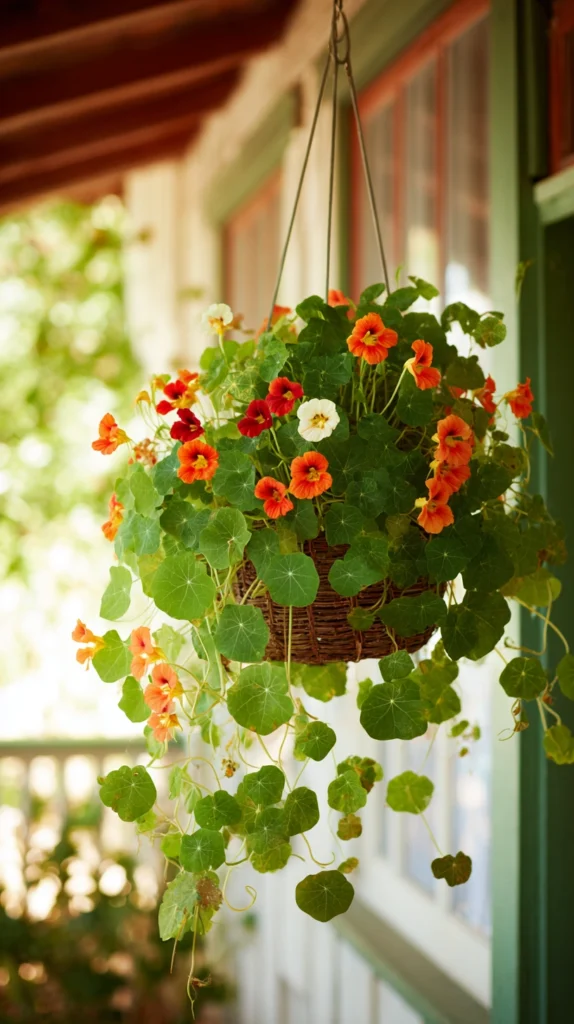
Cost: $2 – $4 per seed packet
Nasturtiums are both vegetables and flowers — the leaves, flowers, and seed pods are all edible and all distinctly flavoured with a pleasant peppery heat. In a hanging basket the trailing varieties cascade naturally over the edge and hang in a vivid display of orange, yellow, and red flowers that is simultaneously one of the most ornamental and one of the most productive edible baskets available. No other plant combines the visual quality of a flowering basket with a genuinely useful edible harvest as completely as a well-grown trailing nasturtium.
Trailing nasturtium seed costs $2–$4 per packet. Sow directly into the basket compost — three to four seeds per 30 cm basket — and thin to the two strongest seedlings once established. Nasturtiums prefer lean compost — a low-fertility growing medium produces more flowers and more edible material than rich compost, which encourages leafy growth at the expense of the flowers that are the most valuable edible and ornamental element of the plant. A basket established in lean compost without supplementary feeding produces the most floriferous and most photogenic result.
Growing tip: Harvest nasturtium flowers and leaves in the morning when they are freshest and pick them consistently — removing flowers as they fade rather than leaving spent flowers to set seed. Consistent harvesting and deadheading triggers the plant to produce new flowers continuously through the season. A nasturtium basket that is harvested regularly every two to three days provides fresh edible flowers from June through October. One that is left unmanaged produces a main flush of flowers and then slows significantly as the plant’s energy redirects into seed development.
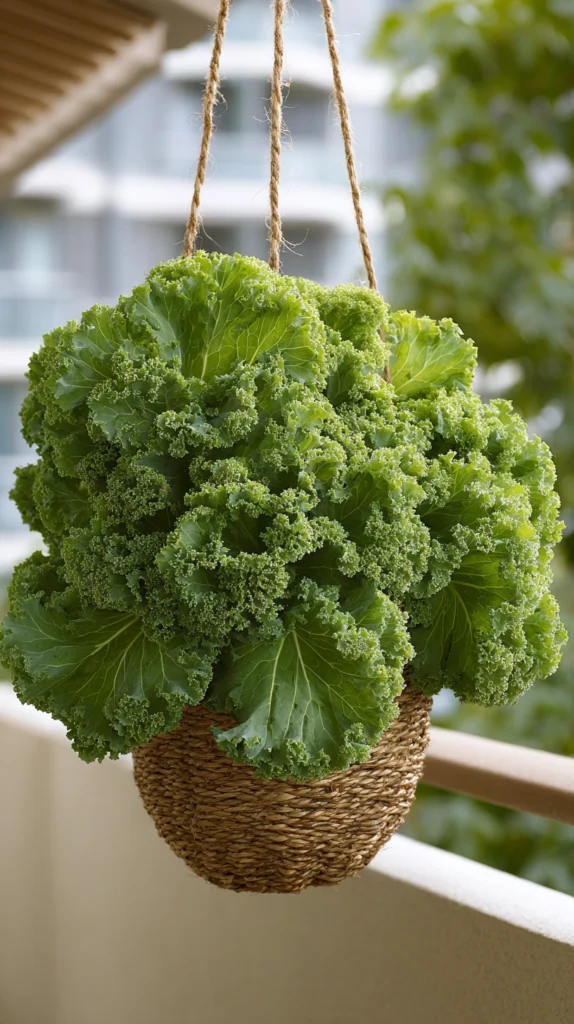
13. Kale (Dwarf and Ornamental Varieties)
Cost: $2 – $4 per seed packet or $2 – $4 per plug plant
Dwarf and compact kale varieties — bred for smaller growth habit and often with the additional ornamental quality of coloured or ruffled leaf forms — suit hanging basket cultivation better than standard kale and produce harvestable leaves in a format genuinely appropriate to a decorative basket position. Red Russian kale, Nero di Toscana (Cavolo Nero), and ornamental kale varieties all produce attractive, cut-and-come-again foliage from a compact root system that a 35 cm basket accommodates comfortably through a full growing season.
Kale seed costs $2–$4 per packet. Sow two to three seeds per basket and thin to the strongest two plants once established. Begin harvesting outer leaves when they reach 10–12 cm length — small, young kale leaves are the most tender, the most flavourful, and the most nutritionally concentrated of any harvest stage. Regular harvesting of young outer leaves encourages continued production from the central growing point and extends the productive life of a kale basket from late summer through to winter and into the following spring in mild climates, making kale one of the longest-productive vegetables available for any basket position.
Growing tip: Net kale baskets with fine insect mesh from planting through the growing season to protect from cabbage white butterfly. A hanging basket position does not prevent butterfly access — cabbage white butterflies are strong flyers that routinely lay eggs on elevated container plants. The caterpillars that hatch can strip a kale basket to bare stems within a week of hatching if the eggs are laid undetected and the caterpillars allowed to develop unmanaged. A mesh cover fitted at planting prevents the problem entirely without any need for chemical intervention at any point through the season.
The vegetables that succeed in hanging baskets are the ones chosen with honest respect for the format’s constraints — limited root volume, rapid moisture loss, and the need for consistent management. Every vegetable on this list works within those constraints rather than against them, and each one returns a harvest from a position in the garden that conventional growing would leave completely unproductive. A south-facing fence fitted with three well-planted vegetable baskets produces more food from its vertical surface than a ground-level bed of equivalent area in many cases — which makes hanging basket vegetable growing one of the most space-efficient food production methods available in any scale of garden or outdoor space.
Start with cherry tomatoes or strawberries — the two most reliable, most productive, and most universally rewarding options for a first vegetable basket. Get the watering and feeding routine established with one basket before adding more. The discipline of consistent basket care is the one skill that determines success more than any other variable in hanging basket vegetable growing, and it is most easily established with a single well-chosen basket before it is extended to a full productive display.