13 Wheelbarrow Planter Ideas
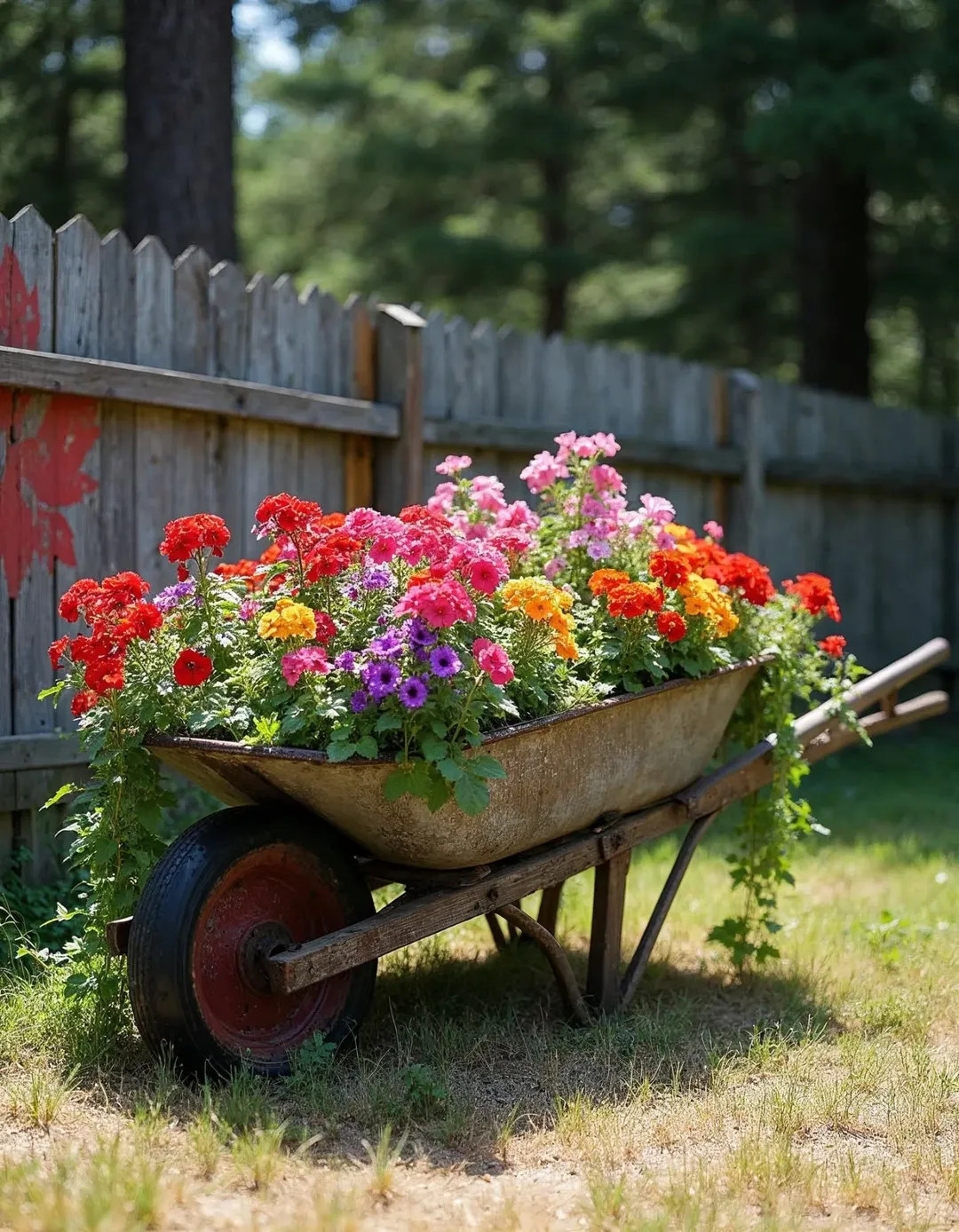
A wheelbarrow repurposed as a garden planter is one of those ideas that works on every level — practically, aesthetically, and sentimentally. Practically it provides a generous planting volume, good drainage through the existing drainage holes or easily drilled ones, and the mobility to reposition the planting display as the season and the garden demands.
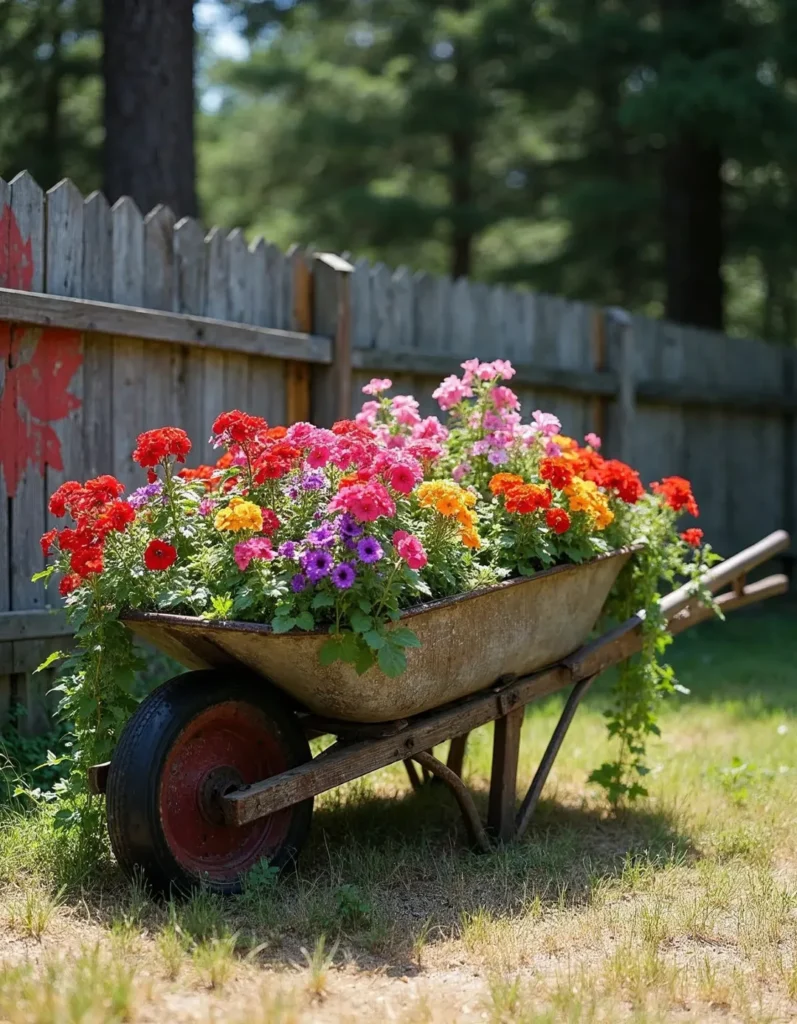
Aesthetically it introduces a material quality — weathered steel, aged timber, worn paint — that a purpose-made decorative planter rarely achieves. And sentimentally it gives a piece of garden equipment with a working history a second productive life rather than a journey to the tip.
The thirteen ideas below cover every planting style and every mood for a wheelbarrow planter — from an overflowing cottage garden display to a sleek modern succulent arrangement. Each includes what it costs and a practical tip to help you get the best growing result from an unconventional container.
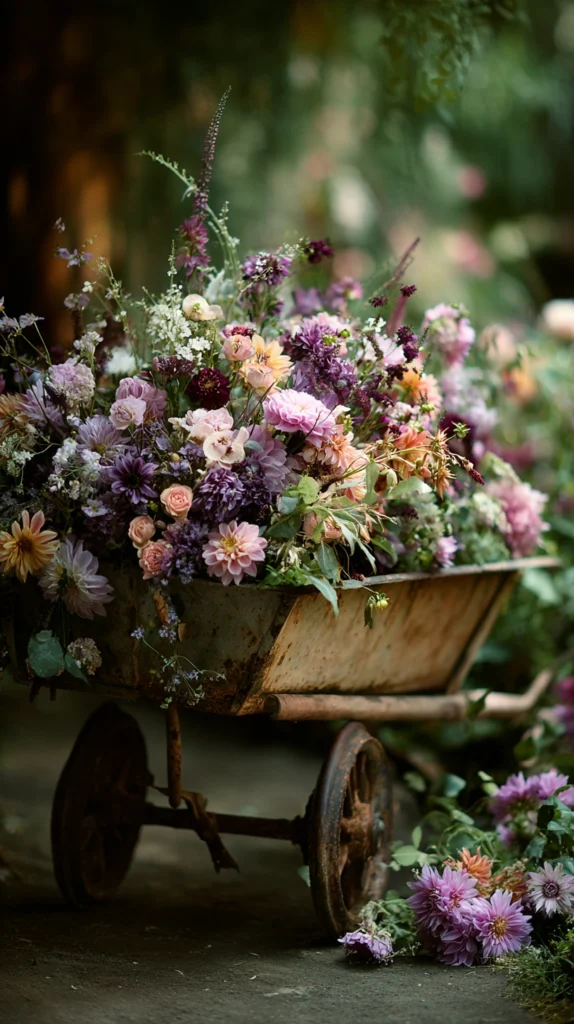
1. A Cottage Garden Overflow Display
Budget: $20 – $80
A wheelbarrow filled to overflowing with cottage garden plants — lavender, sweet William, cosmos, pelargoniums, and trailing lobelia cascading over the sides — is the most immediately recognisable and most universally charming wheelbarrow planting style available. The generous planting volume of a standard wheelbarrow tray allows a density and abundance of planting that smaller containers cannot approach, and the cottage garden palette of soft, mixed colours suits the informal character of the repurposed barrow perfectly.
Cottage garden plants from a garden centre cost $3–$8 each. A generously planted wheelbarrow display requires eight to twelve plants at $24–$96 total. Plant at a density that looks slightly too close at planting time — the plants grow together within four to six weeks and the slightly overcrowded start produces the abundant, spilling quality that makes a wheelbarrow cottage planting look effortlessly overfull rather than carefully arranged. Add a trailing plant at the front edge for the cascade over the barrow’s lip that completes the cottage aesthetic.
Planting tip: Layer the bottom 15 cm of a wheelbarrow planter with crocked terracotta pieces or gravel before adding compost — the deep tray of a wheelbarrow retains more moisture than most containers and the drainage layer prevents the waterlogging that causes root rot in a deep-filled container without drainage provision. Drill four to six additional holes in the base of the tray if no existing drainage holes are present — a 10 mm drill bit works on most steel barrow trays without specialist tools.
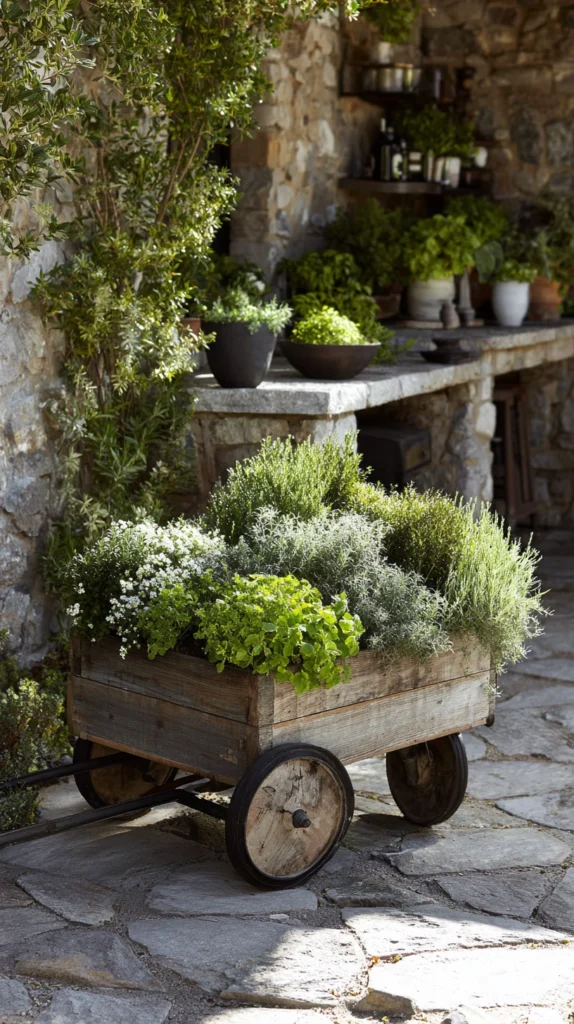
2. A Kitchen Herb Wheelbarrow
Budget: $15 – $60
A wheelbarrow planted with a collection of culinary herbs — rosemary, thyme, sage, chives, flat-leaf parsley, and basil in a sunny position near the kitchen door — creates one of the most functional and most visually attractive kitchen garden features available at a fraction of the cost of a purpose-built herb garden structure. The mobility of the wheelbarrow allows it to be moved toward or away from the kitchen door as the season demands and stored under shelter during the coldest winter months to protect the more tender varieties.
Herb plants cost $2–$6 each. Eight herbs in a wheelbarrow cost $16–$48 in plants. Use a free-draining compost mix — 50 percent standard multipurpose compost and 50 percent horticultural grit for Mediterranean varieties like thyme, rosemary, and sage — which suits the majority of culinary herbs and prevents the waterlogging that kills more kitchen herb plantings than any other cause. Position the taller herbs (rosemary, sage) at the back and lower, more spreading varieties (thyme, chives) at the front and sides.
Planting tip: Separate mint from the other herbs in the wheelbarrow planting by keeping it in its original pot sunk into the compost rather than planting it directly into the barrow. Mint spreads aggressively through underground runners and will colonise the entire wheelbarrow within one season at the expense of every other herb in the planting if it is not contained within its original pot. Sinking the pot flush with the compost surface makes the containment invisible while maintaining the visual integration of mint within the mixed herb display.
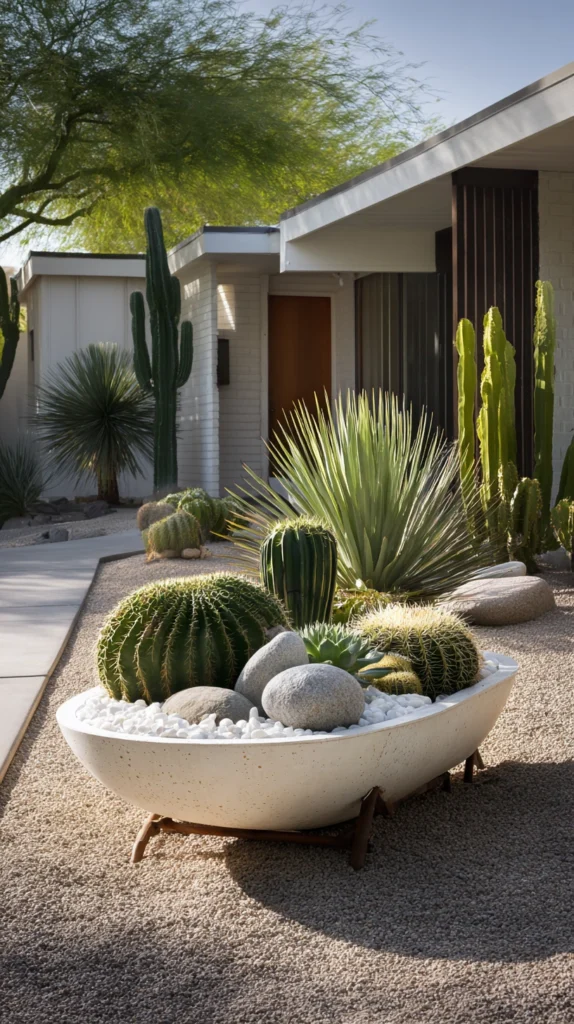
3. A Succulent and Cactus Arrangement
Budget: $20 – $80
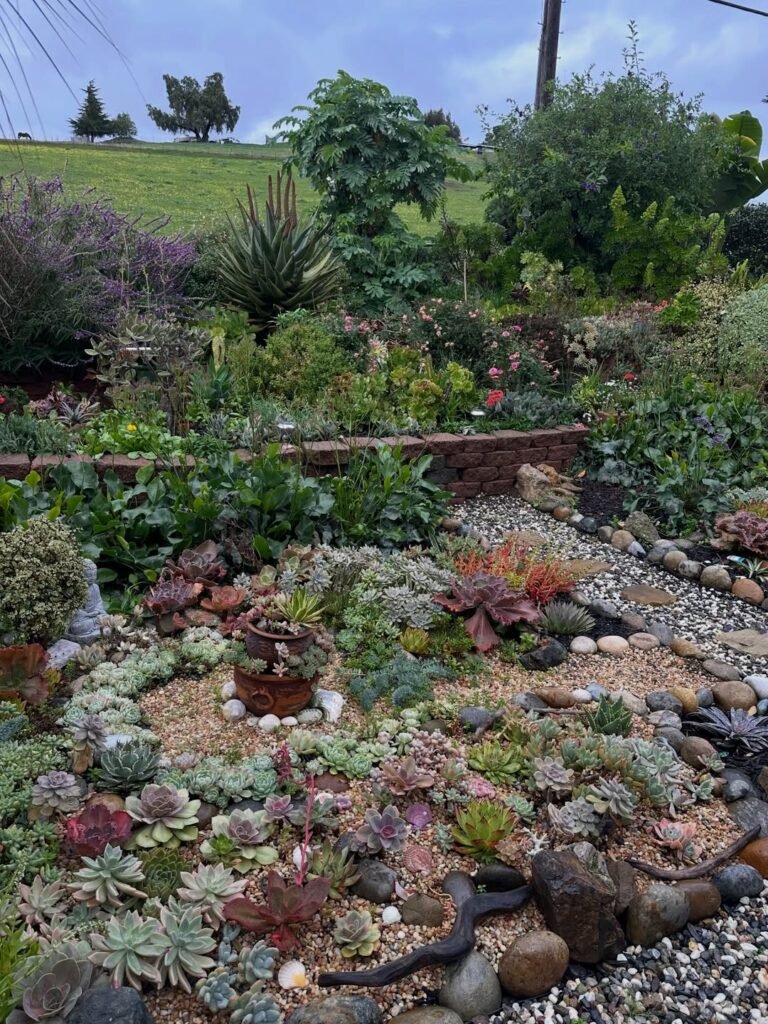
A wheelbarrow planted with an arrangement of succulents and cacti — in a free-draining gritty compost, topped with gravel, and positioned in full sun — creates a contemporary, low-maintenance planting of architectural quality that requires watering once or twice a week in summer and virtually not at all in winter. The generous depth of the wheelbarrow tray allows the root systems of larger succulent specimens to develop more fully than smaller containers permit, producing plants of greater size and more impressive form within one growing season.
Succulent and cactus plants in 7–12 cm pots cost $3–$12 each. A mixed collection of eight to twelve plants for a standard wheelbarrow costs $24–$96. Use a cactus compost mixed 50/50 with horticultural grit as the growing medium — standard multipurpose compost retains too much moisture for most succulents and causes the root rot that is the most common cause of succulent failure in any container situation. Top-dress the compost surface with 2–3 cm of fine gravel for a finished, contemporary appearance that also keeps the plant crowns dry.
Planting tip: Arrange succulents and cacti in a wheelbarrow planting with the tallest, most architectural specimens at the centre-back and the smaller, lower-growing varieties toward the front and sides — the same height gradient used in any border planting. A succulent arrangement in a wheelbarrow looks most effective when viewed from slightly above or at eye level, so ensure the positioning of the barrow allows this viewing angle from the main position in the garden where it will be seen most frequently.
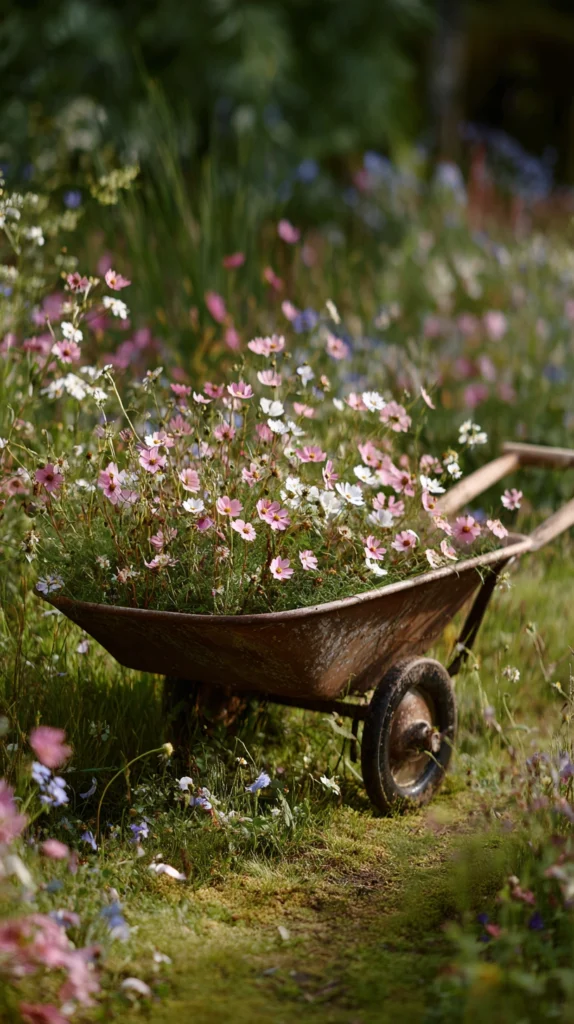
4. A Wildflower Meadow in a Barrow
Budget: $5 – $25
A wheelbarrow sown with a native wildflower seed mix — using a lean, gritty compost without fertiliser — creates a miniature meadow that provides weeks of pollinator-friendly colour from a single small growing space. The elevated position of the wheelbarrow tray means the wildflower display is seen at the best height and in the most accessible viewing position available — above the surrounding ground-level planting where it catches light and attention simultaneously.
A native annual wildflower seed mix costs $5–$15 per packet and contains enough seed for a standard wheelbarrow tray. Mix the seed with dry sand before sowing to ensure even distribution across the tray surface. Use a low-fertility compost or mix standard compost with 30 percent horticultural grit — wildflowers establish most successfully and flower most prolifically in lean soil conditions, and standard rich multipurpose compost produces excessive leafy growth at the expense of flower production in the same growing season.
Planting tip: Sow the wildflower barrow in early spring and leave the germinating seedlings completely unwatered for the first two weeks after sowing if the weather is cool — natural moisture from dew and light rain is sufficient for germination and the absence of overhead watering prevents the displacement of small seeds before they have rooted. Only begin regular watering once the seedlings are 2–3 cm tall and have developed their first true leaves above the initial seed leaves.
5. A Seasonal Flower Barrow
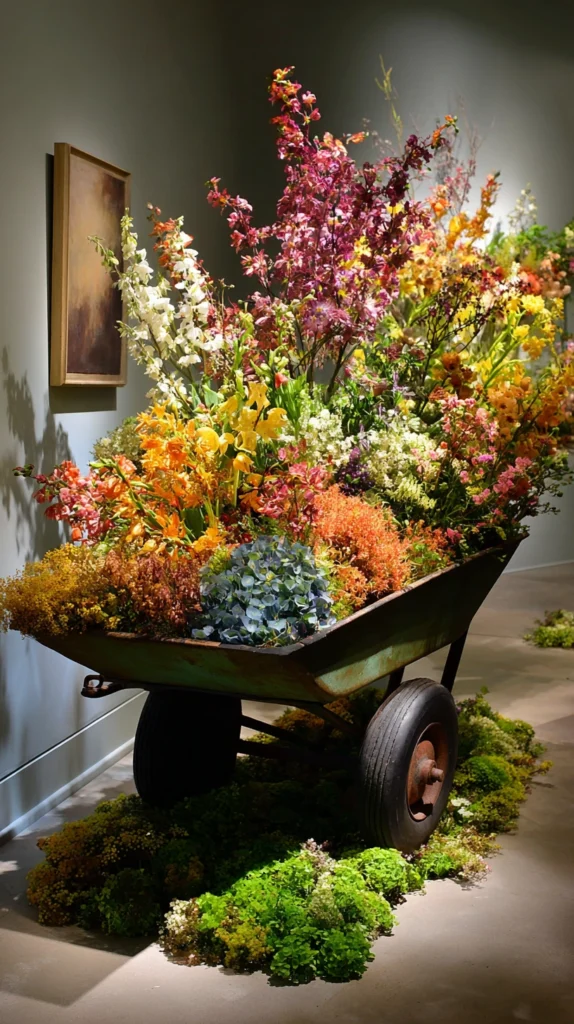
Budget: $15 – $60
A wheelbarrow replanted at each major seasonal transition — with spring bulbs replaced by summer annuals, summer annuals replaced by autumn colour, and the display rested or planted with winter-interest evergreens in the coldest months — creates a year-round garden feature that changes character completely four times a year and provides a regularly renewed focus of colour and interest in the garden through every season.
Spring bulbs — tulips and narcissus — cost $0.50–$2 each and provide the first display from March through May. Summer annual replacement plants — petunias, calibrachoa, and snapdragons — cost $2–$5 each at $20–$50 for a generously planted barrow. Autumn Rudbeckia, asters, and ornamental kale cost $3–$6 each. Winter evergreen heather and cyclamen cost $3–$8 each. The complete seasonal replanting programme costs $60–$120 across the full year but delivers continuous display where a single-planting approach provides colour for only a fraction of the same period.
Planting tip: Replace only the surface-level annual plants at each seasonal transition rather than completely emptying and repacking the wheelbarrow. Remove spent annuals, top up the compost level by 5–8 cm with fresh material, and plant the new season’s display into the refreshed surface. This approach preserves the drainage layer at the base, reduces the physical work of seasonal replanting significantly, and maintains the settled, established quality of the barrow’s appearance through each successive replanting.
6. A Strawberry Barrow
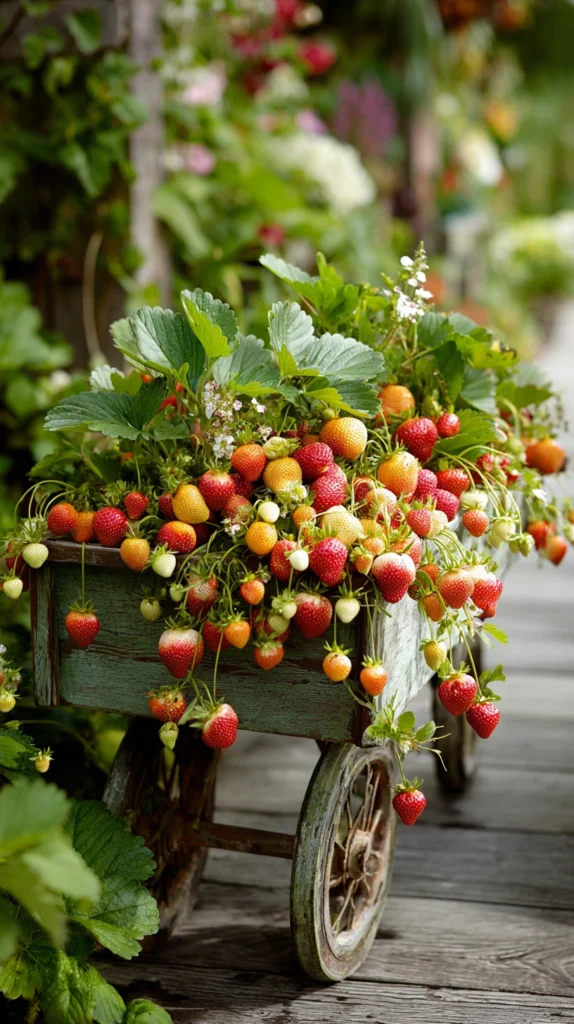
Budget: $15 – $50
A wheelbarrow planted with strawberries — with the plants positioned so their runners and fruit hang over the edge of the tray — creates a productive and highly attractive fruit display that combines the visual quality of a flowering and fruiting plant with the practical yield of a strawberry patch. The elevated tray position keeps the fruit off the ground and reduces the slug and mould damage that ground-level strawberry beds suffer, while making the ripening fruit immediately visible for timely harvesting.
Strawberry plants cost $2–$5 each. A standard wheelbarrow accommodates eight to twelve plants at $16–$60 in plant cost. Varieties including Honeoye and Cambridge Favourite produce reliably heavy crops from a container position. Use a moisture-retentive compost mix for strawberries rather than the free-draining mix required by herbs and succulents — strawberries are heavy drinkers in the fruiting period and a moisture-retentive growing medium reduces the watering frequency required during the critical fruit development weeks of June and July.
Planting tip: Feed strawberry barrow plants with a high-potassium liquid fertiliser every ten days from the moment the first flowers open to the end of the fruiting period. Potassium is the nutrient most directly responsible for fruit size, sweetness, and flavour in strawberries, and container strawberries fed consistently through the fruiting period produce noticeably larger, sweeter fruit than unfed or inconsistently fed plants in an equivalent container volume.
7. A Vintage Rose Barrow
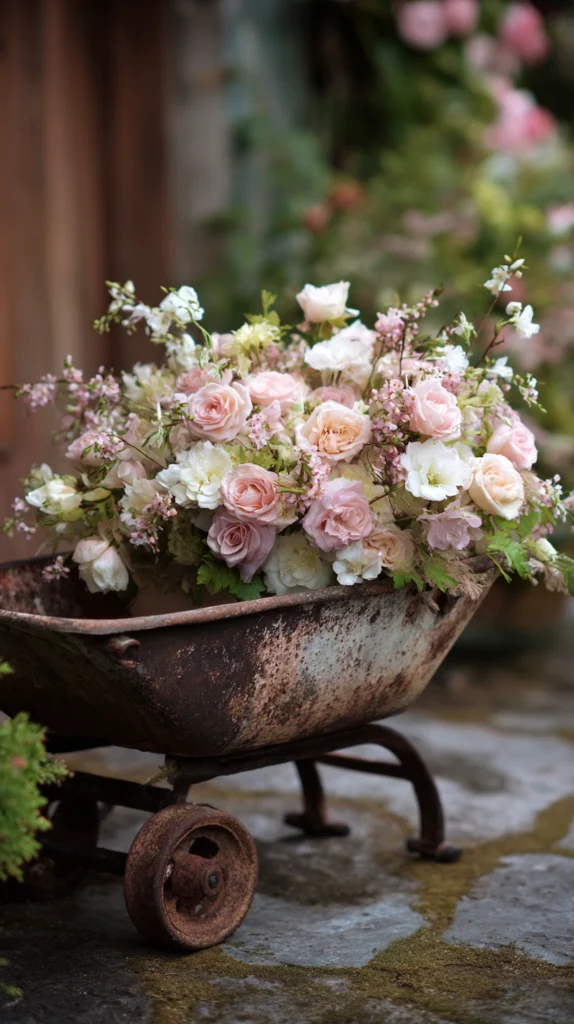
Budget: $30 – $120
A miniature or patio rose planted in a weathered wheelbarrow — surrounded by underplanting of lavender, catmint, and trailing lobelia — creates one of the most romantically charming garden features available at a relatively modest cost. The visual combination of an aged, weathered barrow and a perfectly formed rose in full flower is a garden image that photographs extremely well and that suits cottage, rustic, and traditional garden styles with complete appropriateness.
A miniature or patio rose in a 2-litre pot costs $10–$25. Underplanting plants — lavender, catmint, and trailing lobelia — cost $3–$6 each for a total of $9–$18. An aged or deliberately weathered wheelbarrow suits this planting most effectively — a pristine new barrow can be aged by wire-brushing the metal surface and leaving it outdoors through one wet season before planting. The contrast between the rough, aged metal of the barrow and the delicate perfection of the rose flowers is the aesthetic quality that makes this combination so specifically effective.
Planting tip: Choose a repeat-flowering patio rose rather than an old-fashioned once-flowering variety for a wheelbarrow planting. A repeat-flowering rose provides blooms continuously from June through to the first frosts — delivering a display season of four to five months from a single plant in a fixed container position. A once-flowering variety provides one flush of flowers over three to four weeks and spends the remaining season as a foliage plant, which is a poor return for a featured container position where continuous colour is the goal.
8. A Vegetable Barrow
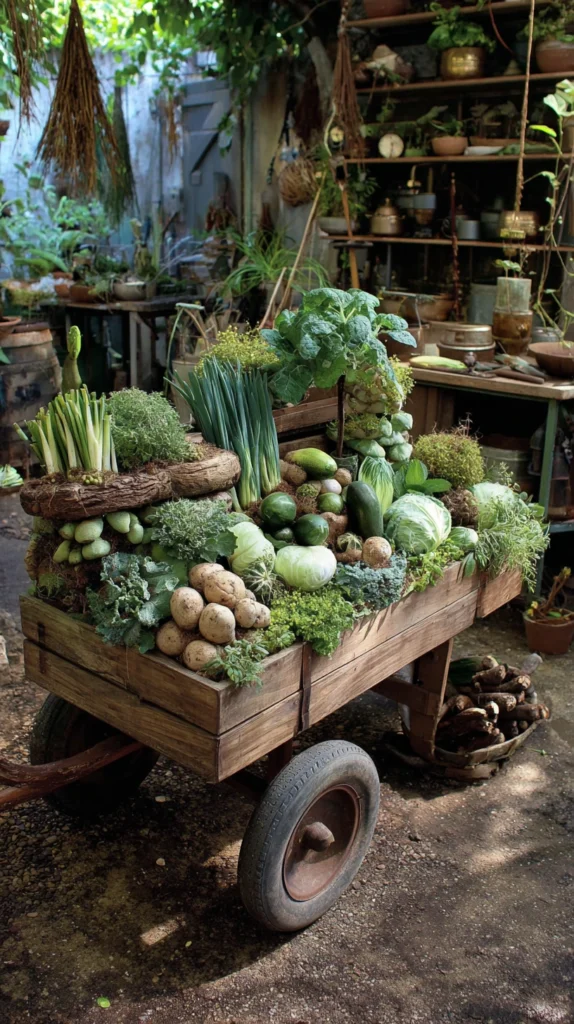
Budget: $10 – $50
A wheelbarrow planted with compact vegetable varieties — cherry tomatoes, dwarf French beans, lettuce, and trailing courgettes whose fruits hang over the barrow’s edge — creates a productive kitchen garden feature that can be positioned in the sunniest available spot and moved toward the kitchen door at harvest time. The mobility of the wheelbarrow is particularly useful in a vegetable context where sun positioning is the primary determinant of crop success.
Cherry tomato plants cost $3–$6 each. Dwarf French bean seeds cost $2–$4 per packet. Lettuce plug plants cost $1–$3 each. A trailing courgette plant costs $3–$6. A productive mixed vegetable wheelbarrow using one or two plants of each type costs $12–$25 in plants and produces usable harvests from June through to the first autumn frosts. Feed with a high-potassium liquid fertiliser every two weeks from the moment the first flowers appear on any fruiting crop in the barrow.
Planting tip: Position the tallest vegetable — the tomato — at the back of the wheelbarrow where it does not shade the shorter plants to the front. Train the tomato upright against a cane inserted vertically into the compost at the back of the tray. The cane stabilises the plant as it grows and ensures its fruiting remains upright and visible above the other vegetables in the mixed barrow rather than leaning across them and reducing the light available to the shorter crops in front.
9. A Fern and Shade Plant Barrow
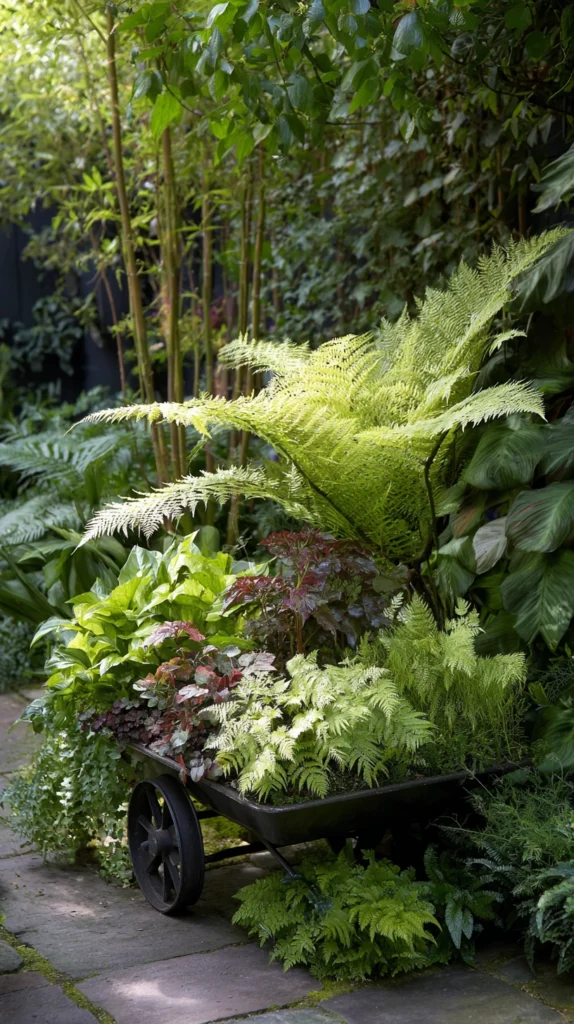
Budget: $20 – $70
A wheelbarrow planted with shade-loving ferns, hostas, and hellebores creates the most appropriate planting for a barrow positioned in a shaded garden area — converting a position where few plants perform well into a lush, textural display of rich green foliage that suits the cool, moist conditions of shade far better than any sun-loving annual planting would. The combination of fern fronds, hosta leaves, and hellebore flowers creates a layered, sophisticated shade display that looks deliberate and considered in a way that random annual planting in the same position rarely achieves.
Hardy ferns cost $6–$15 each. Hostas run $10–$25 depending on size and variety. Hellebore plants cost $8–$20. Three plants of each type cost $72–$180 in plants for a generously filled shade barrow. Use a moisture-retentive compost enriched with leaf mould ($5–$10 per bag) for the growing medium — shade plants prefer consistently moist, organic-rich conditions that replicate the woodland floor environment in which most of them naturally grow.
Planting tip: Mulch the compost surface of a shade barrow with a 3–4 cm layer of bark chippings or leaf mould after planting. The mulch retains moisture at the surface — critical for shade plants which, despite growing in moist conditions, can dry out rapidly in a container during warm weather — and creates the dark, organic surface quality that looks most natural beneath fern and hosta planting and that suits the cool, woodland aesthetic of a shade barrow display.
10. A Painted Barrow With Bold Annual Colour
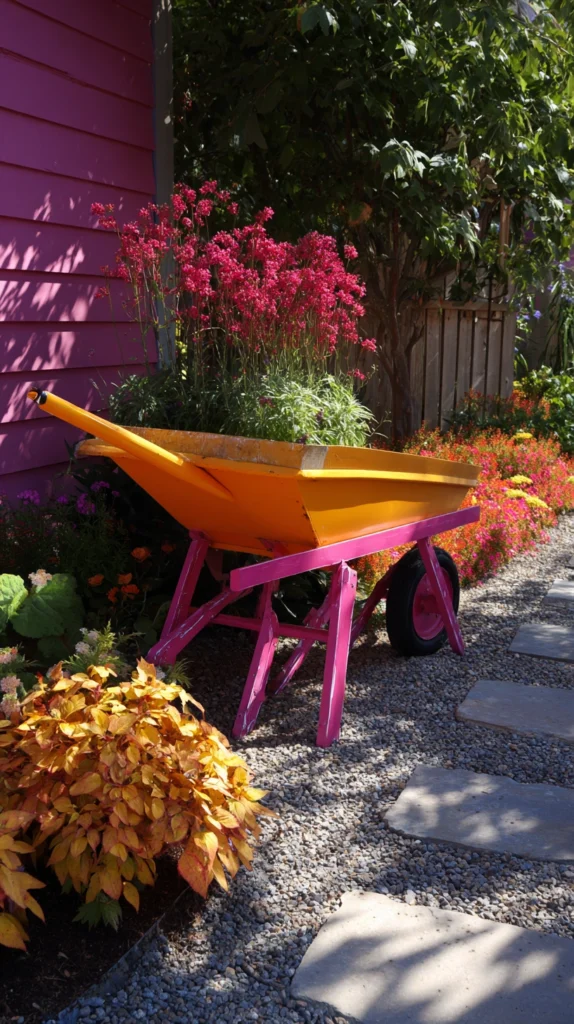
Budget: $20 – $80
A wheelbarrow painted in a bold exterior colour — cobalt blue, terracotta, or deep green — and planted with annual flowers in a complementary palette creates a garden feature where the barrow itself contributes as much visual character as the planting within it. The painted barrow becomes a garden art object as much as a planting container, and the colour relationship between the barrow surface and the plant palette is the primary design decision that determines the overall visual impact of the feature.
Exterior metal paint costs $10–$20 per tin and provides two coats on a standard wheelbarrow. Annual plants for a bold colour display — petunias, calibrachoa, zinnias, and marigolds — cost $3–$6 each at $24–$60 for a fully planted barrow. A cobalt blue barrow planted with vivid orange and yellow marigolds creates a classic complementary colour contrast of considerable visual impact. A terracotta barrow planted with white and soft pink flowers creates the sun-drenched Mediterranean palette that suits a warm garden context beautifully.
Planting tip: Apply two coats of rust-inhibiting metal primer before the colour coat on any metal wheelbarrow that shows surface rust or bare metal. Standard exterior paint applied directly over rust does not adhere properly and begins to lift within one to two seasons of outdoor exposure. A primed surface provides a stable base for the colour coat that extends the painted finish life to four to five seasons before retreatment is needed — more than double the lifespan of an unprimed paint application.
11. A Bulb Layer Wheelbarrow for Spring
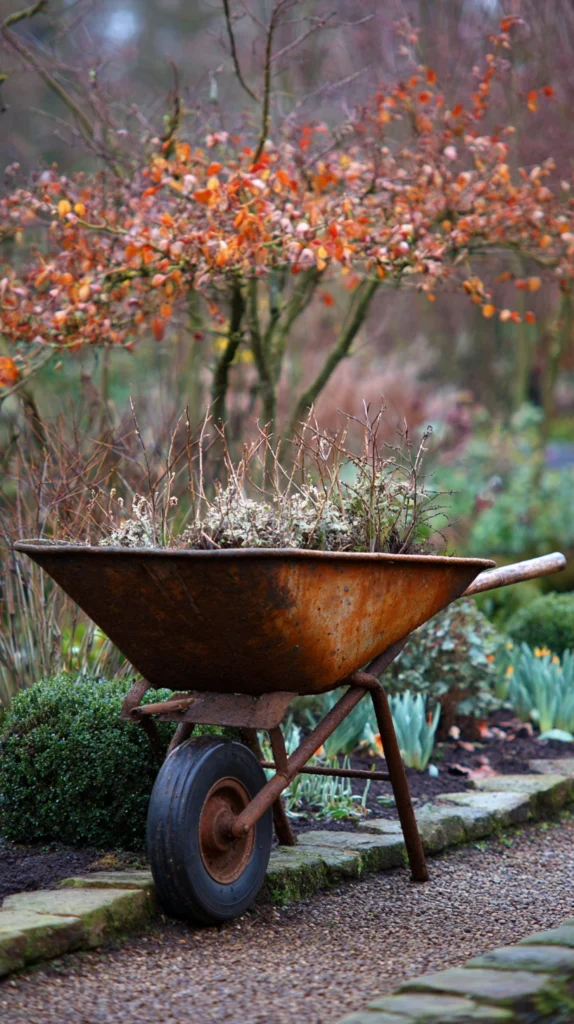
Budget: $15 – $60
A wheelbarrow planted in autumn with layered spring bulbs — tulips at the lowest level, narcissus above them, and muscari and crocus at the top — creates a spring display of successive flowering from a single container that provides colour from March through to May as each successive bulb layer comes into flower after the one below it. The deep planting volume of a wheelbarrow tray is uniquely suited to layered bulb planting — the depth required for tulip bulbs (15–20 cm) is rarely available in shallow containers.
Tulip bulbs cost $0.50–$2 each and should be planted twenty or more for a generous display. Narcissus bulbs cost $0.30–$1 each at fifteen to twenty bulbs per barrow. Muscari bulbs cost $0.20–$0.50 each at twenty-five to thirty per barrow. The total bulb cost for a fully layered spring barrow sits between $20 and $70 depending on variety selection and quantity. Plant the deepest layer (tulips) first, then the narcissus layer above them at a 10 cm separation, and the muscari and crocus closest to the surface, ensuring no bulb sits directly above another from the layer below.
Planting tip: Position the layered bulb barrow in a sheltered position over winter — against a house wall or under a canopy — to protect the compost from becoming completely waterlogged in sustained winter rainfall. Bulbs in a container without shelter can experience repeated freeze-thaw cycles that cause rotting in the bulb layers closest to the surface. A sheltered winter position and adequate drainage combined produce the reliable spring emergence that makes the investment in layered bulb planting fully worthwhile.
12. A Tropical Statement Barrow
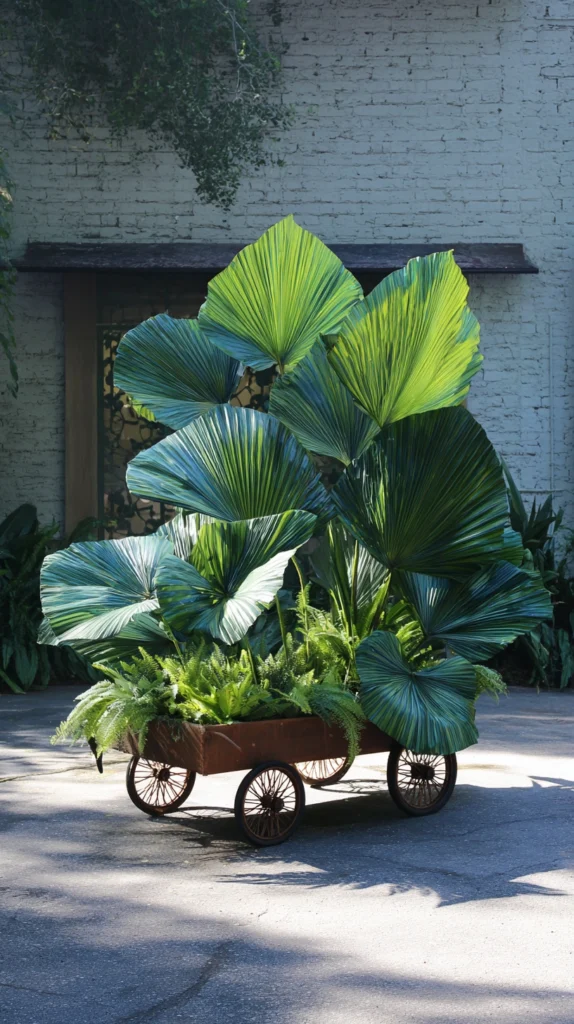
Budget: $30 – $120
A wheelbarrow planted with tropical-looking specimens — a canna lily, a large coleus, an ornamental banana, or a Colocasia elephant ear — creates a bold, statement planting that looks significantly more exotic and more expensive than its actual plant cost justifies. The generous planting volume of the wheelbarrow tray allows tropical plants to develop to a scale within one season that a standard container half the size could not accommodate, producing a display of genuine presence and visual drama in any garden position with adequate sun.
A canna lily in a 2-litre pot costs $8–$18. A large Colocasia (elephant ear) runs $12–$30. A bold coleus as the colour accent costs $3–$8. A trailing Ipomoea sweet potato vine as the spiller costs $3–$6. Total plant cost: $26–$62 for a container display with genuine tropical impact. Position in full sun to partial shade depending on the dominant species — canna lilies require at least four hours of direct sun while Colocasia tolerates partial shade and the two can be combined in a single barrow only in a position that satisfies the higher-light requirement of the canna.
Planting tip: Lift canna rhizomes and Colocasia corms from the wheelbarrow before the first frost and store in dry compost or newspaper in a frost-free shed or garage through the winter. Both are tender tropicals that will be killed by sustained freezing temperatures in an outdoor container — lifting them costs thirty minutes of effort per season and allows the same plants to be replanted the following spring at zero additional plant cost, providing an increasingly impressive display as the rhizomes and corms multiply each season.
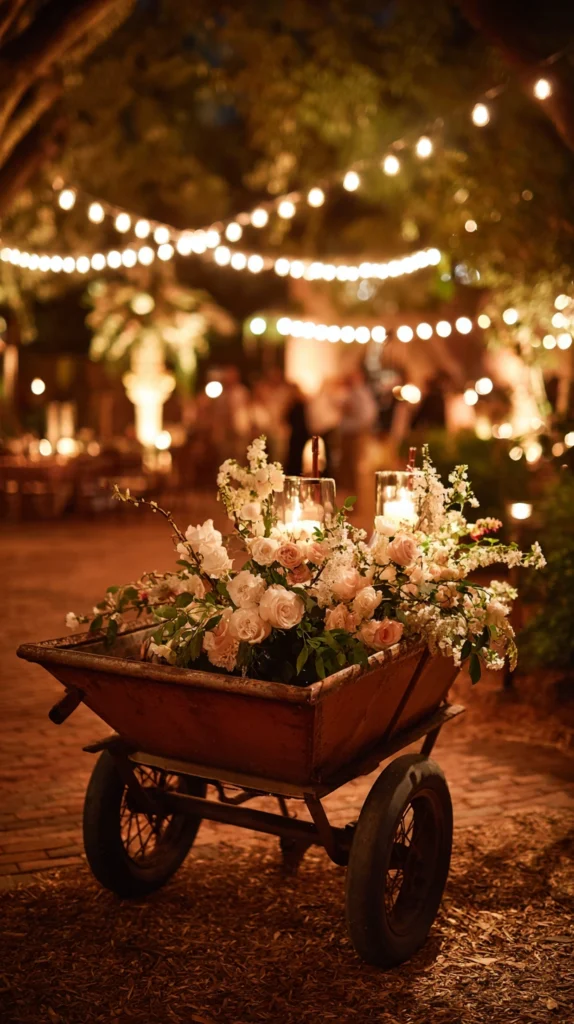
13. A Wedding or Event Feature Barrow
Budget: $30 – $150
A wheelbarrow dressed and planted as a feature for a garden wedding, a summer party, or any outdoor event — overflowing with white roses, trailing gypsophila, and fragrant sweet peas in a coordinated event colour palette — creates one of the most charming and most photographed event decorations available for an outdoor setting. The barrow provides the character and the visual context; the planting provides the specific colour, fragrance, and seasonal appropriateness of the event.
White roses — cut stems arranged in water-filled floral foam blocks set into the barrow — cost $20–$60 for a generous display depending on the number of stems used. Fresh gypsophila as a filler costs $5–$15 per bunch. Sweet pea stems for fragrance cost $8–$20 per bunch in season or as cut stems from a florist. A barrel-aged or deliberately styled old wheelbarrow works best for events — a clean new barrow can be aged with exterior paint, wire brushing, and a season’s weathering before the event date if sufficient lead time is available.
Planting tip: For a cut flower event display in a wheelbarrow, use wet floral foam blocks in shallow water-filled trays set into the barrow tray rather than trying to arrange cut stems in compost. Floral foam keeps cut stems hydrated for three to five days — sufficient for any single-day or weekend event — and allows the stems to be arranged at precise angles and heights that compost planting cannot achieve with the same precision. Cover the floral foam surface with moss or gravel to conceal the foam from view within the finished arrangement.
A wheelbarrow planter succeeds when the choice of plants acknowledges the particular qualities of the container — its generous depth, its mobility, its material character, and the visual story it tells about the garden it occupies. Every idea on this list works with those qualities rather than against them, and the most charming wheelbarrow displays are always the ones where the planting feels as natural in the barrow as the barrow feels in the garden.
Start with whatever wheelbarrow is available and whatever planting suits the position it will occupy. Fill it generously, feed it regularly, and move it when the season suggests a better position exists. The wheelbarrow planter is the most flexible and most characterful container in any garden — it earns its place through use rather than through perfection.